SiteGround - Reliable hosting with speed, security, and support you can count on.
This presentation was given at COSCUP 2026 in Taipei, Taiwan, in August 2026.
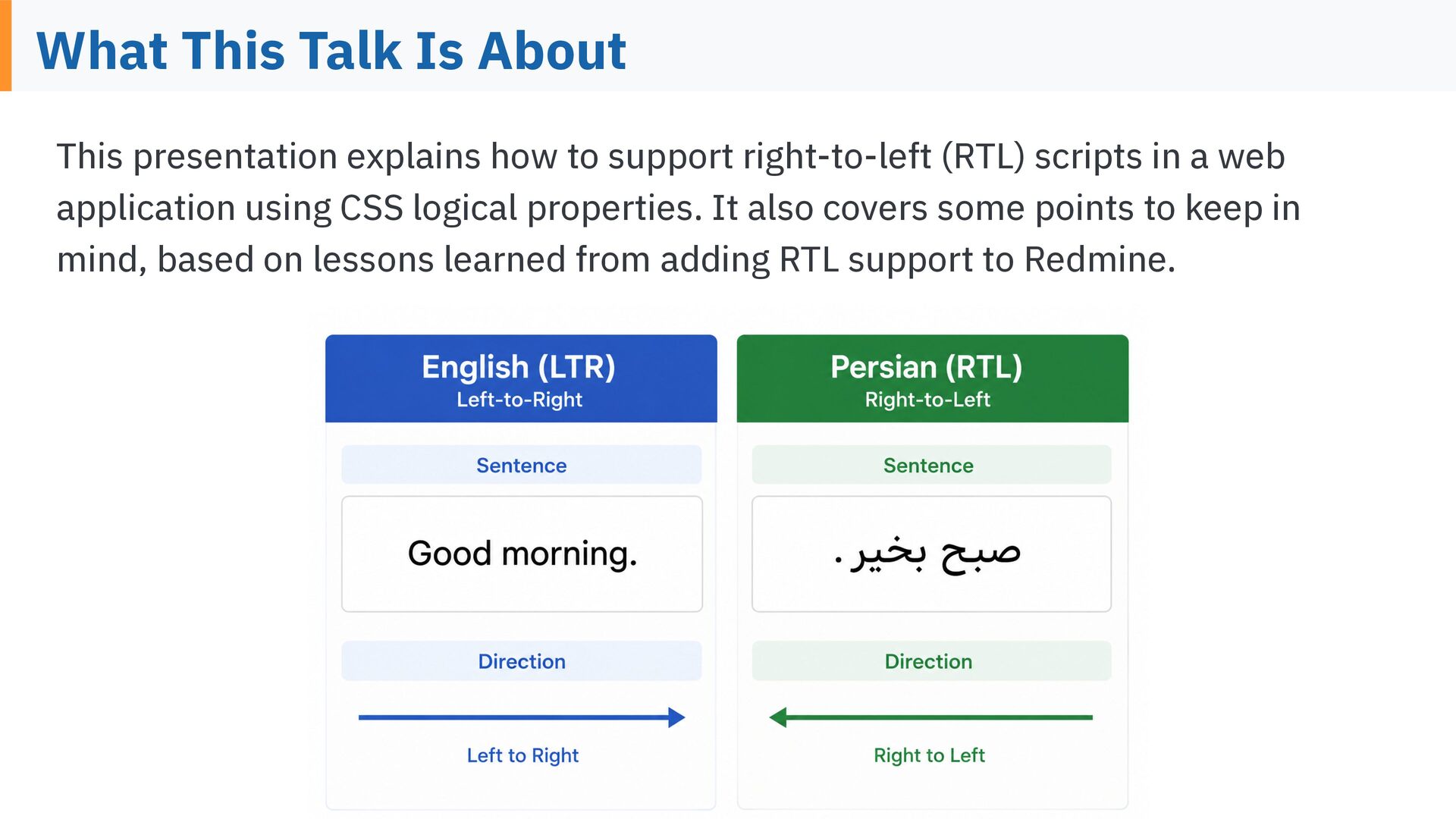
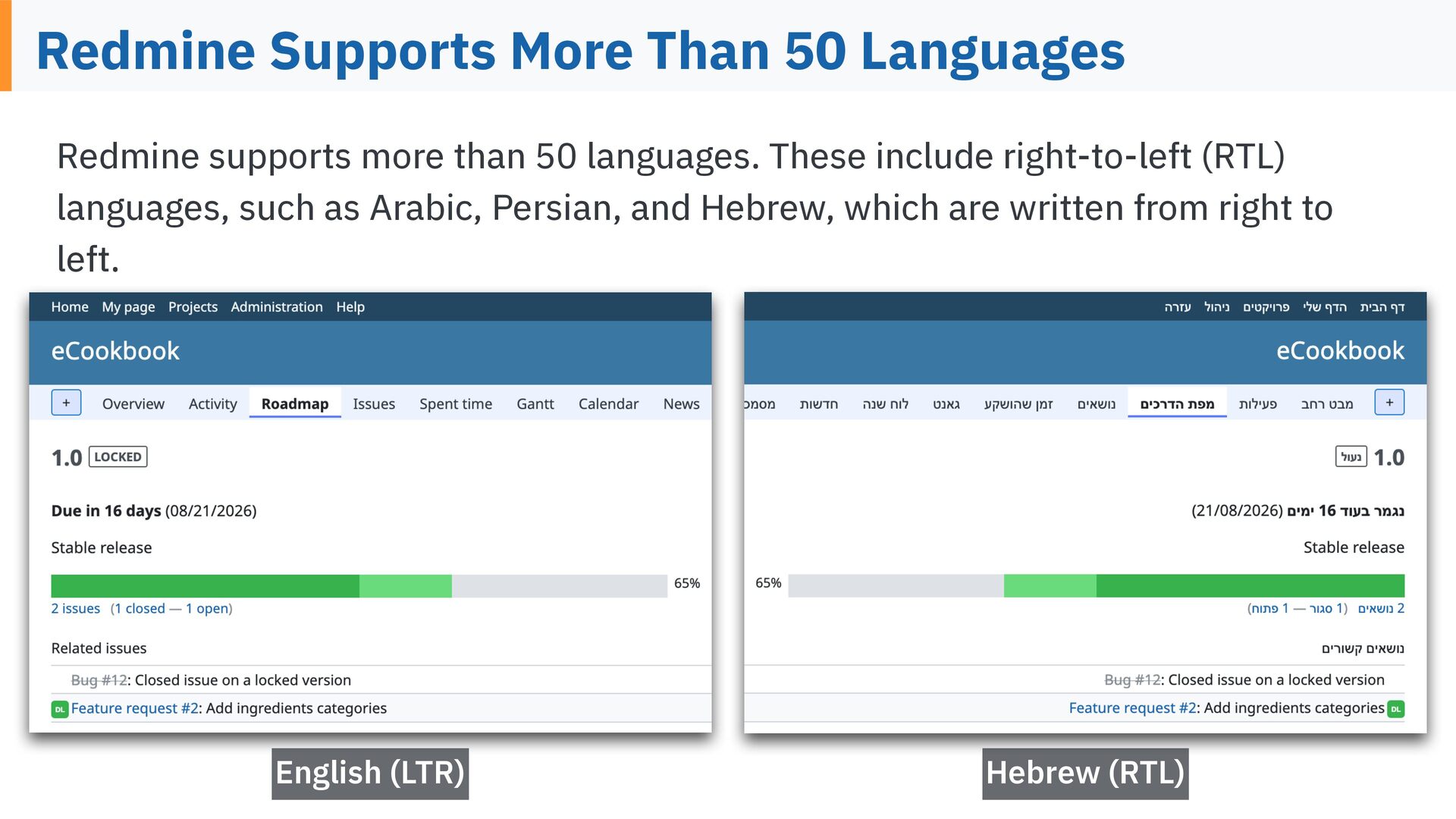
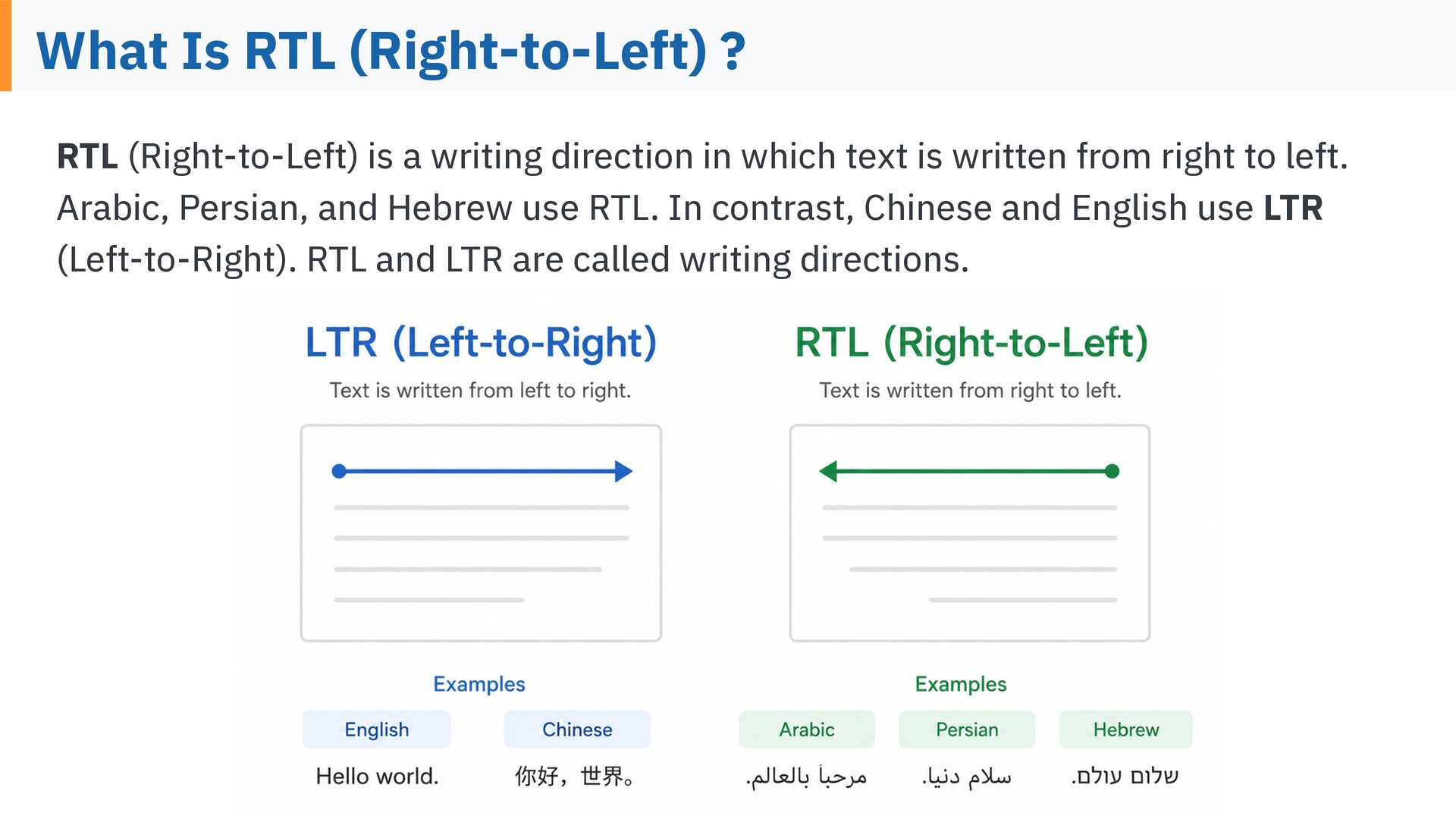
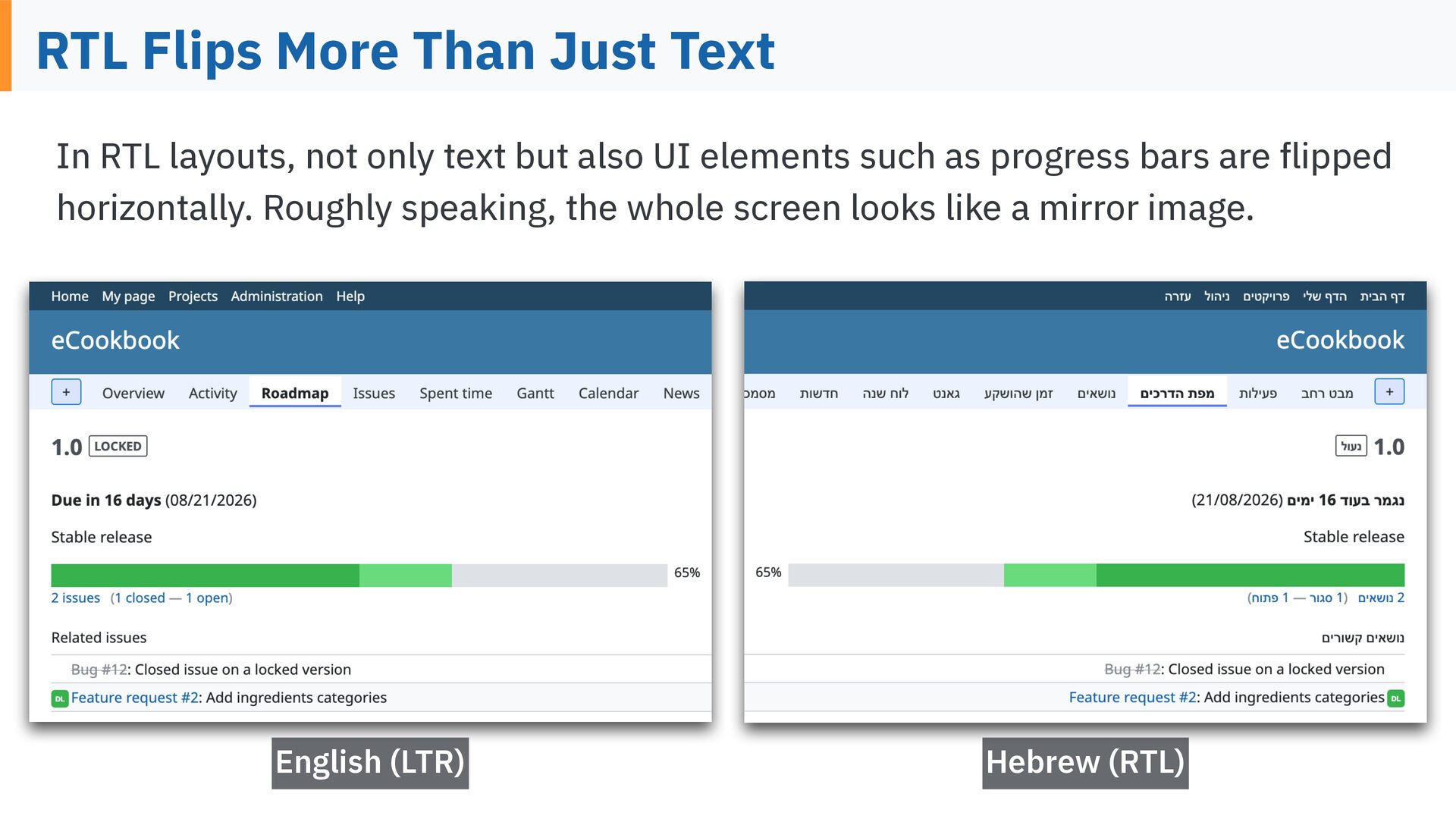
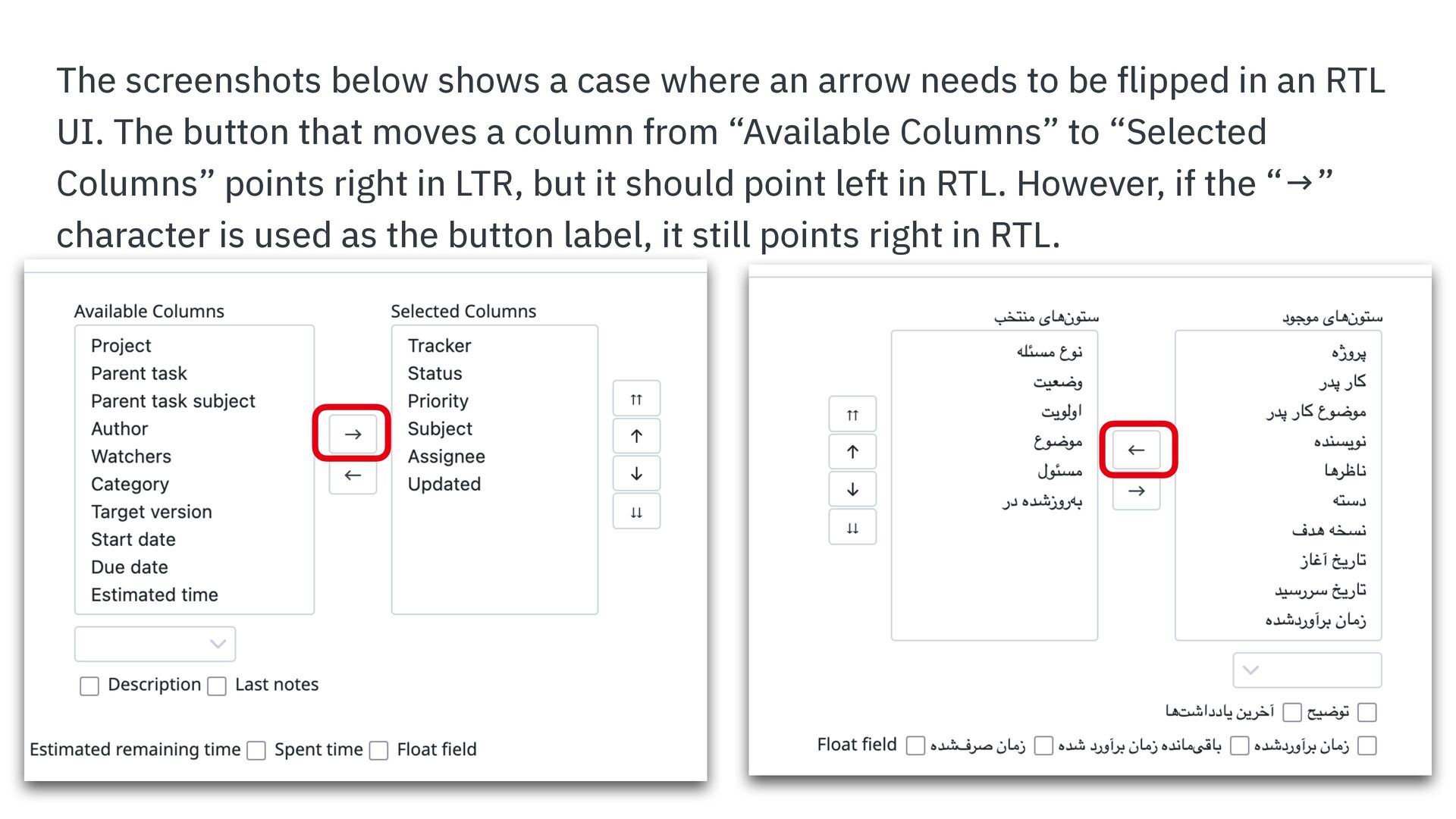
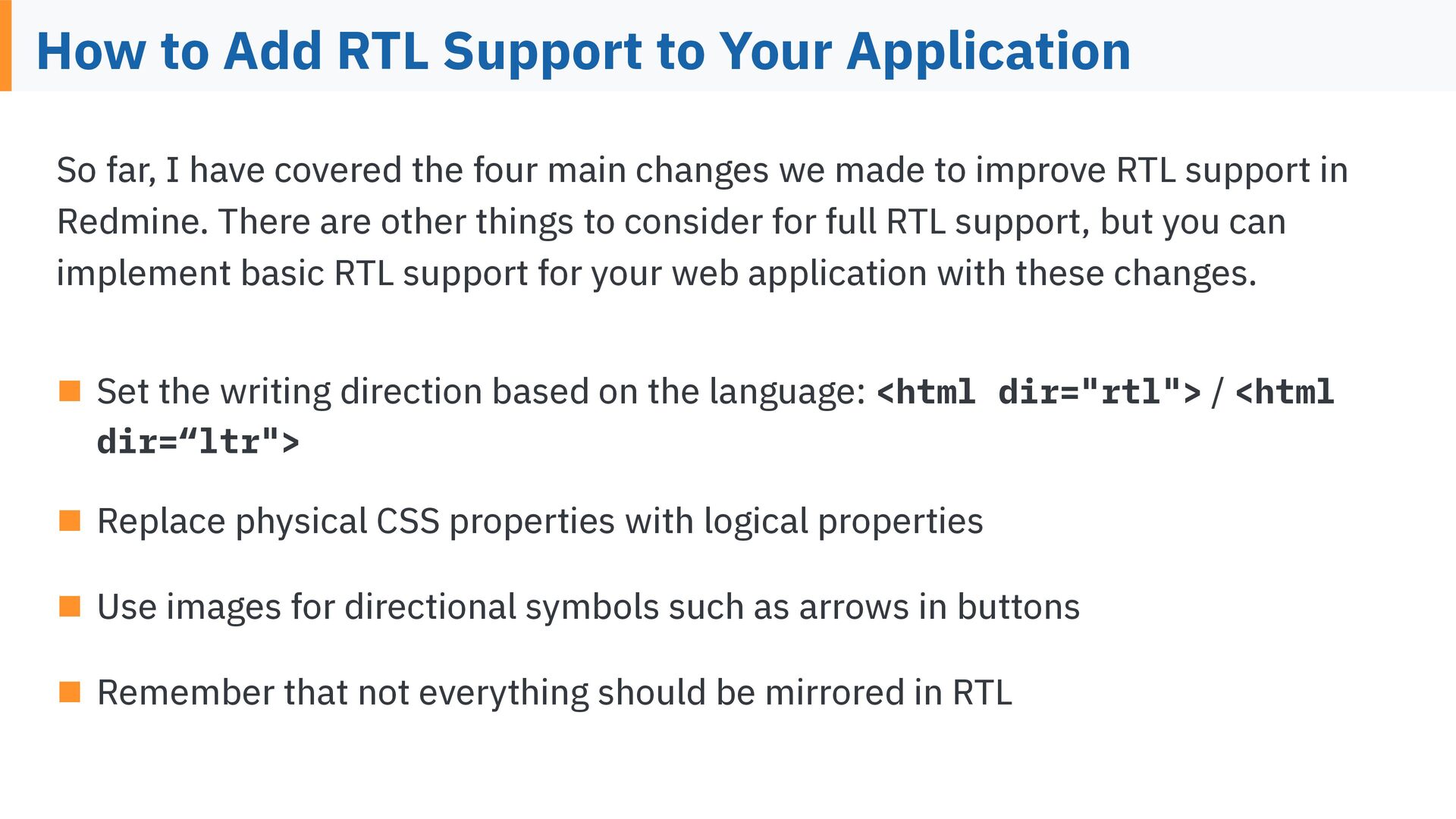
Supporting right-to-left (RTL) languages such as Arabic and Hebrew remains an often overlooked challenge in web application internationalization. Unlike English and Chinese, which are written left to right (LTR), RTL languages require layouts and visual alignment throughout the user interface to be mirrored.
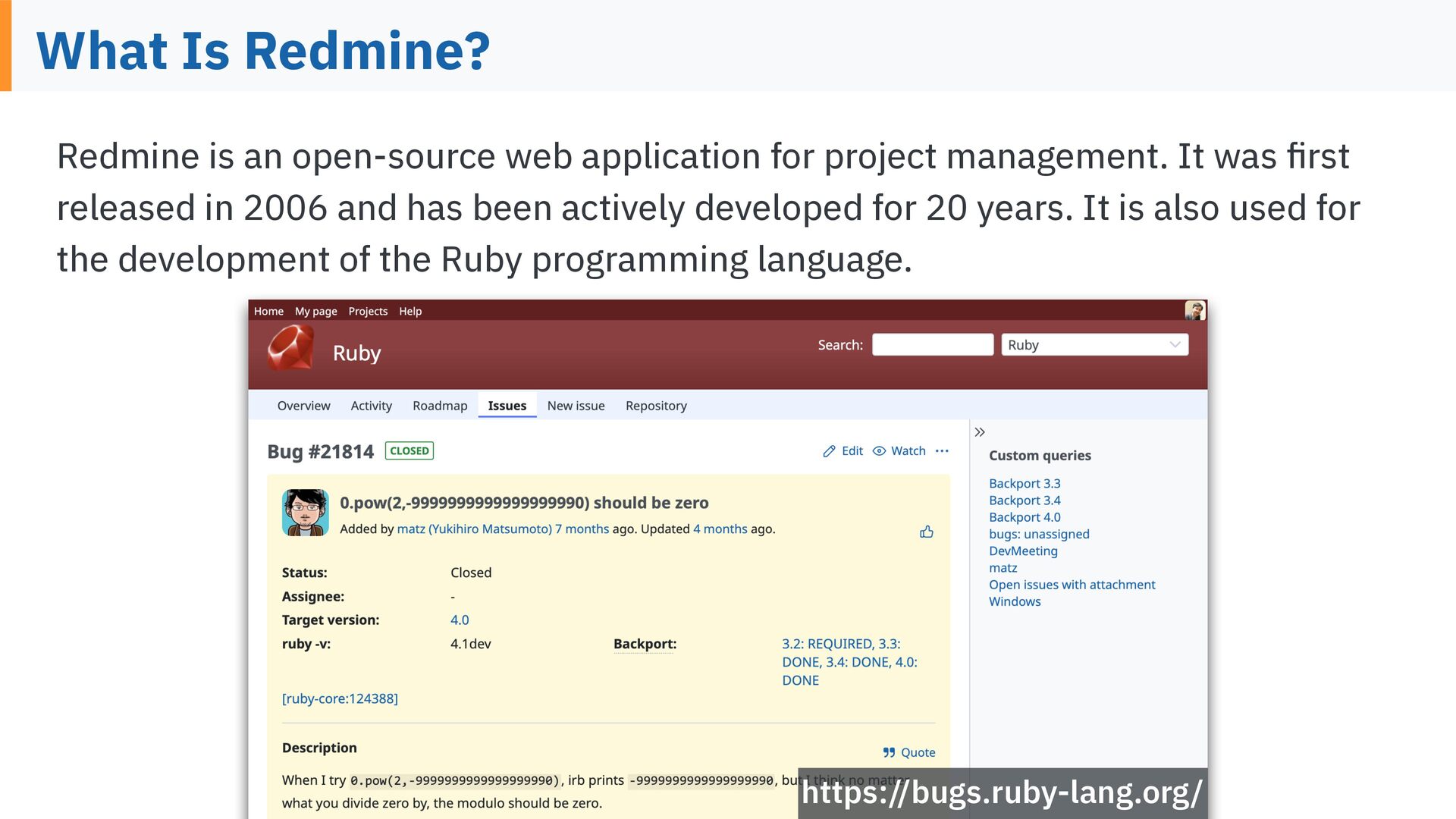
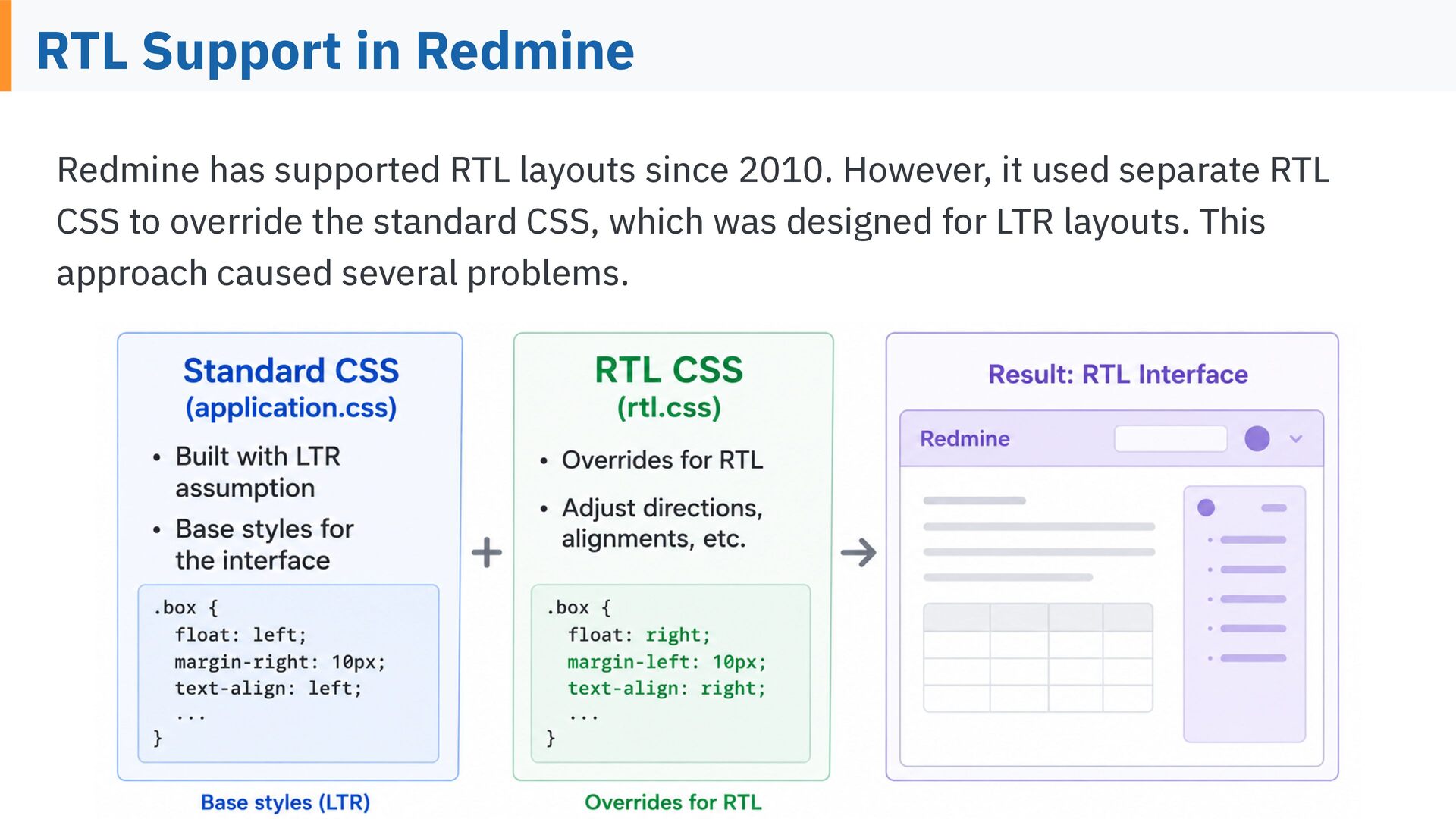
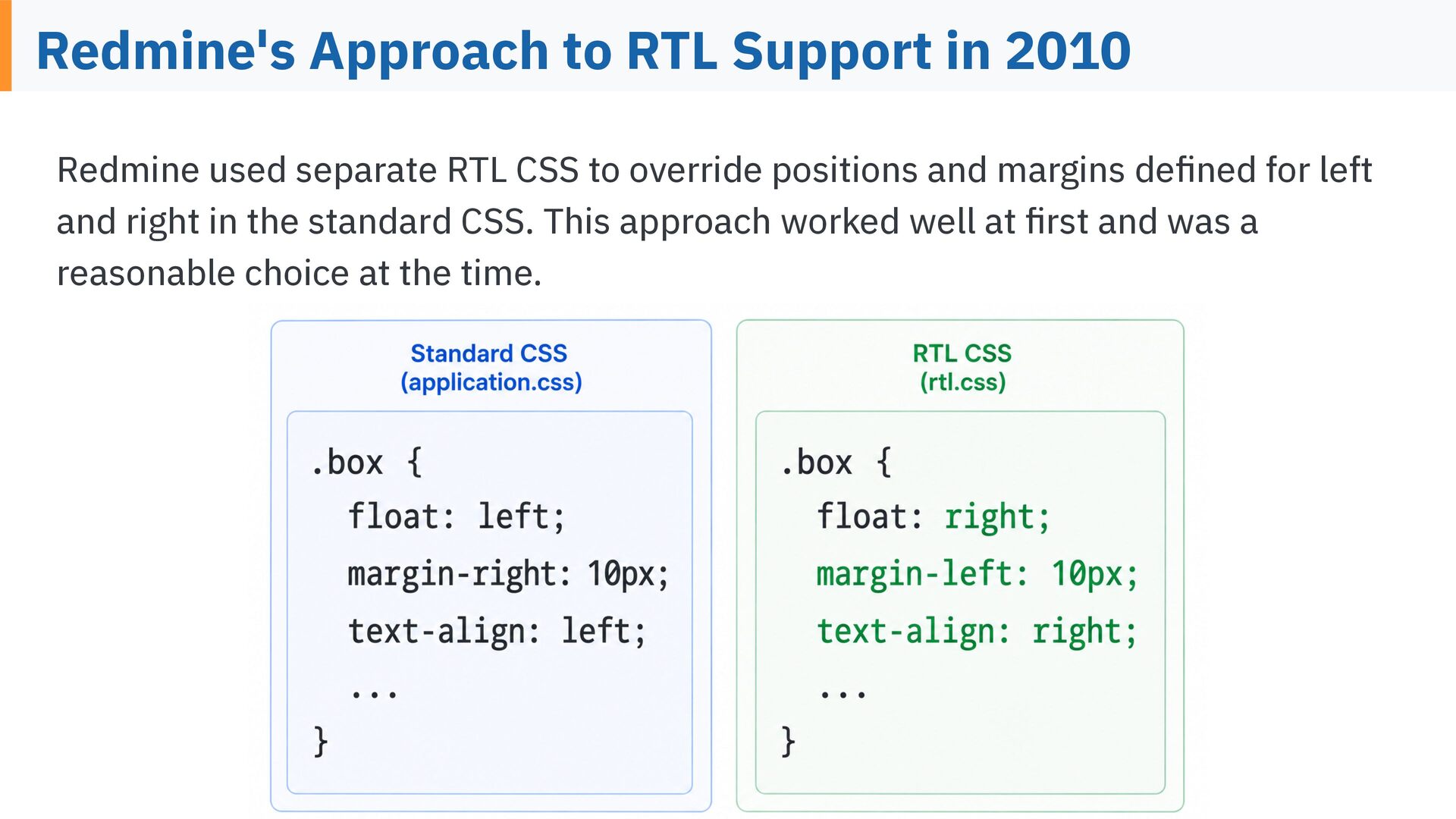
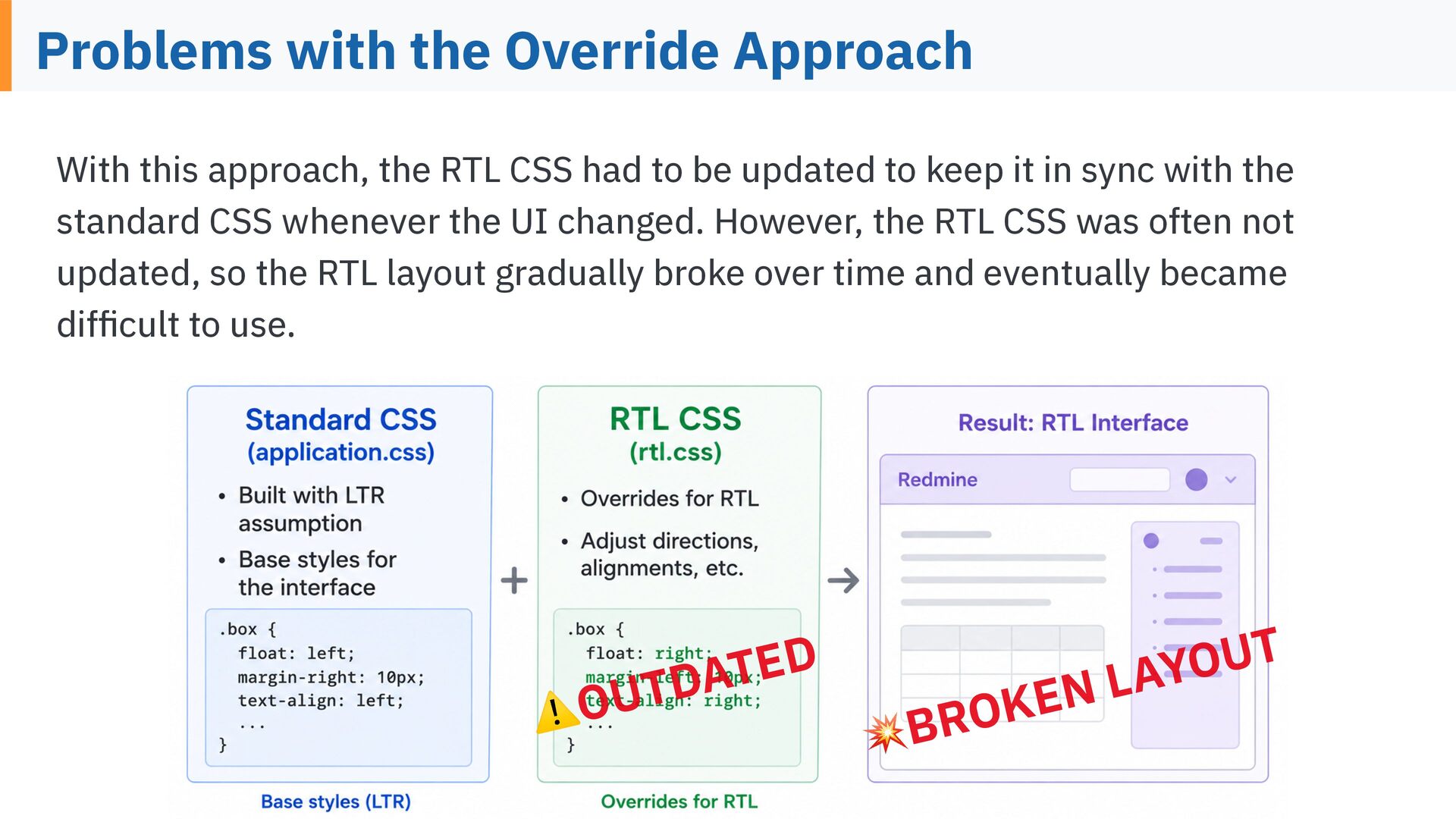
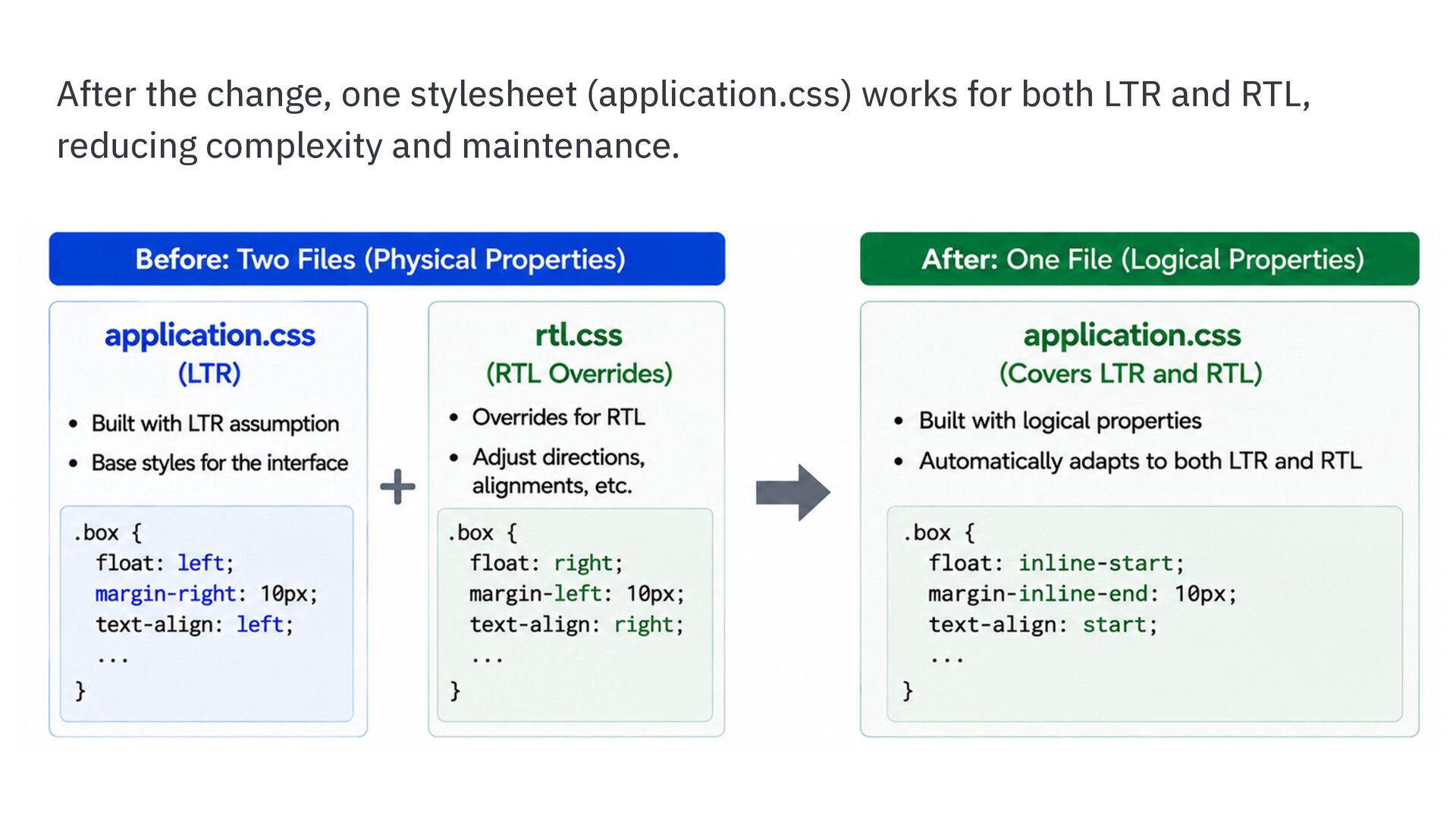
Redmine, a 20-year-old open source project management application, has supported RTL languages since 2010. Its RTL support was originally implemented using a separate RTL-specific stylesheet that overrode the main LTR styles, which was a common approach at the time. As the user interface evolved, maintaining two parallel stylesheets became increasingly difficult, and the RTL layout gradually became broken in many places.
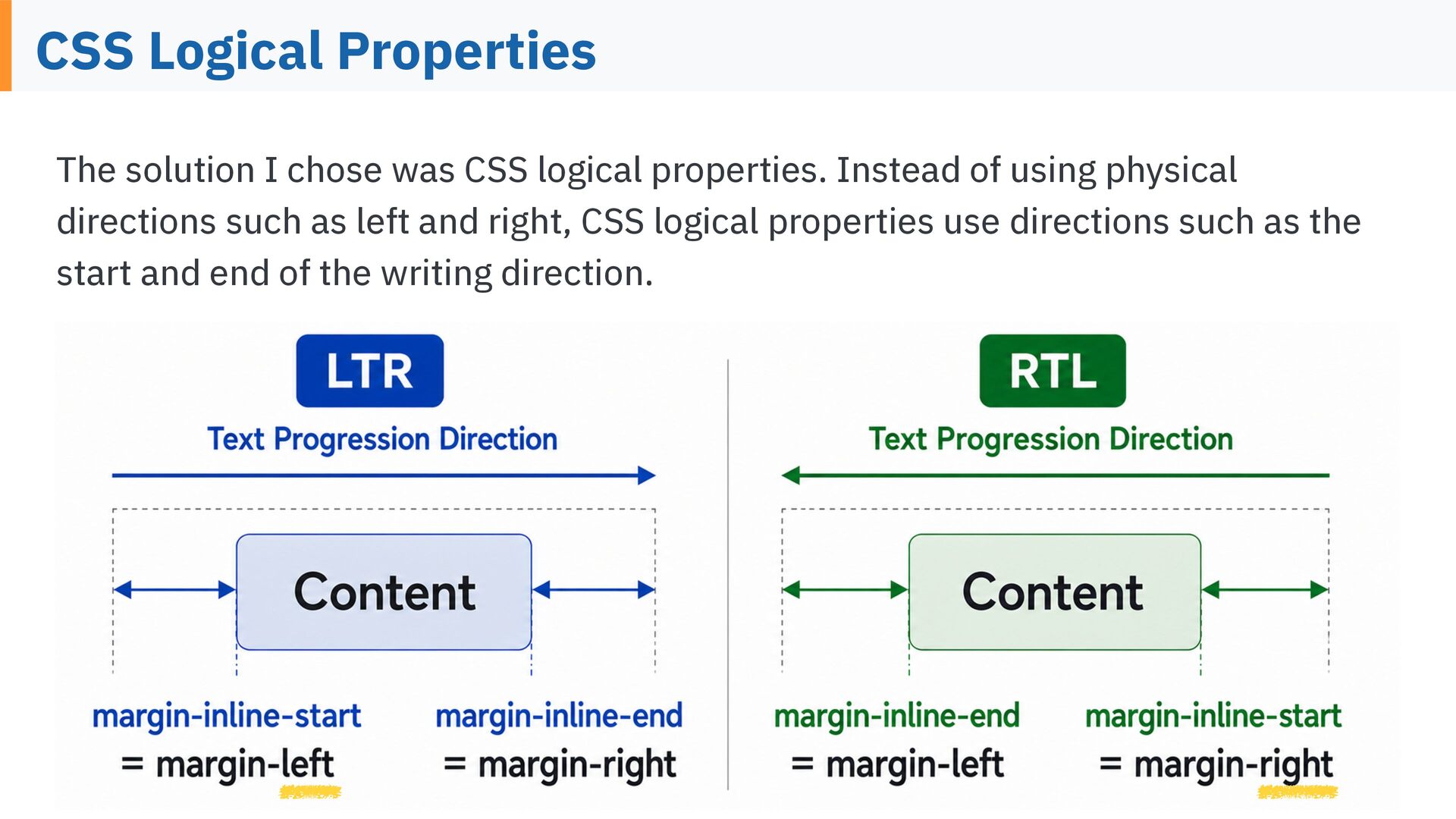
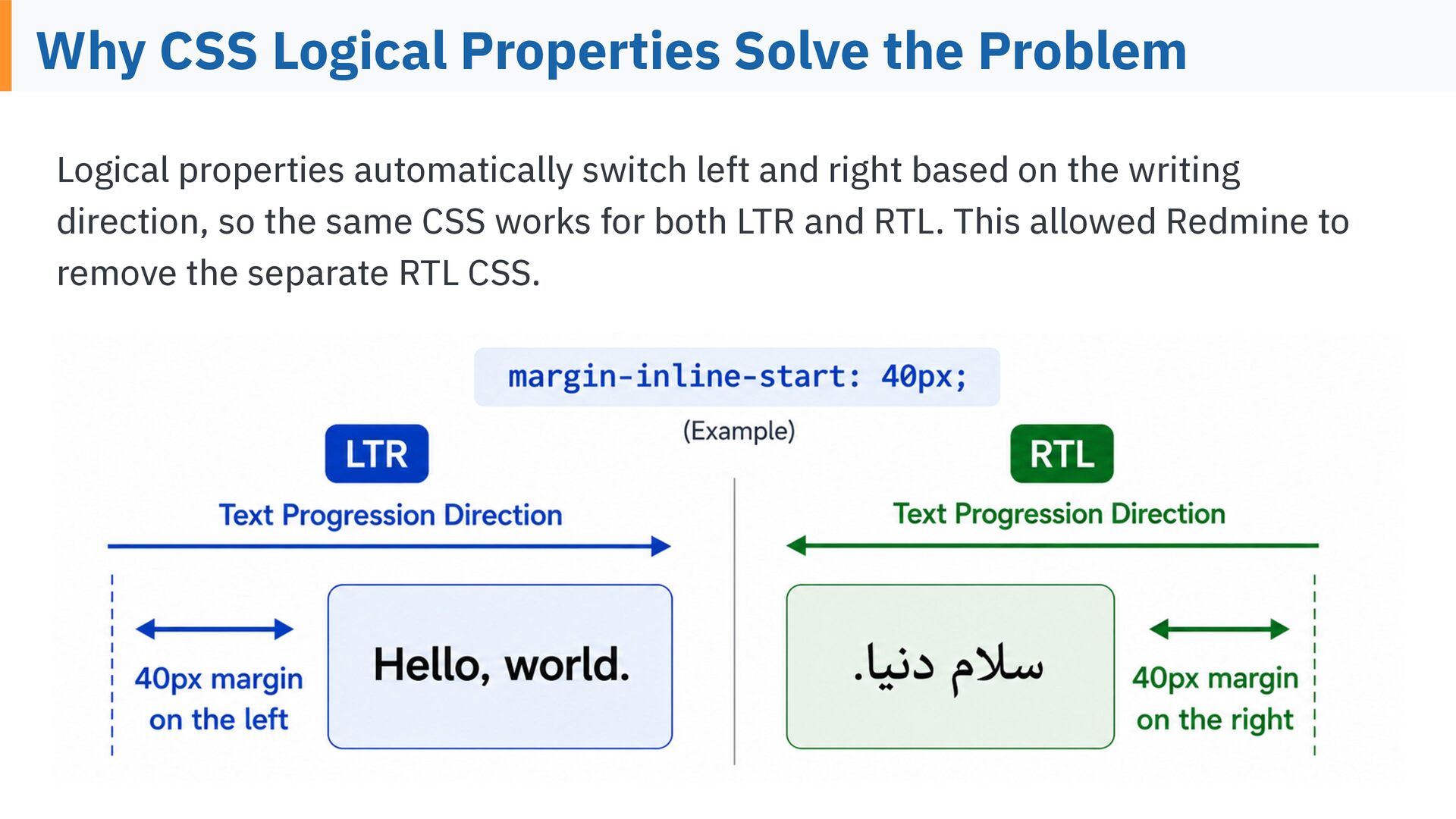
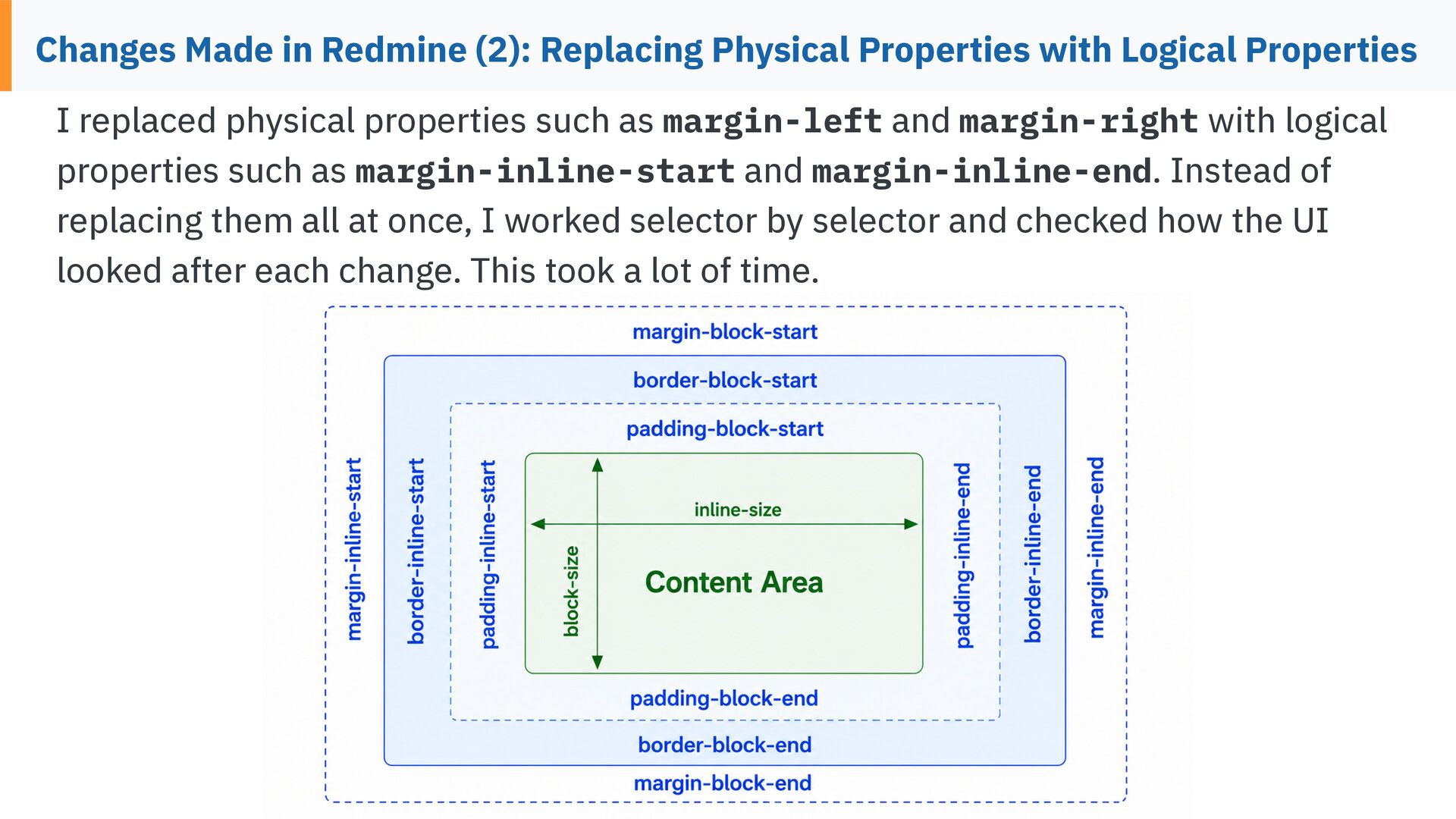
This talk explains how I rebuilt Redmine's RTL support using CSS logical properties. By replacing physical properties such as `margin-left` and `padding-right` with logical properties, a single stylesheet can automatically adapt to both LTR and RTL layouts. I discuss the migration process, practical implementation techniques, and lessons learned while modernizing an existing codebase.
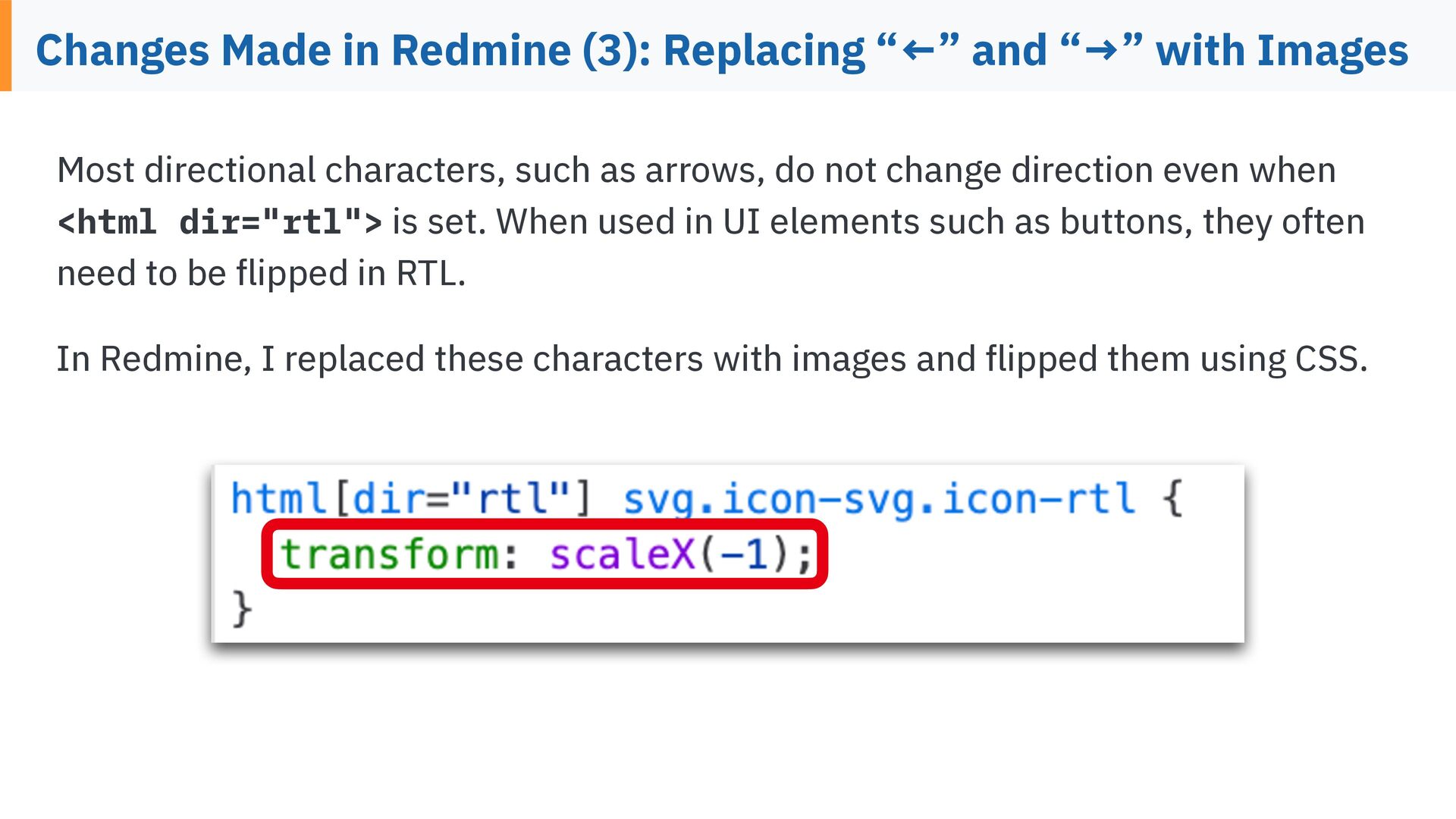
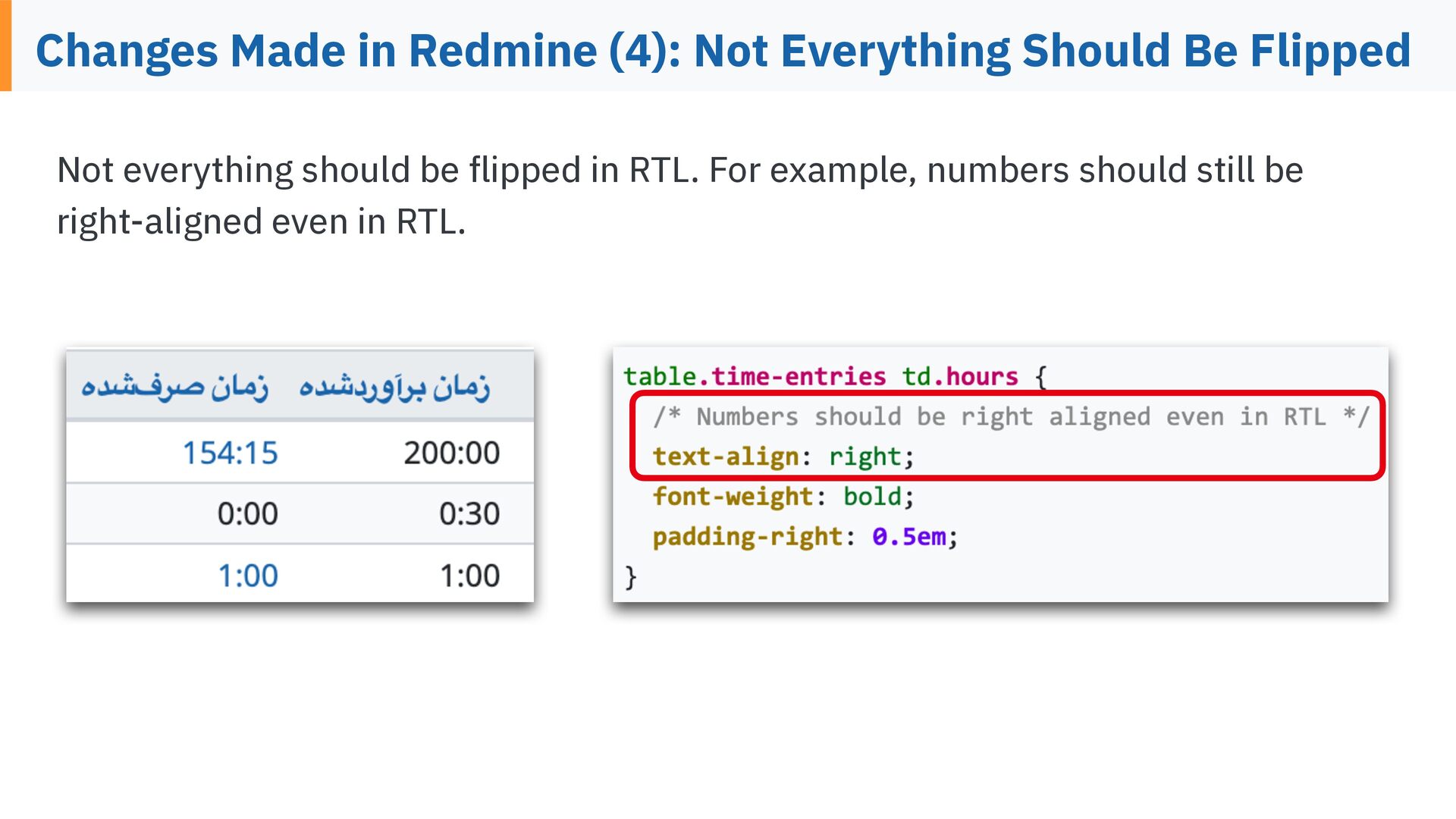
The presentation shows how existing LTR-only web applications can gain RTL support with a relatively small set of CSS changes. Through practical examples from Redmine, it introduces concrete techniques for implementing maintainable RTL support using CSS logical properties. Although the examples come from Redmine, the approach is applicable to many web applications looking to add maintainable RTL support.


 vividtone
 recruitengineers
 riyaamemiya
 yamanoku
 mohab1
 pfn
pfn
 raspython3
 grimoh
 puhitaku
 yut0naga1_fa
 occhi
occhi
 odashi
 kworkdev
 holman
 jakevdp
 lara
lara
 colly
colly
 axbom
axbom
 keithpitt
 tmiket
 schroneko
 baasie
 techseoconnect
 skoyamalab