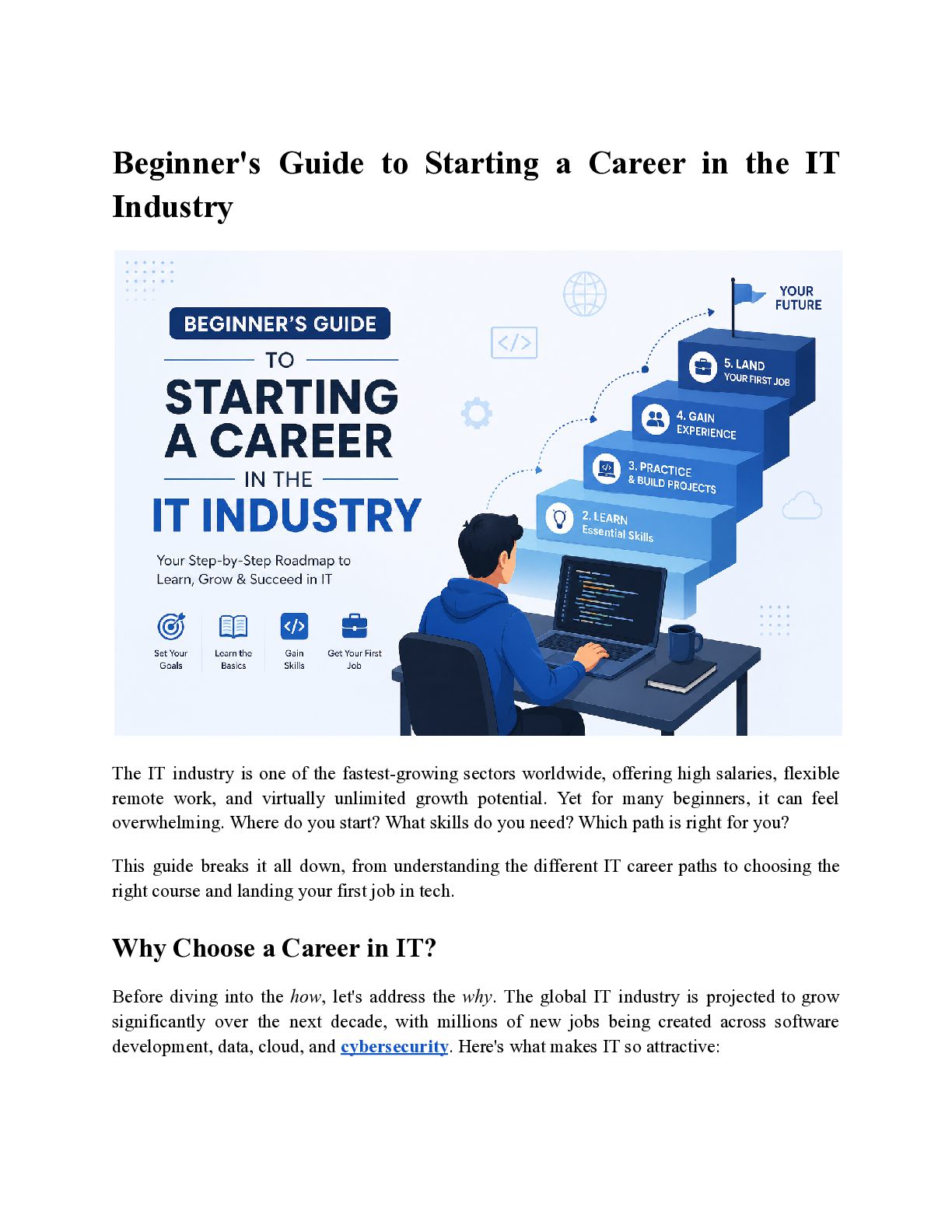
Beginner's Guide to Starting a Career in the IT Industry | YuHasPro
Thinking about a career in IT? This beginner's guide covers the top paths in data science, data analytics, software testing, full-stack development, and cloud computing and how to get started today.
The IT industry is one of the fastest-growing sectors worldwide, offering high salaries, flexible remote work, and virtually unlimited growth potential. Yet for many beginners, it can feel overwhelming. Where do you start? What skills do you need? Which path is right for you? This guide breaks it all down, from understanding the different IT career paths to choosing the right course and landing your first job in tech. Why Choose a Career in IT? Before diving into the how, let's address the why. The global IT industry is projected to grow significantly over the next decade, with millions of new jobs being created across software development, data, cloud, and cybersecurity. Here's what makes IT so attractive:
salaries compared to many other industries. • Job security: Digital transformation is accelerating across every sector, meaning IT professionals are in constant demand. • Flexibility: Many IT roles offer remote or hybrid work options. • Diverse pathways: From coding to data analysis to cloud infrastructure, there's a niche for every type of thinker. • Global opportunities: IT skills are universally valued, opening doors to jobs across countries and time zones. • Continuous growth: The industry evolves rapidly, meaning there's always something new to learn and master. Whether you're a fresh graduate, a career switcher, or someone looking to upskill, IT has a place for you. Understanding the Major IT Career Paths The IT industry isn't just one thing; it's a broad ecosystem of roles and specialisations. Here are some of the most in-demand career paths for beginners today. 1. Data Science Data scientists are among the most sought-after professionals globally. They collect, process, and interpret large datasets to help businesses make smarter decisions. If you enjoy working with numbers, finding patterns, and communicating insights, a data science course could be your ideal starting point. Core skills you'll gain from a data science course: • Python or R programming for data manipulation • Machine learning algorithms and model building • Statistical analysis and hypothesis testing • Data visualisation using Matplotlib, Seaborn, or Tableau • Working with big data tools like Hadoop and Spark Entry-level roles include junior data scientist, data analyst, and ML engineer associate. 2. Data Analytics Not quite ready for machine learning? Data analytics is a great entry point into the data world. A data analytics course will teach you how to clean, organise, and visualise data using tools like
industries, from healthcare and finance to marketing and e-commerce, making this one of the most versatile IT career paths. 3. Software Testing (QA Engineering) Every app, website, and software product needs to be tested before it reaches users. Quality Assurance (QA) engineers are professionals who ensure software works as intended. A software testing course covers manual testing, automated testing frameworks (like Selenium and Cypress), bug reporting, and Agile methodologies. Beginners often overlook this path, but it offers an excellent entry point into the tech industry, especially for those who are detail-oriented and enjoy problem-solving without necessarily wanting to write code from scratch. 4. Full Stack Development If you want to build web applications from the ground up, full-stack development is the path for you. A full-stack development course covers both front-end (what users see) and back-end (the server, database, and logic behind the scenes) development. You'll learn HTML, CSS, JavaScript, React or Angular for the front end, and Node.js, Python, or Java for the back end, along with databases like MySQL and MongoDB. Full-stack developers are highly valued because they can handle an entire project independently, making them attractive to startups and enterprises alike. 5. Cloud Computing Cloud computing is arguably the biggest shift in enterprise IT over the last decade. Companies are rapidly moving their infrastructure to platforms like AWS, Microsoft Azure, and Google Cloud, and they need skilled professionals to manage it. A cloud computing course introduces you to cloud architecture, virtual machines, storage solutions, networking, security, and DevOps practices. Cloud certifications (like AWS Certified Cloud Practitioner or Azure Fundamentals) are widely recognised and can fast-track your career significantly. IT Career Paths at a Glance This table shows the five major paths side by side before choosing your direction:
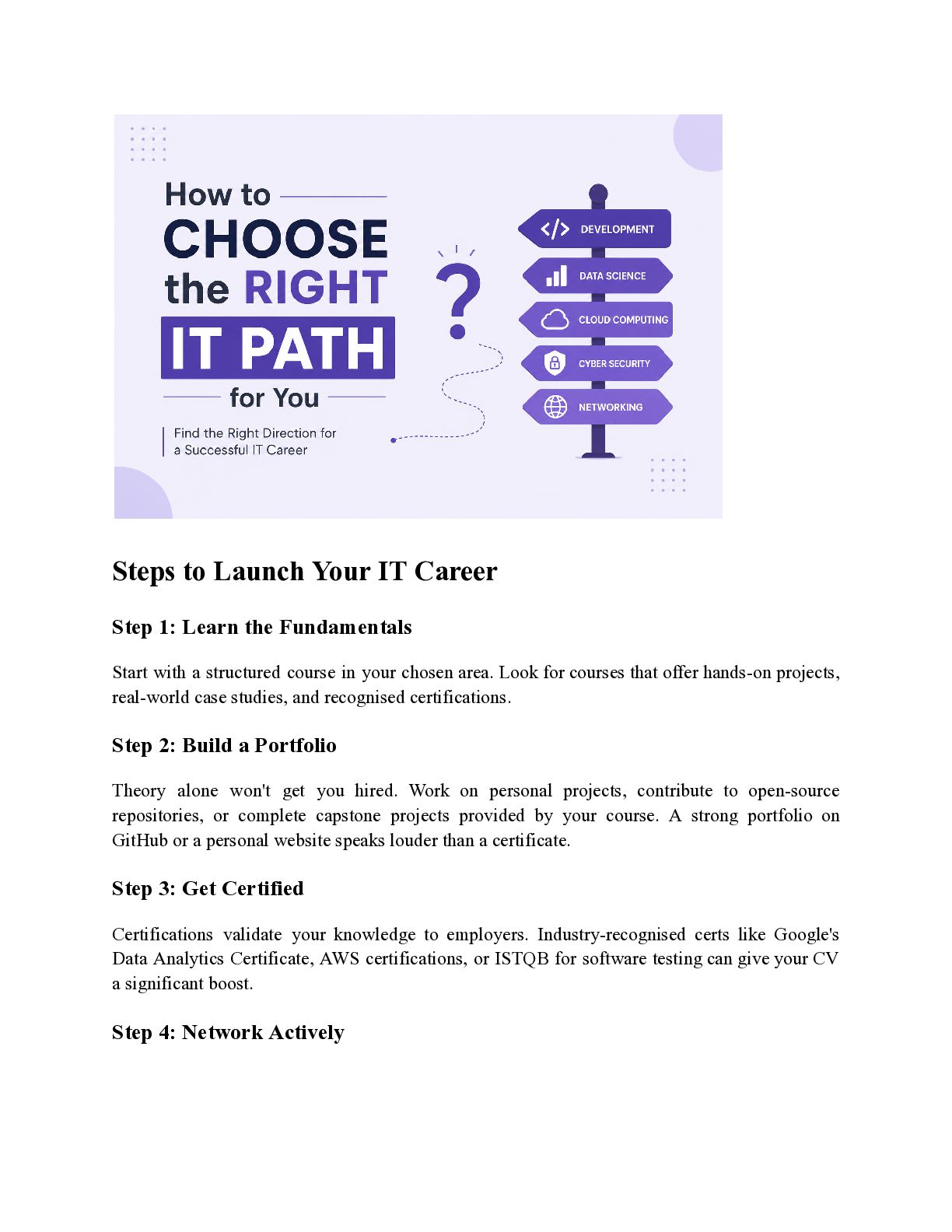
Data Science Analytical thinkers who love ML ₹5L – ₹9L Yes (Intermediate) Data Analytics Detail-oriented problem solvers ₹4L – ₹7L Minimal Software Testing Methodical, quality-focused learners ₹3.5L – ₹6L Minimal–Low Full-Stack Development Builders who want to create products ₹5L – ₹10L Yes (Core skill) Cloud Computing Systems and infrastructure enthusiasts ₹5L – ₹9L Low–Moderate How to Choose the Right IT Path for You With so many options, how do you decide where to start? Ask yourself these questions: • Do you love working with data and patterns? → Consider a data science or data analytics course. • Are you logical but not necessarily a coder? → Software testing could be the perfect fit. • Do you want to build visible products? → Full-stack development is your answer. • Are you interested in infrastructure and systems? → Cloud computing is a high-growth option. There's no wrong choice; what matters is getting started. Many professionals begin in one area and expand into others over time.
Fundamentals Start with a structured course in your chosen area. Look for courses that offer hands-on projects, real-world case studies, and recognised certifications. Step 2: Build a Portfolio Theory alone won't get you hired. Work on personal projects, contribute to open-source repositories, or complete capstone projects provided by your course. A strong portfolio on GitHub or a personal website speaks louder than a certificate. Step 3: Get Certified Certifications validate your knowledge to employers. Industry-recognised certs like Google's Data Analytics Certificate, AWS certifications, or ISTQB for software testing can give your CV a significant boost. Step 4: Network Actively
(like Reddit's r/learnprogramming or Stack Overflow), and connect with professionals in your target field. A surprising number of entry-level jobs are filled through referrals. Step 5: Apply Strategically Tailor your CV and cover letter to each role. Highlight relevant projects, courses, and skills. Don't wait until you feel "100% ready" to apply early and learn from each interview. Common Mistakes Beginners Make (And How to Avoid Them) Starting your IT journey is exciting, but it's easy to fall into traps that slow you down. Here are the most common beginner mistakes and how to sidestep them: 1. Trying to learn everything at once: The IT world is vast. Pick one path, commit to it fully, and expand only after you've built a solid foundation. 2. Skipping the basics: Jumping to advanced topics without understanding fundamentals leads to shaky knowledge. Start with core concepts before moving on. 3. Not building real projects: Employers want to see what you can do, not just what certificates you hold. Every course you complete should end with a portfolio project. 4. Ignoring soft skills: Communication, teamwork, and problem-solving matter just as much as technical chops in any IT role. Practice explaining technical concepts in plain language. 5. Waiting until you feel "ready" to apply: You will never feel 100% ready. Start applying when you have 70–80% of the listed job requirements. The interview experience itself is invaluable. 6. Learning passively: Watching tutorials without coding or practising is not learning. Always follow along, break things, and fix them yourself. Start Your IT Journey with YuHasPro If you're serious about building a career in IT, YuHasPro is a platform designed to help you get there faster. YuHasPro offers structured, beginner-friendly courses across all major IT disciplines, including data science, data analytics, software testing, full-stack development, and cloud computing.
skills. Courses are designed by industry professionals, feature real-world projects, and include mentorship and career support to help you transition into your first tech role with confidence. Whether you're starting from zero or looking to pivot from another career, YuHasPro gives you the tools, guidance, and community to make it happen. Frequently Asked Questions (FAQs) 1. Do I need a degree to start a career in IT? No, a degree is not mandatory. Many IT professionals are self-taught or have completed online courses and bootcamps. What matters most to employers is your skill set, portfolio, and certifications, not the institution of your degree. 2. How long does it take to get an IT job as a beginner? It varies by path and how consistently you study, but most dedicated learners can become job-ready in 6 to 12 months. Enrolling in a structured program, such as a data analytics or full-stack development course, can significantly speed up the process. 3. Which IT course is best for a complete beginner with no coding experience? If you have no coding background, a data analytics course or a software testing course is an excellent starting point. Both involve less programming than data science or full-stack development, while still offering strong career prospects and a clear path into the IT industry. 4. Is cloud computing a good career for beginners? Absolutely. Cloud computing is one of the fastest-growing areas in IT. A cloud computing course can prepare you for entry-level roles like cloud support associate or junior cloud engineer. Many cloud providers also offer free or low-cost beginner certifications that employers actively value.
worth the investment? Look for courses that offer hands-on projects, recognised certifications, and career support. Check reviews and alumni outcomes. Platforms like YuHasPro are transparent about course content and designed specifically to get learners hired, making them a smart investment for anyone serious about breaking into tech.


 cbtlibrary
 camel_404
 yoshimura_datam
 kaityo256
 mariooc
 robintux
 bvr7352
 hiola
 matleenalaakso
 juanmartin2026
 tasusu
 yasslab
 honzajavorek
 jonyablonski
 nikkihalliwell
 bkeepers
 takai
 baasie
 bermonpainter
 rasagy
 palkan
 vanstee
 skipperchong
 tenderlove