Upgrade to Pro
— share decks privately, control downloads, hide ads and more …
Speaker Deck
Sign up for free
Menu
Search
Features
All features
Private URLs
Password Protection
Custom URLS
Scheduled publishing
Remove Branding
Restrict embedding
Deck Collections
Notes
Features
All features
Private URLs
Password Protection
Custom URLS
Scheduled publishing
Remove Branding
Restrict embedding
Deck Collections
Notes
Explore
Featured decks
Featured speakers
Programming
Technology
Storyboards
Explore
Featured decks
Featured speakers
Programming
Technology
Storyboards
Pricing
Search
Sign in
Sign up for free
Modeling Naive Psychology of Characters in Simp...
Search
Yuto Kamiwaki
January 29, 2019
Research
220
1
Share
Embed
Copy iframe code
Copy JS code
Copy link
Start on current slide
Modeling Naive Psychology of Characters in Simple Commonsense Stories
2019/01/30 文献紹介の発表内容
Yuto Kamiwaki
January 29, 2019
More Decks by Yuto Kamiwaki
See All by Yuto Kamiwaki
Emo2Vec: Learning Generalized Emotion Representation by Multi-task Training
yuto_kamiwaki
0
120
Using millions of emoji occurrences to learn any-domain representations for detecting sentiment, emotion and sarcasm
yuto_kamiwaki
0
130
Epita at SemEval-2018 Task 1: Sentiment Analysis Using Transfer Learning Approach
yuto_kamiwaki
0
150
Tensor Fusion Network for Multimodal Sentiment Analysis
yuto_kamiwaki
0
290
Sentiment Analysis: It’s Complicated!
yuto_kamiwaki
0
96
ADAPT at IJCNLP-2017 Task 4: A Multinomial Naive Bayes Classification Approach for Customer Feedback Analysis task
yuto_kamiwaki
0
180
EmoWordNet: Automatic Expansion of Emotion Lexicon Using English WordNet
yuto_kamiwaki
0
120
ATTENTION-BASED LSTM FOR PSYCHOLOGICAL STRESS DETECTION FROM SPOKEN LANGUAGE USING DISTANT SUPERVISION
yuto_kamiwaki
0
170
BB_twtr at SemEval-2017 Task 4: Twitter Sentiment Analysis with CNNs and LSTMs
yuto_kamiwaki
0
270
Other Decks in Research
See All in Research
TESSERA: Temporal Embeddings of Surface Spectra for Earth Representation and Analysis
satai
2
110
Source Code Diff Revolution
tsantalis
0
180
MIRU2026 チュートリアル講演2:三次元データ処理の動向
nnchiba
8
5.3k
[CV勉強会@関東 CVPR2026] PSDesigner: Automated Graphic Design with a Human-Like Creative Workflow / kantocv 67th CVPR 2026
shunk031
0
360
完全自律LLMエージェントでDIVER OSINT CTF 2026に挑戦してみた
analokmaus
0
750
高性能計算機クラスタを用いた大規模点群処理による森林の単木抽出と構造解析
kentaitakura
1
140
[IR Reading 2026春 論文紹介] LLM-based Listwise Reranking under the Effect of Positional Bias (ECIR 2026) /IR-Reading-2026-Spring
koheishinden
PRO
0
460
MM-OVSeg: Multimodal Optical–SAR Fusion for Open-Vocabulary Segmentation in Remote Sensing
satai
3
150
論文紹介: Understanding Epistemic Language with a Language-augmented Bayesian Theory of Mind
hisaokatsumi
0
190
Kunai: Toward a Verifier-Safe Layered DSL for Nested Encapsulation Packet Filtering on eBPF
takehaya
1
120
JPA2026_NetworkTutorial_JunKashihara
junkashihara
0
210
実例から見るLLMのマンガ理解:実務VQAタスクによる長期的文脈と視覚情報の定性評価
kzmssk
0
170
Featured
See All Featured
Navigating the Design Leadership Dip - Product Design Week Design Leaders+ Conference 2024
apolaine
2
460
The Cost Of JavaScript in 2023
addyosmani
55
10k
Creating an realtime collaboration tool: Agile Flush - .NET Oxford
marcduiker
35
2.6k
Easily Structure & Communicate Ideas using Wireframe
afnizarnur
194
17k
Lightning talk: Run Django tests with GitHub Actions
sabderemane
0
290
Designing Powerful Visuals for Engaging Learning
tmiket
1
600
SEO in 2025: How to Prepare for the Future of Search
ipullrank
3
3.9k
Evolving SEO for Evolving Search Engines
ryanjones
0
310
From π to Pie charts
rasagy
1
390
Leveraging LLMs for student feedback in introductory data science courses - posit::conf(2025)
minecr
1
420
Stop Working from a Prison Cell
hatefulcrawdad
274
21k
BBQ
matthewcrist
90
10k
Transcript
Modeling Naive Psychology of Characters in Simple Commonsense Stories Nagaoka
University of Technology Yuto Kamiwaki Literature Review
Literature • Modeling Naive Psychology of Characters in Simple Commonsense
Stories • Hannah Rashkin , Antoine Bosselut , Maarten Sap , Kevin Knight and Yejin Choi • Proceedings of the 56th Annual Meeting of the Association for Computational Linguistics (Long Papers) 2
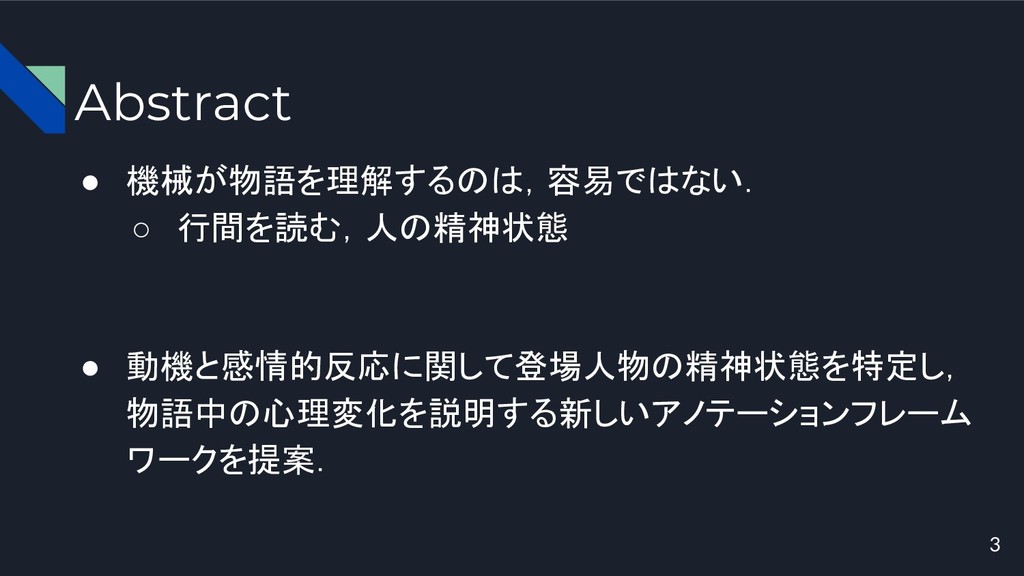
Abstract • 機械が物語を理解するのは,容易ではない. ◦ 行間を読む,人の精神状態 • 動機と感情的反応に関して登場人物の精神状態を特定し, 物語中の心理変化を説明する新しいアノテーションフレーム ワークを提案. 3
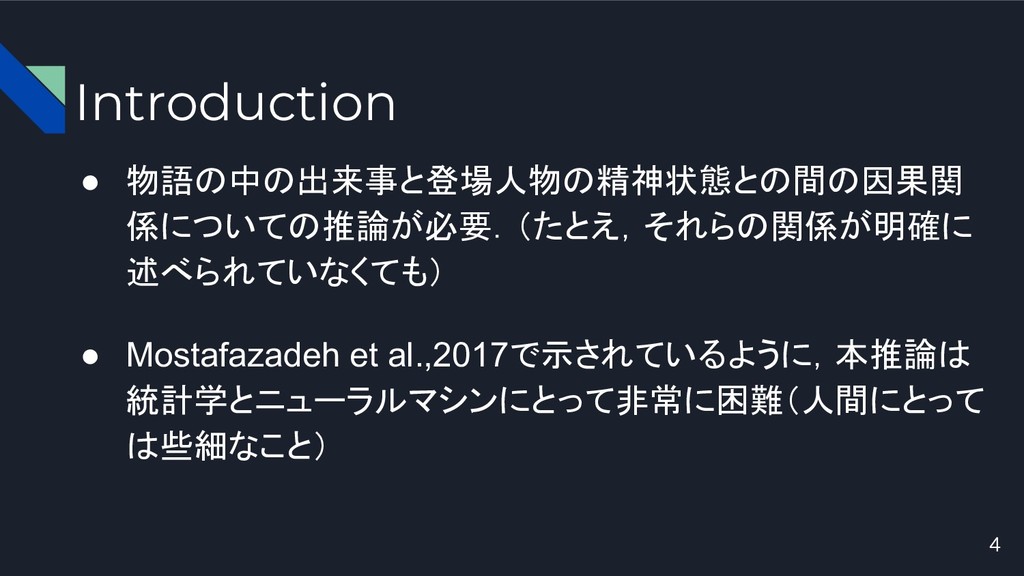
Introduction • 物語の中の出来事と登場人物の精神状態との間の因果関 係についての推論が必要.(たとえ,それらの関係が明確に 述べられていなくても) • Mostafazadeh et al.,2017で示されているように,本推論は 統計学とニューラルマシンにとって非常に困難(人間にとって
は些細なこと) 4
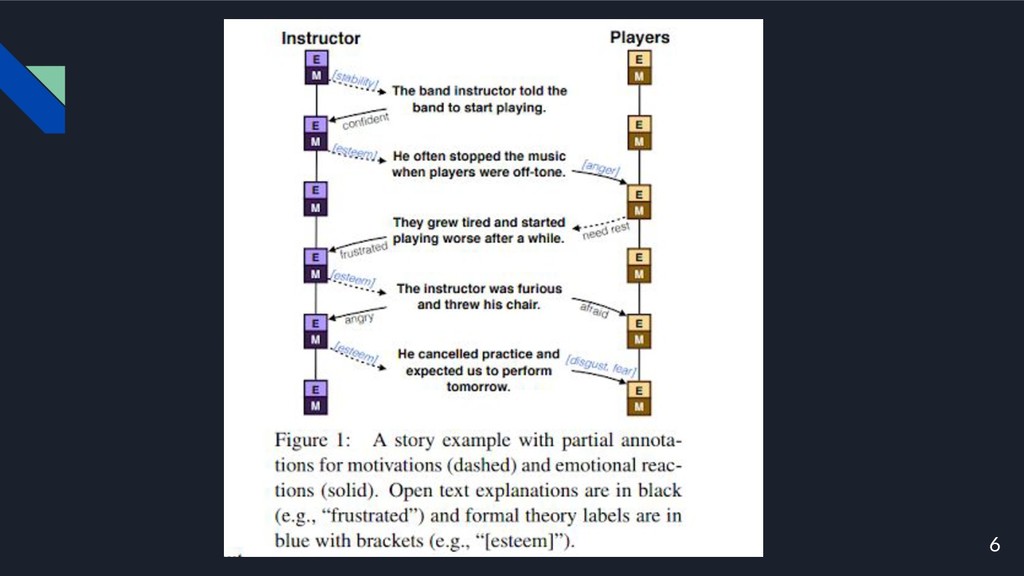
Introduction • 登場人物の精神状態に関して,短編小説を密にラベル付け するための新しいアノテーション形式を構築した Mostafazadeh et al.,2016→(この文献はコーパス構築につ いての内容) ◦ 文献url
: http://www.aclweb.org/anthology/N16-1098 5
6
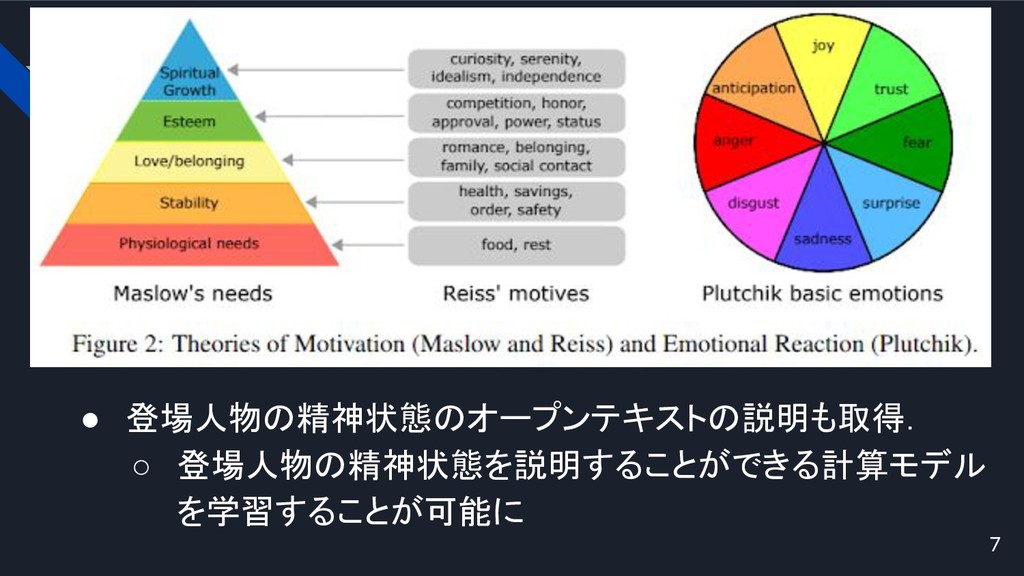
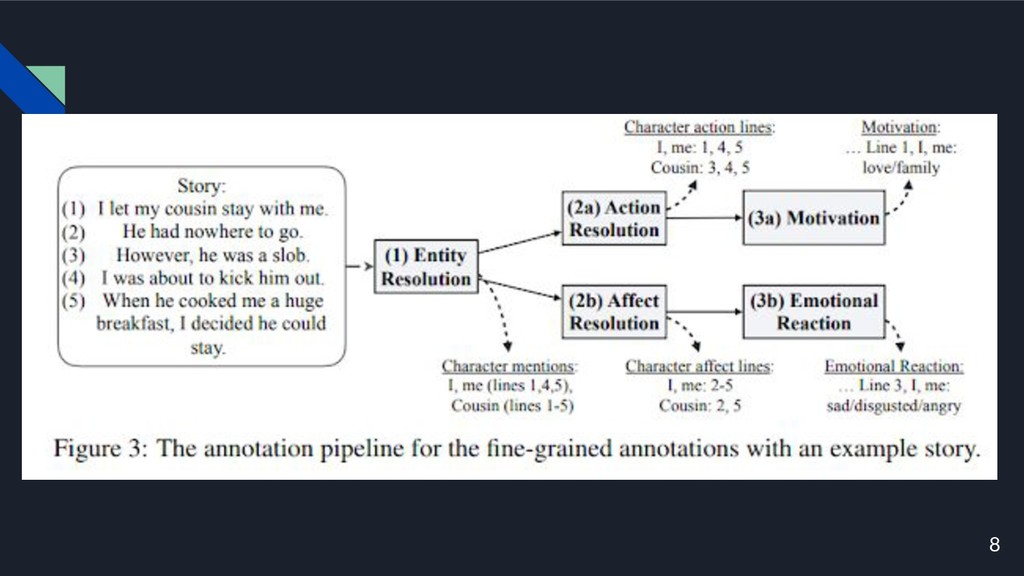
• 登場人物の精神状態のオープンテキストの説明も取得. ◦ 登場人物の精神状態を説明することができる計算モデル を学習することが可能に 7
8
9
10
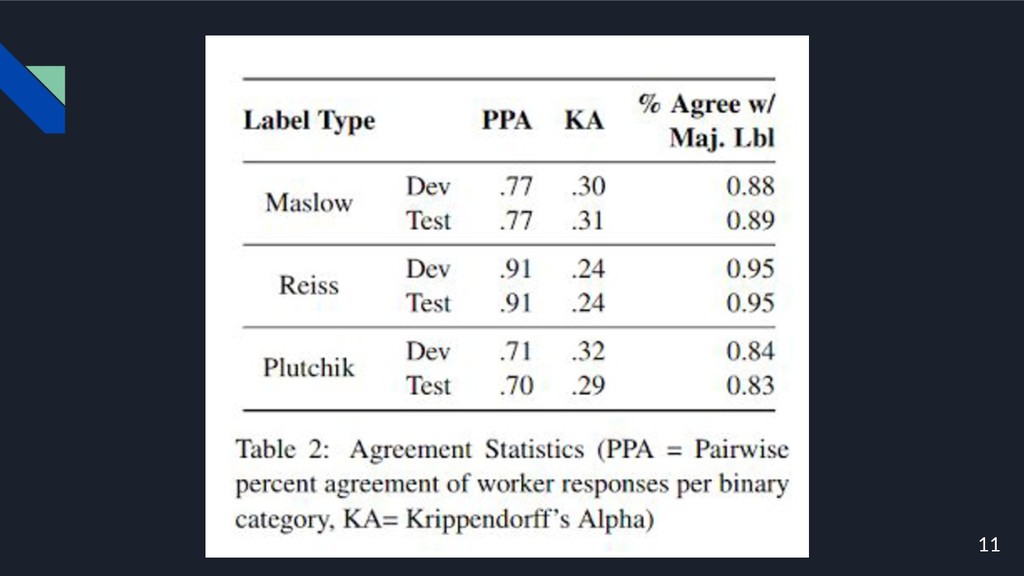
11
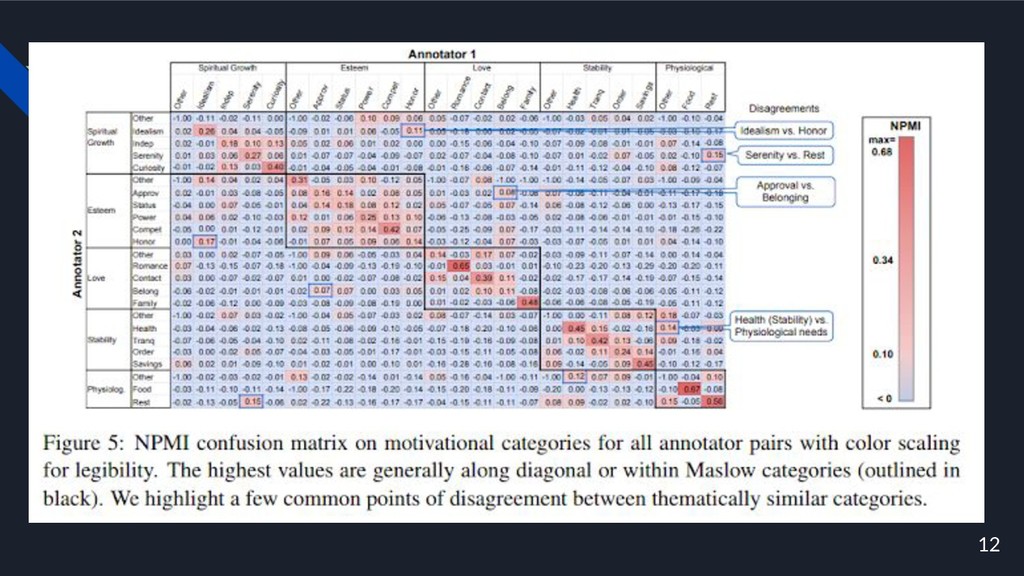
12
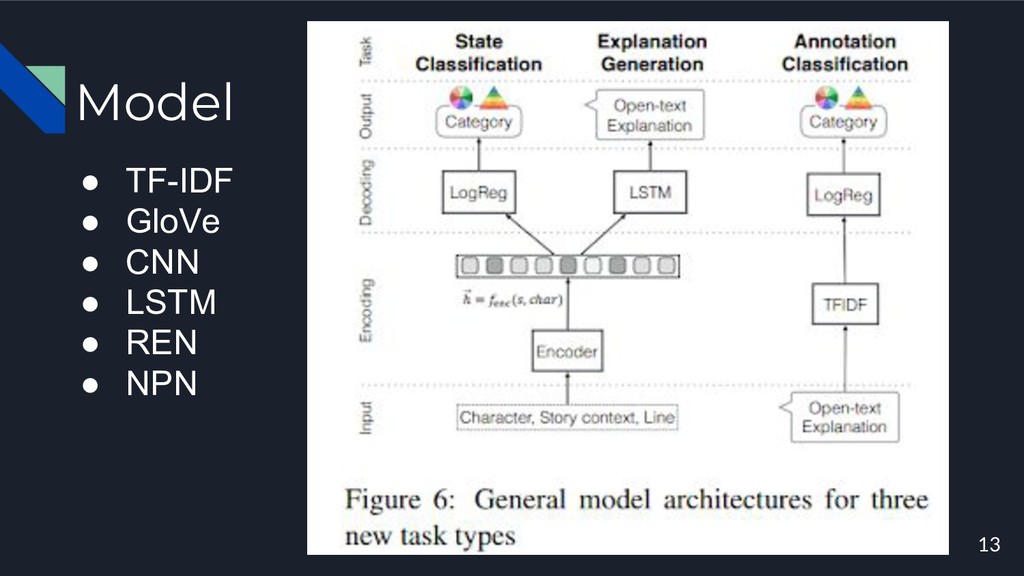
Model • TF-IDF • GloVe • CNN • LSTM •
REN • NPN 13
14
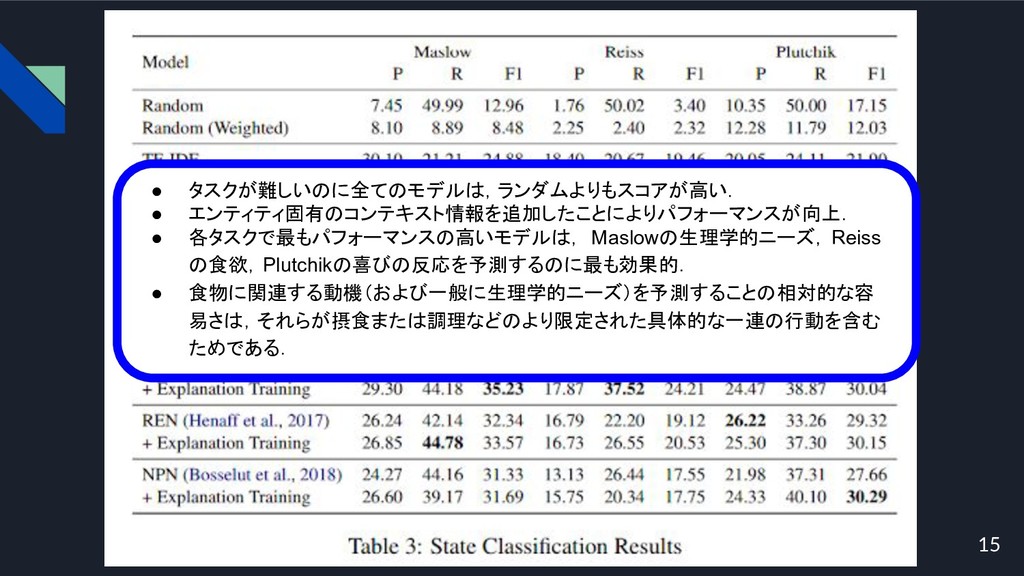
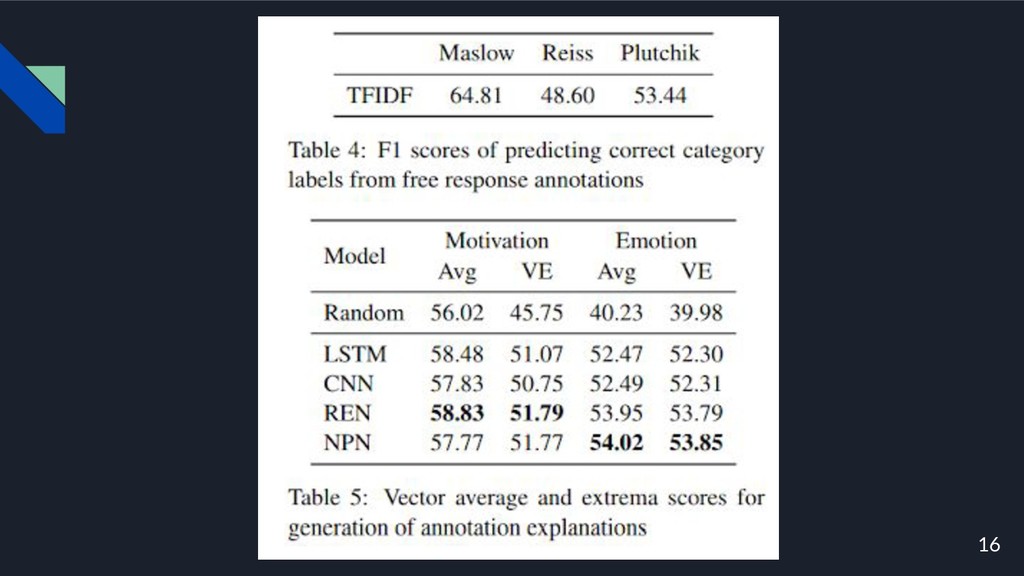
15 • タスクが難しいのに全てのモデルは,ランダムよりもスコアが高い. • エンティティ固有のコンテキスト情報を追加したことによりパフォーマンスが向上. • 各タスクで最もパフォーマンスの高いモデルは, Maslowの生理学的ニーズ, Reiss の食欲,Plutchikの喜びの反応を予測するのに最も効果的.
• 食物に関連する動機(および一般に生理学的ニーズ)を予測することの相対的な容 易さは,それらが摂食または調理などのより限定された具体的な一連の行動を含む ためである.
16
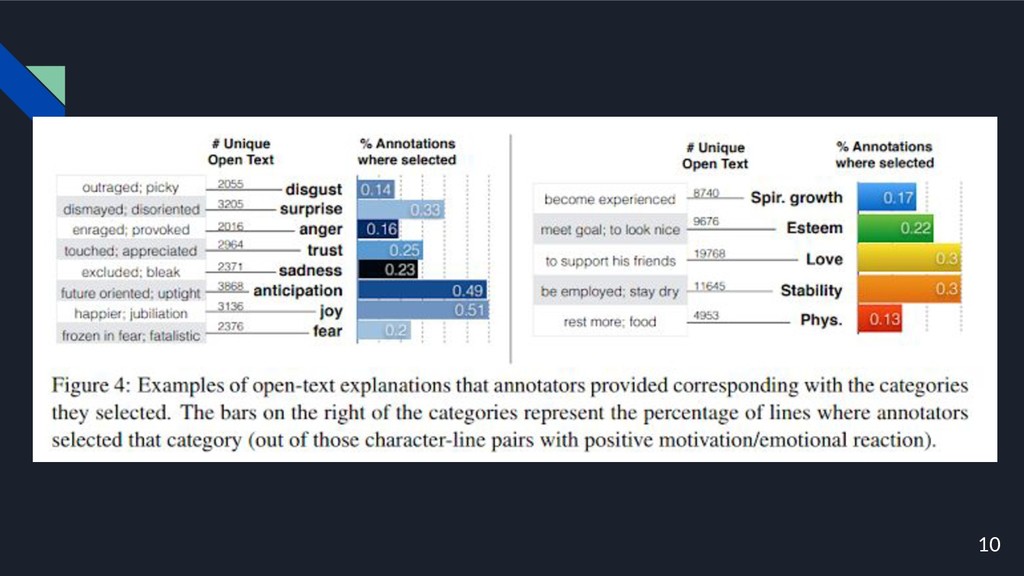
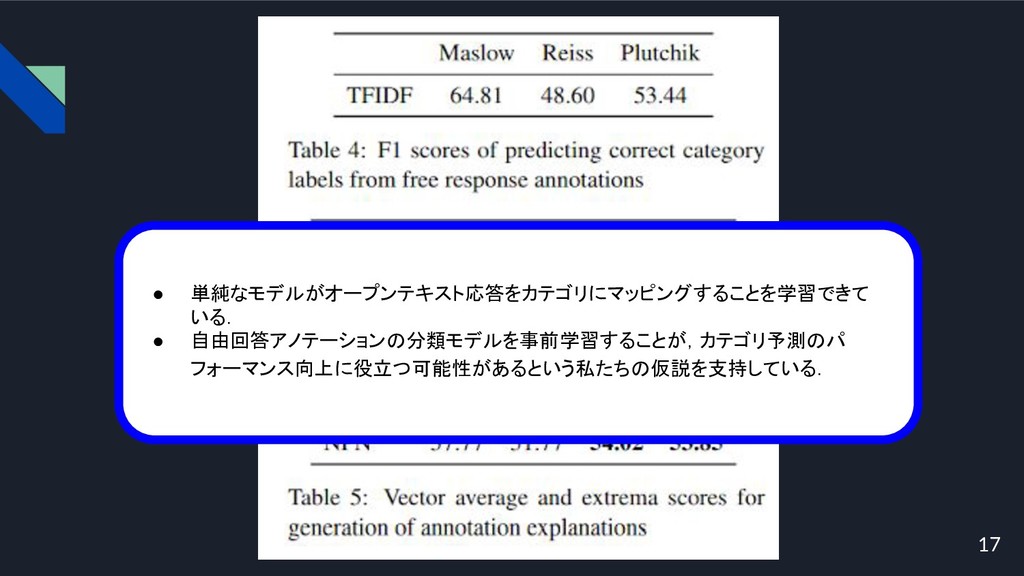
17 • 単純なモデルがオープンテキスト応答をカテゴリにマッピングすることを学習できて いる. • 自由回答アノテーションの分類モデルを事前学習することが,カテゴリ予測のパ フォーマンス向上に役立つ可能性があるという私たちの仮説を支持している.
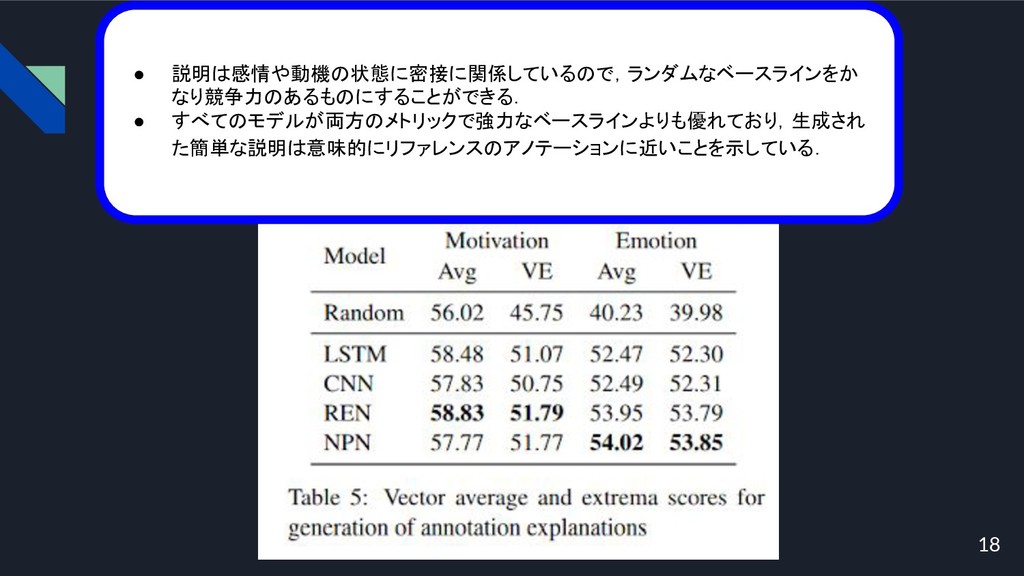
18 • 説明は感情や動機の状態に密接に関係しているので,ランダムなベースラインをか なり競争力のあるものにすることができる. • すべてのモデルが両方のメトリックで強力なベースラインよりも優れており,生成され た簡単な説明は意味的にリファレンスのアノテーションに近いことを示している.
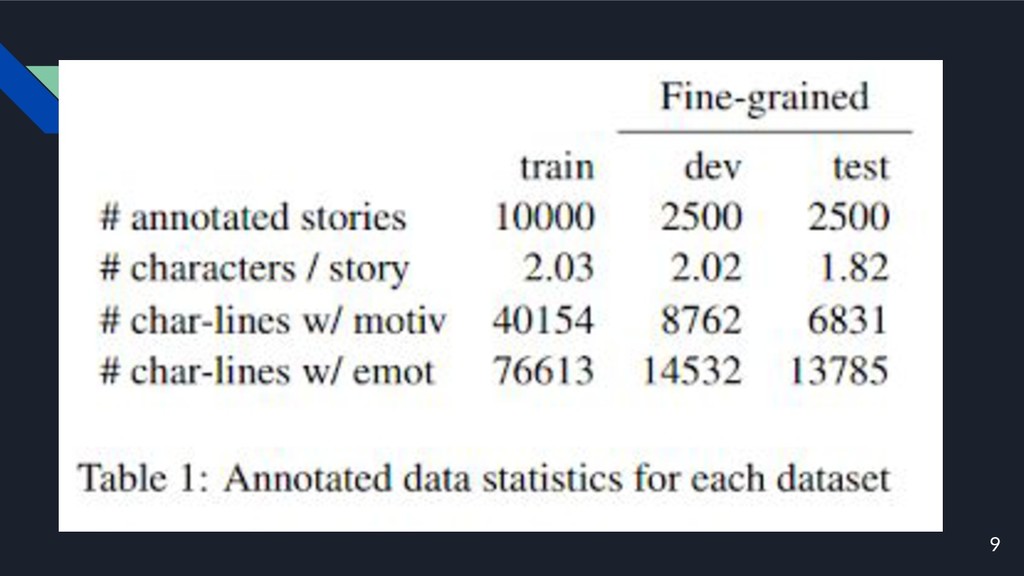
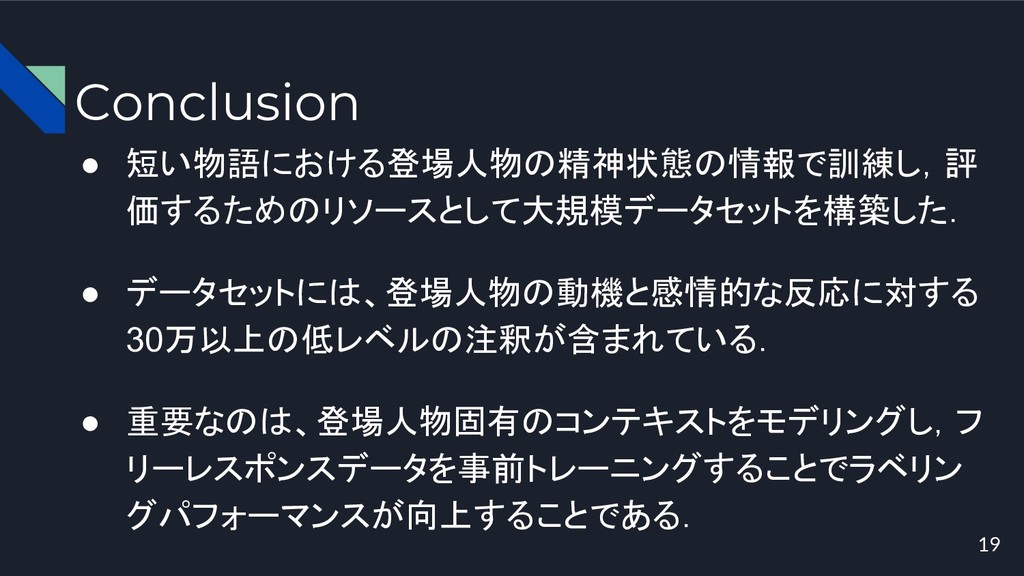
Conclusion • 短い物語における登場人物の精神状態の情報で訓練し,評 価するためのリソースとして大規模データセットを構築した. • データセットには、登場人物の動機と感情的な反応に対する 30万以上の低レベルの注釈が含まれている. • 重要なのは、登場人物固有のコンテキストをモデリングし,フ リーレスポンスデータを事前トレーニングすることでラベリン
グパフォーマンスが向上することである. 19


 yuto_kamiwaki
.png) satai
satai
 tsantalis
 nnchiba
 shunk031
 analokmaus
 kentaitakura
 koheishinden
 hisaokatsumi
 takehaya
 junkashihara
 kzmssk
 apolaine
 addyosmani
 marcduiker
 afnizarnur
 sabderemane
 tmiket
 ipullrank
 ryanjones
 rasagy
 minecr
 hatefulcrawdad
 matthewcrist