Upgrade to Pro — share decks privately, control downloads, hide ads and more …

Anderson "AI in Research and Learning at Yale U...

Anderson "AI in Research and Learning at Yale University Library"

This presentation was given by Clifford Anderson of Yale University for the “NISO Open Discovery Initiative (ODI) Webinar: Effect of Generative AI on Library Discovery.” The webinar was the third in a three-part public series, held on November 17, 2026.

Transcript

13 slides
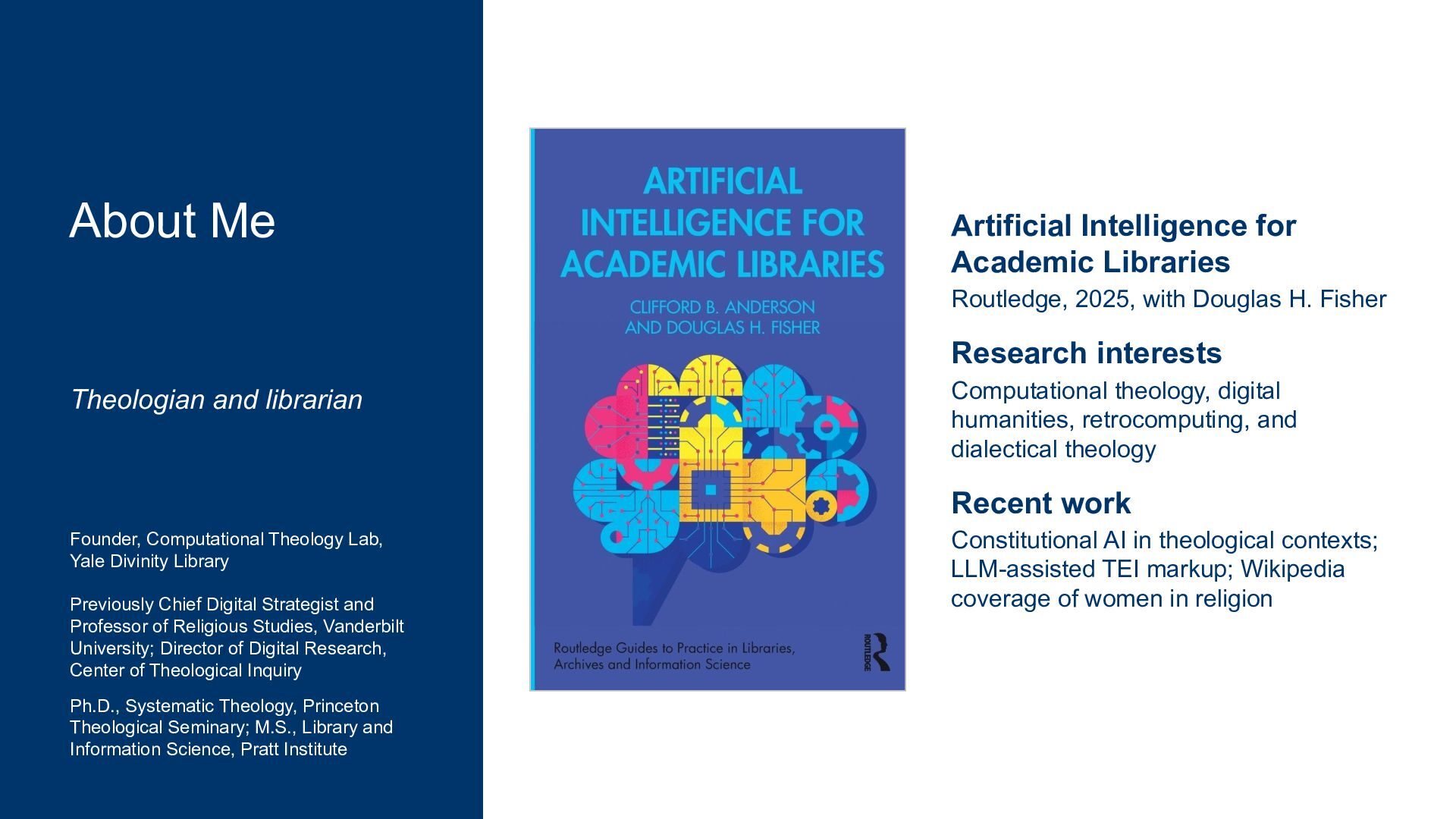
  1. About Me Artificial Intelligence for Academic Libraries Routledge, 2025, with

    Douglas H. Fisher Research interests Theologian and librarian Computational theology, digital humanities, retrocomputing, and dialectical theology Recent work Founder, Computational Theology Lab, Yale Divinity Library Previously Chief Digital Strategist and Professor of Religious Studies, Vanderbilt University; Director of Digital Research, Center of Theological Inquiry Ph.D., Systematic Theology, Princeton Theological Seminary; M.S., Library and Information Science, Pratt Institute Constitutional AI in theological contexts; LLM-assisted TEI markup; Wikipedia coverage of women in religion
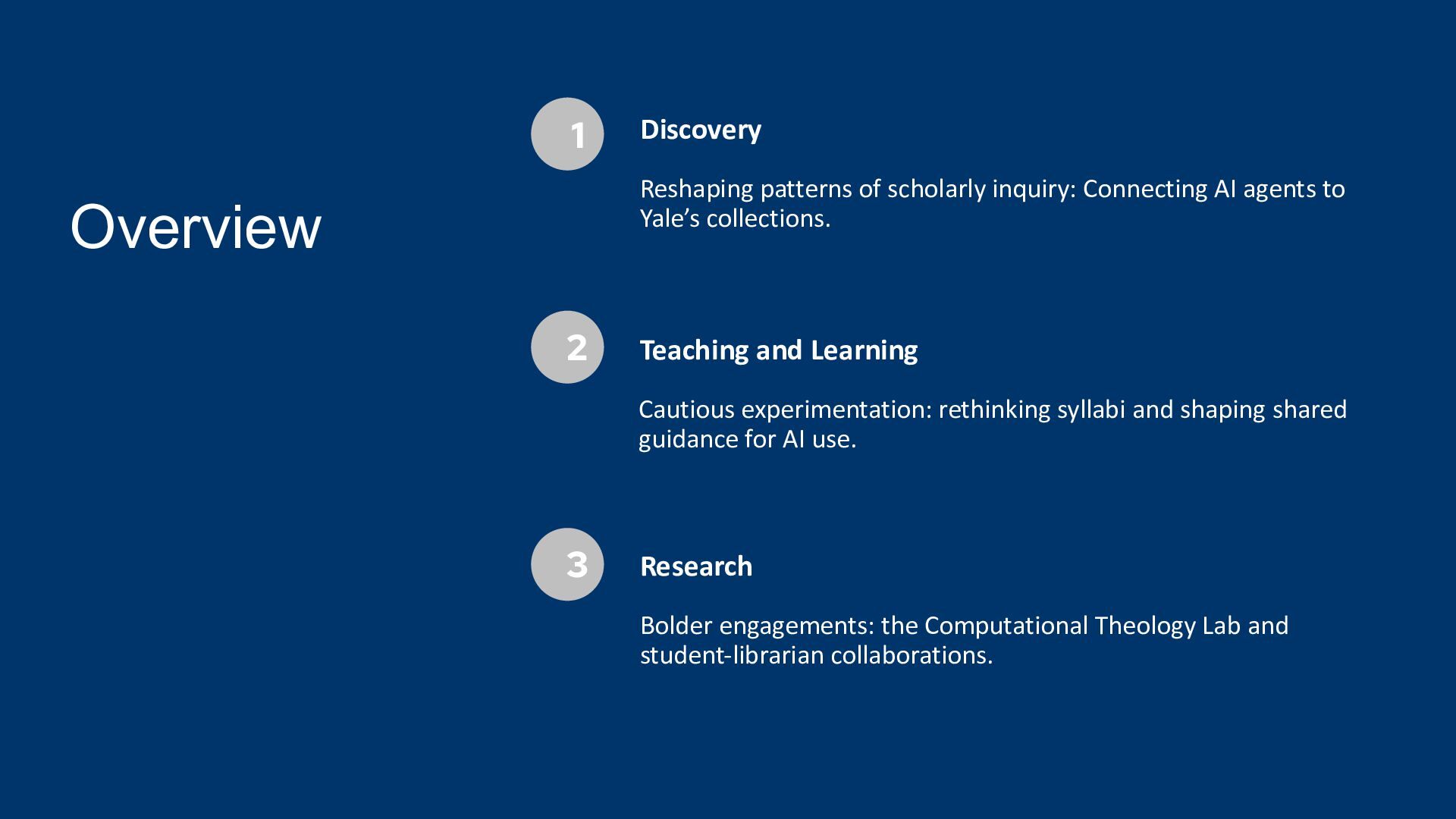
  2. 1 Discovery Reshaping patterns of scholarly inquiry: Connecting AI agents

    to Yale’s collections. Overview 2 Teaching and Learning Cautious experimentation: rethinking syllabi and shaping shared guidance for AI use. 3 Research Bolder engagements: the Computational Theology Lab and student-librarian collaborations.
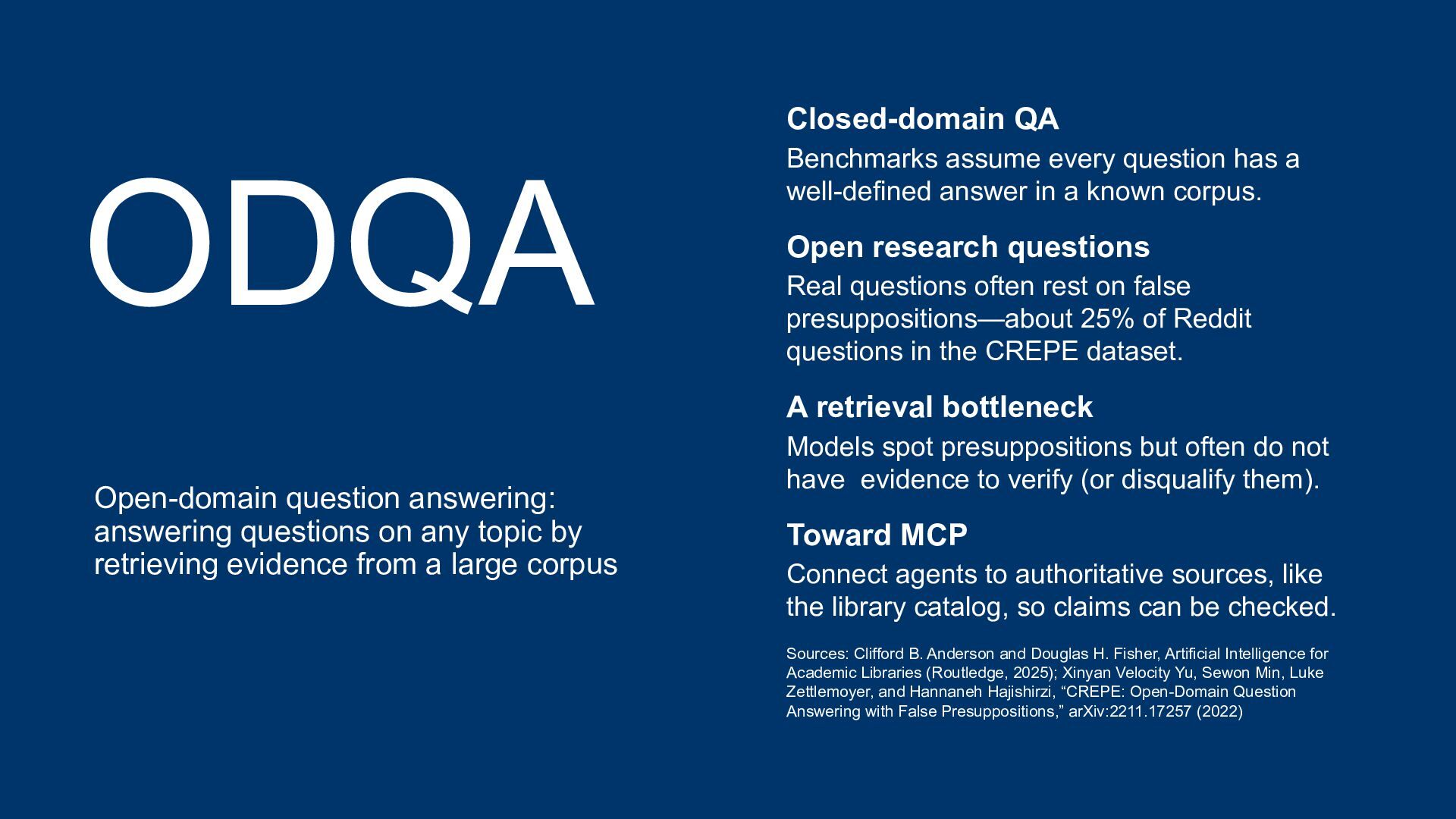
  3. Closed-domain QA ODQA Benchmarks assume every question has a well-defined

    answer in a known corpus. Open research questions Real questions often rest on false presuppositions—about 25% of Reddit questions in the CREPE dataset. A retrieval bottleneck Open-domain question answering: answering questions on any topic by retrieving evidence from a large corpus Models spot presuppositions but often do not have evidence to verify (or disqualify them). Toward MCP Connect agents to authoritative sources, like the library catalog, so claims can be checked. Sources: Clifford B. Anderson and Douglas H. Fisher, Artificial Intelligence for Academic Libraries (Routledge, 2025); Xinyan Velocity Yu, Sewon Min, Luke Zettlemoyer, and Hannaneh Hajishirzi, “CREPE: Open-Domain Question Answering with False Presuppositions,” arXiv:2211.17257 (2022)
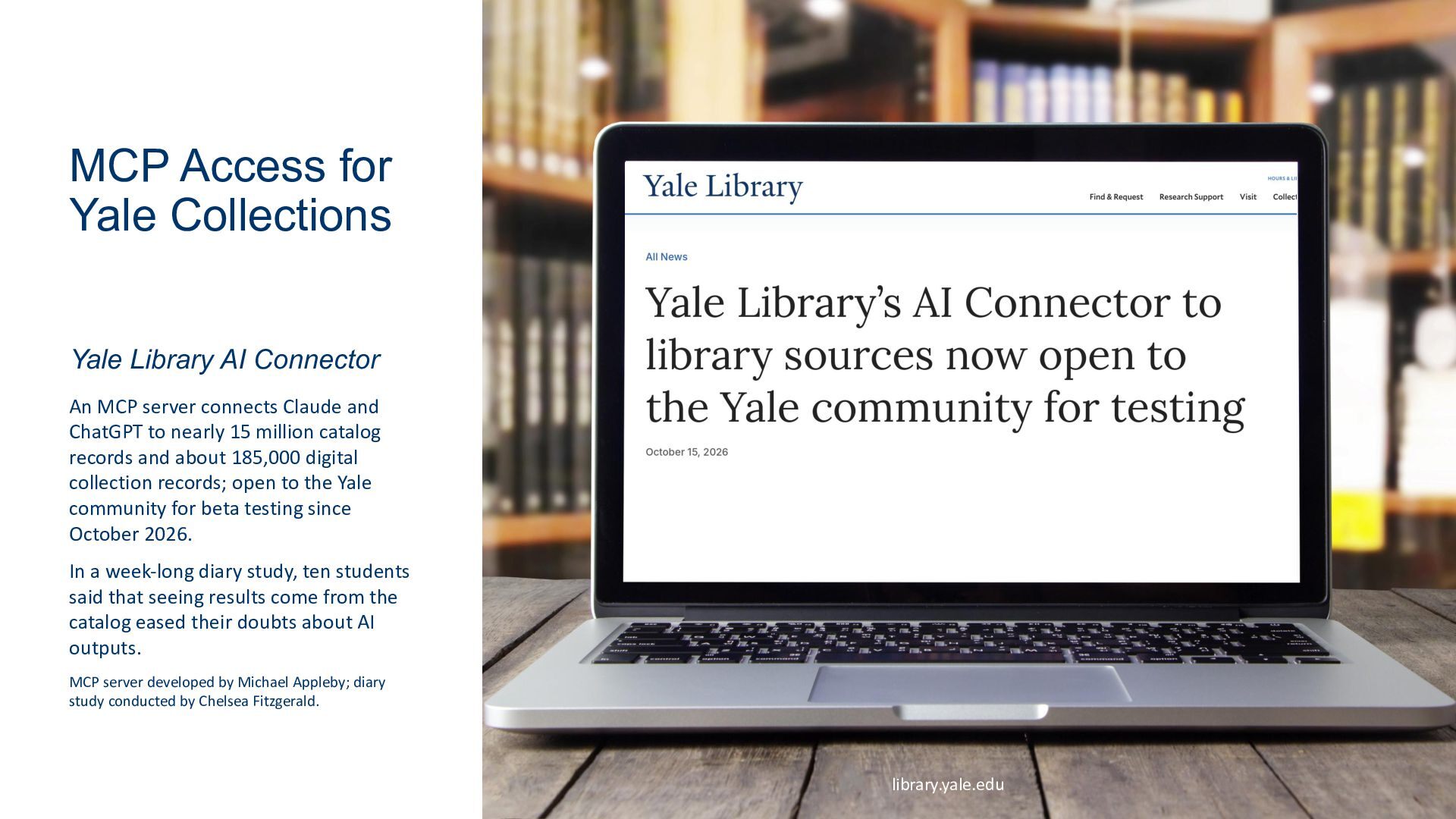
  4. MCP Access for Yale Collections Insert Picture Yale Library AI

    Connector An MCP server connects Claude and ChatGPT to nearly 15 million catalog records and about 185,000 digital collection records; open to the Yale community for beta testing since October 2026. In a week-long diary study, ten students said that seeing results come from the catalog eased their doubts about AI outputs. MCP server developed by Michael Appleby; diary study conducted by Chelsea Fitzgerald. library.yale.edu
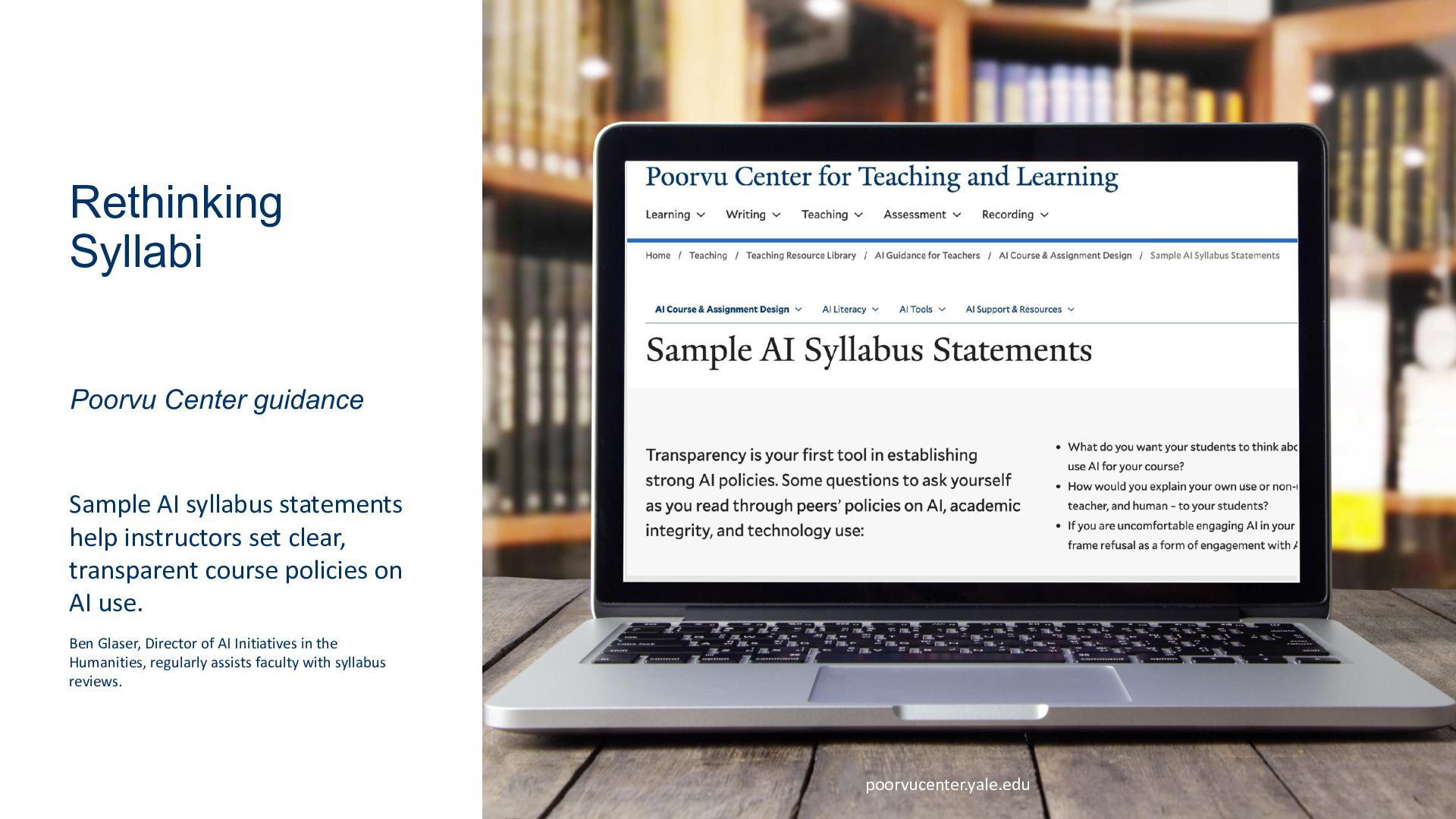
  5. Rethinking Syllabi Insert Picture Poorvu Center guidance Sample AI syllabus

    statements help instructors set clear, transparent course policies on AI use. Ben Glaser, Director of AI Initiatives in the Humanities, regularly assists faculty with syllabus reviews. poorvucenter.yale.edu
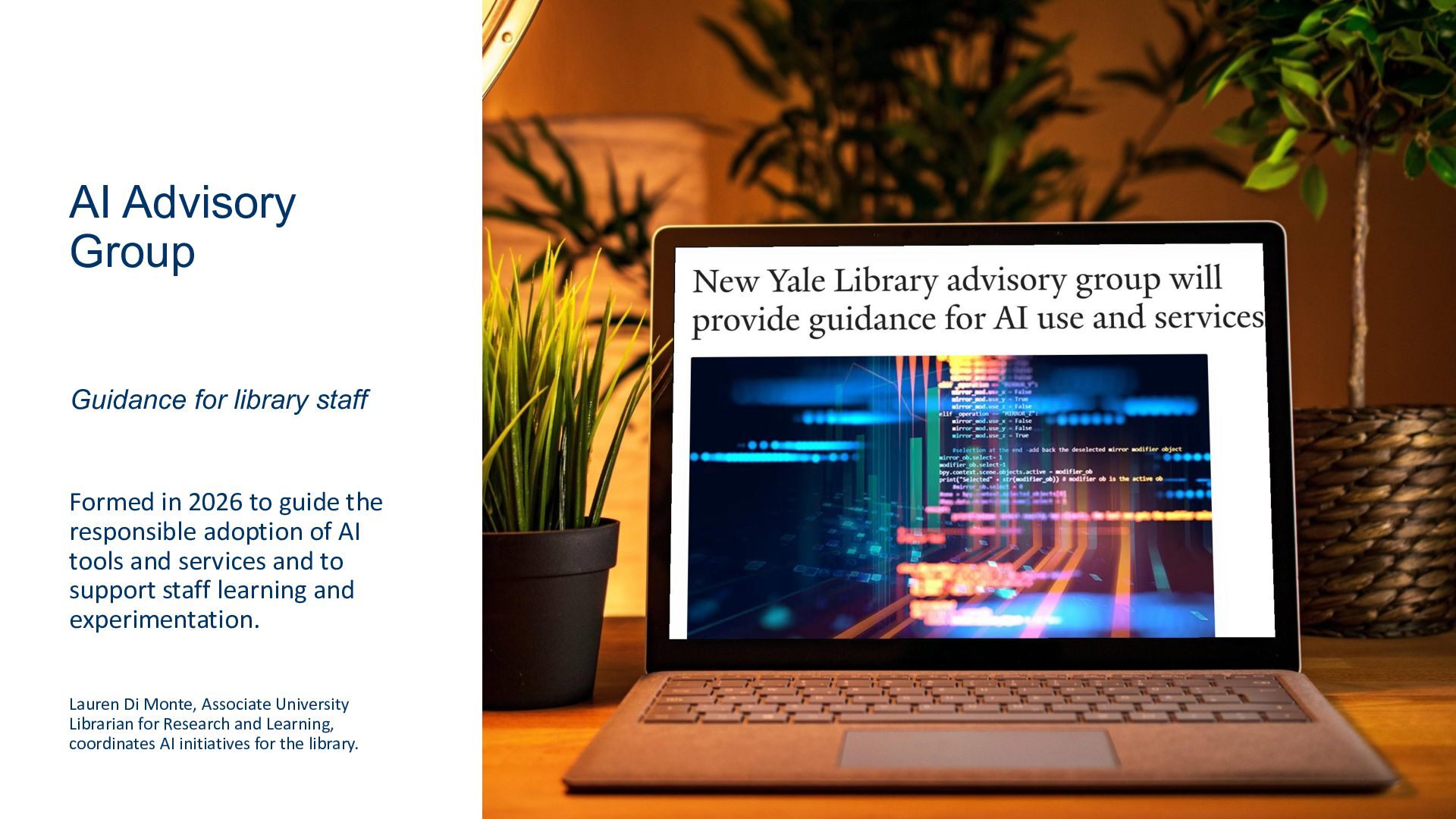
  6. AI Advisory Group Guidance for library staff Formed in 2026

    to guide the responsible adoption of AI tools and services and to support staff learning and experimentation. Lauren Di Monte, Associate University Librarian for Research and Learning, coordinates AI initiatives for the library. Insert Picture
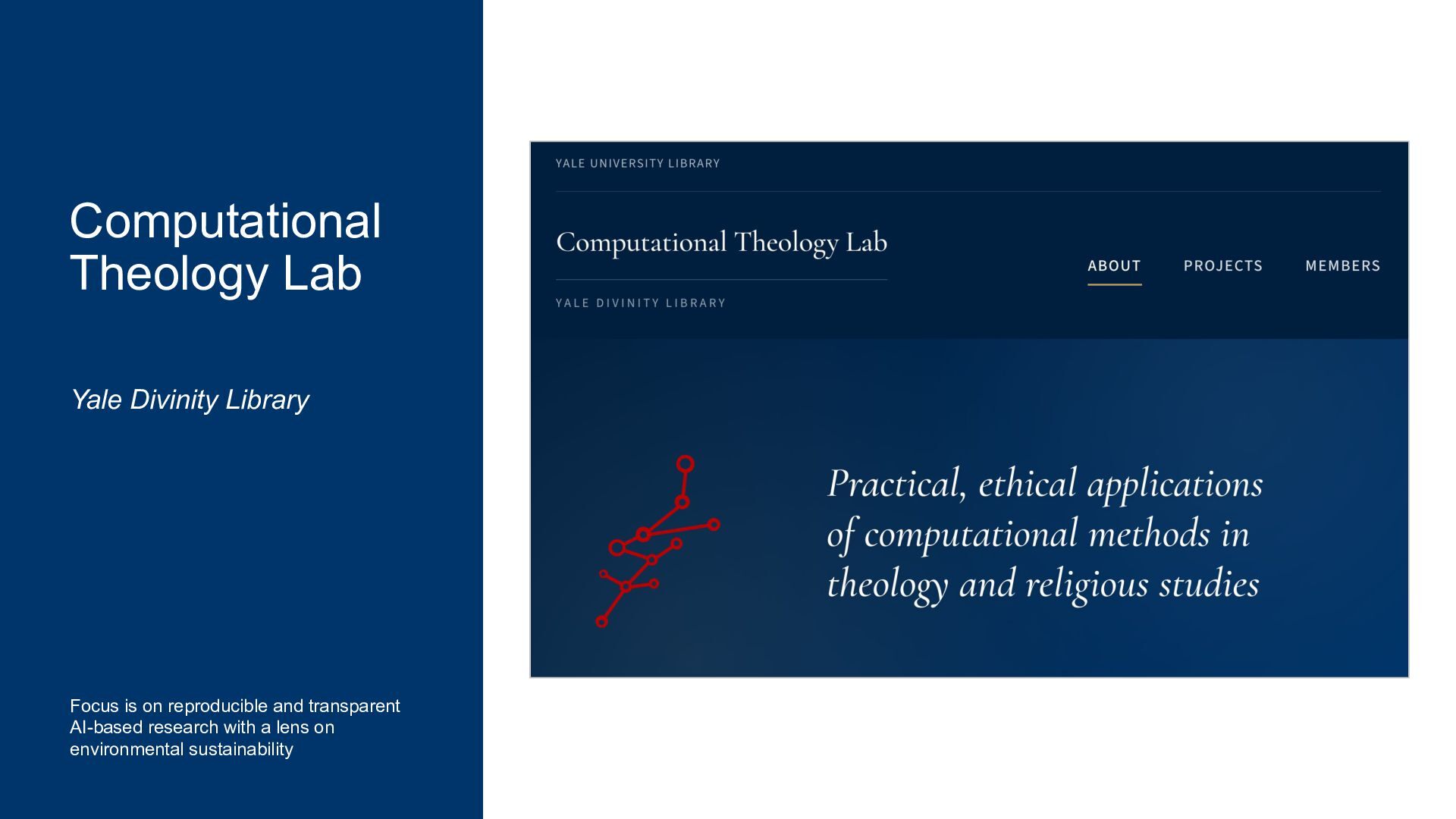
  7. Computational Theology Lab Yale Divinity Library Focus is on reproducible

    and transparent AI-based research with a lens on environmental sustainability
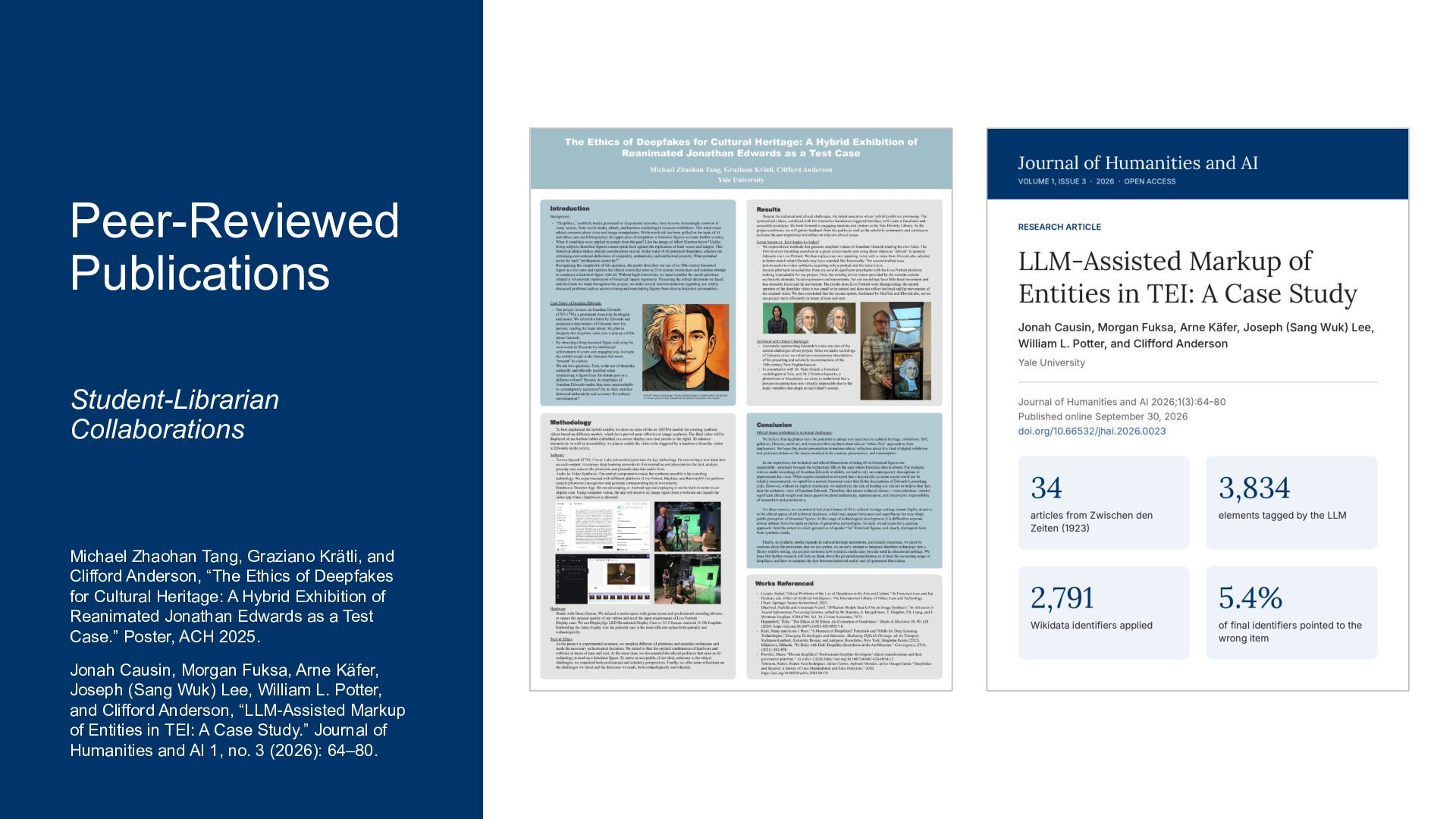
  8. Peer-Reviewed Publications Student-Librarian Collaborations Michael Zhaohan Tang, Graziano Krätli, and

    Clifford Anderson, “The Ethics of Deepfakes for Cultural Heritage: A Hybrid Exhibition of Reanimated Jonathan Edwards as a Test Case.” Poster, ACH 2025. Jonah Causin, Morgan Fuksa, Arne Käfer, Joseph (Sang Wuk) Lee, William L. Potter, and Clifford Anderson, “LLM-Assisted Markup of Entities in TEI: A Case Study.” Journal of Humanities and AI 1, no. 3 (2026): 64–80.

More Decks by National Information Standards Organization

Other Decks in Education