Upgrade to Pro — share decks privately, control downloads, hide ads and more …

My Three Ex’s: A Data Science Approach for Appl...

Sponsored · SiteGround - Reliable hosting with speed, security, and support you can count on.

My Three Ex’s: A Data Science Approach for Applied Machine Learning

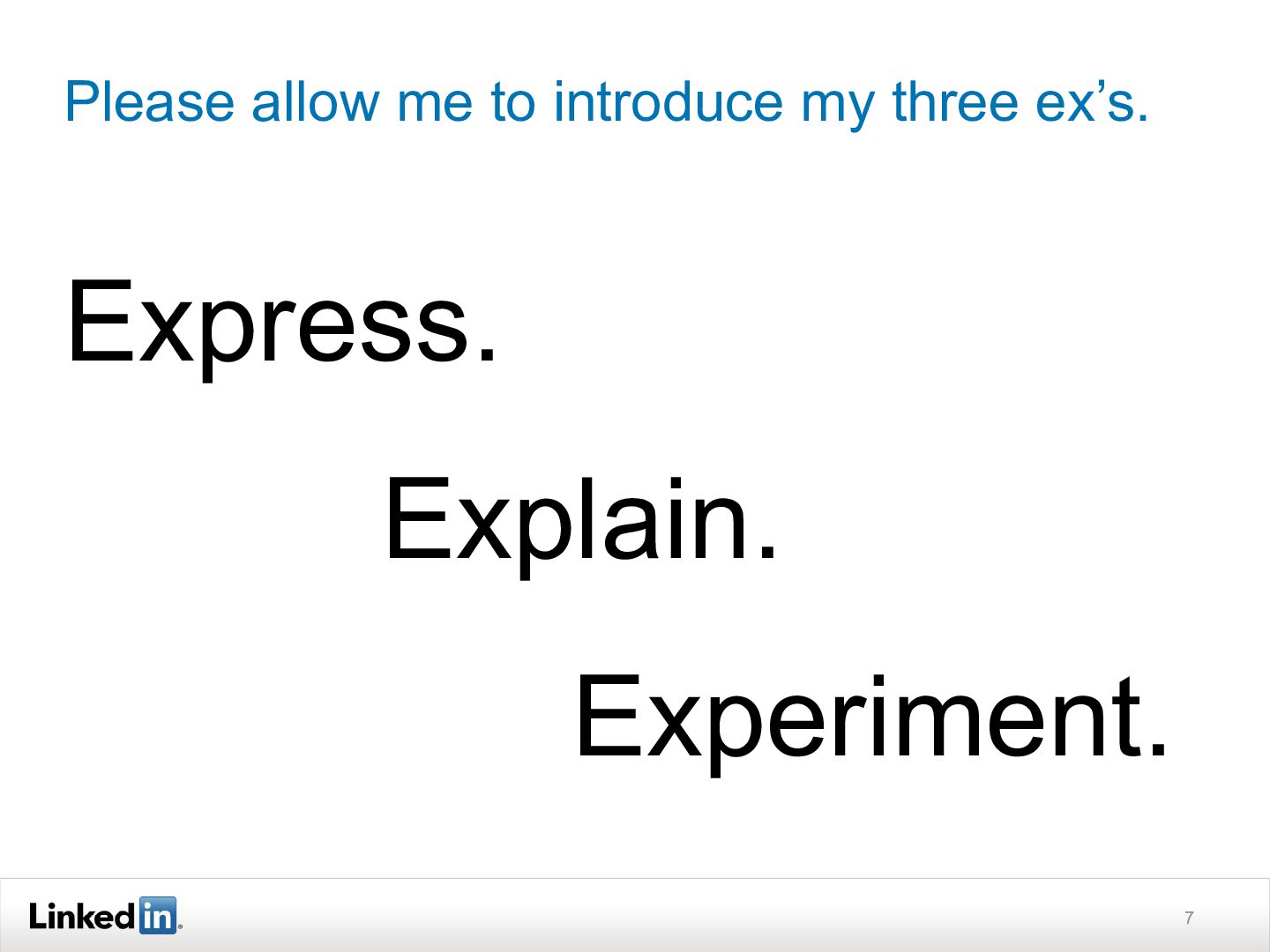
This QCon SF 2014 presentation focuses on the data science mindset for successfully applying machine learning to solve problems: express, explain, experiment. The presentation isn’t about machine learning as such, but rather about applying machine learning to solve problems.

Avatar for Daniel Tunkelang

Daniel Tunkelang

May 25, 2026

More Decks by Daniel Tunkelang

Other Decks in Technology

Transcript

  1. 3 First, a disclosure. This isn’t a talk about machine

    learning. It’s a talk about applying machine learning. What’s the difference?
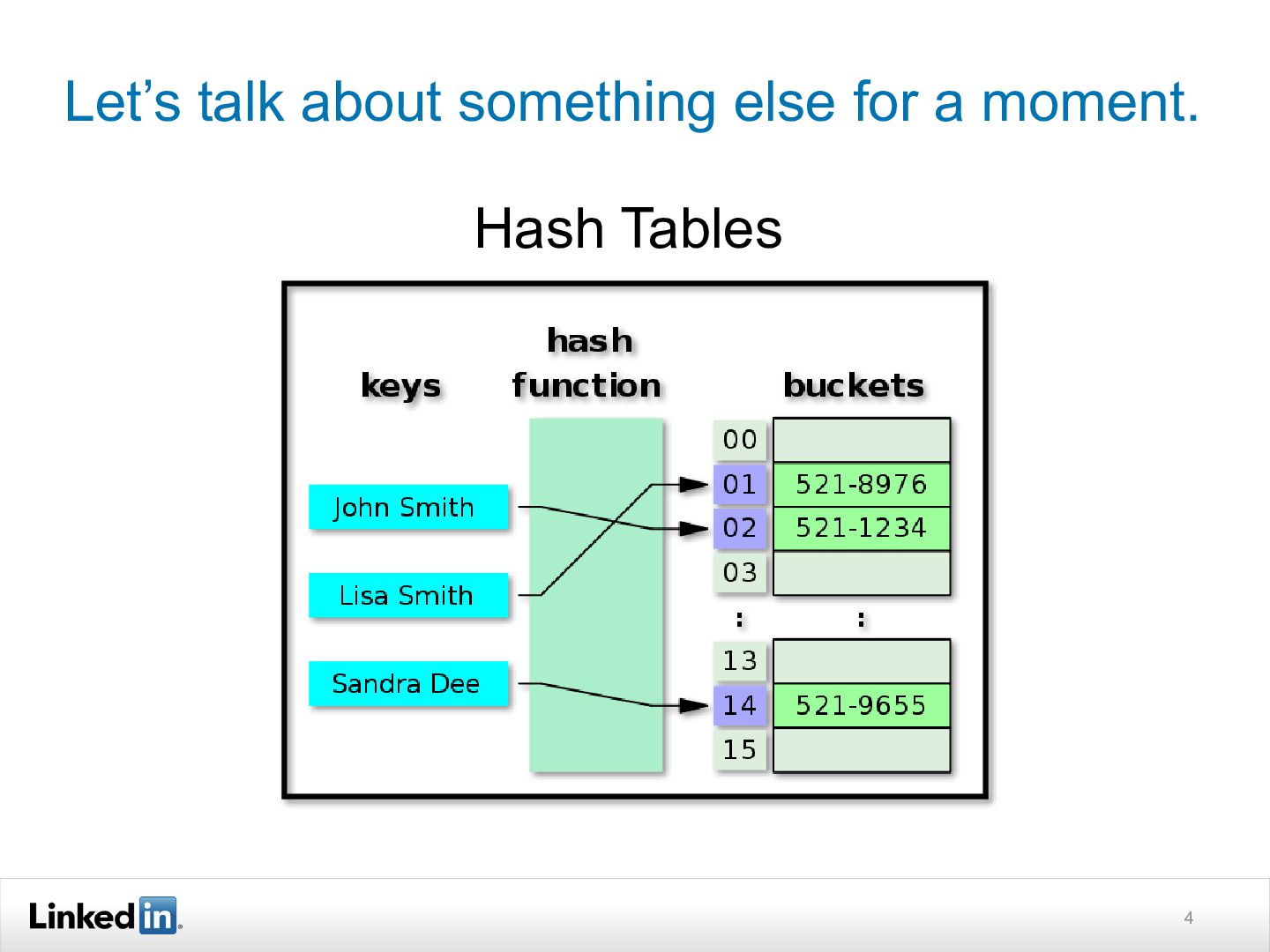
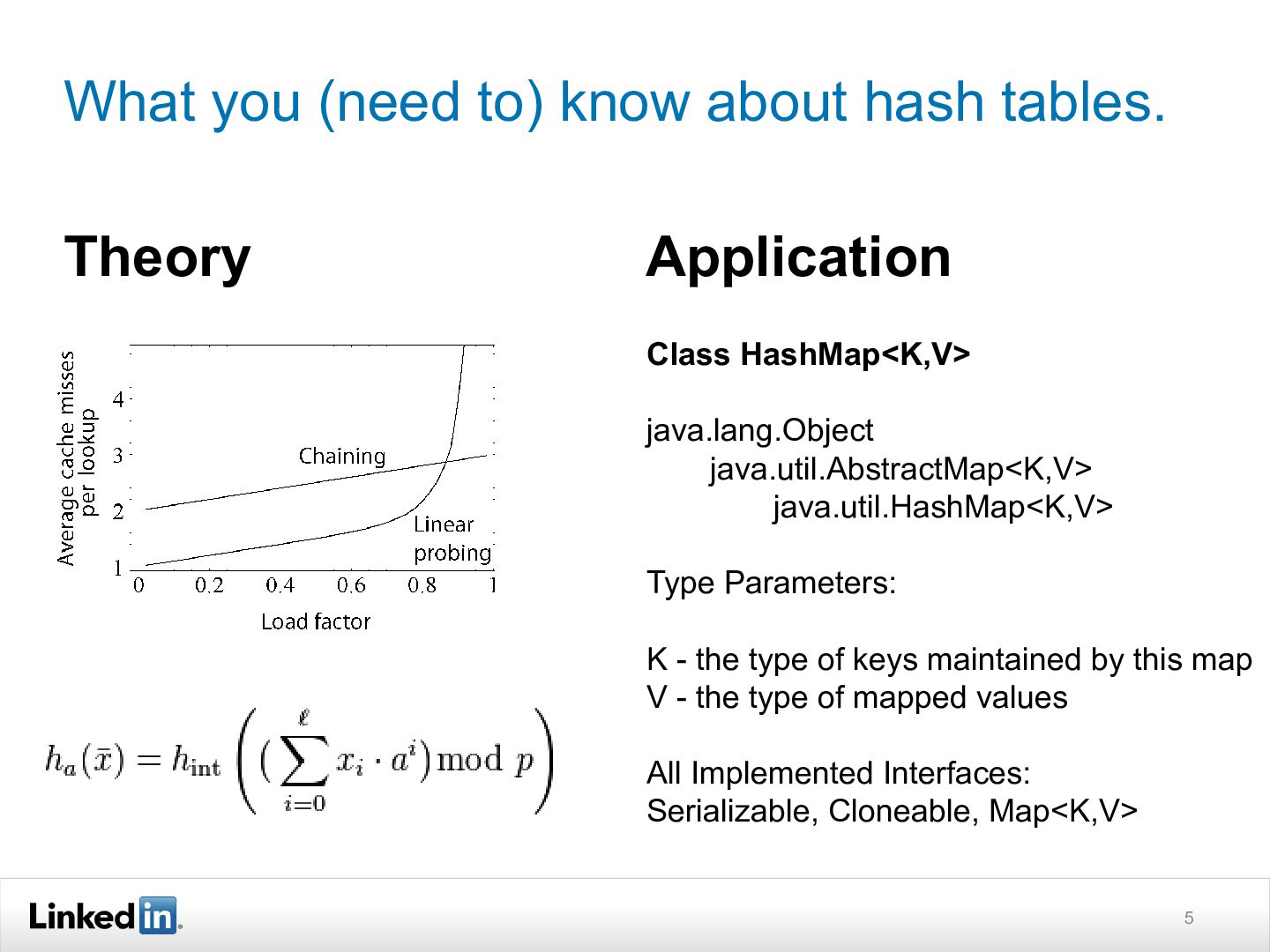
  2. 5 What you (need to) know about hash tables. Theory

    Application Class HashMap<K,V> java.lang.Object java.util.AbstractMap<K,V> java.util.HashMap<K,V> Type Parameters: K - the type of keys maintained by this map V - the type of mapped values All Implemented Interfaces: Serializable, Cloneable, Map<K,V>
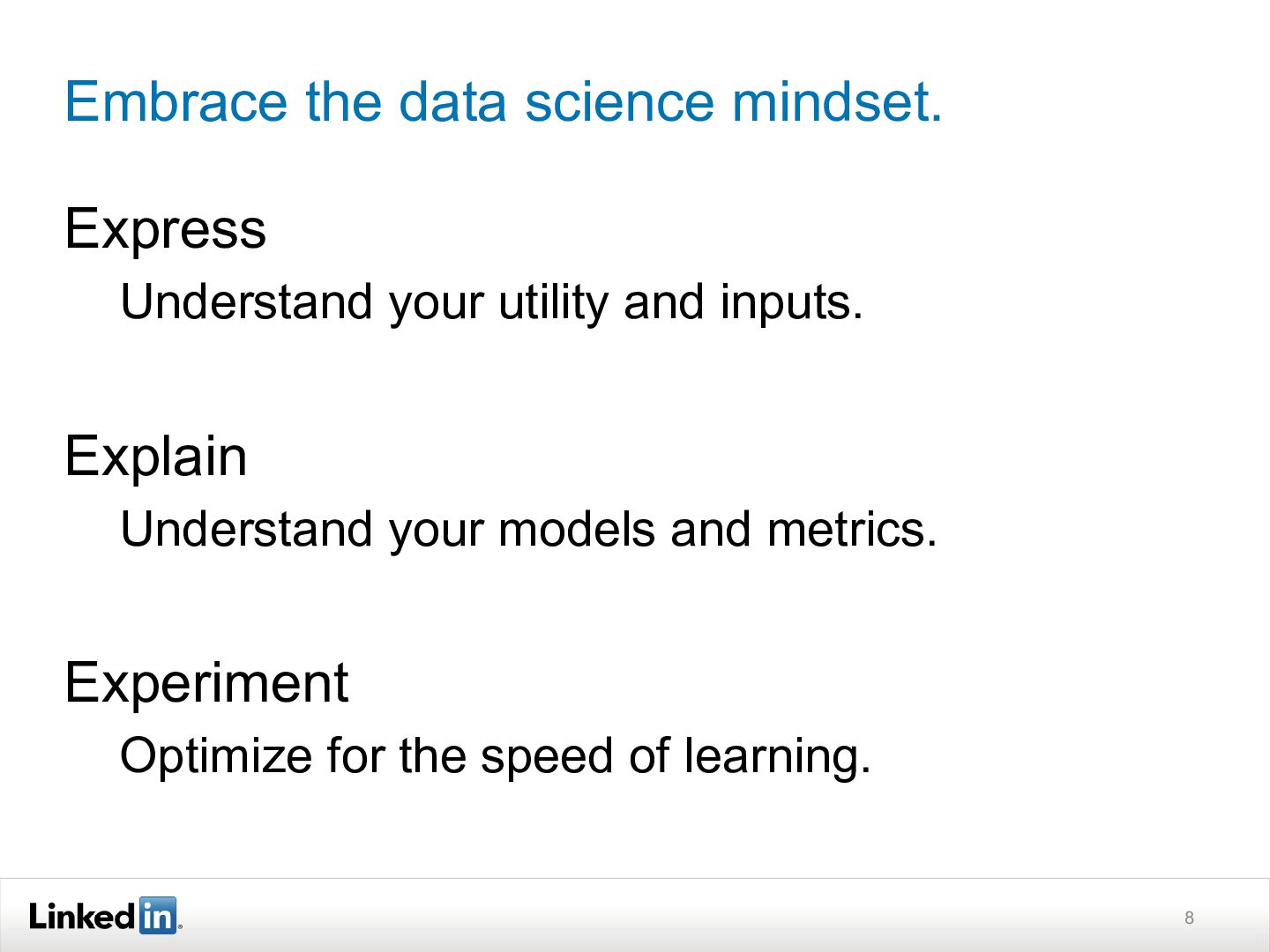
  3. 8 Embrace the data science mindset. Express Understand your utility

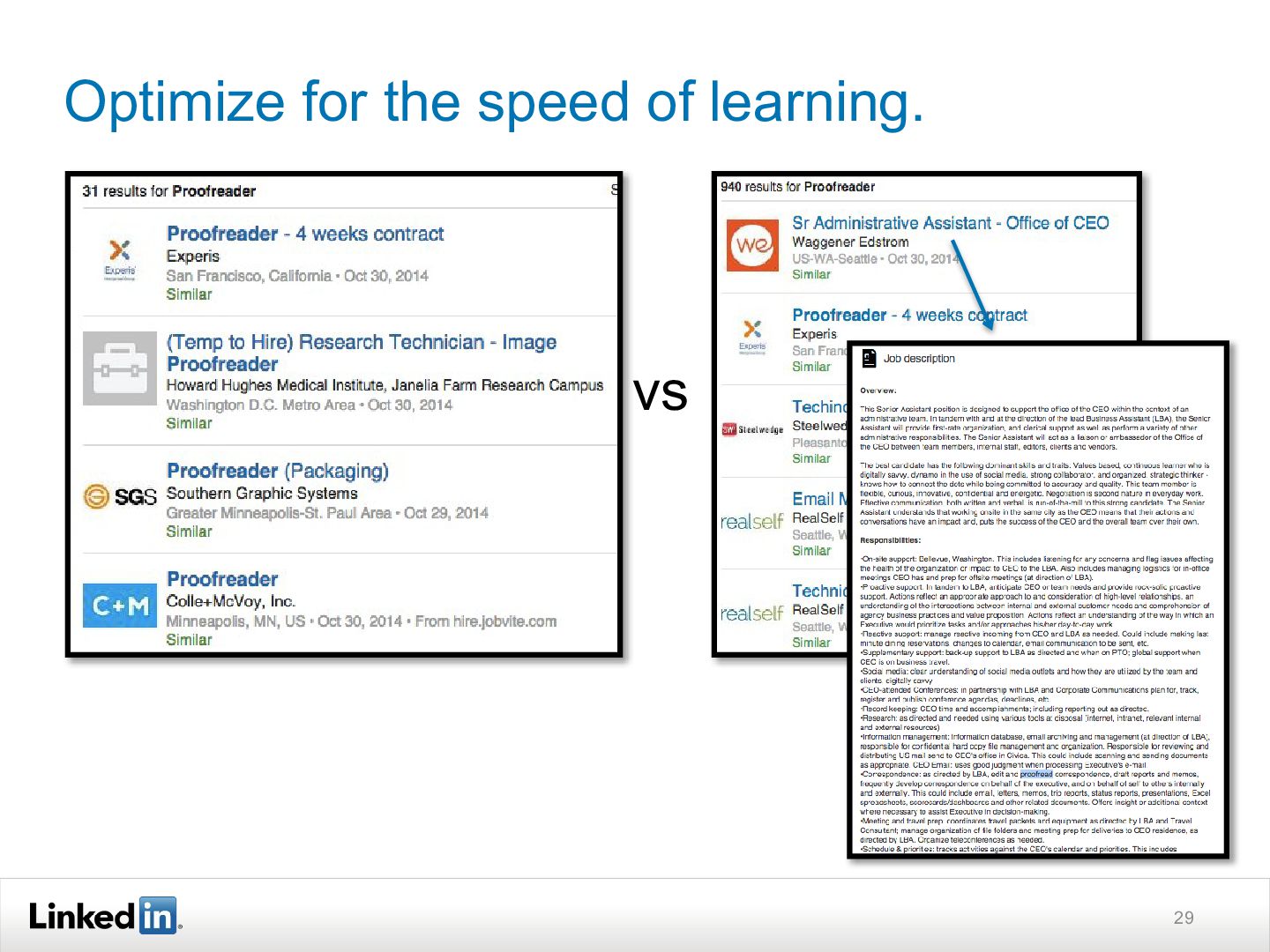
    and inputs. Explain Understand your models and metrics. Experiment Optimize for the speed of learning.
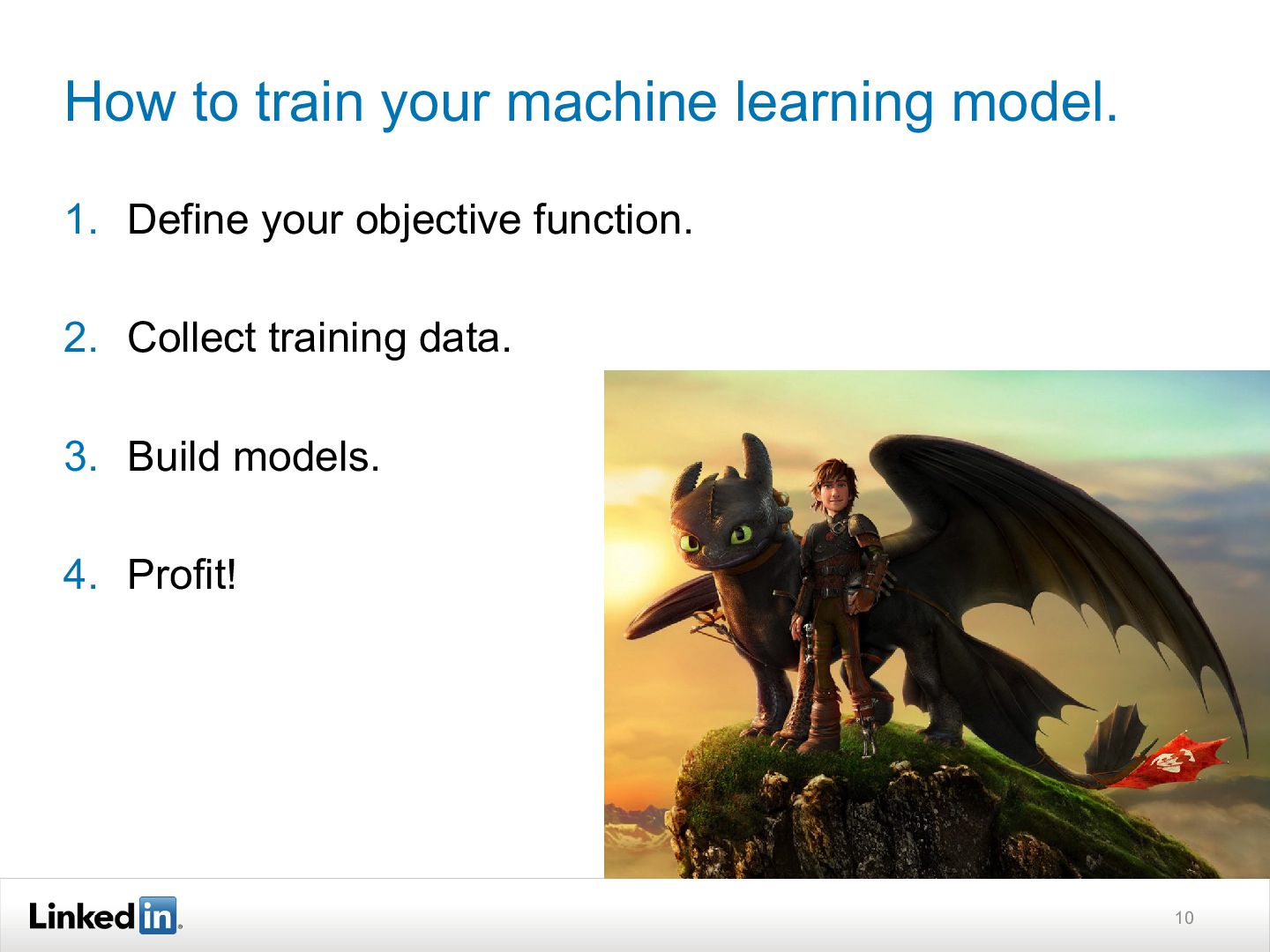
  4. 10 How to train your machine learning model. 1. Define

    your objective function. 2. Collect training data. 3. Build models. 4. Profit!
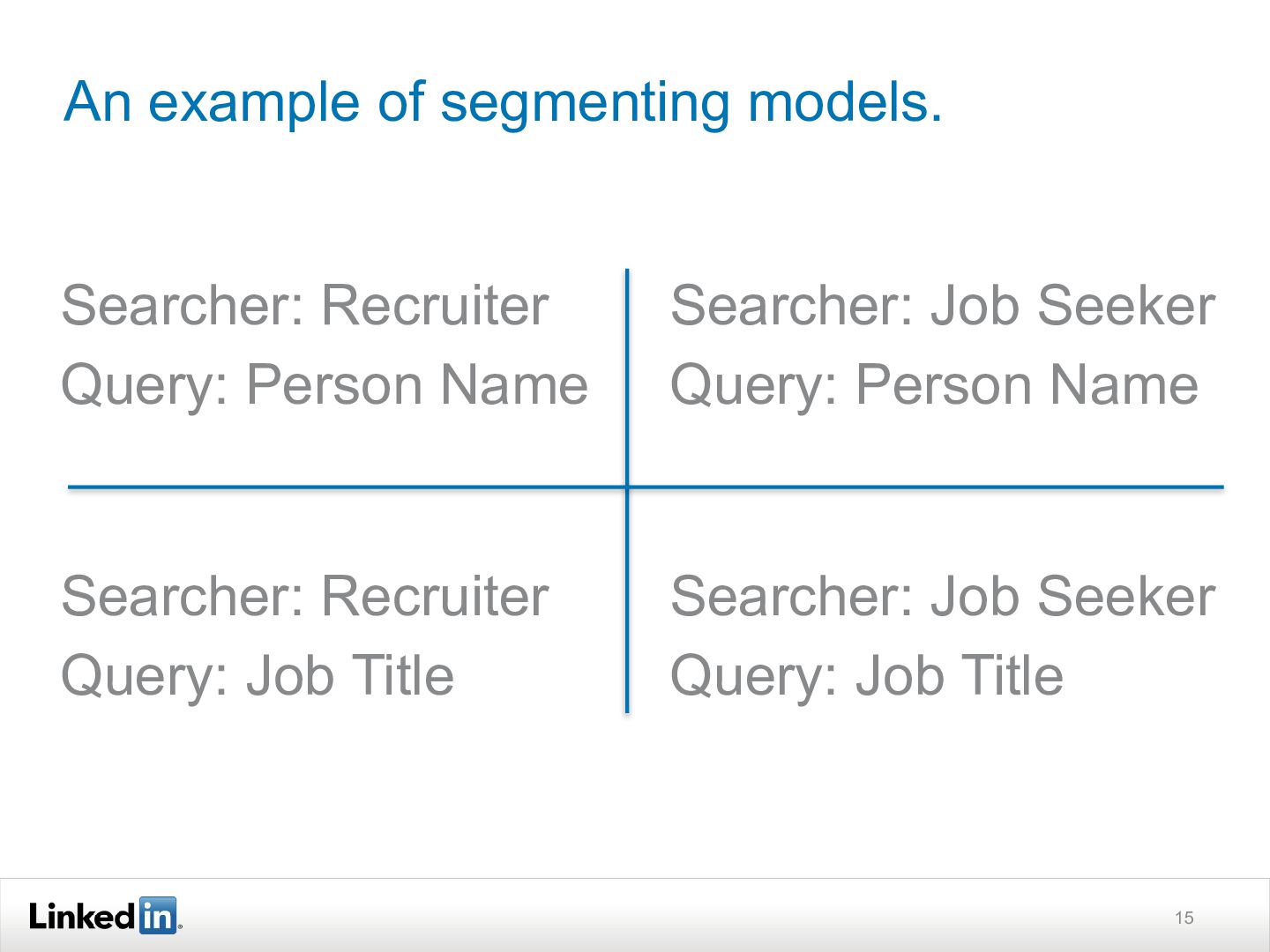
  5. 15 An example of segmenting models. Searcher: Recruiter Query: Person

    Name Searcher: Job Seeker Query: Person Name Searcher: Recruiter Query: Job Title Searcher: Job Seeker Query: Job Title
  6. 17 Express: Summary.  Choose an objective function that models

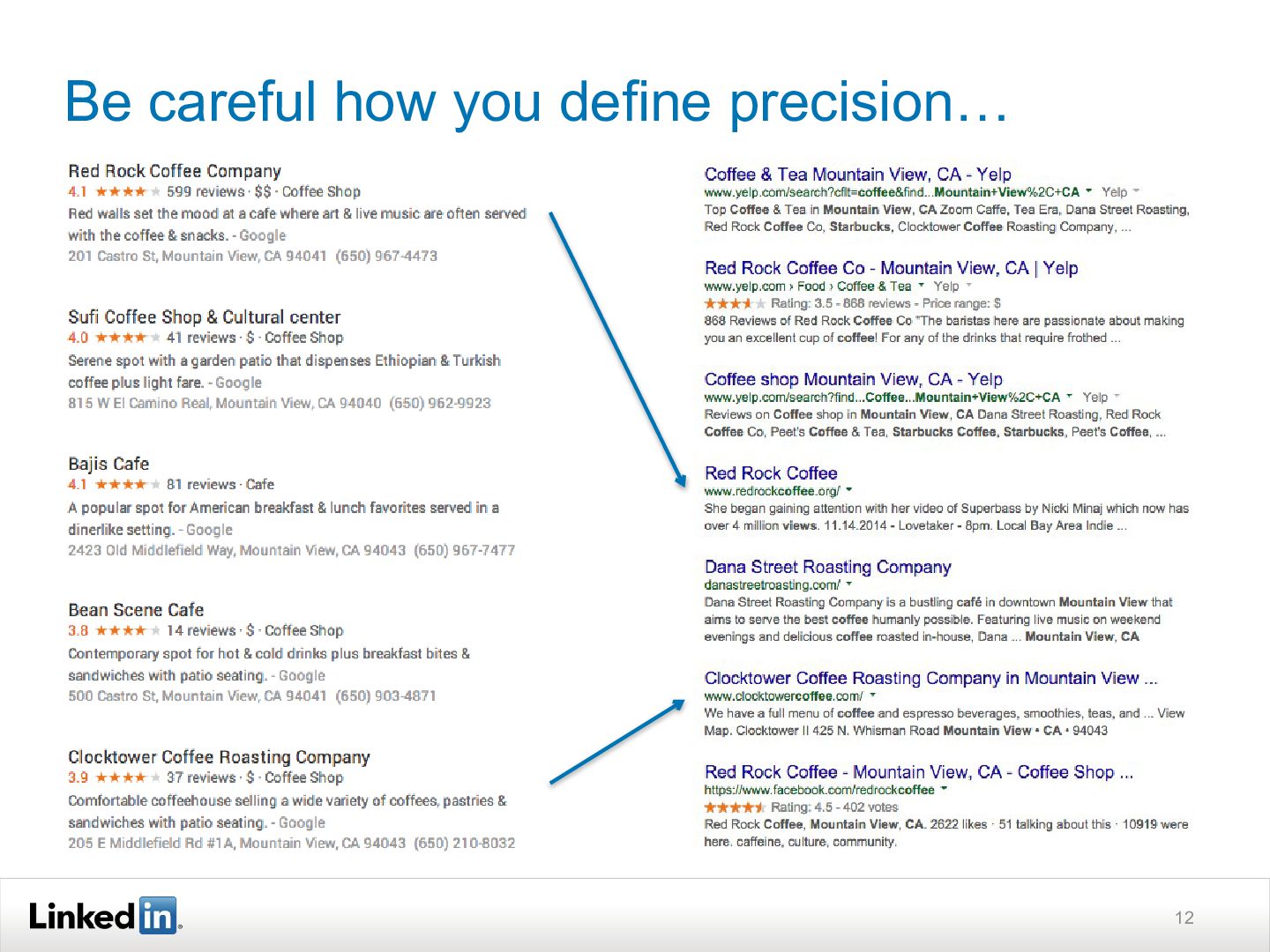
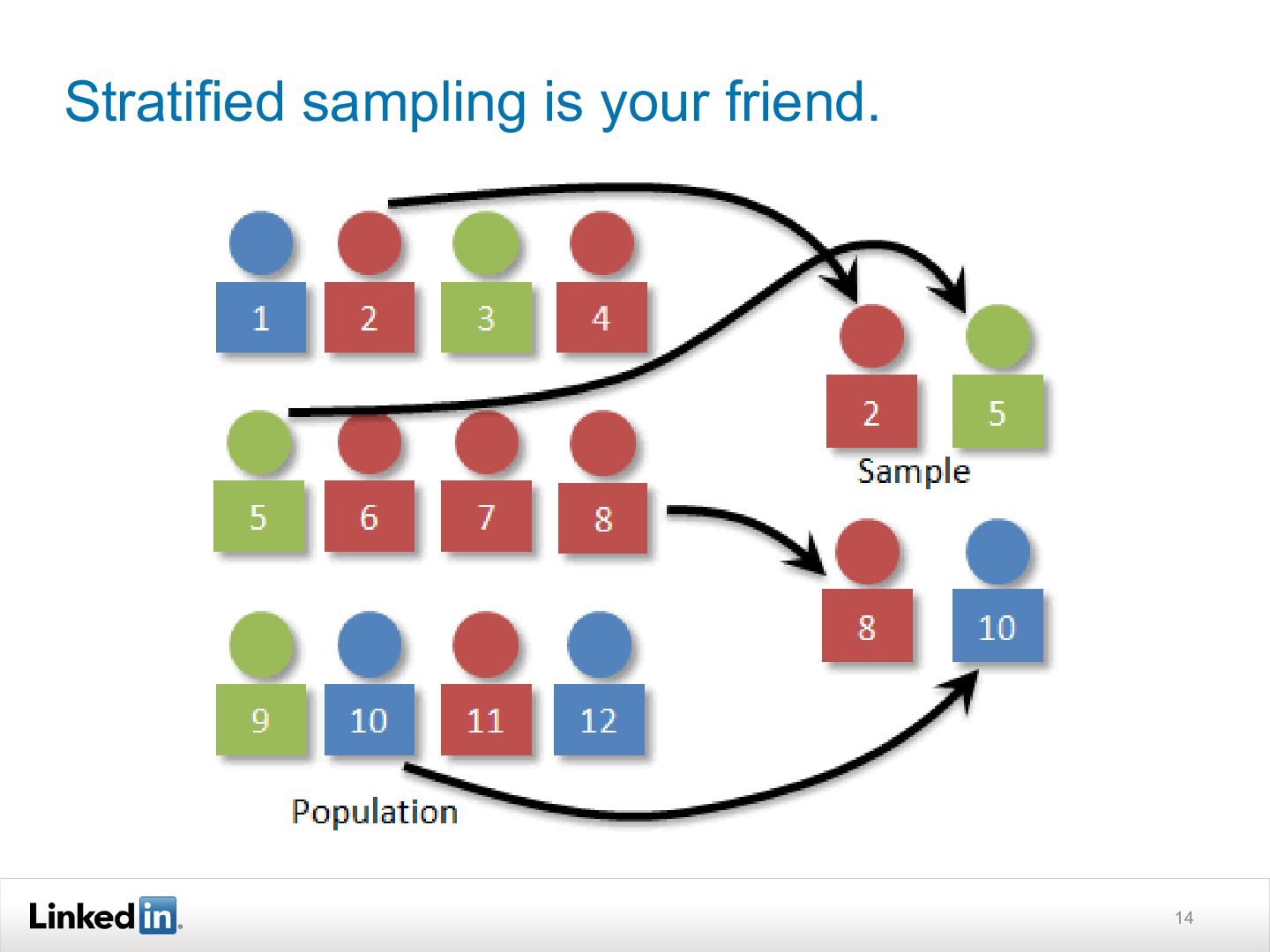
    utility.  Be careful how you define precision.  Account for non-uniform inputs and costs.  Stratified sampling is your friend.  Express yourself in your feature vectors.
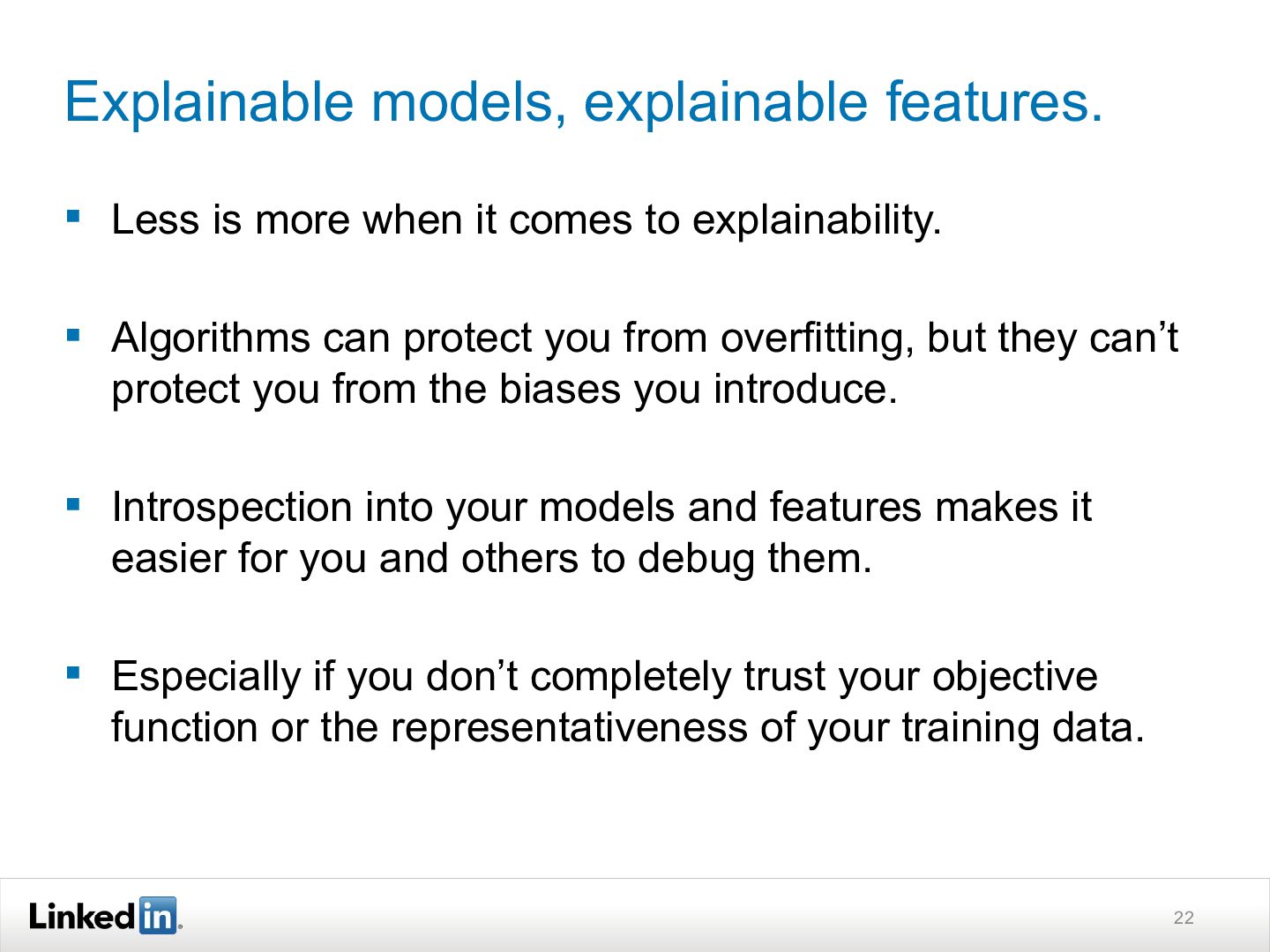
  7. 22 Explainable models, explainable features.  Less is more when

    it comes to explainability.  Algorithms can protect you from overfitting, but they can’t protect you from the biases you introduce.  Introspection into your models and features makes it easier for you and others to debug them.  Especially if you don’t completely trust your objective function or the representativeness of your training data.
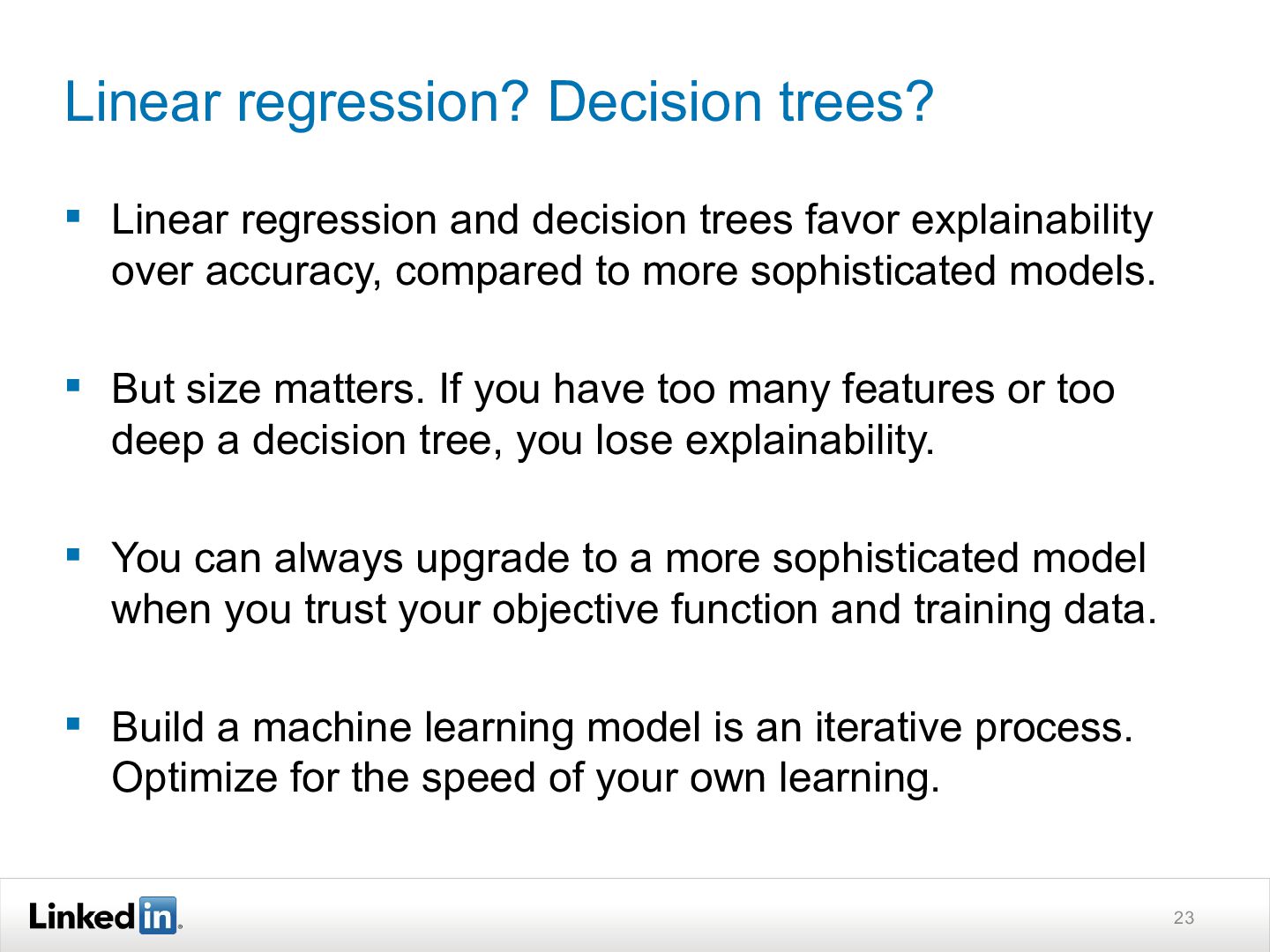
  8. 23 Linear regression? Decision trees?  Linear regression and decision

    trees favor explainability over accuracy, compared to more sophisticated models.  But size matters. If you have too many features or too deep a decision tree, you lose explainability.  You can always upgrade to a more sophisticated model when you trust your objective function and training data.  Build a machine learning model is an iterative process. Optimize for the speed of your own learning.
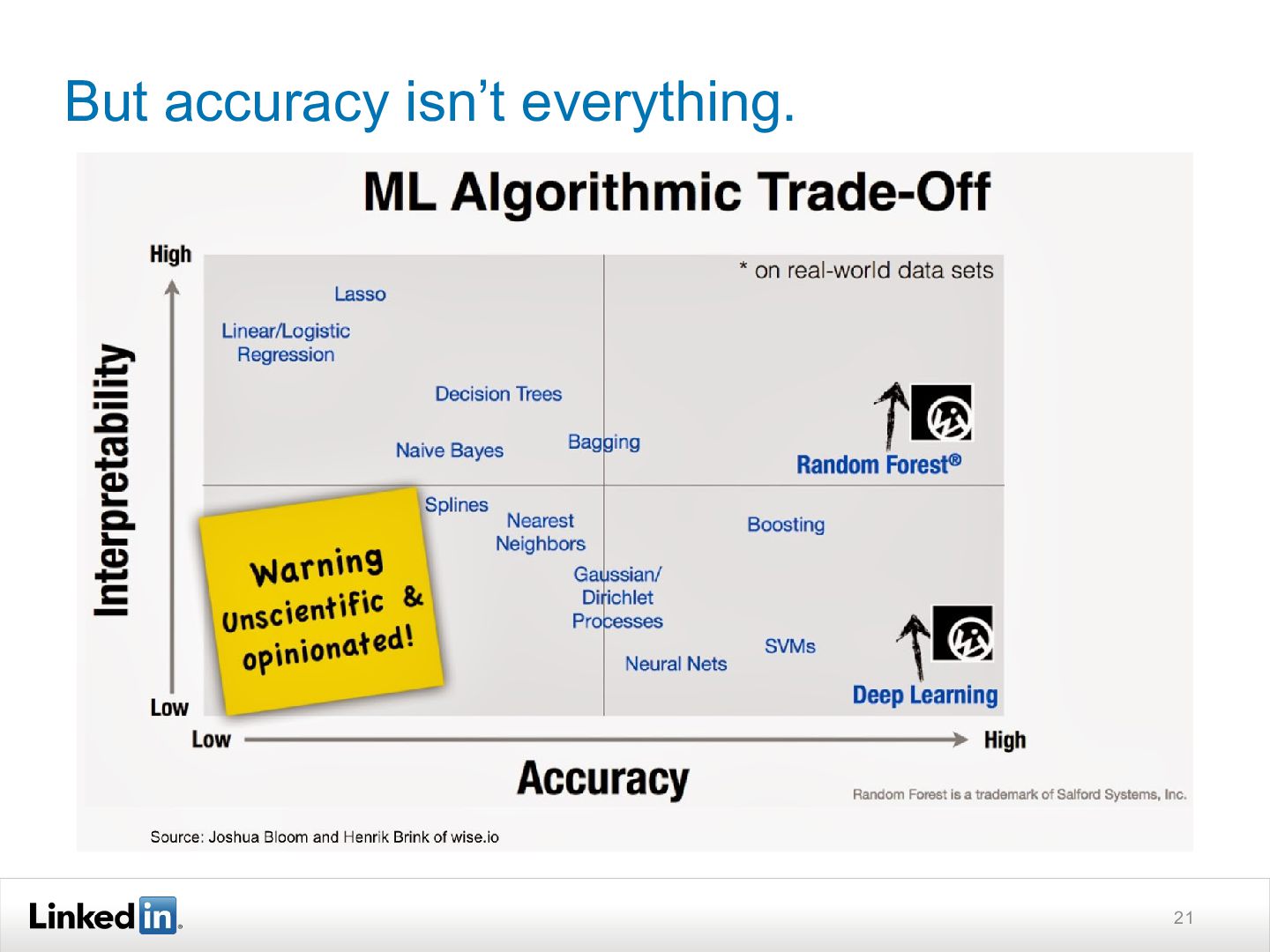
  9. 24 Explain: Summary.  Accuracy isn’t everything.  Less is

    more when it comes to explainability.  Don’t knock linear models and decision trees!  Start with simple models, then upgrade.
  10. 26 Why experiments matter. “You have to kiss a lot

    of frogs to find one prince. So how can you find your prince faster? By finding more frogs and kissing them faster and faster.” -- Mike Moran
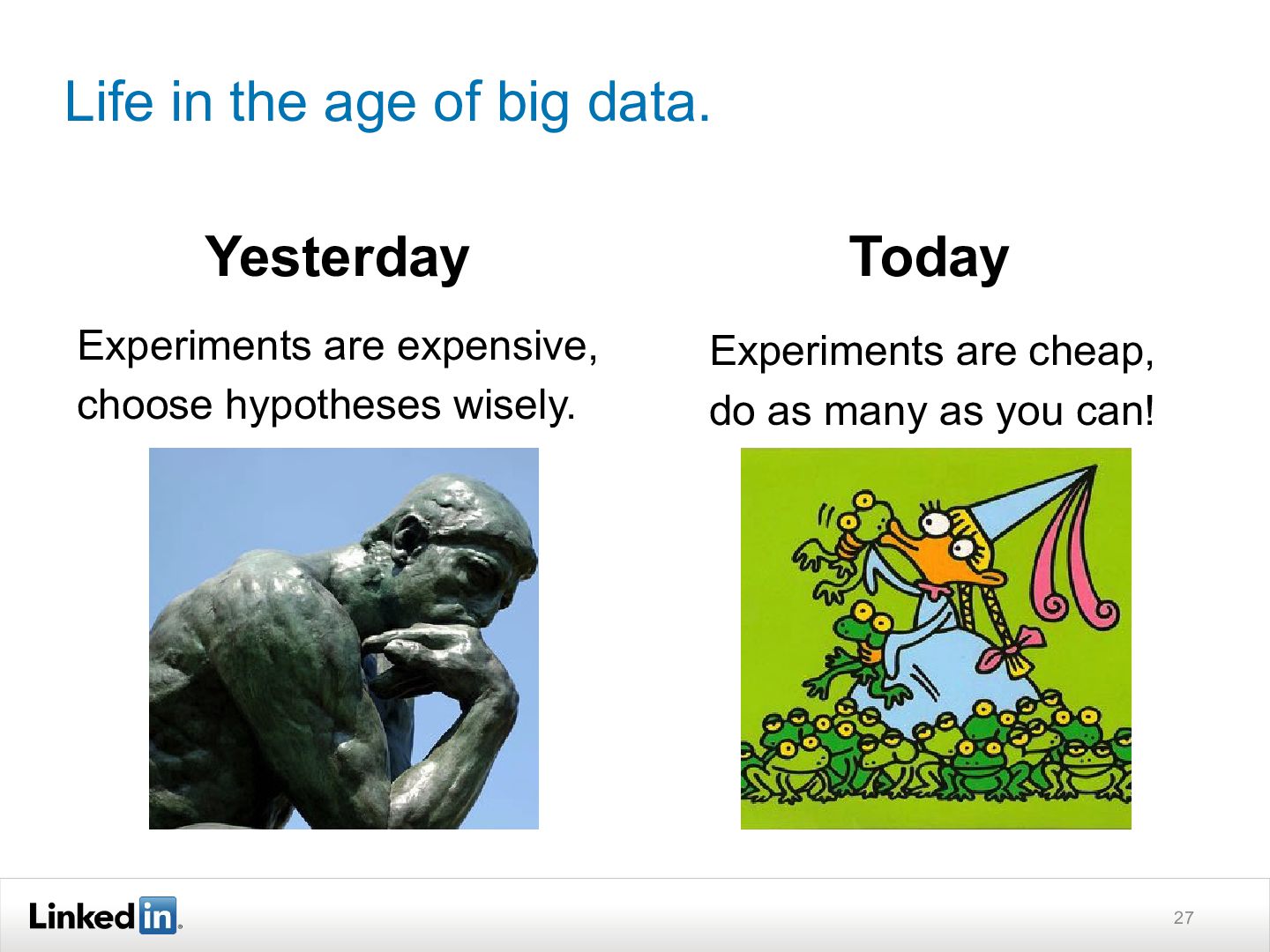
  11. 27 Life in the age of big data. Yesterday Today

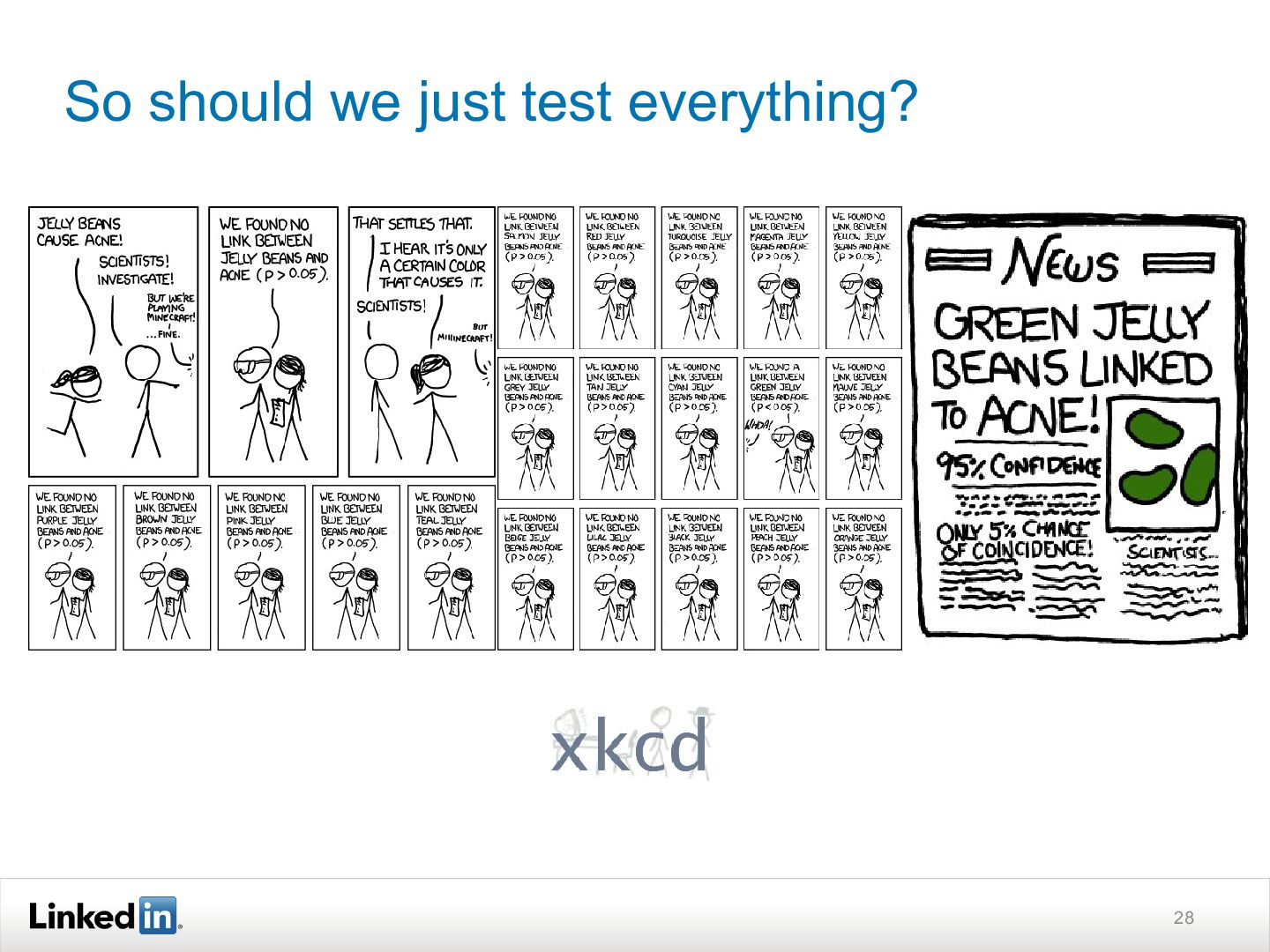
    Experiments are expensive, choose hypotheses wisely. Experiments are cheap, do as many as you can!
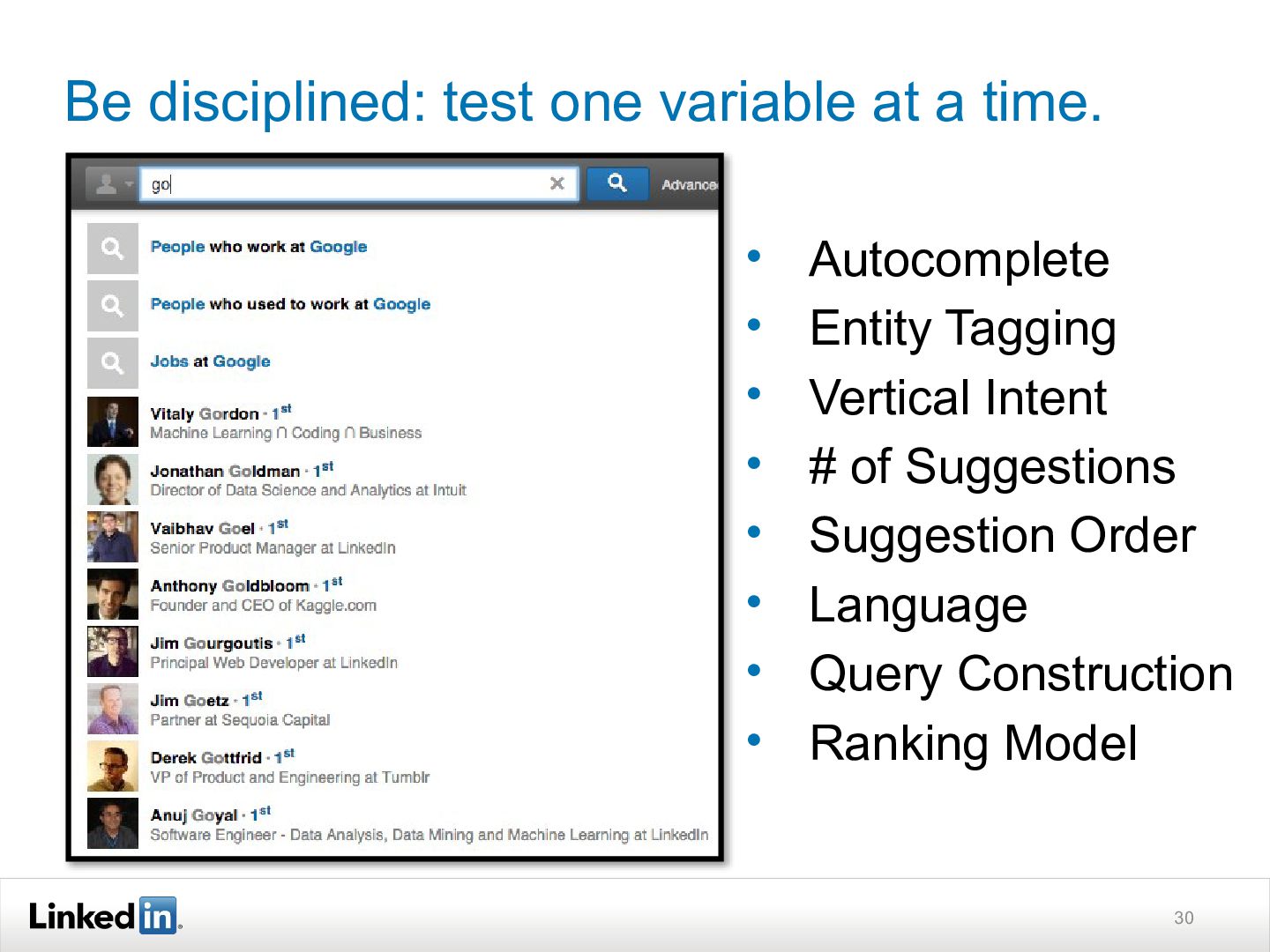
  12. 30 Be disciplined: test one variable at a time. •

    Autocomplete • Entity Tagging • Vertical Intent • # of Suggestions • Suggestion Order • Language • Query Construction • Ranking Model
  13. 31 Experiment: Summary.  Kiss lots of frogs: experiments are

    cheap.  But test in good faith – don’t just flip coins.  Optimize for the speed of learning.  Be disciplined: test one variable at a time.
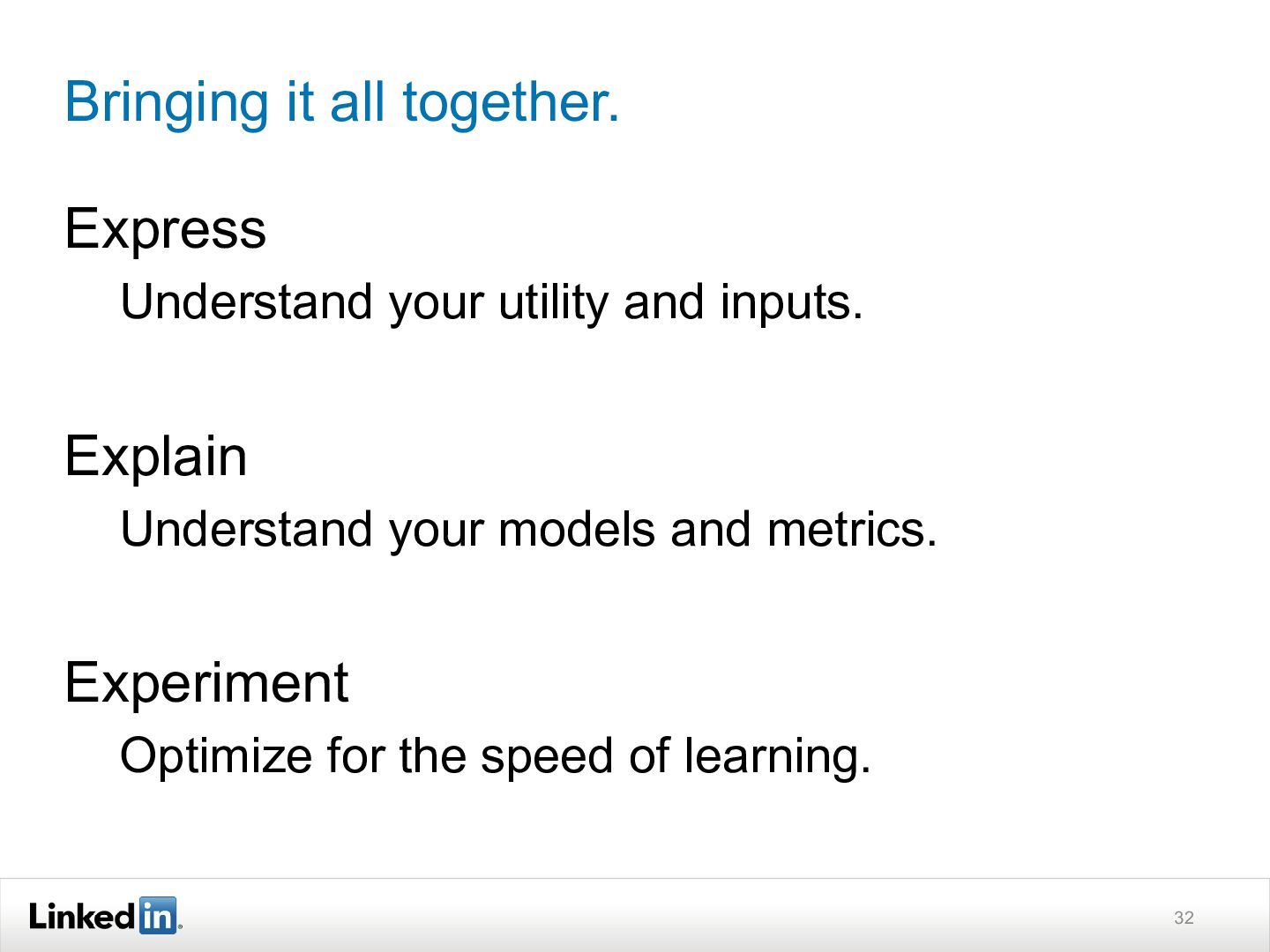
  14. 32 Bringing it all together. Express Understand your utility and

    inputs. Explain Understand your models and metrics. Experiment Optimize for the speed of learning.