Upgrade to Pro — share decks privately, control downloads, hide ads and more …

コーディングエージェントのための環境設計 -- 仕組みで品質を守る --

Sponsored · Ship Features Fearlessly Turn features on and off without deploys. Used by thousands of Ruby developers.

コーディングエージェントのための環境設計 -- 仕組みで品質を守る --

AkarengaLT vol.44 (2026/04/12) での発表資料です。
https://engineercafe.connpass.com/event/388407/

AIコーディングエージェントに品質を保たせるための環境設計について、自分なりの理解や実践案をまとめました。

- ハーネスエンジニアリングとは?
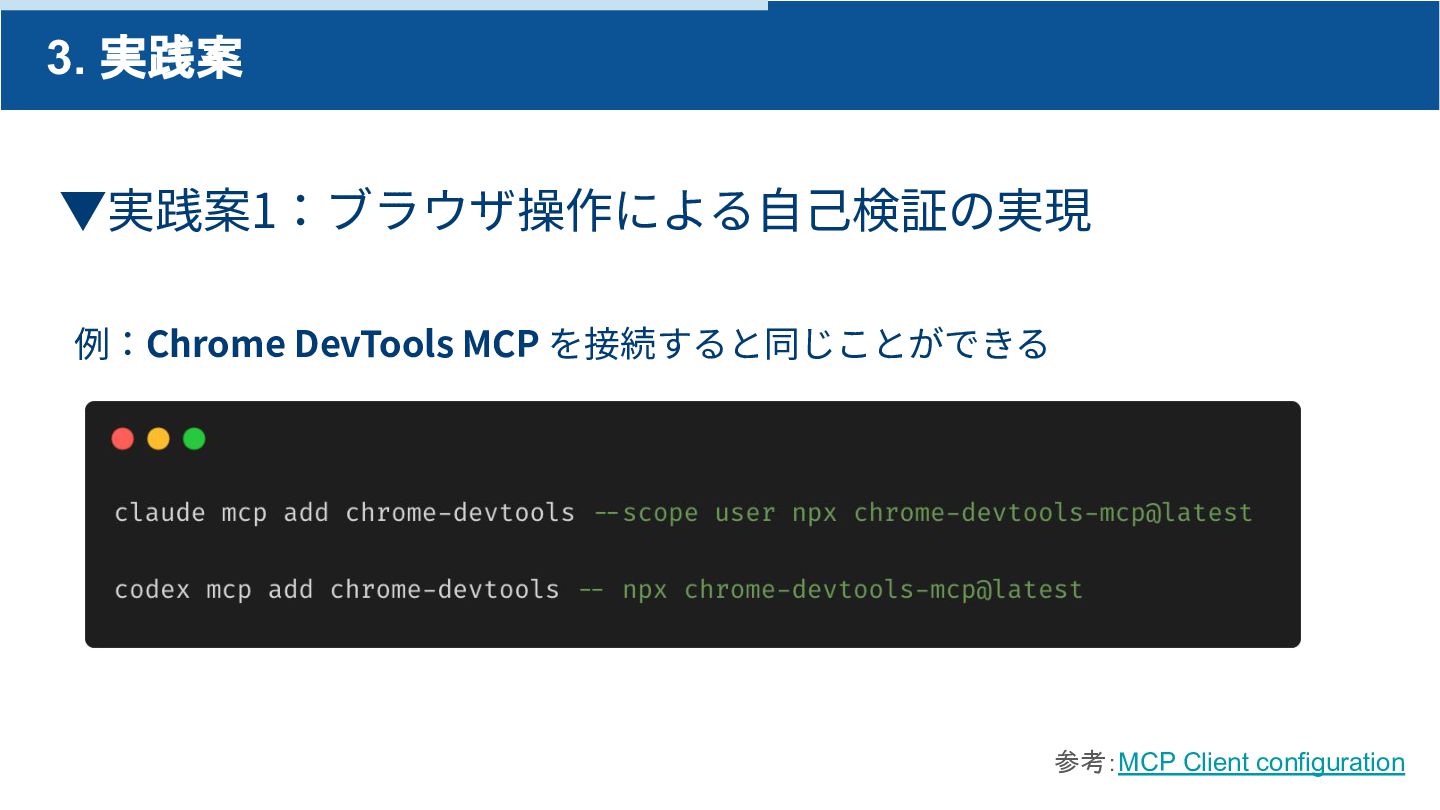
- ブラウザ操作による自己検証(Chrome DevTools MCP)
- 技術的負債の定期的なクリーンアップ
- リンターを使ったルール制御(import-linter, ruff)

Avatar for enumura

enumura

April 14, 2026

More Decks by enumura

Other Decks in Technology

Transcript

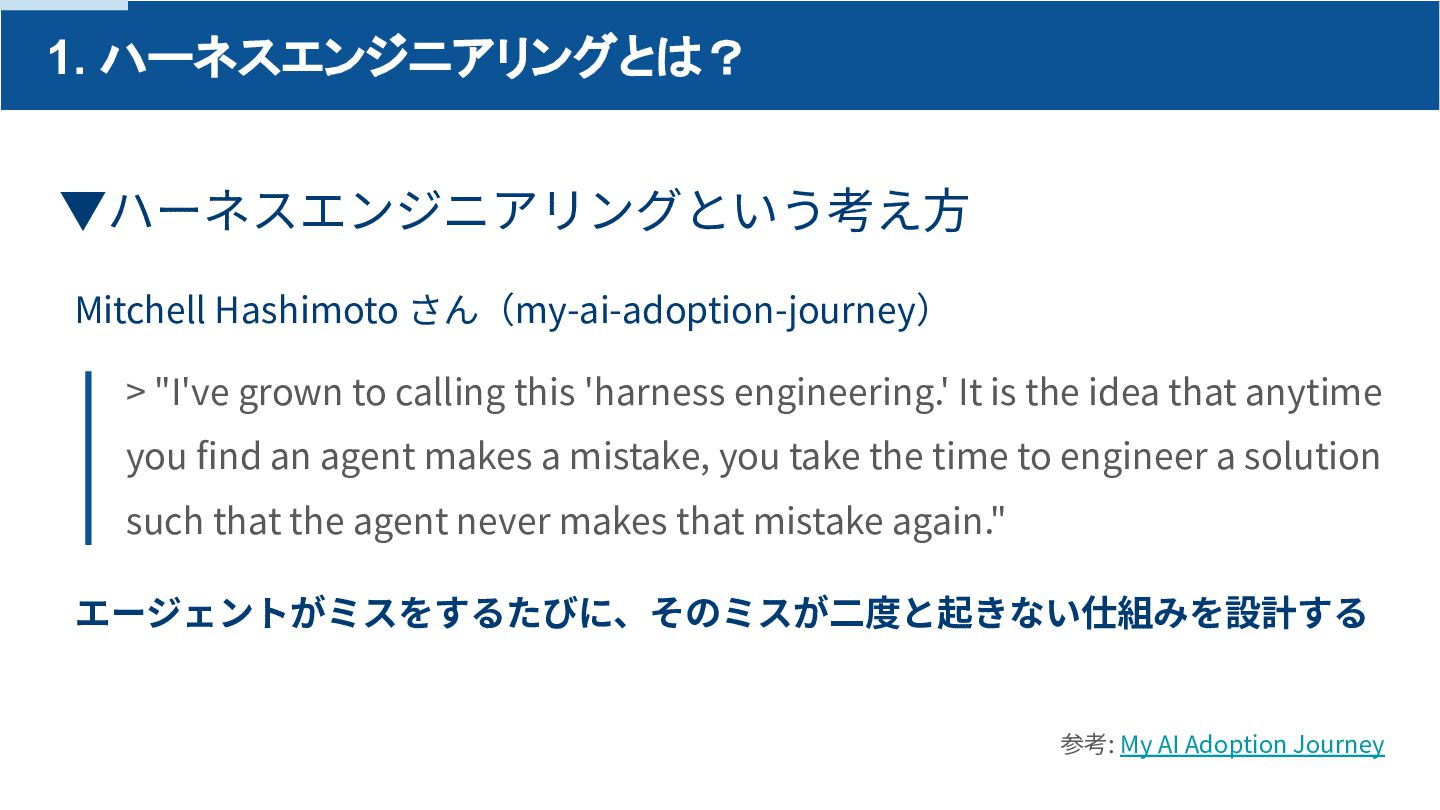
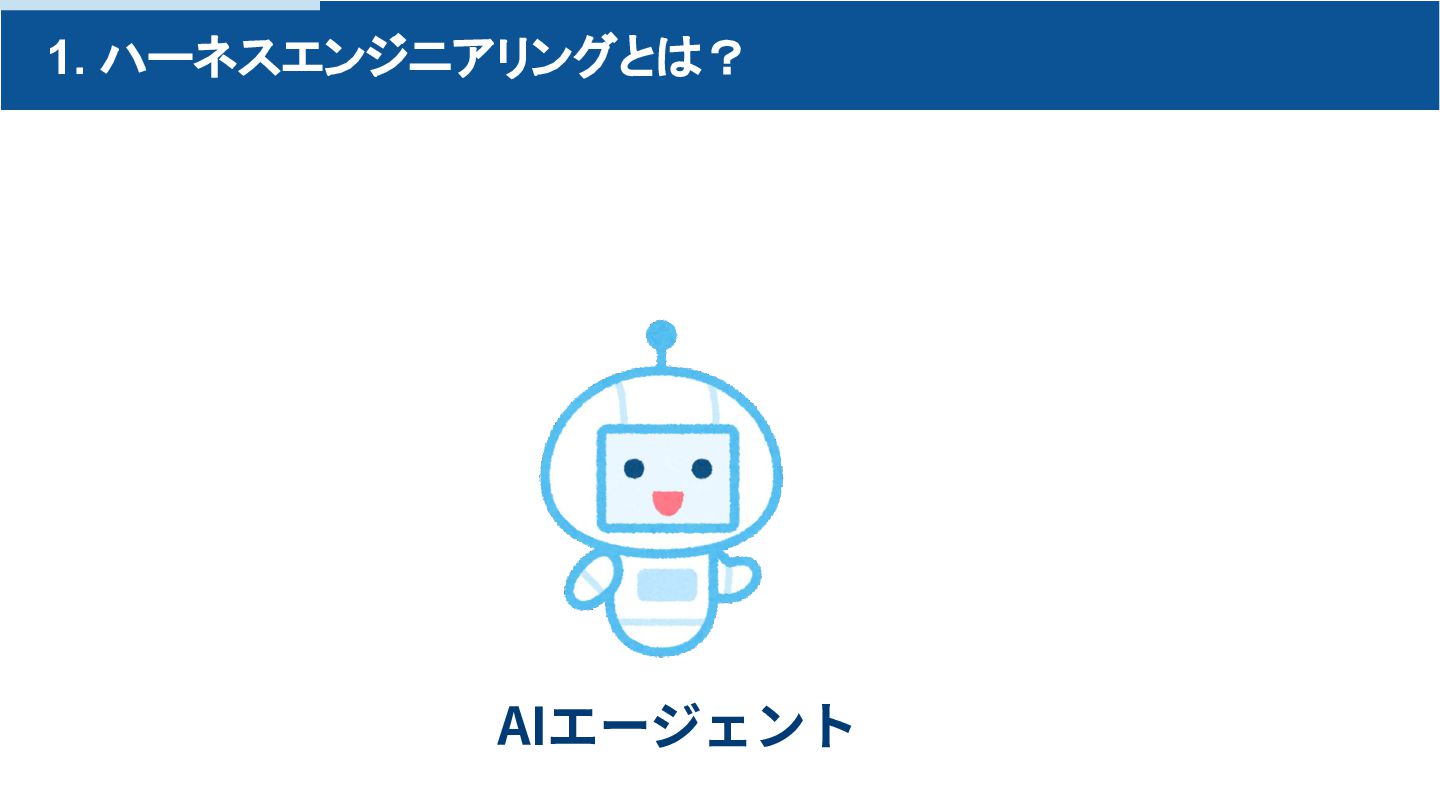
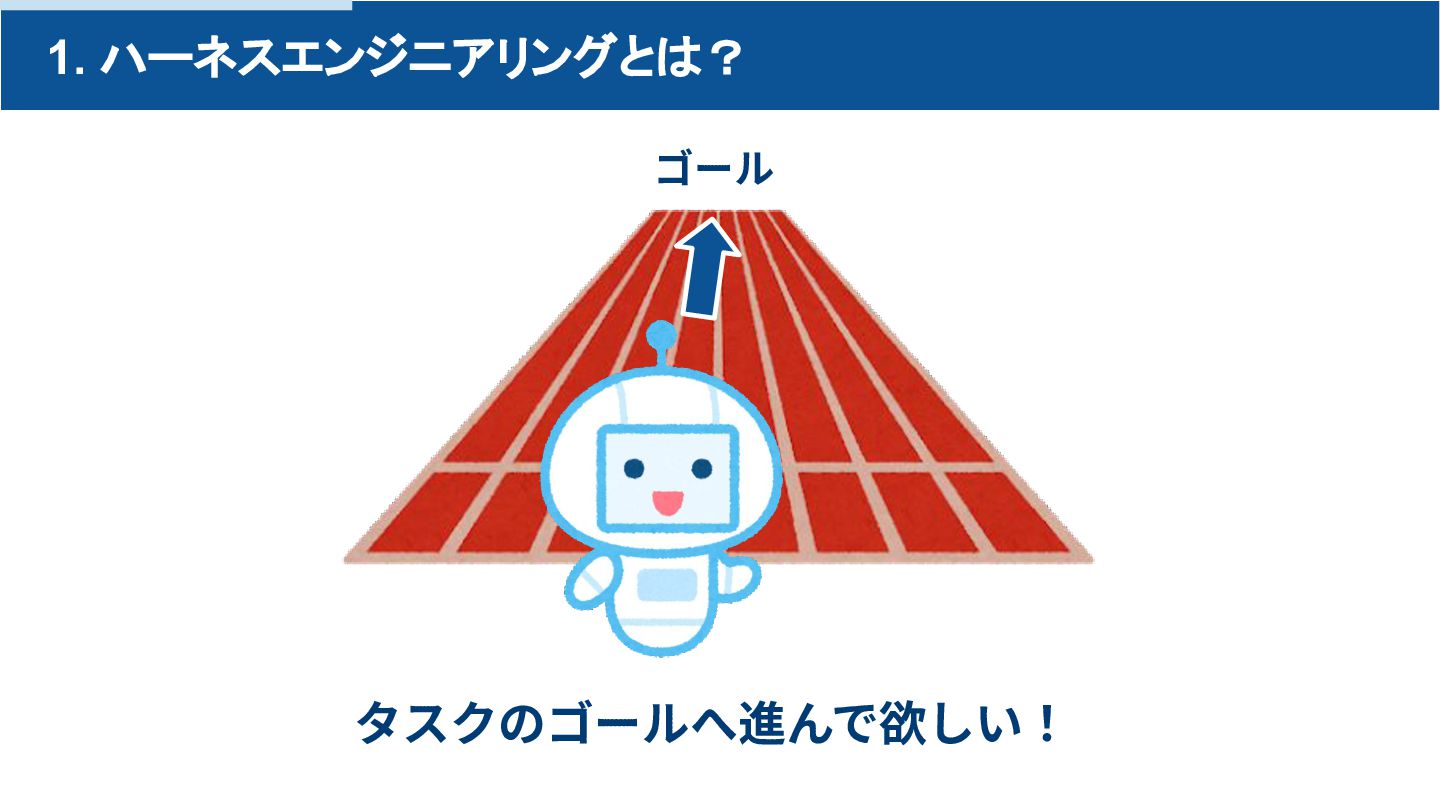
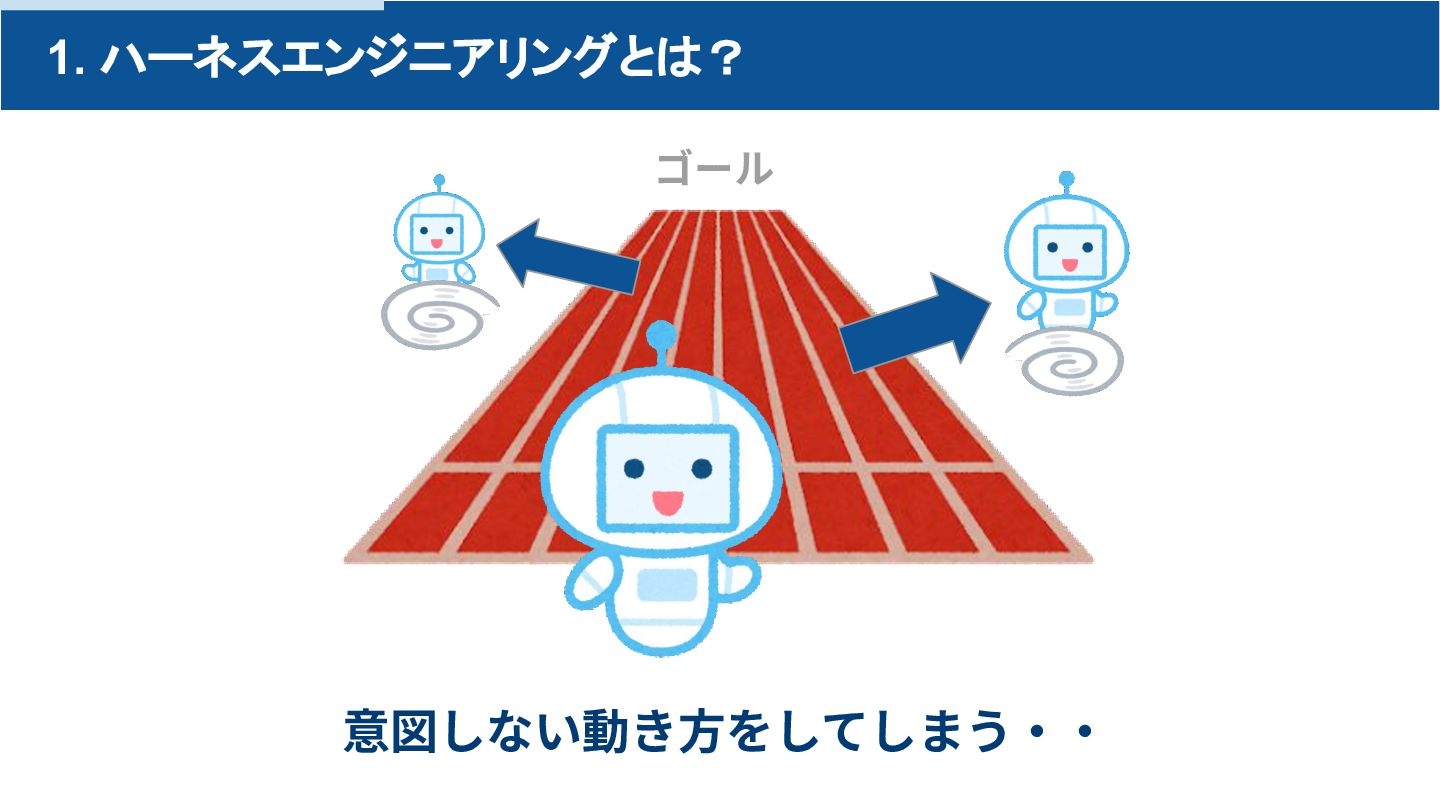
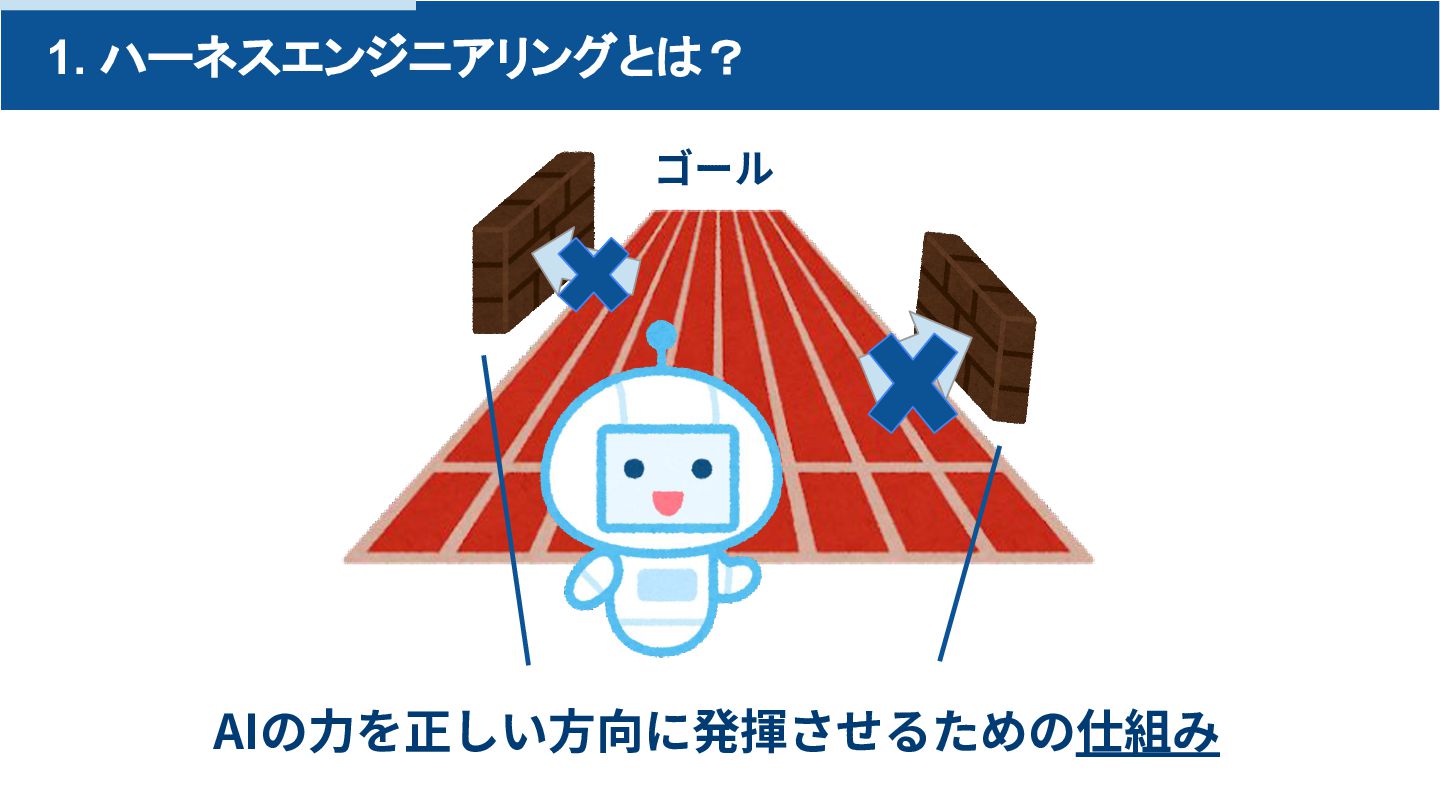
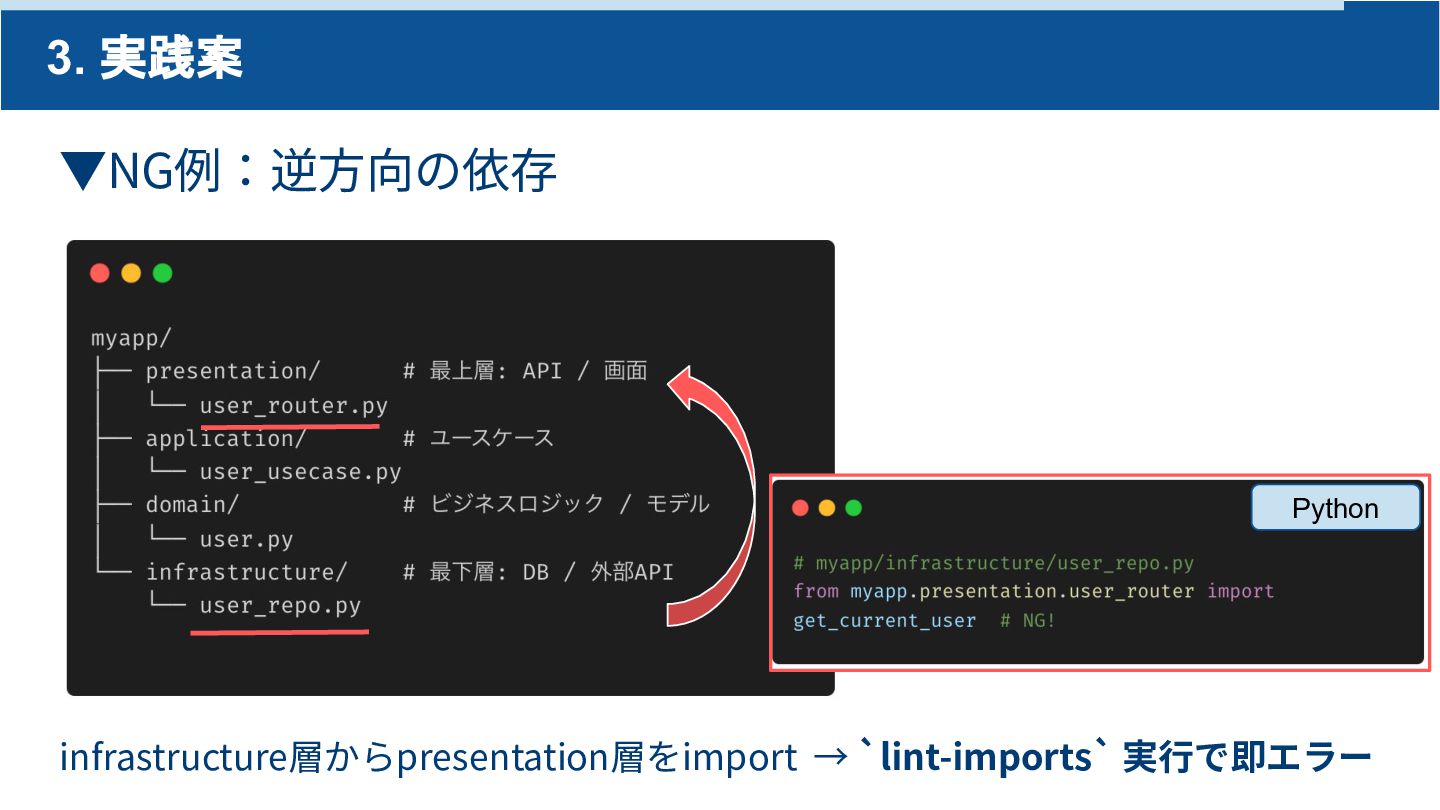
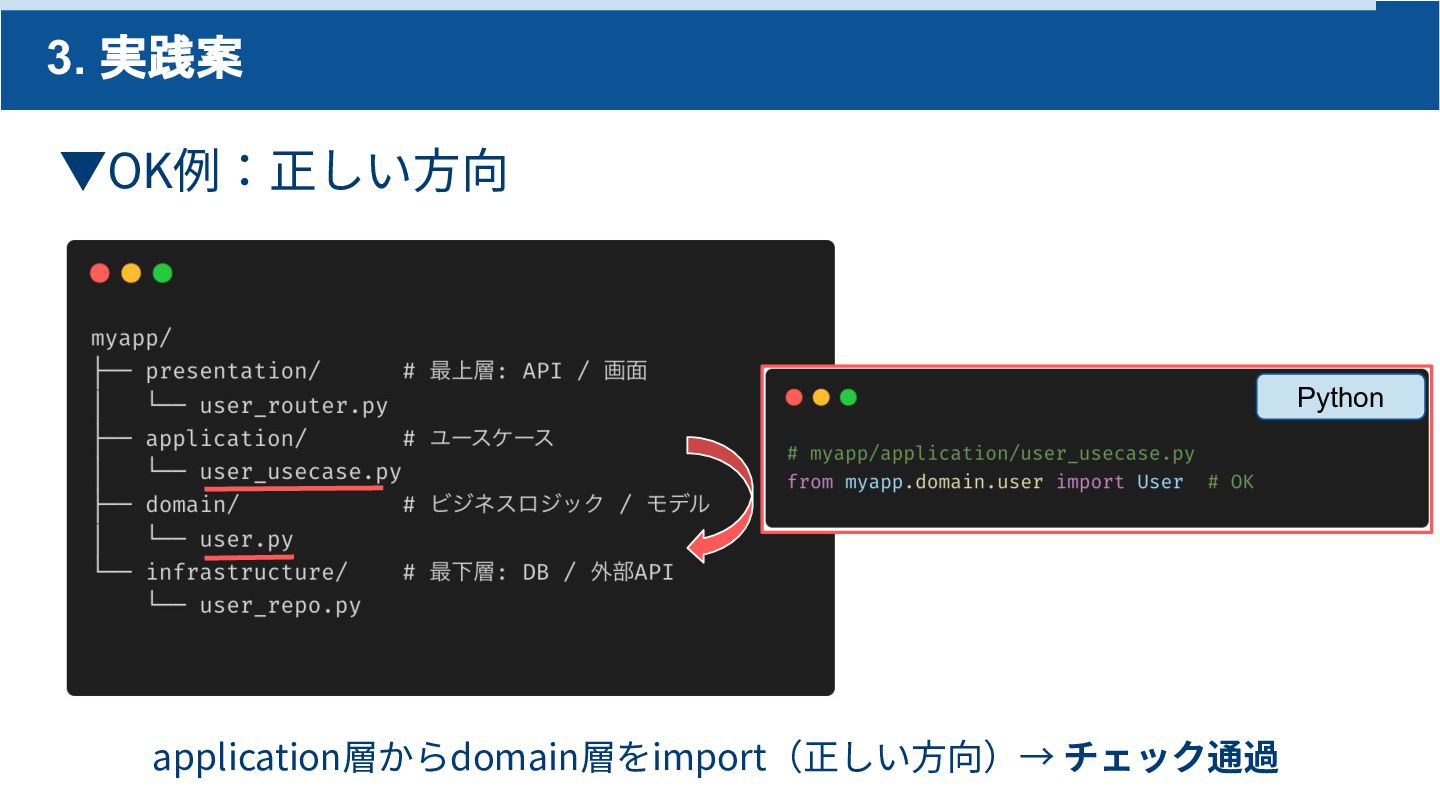
  1. 1. ハーネスエンジニアリングとは? > "I've grown to calling this 'harness engineering.'
    It is the idea that anytime you find an agent makes a mistake, you take the time to engineer a solution such that the agent never makes that mistake again." ▼ハーネスエンジニアリングという考え⽅ Mitchell Hashimoto さん(my-ai-adoption-journey) エージェントがミスをするたびに、そのミスが⼆度と起きない仕組みを設計する 参考: My AI Adoption Journey
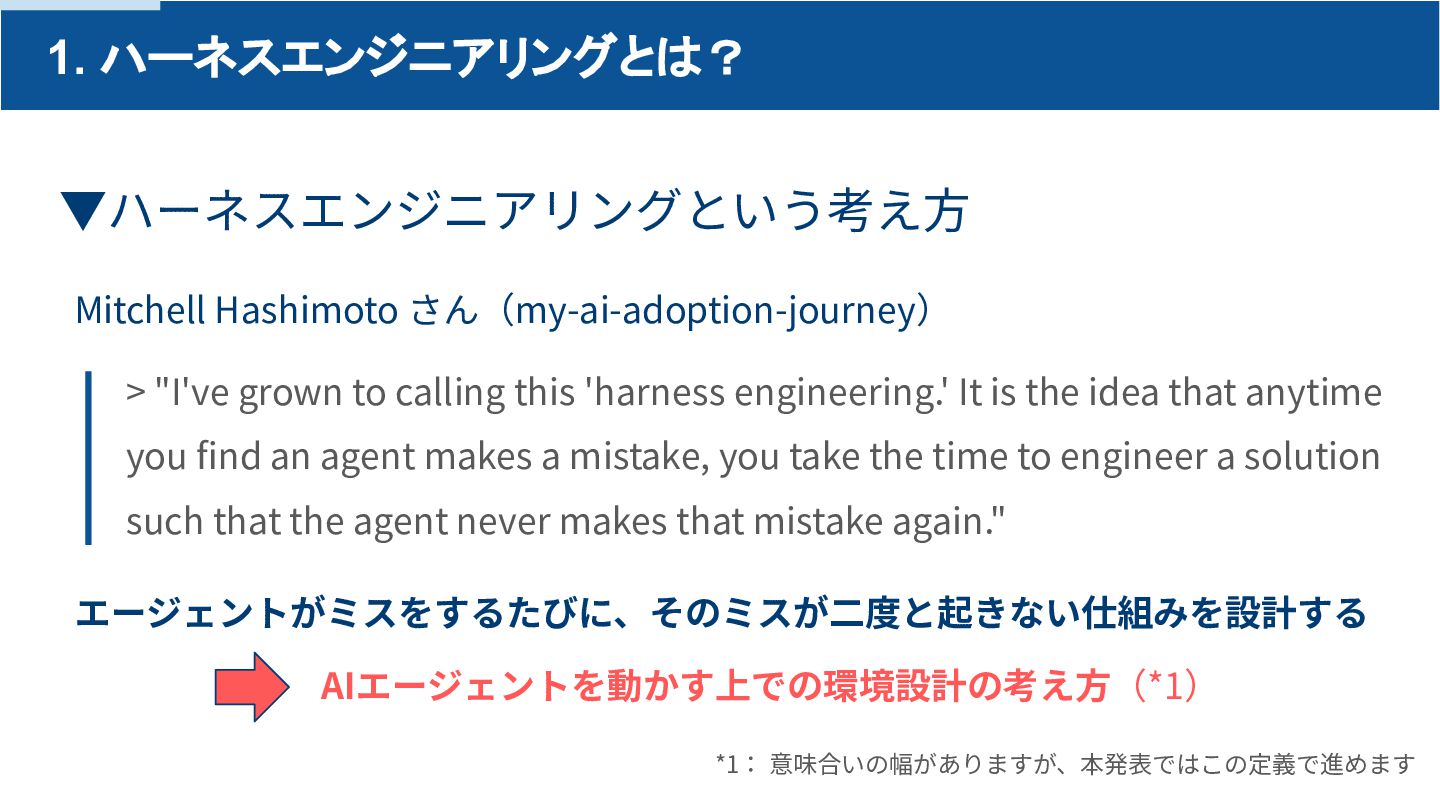
  2. 1. ハーネスエンジニアリングとは? > "I've grown to calling this 'harness engineering.'

    It is the idea that anytime you find an agent makes a mistake, you take the time to engineer a solution such that the agent never makes that mistake again." Mitchell Hashimoto さん(my-ai-adoption-journey) エージェントがミスをするたびに、そのミスが⼆度と起きない仕組みを設計する AIエージェントを動かす上での環境設計の考え⽅(*1) ▼ハーネスエンジニアリングという考え⽅ *1: 意味合いの幅がありますが、本発表ではこの定義で進めます
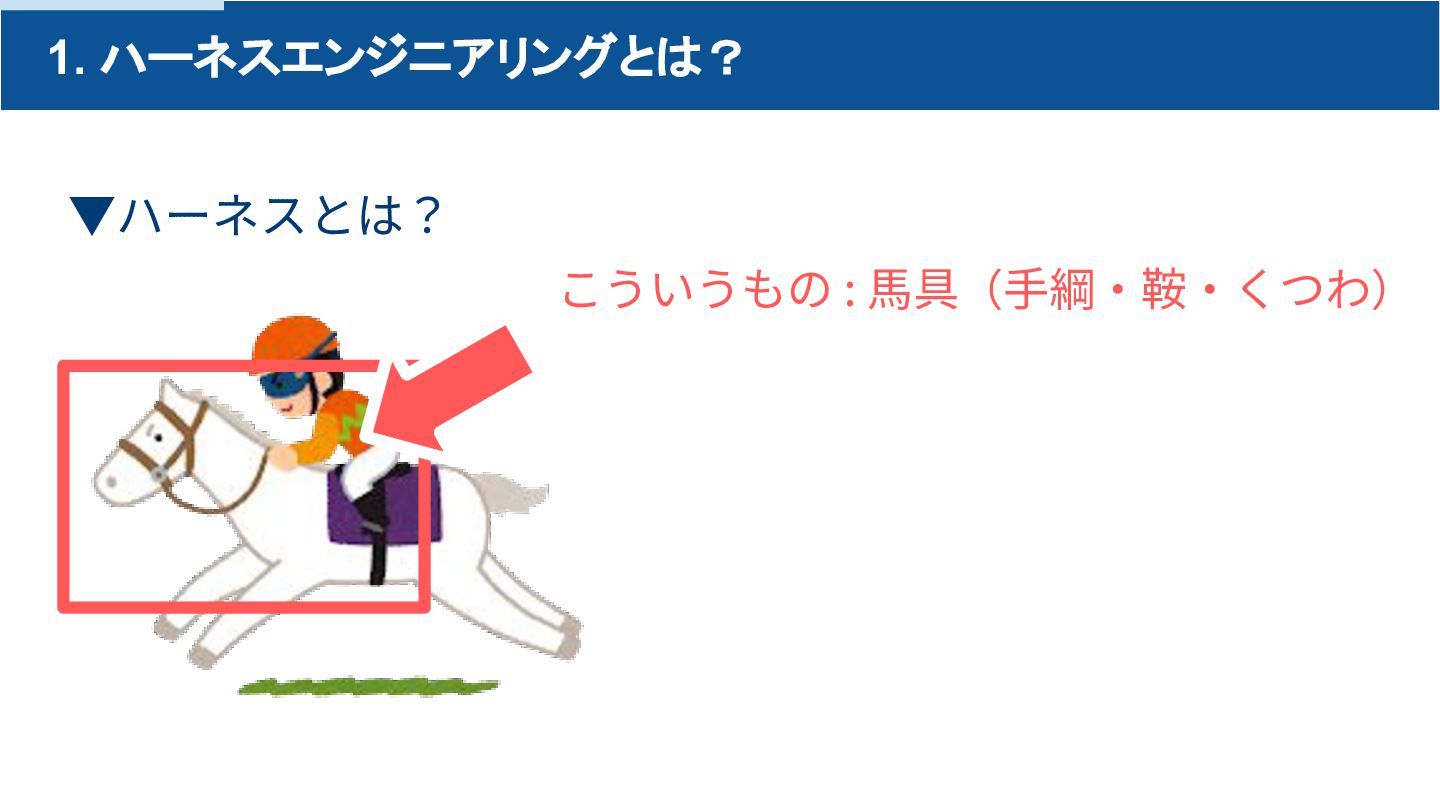
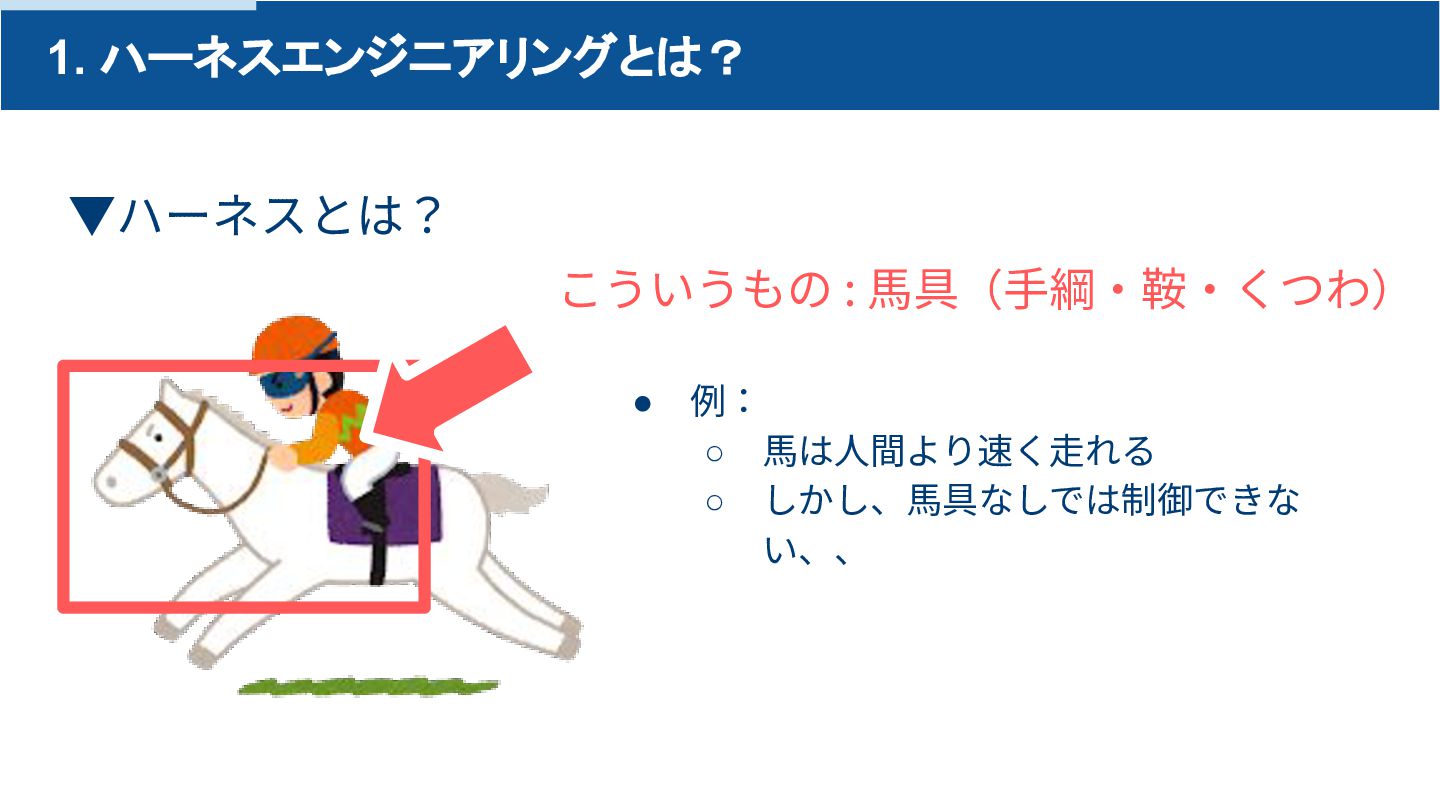
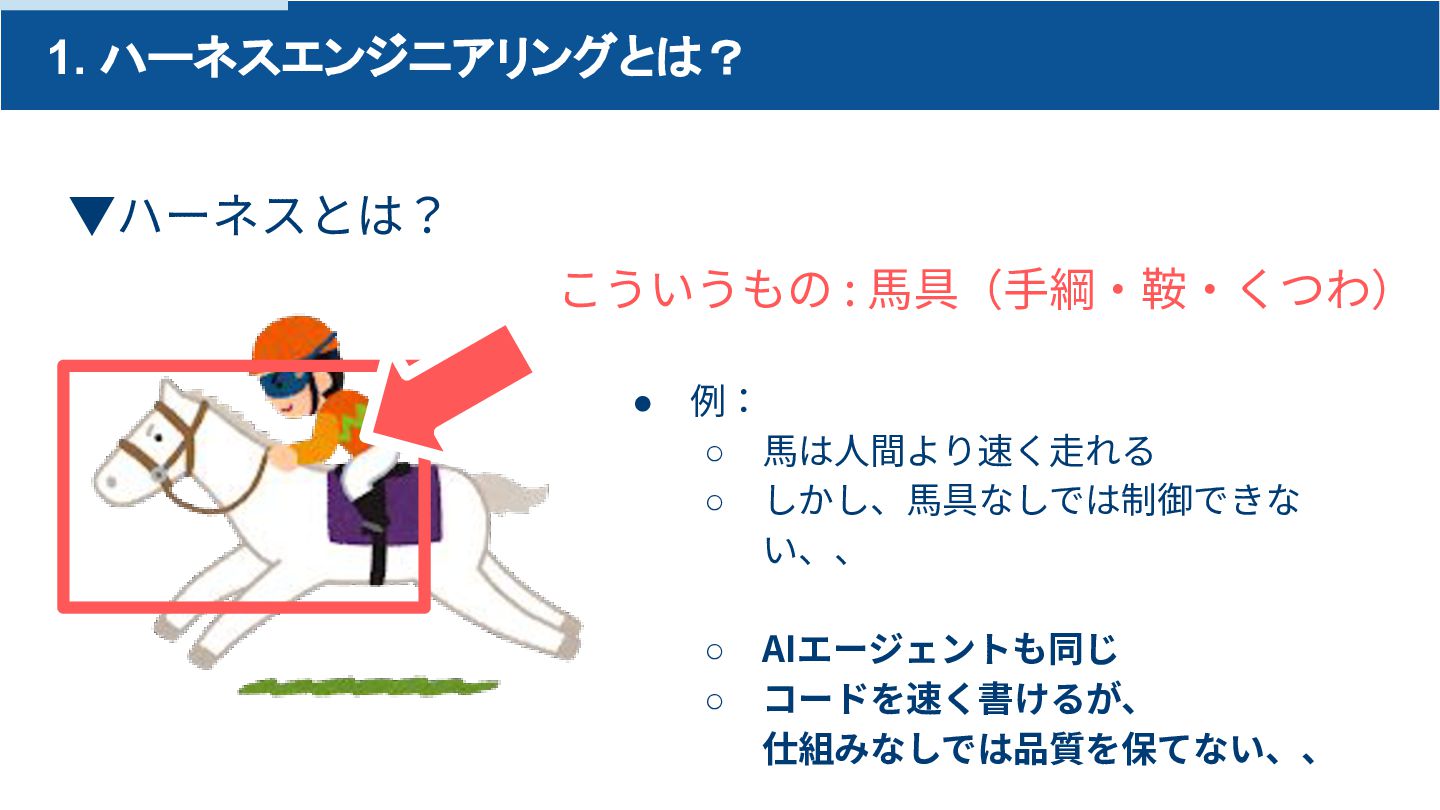
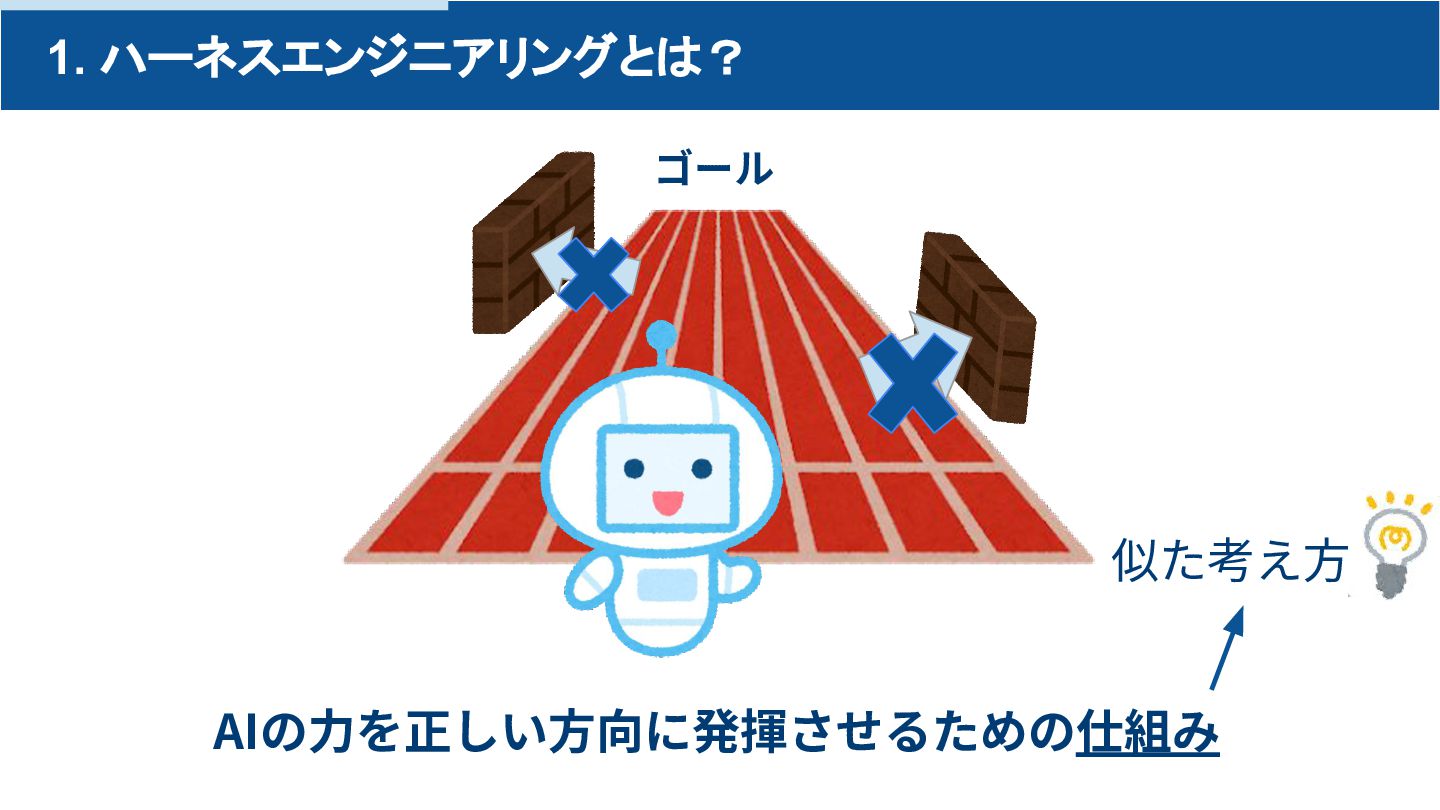
  3. 1. ハーネスエンジニアリングとは? ▼ハーネスとは? こういうもの : ⾺具(⼿綱‧鞍‧くつわ) • 例: ◦ ⾺は⼈間より速く⾛れる

    ◦ しかし、⾺具なしでは制御できな い、、 ◦ AIエージェントも同じ ◦ コードを速く書けるが、 仕組みなしでは品質を保てない、、
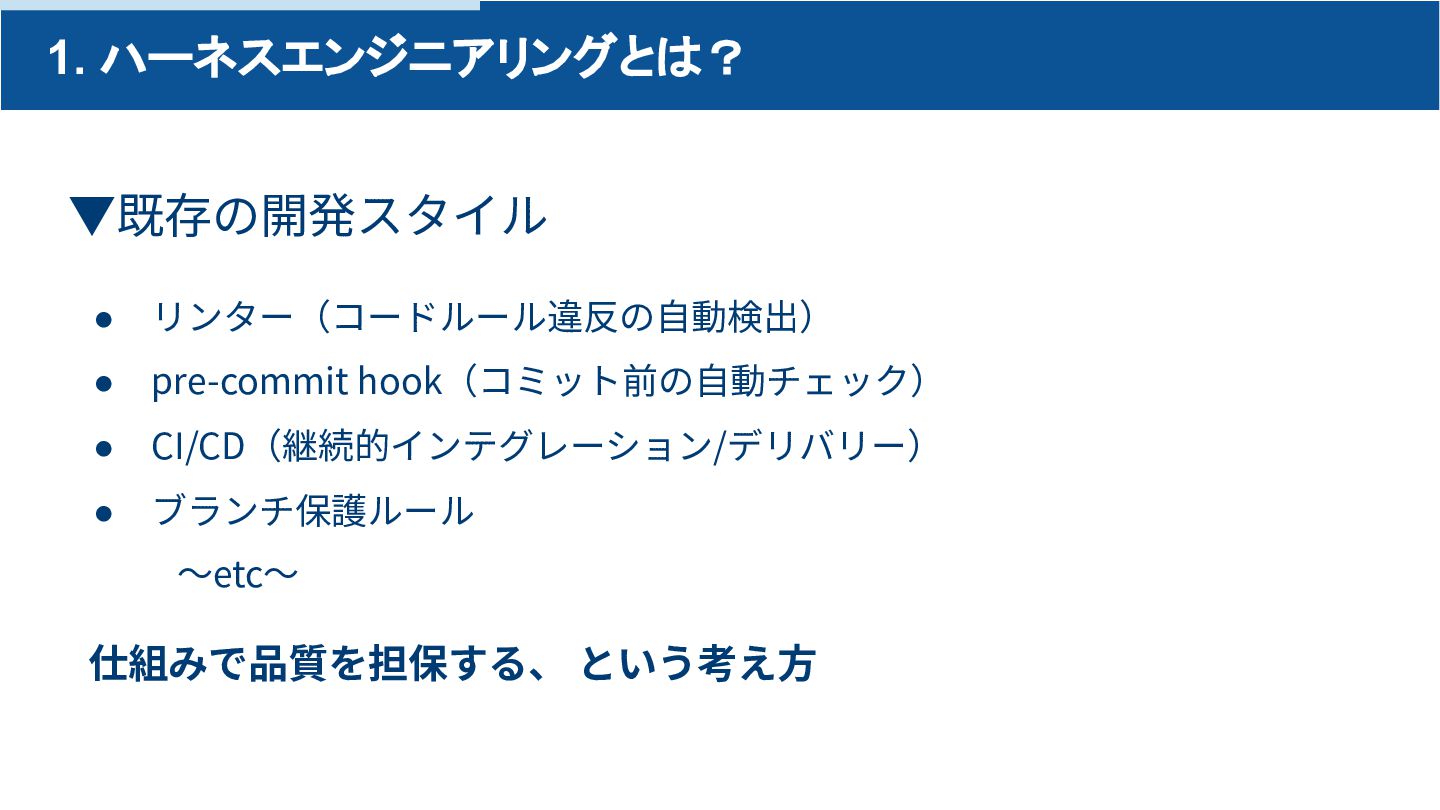
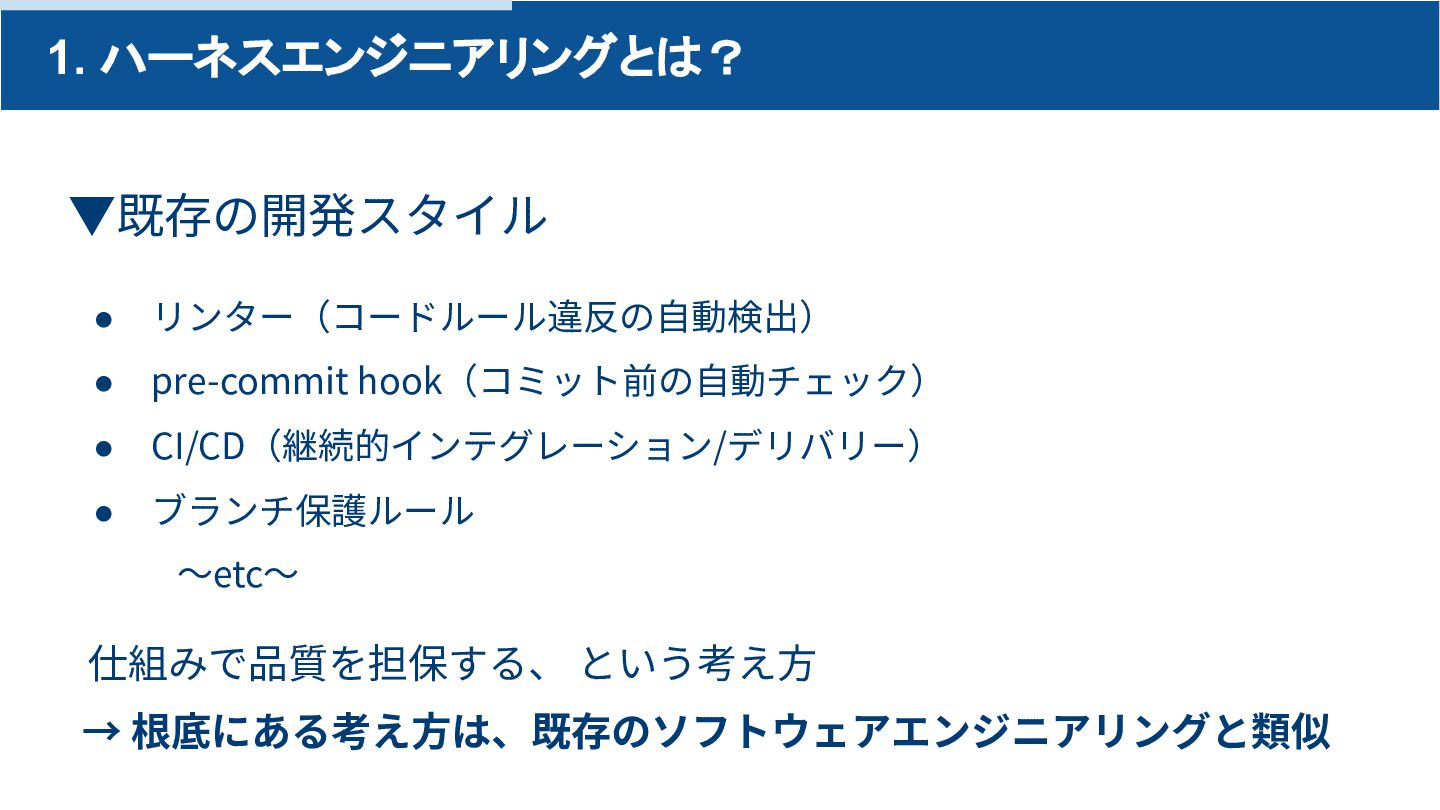
  4. 1. ハーネスエンジニアリングとは? • リンター(コードルール違反の⾃動検出) • pre-commit hook(コミット前の⾃動チェック) • CI/CD(継続的インテグレーション/デリバリー) •

    ブランチ保護ルール 仕組みで品質を担保する、 という考え⽅ ▼既存の開発スタイル 〜etc〜 → 根底にある考え⽅は、既存のソフトウェアエンジニアリングと類似
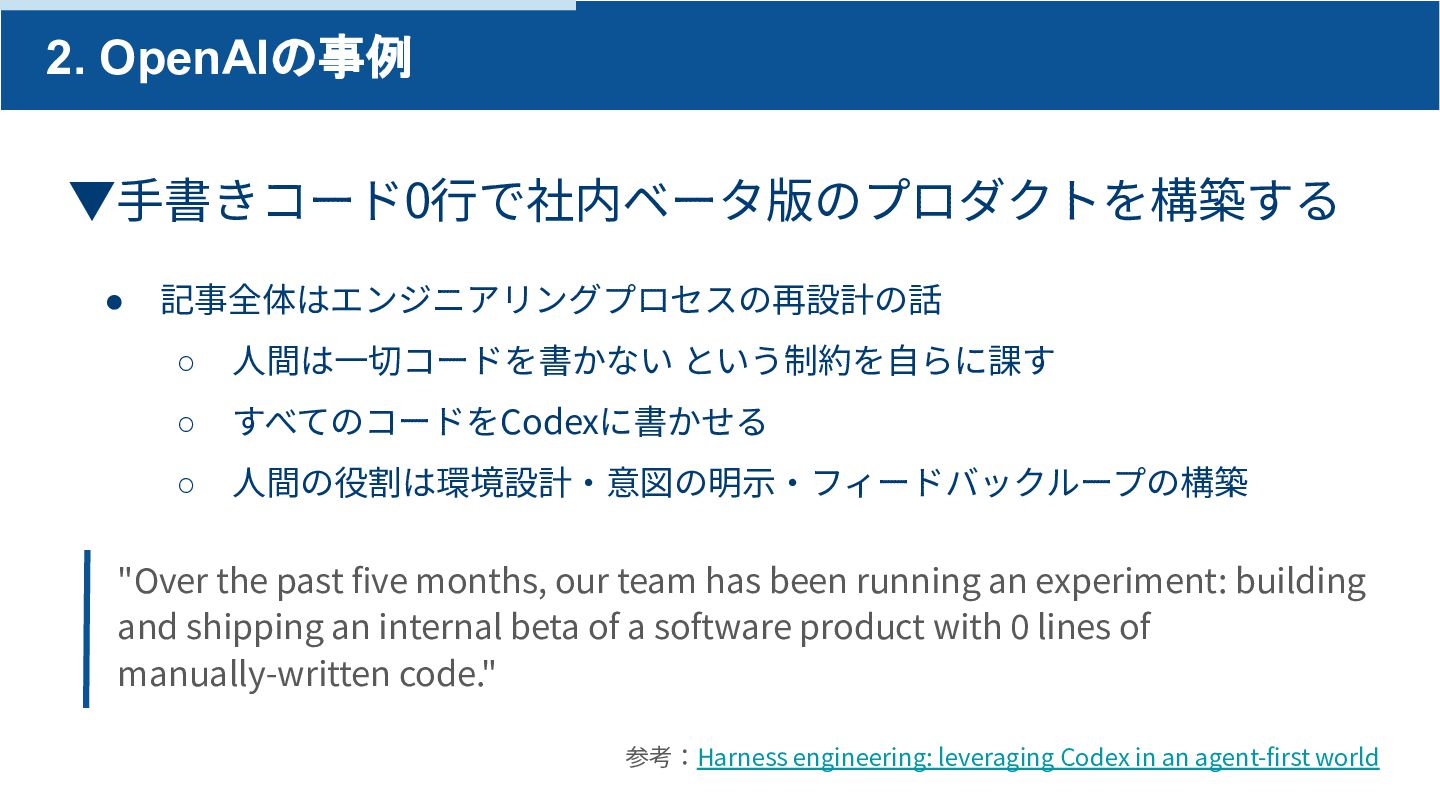
  5. 2. OpenAIの事例 ▼⼿書きコード0⾏で社内ベータ版のプロダクトを構築する 参考:Harness engineering: leveraging Codex in an agent-first

    world • 記事全体はエンジニアリングプロセスの再設計の話 ◦ ⼈間は⼀切コードを書かない という制約を⾃らに課す ◦ すべてのコードをCodexに書かせる ◦ ⼈間の役割は環境設計‧意図の明⽰‧フィードバックループの構築 "Over the past five months, our team has been running an experiment: building and shipping an internal beta of a software product with 0 lines of manually-written code."
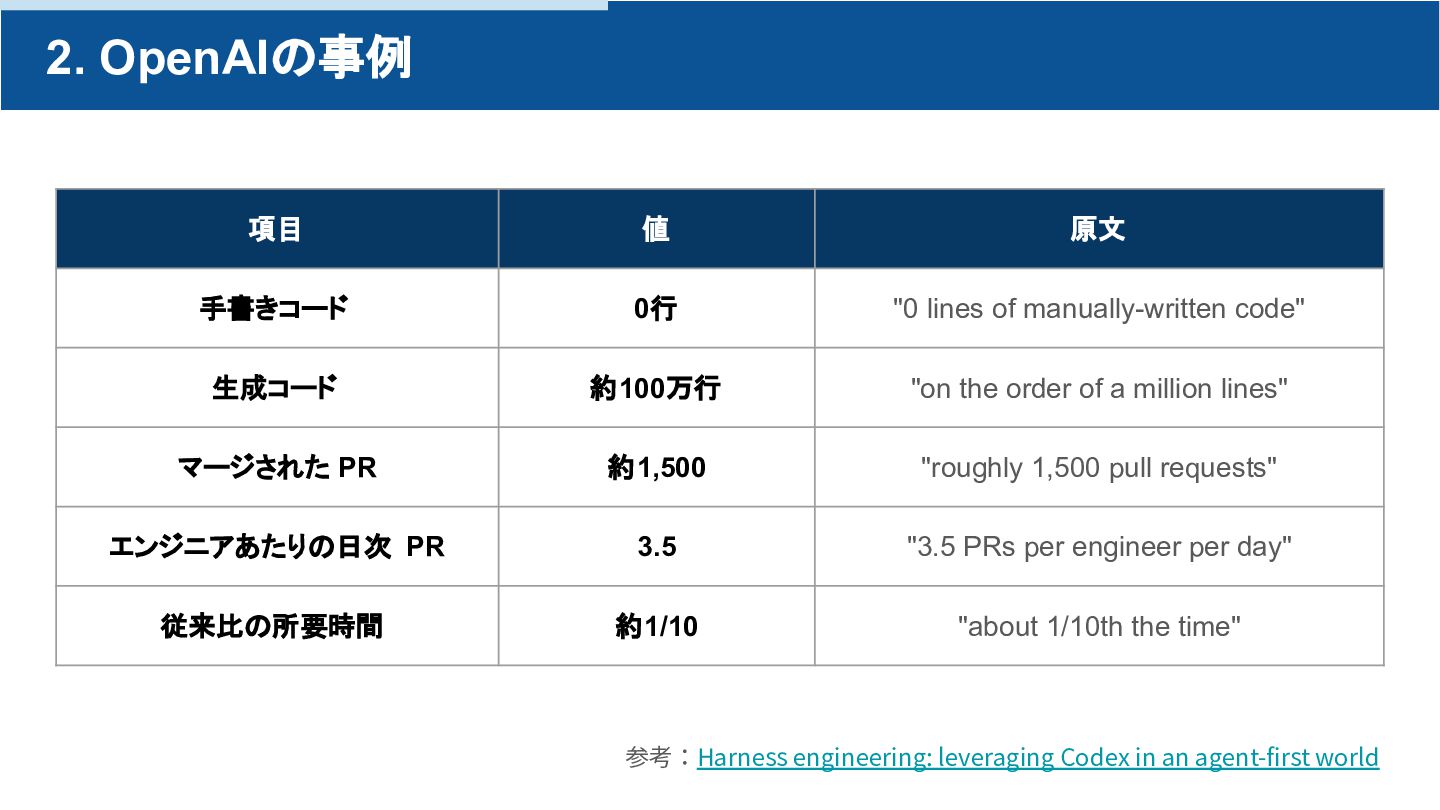
  6. 2. OpenAIの事例 項目 値 原文 手書きコード 0行 "0 lines of

    manually-written code" 生成コード 約100万行 "on the order of a million lines" マージされた PR 約1,500 "roughly 1,500 pull requests" エンジニアあたりの日次 PR 3.5 "3.5 PRs per engineer per day" 従来比の所要時間 約1/10 "about 1/10th the time" 参考:Harness engineering: leveraging Codex in an agent-first world
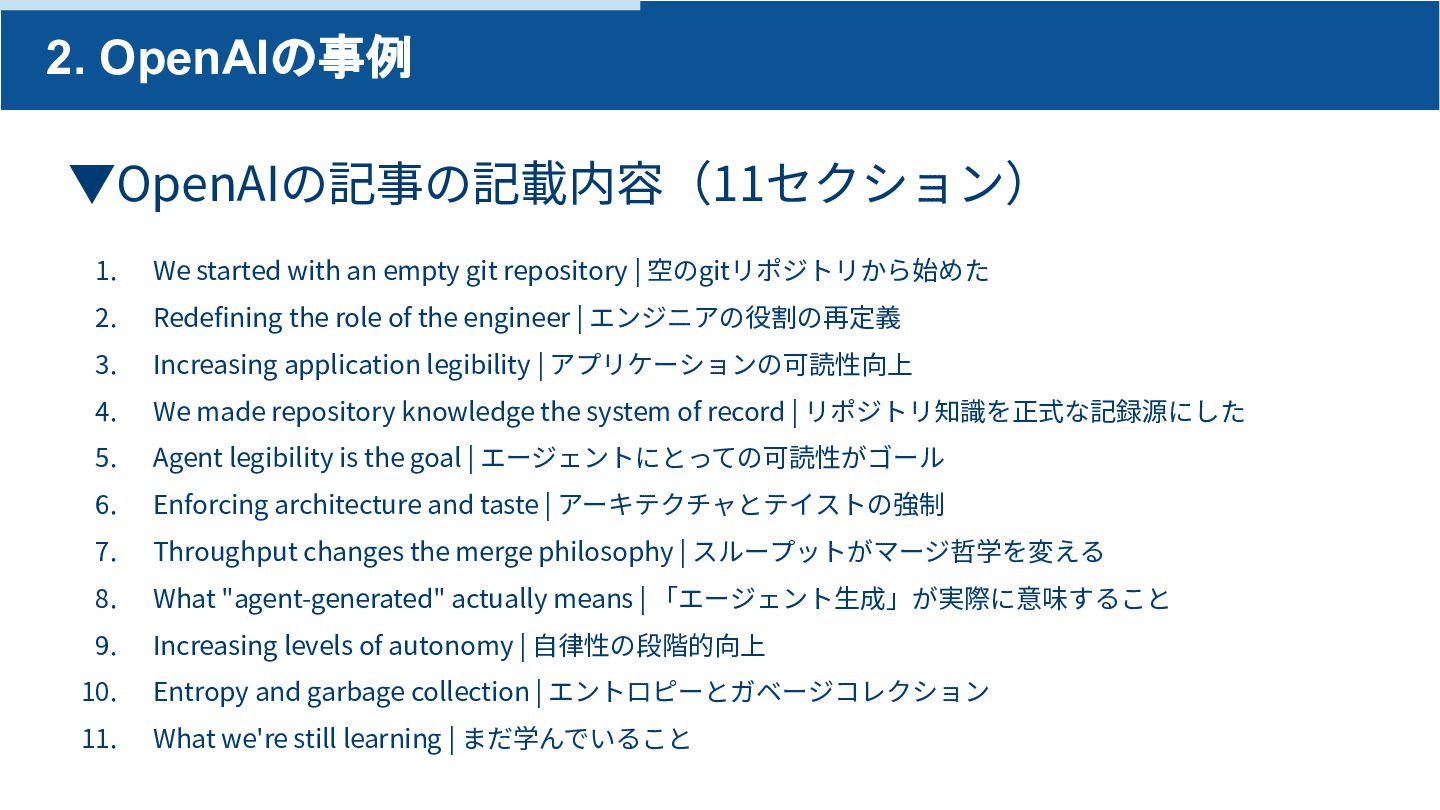
  7. 2. OpenAIの事例 1. We started with an empty git repository

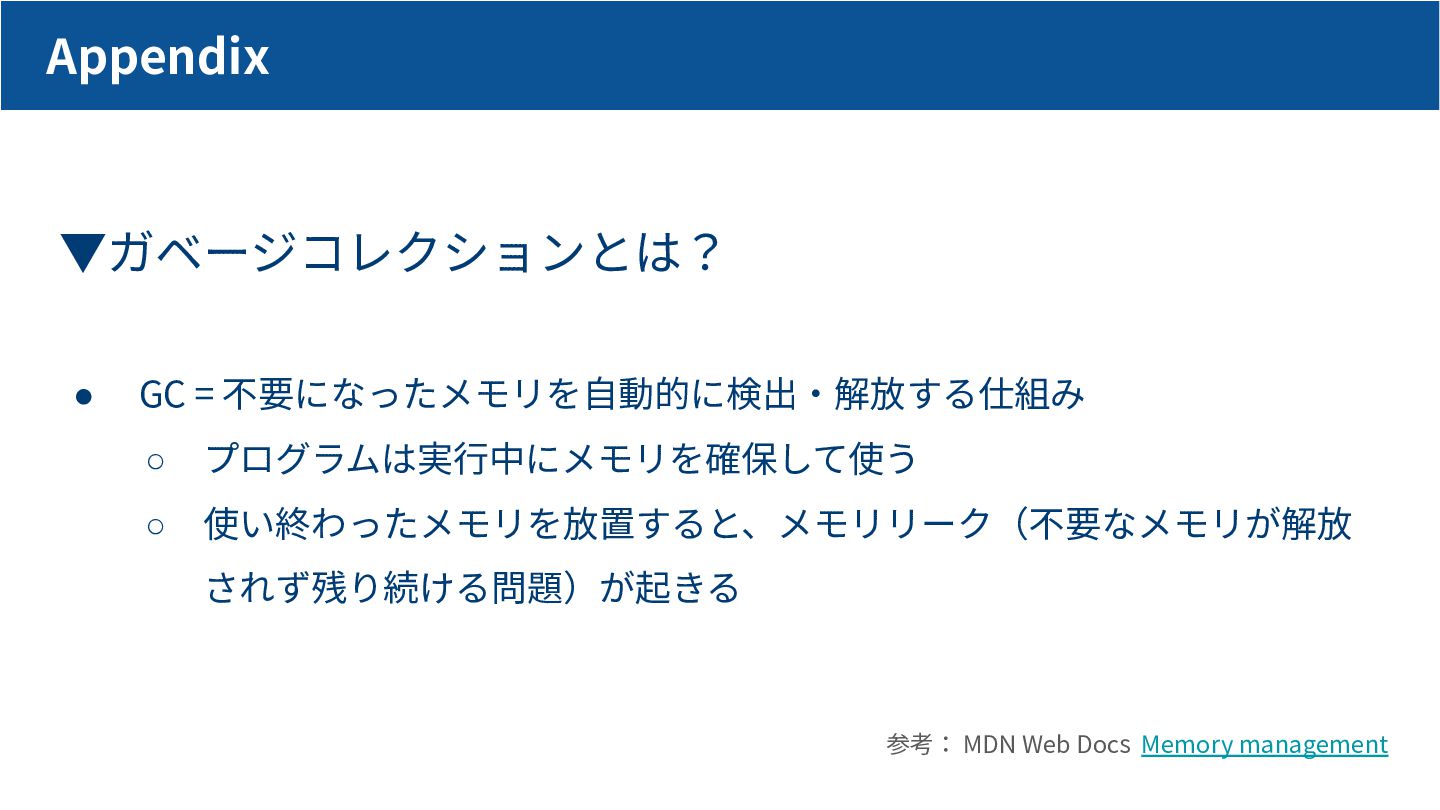
    | 空のgitリポジトリから始めた 2. Redefining the role of the engineer | エンジニアの役割の再定義 3. Increasing application legibility | アプリケーションの可読性向上 4. We made repository knowledge the system of record | リポジトリ知識を正式な記録源にした 5. Agent legibility is the goal | エージェントにとっての可読性がゴール 6. Enforcing architecture and taste | アーキテクチャとテイストの強制 7. Throughput changes the merge philosophy | スループットがマージ哲学を変える 8. What "agent-generated" actually means | 「エージェント⽣成」が実際に意味すること 9. Increasing levels of autonomy | ⾃律性の段階的向上 10. Entropy and garbage collection | エントロピーとガベージコレクション 11. What we're still learning | まだ学んでいること ▼OpenAIの記事の記載内容(11セクション)
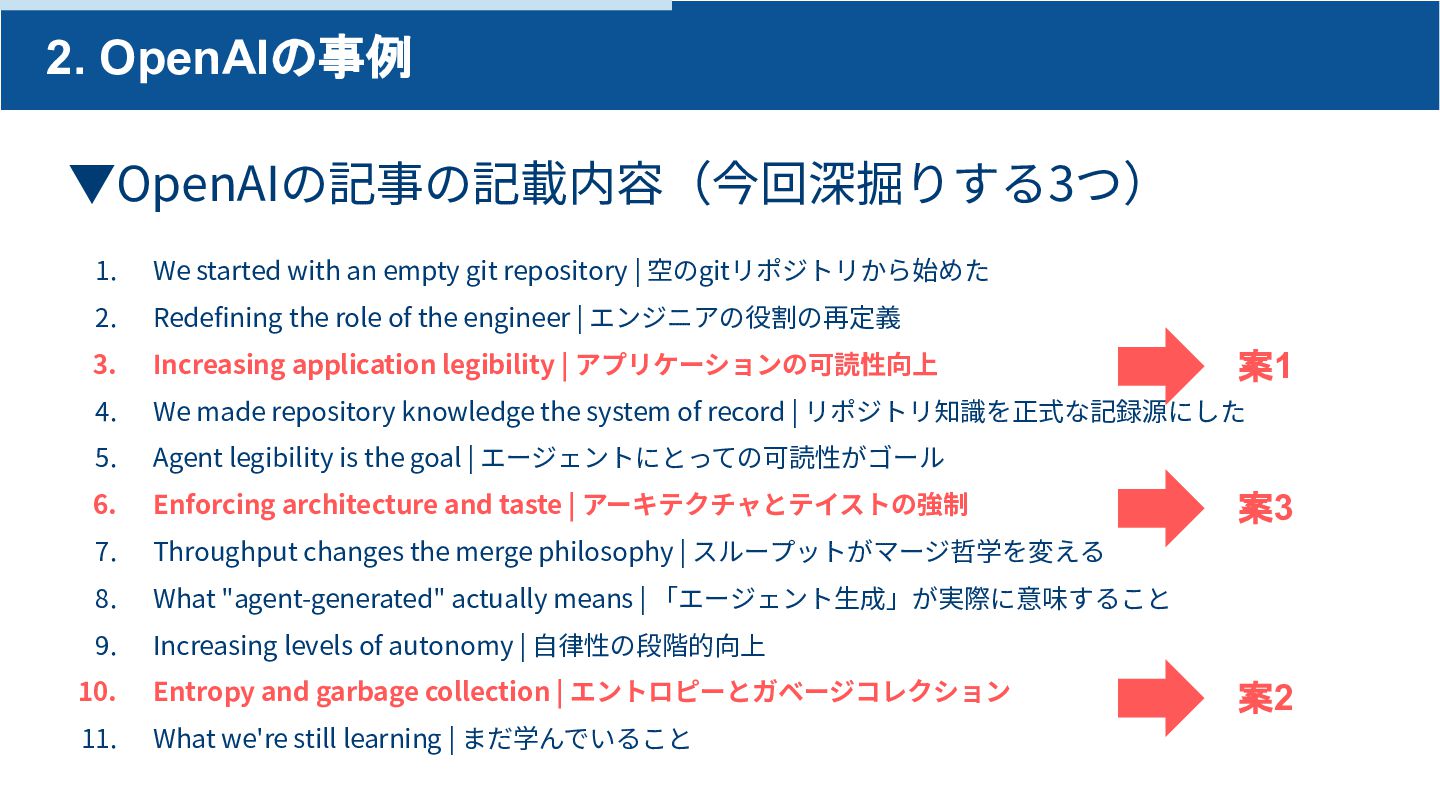
  8. 2. OpenAIの事例 1. We started with an empty git repository

    | 空のgitリポジトリから始めた 2. Redefining the role of the engineer | エンジニアの役割の再定義 3. Increasing application legibility | アプリケーションの可読性向上 4. We made repository knowledge the system of record | リポジトリ知識を正式な記録源にした 5. Agent legibility is the goal | エージェントにとっての可読性がゴール 6. Enforcing architecture and taste | アーキテクチャとテイストの強制 7. Throughput changes the merge philosophy | スループットがマージ哲学を変える 8. What "agent-generated" actually means | 「エージェント⽣成」が実際に意味すること 9. Increasing levels of autonomy | ⾃律性の段階的向上 10. Entropy and garbage collection | エントロピーとガベージコレクション 11. What we're still learning | まだ学んでいること ▼OpenAIの記事の記載内容(今回深掘りする3つ) 案1 案3 案2
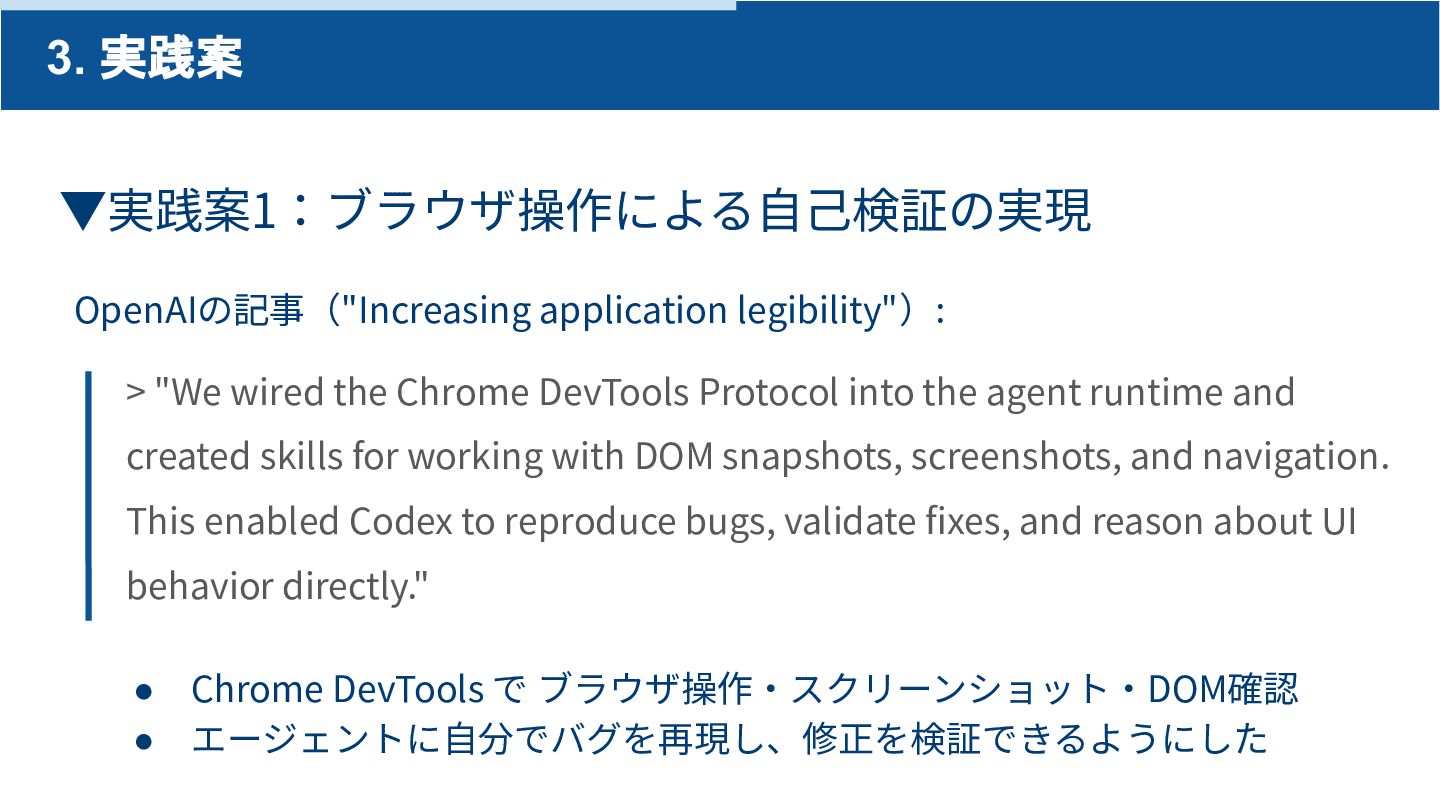
  9. 3. 実践案 > "We wired the Chrome DevTools Protocol into

    the agent runtime and created skills for working with DOM snapshots, screenshots, and navigation. This enabled Codex to reproduce bugs, validate fixes, and reason about UI behavior directly." ▼実践案1:ブラウザ操作による⾃⼰検証の実現 OpenAIの記事("Increasing application legibility"): • Chrome DevTools で ブラウザ操作‧スクリーンショット‧DOM確認 • エージェントに⾃分でバグを再現し、修正を検証できるようにした
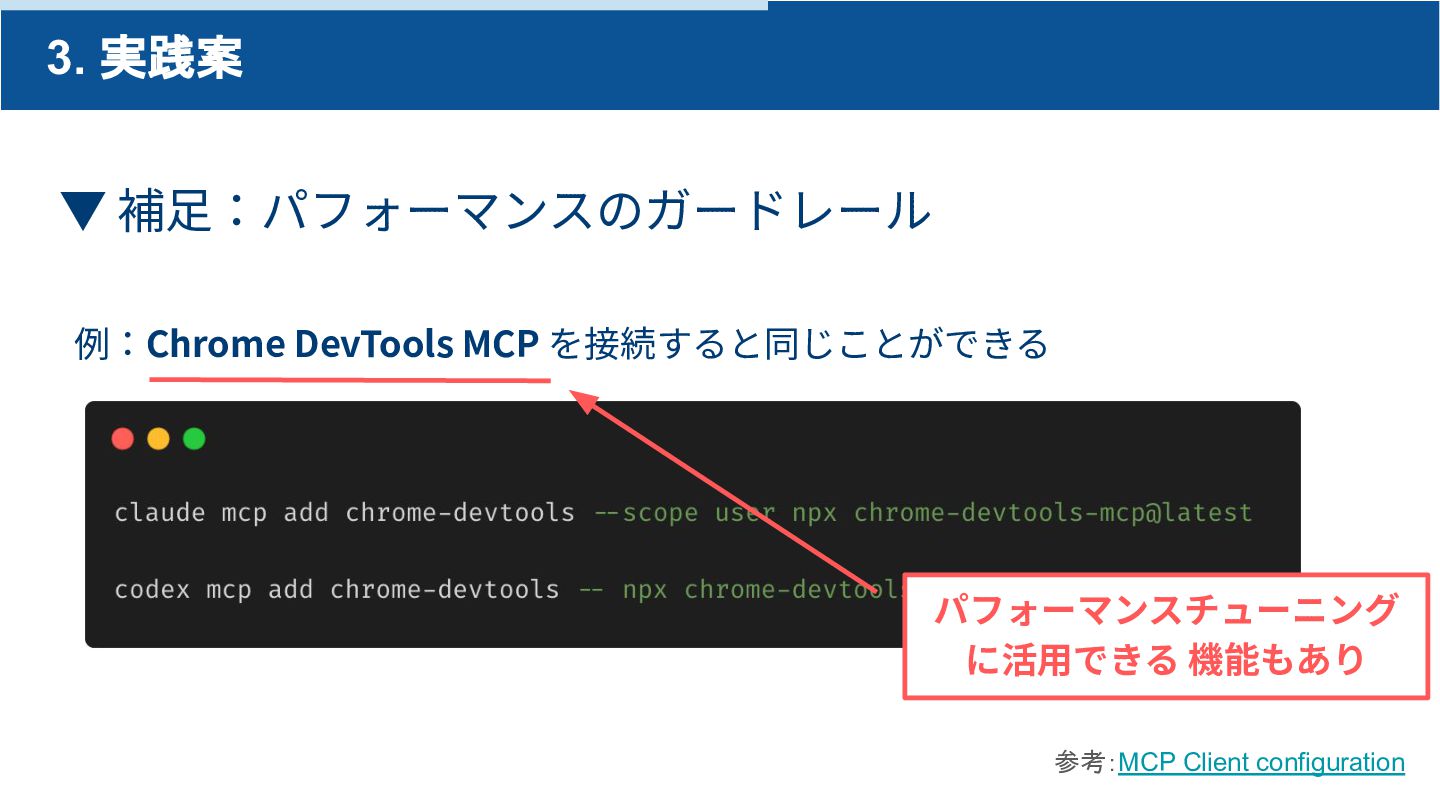
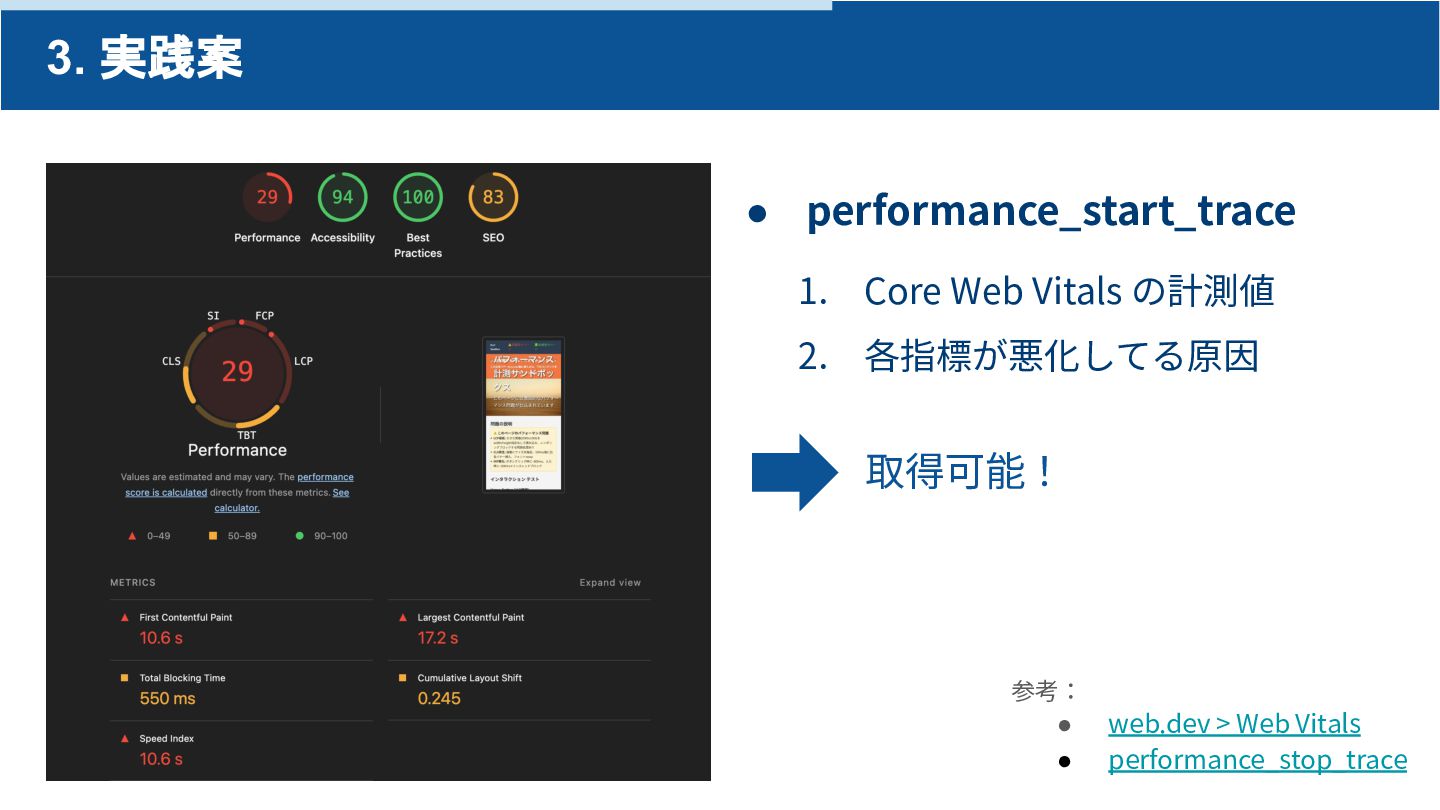
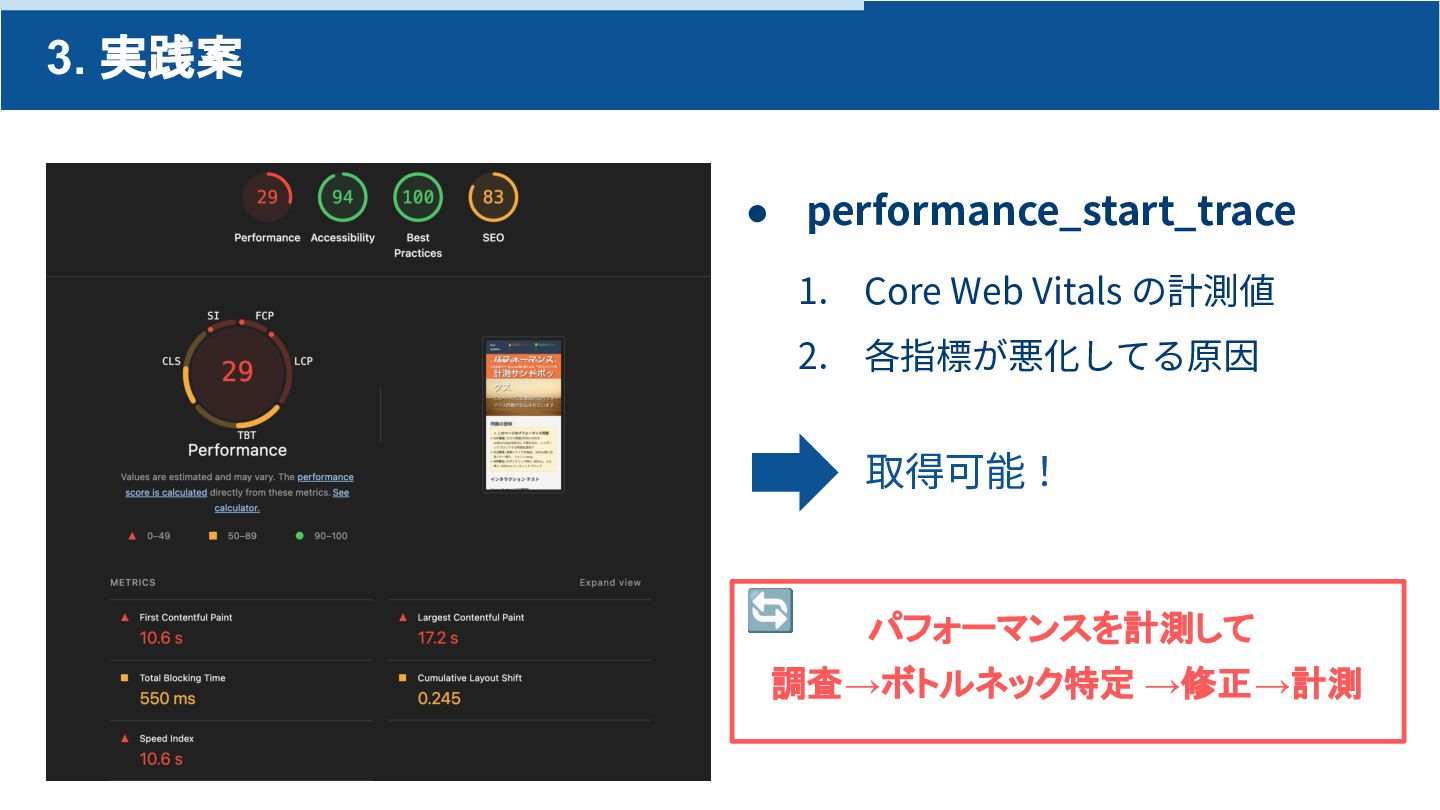
  10. 3. 実践案 • performance_start_trace 1. Core Web Vitals の計測値 2.

    各指標が悪化してる原因 取得可能! • web.dev > Web Vitals • performance_stop_trace 参考:
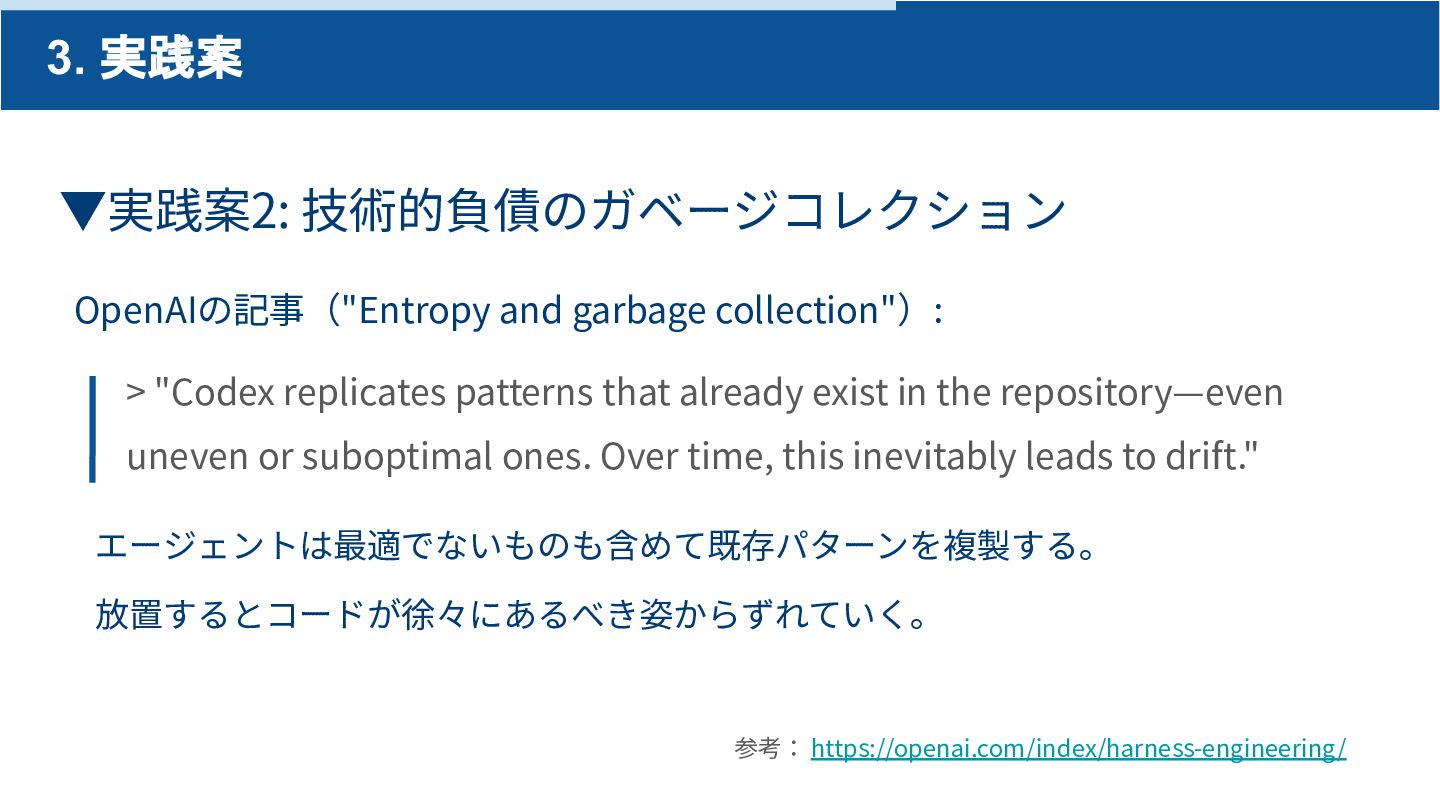
  11. 3. 実践案 > "Codex replicates patterns that already exist in

    the repository—even uneven or suboptimal ones. Over time, this inevitably leads to drift." ▼実践案2: 技術的負債のガベージコレクション OpenAIの記事("Entropy and garbage collection"): エージェントは最適でないものも含めて既存パターンを複製する。 放置するとコードが徐々にあるべき姿からずれていく。 参考: https://openai.com/index/harness-engineering/
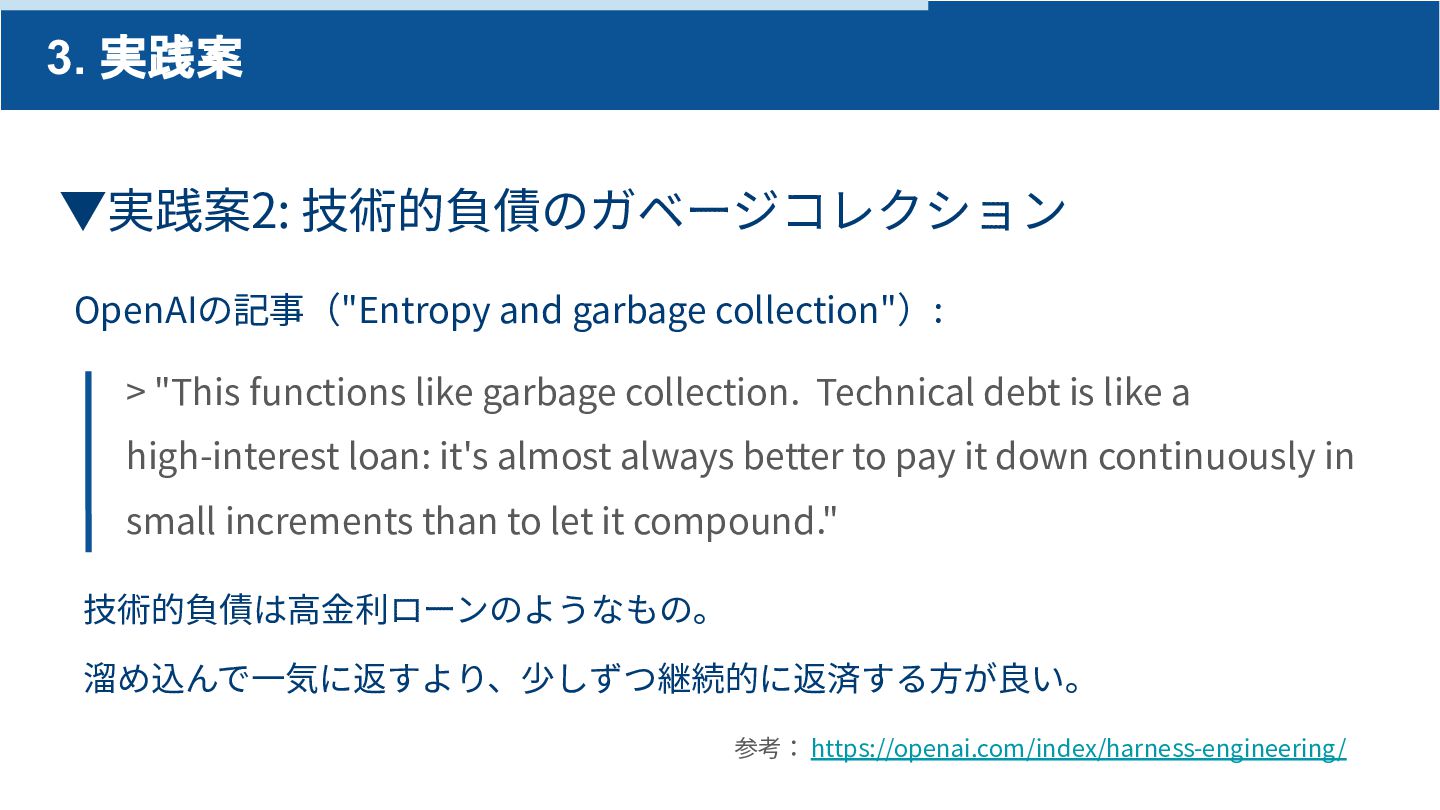
  12. 3. 実践案 > "This functions like garbage collection. Technical debt

    is like a high-interest loan: it's almost always better to pay it down continuously in small increments than to let it compound." ▼実践案2: 技術的負債のガベージコレクション OpenAIの記事("Entropy and garbage collection"): 技術的負債は⾼⾦利ローンのようなもの。 溜め込んで⼀気に返すより、少しずつ継続的に返済する⽅が良い。 参考: https://openai.com/index/harness-engineering/
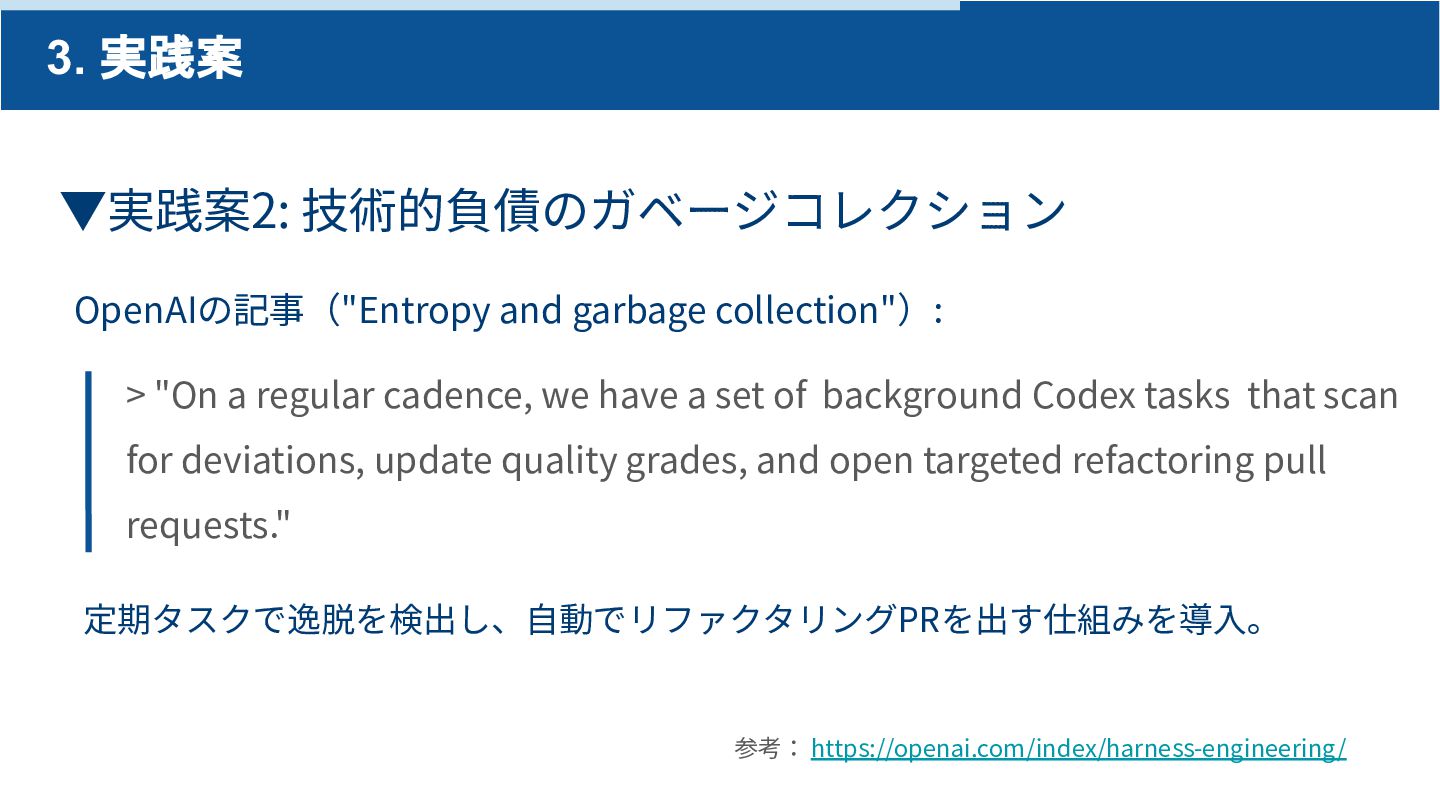
  13. 3. 実践案 > "On a regular cadence, we have a

    set of background Codex tasks that scan for deviations, update quality grades, and open targeted refactoring pull requests." ▼実践案2: 技術的負債のガベージコレクション OpenAIの記事("Entropy and garbage collection"): 定期タスクで逸脱を検出し、⾃動でリファクタリングPRを出す仕組みを導⼊。 参考: https://openai.com/index/harness-engineering/
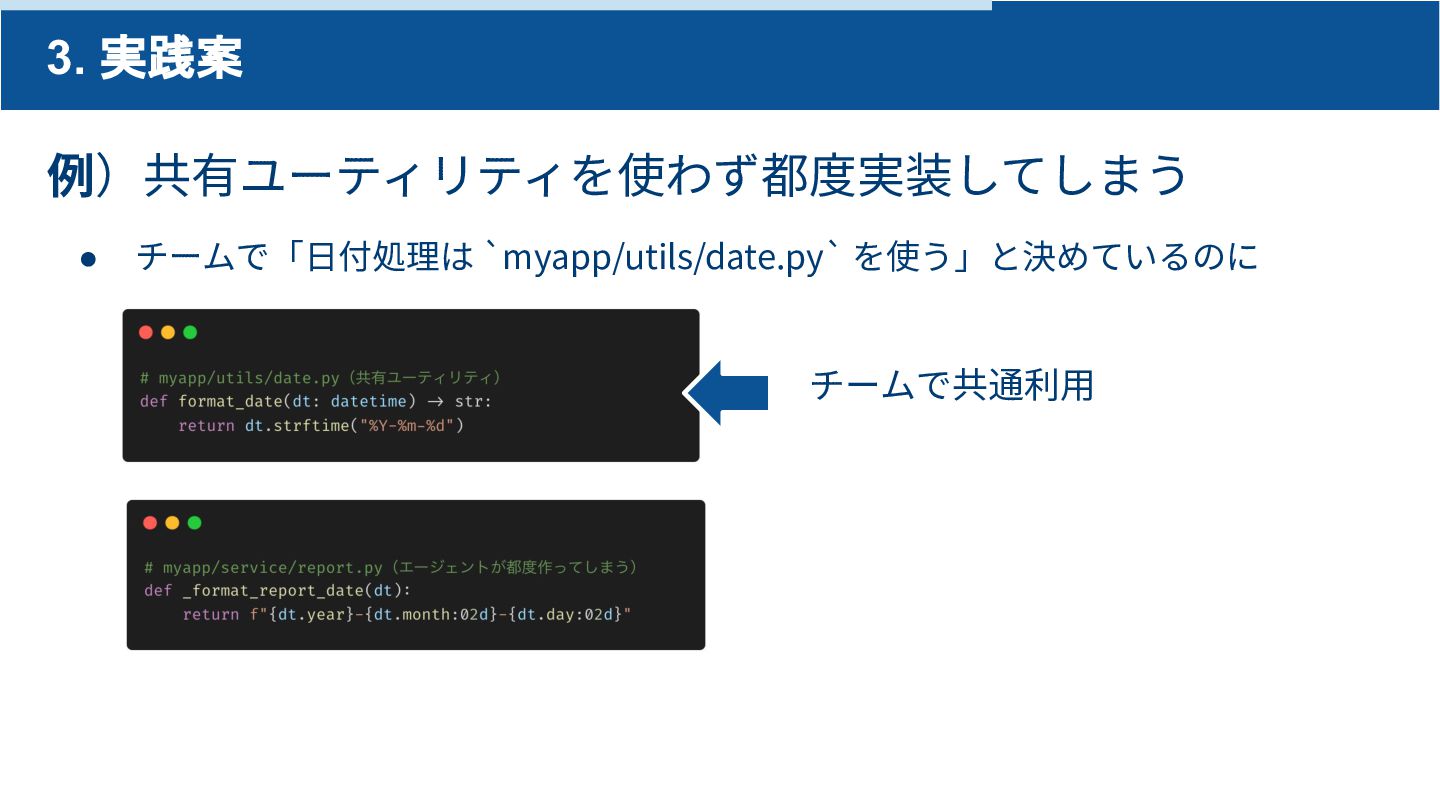
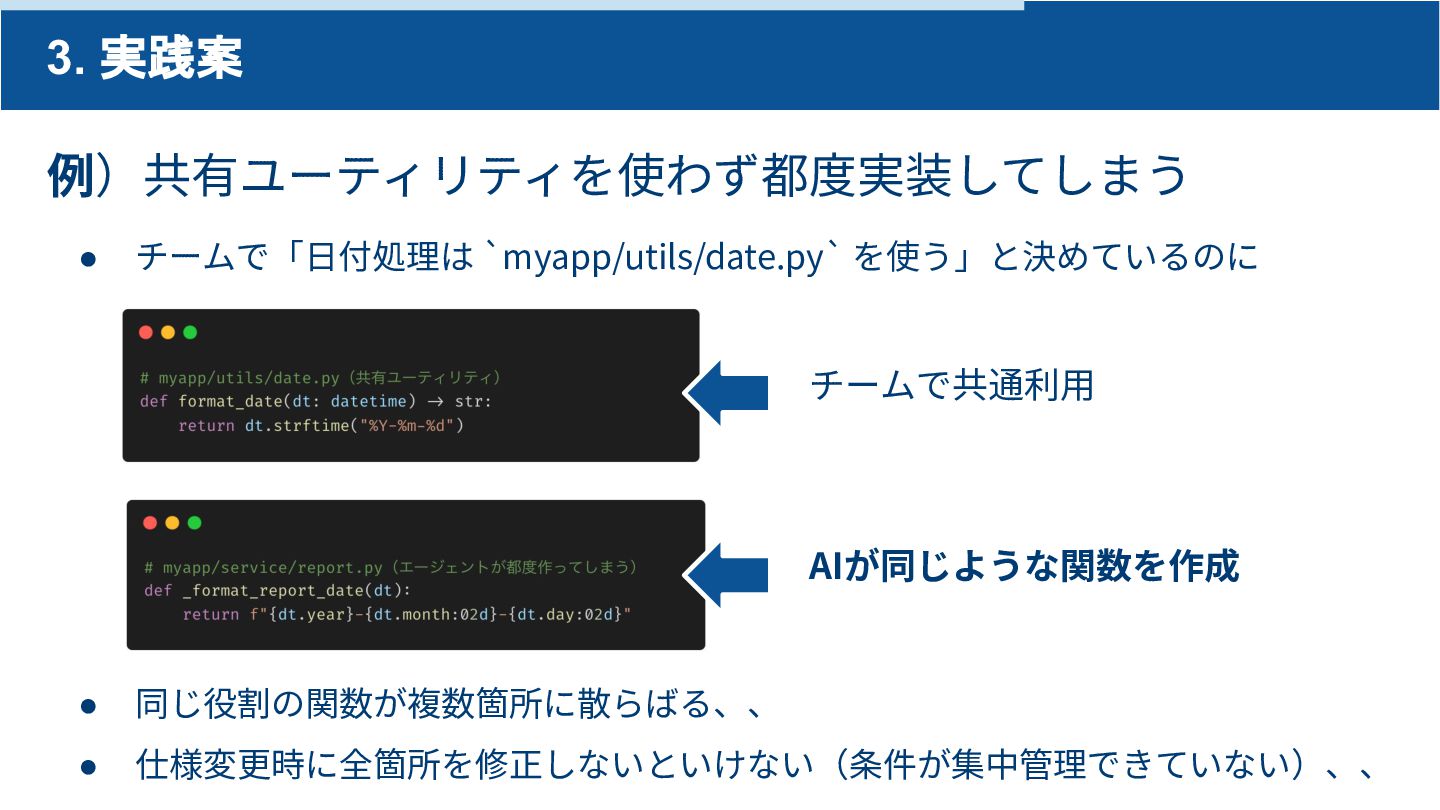
  14. 3. 実践案 例)共有ユーティリティを使わず都度実装してしまう • チームで「⽇付処理は `myapp/utils/date.py` を使う」と決めているのに • 同じ役割の関数が複数箇所に散らばる、、 •

    仕様変更時に全箇所を修正しないといけない(条件が集中管理できていない)、、 チームで共通利⽤ AIが同じような関数を作成
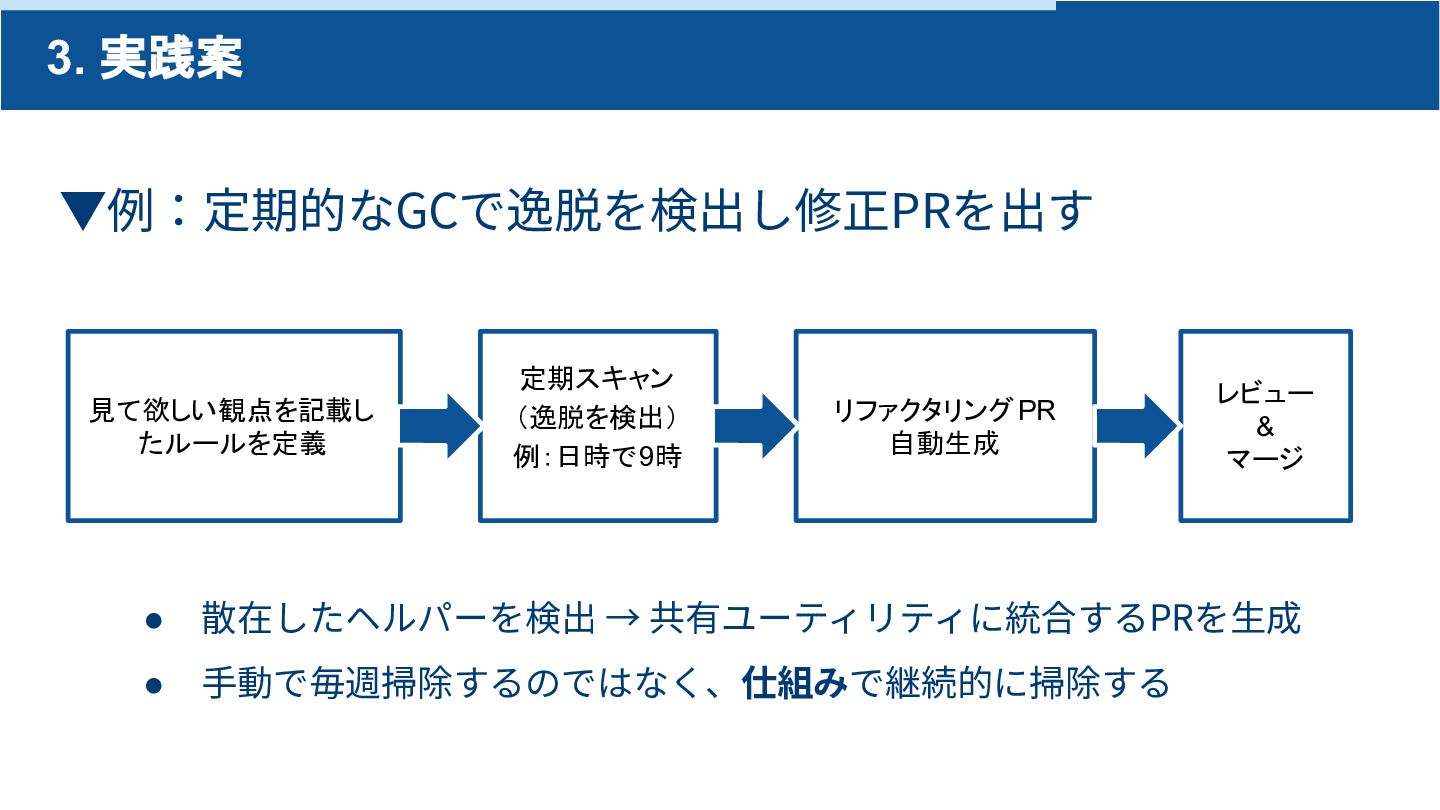
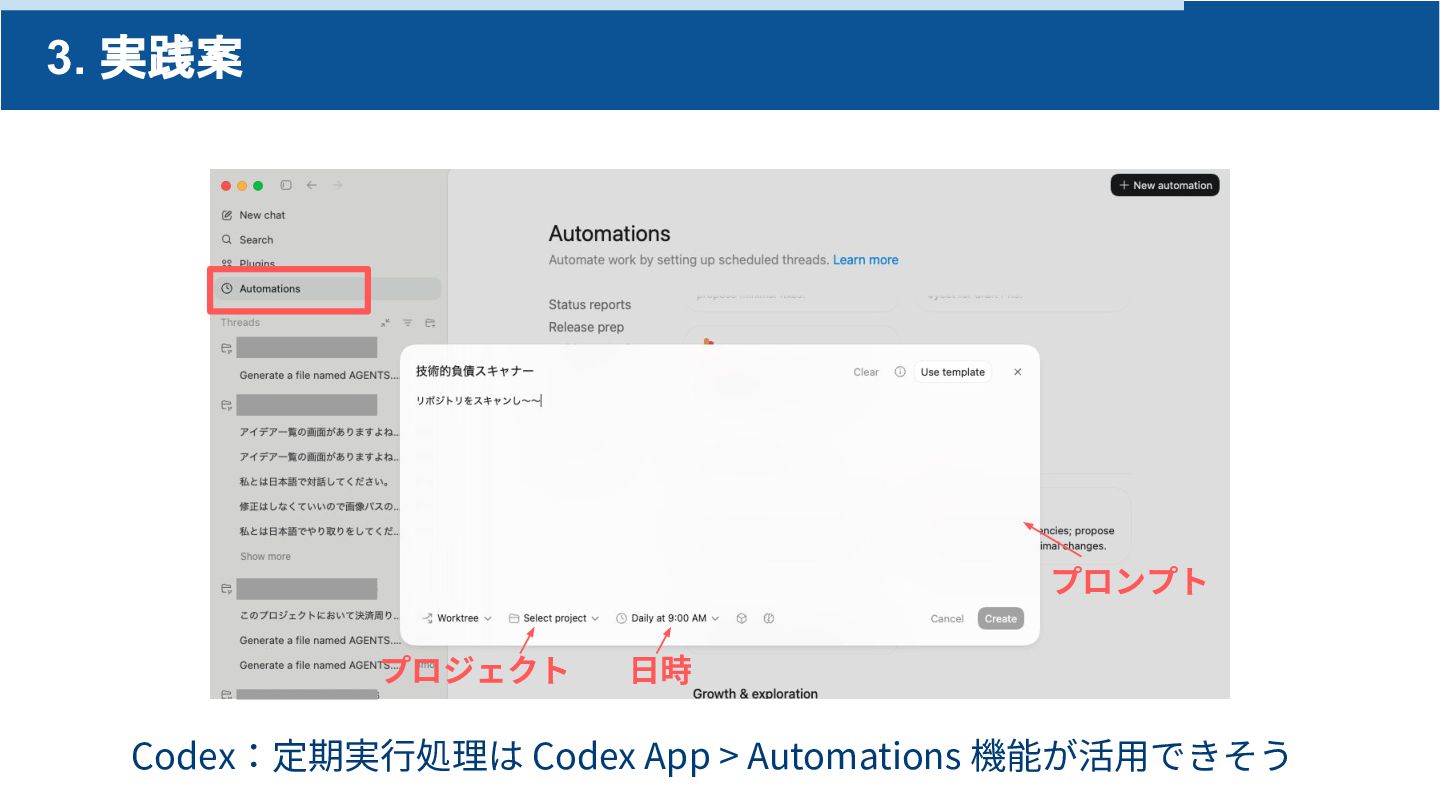
  15. 3. 実践案 • 散在したヘルパーを検出 → 共有ユーティリティに統合するPRを⽣成 • ⼿動で毎週掃除するのではなく、仕組みで継続的に掃除する 見て欲しい観点を記載し たルールを定義

    定期スキャン (逸脱を検出) 例:日時で9時 リファクタリングPR 自動生成 レビュー & マージ ▼例:定期的なGCで逸脱を検出し修正PRを出す
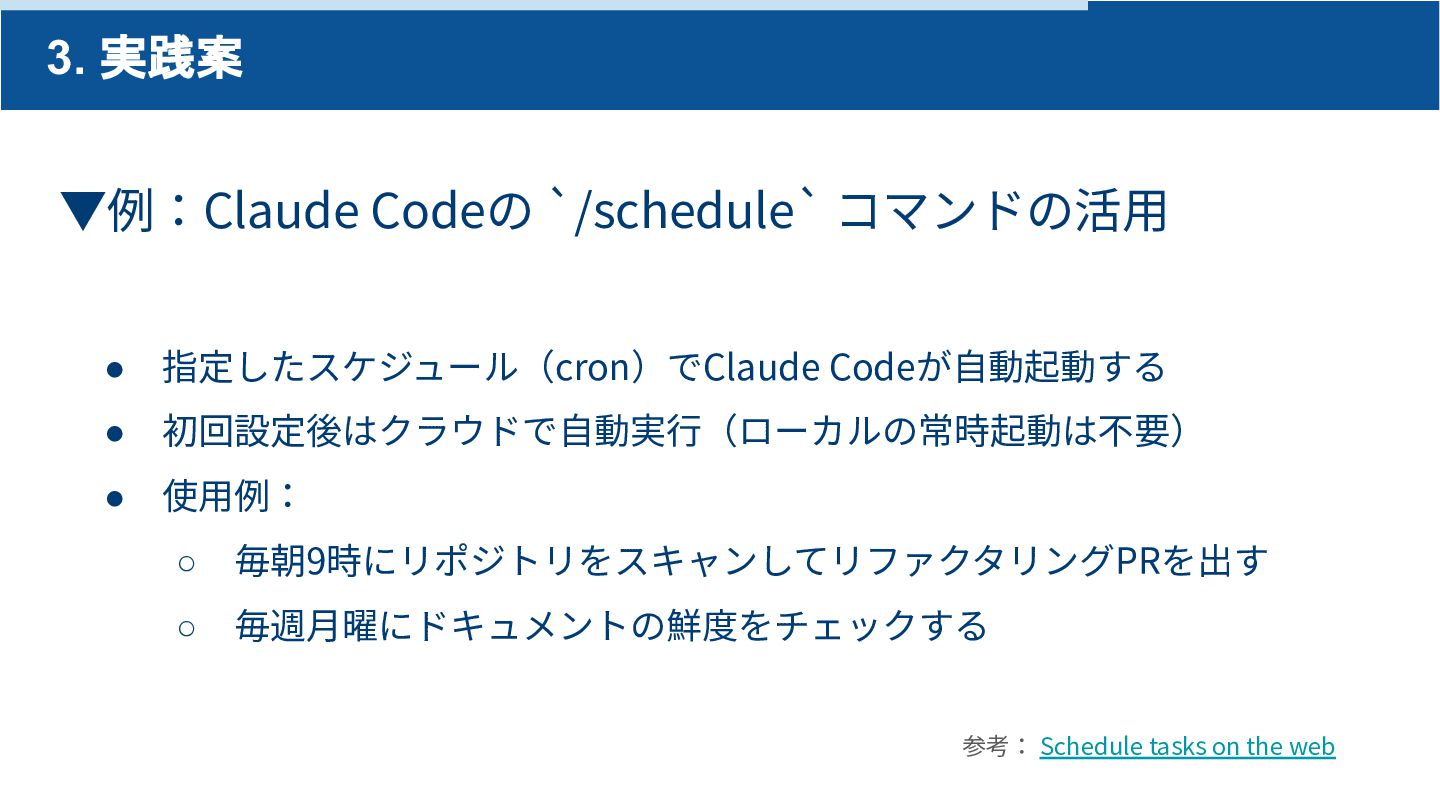
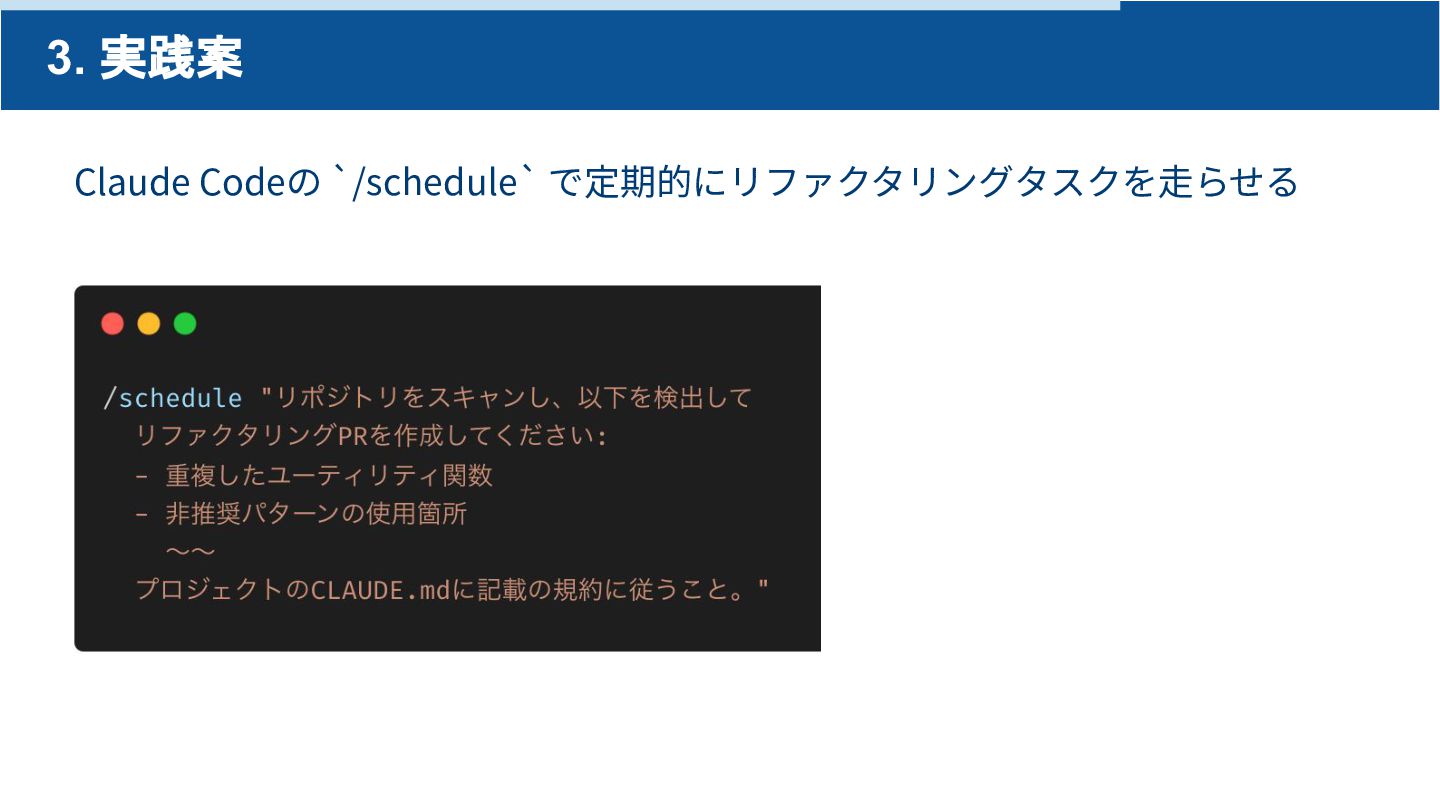
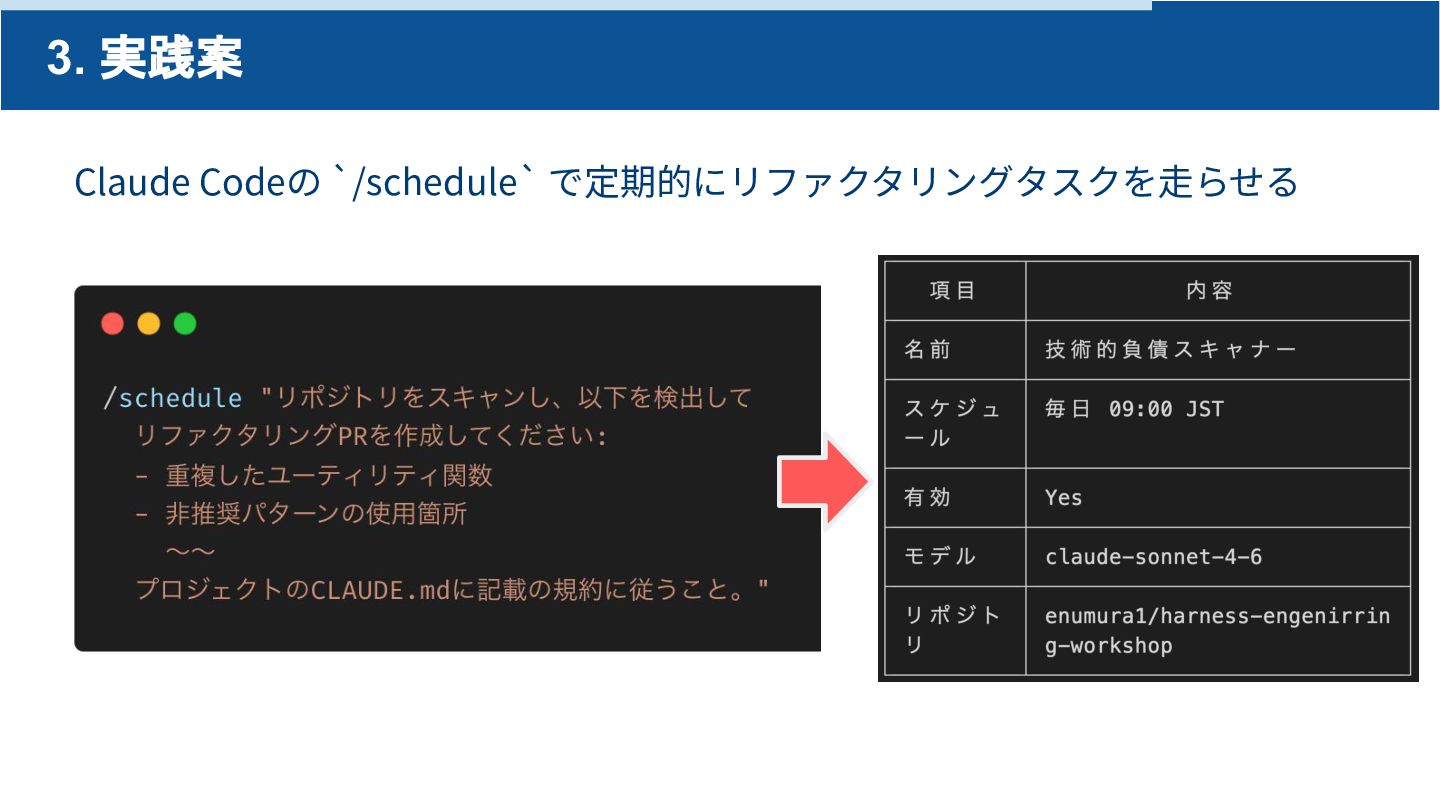
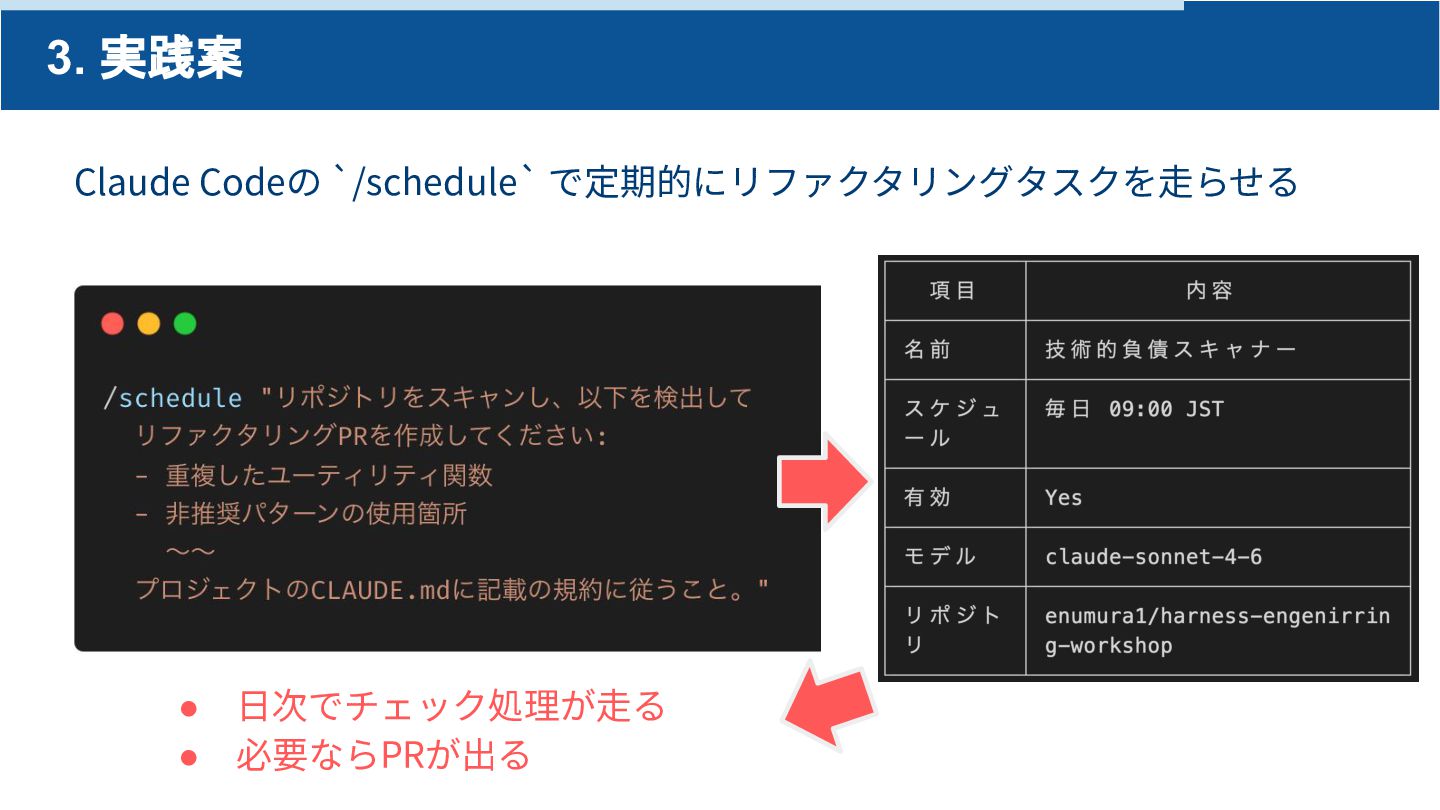
  16. 3. 実践案 • 指定したスケジュール(cron)でClaude Codeが⾃動起動する • 初回設定後はクラウドで⾃動実⾏(ローカルの常時起動は不要) • 使⽤例: ◦

    毎朝9時にリポジトリをスキャンしてリファクタリングPRを出す ◦ 毎週⽉曜にドキュメントの鮮度をチェックする 参考: Schedule tasks on the web ▼例:Claude Codeの `/schedule` コマンドの活⽤
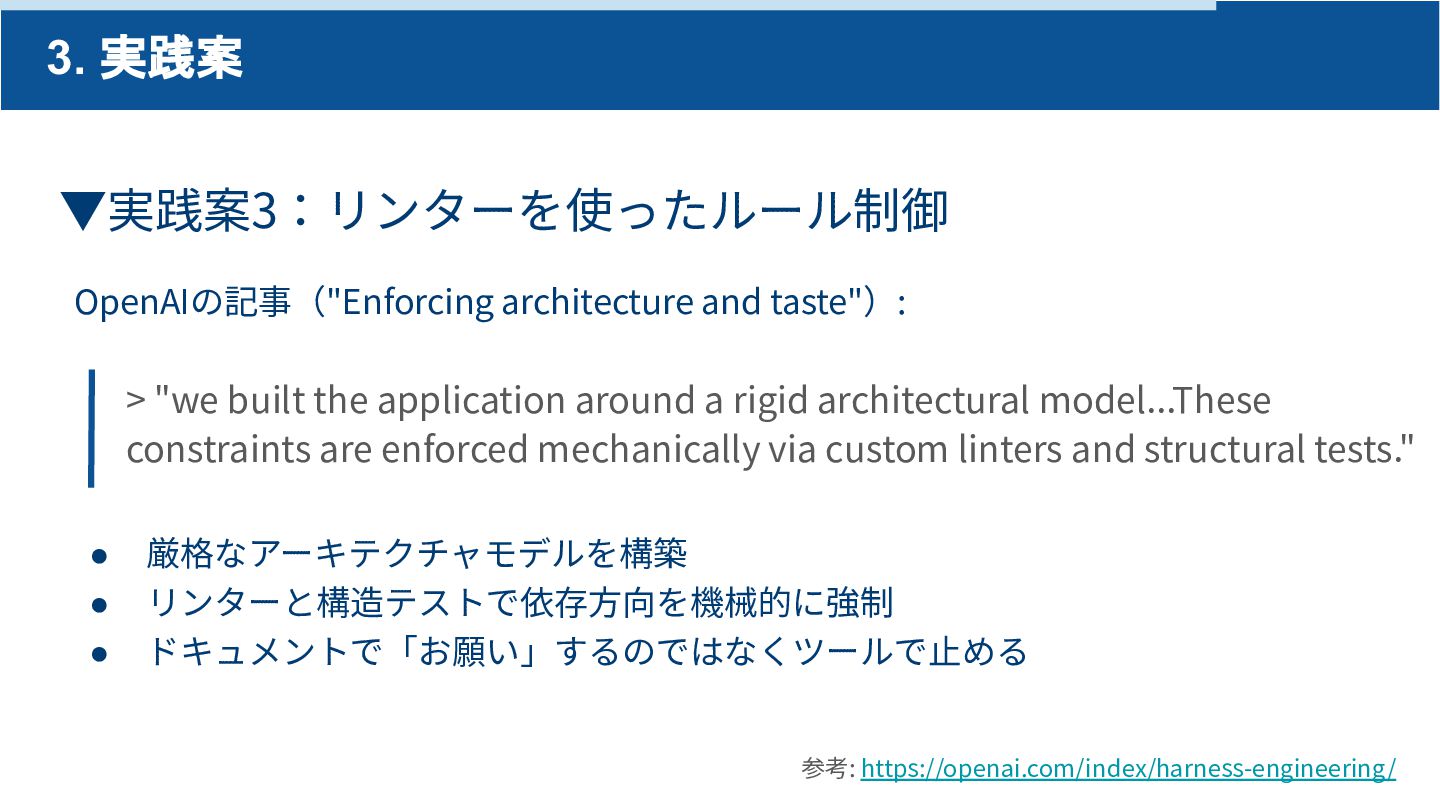
  17. 3. 実践案 > "we built the application around a rigid

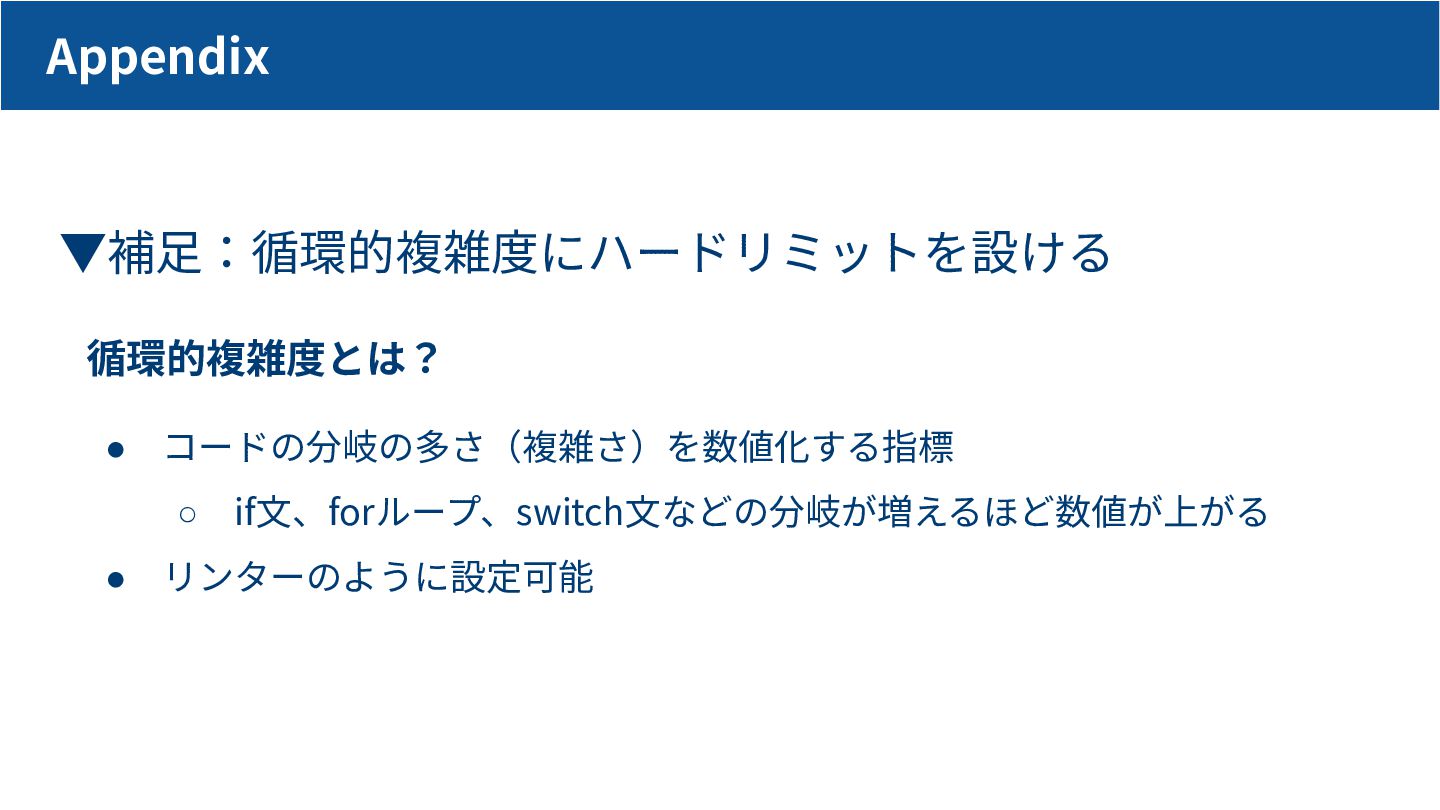
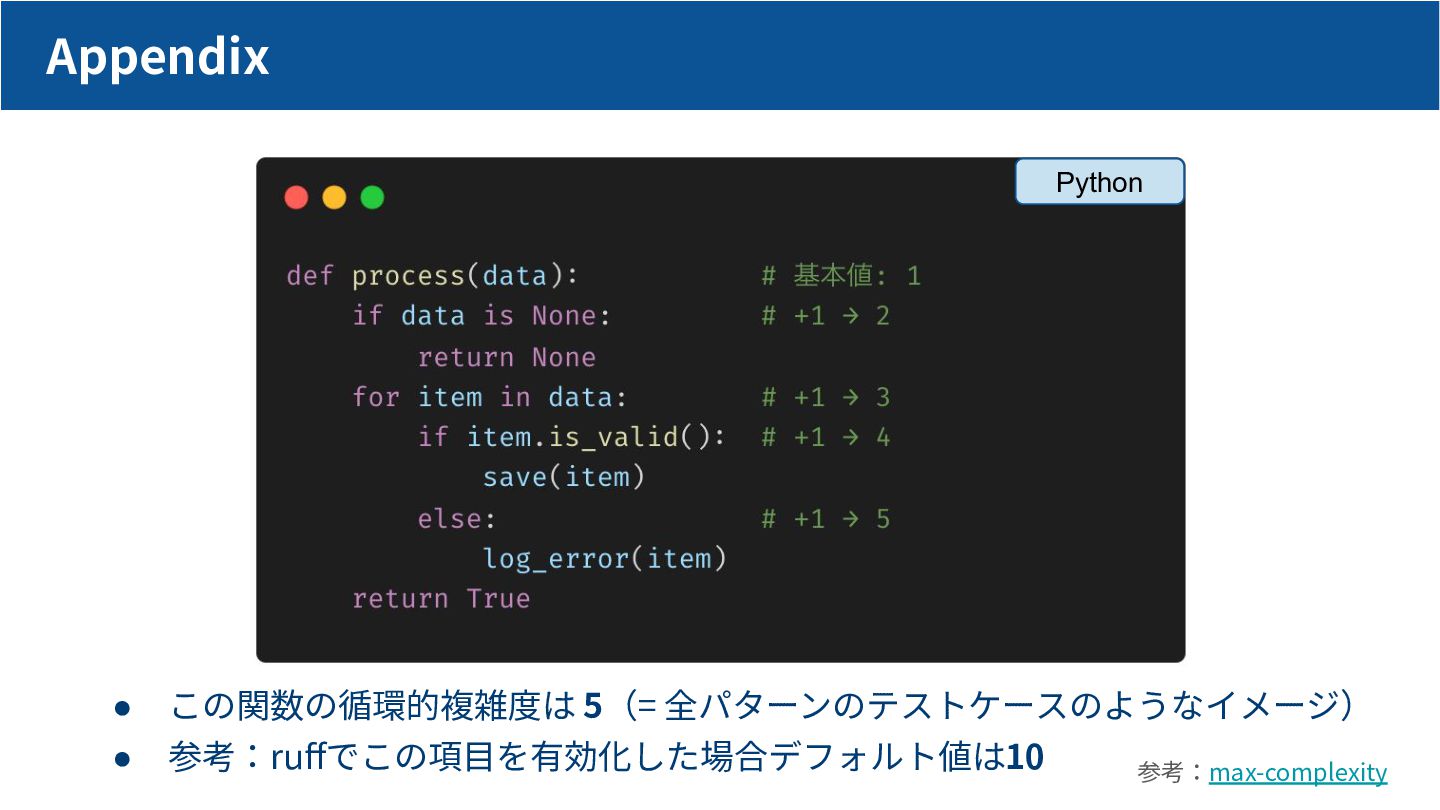
    architectural model...These constraints are enforced mechanically via custom linters and structural tests." ▼実践案3:リンターを使ったルール制御 OpenAIの記事("Enforcing architecture and taste"): 参考: https://openai.com/index/harness-engineering/ • 厳格なアーキテクチャモデルを構築 • リンターと構造テストで依存⽅向を機械的に強制 • ドキュメントで「お願い」するのではなくツールで⽌める
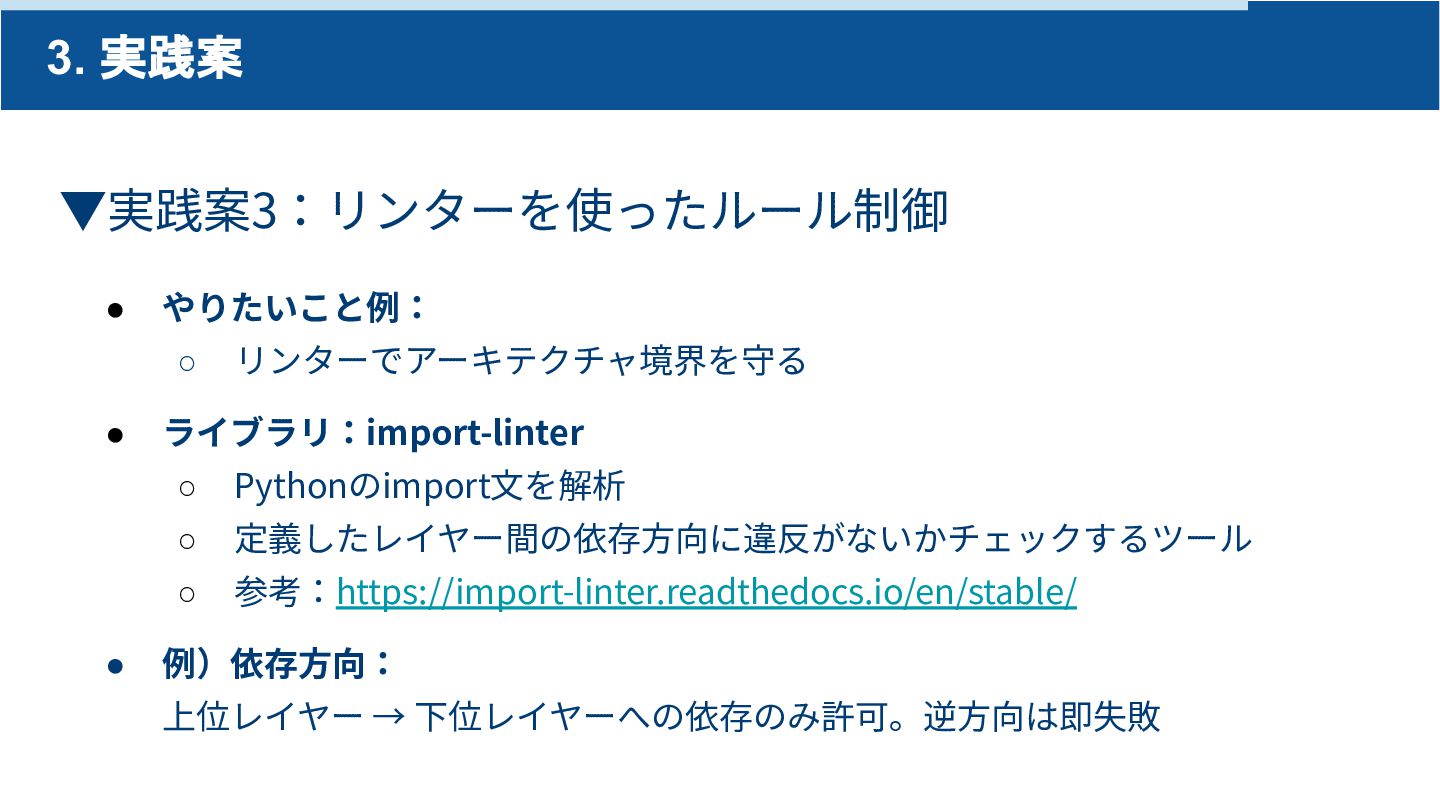
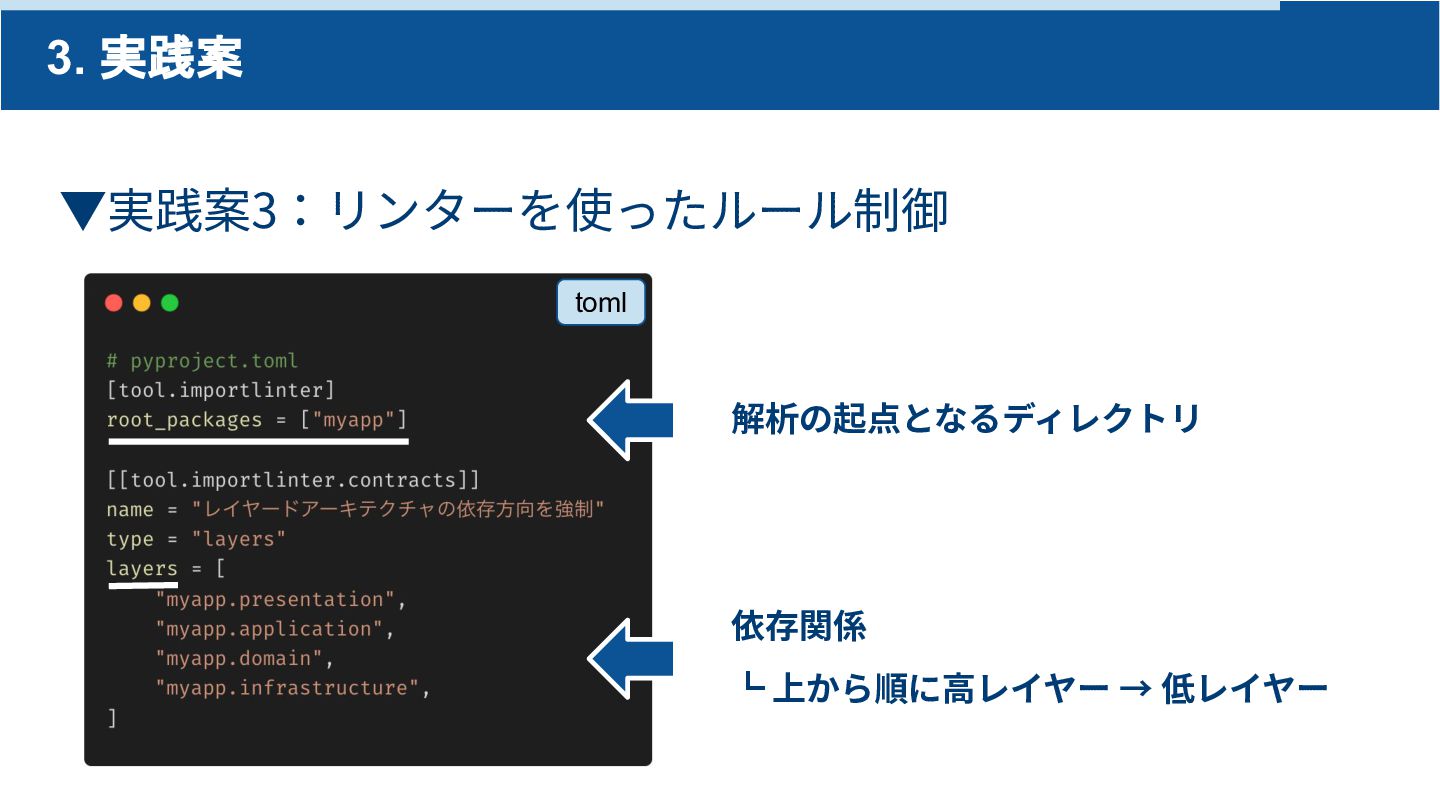
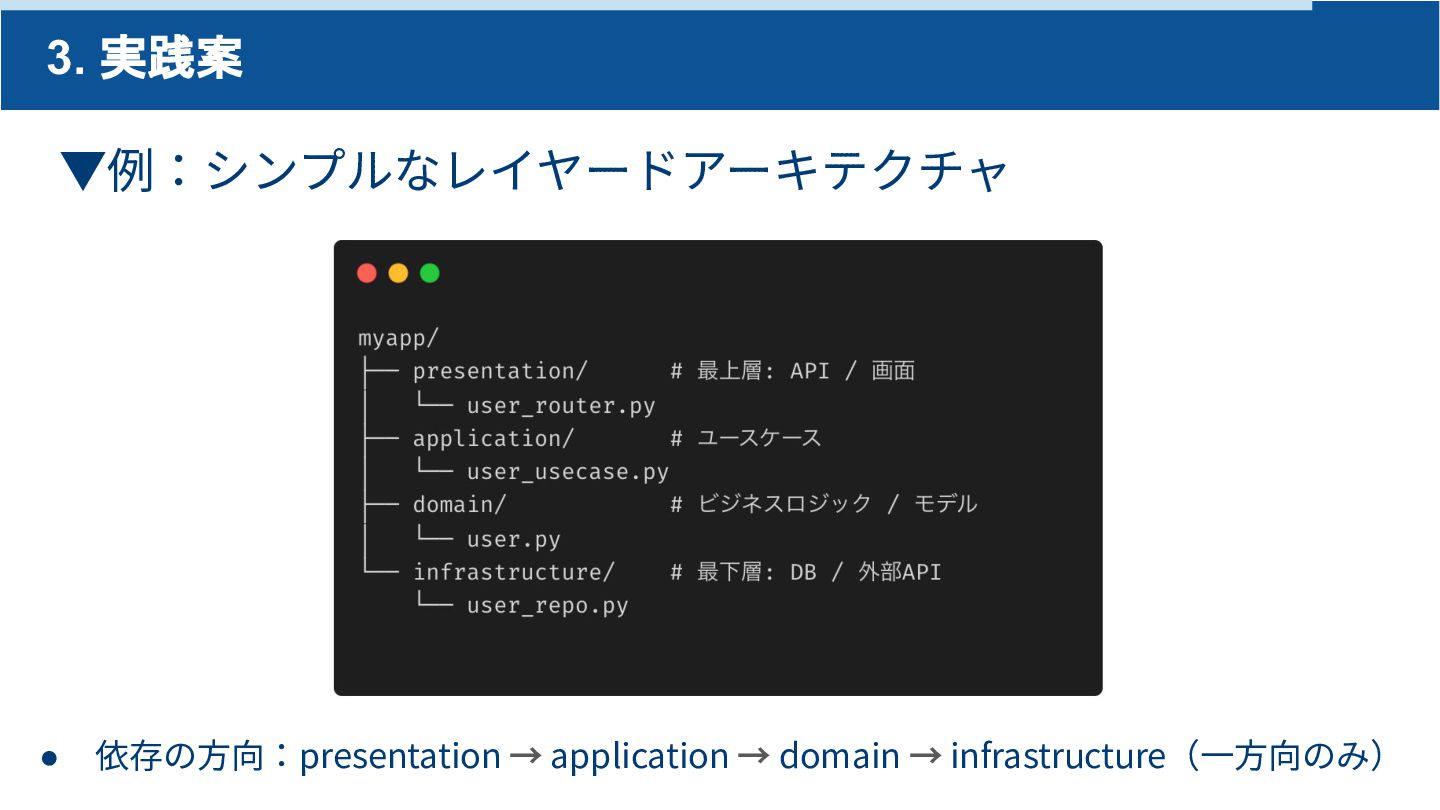
  18. 3. 実践案 ▼実践案3:リンターを使ったルール制御 • やりたいこと例: ◦ リンターでアーキテクチャ境界を守る • ライブラリ:import-linter ◦

    Pythonのimport⽂を解析 ◦ 定義したレイヤー間の依存⽅向に違反がないかチェックするツール ◦ 参考:https://import-linter.readthedocs.io/en/stable/ • 例)依存⽅向: 上位レイヤー → 下位レイヤーへの依存のみ許可。逆⽅向は即失敗
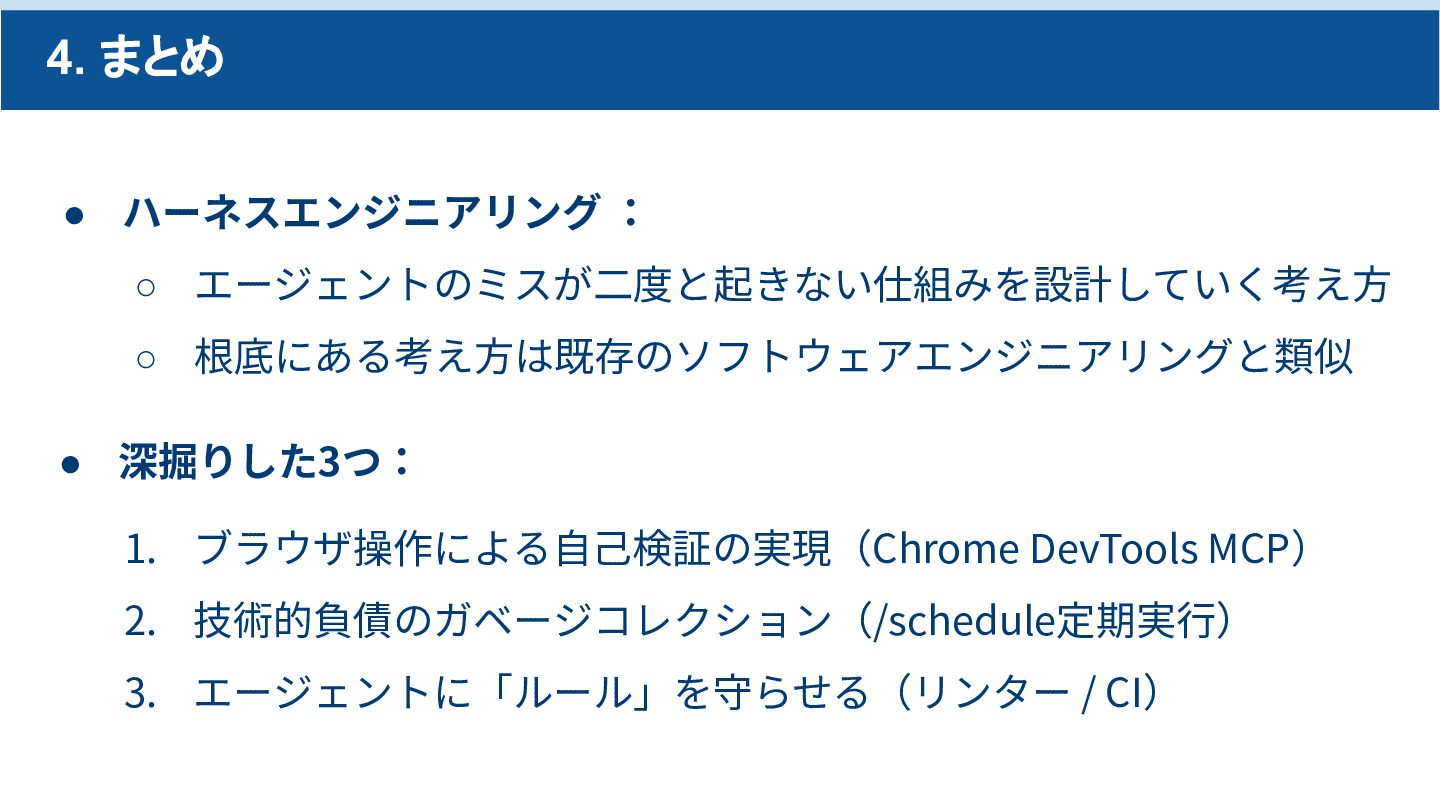
  19. 4. まとめ • ハーネスエンジニアリング : ◦ エージェントのミスが⼆度と起きない仕組みを設計していく考え⽅ ◦ 根底にある考え⽅は既存のソフトウェアエンジニアリングと類似 1.

    ブラウザ操作による⾃⼰検証の実現(Chrome DevTools MCP) 2. 技術的負債のガベージコレクション(/schedule定期実⾏) 3. エージェントに「ルール」を守らせる(リンター / CI) • 深掘りした3つ:
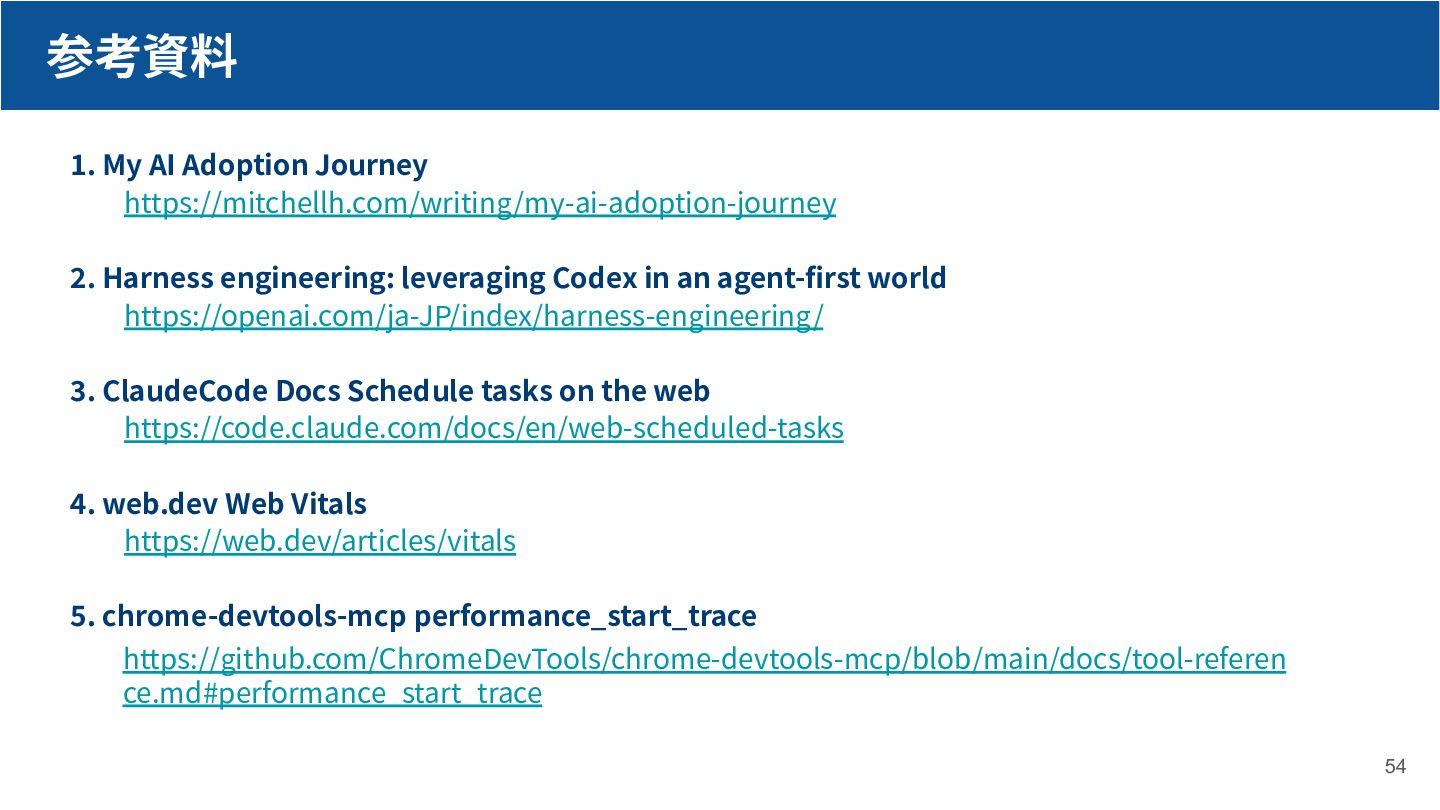
  20. 参考資料 54 1. My AI Adoption Journey https://mitchellh.com/writing/my-ai-adoption-journey 2. Harness

    engineering: leveraging Codex in an agent-first world https://openai.com/ja-JP/index/harness-engineering/ 3. ClaudeCode Docs Schedule tasks on the web https://code.claude.com/docs/en/web-scheduled-tasks 4. web.dev Web Vitals https://web.dev/articles/vitals 5. chrome-devtools-mcp performance_start_trace https://github.com/ChromeDevTools/chrome-devtools-mcp/blob/main/docs/tool-referen ce.md#performance_start_trace
  21. 参考資料 55 6. Import-Linter https://import-linter.readthedocs.io/en/stable/ 7. Ruff max-complexity   https://docs.astral.sh/ruff/settings/#lint_mccabe_max-complexity 8.

    Ruff complex-structure (C901)   https://docs.astral.sh/ruff/rules/complex-structure/ 9. MDN Web Docs Memory management https://developer.mozilla.org/en-US/docs/Web/JavaScript/Guide/Memory_management#ga rbage_collection