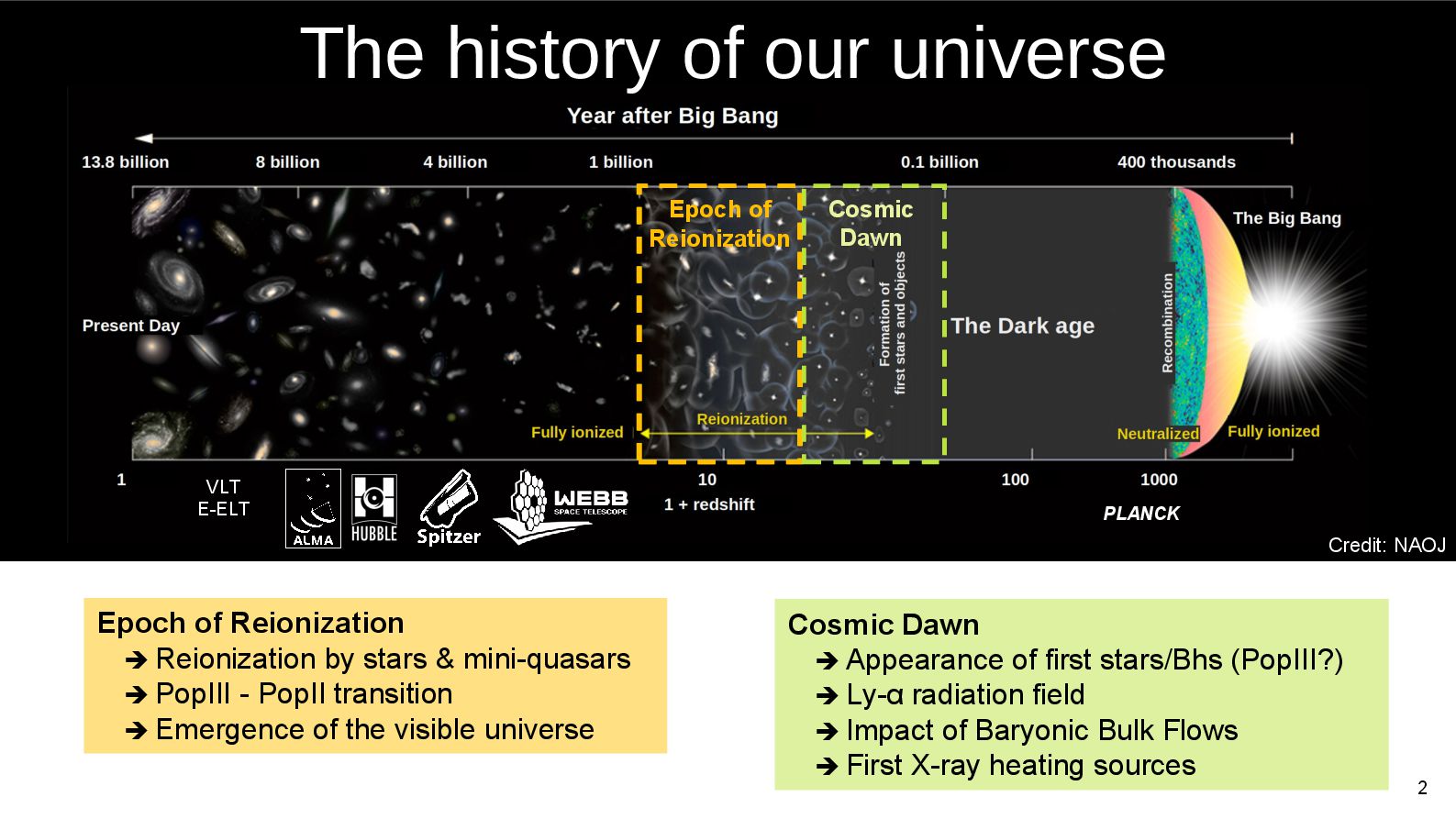
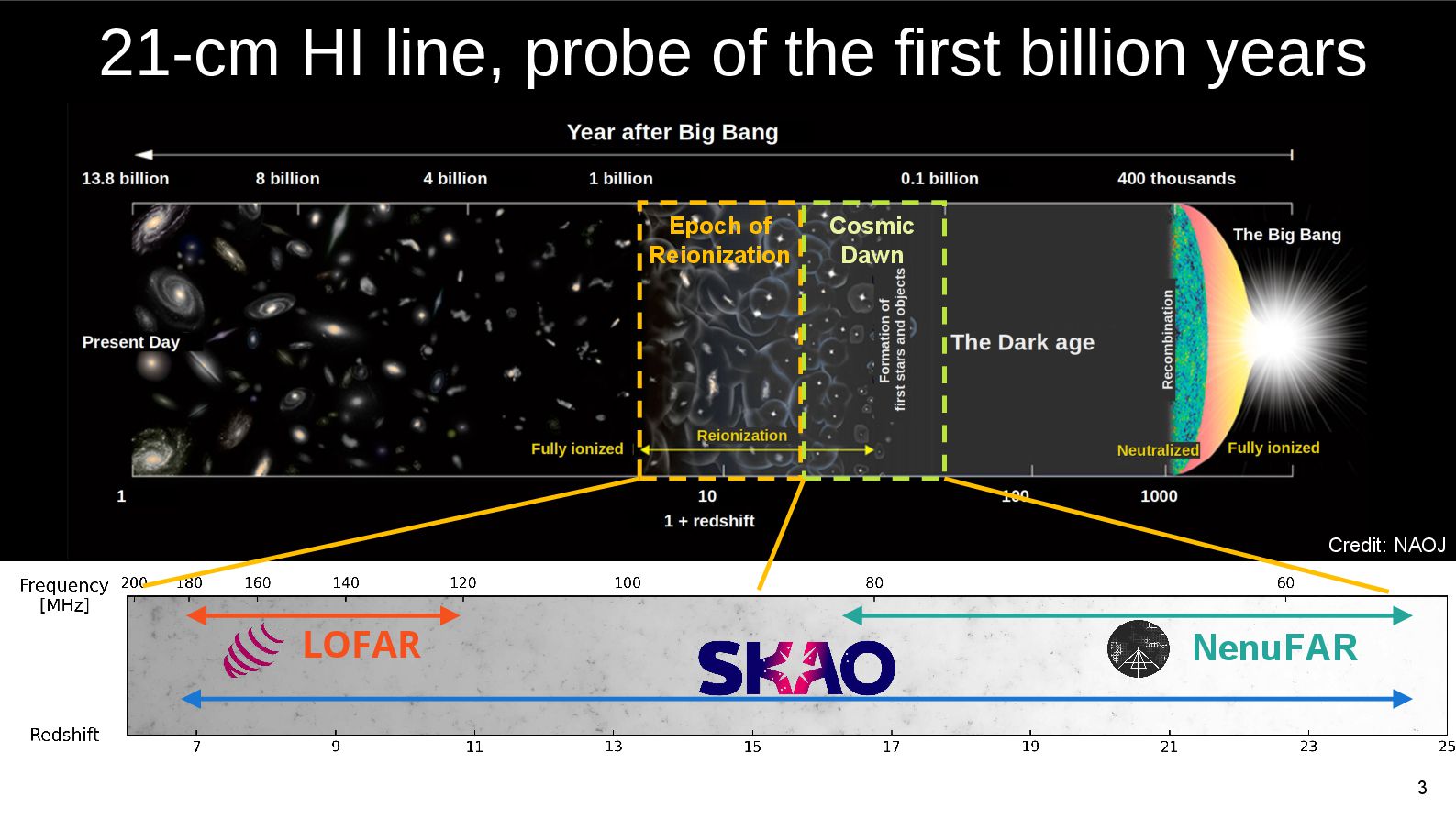
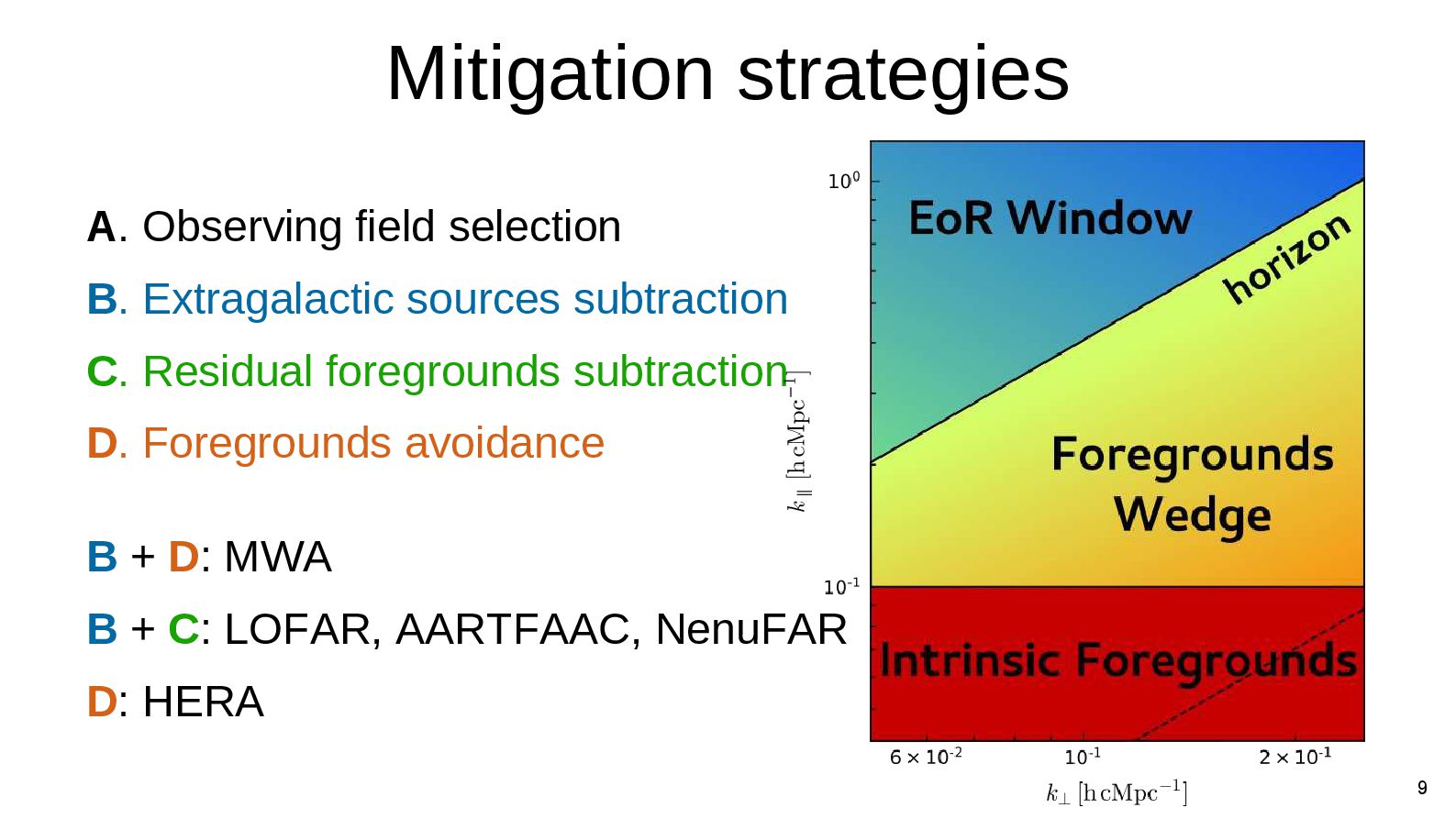
Ly-α radiation field ➔ Impact of Baryonic Bulk Flows ➔ First X-ray heating sources Epoch of Reionization ➔ Reionization by stars & mini-quasars ➔ PopIII - PopII transition ➔ Emergence of the visible universe PLANCK VLT E-ELT Credit: NAOJ Cosmic Dawn Epoch of Reionization The history of our universe
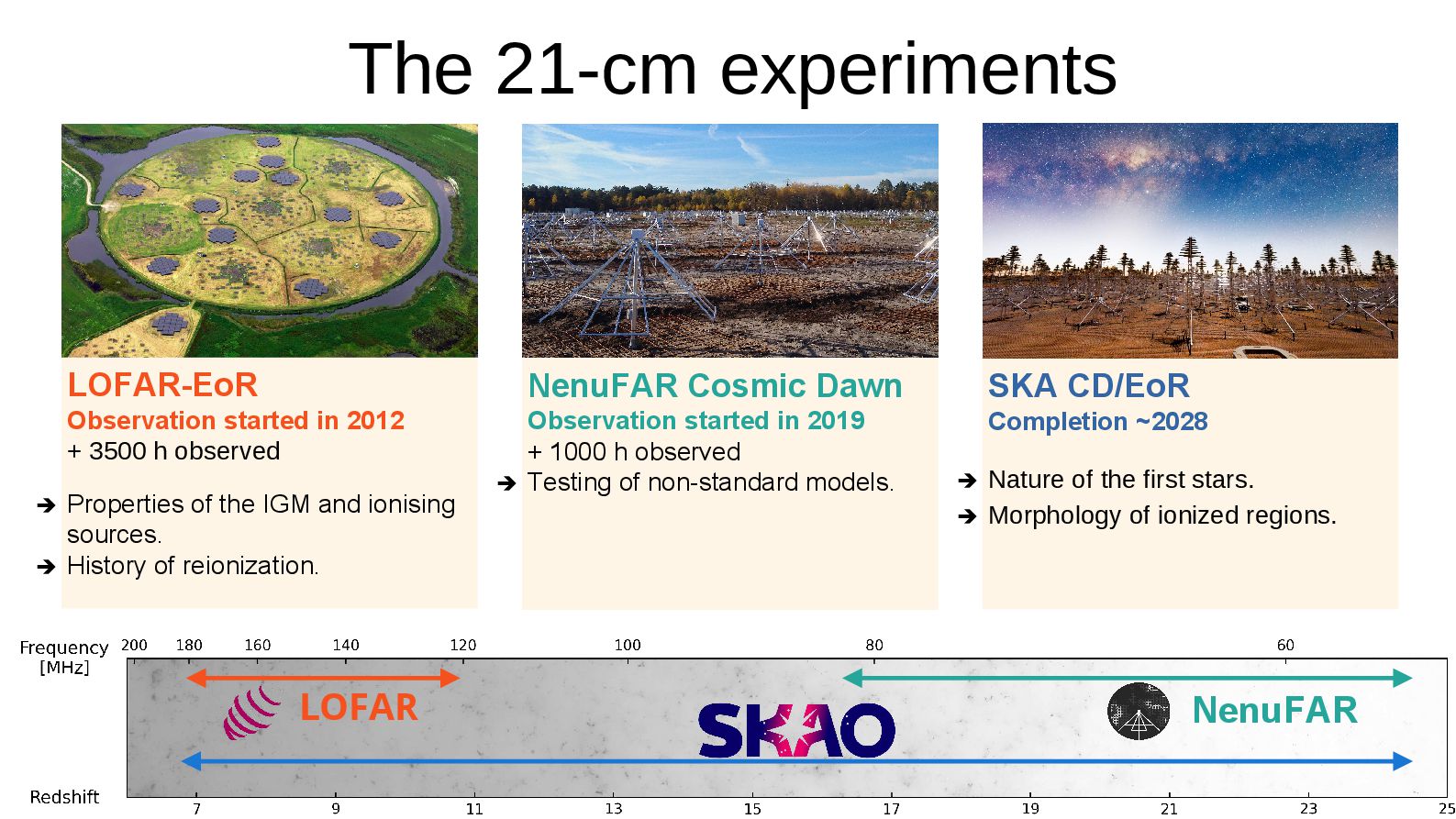
3500 h observed ➔ Properties of the IGM and ionising sources. ➔ History of reionization. NenuFAR Cosmic Dawn Observation started in 2019 + 1000 h observed ➔ Testing of non-standard models. SKA CD/EoR Completion ~2028 ➔ Nature of the first stars. ➔ Morphology of ionized regions. Bowman et al. 2018 Simulation 21-cm du LERMA LOFAR NenuFAR
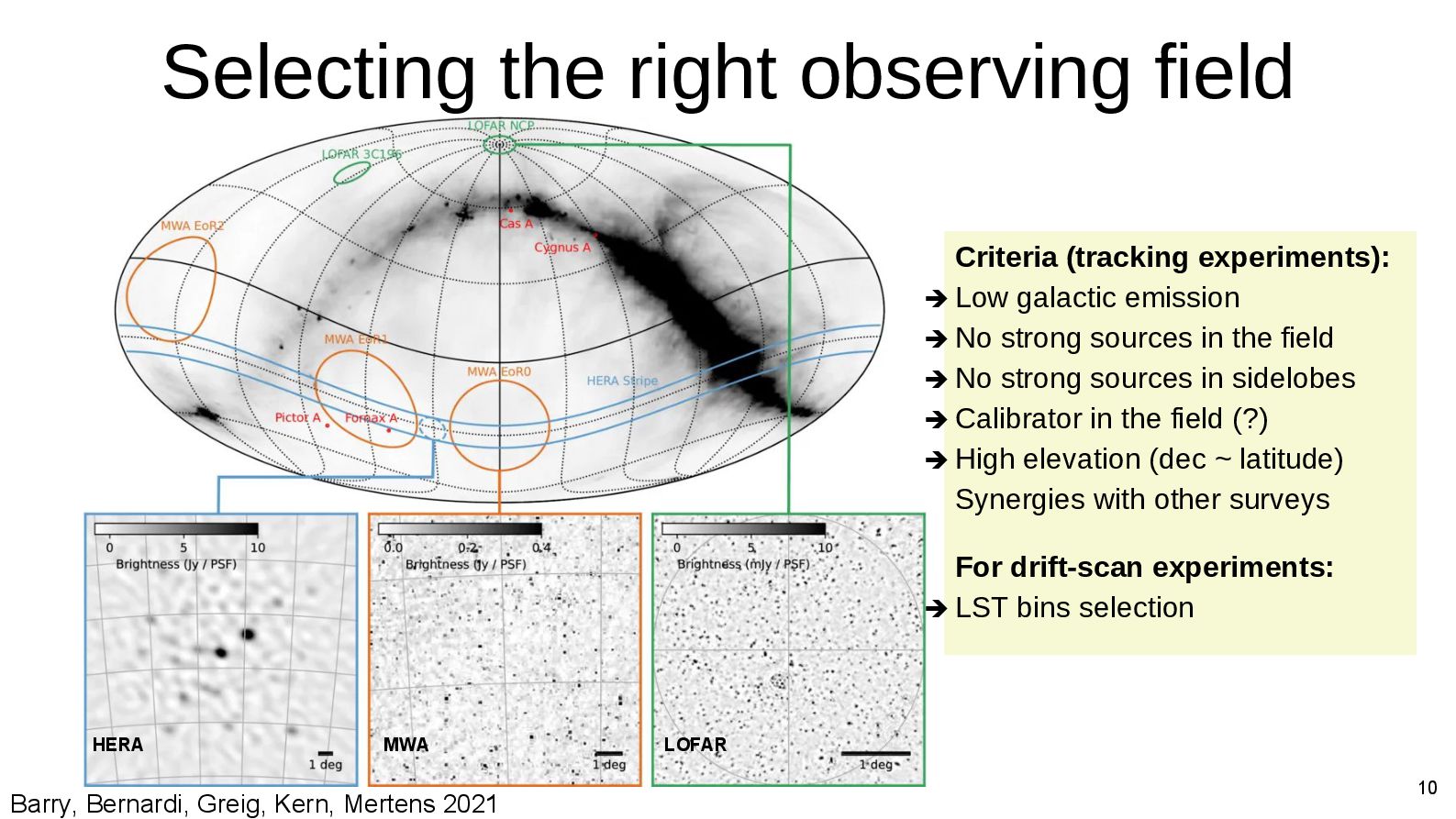
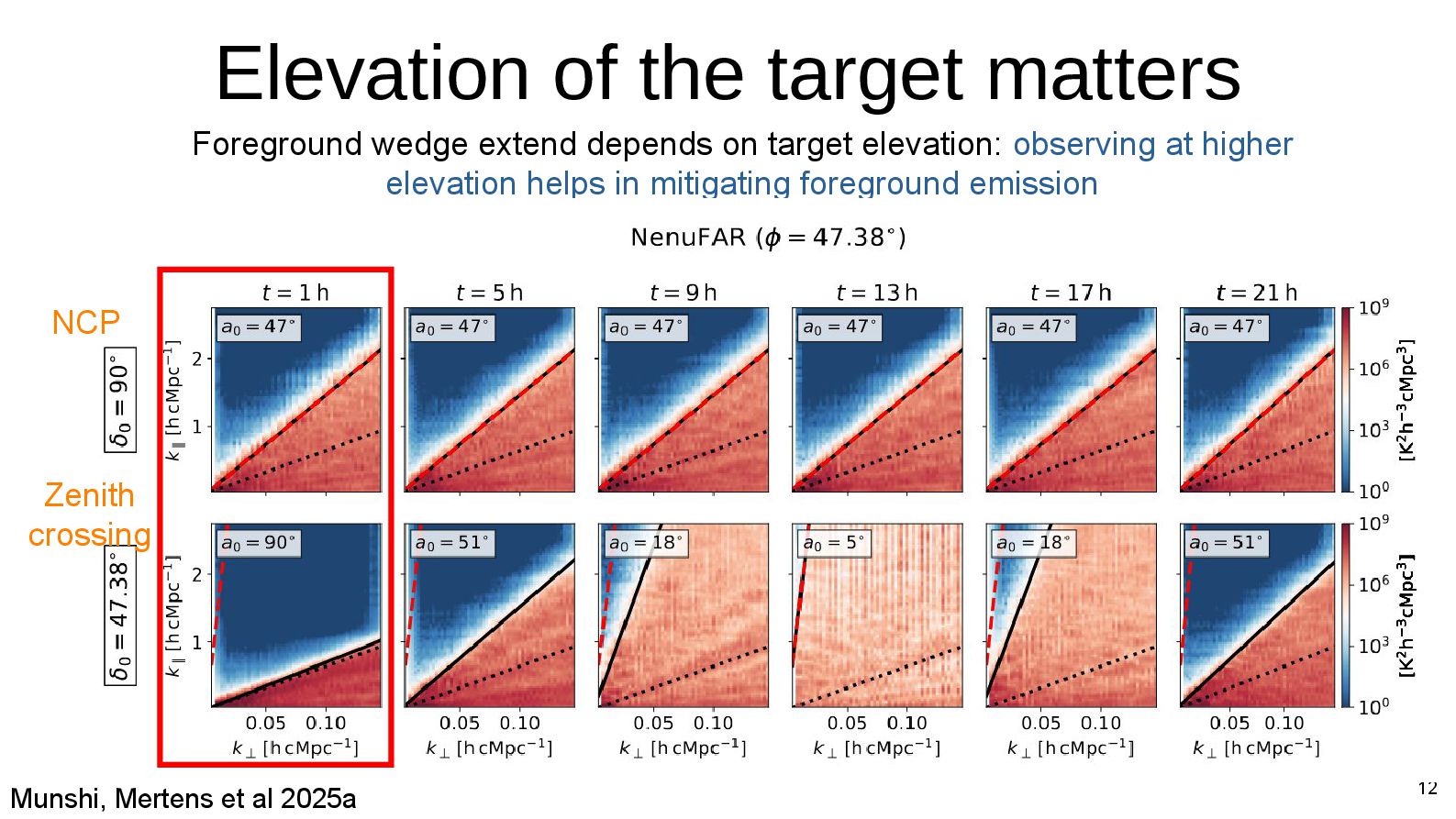
Mertens 2021 Criteria (tracking experiments): ➔ Low galactic emission ➔ No strong sources in the field ➔ No strong sources in sidelobes ➔ Calibrator in the field (?) ➔ High elevation (dec ~ latitude) Synergies with other surveys For drift-scan experiments: ➔ LST bins selection HERA MWA LOFAR
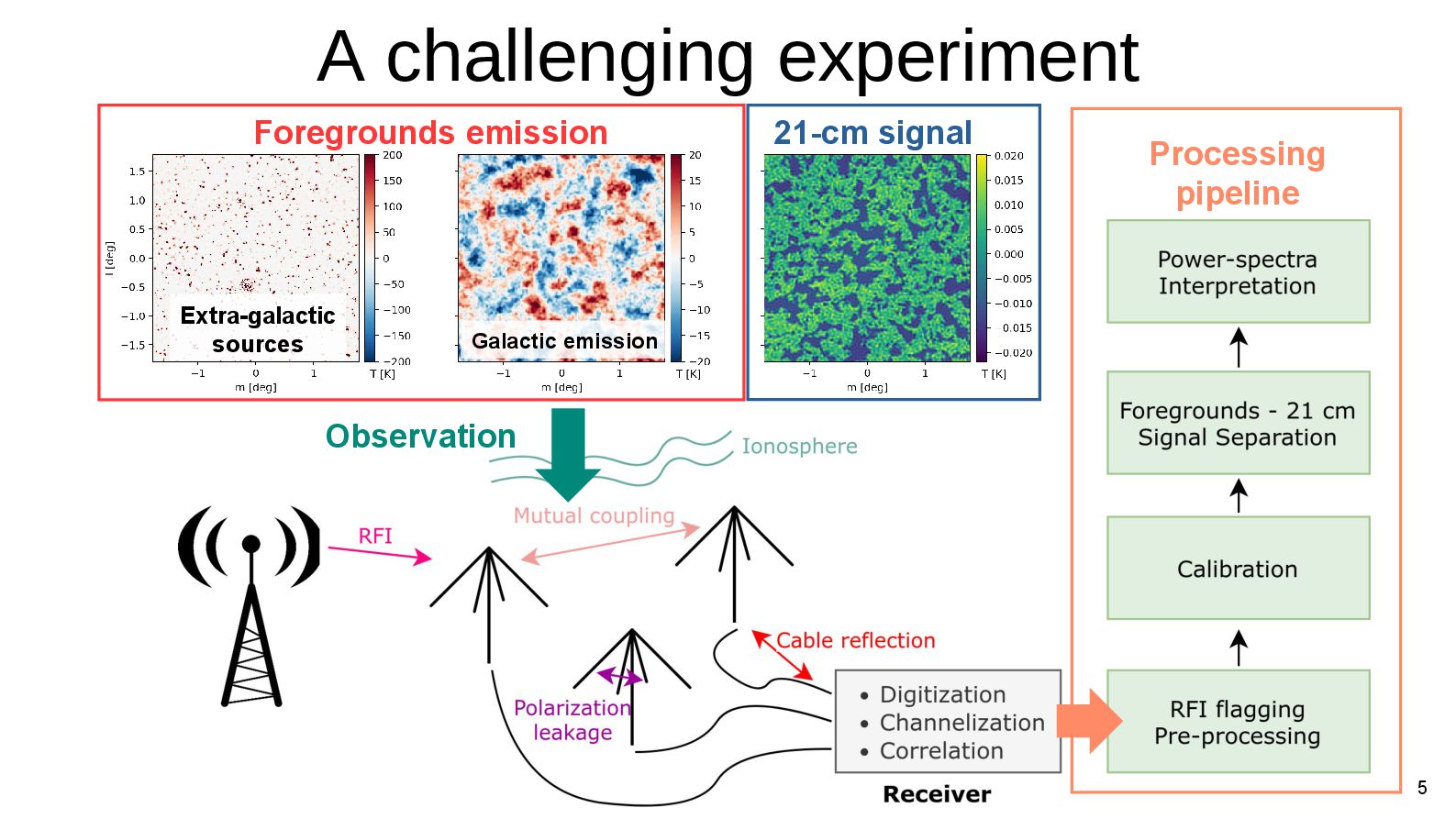
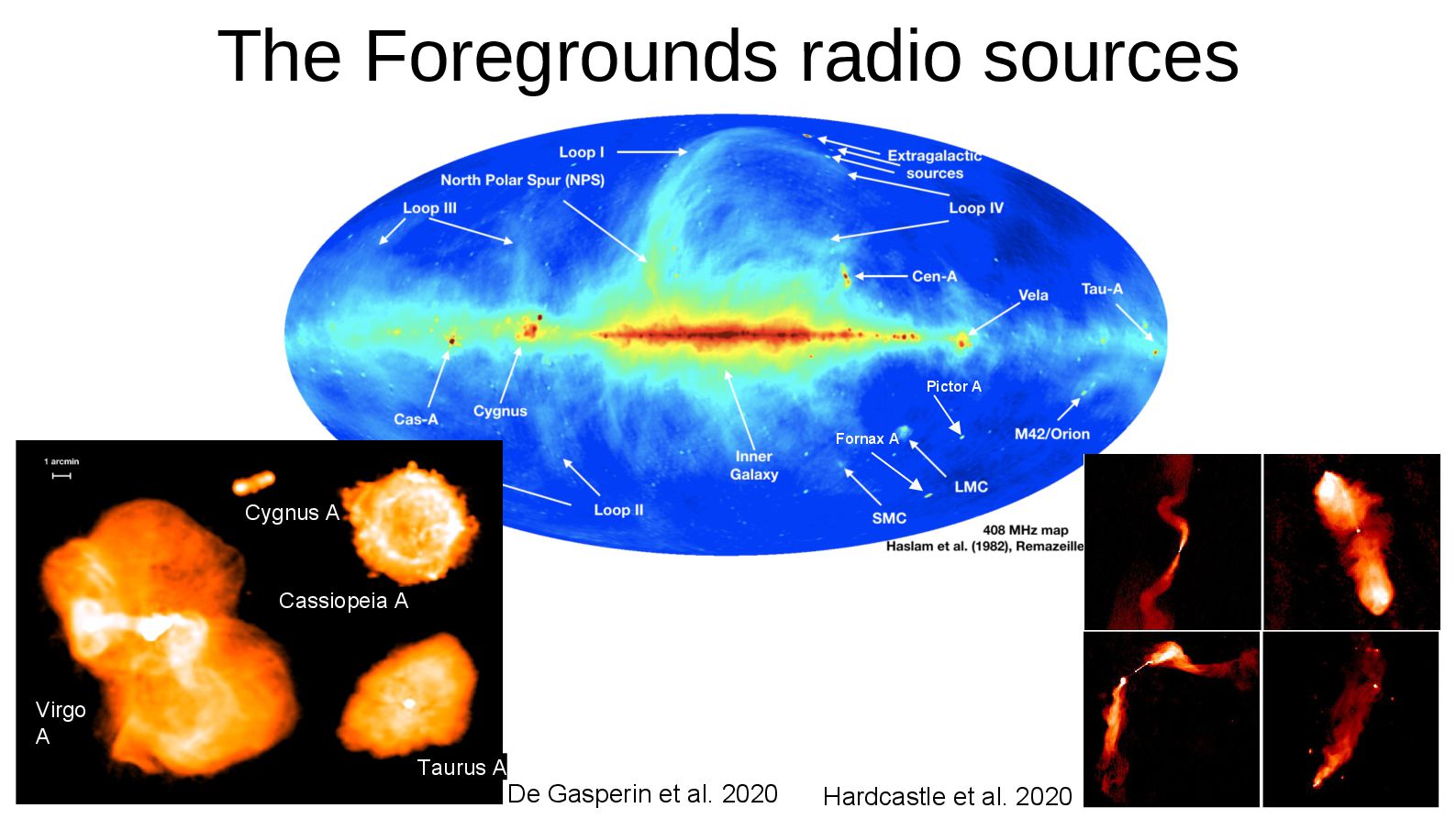
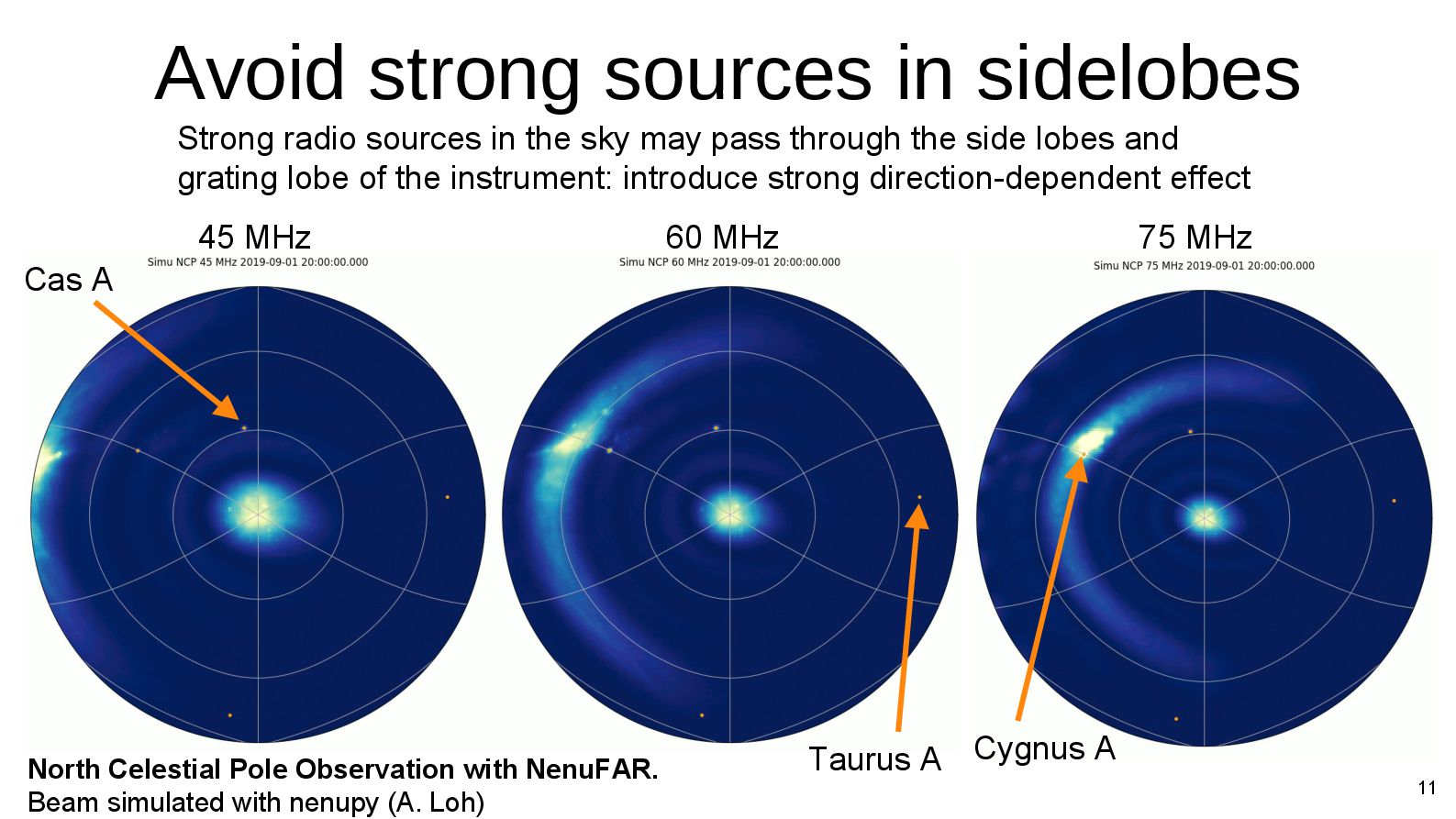
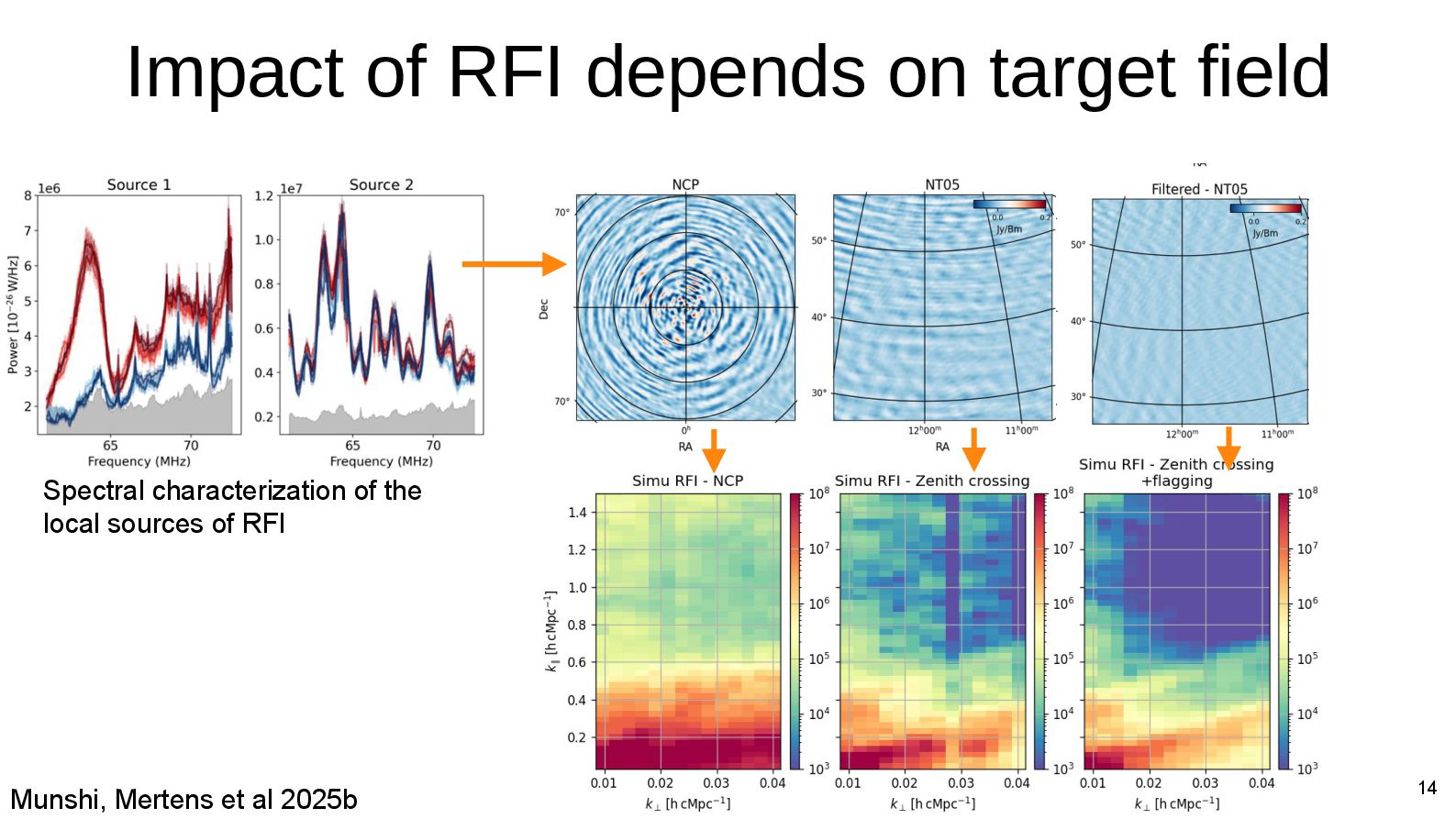
the sky may pass through the side lobes and grating lobe of the instrument: introduce strong direction-dependent effect Cygnus A Taurus A Cas A 45 MHz 60 MHz 75 MHz North Celestial Pole Observation with NenuFAR. Beam simulated with nenupy (A. Loh)
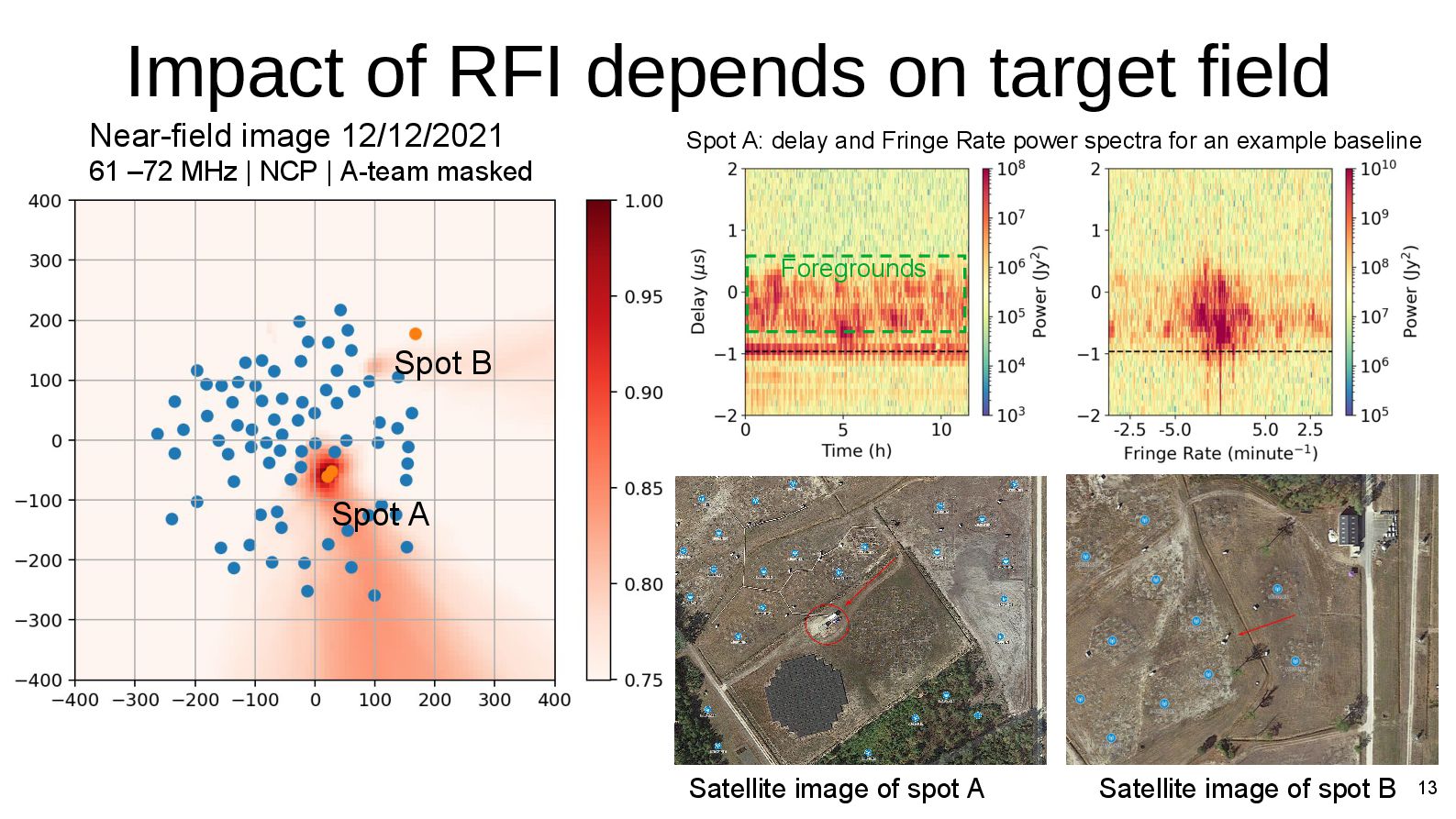
of spot A Satellite image of spot B Spot A: delay and Fringe Rate power spectra for an example baseline Foregrounds Near-field image 12/12/2021 61 –72 MHz | NCP | A-team masked Spot A Spot B
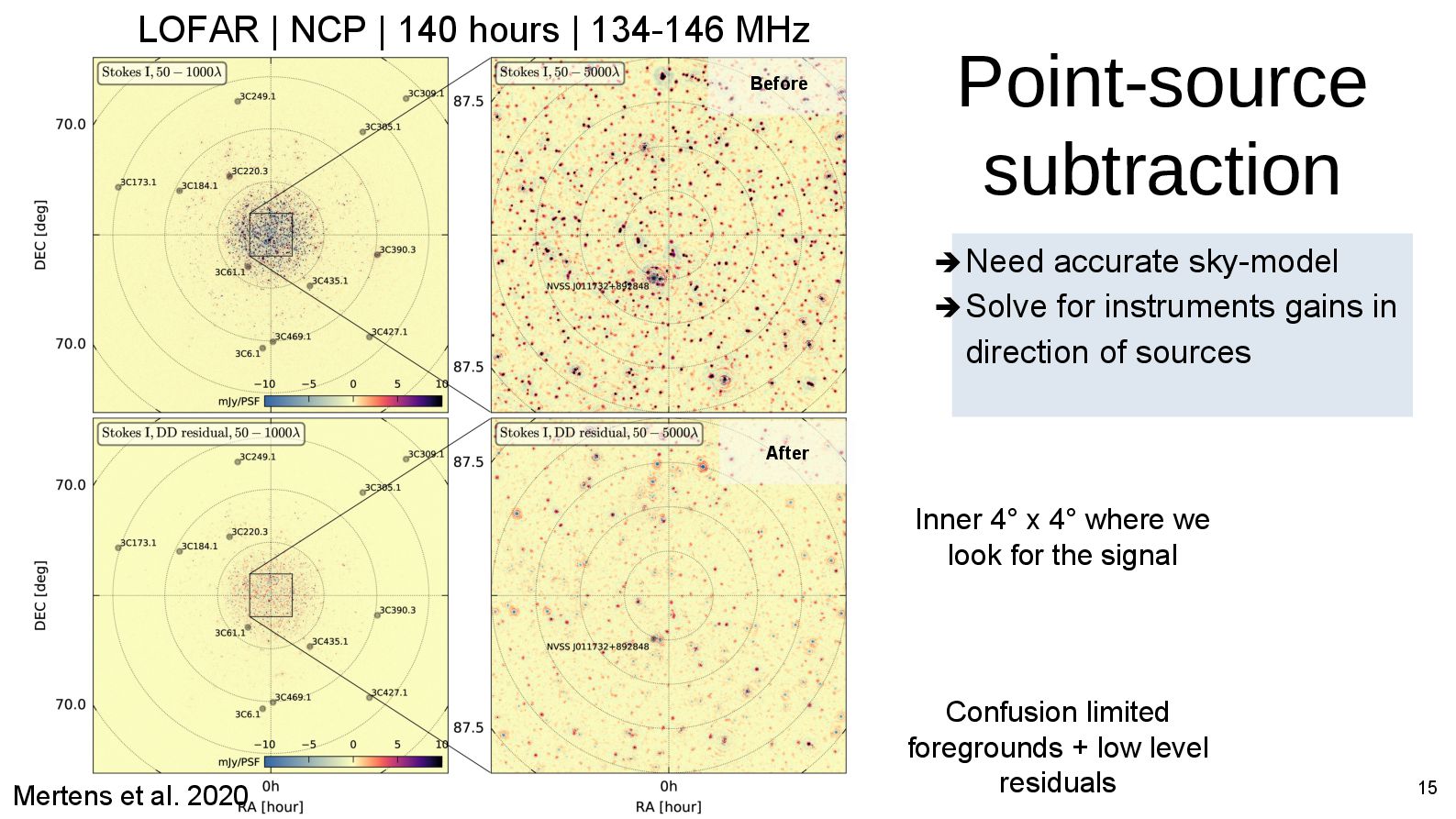
x 4° where we look for the signal Before After Point-source subtraction ➔Need accurate sky-model ➔Solve for instruments gains in direction of sources LOFAR | NCP | 140 hours | 134-146 MHz Mertens et al. 2020
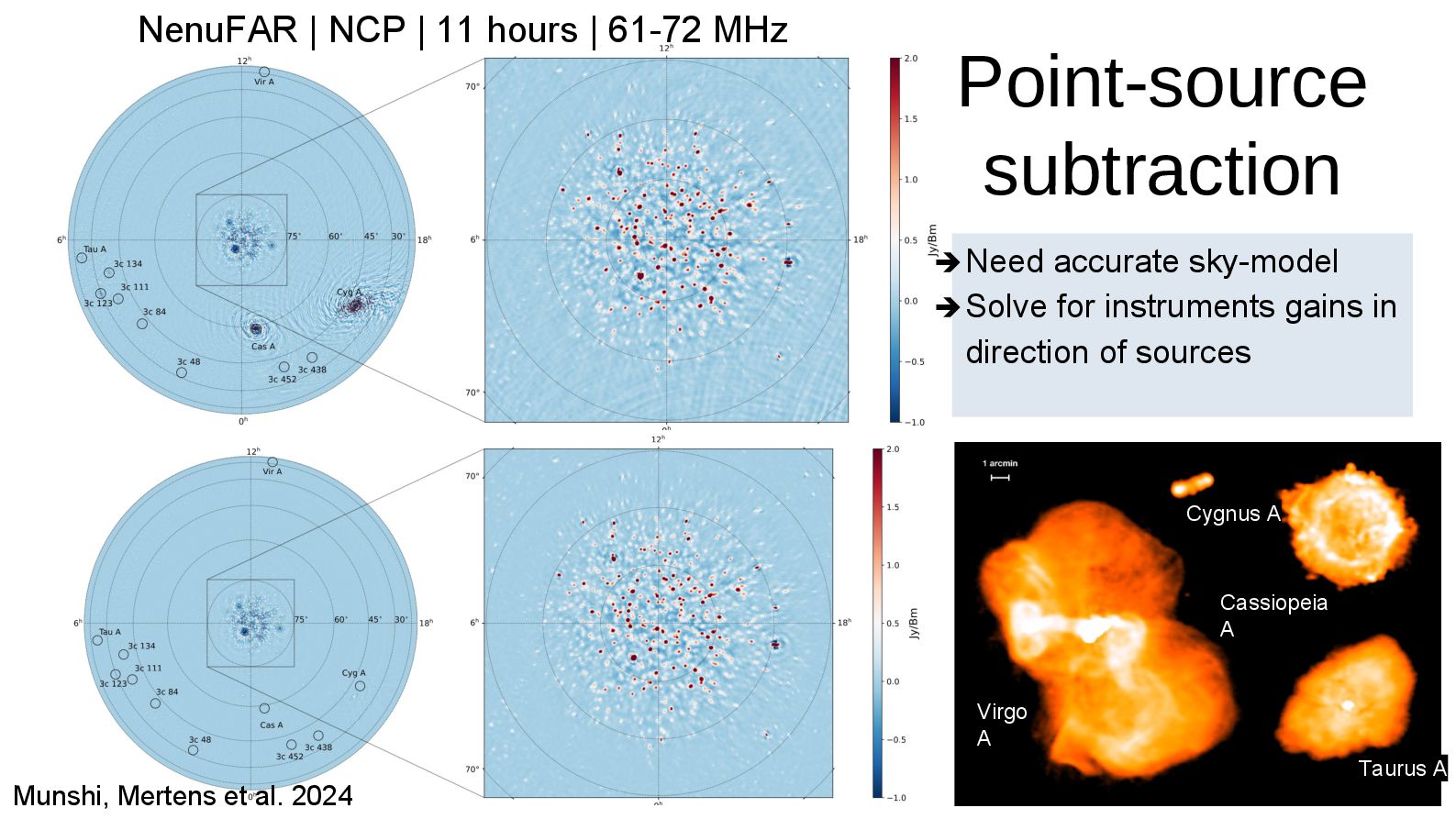
61-72 MHz Cygnus A Cassiopeia A Taurus A Virgo A Munshi, Mertens et al. 2024 ➔Need accurate sky-model ➔Solve for instruments gains in direction of sources
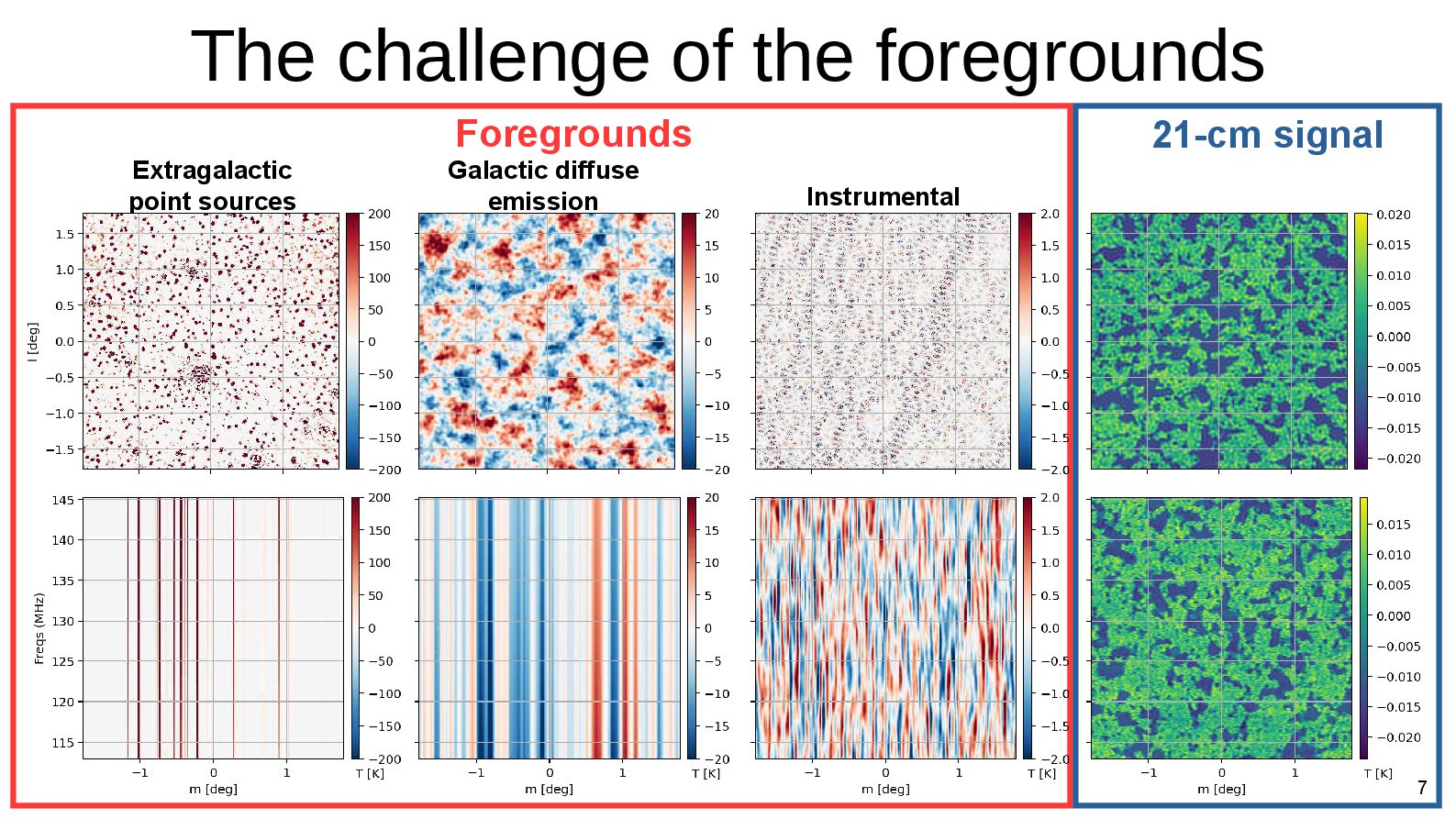
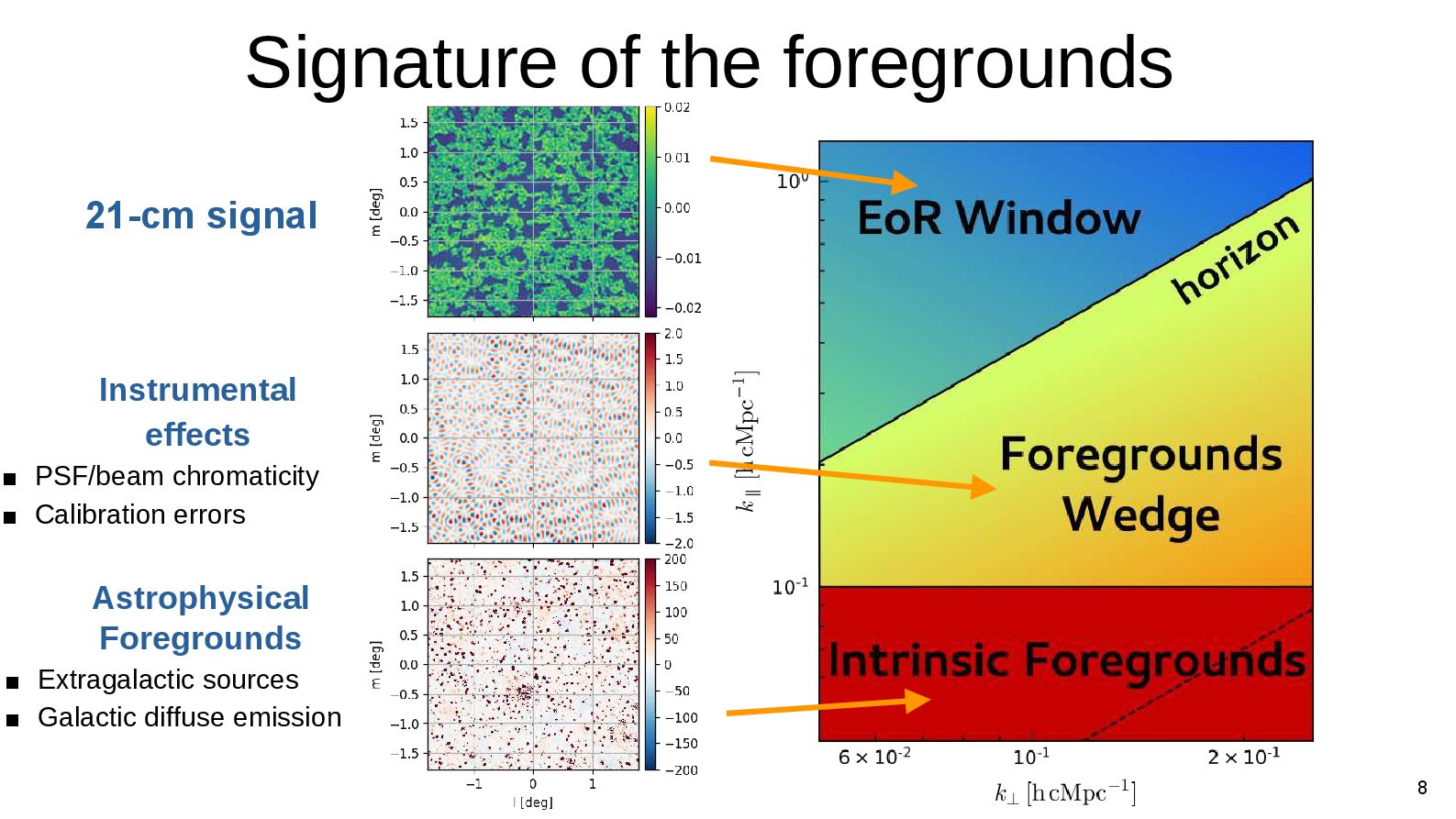
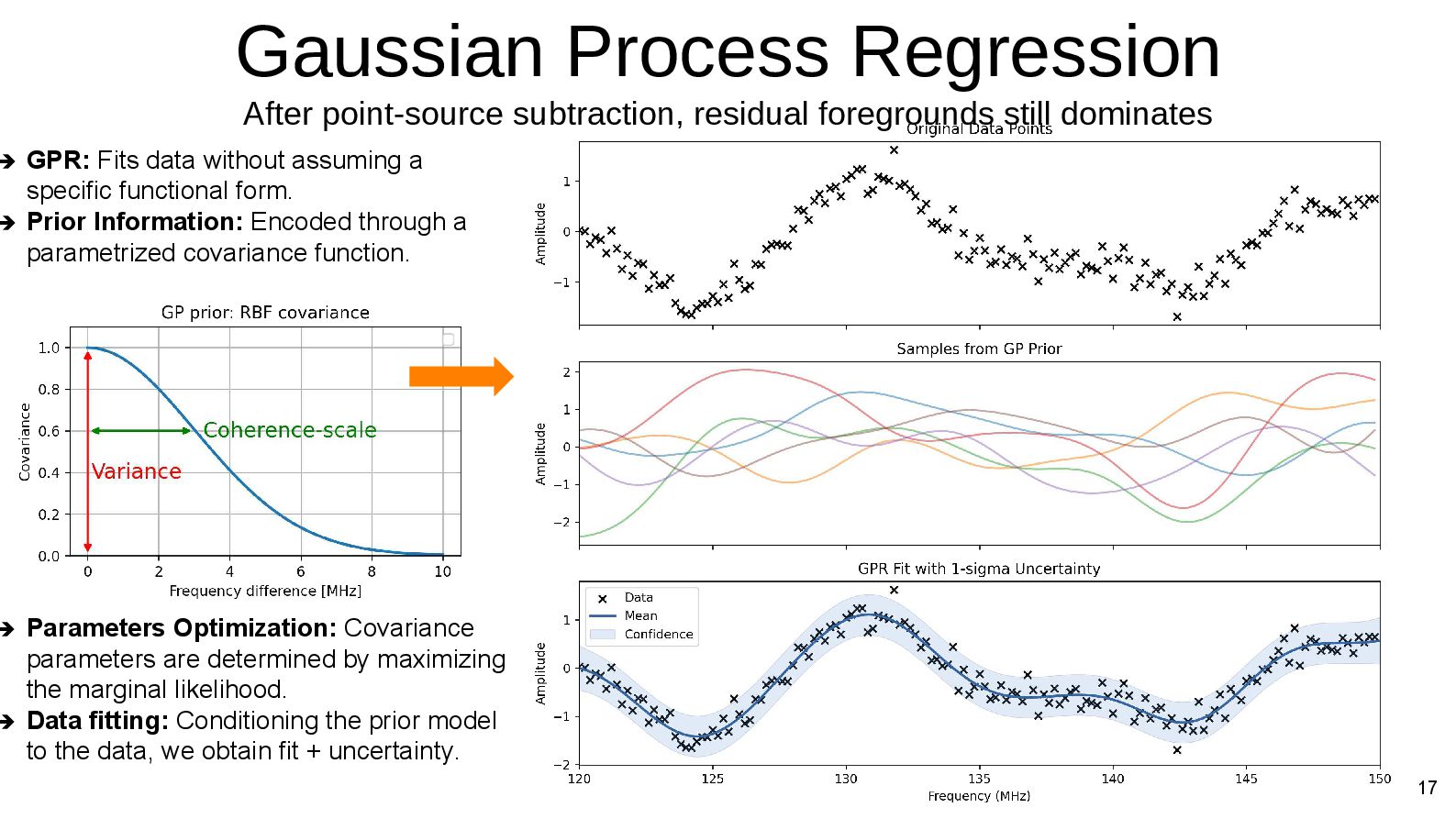
dominates ➔ GPR: Fits data without assuming a specific functional form. ➔ Prior Information: Encoded through a parametrized covariance function. ➔ Parameters Optimization: Covariance parameters are determined by maximizing the marginal likelihood. ➔ Data fitting: Conditioning the prior model to the data, we obtain fit + uncertainty.
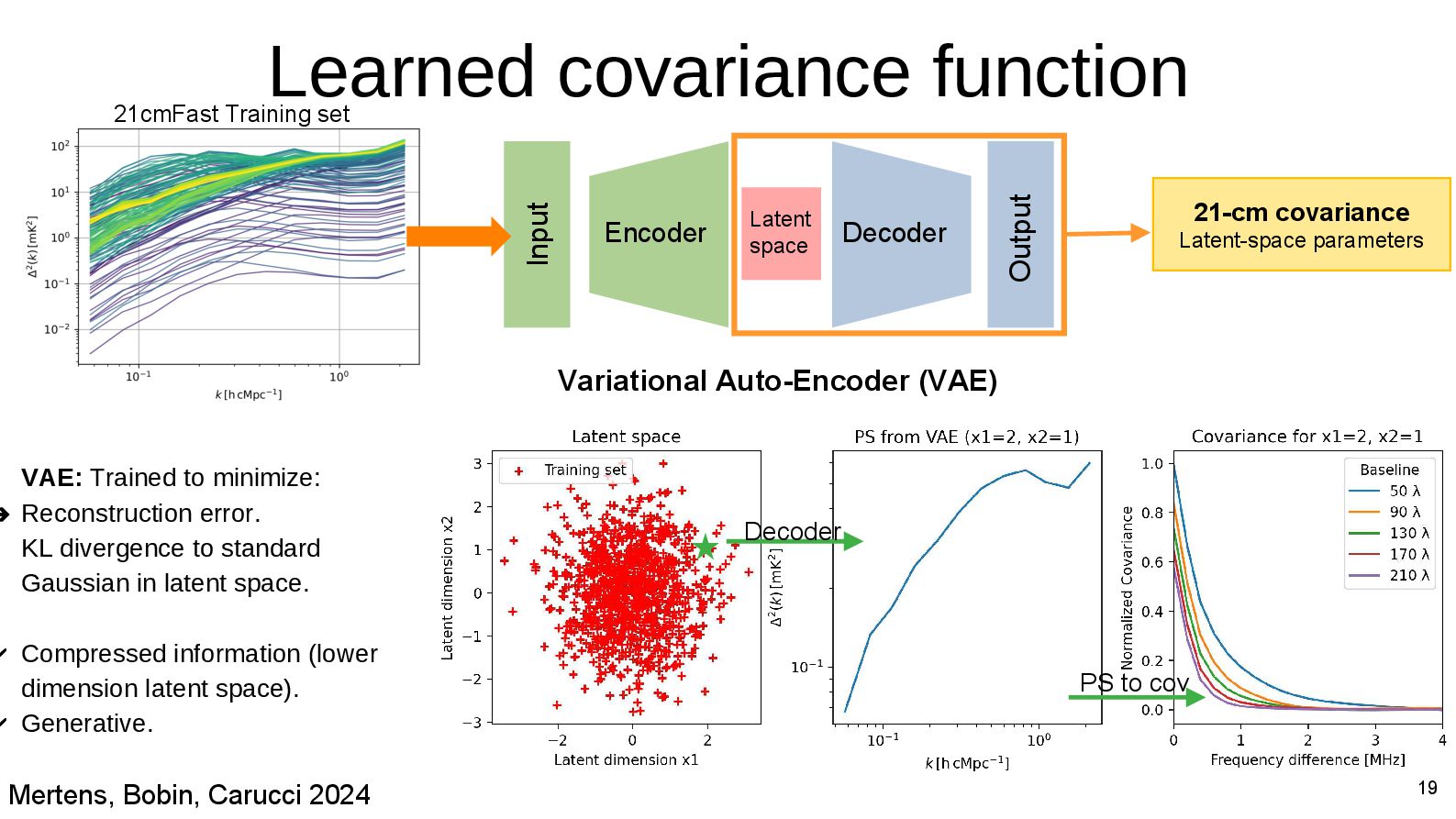
No functional forms but very different spectral characteristic → Statistical model prior made of Gaussian Process (GP). → Learnt kernel is used for the 21-cm prior covariance. 21-cm signal Hyper-parameters of the covariance prior to be optimized with the data Intrinsic FG Mode-mixing FG 21-cm Coherence-scale V a r i a n c e Frequency slice Freq-freq covariance Mertens et al. 2018 Mertens, Bobin, Carucci 2024
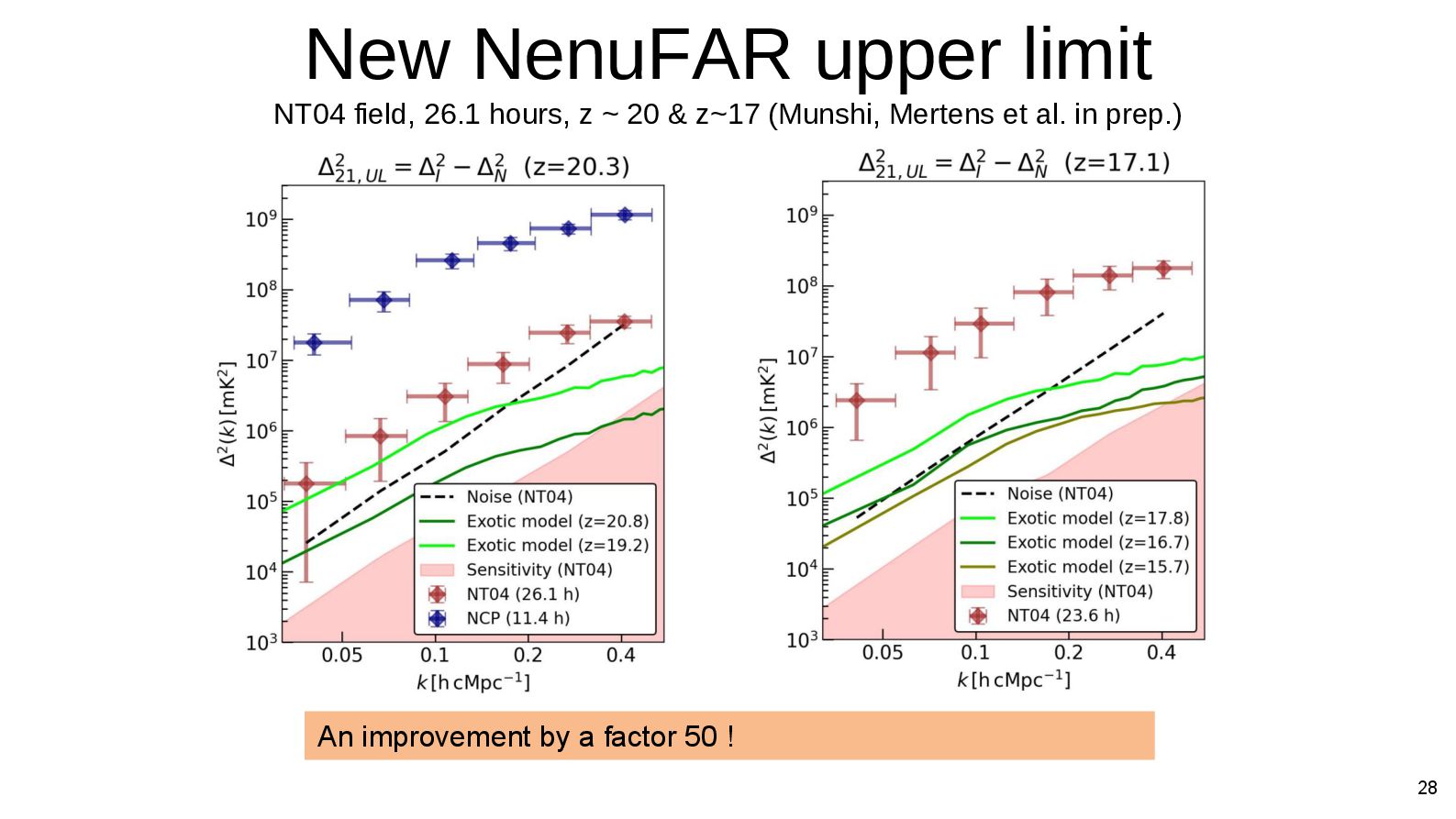
MHz, z ~ 20 (Munshi, Mertens et al. 2024) The deepest upper limit on the 21-cm power-spectra at z~20 ... but limited by bright source contamination and local RFI
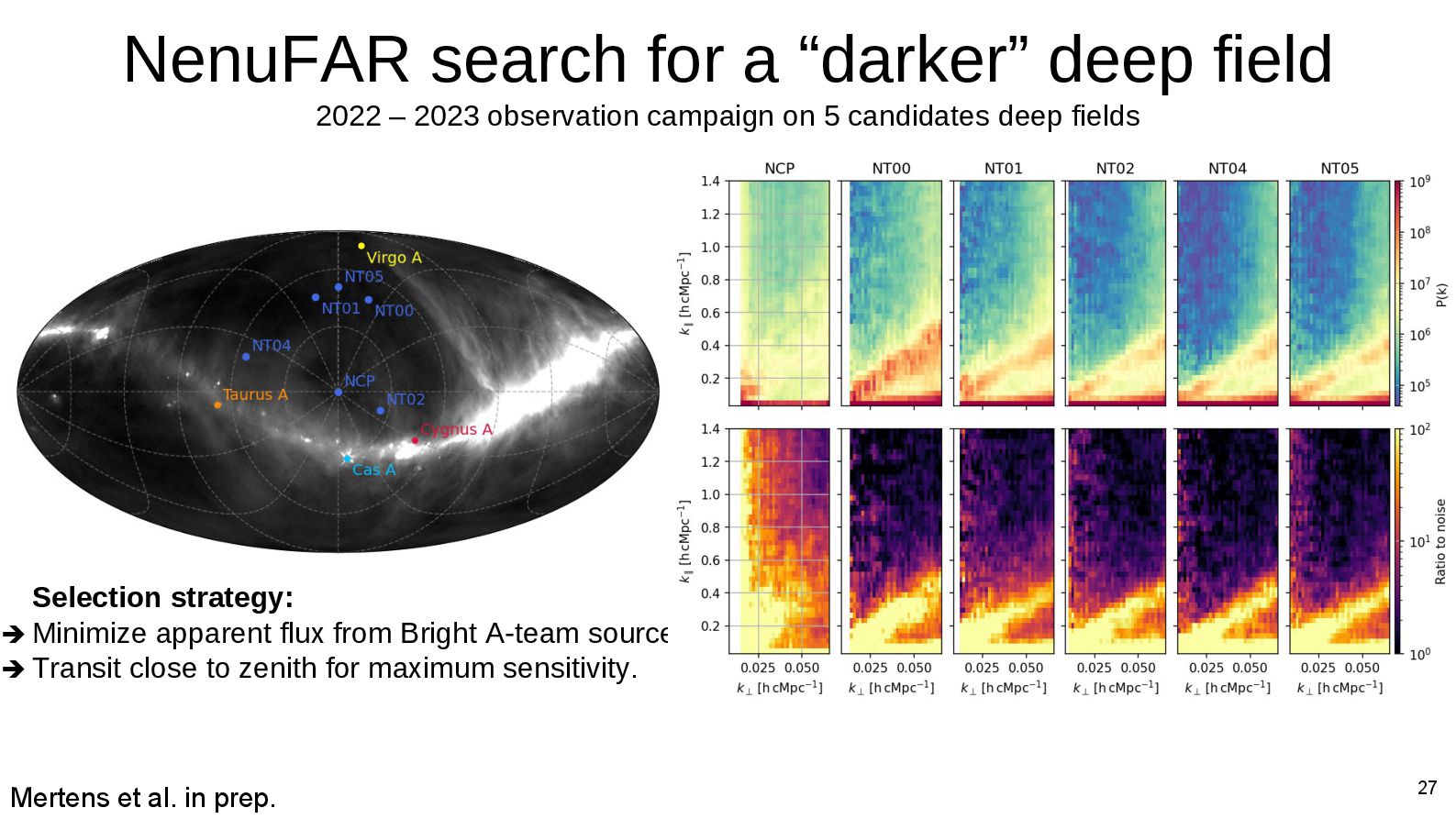
2023 observation campaign on 5 candidates deep fields Selection strategy: ➔ Minimize apparent flux from Bright A-team sources. ➔ Transit close to zenith for maximum sensitivity. Mertens et al. in prep.
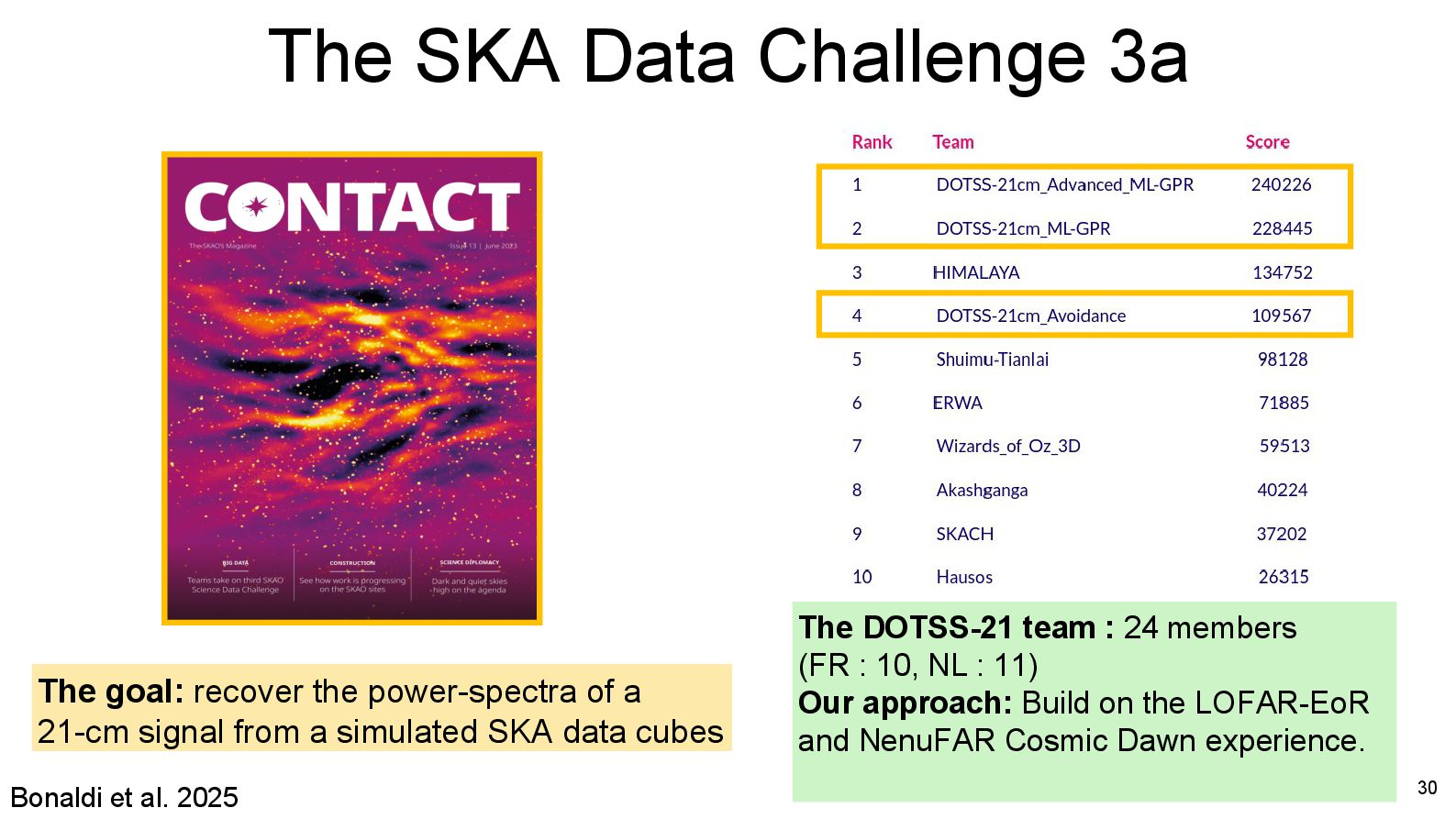
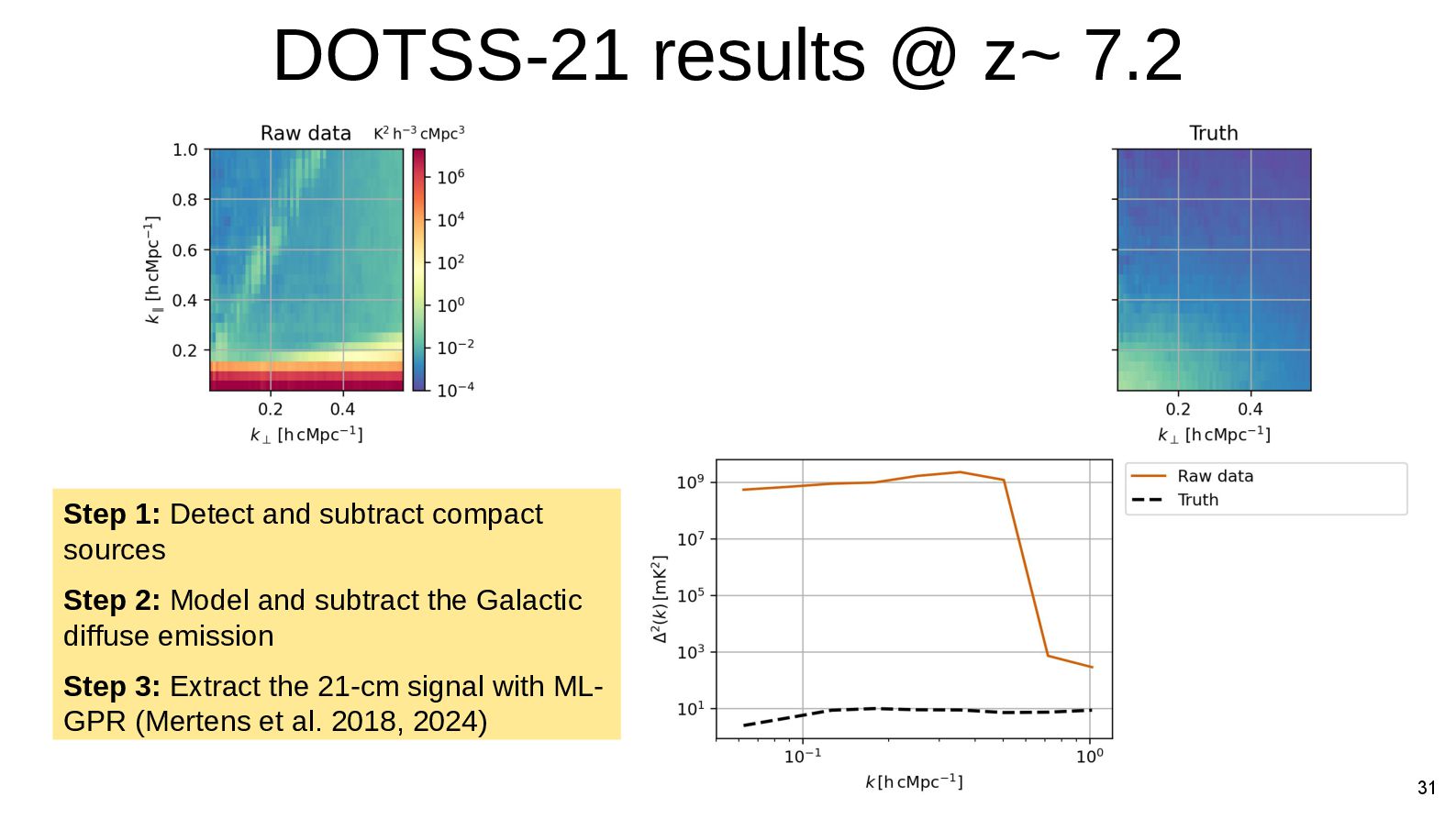
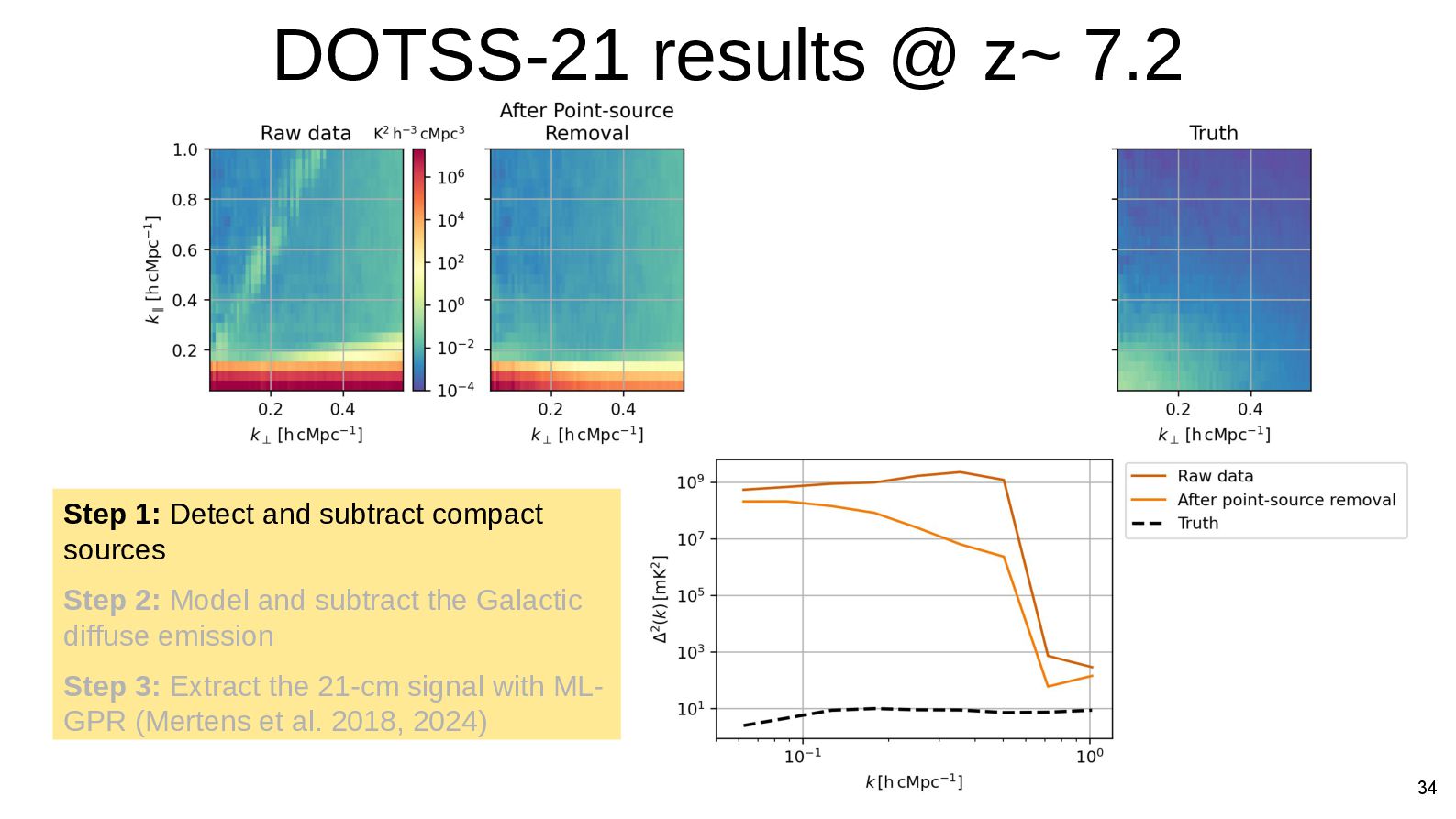
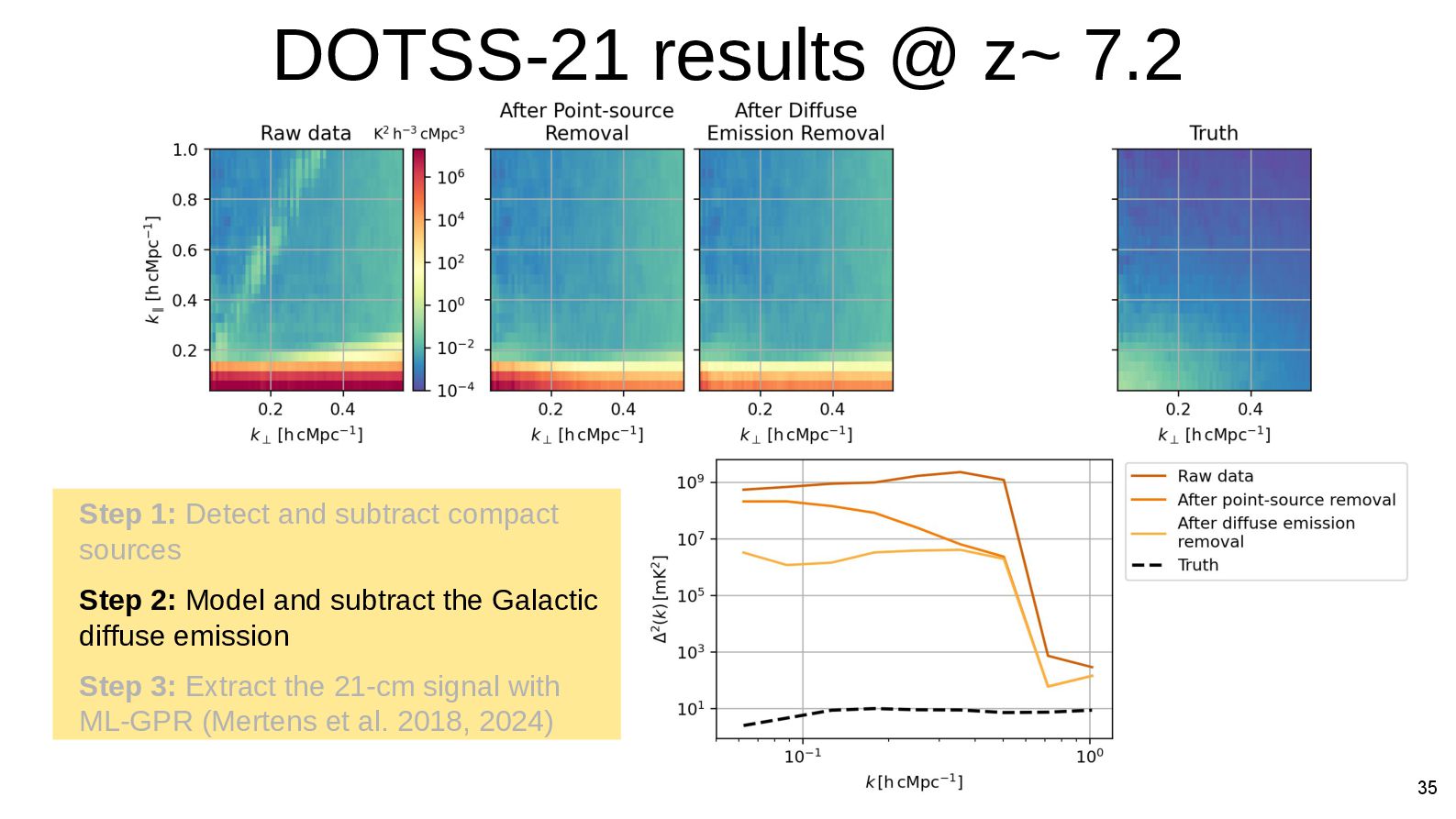
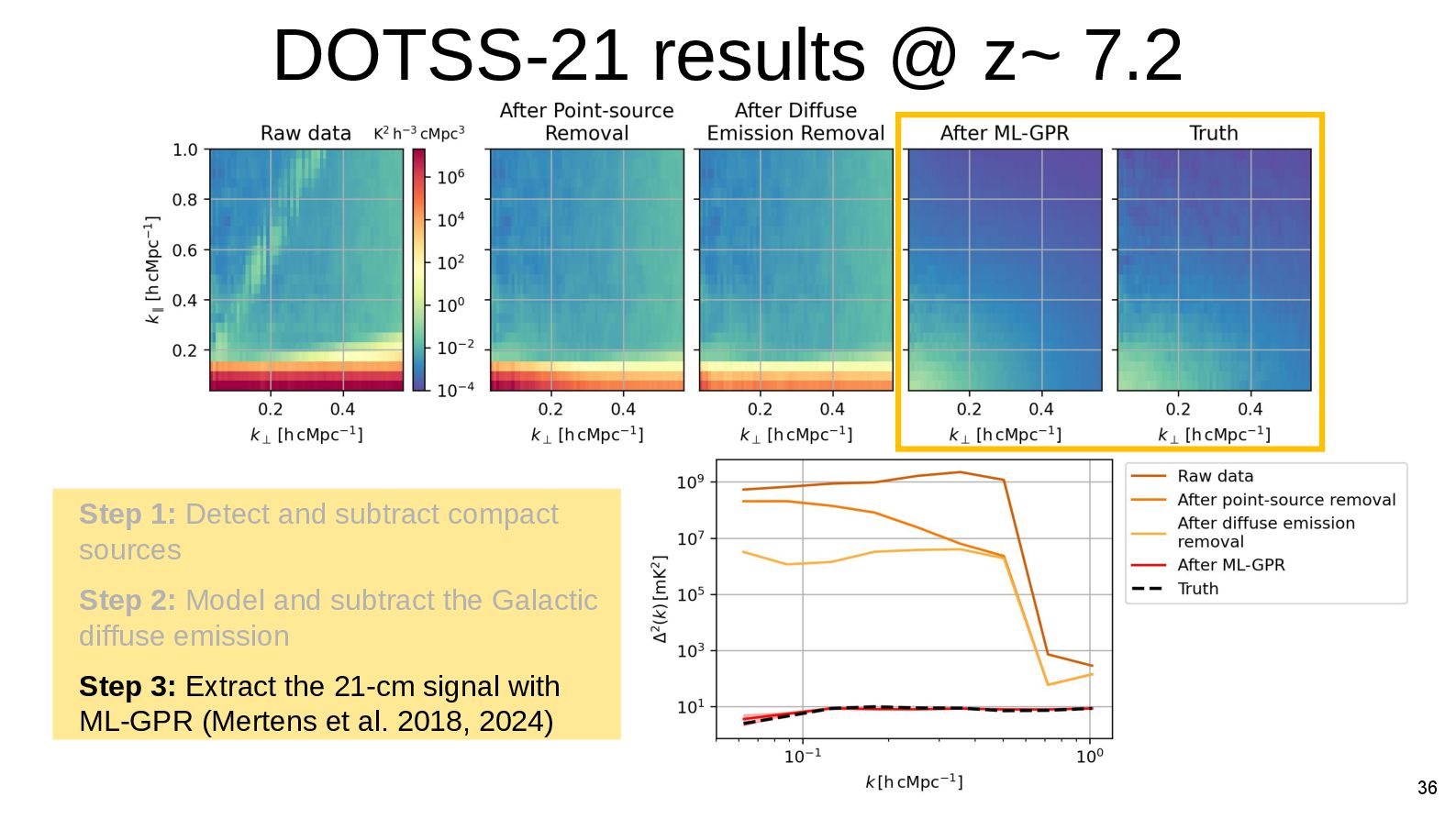
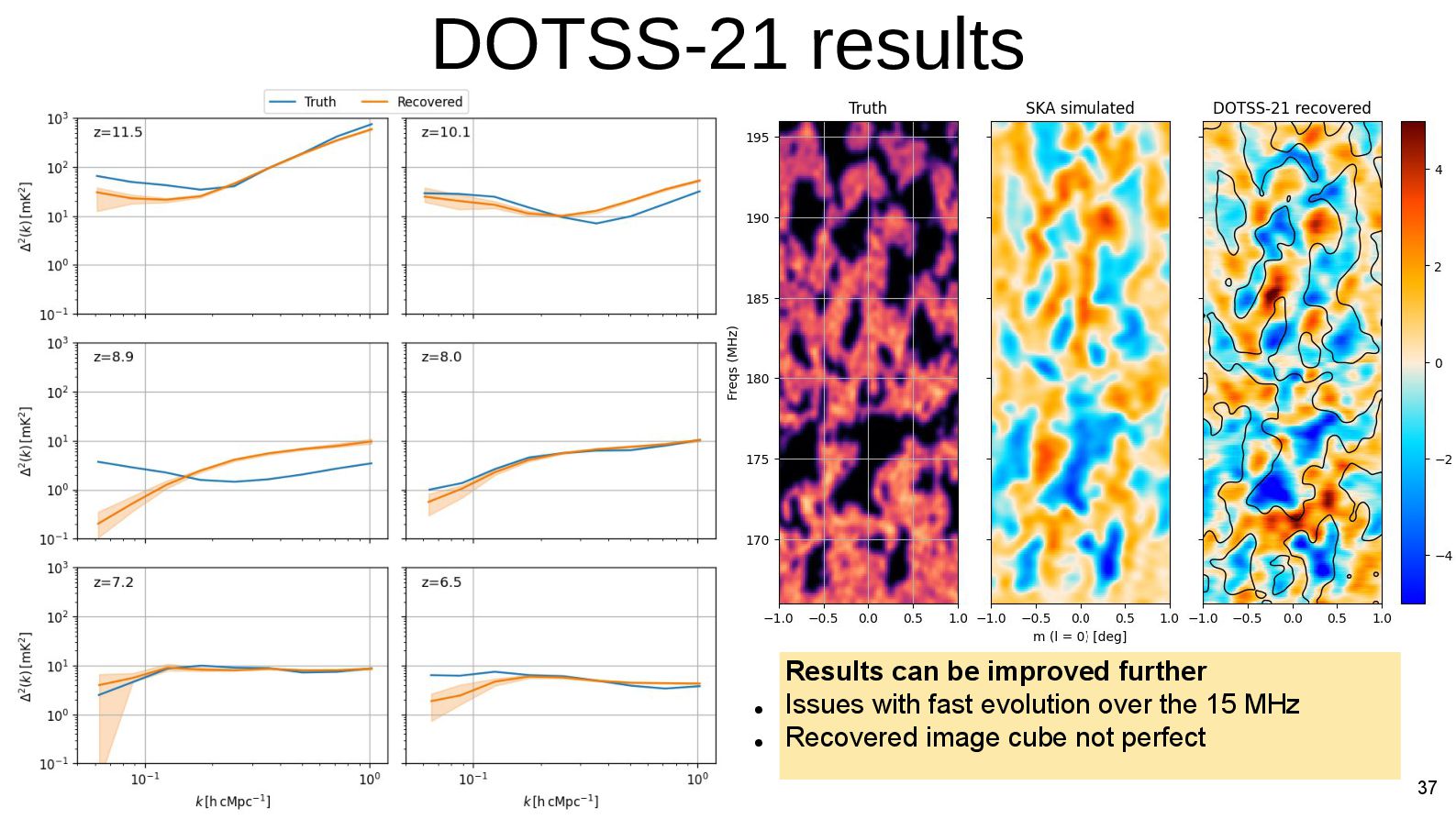
from a simulated SKA data cubes The DOTSS-21 team : 24 members (FR : 10, NL : 11) Our approach: Build on the LOFAR-EoR and NenuFAR Cosmic Dawn experience. The SKA Data Challenge 3a Bonaldi et al. 2025
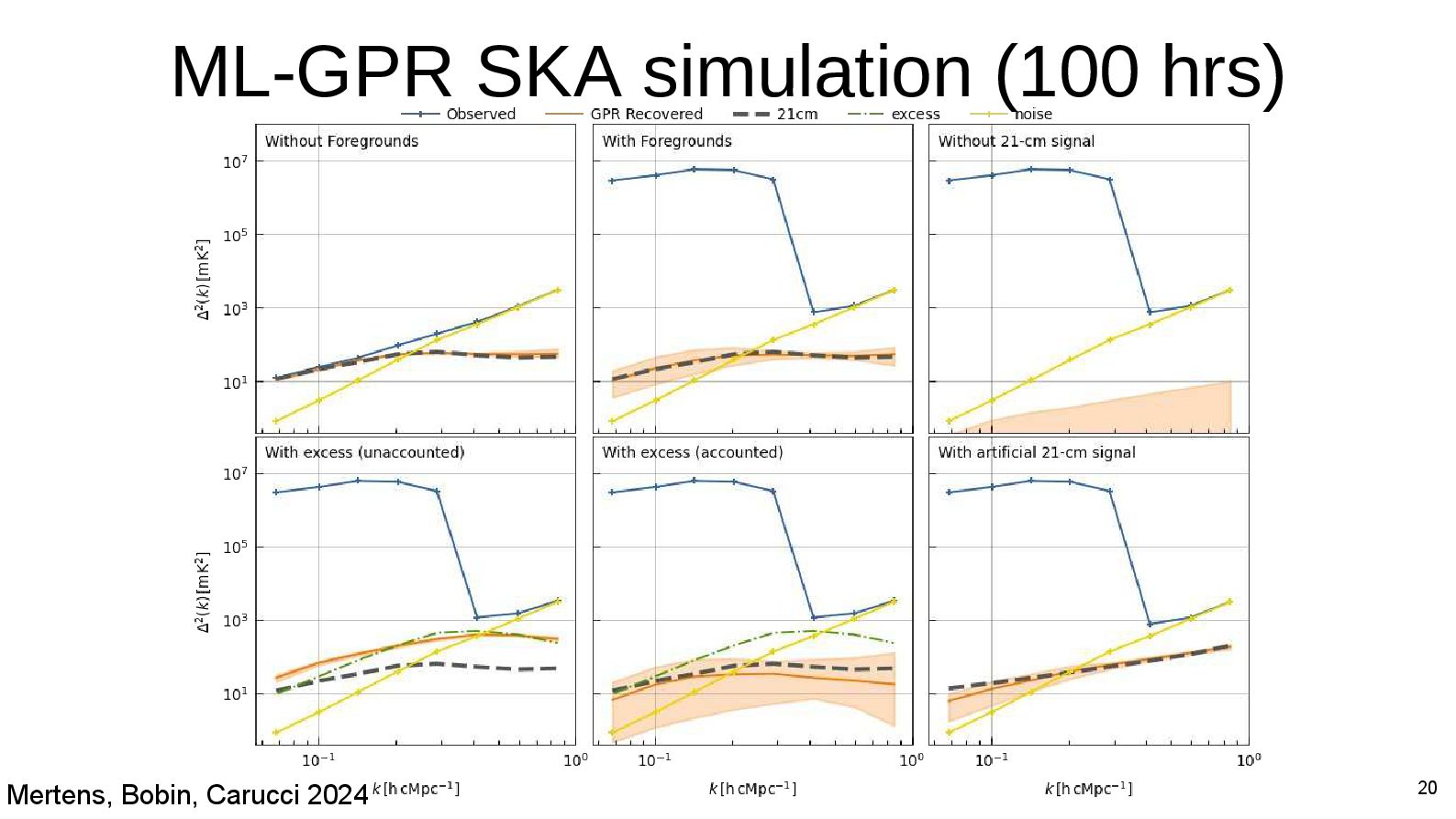
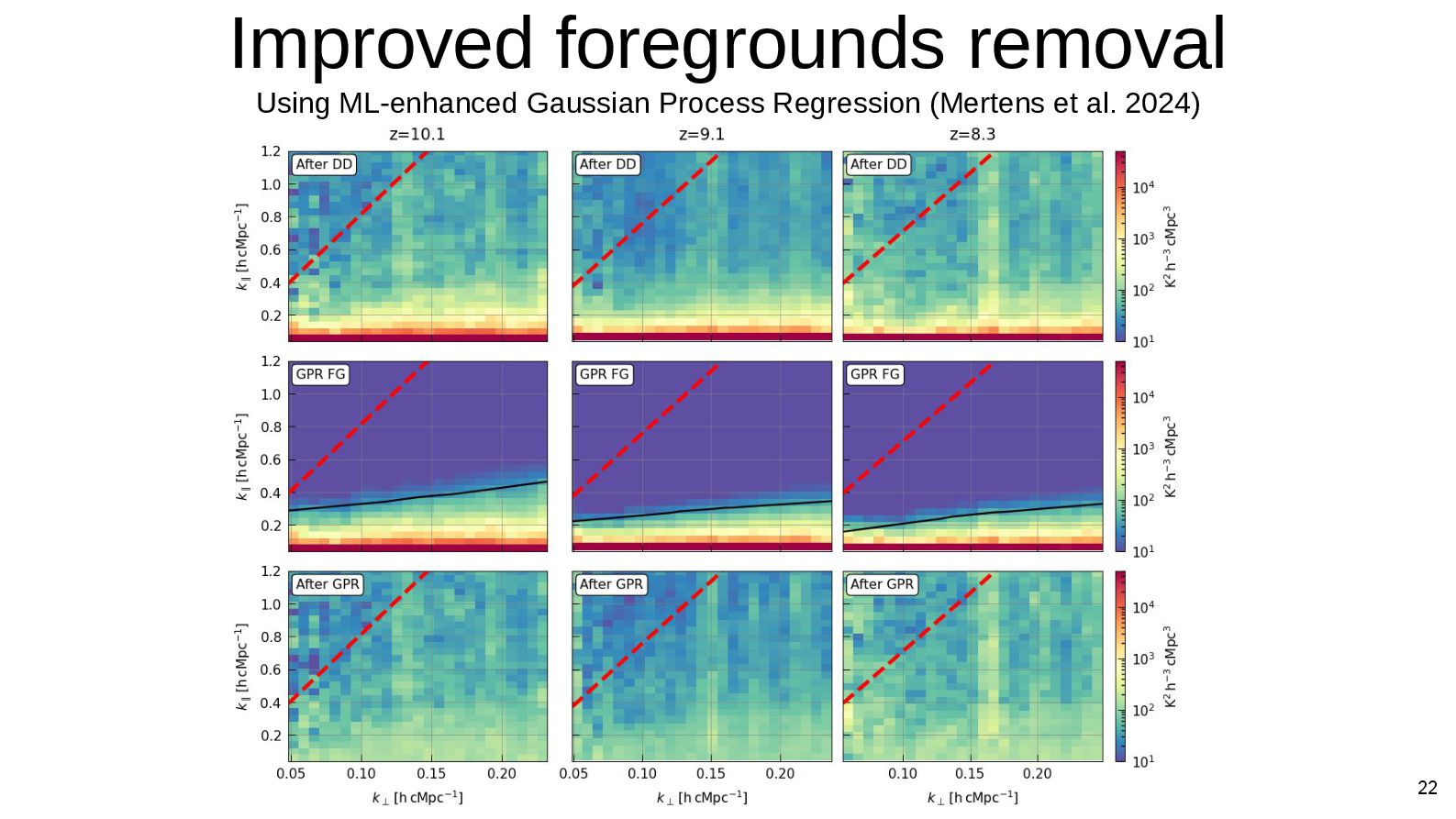
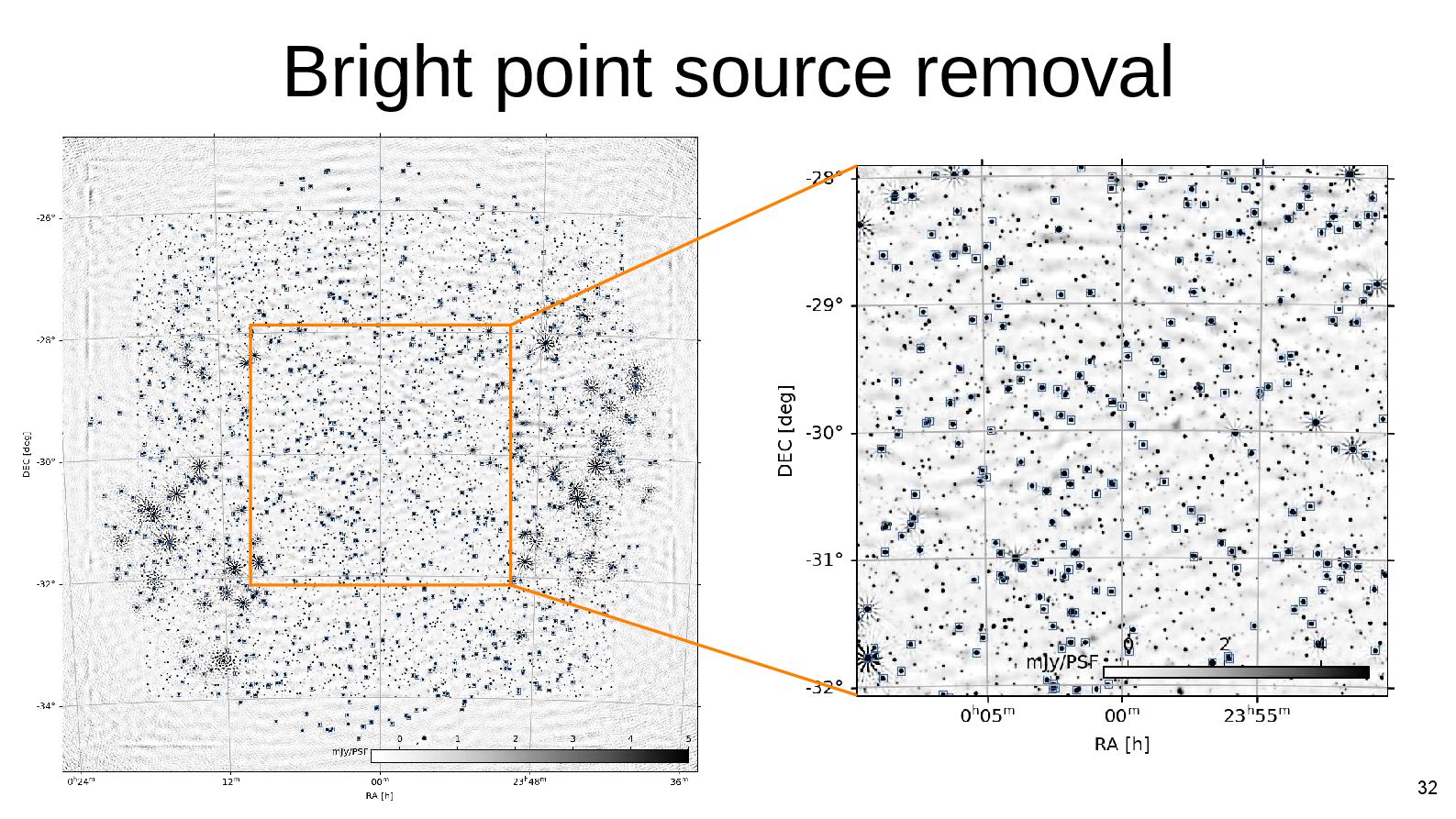
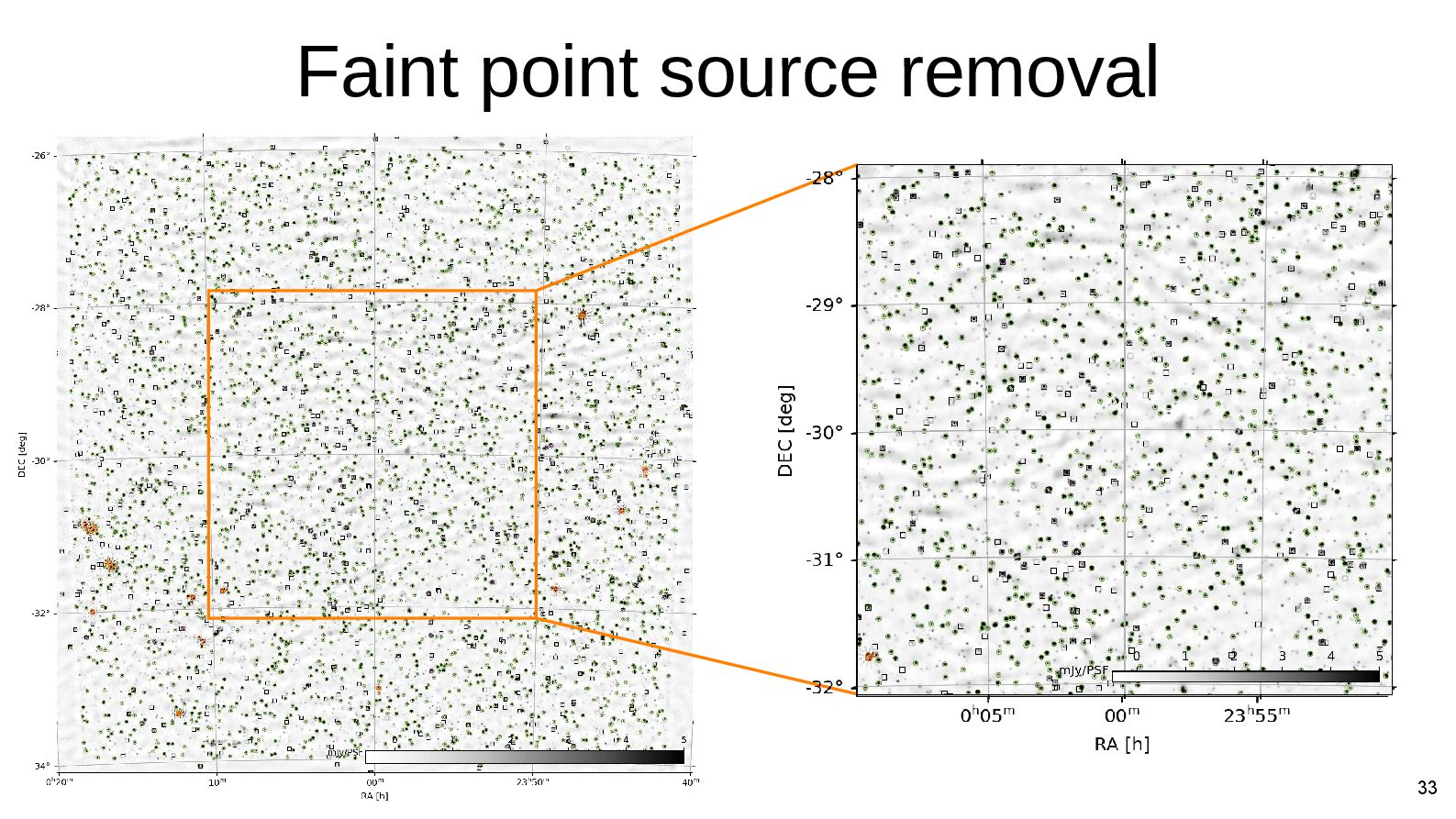
subtract compact sources Step 2: Model and subtract the Galactic diffuse emission Step 3: Extract the 21-cm signal with ML- GPR (Mertens et al. 2018, 2024)
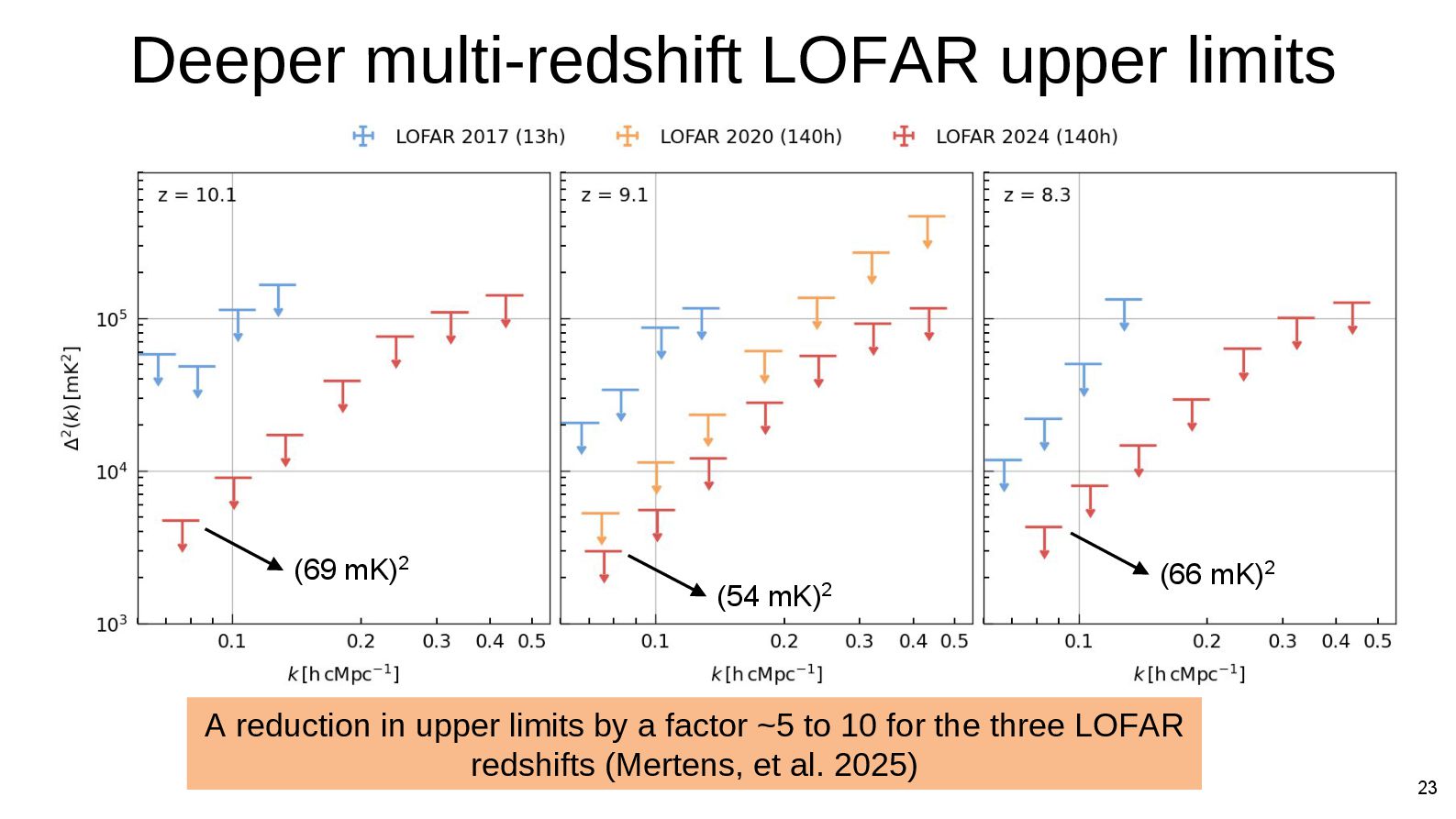
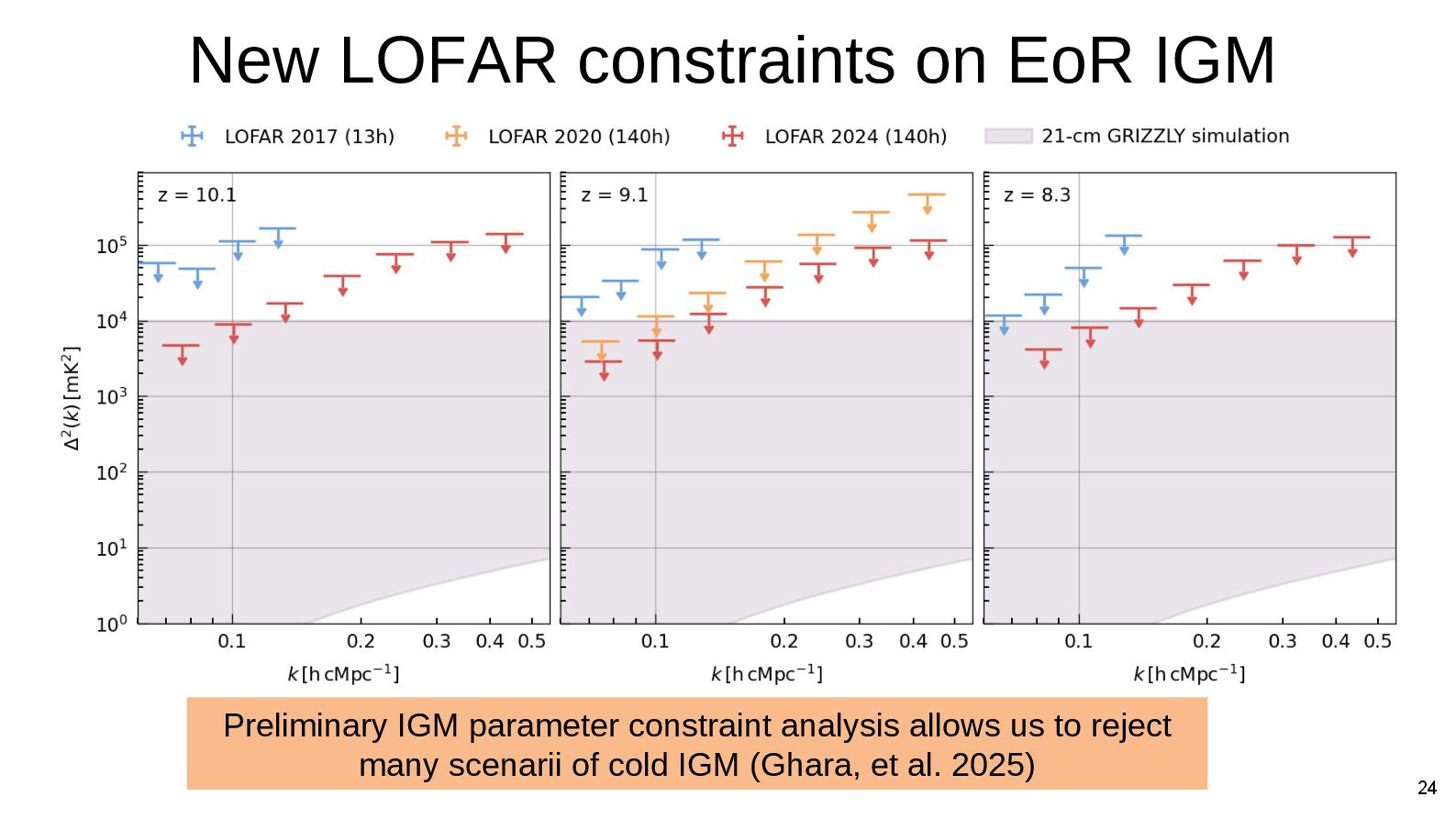
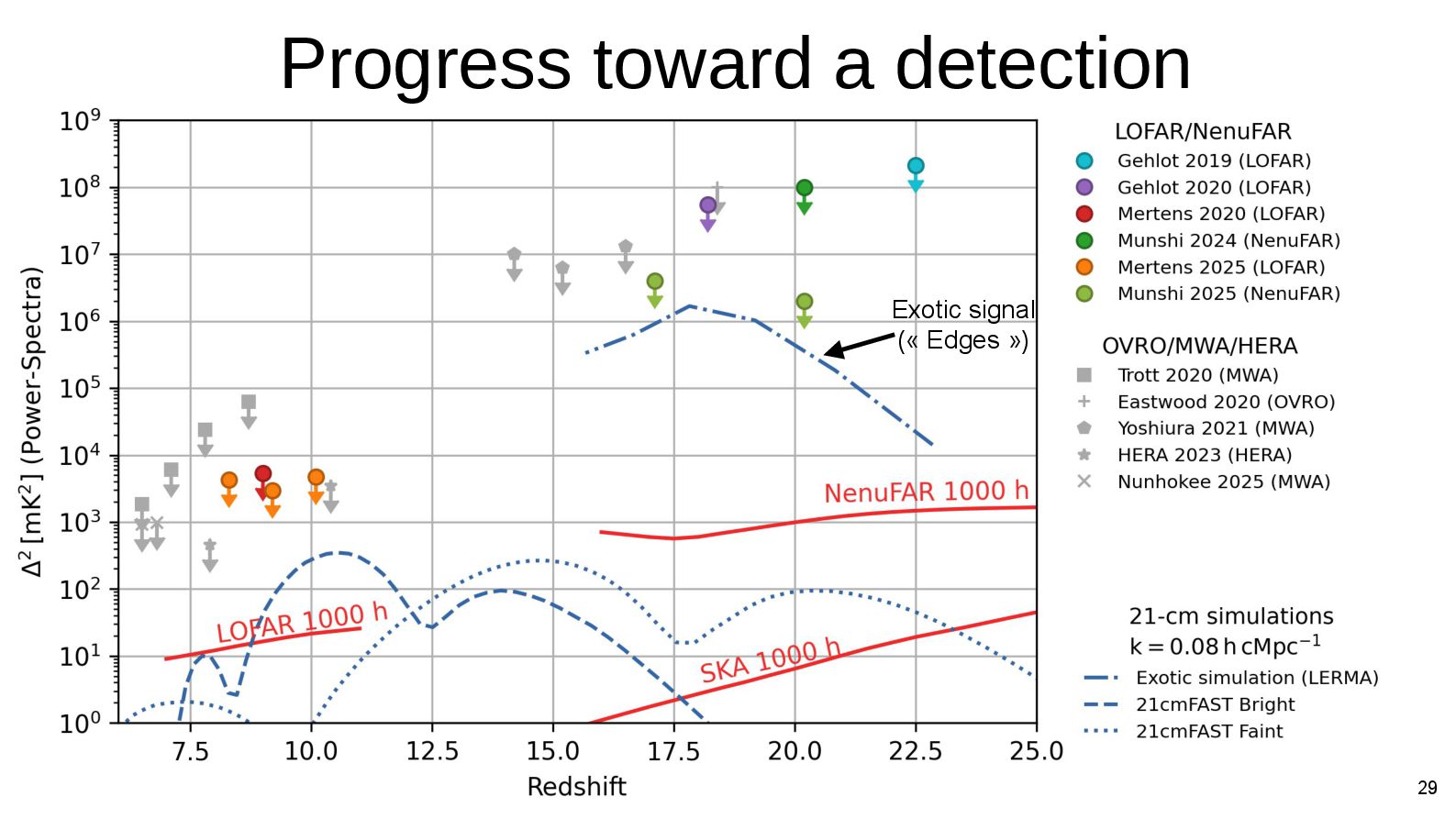
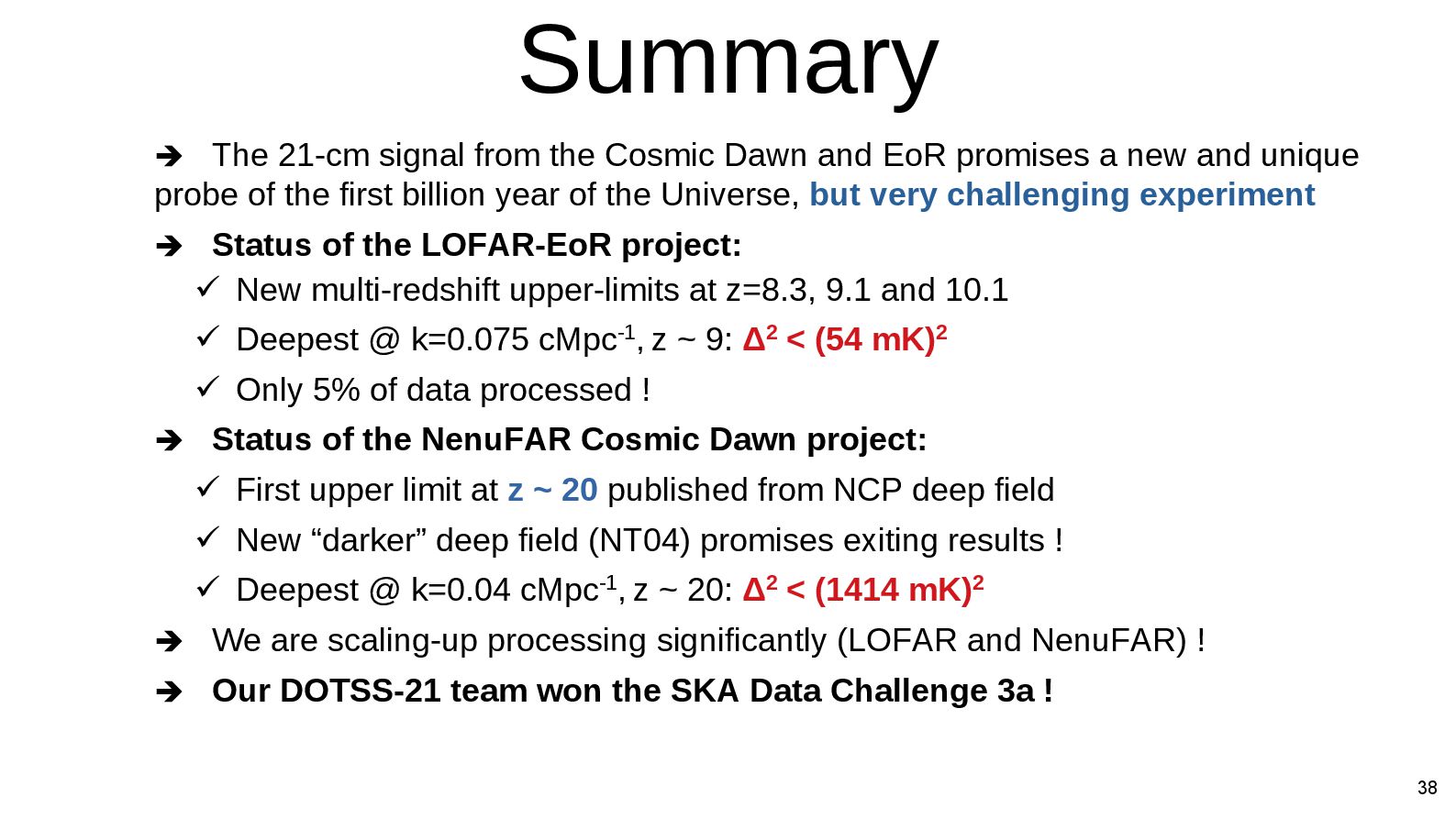
and EoR promises a new and unique probe of the first billion year of the Universe, but very challenging experiment ➔ Status of the LOFAR-EoR project: New multi-redshift upper-limits at z=8.3, 9.1 and 10.1 Deepest @ k=0.075 cMpc-1, z ~ 9: Δ2 < (54 mK)2 Only 5% of data processed ! ➔ Status of the NenuFAR Cosmic Dawn project: First upper limit at z ~ 20 published from NCP deep field New “darker” deep field (NT04) promises exiting results ! Deepest @ k=0.04 cMpc-1, z ~ 20: Δ2 < (1414 mK)2 ➔ We are scaling-up processing significantly (LOFAR and NenuFAR) ! ➔ Our DOTSS-21 team won the SKA Data Challenge 3a !


 forieux
 pomcho555
 hotchpotch
 yukiar
 enochan
 hf149
 tattaka
 kzmssk
 takehaya
 sishi
 institutdelelevage
 tosseto
 datascientistsociety
 bkeepers
 lindahogenes
 eileencodes
 axbom
 hatefulcrawdad
 addyosmani
 destraynor
 helenjbeal
 chikuwait
 morganepeng
 akosma