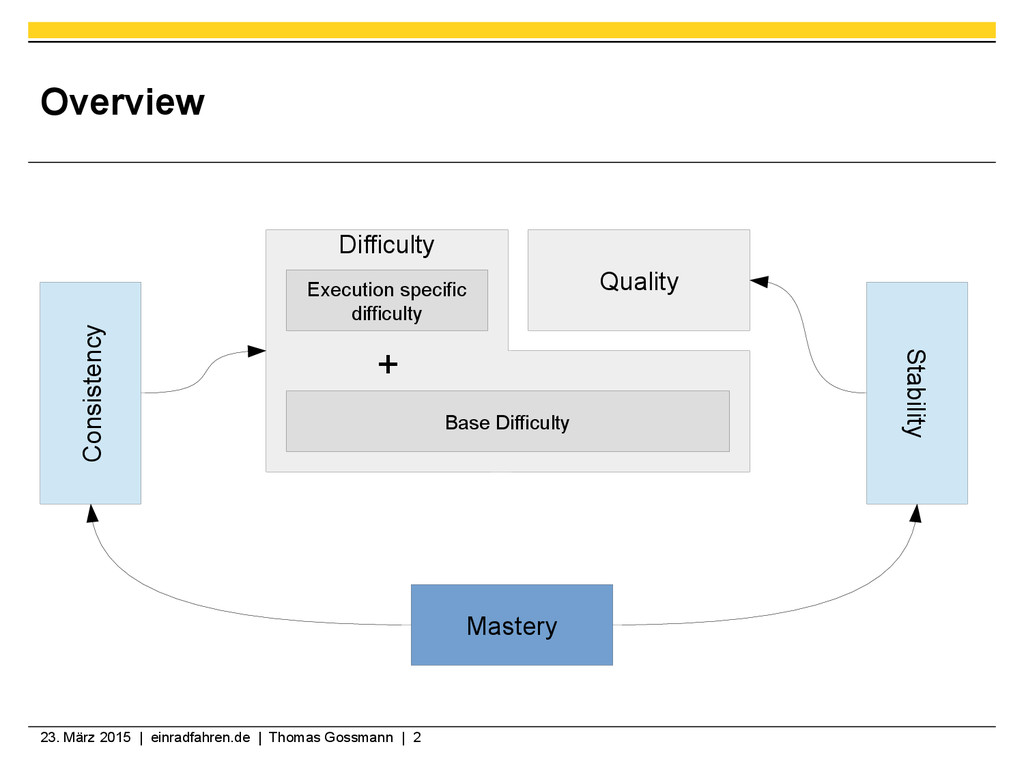
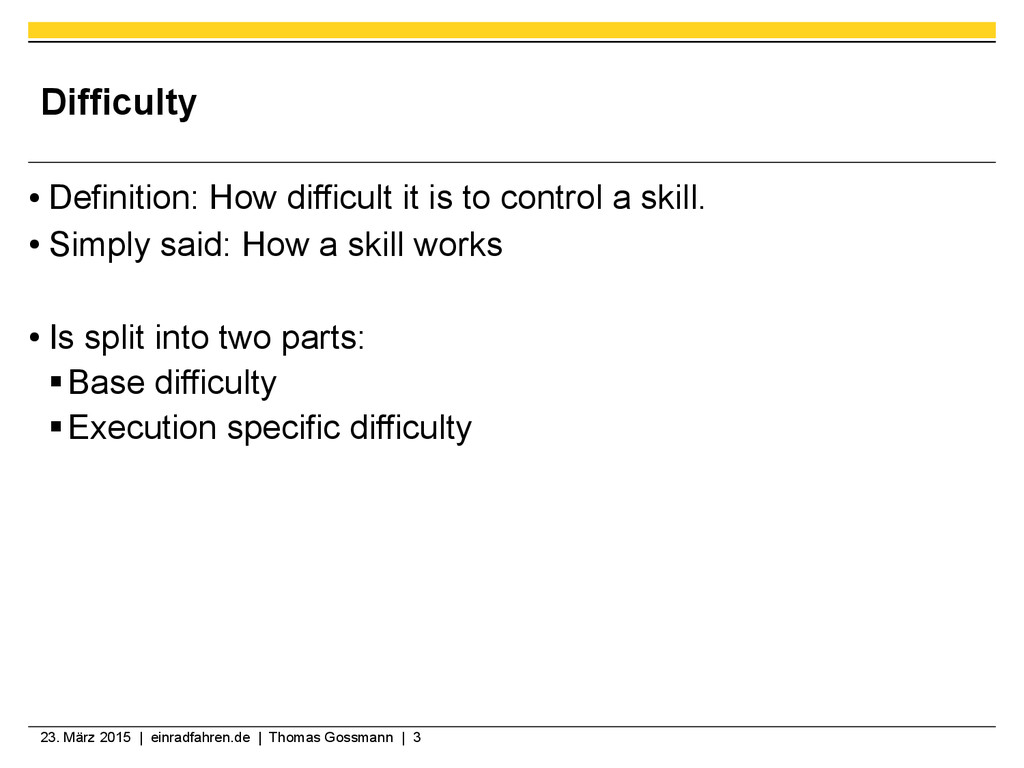
Difficulty • Definition: How difficult it is to control a skill. • Simply said: How a skill works • Is split into two parts: Base difficulty Execution specific difficulty
Difficulty Base Difficulty • Base difficulty targets the base execution of a skill • Base execution: Execution of a skill with only the unique characteristics taken into account Example 1ft: Rider sitting on a unicycle, one foot on the pedal, the other foot on the frame
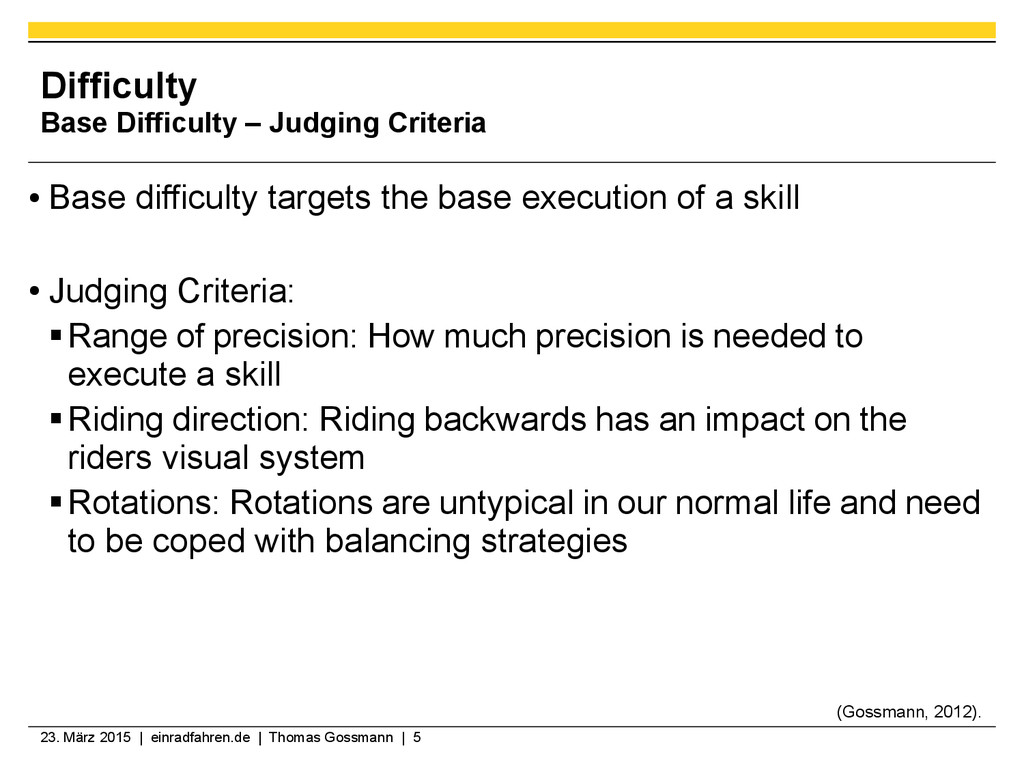
Difficulty Base Difficulty – Judging Criteria • Base difficulty targets the base execution of a skill • Judging Criteria: Range of precision: How much precision is needed to execute a skill Riding direction: Riding backwards has an impact on the riders visual system Rotations: Rotations are untypical in our normal life and need to be coped with balancing strategies (Gossmann, 2012).
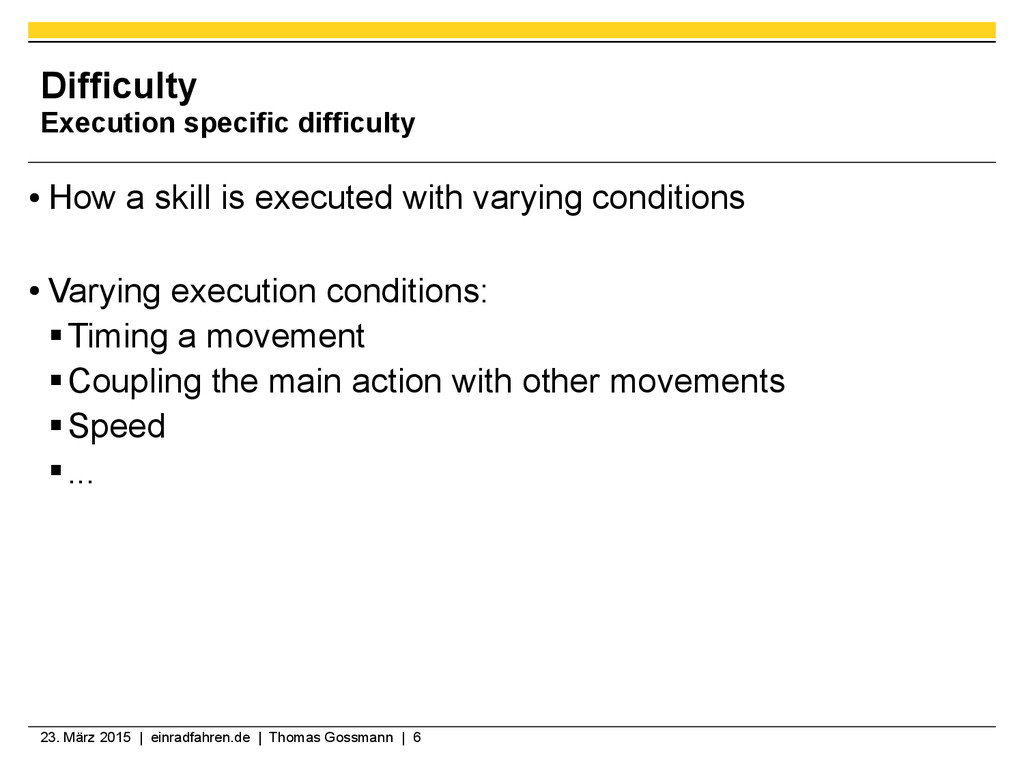
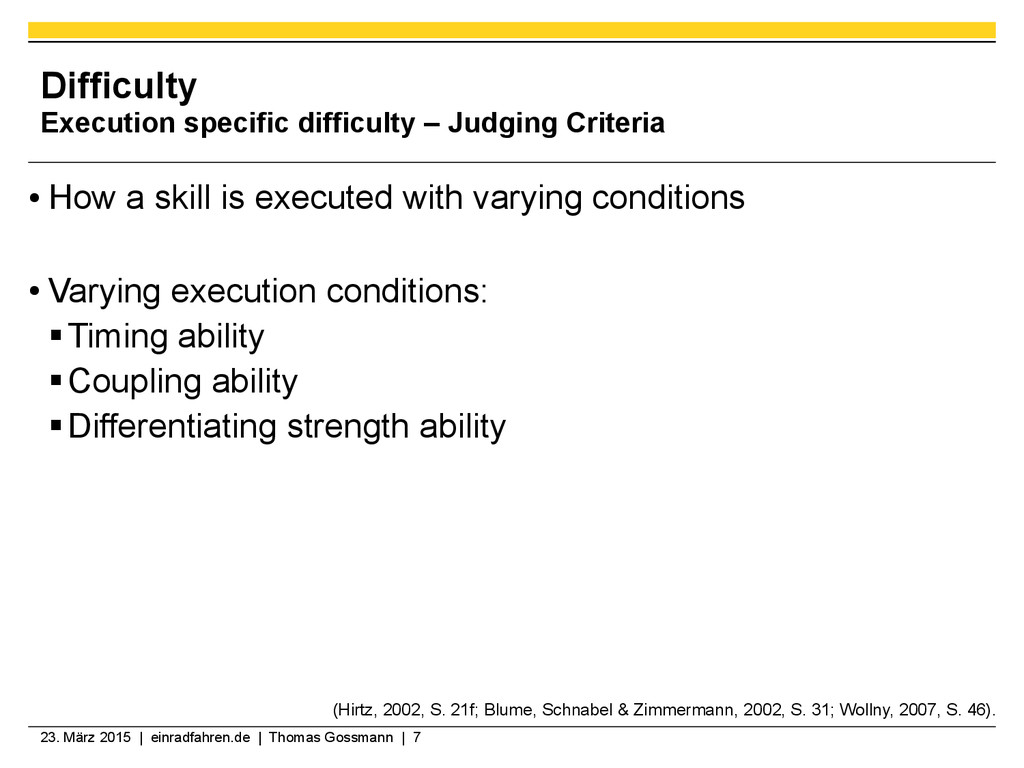
Difficulty Execution specific difficulty • How a skill is executed with varying conditions • Varying execution conditions: Timing a movement Coupling the main action with other movements Speed ...
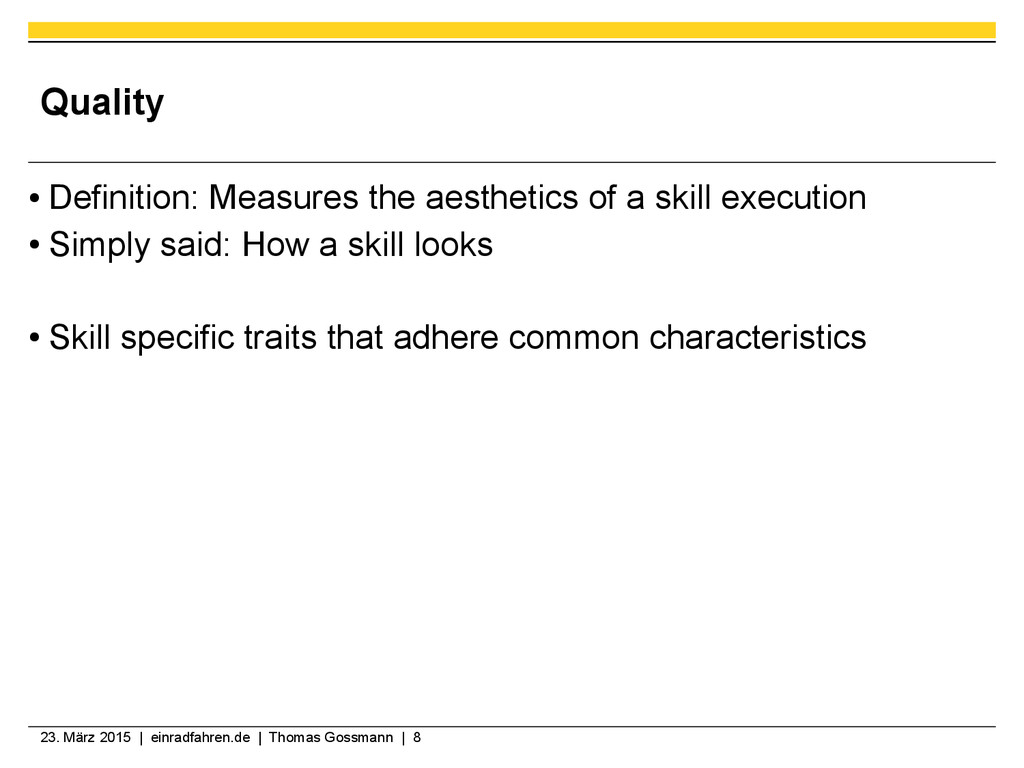
Quality • Definition: Measures the aesthetics of a skill execution • Simply said: How a skill looks • Skill specific traits that adhere common characteristics
Difficulty General Characteristics – Judging Criteria • General characteristics as orientation if applicable: Body posture and tension Angle of legs Airtime Fluid movement Leg extended ... + Skill specific traits
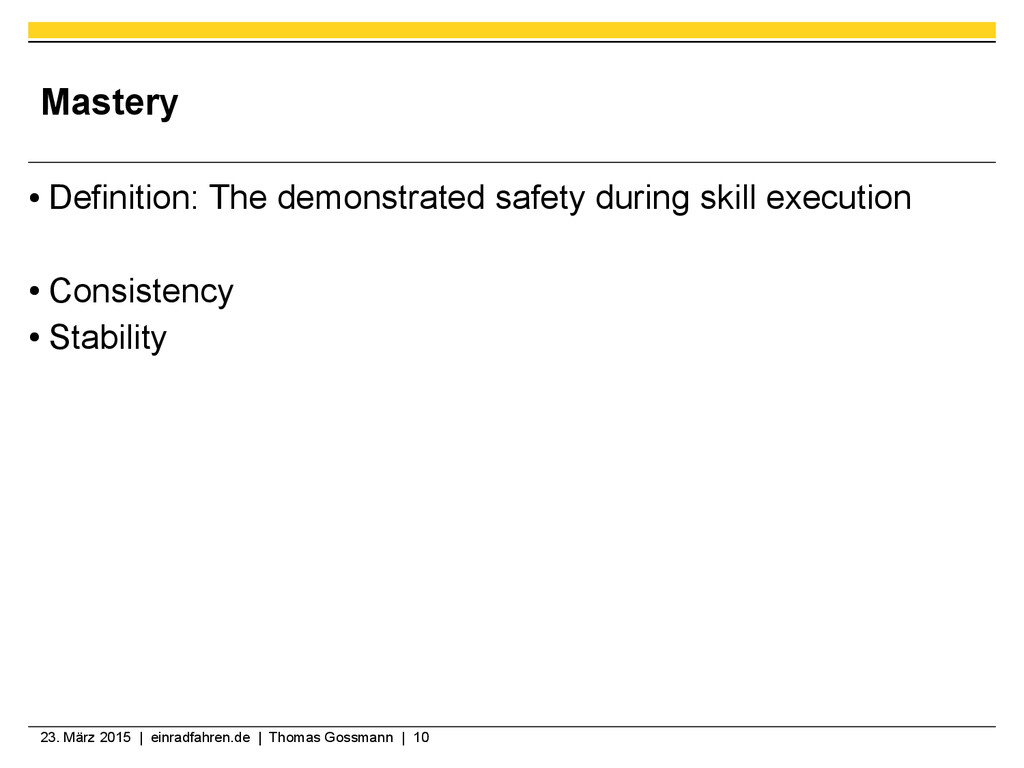
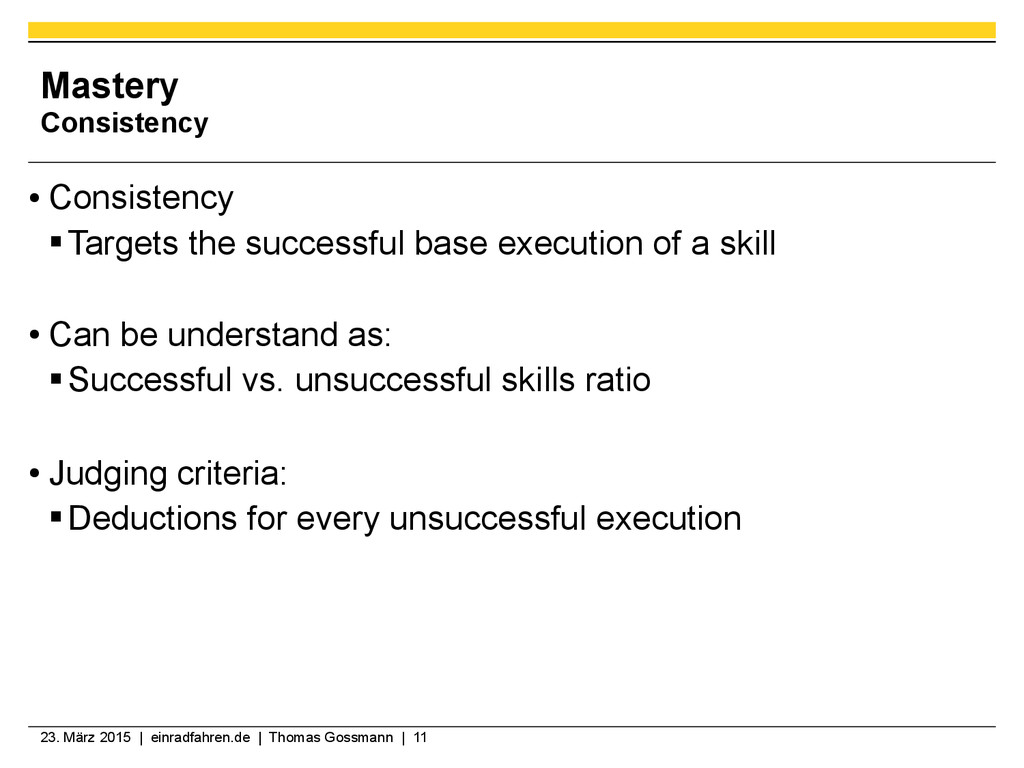
Mastery Consistency • Consistency Targets the successful base execution of a skill • Can be understand as: Successful vs. unsuccessful skills ratio • Judging criteria: Deductions for every unsuccessful execution
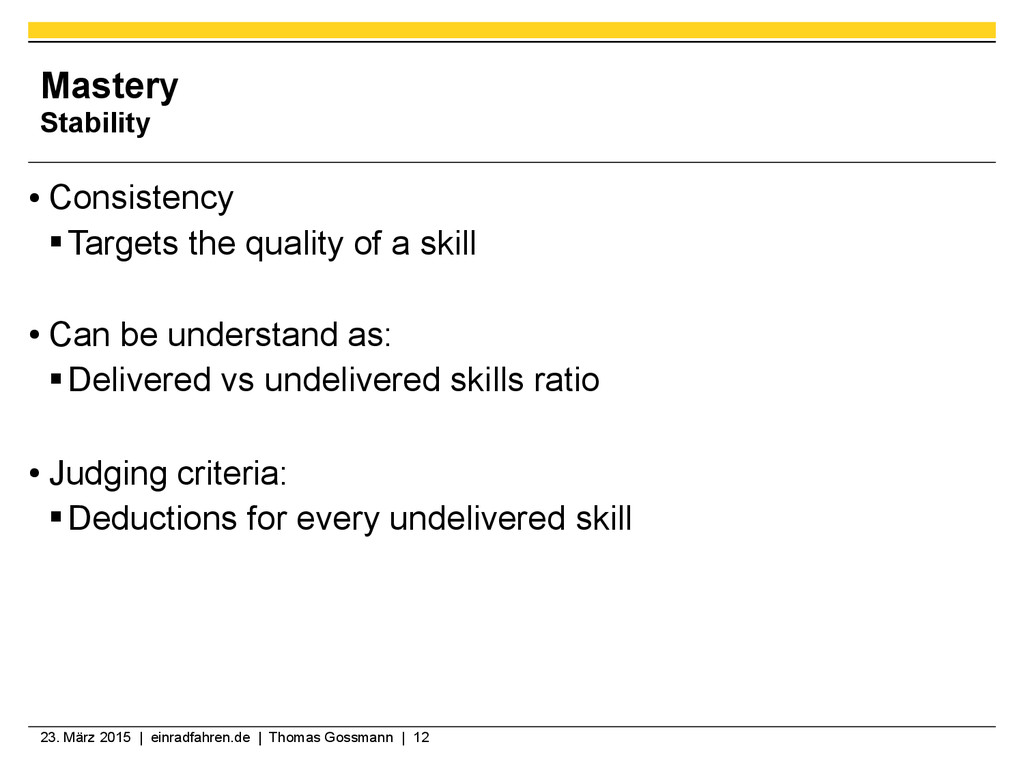
Mastery Stability • Consistency Targets the quality of a skill • Can be understand as: Delivered vs undelivered skills ratio • Judging criteria: Deductions for every undelivered skill
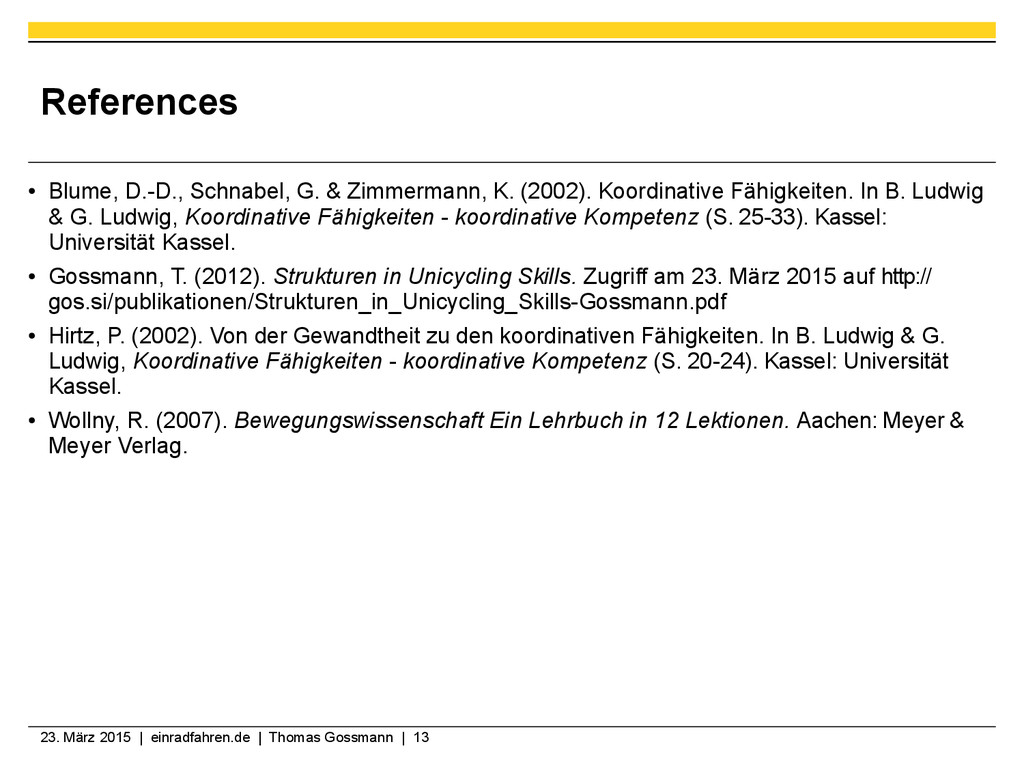
References • Blume, D.-D., Schnabel, G. & Zimmermann, K. (2002). Koordinative Fähigkeiten. In B. Ludwig & G. Ludwig, Koordinative Fähigkeiten - koordinative Kompetenz (S. 25-33). Kassel: Universität Kassel. • Gossmann, T. (2012). Strukturen in Unicycling Skills. Zugriff am 23. März 2015 auf http:// gos.si/publikationen/Strukturen_in_Unicycling_Skills-Gossmann.pdf • Hirtz, P. (2002). Von der Gewandtheit zu den koordinativen Fähigkeiten. In B. Ludwig & G. Ludwig, Koordinative Fähigkeiten - koordinative Kompetenz (S. 20-24). Kassel: Universität Kassel. • Wollny, R. (2007). Bewegungswissenschaft Ein Lehrbuch in 12 Lektionen. Aachen: Meyer & Meyer Verlag.


 gossi
gossi
 rikkabotan7
 mickey_0226
 eumesy
 afroscript
 fkske
fkske
 takehaya
 institutdelelevage
 sishi
sishi
 tomonom
.png) satai
satai
 codingconduct
 lara
lara
 stuffmc
 csswizardry
 rkendrick25
 frankvandijk
 kastner
 katiecoart
 nonsquared
 smashingmag
 baasie