Upgrade to Pro
— share decks privately, control downloads, hide ads and more …
Speaker Deck
Sign up for free
Menu
Search
Features
All features
Private URLs
Password Protection
Custom URLS
Scheduled publishing
Remove Branding
Restrict embedding
Deck Collections
Notes
Features
All features
Private URLs
Password Protection
Custom URLS
Scheduled publishing
Remove Branding
Restrict embedding
Deck Collections
Notes
Explore
Featured decks
Featured speakers
Programming
Technology
Storyboards
Explore
Featured decks
Featured speakers
Programming
Technology
Storyboards
Pricing
Search
Sign in
Sign up for free
Cassandra for Data Analytics Backends
Search
αλεx π
September 24, 2015
Research
470
7
Share
Embed
Copy iframe code
Copy JS code
Copy link
Start on current slide
Cassandra for Data Analytics Backends
αλεx π
September 24, 2015
More Decks by αλεx π
See All by αλεx π
Scalable Time Series With Cassandra
ifesdjeen
1
430
Bayesian Inference is known to make machines biased
ifesdjeen
2
420
Stream Processing and Functional Programming
ifesdjeen
1
800
PolyConf 2015 - Rocking the Time Series boat with C, Haskell and ClojureScript
ifesdjeen
0
540
Clojure - A Sweetspot for Analytics
ifesdjeen
8
2.1k
Going Off Heap
ifesdjeen
3
1.9k
Always be learning
ifesdjeen
1
200
Learn Yourself Emacs For Great Good workshop slides
ifesdjeen
3
360
What Reading 5 Papers can yield for your Business
ifesdjeen
0
410
Other Decks in Research
See All in Research
J-STAGEの現況と全文XML登載必須化について
xspa2012
0
340
A new deal for disabled people
resolutionfoundation
0
240
【Zozo Research 技術共有会】三次元領域の現在と展望
mickey_0226
3
680
ハードウェア研究で国際トップ会議を目指す!IROS 2027での論文採択を目指して
ayatokanada
7
4k
XDPerf: A High-Performance Traffic Generator Built with WASM and eBPF
takehaya
1
340
Vector Map as Language: Toward Unified Remote Sensing Vector Mapping
satai
3
320
視覚若手の会LENSって何??
mickey_0226
0
360
Byzantine Eventual Consistency for Reliable Local-First Software
ept
0
220
Santé et fertilité des sols : ce que nous disent les pratiques dans les systèmes de polyculture-élevage
institutdelelevage
PRO
0
120
JPA2026_NetworkTutorial_JunKashihara
junkashihara
0
230
山中市政の総括:相反する二つの顔
sishi
0
220
ふとした出会いで生まれたSkillが、 社内利用1位になるまで
mikimhk
22
25k
Featured
See All Featured
The Pragmatic Product Professional
lauravandoore
37
7.5k
Music & Morning Musume
bryan
48
7.4k
Prompt Engineering for Job Search
mfonobong
0
510
Everyday Curiosity
cassininazir
0
350
How To Speak Unicorn (iThemes Webinar)
marktimemedia
1
600
Building AI with AI
inesmontani
PRO
1
1.3k
End of SEO as We Know It (SMX Advanced Version)
ipullrank
3
4.4k
Statistics for Hackers
jakevdp
799
230k
Sharpening the Axe: The Primacy of Toolmaking
bcantrill
46
3k
Why You Should Never Use an ORM
jnunemaker
PRO
61
10k
Six Lessons from altMBA
skipperchong
29
4.5k
Principles of Awesome APIs and How to Build Them.
keavy
128
18k
Transcript
@ifesdjeen
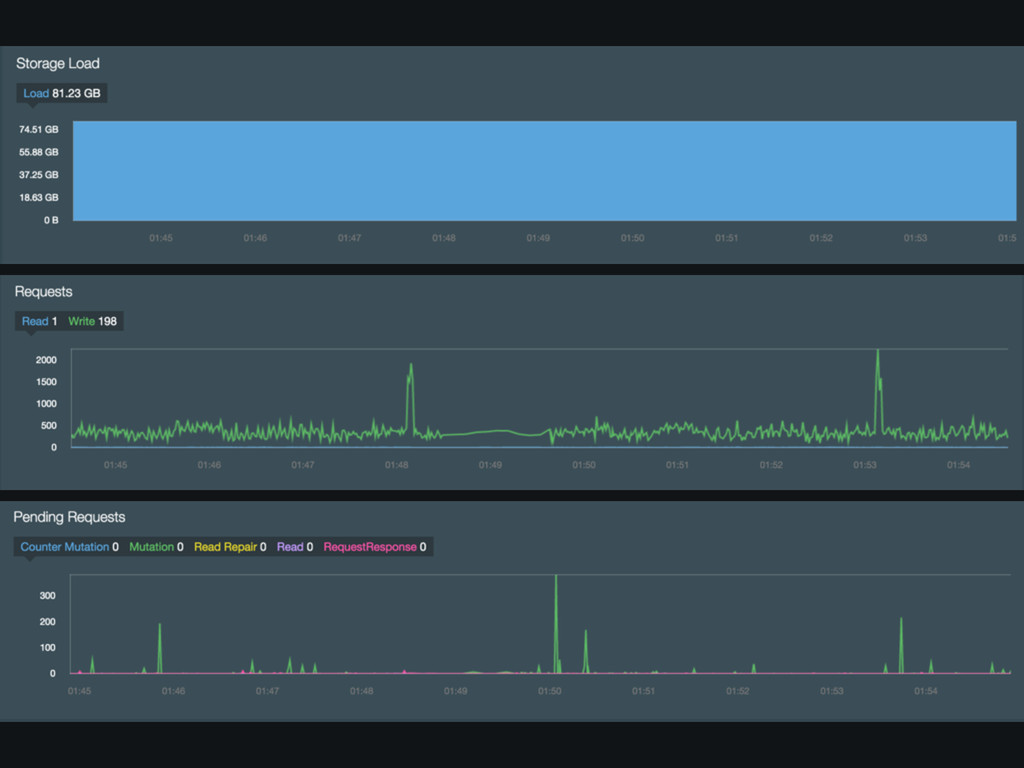
Cassandra Monitoring
None
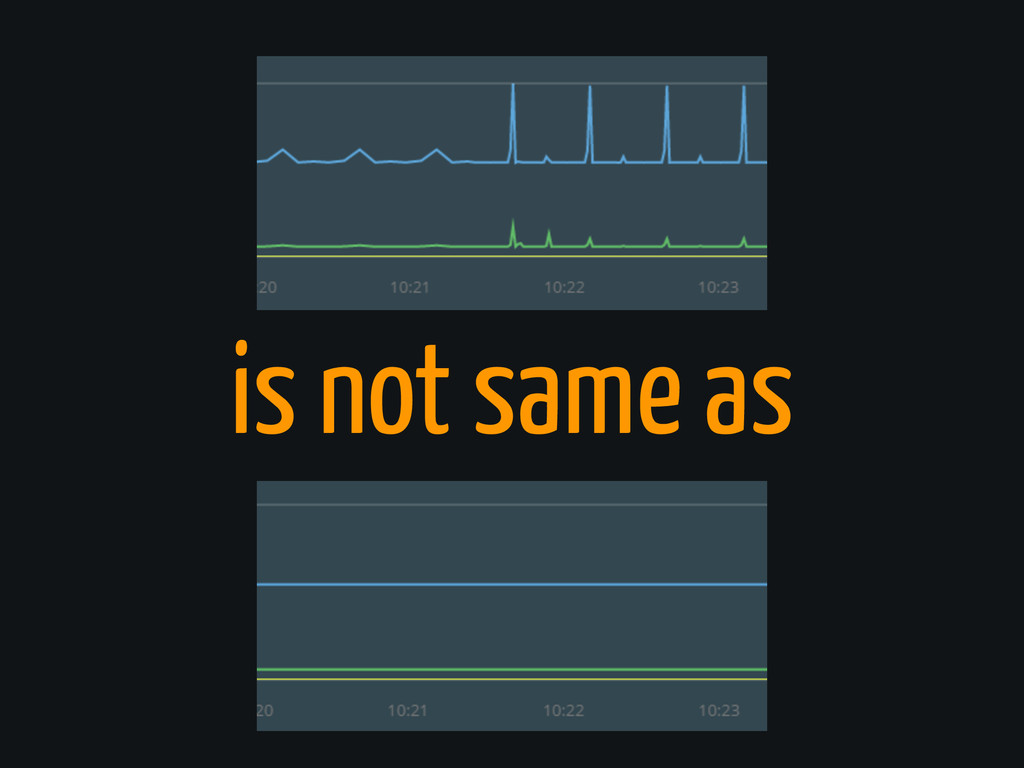
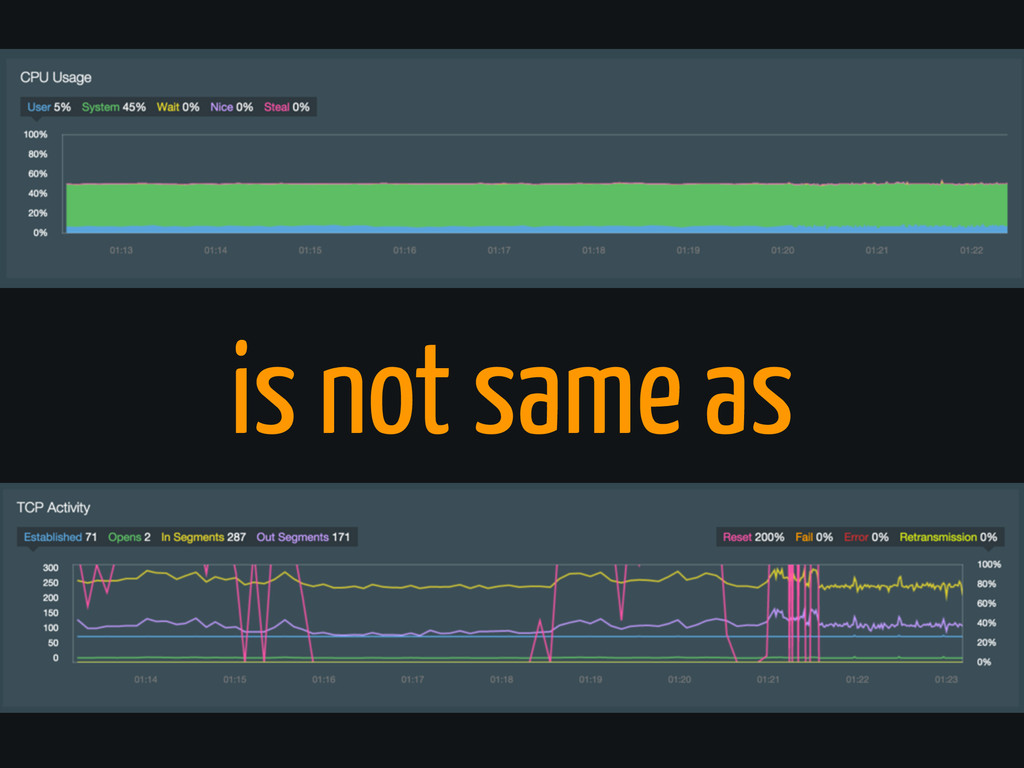
Precision
is not same as
Semantics
is not same as
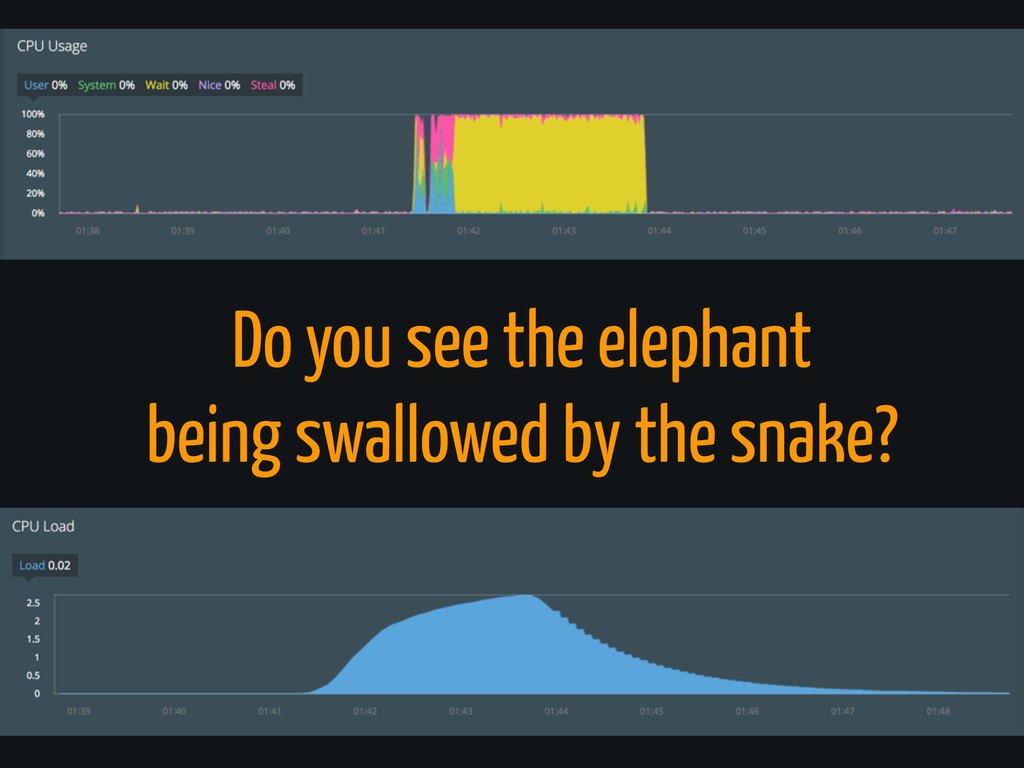
Anomaly detection
Do you see the elephant being swallowed by the snake?
Agenda
Ad-hoc queries
Aggregations Fast
Machine Learning
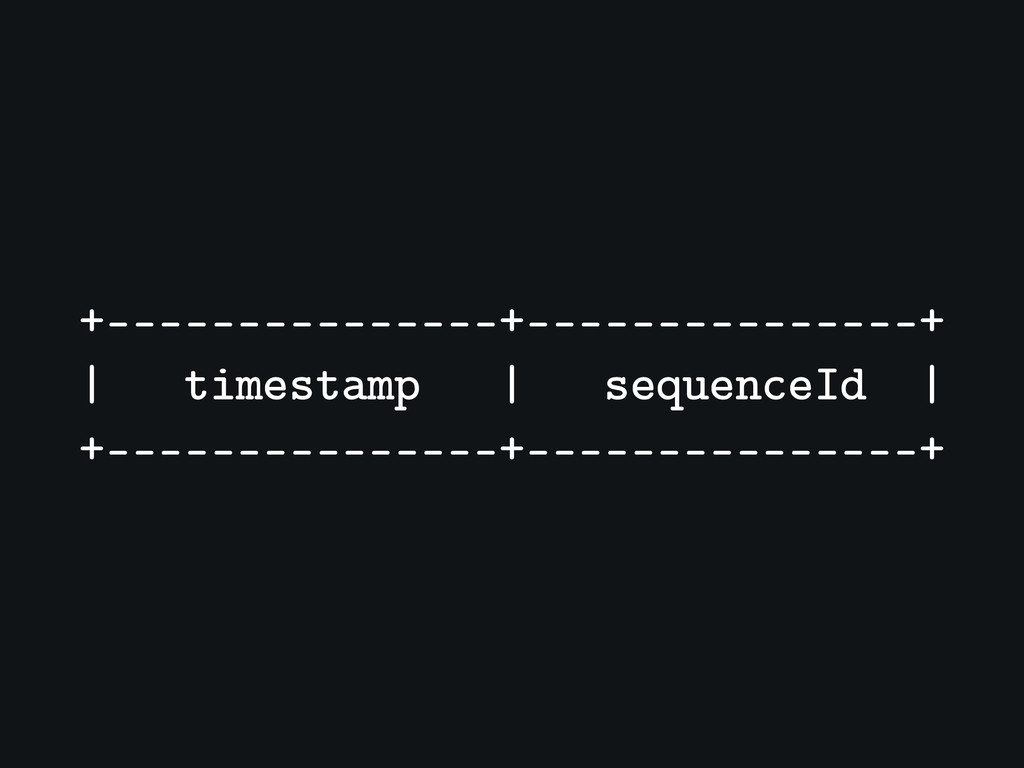
parallel queries Step 1
+---------------+---------------+ | timestamp | sequenceId | +---------------+---------------+
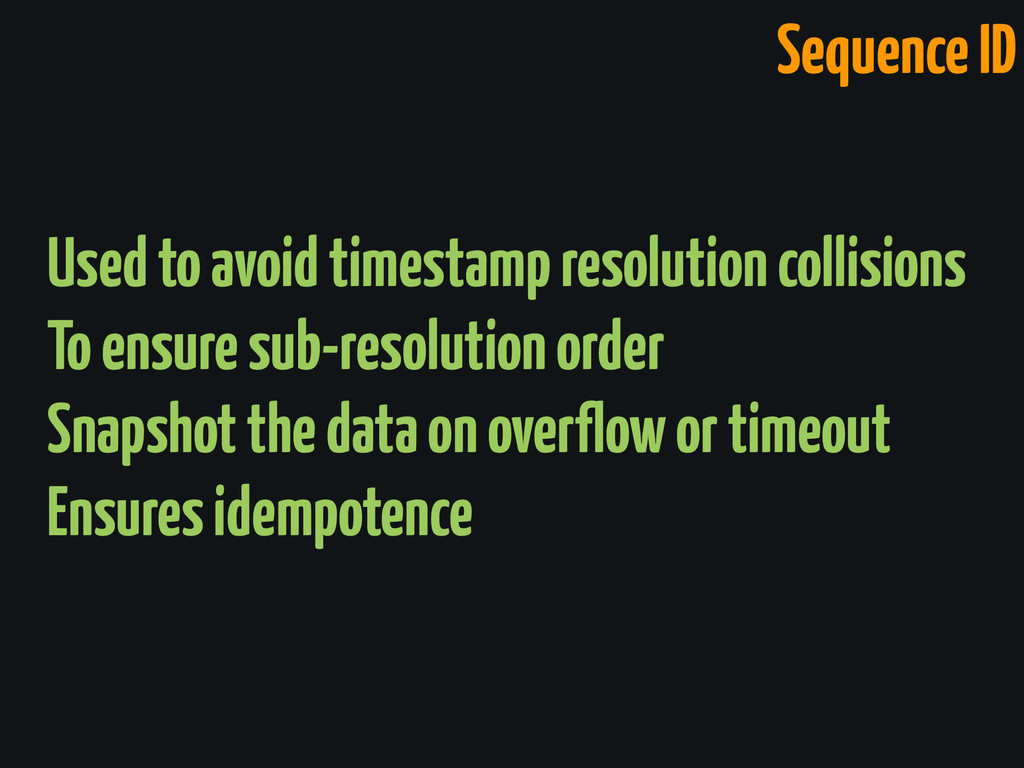
Used to avoid timestamp resolution collisions To ensure sub-resolution order
Snapshot the data on overflow or timeout Ensures idempotence Sequence ID
Fighting Dispersion
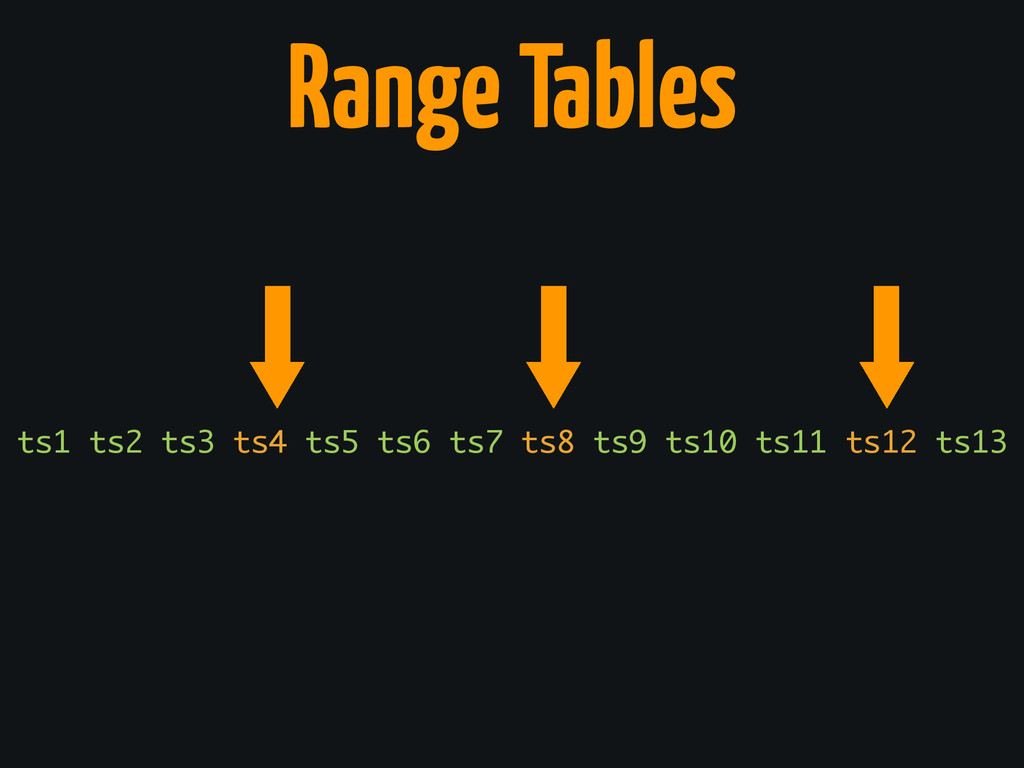
ts1 ts2 ts3 ts4 ts5 ts6 ts7 ts8 ts9 ts10
ts11 ts12 ts13 Range Tables
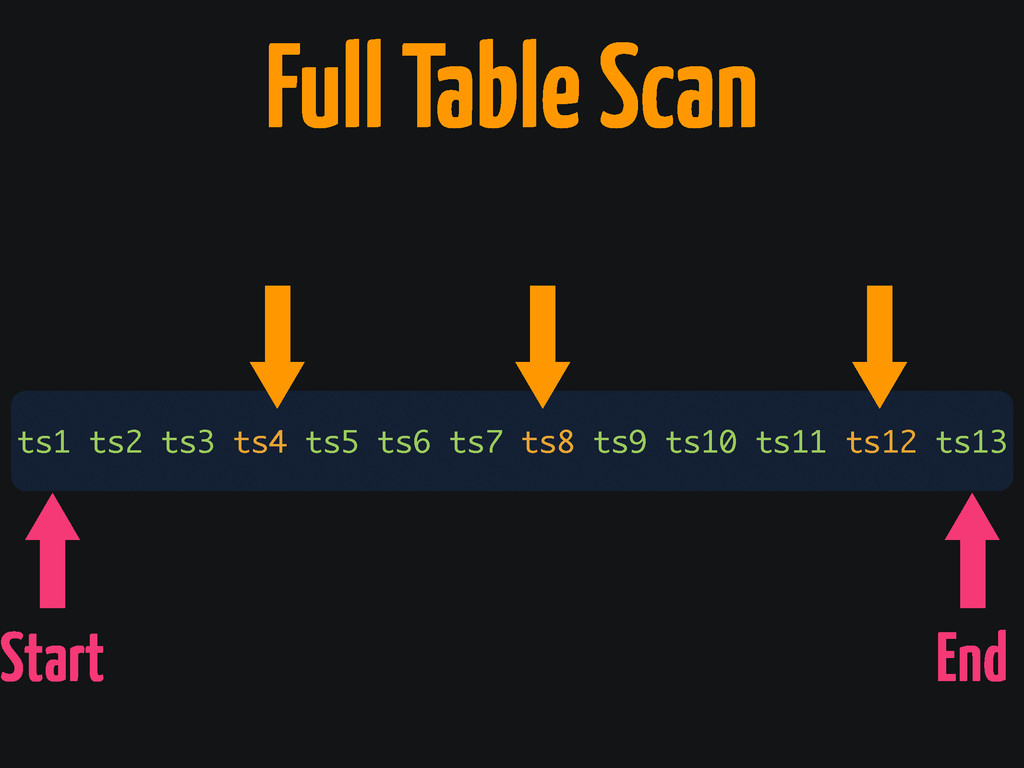
Full Table Scan ts1 ts2 ts3 ts4 ts5 ts6 ts7
ts8 ts9 ts10 ts11 ts12 ts13 Start End
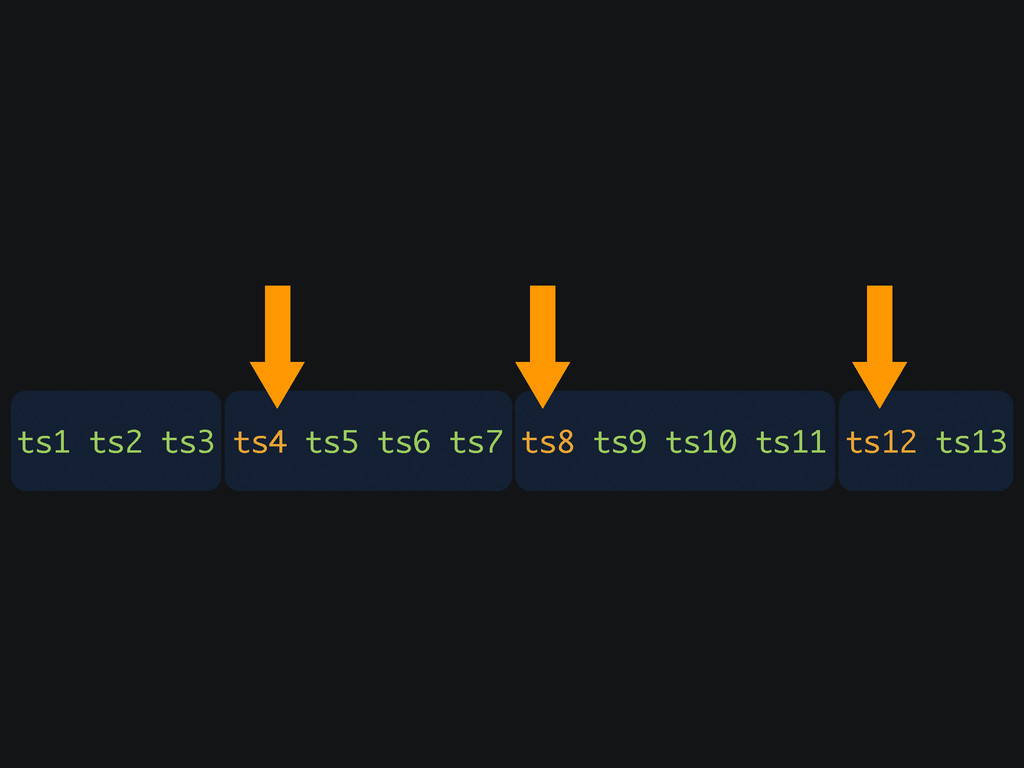
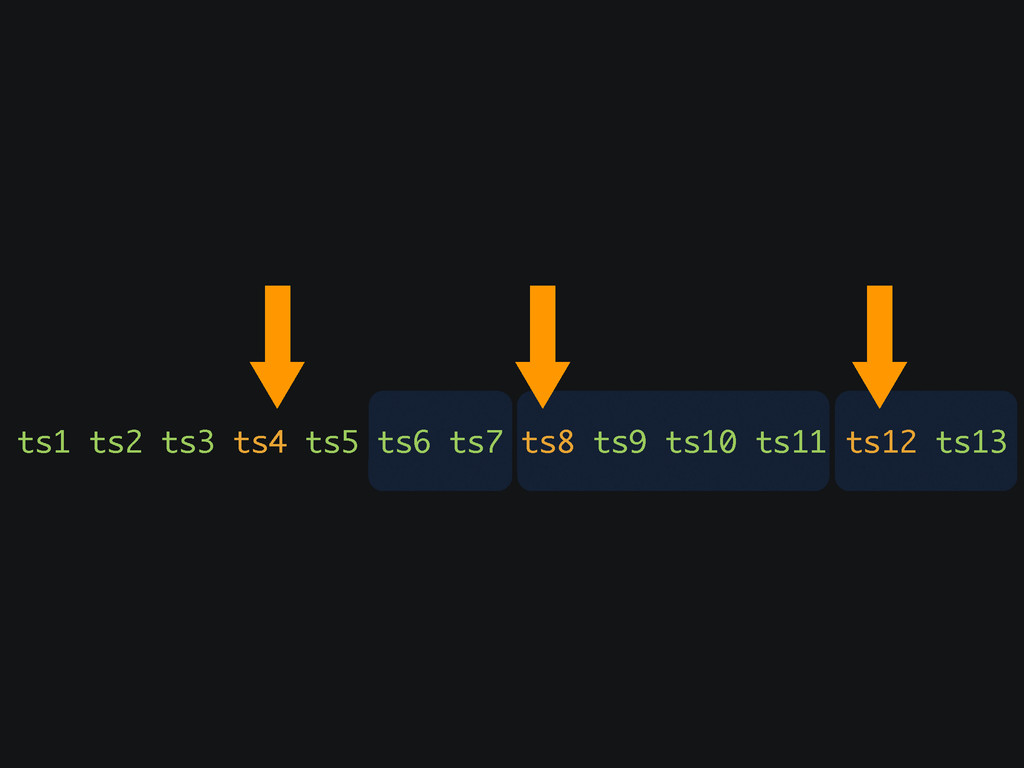
ts1 ts2 ts3 ts4 ts5 ts6 ts7 ts8 ts9 ts10
ts11 ts12 ts13
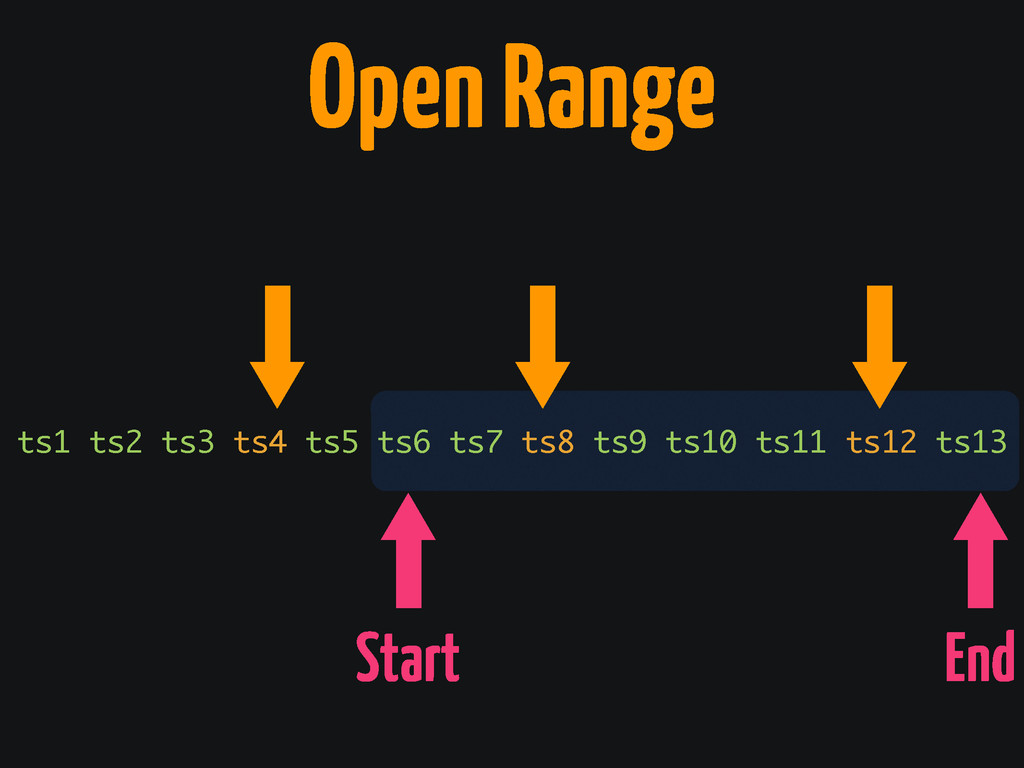
Open Range Start End ts1 ts2 ts3 ts4 ts5 ts6
ts7 ts8 ts9 ts10 ts11 ts12 ts13
ts1 ts2 ts3 ts4 ts5 ts6 ts7 ts8 ts9 ts10
ts11 ts12 ts13
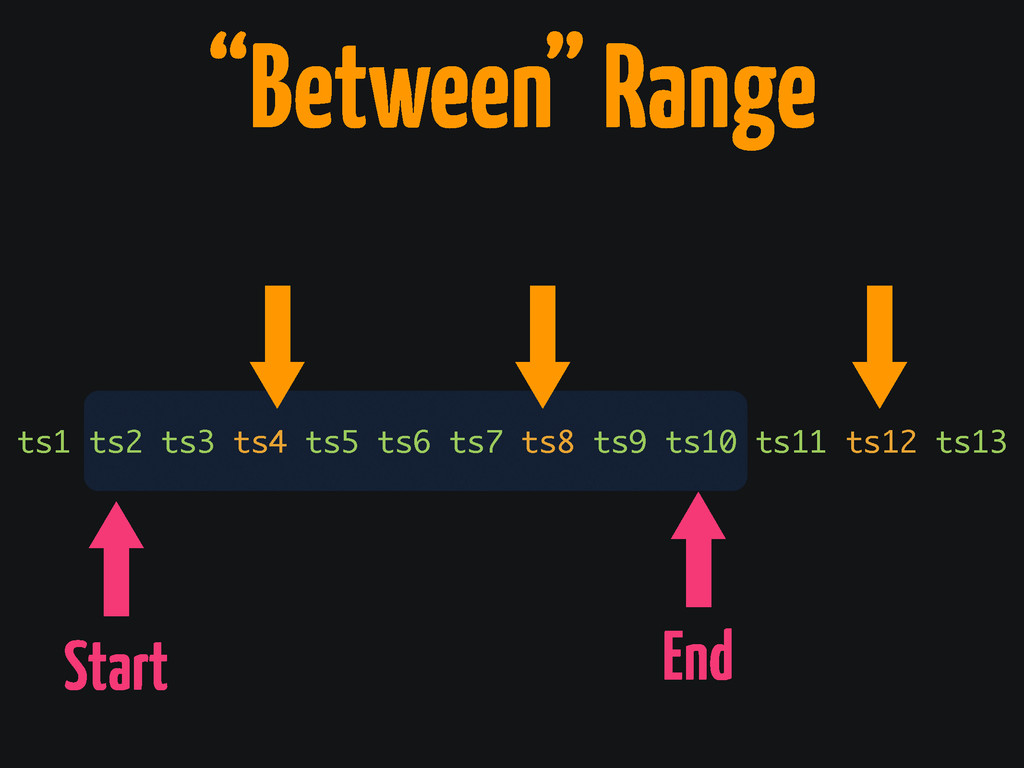
“Between” Range ts1 ts2 ts3 ts4 ts5 ts6 ts7 ts8
ts9 ts10 ts11 ts12 ts13 Start End
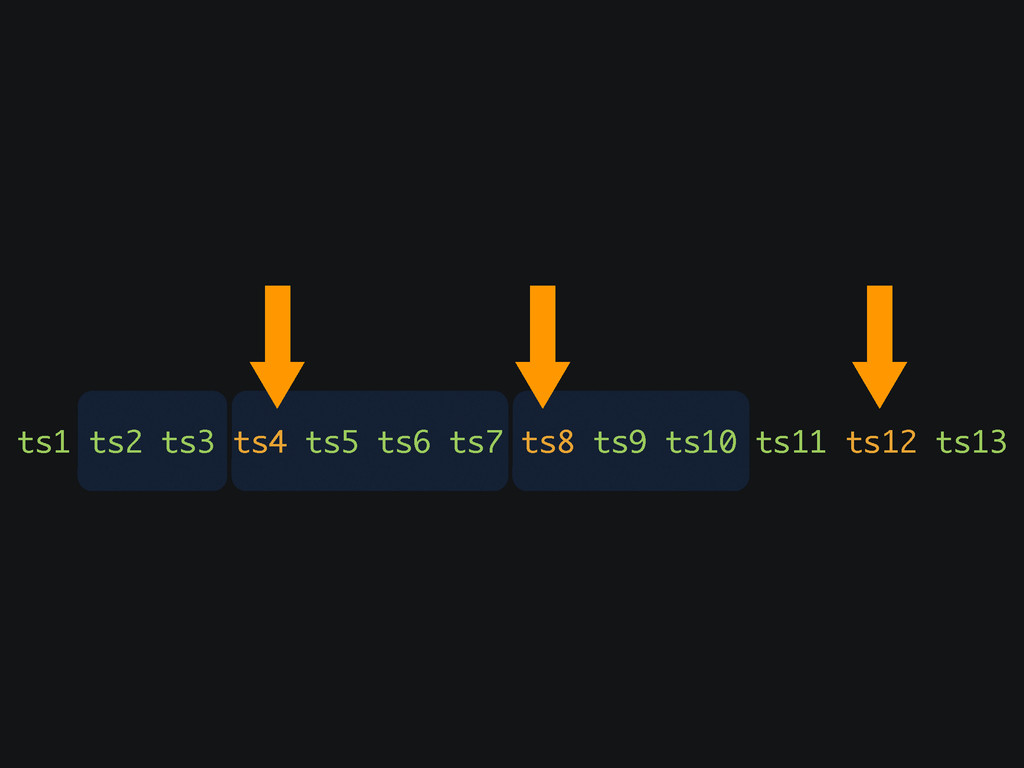
ts1 ts2 ts3 ts4 ts5 ts6 ts7 ts8 ts9 ts10
ts11 ts12 ts13
(rich query API) Step 2 add some algebra
None
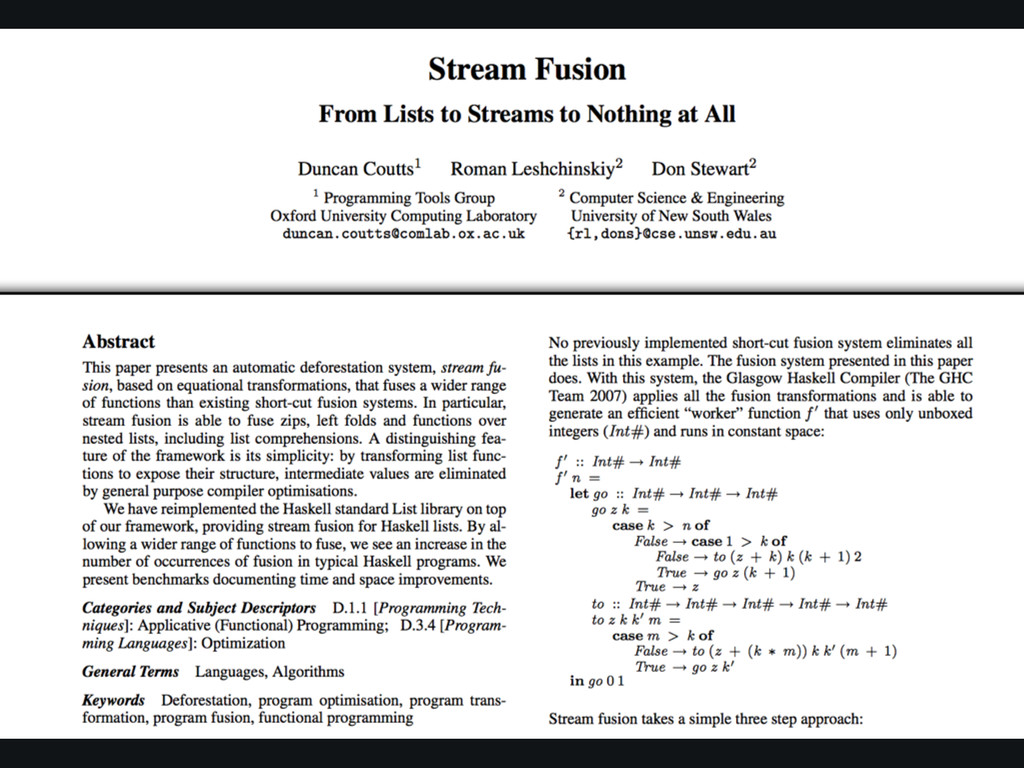
Stream Fusion for rich ad-hoc queries
What is even Stream Fusion
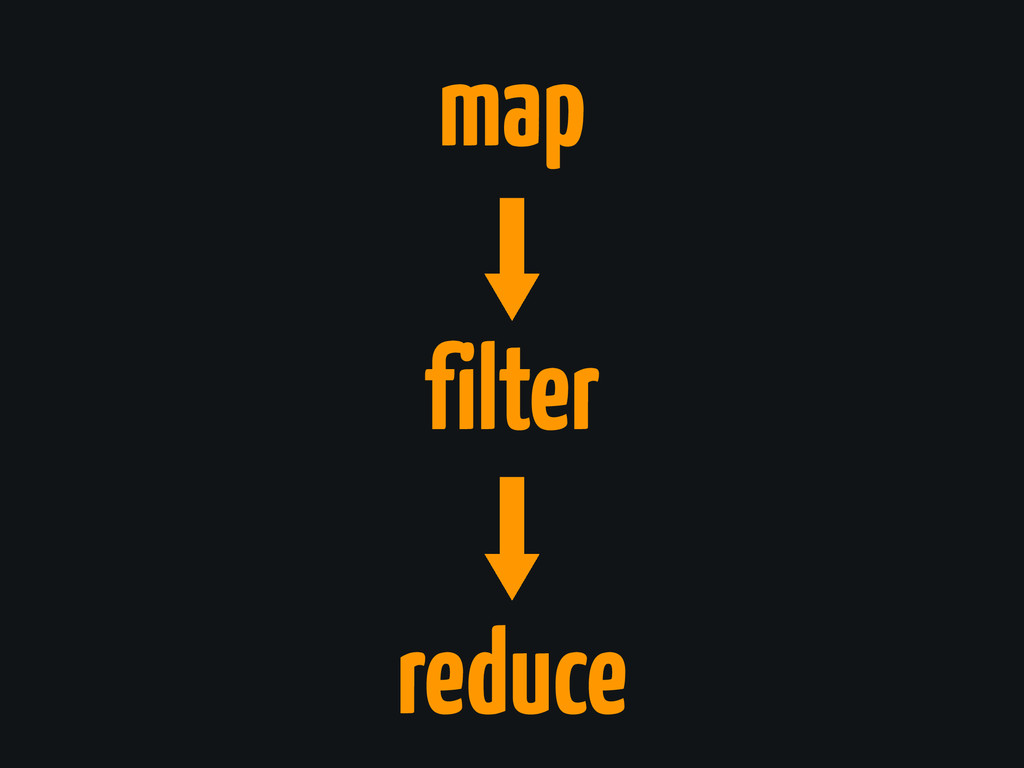
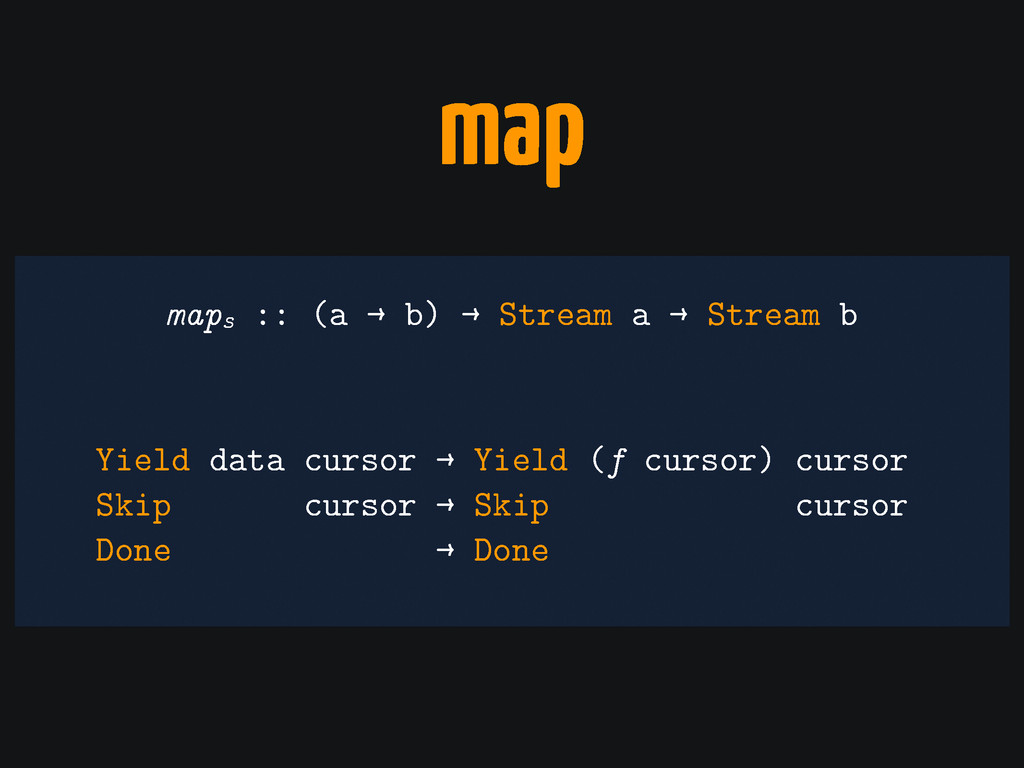
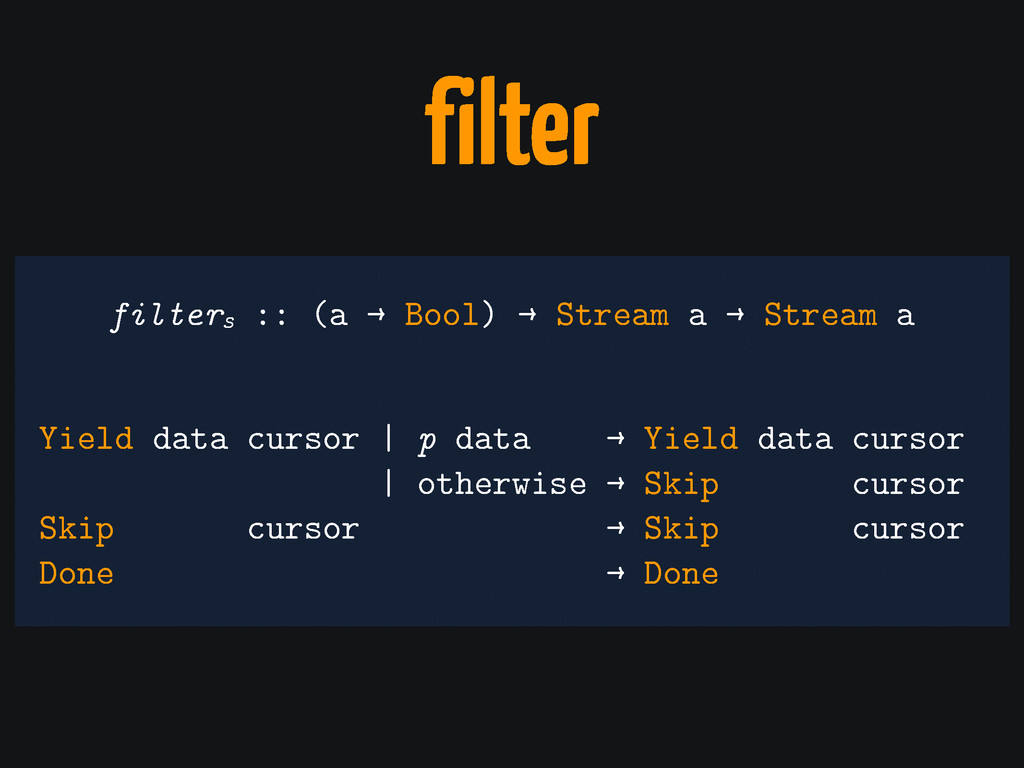
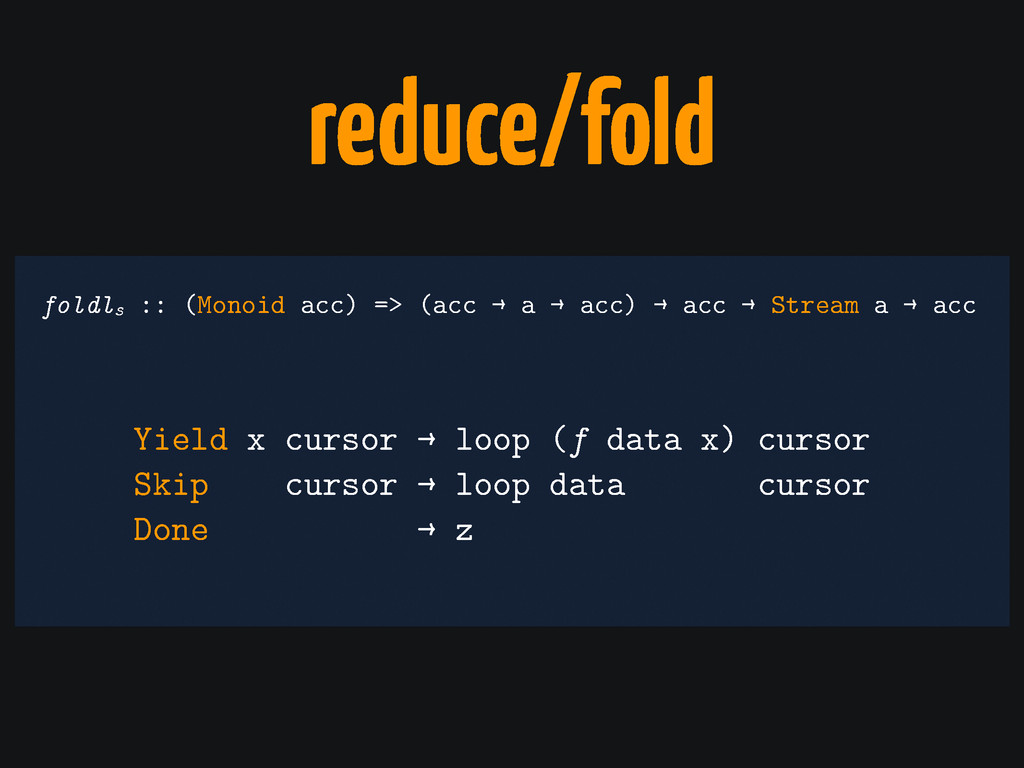
map filter reduce
single step mapFilterReduce
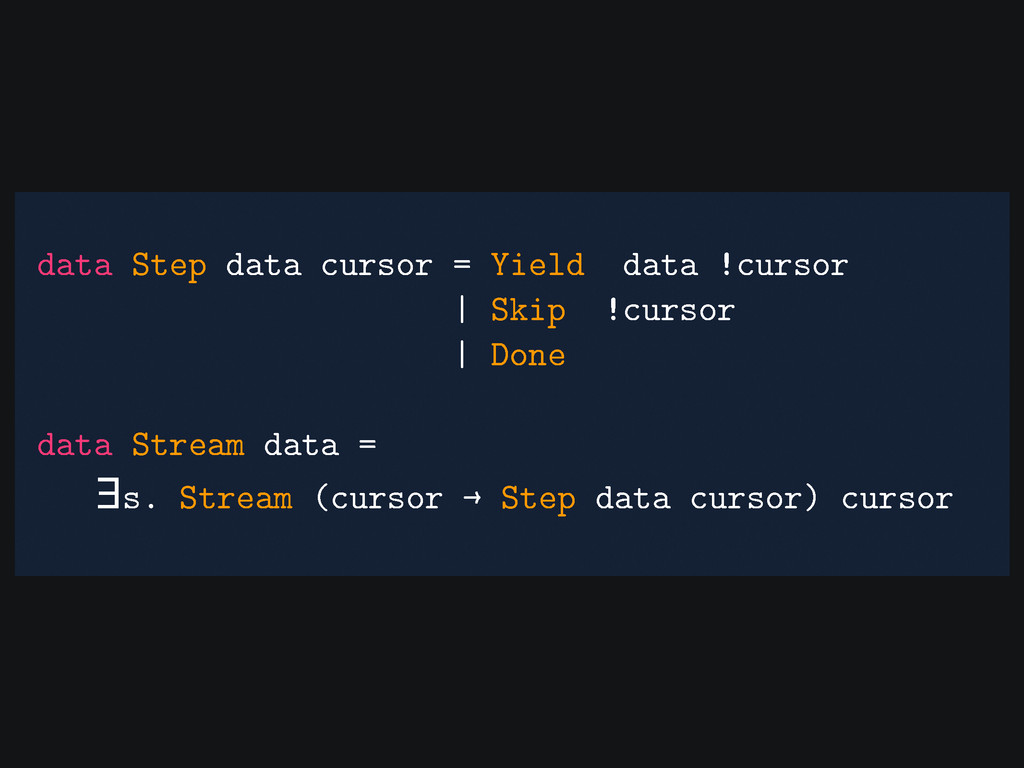
data Step data cursor = Yield data !cursor | Skip
!cursor | Done data Stream data = ∃s. Stream (cursor → Step data cursor) cursor
Stream Beginning: reading from the DB
map Yield data cursor → Yield (f cursor) cursor Skip
cursor → Skip cursor Done → Done maps :: (a → b) → Stream a → Stream b
filter Yield data cursor | p data → Yield data
cursor | otherwise → Skip cursor Skip cursor → Skip cursor Done → Done filters :: (a → Bool) → Stream a → Stream a
reduce/fold Yield x cursor → loop (f data x) cursor
Skip cursor → loop data cursor Done → z foldls :: (Monoid acc) => (acc → a → acc) → acc → Stream a → acc
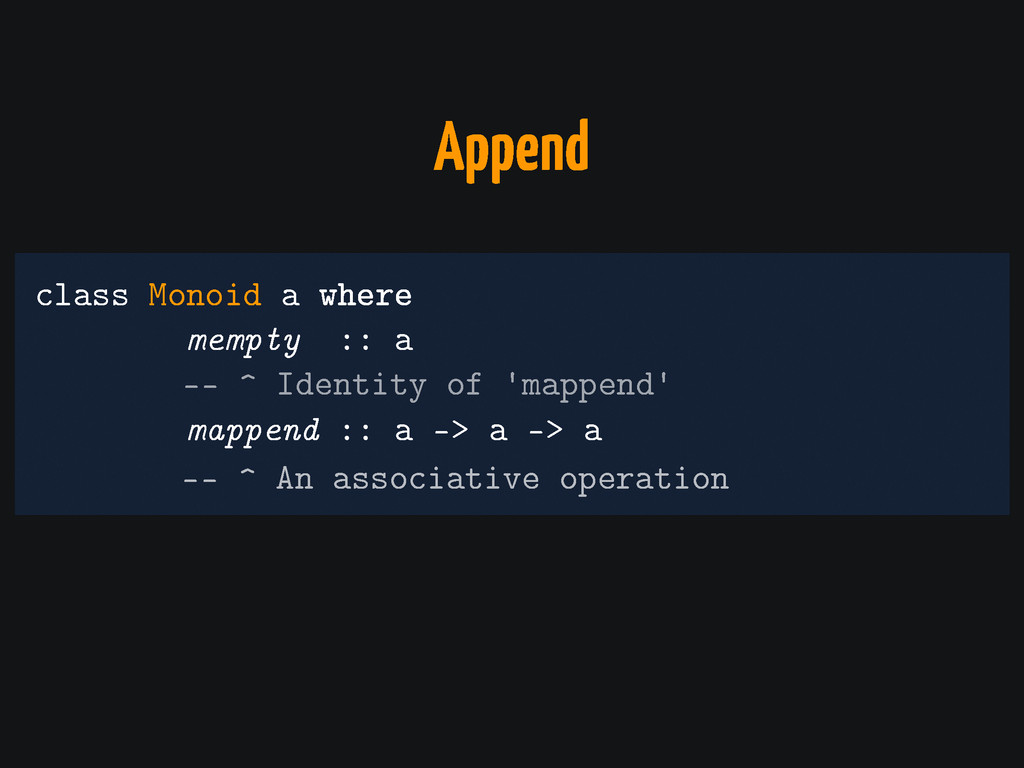
Append class Monoid a where mempty :: a mappend ::
a -> a -> a -- ^ Identity of 'mappend' -- ^ An associative operation
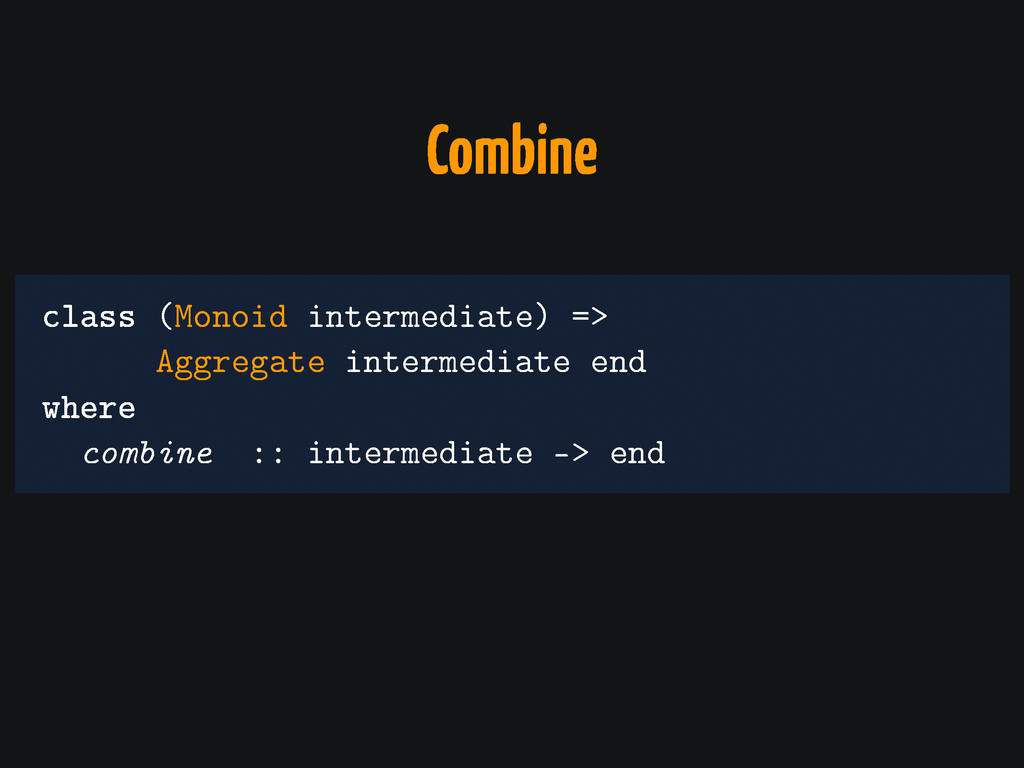
class (Monoid intermediate) => Aggregate intermediate end where combine ::
intermediate -> end Combine
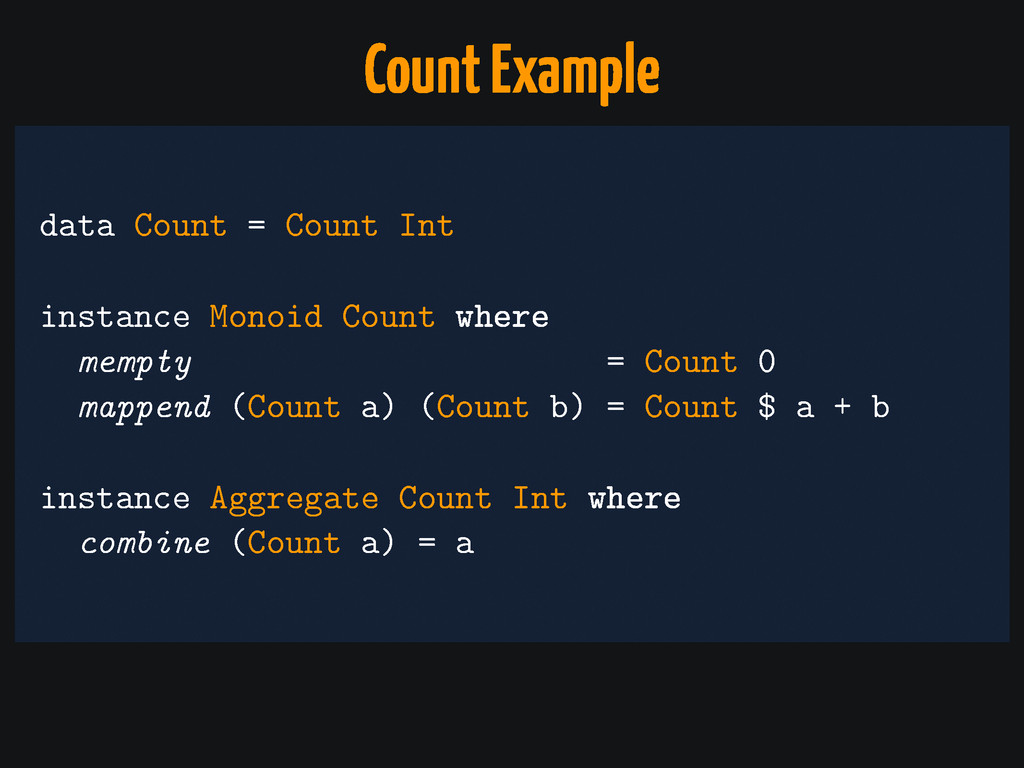
data Count = Count Int instance Monoid Count where mempty
= Count 0 mappend (Count a) (Count b) = Count $ a + b instance Aggregate Count Int where combine (Count a) = a Count Example
add some ML Step 3
Storing Models
Support Vector Machines
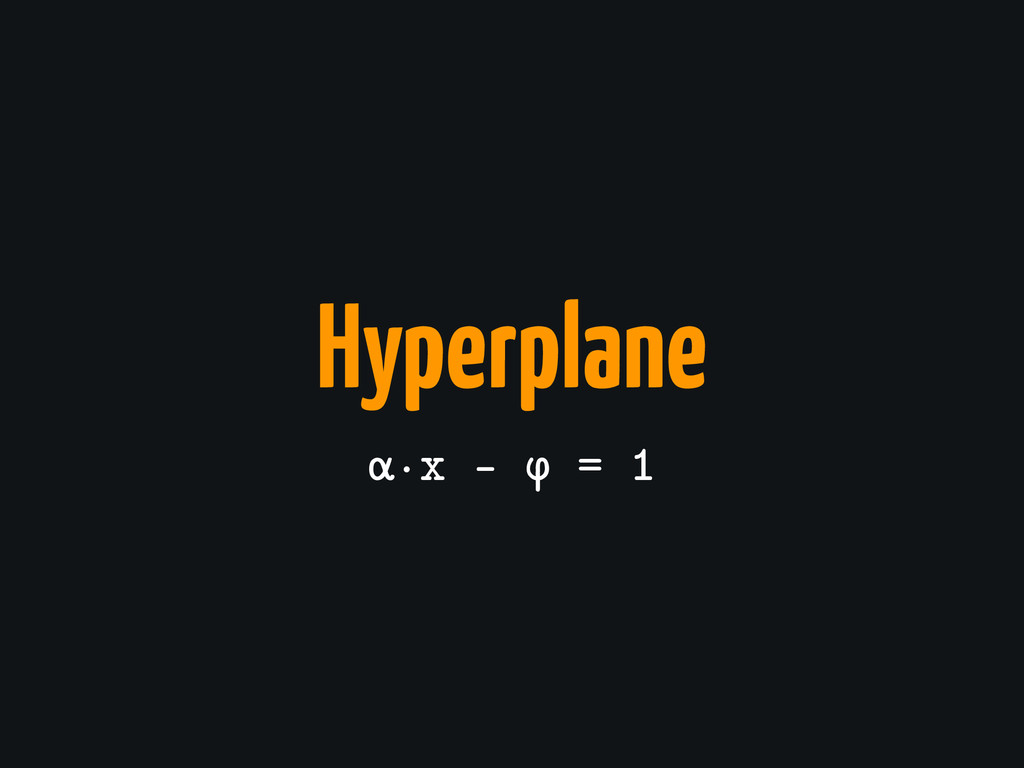
Hyperplane α·x - φ = 1
[ α1 α1 α1 ...αn ] ρ
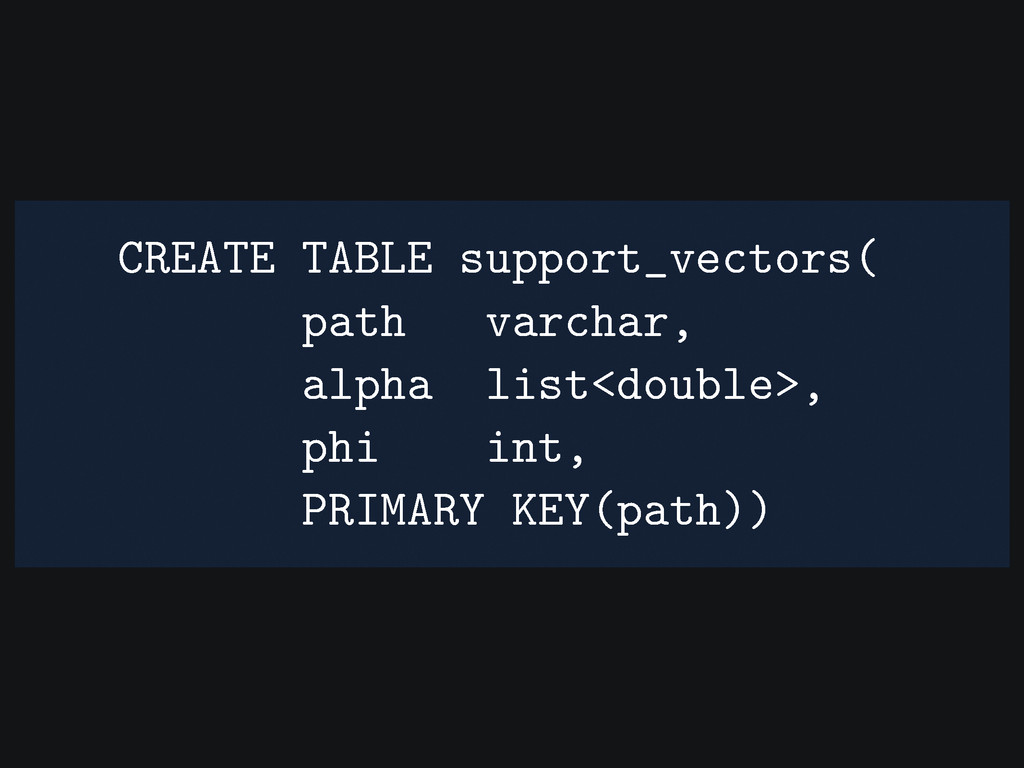
Option 1: list<double>
CREATE TABLE support_vectors( path varchar, alpha list<double>, phi int, PRIMARY
KEY(path))
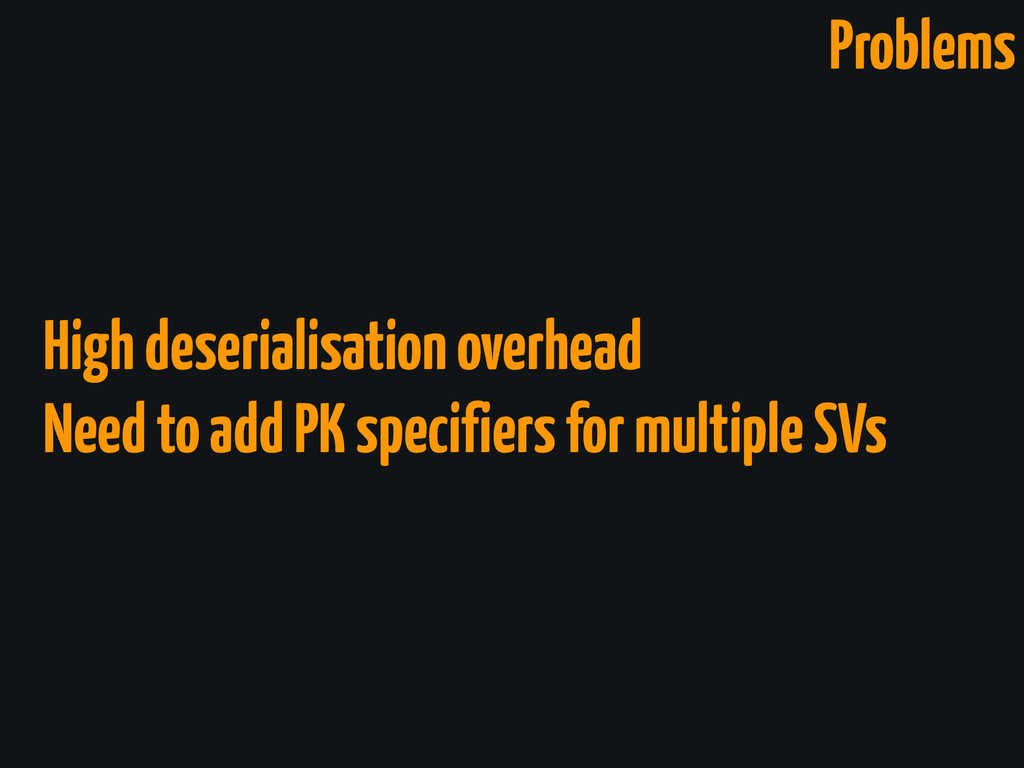
Problems High deserialisation overhead Need to add PK specifiers for
multiple SVs
Alternative: blob & byte buffers
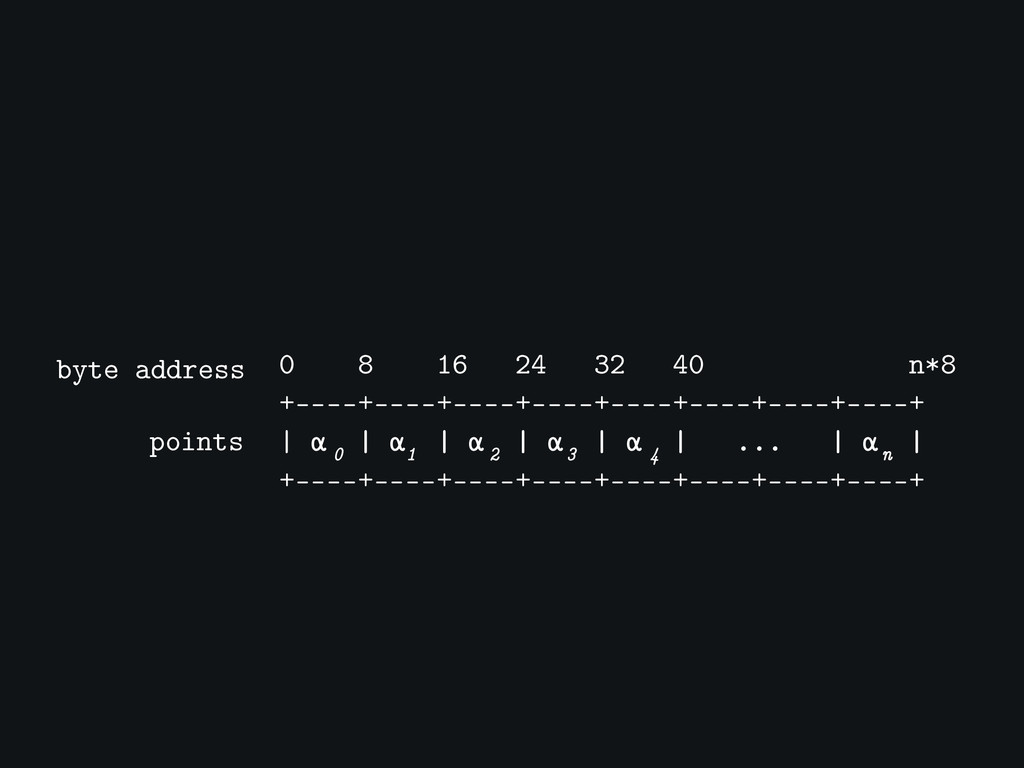
Vector Representation
0 8 16 24 32 40 n*8 +----+----+----+----+----+----+----+----+ | α
| α | α | α | α | ... | α | +----+----+----+----+----+----+----+----+ byte address points 1 2 3 4 0 n
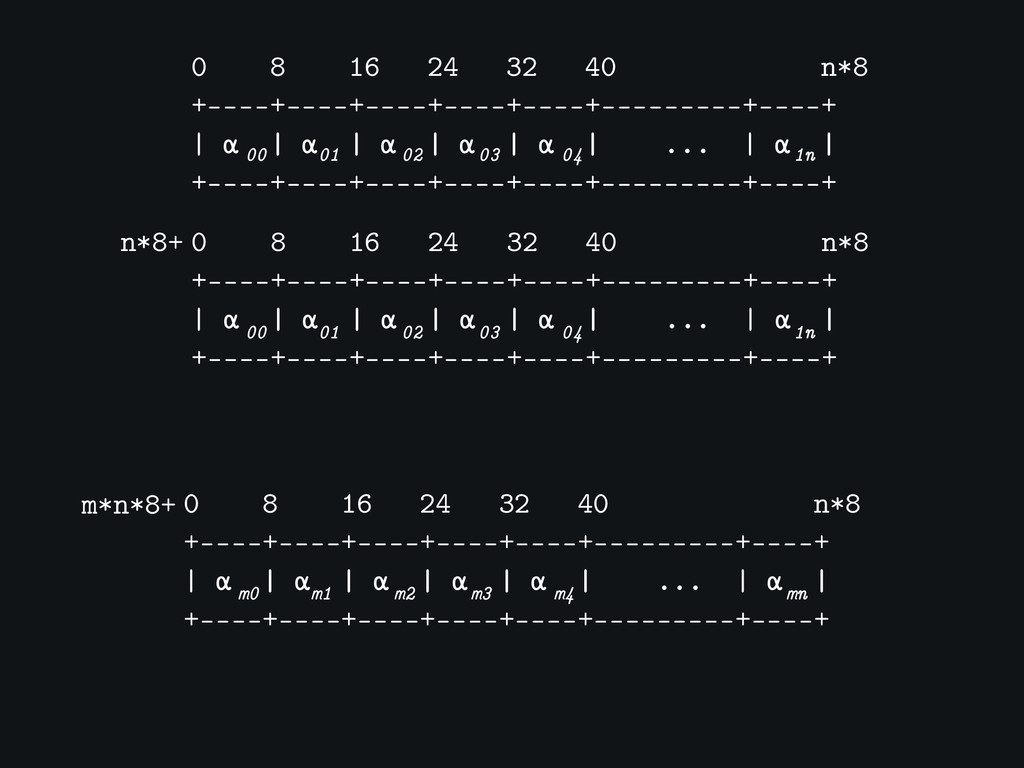
Matrix Representation
0 8 16 24 32 40 n*8 +----+----+----+----+----+---------+----+ | α
| α | α | α | α | ... | α | +----+----+----+----+----+---------+----+ 01 02 03 04 00 1n n*8+ 0 8 16 24 32 40 n*8 +----+----+----+----+----+---------+----+ | α | α | α | α | α | ... | α | +----+----+----+----+----+---------+----+ 01 02 03 04 00 1n m*n*8+ 0 8 16 24 32 40 n*8 +----+----+----+----+----+---------+----+ | α | α | α | α | α | ... | α | +----+----+----+----+----+---------+----+ m1 m2 m3 m4 m0 mn
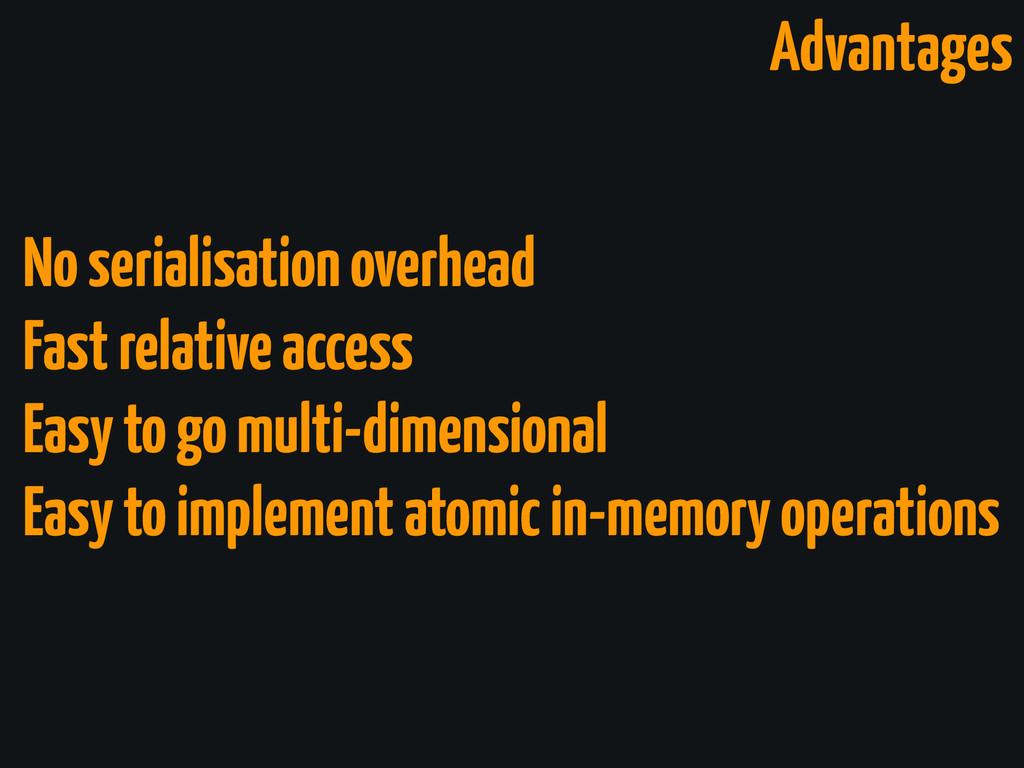
Advantages No serialisation overhead Fast relative access Easy to go
multi-dimensional Easy to implement atomic in-memory operations
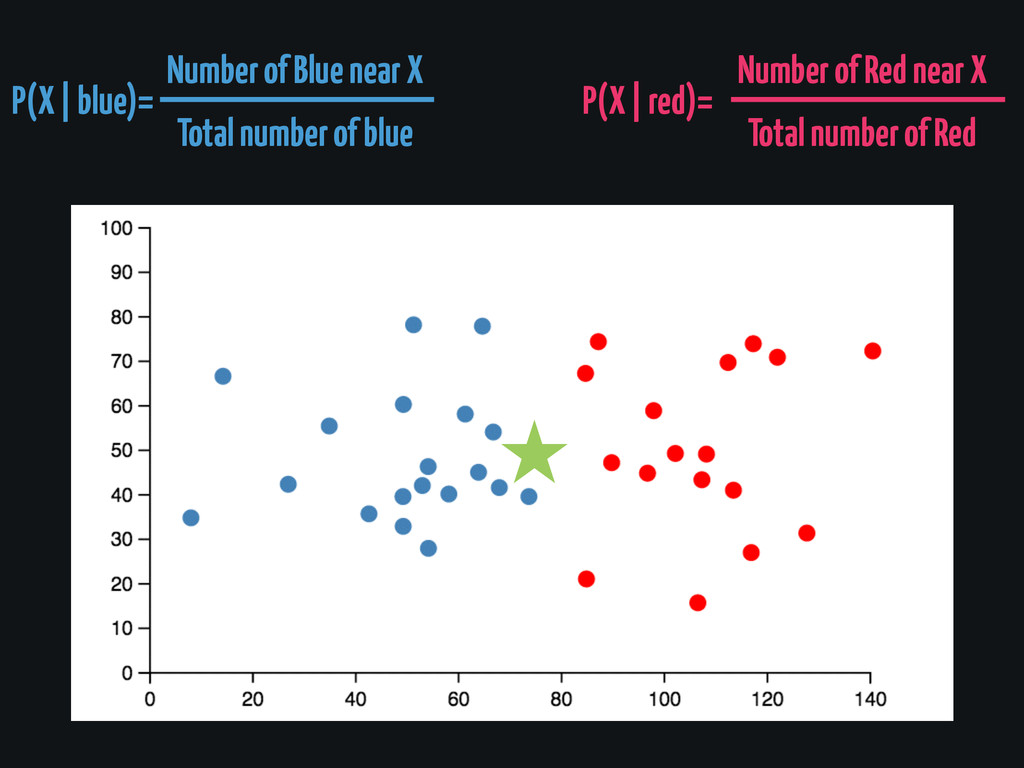
Bayesian Classifiers
P(X | blue)= Number of Blue near X Total number
of blue P(X | red)= Number of Red near X Total number of Red
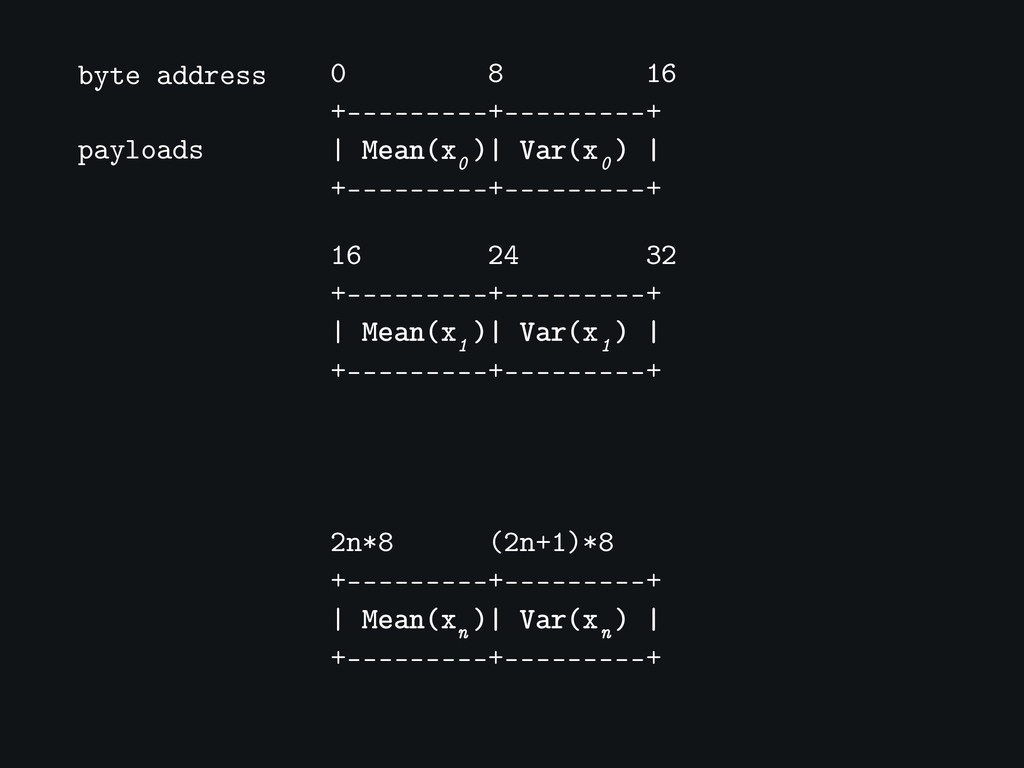
[[Mean(x1), Var(x1)] [Mean(x2), Var(x3)] ... [Mean(xn), Var(xn)]]
0 8 16 +---------+---------+ | Mean(x )| Var(x ) |
+---------+---------+ 0 0 16 24 32 +---------+---------+ | Mean(x )| Var(x ) | +---------+---------+ 1 1 2n*8 (2n+1)*8 +---------+---------+ | Mean(x )| Var(x ) | +---------+---------+ n n byte address payloads
make it rocket-fast Step 4
Approximate Data Structures
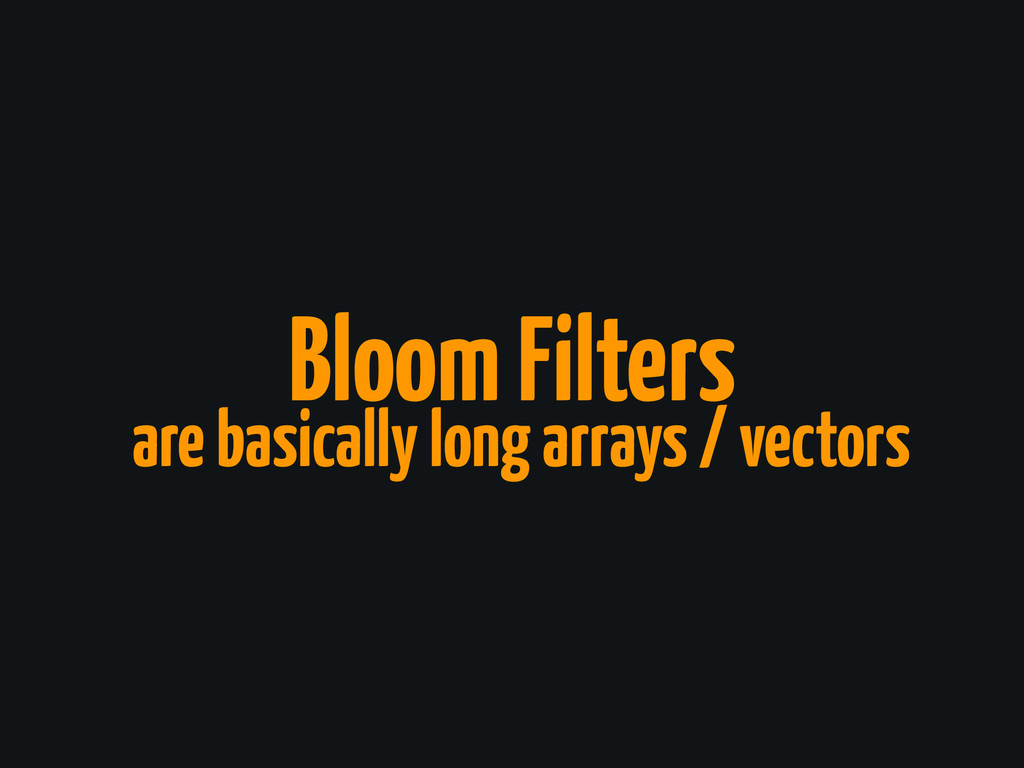
Bloom Filters are basically long arrays / vectors
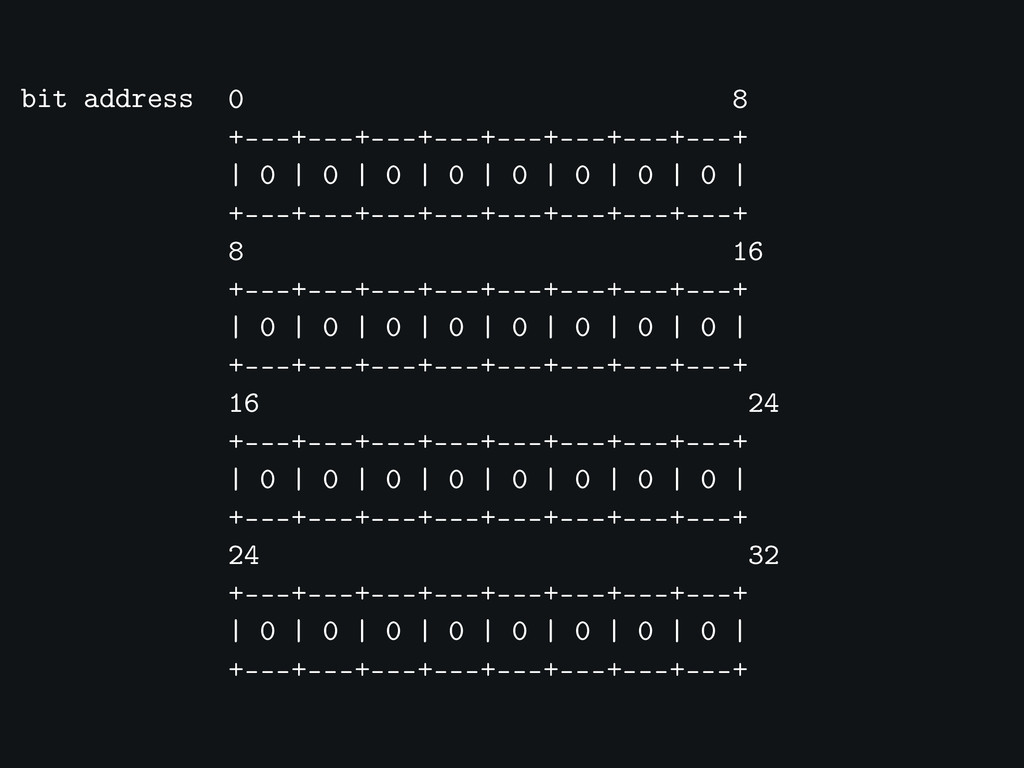
BitSet
0 8 +---+---+---+---+---+---+---+---+ | 0 | 0 | 0 |
0 | 0 | 0 | 0 | 0 | +---+---+---+---+---+---+---+---+ 8 16 +---+---+---+---+---+---+---+---+ | 0 | 0 | 0 | 0 | 0 | 0 | 0 | 0 | +---+---+---+---+---+---+---+---+ 16 24 +---+---+---+---+---+---+---+---+ | 0 | 0 | 0 | 0 | 0 | 0 | 0 | 0 | +---+---+---+---+---+---+---+---+ 24 32 +---+---+---+---+---+---+---+---+ | 0 | 0 | 0 | 0 | 0 | 0 | 0 | 0 | +---+---+---+---+---+---+---+---+ bit address
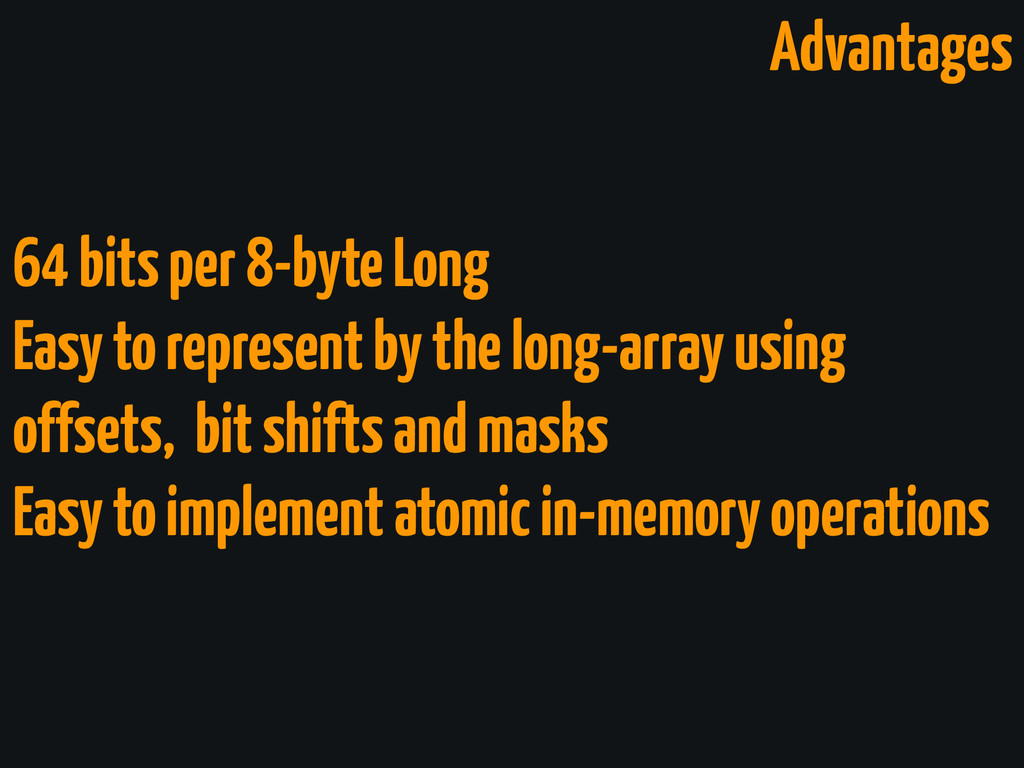
Advantages 64 bits per 8-byte Long Easy to represent by
the long-array using offsets, bit shifts and masks Easy to implement atomic in-memory operations
Count-min sketches are basically int matrices
Histograms are basically long vectors
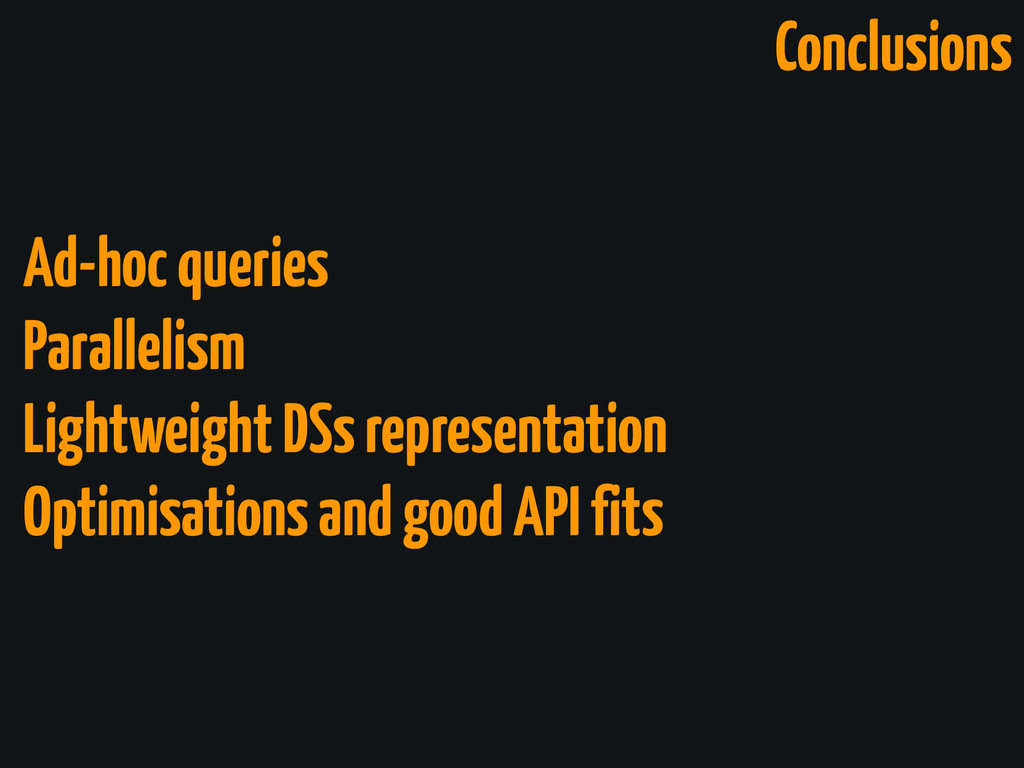
Conclusions Ad-hoc queries Parallelism Lightweight DSs representation Optimisations and good
API fits
@ifesdjeen


 ifesdjeen
 xspa2012
 resolutionfoundation
 mickey_0226
 ayatokanada
 takehaya
.png) satai
satai
 ept
ept
 institutdelelevage
 junkashihara
 sishi
sishi
 mikimhk
 lauravandoore
 bryan
bryan
 mfonobong
 cassininazir
 marktimemedia
 inesmontani
 ipullrank
 jakevdp
 bcantrill
 jnunemaker
 skipperchong
 keavy
keavy
















![[ α1 α1 α1 ...αn ] ρ](https://files.speakerdeck.com/presentations/48f0d2a8595d49a78d29eb8e2b49165e/slide_42.jpg)




![[[Mean(x1), Var(x1)] [Mean(x2), Var(x3)] ... [Mean(xn), Var(xn)]]](https://files.speakerdeck.com/presentations/48f0d2a8595d49a78d29eb8e2b49165e/slide_54.jpg)