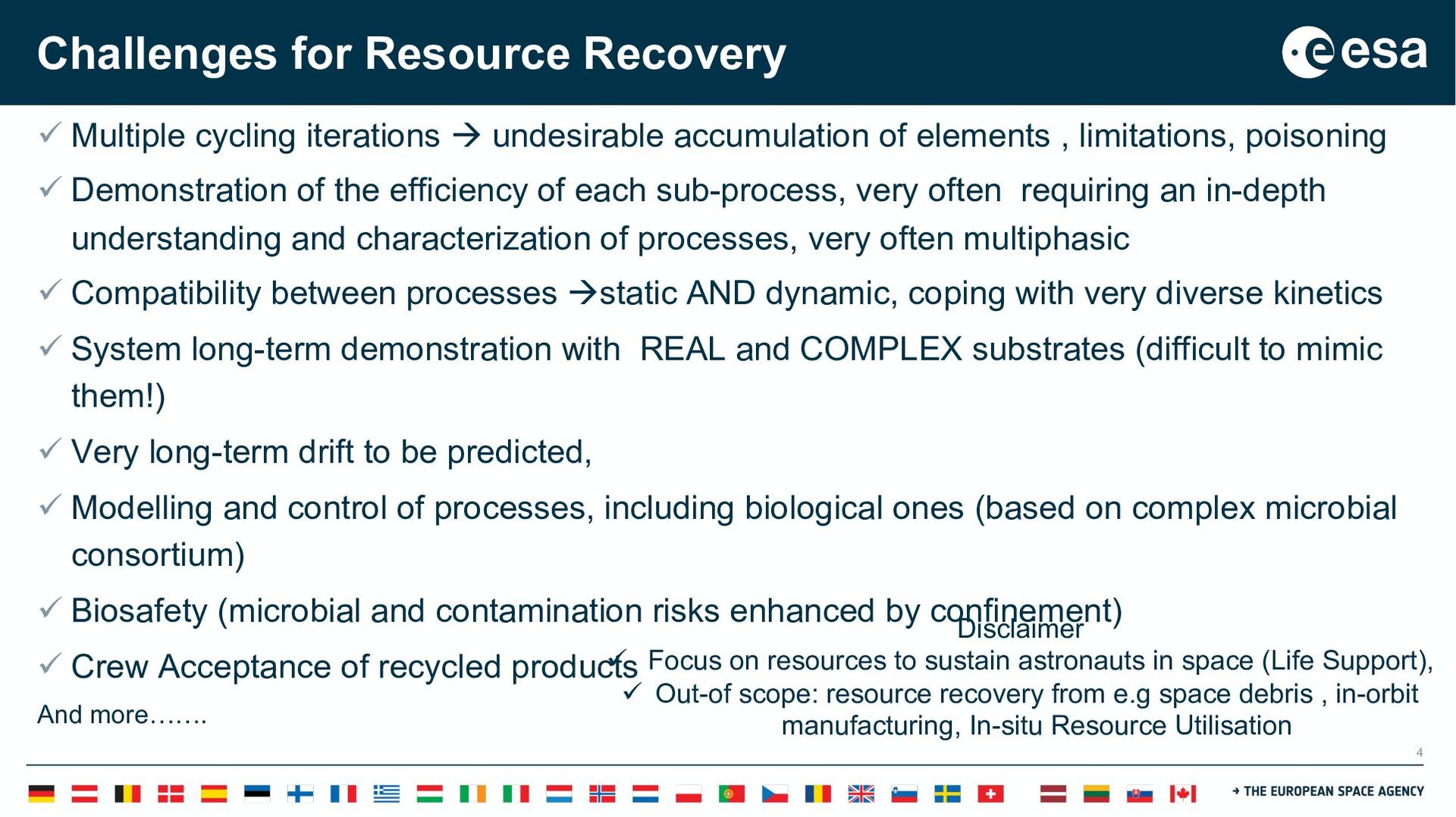
undesirable accumulation of elements , limitations, poisoning ü Demonstration of the efficiency of each sub-process, very often requiring an in-depth understanding and characterization of processes, very often multiphasic ü Compatibility between processes àstatic AND dynamic, coping with very diverse kinetics ü System long-term demonstration with REAL and COMPLEX substrates (difficult to mimic them!) ü Very long-term drift to be predicted, ü Modelling and control of processes, including biological ones (based on complex microbial consortium) ü Biosafety (microbial and contamination risks enhanced by confinement) ü Crew Acceptance of recycled products And more……. Disclaimer ü Focus on resources to sustain astronauts in space (Life Support), ü Out-of scope: resource recovery from e.g space debris , in-orbit manufacturing, In-situ Resource Utilisation
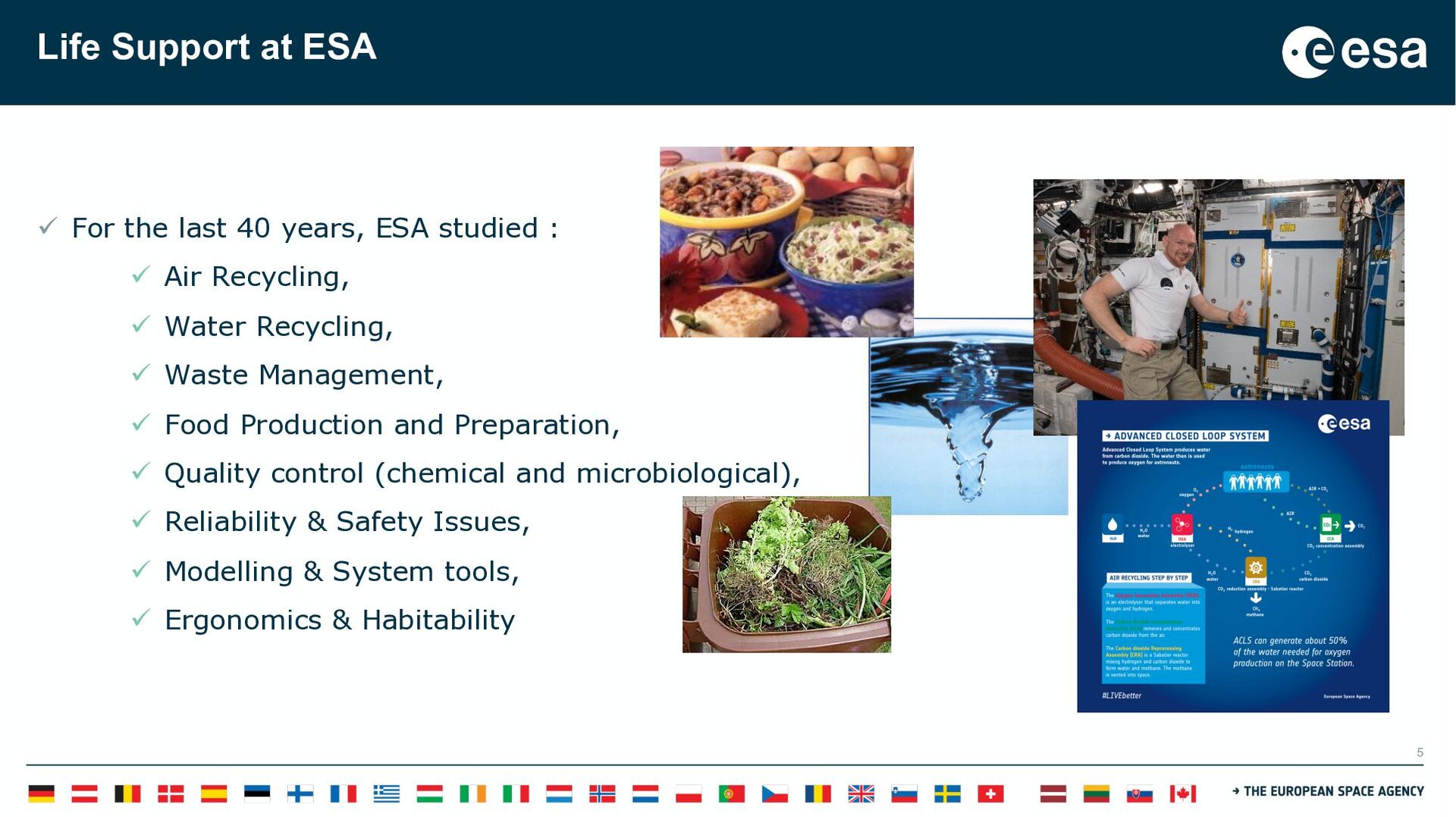
years, ESA studied : ü Air Recycling, ü Water Recycling, ü Waste Management, ü Food Production and Preparation, ü Quality control (chemical and microbiological), ü Reliability & Safety Issues, ü Modelling & System tools, ü Ergonomics & Habitability
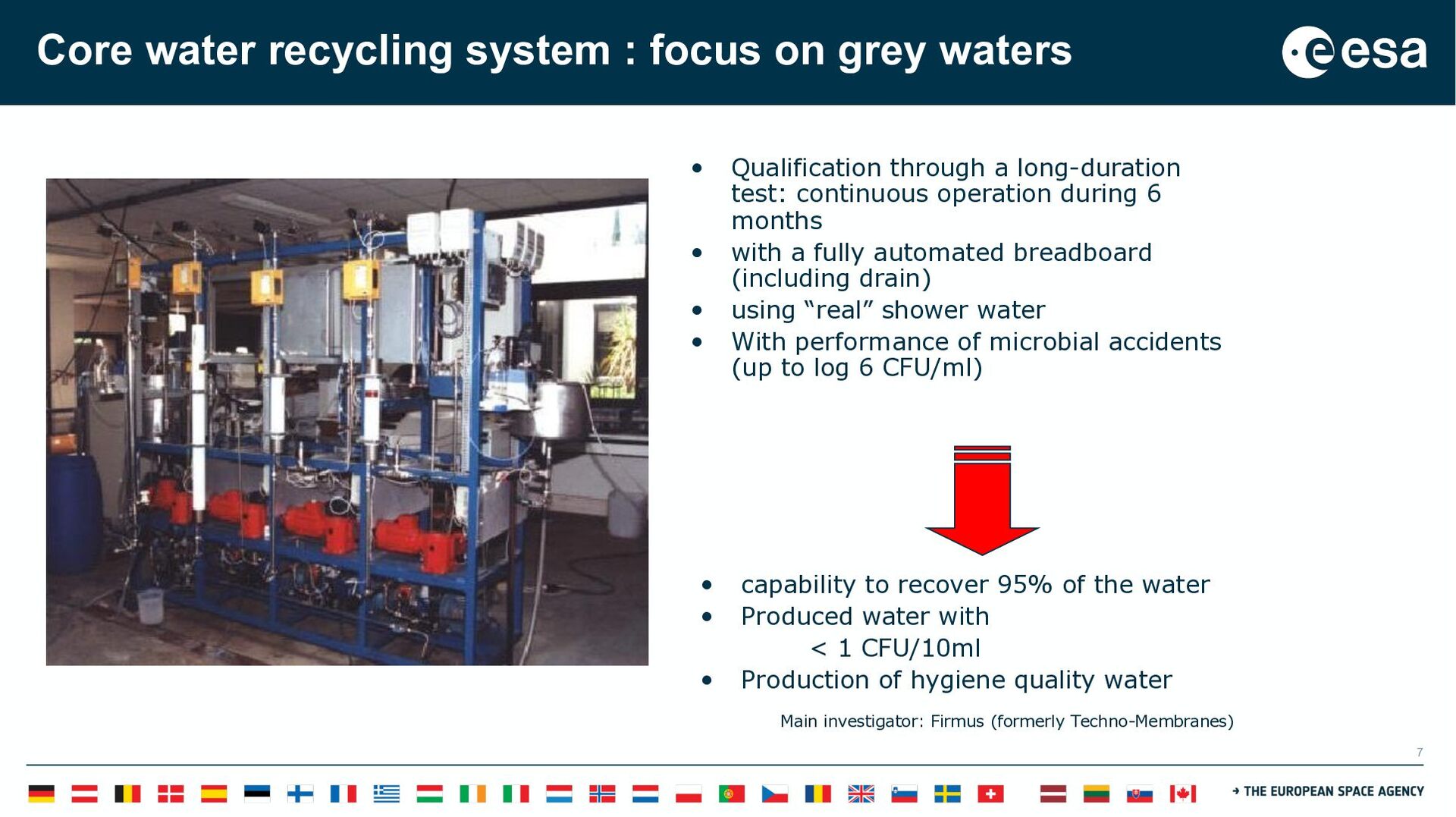
• capability to recover 95% of the water • Produced water with < 1 CFU/10ml • Production of hygiene quality water • Qualification through a long-duration test: continuous operation during 6 months • with a fully automated breadboard (including drain) • using “real” shower water • With performance of microbial accidents (up to log 6 CFU/ml) Main investigator: Firmus (formerly Techno-Membranes)
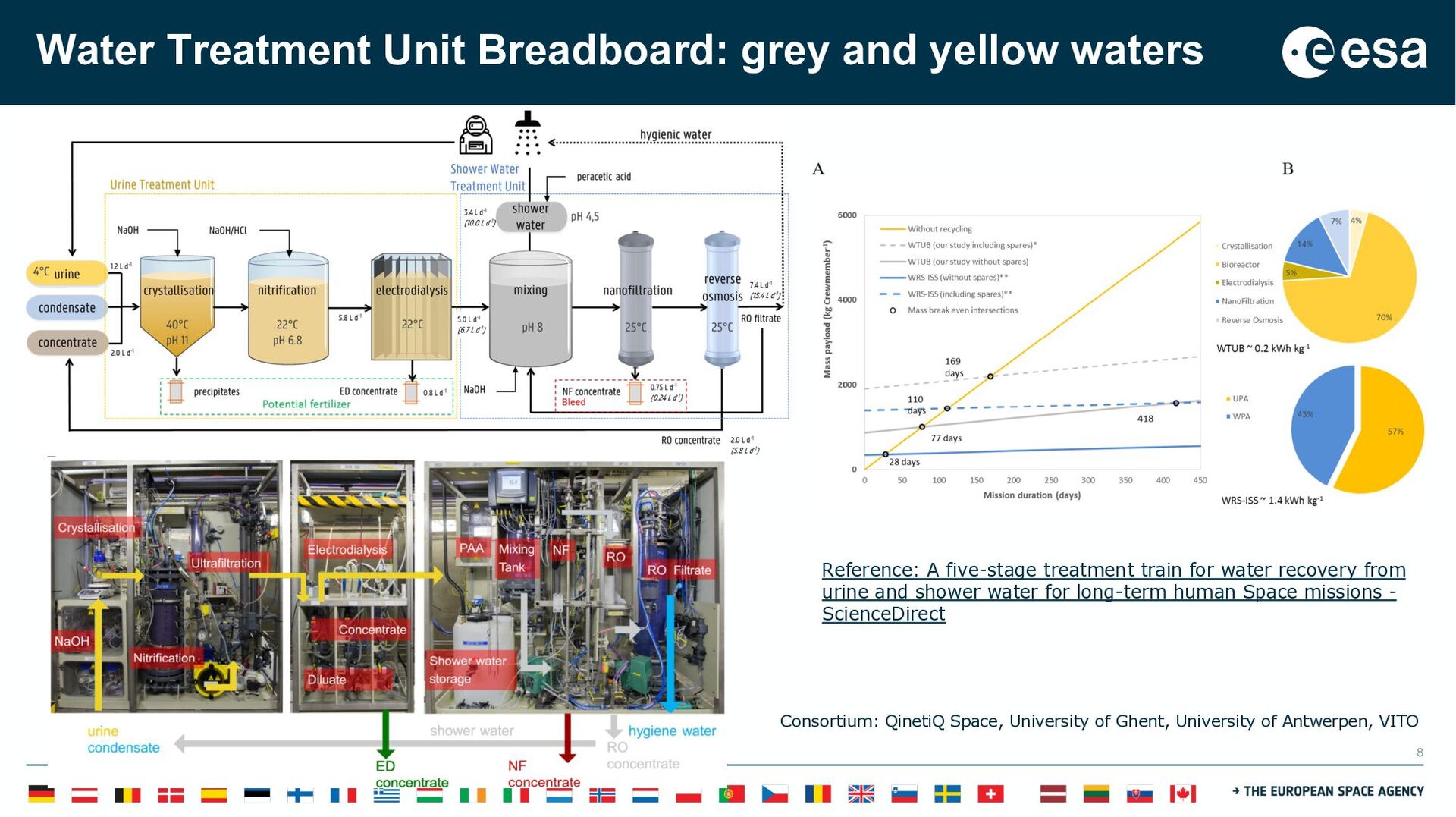
A five-stage treatment train for water recovery from urine and shower water for long-term human Space missions - ScienceDirect Consortium: QinetiQ Space, University of Ghent, University of Antwerpen, VITO
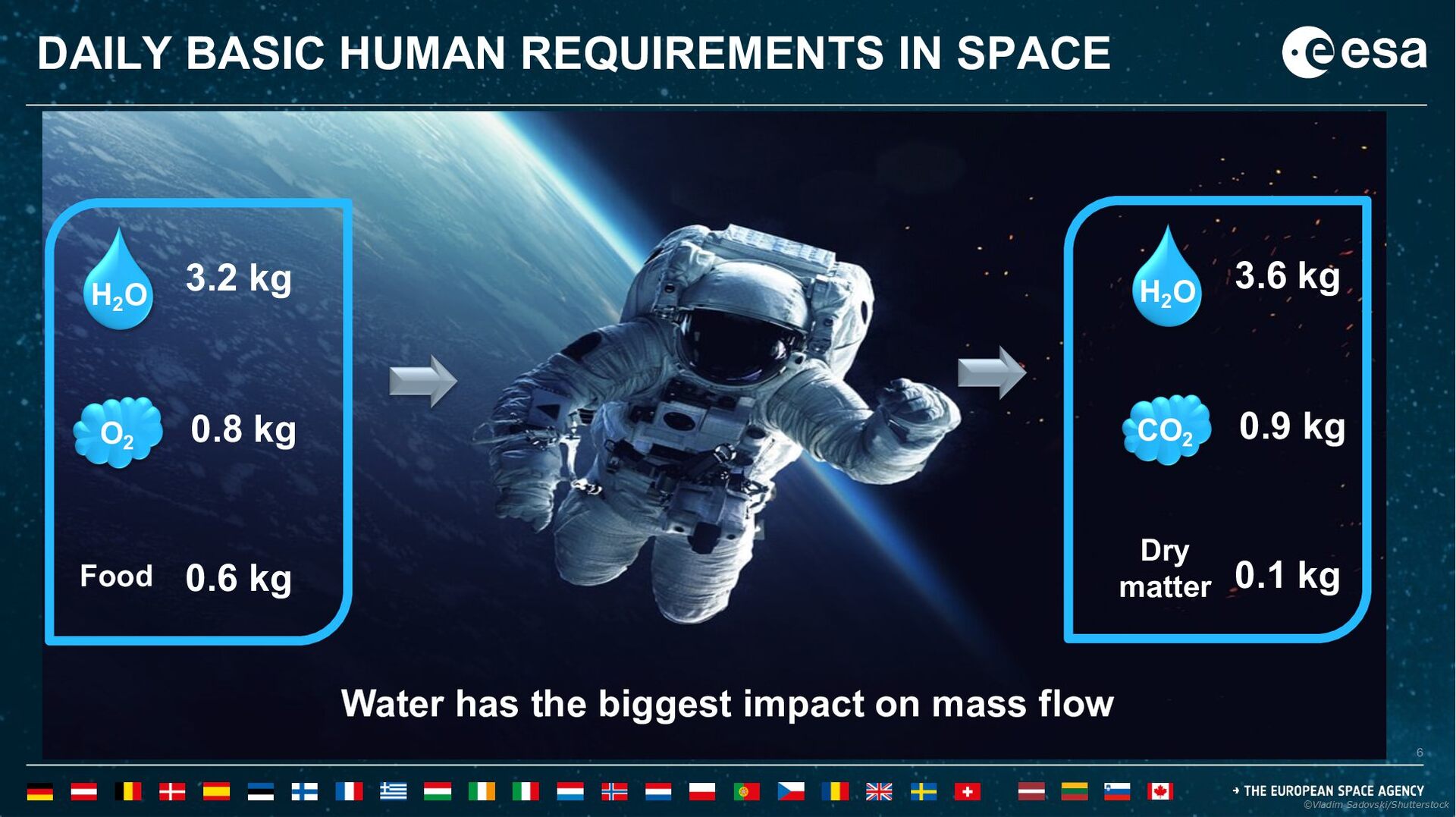
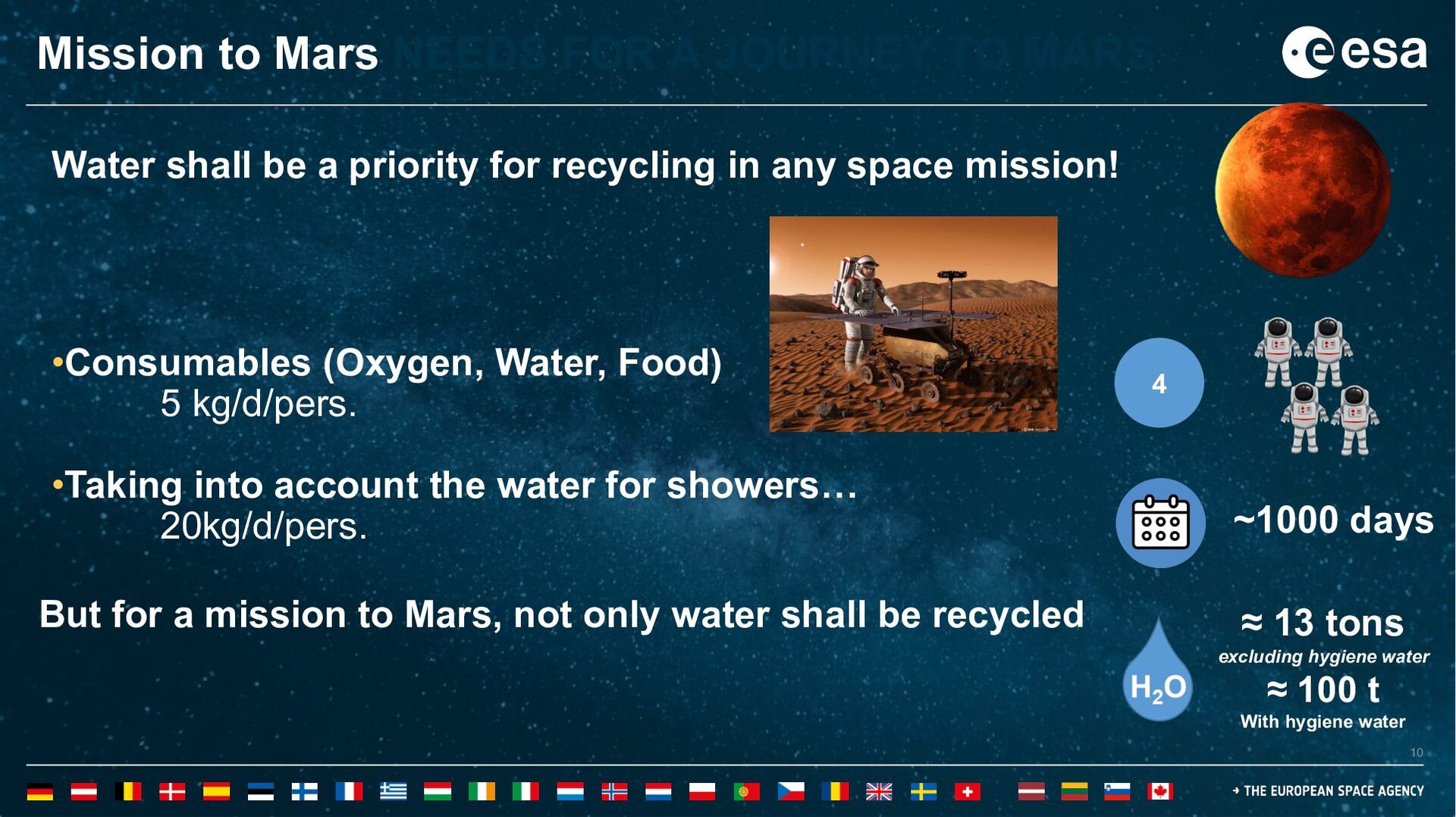
≈ 100 t With hygiene water Mission to Mars NEEDS FOR A JOURNEY TO MARS Water shall be a priority for recycling in any space mission! 4 But for a mission to Mars, not only water shall be recycled •Consumables (Oxygen, Water, Food) 5 kg/d/pers. •Taking into account the water for showers… 20kg/d/pers.
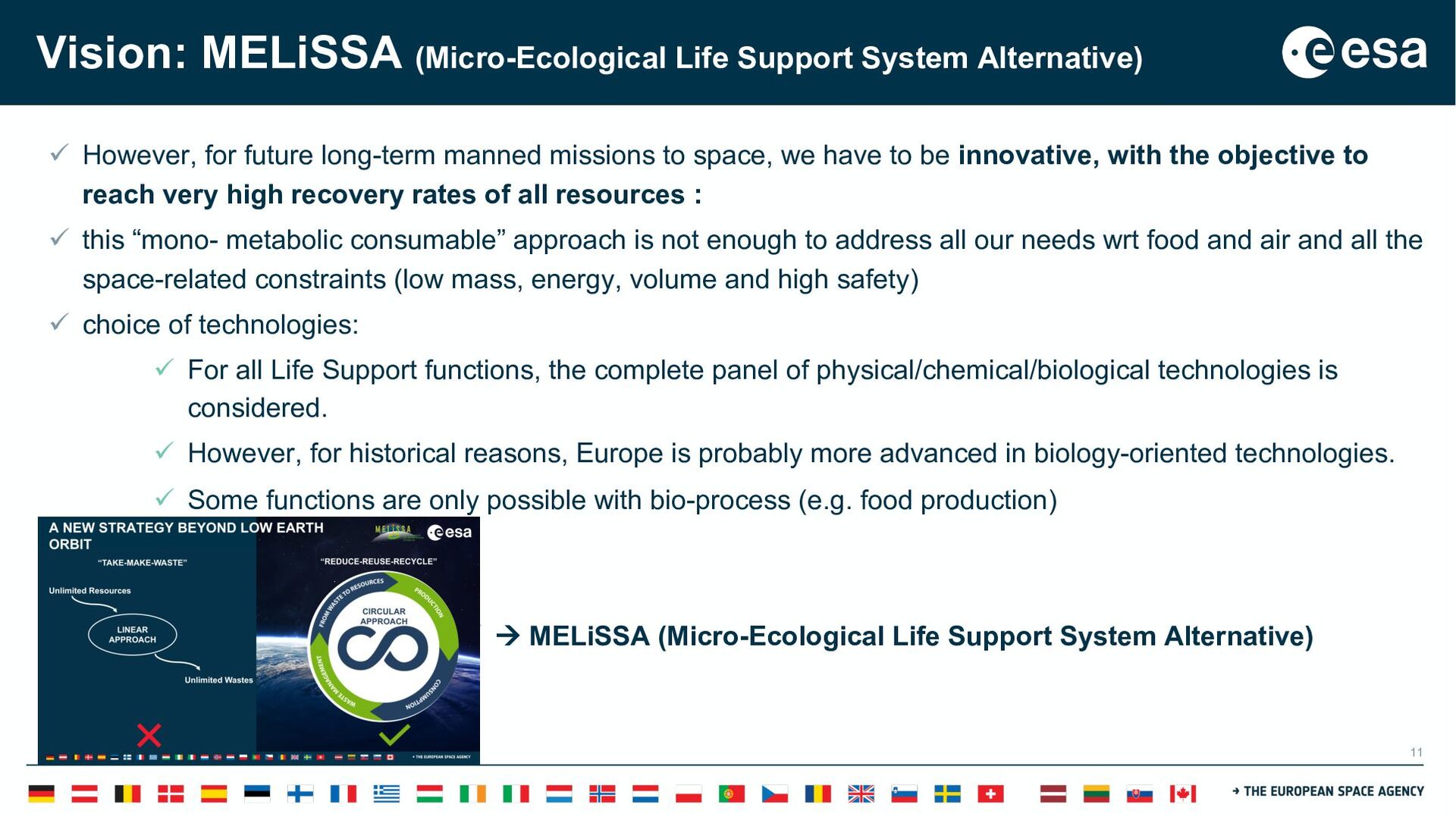
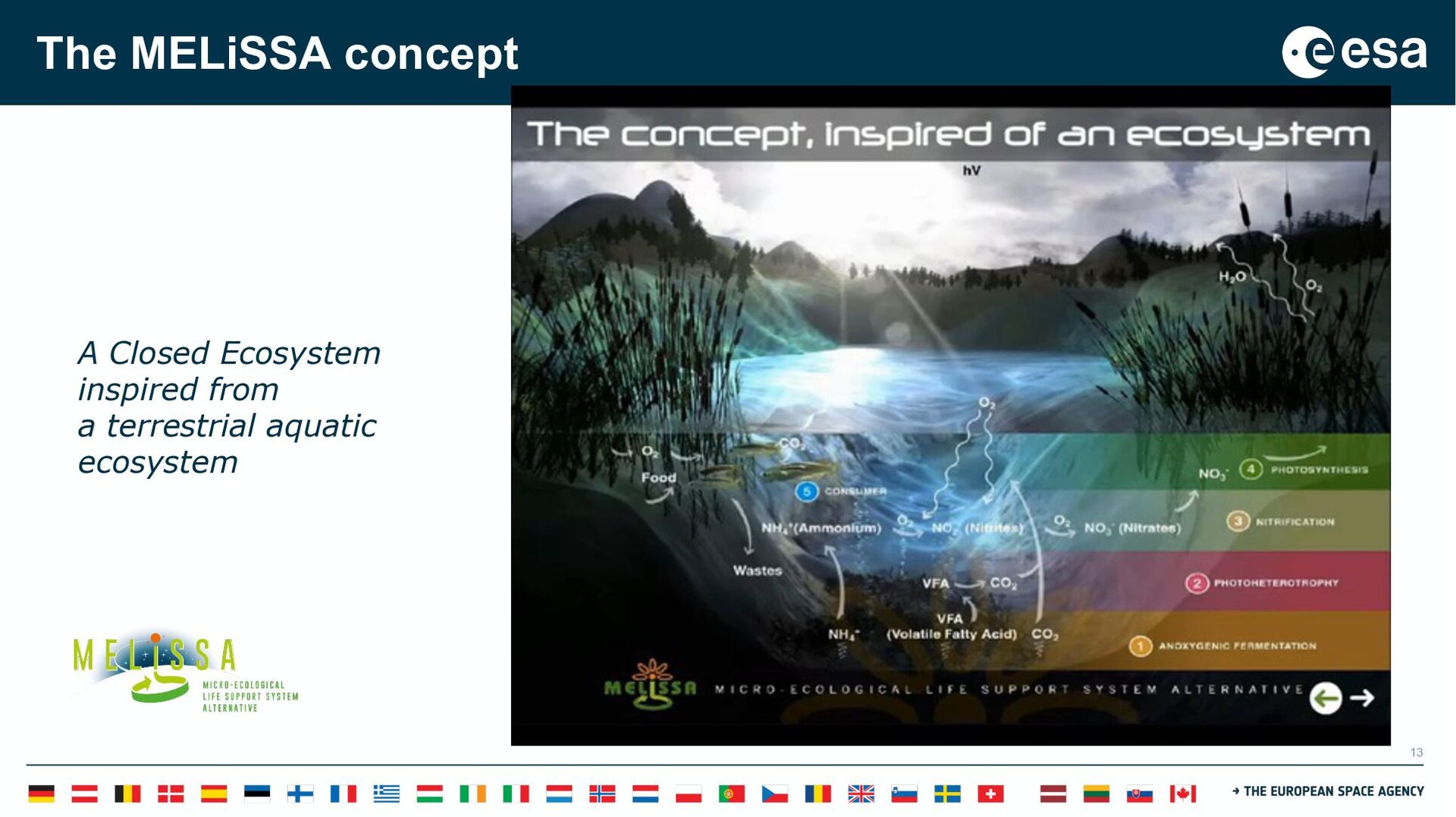
for future long-term manned missions to space, we have to be innovative, with the objective to reach very high recovery rates of all resources : ü this “mono- metabolic consumable” approach is not enough to address all our needs wrt food and air and all the space-related constraints (low mass, energy, volume and high safety) ü choice of technologies: ü For all Life Support functions, the complete panel of physical/chemical/biological technologies is considered. ü However, for historical reasons, Europe is probably more advanced in biology-oriented technologies. ü Some functions are only possible with bio-process (e.g. food production) ü à MELiSSA (Micro-Ecological Life Support System Alternative)
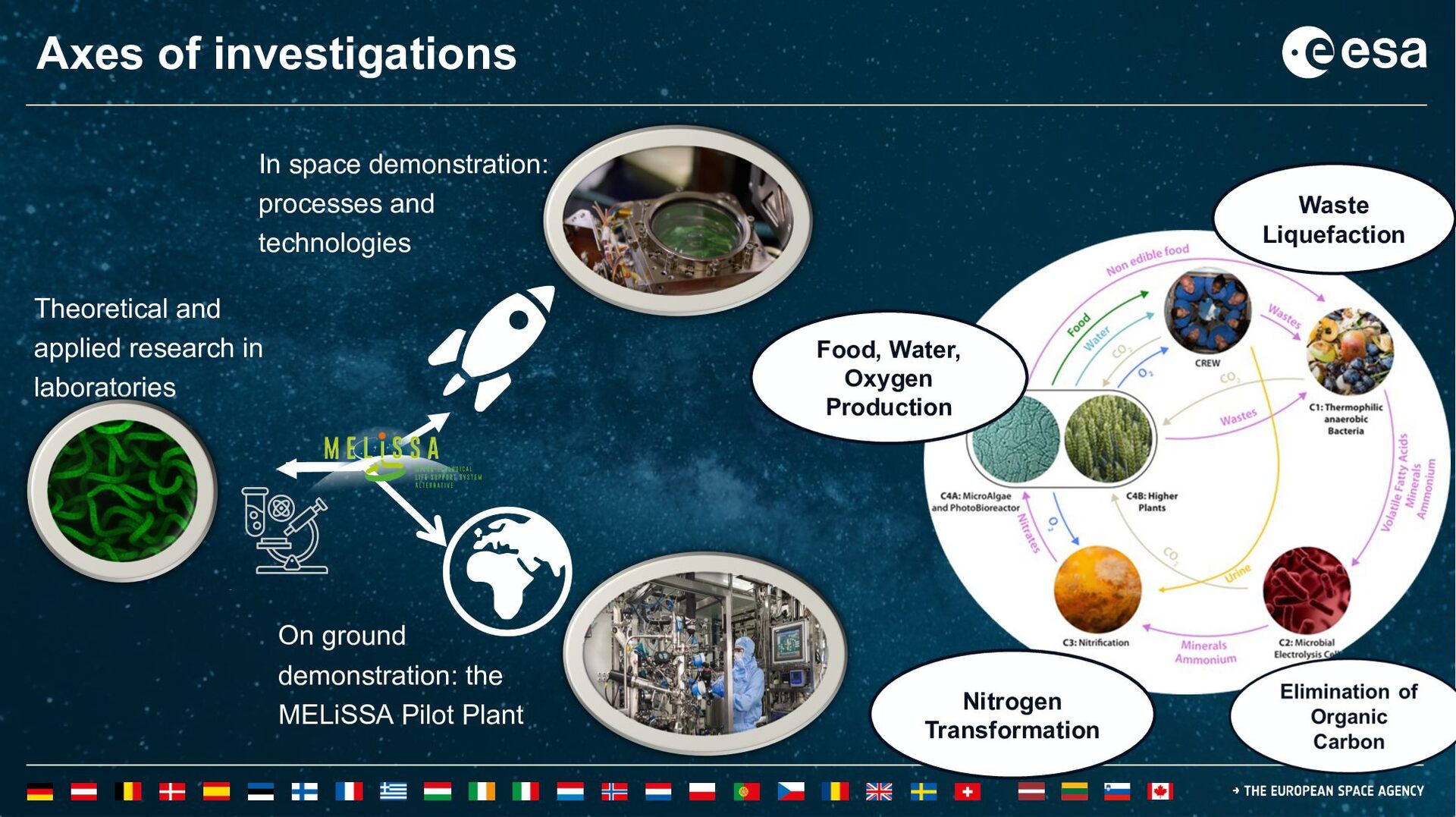
laboratories In space demonstration: processes and technologies On ground demonstration: the MELiSSA Pilot Plant Food, Water, Oxygen Production Waste Liquefaction Nitrogen Transformation
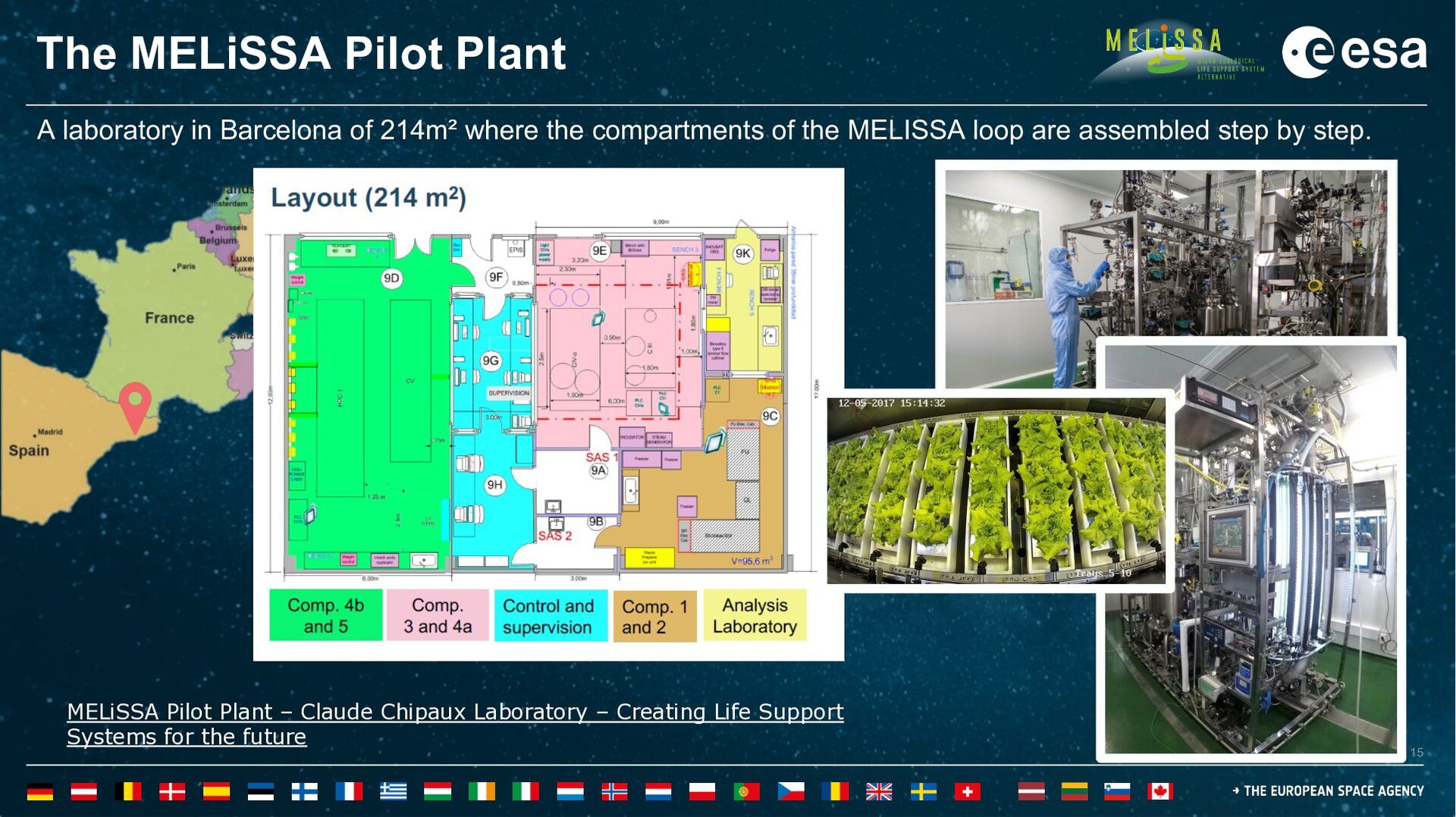
of 214m² where the compartments of the MELISSA loop are assembled step by step. MELiSSA Pilot Plant – Claude Chipaux Laboratory – Creating Life Support Systems for the future
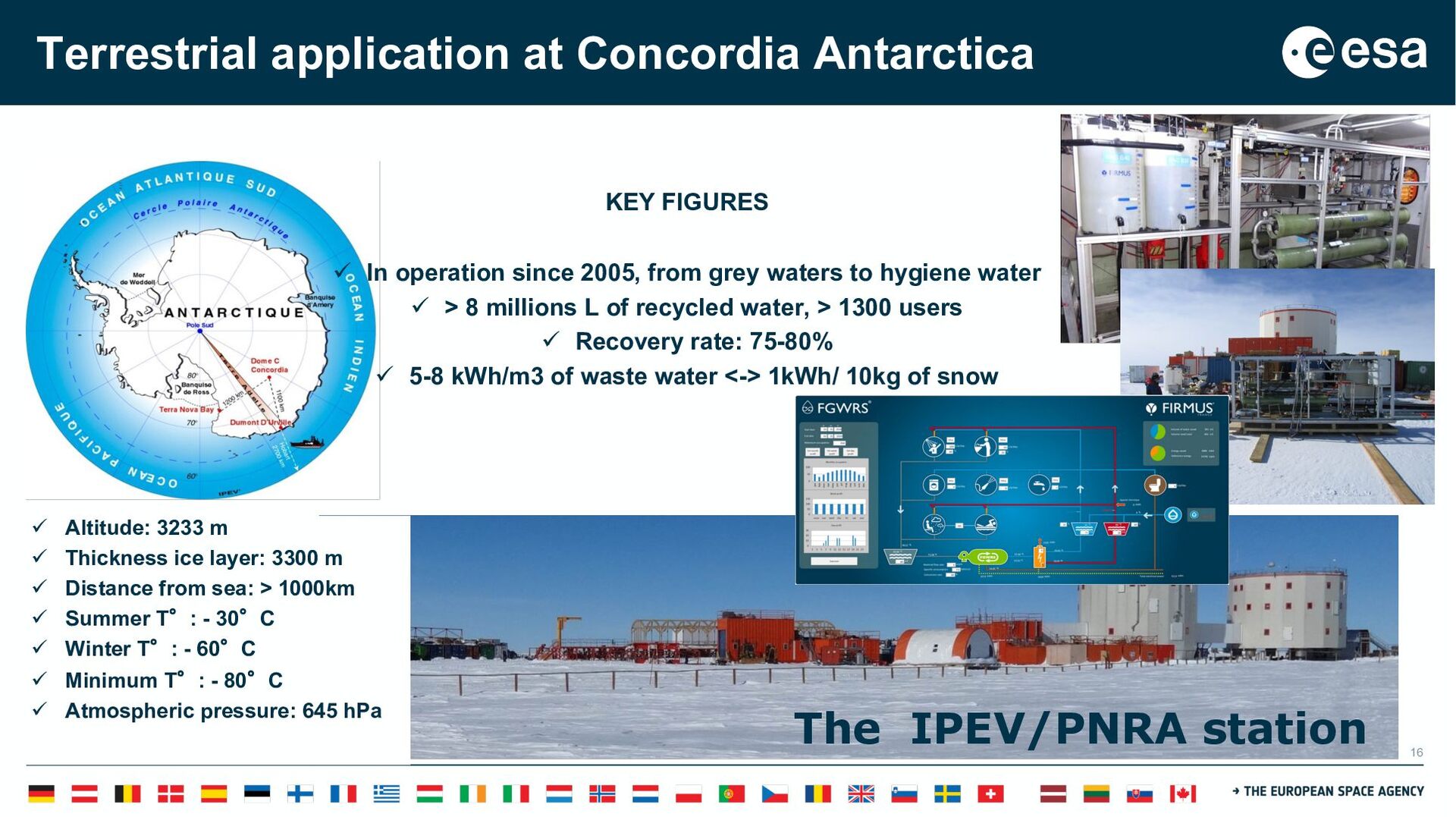
Altitude: 3233 m ü Thickness ice layer: 3300 m ü Distance from sea: > 1000km ü Summer T°: - 30°C ü Winter T°: - 60°C ü Minimum T°: - 80°C ü Atmospheric pressure: 645 hPa KEY FIGURES ü In operation since 2005, from grey waters to hygiene water ü > 8 millions L of recycled water, > 1300 users ü Recovery rate: 75-80% ü 5-8 kWh/m3 of waste water <-> 1kWh/ 10kg of snow
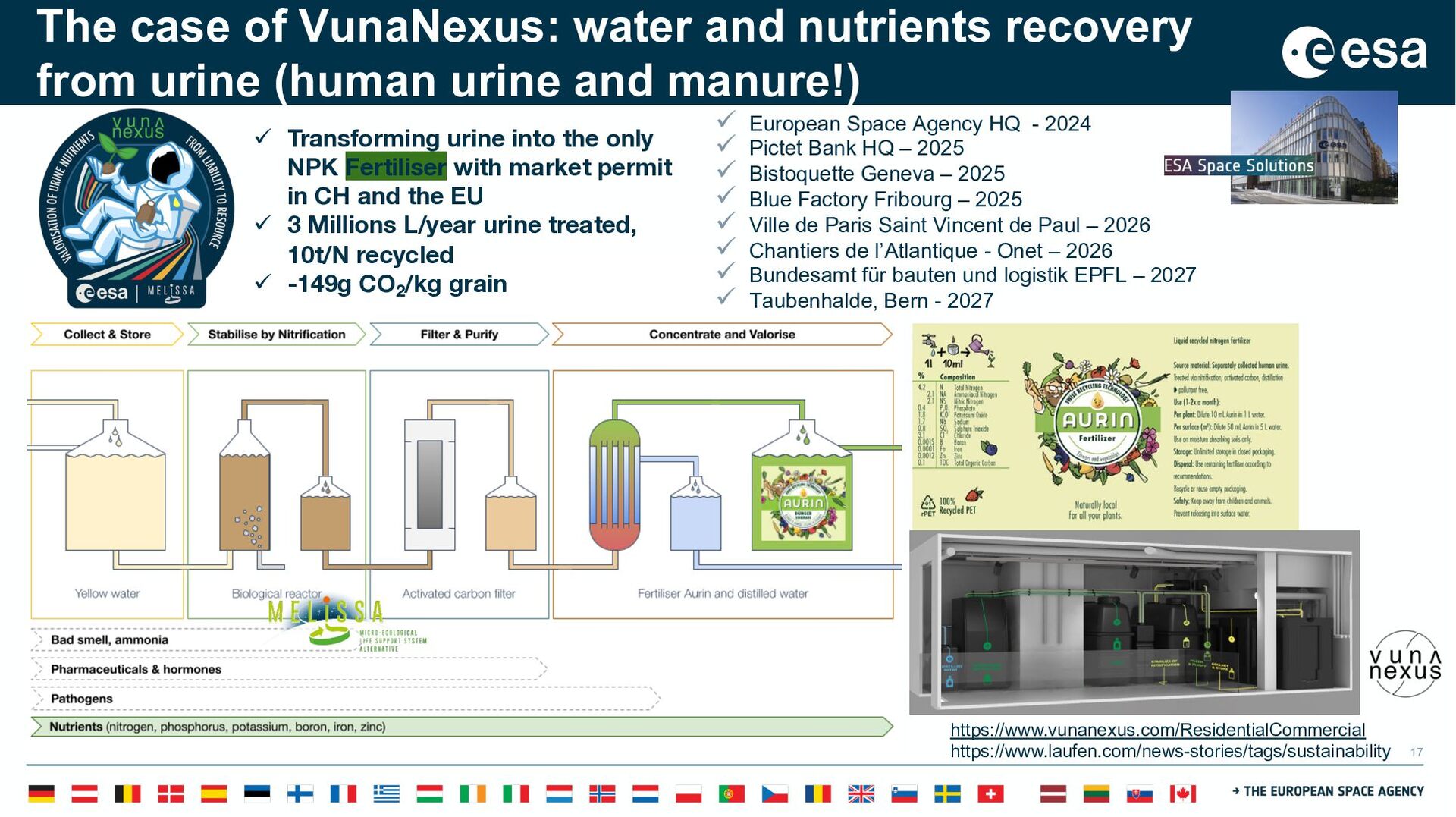
urine (human urine and manure!) ü European Space Agency HQ - 2024 ü Pictet Bank HQ – 2025 ü Bistoquette Geneva – 2025 ü Blue Factory Fribourg – 2025 ü Ville de Paris Saint Vincent de Paul – 2026 ü Chantiers de l’Atlantique - Onet – 2026 ü Bundesamt für bauten und logistik EPFL – 2027 ü Taubenhalde, Bern - 2027 ü Transforming urine into the only NPK Fertiliser with market permit in CH and the EU ü 3 Millions L/year urine treated, 10t/N recycled ü -149g CO2 /kg grain https://www.vunanexus.com/ResidentialCommercial https://www.laufen.com/news-stories/tags/sustainability


 ipfevents
 trycycle
 nagano
 sshimizu2006
 masakiokuda
 aikinohara
 tagtag
 satocos135
 mickey_kubo
 shumpei777
 bkeepers
 bluesmoon
 szymonslowik
 jmmastey
 uxyall
 tmiket
 pedronauck
 reverentgeek
 smashingmag
 katiecoart
 cromwellryan
 palkan
![18 Thank you for your attention [email protected]](https://files.speakerdeck.com/presentations/2356e98e470545d588f199f0a33a30fd/slide_17.jpg)