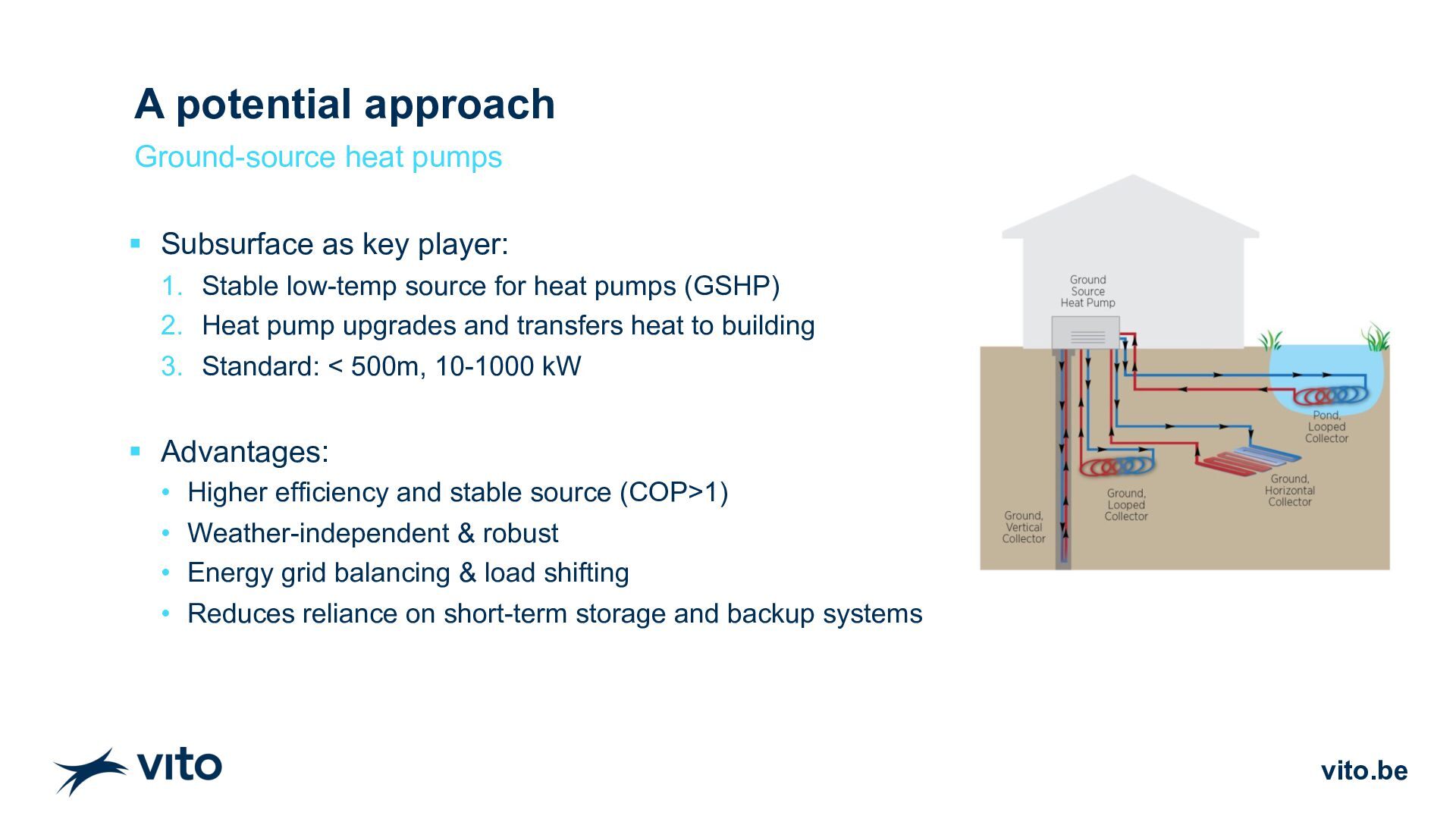
in renewable production and usage efficiency § Challenges: • Renewable energy production remains intermittent & strongly seasonal • Leads to: - periods of energy excesses and shortages - reliance on short-term storage and balancing • à Can we improve thermal energy storage and utilization? § Opportunities: • Increasing autonomy + robustness of thermal energy supply. • Andromeda à Innovator + living lab for thermal energy utilization in remote polar environments / space analogues Supporting long-term thermal energy utilization
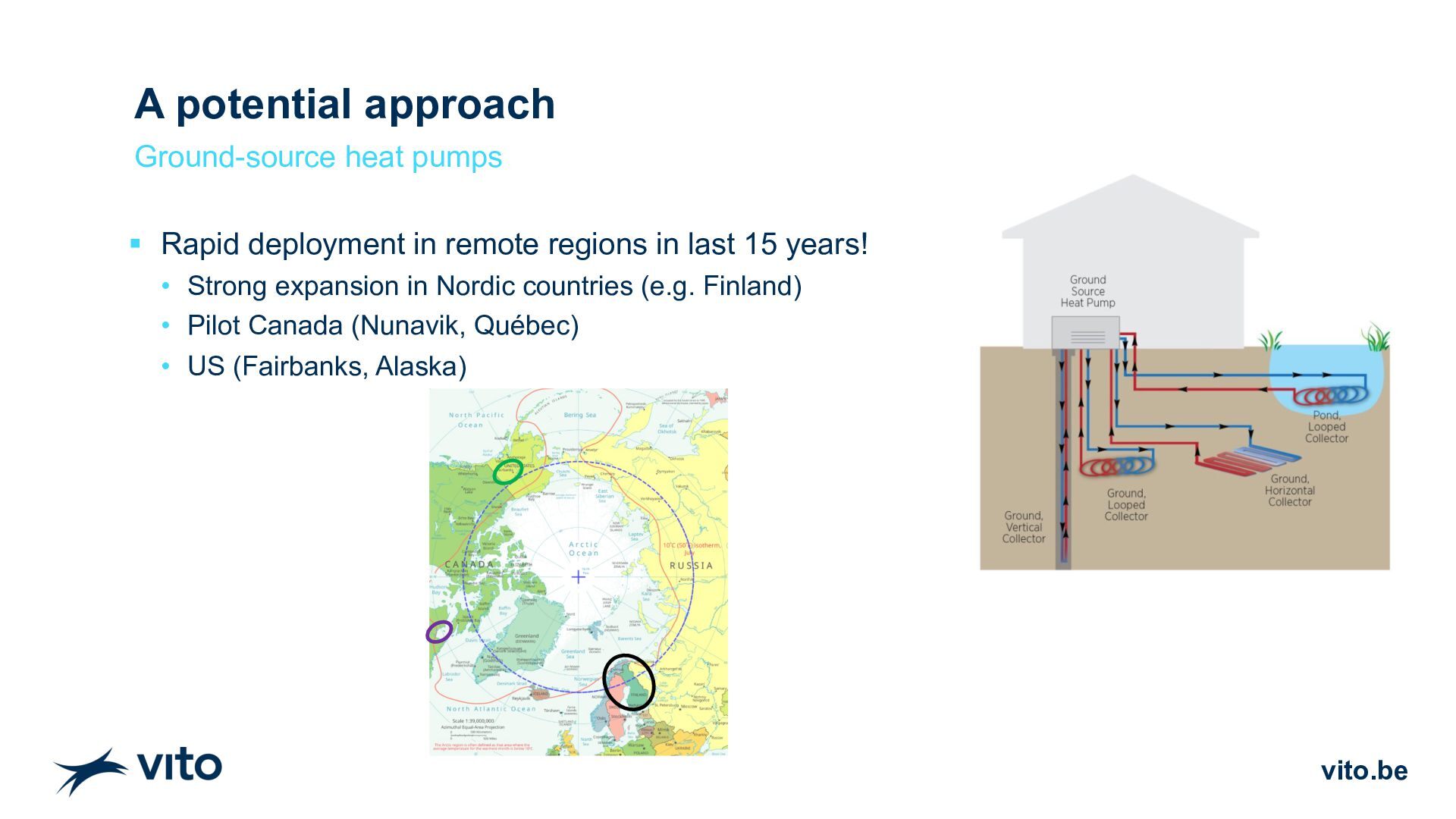
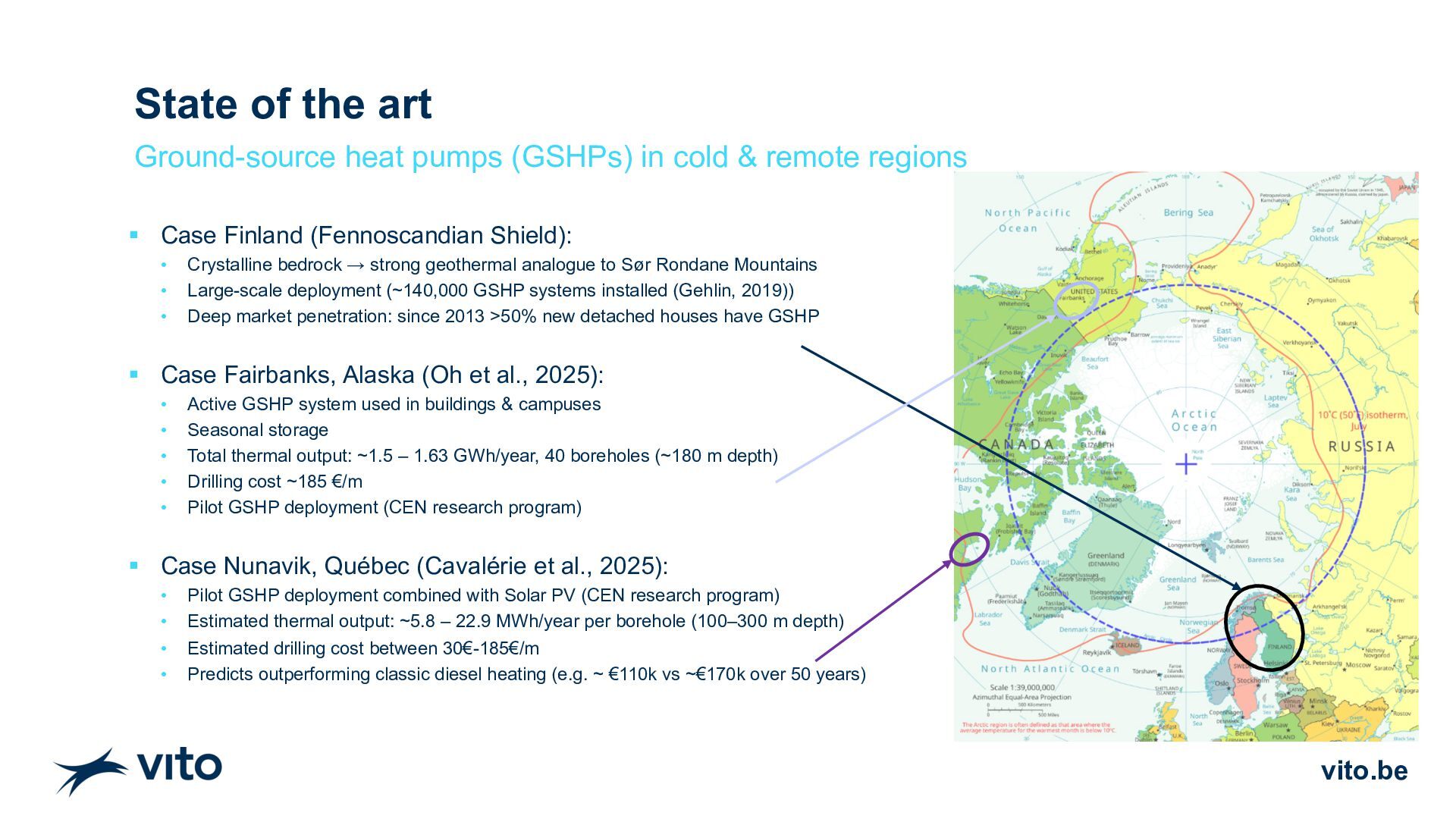
in last 15 years! • Strong expansion in Nordic countries (e.g. Finland) • Pilot Canada (Nunavik, Québec) • US (Fairbanks, Alaska) Ground-source heat pumps
• Crystalline bedrock → strong geothermal analogue to Sør Rondane Mountains • Large-scale deployment (~140,000 GSHP systems installed (Gehlin, 2019)) • Deep market penetration: since 2013 >50% new detached houses have GSHP § Case Fairbanks, Alaska (Oh et al., 2025): • Active GSHP system used in buildings & campuses • Seasonal storage • Total thermal output: ~1.5 – 1.63 GWh/year, 40 boreholes (~180 m depth) • Drilling cost ~185 €/m • Pilot GSHP deployment (CEN research program) § Case Nunavik, Québec (Cavalérie et al., 2025): • Pilot GSHP deployment combined with Solar PV (CEN research program) • Estimated thermal output: ~5.8 – 22.9 MWh/year per borehole (100–300 m depth) • Estimated drilling cost between 30€-185€/m • Predicts outperforming classic diesel heating (e.g. ~ €110k vs ~€170k over 50 years) Ground-source heat pumps (GSHPs) in cold & remote regions
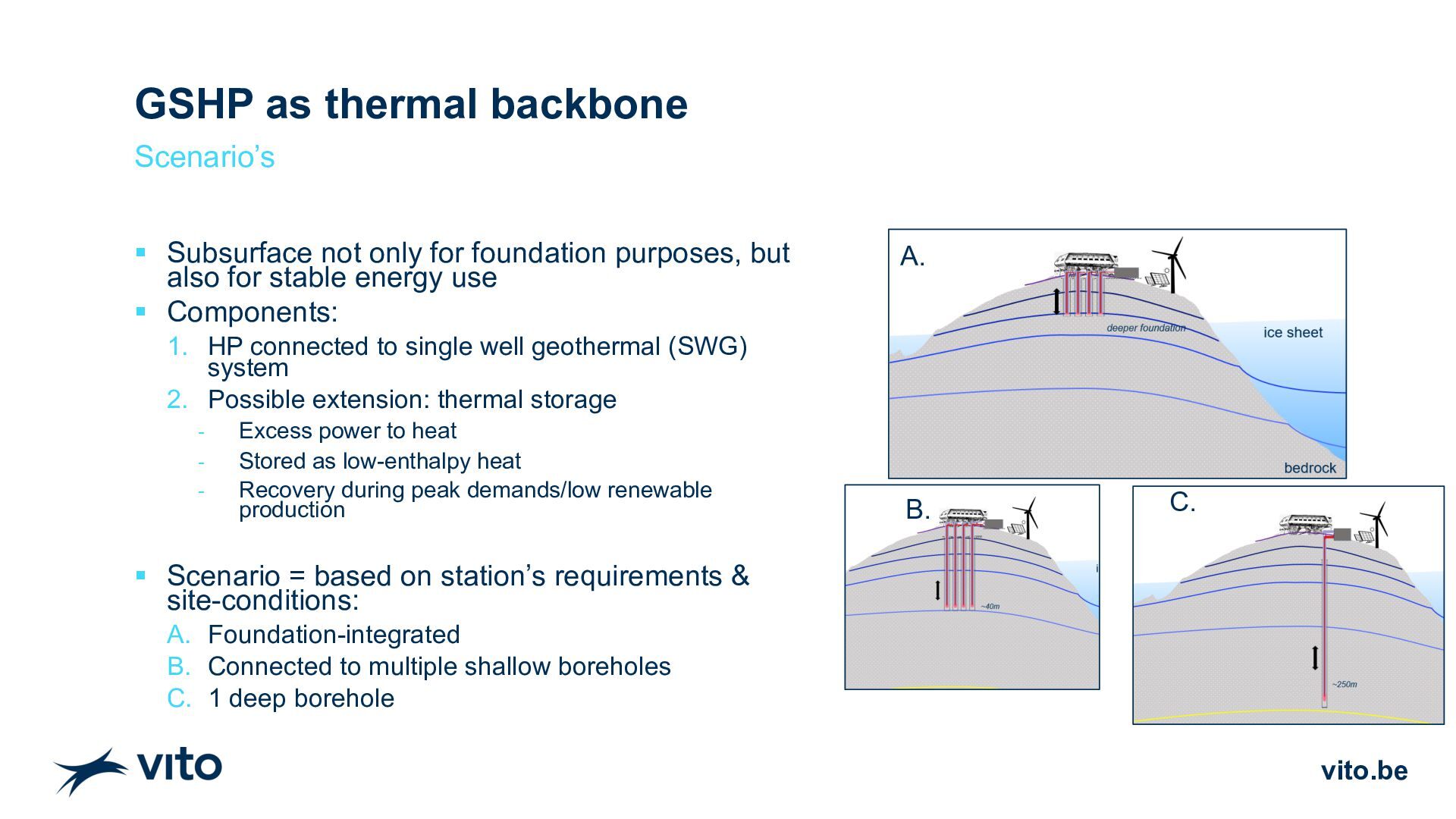
for foundation purposes, but also for stable energy use § Components: 1. HP connected to single well geothermal (SWG) system 2. Possible extension: thermal storage - Excess power to heat - Stored as low-enthalpy heat - Recovery during peak demands/low renewable production § Scenario = based on station’s requirements & site-conditions: A. Foundation-integrated B. Connected to multiple shallow boreholes C. 1 deep borehole A. B. C.
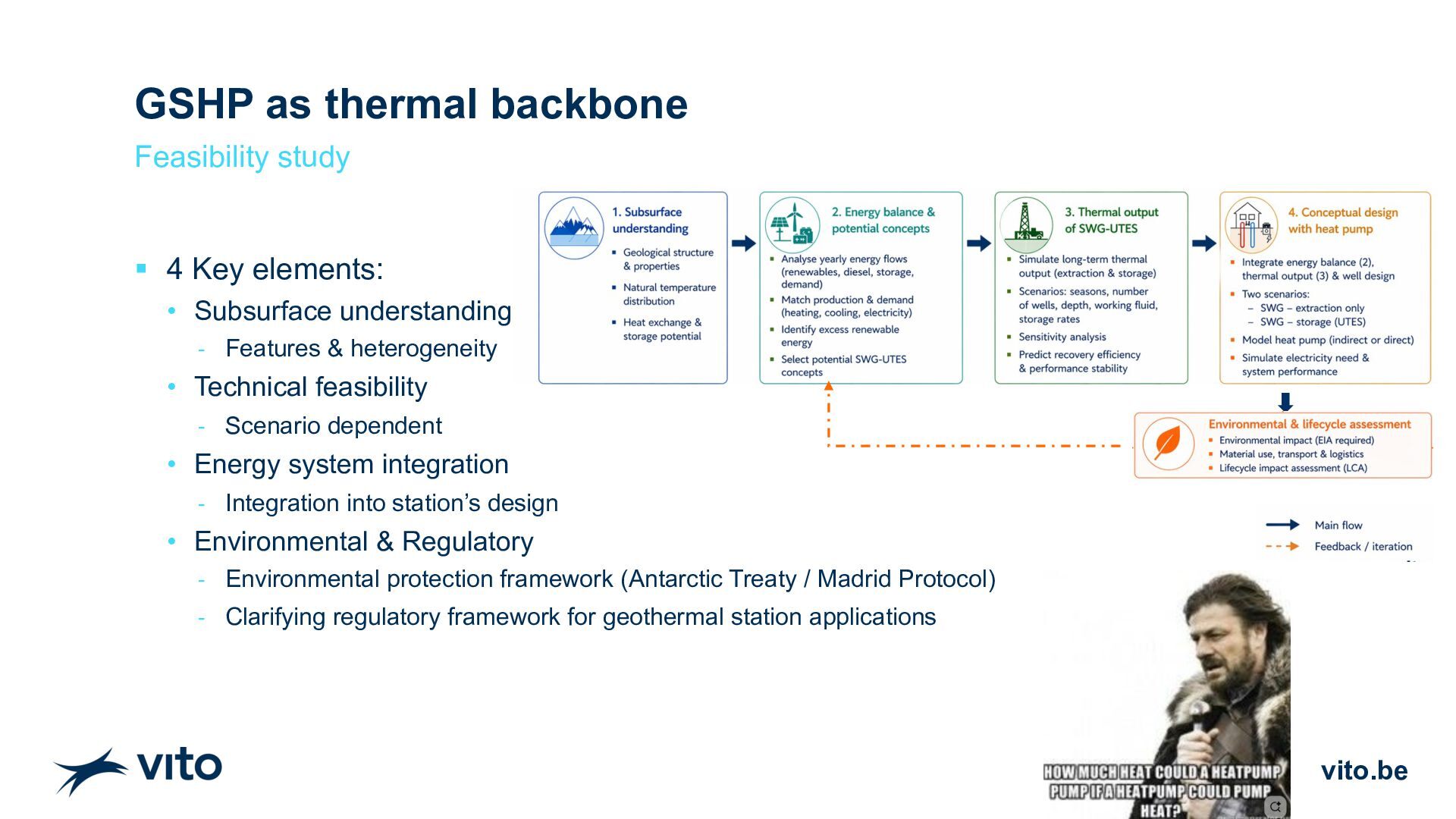
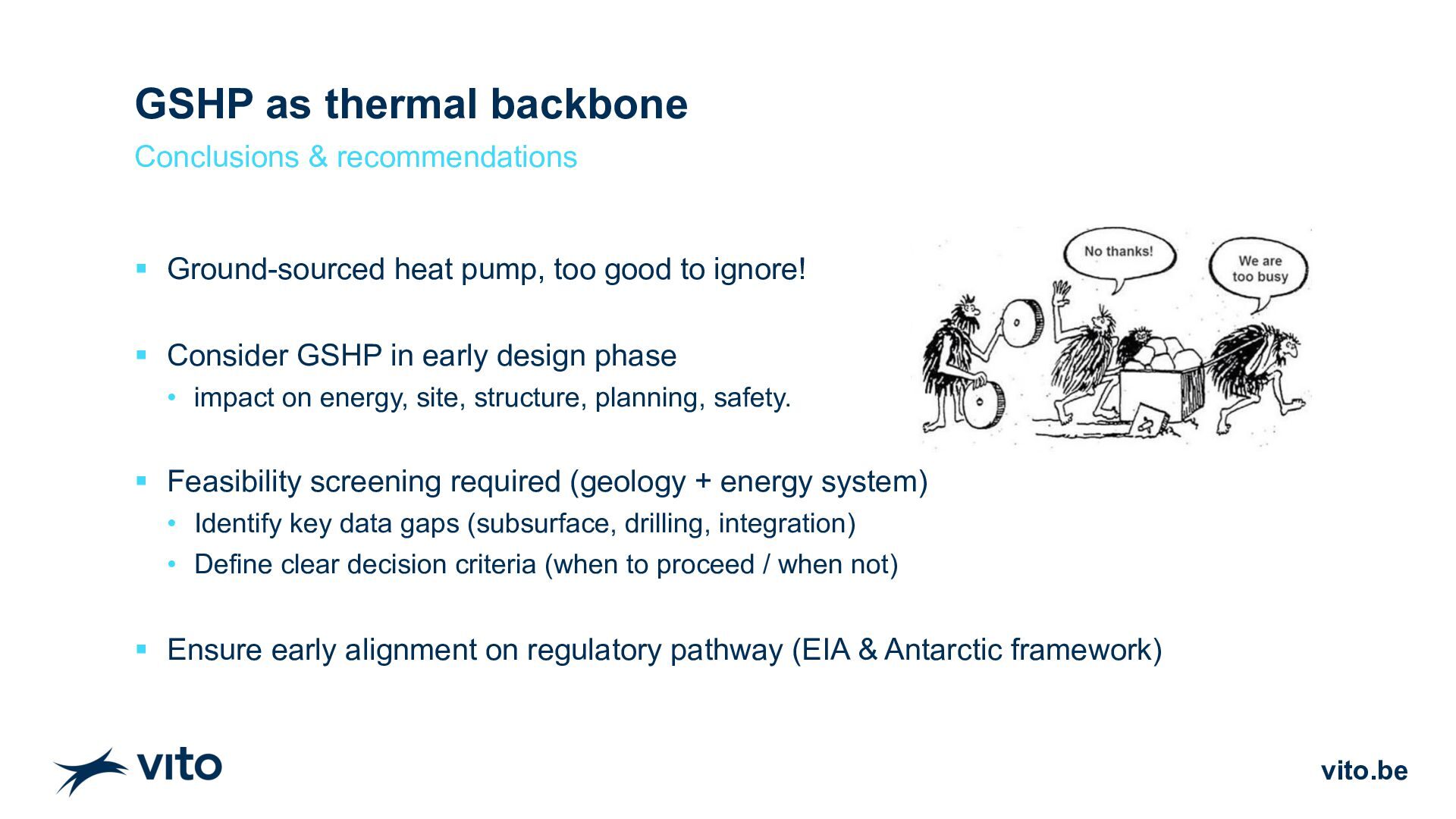
heat pump, too good to ignore! § Consider GSHP in early design phase • impact on energy, site, structure, planning, safety. § Feasibility screening required (geology + energy system) • Identify key data gaps (subsurface, drilling, integration) • Define clear decision criteria (when to proceed / when not) § Ensure early alignment on regulatory pathway (EIA & Antarctic framework)

 Your Podcast. Everywhere. Effortlessly.


 ipfevents
 tagtag
 ykamit
 enakai00
 naokimuroki
 i2tsuki
 institutdelelevage
 trycycle
 ianozsvald
 taka88
 gkazunii
 reverentgeek
 chrislema
 addyosmani
 inesmontani
 jlugia
 twada
twada
 wjessup
 samanthasiow
 katiecoart
 csswizardry
 tmiket