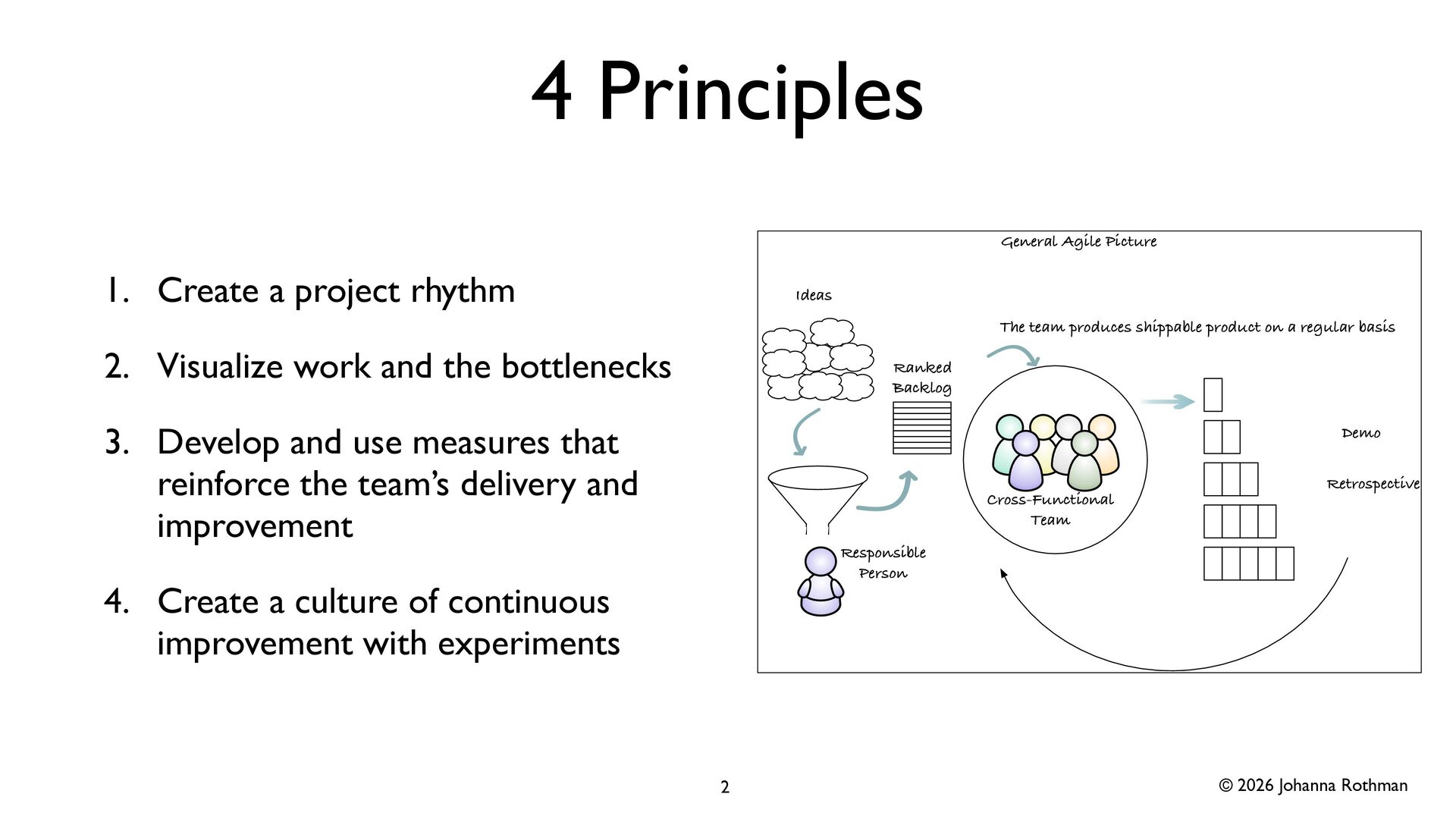
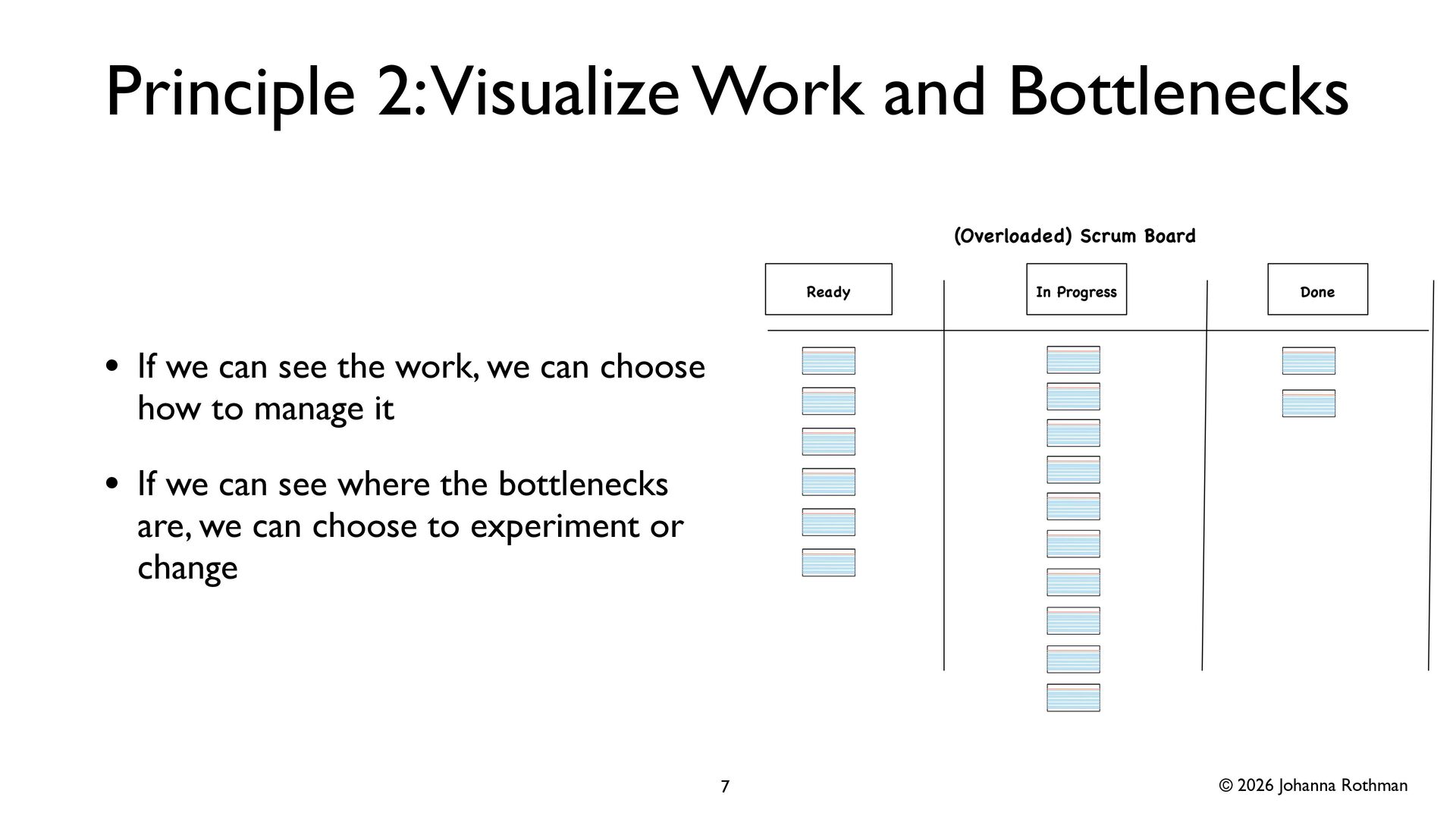
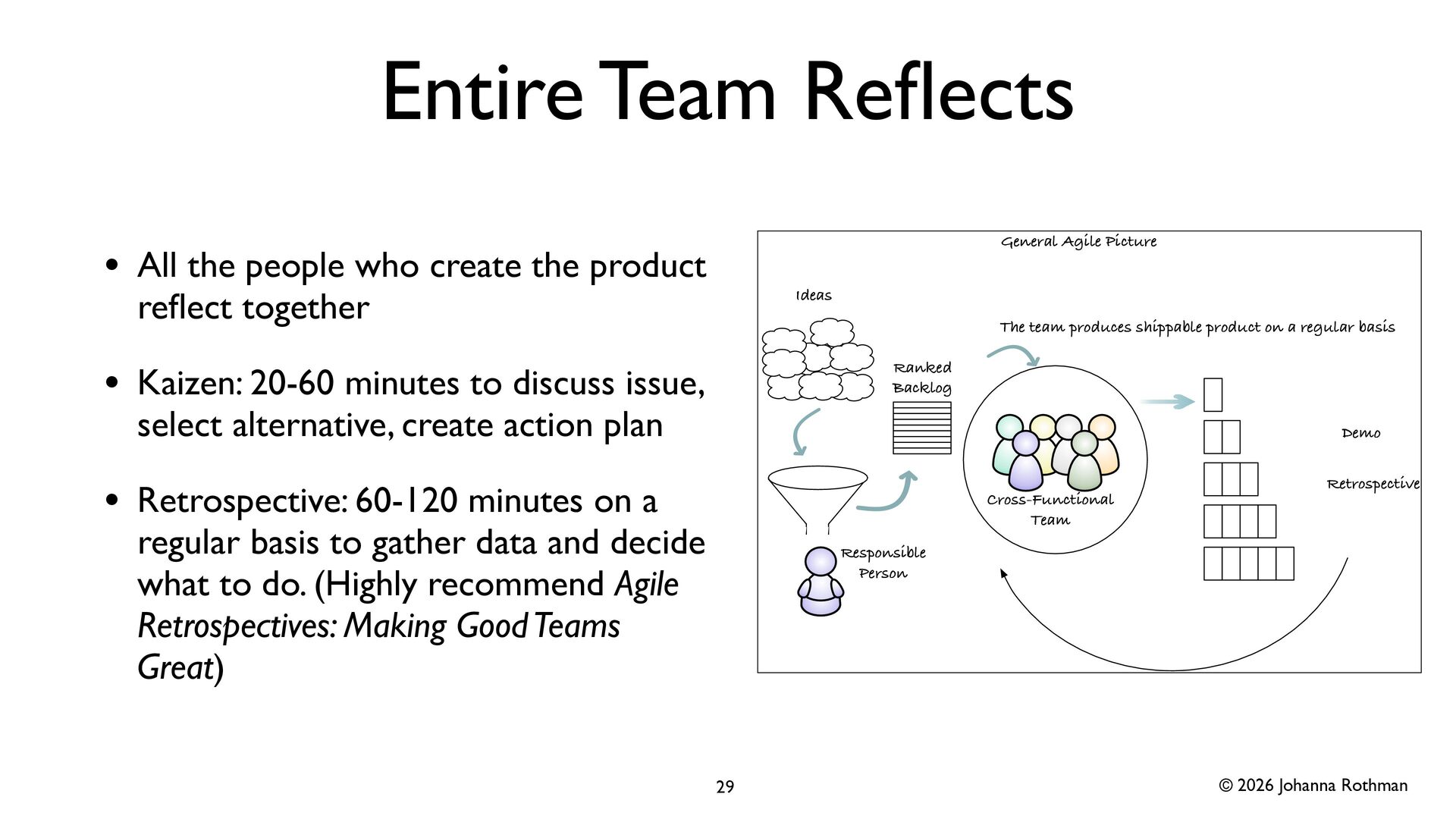
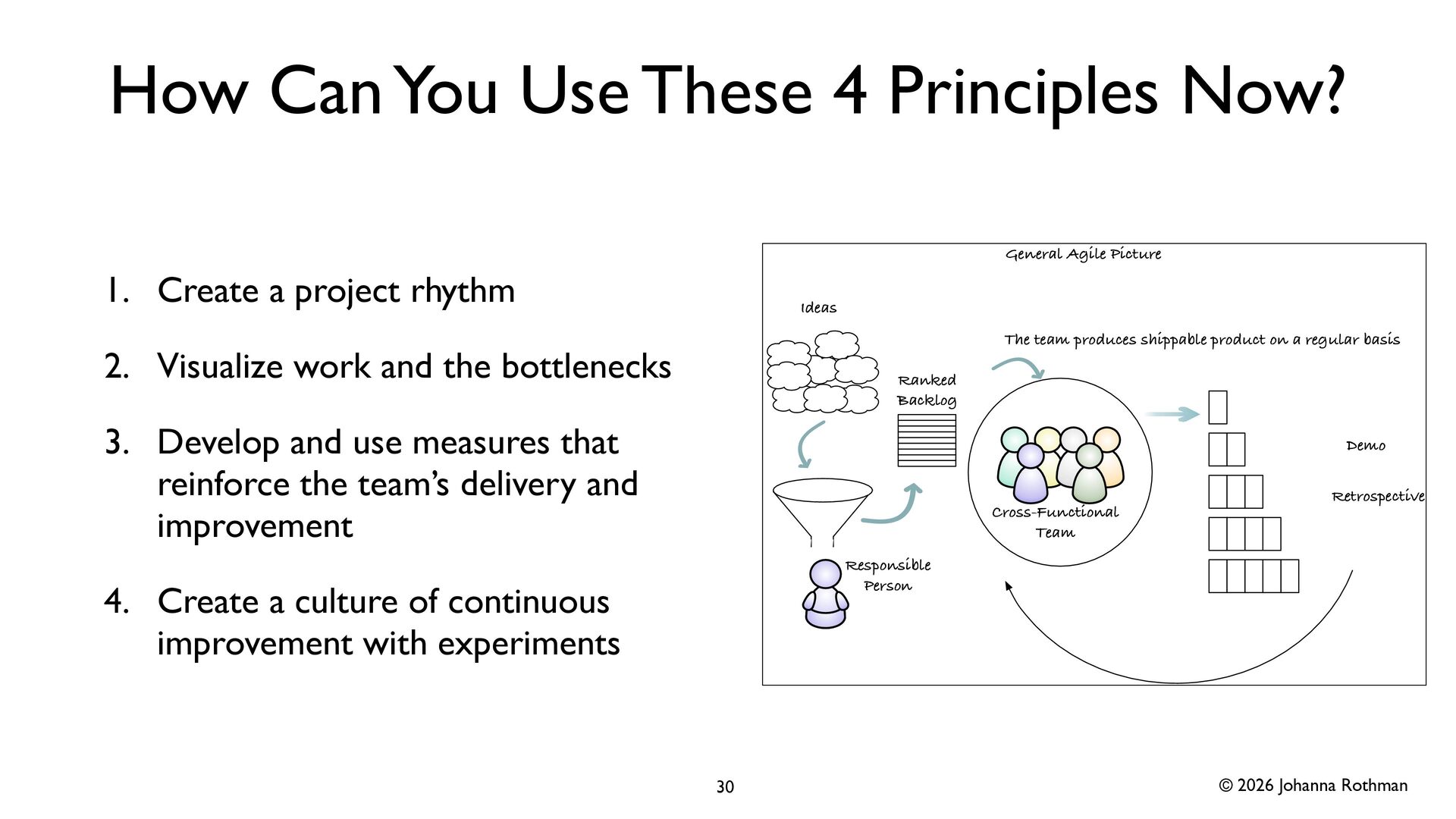
rhythm 2. Visualize work and the bottlenecks 3. Develop and use measures that reinforce the team’s delivery and improvement 4. Create a culture of continuous improvement with experiments 2 Ideas Responsible Person Ranked Backlog Cross-Functional Team The team produces shippable product on a regular basis Demo Retrospective General Agile Picture
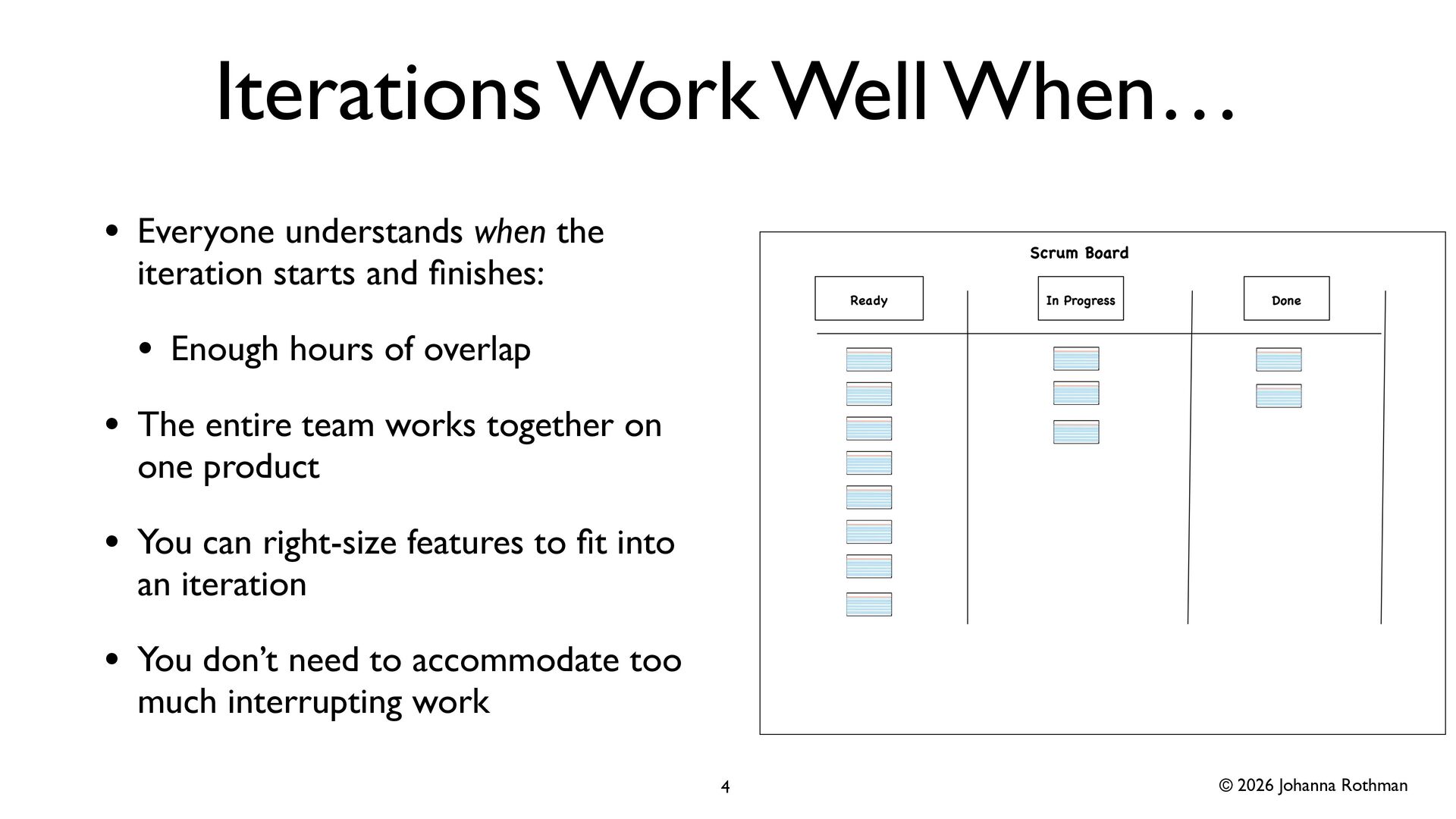
understands when the iteration starts and fi nishes: • Enough hours of overlap • The entire team works together on one product • You can right-size features to fi t into an iteration • You don’t need to accommodate too much interrupting work 4
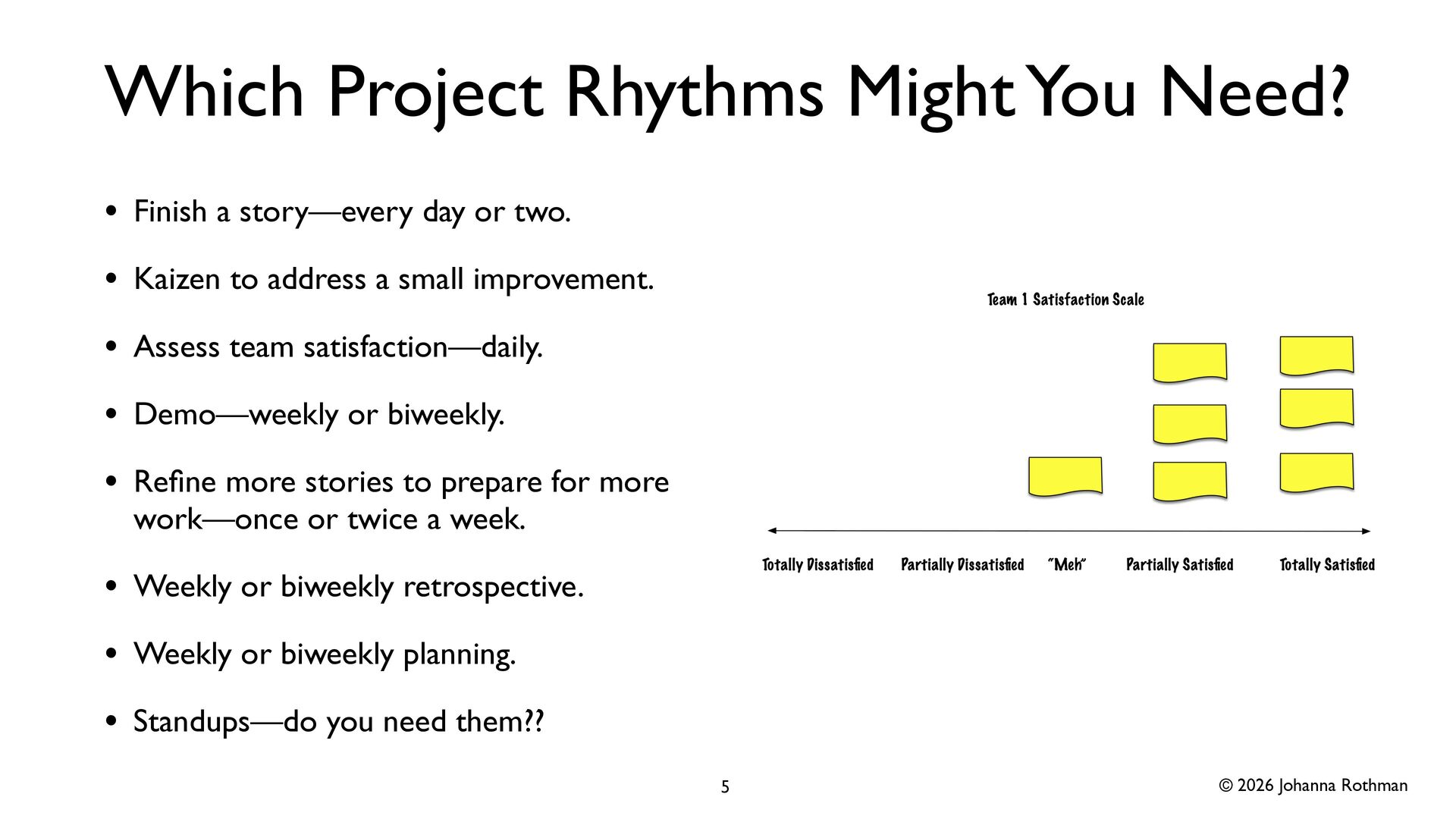
• Finish a story—every day or two. • Kaizen to address a small improvement. • Assess team satisfaction—daily. • Demo—weekly or biweekly. • Re fi ne more stories to prepare for more work—once or twice a week. • Weekly or biweekly retrospective. • Weekly or biweekly planning. • Standups—do you need them?? 5
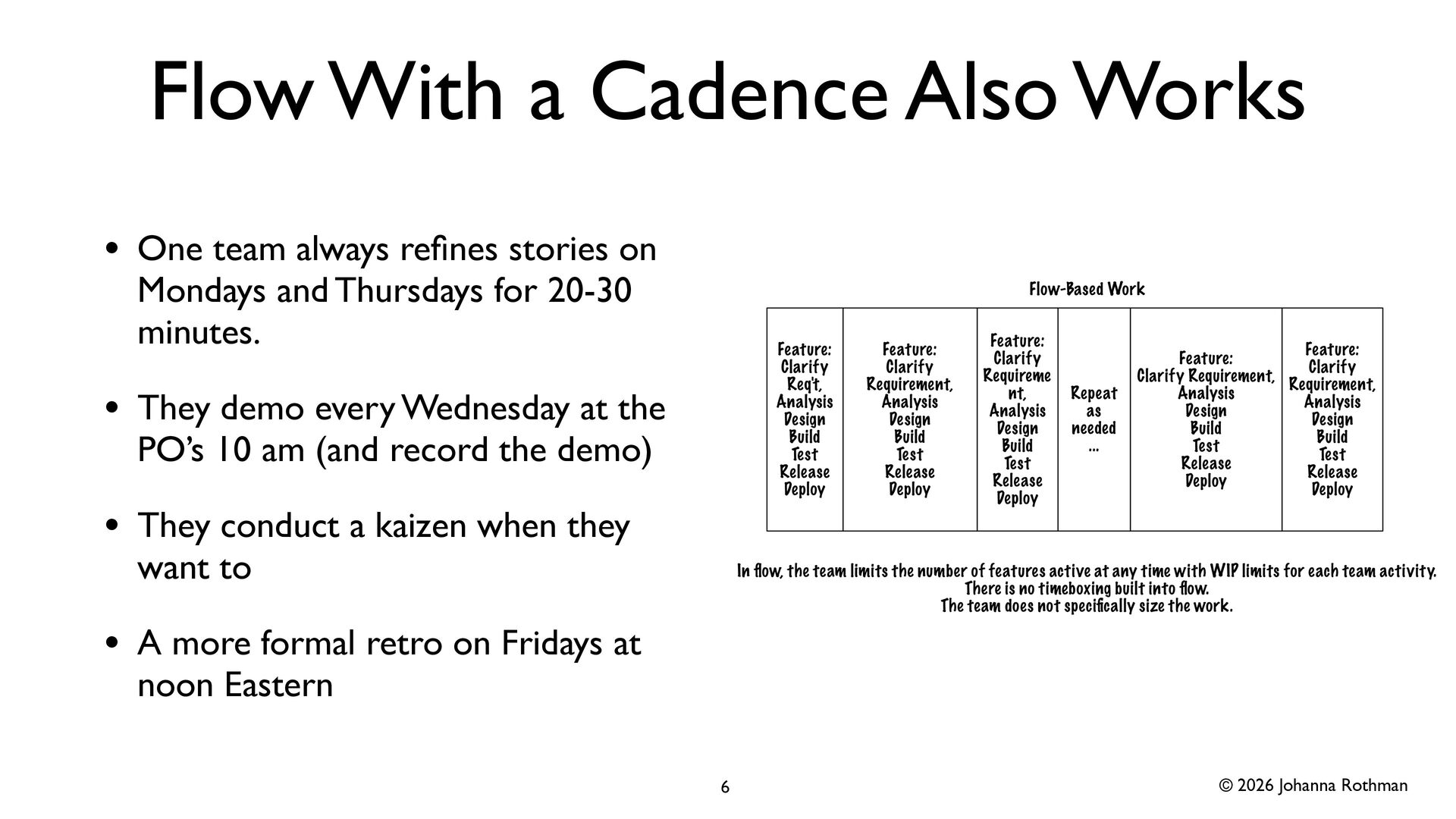
• One team always re fi nes stories on Mondays and Thursdays for 20-30 minutes. • They demo every Wednesday at the PO’s 10 am (and record the demo) • They conduct a kaizen when they want to • A more formal retro on Fridays at noon Eastern 6
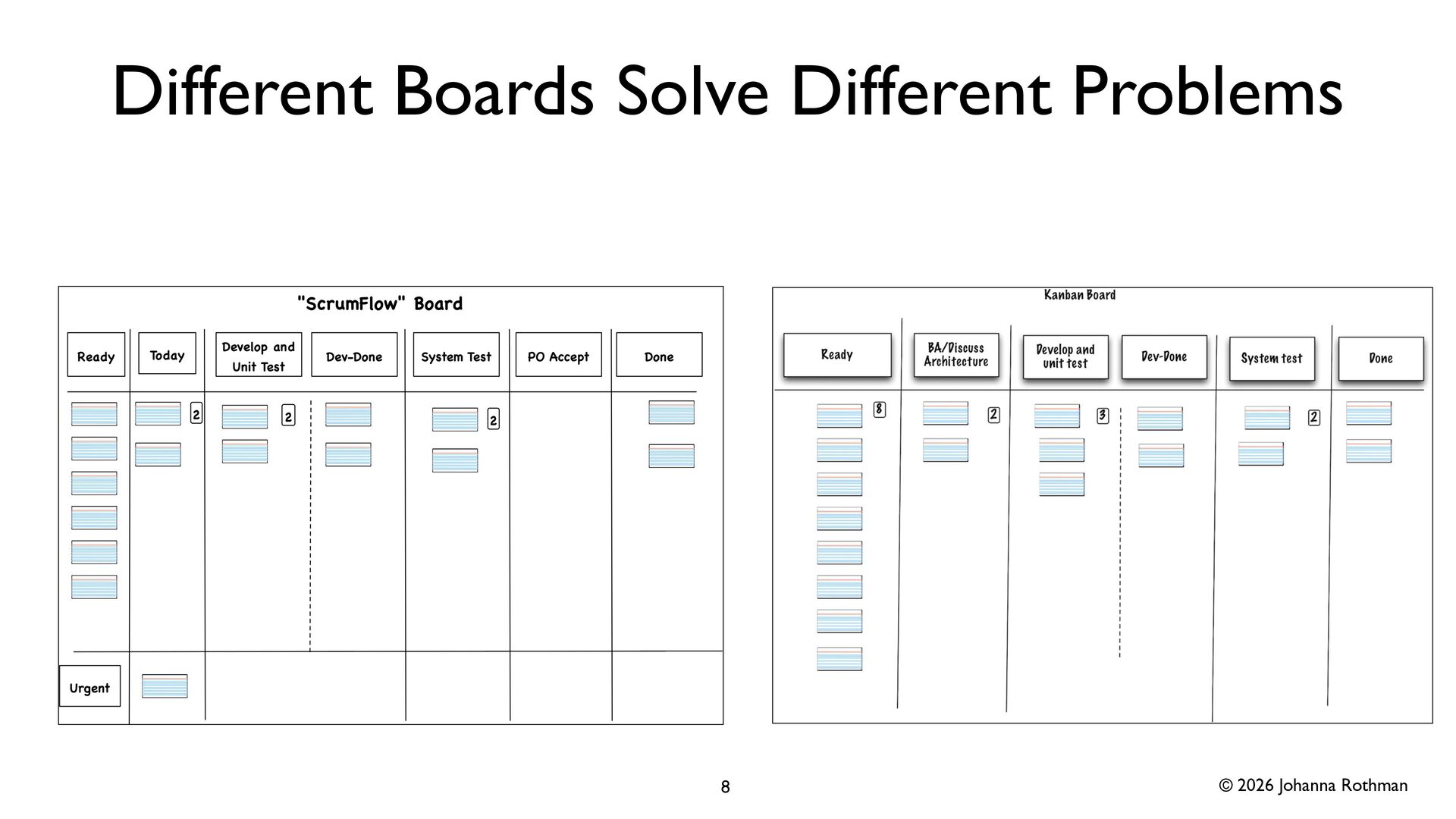
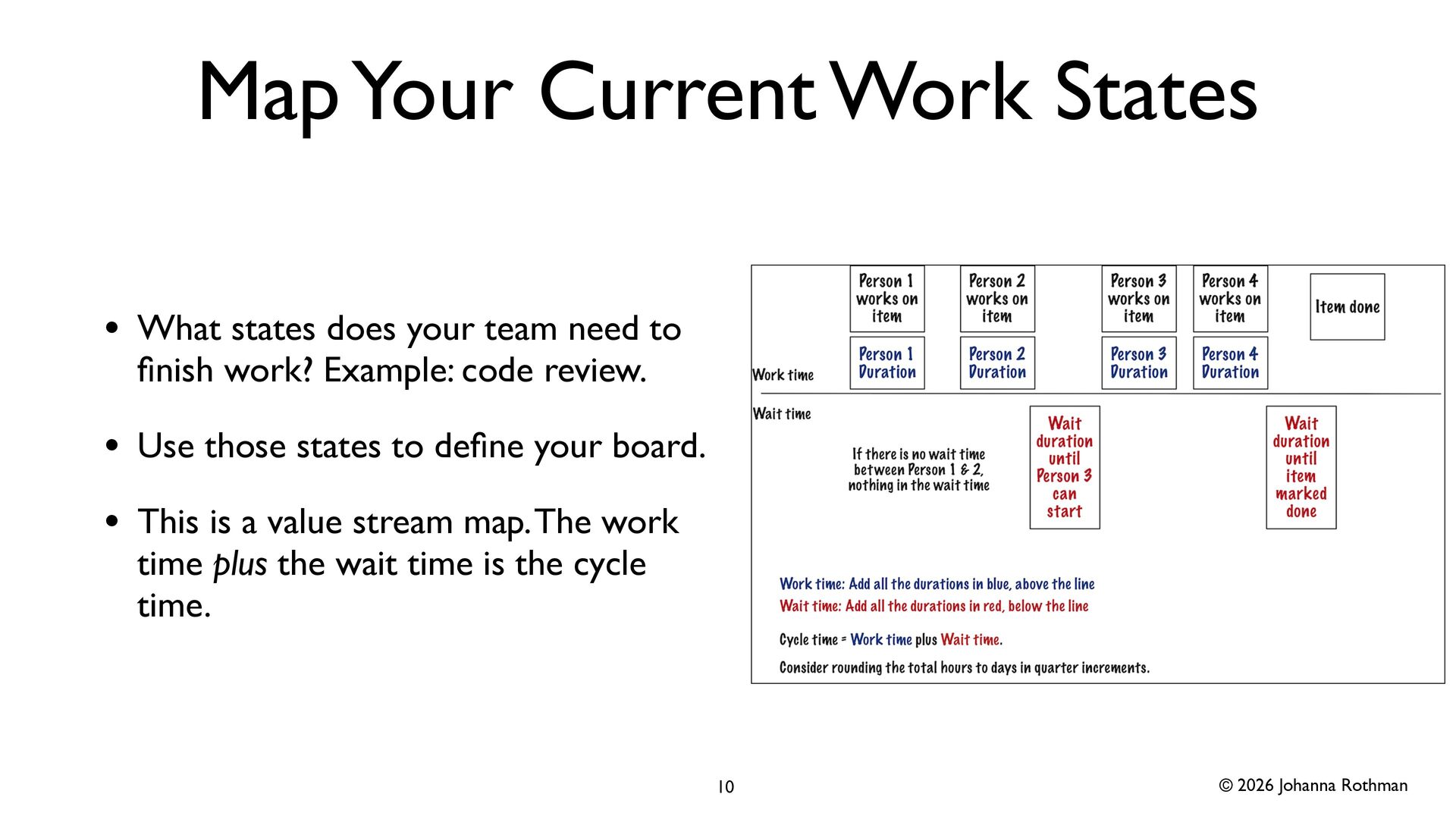
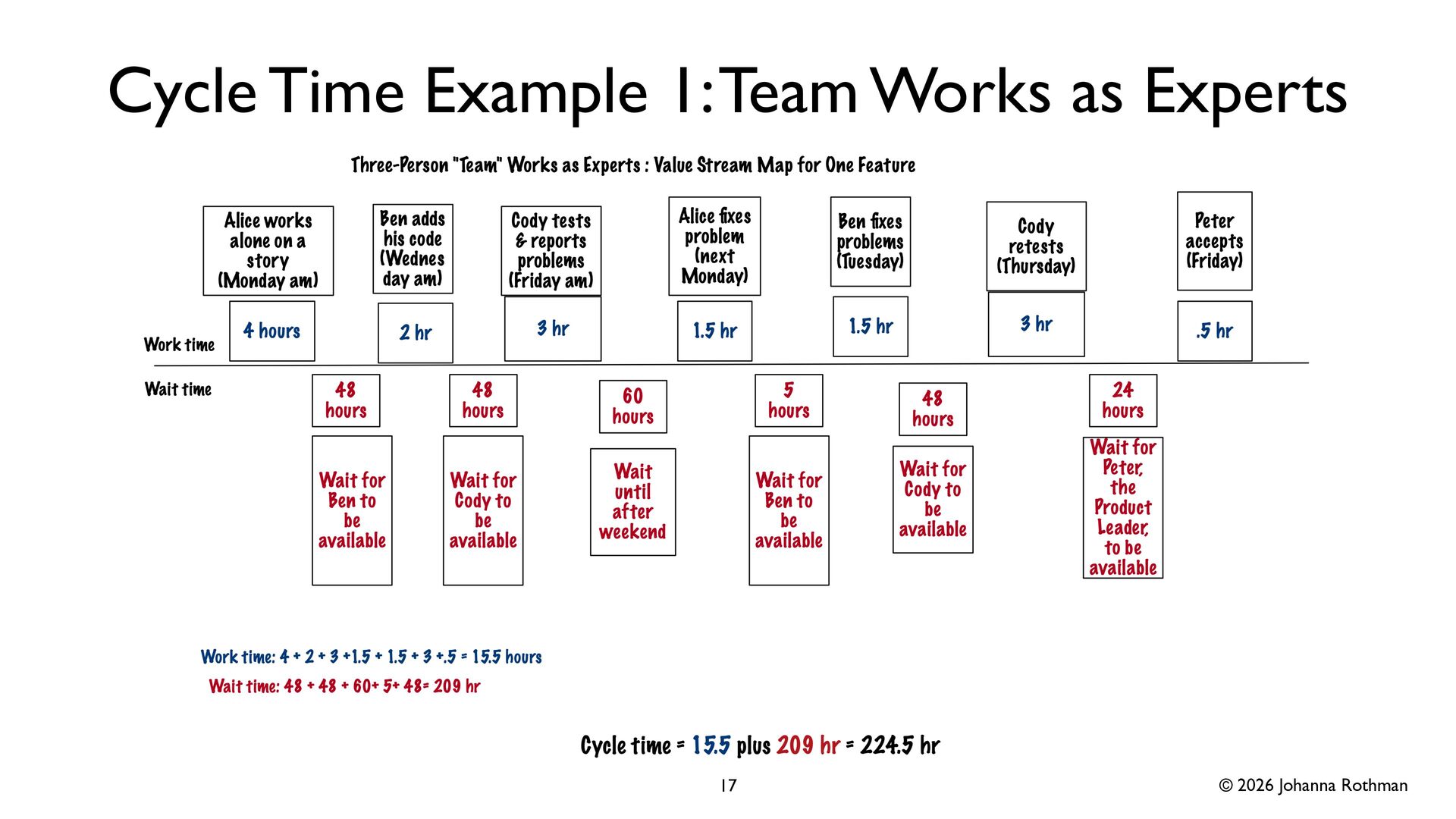
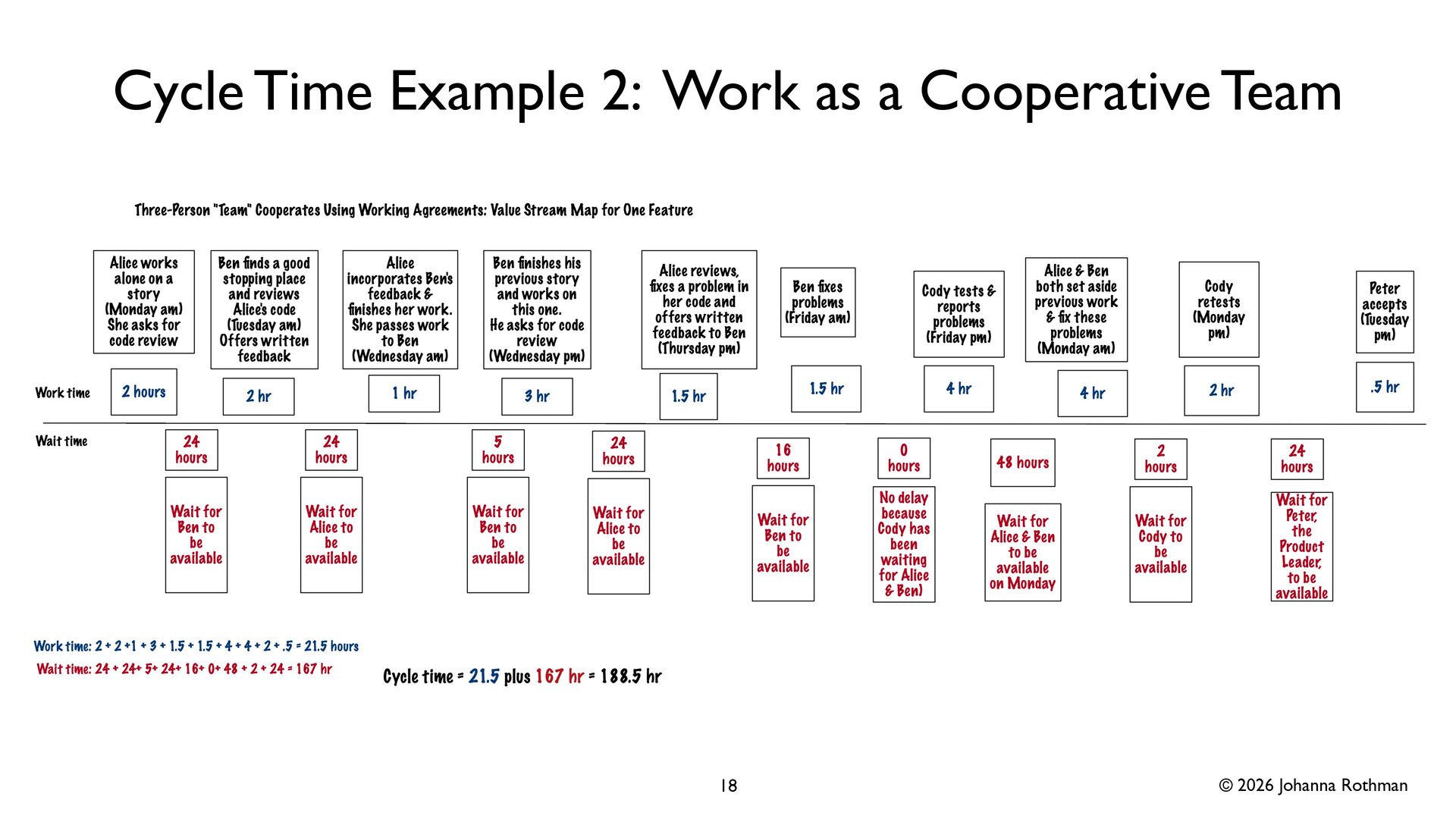
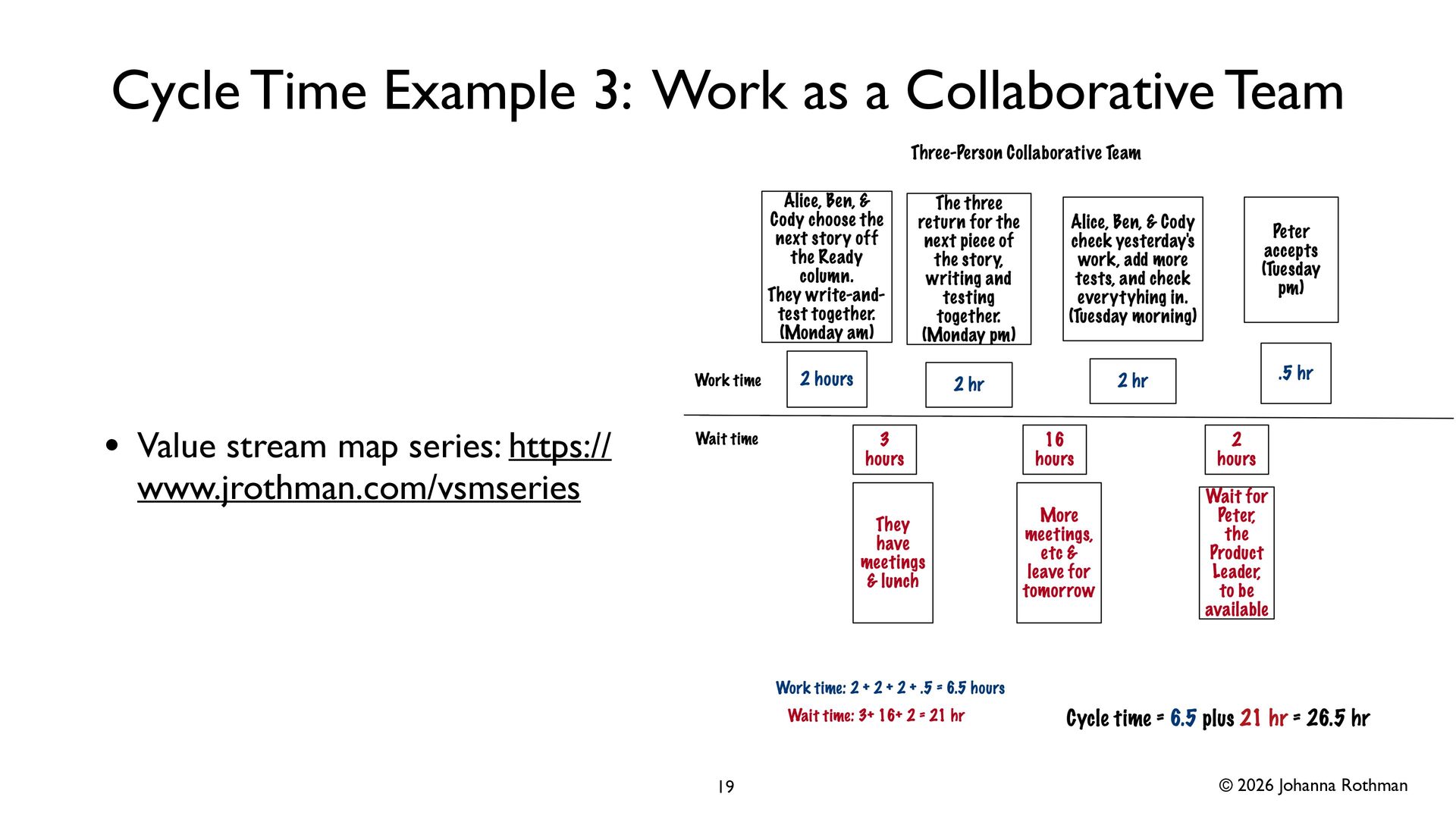
What states does your team need to fi nish work? Example: code review. • Use those states to de fi ne your board. • This is a value stream map. The work time plus the wait time is the cycle time. 10
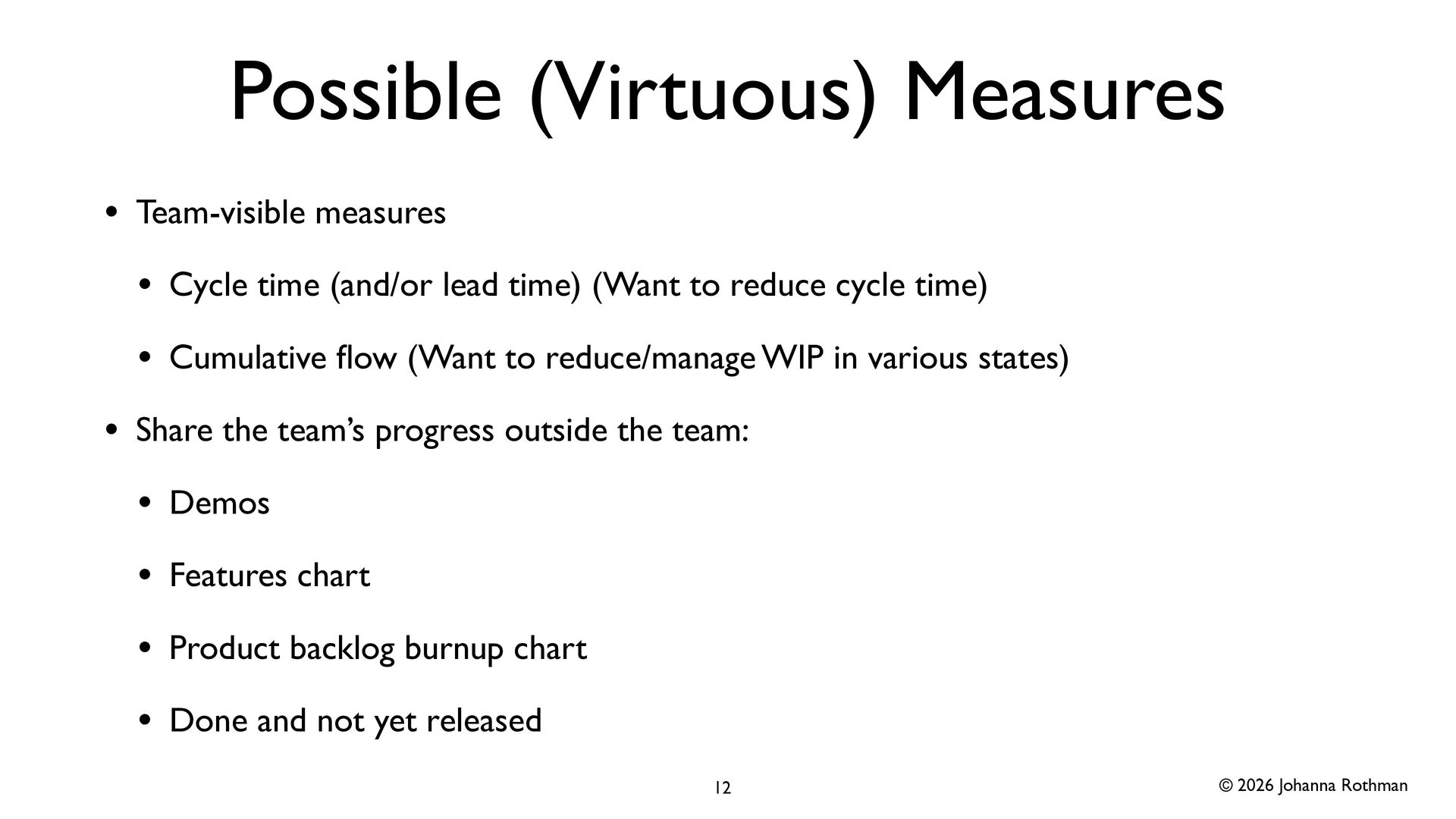
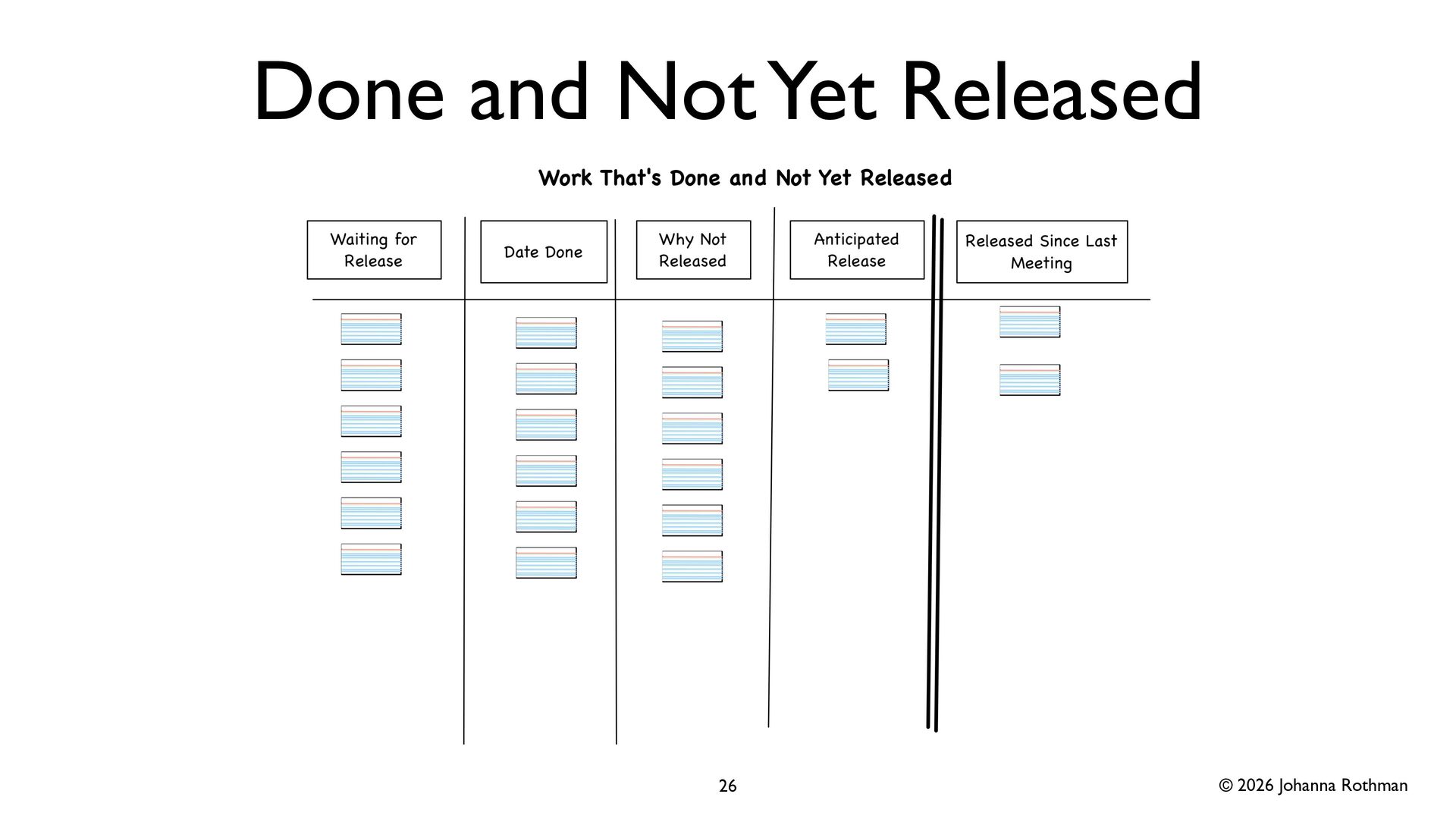
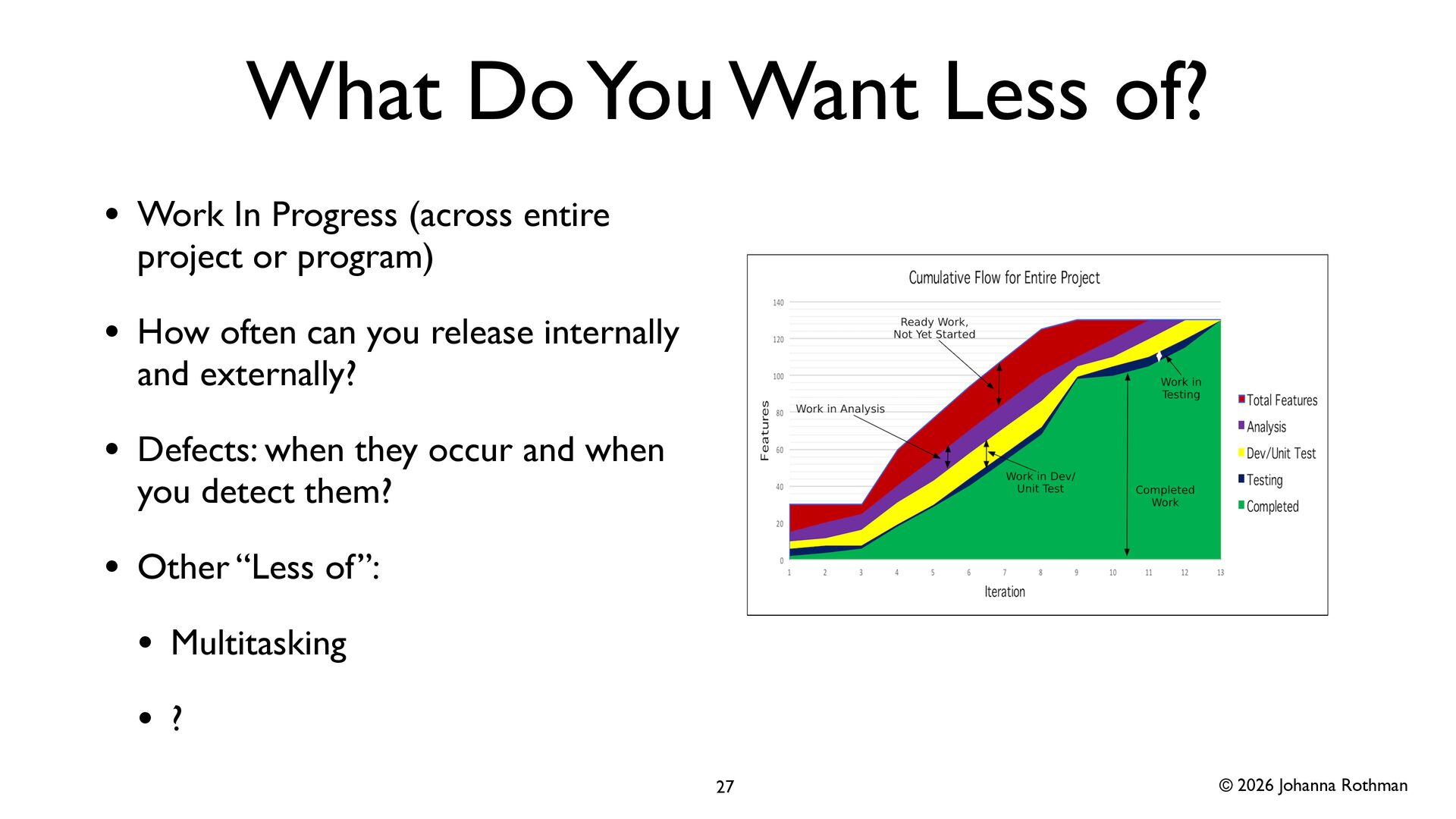
• Cycle time (and/or lead time) (Want to reduce cycle time) • Cumulative fl ow (Want to reduce/manage WIP in various states) • Share the team’s progress outside the team: • Demos • Features chart • Product backlog burnup chart • Done and not yet released 12
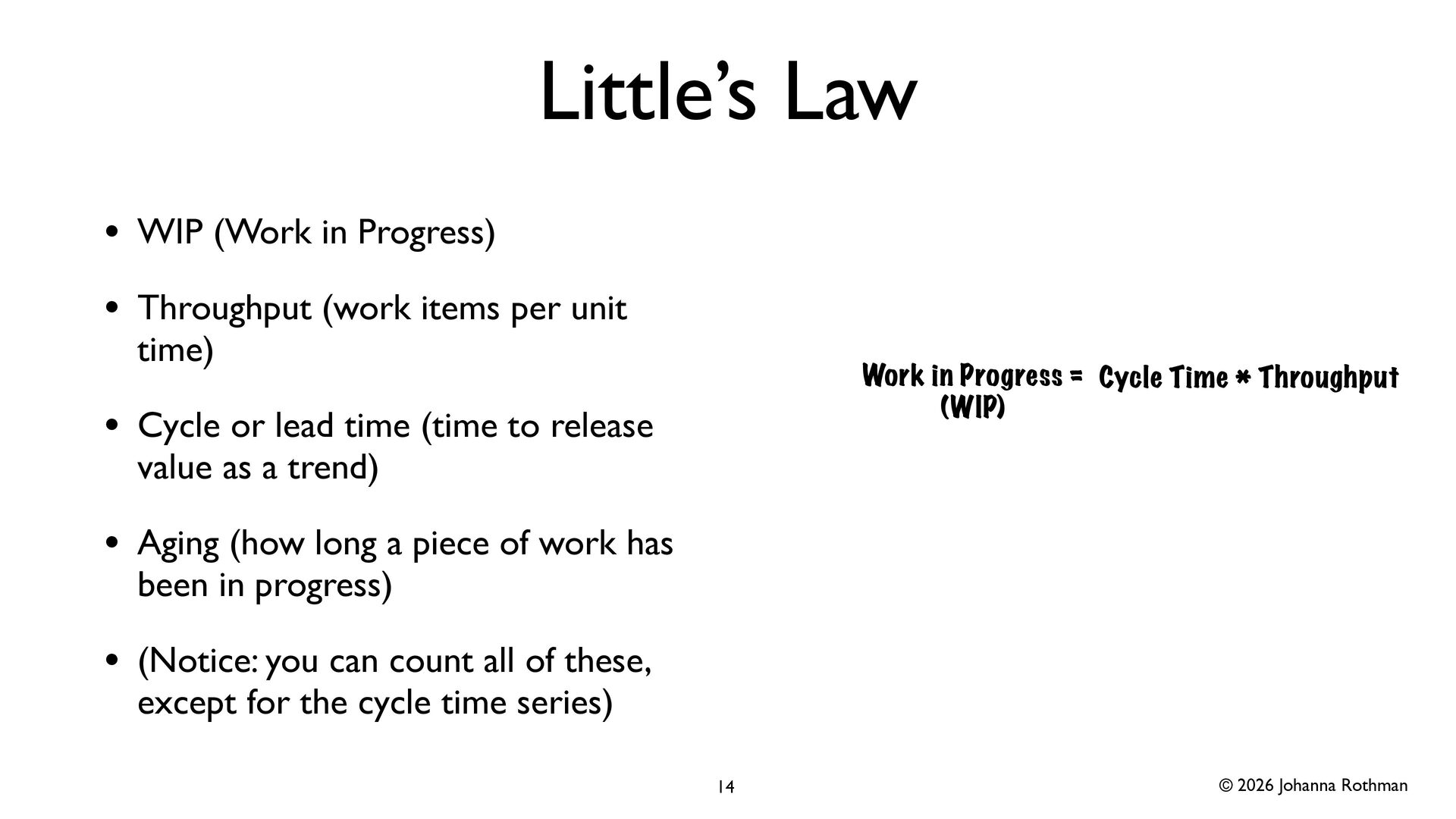
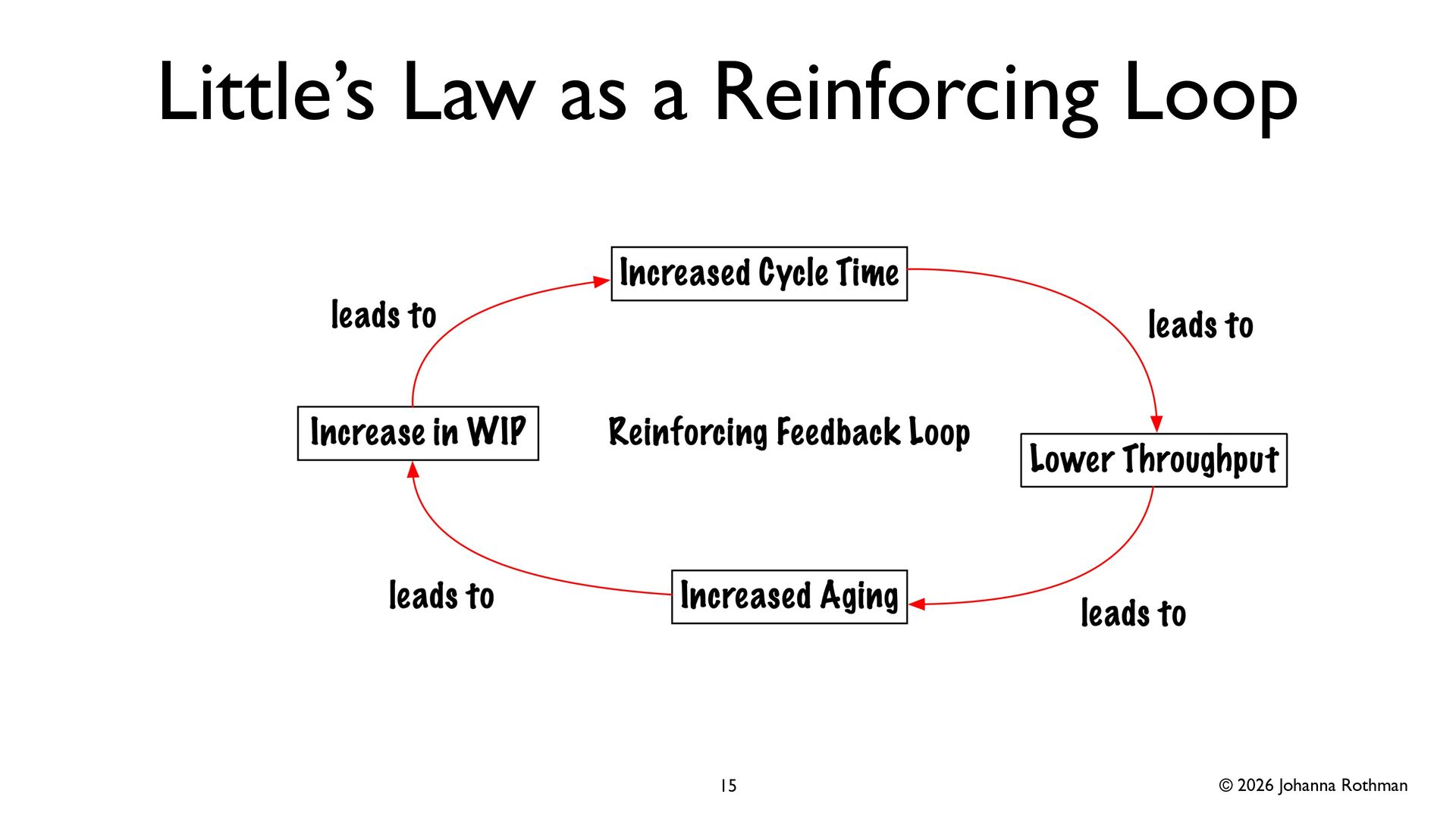
Progress) • Throughput (work items per unit time) • Cycle or lead time (time to release value as a trend) • Aging (how long a piece of work has been in progress) • (Notice: you can count all of these, except for the cycle time series) 14 Work in Progress = (WIP) Cycle Time * Throughput
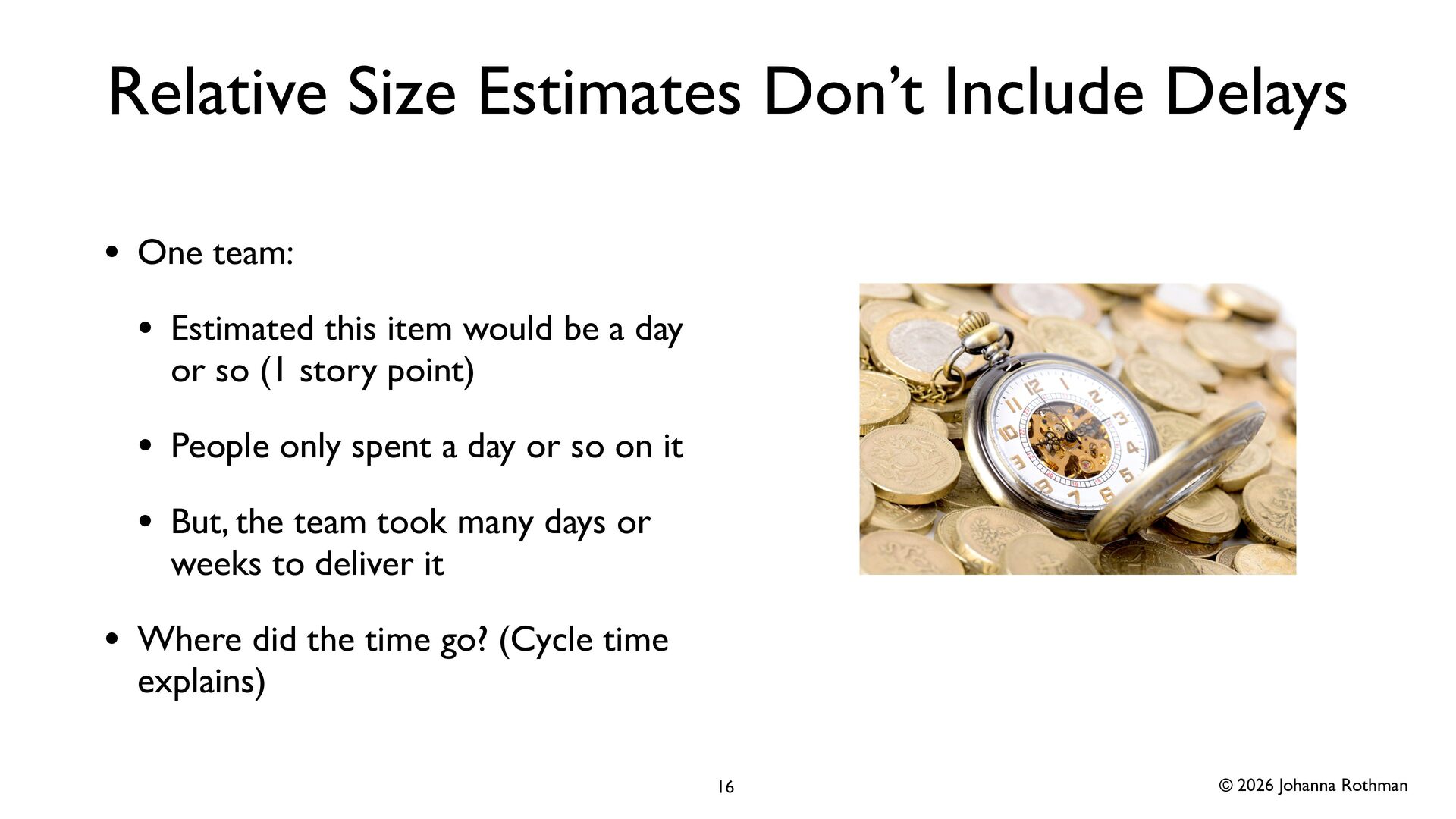
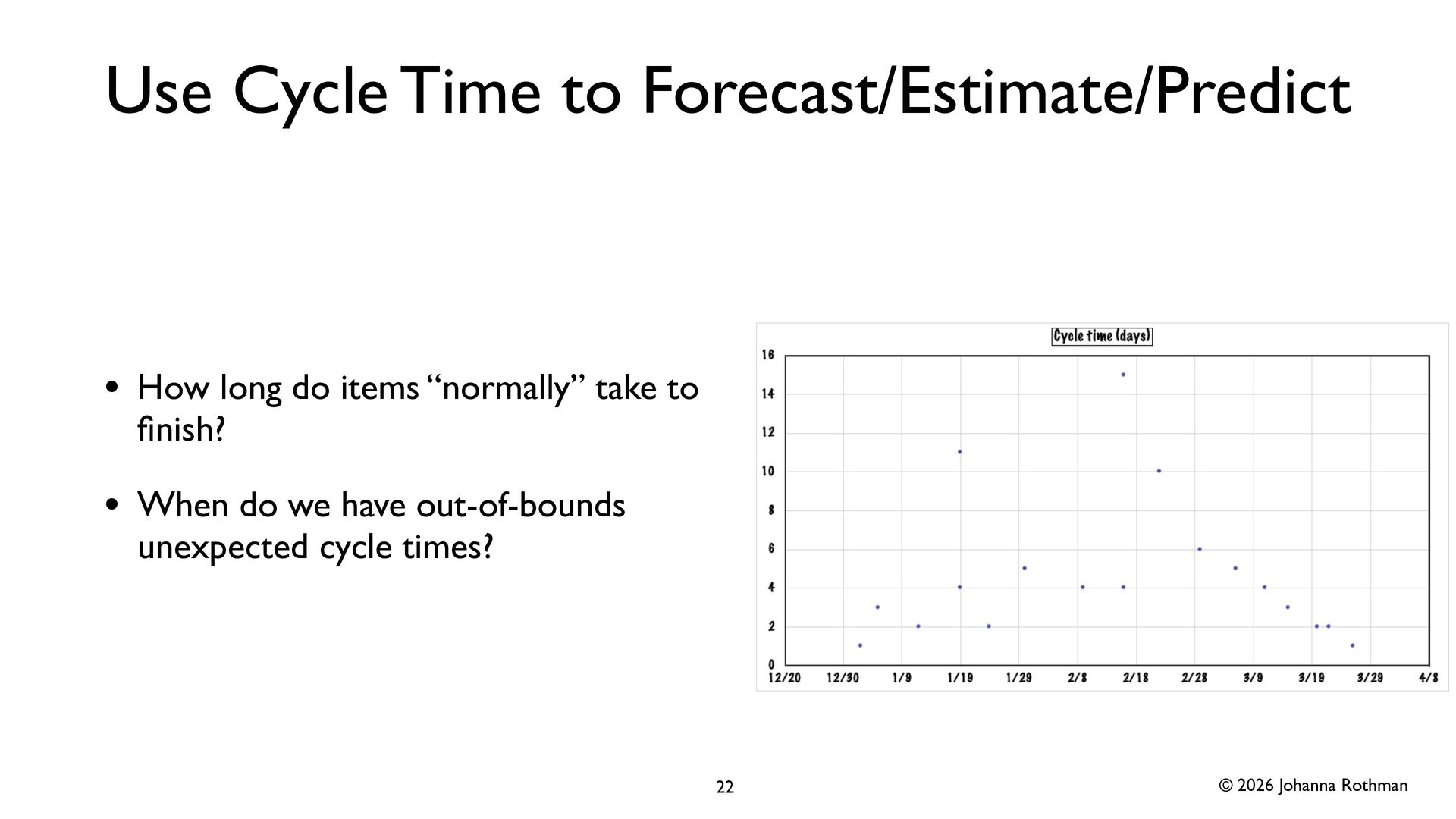
• One team: • Estimated this item would be a day or so (1 story point) • People only spent a day or so on it • But, the team took many days or weeks to deliver it • Where did the time go? (Cycle time explains) 16
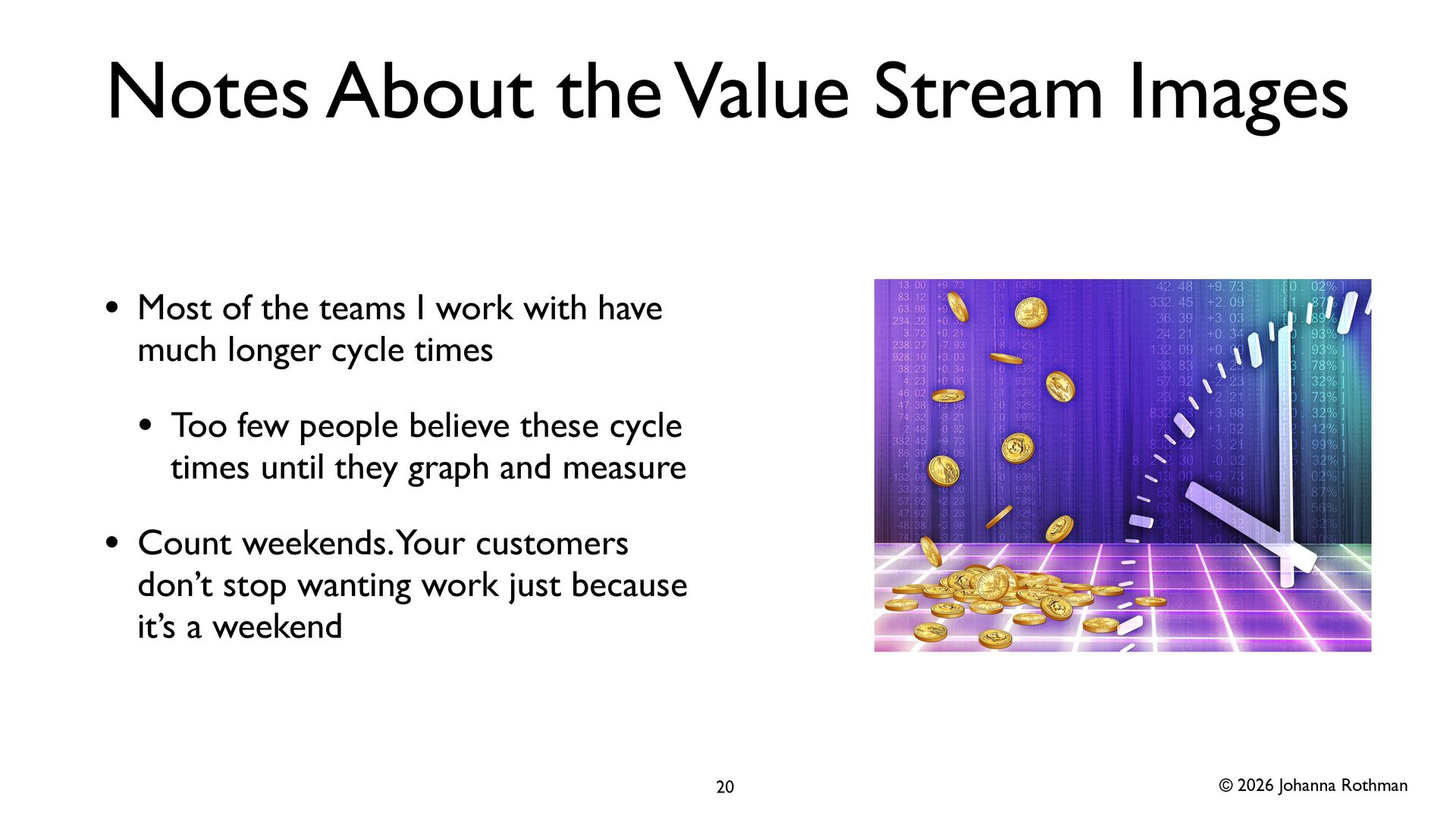
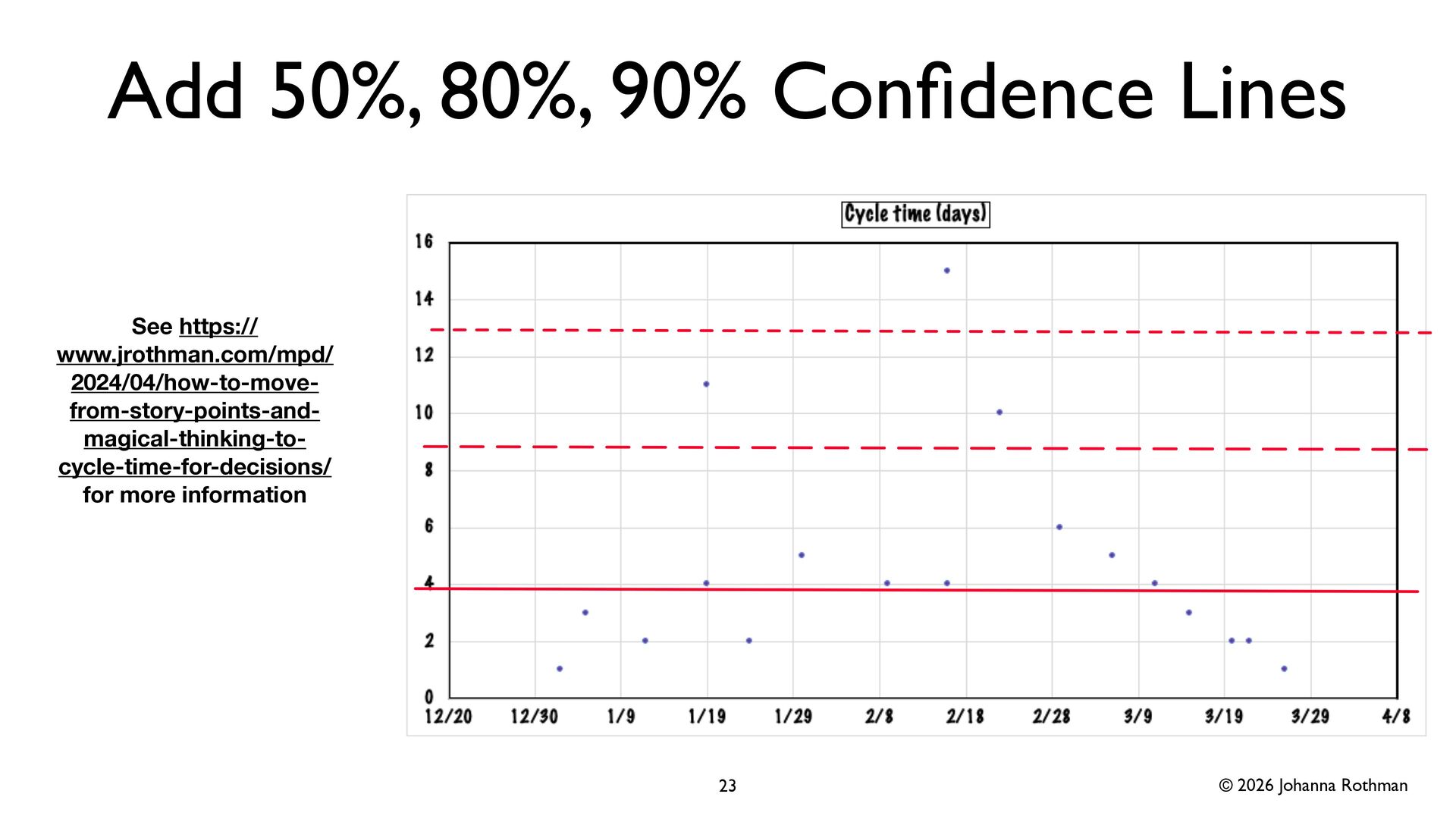
• Most of the teams I work with have much longer cycle times • Too few people believe these cycle times until they graph and measure • Count weekends. Your customers don’t stop wanting work just because it’s a weekend 20
dence Lines 23 See https:// www.jrothman.com/mpd/ 2024/04/how-to-move- from-story-points-and- magical-thinking-to- cycle-time-for-decisions/ for more information
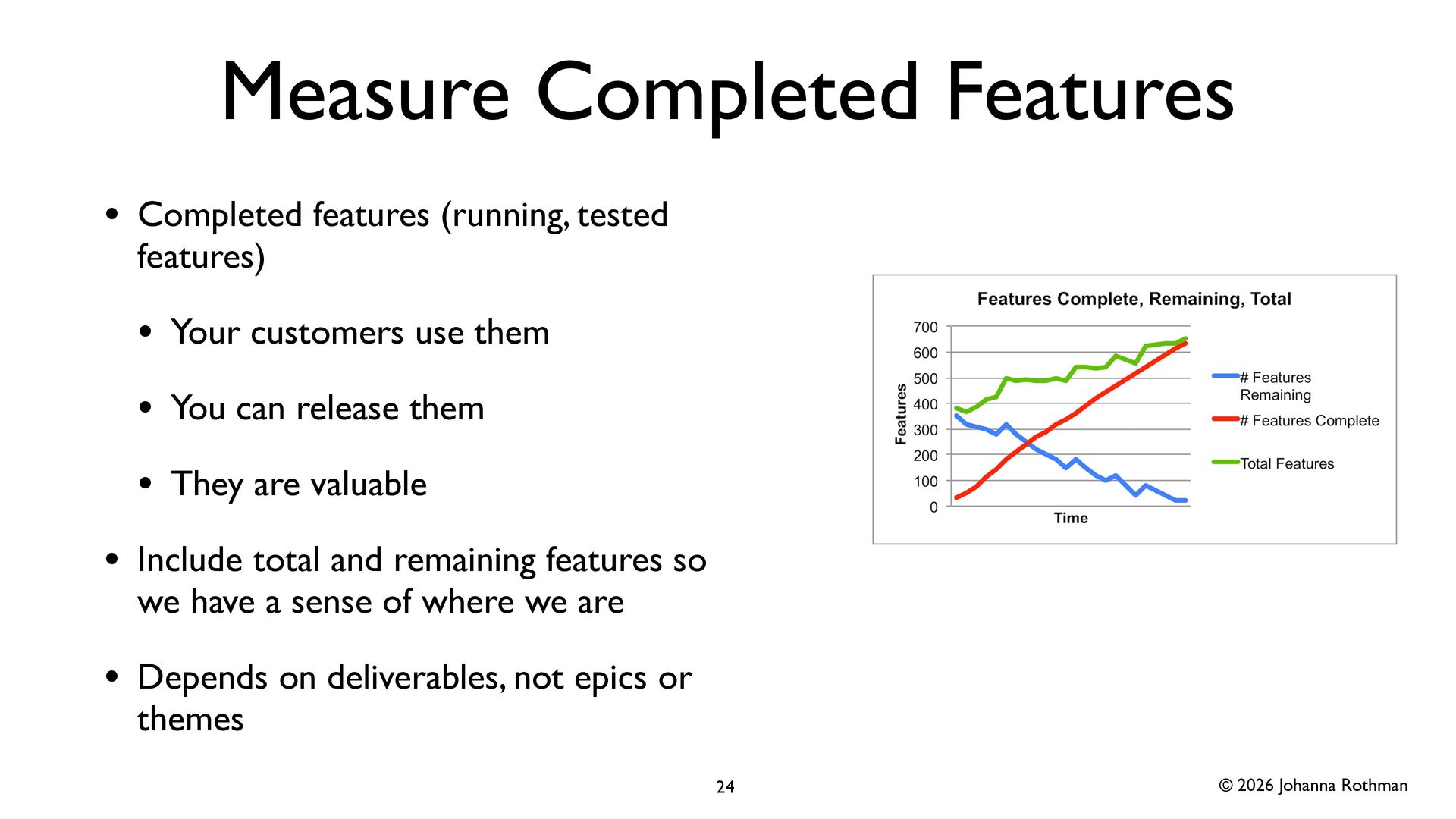
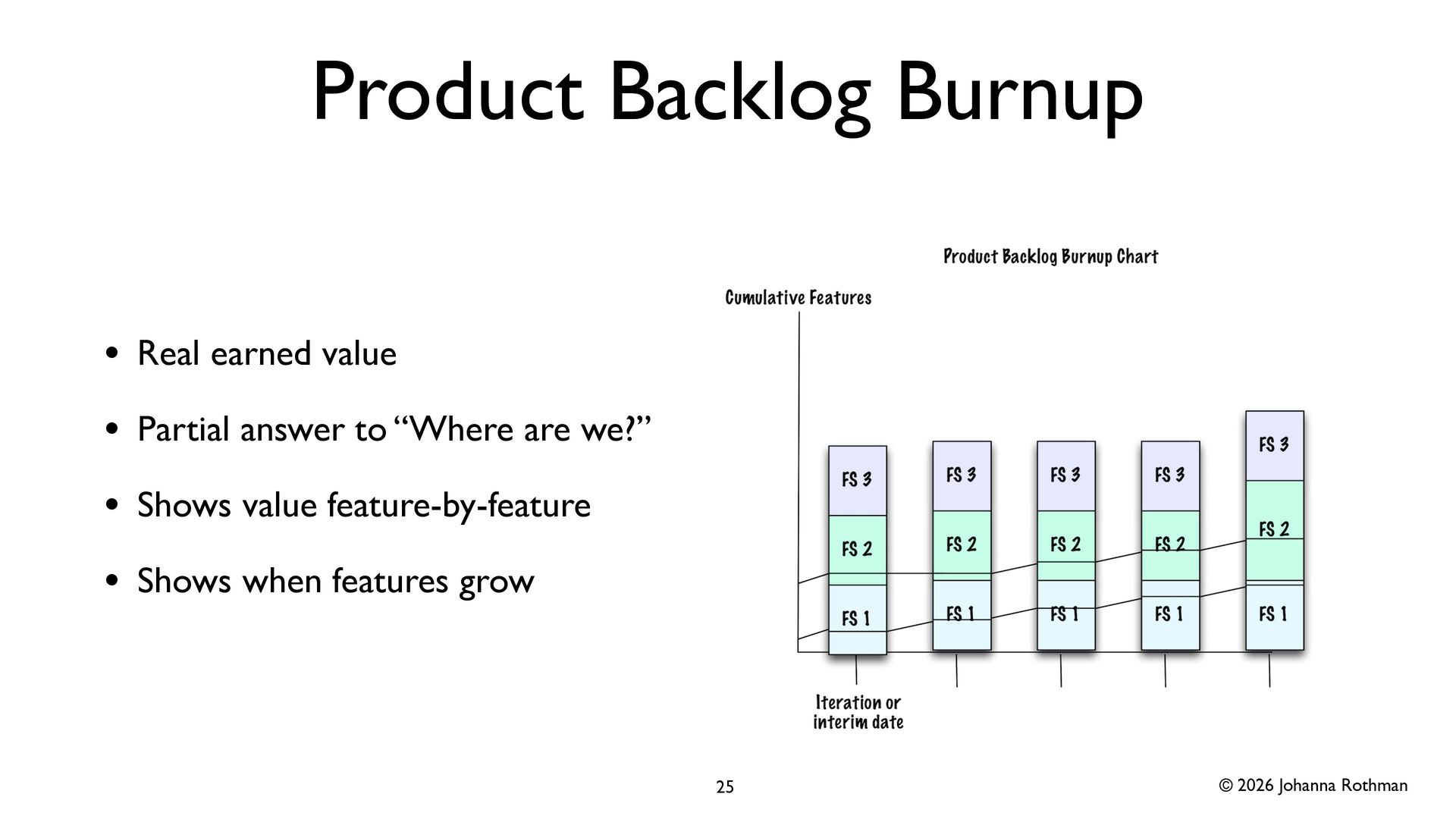
(running, tested features) • Your customers use them • You can release them • They are valuable • Include total and remaining features so we have a sense of where we are • Depends on deliverables, not epics or themes 24
• Work In Progress (across entire project or program) • How often can you release internally and externally? • Defects: when they occur and when you detect them? • Other “Less of”: • Multitasking • ? 27
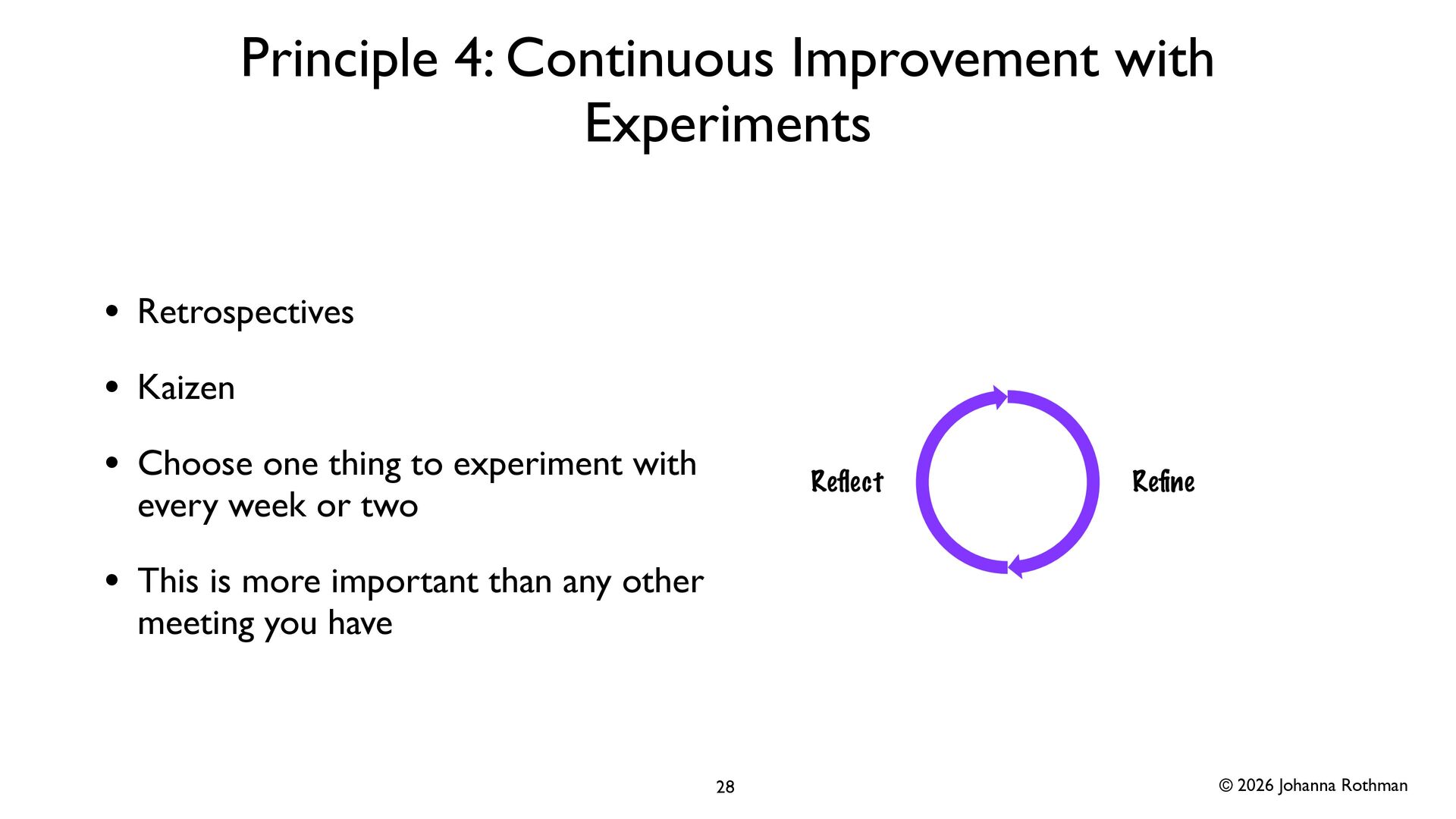
All the people who create the product re fl ect together • Kaizen: 20-60 minutes to discuss issue, select alternative, create action plan • Retrospective: 60-120 minutes on a regular basis to gather data and decide what to do. (Highly recommend Agile Retrospectives: Making Good Teams Great) 29 Ideas Responsible Person Ranked Backlog Cross-Functional Team The team produces shippable product on a regular basis Demo Retrospective General Agile Picture
Principles Now? 1. Create a project rhythm 2. Visualize work and the bottlenecks 3. Develop and use measures that reinforce the team’s delivery and improvement 4. Create a culture of continuous improvement with experiments 30 Ideas Responsible Person Ranked Backlog Cross-Functional Team The team produces shippable product on a regular basis Demo Retrospective General Agile Picture
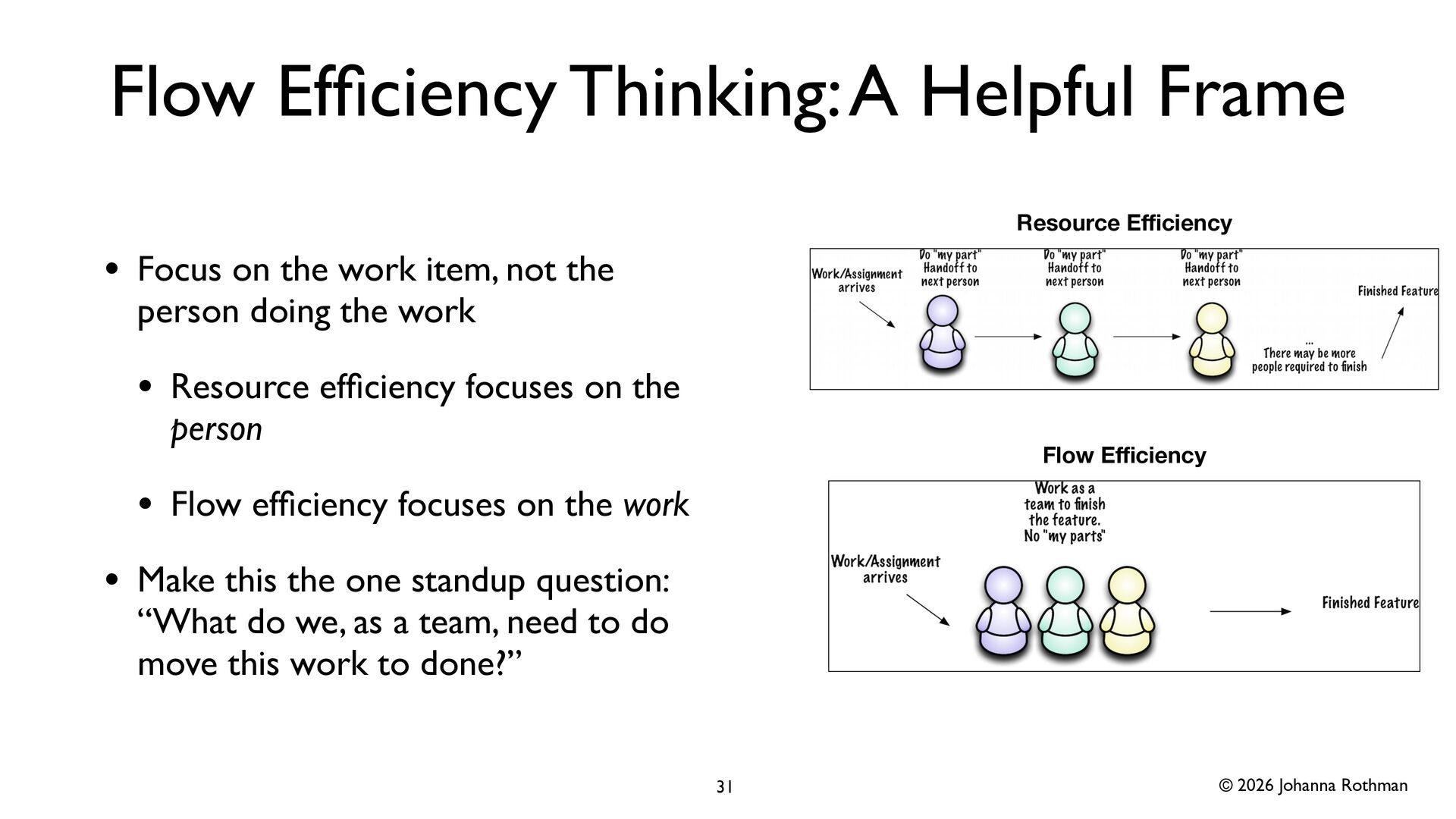
Helpful Frame • Focus on the work item, not the person doing the work • Resource ef fi ciency focuses on the person • Flow ef fi ciency focuses on the work • Make this the one standup question: “What do we, as a team, need to do move this work to done?” 31 Resource E ffi ciency Flow E ffi ciency
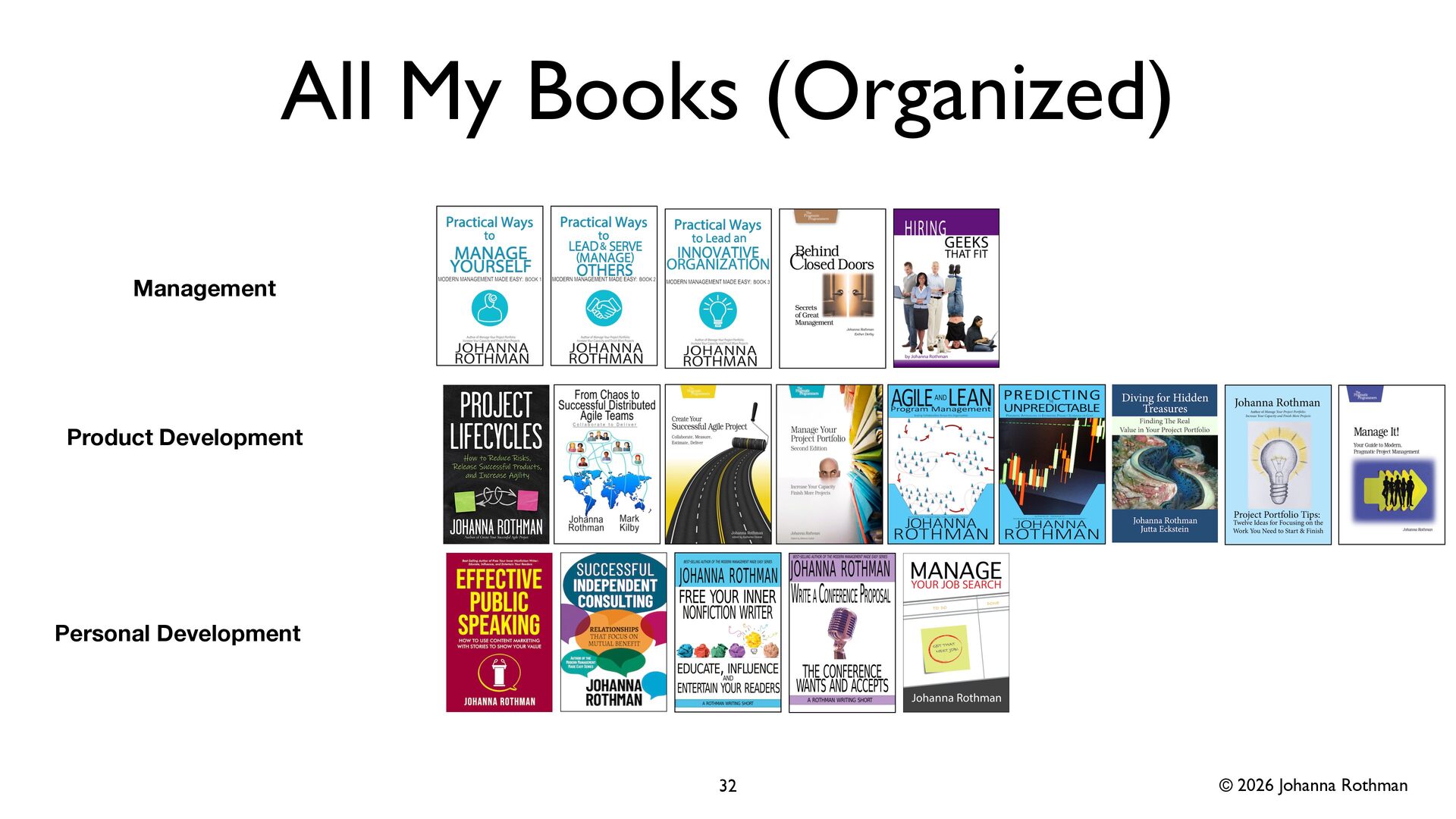
Manager: www.jrothman.com/ pragmaticmanager • Please link with me on LinkedIn: https:// www.linkedin.com/in/johannarothman/ • All my books are at jrothman.com/books • Hudson Bay Start: https://www.jrothman.com/mpd/ 2025/01/how-to-conduct-an-agile-hudson-bay-start- to-test-how-your-team-works/ • Flow metrics newsletter: https:// www.jrothman.com/newsletter/2024/01/ fl ow- metrics-and-why-they-matter-to-teams-and- managers/ • https://linktr.ee/johannarothman 33


 johannarothman
 canvasedge
 daiksy
 kintonepapers
 freee
freee
 gatechnologies
 noritaka88tax
 malna
malna
 ecoms_ikeda08
 shinu
shinu
 tsogo817421
 ashisuto_career
 kgmotors
 ianozsvald
 productmarketing
 bluesmoon
 marcoroth
 marcelosomers
 tammyeverts
 denniskardys
 lynnandtonic
 speakerdeck
 marktimemedia
 62gerente