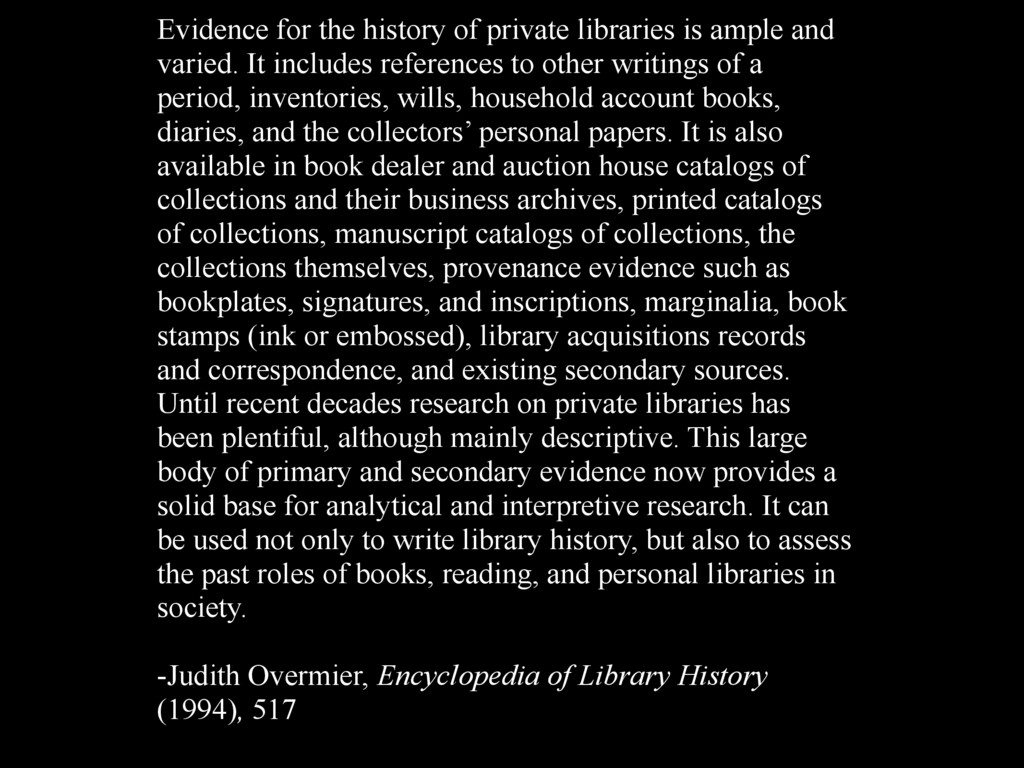
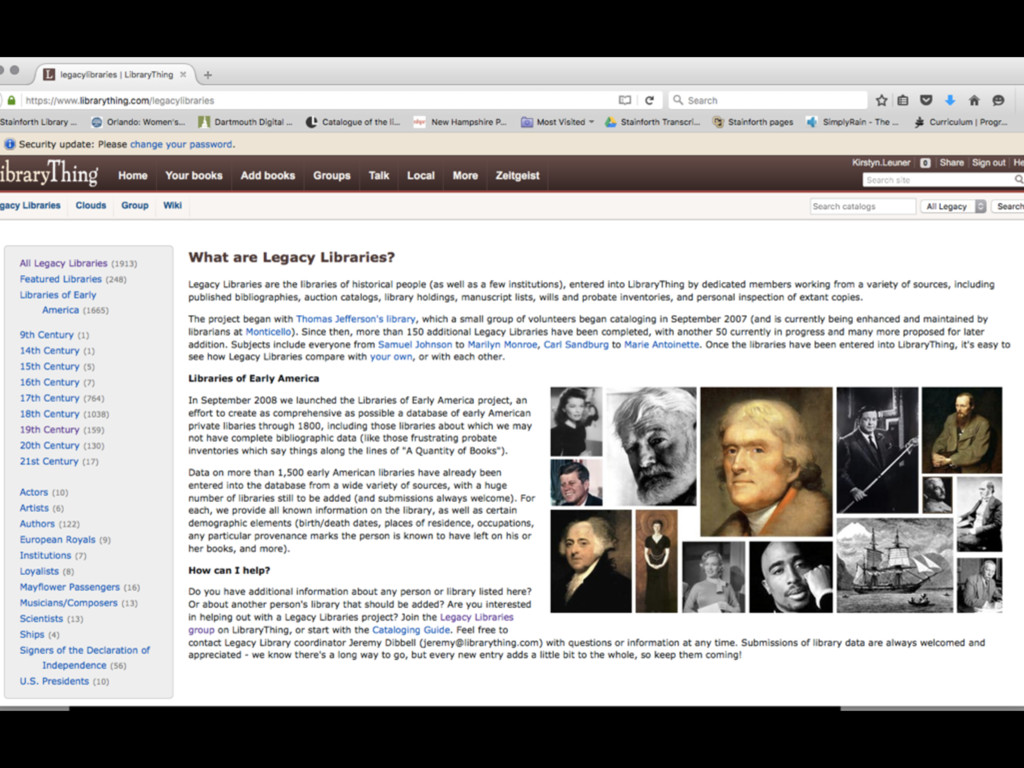
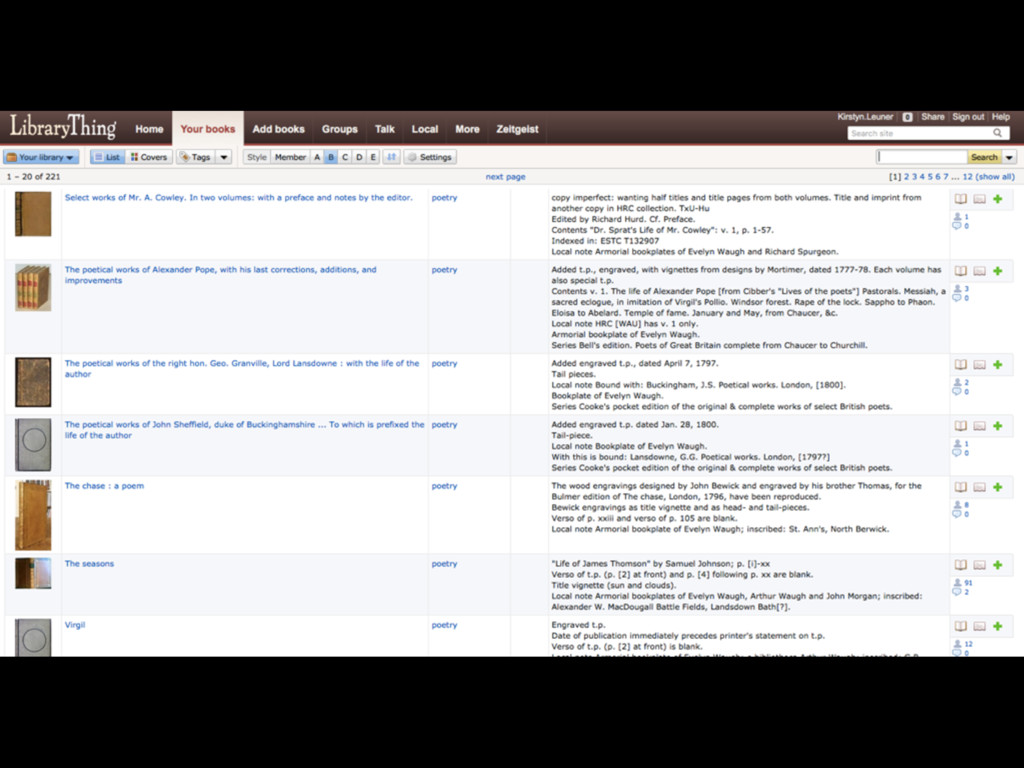
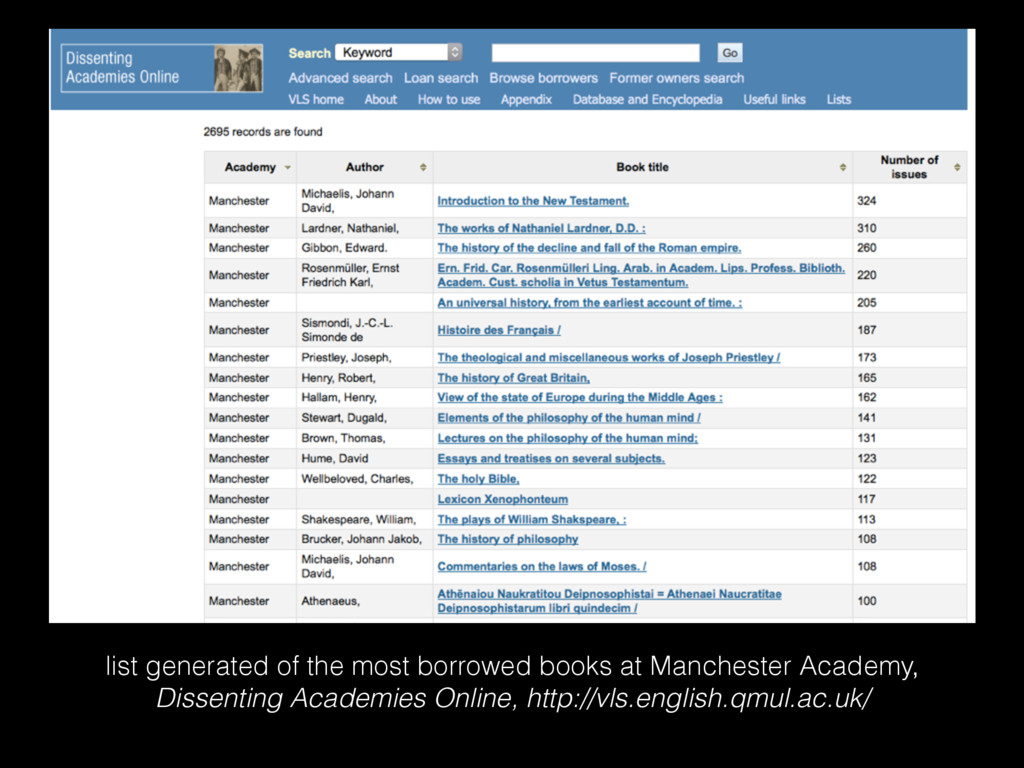
varied. It includes references to other writings of a period, inventories, wills, household account books, diaries, and the collectors’ personal papers. It is also available in book dealer and auction house catalogs of collections and their business archives, printed catalogs of collections, manuscript catalogs of collections, the collections themselves, provenance evidence such as bookplates, signatures, and inscriptions, marginalia, book stamps (ink or embossed), library acquisitions records and correspondence, and existing secondary sources. Until recent decades research on private libraries has been plentiful, although mainly descriptive. This large body of primary and secondary evidence now provides a solid base for analytical and interpretive research. It can be used not only to write library history, but also to assess the past roles of books, reading, and personal libraries in society. -Judith Overmier, Encyclopedia of Library History (1994), 517
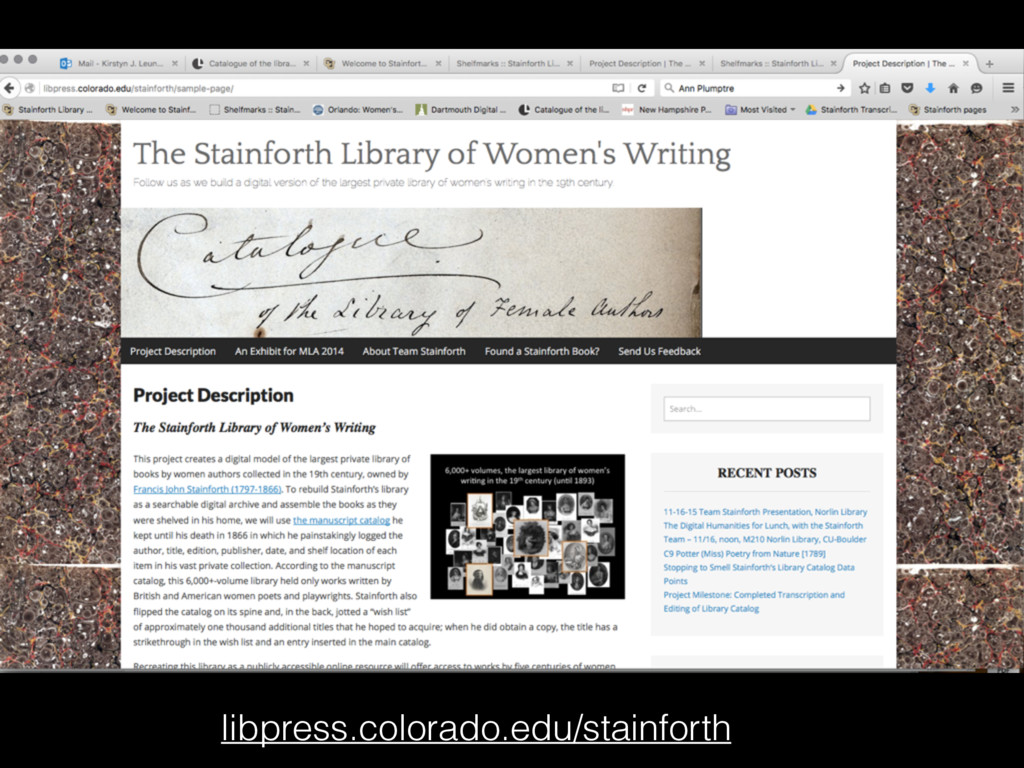
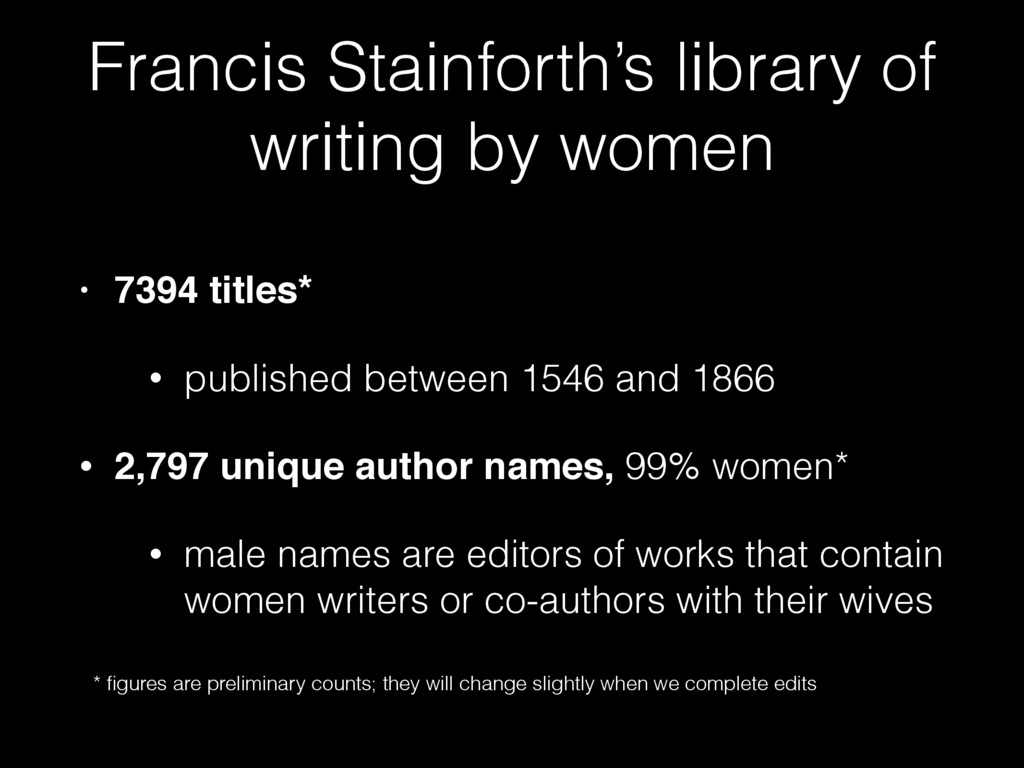
• published between 1546 and 1866 • 2,797 unique author names, 99% women* • male names are editors of works that contain women writers or co-authors with their wives * figures are preliminary counts; they will change slightly when we complete edits
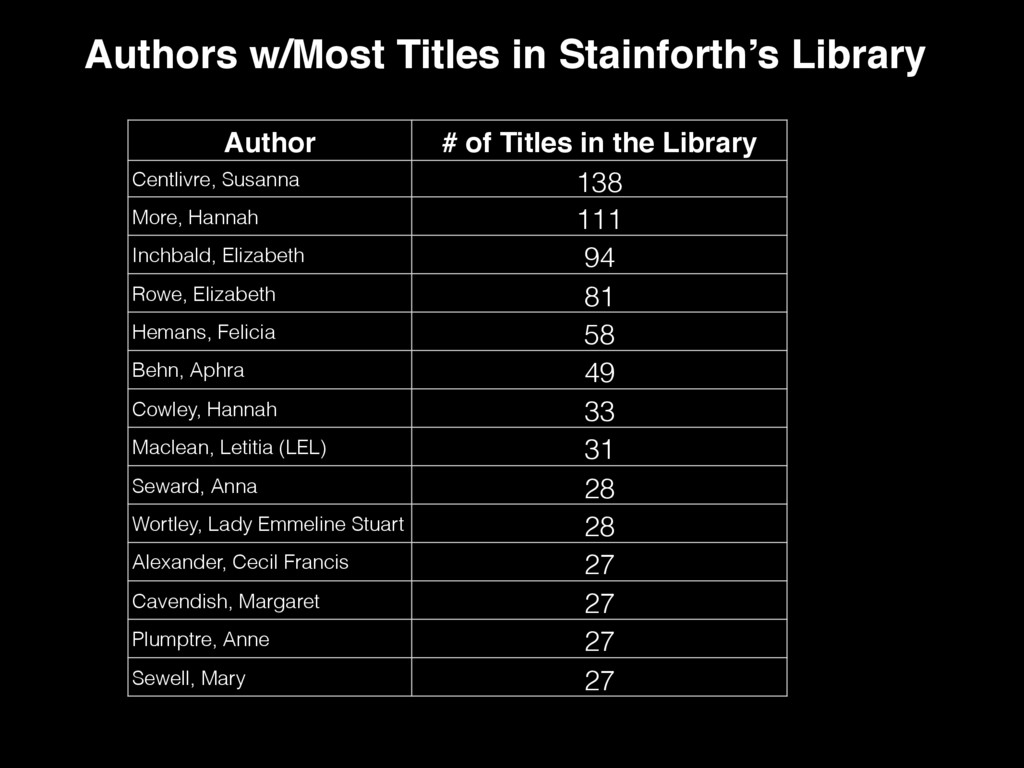
in the Library Centlivre, Susanna 138 More, Hannah 111 Inchbald, Elizabeth 94 Rowe, Elizabeth 81 Hemans, Felicia 58 Behn, Aphra 49 Cowley, Hannah 33 Maclean, Letitia (LEL) 31 Seward, Anna 28 Wortley, Lady Emmeline Stuart 28 Alexander, Cecil Francis 27 Cavendish, Margaret 27 Plumptre, Anne 27 Sewell, Mary 27
Guinn-Chipman Michael Harris Chad Marks Maria Semmens Ivy Schweitzer and Stainforth editorial team alumni follow the Stainforth project at http://libpress.colorado.edu/stainforth


 institutdelelevage
 ontheslope
 takehaya
 fkske
 ayatokanada
 signer
 yumulab
 koide3
 takasehideki
 rakko
 tessaabrams
 takai
 addyosmani
 akosma
 palkan
 popppiees
 notwaldorf
 mfonobong
 oripsolob
 erikaheidi