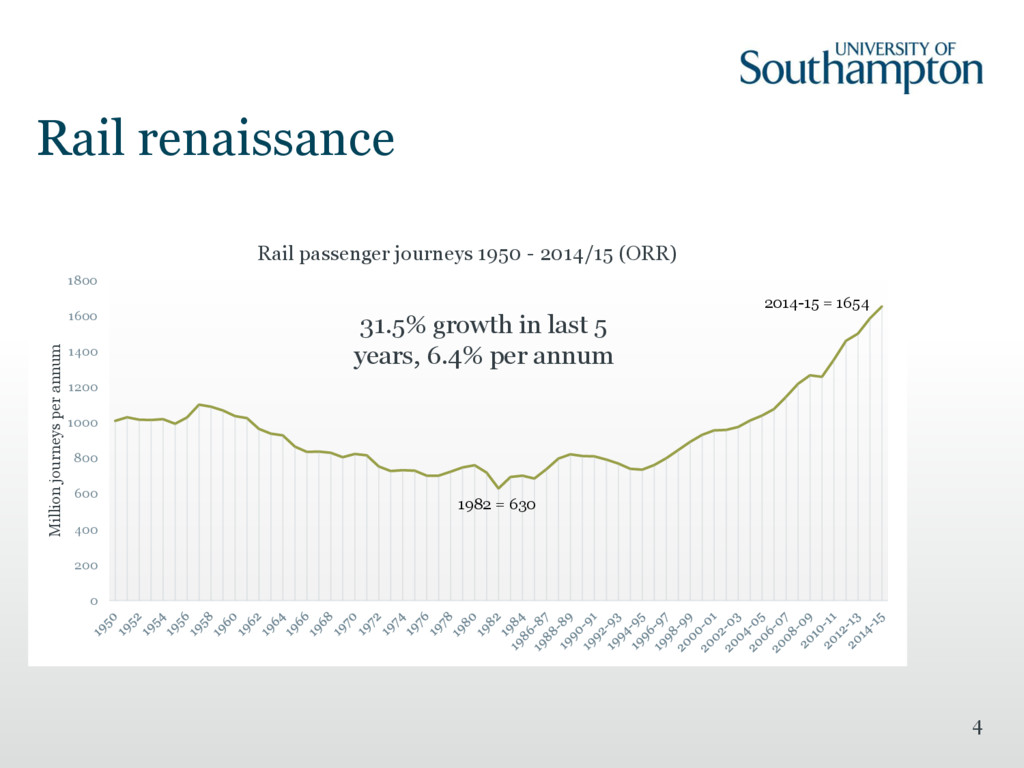
1400 1600 1800 Million journeys per annum Rail passenger journeys 1950 - 2014/15 (ORR) 1982 = 630 2014-15 = 1654 31.5% growth in last 5 years, 6.4% per annum
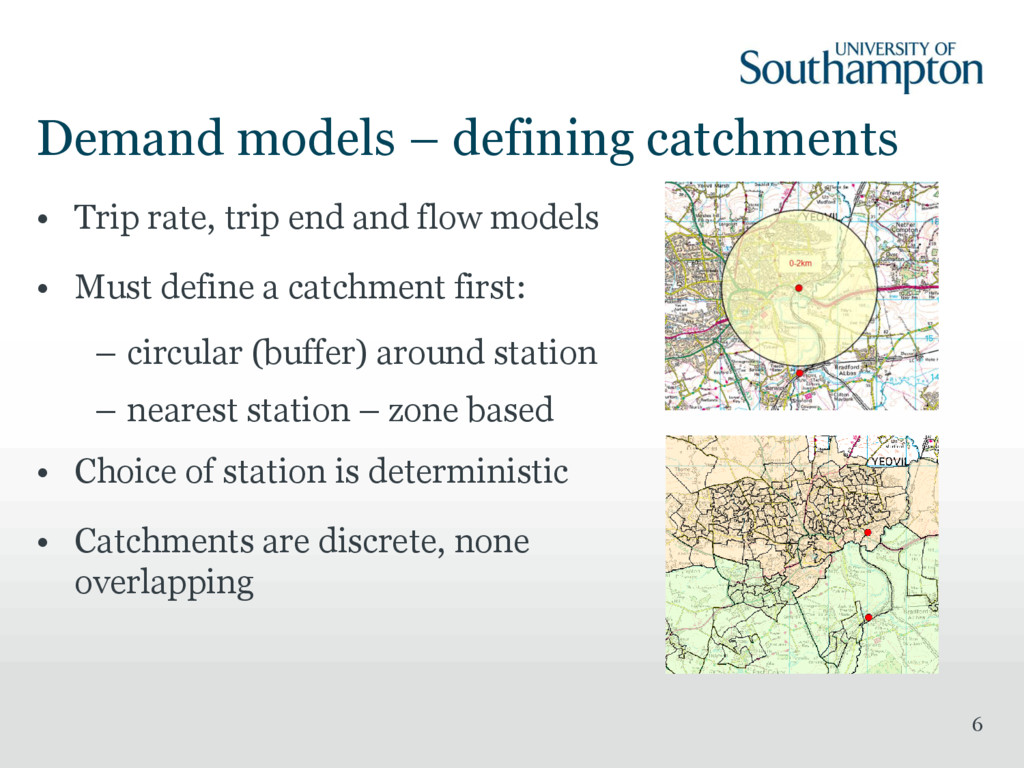
end and flow models • Must define a catchment first: – circular (buffer) around station – nearest station – zone based • Choice of station is deterministic • Catchments are discrete, none overlapping
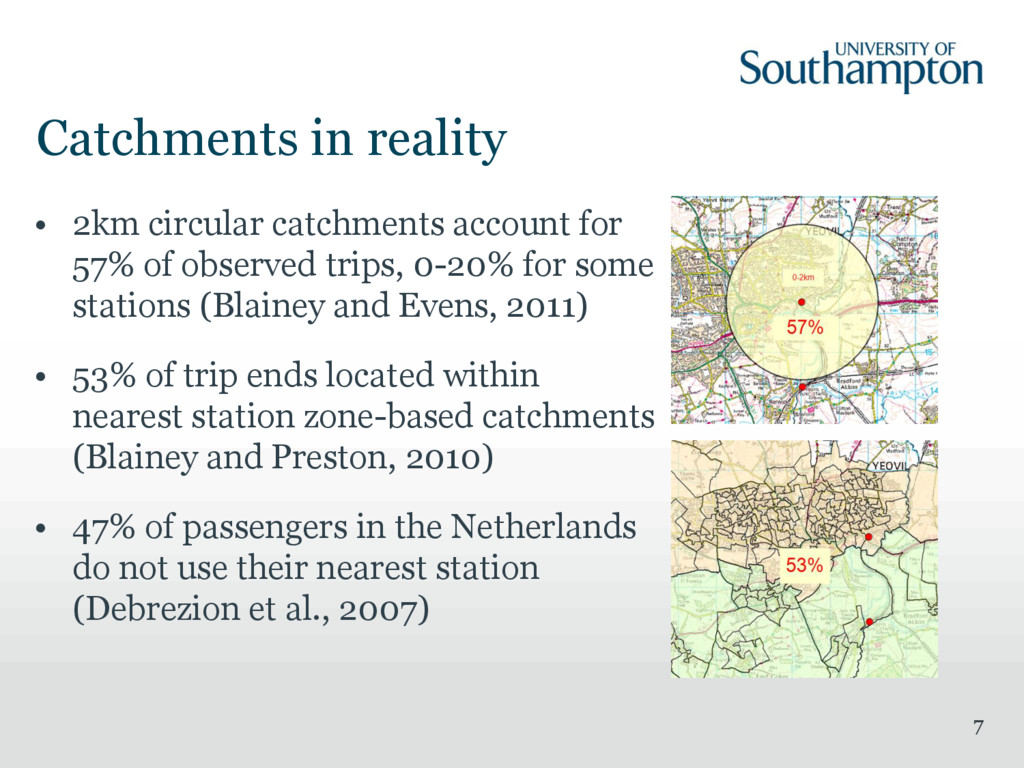
57% of observed trips, 0-20% for some stations (Blainey and Evens, 2011) • 53% of trip ends located within nearest station zone-based catchments (Blainey and Preston, 2010) • 47% of passengers in the Netherlands do not use their nearest station (Debrezion et al., 2007)
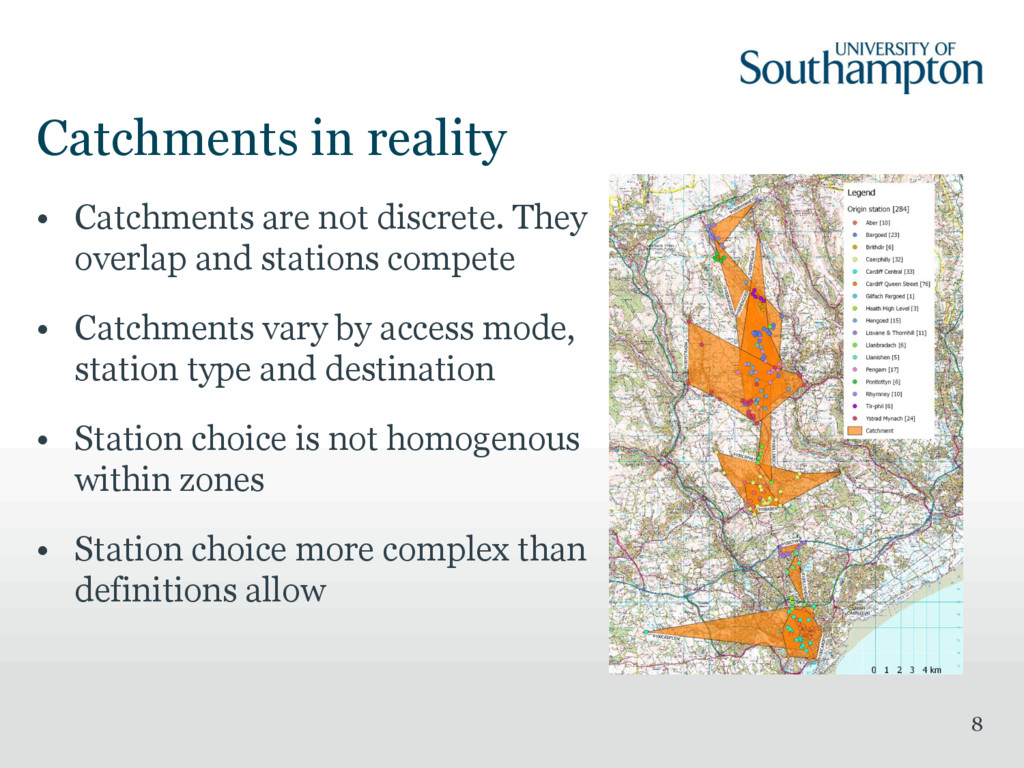
overlap and stations compete • Catchments vary by access mode, station type and destination • Station choice is not homogenous within zones • Station choice more complex than definitions allow
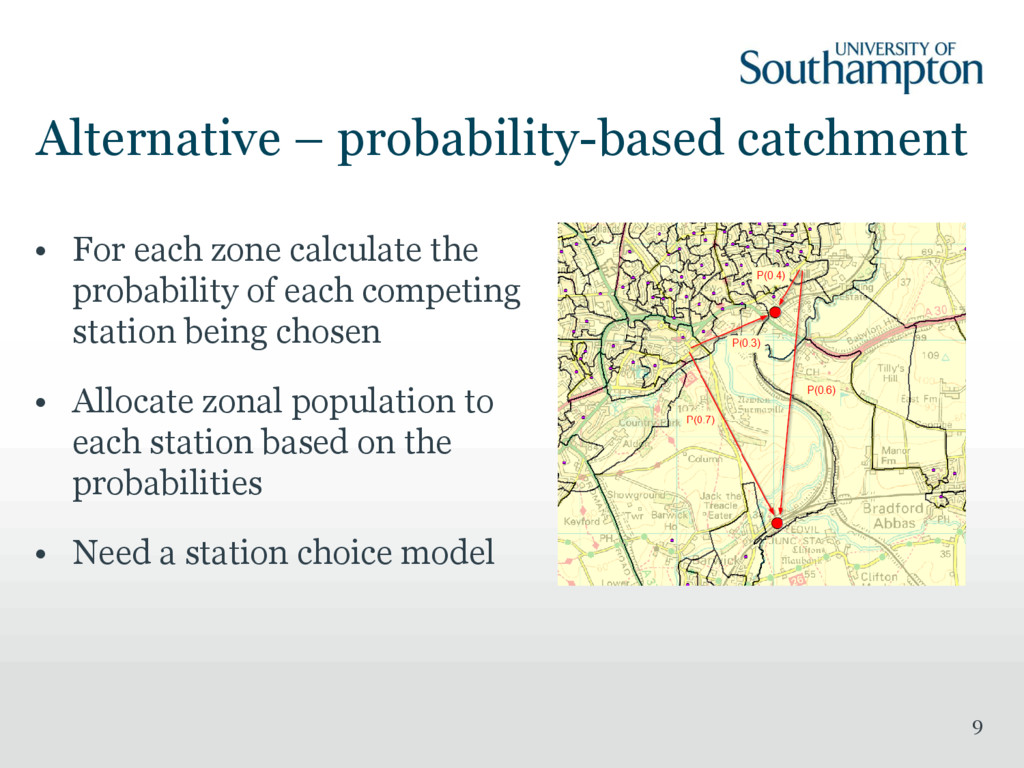
the probability of each competing station being chosen • Allocate zonal population to each station based on the probabilities • Need a station choice model
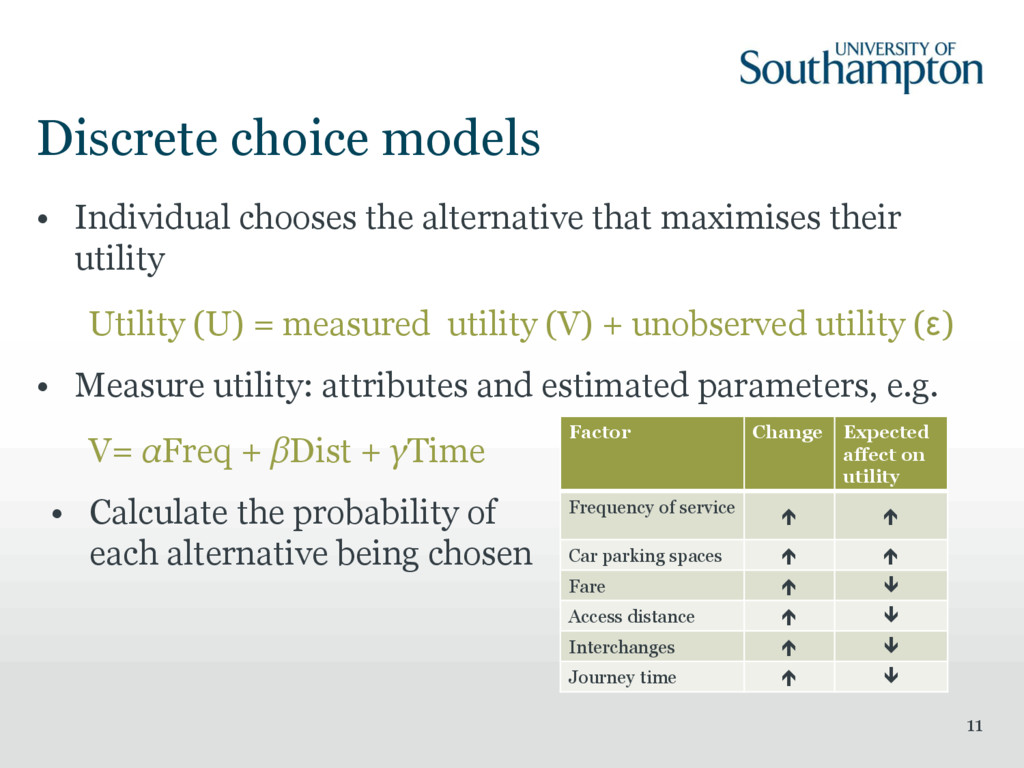
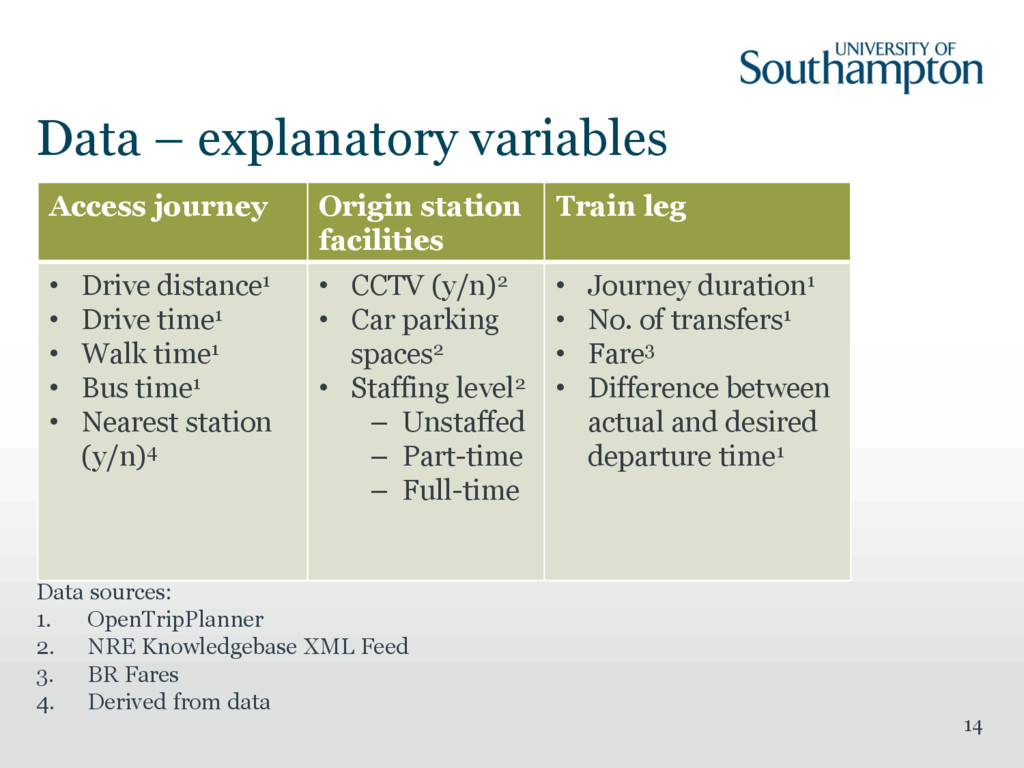
maximises their utility Utility (U) = measured utility (V) + unobserved utility (ε) • Measure utility: attributes and estimated parameters, e.g. V= αFreq + βDist + γTime Factor Change Expected affect on utility Frequency of service Car parking spaces Fare Access distance Interchanges Journey time • Calculate the probability of each alternative being chosen
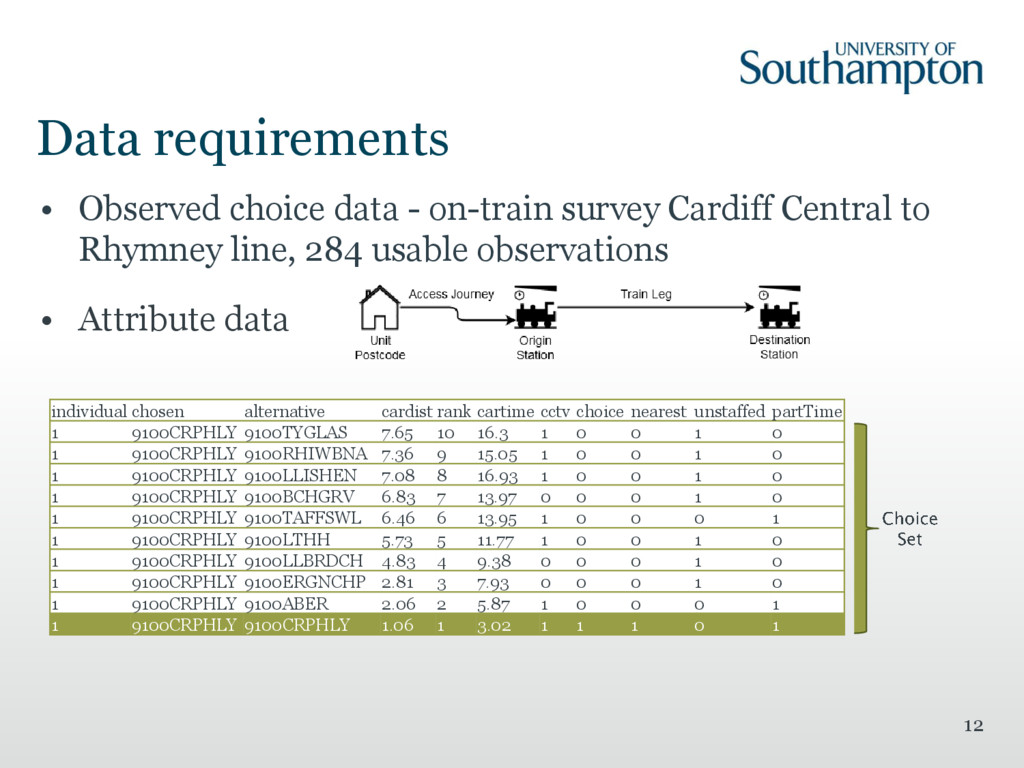
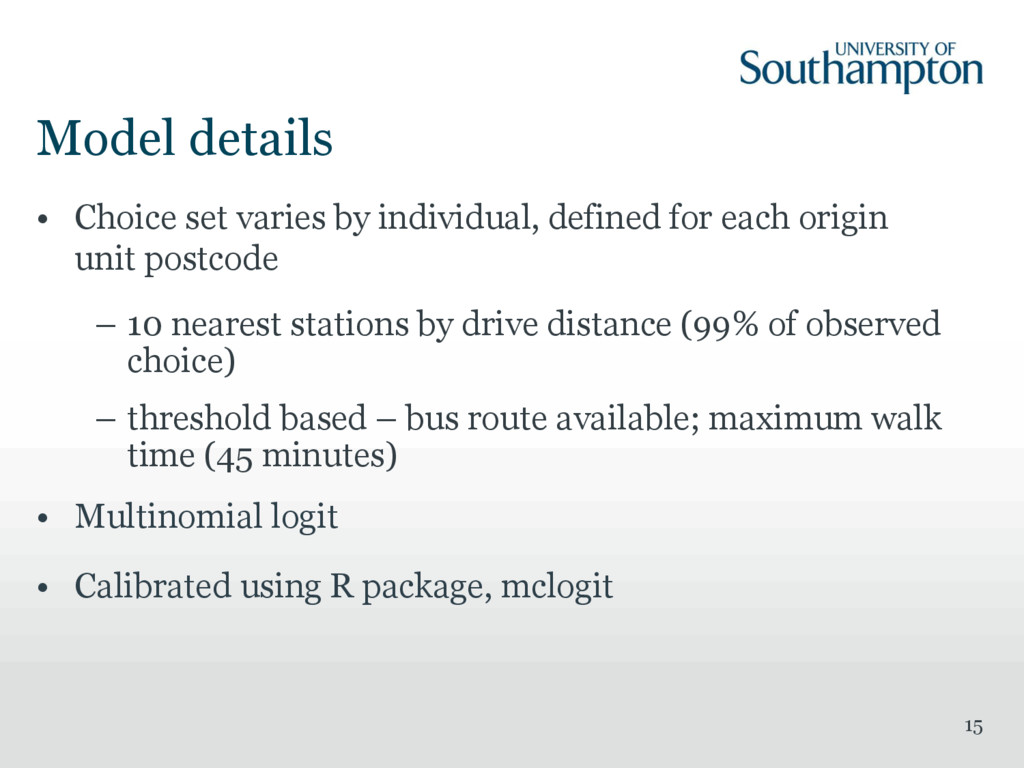
for each origin unit postcode – 10 nearest stations by drive distance (99% of observed choice) – threshold based – bus route available; maximum walk time (45 minutes) • Multinomial logit • Calibrated using R package, mclogit
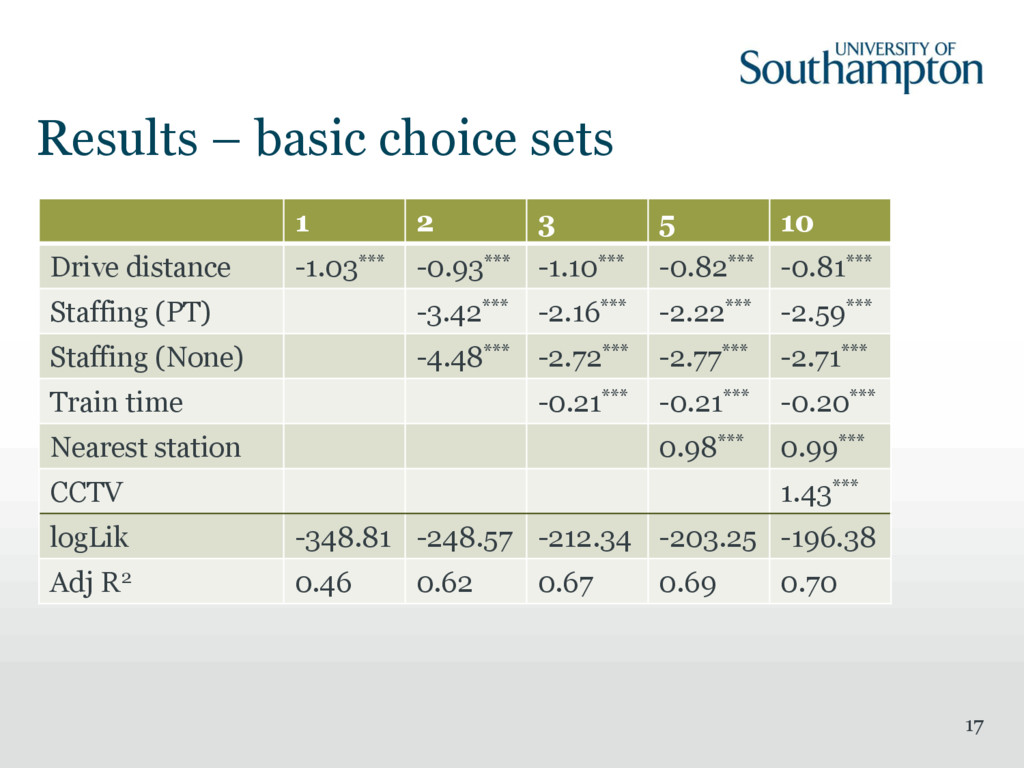
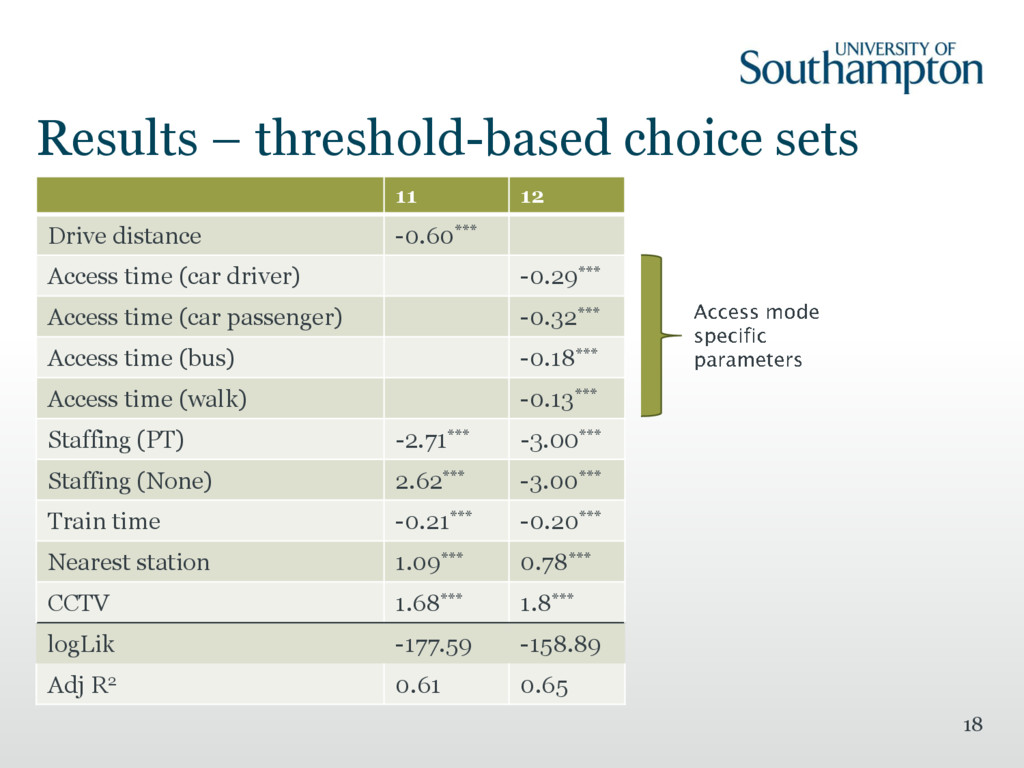
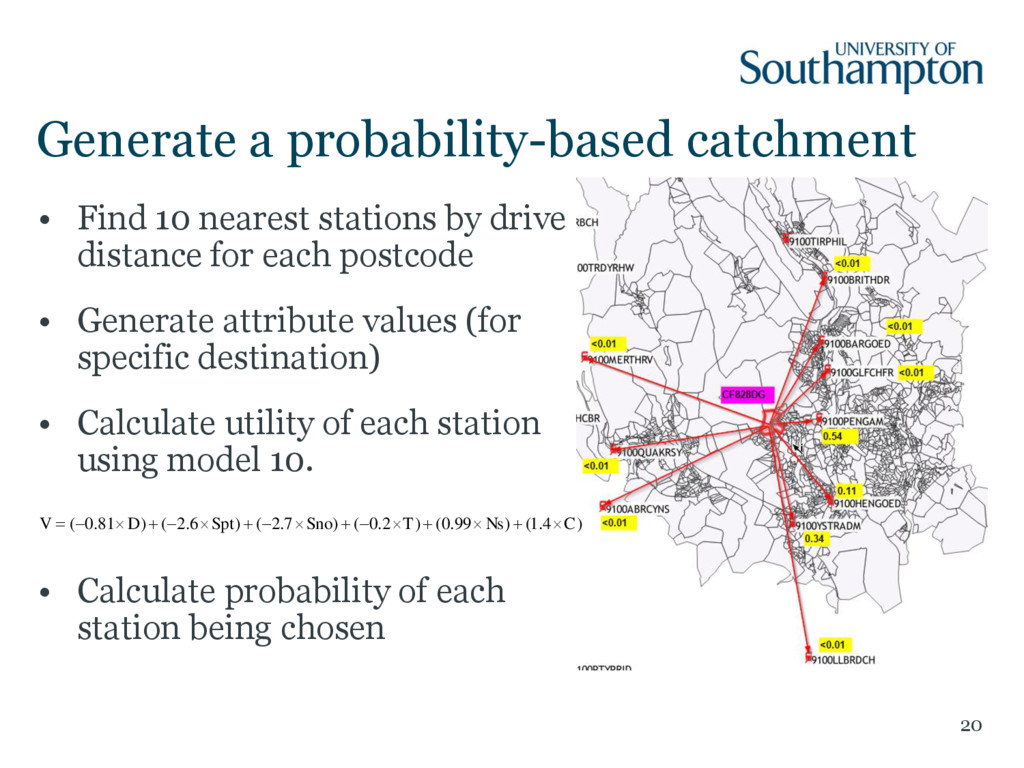
by drive distance for each postcode • Generate attribute values (for specific destination) • Calculate utility of each station using model 10. • Calculate probability of each station being chosen ) 4 . 1 ( ) 99 . 0 ( ) 2 . 0 ( ) 7 . 2 ( ) 6 . 2 ( ) 81 . 0 ( C Ns T Sno Spt D V
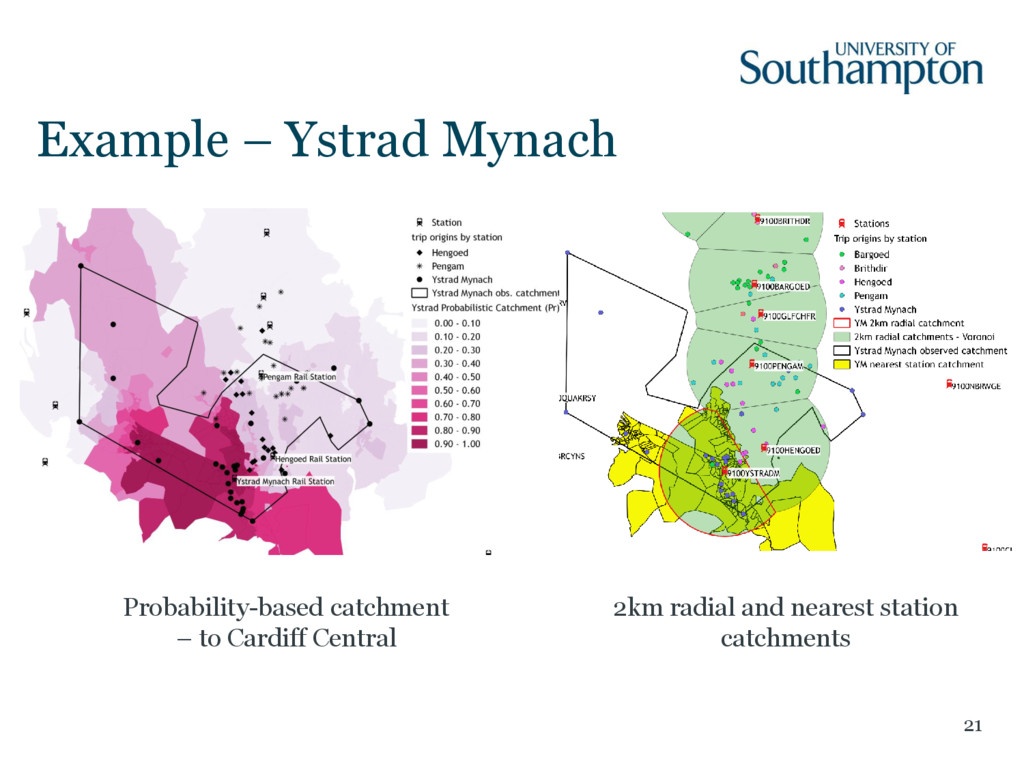
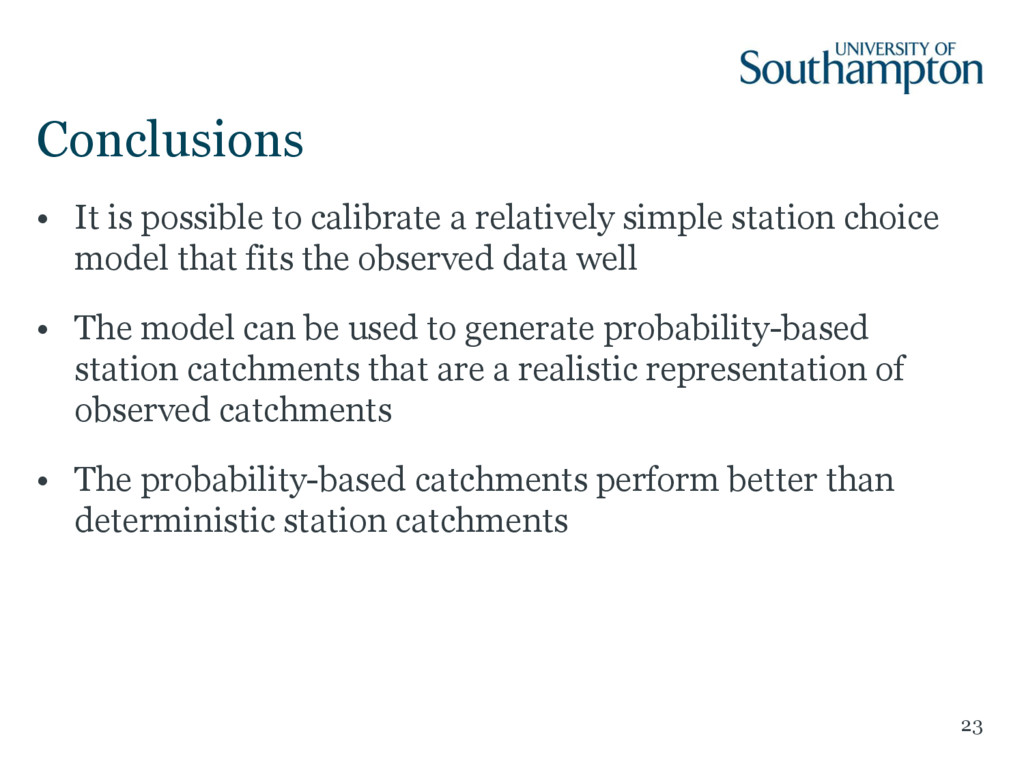
station choice model that fits the observed data well • The model can be used to generate probability-based station catchments that are a realistic representation of observed catchments • The probability-based catchments perform better than deterministic station catchments 23
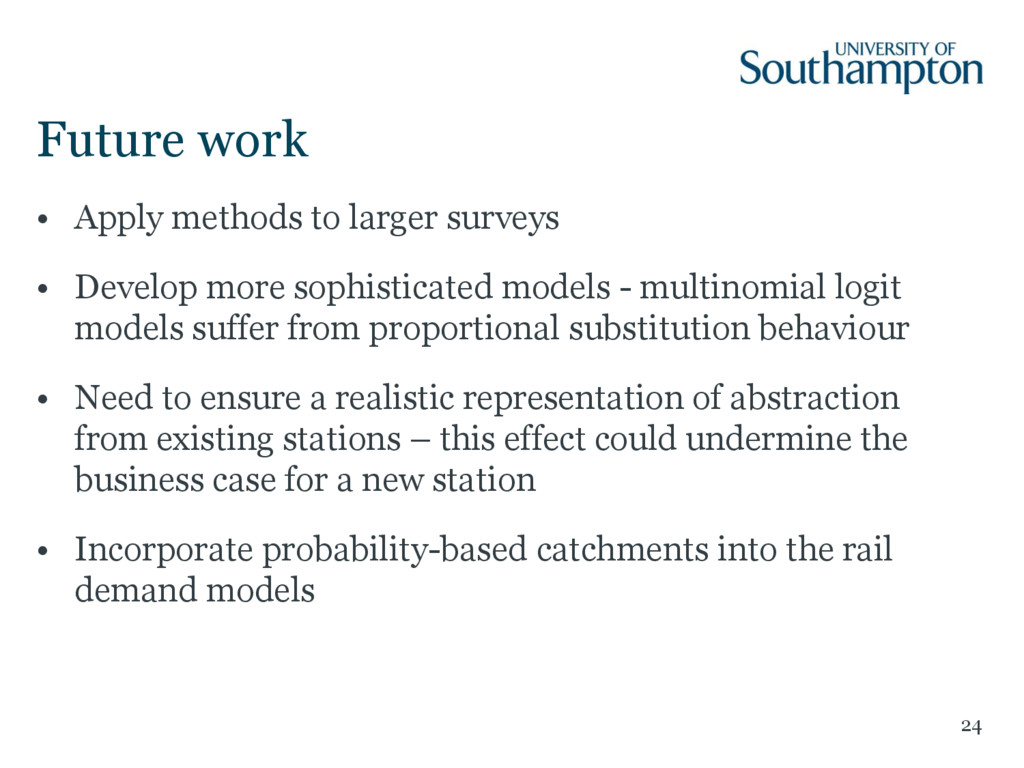
more sophisticated models - multinomial logit models suffer from proportional substitution behaviour • Need to ensure a realistic representation of abstraction from existing stations – this effect could undermine the business case for a new station • Incorporate probability-based catchments into the rail demand models 24


 marcusyoung
 stktu
stktu
 ayaniwa
 institutdelelevage
 takehaya
 mickey_0226
 hf149
hf149
 sishi2026
 fr0gger
 yukako_nakano
 tkng
tkng
 sishi
sishi
 pwiseman
 skoyamalab
 dougneiner
 pauljervisheath
 sarafernandez
 jonyablonski
 eileencodes
 rkaga
rkaga
 rocio
rocio
 portentint
 takai
takai
 akashhashmi