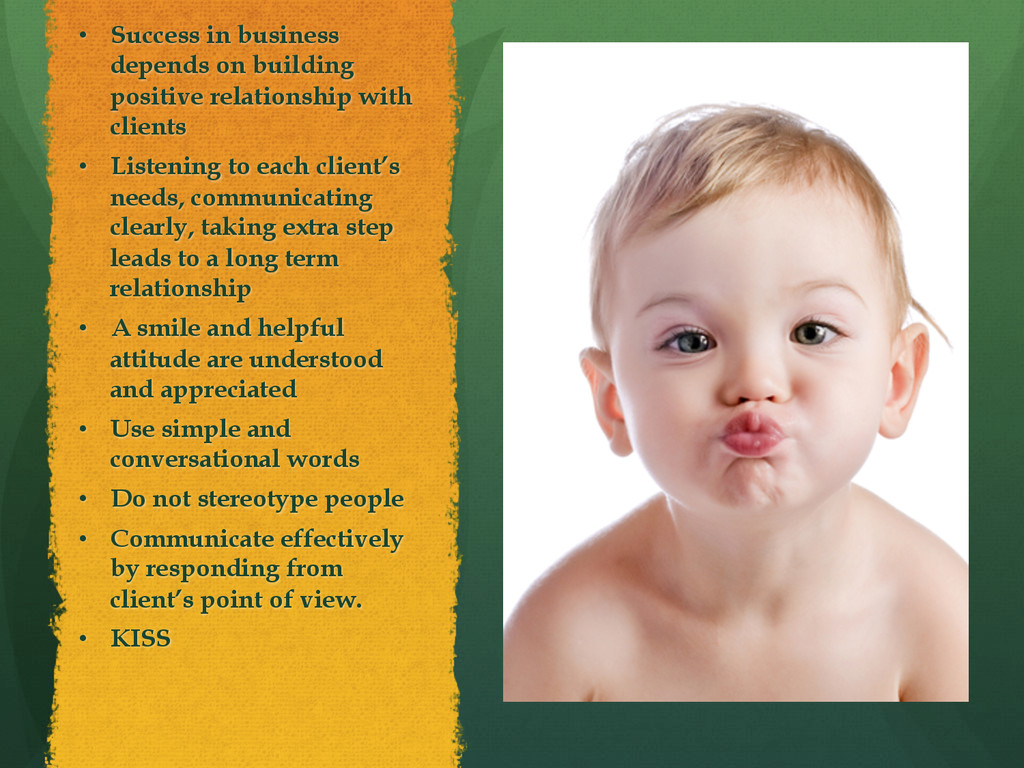
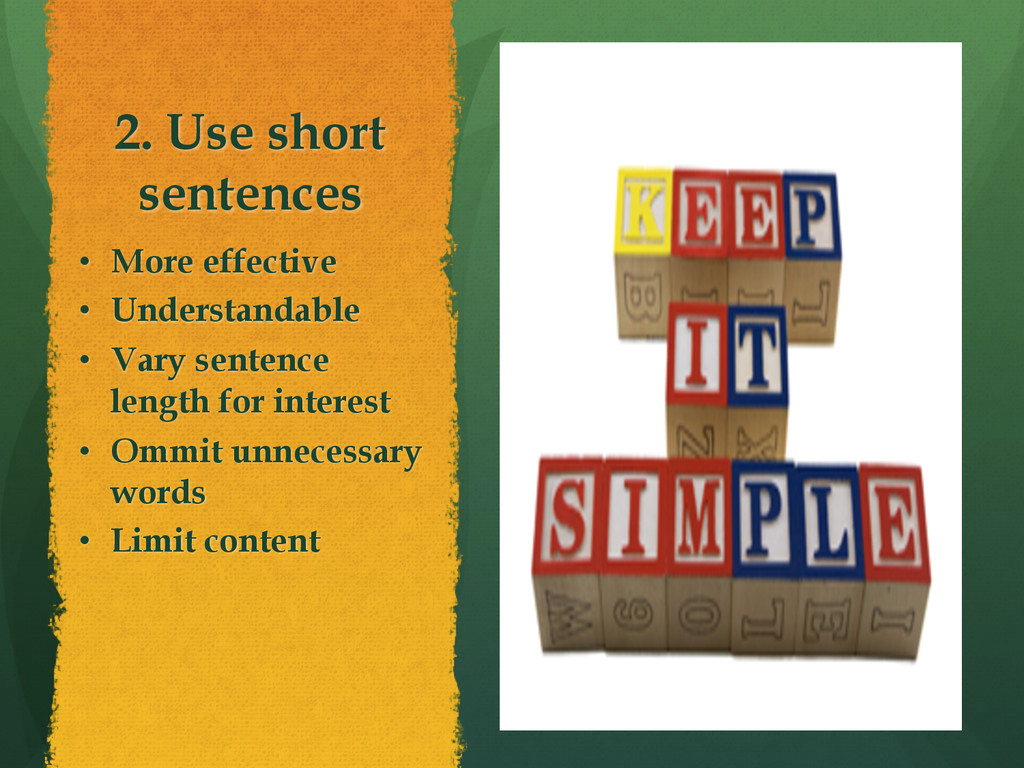
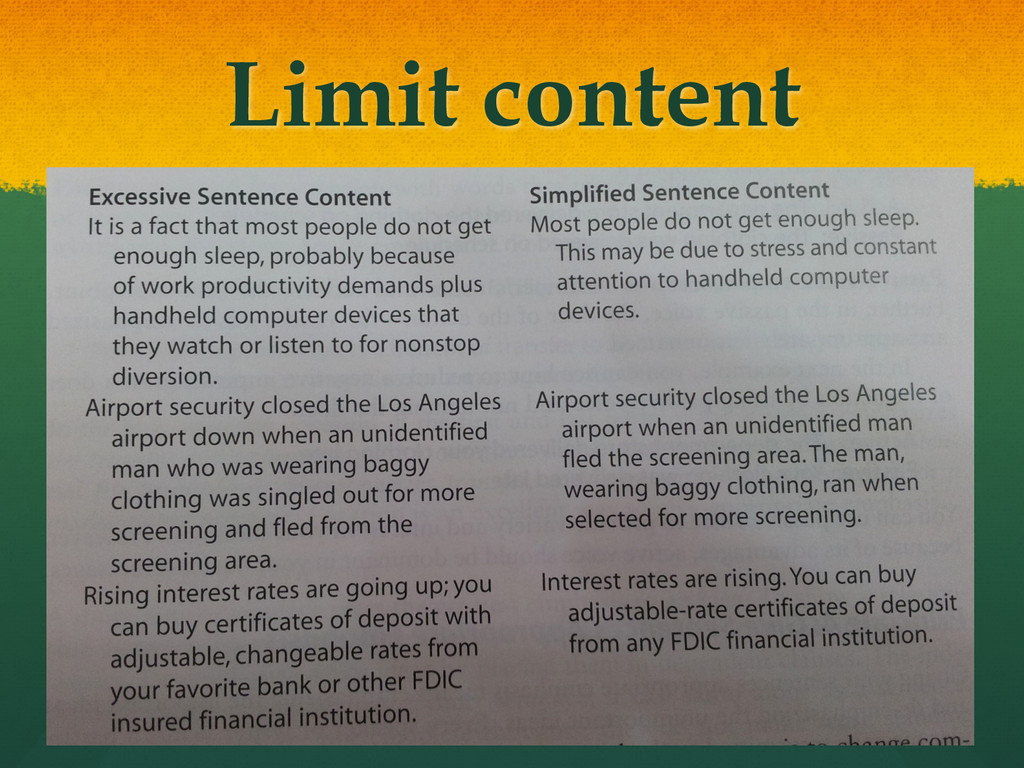
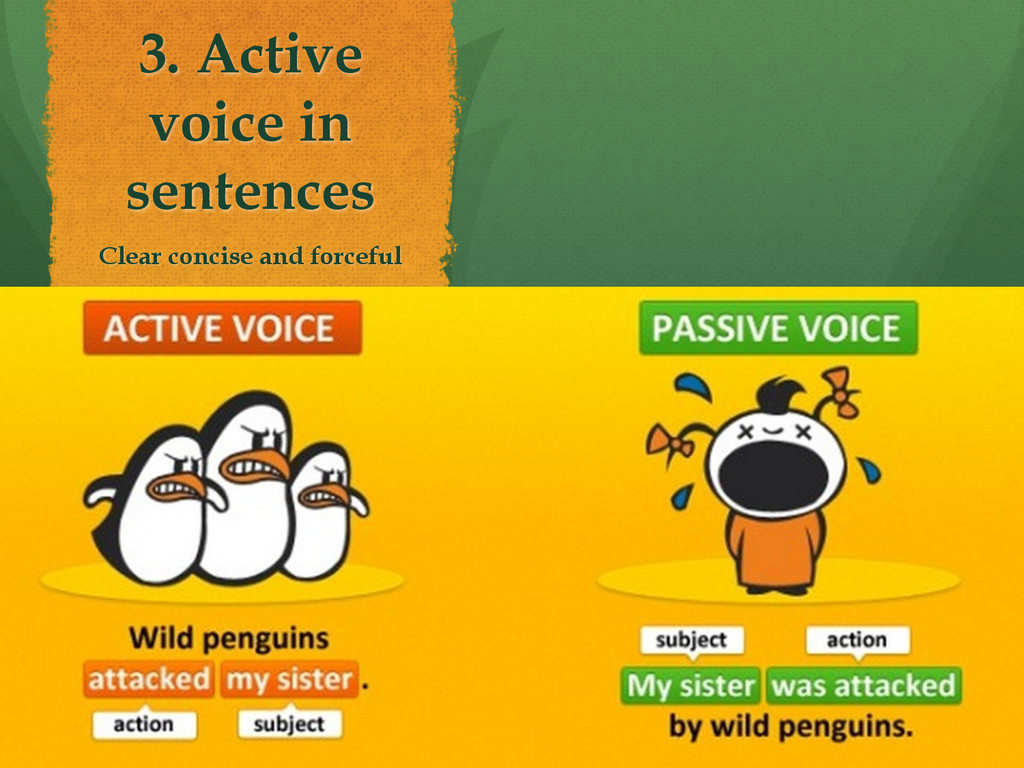
clients • Listening to each client’s needs, communicating clearly, taking extra step leads to a long term relationship • A smile and helpful attitude are understood and appreciated • Use simple and conversational words • Do not stereotype people • Communicate effectively by responding from client’s point of view. • KISS
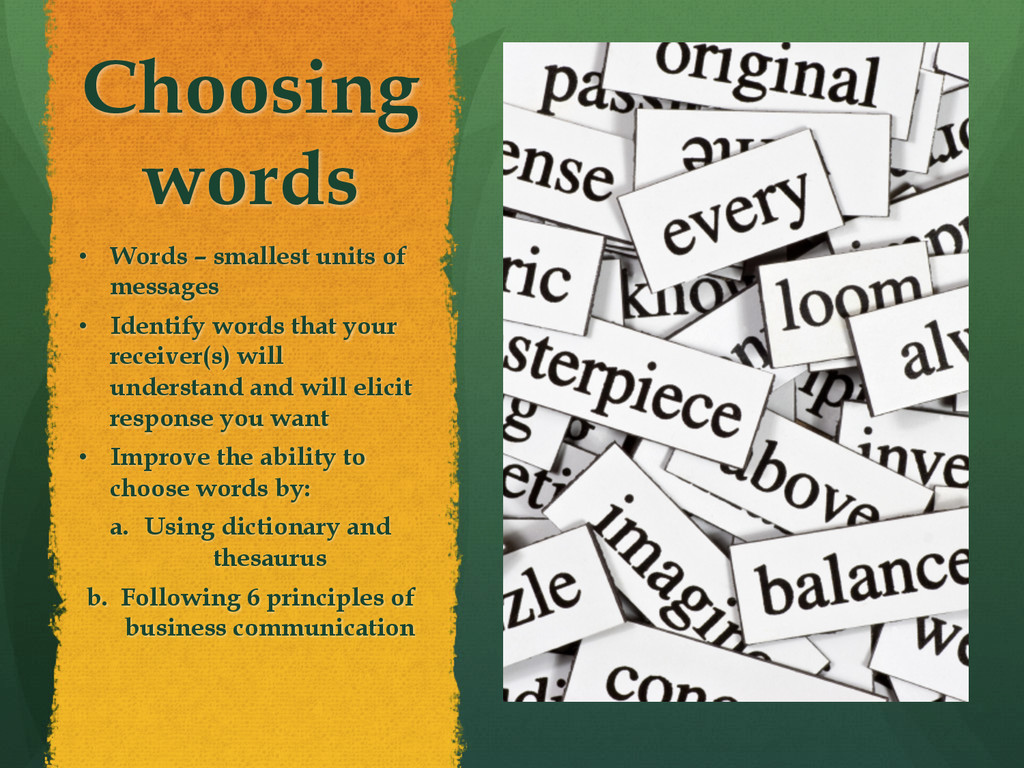
Identify words that your receiver(s) will understand and will elicit response you want • Improve the ability to choose words by: a. Using dictionary and thesaurus b. Following 6 principles of business communication
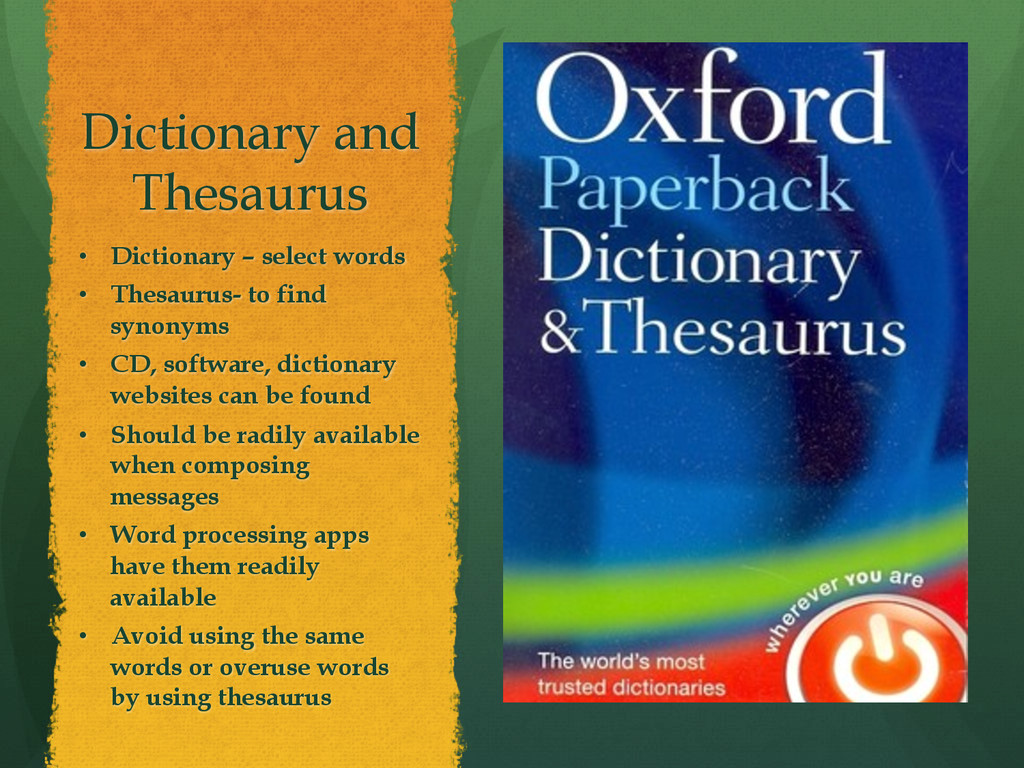
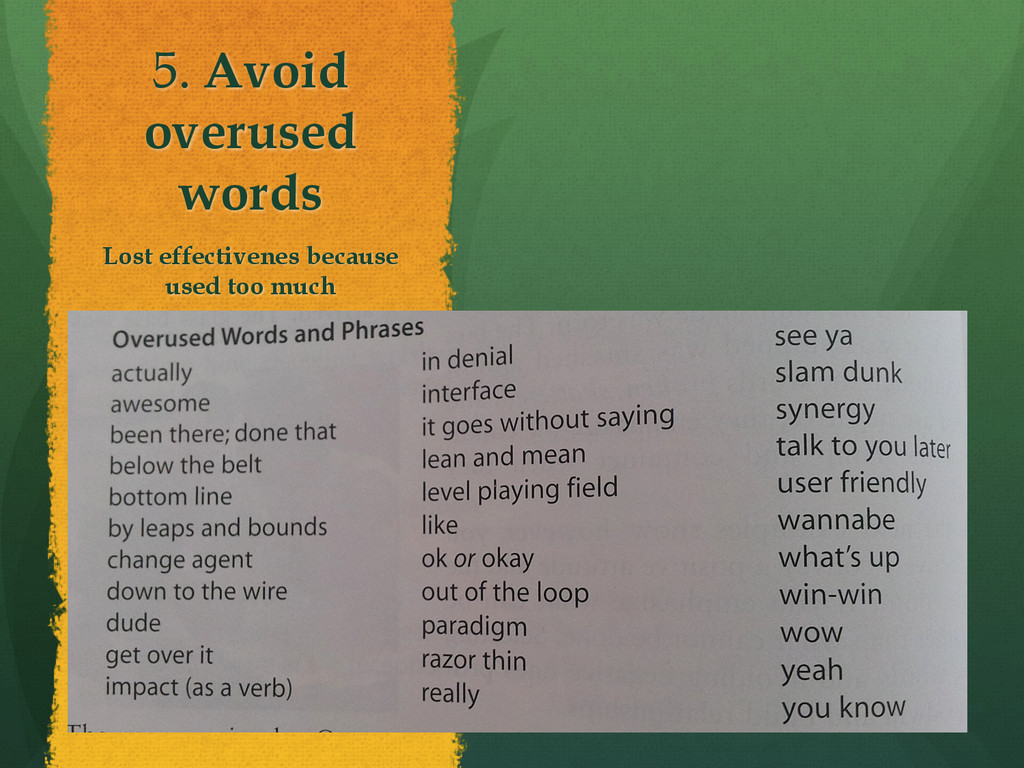
to find synonyms • CD, software, dictionary websites can be found • Should be radily available when composing messages • Word processing apps have them readily available • Avoid using the same words or overuse words by using thesaurus
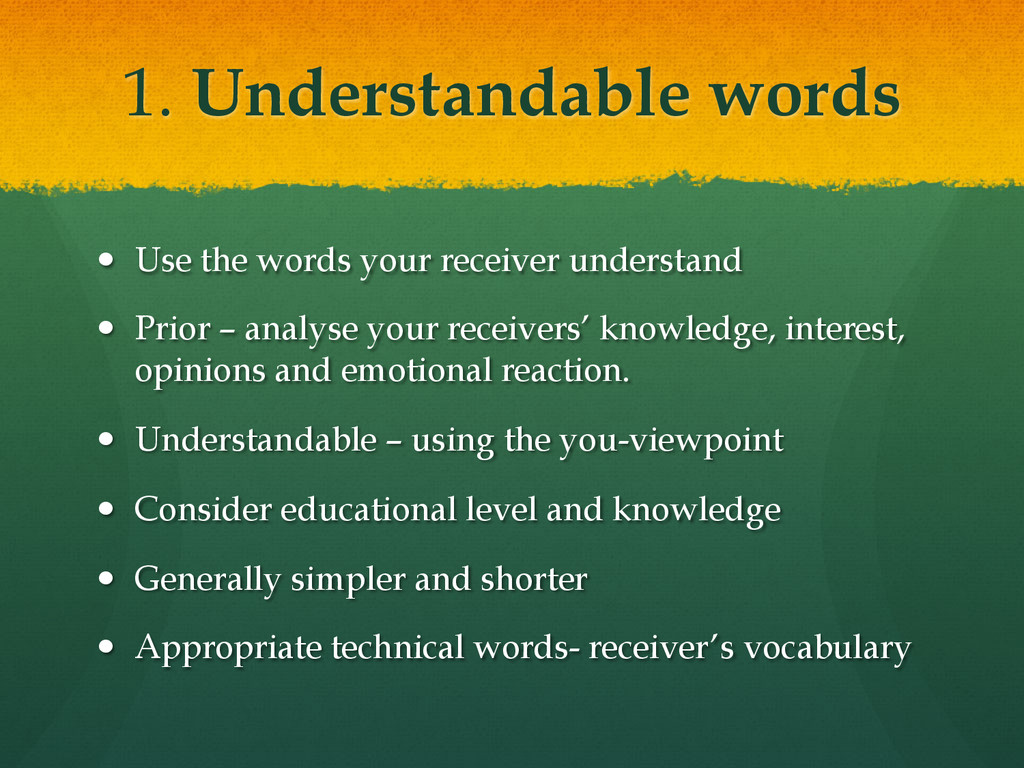
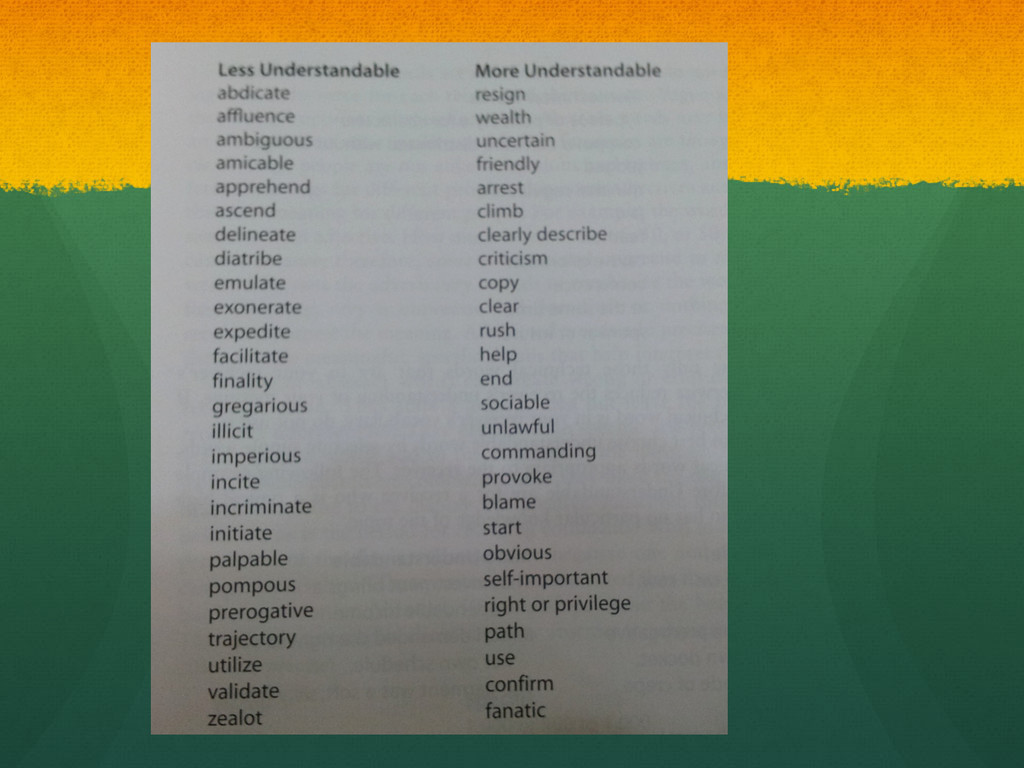
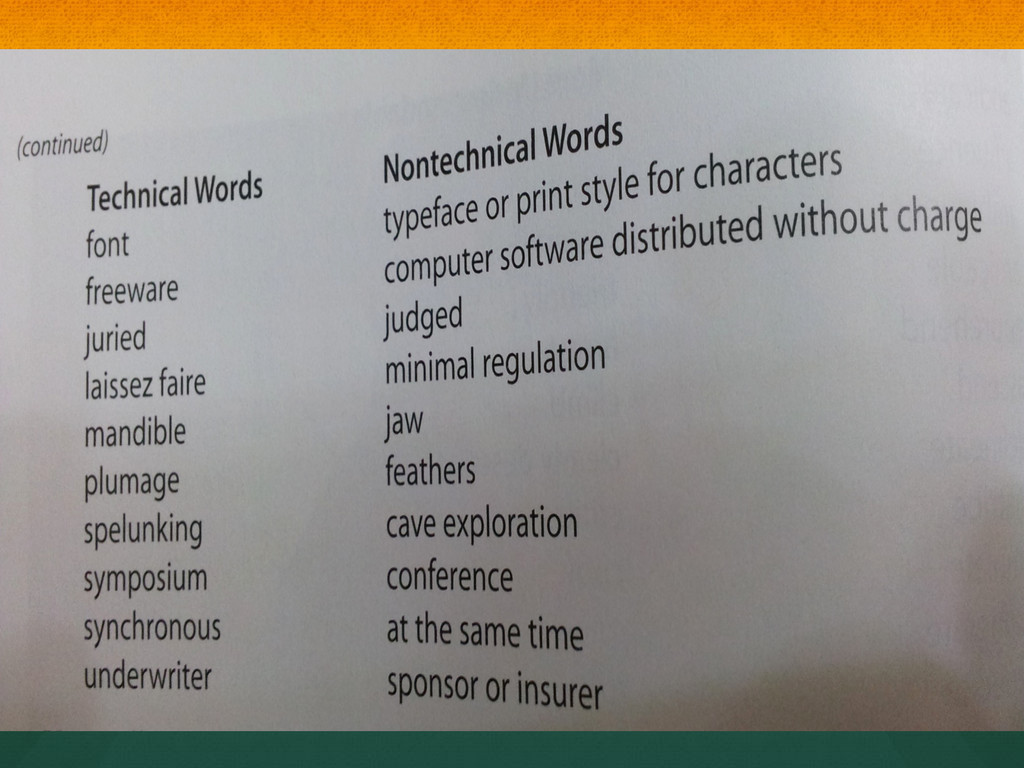
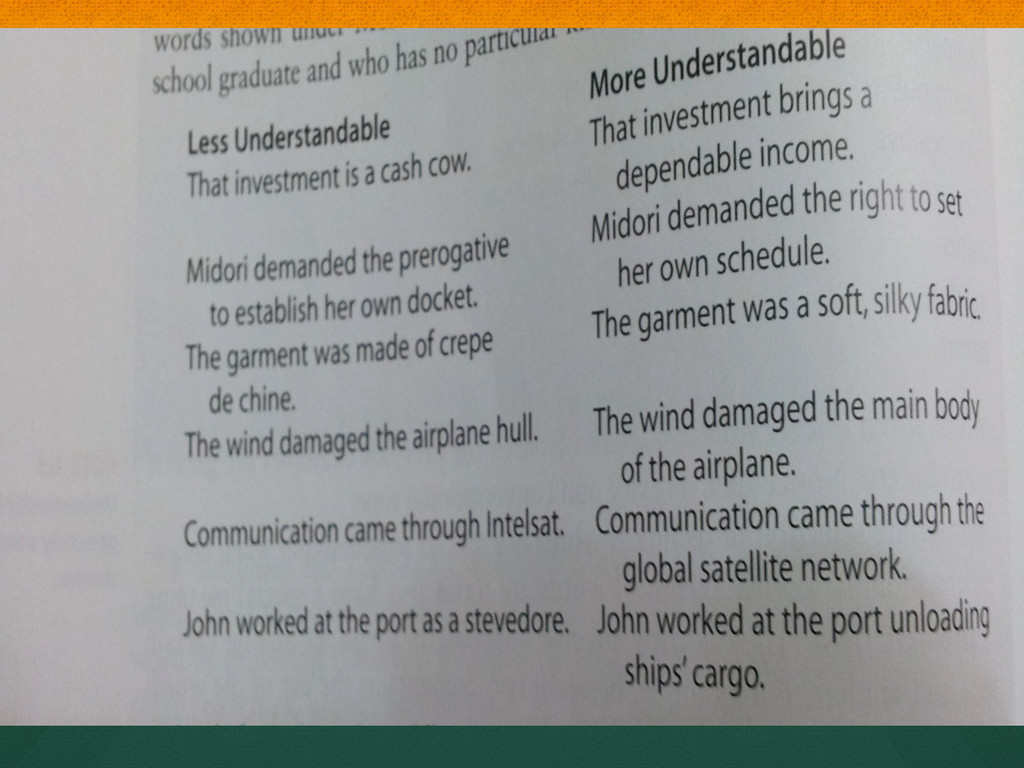
Prior – analyse your receivers’ knowledge, interest, opinions and emotional reaction. Understandable – using the you-viewpoint Consider educational level and knowledge Generally simpler and shorter Appropriate technical words- receiver’s vocabulary
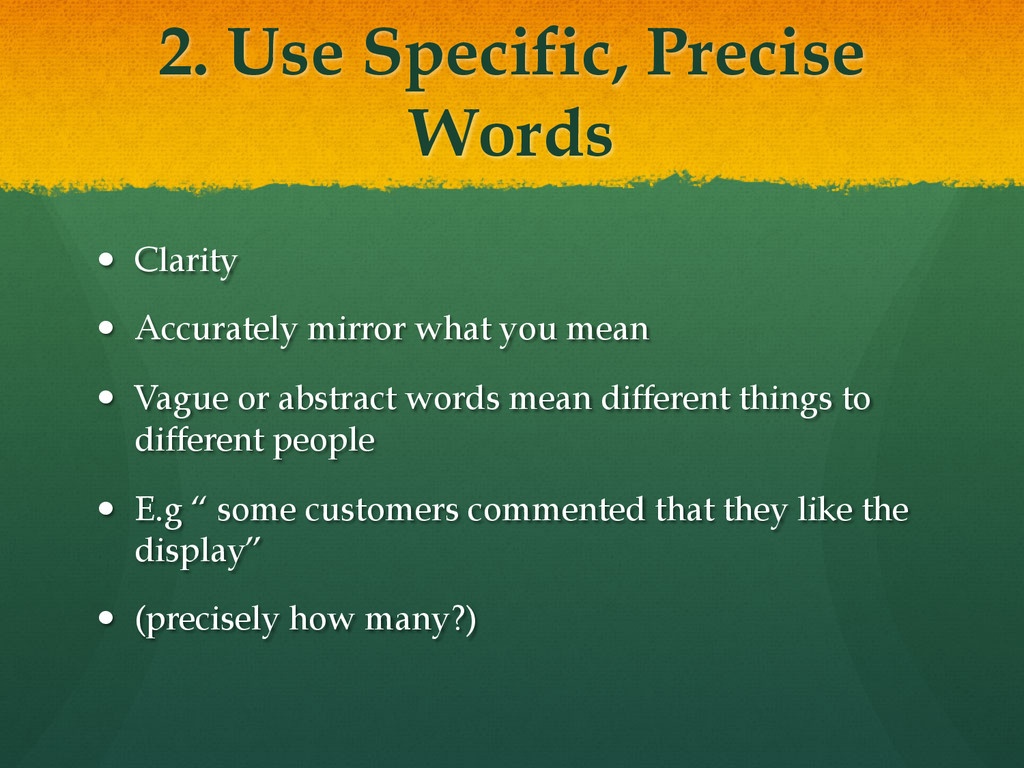
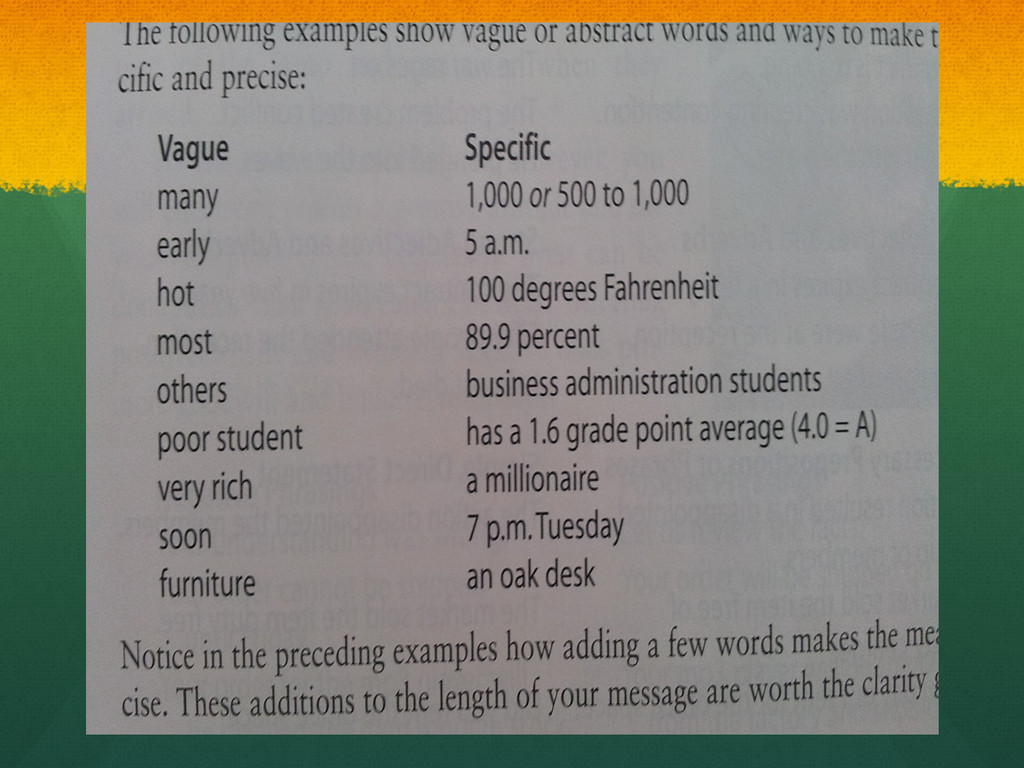
what you mean Vague or abstract words mean different things to different people E.g “ some customers commented that they like the display” (precisely how many?)
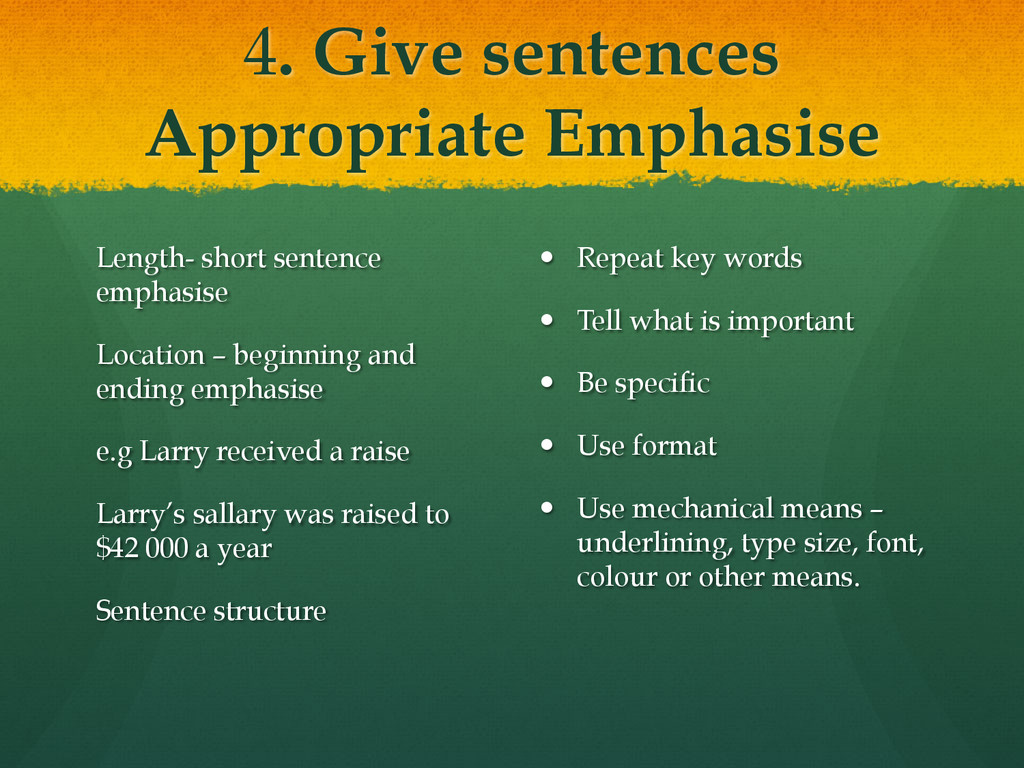
– beginning and ending emphasise e.g Larry received a raise Larry’s sallary was raised to $42 000 a year Sentence structure Repeat key words Tell what is important Be specific Use format Use mechanical means – underlining, type size, font, colour or other means.


 najibahmad
 naoji_taniguchi_ksk_0827
 moon004
 3l4l5
3l4l5
 ichiroc
 kenichiota0711
 doratex
 bvr7352
 signer
 mariooc
 tasusu
 mutomasa
 eller86
 deanohume
 denniskardys
 holman
 marktimemedia
 jonoalderson
 tanoku
 inesmontani
 rabernat
 kimpetersen
 honzajavorek
 tmiket
 portentint