Upgrade to Pro — share decks privately, control downloads, hide ads and more …

biz com 03

Sponsored · Your Podcast. Everywhere. Effortlessly. Share. Educate. Inspire. Entertain. You do you. We'll handle the rest.

biz com 03

PMD2233 Business Communication

Avatar for najibahmad

najibahmad

June 05, 2014
Tweet

More Decks by najibahmad

Other Decks in Education

Transcript

  1. •  WORD CHOICE •  DENOTATIVE V/S CONNOTATIVE •  UNFAMILIAR IDIOMS

    •  IMPLICATIONS AND INFERENCES •  GRAMMAR •  TYPE OF MESSAGE •  APPEARANCE OF THE MESSAGE •  APPEARANCE OF THE SENDER •  ENVIRONMENTAL FACTORS •  RECEIVER’S CAPABILITY •  INEFFECTIVE LISTENING SKILLS •  OTHER COMMUNICATION BARRIERS POTENTIAL COMMUNICATION BARRIERS
  2. 1. WORD CHOICE •  Too difficult / too technical –

    receivers don’t understand •  Too easy – bored & insults •  Reflected poorly on the speaker •  English is not primarily language
  3. 2. DENOTATIVE V/S CONOTATIVE •  Denotative – direct •  Conotative

    – based on experience, situation, slang / sacarsm •  E.g “ well that’s certainly was fast work!’
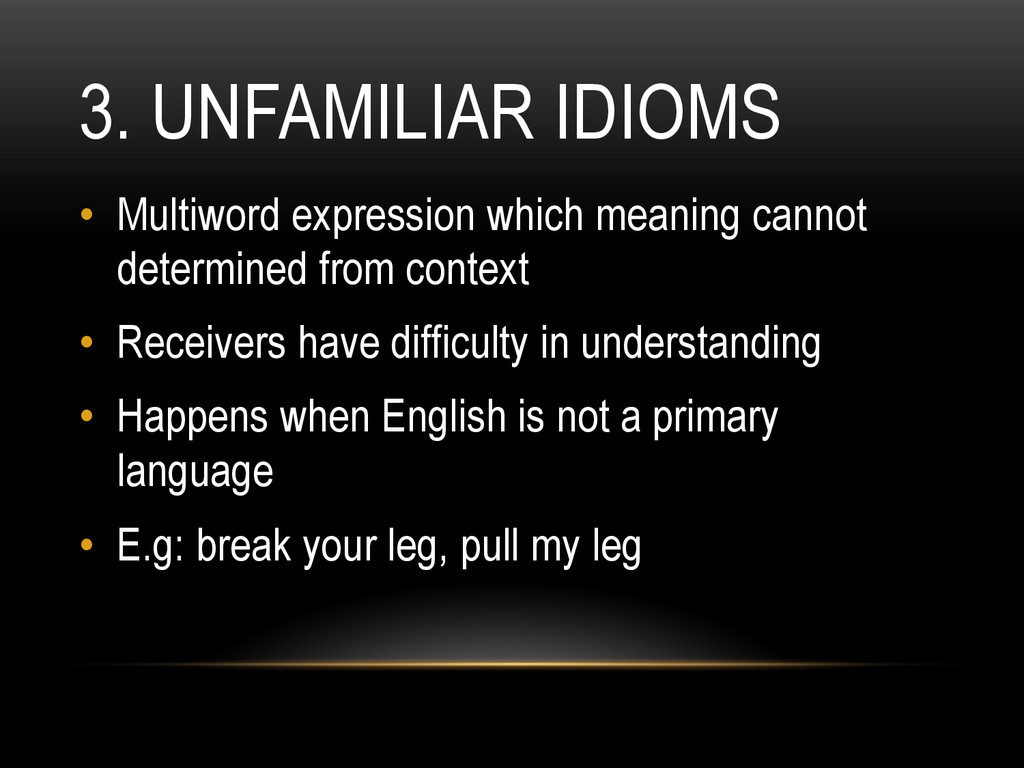
  4. 3. UNFAMILIAR IDIOMS •  Multiword expression which meaning cannot determined

    from context •  Receivers have difficulty in understanding •  Happens when English is not a primary language •  E.g: break your leg, pull my leg
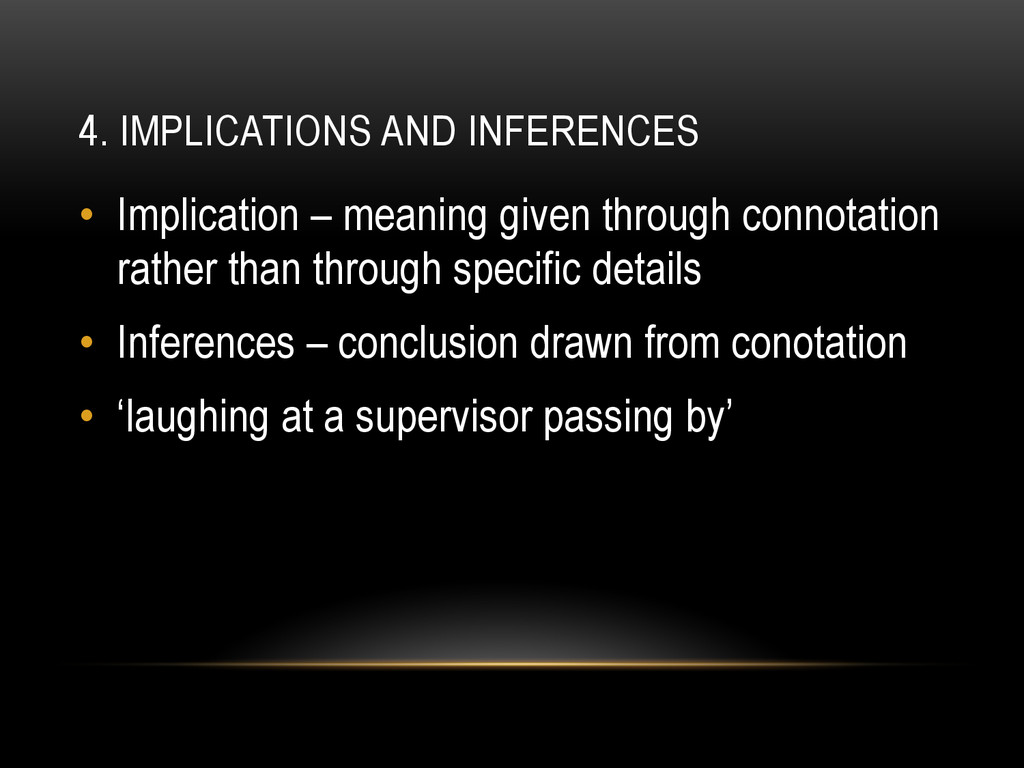
  5. 4. IMPLICATIONS AND INFERENCES •  Implication – meaning given through

    connotation rather than through specific details •  Inferences – conclusion drawn from conotation •  ‘laughing at a supervisor passing by’
  6. 7. APPEARANCE OF THE MESSAGE •  Smudges, sloppy correction, light

    prints, wrinkled paper, poor handwriting •  Emoticons, uppercase letters - email
  7. 9. ENVIRONMENTAL FACTORS •  Noise •  Room temparature •  Odour

    •  Light •  Should be reduced before communication starts
  8. 11. INEFECTIVE LISTENING SKILLS •  Speak 150- 200 words a

    minute – capable of listening to 400 -500 words a minute = mind to wonder •  Sender- give signal to take note, this is important •  Analysing the audience prior
  9. 12. OTHER COMMUNICATION BARIER • Discuss with your partner how can

    you eliminate or reduce the communication barriers that you have discussed yesterday.
  10. CULTURE •  Group beliefs, norms, values, traits and behaviour patterns

    •  Affects how people view the world, what they value, how they interact
  11. CORPORATE CULTURE •  Shared values and behavioural expectations •  ‘the

    way we do things here’ •  Learning = becoming familiar with formal statements of purpose, philosophy and standards of conducts. •  Leaders of an organisation influence what is valued and expected
  12. CULTURAL ETHNICITY AND RACE •  Common history, race to characteristics

    transmissable by descent •  Interaction decrease cultural differences but changes take place slowly •  Label inaccurate and offensive
  13. GENDER ROLES •  Societal expectations of men and women affect

    how they interact with one another •  Men and women tend to exhibit different communication behaviours
  14. AGE DIVERSITY •  18-22: leaving home, establishing identity and new

    alliances •  23- 28: regarding self as adult, living and building future •  29 – 34: searching for stability and security, reexamining relationship •  37 – 42: becoming one own person, facing reality and a sense of age •  45 – 46: settling down becoming a mentor, grandparents, gaining self confidence •  57- 64: mellowing, preparing for retirement, adjusting to aging •  65+; beining life review, accepting self, adjusting to different routines
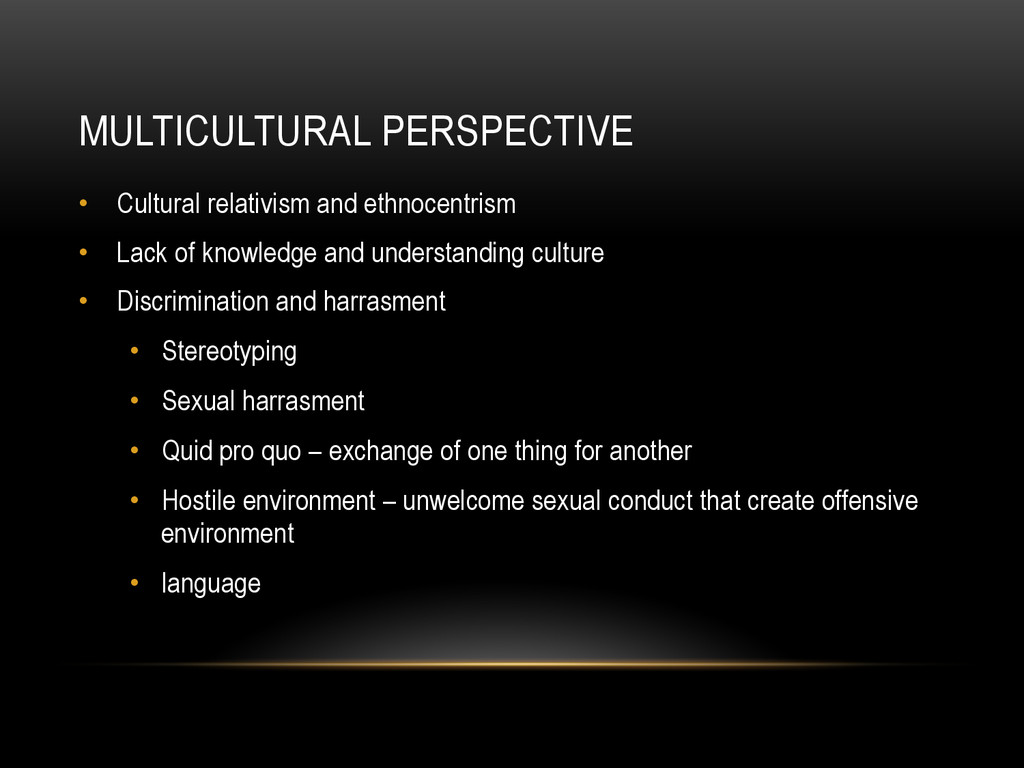
  15. MULTICULTURAL PERSPECTIVE •  Cultural relativism and ethnocentrism •  Lack of

    knowledge and understanding culture •  Discrimination and harrasment •  Stereotyping •  Sexual harrasment •  Quid pro quo – exchange of one thing for another •  Hostile environment – unwelcome sexual conduct that create offensive environment •  language
  16. MULTICULTURAL COMMUNICATION GUIDELINES •  Understand own culture •  Keep an

    open mind and respect diversity •  Identify and adapt language differences
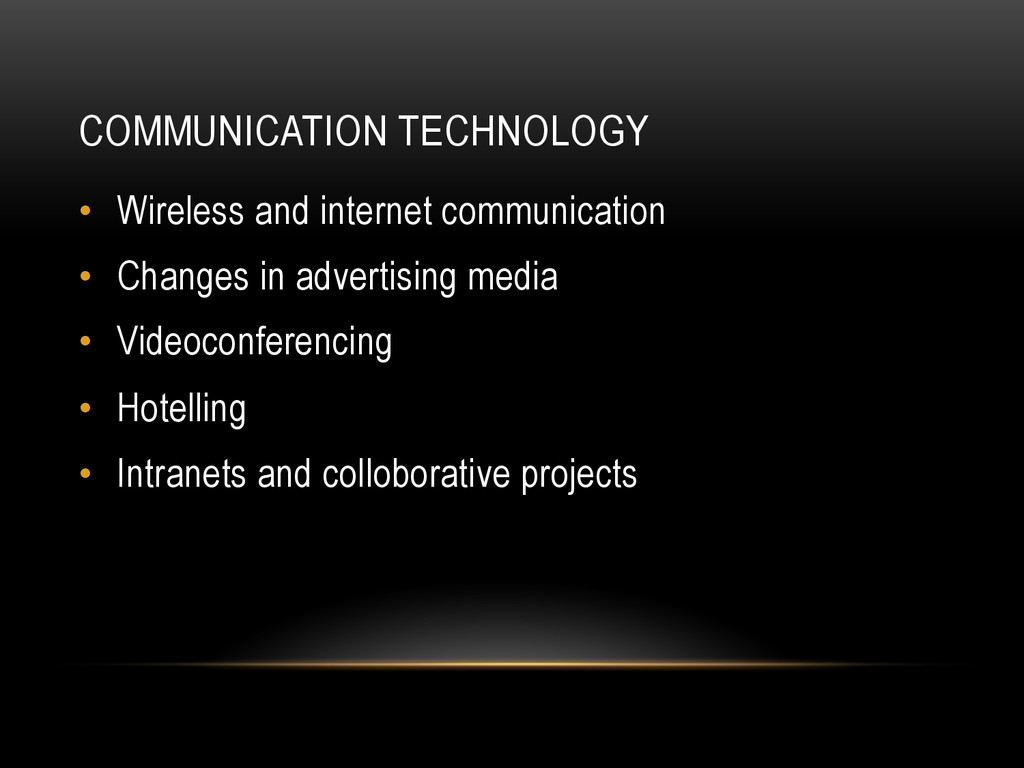
  17. COMMUNICATION TECHNOLOGY •  Wireless and internet communication •  Changes in

    advertising media •  Videoconferencing •  Hotelling •  Intranets and colloborative projects