Upgrade to Pro — share decks privately, control downloads, hide ads and more …

What Happens to Your Natural Teeth Under Veneer...

Sponsored · Your Podcast. Everywhere. Effortlessly. Share. Educate. Inspire. Entertain. You do you. We'll handle the rest. →

What Happens to Your Natural Teeth Under Veneers After Ten Years?

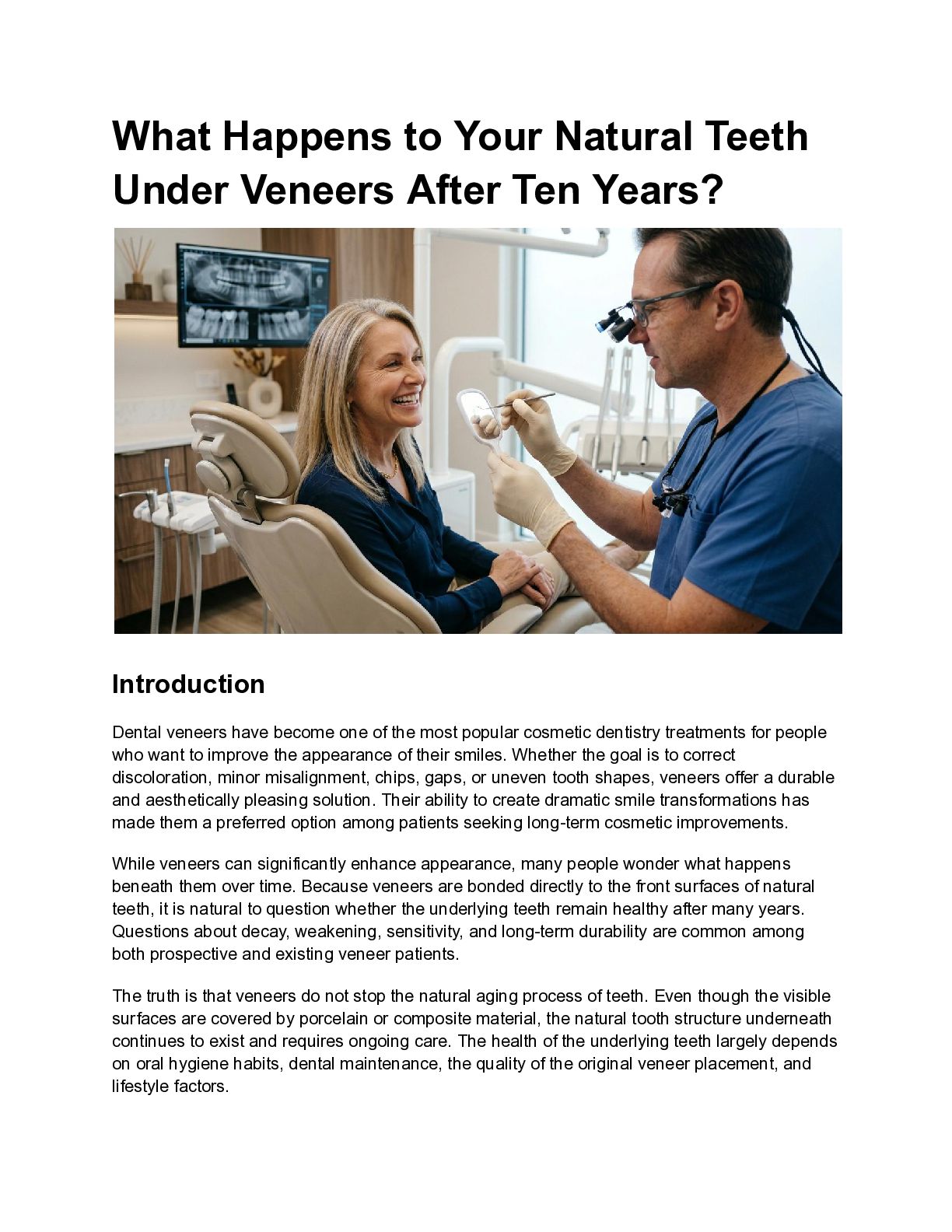
Dental veneers are a long-lasting cosmetic dental solution that can dramatically improve the appearance of a smile while preserving much of the natural tooth structure. Many patients wonder what happens to their natural teeth beneath veneers after ten years and whether the underlying teeth remain healthy. In most cases, natural teeth continue to function normally under veneers, provided proper oral hygiene and regular dental checkups are maintained. Although veneers cover the front surface of teeth, the natural tooth structure underneath remains alive and can still be affected by aging, decay, and gum-related issues. Over time, factors such as oral hygiene habits, diet, teeth grinding, and professional dental care play a major role in determining long-term success. Well-maintained veneers can protect tooth surfaces from minor wear and staining while enhancing aesthetics for many years. However, issues such as gum recession, bonding deterioration, or decay around veneer margins may occasionally occur if preventive care is neglected. Individuals researching long-term veneer outcomes can gain valuable insights into treatment expectations and maintenance requirements; for additional information about veneer procedures and ongoing care, click here to explore professional guidance related to this subject. Understanding how veneers interact with natural teeth over an extended period helps patients make informed decisions and set realistic expectations. With proper care and routine monitoring, veneers can continue to provide both cosmetic and functional benefits while supporting the health of the natural teeth beneath them for well over a decade.

Avatar for Xander Glenhaven

Xander Glenhaven

June 24, 2026

Other Decks in Business

Transcript

  1. What Happens to Your Natural Teeth Under Veneers After Ten

    Years? Introduction Dental veneers have become one of the most popular cosmetic dentistry treatments for people who want to improve the appearance of their smiles. Whether the goal is to correct discoloration, minor misalignment, chips, gaps, or uneven tooth shapes, veneers offer a durable and aesthetically pleasing solution. Their ability to create dramatic smile transformations has made them a preferred option among patients seeking long-term cosmetic improvements. While veneers can significantly enhance appearance, many people wonder what happens beneath them over time. Because veneers are bonded directly to the front surfaces of natural teeth, it is natural to question whether the underlying teeth remain healthy after many years. Questions about decay, weakening, sensitivity, and long-term durability are common among both prospective and existing veneer patients. The truth is that veneers do not stop the natural aging process of teeth. Even though the visible surfaces are covered by porcelain or composite material, the natural tooth structure underneath continues to exist and requires ongoing care. The health of the underlying teeth largely depends on oral hygiene habits, dental maintenance, the quality of the original veneer placement, and lifestyle factors.
  2. Understanding how veneers affect natural teeth over a ten-year period

    can help patients make informed decisions about their oral health. For individuals considering treatment, learning more about the long-term relationship between veneers and natural teeth is essential. Those interested in exploring treatment options can learn more about dental veneers in Burwood; if you would like additional details about how veneers are designed to protect and enhance teeth while maintaining long-term oral health, click here to review professional information relevant to this topic. Over the years, modern veneer technology has improved considerably. Stronger materials, better bonding systems, and advanced treatment planning techniques have increased the longevity of veneers while helping preserve natural tooth structure. As a result, many patients enjoy healthy, functional, and attractive smiles for decades after treatment. This article explores exactly what happens to natural teeth beneath veneers after ten years, including how teeth age, potential complications, maintenance requirements, and what patients can do to ensure long-lasting success. Understanding Dental Veneers What Are Dental Veneers? Dental veneers are thin shells custom-made to cover the front surfaces of teeth. They are designed to improve the appearance of teeth by correcting cosmetic imperfections. Common reasons for getting veneers include: •​ Discolored teeth •​ Chipped teeth •​ Worn enamel •​ Small gaps between teeth •​ Minor alignment issues •​ Uneven tooth shapes •​ Surface cracks Veneers are typically made from: •​ Porcelain •​ Composite resin Porcelain veneers are generally preferred because they are highly durable, stain-resistant, and closely resemble natural tooth enamel.
  3. How Veneers Are Attached to Natural Teeth Before veneers are

    placed, a small amount of enamel is often removed from the tooth surface. This creates space for the veneer and helps ensure a natural appearance. The process generally involves: 1.​ Tooth preparation 2.​ Impressions or digital scans 3.​ Veneer fabrication 4.​ Bonding using dental cement 5.​ Final adjustments Once bonded, veneers become a permanent part of the tooth restoration process. Why Veneers Require Ongoing Care Although veneers cover part of the tooth, they do not eliminate the need for oral hygiene. The natural tooth remains underneath the restoration and can still develop dental problems if not properly maintained. What Happens to Natural Teeth Immediately After Veneer Placement? Enamel Reduction and Its Long-Term Implications Most veneer procedures require minimal enamel removal. Since enamel does not regenerate, this change is permanent. However, modern techniques focus on preserving as much natural tooth structure as possible. The amount removed is often: •​ Less than one millimeter •​ Limited to the front tooth surface •​ Customized for each patient Bonding and Protection
  4. Once bonded, veneers act as a protective outer layer. They

    shield the prepared front surface from direct exposure to food, beverages, and minor wear. This protection can help reduce surface staining and cosmetic deterioration. Initial Changes Patients May Notice Shortly after treatment, some patients experience: •​ Mild sensitivity •​ Increased awareness of tooth surfaces •​ Temporary bite adjustments These symptoms typically resolve within days or weeks. The Condition of Natural Teeth After Ten Years Under Veneers Do Natural Teeth Continue to Age? Yes. Natural teeth continue to age even when covered by veneers. Changes may include: •​ Gradual dentin thickening •​ Natural wear on uncovered surfaces •​ Minor changes in tooth color •​ Alterations in pulp size These processes occur regardless of veneer placement. Are Teeth Still Alive Under Veneers? In most cases, yes. A veneer-covered tooth remains alive because: •​ Blood vessels remain intact •​ Nerves continue functioning
  5. •​ The root structure remains healthy Unless significant trauma or

    disease occurs, veneer placement does not typically affect tooth vitality. Structural Integrity After a Decade Many teeth remain structurally healthy after ten years with veneers. Factors contributing to long-term success include: •​ Proper treatment planning •​ Excellent bonding •​ Healthy gums •​ Consistent oral hygiene Patients who care for their veneers properly often experience little to no deterioration of the underlying teeth. Can Natural Teeth Decay Under Veneers? Understanding Hidden Tooth Decay One of the most common concerns is whether cavities can form beneath veneers. The answer is yes. While porcelain itself cannot decay, the natural tooth structure surrounding and beneath the veneer remains susceptible to cavities. Decay typically develops: •​ Near veneer edges •​ Along bonding margins •​ In areas with plaque accumulation Warning Signs of Decay Under Veneers Potential symptoms include:
  6. •​ Increased sensitivity •​ Pain while chewing •​ Visible discoloration

    •​ Bad breath •​ Gum irritation Sometimes no symptoms are present until the cavity becomes advanced. How Dentists Detect Decay Dentists use several methods to identify hidden decay: •​ Visual examinations •​ Digital radiographs •​ Intraoral cameras •​ Diagnostic instruments Regular checkups are critical because early detection often prevents extensive treatment. Gum Health Around Veneers After Ten Years How Veneers Affect the Gums Healthy veneers should fit precisely against the gumline. When properly designed, veneers support healthy gum tissue and natural aesthetics. Potential Gum Problems After ten years, some patients may experience: •​ Gum recession •​ Inflammation •​ Plaque buildup •​ Periodontal disease Poor oral hygiene significantly increases these risks.
  7. Maintaining Healthy Gums Long-Term Effective gum care includes: •​ Brushing

    twice daily •​ Daily flossing •​ Professional cleanings •​ Routine examinations Healthy gums help protect both veneers and natural teeth. Do Veneers Protect Natural Teeth? Benefits of Veneer Coverage Veneers provide several protective benefits: •​ Reduced surface wear •​ Resistance to staining •​ Improved appearance •​ Enhanced confidence Limitations of Veneers Despite their advantages, veneers cannot: •​ Prevent all decay •​ Eliminate gum disease •​ Protect against severe trauma •​ Replace proper oral hygiene Common Misconceptions Many people mistakenly believe veneers make teeth invulnerable. In reality, underlying teeth remain biological structures that require ongoing care.
  8. Changes That May Occur Beneath Veneers Over Ten Years Tooth

    Sensitivity Some patients develop sensitivity years after veneer placement. Possible causes include: •​ Gum recession •​ Bond deterioration •​ Exposed root surfaces •​ Underlying decay Microleakage Around Veneer Edges Microleakage occurs when microscopic gaps form between the veneer and tooth. This may allow: •​ Bacteria infiltration •​ Moisture penetration •​ Staining •​ Decay development Modern bonding systems have significantly reduced this risk. Bonding Material Aging Dental adhesives are highly durable, but they naturally age over time. After a decade, some bonding materials may experience: •​ Reduced strength •​ Minor wear •​ Increased susceptibility to leakage This is one reason regular evaluations are important.
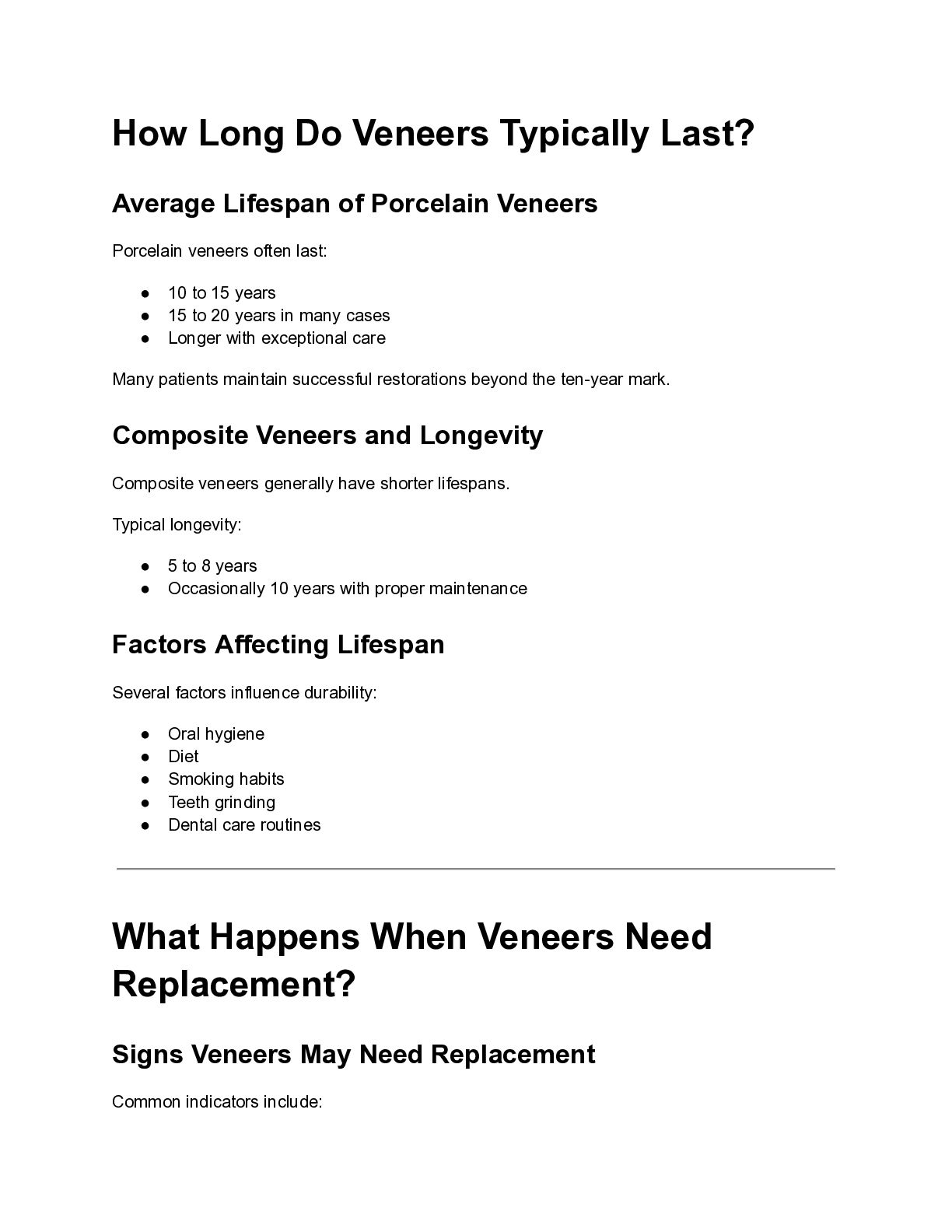
  9. How Long Do Veneers Typically Last? Average Lifespan of Porcelain

    Veneers Porcelain veneers often last: •​ 10 to 15 years •​ 15 to 20 years in many cases •​ Longer with exceptional care Many patients maintain successful restorations beyond the ten-year mark. Composite Veneers and Longevity Composite veneers generally have shorter lifespans. Typical longevity: •​ 5 to 8 years •​ Occasionally 10 years with proper maintenance Factors Affecting Lifespan Several factors influence durability: •​ Oral hygiene •​ Diet •​ Smoking habits •​ Teeth grinding •​ Dental care routines What Happens When Veneers Need Replacement? Signs Veneers May Need Replacement Common indicators include:
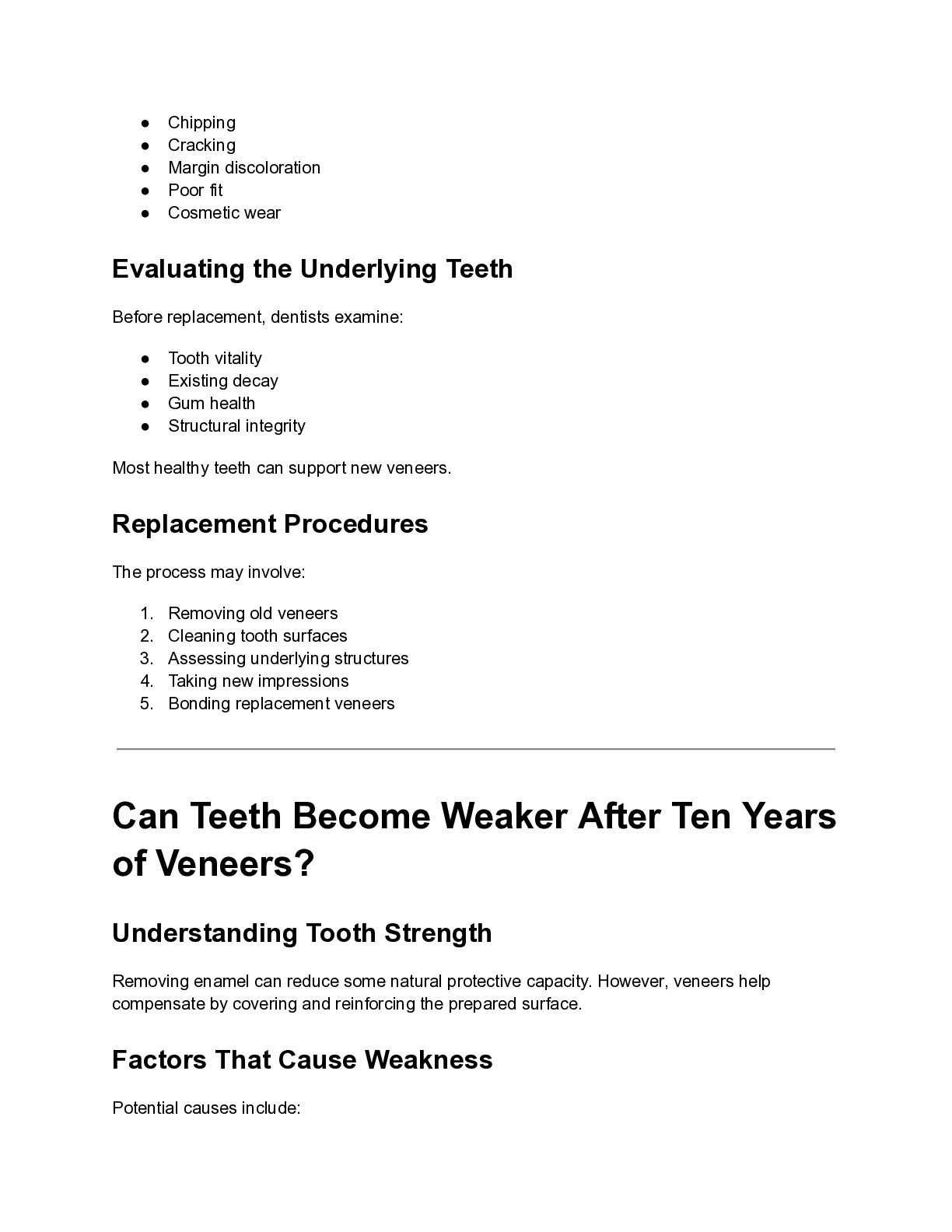
  10. •​ Chipping •​ Cracking •​ Margin discoloration •​ Poor fit

    •​ Cosmetic wear Evaluating the Underlying Teeth Before replacement, dentists examine: •​ Tooth vitality •​ Existing decay •​ Gum health •​ Structural integrity Most healthy teeth can support new veneers. Replacement Procedures The process may involve: 1.​ Removing old veneers 2.​ Cleaning tooth surfaces 3.​ Assessing underlying structures 4.​ Taking new impressions 5.​ Bonding replacement veneers Can Teeth Become Weaker After Ten Years of Veneers? Understanding Tooth Strength Removing enamel can reduce some natural protective capacity. However, veneers help compensate by covering and reinforcing the prepared surface. Factors That Cause Weakness Potential causes include:
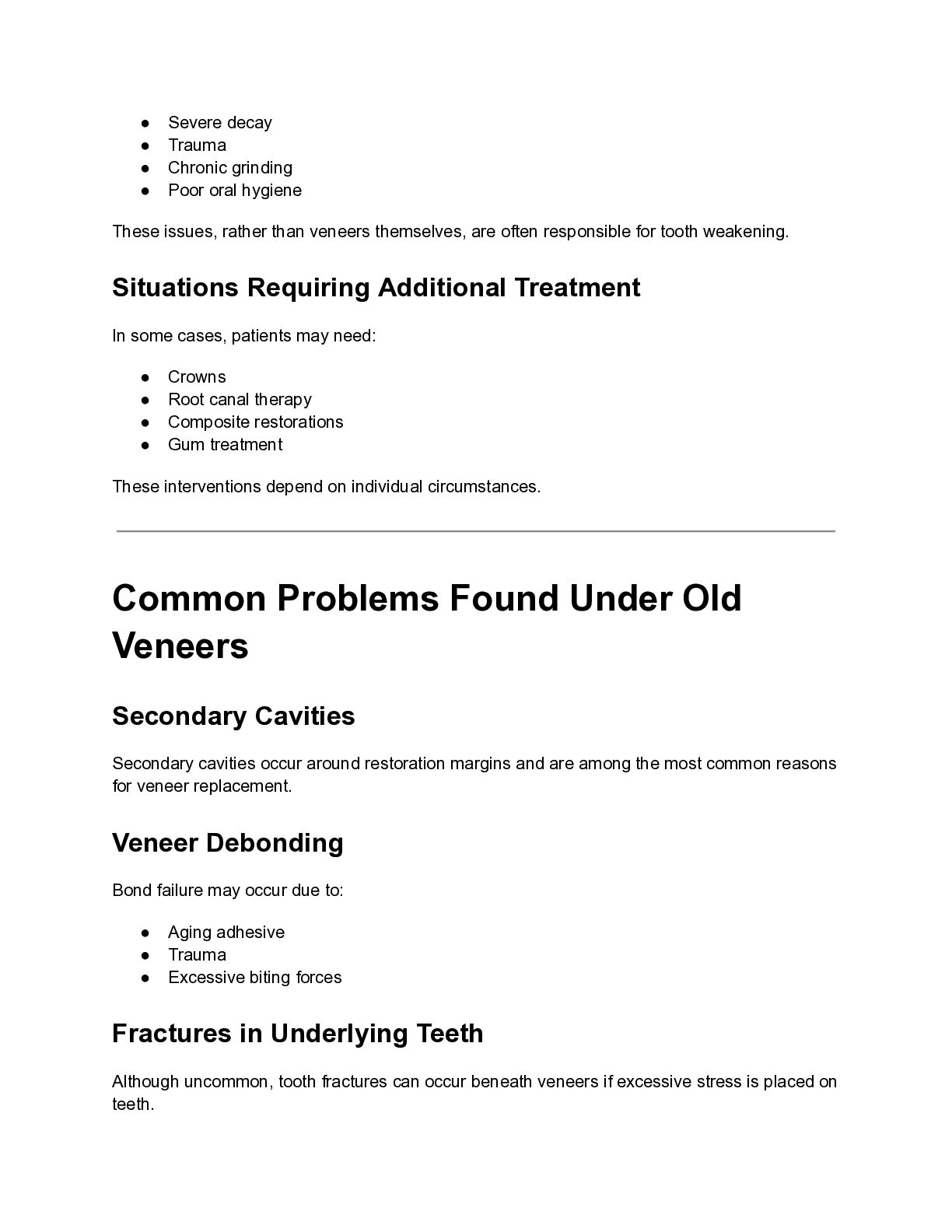
  11. •​ Severe decay •​ Trauma •​ Chronic grinding •​ Poor

    oral hygiene These issues, rather than veneers themselves, are often responsible for tooth weakening. Situations Requiring Additional Treatment In some cases, patients may need: •​ Crowns •​ Root canal therapy •​ Composite restorations •​ Gum treatment These interventions depend on individual circumstances. Common Problems Found Under Old Veneers Secondary Cavities Secondary cavities occur around restoration margins and are among the most common reasons for veneer replacement. Veneer Debonding Bond failure may occur due to: •​ Aging adhesive •​ Trauma •​ Excessive biting forces Fractures in Underlying Teeth Although uncommon, tooth fractures can occur beneath veneers if excessive stress is placed on teeth.
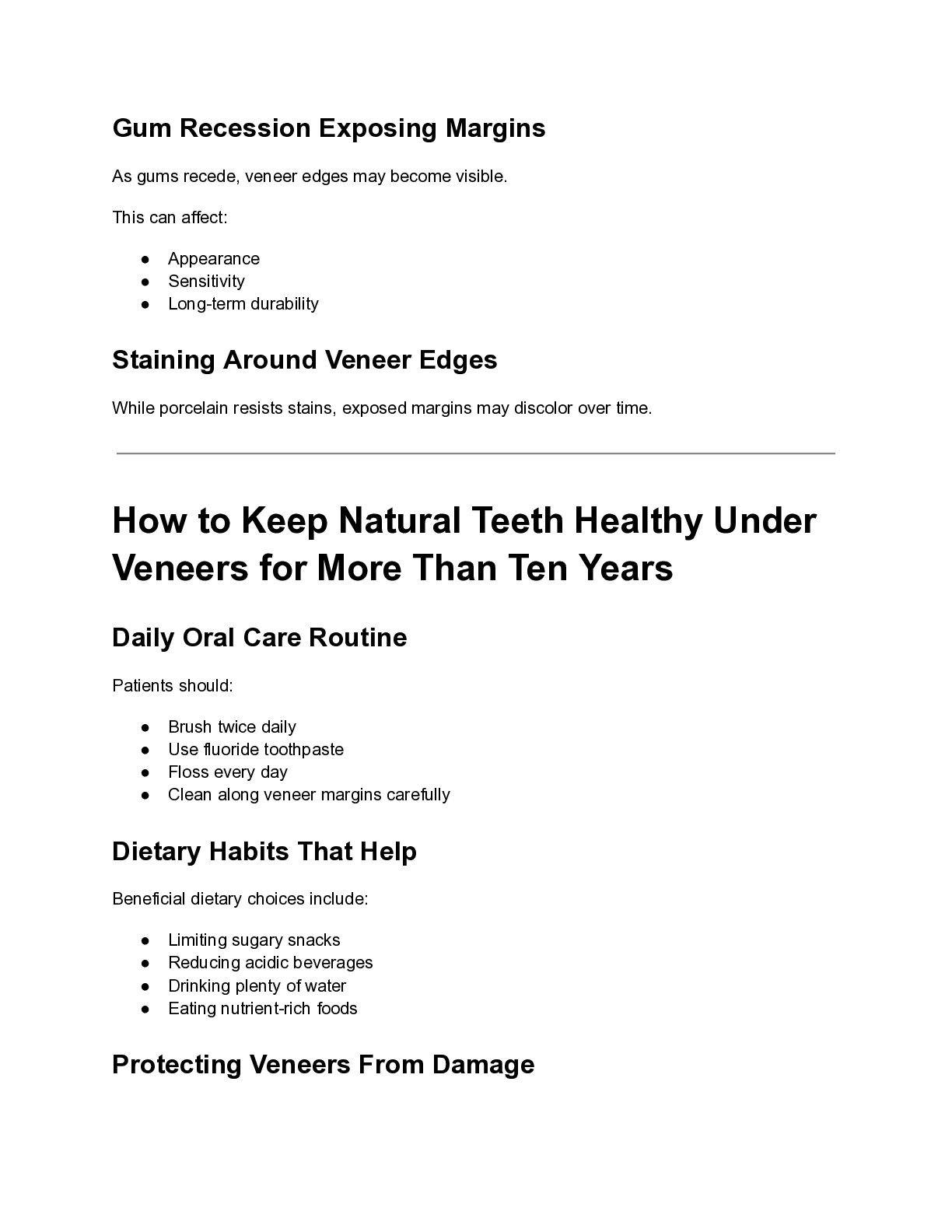
  12. Gum Recession Exposing Margins As gums recede, veneer edges may

    become visible. This can affect: •​ Appearance •​ Sensitivity •​ Long-term durability Staining Around Veneer Edges While porcelain resists stains, exposed margins may discolor over time. How to Keep Natural Teeth Healthy Under Veneers for More Than Ten Years Daily Oral Care Routine Patients should: •​ Brush twice daily •​ Use fluoride toothpaste •​ Floss every day •​ Clean along veneer margins carefully Dietary Habits That Help Beneficial dietary choices include: •​ Limiting sugary snacks •​ Reducing acidic beverages •​ Drinking plenty of water •​ Eating nutrient-rich foods Protecting Veneers From Damage
  13. Protective measures include: •​ Wearing night guards •​ Avoiding chewing

    ice •​ Not opening packages with teeth •​ Managing grinding habits Importance of Regular Dental Checkups Professional monitoring helps identify: •​ Early decay •​ Gum problems •​ Bond deterioration •​ Structural changes Preventive care often extends veneer lifespan significantly. The Role of Experienced Cosmetic Dentists in Long-Term Veneer Success Why Placement Quality Matters The long-term health of natural teeth under veneers begins with proper treatment planning. Precise preparation minimizes unnecessary enamel removal while ensuring optimal bonding conditions. Importance of Precision and Material Selection High-quality materials and meticulous placement techniques can significantly reduce the risk of complications. Well-fitted veneers create smooth margins that are easier to clean and less likely to trap bacteria. Burwood Diamond Dental and Long-Term Veneer Care Long-term veneer success depends not only on the materials used but also on the expertise of the dental team. Clinics that focus on detailed assessments, personalized treatment planning, and ongoing maintenance can help patients preserve the health of their natural teeth for many
  14. years. By monitoring veneers regularly and addressing small issues before

    they become major problems, experienced dental professionals play an important role in protecting both the restoration and the underlying tooth structure. Frequently Asked Questions Are Teeth Ruined After Veneers Are Removed? No. However, because enamel is usually removed during preparation, teeth generally require another restoration after veneer removal. Can Veneers Last Longer Than Ten Years? Yes. Many porcelain veneers function successfully for fifteen to twenty years or longer with proper care. Do Veneers Cause Root Canals? Veneers do not directly cause root canals. However, trauma, extensive decay, or pre-existing dental issues may eventually require endodontic treatment. Can Cavities Be Treated Without Removing Veneers? Minor decay near margins may occasionally be treated conservatively, but many cases require veneer removal for proper access. What Is the Most Common Problem After Ten Years? The most common issues include: •​ Margin staining •​ Minor bond deterioration •​ Gum recession •​ Secondary decay How Often Should Veneers Be Checked?
  15. Most dentists recommend examinations every six months, although some patients

    may benefit from more frequent monitoring. Final Thoughts After ten years, natural teeth beneath veneers are usually still healthy, functional, and alive when proper care has been maintained. Veneers do not stop the natural aging process, but they can provide long-lasting cosmetic improvements while helping protect prepared tooth surfaces from everyday wear. The condition of the underlying teeth depends largely on oral hygiene practices, professional dental care, lifestyle habits, and the quality of the original veneer placement. While problems such as decay, gum recession, sensitivity, and bond deterioration can occur, these issues are often preventable through regular maintenance and early intervention. For most patients, veneers remain a reliable and effective cosmetic solution well beyond the ten-year mark. With consistent care and routine dental evaluations, the natural teeth beneath veneers can continue to support a healthy, attractive smile for many years to come.