of California, Inc. All rights reserved. For Research Use Only. Not for use in diagnostic procedures.. Nicole Rapicavoli Field Applications Scientist October 2014 Barcoding for Amplicon Sequencing Using SMRT® Analysis V2.3
full-length sequencing. After the training, you will be able to • Be able to choose the best multiplexing strategy for your experimental design. • Understand the Long Amplicon Analysis method. • Run a Long Amplicon Analysis job and understand the reports generated in SMRT® Portal. • SMRT® Technology • PacBio® System Workflow • General Understanding of SMRT Portal
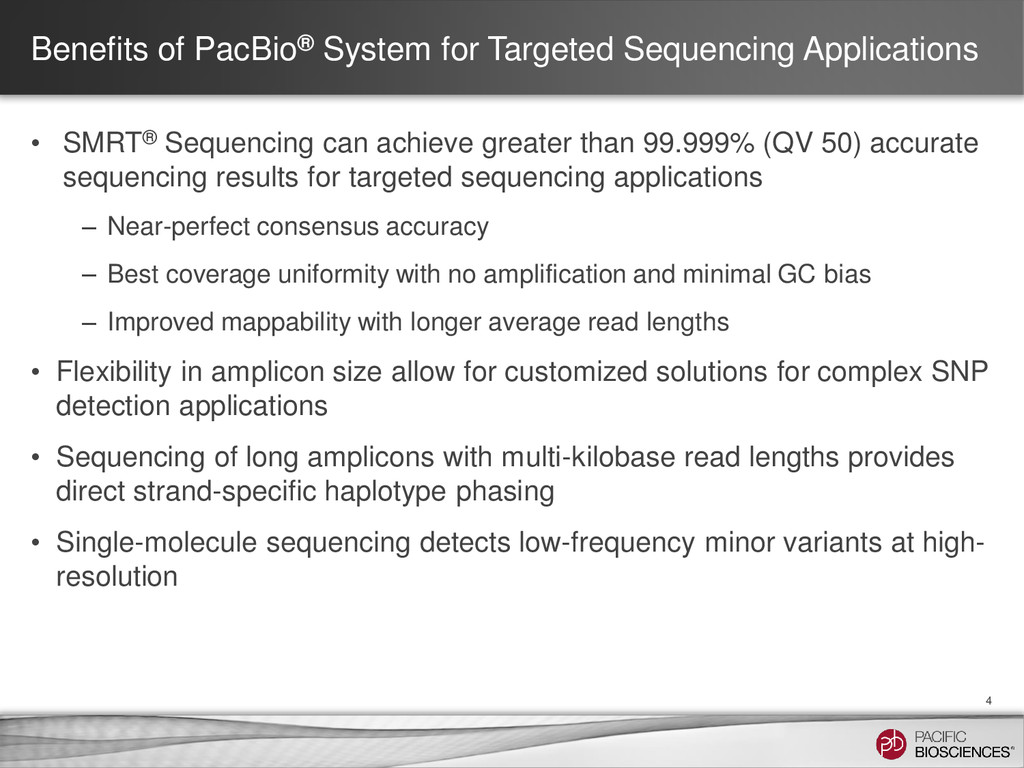
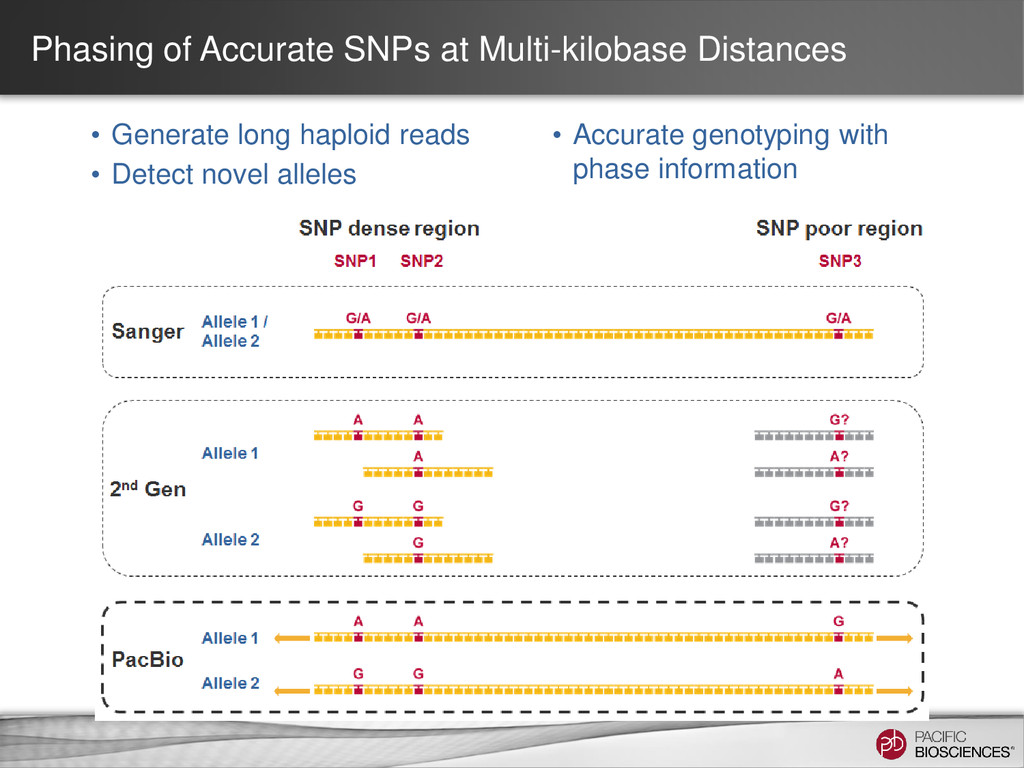
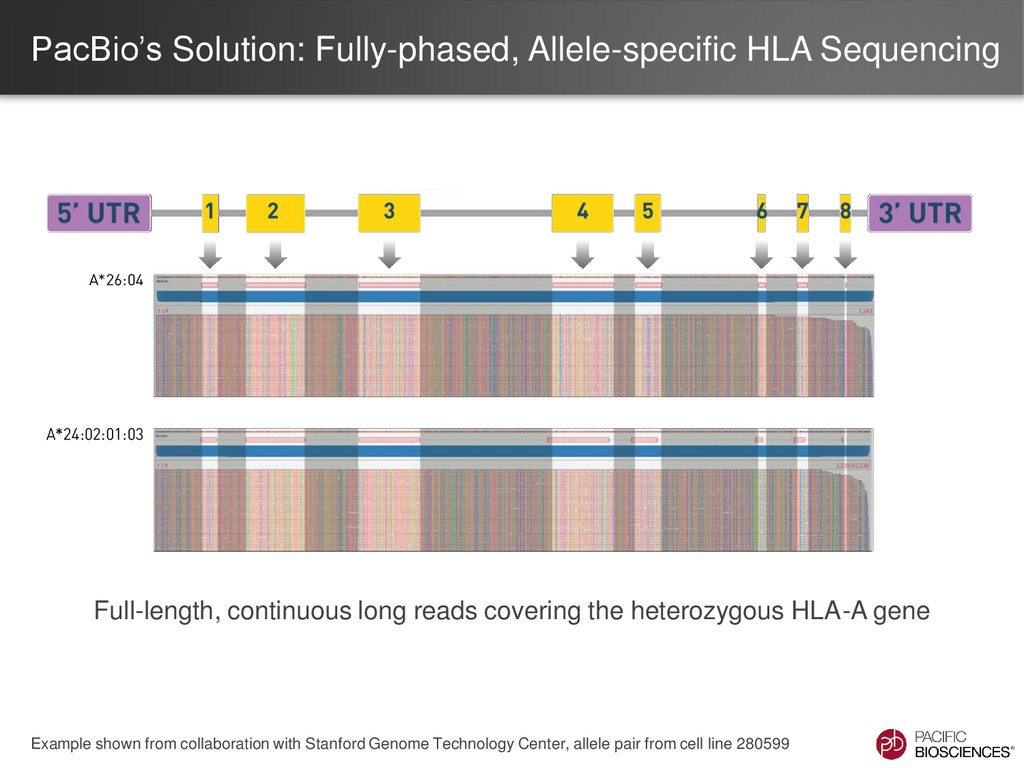
Sequencing can achieve greater than 99.999% (QV 50) accurate sequencing results for targeted sequencing applications – Near-perfect consensus accuracy – Best coverage uniformity with no amplification and minimal GC bias – Improved mappability with longer average read lengths • Flexibility in amplicon size allow for customized solutions for complex SNP detection applications • Sequencing of long amplicons with multi-kilobase read lengths provides direct strand-specific haplotype phasing • Single-molecule sequencing detects low-frequency minor variants at high- resolution 4
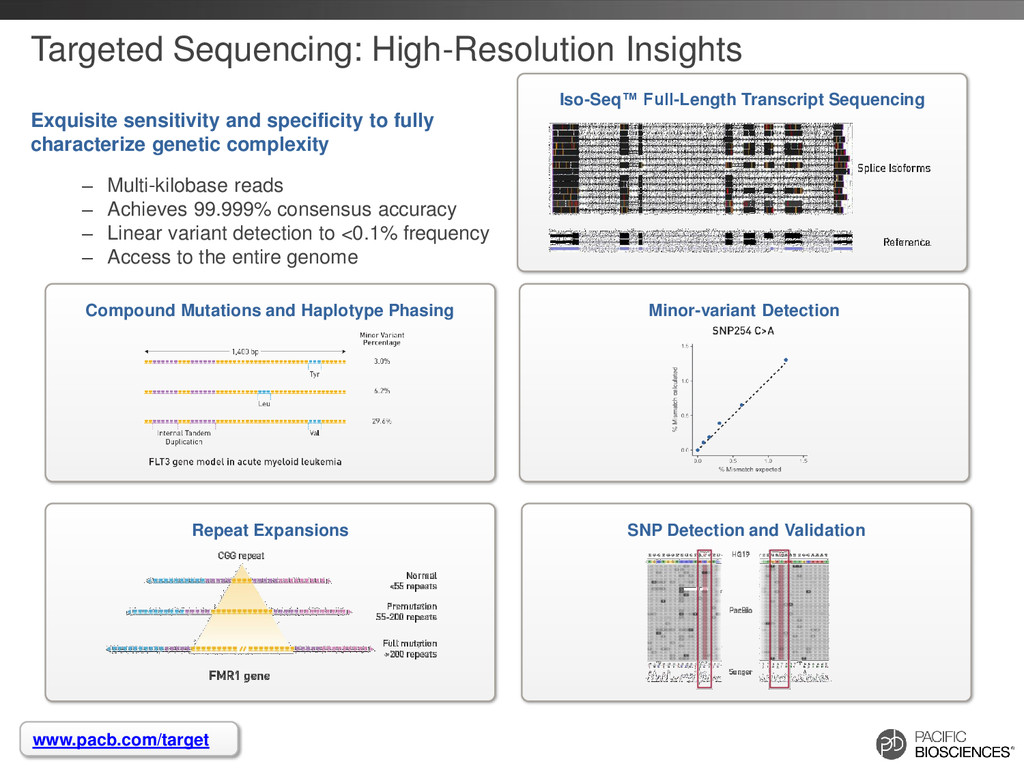
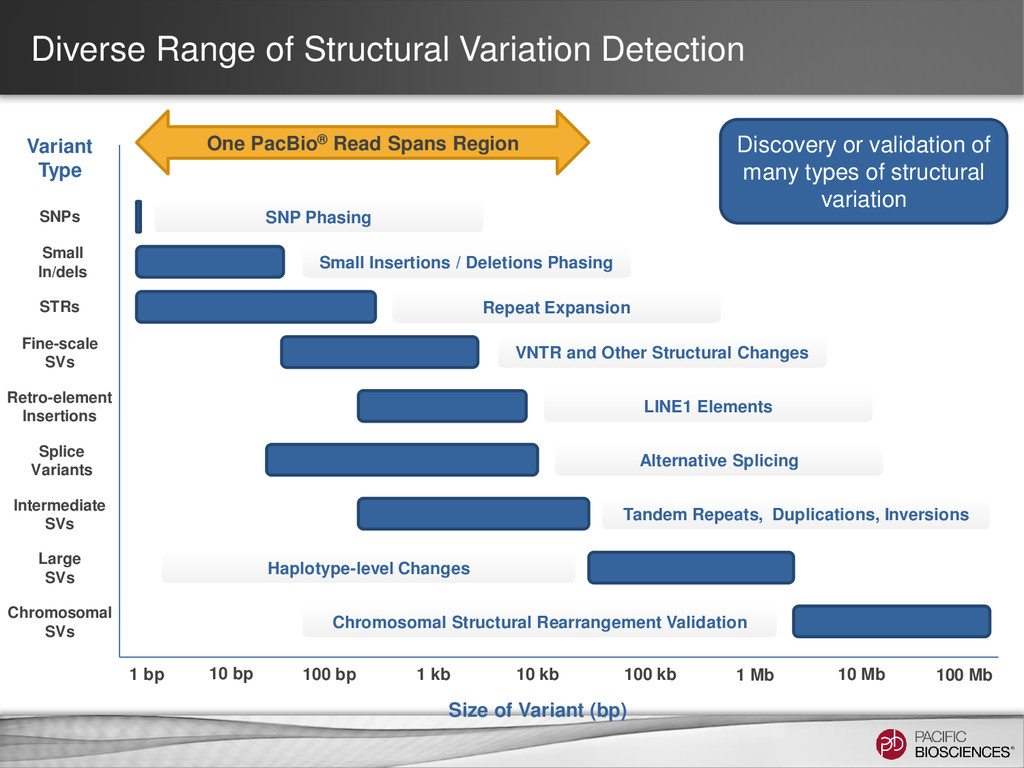
100 bp 1 kb 10 kb 100 kb 1 Mb 10 Mb 100 Mb Size of Variant (bp) Variant Type SNPs SNP Phasing Small In/dels Small Insertions / Deletions Phasing STRs Repeat Expansion Fine-scale SVs VNTR and Other Structural Changes Retro-element Insertions LINE1 Elements Splice Variants Alternative Splicing Intermediate SVs Tandem Repeats, Duplications, Inversions Large SVs Haplotype-level Changes Chromosomal SVs Chromosomal Structural Rearrangement Validation One PacBio® Read Spans Region Discovery or validation of many types of structural variation
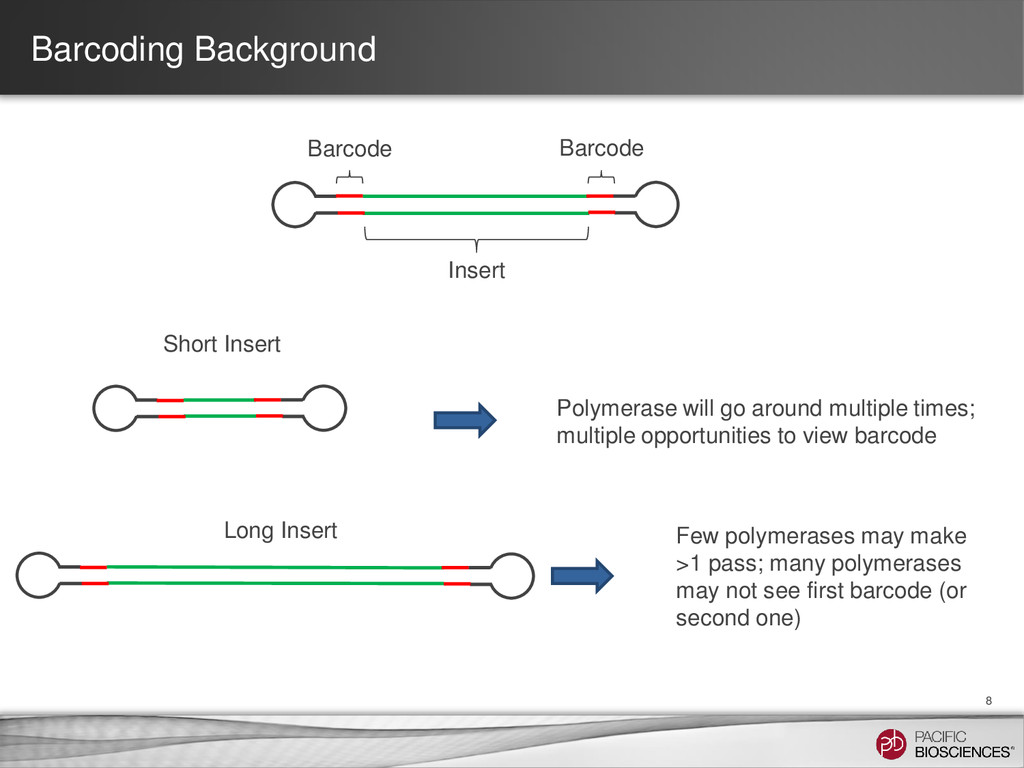
go around multiple times; multiple opportunities to view barcode Long Insert Few polymerases may make >1 pass; many polymerases may not see first barcode (or second one)
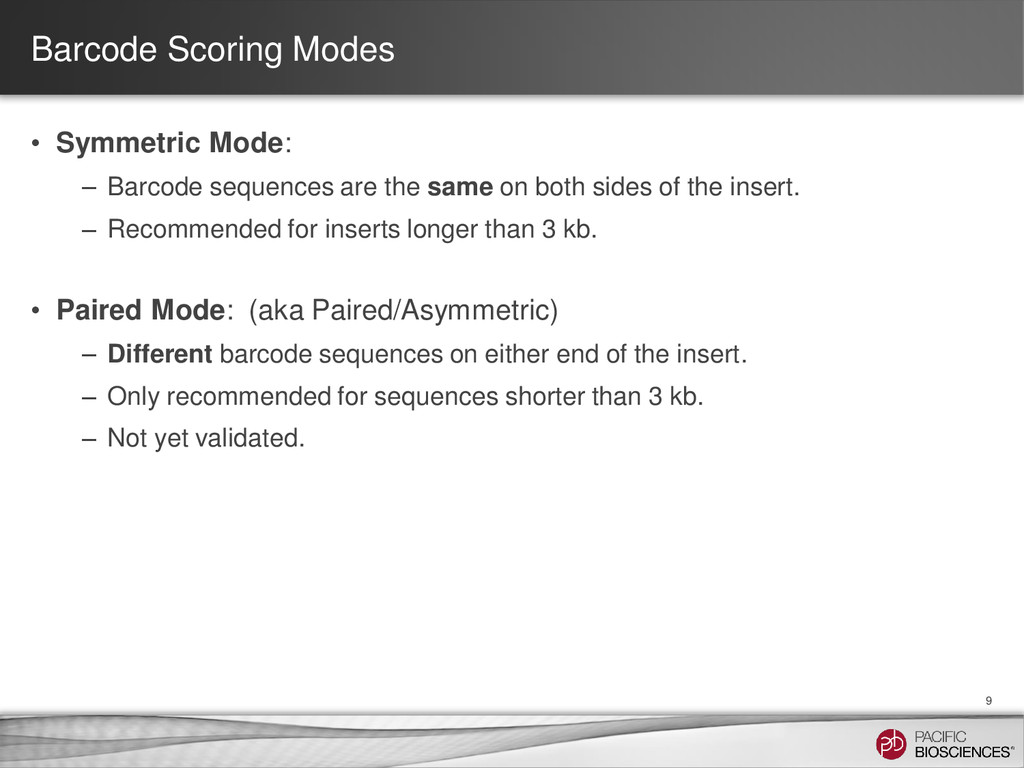
the same on both sides of the insert. – Recommended for inserts longer than 3 kb. • Paired Mode: (aka Paired/Asymmetric) – Different barcode sequences on either end of the insert. – Only recommended for sequences shorter than 3 kb. – Not yet validated. 9
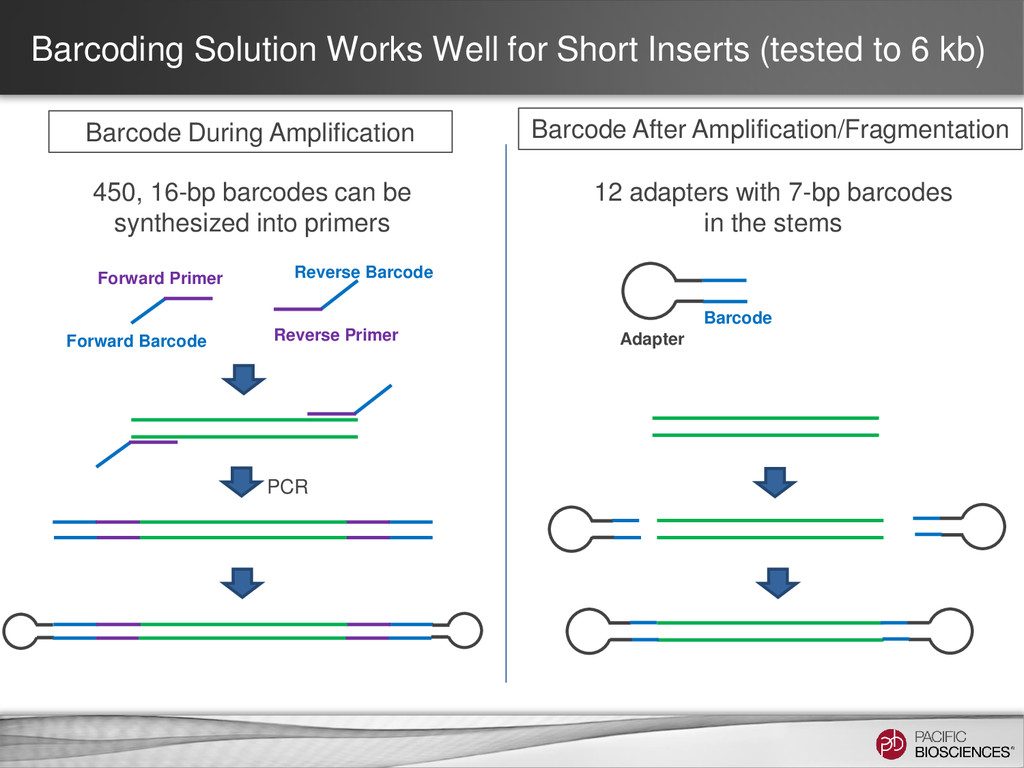
kb) Barcode During Amplification Barcode After Amplification/Fragmentation 450, 16-bp barcodes can be synthesized into primers Forward Primer Forward Barcode Reverse Primer Reverse Barcode 12 adapters with 7-bp barcodes in the stems Barcode Adapter PCR
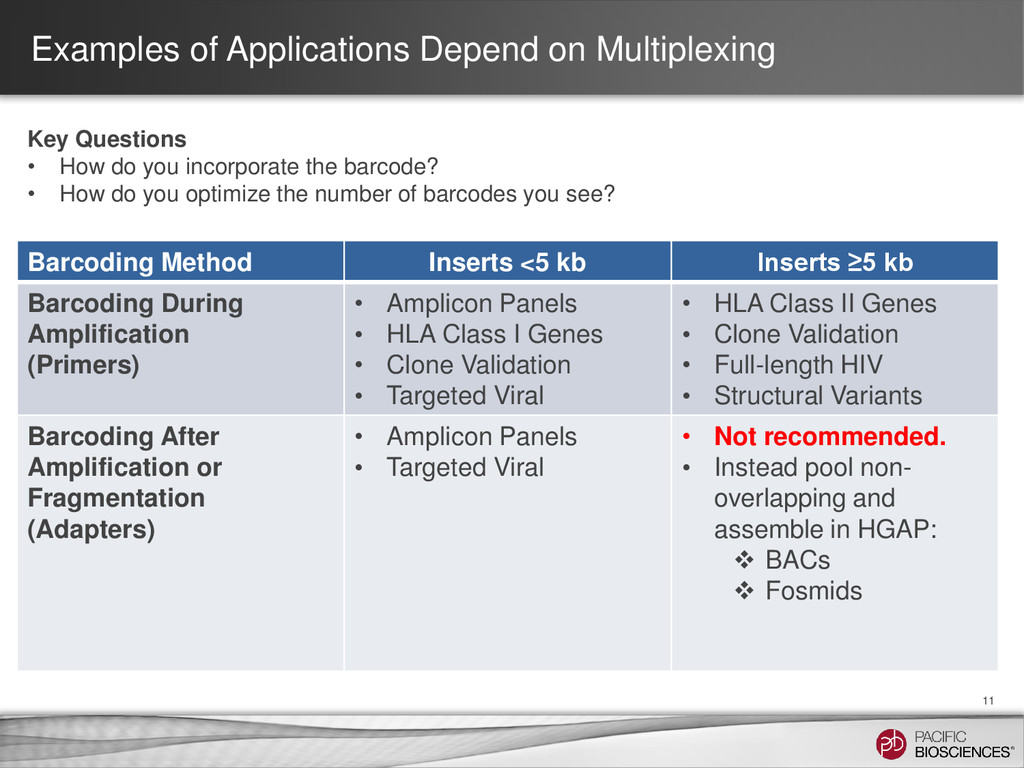
<5 kb Inserts ≥5 kb Barcoding During Amplification (Primers) • Amplicon Panels • HLA Class I Genes • Clone Validation • Targeted Viral • HLA Class II Genes • Clone Validation • Full-length HIV • Structural Variants Barcoding After Amplification or Fragmentation (Adapters) • Amplicon Panels • Targeted Viral • Not recommended. • Instead pool non- overlapping and assemble in HGAP: BACs Fosmids Key Questions • How do you incorporate the barcode? • How do you optimize the number of barcodes you see?
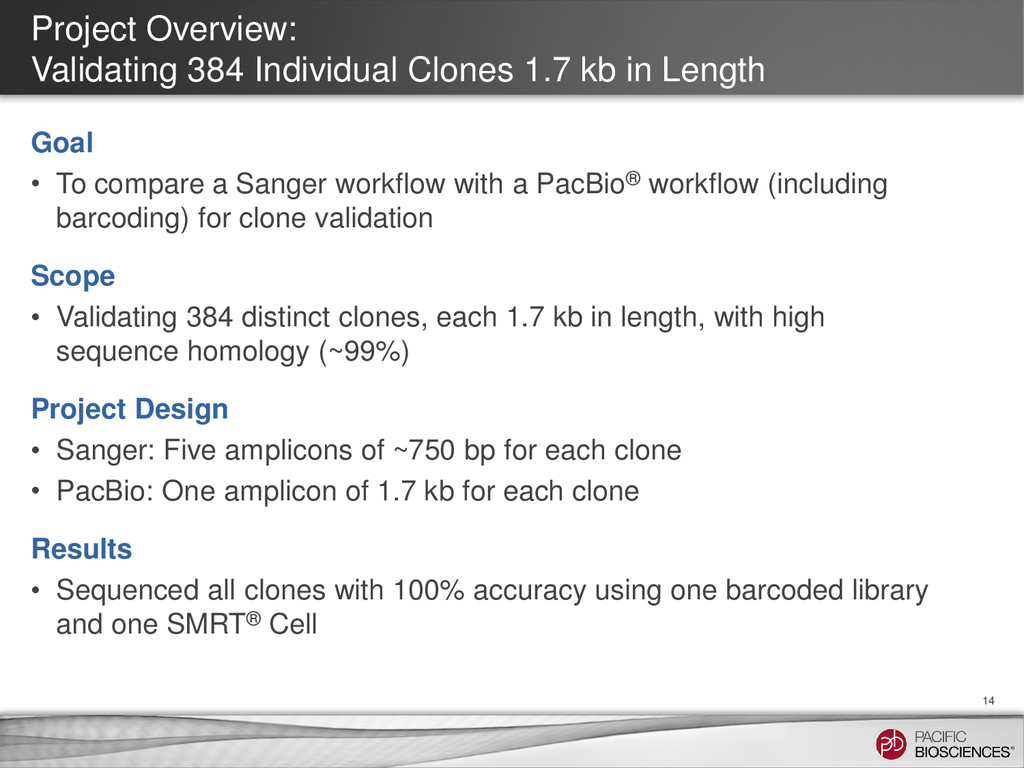
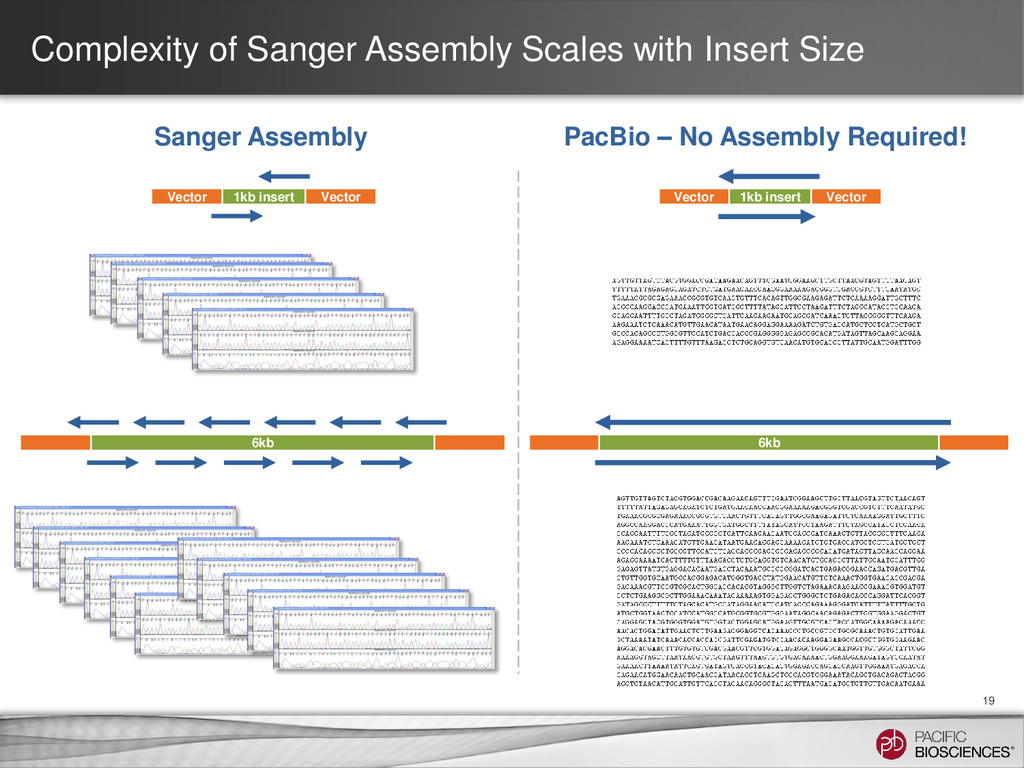
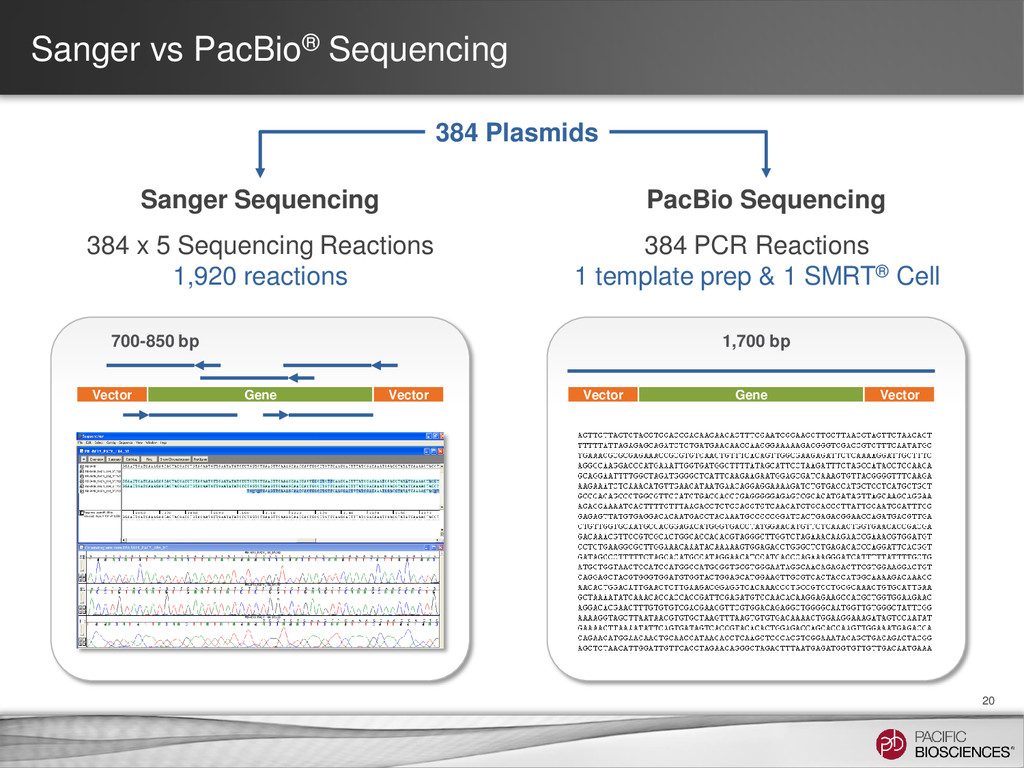
14 Goal • To compare a Sanger workflow with a PacBio® workflow (including barcoding) for clone validation Scope • Validating 384 distinct clones, each 1.7 kb in length, with high sequence homology (~99%) Project Design • Sanger: Five amplicons of ~750 bp for each clone • PacBio: One amplicon of 1.7 kb for each clone Results • Sequenced all clones with 100% accuracy using one barcoded library and one SMRT® Cell
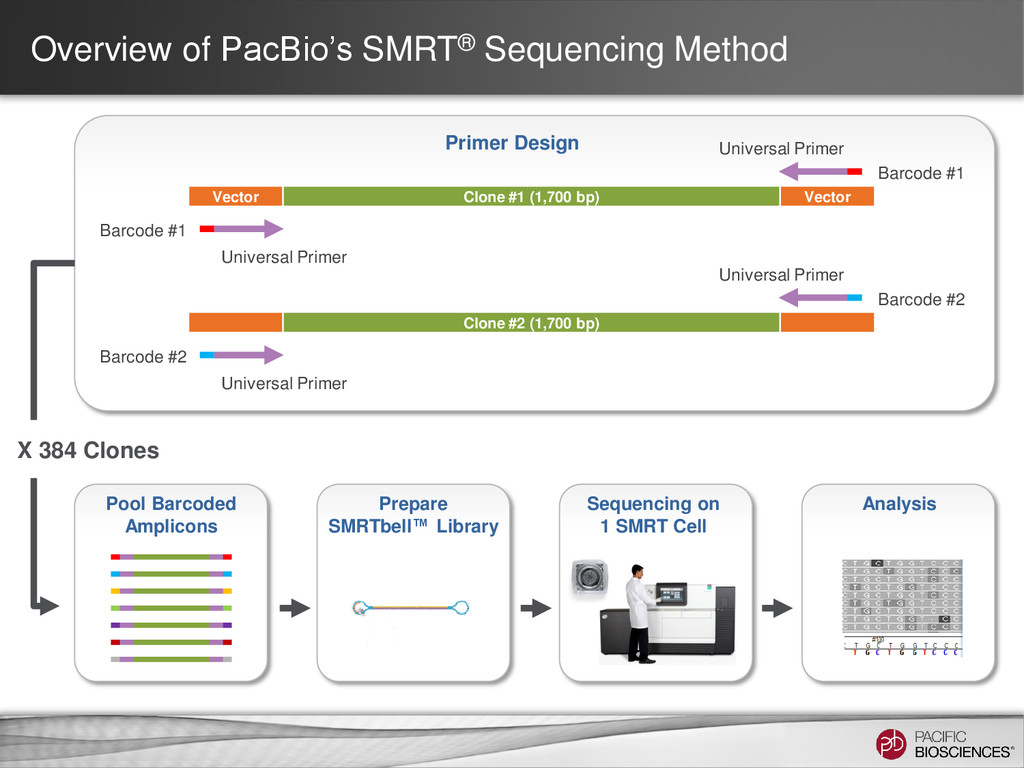
SMRTbell™ Library Sequencing on 1 SMRT Cell Analysis Primer Design Vector Clone #1 (1,700 bp) Vector Universal Primer Barcode #1 Universal Primer Barcode #1 Clone #2 (1,700 bp) Universal Primer Barcode #2 Universal Primer Barcode #2 X 384 Clones
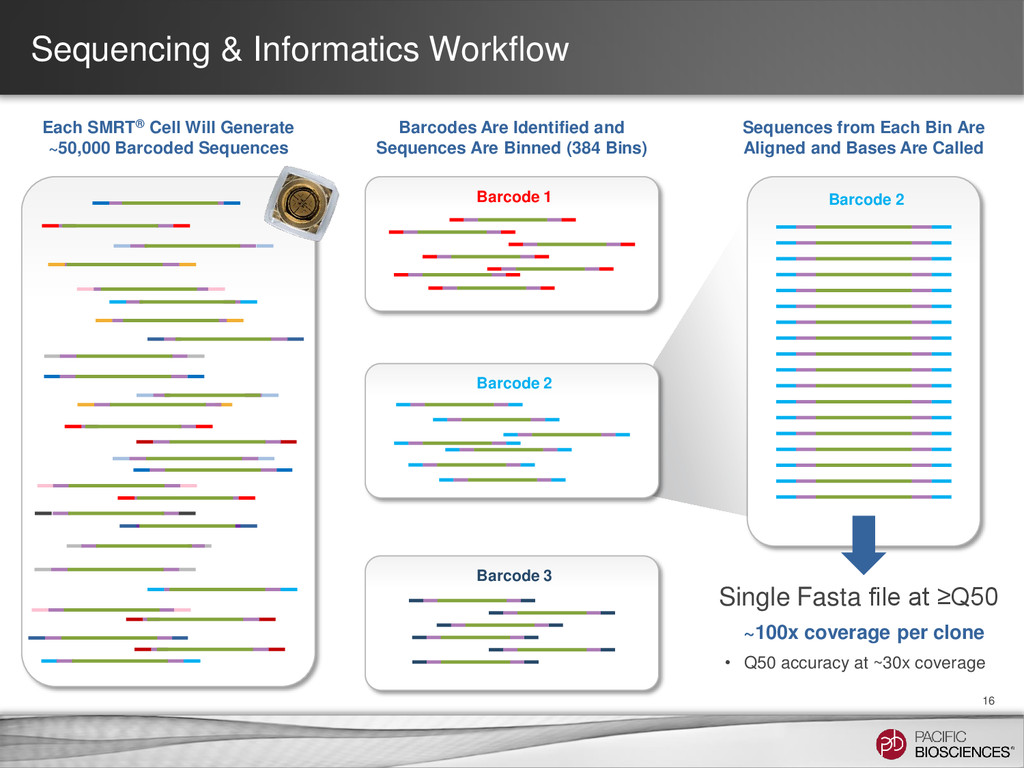
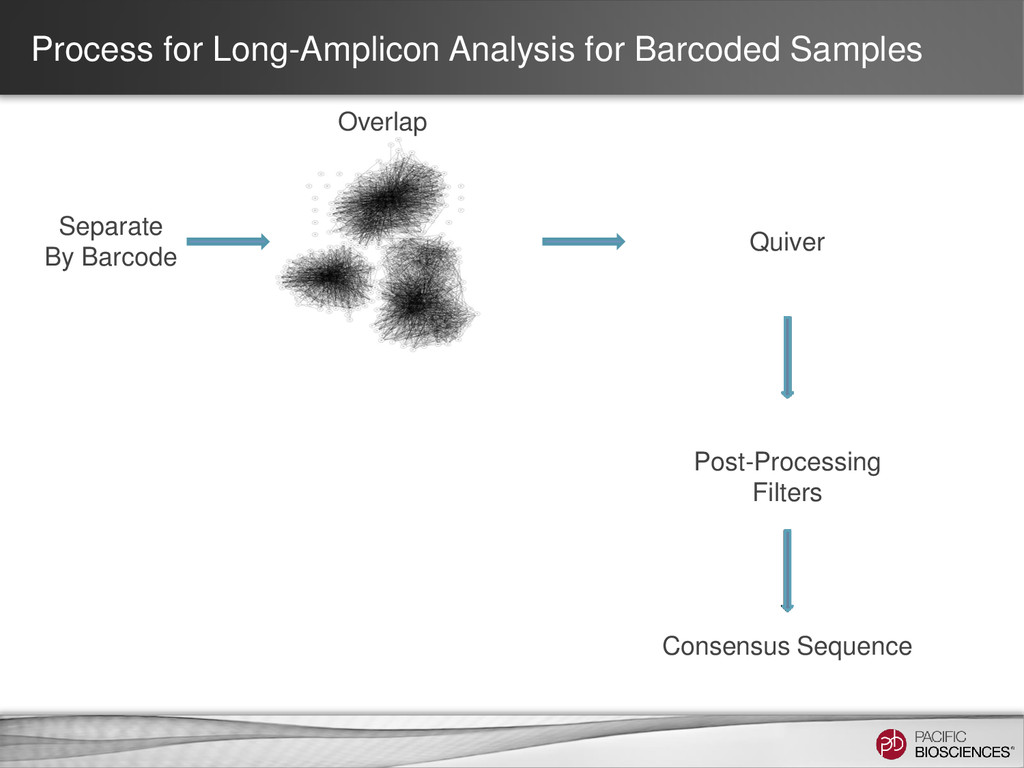
~50,000 Barcoded Sequences Barcode 2 Sequences from Each Bin Are Aligned and Bases Are Called ~100x coverage per clone • Q50 accuracy at ~30x coverage Single Fasta file at ≥Q50 Barcode 3 Barcode 1 Barcodes Are Identified and Sequences Are Binned (384 Bins) Barcode 2
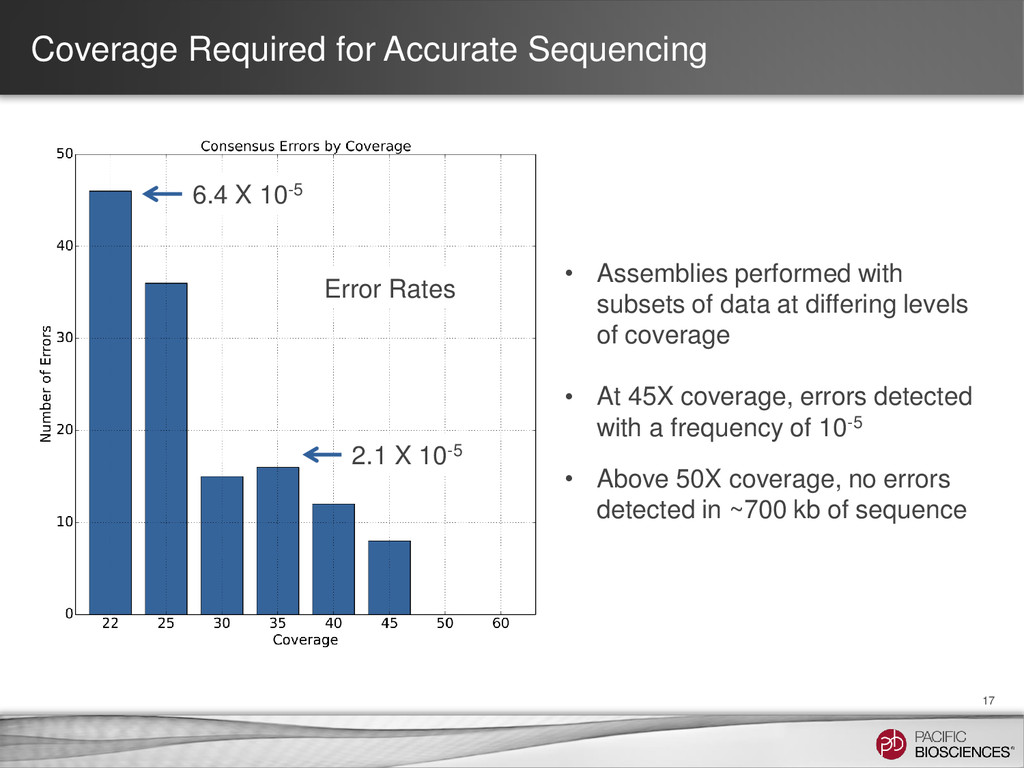
subsets of data at differing levels of coverage • At 45X coverage, errors detected with a frequency of 10-5 • Above 50X coverage, no errors detected in ~700 kb of sequence 6.4 X 10⁻⁵ 2.1 X 10⁻⁵ Error Rates
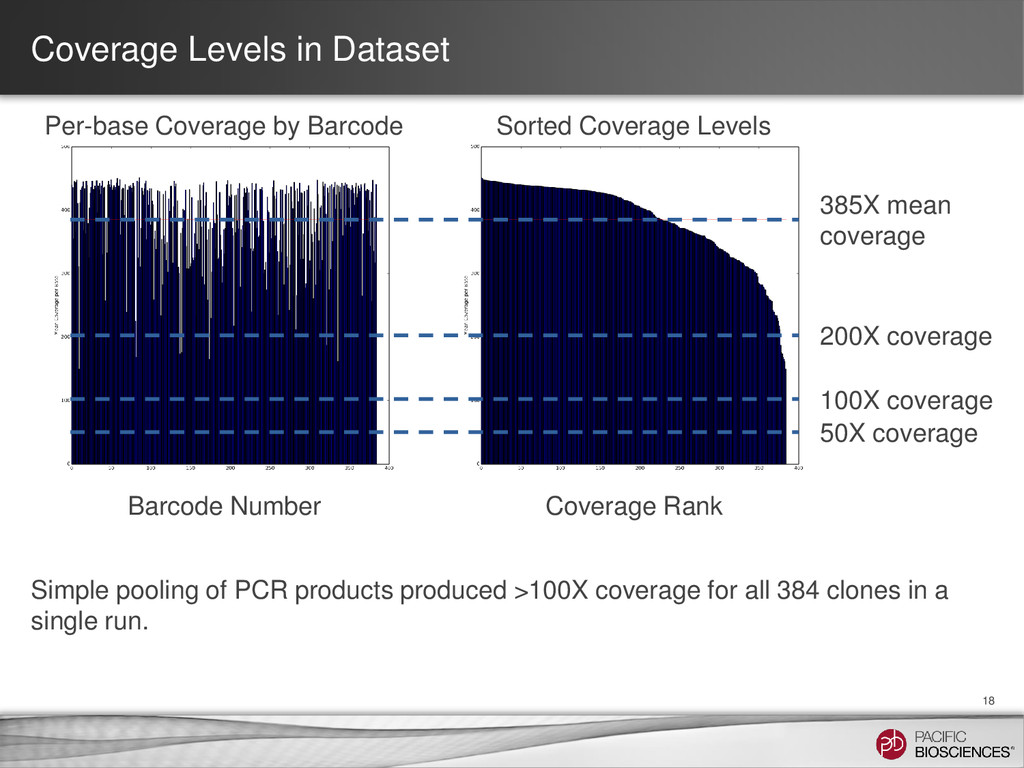
mean coverage Per-base Coverage by Barcode Barcode Number Coverage Rank Sorted Coverage Levels Simple pooling of PCR products produced >100X coverage for all 384 clones in a single run. 50X coverage
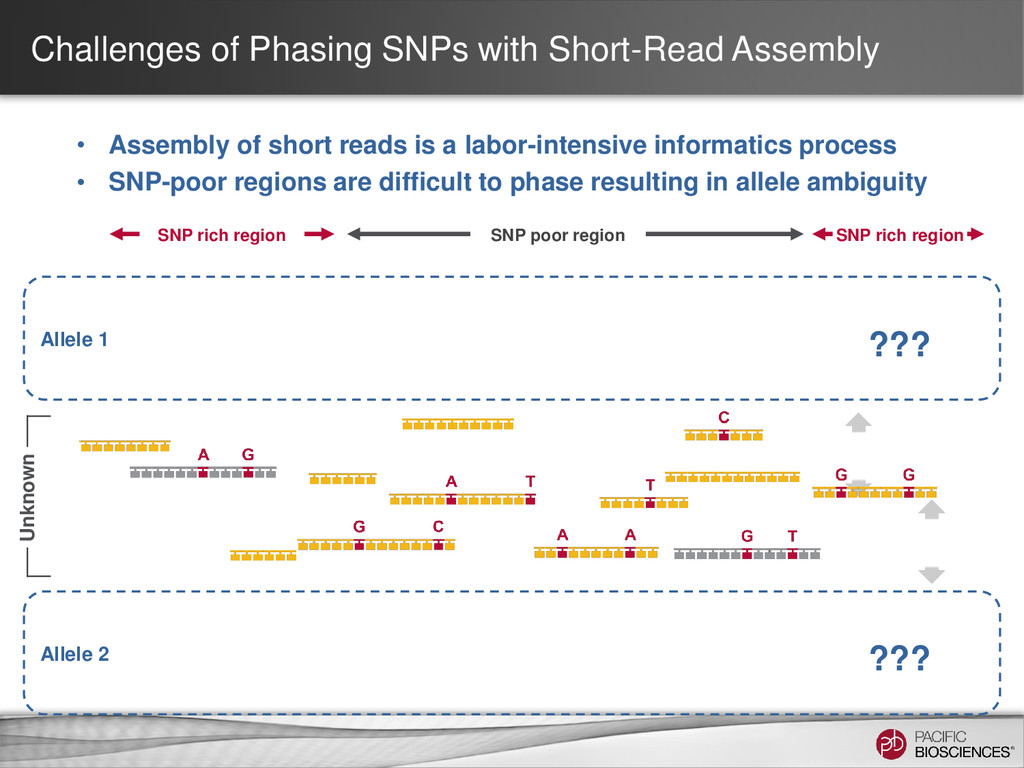
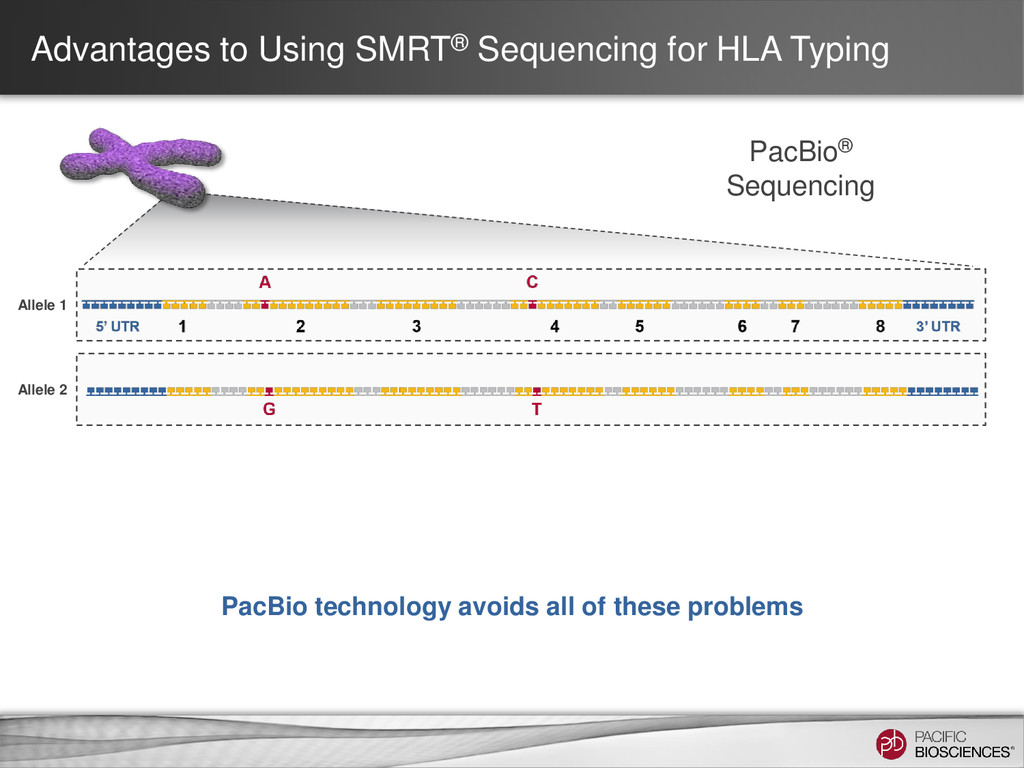
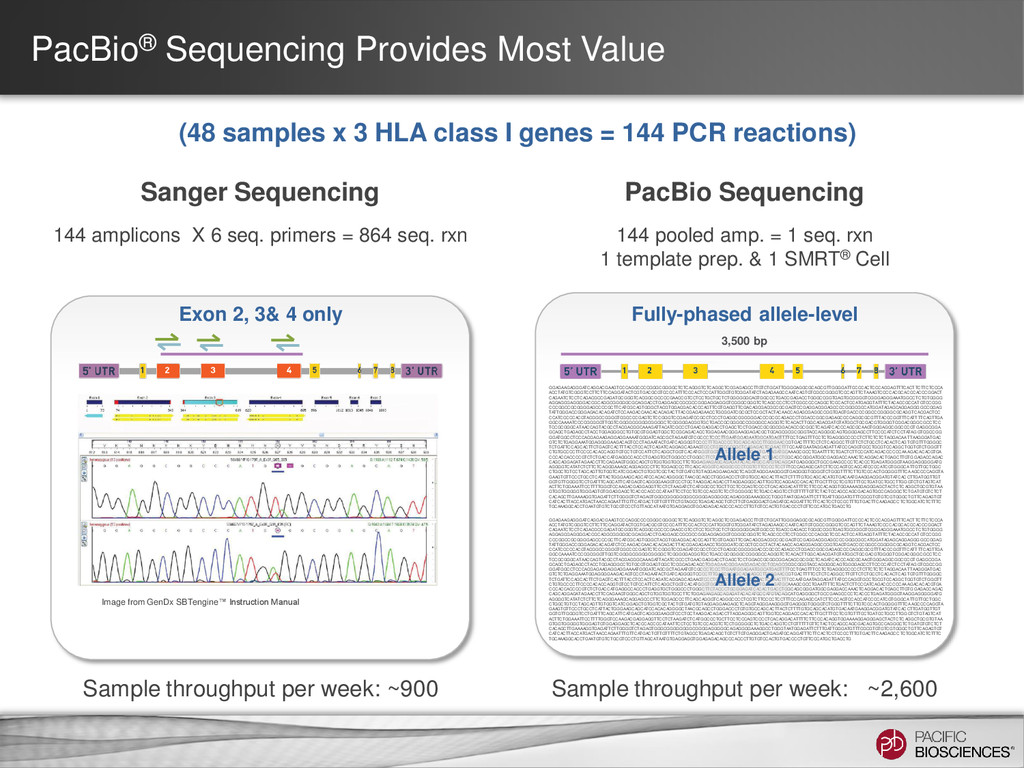
short reads is a labor-intensive informatics process • SNP-poor regions are difficult to phase resulting in allele ambiguity Allele 1 Allele 2 SNP rich region SNP poor region SNP rich region ??? ??? Unknown
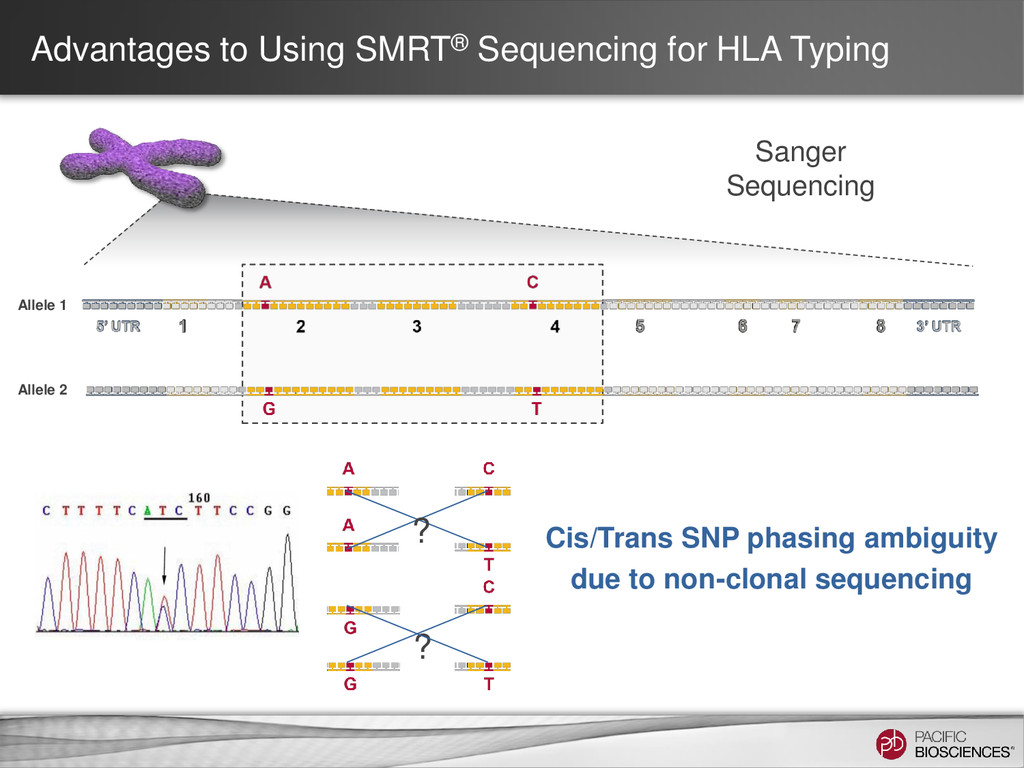
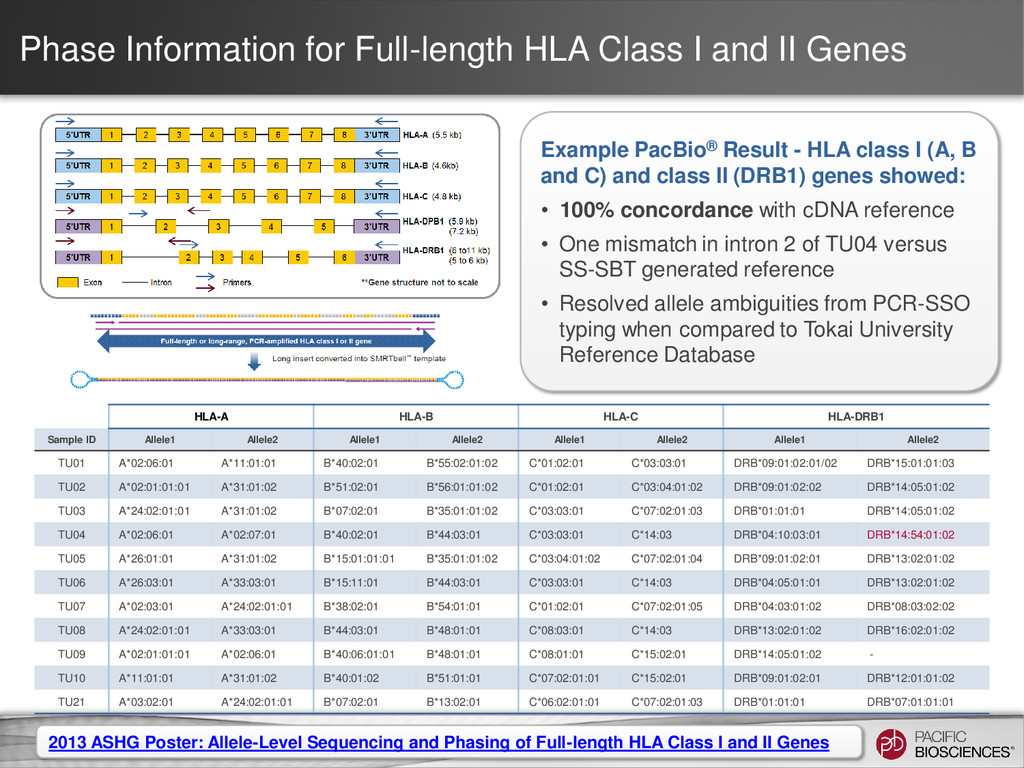
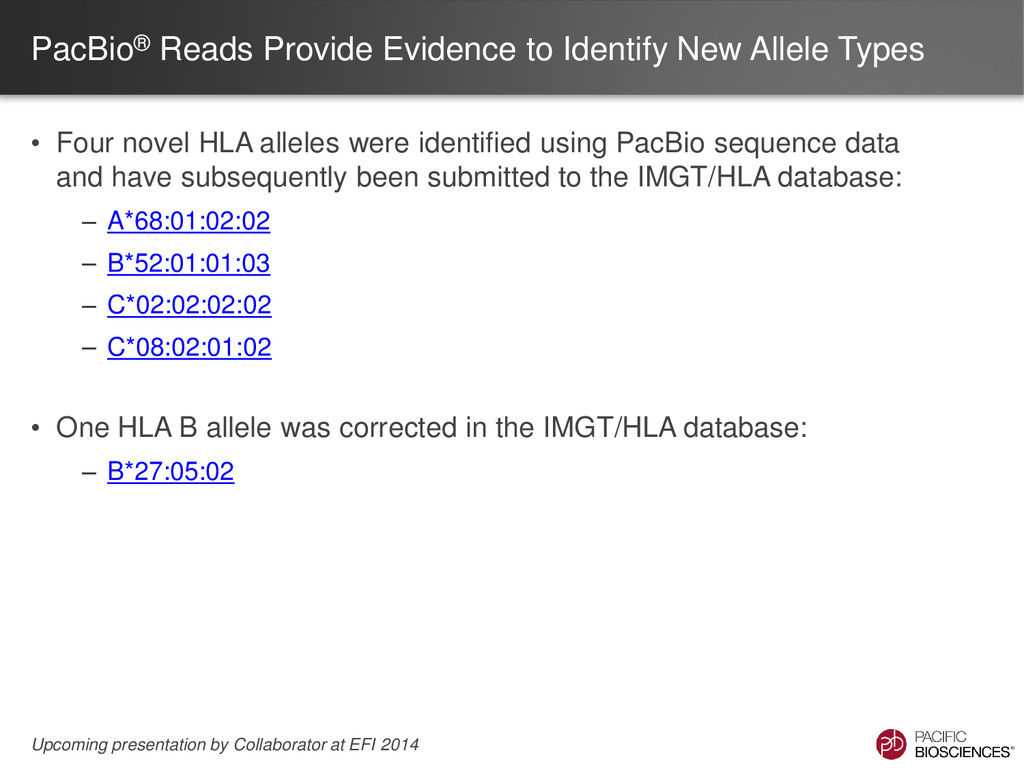
Four novel HLA alleles were identified using PacBio sequence data and have subsequently been submitted to the IMGT/HLA database: – A*68:01:02:02 – B*52:01:01:03 – C*02:02:02:02 – C*08:02:01:02 • One HLA B allele was corrected in the IMGT/HLA database: – B*27:05:02 Upcoming presentation by Collaborator at EFI 2014
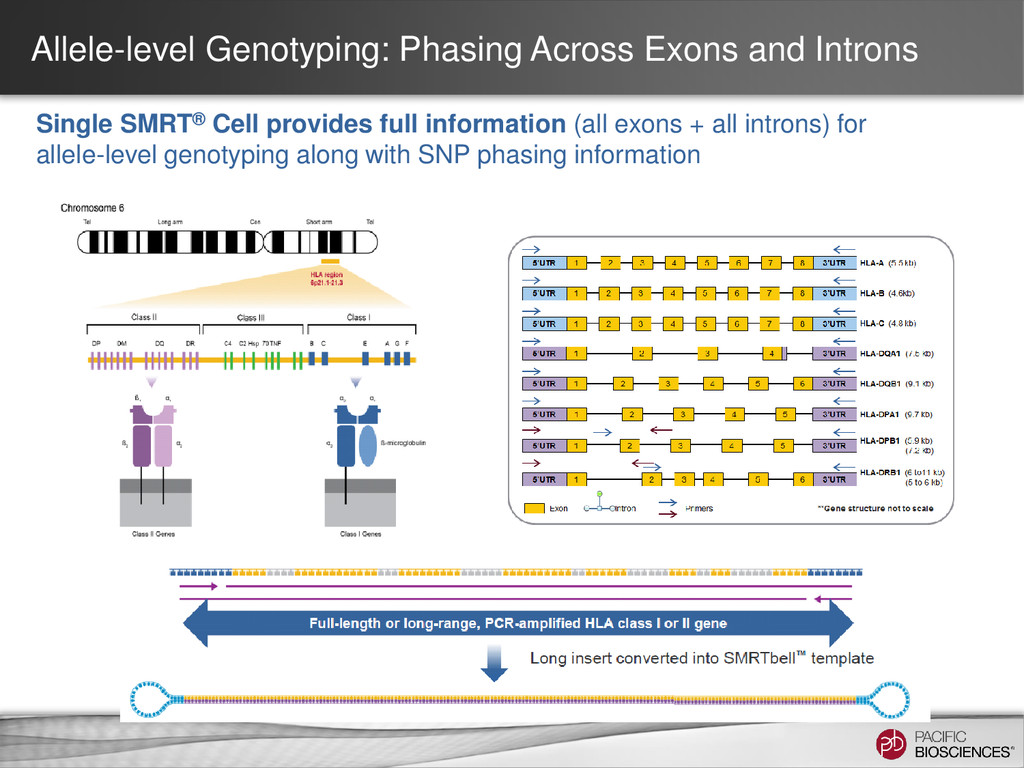
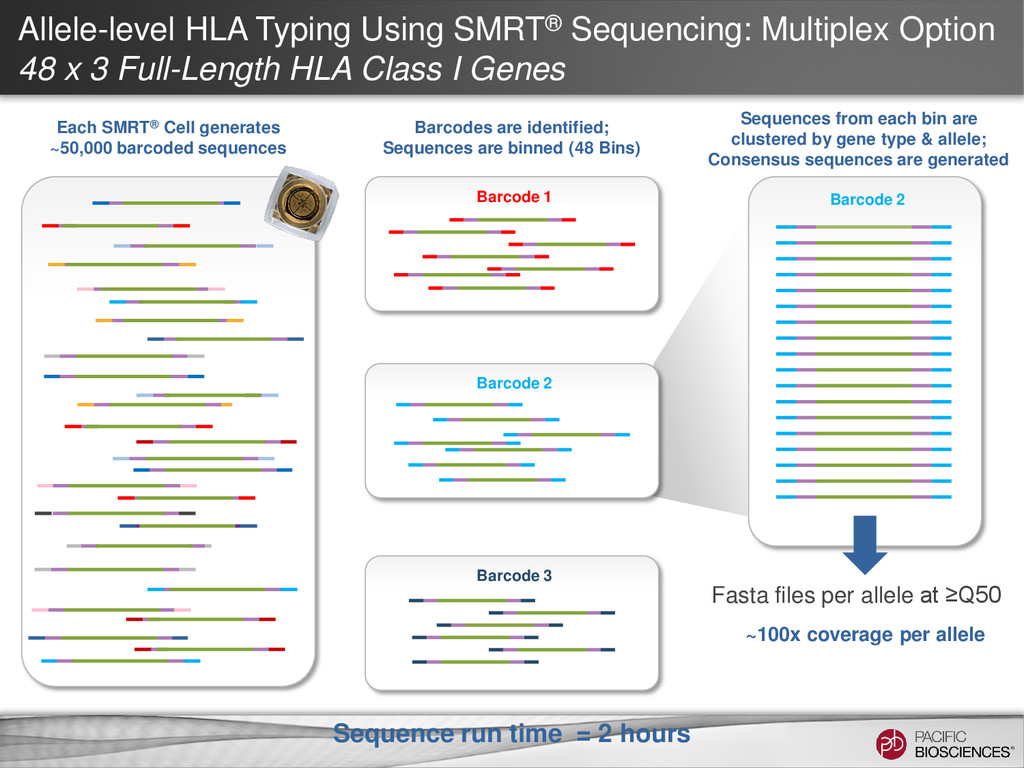
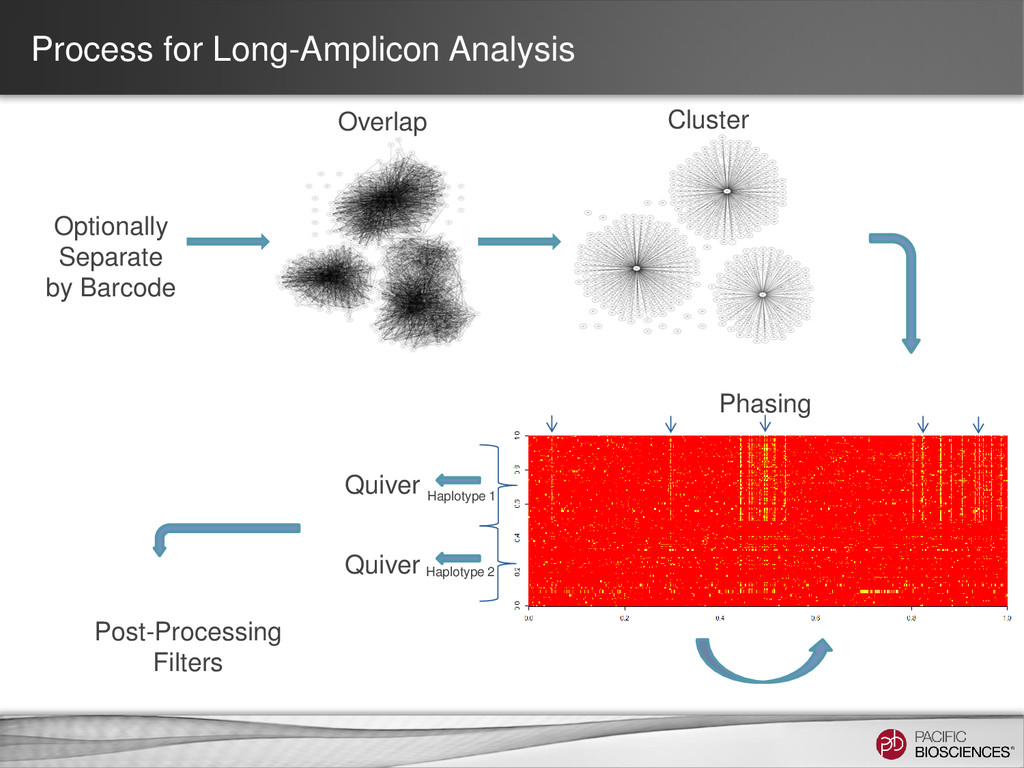
3 Full-Length HLA Class I Genes Each SMRT® Cell generates ~50,000 barcoded sequences Barcode 2 Sequences from each bin are clustered by gene type & allele; Consensus sequences are generated ~100x coverage per allele Fasta files per allele at ≥Q50 Barcode 3 Barcode 1 Barcodes are identified; Sequences are binned (48 Bins) Barcode 2 Sequence run time = 2 hours
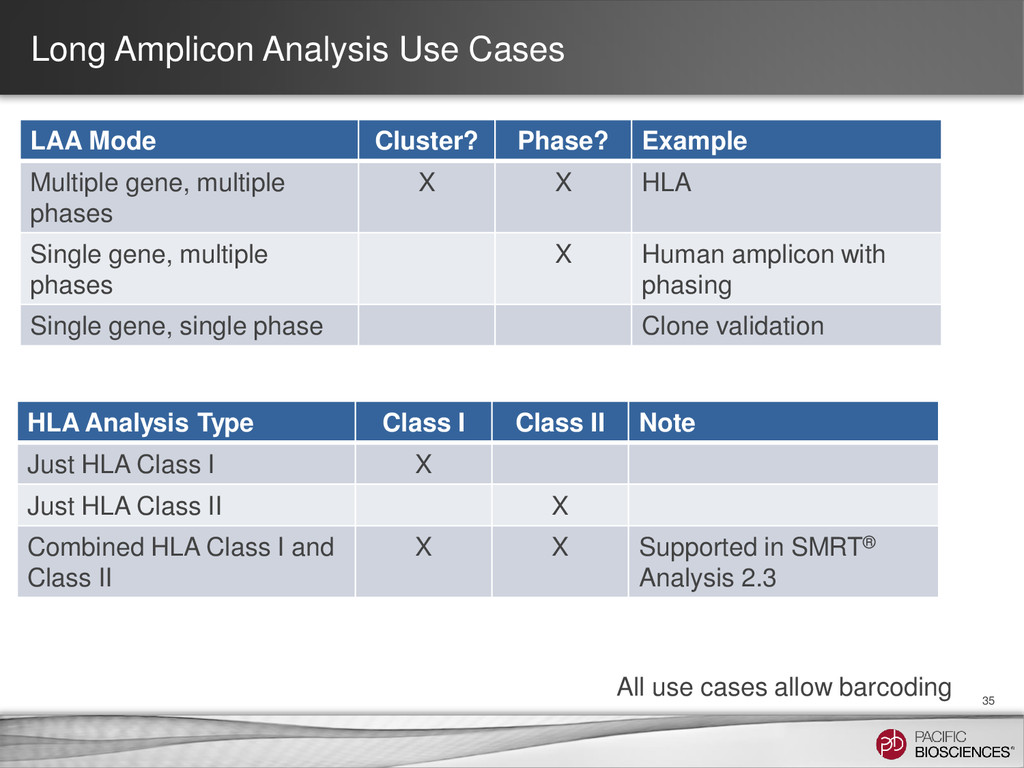
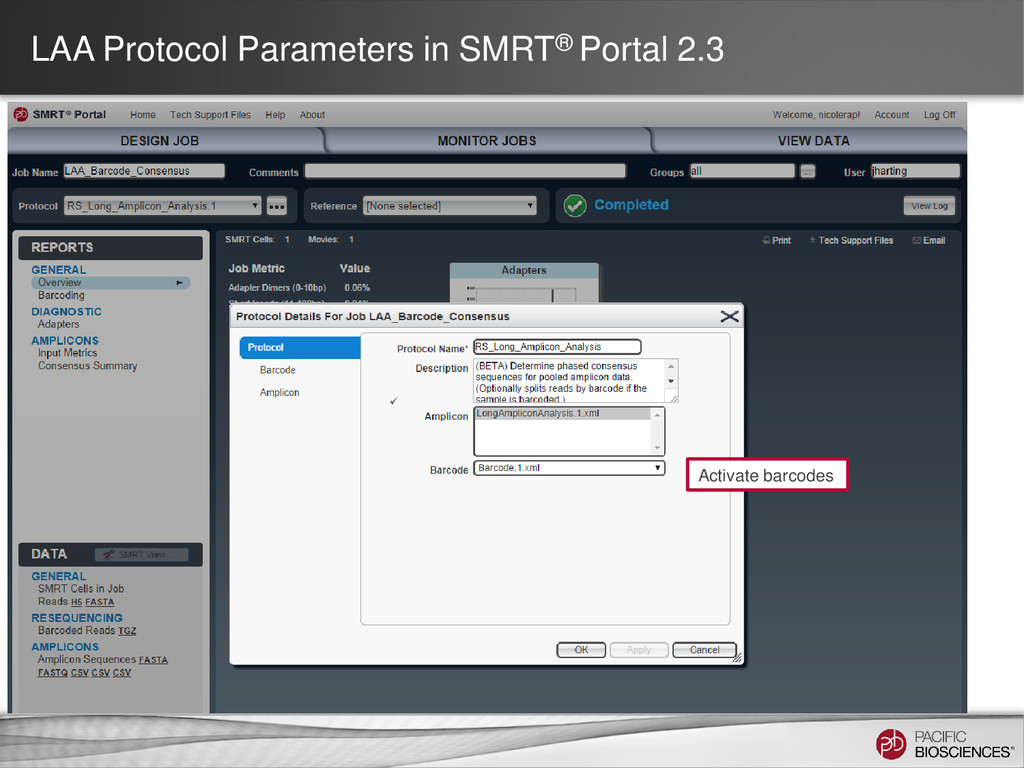
Multiple gene, multiple phases X X HLA Single gene, multiple phases X Human amplicon with phasing Single gene, single phase Clone validation 35 All use cases allow barcoding HLA Analysis Type Class I Class II Note Just HLA Class I X Just HLA Class II X Combined HLA Class I and Class II X X Supported in SMRT® Analysis 2.3
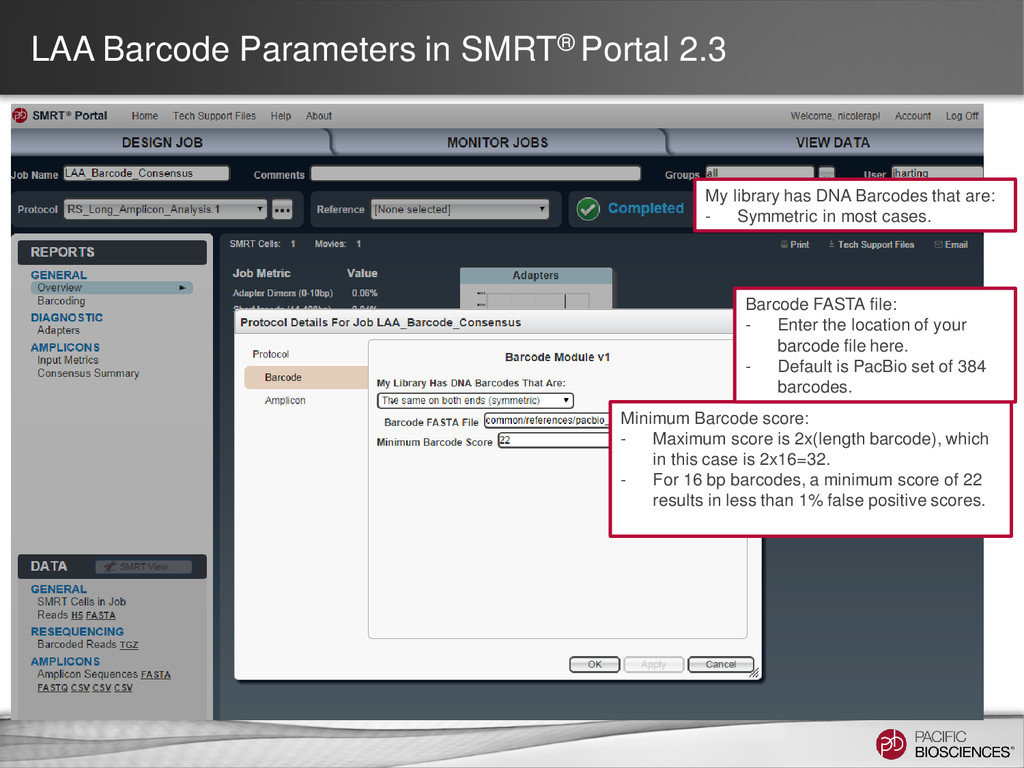
DNA Barcodes that are: - Symmetric in most cases. Minimum Barcode score: - Maximum score is 2x(length barcode), which in this case is 2x16=32. - For 16 bp barcodes, a minimum score of 22 results in less than 1% false positive scores. Barcode FASTA file: - Enter the location of your barcode file here. - Default is PacBio set of 384 barcodes.
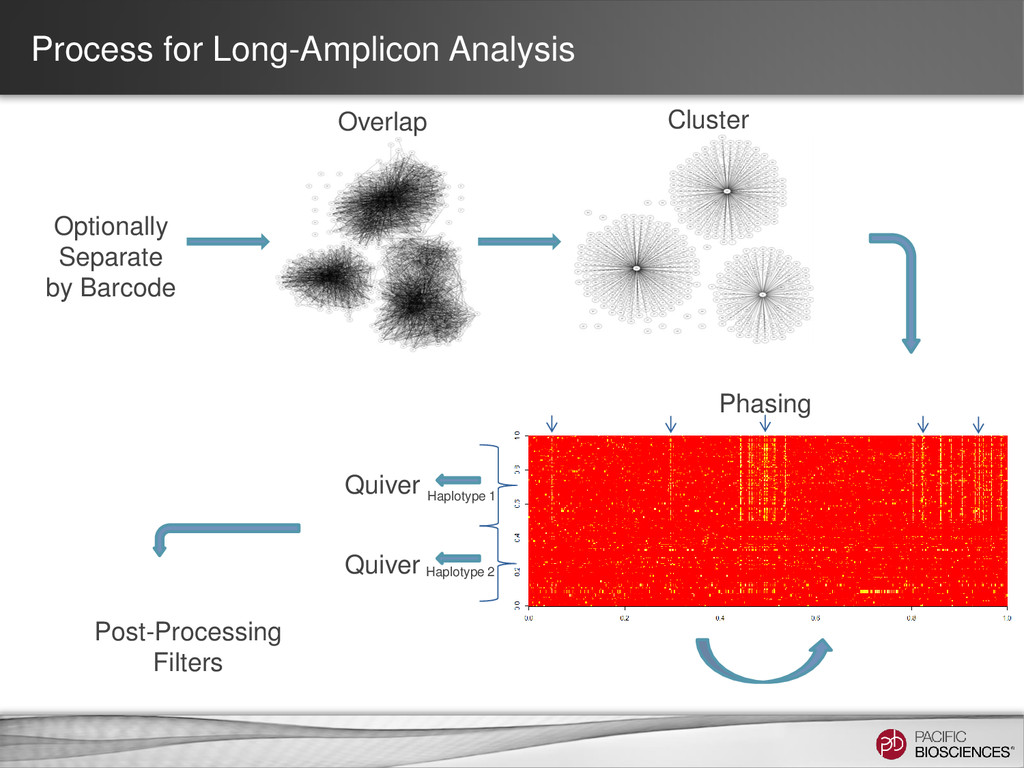
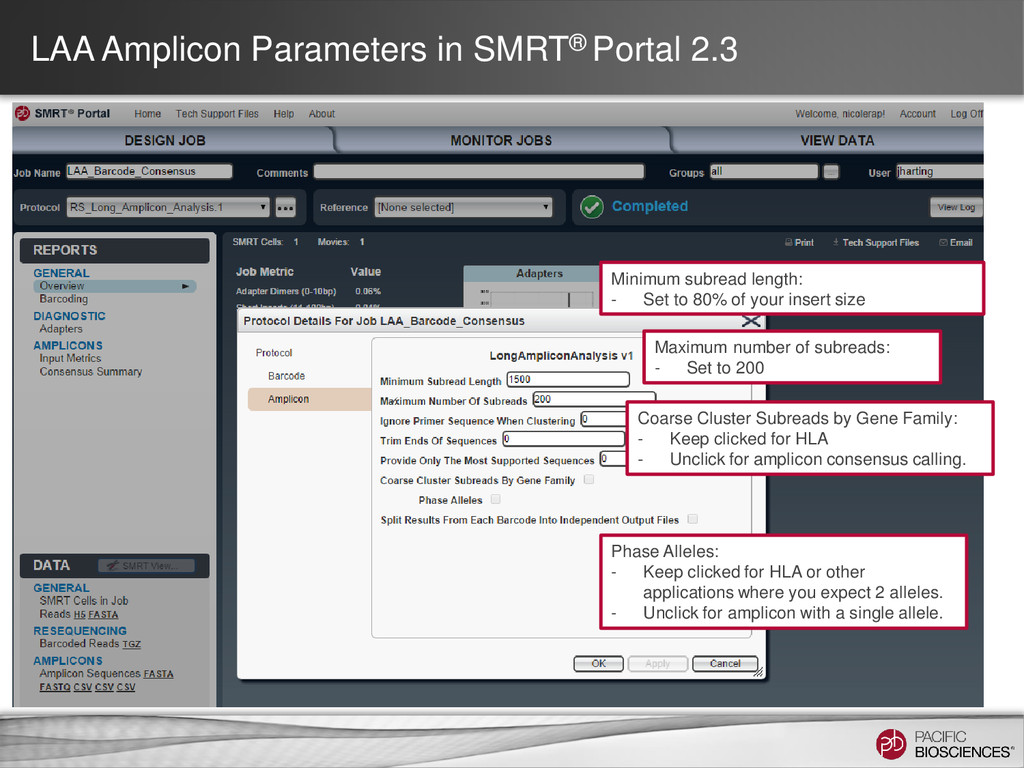
- Set to 80% of your insert size Coarse Cluster Subreads by Gene Family: - Keep clicked for HLA - Unclick for amplicon consensus calling. Maximum number of subreads: - Set to 200 Phase Alleles: - Keep clicked for HLA or other applications where you expect 2 alleles. - Unclick for amplicon with a single allele.
Pacific Biosciences, the Pacific Biosciences logo, PacBio, SMRT, SMRTbell, and Iso-Seq are trademarks of Pacific Biosciences in the United States and/or other countries. All other trademarks are the sole property of their respective owners.

 Your Podcast. Everywhere. Effortlessly.


 pacbio
 rmaruy
 aikinohara
 rajeshrinet
 trycycle
 okana2ki
 martinlippert
 shumpei777
 hanbao
 hayashiyus884
 chriscoyier
 bkeepers
 aleyda
 codingconduct
 ianozsvald
 katarinadahlin
 bluesmoon
 marktimemedia
 techseoconnect
 marketingsoph