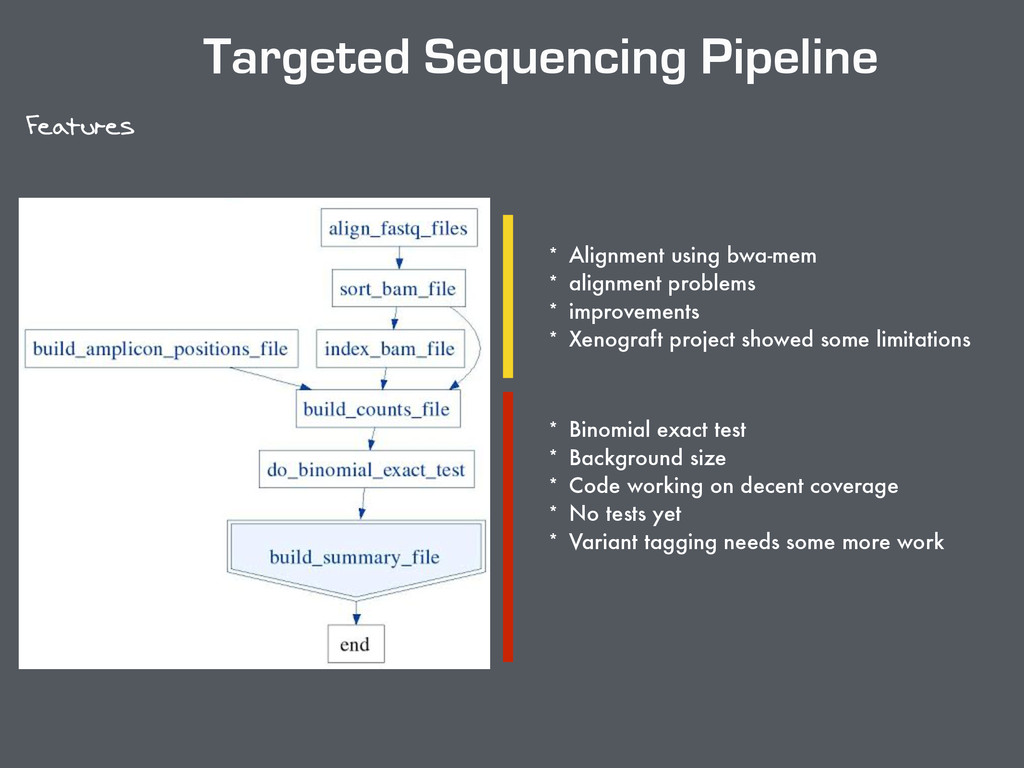
problems * improvements * Xenograft project showed some limitations * Binomial exact test * Background size * Code working on decent coverage * No tests yet * Variant tagging needs some more work
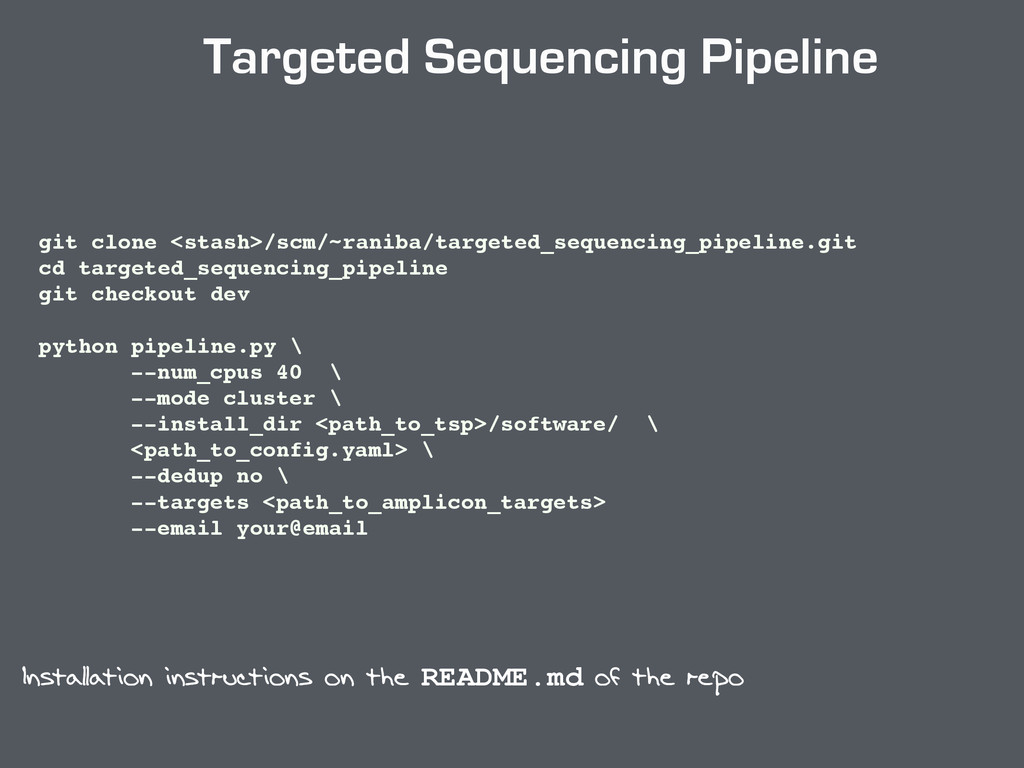
pipeline.py \ —num_cpus 10 \ —mode cluster \ —install_dir <path_to_miseq>/software \ <path_to_config_file> Limitations : ! - Manifest file - positions format - limited to point mutations ! ! If you want to run this version : ! - create_config_file_for_miseqpipeline.py One single code that generates all needed formats to run the pipeline
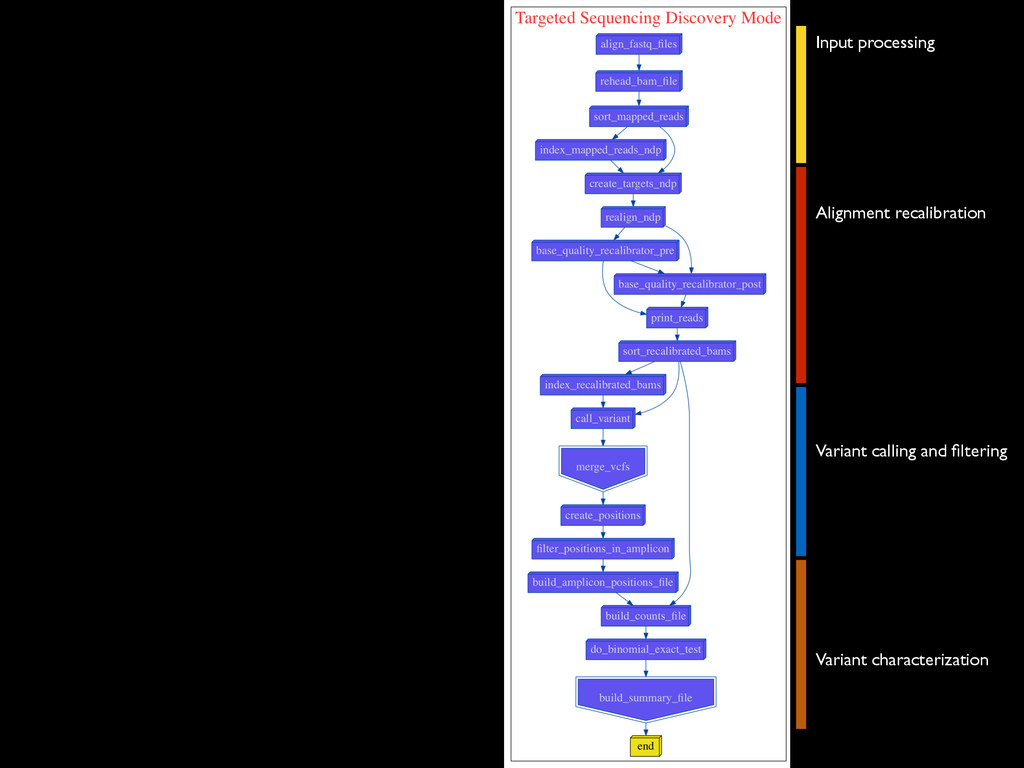
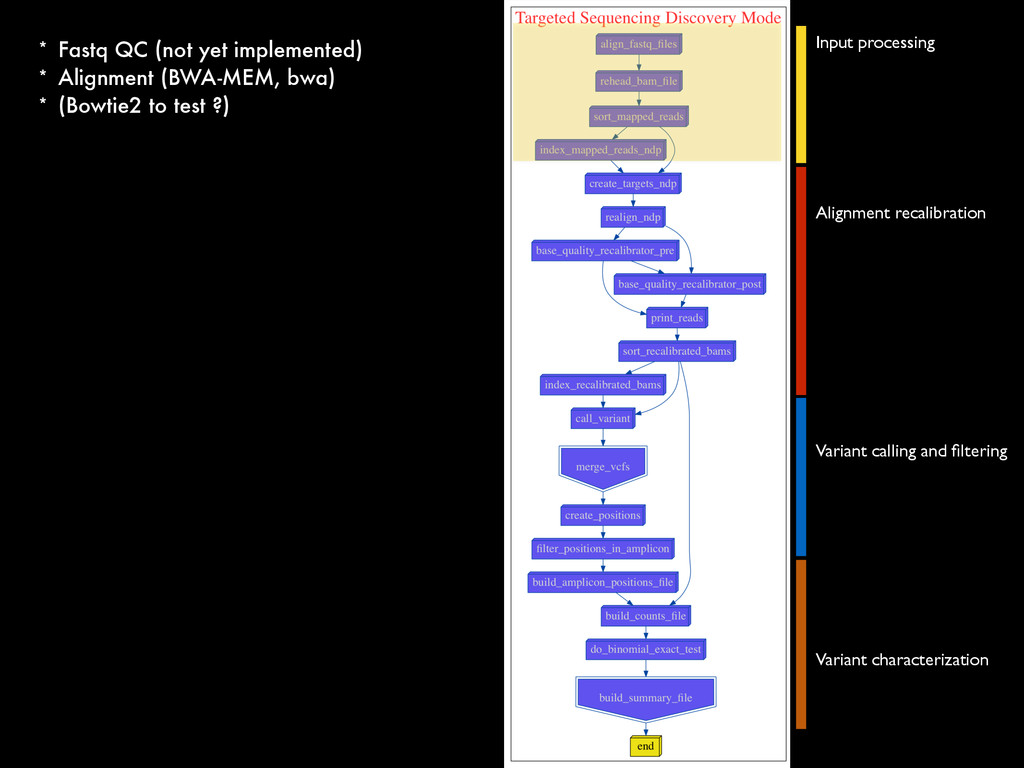
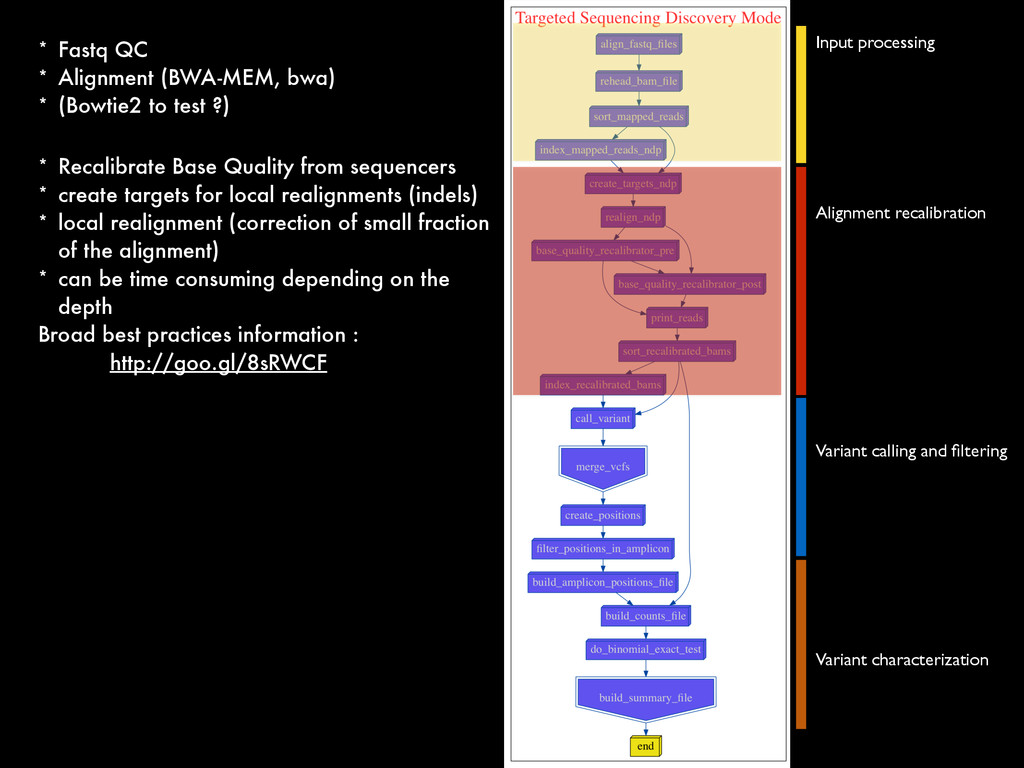
* Recalibrate Base Quality from sequencers * create targets for local realignments (indels) * local realignment (correction of small fraction of the alignment) * can be time consuming depending on the depth Broad best practices information : http://goo.gl/8sRWCF * Fastq QC * Alignment (BWA-MEM, bwa) * (Bowtie2 to test ?)
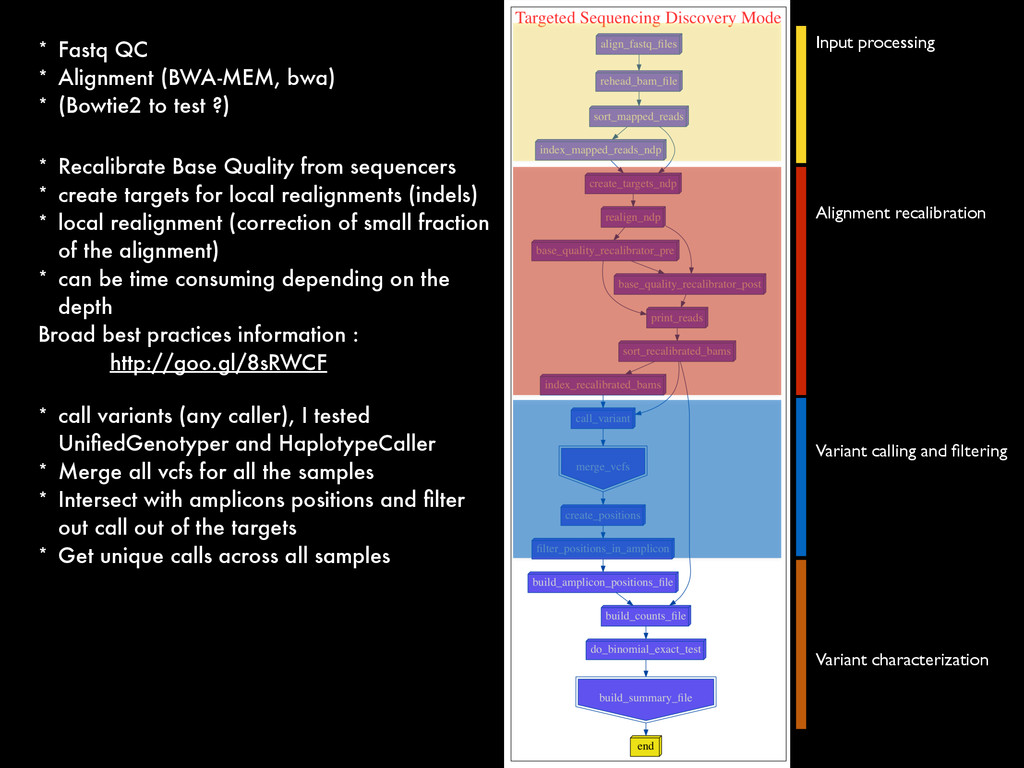
* Recalibrate Base Quality from sequencers * create targets for local realignments (indels) * local realignment (correction of small fraction of the alignment) * can be time consuming depending on the depth Broad best practices information : http://goo.gl/8sRWCF * Fastq QC * Alignment (BWA-MEM, bwa) * (Bowtie2 to test ?) * call variants (any caller), I tested UnifiedGenotyper and HaplotypeCaller * Merge all vcfs for all the samples * Intersect with amplicons positions and filter out call out of the targets * Get unique calls across all samples
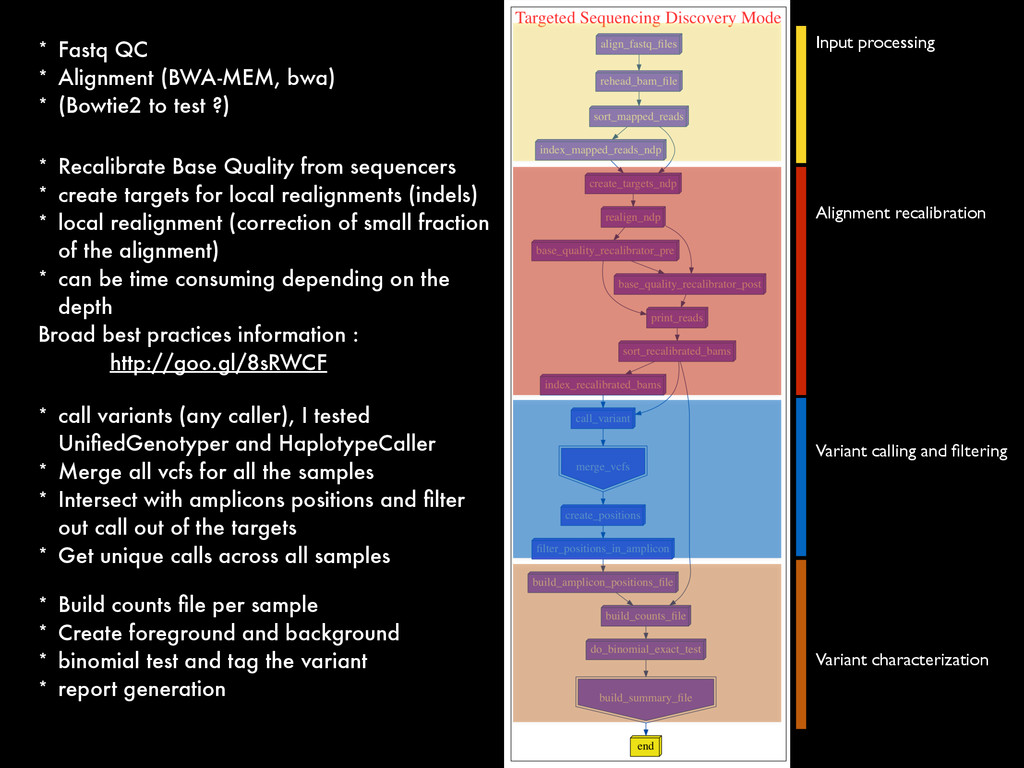
* Recalibrate Base Quality from sequencers * create targets for local realignments (indels) * local realignment (correction of small fraction of the alignment) * can be time consuming depending on the depth Broad best practices information : http://goo.gl/8sRWCF * Fastq QC * Alignment (BWA-MEM, bwa) * (Bowtie2 to test ?) * call variants (any caller), I tested UnifiedGenotyper and HaplotypeCaller * Merge all vcfs for all the samples * Intersect with amplicons positions and filter out call out of the targets * Get unique calls across all samples * Build counts file per sample * Create foreground and background * binomial test and tag the variant * report generation


 radaniba
 institutdelelevage
 s_mizuki_nlp
 godel
 dk999
 gkazunii
 takasehideki
 satai
 ept
 recsyslab
 ryanjones
 michielstock
 joshbly
 mayatellez
 jonoalderson
 inesmontani
 destraynor
 jcasabona
 3n
 greggifford
 nikkihalliwell
 jlugia