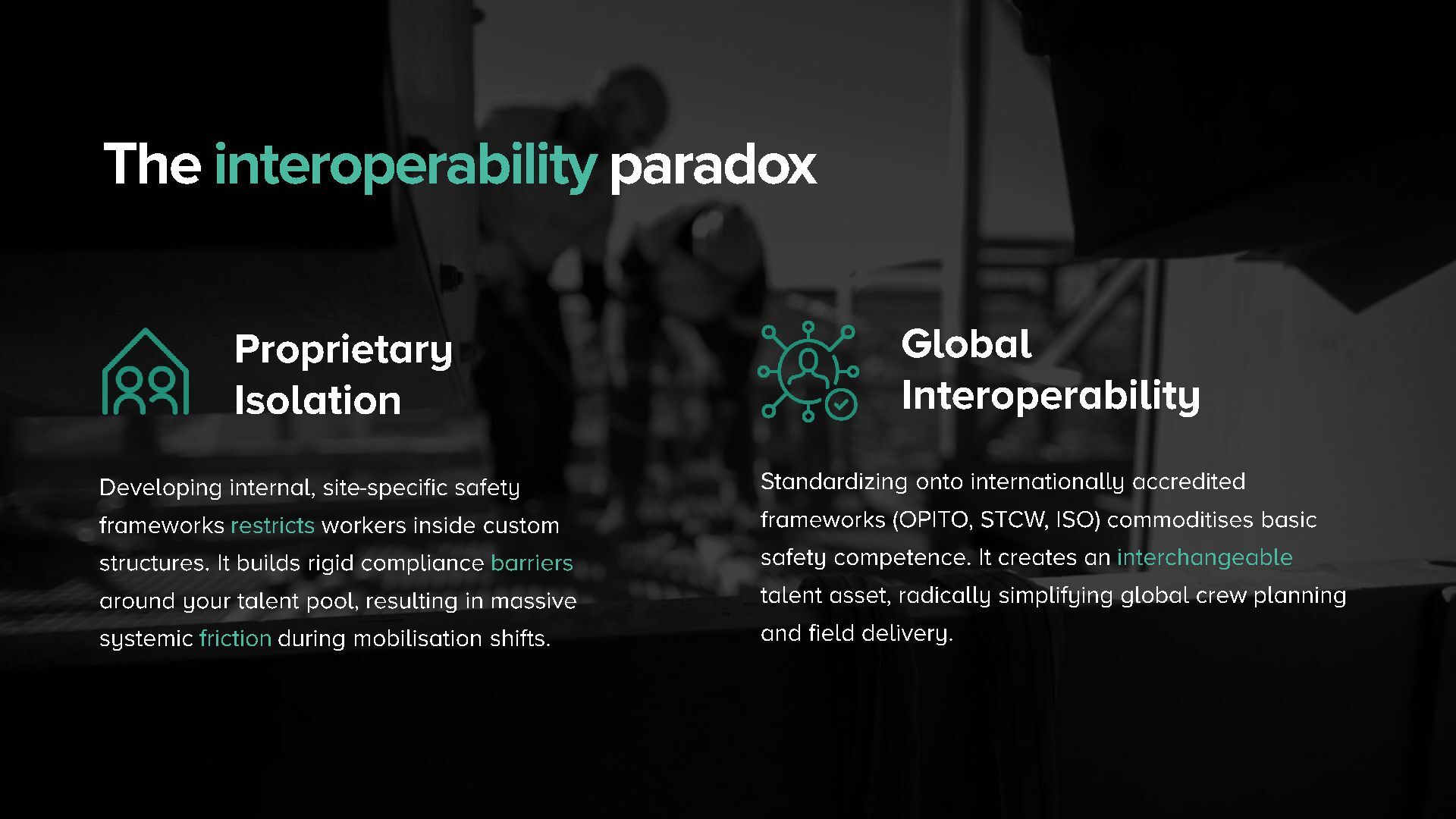
safety Standardizing onto internationally accredited frameworks restricts workers inside custom frameworks (OPITO, STCW, ISO) commoditises basic structures. It builds rigid compliance safety competence. It creates an barriers interchangeable around your talent pool, resulting in massive talent asset, radically simplifying global crew planning systemic friction during mobilisation shifts. and field delivery.
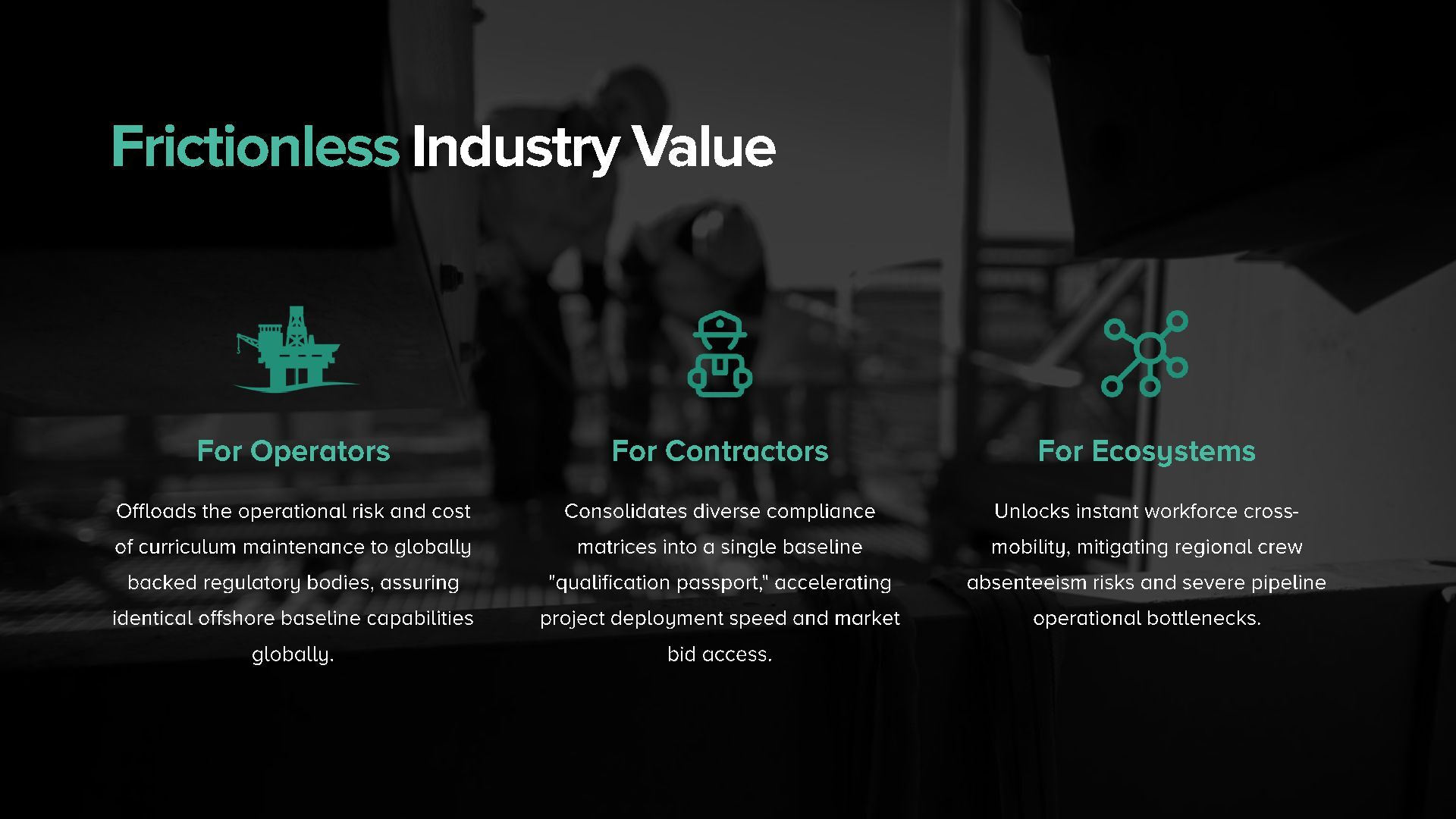
the operational risk and cost Consolidates diverse compliance Unlocks instant workforce cross of curriculum maintenance to globally matrices into a single baseline mobility, mitigating regional crew backed regulatory bodies, assuring "qualification passport," accelerating absenteeism risks and severe pipeline identical offshore baseline capabilities project deployment speed and market operational bottlenecks. globally. bid access. -
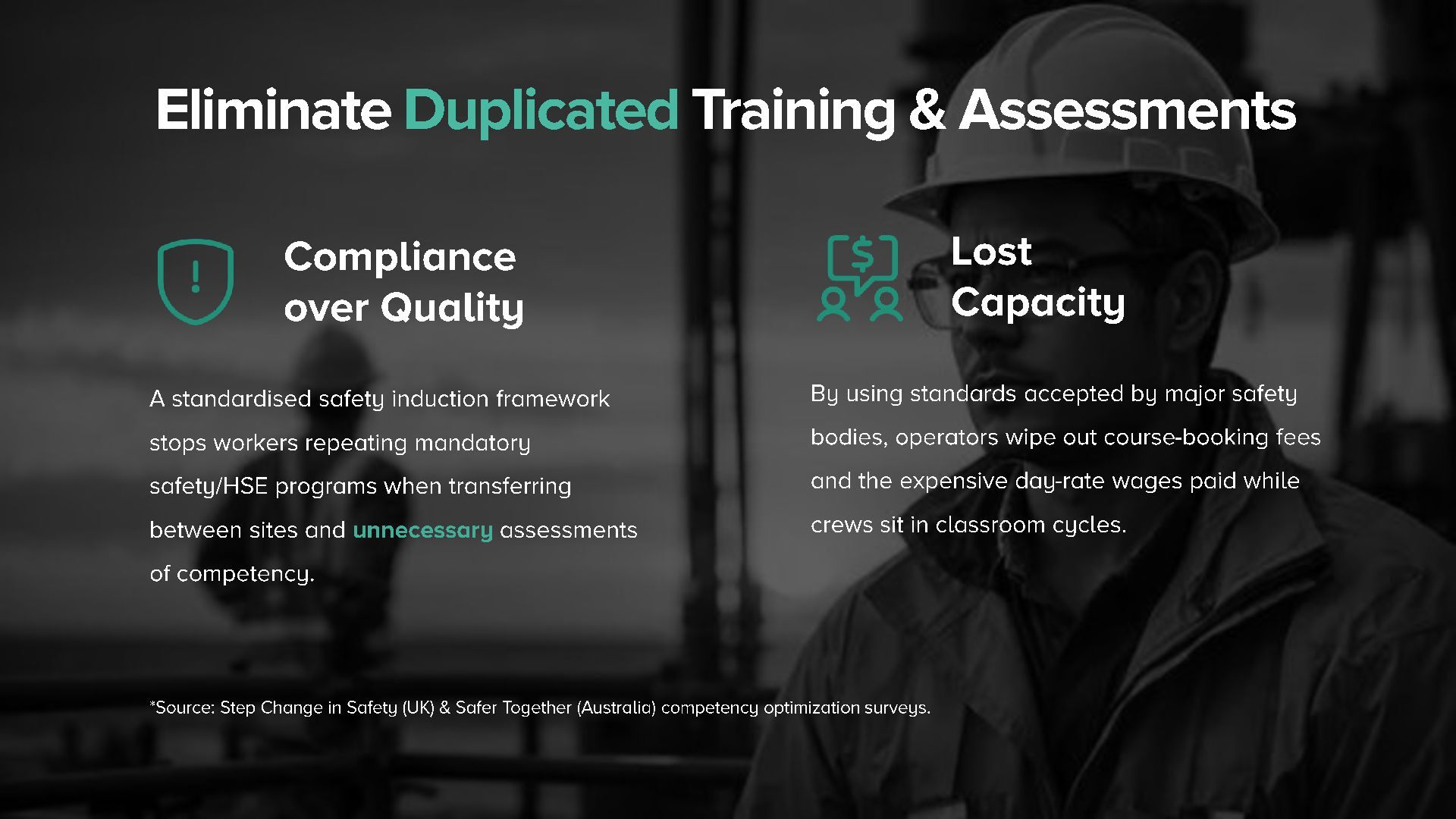
A standardised safety induction framework By using standards accepted by major safety stops workers repeating mandatory bodies, operators wipe out course safety/HSE programs when transferring and the expensive day between sites and unnecessary assessments crews sit in classroom cycles. of competency. *Source: Step Change in Safety (UK) & Safer Together (Australia) competency optimization surveys. -booking fees -rate wages paid while
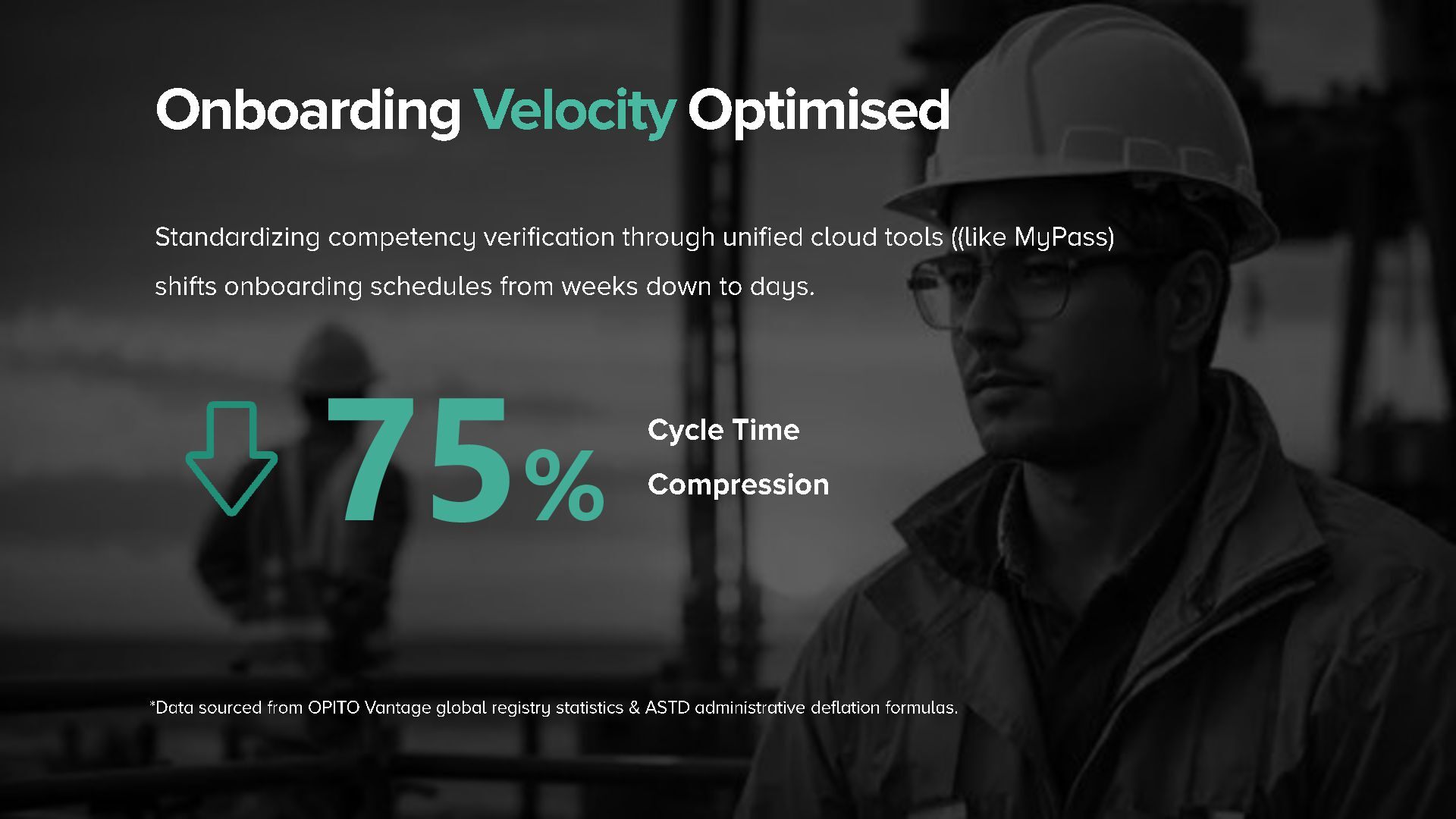
((like shifts onboarding schedules from weeks down to days. 75% Cycle Time Compression *Data sourced from OPITO Vantage global registry statistics & ASTD administrative deflation formulas. MyPass )
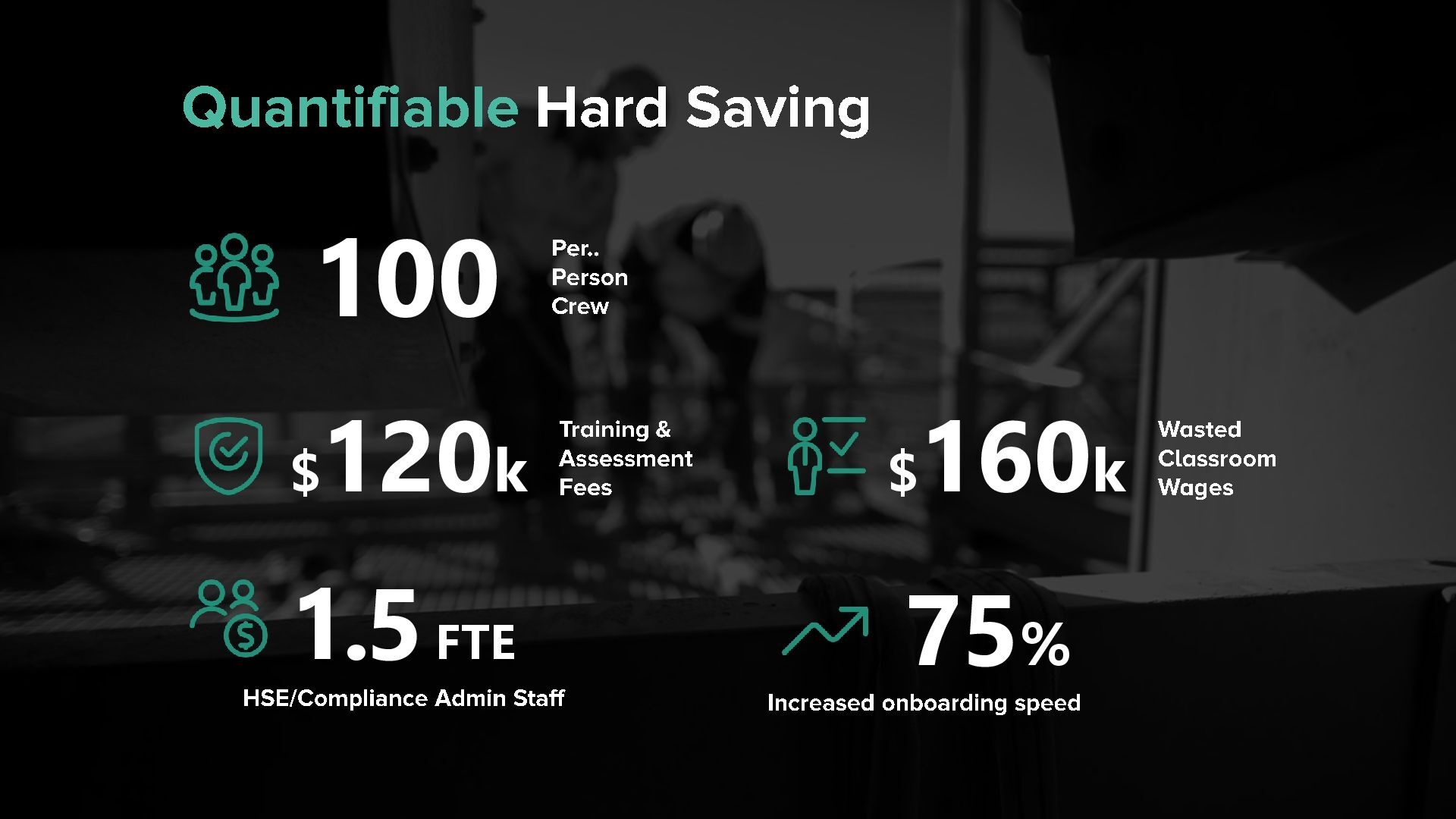
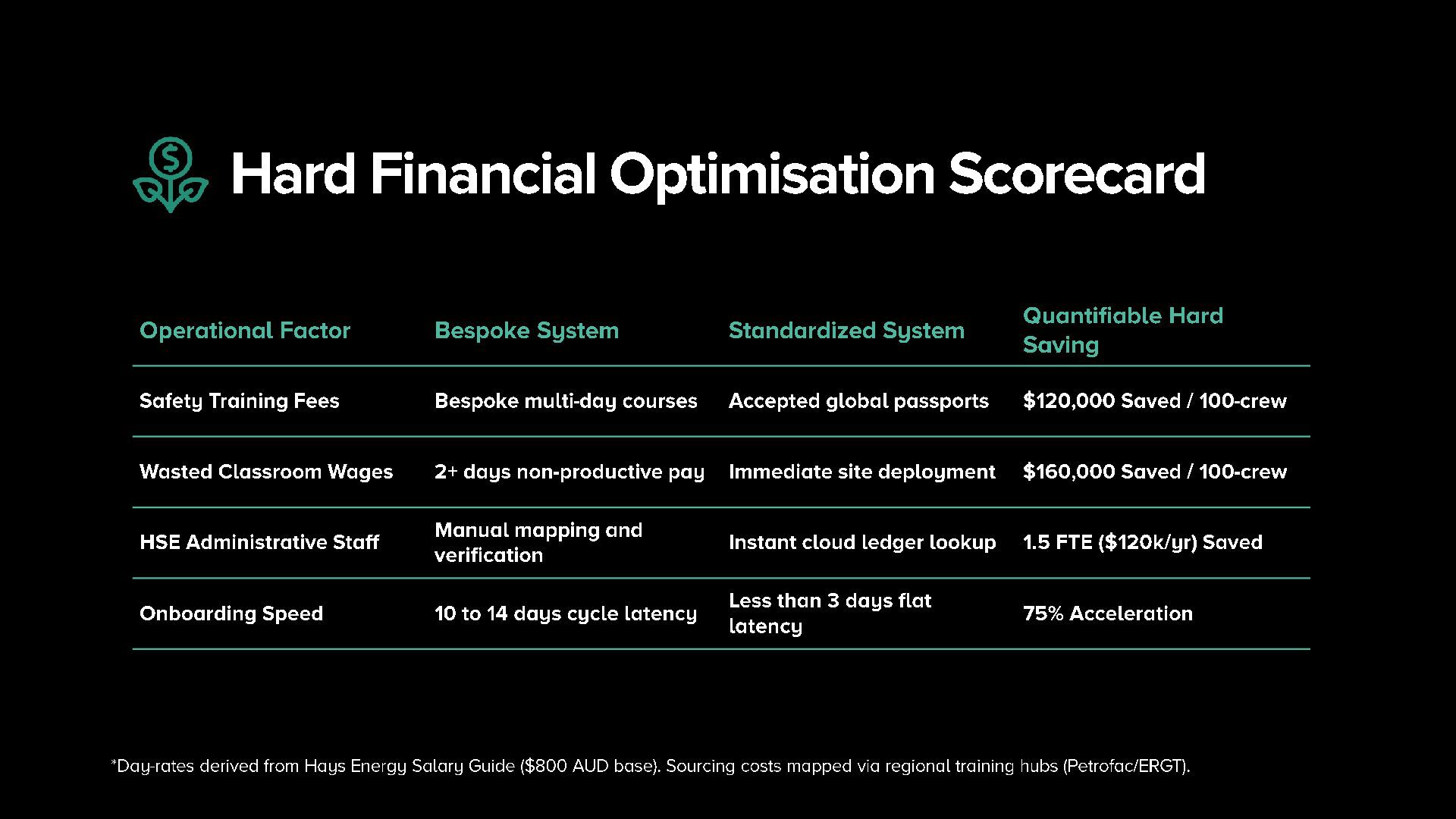
Quantifiable Hard Saving Safety Training Fees Bespoke multi -day courses Accepted global passports $120,000 Saved / 100 -crew Wasted Classroom Wages 2+ days non -productive pay Immediate site deployment $160,000 Saved / 100 -crew HSE Administrative Staff Manual mapping and verification Instant cloud ledger lookup 1.5 FTE ($120k/yr) Saved Onboarding Speed 10 to 14 days cycle latency Less than 3 days flat latency 75% Acceleration *Day-rates derived from Hays Energy Salary Guide ($800 AUD base). Sourcing costs mapped via regional training hubs (Petrofac/ERG T).
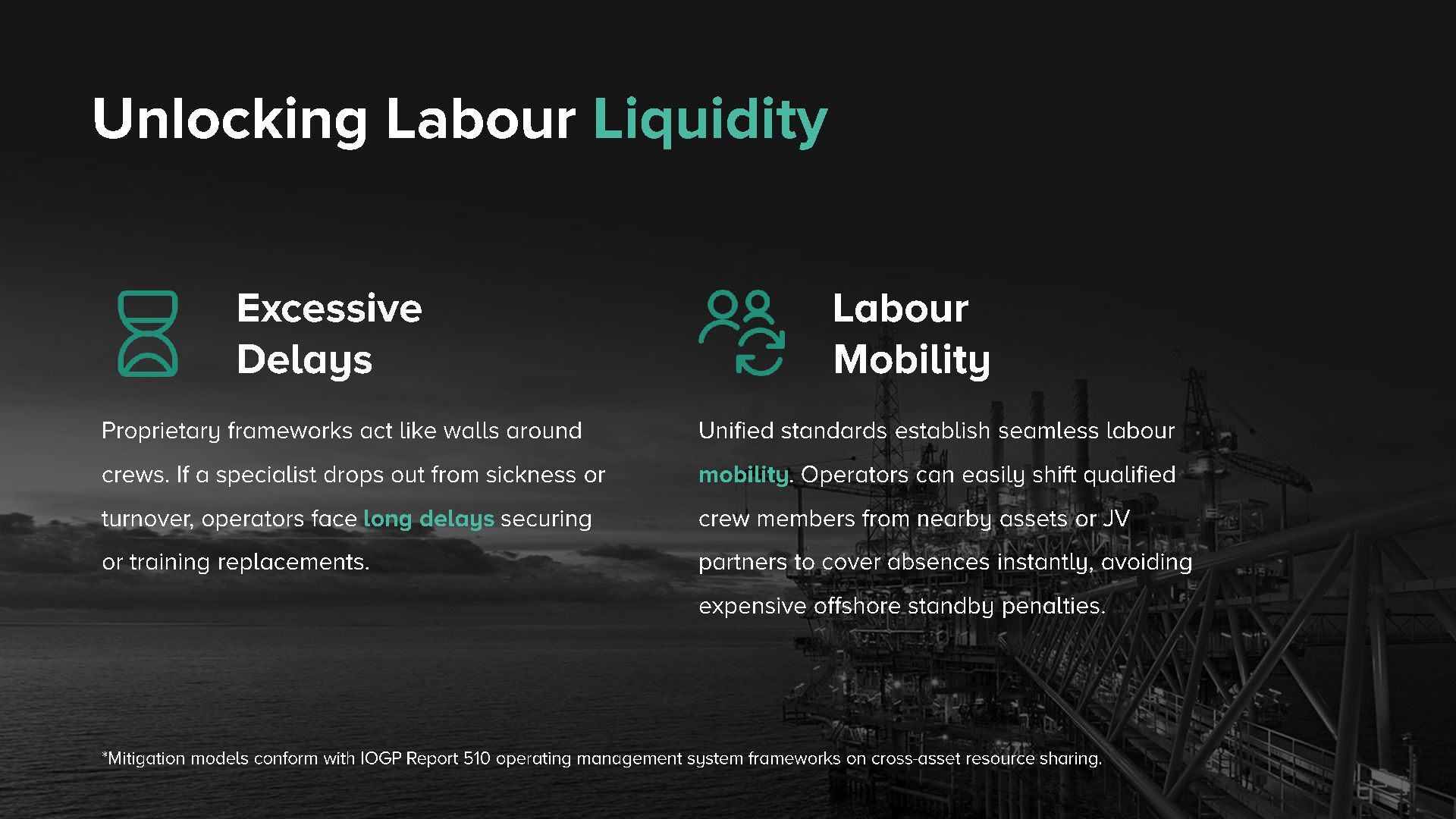
like walls around Unified standards establish seamless labour crews. If a specialist drops out from sickness or mobility . Operators can easily shift qualified turnover, operators face long delays securing crew members from nearby assets or JV or training replacements. partners to cover absences instantly, avoiding expensive offshore standby penalties. *Mitigation models conform with IOGP Report 510 operating management system frameworks on cross -asset resource sharing.


 simplfy
 flux
flux
 neuroenergia
 layerx
.jpg) ikuodanaka
ikuodanaka
 arnekittler
 yasslab
.jpg) iflection
iflection
 doradora09
 ordy_nishiyama
 morimori3
 updater_pr
 mediphone
 pauljervisheath
 portentint
 keavy
keavy
 samlambert
 cassininazir
 schroneko
 eileencodes
 chrisshort
 rasagy
 palkan
 quramy
 jeffersonlam
![Simplfy +61 467 769 267 [email protected] © 2025](https://files.speakerdeck.com/presentations/64f36a3fd2c0401885565944dcf2a565/slide_12.jpg)