Upgrade to Pro — share decks privately, control downloads, hide ads and more …

The Quality Binary: The danger of silence in a ...

The Quality Binary: The danger of silence in a commoditised market.

There is a collective habit of treating complex, high-risk engineering services as simple commodities.
How do we move past the traditional customer/supplier dynamic and transactional tendering and start building resilient partnerships?
How can we define, measure, and contract for Price versus Value in an increasingly volatile energy landscape?
This deck shares some data and insights into the need to recognise quality. Effectively, pay now or pay more later.
As Red Adair once said "if you think hiring a professional is expensive....wait until you hire an amateur"

Avatar for Simplfy

Simplfy

June 10, 2026

More Decks by Simplfy

Other Decks in Business

Transcript

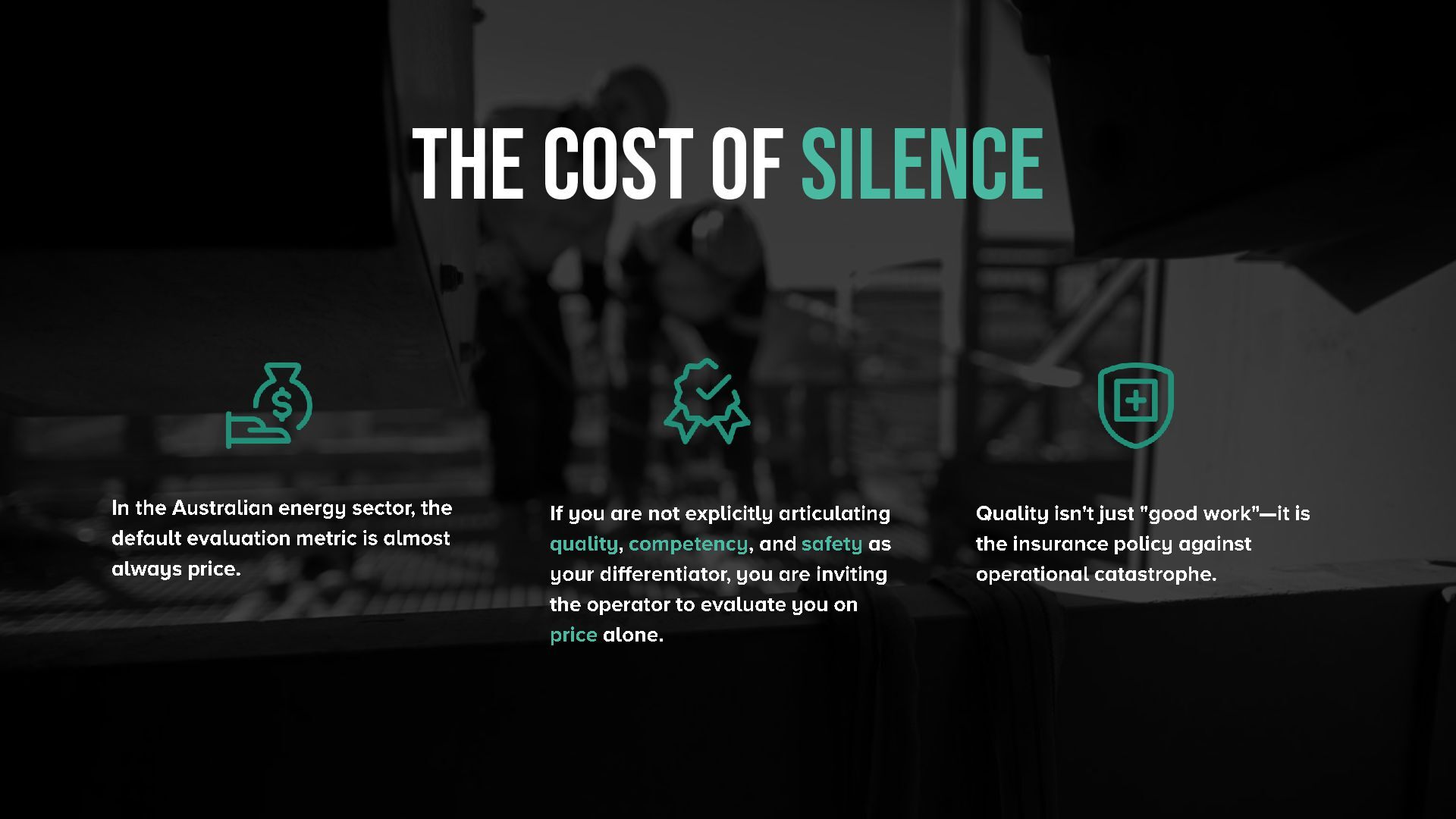
  1. If you are not explicitly articulating quality , competency ,

    and safety as your differentiator, you are inviting the operator to evaluate you on price alone. Quality isn't just "good work" —it is the insurance policy against operational catastrophe. In the Australian energy sector, the default evaluation metric is almost always price. The cost of silence
  2. Escalating labour shortages and material volatility increase the risk of

    'Lowest Bid' insolvency. Market Volatility Contractors often include a 10 -20% risk premium in traditional EPC contracts to cover uncontrollable variables. A focus on Value through collaboration can eliminate this "Hidden Tax." Cost of price The Hidden Premium
  3. Escalating labour shortages and material volatility increase the risk of

    'Lowest Bid' insolvency. Market Volatility Contractors often include a 10 -20% risk premium in traditional EPC contracts to cover uncontrollable variables. A focus on Value through collaboration can eliminate this "Hidden Tax." Perverse effects of price The Hidden Premium
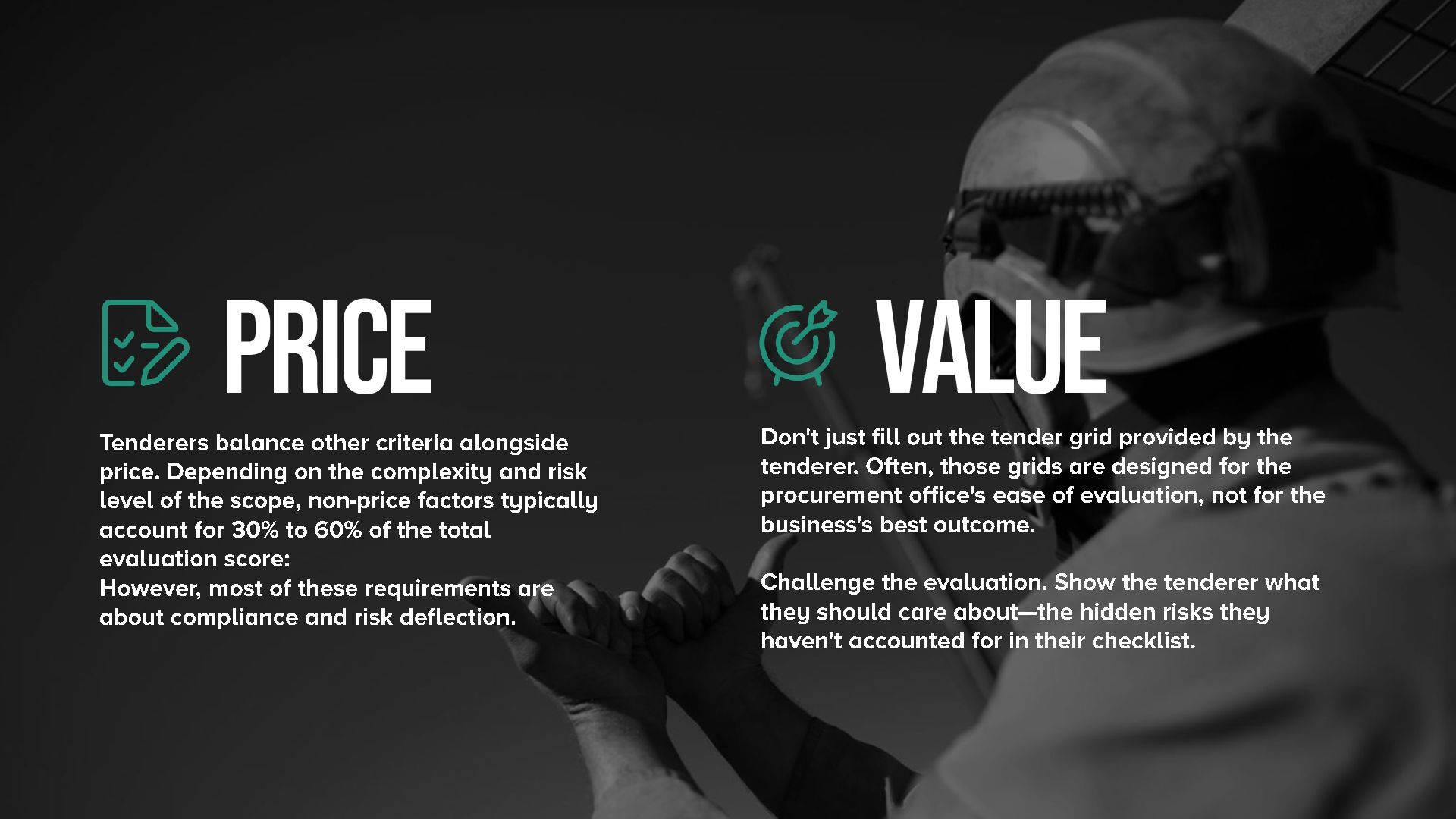
  4. Tenderers balance other criteria alongside price. Depending on the complexity

    and risk level of the scope, non -price factors typically account for 30% to 60% of the total evaluation score: However, most of these requirements are about compliance and risk deflection. price Don't just fill out the tender grid provided by the tenderer. Often, those grids are designed for the procurement office's ease of evaluation, not for the business's best outcome. Challenge the evaluation. Show the tenderer what they should care about —the hidden risks they haven't accounted for in their checklist. value
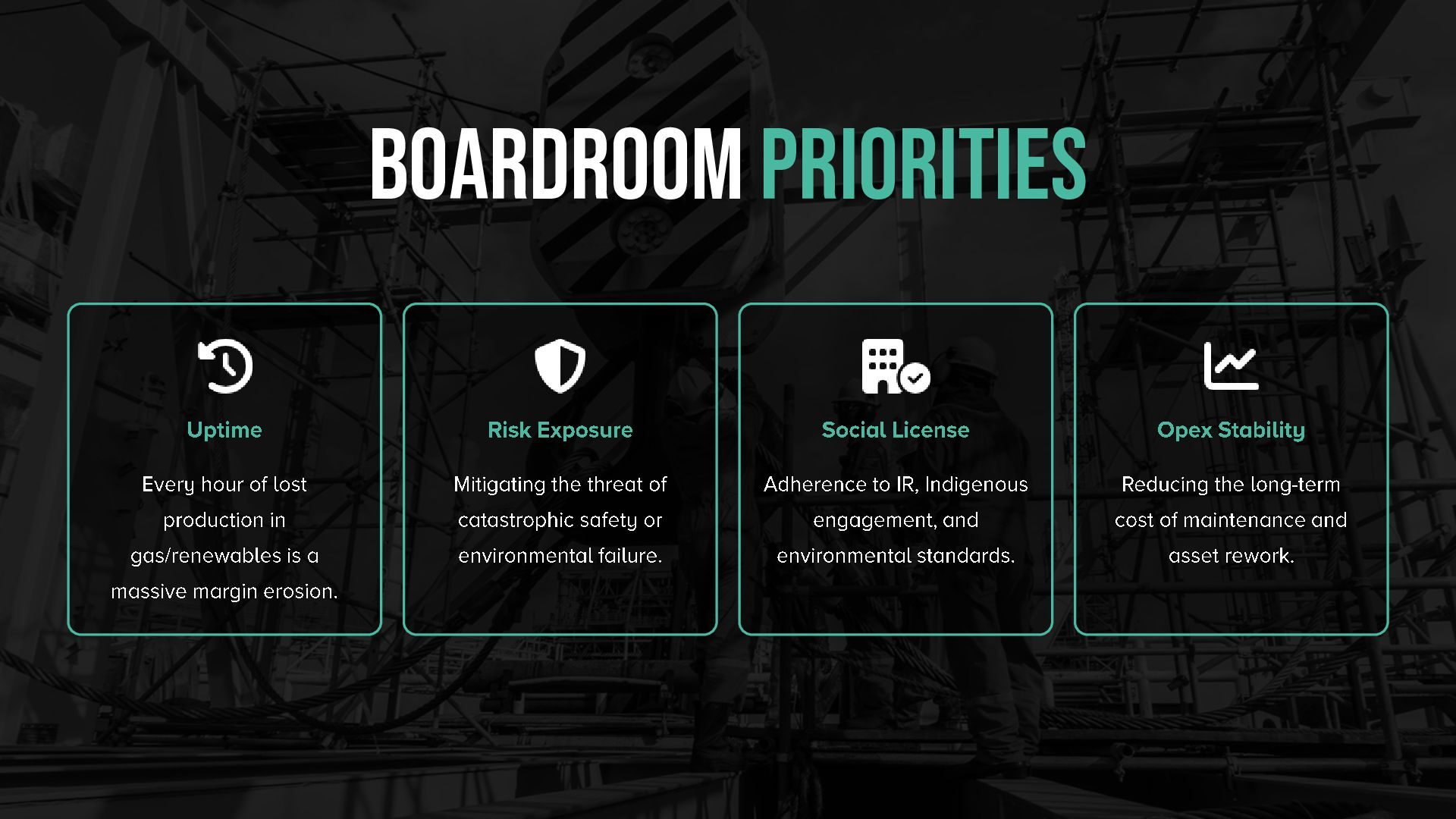
  5. Uptime Every hour of lost production in gas/renewables is a

    massive margin erosion. Risk Exposure Mitigating the threat of catastrophic safety or environmental failure. Social License Adherence to IR, Indigenous engagement, and environmental standards. Opex Stability Reducing the long -term cost of maintenance and asset rework. BOARDROOM PRIORITIES
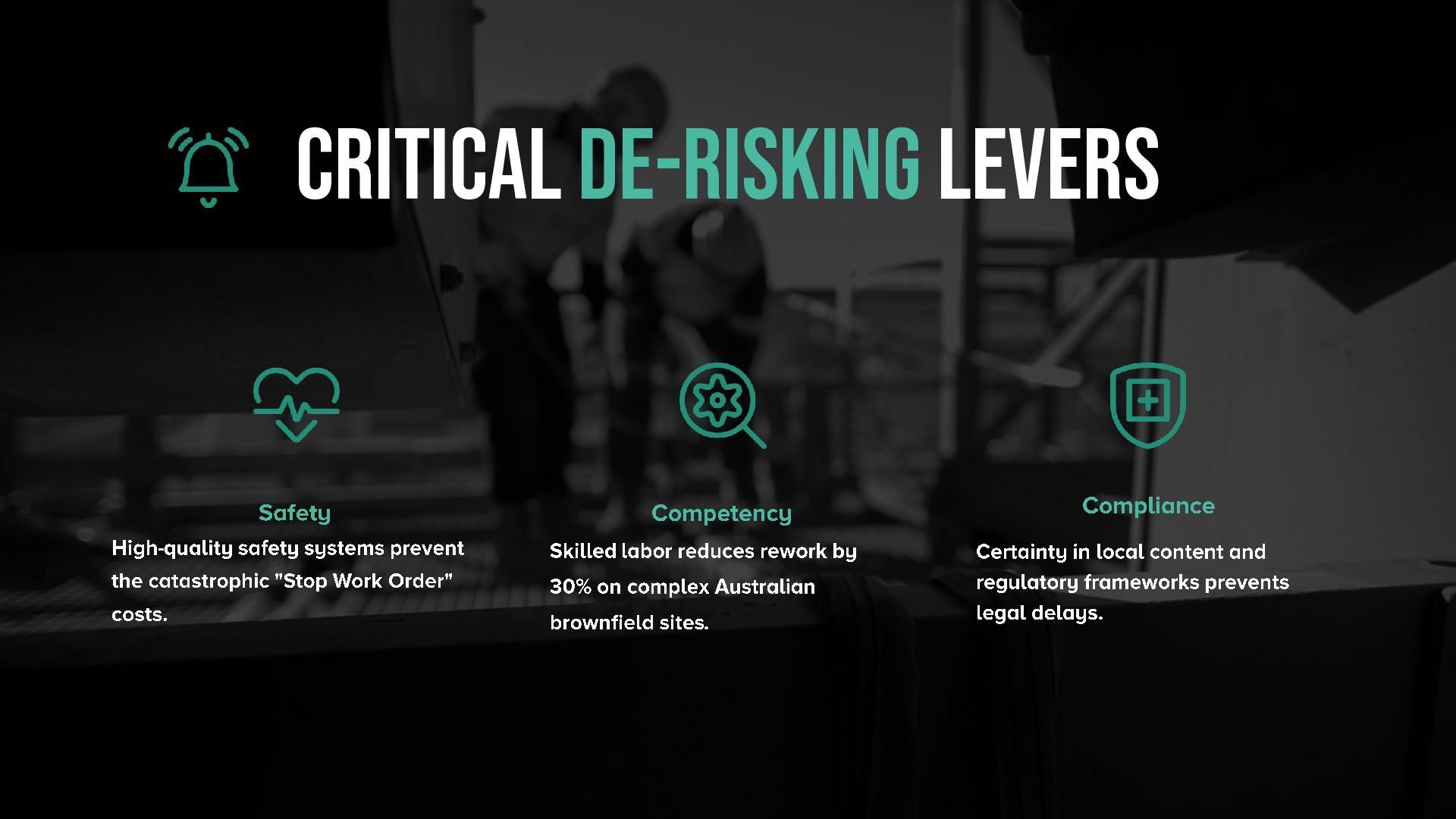
  6. Compliance Certainty in local content and regulatory frameworks prevents legal

    delays. Competency Skilled labor reduces rework by 30% on complex Australian brownfield sites . Safety High -quality safety systems prevent the catastrophic "Stop Work Order" costs. Critical de-risking levers
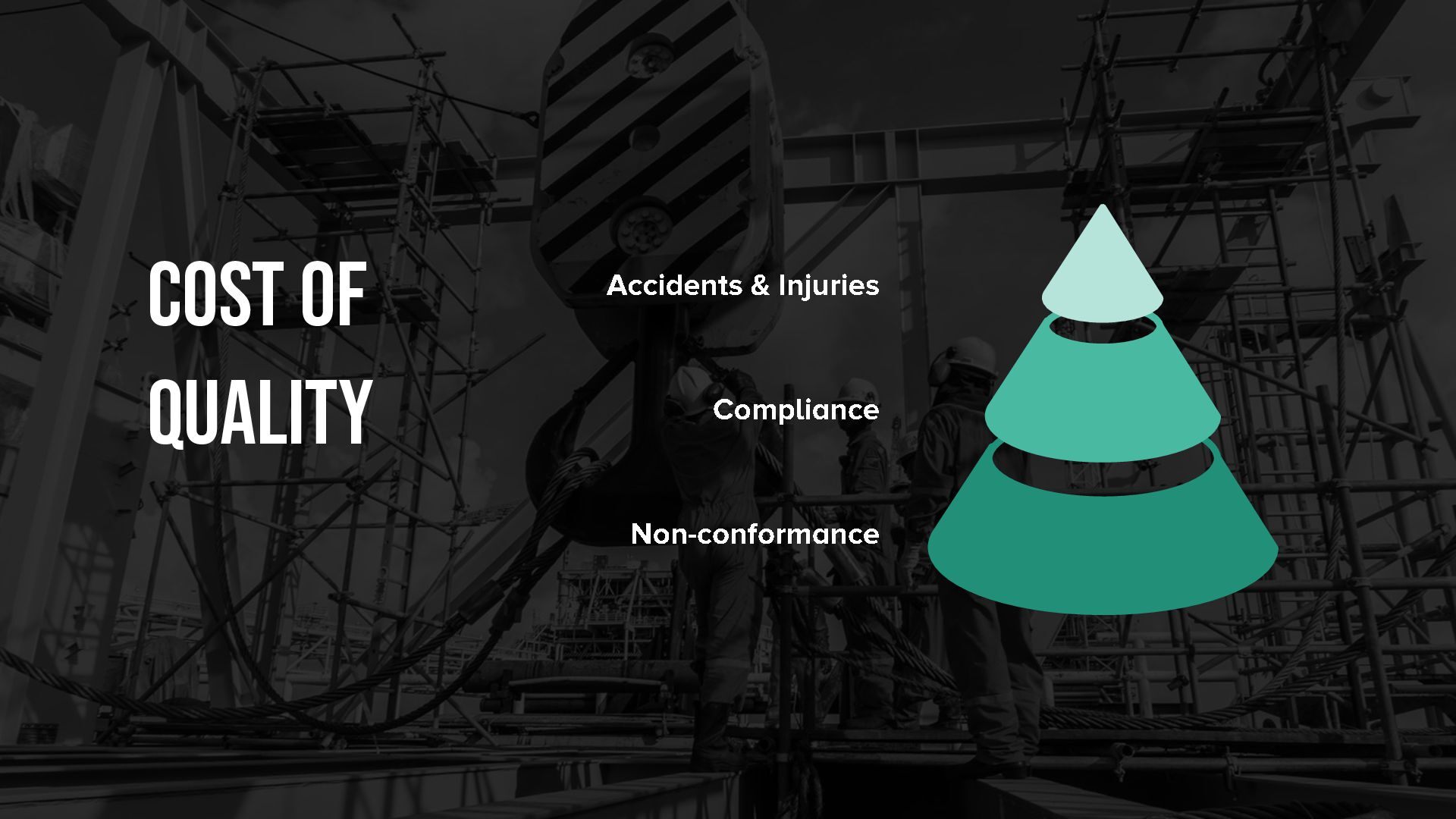
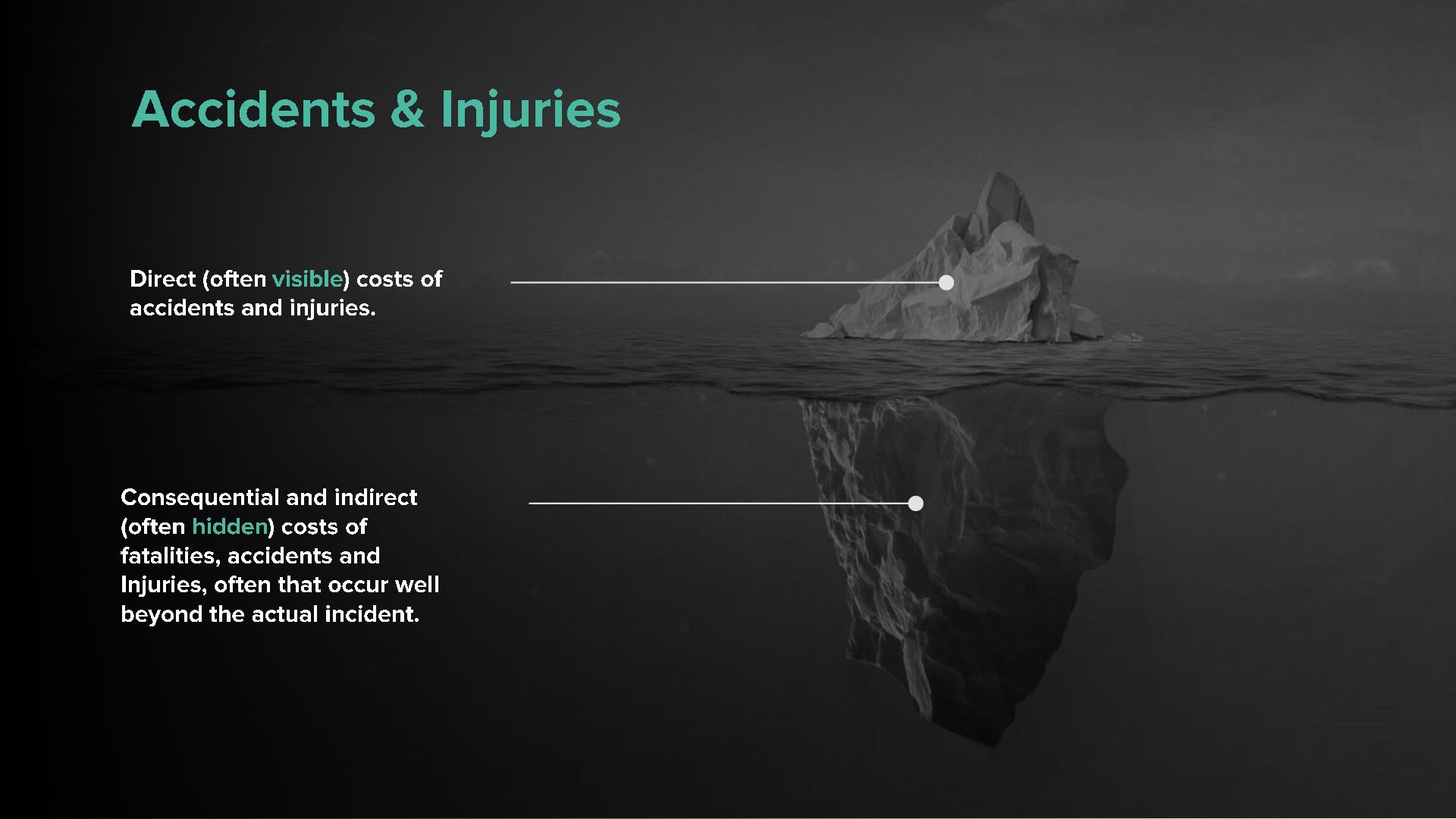
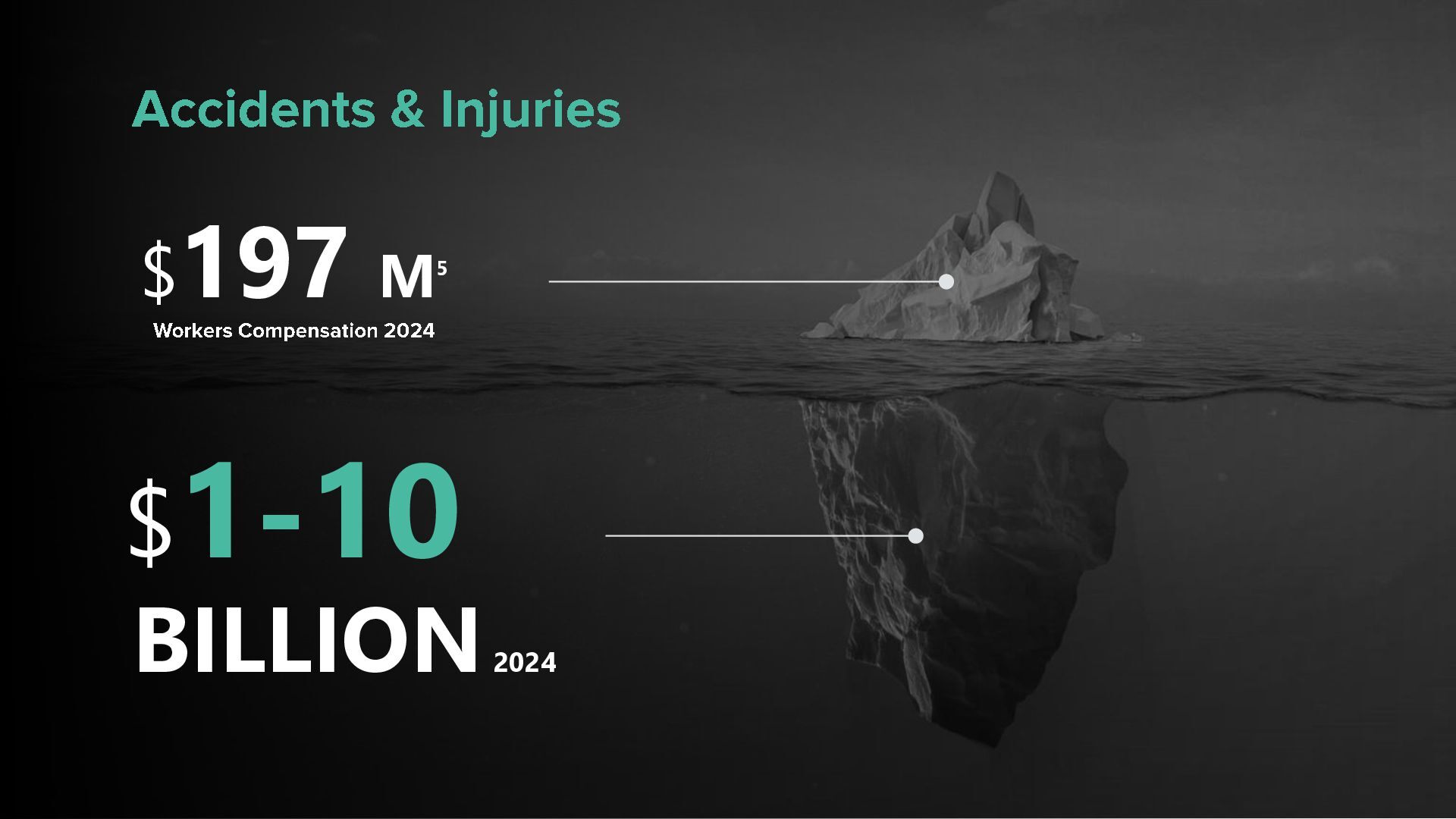
  7. Direct (often visible ) costs of accidents and injuries. Consequential

    and indirect (often hidden ) costs of fatalities, accidents and Injuries, often that occur well beyond the actual incident. Accidents & Injuries
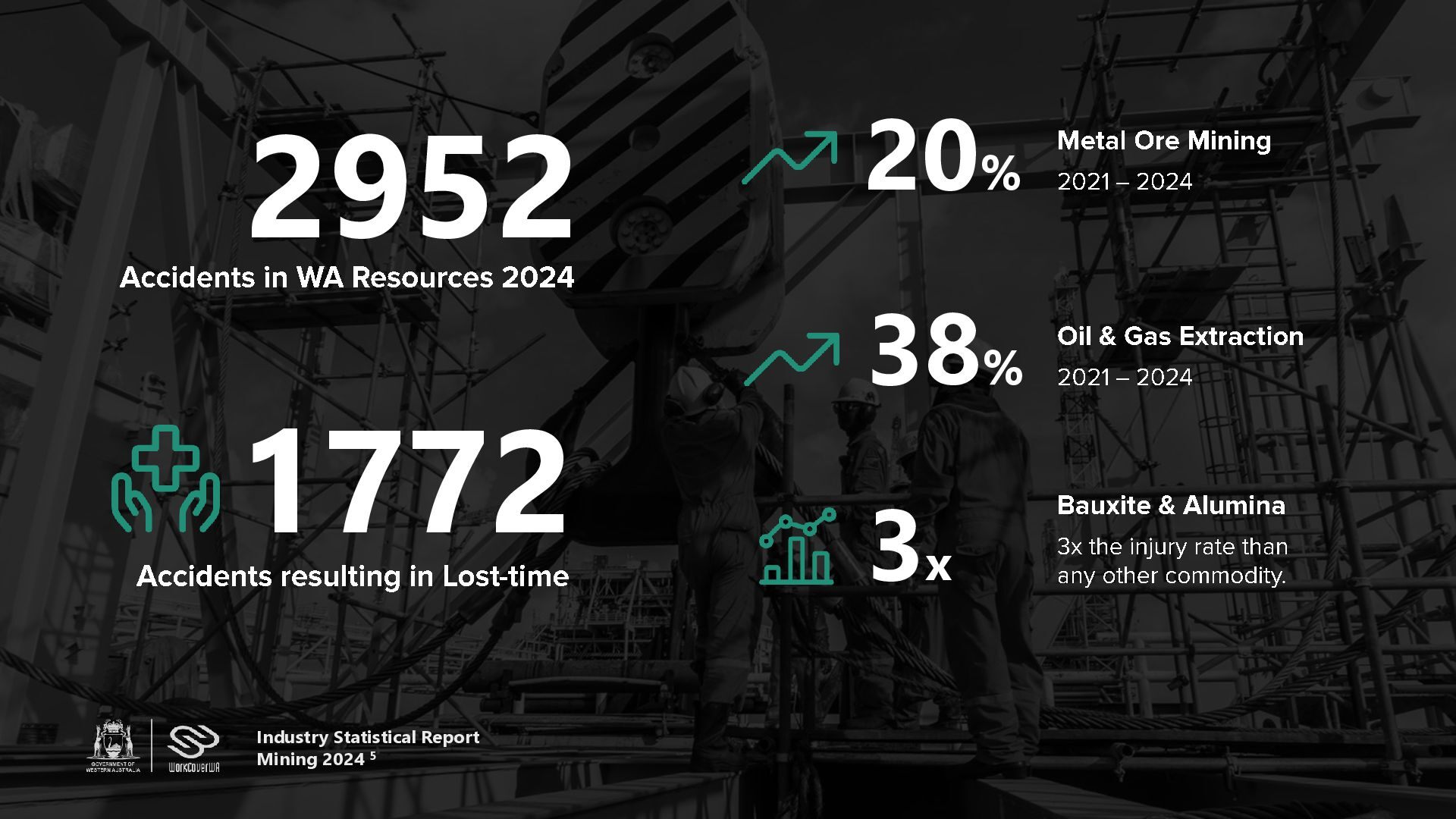
  8. 2952 Accidents in WA Resources 2024 Metal Ore Mining 2021

    – 2024 20% Oil & Gas Extraction 2021 – 2024 38% 1772 Accidents resulting in Lost -time Bauxite & Alumina 3x the injury rate than any other commodity. 3x Industry Statistical Report Mining 2024 5
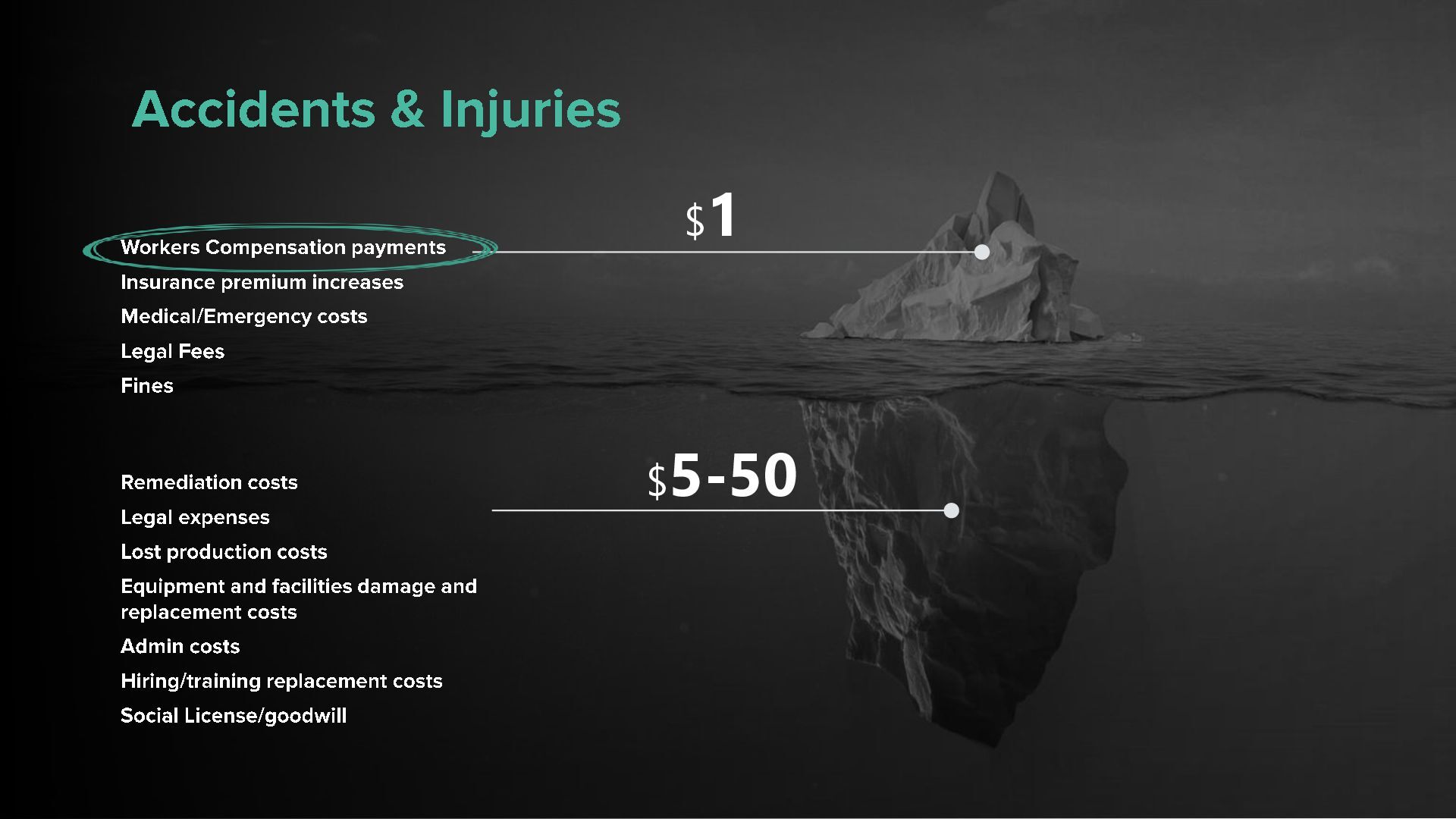
  9. Workers Compensation payments Insurance premium increases Medical/Emergency costs Legal Fees

    Fines Remediation costs Legal expenses Lost production costs Equipment and facilities damage and replacement costs Admin costs Hiring/training replacement costs Social License/goodwill $1 $5-50 Accidents & Injuries
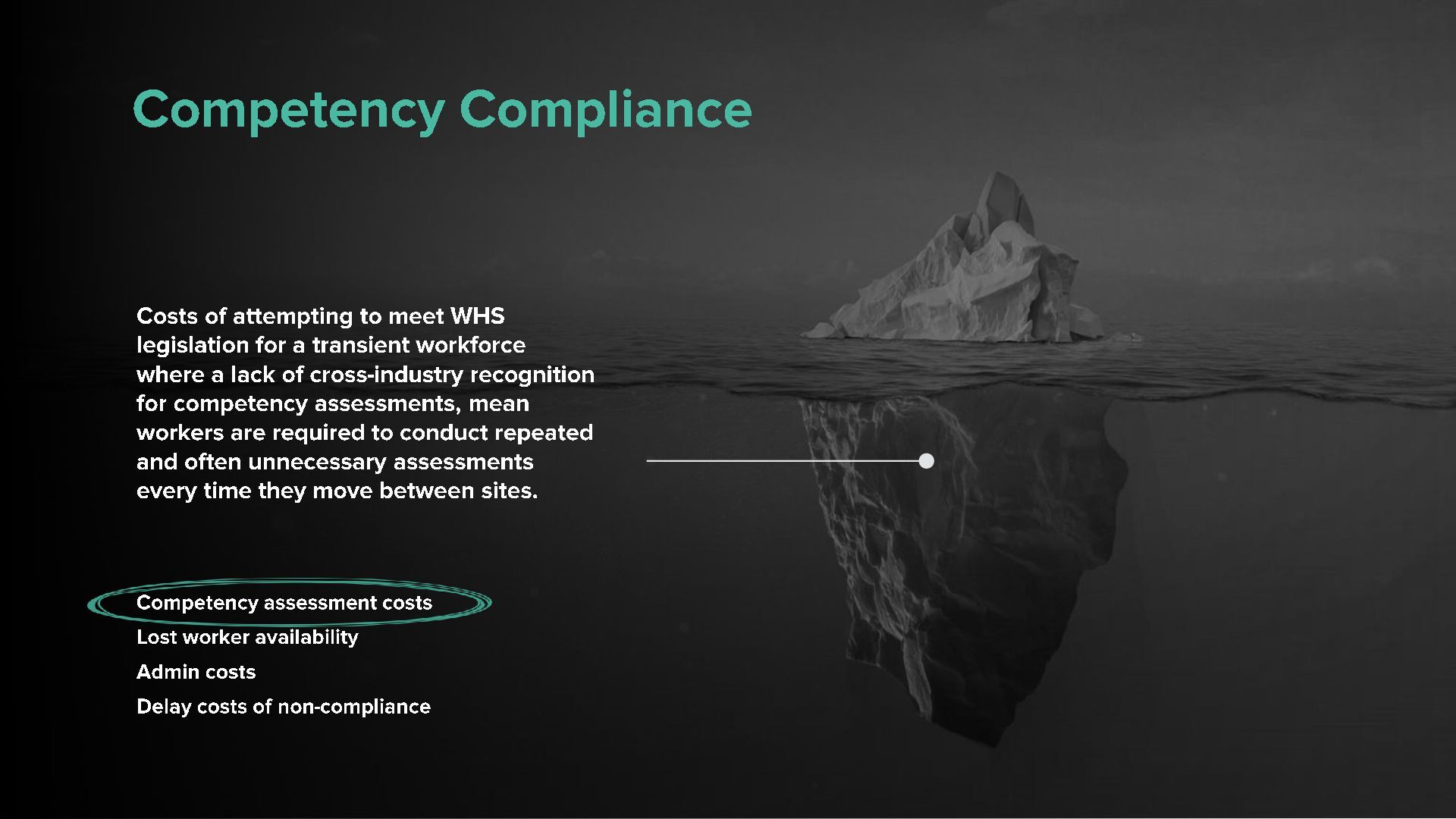
  10. Costs of attempting to meet WHS legislation for a transient

    workforce where a lack of cross -industry recognition for competency assessments, mean workers are required to conduct repeated and often unnecessary assessments every time they move between sites. Competency assessment costs Lost worker availability Admin costs Delay costs of non -compliance Competency Compliance
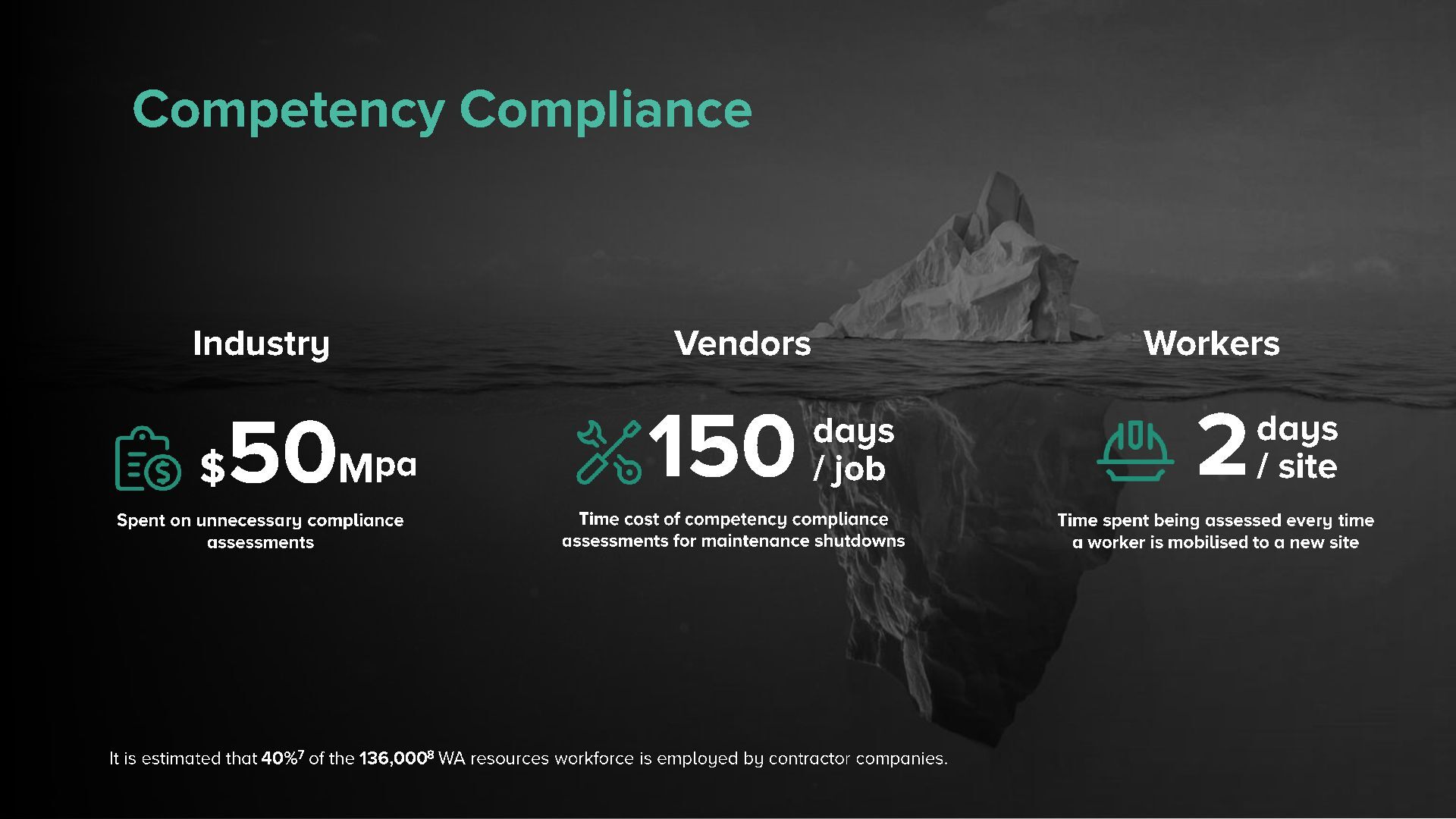
  11. Time spent being assessed every time a worker is mobilised

    to a new site 2 days / site Workers Vendors 150 Time cost of competency compliance assessments for maintenance shutdowns days / job Spent on unnecessary compliance assessments $ 50 Mpa Industry It is estimated that 40% 7 of the 136,000 8 WA resources workforce is employed by contractor companies. Competency Compliance
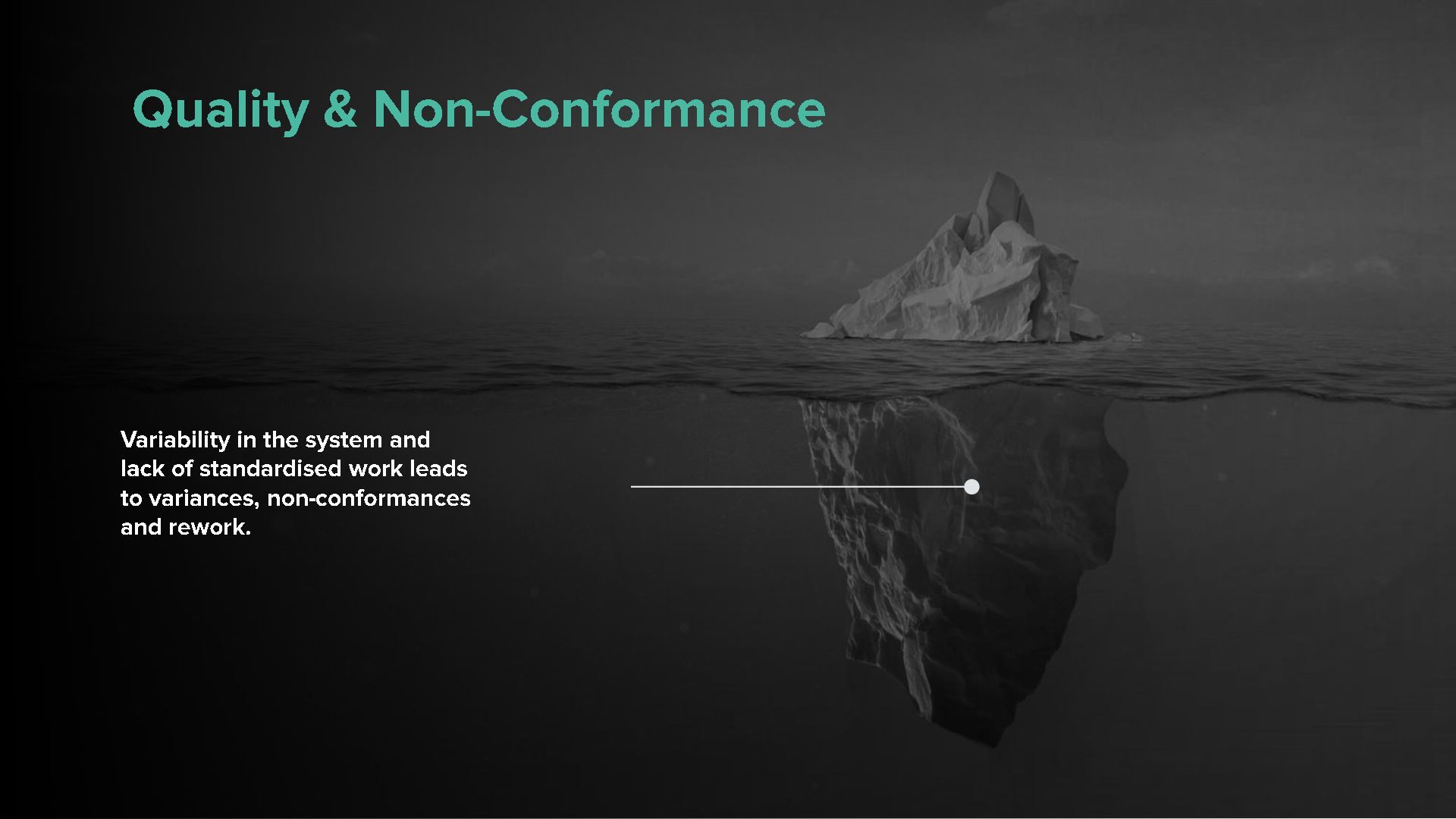
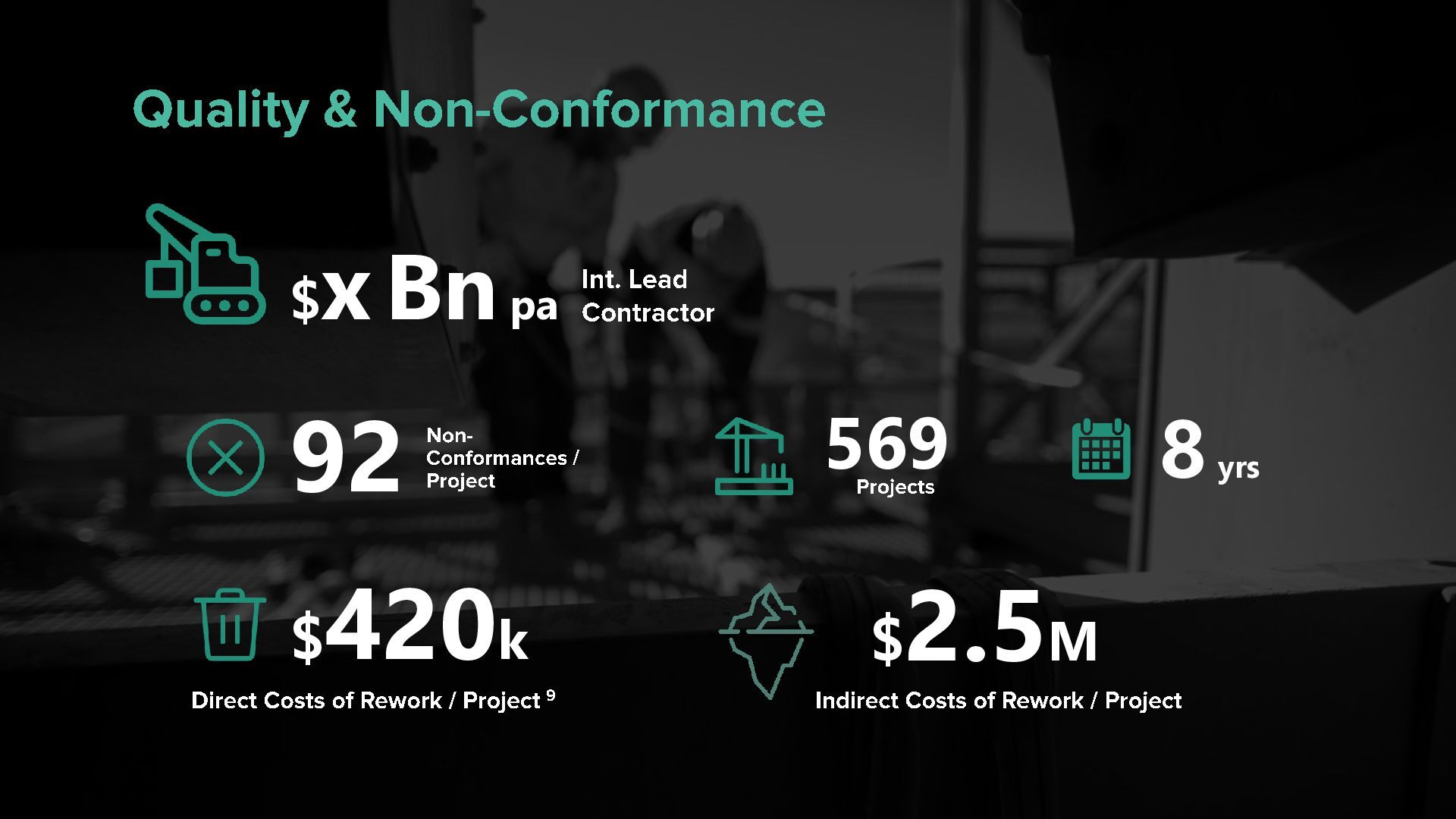
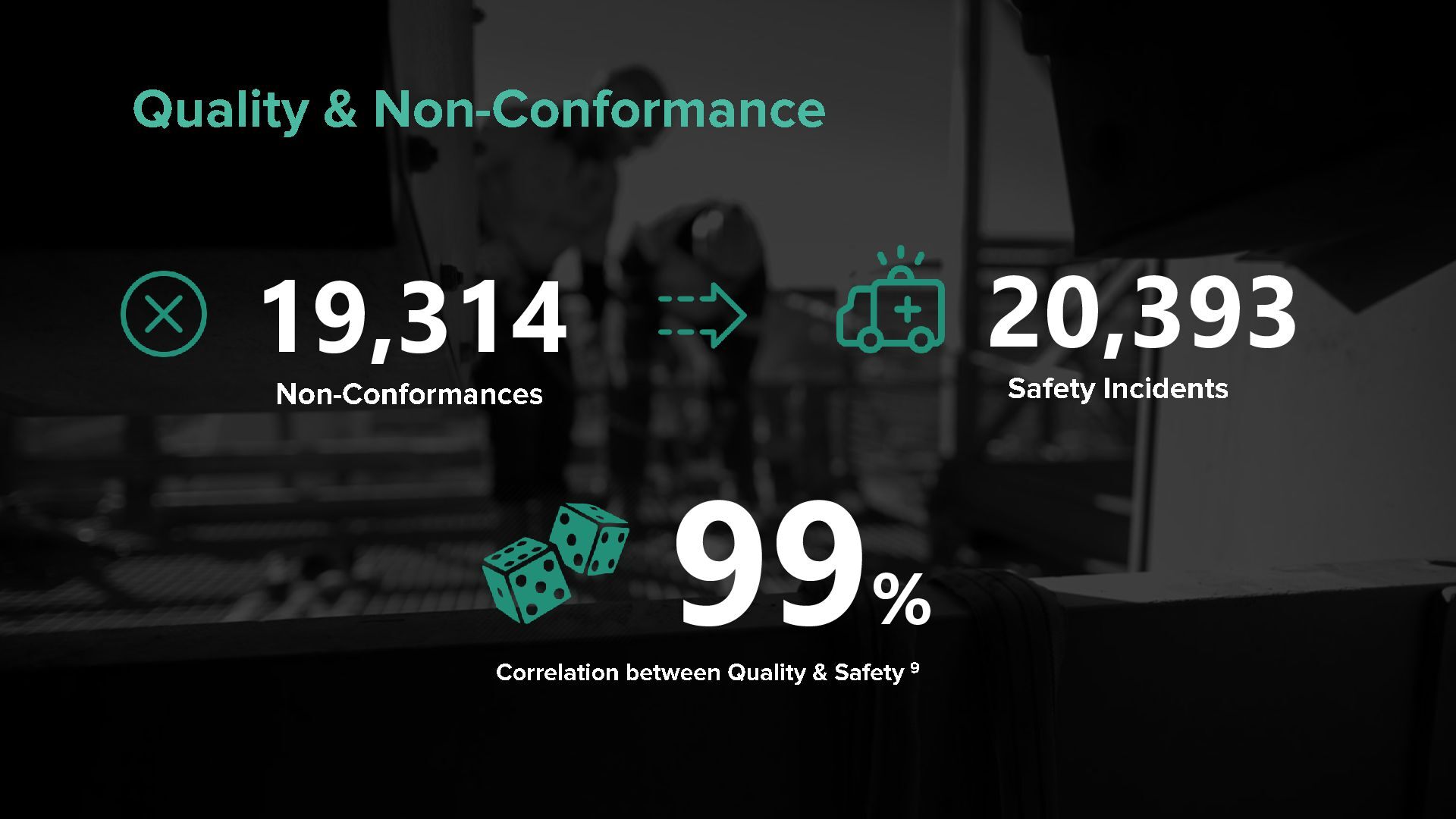
  12. Variability in the system and lack of standardised work leads

    to variances, non -conformances and rework. Quality & Non-Conformance
  13. Projects 569 8 yrs 92 Non- Conformances / Project $420k

    Direct Costs of Rework / Project 9 $2.5M Indirect Costs of Rework / Project Int. Lead Contractor $x Bn pa Quality & Non-Conformance
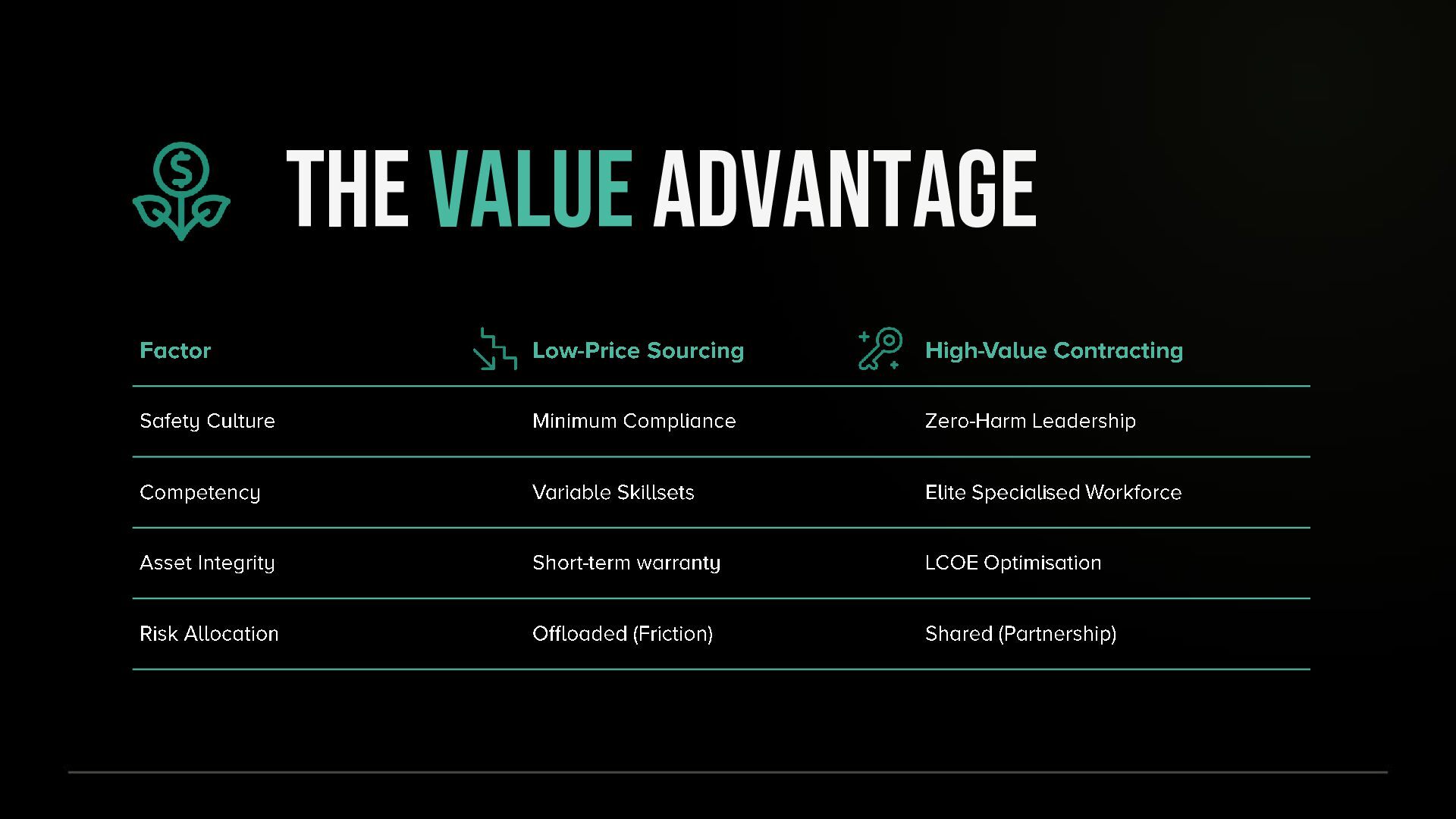
  14. THE VALUE ADVANTAGE Factor Low-Price Sourcing High -Value Contracting Safety

    Culture Minimum Compliance Zero -Harm Leadership Competency Variable Skillsets Elite Speciali sed Workforce Asset Integrity Short-term warranty LCOE Optimisation Risk Allocation Offloaded (Friction) Shared (Partnership)
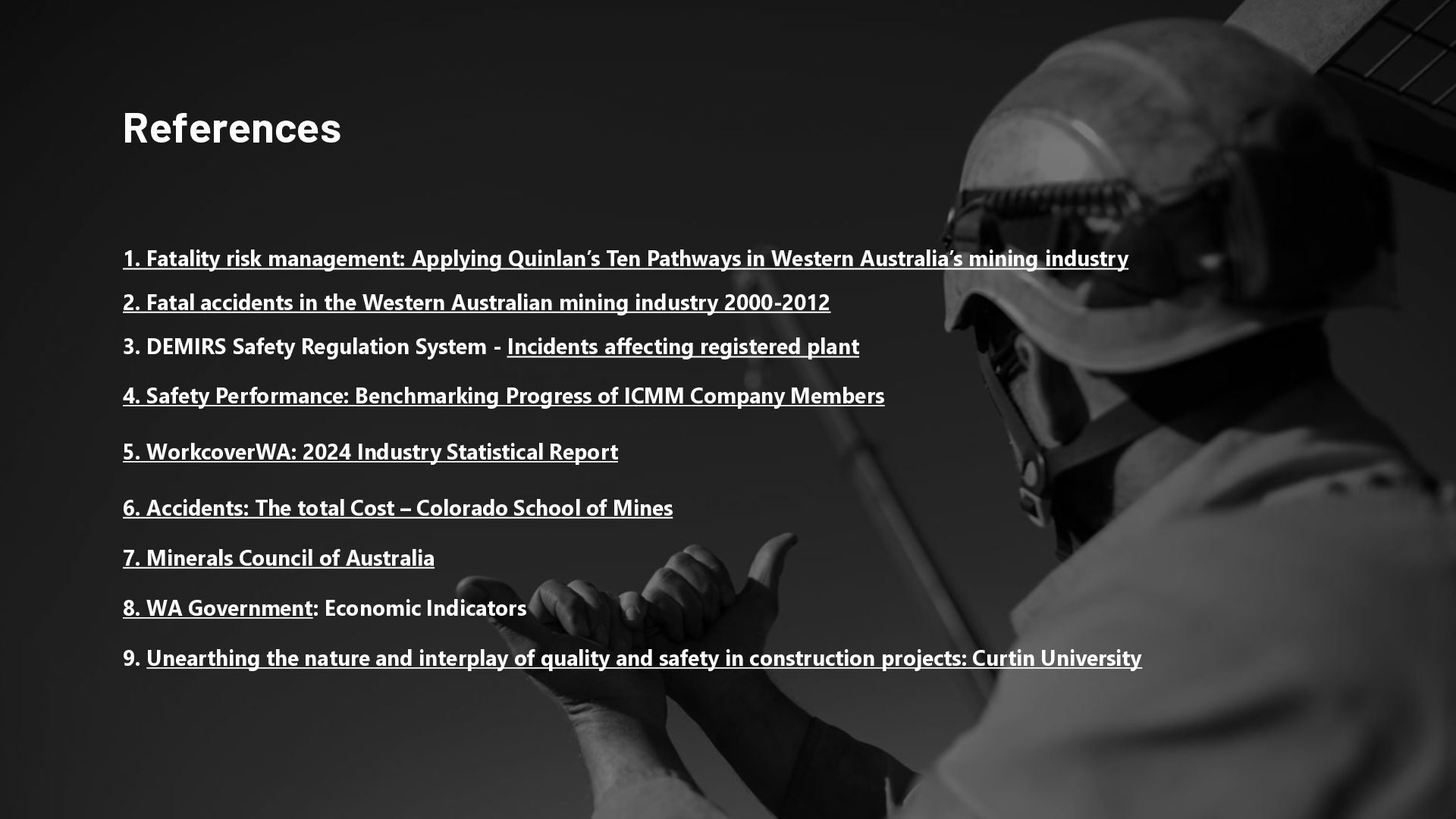
  15. 1. Fatality risk management: Applying Quinlan’s Ten Pathways in Western

    Australia’s mining industry References 2. Fatal accidents in the Western Australian mining industry 2000-2012 3. DEMIRS Safety Regulation System - Incidents affecting registered plant 4. Safety Performance: Benchmarking Progress of ICMM Company Members 5. WorkcoverWA: 2024 Industry Statistical Report 6. Accidents: The total Cost – Colorado School of Mines 8. WA Government: Economic Indicators 7. Minerals Council of Australia 9. Unearthing the nature and interplay of quality and safety in construction projects: Curtin University