2 Examination) is designed to assess a candidate’s ability to demonstrate the attributes of a diplomate when managing patients presented in clinical scenarios. The attributes: sound judgment in decision making and management of surgical and anesthetic complications, appropriate application of scientific principles to clinical problems, adaptability to unexpected changes in the clinical situations, and logical organization and effective presentation of information.
that include a brief clinical history of a patient and emphasizes the scientific rationale underlying clinical management decisions. The exam includes two 35-minute sessions with a 10-minute break in between.
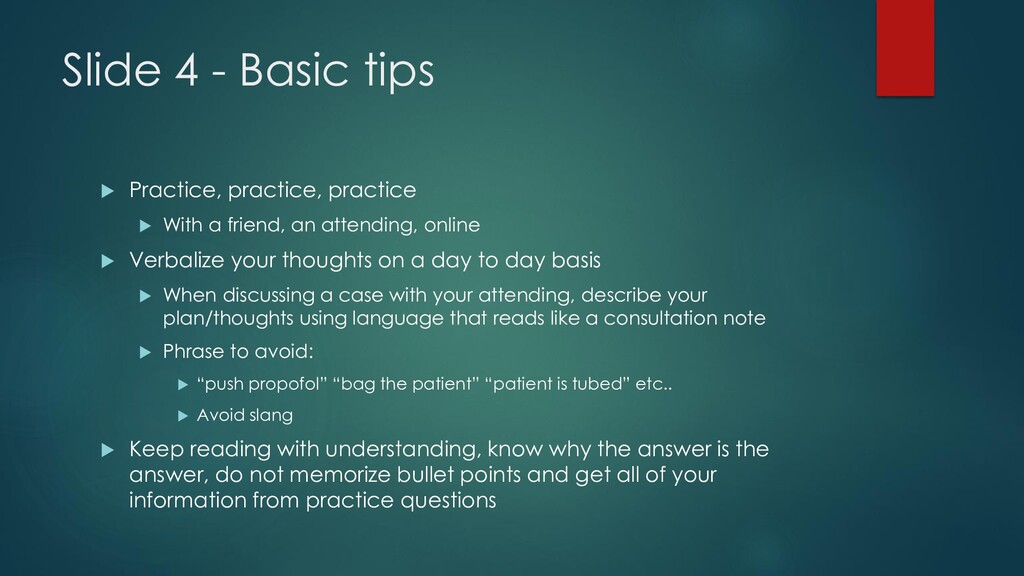
With a friend, an attending, online Verbalize your thoughts on a day to day basis When discussing a case with your attending, describe your plan/thoughts using language that reads like a consultation note Phrase to avoid: “push propofol” “bag the patient” “patient is tubed” etc.. Avoid slang Keep reading with understanding, know why the answer is the answer, do not memorize bullet points and get all of your information from practice questions
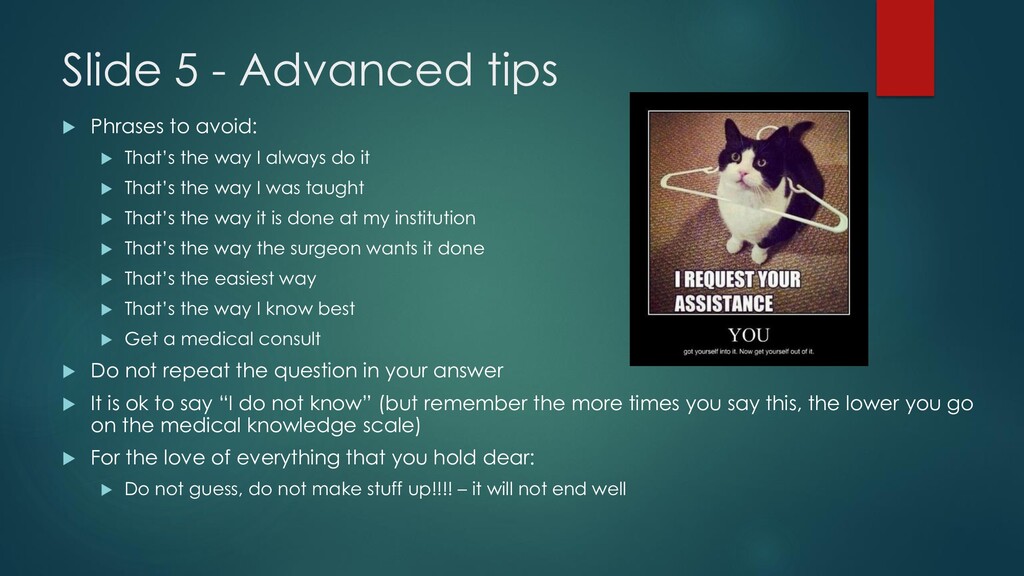
That’s the way I always do it That’s the way I was taught That’s the way it is done at my institution That’s the way the surgeon wants it done That’s the easiest way That’s the way I know best Get a medical consult Do not repeat the question in your answer It is ok to say “I do not know” (but remember the more times you say this, the lower you go on the medical knowledge scale) For the love of everything that you hold dear: Do not guess, do not make stuff up!!!! – it will not end well
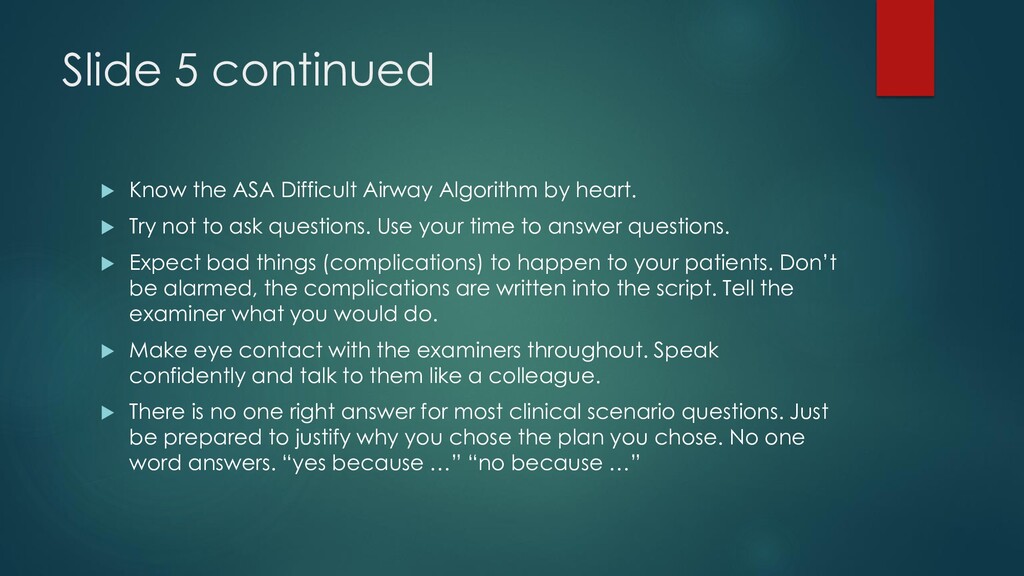
by heart. Try not to ask questions. Use your time to answer questions. Expect bad things (complications) to happen to your patients. Don’t be alarmed, the complications are written into the script. Tell the examiner what you would do. Make eye contact with the examiners throughout. Speak confidently and talk to them like a colleague. There is no one right answer for most clinical scenario questions. Just be prepared to justify why you chose the plan you chose. No one word answers. “yes because …” “no because …”
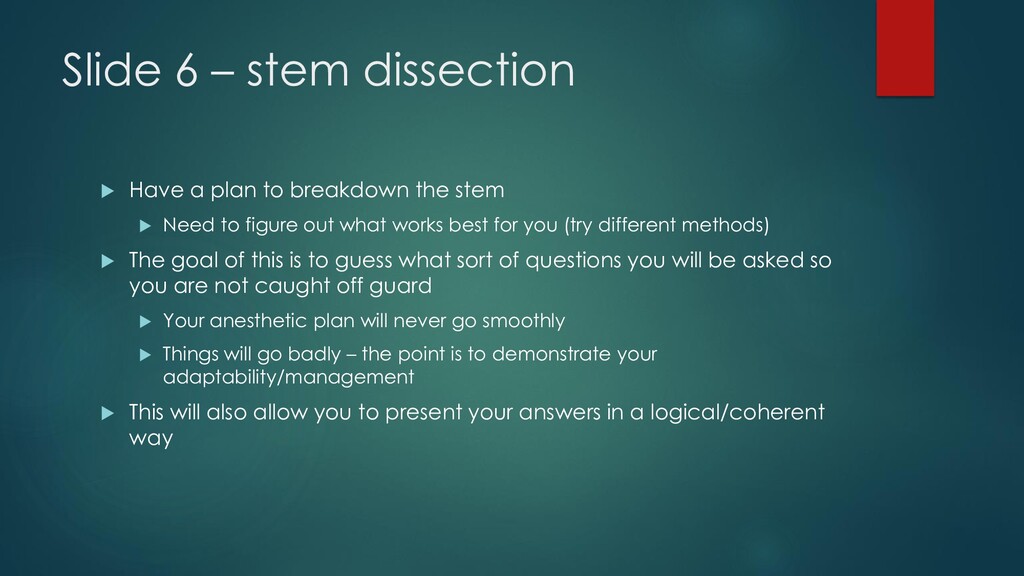
breakdown the stem Need to figure out what works best for you (try different methods) The goal of this is to guess what sort of questions you will be asked so you are not caught off guard Your anesthetic plan will never go smoothly Things will go badly – the point is to demonstrate your adaptability/management This will also allow you to present your answers in a logical/coherent way
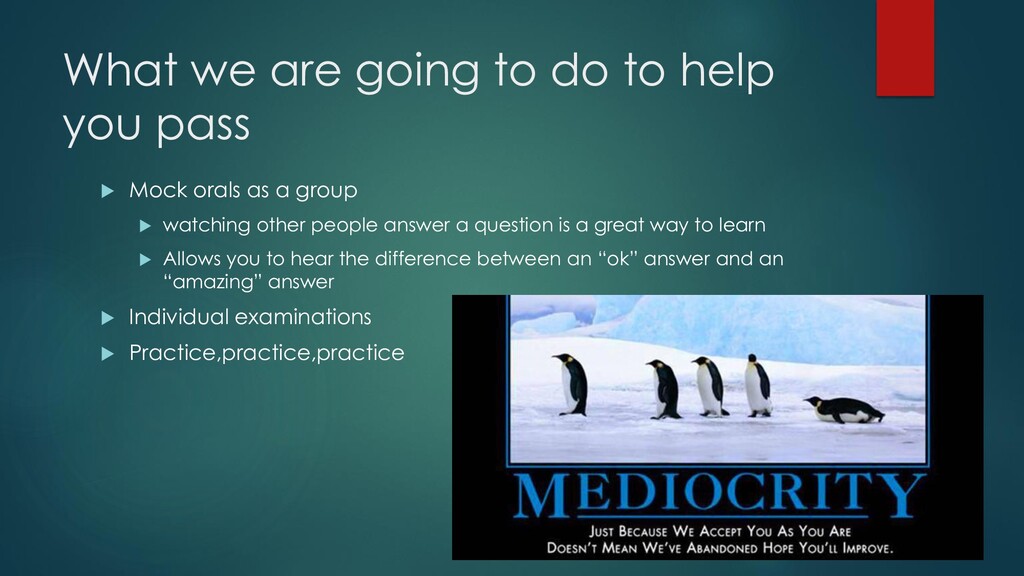
Mock orals as a group watching other people answer a question is a great way to learn Allows you to hear the difference between an “ok” answer and an “amazing” answer Individual examinations Practice,practice,practice


 us414
us414
 bvr7352
 drpoonamkc
 himitu23
 yoshimura_datam
 frievea
 ainischool
 signer
 naochim2026
 masakiokuda
 jdbedics
 pawan_pharm
 kaityo256
 sonatard
 quramy
 greggifford
 lfama
lfama
 joshbly
 keavy
keavy
 axbom
axbom
 skipperchong
 wayneb77
 aleyda
 sachag
 portentint