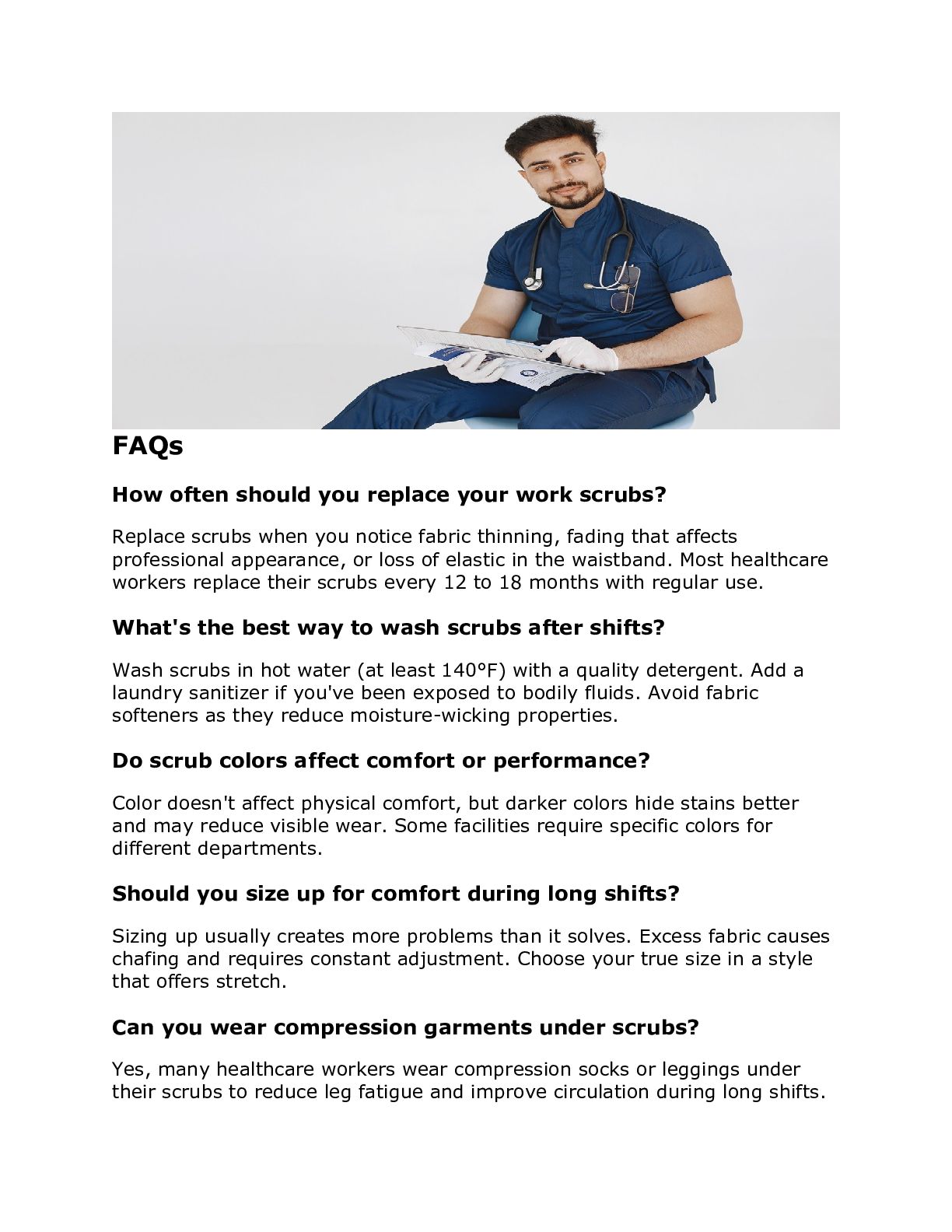
Uniform scrubs built for comfort and durability help healthcare workers stay focused during 12-16 hour shifts without fabric irritation or movement restrictions.
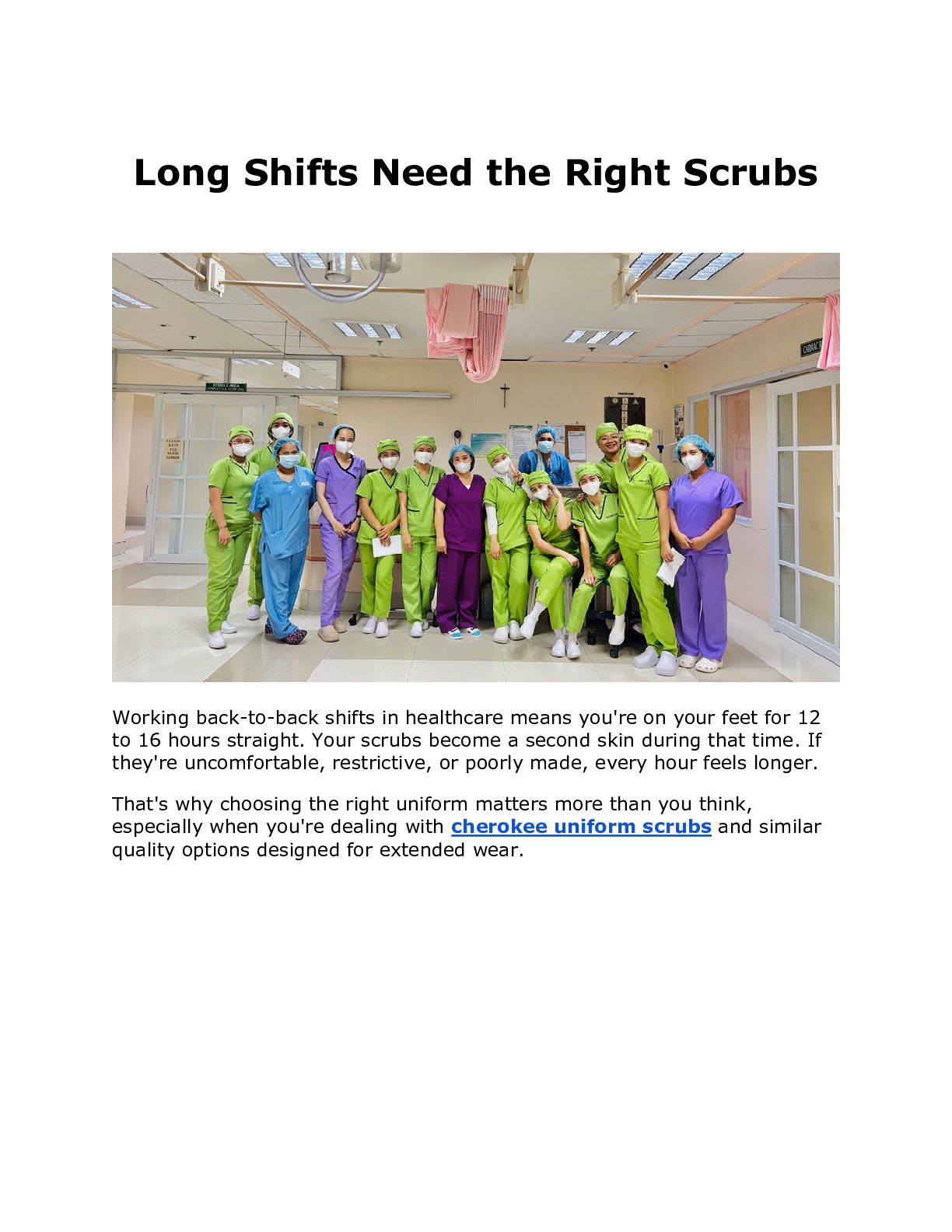
healthcare means you're on your feet for 12 to 16 hours straight. Your scrubs become a second skin during that time. If they're uncomfortable, restrictive, or poorly made, every hour feels longer. That's why choosing the right uniform matters more than you think, especially when you're dealing with cherokee uniform scrubs and similar quality options designed for extended wear.
is simple: fabric breathability, four-way stretch, and moisture- wicking properties. When you're moving constantly between patient rooms, bending, lifting, and staying active for hours, your scrubs need to move with you. Regular cotton blends trap heat and moisture, which leads to discomfort around hour eight. Modern scrub fabrics use polyester-spandex blends that allow air circulation while pulling sweat away from your skin. Four-way stretch fabric matters because you're not standing still. You're reaching overhead for supplies, kneeling to check IV lines, and sitting to document patient notes. Scrubs without stretch create pressure points at the shoulders, knees, and waist. After a few hours, these pressure points turn into genuine discomfort. Studies show that healthcare workers take an average of 4,000 to 5,000 steps during a single 12-hour shift. That's roughly two miles of walking, not counting the physical tasks you perform while standing in place. Your clothing needs to support that level of activity without causing friction burns or restricting movement. How Does Fabric Quality Impact Performance During Long Hours? Quality fabric reduces fatigue and maintains its shape throughout your shift. Cheap scrubs fade, pill, and lose their form after a few washes. When fabric pills, those tiny balls of fiber create friction against your skin. During a 16- hour shift, that friction adds up. You'll notice irritation on your inner thighs, underarms, and anywhere the fabric rubs repeatedly. Premium scrub materials use tighter weaves and higher thread counts. These fabrics resist pilling and maintain their smooth texture through hundreds of wash cycles.
out as the day progresses. The waistband stays put, the shoulders don't droop, and the pants don't slide down when you bend over. Temperature regulation becomes critical during double shifts. Hospital environments fluctuate between cold operating rooms and warm patient wards. Fabrics with moisture-wicking properties help your body maintain a stable temperature by moving sweat to the fabric's outer surface where it can evaporate. This keeps you cooler in warm areas and prevents that clammy feeling in air-conditioned spaces. Do Pockets and Storage Options Really Matter? Yes, pocket placement and capacity directly affect your efficiency and comfort. You carry multiple items throughout your shift: pens, scissors, alcohol swabs, tape, your phone, and patient notes. Poor pocket design means you're constantly digging for items or they fall out when you bend down. Deep, reinforced pockets with proper placement keep your tools accessible without adding bulk or weight that pulls your scrubs down. Cargo-style pockets on the thighs work well for larger items like your phone or a small notebook. Chest pockets should be sized for pens and small tools you need to grab quickly. The placement matters too-pockets that sit too low on the leg or too high on the chest become useless because they're awkward to access while you're moving. Research from medical uniform manufacturers indicates that nurses access their pockets an average of 30 to 40 times per shift. That's once every 20 minutes during a 12-hour day. If your pockets are poorly designed, those 40 interruptions become frustrating rather than seamless.
withstand hospital-grade laundering without falling apart. You're washing your scrubs after every shift, often in hot water with strong detergents to kill bacteria and remove stains. Standard clothing can't handle that treatment. After 10 or 15 washes, colors fade dramatically, seams split, and elastic waistbands lose their grip. Medical-grade scrubs use colorfast dyes that resist fading even under harsh wash conditions. The stitching uses reinforced seams, particularly at stress points like the crotch, shoulders, and pocket edges. Quality elastic contains a higher percentage of spandex, which maintains its stretch through hundreds of wash cycles. The average healthcare worker owns five to seven pairs of scrubs and washes them 150 to 200 times per year. That's intense wear. Investing in durable scrubs means you're not replacing them every few months, which saves money and reduces the frustration of breaking in new pairs constantly. How Do Different Fits Affect Comfort Over Time? Proper fit prevents chafing, binding, and the need for constant adjusting. Too-tight scrubs restrict circulation and create pressure points. Too-loose scrubs catch on equipment and require constant pulling and adjusting. The right fit should allow full range of motion without excess fabric bunching or pulling. Modern scrub designs offer athletic cuts, classic fits, and relaxed styles. Athletic cuts taper through the legs and torso, which reduces excess fabric while maintaining stretch. Classic fits provide more room through the hips and thighs, which some people find more comfortable for extended wear. Relaxed fits offer the most room but can sometimes feel baggy or create friction from excess fabric movement. Pay attention to rise (the distance from crotch to waistband) and inseam length. Low-rise pants feel comfortable initially but often slide down during activity, requiring constant adjustment. Mid-rise and high-rise options stay in place better and provide more coverage when you bend or squat.
bacterial growth, but they're not a replacement for proper washing. Some scrub manufacturers add antimicrobial treatments to their fabrics. These treatments inhibit bacterial growth, which reduces odor development during long shifts. The technology works by disrupting bacterial cell walls or preventing bacterial reproduction on the fabric surface. However, antimicrobial properties fade with washing. Most treatments last for 25 to 50 wash cycles before their effectiveness diminishes significantly. They provide an extra layer of protection, but you still need to wash your scrubs after every shift to remove bodily fluids, medications, and other contaminants. Clinical studies show that untreated scrubs can harbor bacteria for up to 24 hours after exposure. Antimicrobial-treated fabrics reduce that window to 6- 8 hours. While helpful, proper laundering remains your primary defense against cross-contamination. Final Thoughts on Choosing Scrubs for Long Shifts Your scrubs directly impact how you feel throughout your shift. Uncomfortable clothing creates distractions when you need to focus on patient care. Quality uniform scrubs with proper fabric, fit, and features help you maintain your energy and concentration through those demanding double shifts. Look for breathable, stretchy fabrics with moisture-wicking properties. Choose designs with functional pockets placed where you'll actually use them. Invest in durability because frequent washing is part of the job. And don't overlook fit-the right size and cut prevent those small annoyances that compound over 16 hours. When you're evaluating options, including cherokee uniform scrubs, prioritize comfort and functionality over appearance. Your scrubs need to work as hard as you do.
scrubs when you notice fabric thinning, fading that affects professional appearance, or loss of elastic in the waistband. Most healthcare workers replace their scrubs every 12 to 18 months with regular use. What's the best way to wash scrubs after shifts? Wash scrubs in hot water (at least 140°F) with a quality detergent. Add a laundry sanitizer if you've been exposed to bodily fluids. Avoid fabric softeners as they reduce moisture-wicking properties. Do scrub colors affect comfort or performance? Color doesn't affect physical comfort, but darker colors hide stains better and may reduce visible wear. Some facilities require specific colors for different departments. Should you size up for comfort during long shifts? Sizing up usually creates more problems than it solves. Excess fabric causes chafing and requires constant adjustment. Choose your true size in a style that offers stretch. Can you wear compression garments under scrubs? Yes, many healthcare workers wear compression socks or leggings under their scrubs to reduce leg fatigue and improve circulation during long shifts.


 woodysshirtsandscrubs
 yasslab
 noritaka88tax
 hansodeeeeee
 uemura2024
 fullkaiten
 maruishi
 sasukefinanciallab
 neuroenergia
 takeuchigroup
 hiyoriyamakankou
 m3c
 openwork
 addyosmani
 cargoodrich
 mongodb
 reverentgeek
 yeseniaperezcruz
 marktimemedia
 marcelosomers
 michaelherold
 bermonpainter
 coloredviolet
 62gerente
 carmenintech