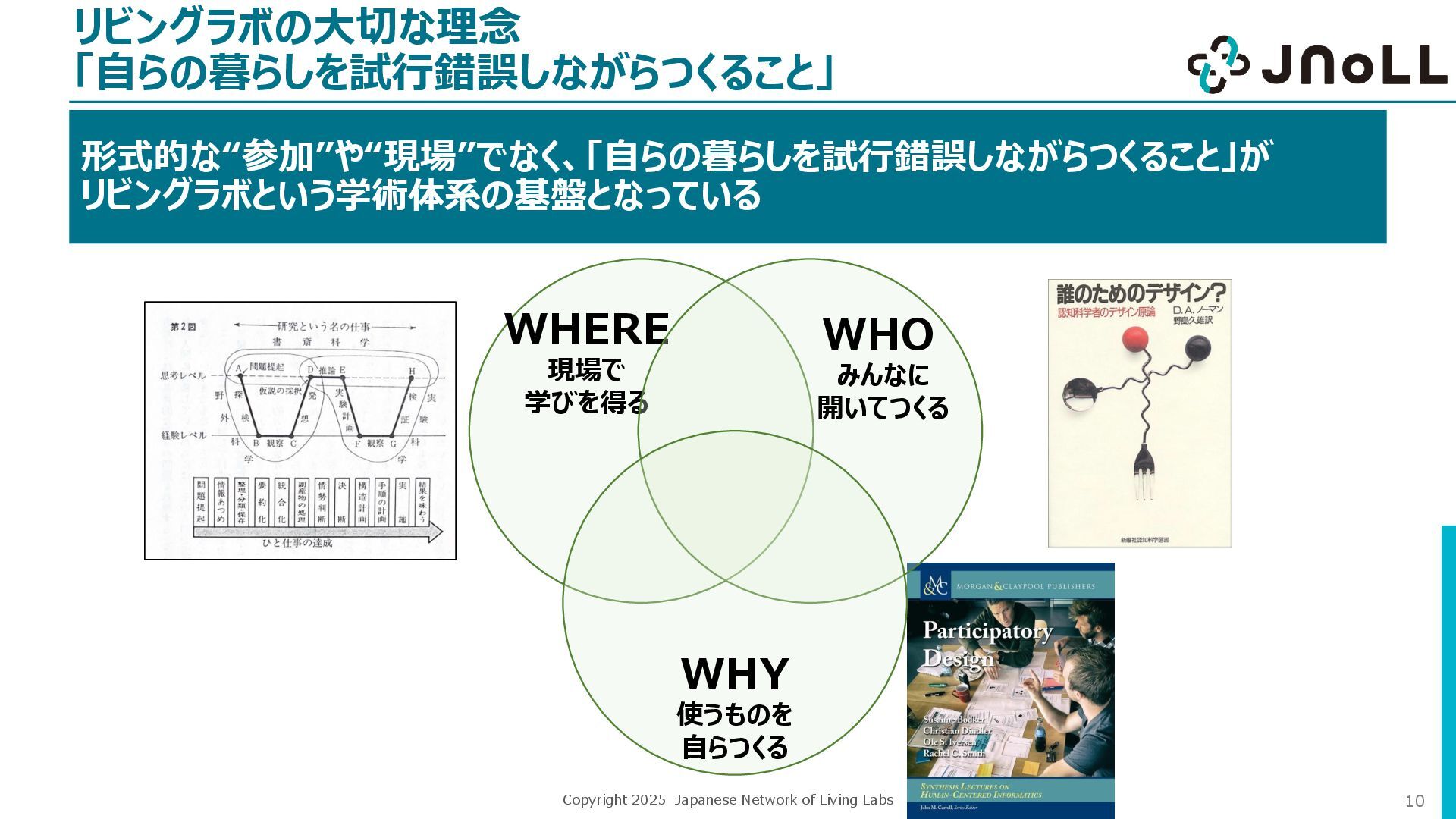
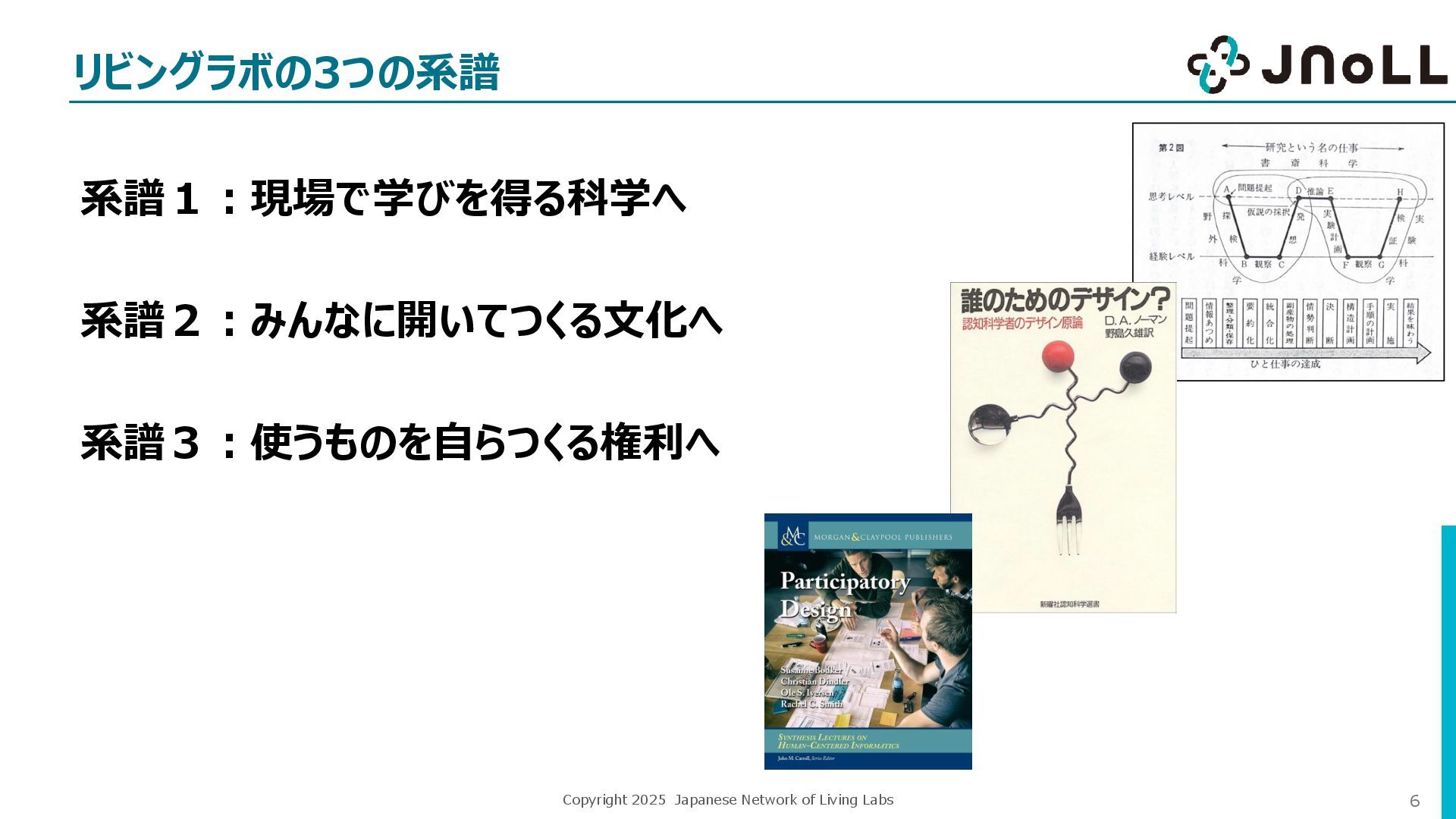
[Short,1992;Wood,1993]の分野では、限定的な環境での試行実験の限 界に対して、アクションリサーチ、野外科学、PBLなどの実環境での実践や検証 が重要視された。リビングラボの概念の提唱者として知られるWilliam J. Mitchellは建築分野でこの取り組みを行った人物である[Mulvenna;2011]。 特徴 • 実環境下(real-life setting) • 生徒の巻き込み(student involvement) • エンパワーメント(empowerment) ※川喜田(1967)発想法―創造性開発のために, 中央公論社. 1990年代から実験科学・市民科学の分野でLiving Labと名前の付い た活動が行われている • “The Living Lab is a pilot program teaching estuarine issues to junior and senior high school students.” (Short, 1992) • “The program has a room in the residence quarters of the YMCA called the ‘’Living Lab.” This laboratory is an opportunity for a youth to gain practical experience living on his or her own while receiving support from staff, DYFS and other agencies.” (State of New Jersey, 1993) • “From using the environment as a living lab to enhance your science and math studies to using it to help inspire your students to create poetry, there are many innovative ways to promote outdoor experiences with your students.” (Wood et. al., 1993)
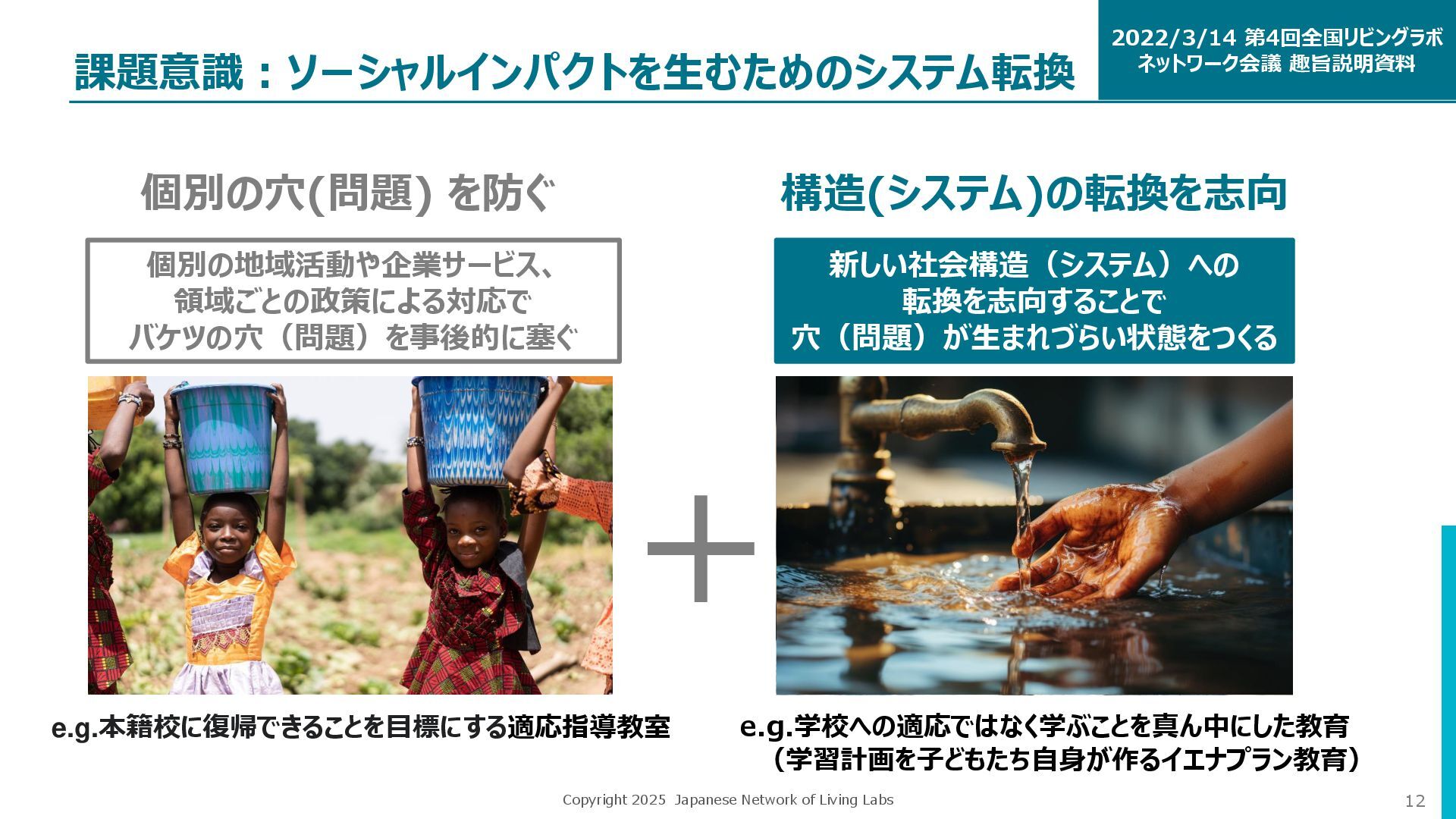
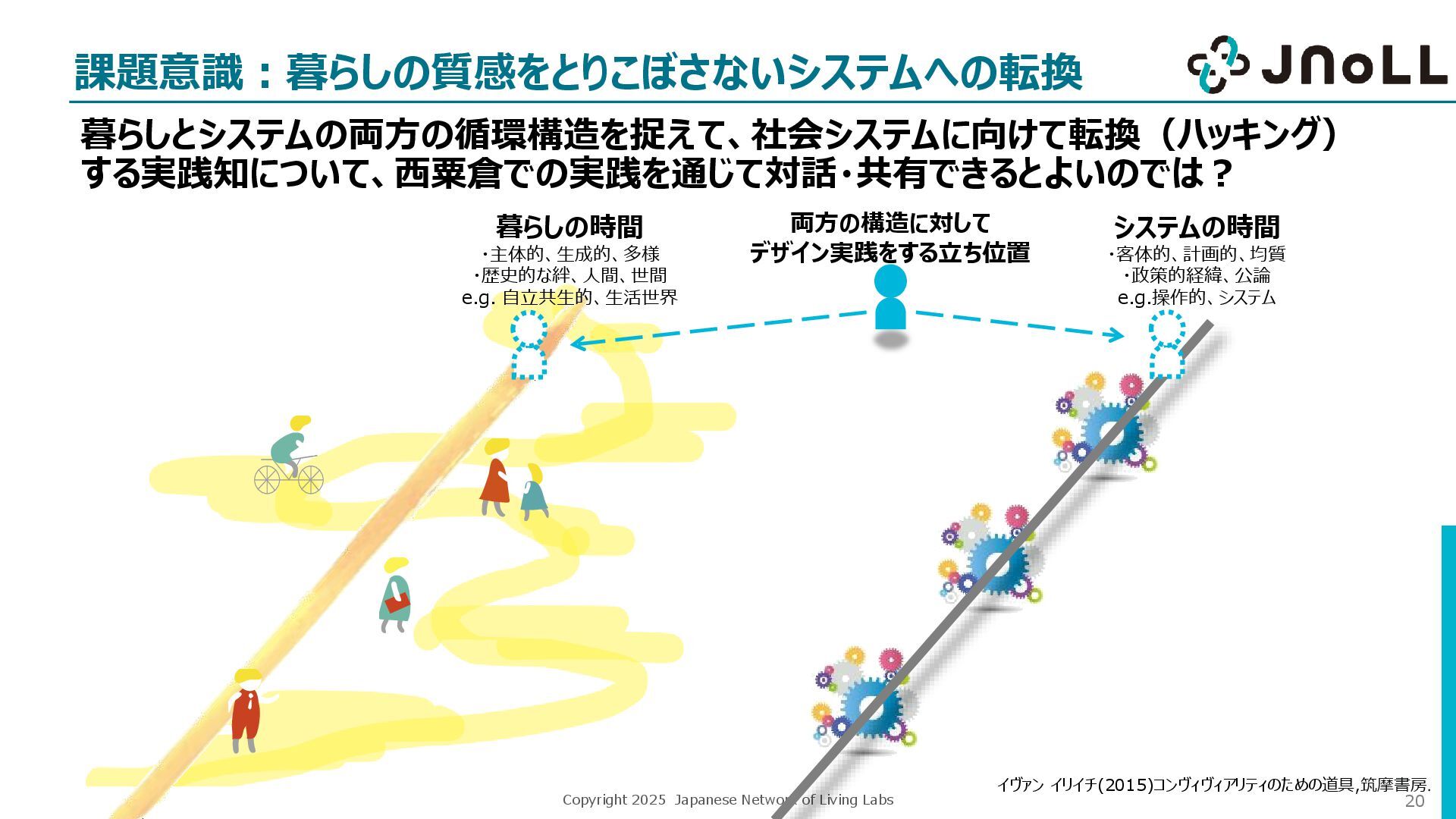
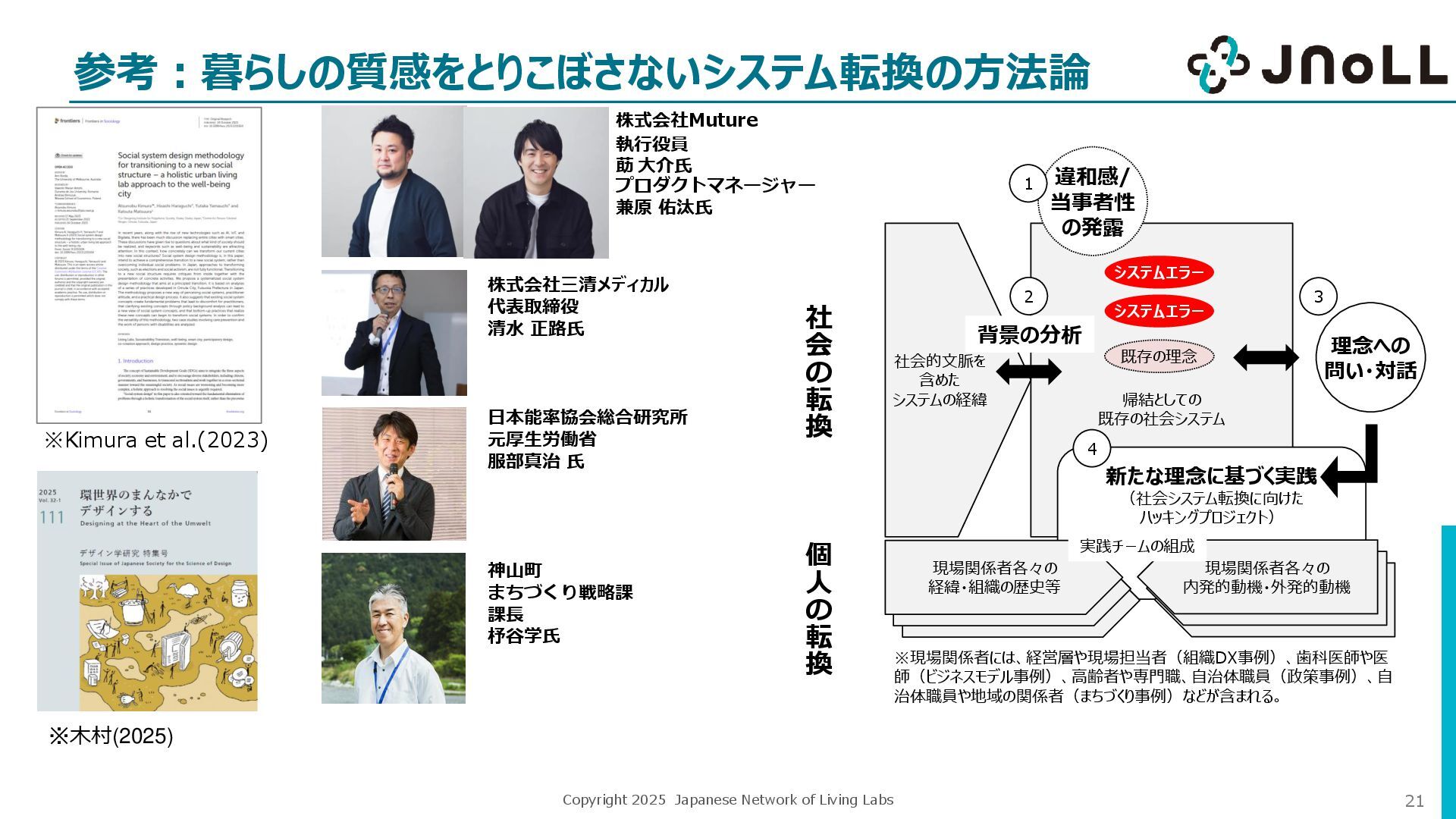
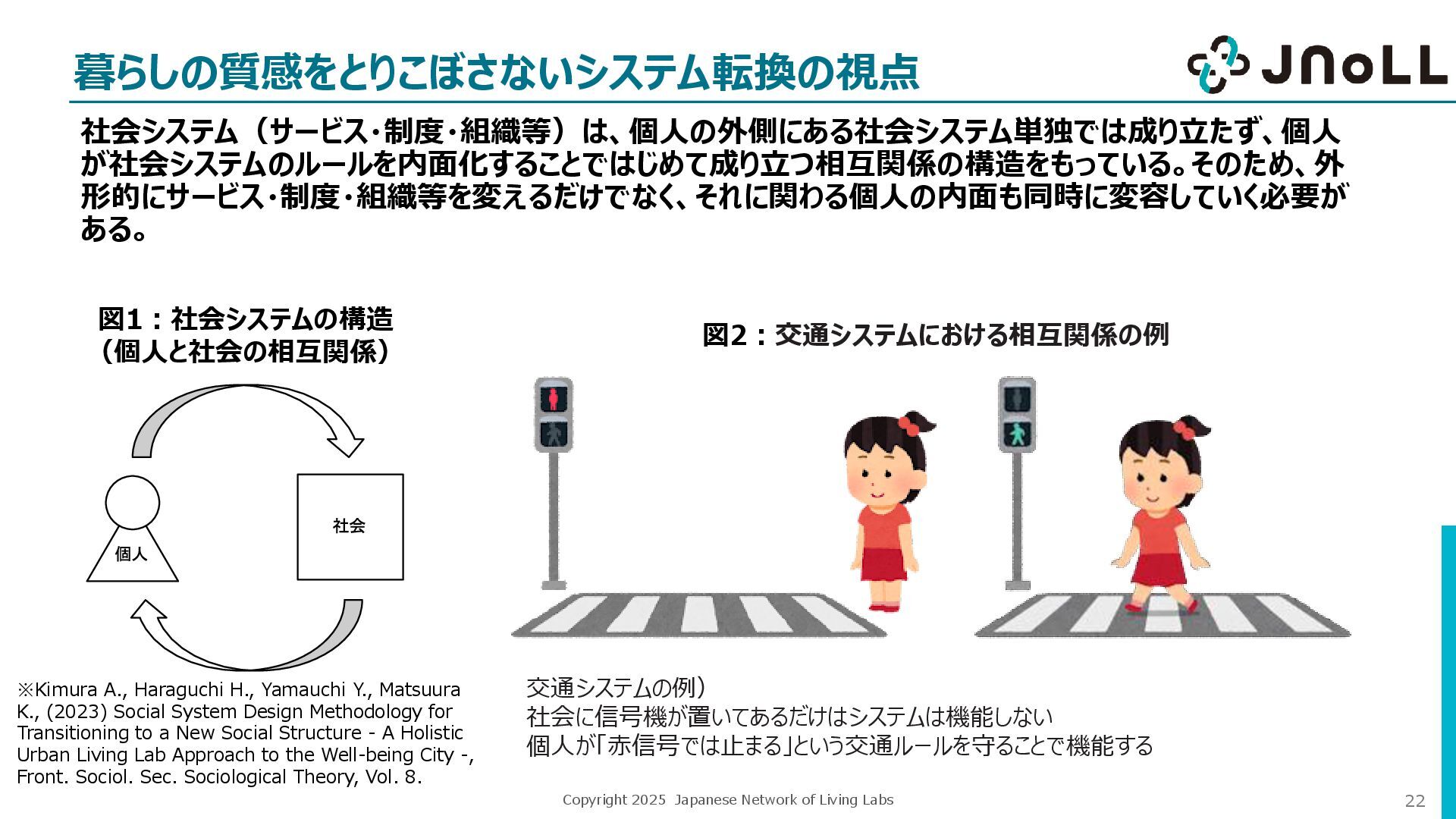
が社会システムのルールを内面化することではじめて成り立つ相互関係の構造をもっている。そのため、外 形的にサービス・制度・組織等を変えるだけでなく、それに関わる個人の内面も同時に変容していく必要が ある。 交通システムの例) 社会に信号機が置いてあるだけはシステムは機能しない 個人が「赤信号では止まる」という交通ルールを守ることで機能する ※Kimura A., Haraguchi H., Yamauchi Y., Matsuura K., (2023) Social System Design Methodology for Transitioning to a New Social Structure - A Holistic Urban Living Lab Approach to the Well-being City -, Front. Sociol. Sec. Sociological Theory, Vol. 8. 図2:交通システムにおける相互関係の例 図1:社会システムの構造 (個人と社会の相互関係)
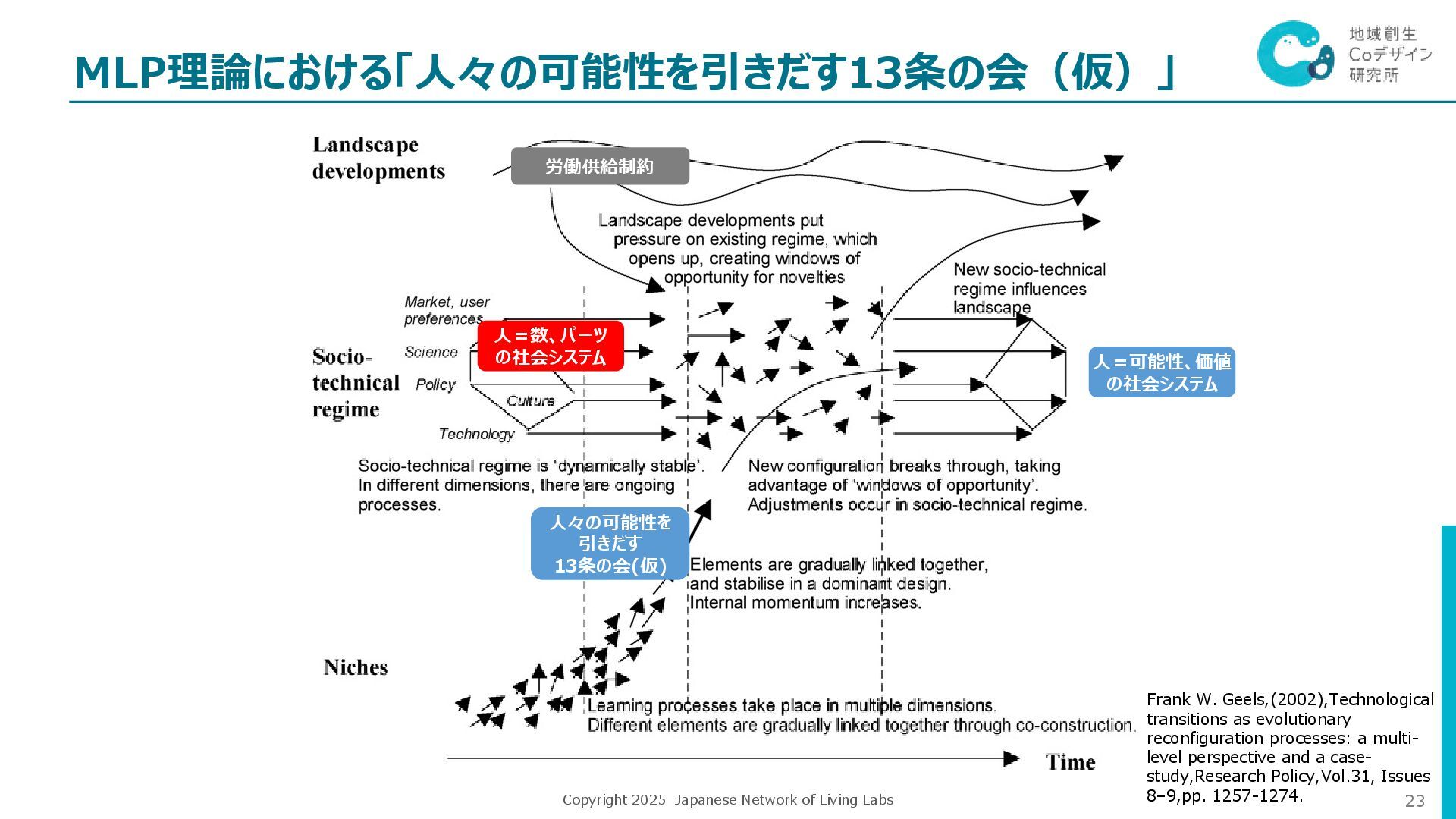
人=数、パーツ の社会システム 人=可能性、価値 の社会システム 人々の可能性を 引きだす 13条の会(仮) Frank W. Geels,(2002),Technological transitions as evolutionary reconfiguration processes: a multi- level perspective and a case- study,Research Policy,Vol.31, Issues 8–9,pp. 1257-1274.
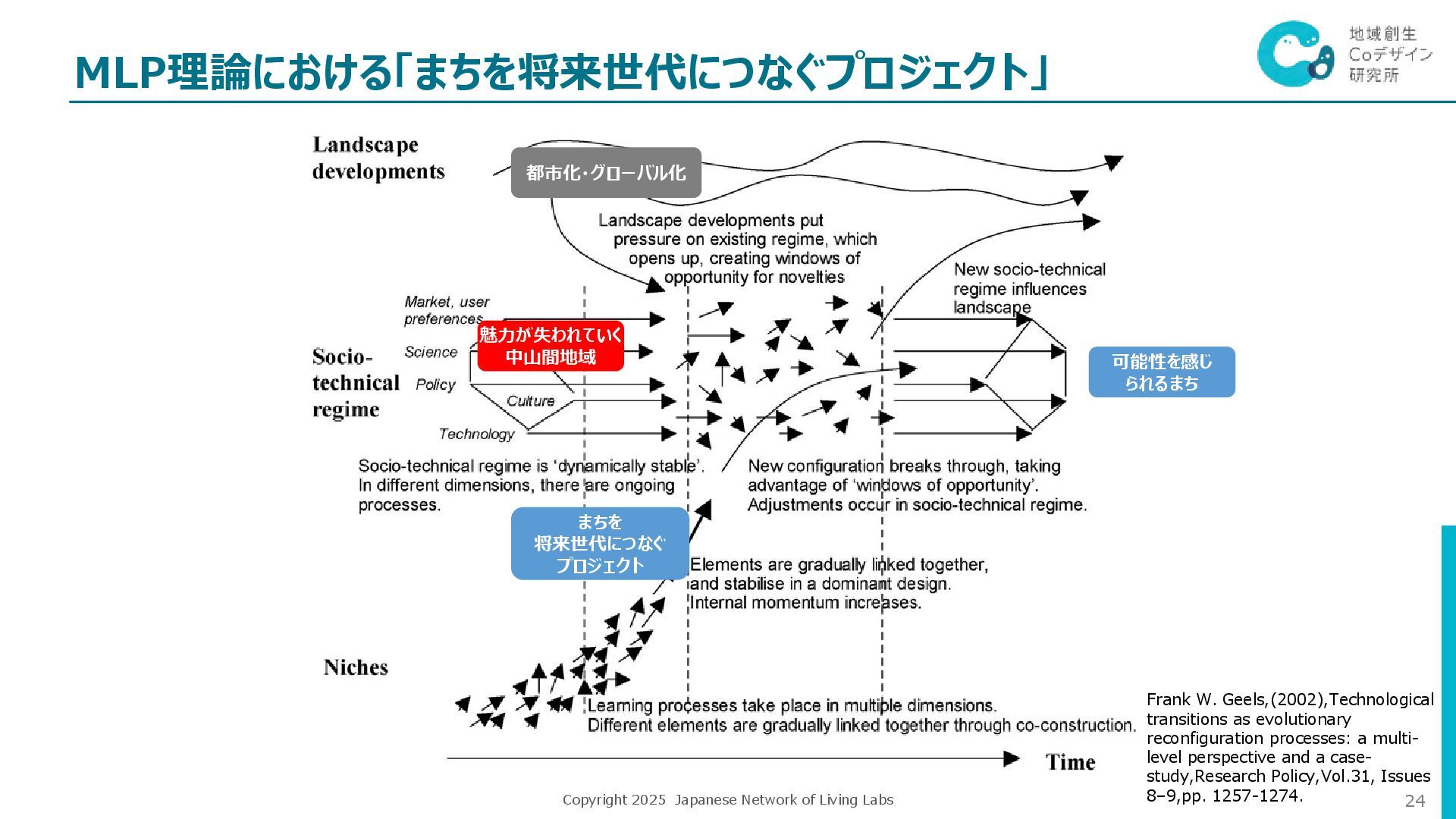
魅力が失われていく 中山間地域 可能性を感じ られるまち まちを 将来世代につなぐ プロジェクト Frank W. Geels,(2002),Technological transitions as evolutionary reconfiguration processes: a multi- level perspective and a case- study,Research Policy,Vol.31, Issues 8–9,pp. 1257-1274.


 a2k
a2k
 r5ni4
r5ni4
 uchiyama886
 chiemitaki
 toy1618
 ottatto
 kenichiota0711
 fatsushi
 sugiyama_sukedachi
 terencebasart
 hiromimaeo
 ukaoli
 katakai
 cassininazir
 davetheseo
 honzajavorek
 palkan
 mojombo
 marcduiker
 baasie
 jlugia
 wayneb77
 chriscoyier
 62gerente
 signer
![7 Copyright 2025 Japanese Network of Living Labs 系譜1:シチズンサイエンス(現場で学びを得る科学へ) 実験科学[Lewin,1946;Kawakita,1967;Neisser,1978]や市民科学](https://files.speakerdeck.com/presentations/751c4d58c1414980b888a68501e94254/slide_6.jpg)
![9 Copyright 2025 Japanese Network of Living Labs 系譜3:参加型デザイン(使うものを自らつくる権利へ) 北欧リビングラボの源流と言われる参加型デザイン[Nygaard,1975]は、社会民主主義](https://files.speakerdeck.com/presentations/751c4d58c1414980b888a68501e94254/slide_8.jpg)