Upgrade to Pro — share decks privately, control downloads, hide ads and more …

Exo-Obs Course: Exoplanet Atmospheres

Sponsored · Your Podcast. Everywhere. Effortlessly. Share. Educate. Inspire. Entertain. You do you. We'll handle the rest.
Avatar for Adina Adina
March 05, 2026

Exo-Obs Course: Exoplanet Atmospheres

I will be sharing the slides I developed for a graduate level course on Exoplanets and Observational Astronomy. This is the fifth completed slide deck for this course. It covers topics on fundamentals of exoplanet atmospheres and atmospheric retrievals.

The atmospheric retrieval slides were adapted from Luis Welbanks.

Avatar for Adina

Adina

March 05, 2026
Tweet

More Decks by Adina

Other Decks in Science

Transcript

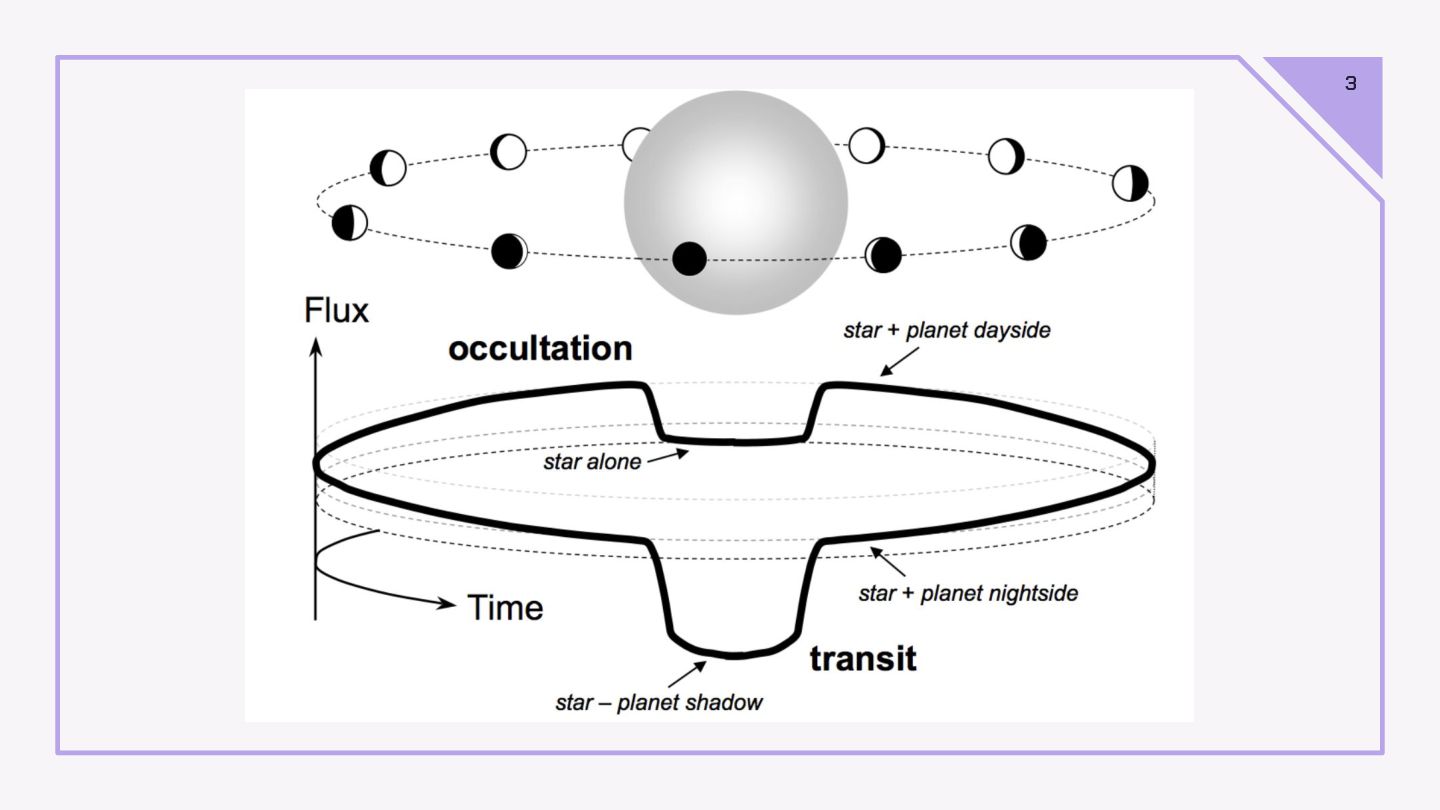
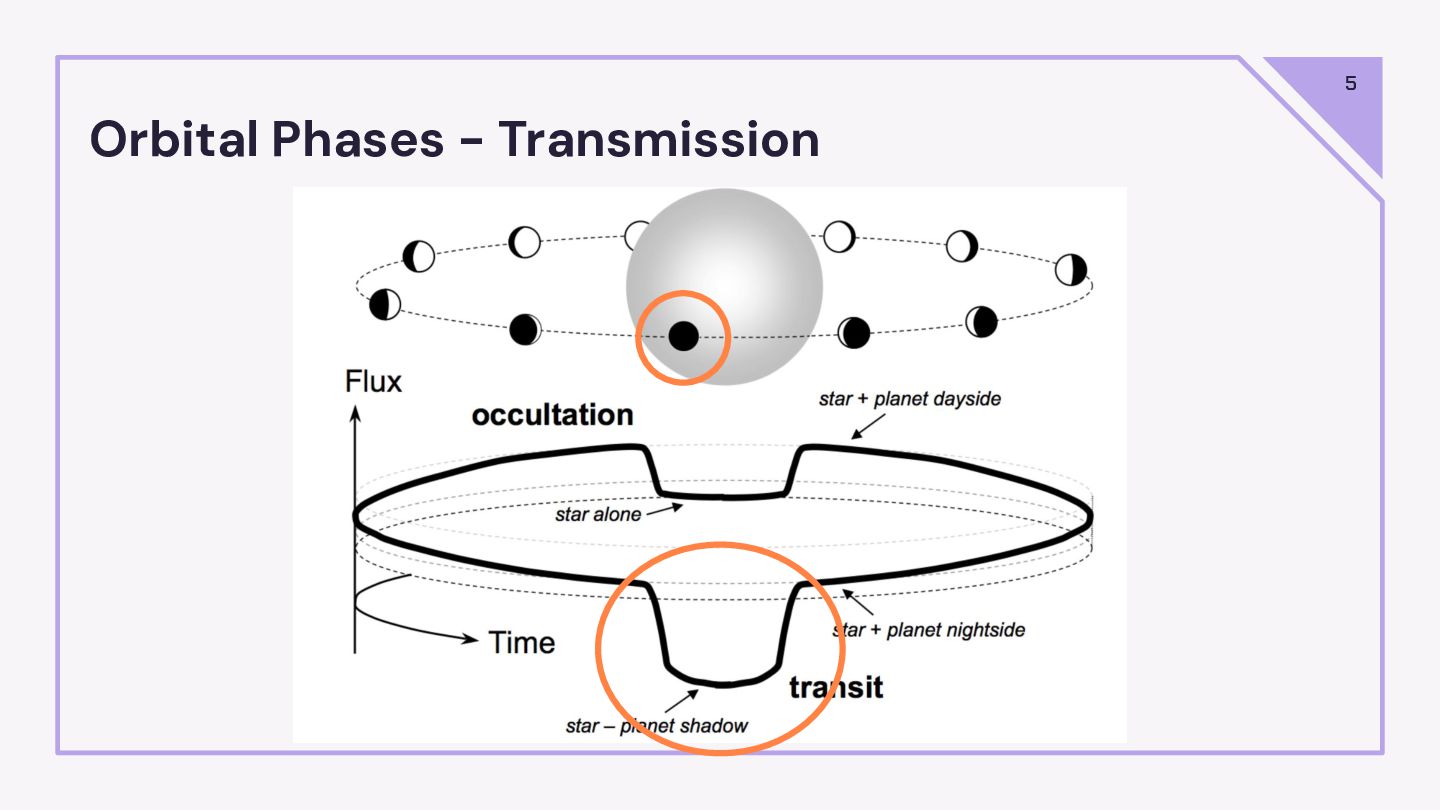
  1. 3

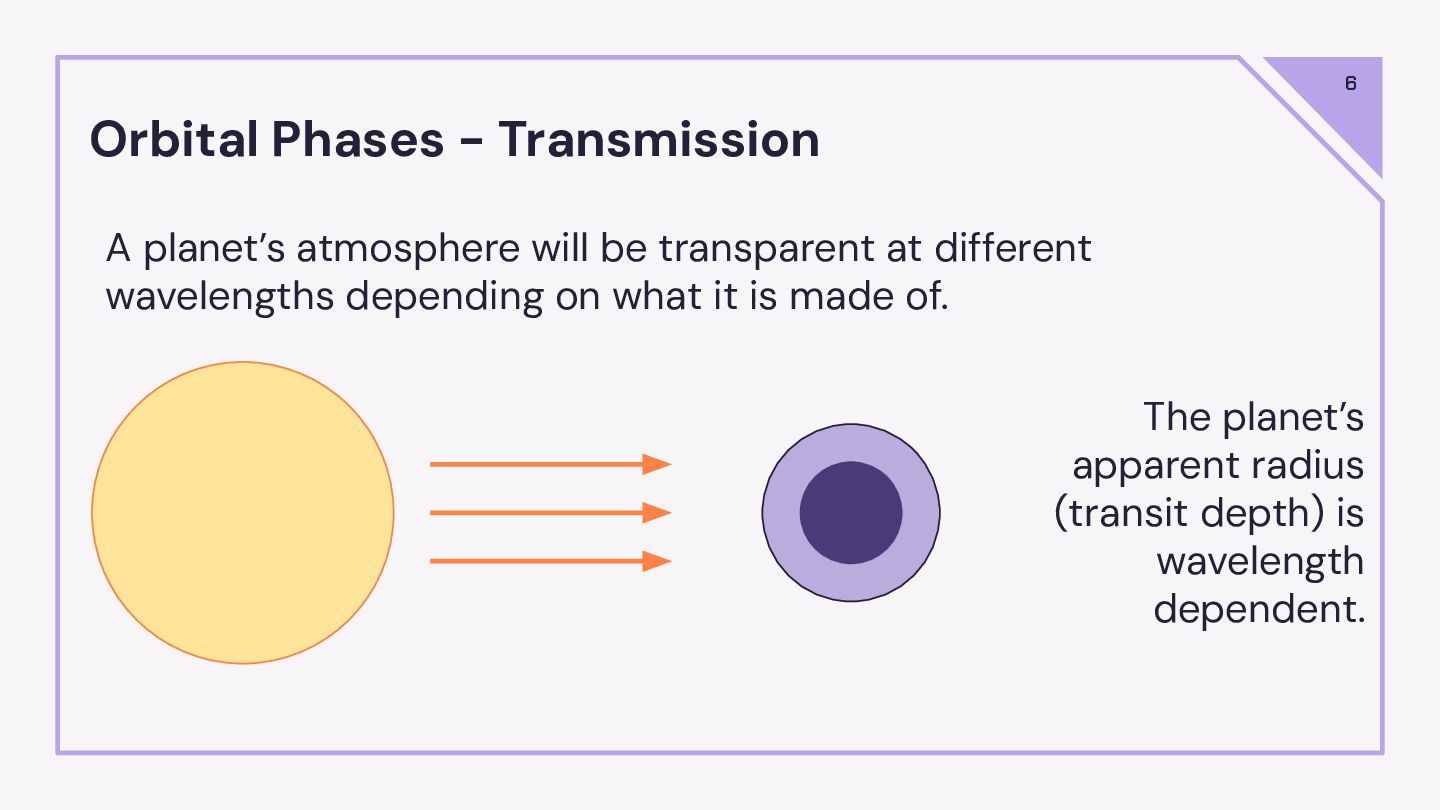
  2. Orbital Phases - Transmission 6 A planet’s atmosphere will be

    transparent at different wavelengths depending on what it is made of. The planet’s apparent radius (transit depth) is wavelength dependent.
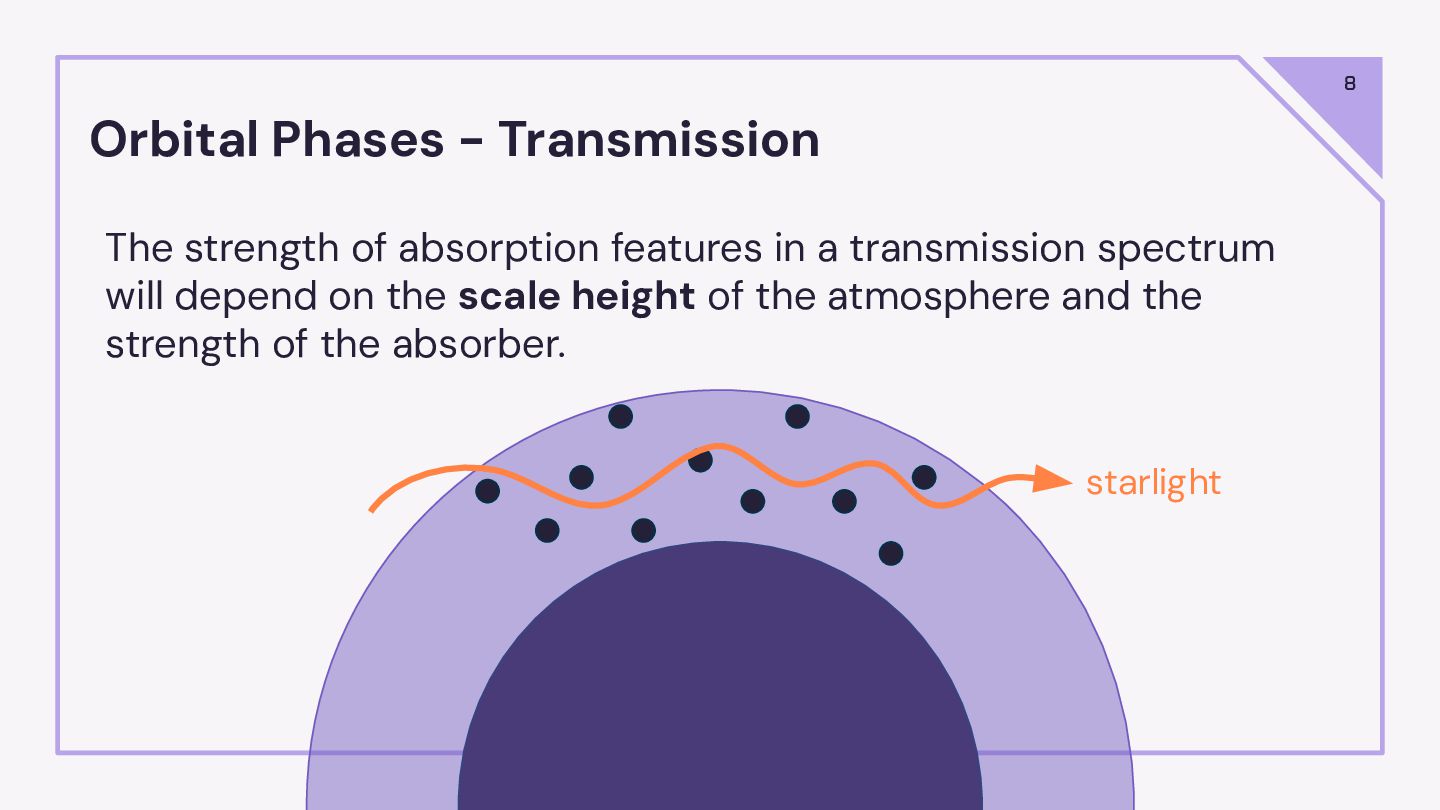
  3. Orbital Phases - Transmission 8 The strength of absorption features

    in a transmission spectrum will depend on the scale height of the atmosphere and the strength of the absorber. starlight
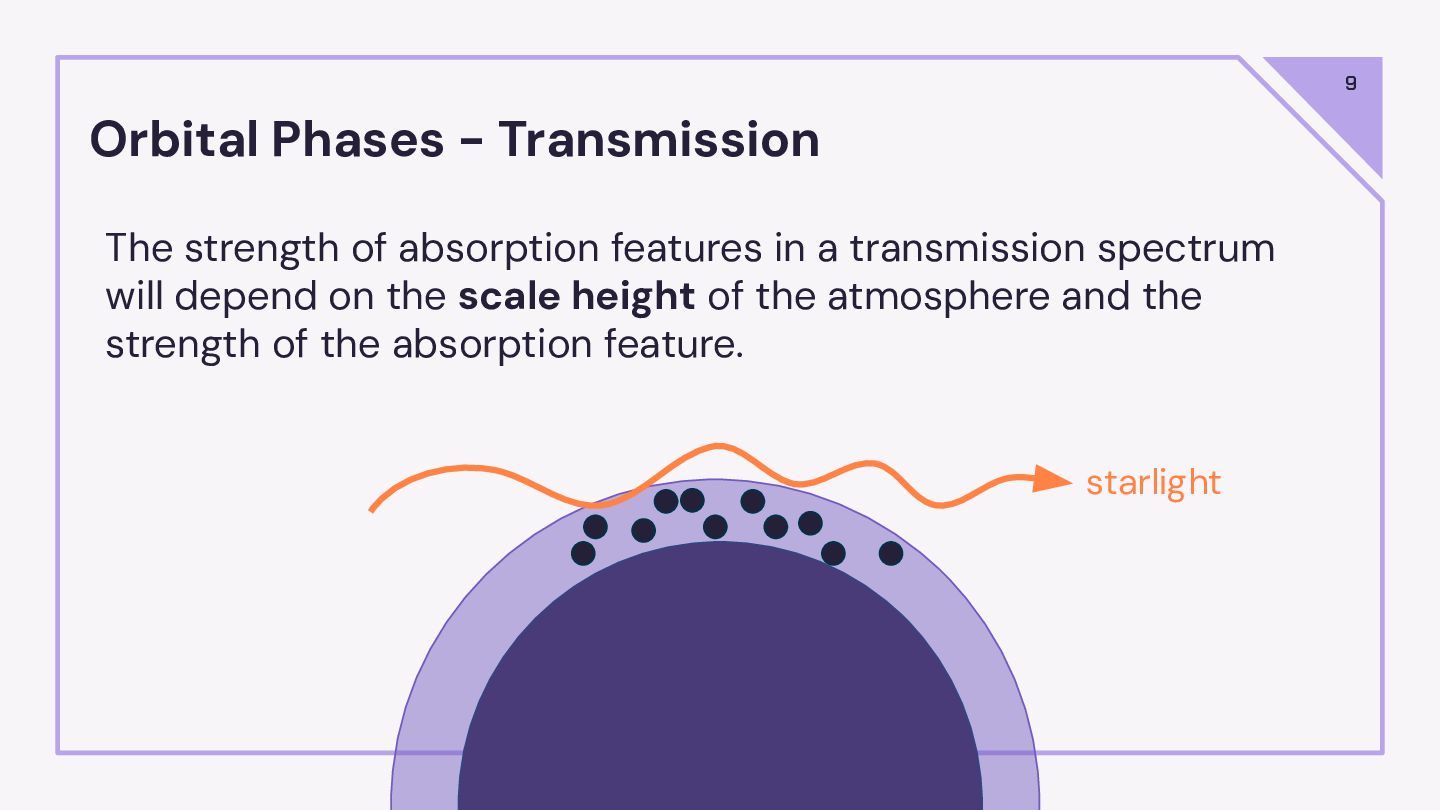
  4. Orbital Phases - Transmission 9 The strength of absorption features

    in a transmission spectrum will depend on the scale height of the atmosphere and the strength of the absorption feature. starlight
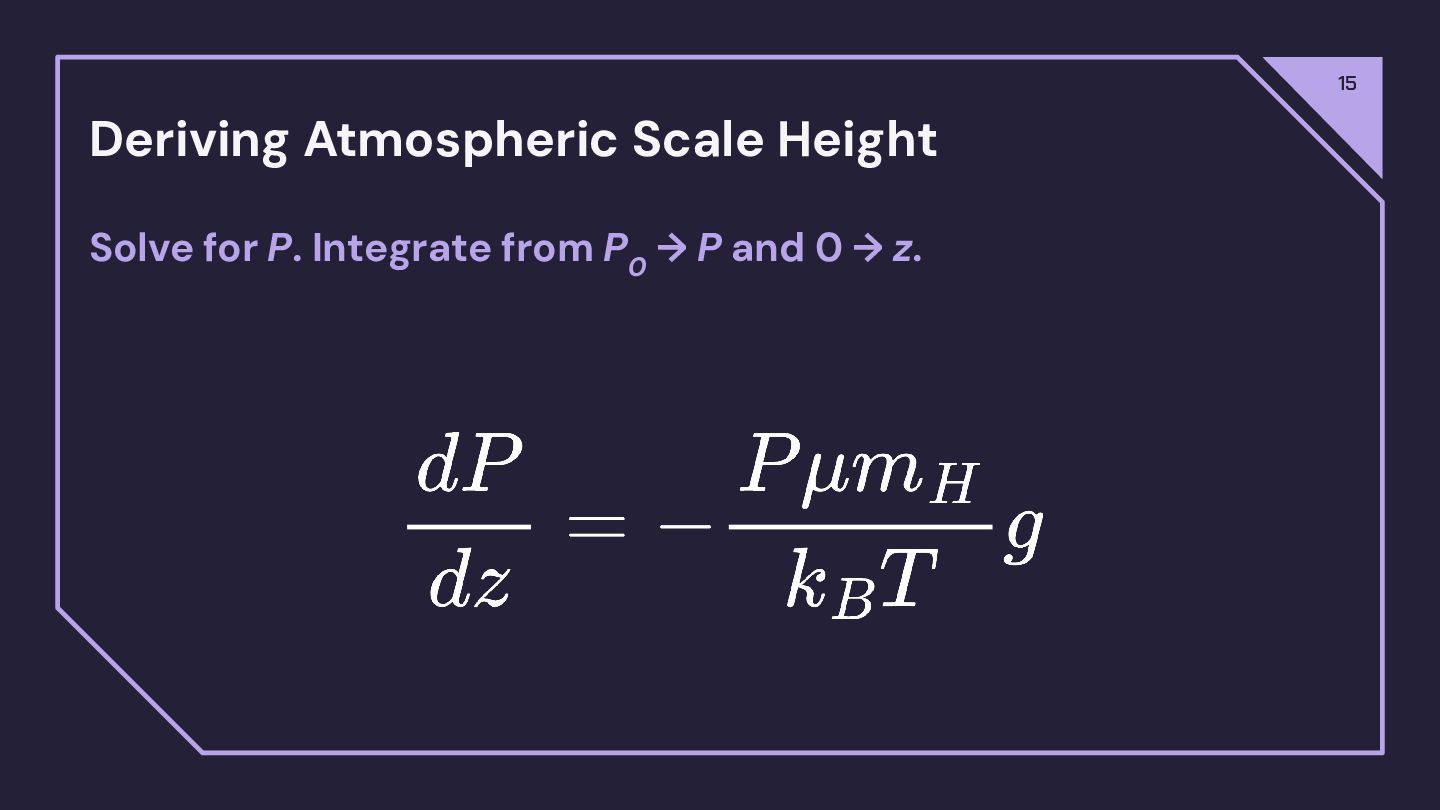
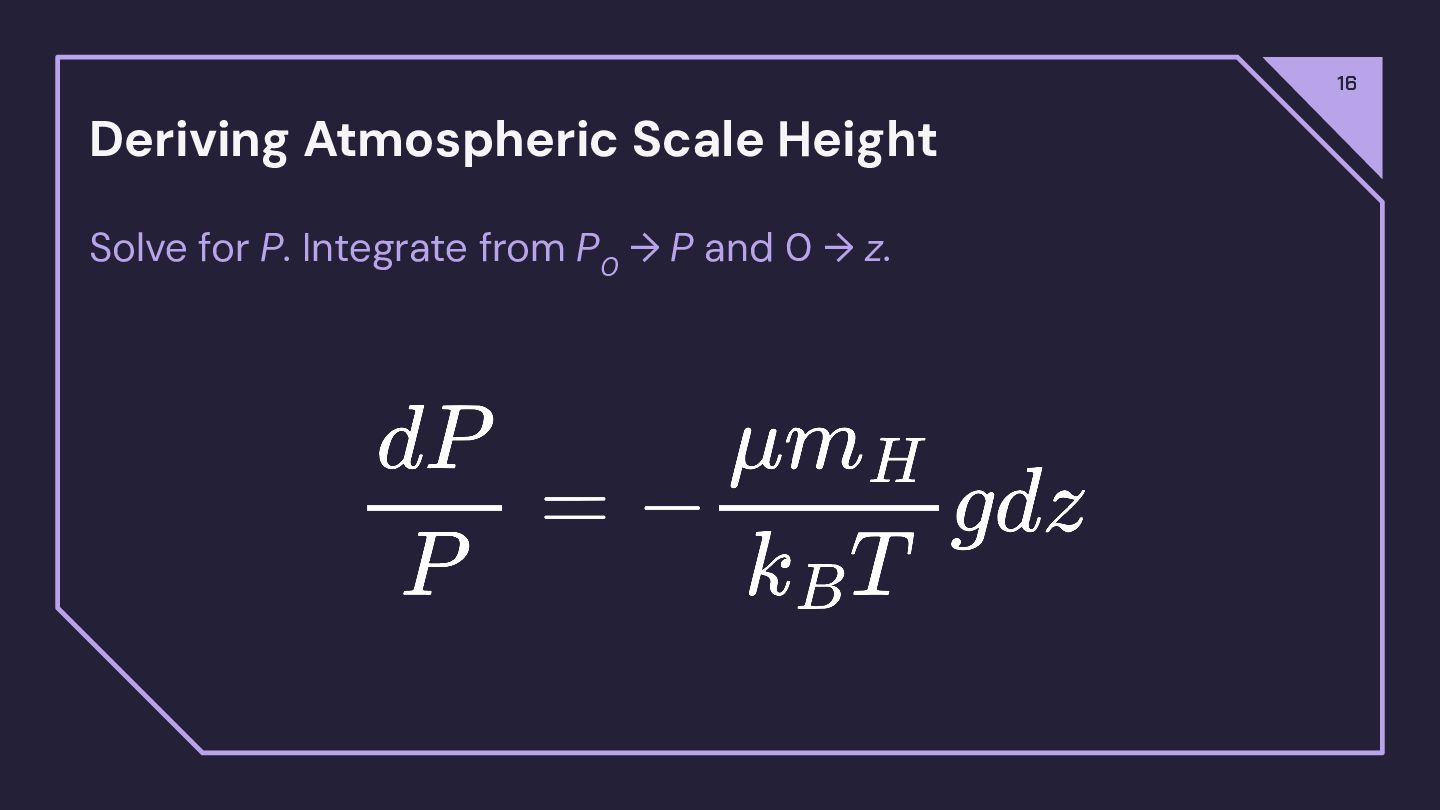
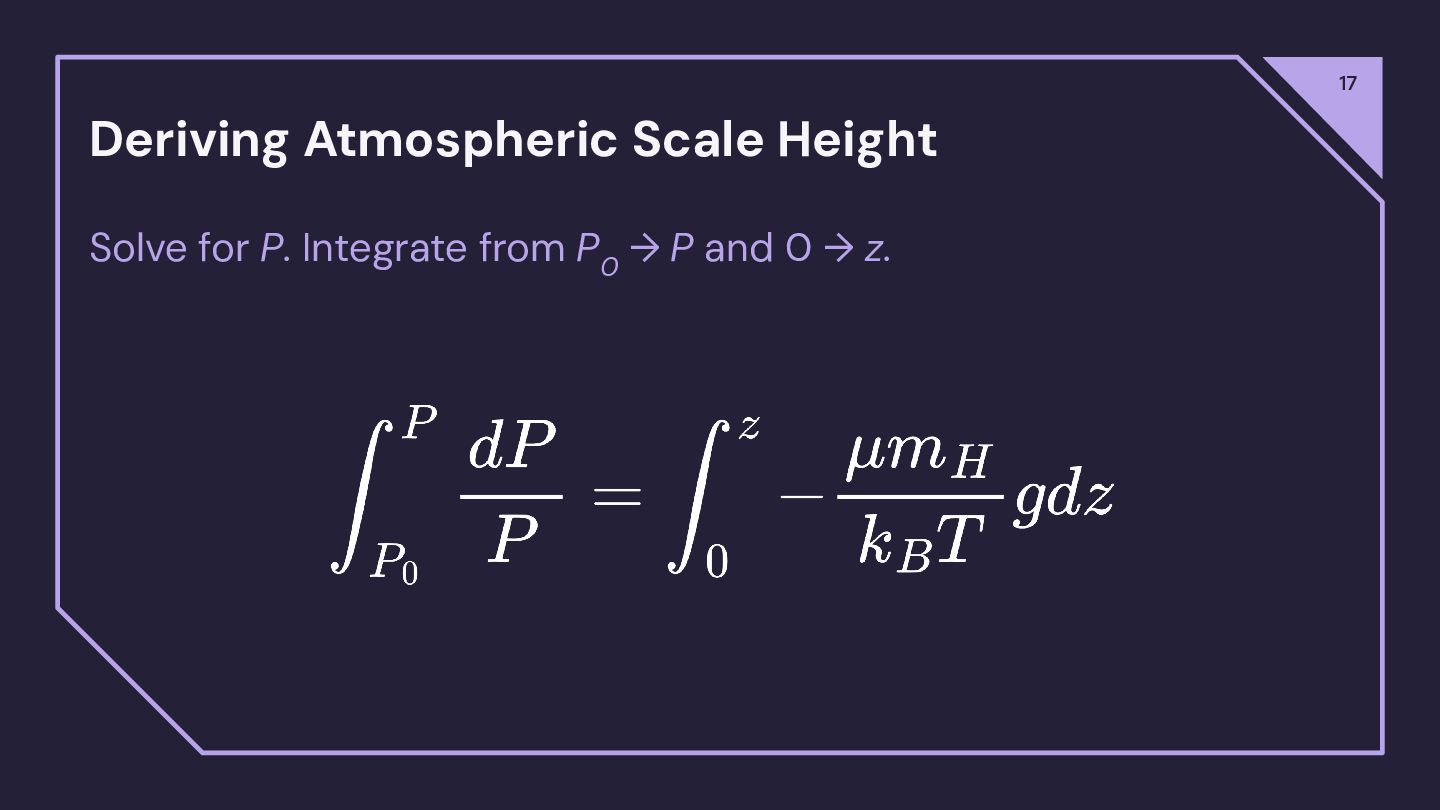
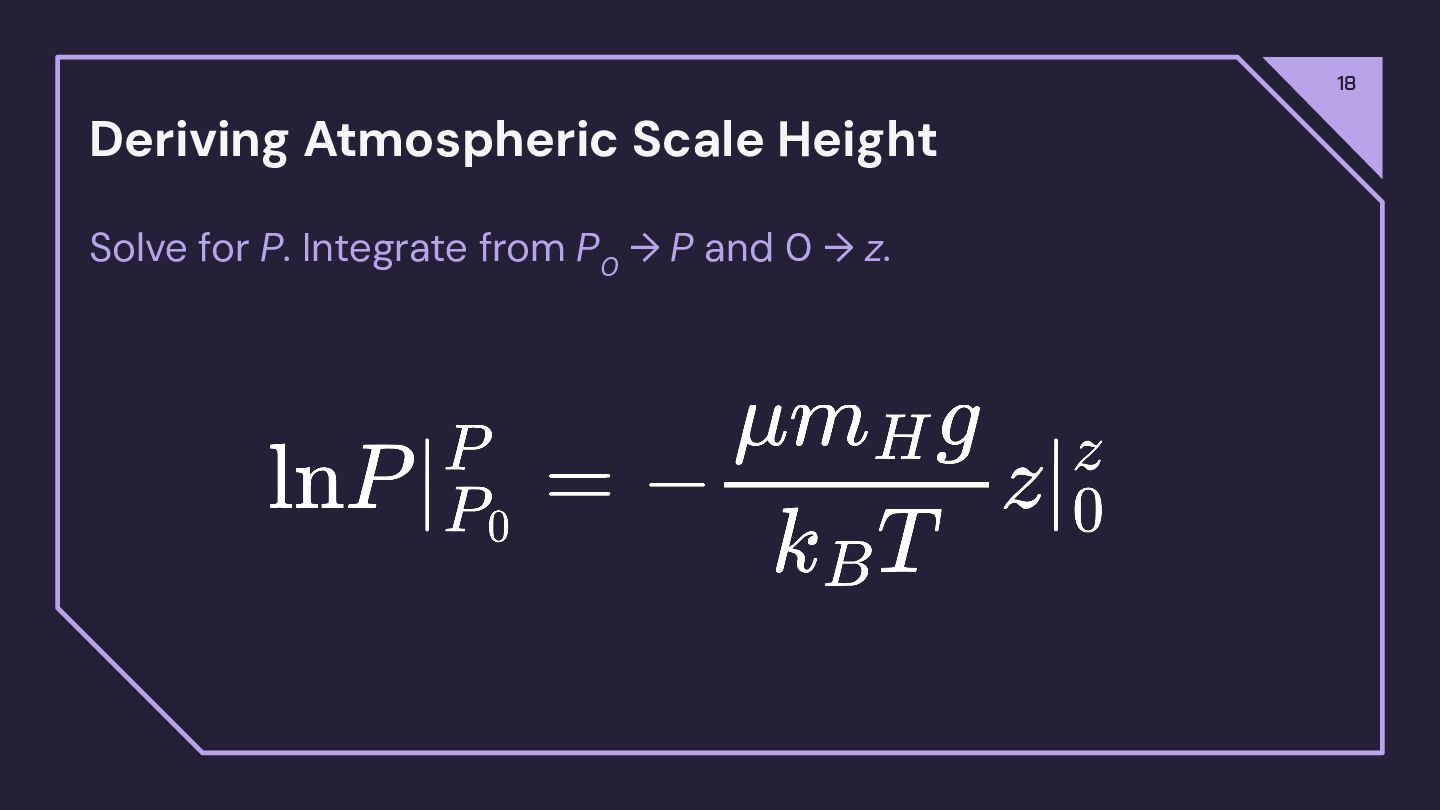
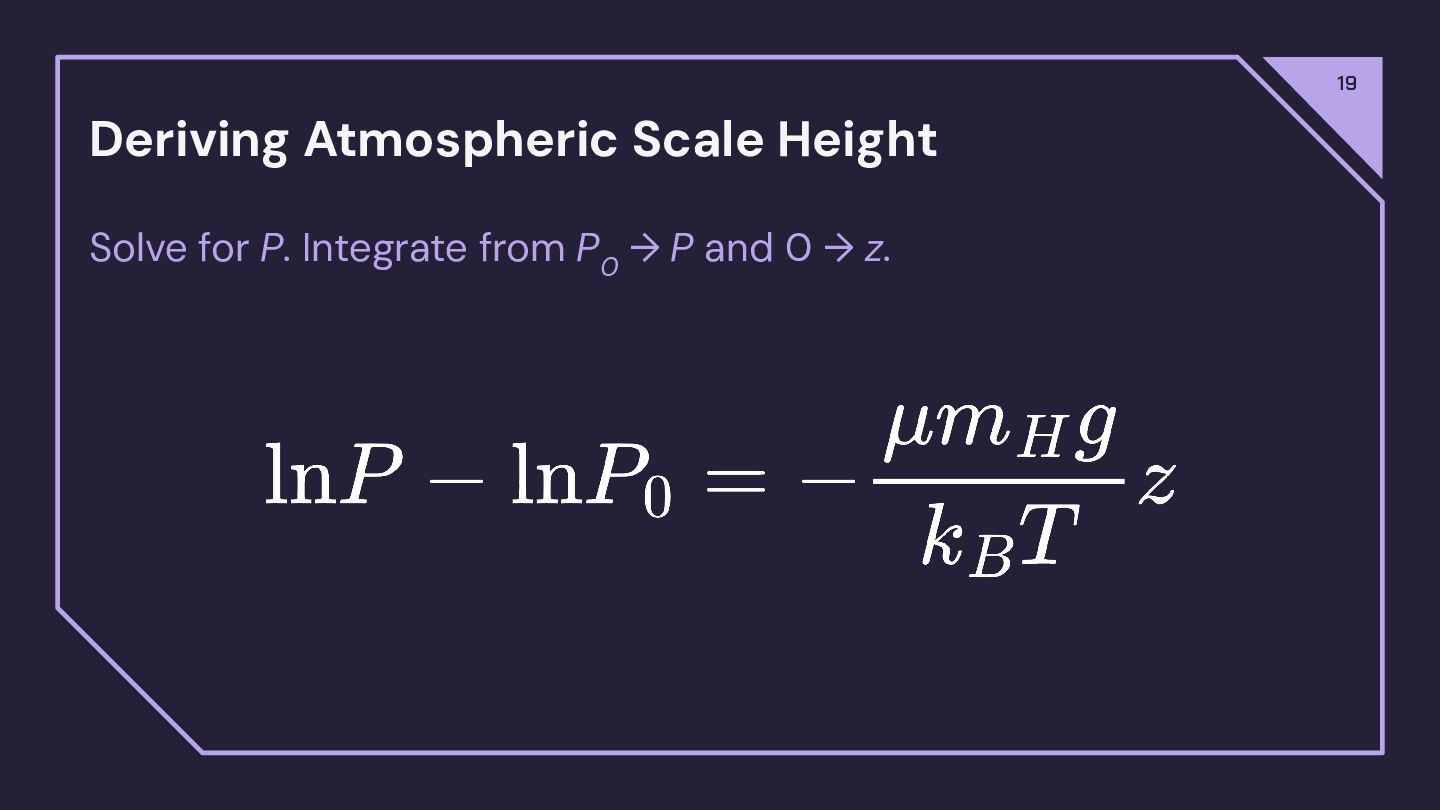
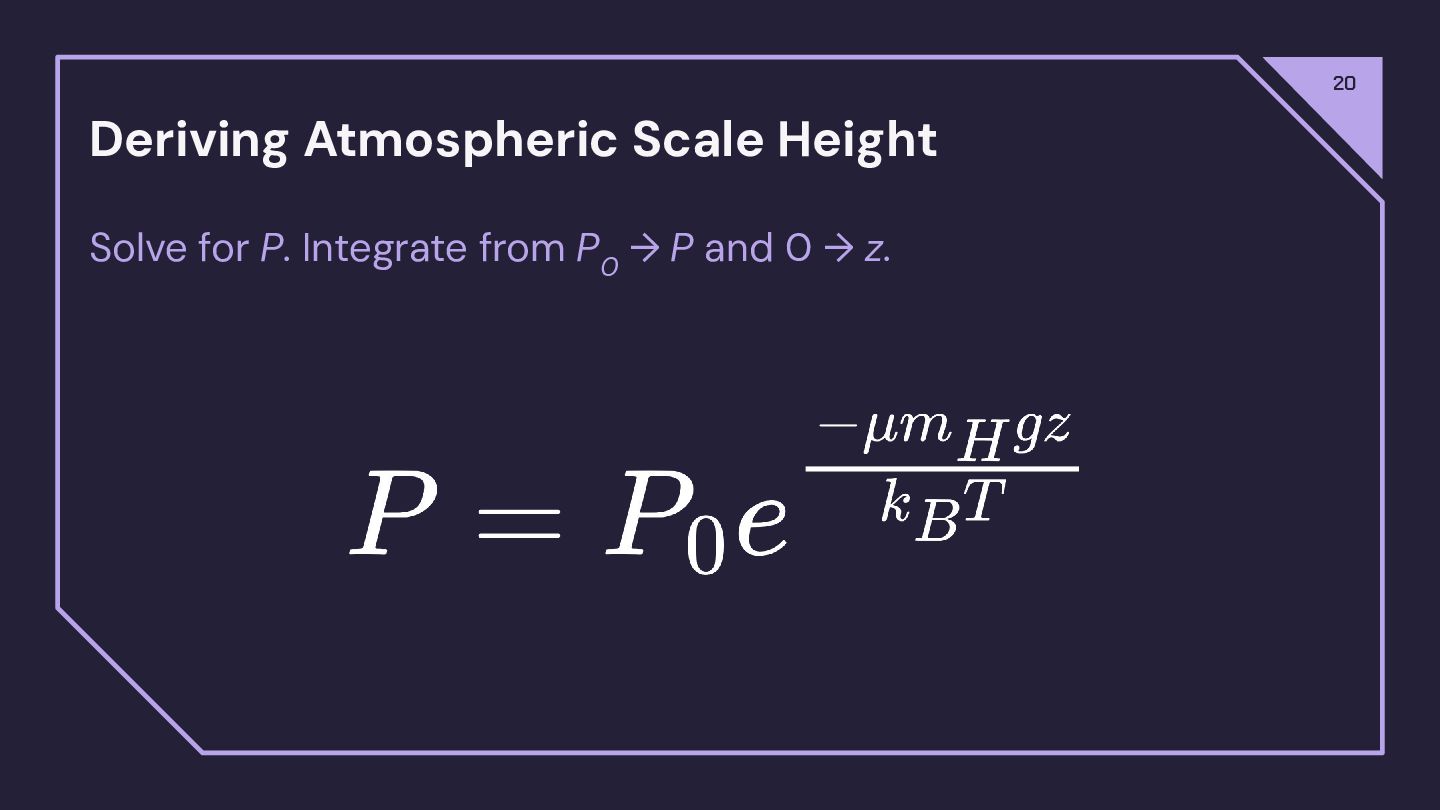
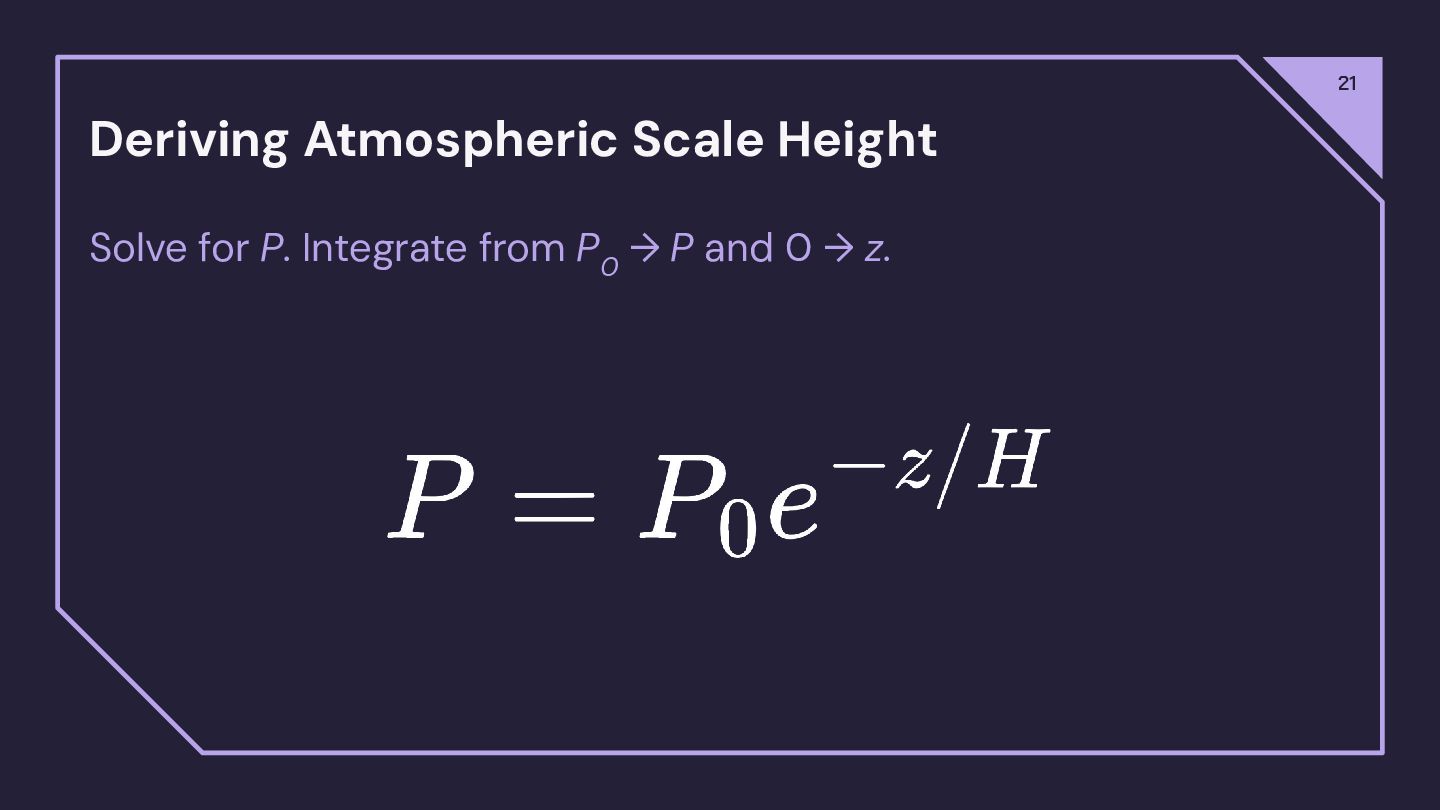
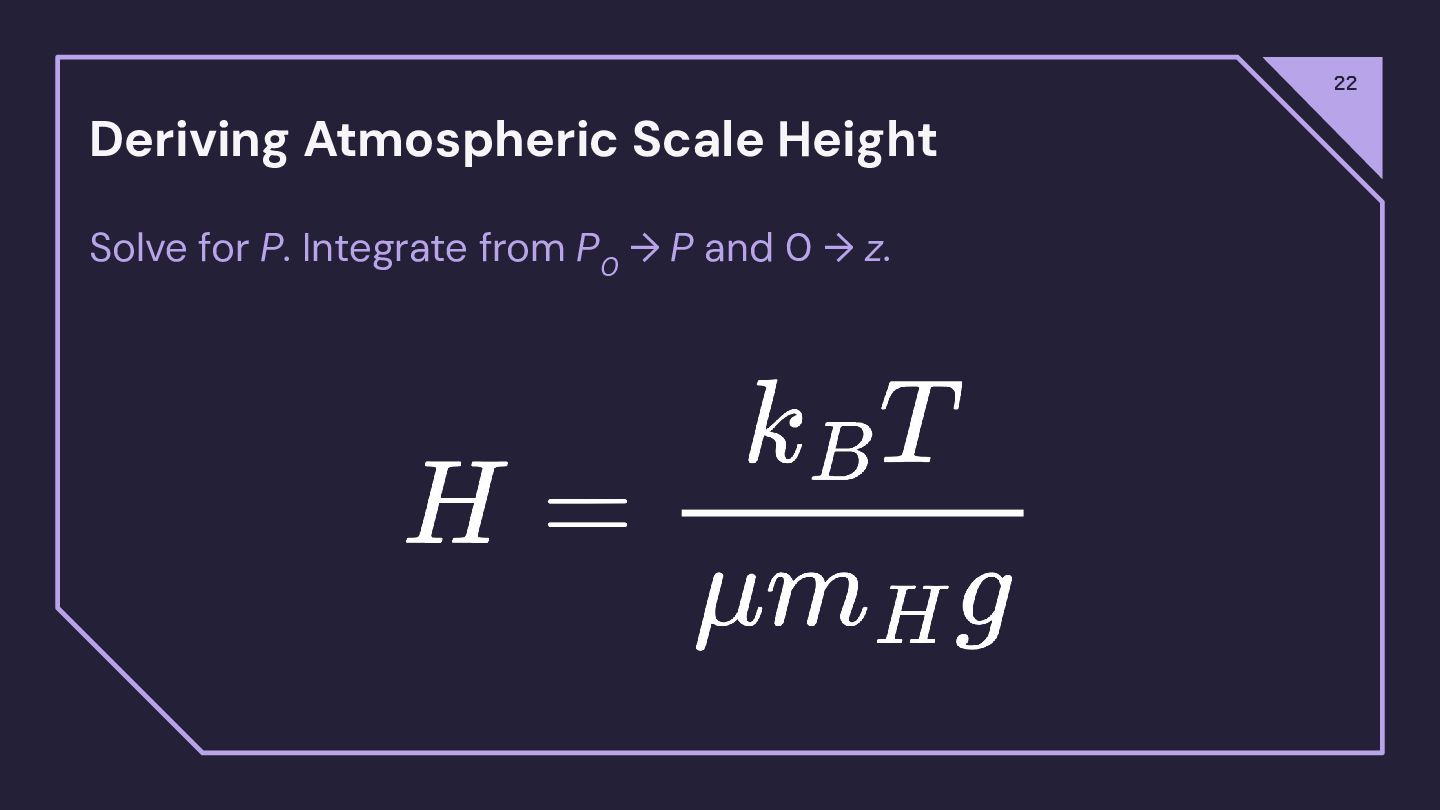
  5. 10 Deriving Atmospheric Scale Height The scale height is the

    increase in altitude for which the atmospheric pressure decreases by a factor of e.
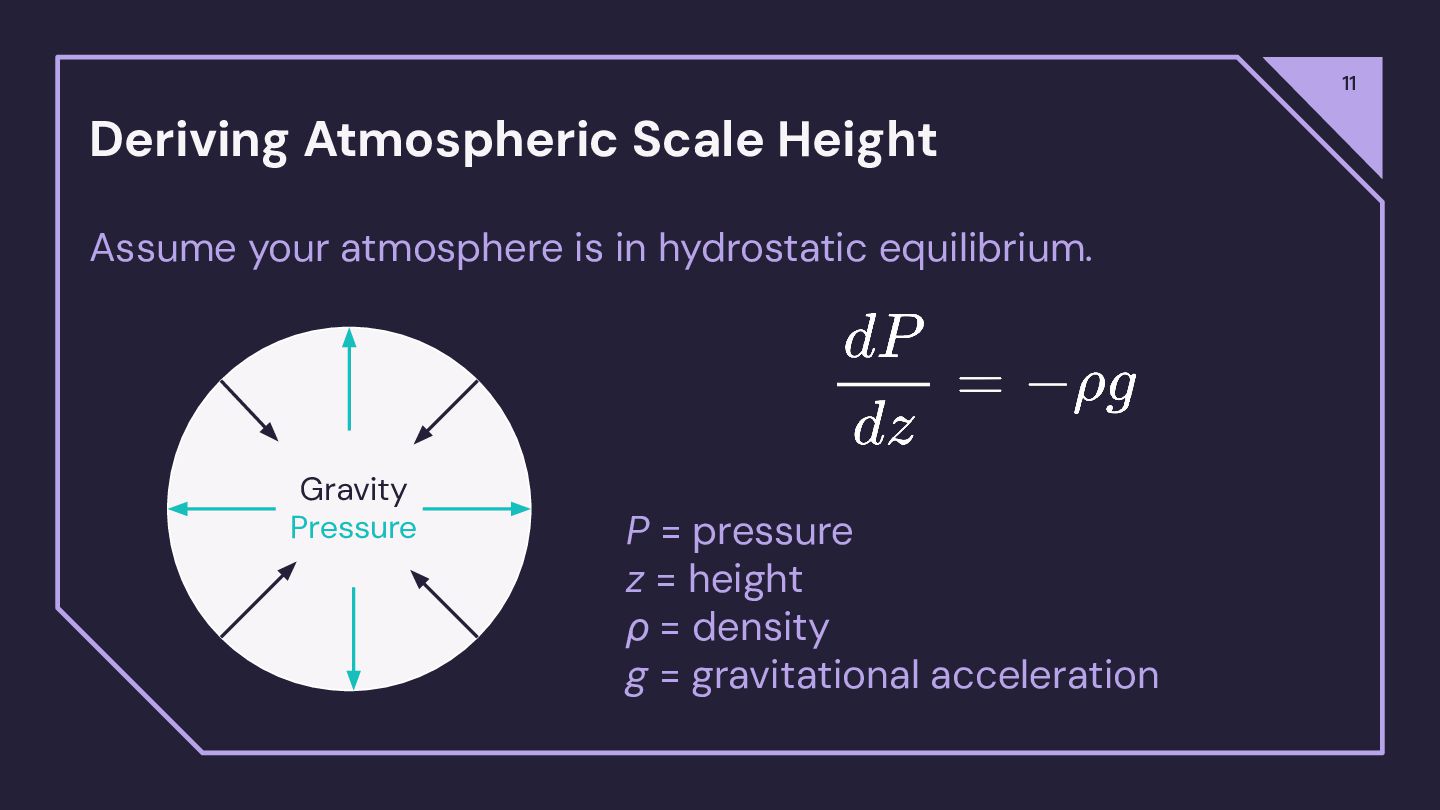
  6. 11 Deriving Atmospheric Scale Height Assume your atmosphere is in

    hydrostatic equilibrium. Gravity Pressure P = pressure z = height ρ = density g = gravitational acceleration
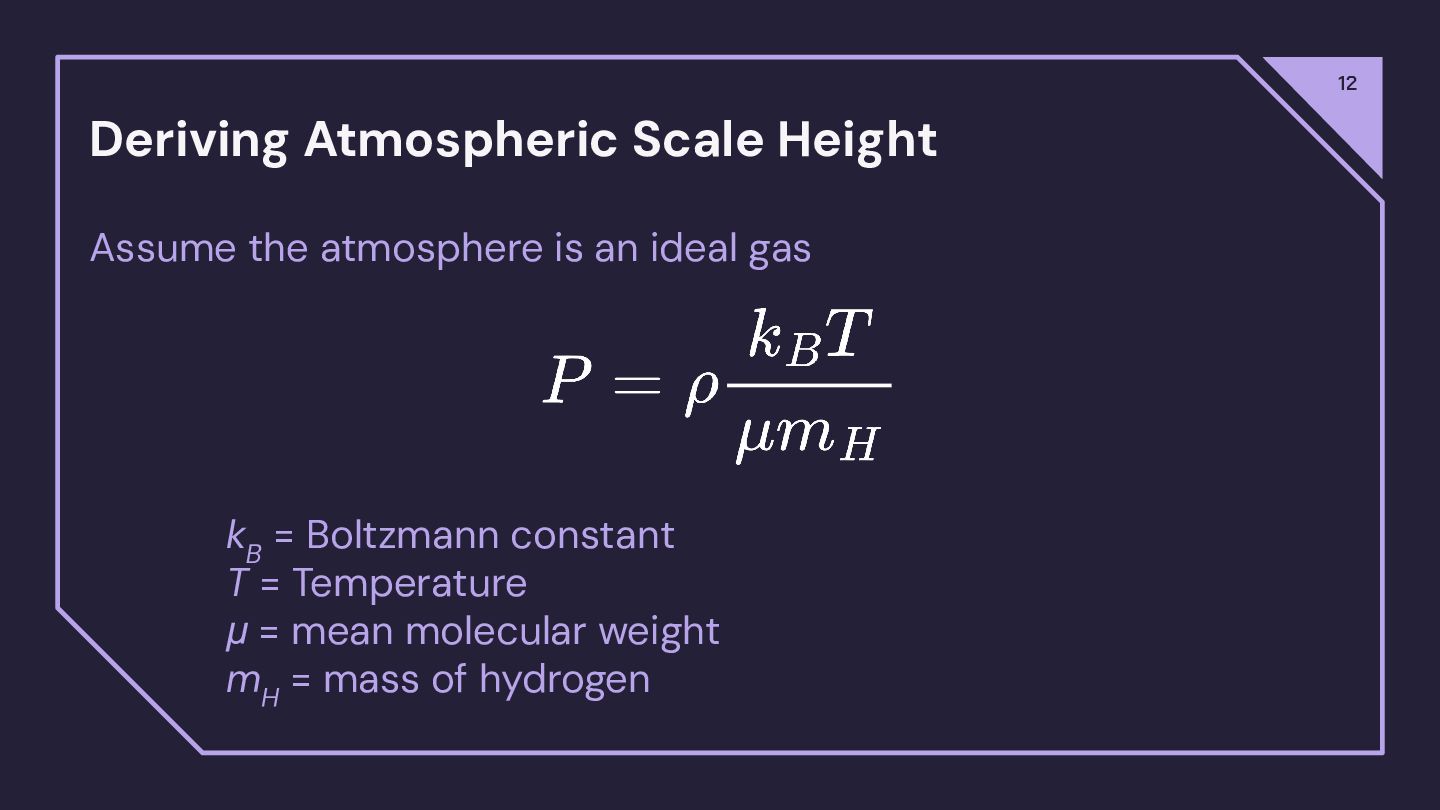
  7. 12 Deriving Atmospheric Scale Height Assume the atmosphere is an

    ideal gas k B = Boltzmann constant T = Temperature μ = mean molecular weight m H = mass of hydrogen
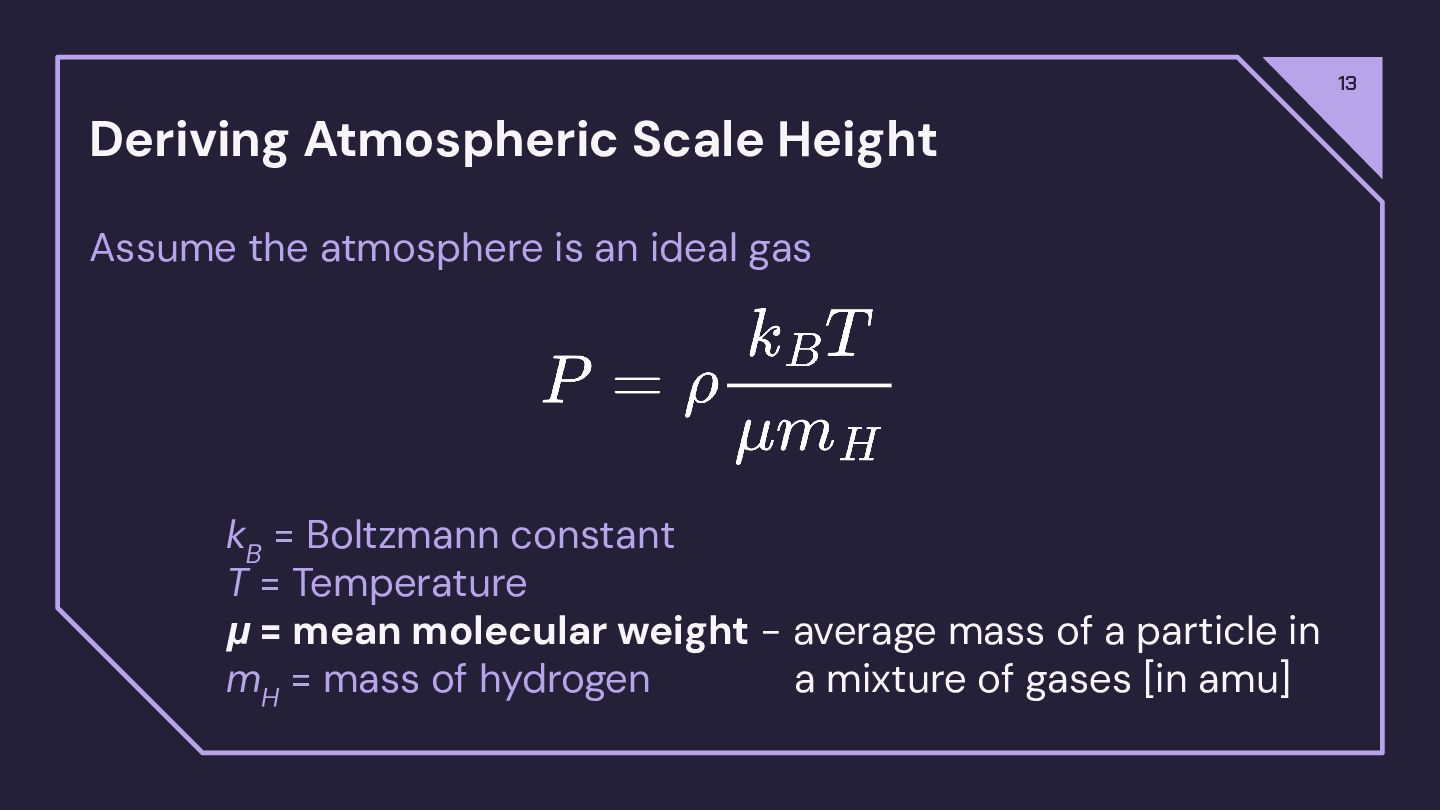
  8. 13 Deriving Atmospheric Scale Height Assume the atmosphere is an

    ideal gas k B = Boltzmann constant T = Temperature μ = mean molecular weight - average mass of a particle in m H = mass of hydrogen a mixture of gases [in amu]
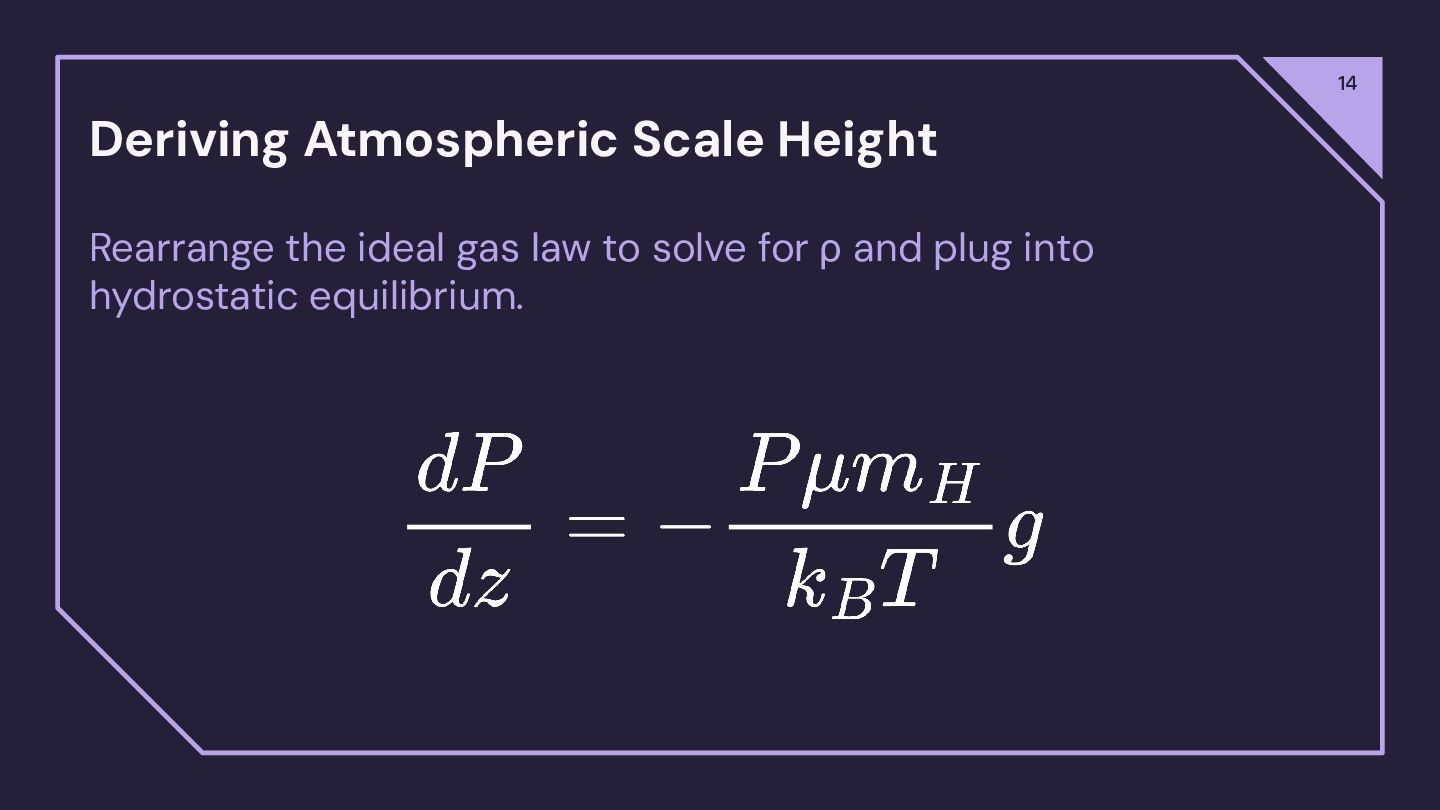
  9. 14 Deriving Atmospheric Scale Height Rearrange the ideal gas law

    to solve for ρ and plug into hydrostatic equilibrium.
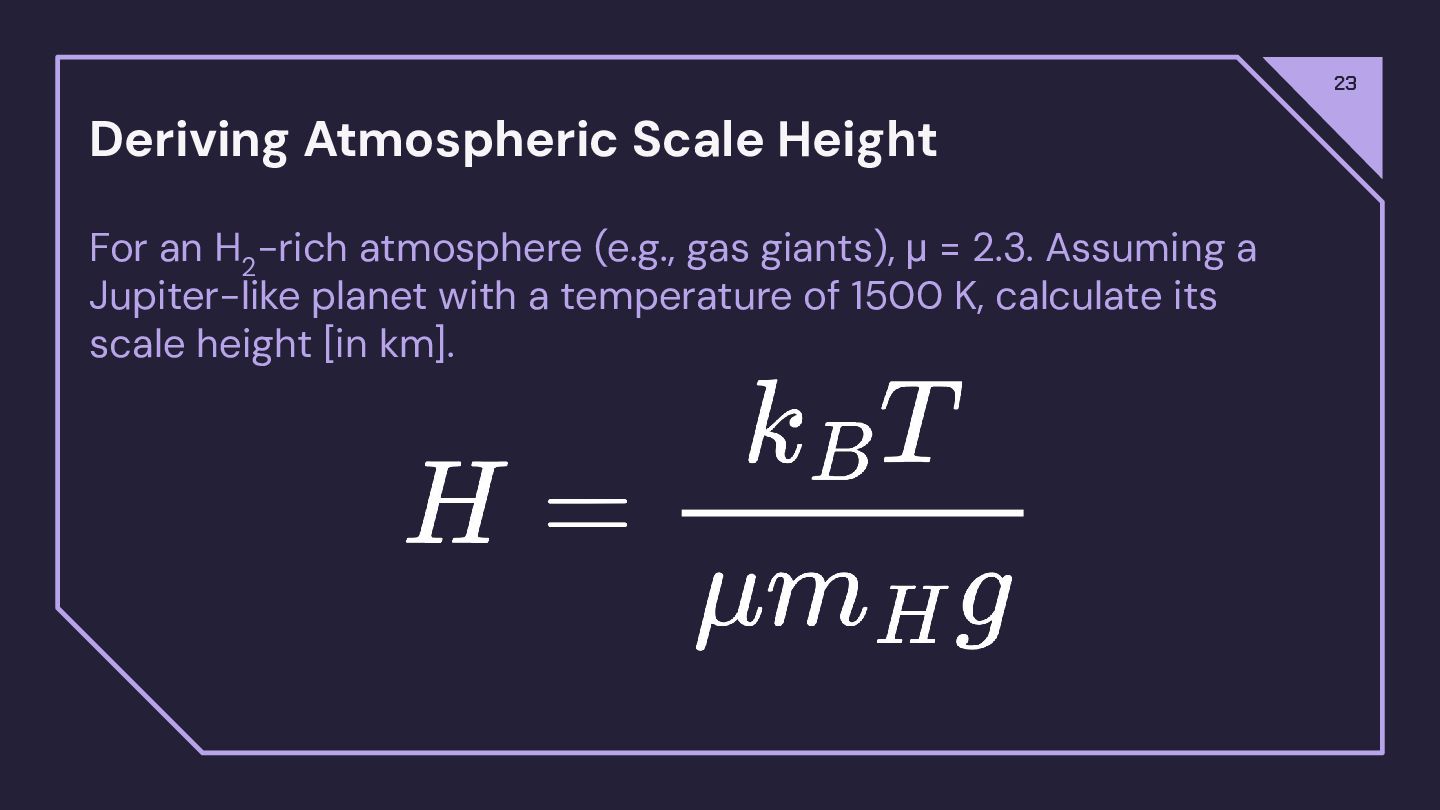
  10. 23 Deriving Atmospheric Scale Height For an H 2 -rich

    atmosphere (e.g., gas giants), μ = 2.3. Assuming a Jupiter-like planet with a temperature of 1500 K, calculate its scale height [in km].
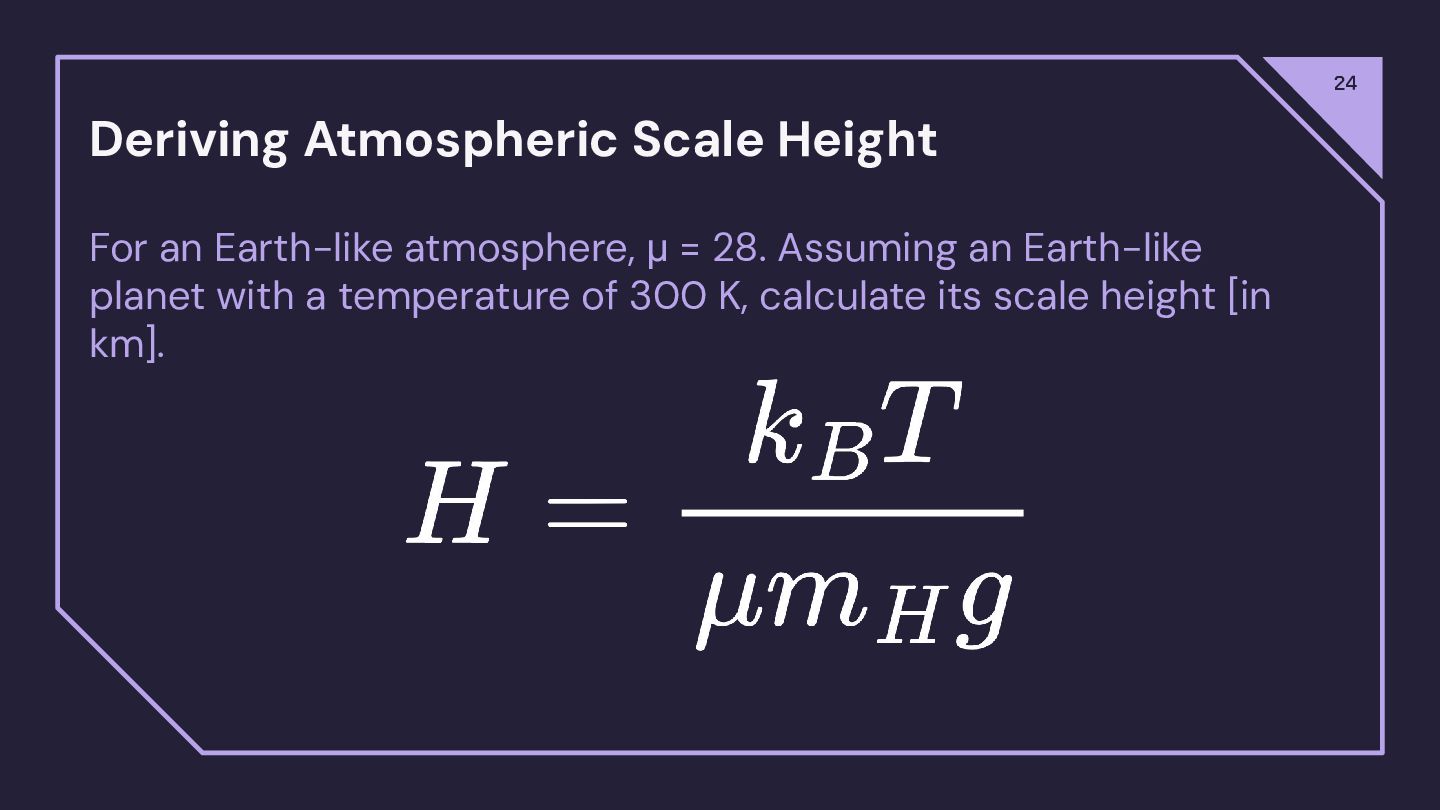
  11. 24 Deriving Atmospheric Scale Height For an Earth-like atmosphere, μ

    = 28. Assuming an Earth-like planet with a temperature of 300 K, calculate its scale height [in km].
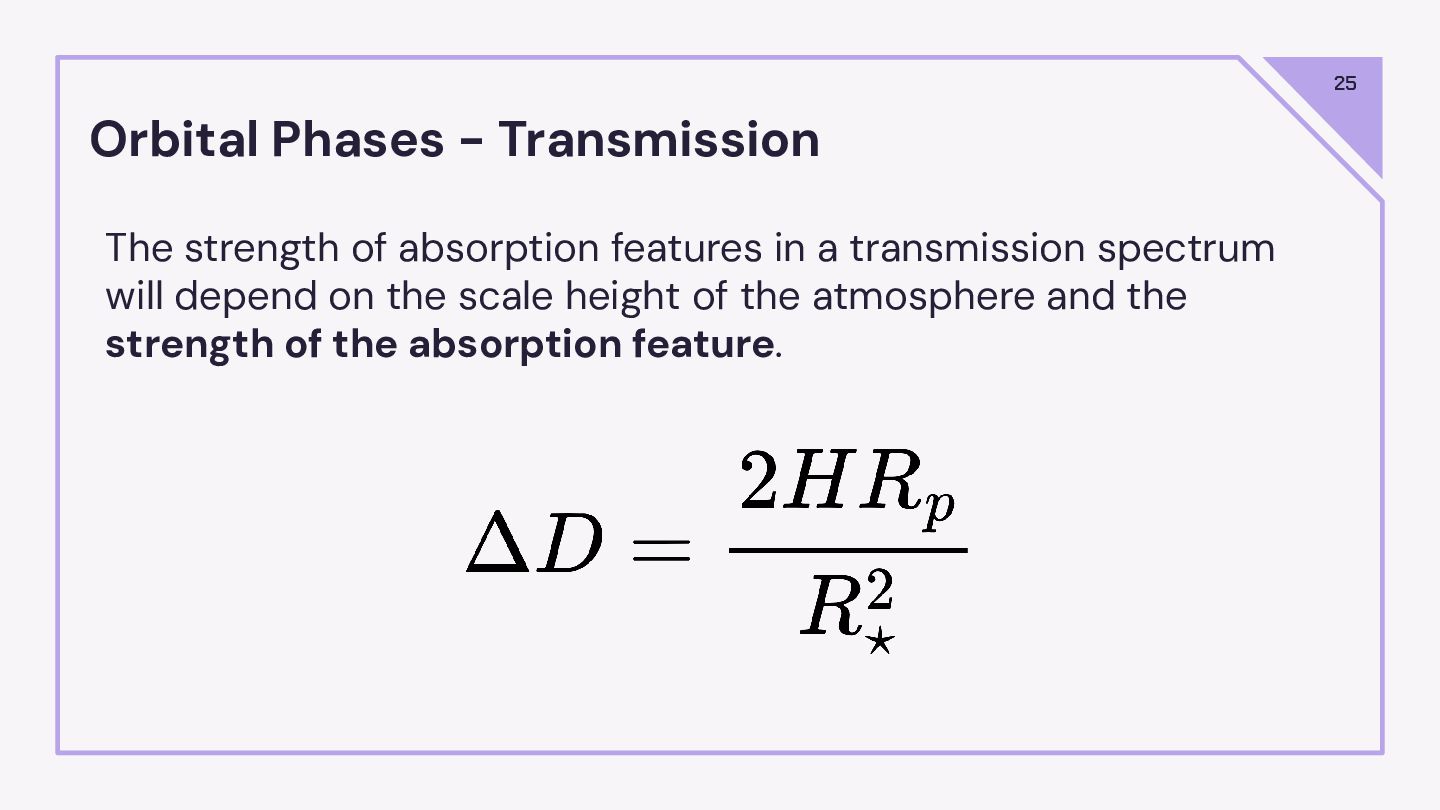
  12. Orbital Phases - Transmission 25 The strength of absorption features

    in a transmission spectrum will depend on the scale height of the atmosphere and the strength of the absorption feature.
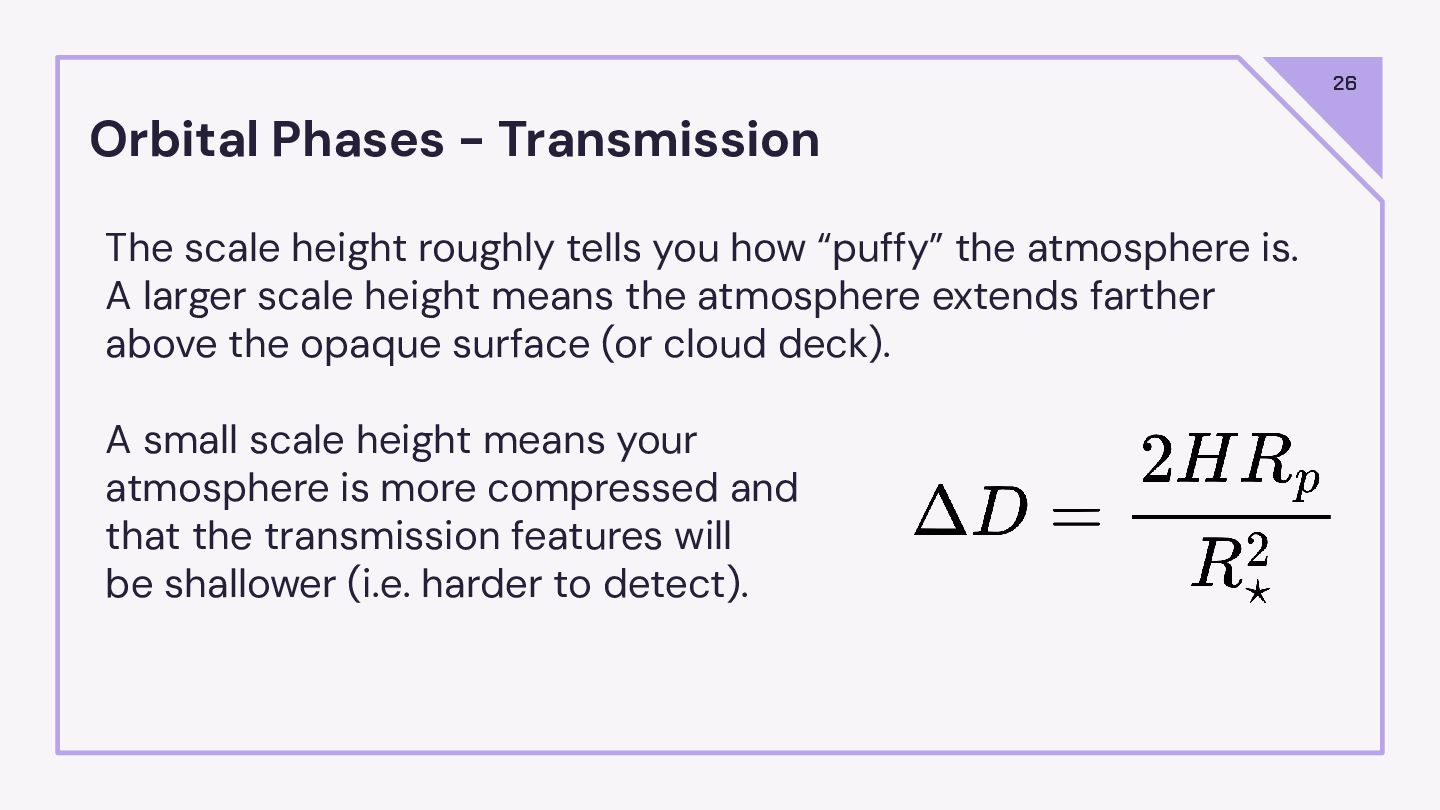
  13. Orbital Phases - Transmission 26 The scale height roughly tells

    you how “puffy” the atmosphere is. A larger scale height means the atmosphere extends farther above the opaque surface (or cloud deck). A small scale height means your atmosphere is more compressed and that the transmission features will be shallower (i.e. harder to detect).
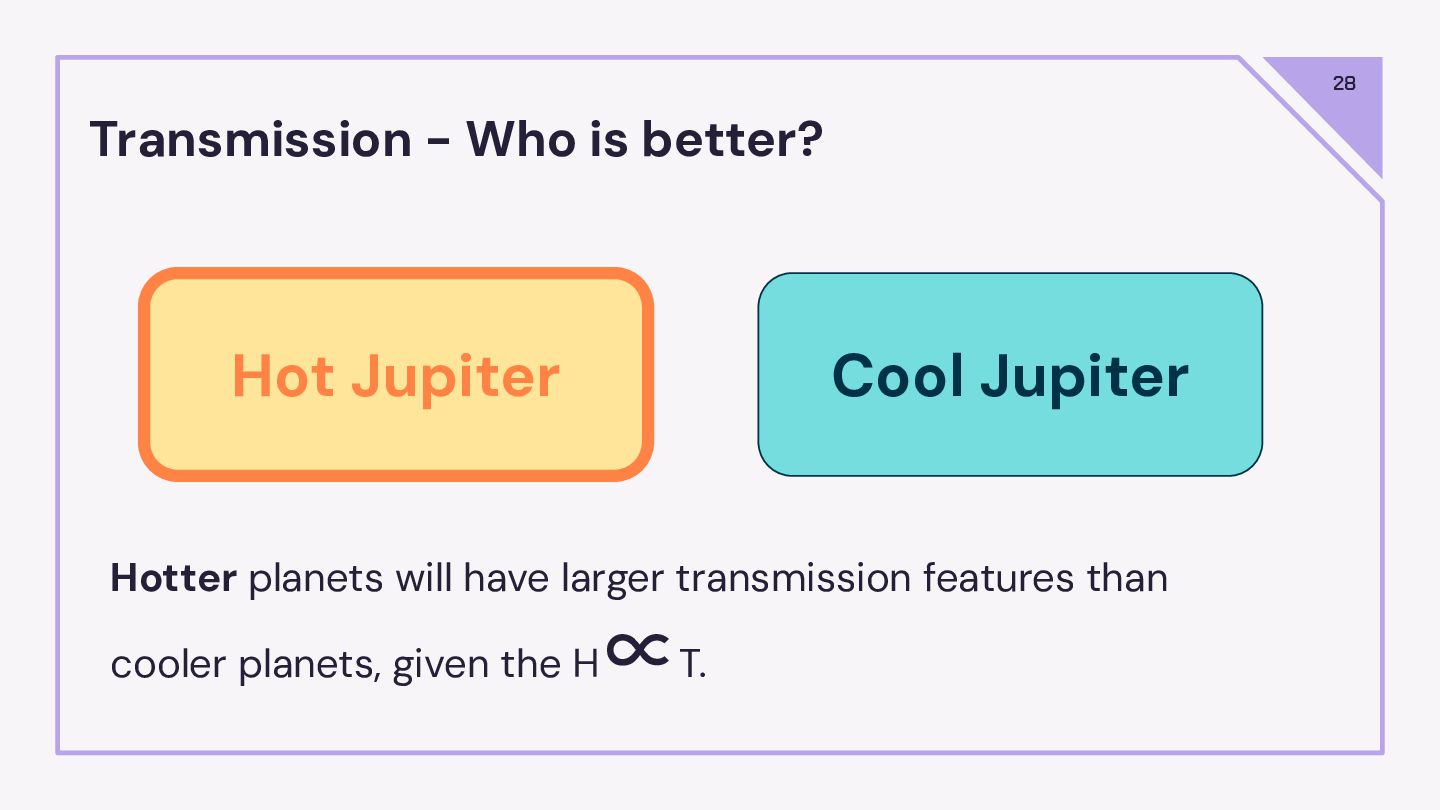
  14. Transmission - Who is better? 28 Hot Jupiter Cool Jupiter

    Hotter planets will have larger transmission features than cooler planets, given the H ∝T.
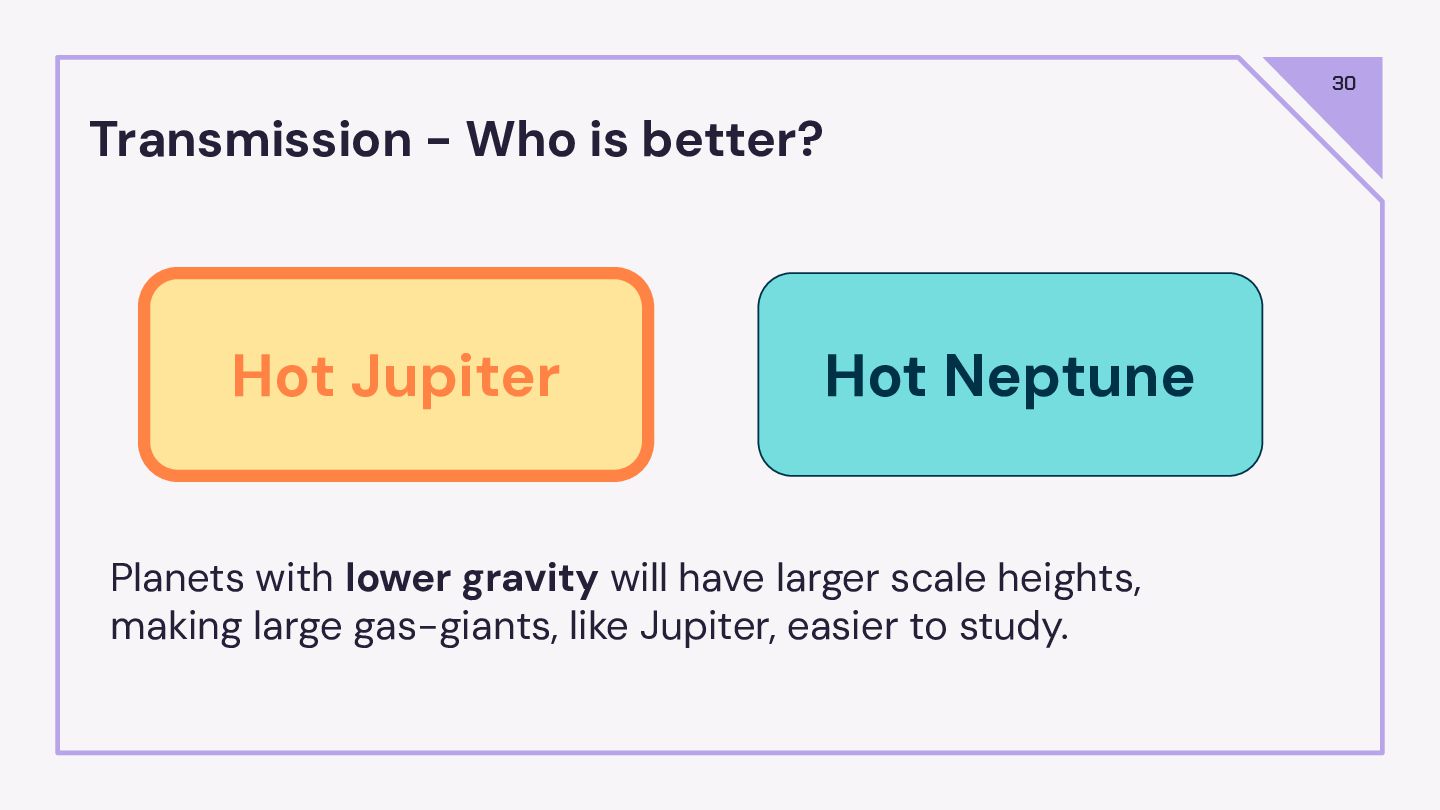
  15. Transmission - Who is better? 30 Planets with lower gravity

    will have larger scale heights, making large gas-giants, like Jupiter, easier to study. Hot Jupiter Hot Neptune
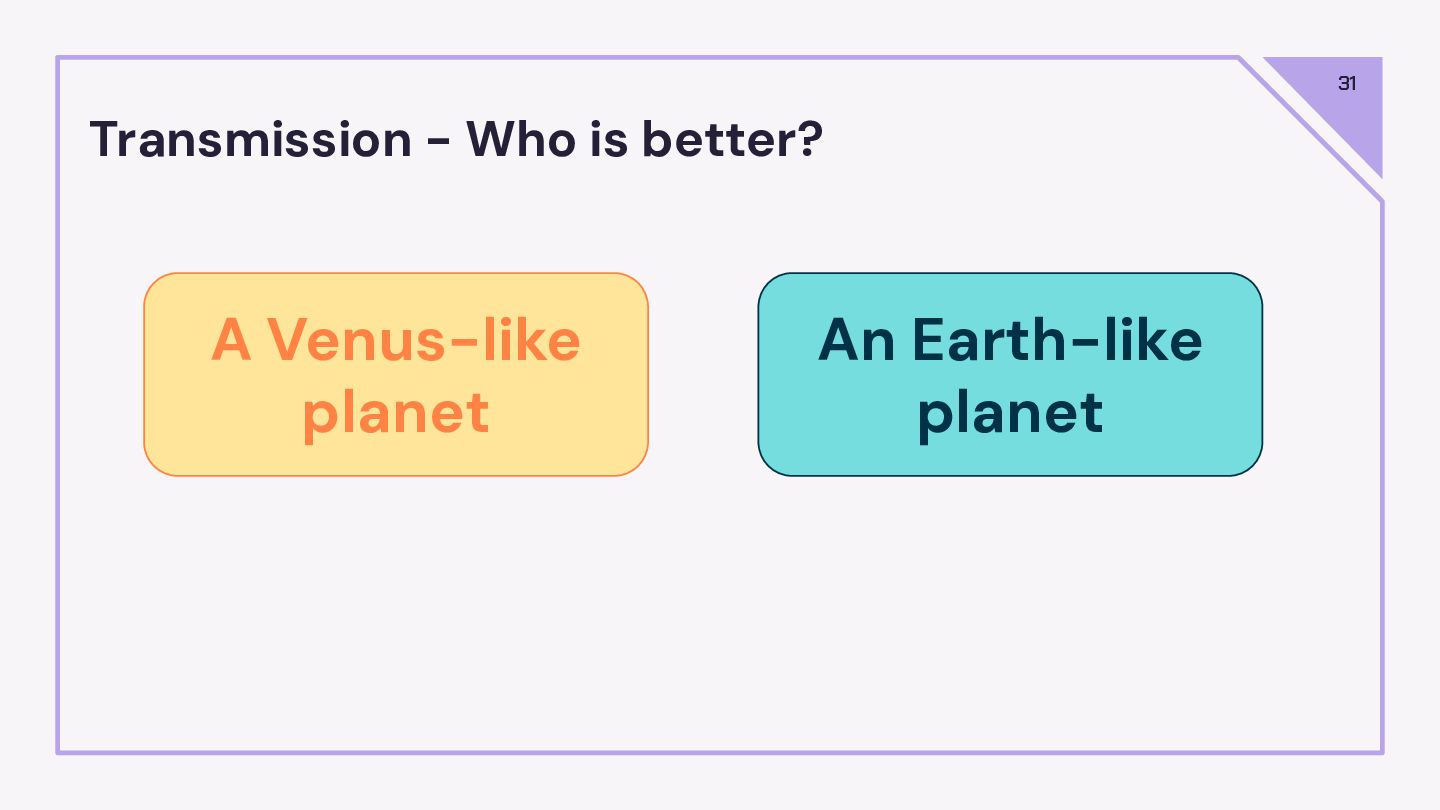
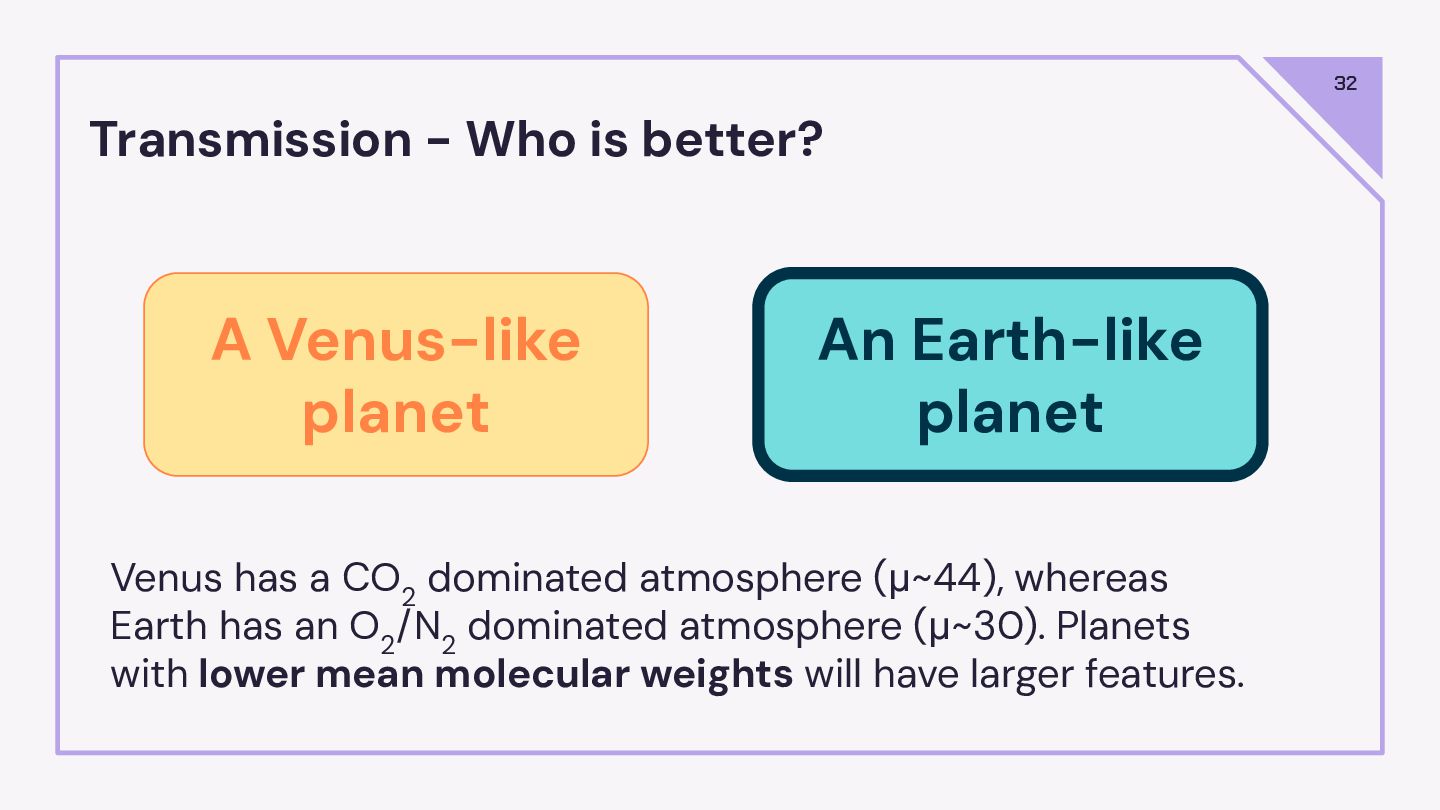
  16. Transmission - Who is better? 32 A Venus-like planet An

    Earth-like planet Venus has a CO 2 dominated atmosphere (μ~44), whereas Earth has an O 2 /N 2 dominated atmosphere (μ~30). Planets with lower mean molecular weights will have larger features.
  17. Scale Height - Realities 33 The scale height determines how

    many H’s worth of atmosphere you probe in transmission. On average, we probe ~3+ scale heights in puffy atmospheres (gas-giants). When deciding on what targets to observe, note that you will get the most signal from a target where you can observe the most Hs. Kempton et al. (2018)
  18. How do we know what we’re actually seeing 34 The

    strength and shape of spectral features are governed by the wavelength-dependent cross-sections of specific molecules and the amount of absorbing material along the line of sight. Knowing this allows us to determine what is in a planet’s atmosphere.
  19. Key Concepts 35 Opacity 𝛋(λ) - A measure of how

    much light is absorbed or scattered at a given wavelength [cm2/g].
  20. Opacity 37 The opacity of an atmosphere will depend on:

    • The composition of the atmosphere (i.e. what molecules are present).
  21. Opacity 38 The opacity of an atmosphere will depend on:

    • The composition of the atmosphere (i.e. what molecules are present). • The wavelength you observe at.
  22. Opacity 39 The opacity of an atmosphere will depend on:

    • The composition of the atmosphere (i.e. what molecules are present). • The wavelength you observe at. • The temperature of the atmosphere.
  23. Opacity 40 The opacity of an atmosphere will depend on:

    • The composition of the atmosphere (i.e. what molecules are present). • The wavelength you observe at. • The temperature of the atmosphere. • The pressure of the atmosphere (affects line broadening).
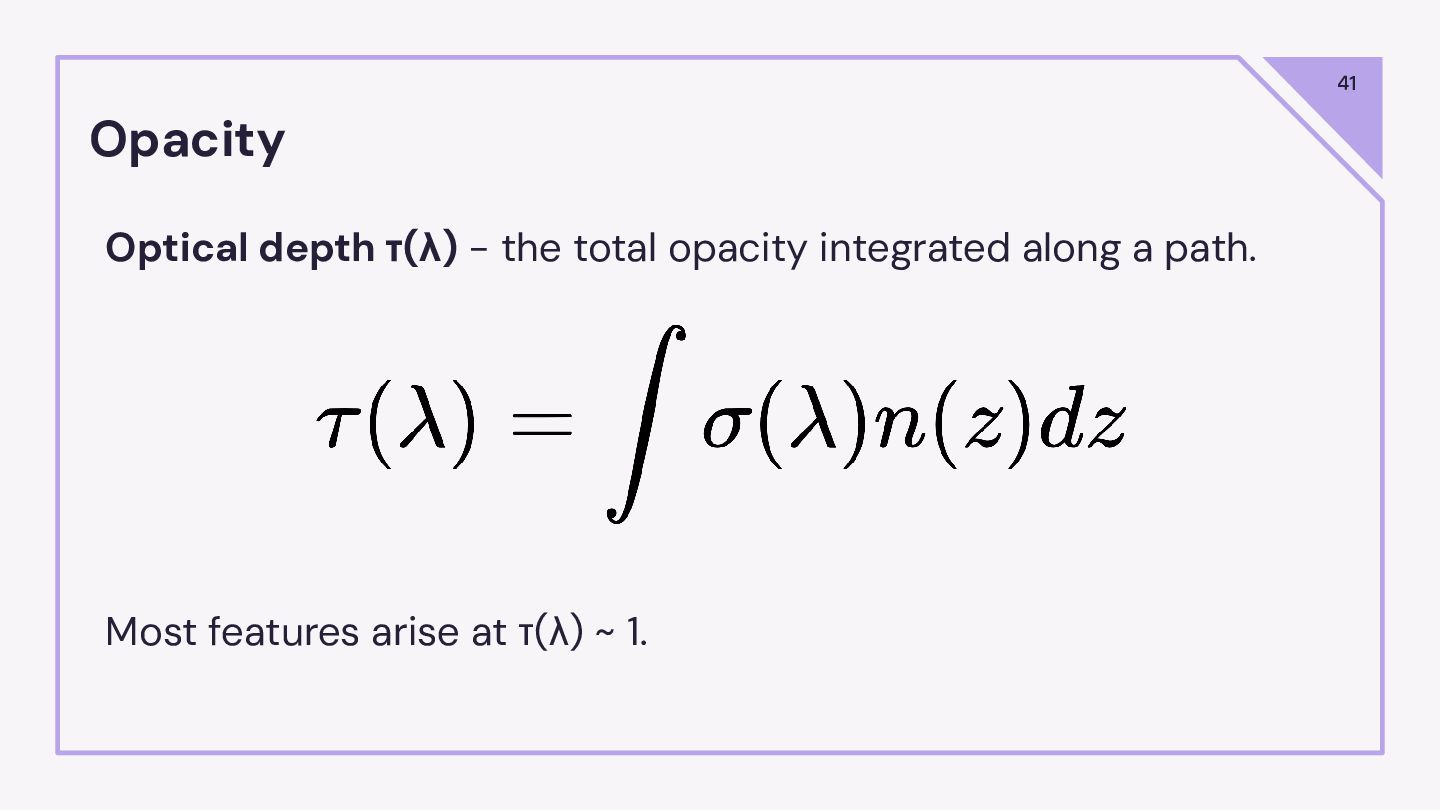
  24. Opacity 41 Optical depth τ(λ) - the total opacity integrated

    along a path. Most features arise at τ(λ) ~ 1.
  25. Connection to Transmission 42 At wavelengths where the opacity is

    high, the atmosphere becomes opaque higher up. This will result in a larger effective radius of the planet (i.e. a deeper transit).
  26. Connection to Transmission 43 At wavelengths where the opacity is

    low, the atmosphere becomes opaque lower down. This will result in a smaller effective radius of the planet (i.e. a shallower transit).
  27. Key Concepts 44 Opacity 𝛋(λ) - A measure of how

    much light is absorbed or scattered at a given wavelength [cm2/g]. Cross-section σ(λ) - The effective area an individual molecule presents to incoming light at a particular wavelength [cm2/molecule].
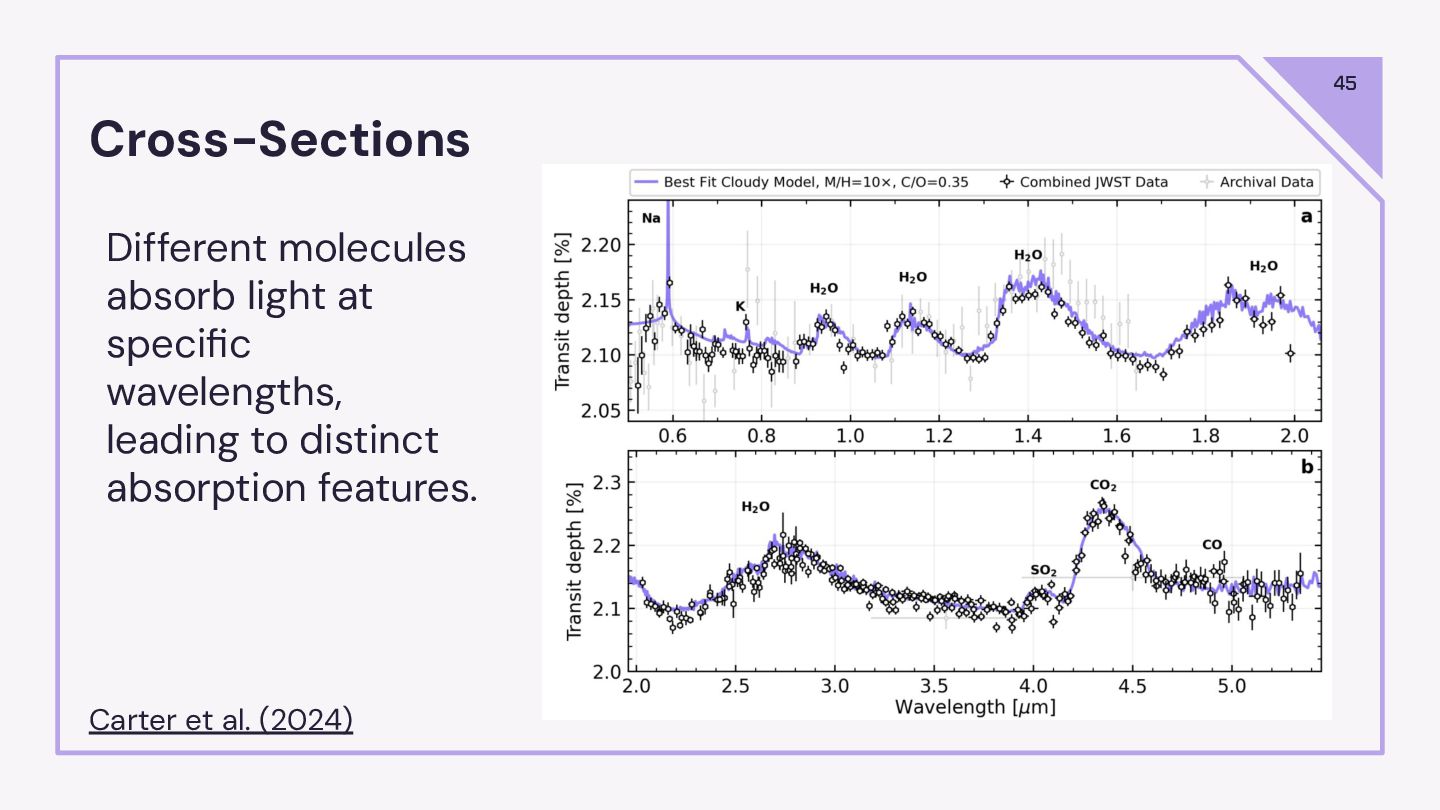
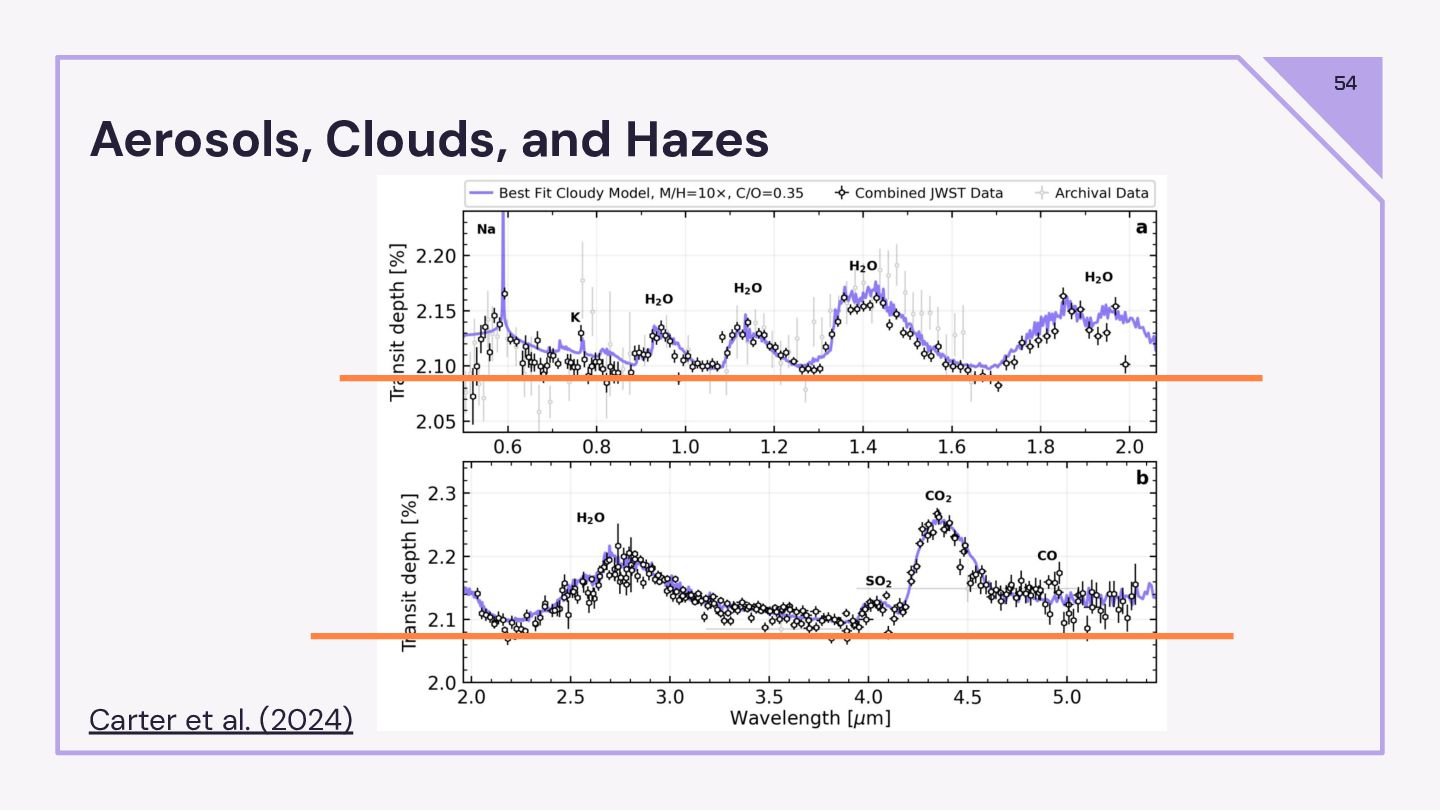
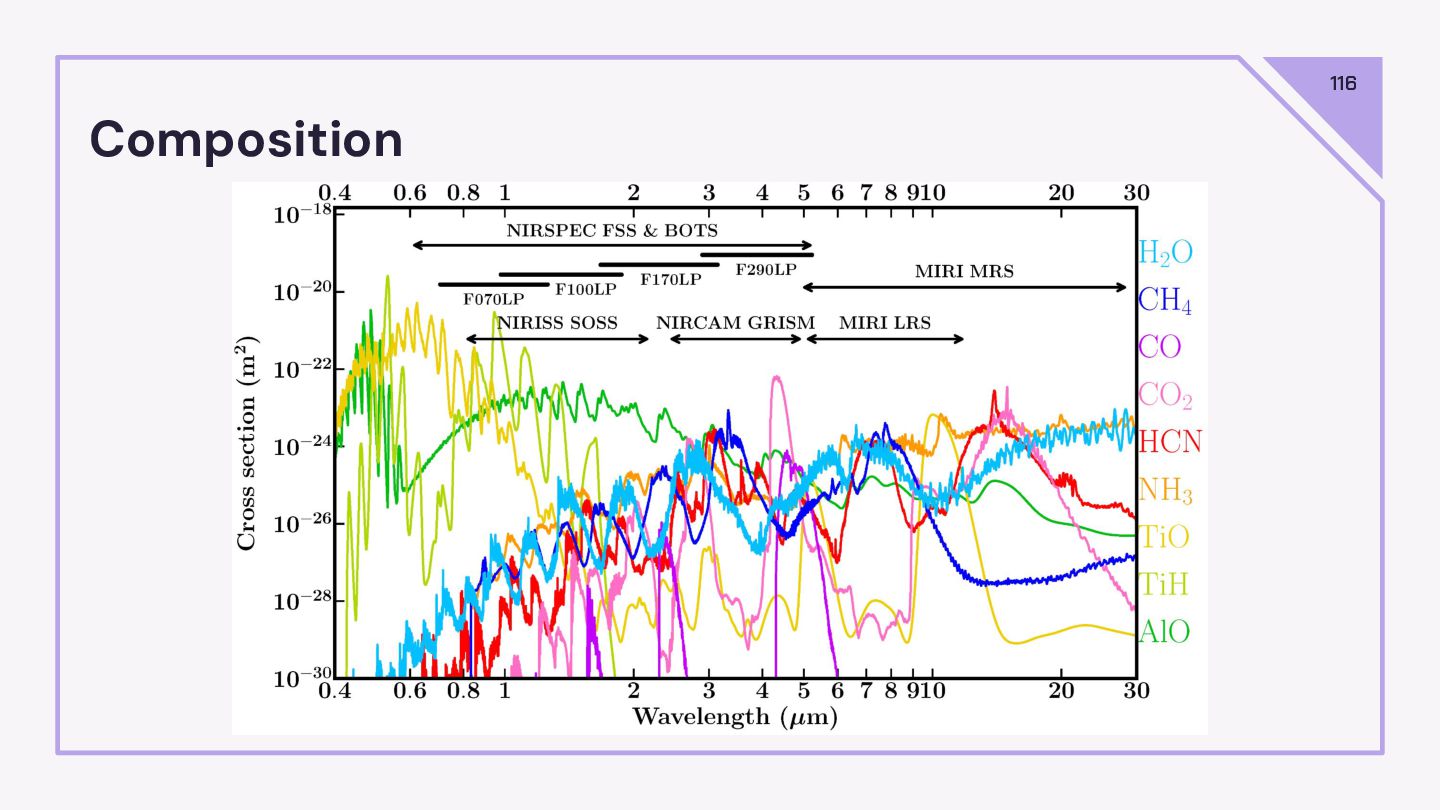
  28. Cross-Sections 45 Different molecules absorb light at specific wavelengths, leading

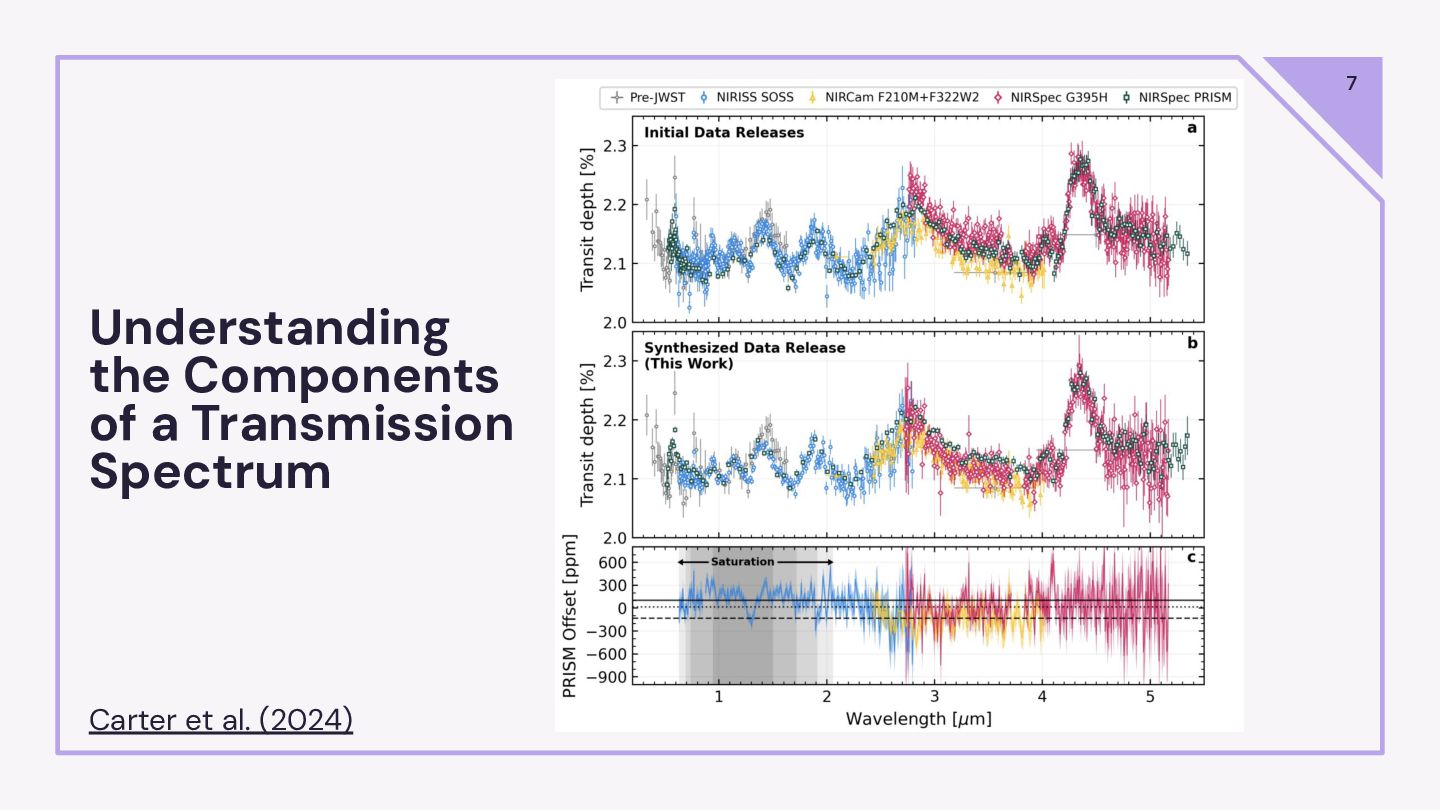
    to distinct absorption features. Carter et al. (2024)
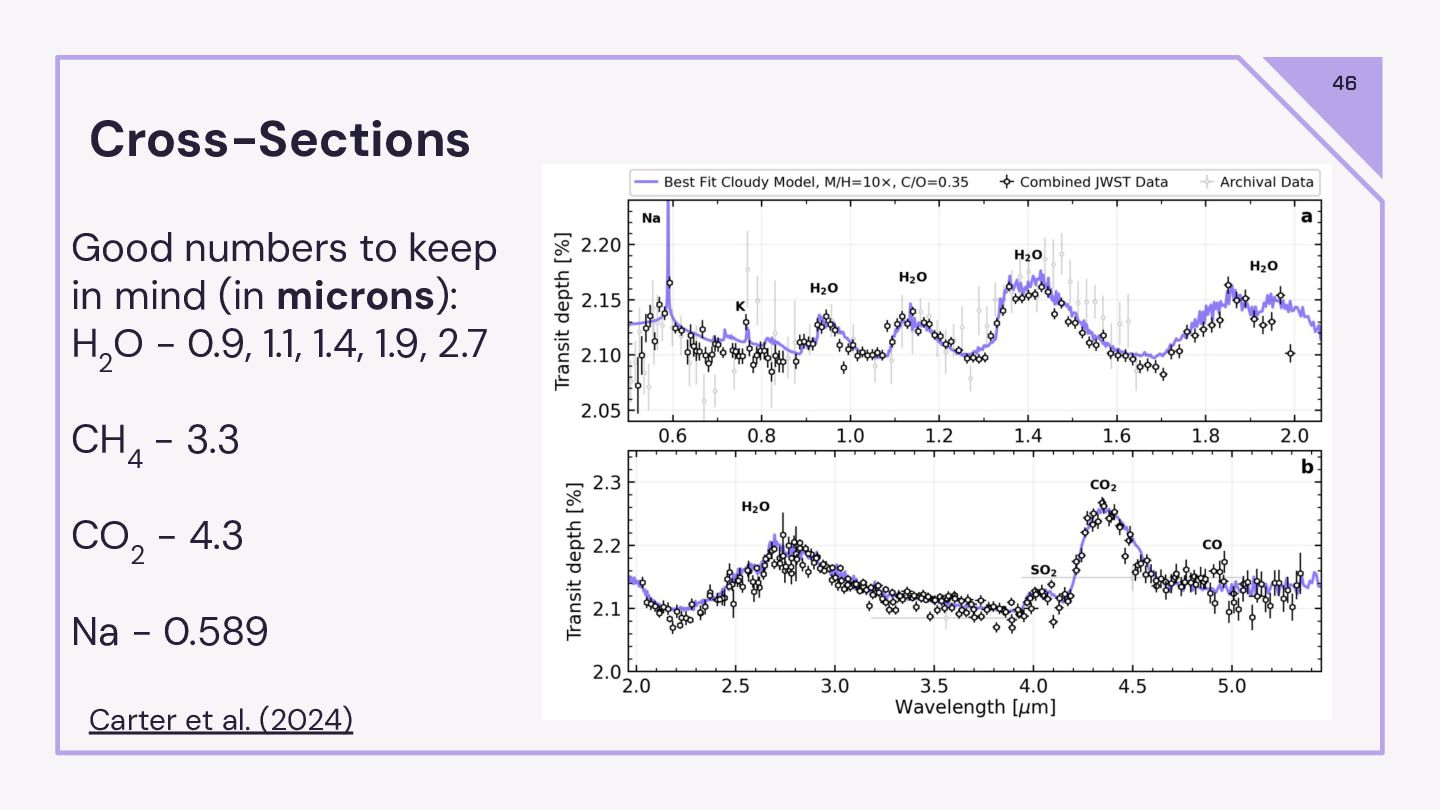
  29. Cross-Sections 46 Good numbers to keep in mind (in microns):

    H 2 O - 0.9, 1.1, 1.4, 1.9, 2.7 CH 4 - 3.3 CO 2 - 4.3 Na - 0.589 Carter et al. (2024)
  30. Side bar: Measuring Absorption Cross-Sections 47 The cross-sectional models we

    use to fit our transmission spectra must come from somewhere. Usually these models are a combination of laboratory and theoretical cross-sections. Why do we need both?
  31. Side bar: Measuring Absorption Cross-Sections 48 Laboratory-measured cross-sections are limited.

    Every time a cross-section in measured, you have to assume a given temperature and pressure in your experiment.
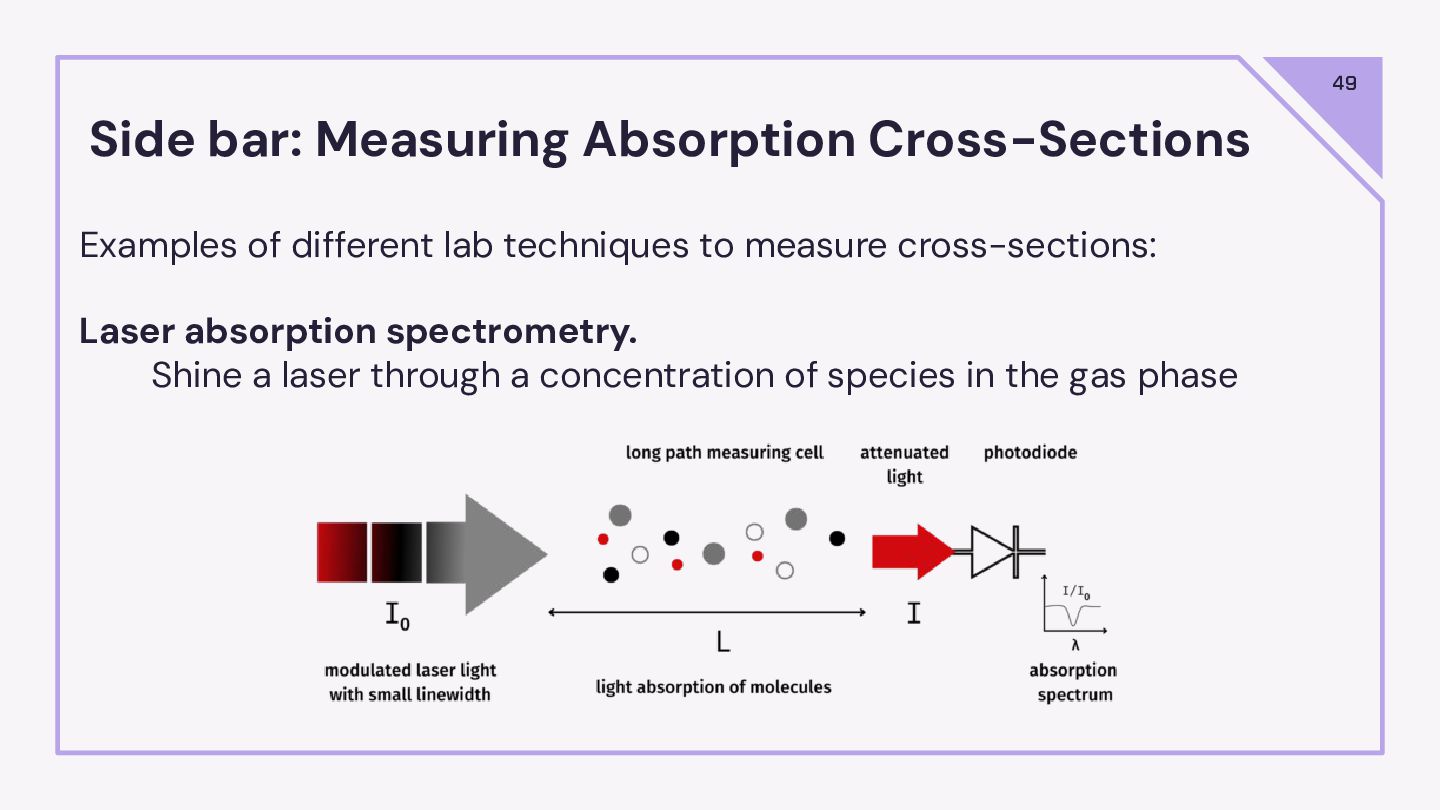
  32. Side bar: Measuring Absorption Cross-Sections 49 Examples of different lab

    techniques to measure cross-sections: Laser absorption spectrometry. Shine a laser through a concentration of species in the gas phase
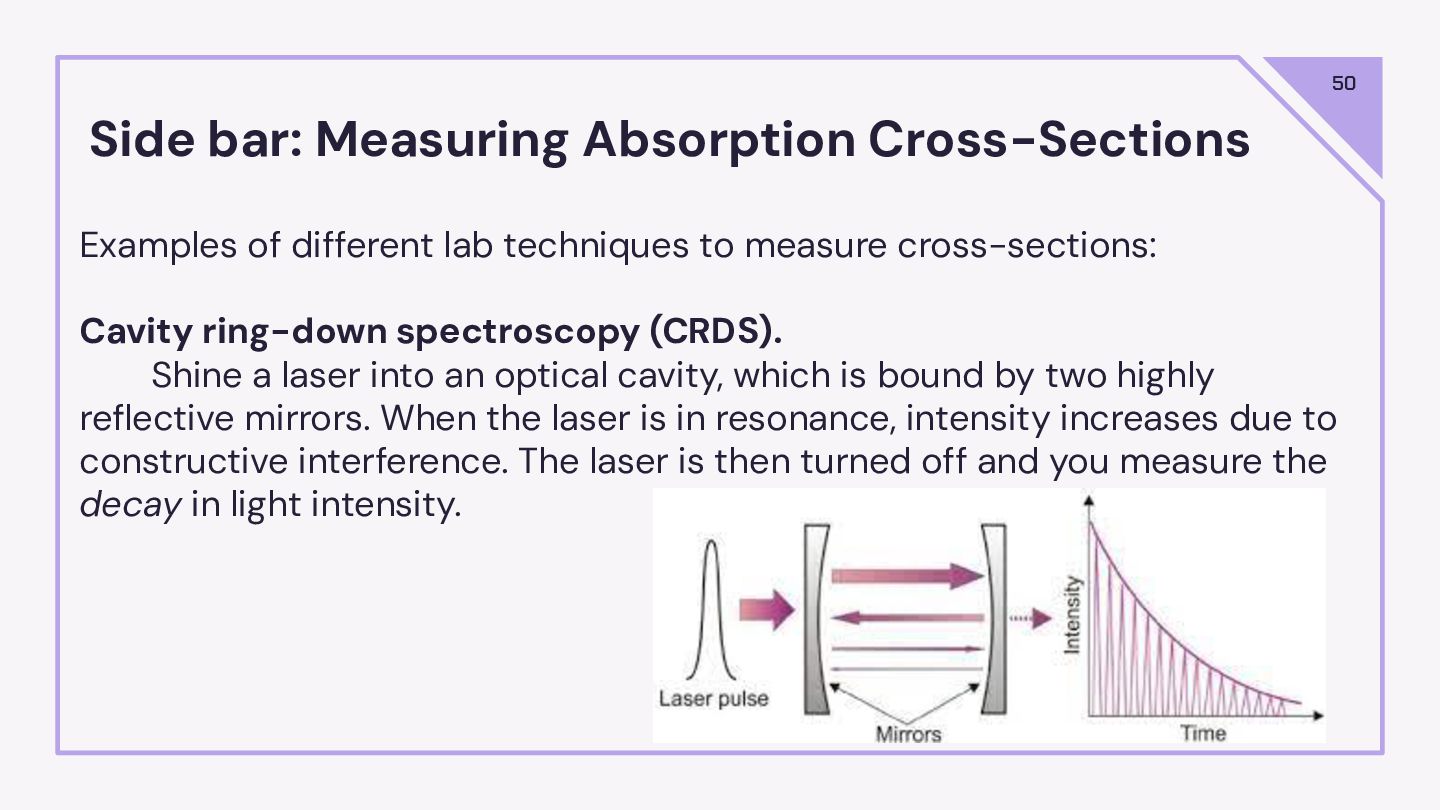
  33. Side bar: Measuring Absorption Cross-Sections 50 Examples of different lab

    techniques to measure cross-sections: Cavity ring-down spectroscopy (CRDS). Shine a laser into an optical cavity, which is bound by two highly reflective mirrors. When the laser is in resonance, intensity increases due to constructive interference. The laser is then turned off and you measure the decay in light intensity.
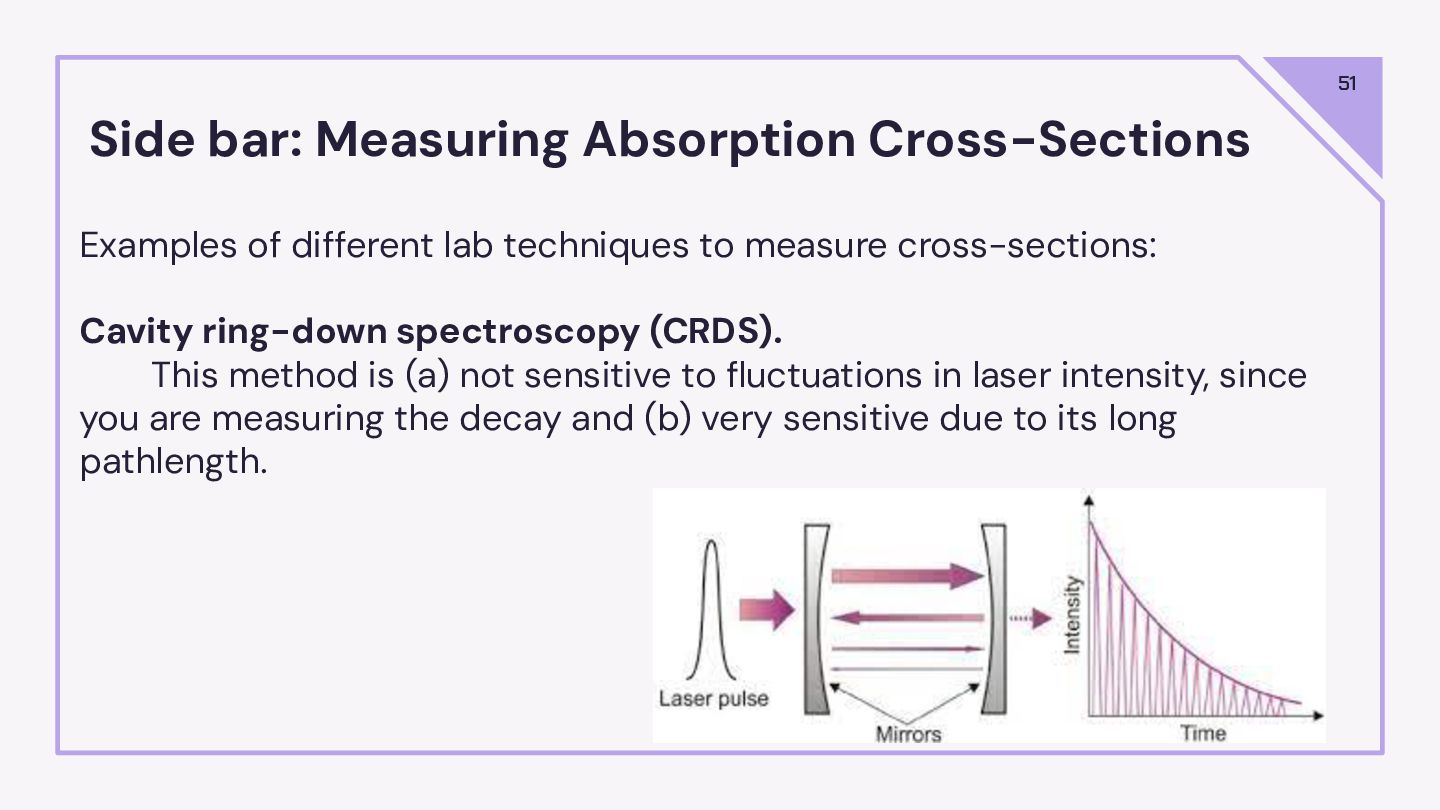
  34. Side bar: Measuring Absorption Cross-Sections 51 Examples of different lab

    techniques to measure cross-sections: Cavity ring-down spectroscopy (CRDS). This method is (a) not sensitive to fluctuations in laser intensity, since you are measuring the decay and (b) very sensitive due to its long pathlength.
  35. Side bar: Measuring Absorption Cross-Sections 52 Available cross-section libraries. •

    HITRAN - based on laboratory experiments. Good for Earth-like temperatures • HITEMP - higher temperature version of HITRAN • ExoMol - covers a range of temperatures, but specifically focuses on hot astrophysical environments Tennyson et al. (2016); Chubb et al. (2021); Gharib-Nezhad et al. (2021)
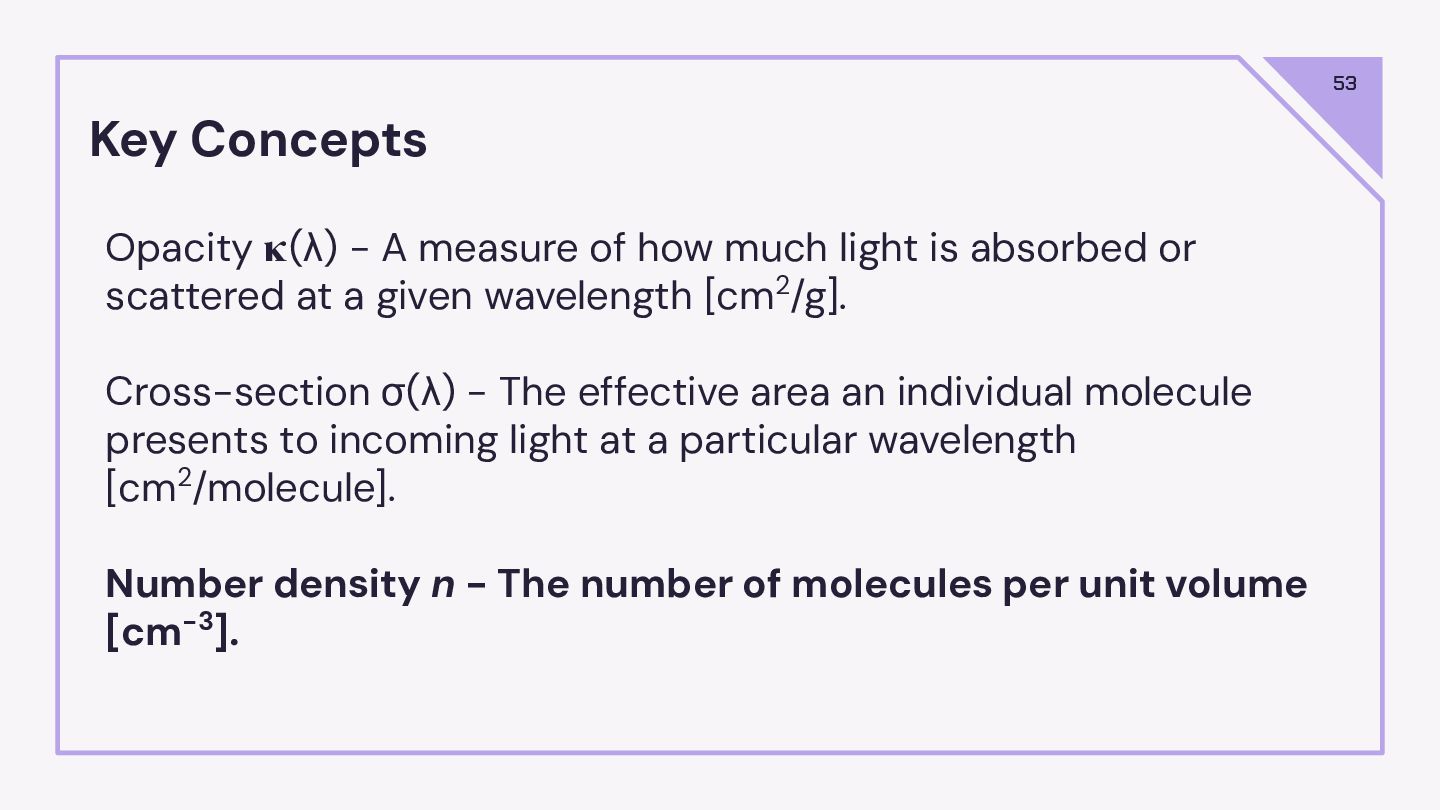
  36. Key Concepts 53 Opacity 𝛋(λ) - A measure of how

    much light is absorbed or scattered at a given wavelength [cm2/g]. Cross-section σ(λ) - The effective area an individual molecule presents to incoming light at a particular wavelength [cm2/molecule]. Number density n - The number of molecules per unit volume [cm-3].
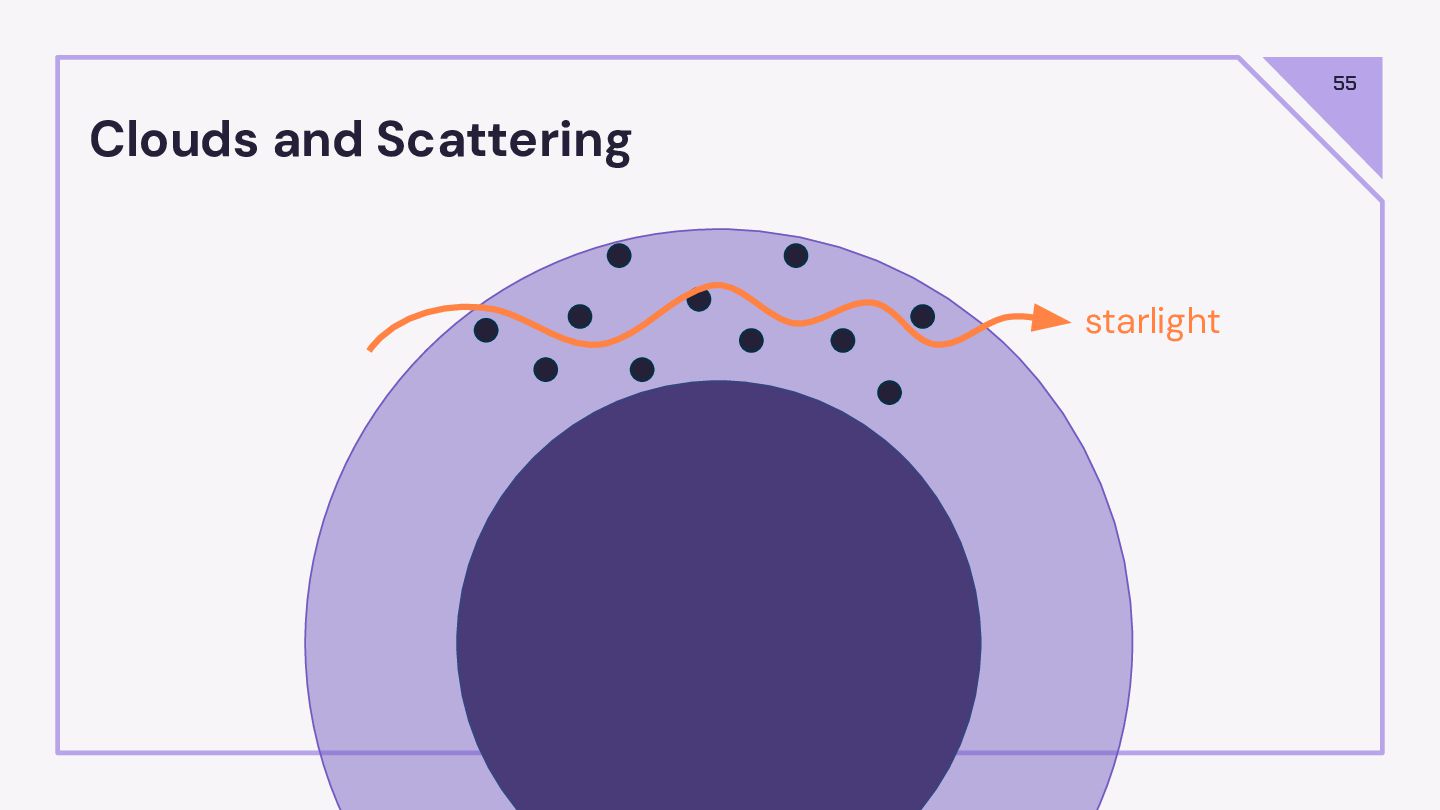
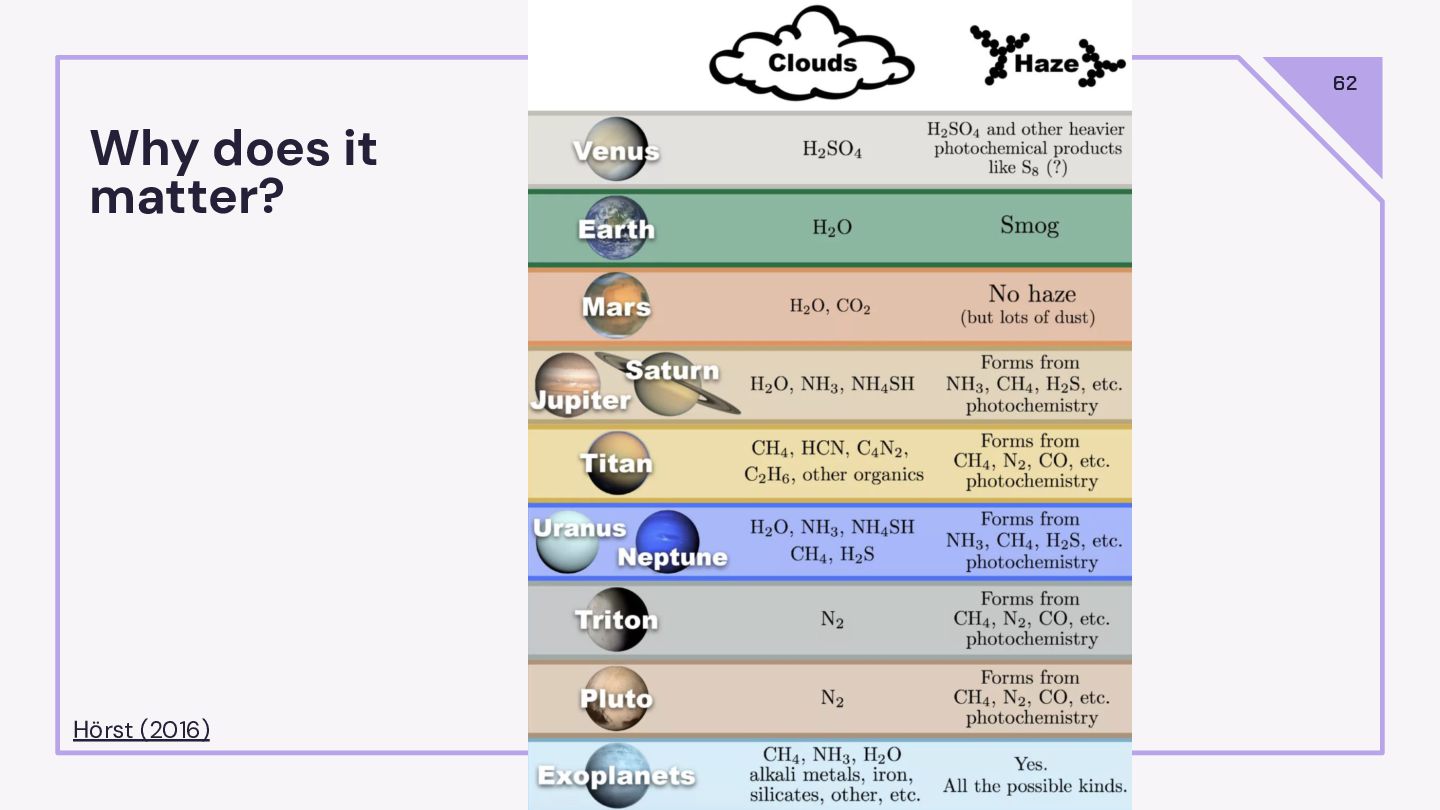
  37. Aerosols, Clouds, and Hazes 58 Aerosols are particles suspended in

    a gas and includes clouds and hazes. Aerosols is the most generalized terminology.
  38. Aerosols, Clouds, and Hazes 59 Aerosols are particles suspended in

    a gas and includes clouds and hazes. Aerosols is the most generalized terminology. A cloud - a visible mass of liquid and/or solid particles suspended in an atmosphere that form from the condensation of atmospheric gases. Hörst (2016)
  39. Aerosols, Clouds, and Hazes 60 Aerosols are particles suspended in

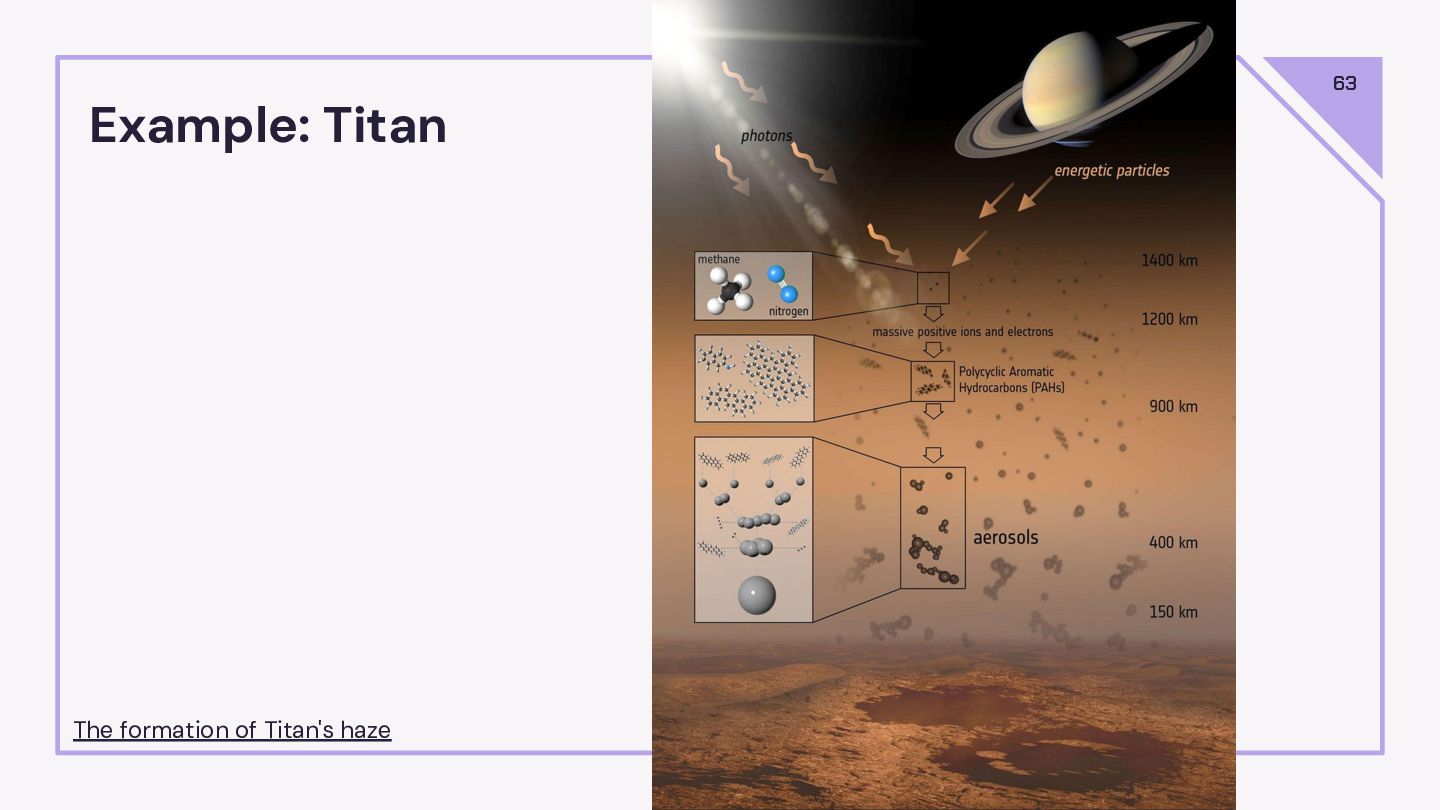
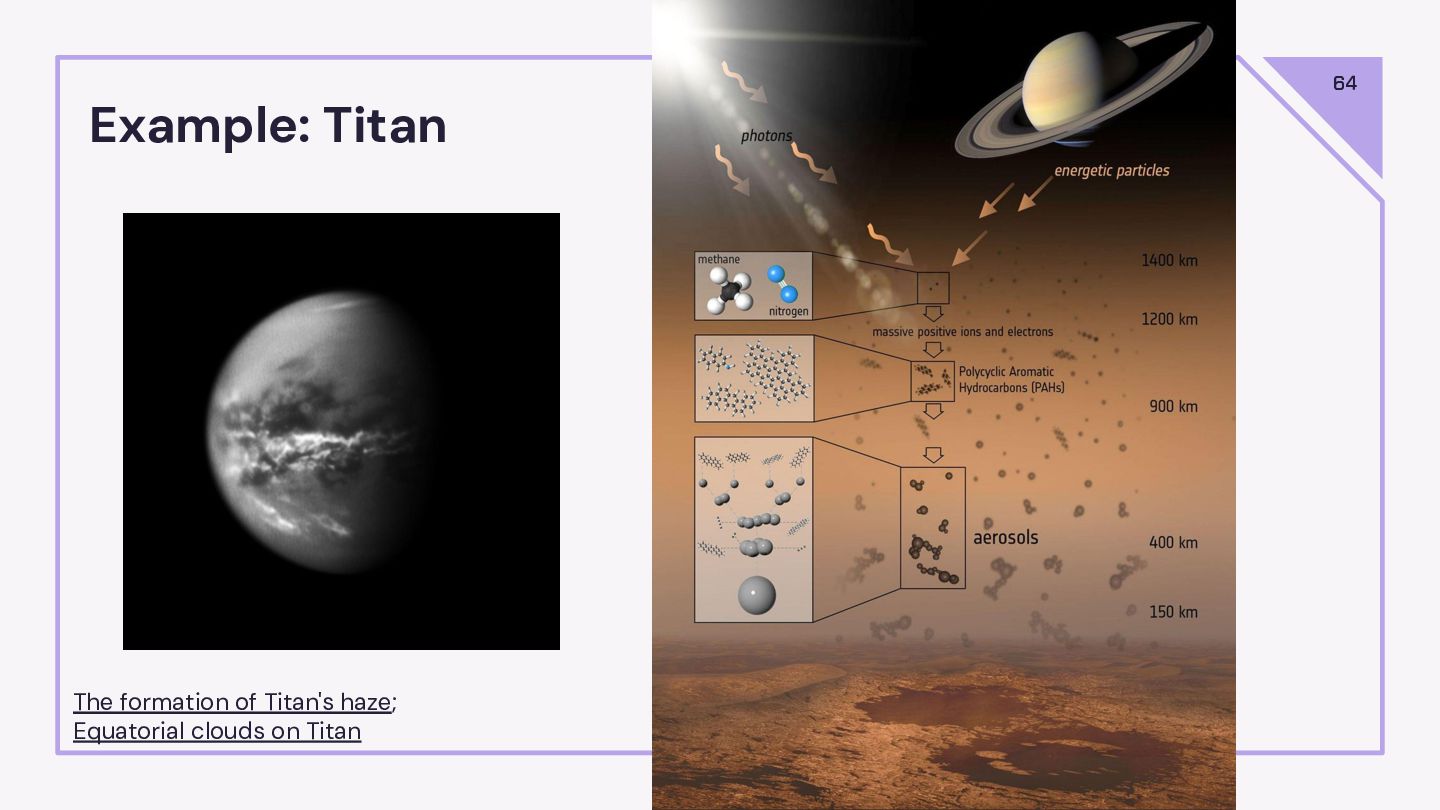
    a gas and includes clouds and hazes. Aerosols is the most generalized terminology. A cloud - a visible mass of liquid and/or solid particles suspended in an atmosphere that form from the condensation of atmospheric gases. A haze - particles produced from chemistry in the atmosphere that results in the formation of involatile solids. Hazes do not go through cycles of evaporation and condensation. Hörst (2016)
  40. Aerosols, Clouds, and Hazes (and dust) 61 Dust - solid

    particles that are suspended in the atmosphere that do not originate in the atmosphere. This is predominantly relevant for solar system bodies. Hörst (2016)
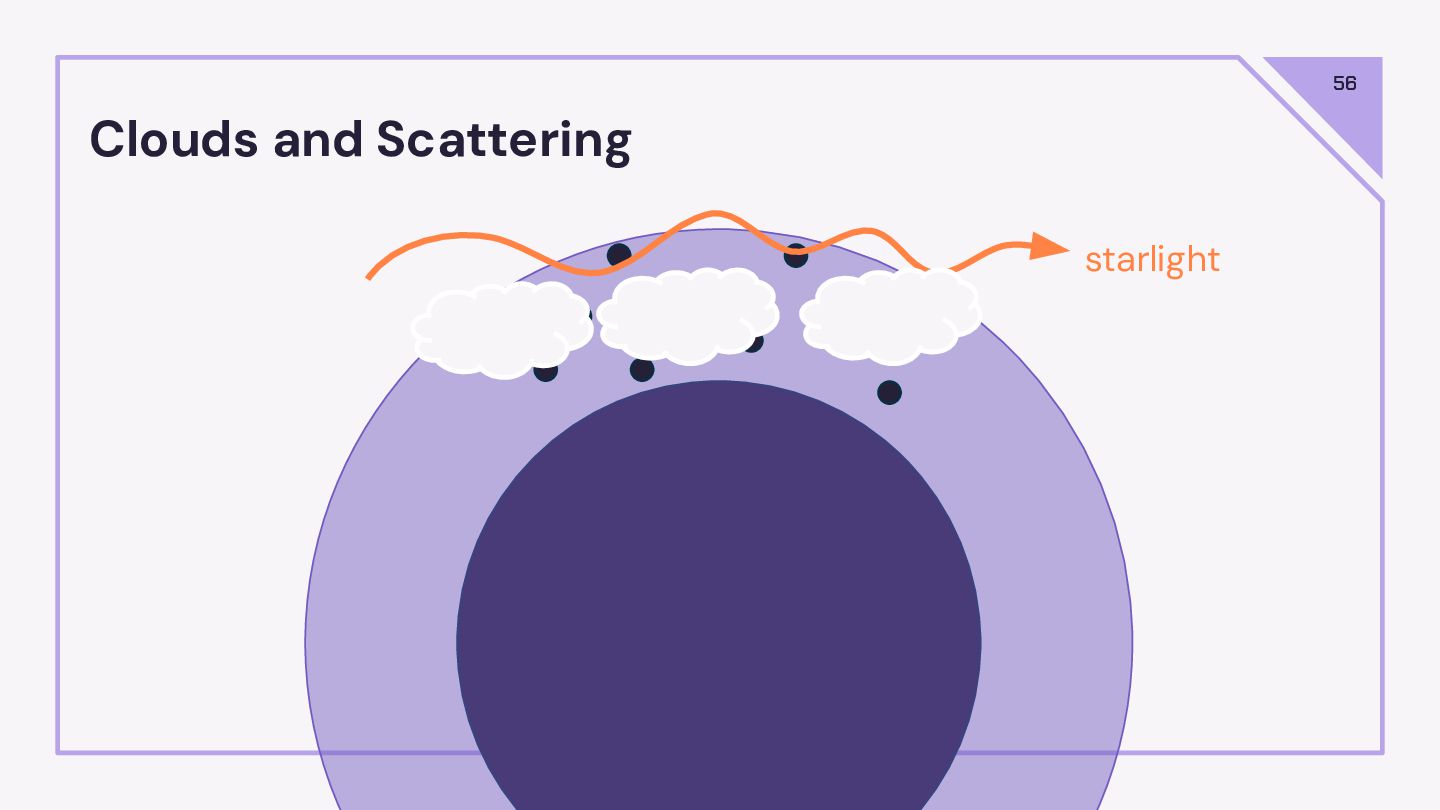
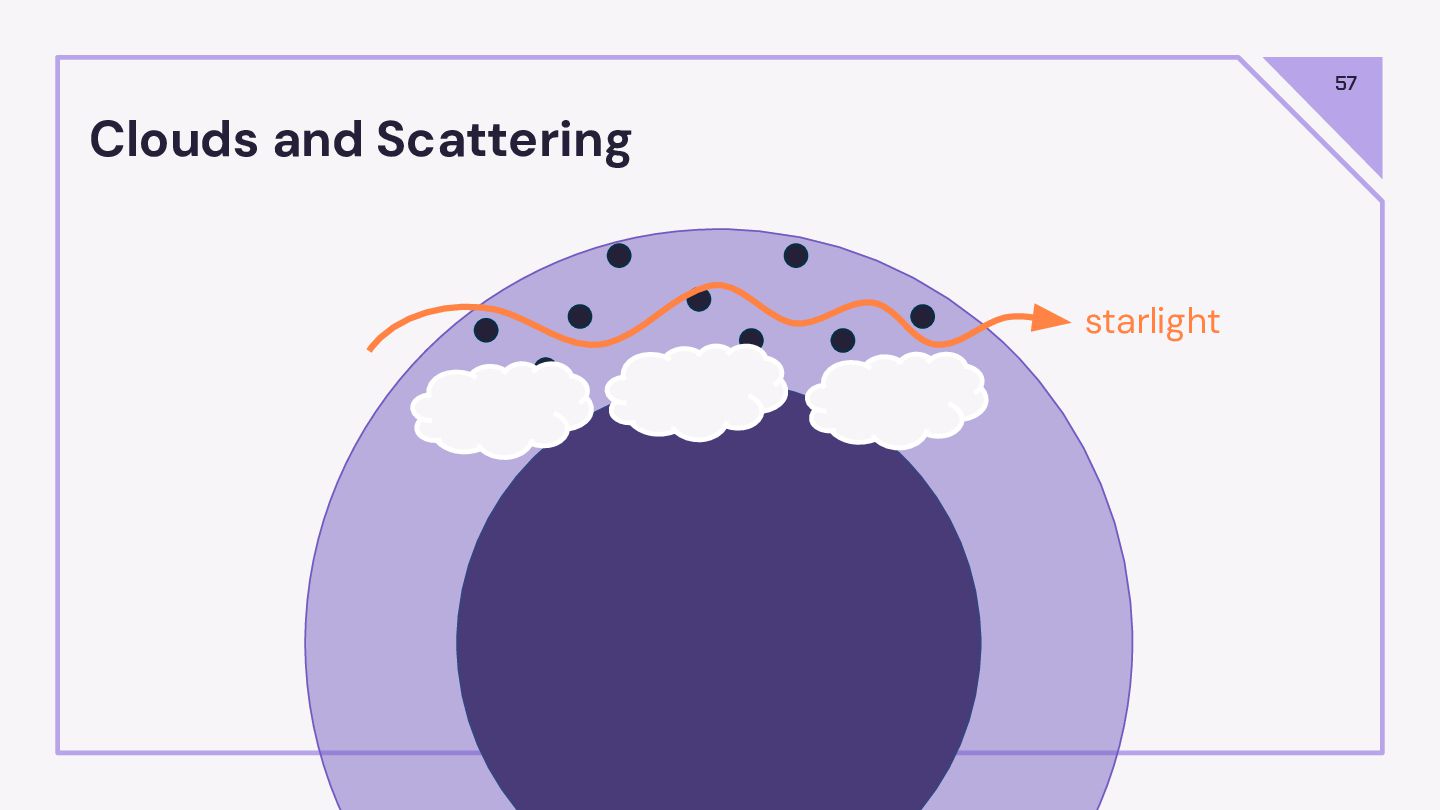
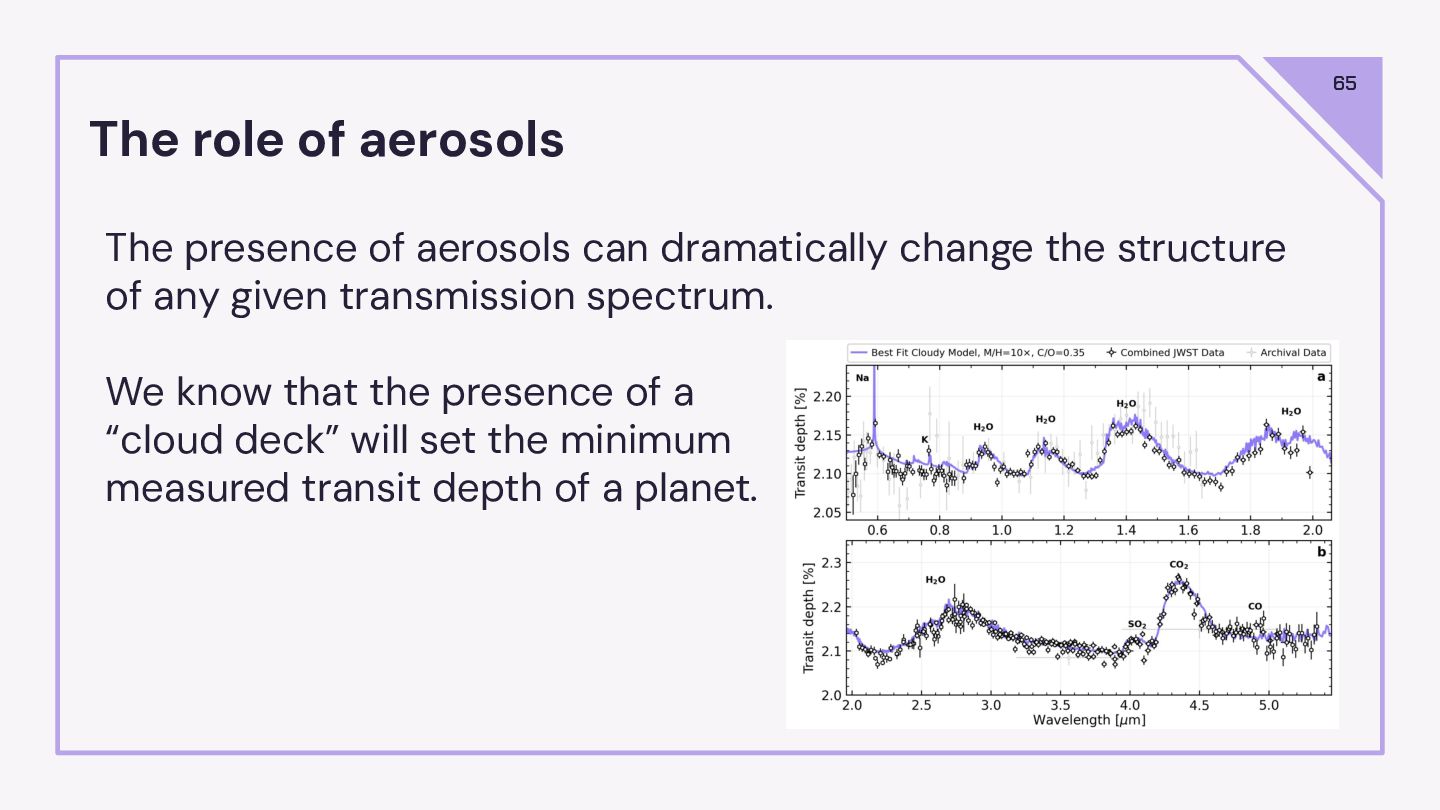
  41. The role of aerosols 65 The presence of aerosols can

    dramatically change the structure of any given transmission spectrum. We know that the presence of a “cloud deck” will set the minimum measured transit depth of a planet.
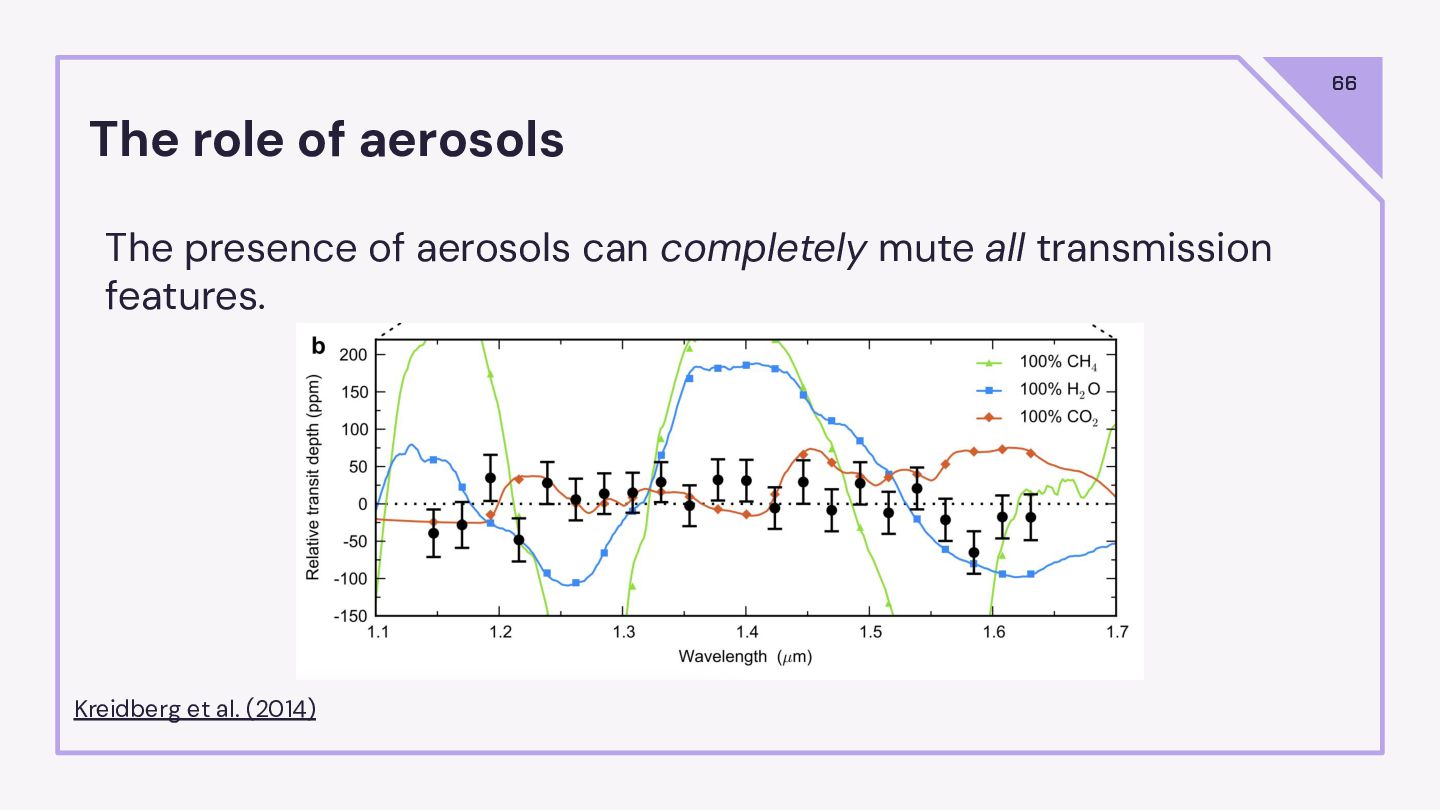
  42. The role of aerosols 66 The presence of aerosols can

    completely mute all transmission features. Kreidberg et al. (2014)
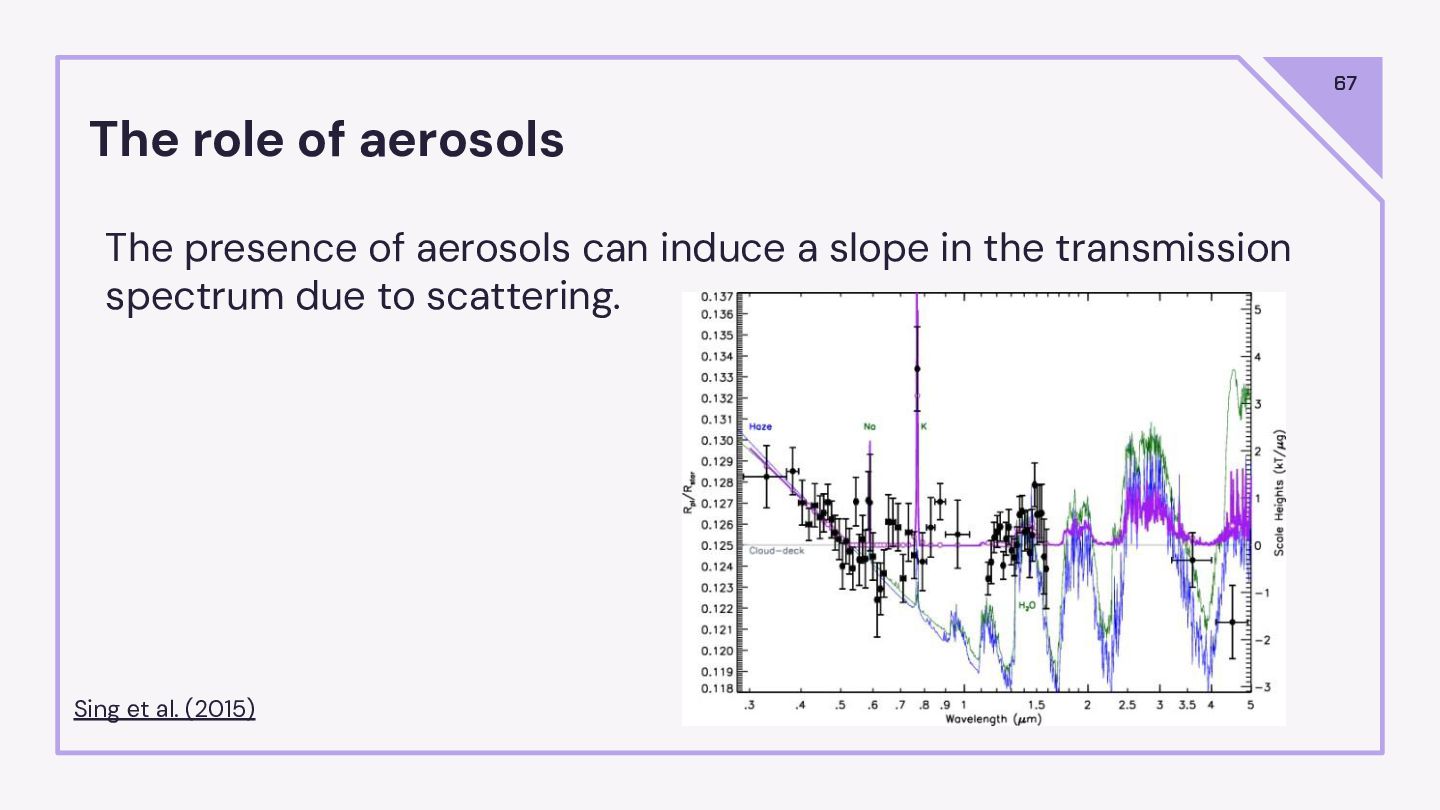
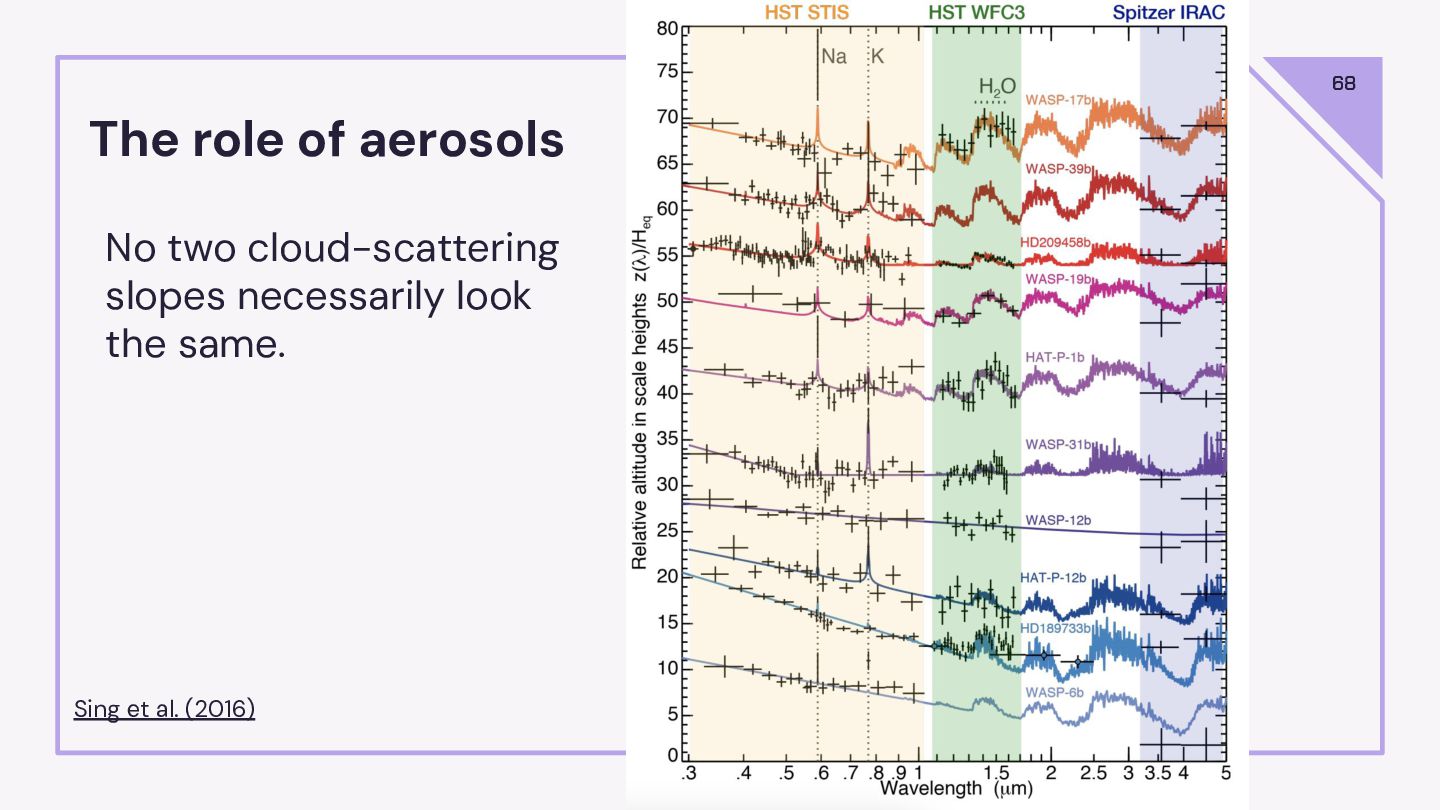
  43. The role of aerosols 67 The presence of aerosols can

    induce a slope in the transmission spectrum due to scattering. Sing et al. (2015)
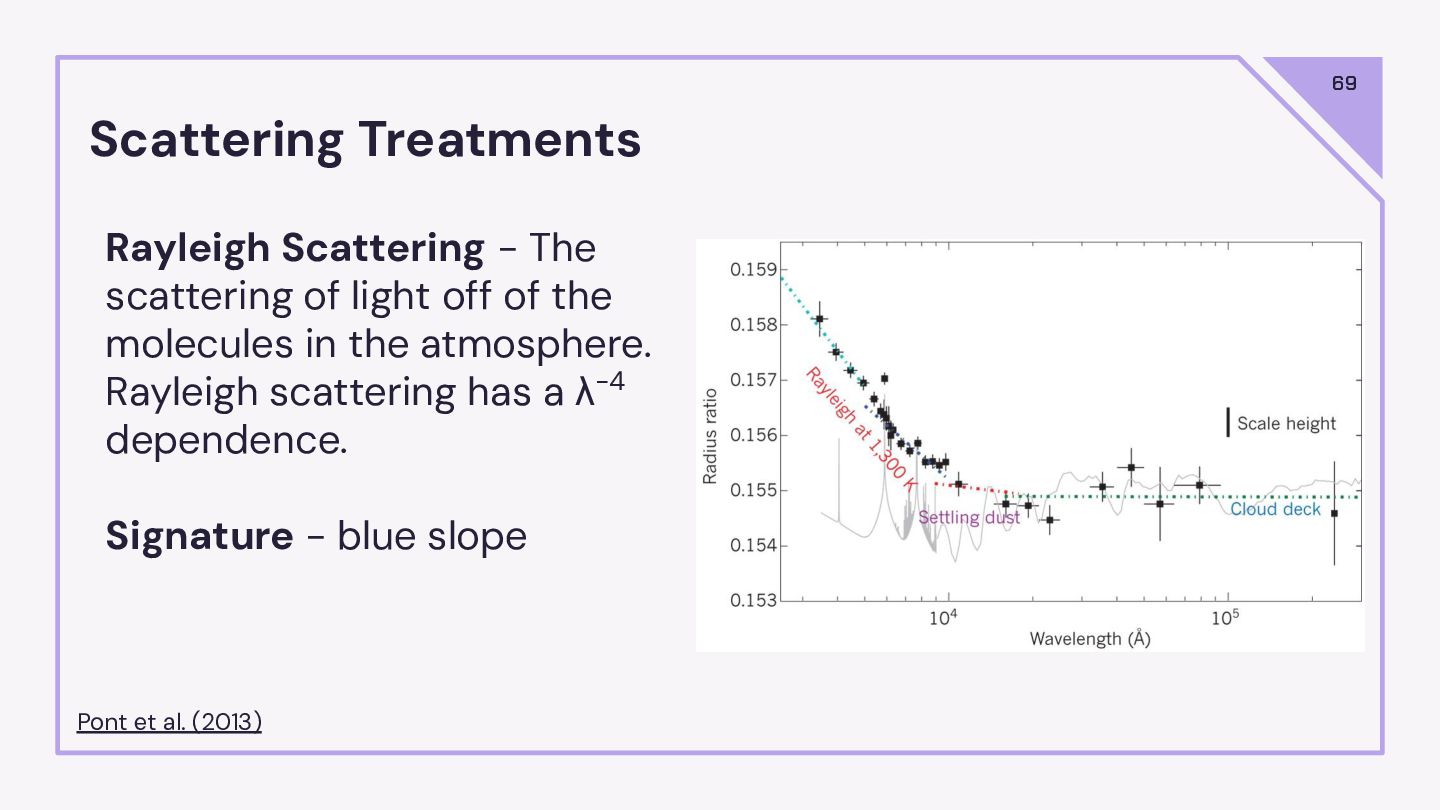
  44. Scattering Treatments 69 Rayleigh Scattering - The scattering of light

    off of the molecules in the atmosphere. Rayleigh scattering has a λ-4 dependence. Signature - blue slope Pont et al. (2013)
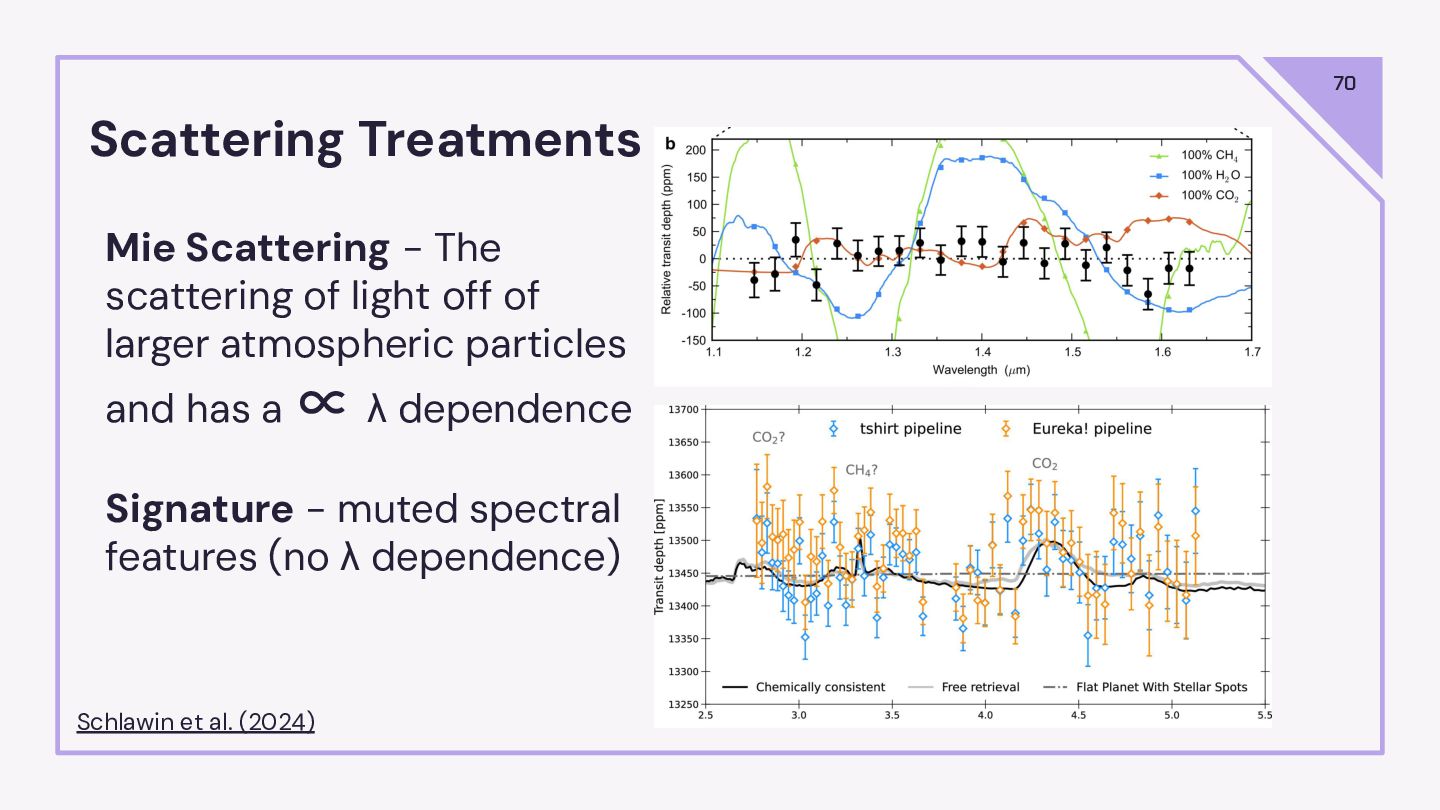
  45. Scattering Treatments 70 Mie Scattering - The scattering of light

    off of larger atmospheric particles and has a ∝ λ dependence Signature - muted spectral features (no λ dependence) Schlawin et al. (2024)
  46. Problems with Aerosols 71 The presence of aerosols (regardless of

    treatment) can cause many different degeneracies when trying to model exoplanet atmospheres. In a lot of ways, clouds/hazes will feel like a “band-aid” solution to weird features observed in transmission spectra.
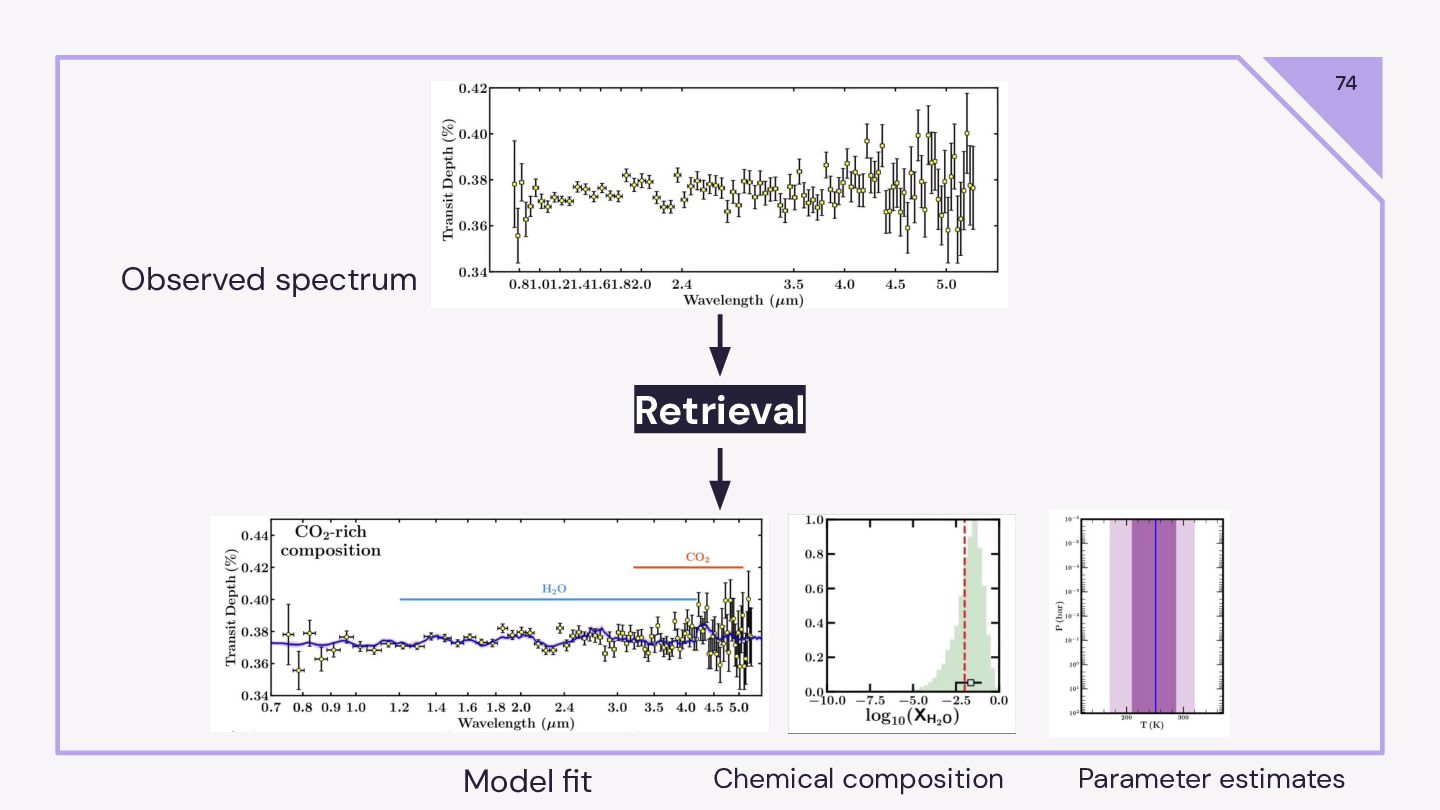
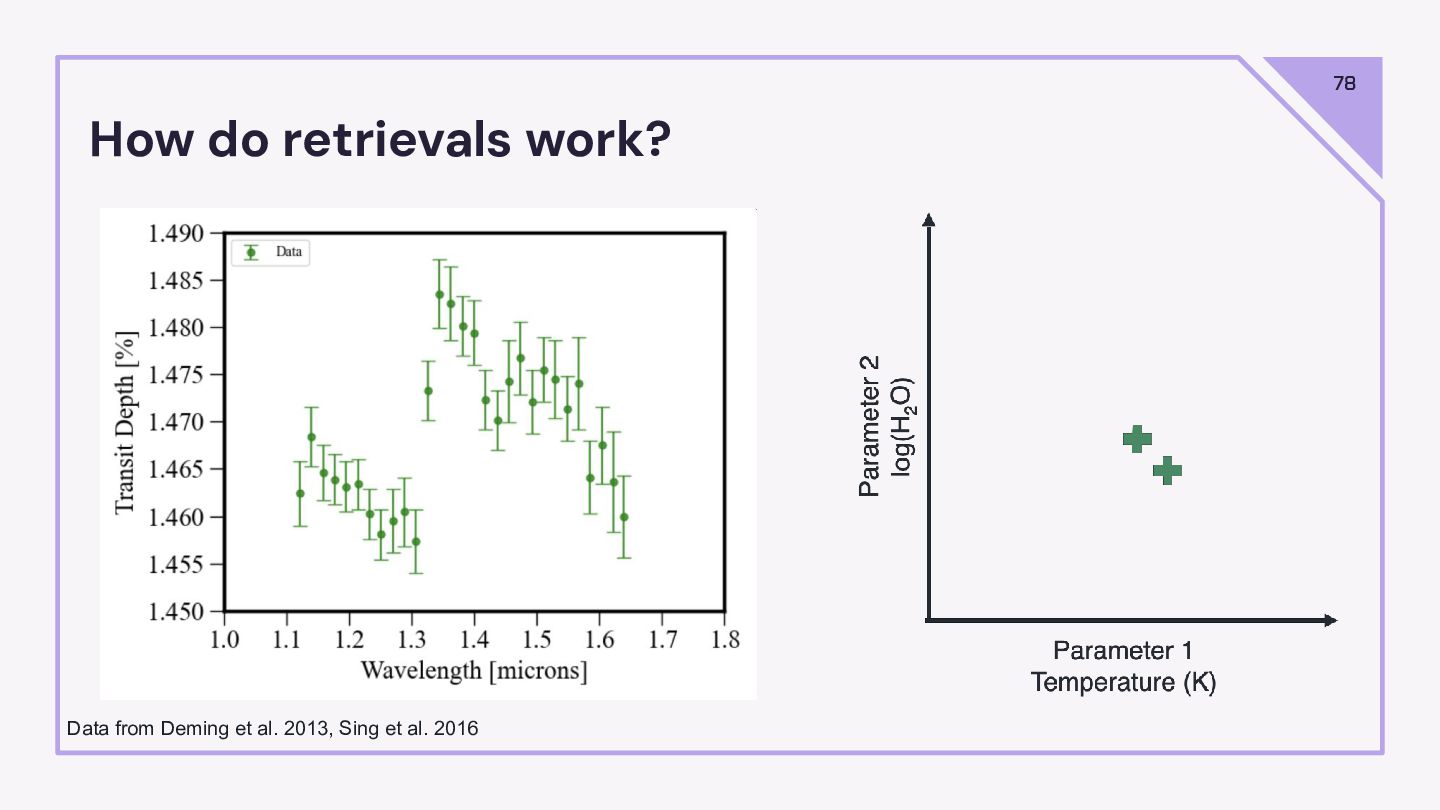
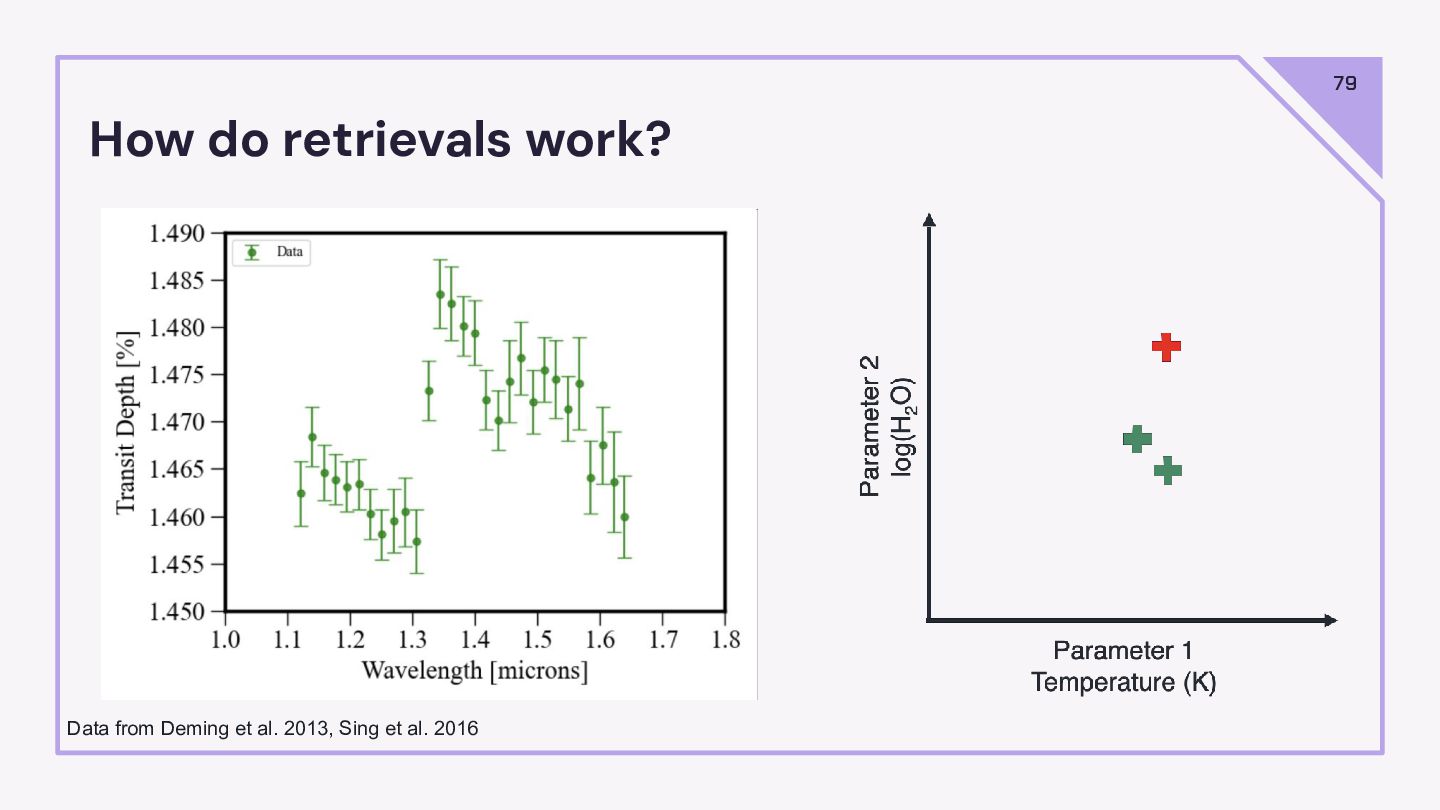
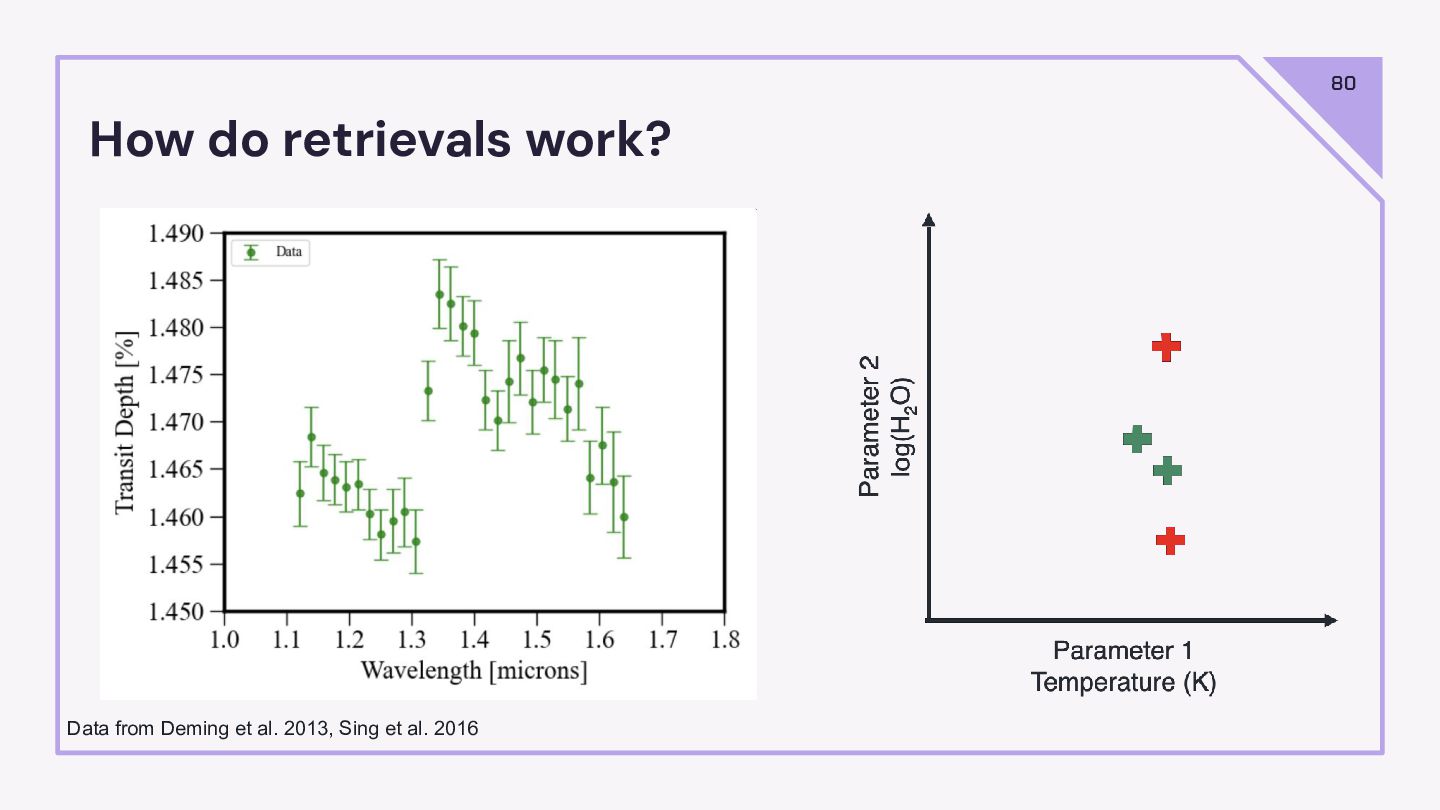
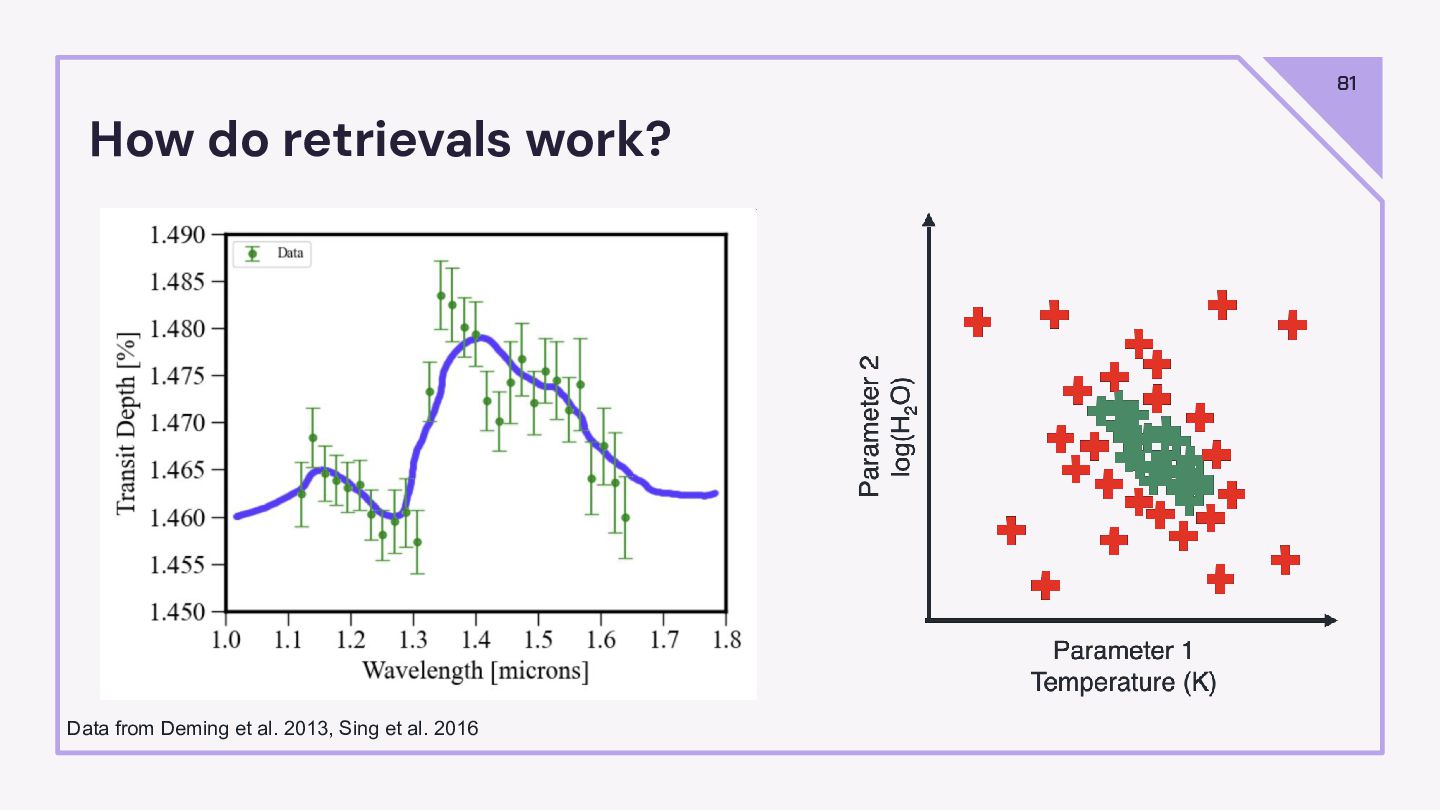
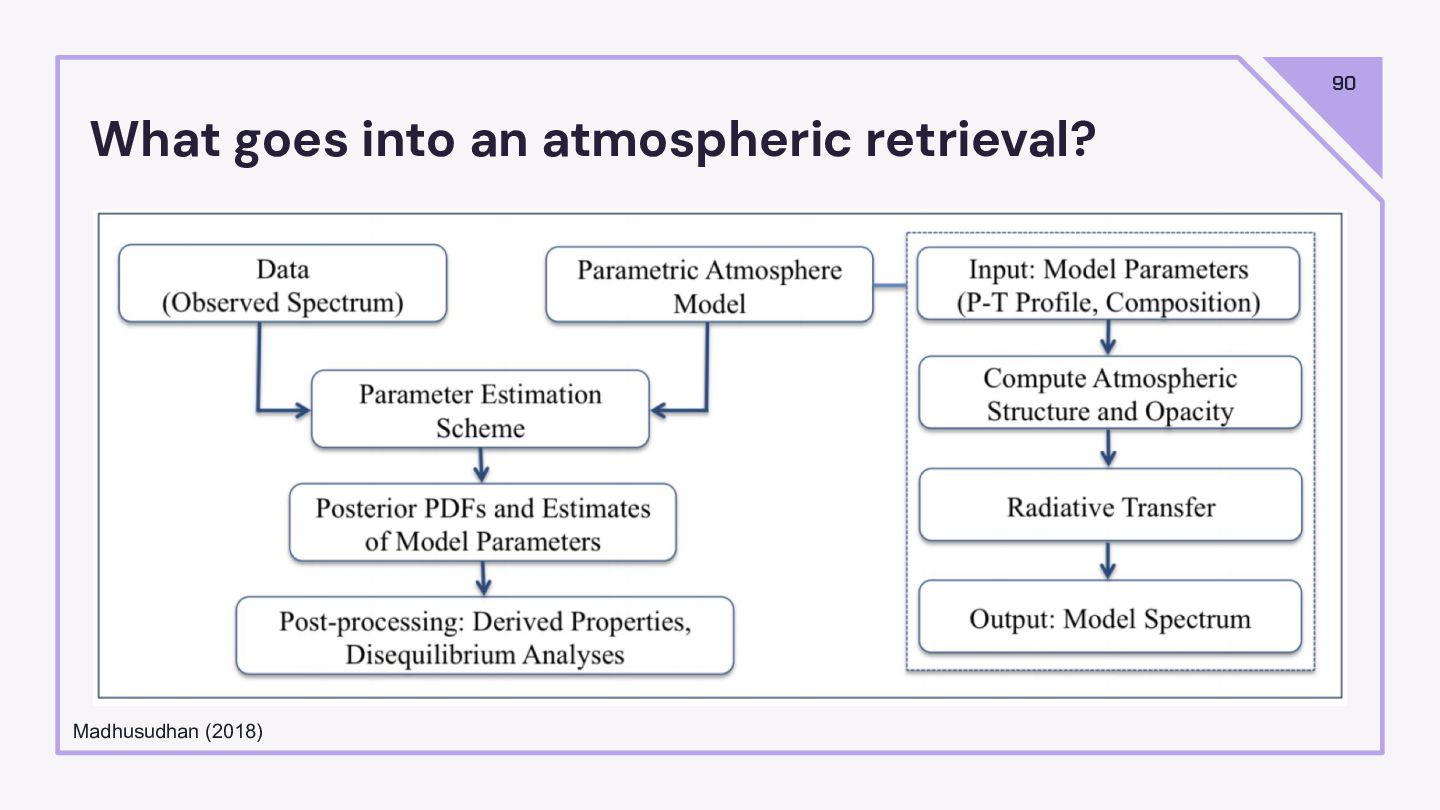
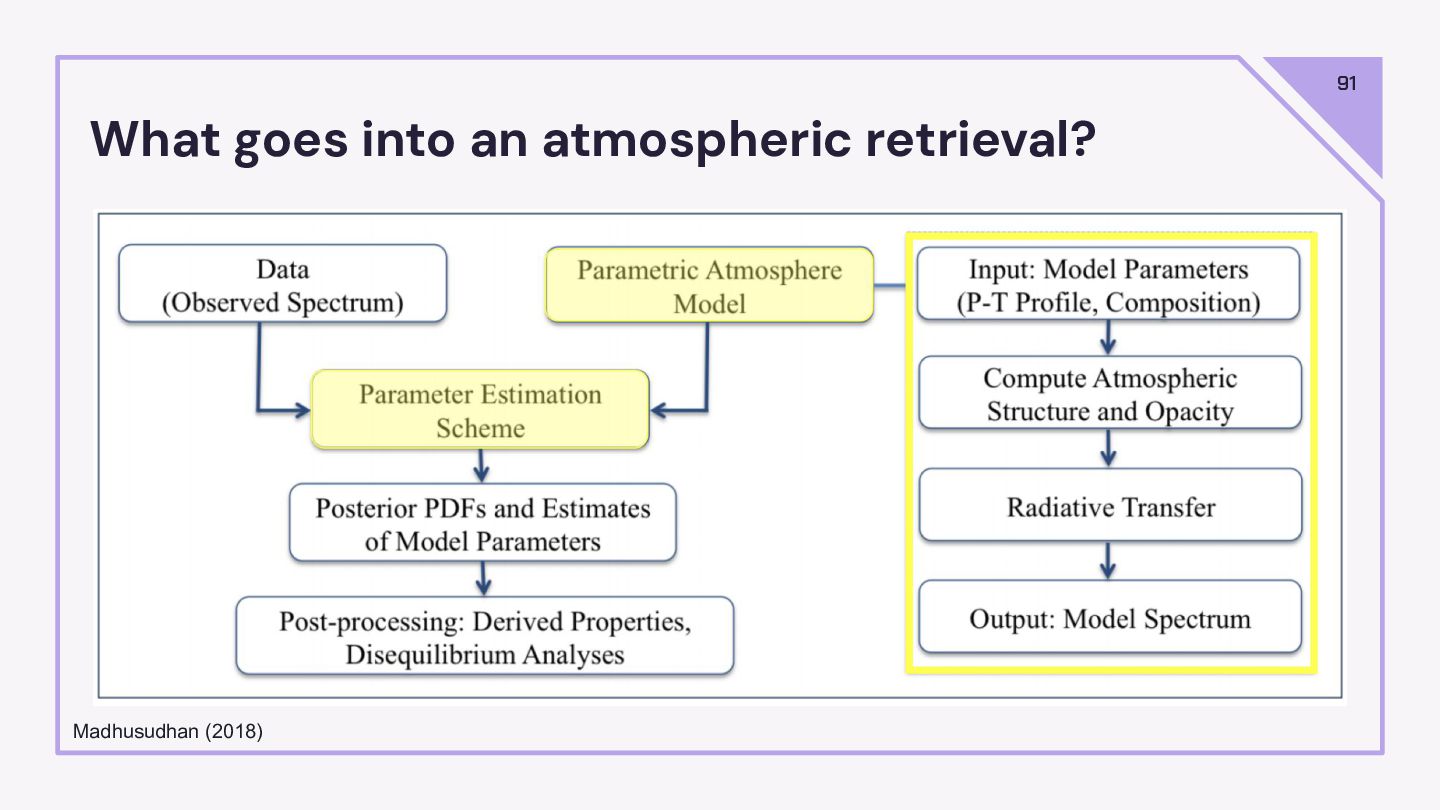
  47. What is a retrievals? 73 A retrieval is a procedure

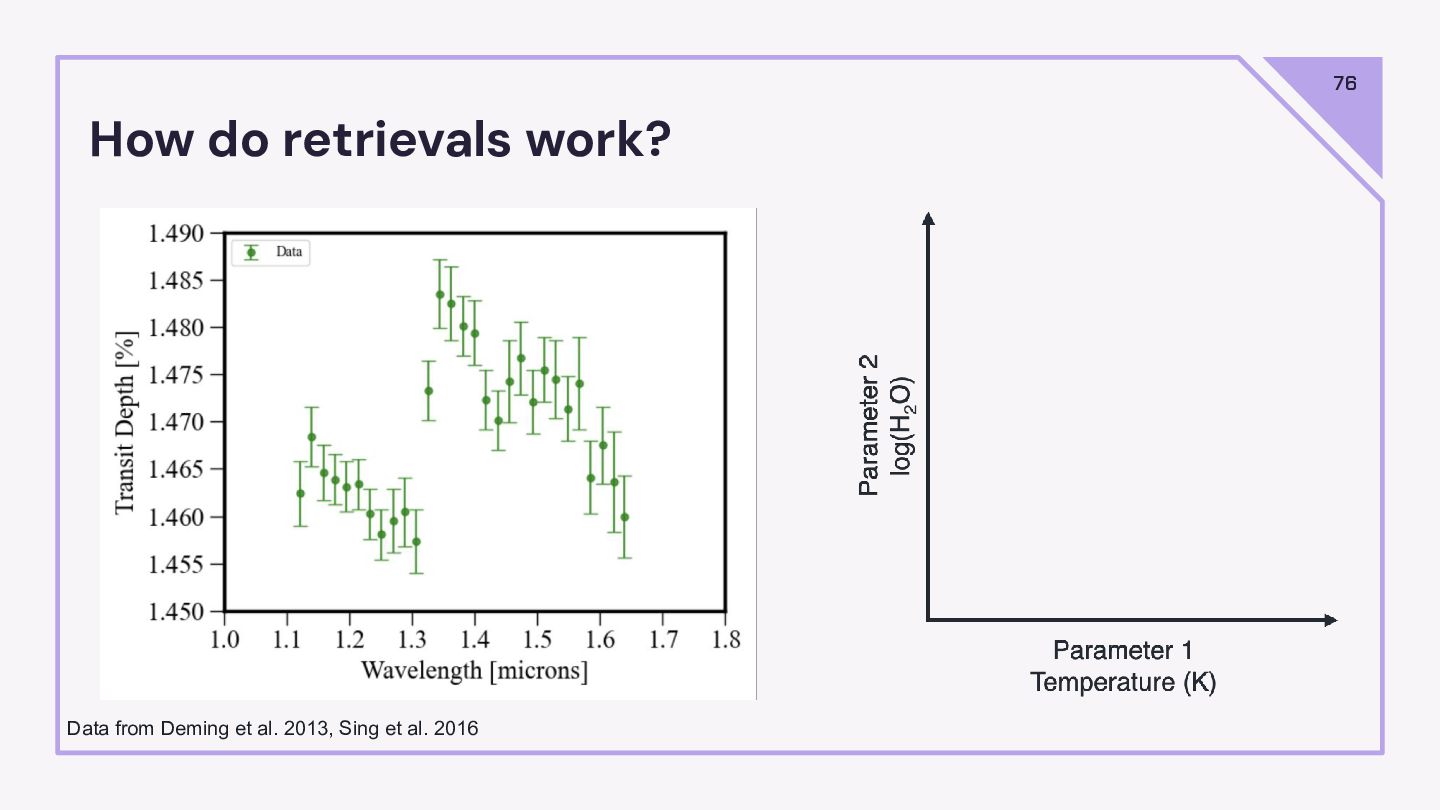
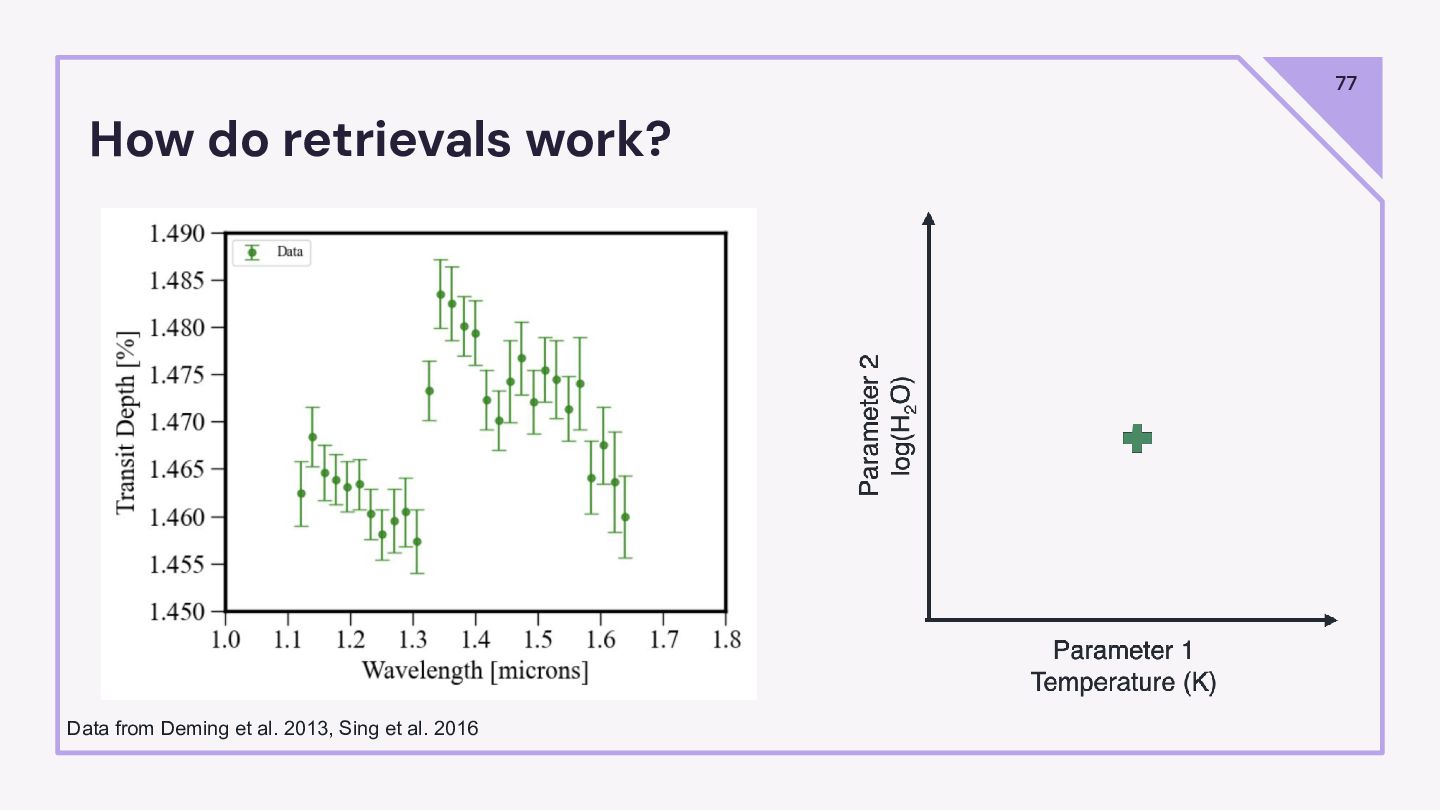
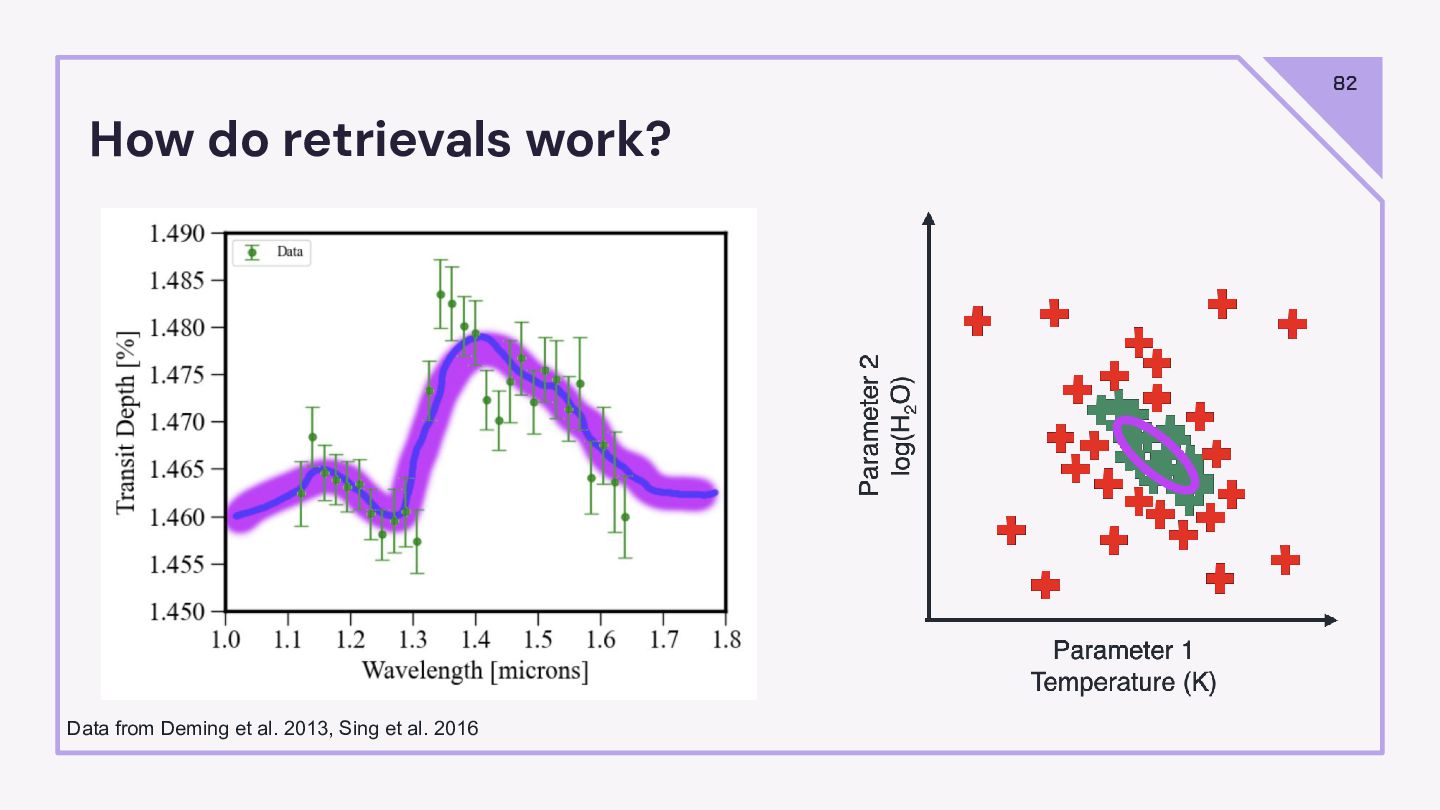
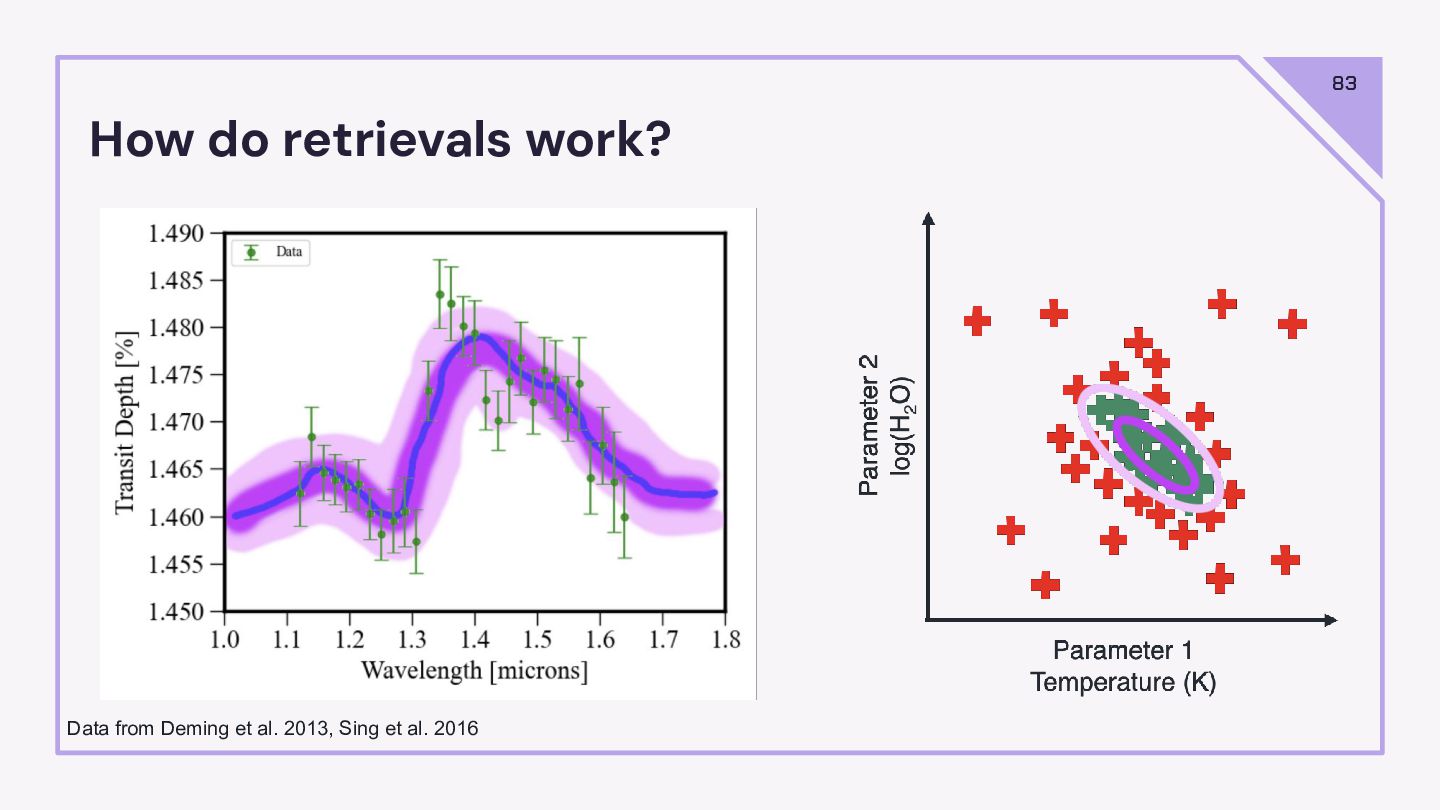
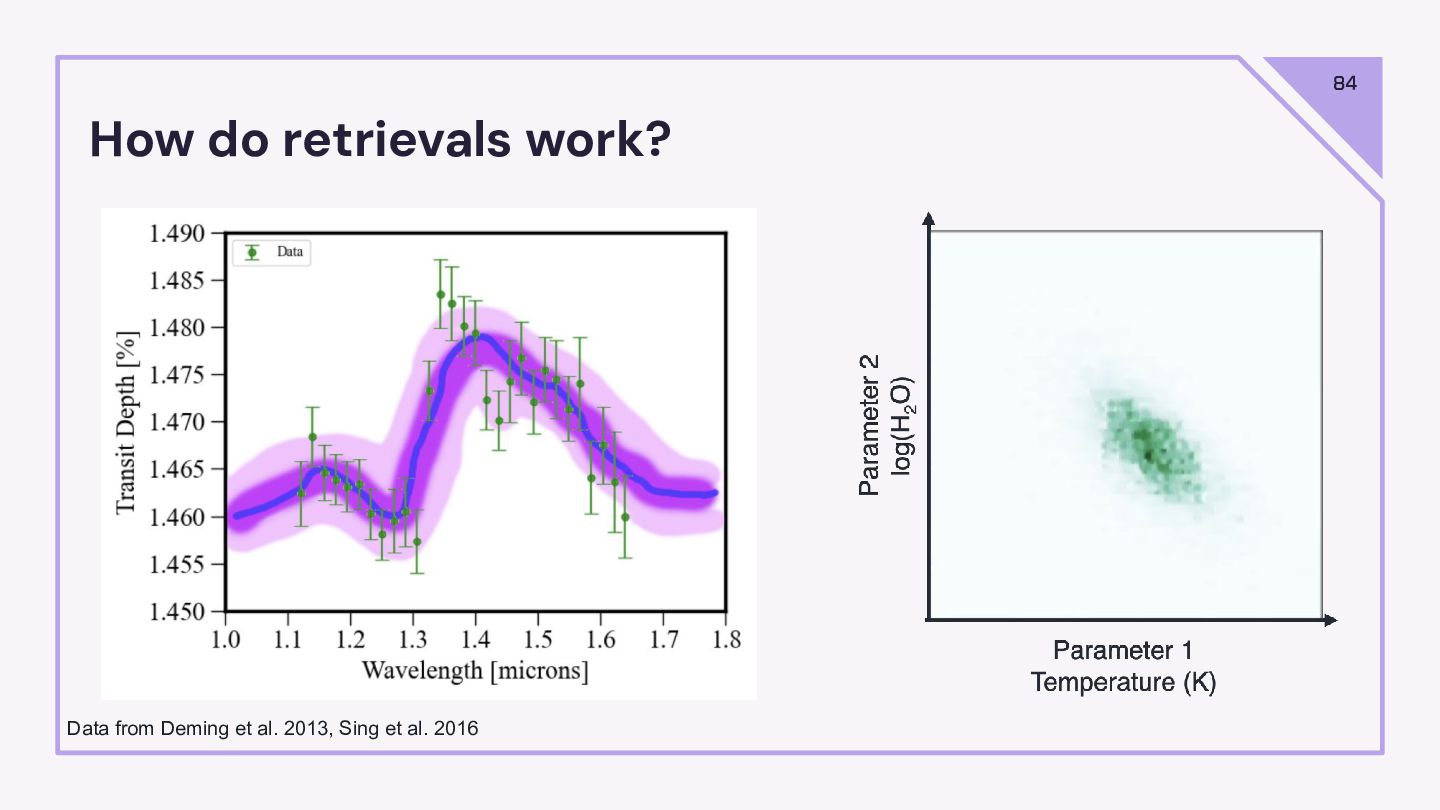
    to infer the atmospheric properties of an exoplanet from a set of observations. The inferred properties can include: chemical composition, vertical temperature structure, the presence of clouds/hazes, etc. Retrievals run a large ensemble of models to explore the parameter space that can best explain a set of observations.
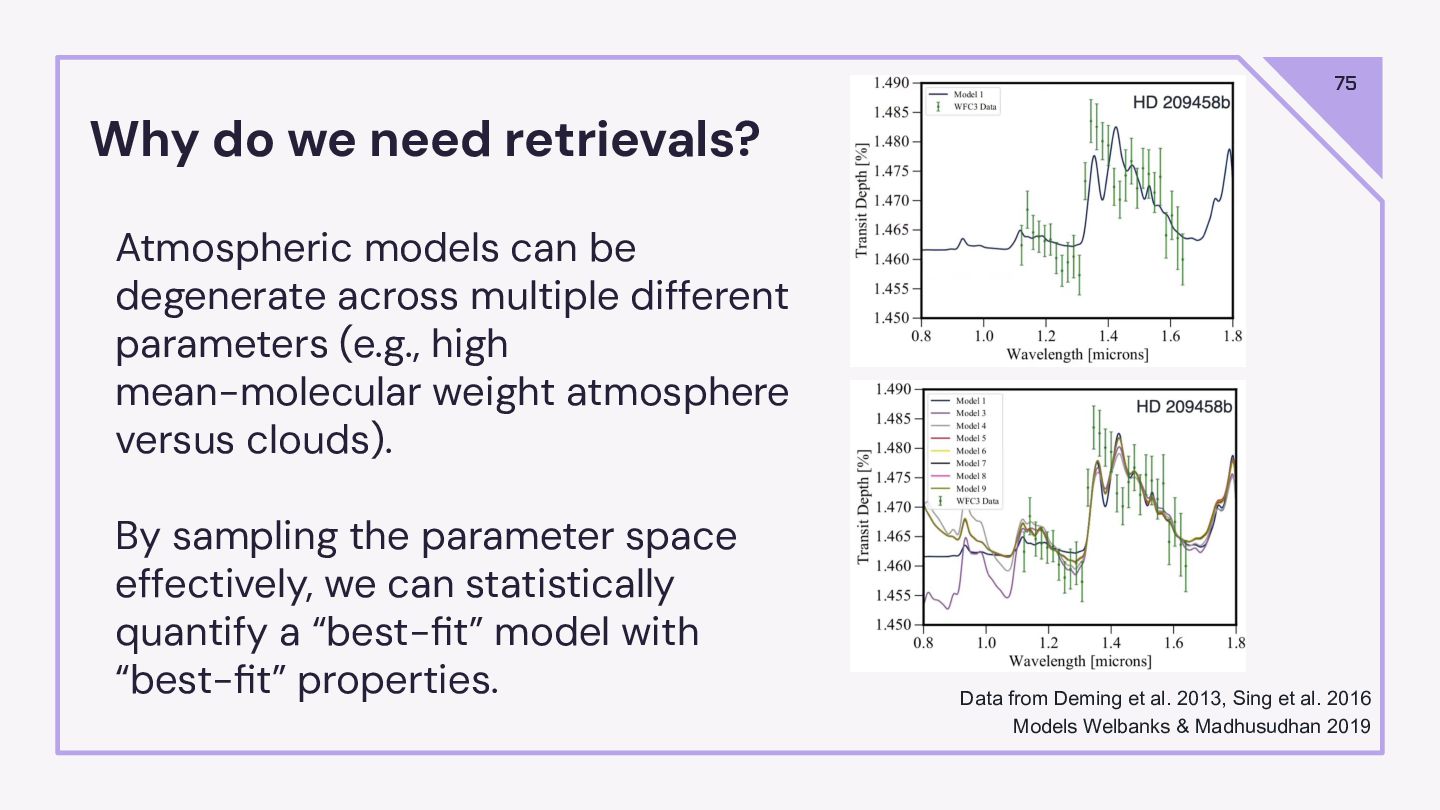
  48. Why do we need retrievals? 75 Atmospheric models can be

    degenerate across multiple different parameters (e.g., high mean-molecular weight atmosphere versus clouds). By sampling the parameter space effectively, we can statistically quantify a “best-fit” model with “best-fit” properties. Data from Deming et al. 2013, Sing et al. 2016 Models Welbanks & Madhusudhan 2019
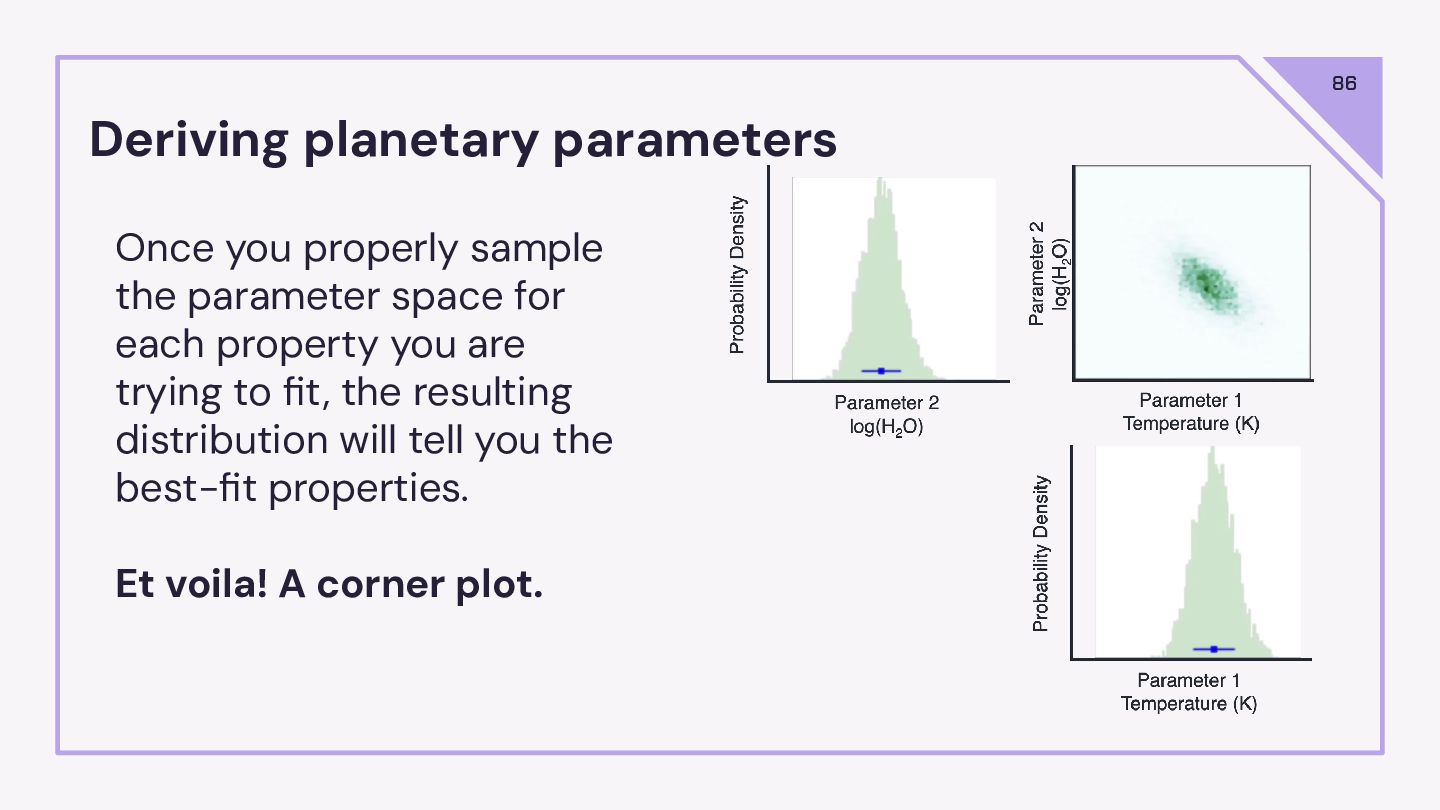
  49. Deriving planetary parameters 85 Once you properly sample the parameter

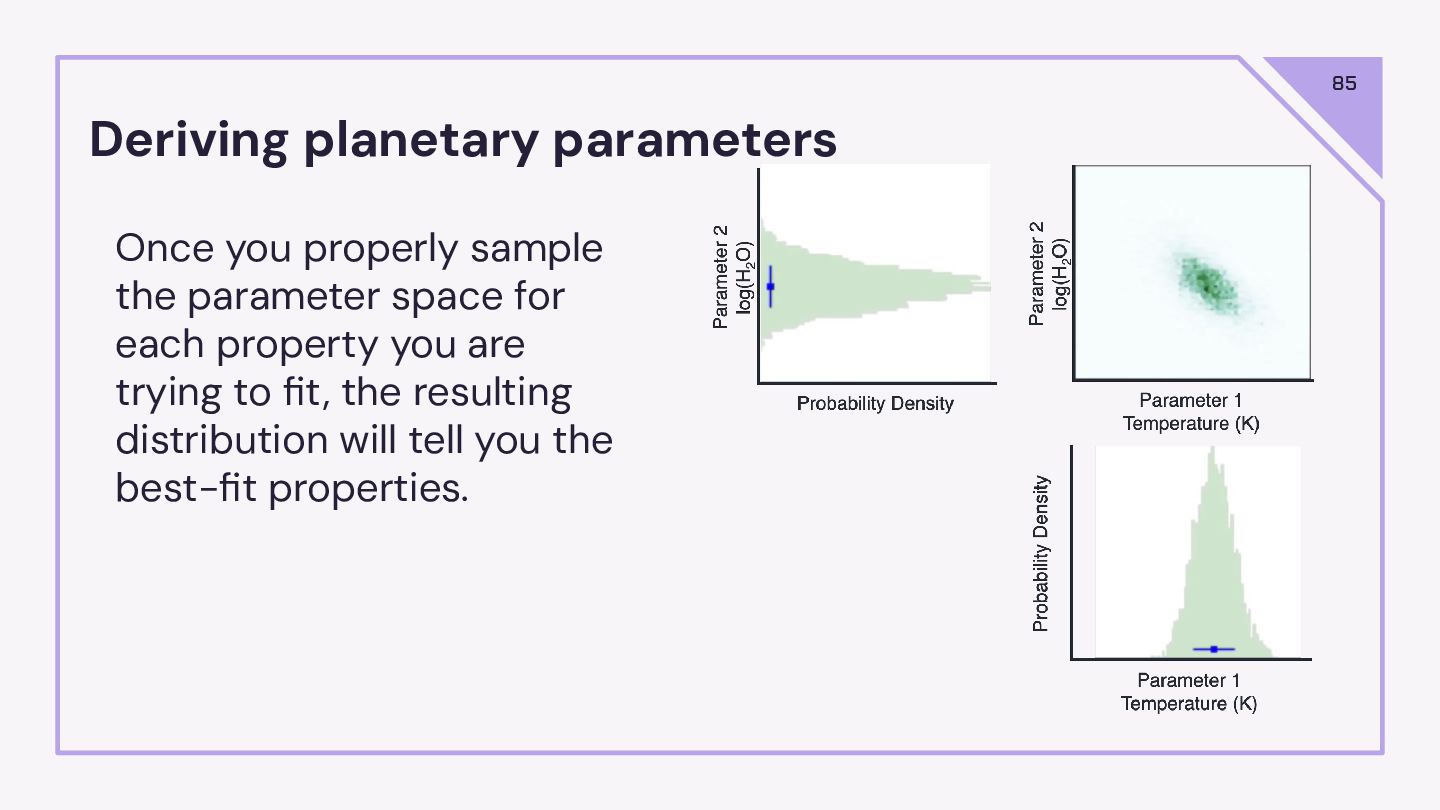
    space for each property you are trying to fit, the resulting distribution will tell you the best-fit properties.
  50. Deriving planetary parameters 86 Once you properly sample the parameter

    space for each property you are trying to fit, the resulting distribution will tell you the best-fit properties. Et voila! A corner plot.
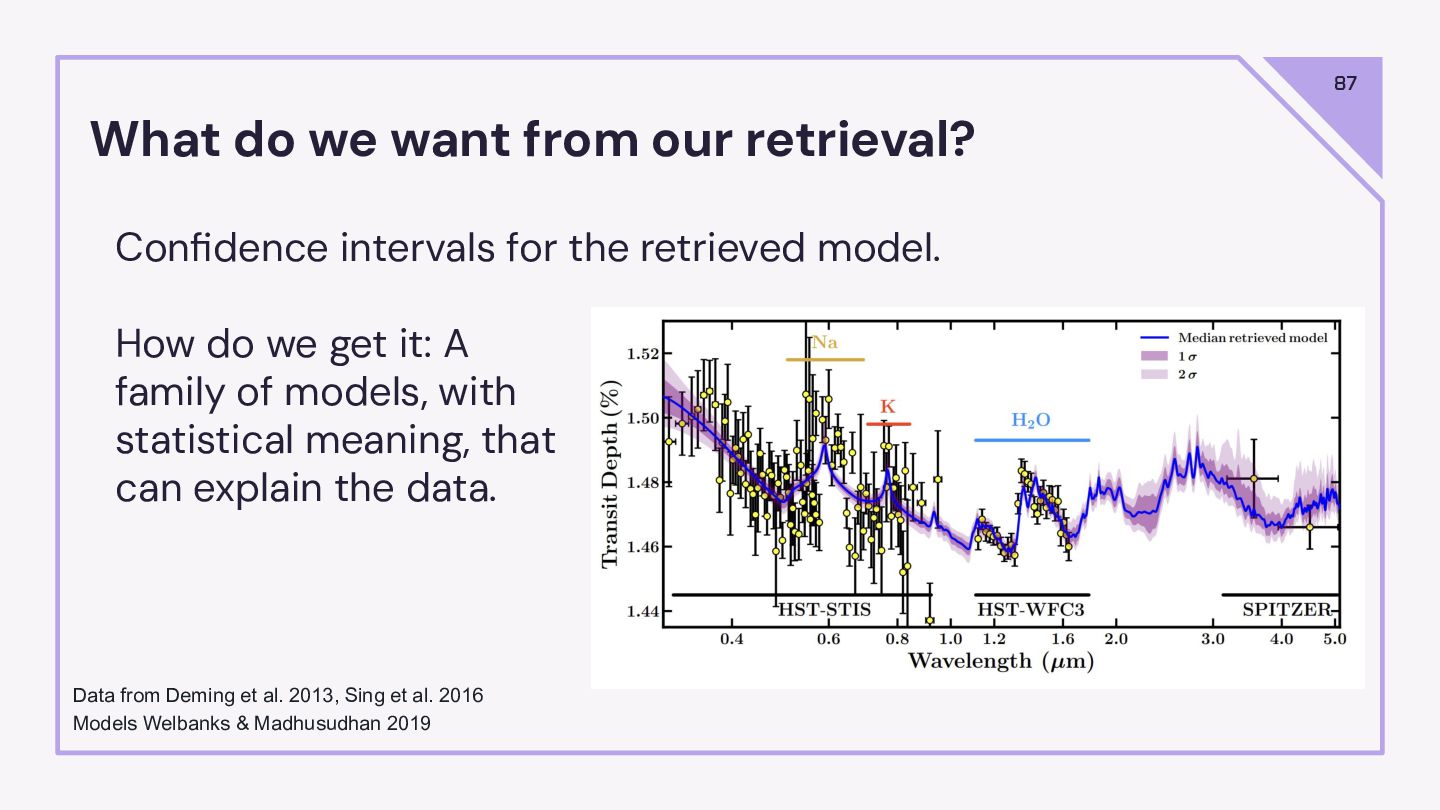
  51. What do we want from our retrieval? 87 Confidence intervals

    for the retrieved model. How do we get it: A family of models, with statistical meaning, that can explain the data. Data from Deming et al. 2013, Sing et al. 2016 Models Welbanks & Madhusudhan 2019
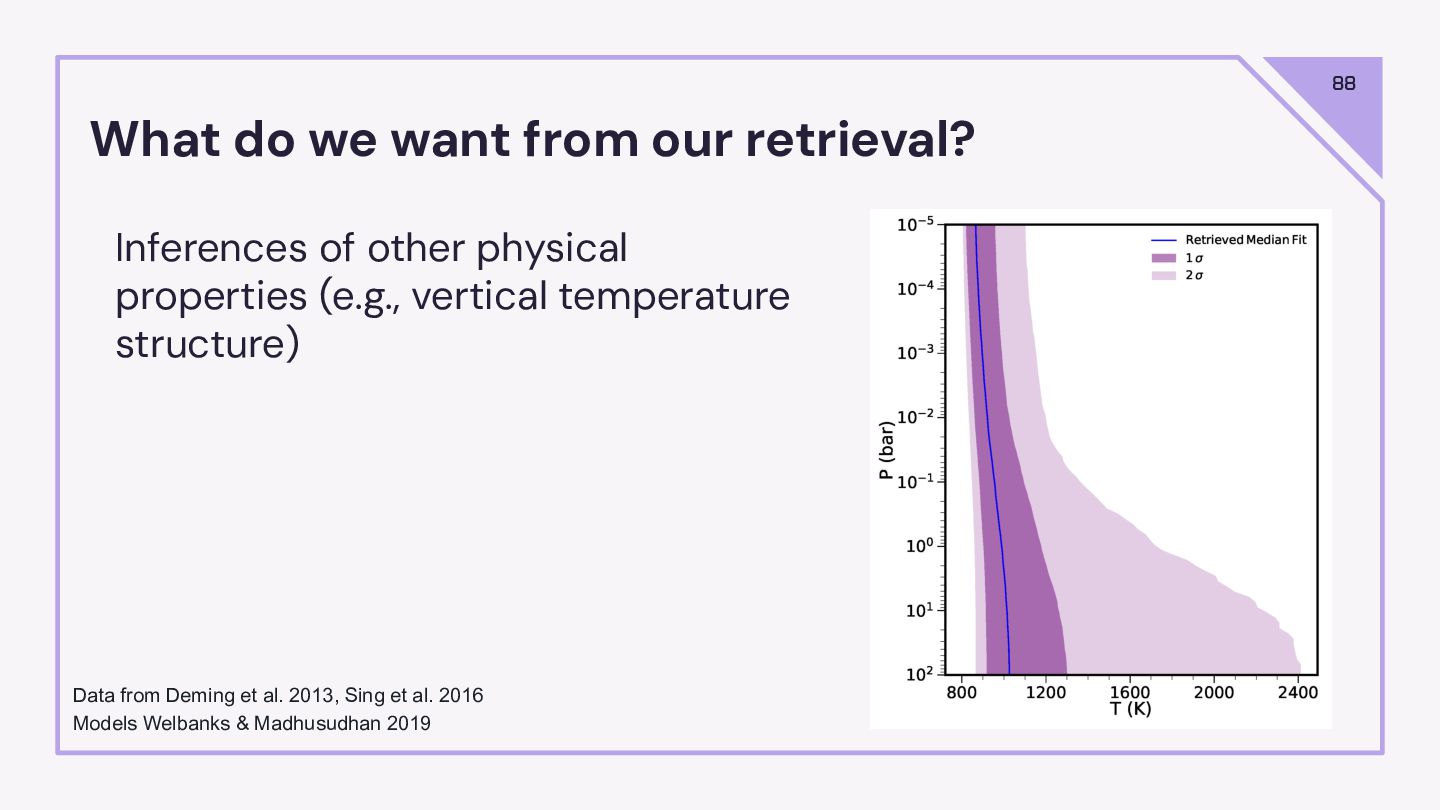
  52. What do we want from our retrieval? 88 Inferences of

    other physical properties (e.g., vertical temperature structure) Data from Deming et al. 2013, Sing et al. 2016 Models Welbanks & Madhusudhan 2019
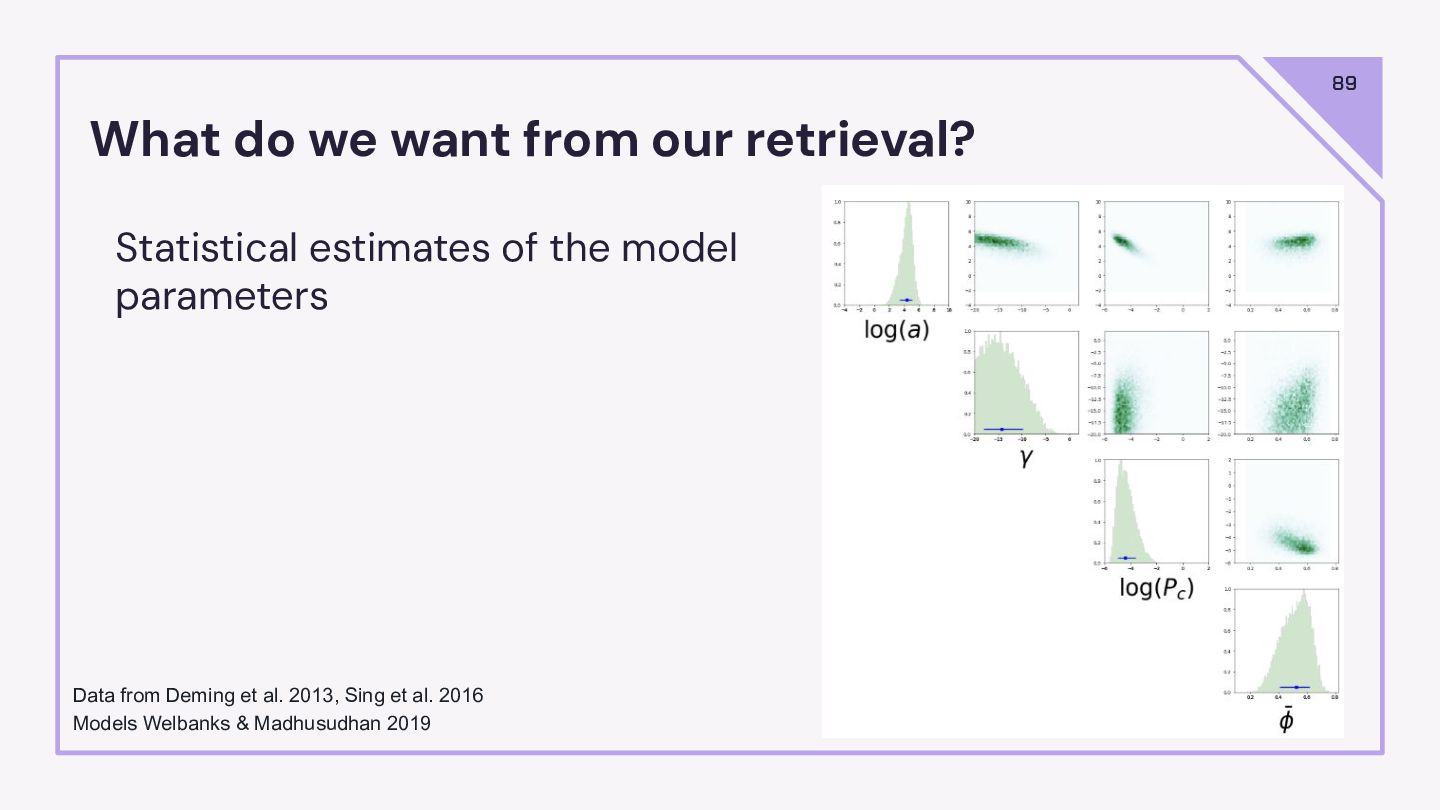
  53. What do we want from our retrieval? 89 Statistical estimates

    of the model parameters Data from Deming et al. 2013, Sing et al. 2016 Models Welbanks & Madhusudhan 2019
  54. The dirty details behind the black box 92 • Your

    favorite radiative transfer treatment
  55. Radiative transfer assumptions 93 An atmospheric retrieval performance depends on

    the model’s efficiency to calculate radiative transfer in the planet’s atmosphere. A retrieval will run full radiative transfer models thousands to millions of times.
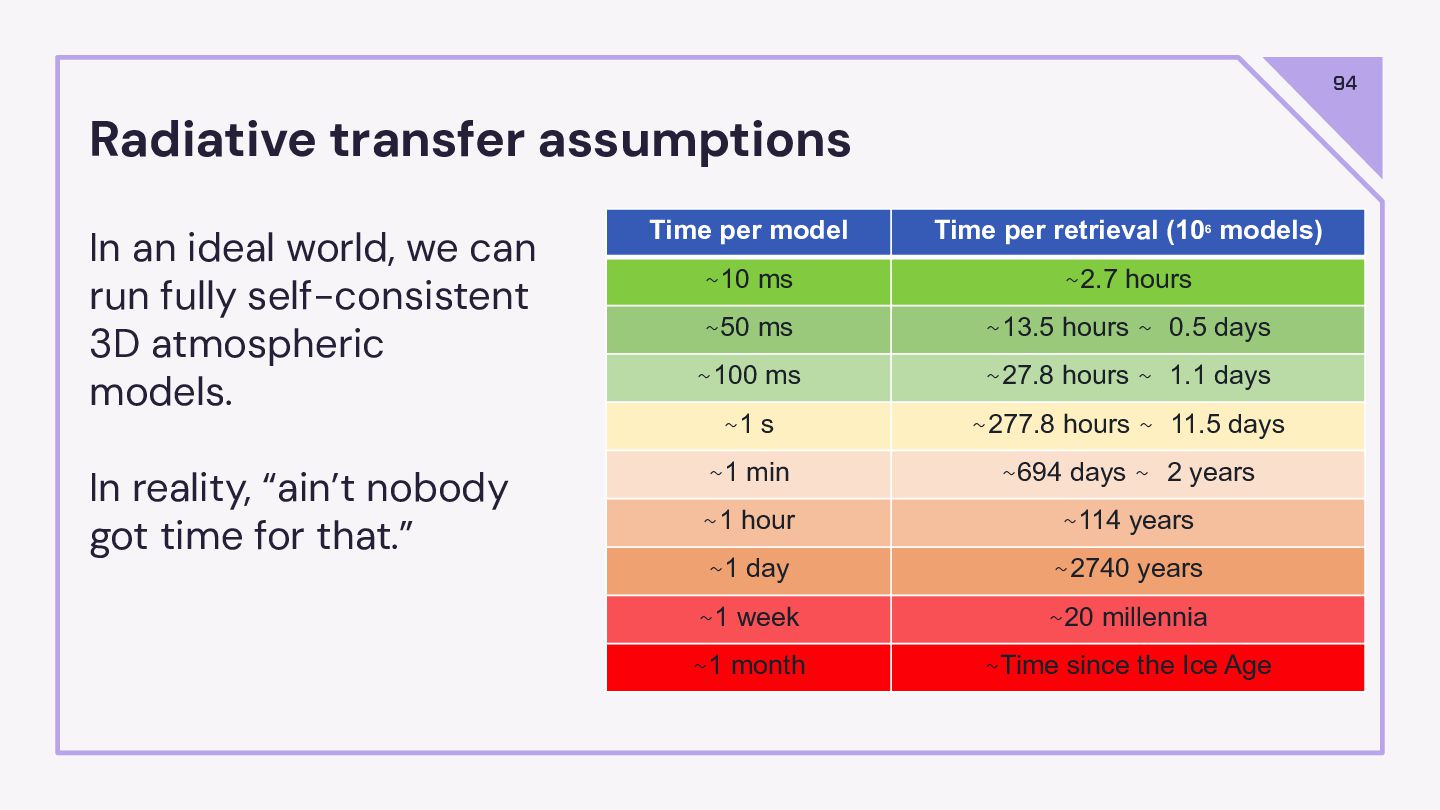
  56. Radiative transfer assumptions 94 In an ideal world, we can

    run fully self-consistent 3D atmospheric models. In reality, “ain’t nobody got time for that.” Time per model Time per retrieval (106 models) ~10 ms ~2.7 hours ~50 ms ~13.5 hours ~ 0.5 days ~100 ms ~27.8 hours ~ 1.1 days ~1 s ~277.8 hours ~ 11.5 days ~1 min ~694 days ~ 2 years ~1 hour ~114 years ~1 day ~2740 years ~1 week ~20 millennia ~1 month ~Time since the Ice Age
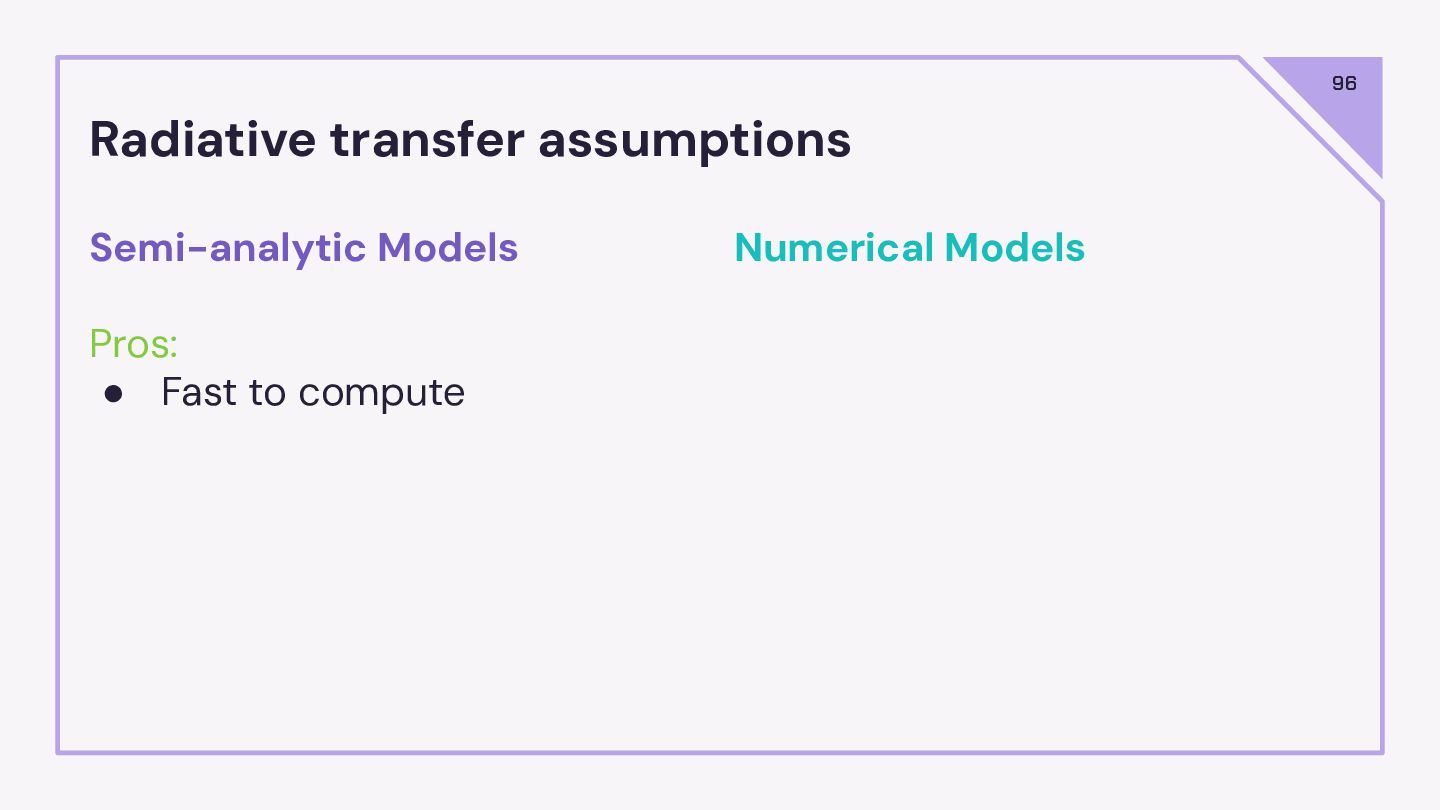
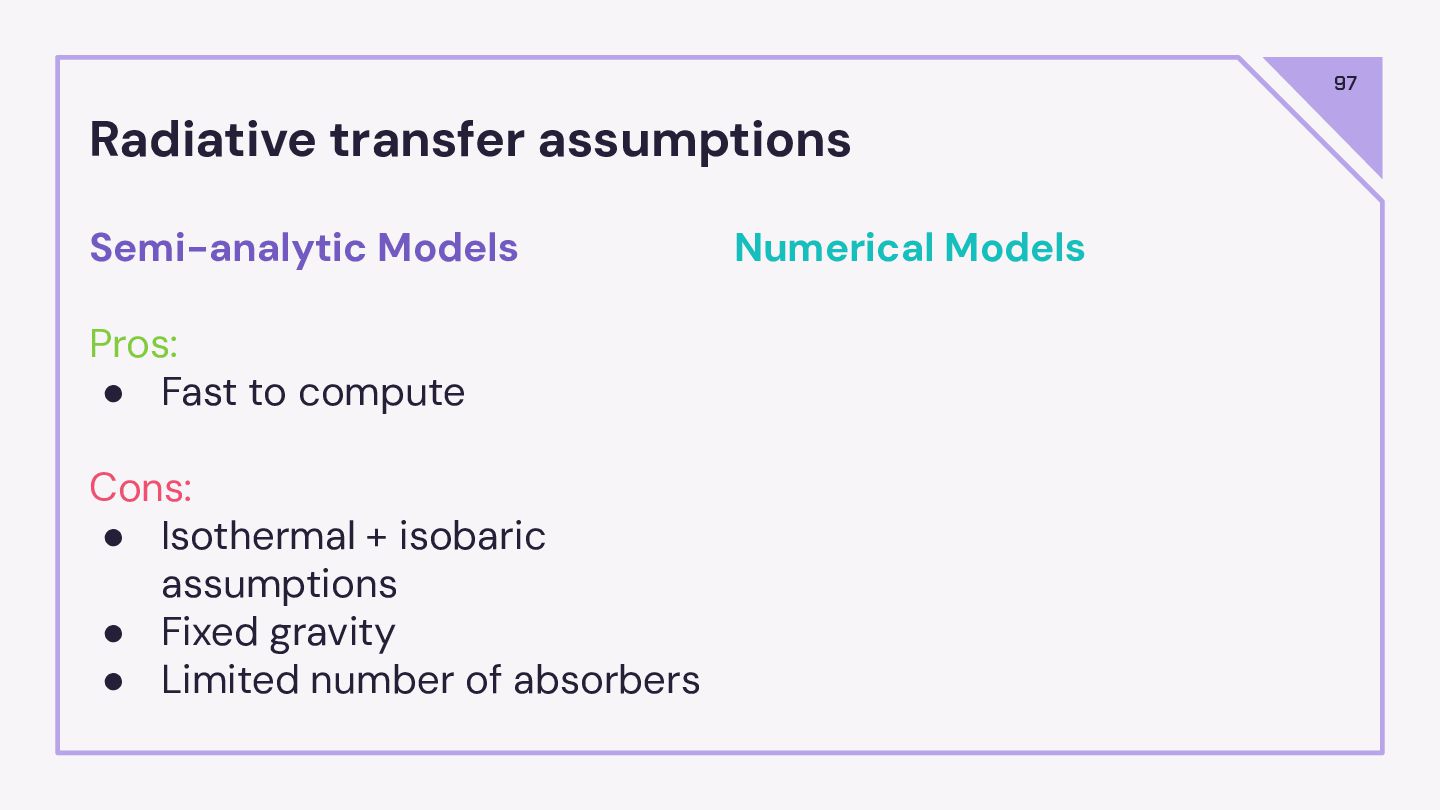
  57. Radiative transfer assumptions 97 Semi-analytic Models Pros: • Fast to

    compute Cons: • Isothermal + isobaric assumptions • Fixed gravity • Limited number of absorbers Numerical Models
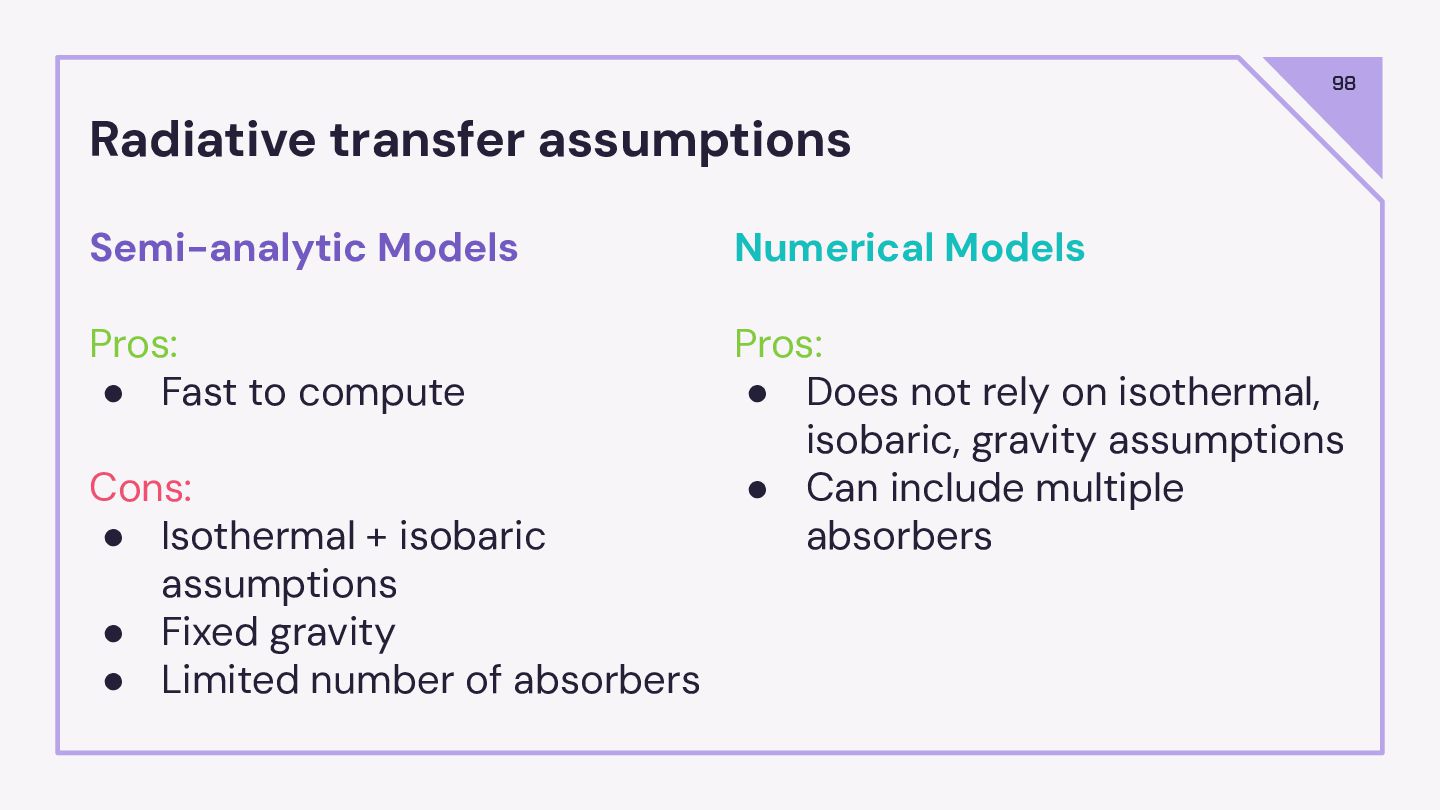
  58. Radiative transfer assumptions 98 Semi-analytic Models Pros: • Fast to

    compute Cons: • Isothermal + isobaric assumptions • Fixed gravity • Limited number of absorbers Numerical Models Pros: • Does not rely on isothermal, isobaric, gravity assumptions • Can include multiple absorbers
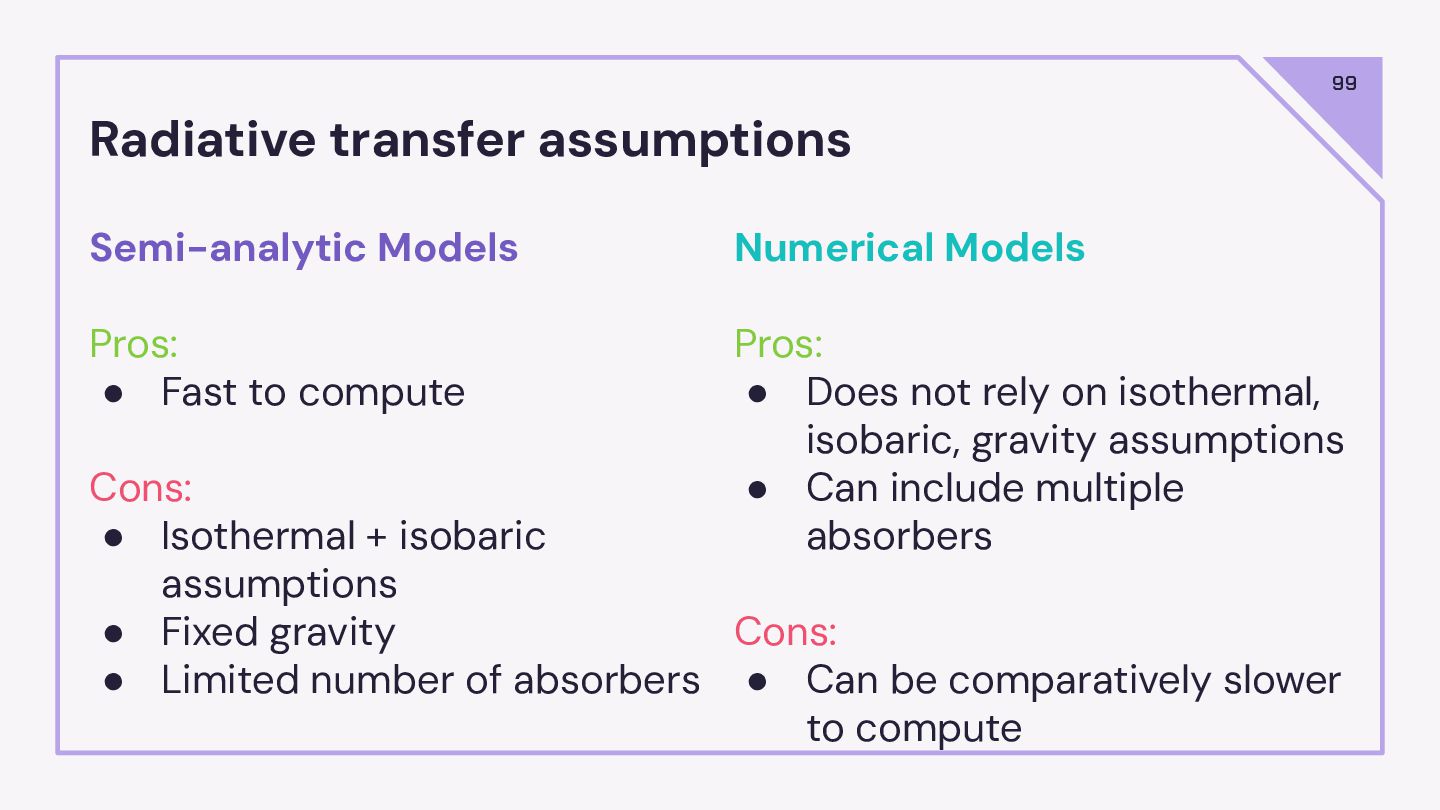
  59. Radiative transfer assumptions 99 Semi-analytic Models Pros: • Fast to

    compute Cons: • Isothermal + isobaric assumptions • Fixed gravity • Limited number of absorbers Numerical Models Pros: • Does not rely on isothermal, isobaric, gravity assumptions • Can include multiple absorbers Cons: • Can be comparatively slower to compute
  60. Radiative transfer assumptions 100 Semi-analytic Models Numerical Models YOUR MODEL

    ASSUMPTIONS WILL AFFECT YOUR INFERRED ATMOSPHERIC PROPERTIES.
  61. The dirty details behind the black box 101 • Your

    favorite radiative transfer treatment • Some relationship between atmospheric pressure and temperature
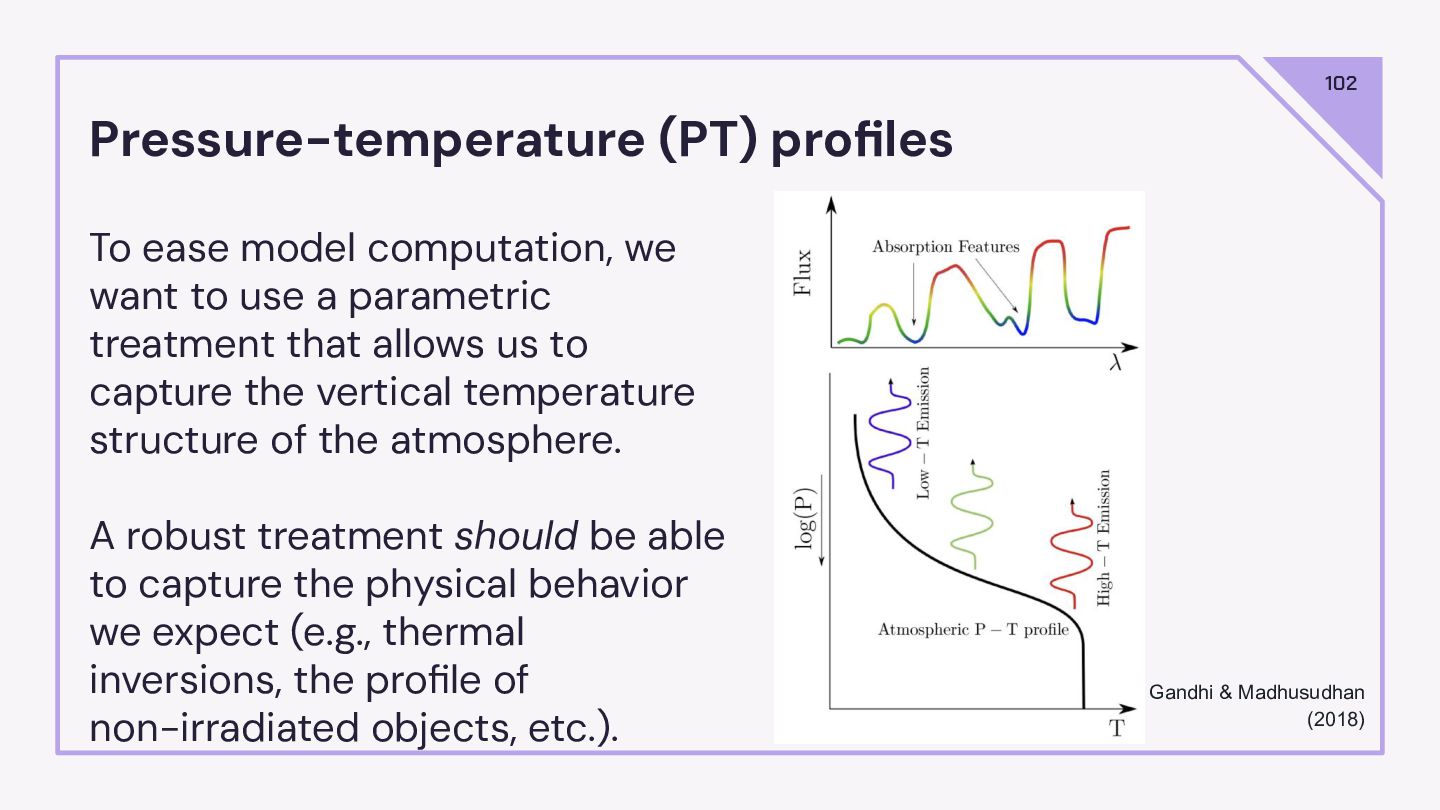
  62. Pressure-temperature (PT) profiles 102 To ease model computation, we want

    to use a parametric treatment that allows us to capture the vertical temperature structure of the atmosphere. A robust treatment should be able to capture the physical behavior we expect (e.g., thermal inversions, the profile of non-irradiated objects, etc.). Gandhi & Madhusudhan (2018)
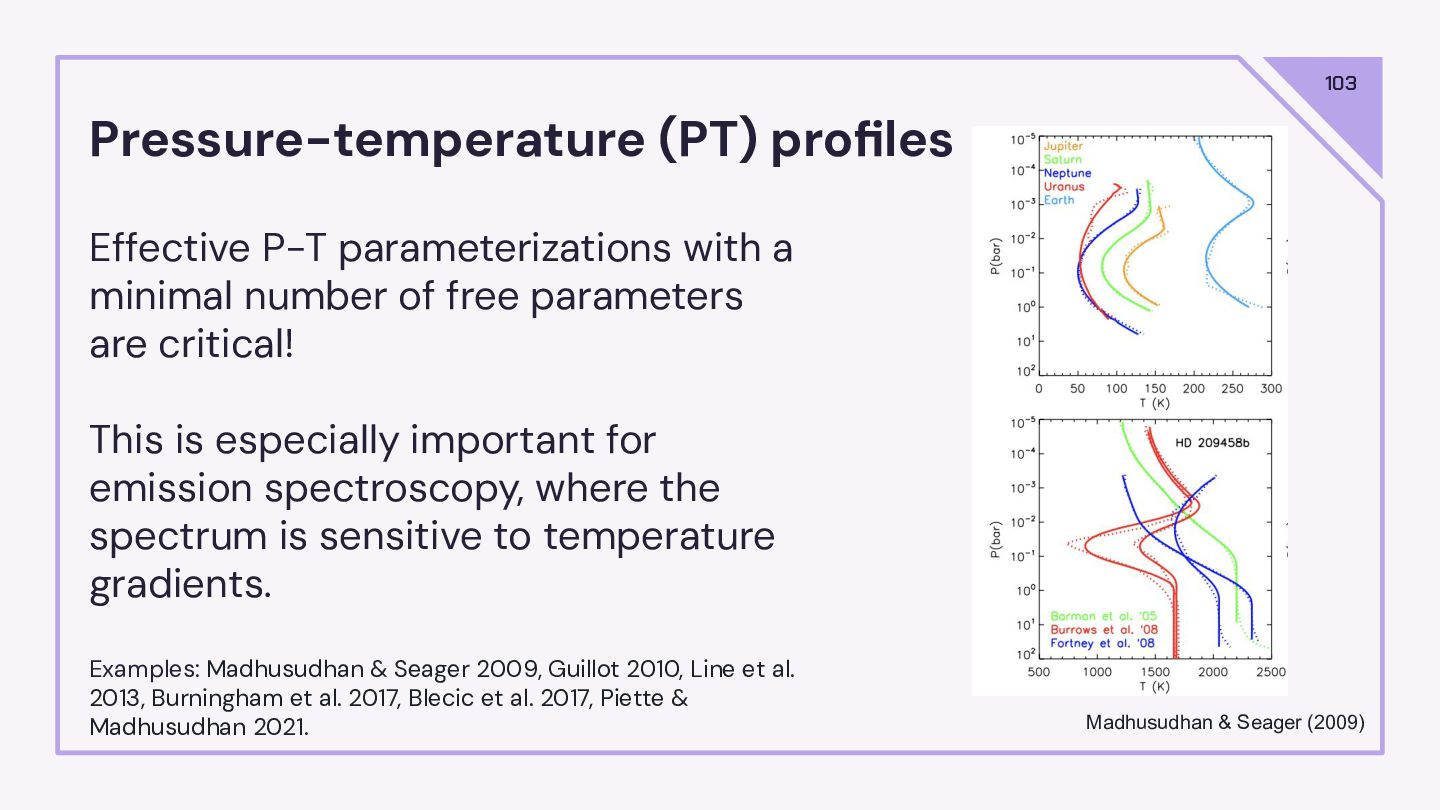
  63. Pressure-temperature (PT) profiles 103 Effective P-T parameterizations with a minimal

    number of free parameters are critical! This is especially important for emission spectroscopy, where the spectrum is sensitive to temperature gradients. Examples: Madhusudhan & Seager 2009, Guillot 2010, Line et al. 2013, Burningham et al. 2017, Blecic et al. 2017, Piette & Madhusudhan 2021. Madhusudhan & Seager (2009)
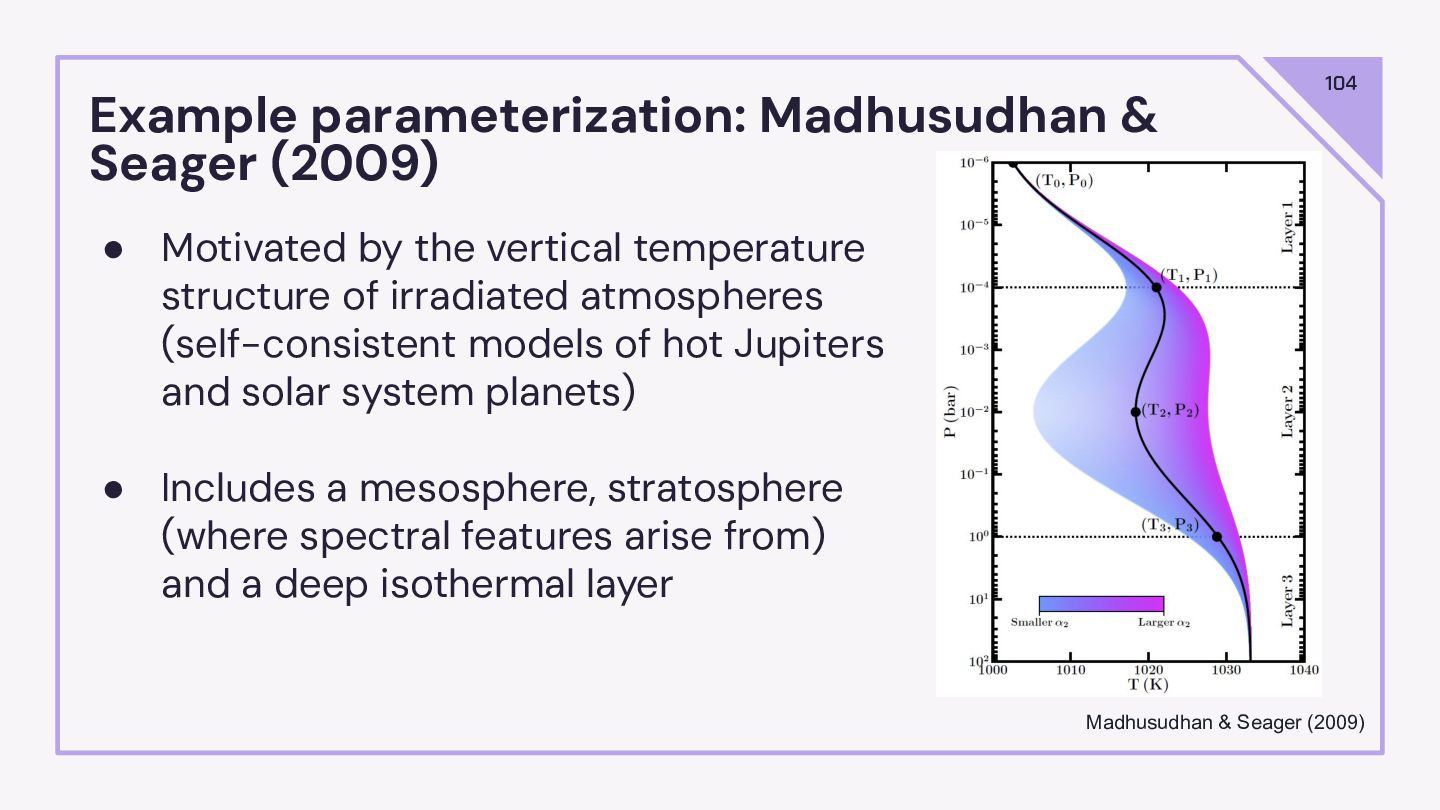
  64. Example parameterization: Madhusudhan & Seager (2009) 104 • Motivated by

    the vertical temperature structure of irradiated atmospheres (self-consistent models of hot Jupiters and solar system planets) • Includes a mesosphere, stratosphere (where spectral features arise from) and a deep isothermal layer Madhusudhan & Seager (2009)
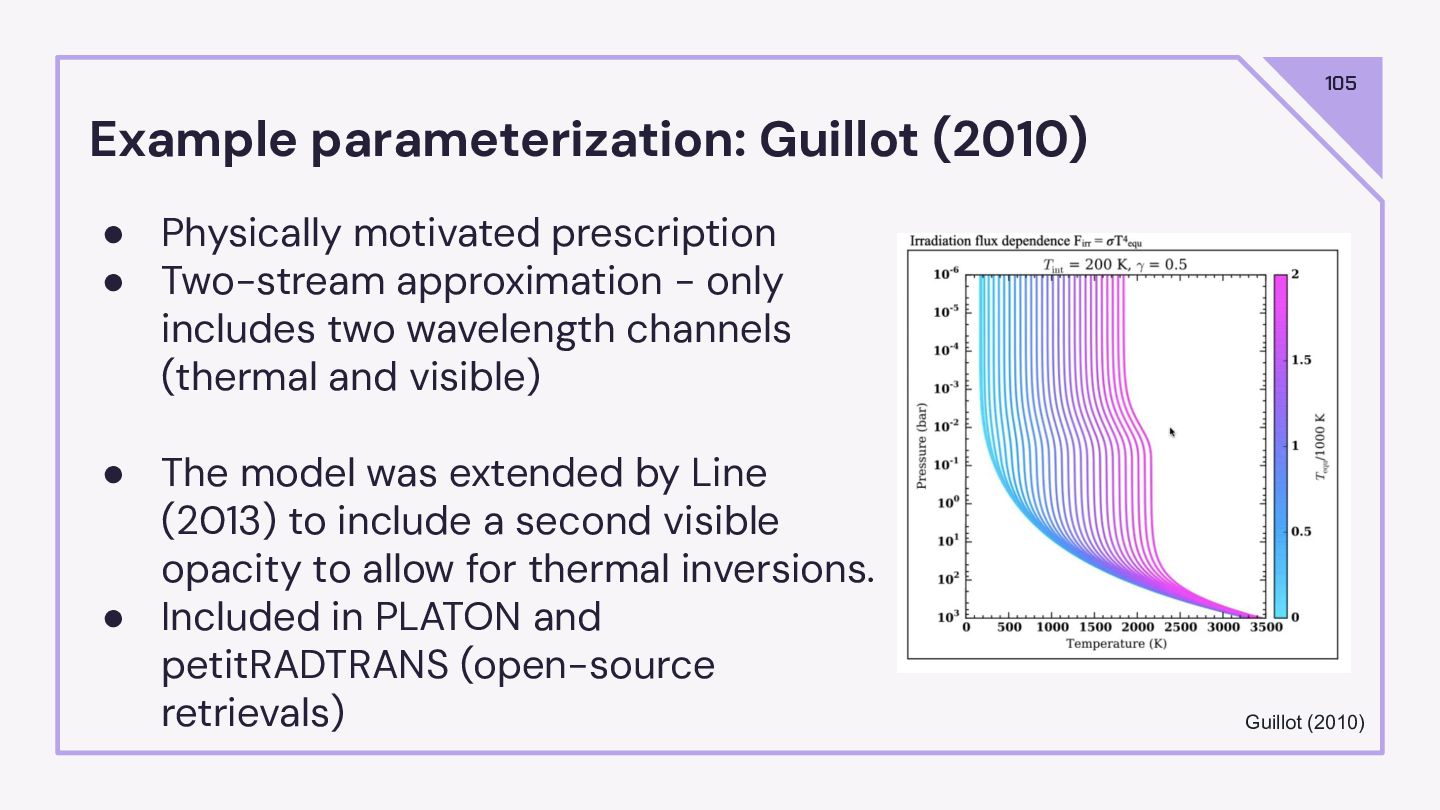
  65. Example parameterization: Guillot (2010) 105 • Physically motivated prescription •

    Two-stream approximation - only includes two wavelength channels (thermal and visible) • The model was extended by Line (2013) to include a second visible opacity to allow for thermal inversions. • Included in PLATON and petitRADTRANS (open-source retrievals) Guillot (2010)
  66. The dirty details behind the black box 106 • Your

    favorite radiative transfer treatment • Some relationship between atmospheric pressure and temperature • Chemistry treatment - equilibrium or disequilibrium?
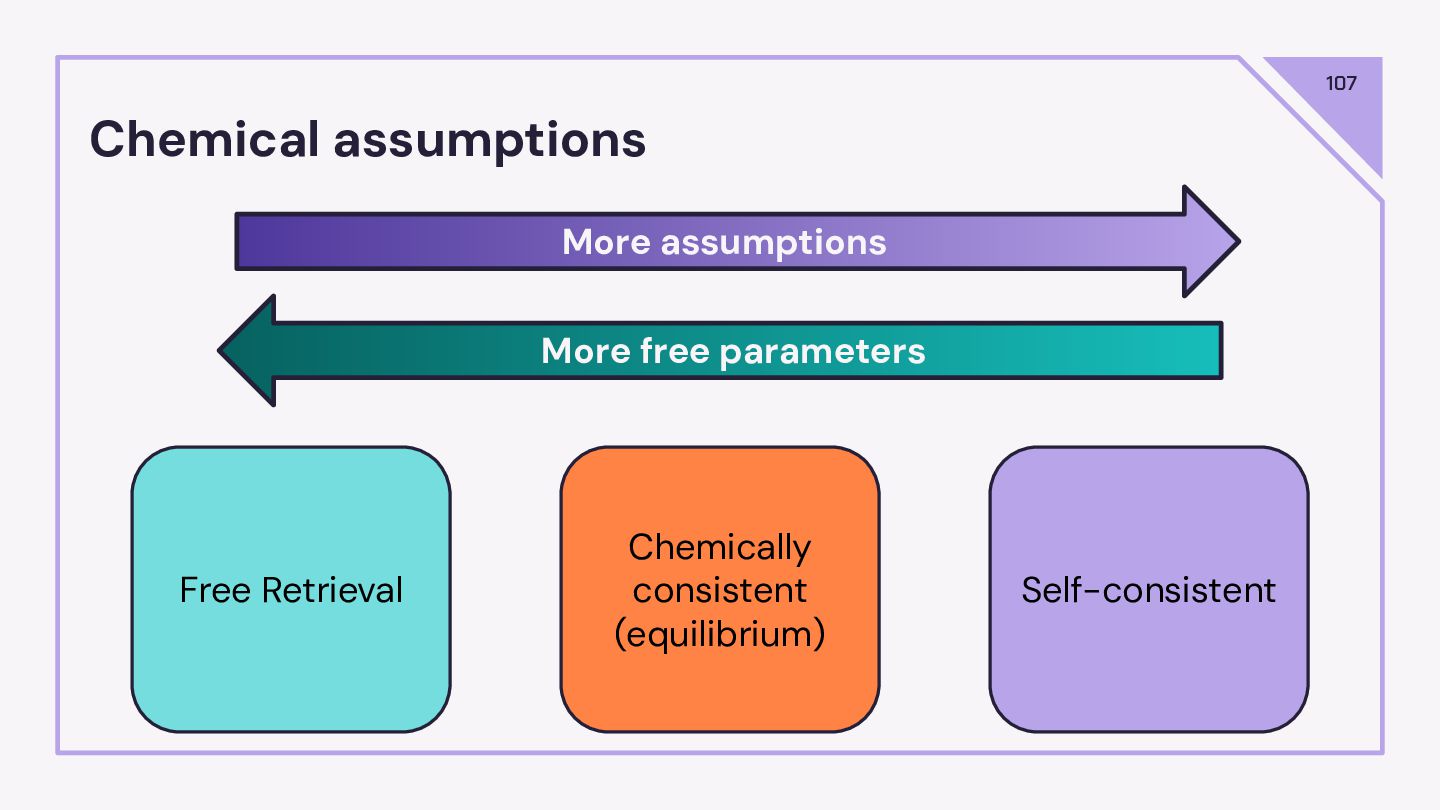
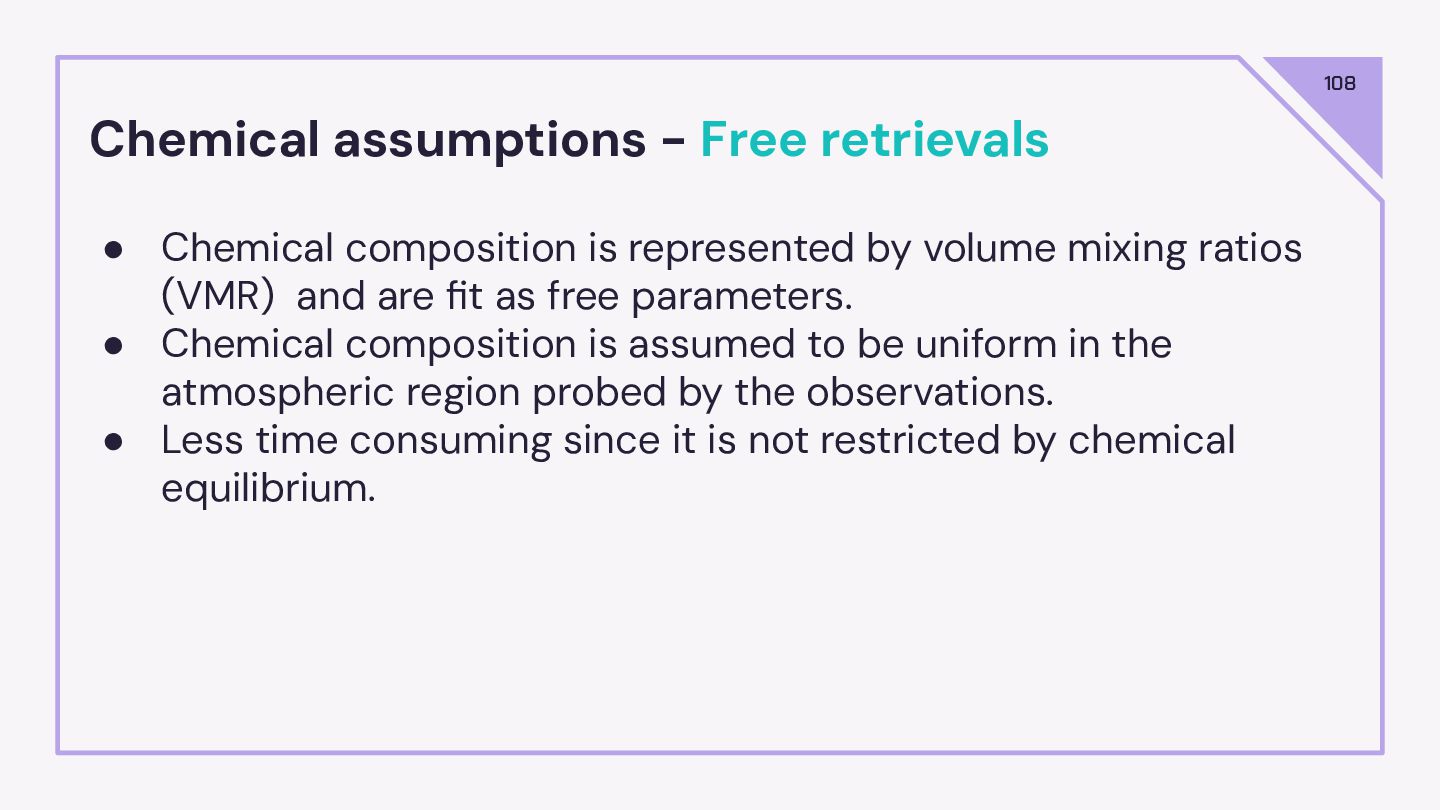
  67. Chemical assumptions - Free retrievals 108 • Chemical composition is

    represented by volume mixing ratios (VMR) and are fit as free parameters. • Chemical composition is assumed to be uniform in the atmospheric region probed by the observations. • Less time consuming since it is not restricted by chemical equilibrium.
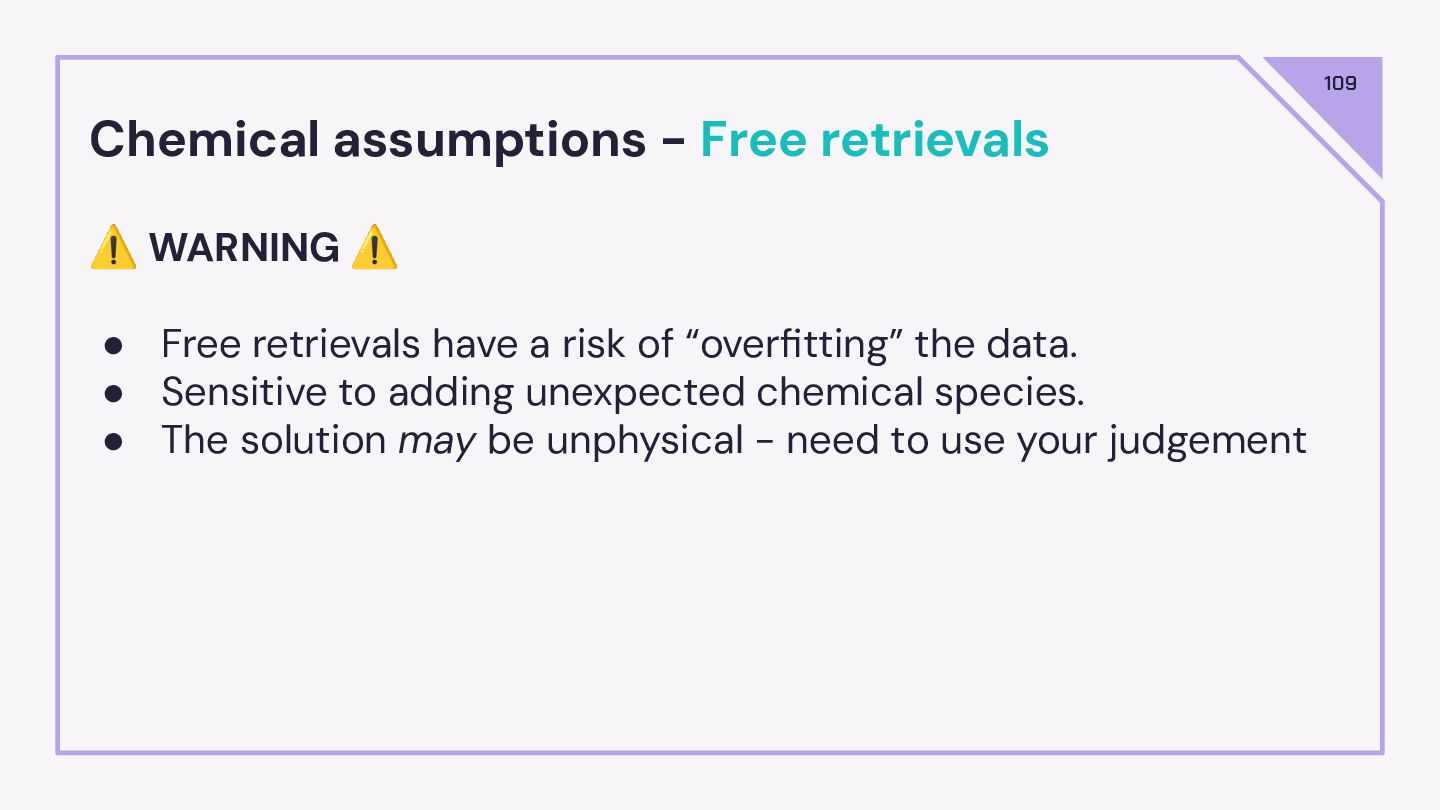
  68. Chemical assumptions - Free retrievals 109 ⚠ WARNING ⚠ •

    Free retrievals have a risk of “overfitting” the data. • Sensitive to adding unexpected chemical species. • The solution may be unphysical - need to use your judgement
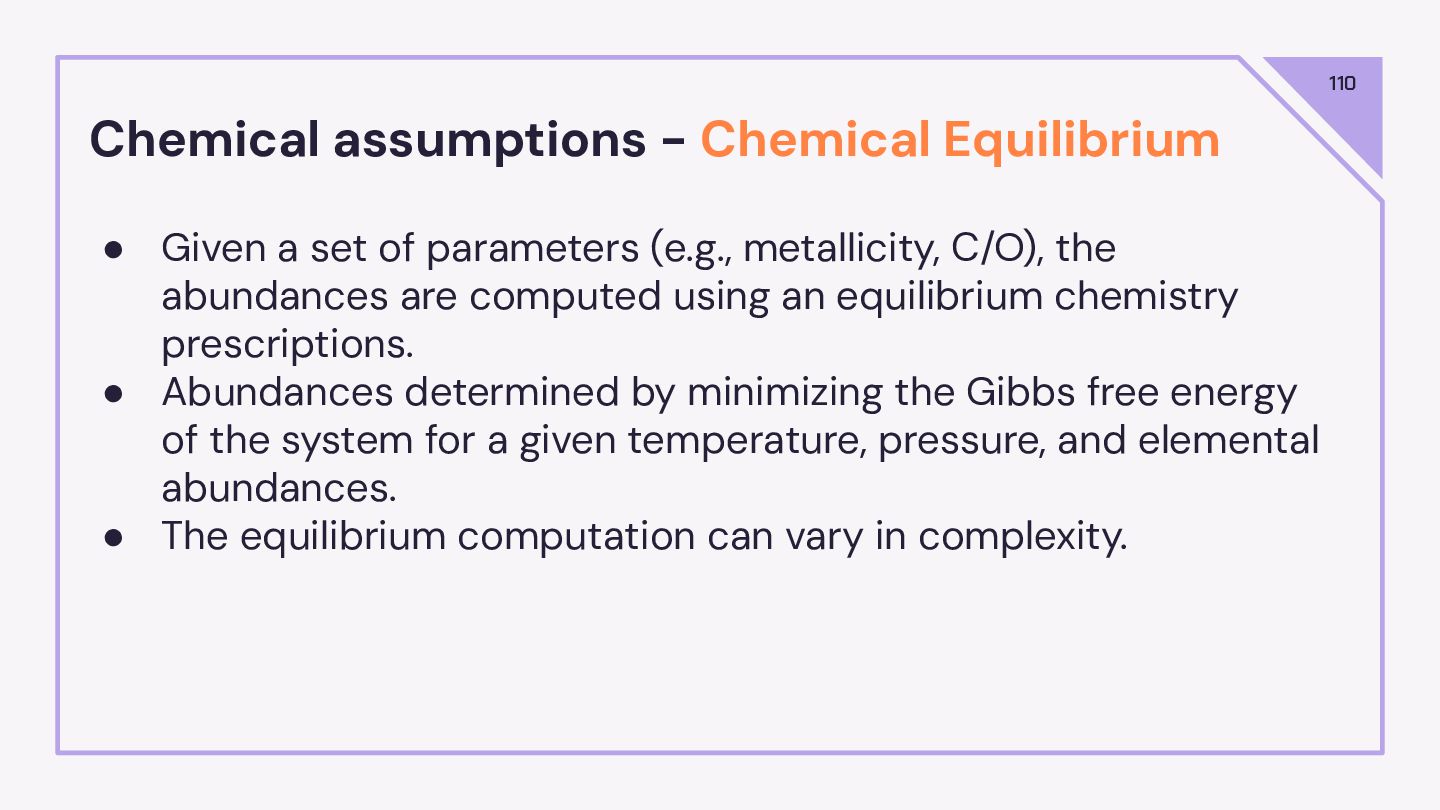
  69. Chemical assumptions - Chemical Equilibrium 110 • Given a set

    of parameters (e.g., metallicity, C/O), the abundances are computed using an equilibrium chemistry prescriptions. • Abundances determined by minimizing the Gibbs free energy of the system for a given temperature, pressure, and elemental abundances. • The equilibrium computation can vary in complexity.
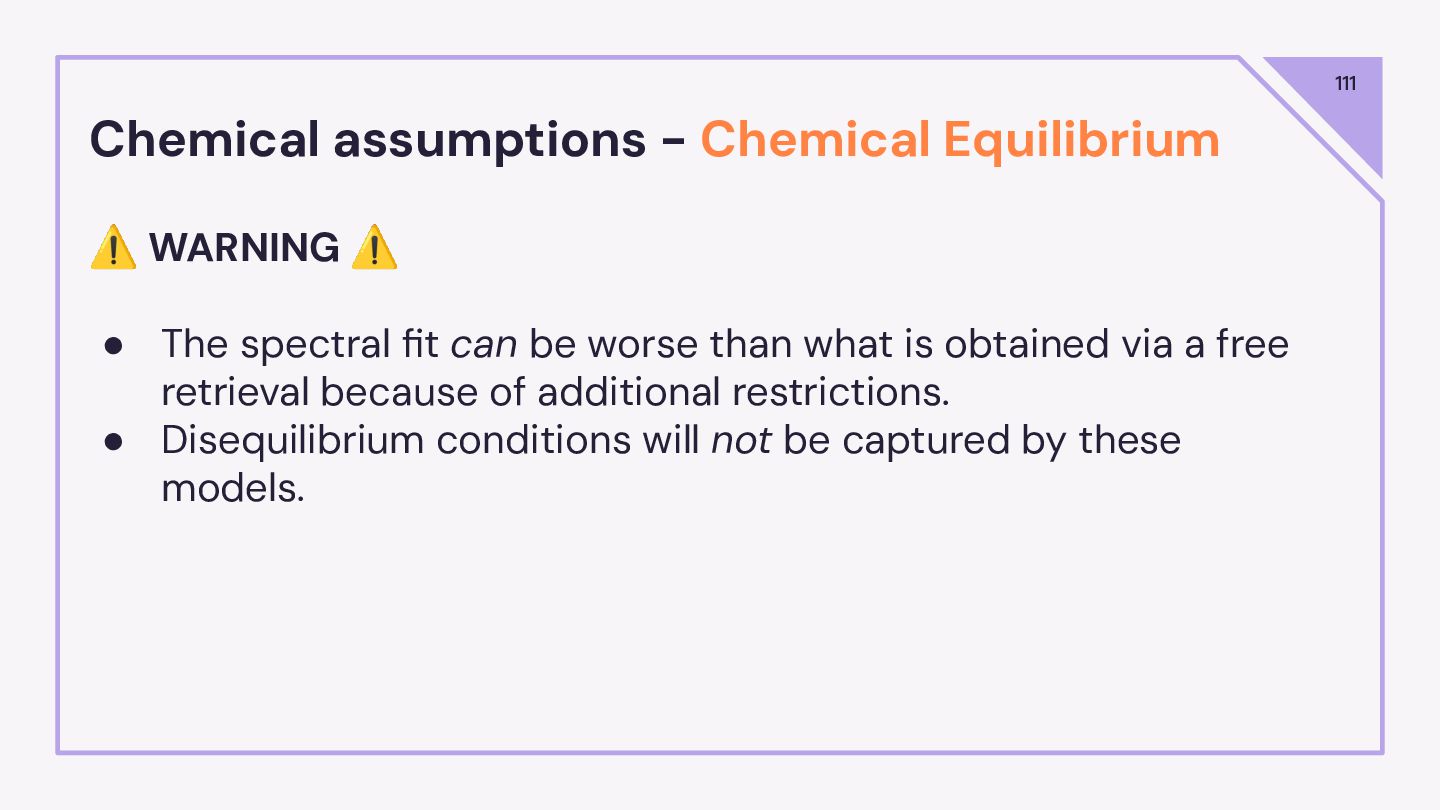
  70. Chemical assumptions - Chemical Equilibrium 111 ⚠ WARNING ⚠ •

    The spectral fit can be worse than what is obtained via a free retrieval because of additional restrictions. • Disequilibrium conditions will not be captured by these models.
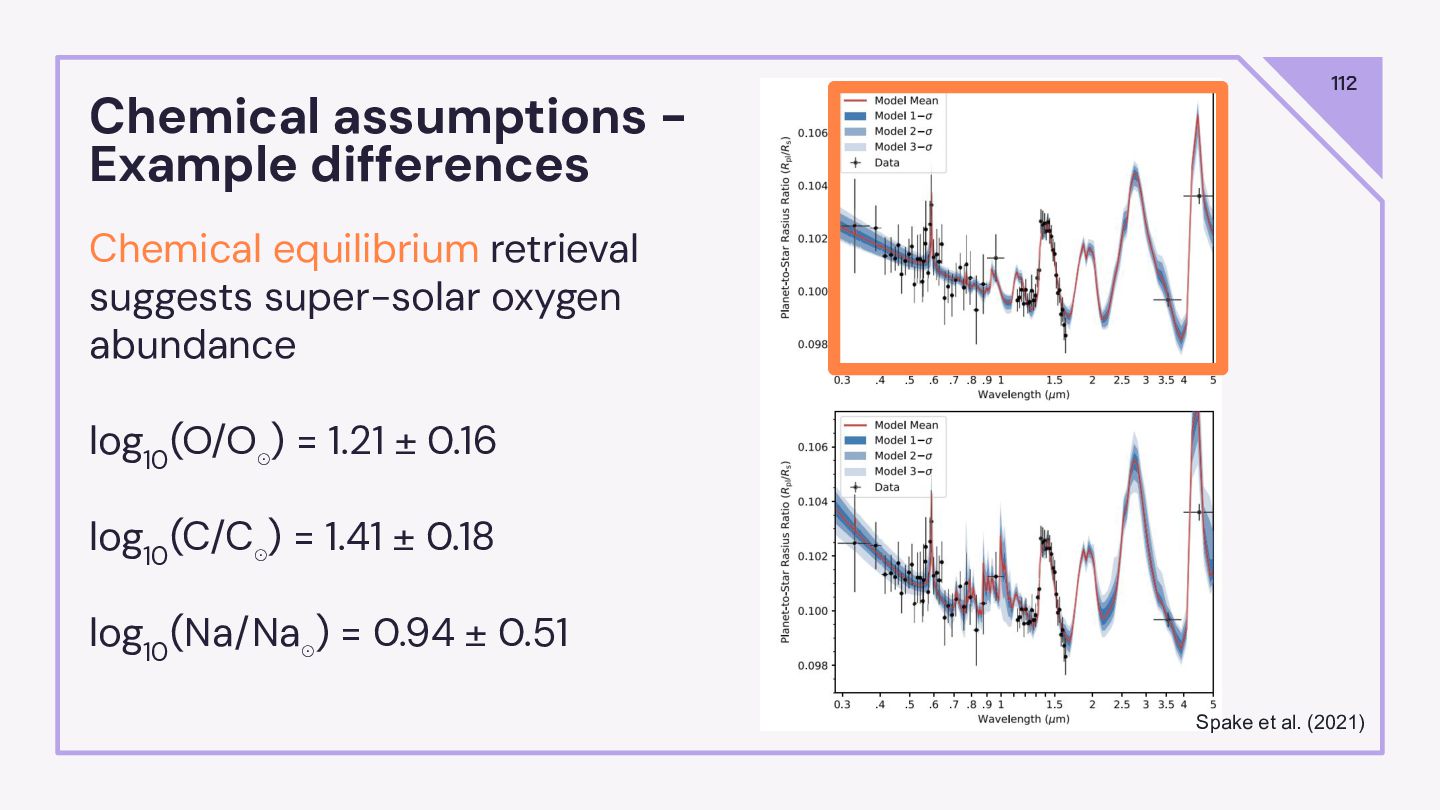
  71. Chemical assumptions - Example differences 112 Chemical equilibrium retrieval suggests

    super-solar oxygen abundance log 10 (O/O ⊙ ) = 1.21 ± 0.16 log 10 (C/C ⊙ ) = 1.41 ± 0.18 log 10 (Na/Na ⊙ ) = 0.94 ± 0.51 Spake et al. (2021)
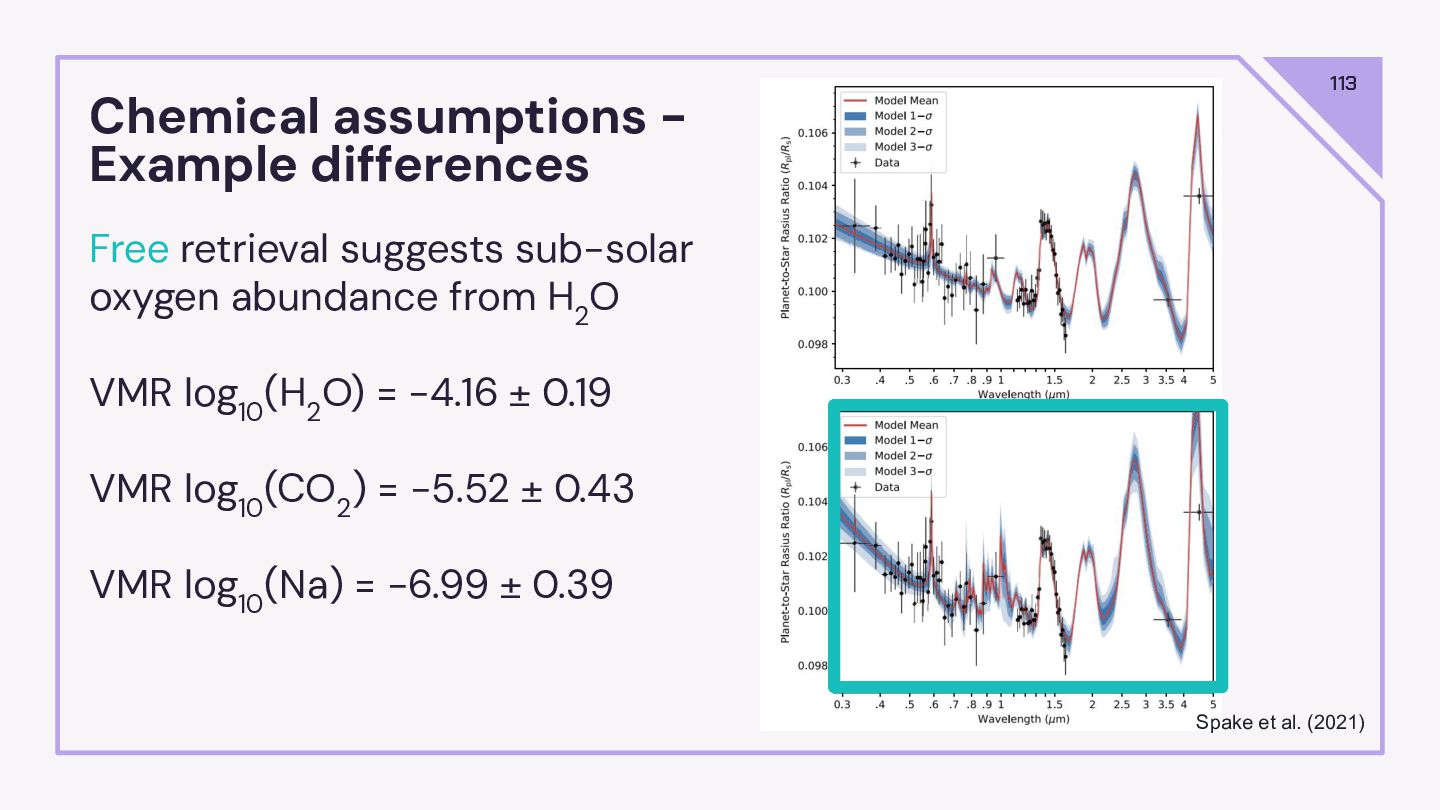
  72. Chemical assumptions - Example differences 113 Free retrieval suggests sub-solar

    oxygen abundance from H 2 O VMR log 10 (H 2 O) = -4.16 ± 0.19 VMR log 10 (CO 2 ) = -5.52 ± 0.43 VMR log 10 (Na) = -6.99 ± 0.39 Spake et al. (2021)
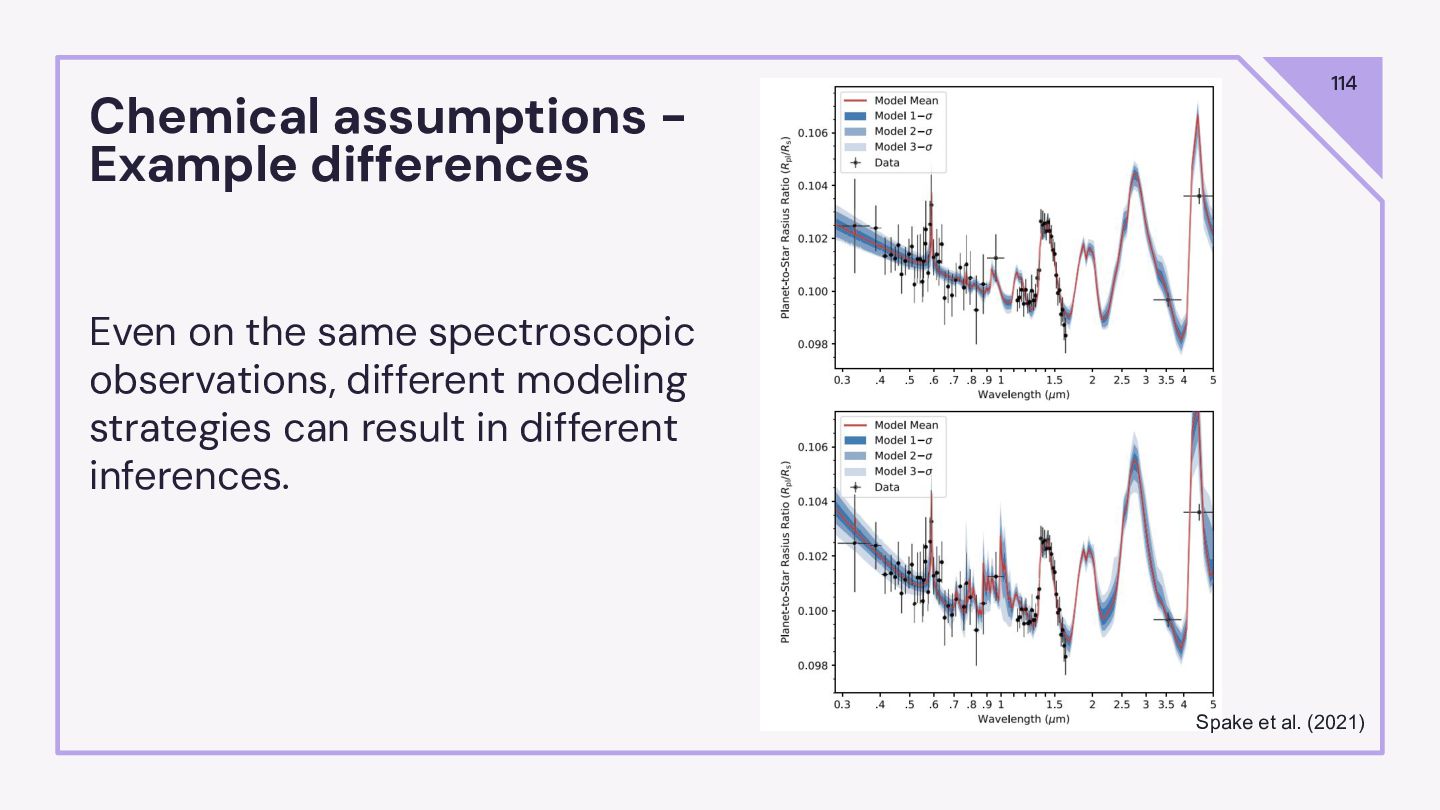
  73. Chemical assumptions - Example differences 114 Even on the same

    spectroscopic observations, different modeling strategies can result in different inferences. Spake et al. (2021)
  74. The dirty details behind the black box 115 • Your

    favorite radiative transfer treatment • Some relationship between atmospheric pressure and temperature • Chemistry treatment - equilibrium or disequilibrium? • Composition and cloud parameterization
  75. Composition 117 You can retrieve your cross sections from ExoMol,

    HITRAN/HITEMP, or your favorite laboratory or theoretical effort. The radiative transfer is calculated on a fine grid to resolve individual chemical lines. Don’t forget to consider: pressure dependence, temperature dependence, and sources of continuum opacity.
  76. Composition 118 Many codes assume the atmosphere will be H

    2 -rich. Alternatively, you can “hardcode” a non H 2 -rich composition or you can aim to agnostically retrieve the bulk composition of the atmosphere. Be aware of the bulk composition assumptions and the limitations of any model!
  77. Cloud parameterization 119 We want to obtain a robust inference

    on our atmospheric composition and vertical structure without biasing our results by the impact of clouds and/or hazes.
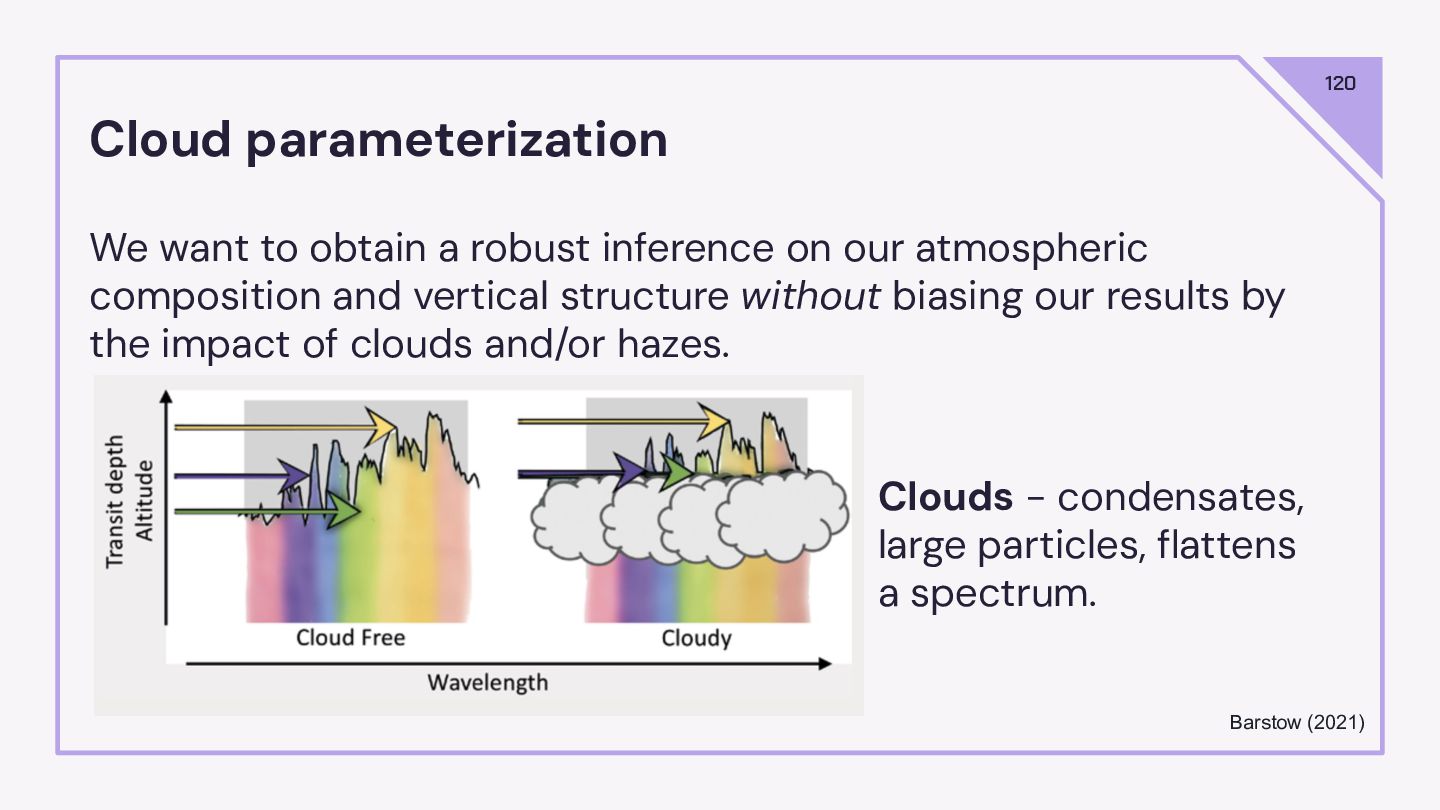
  78. Cloud parameterization 120 We want to obtain a robust inference

    on our atmospheric composition and vertical structure without biasing our results by the impact of clouds and/or hazes. Clouds - condensates, large particles, flattens a spectrum. Barstow (2021)
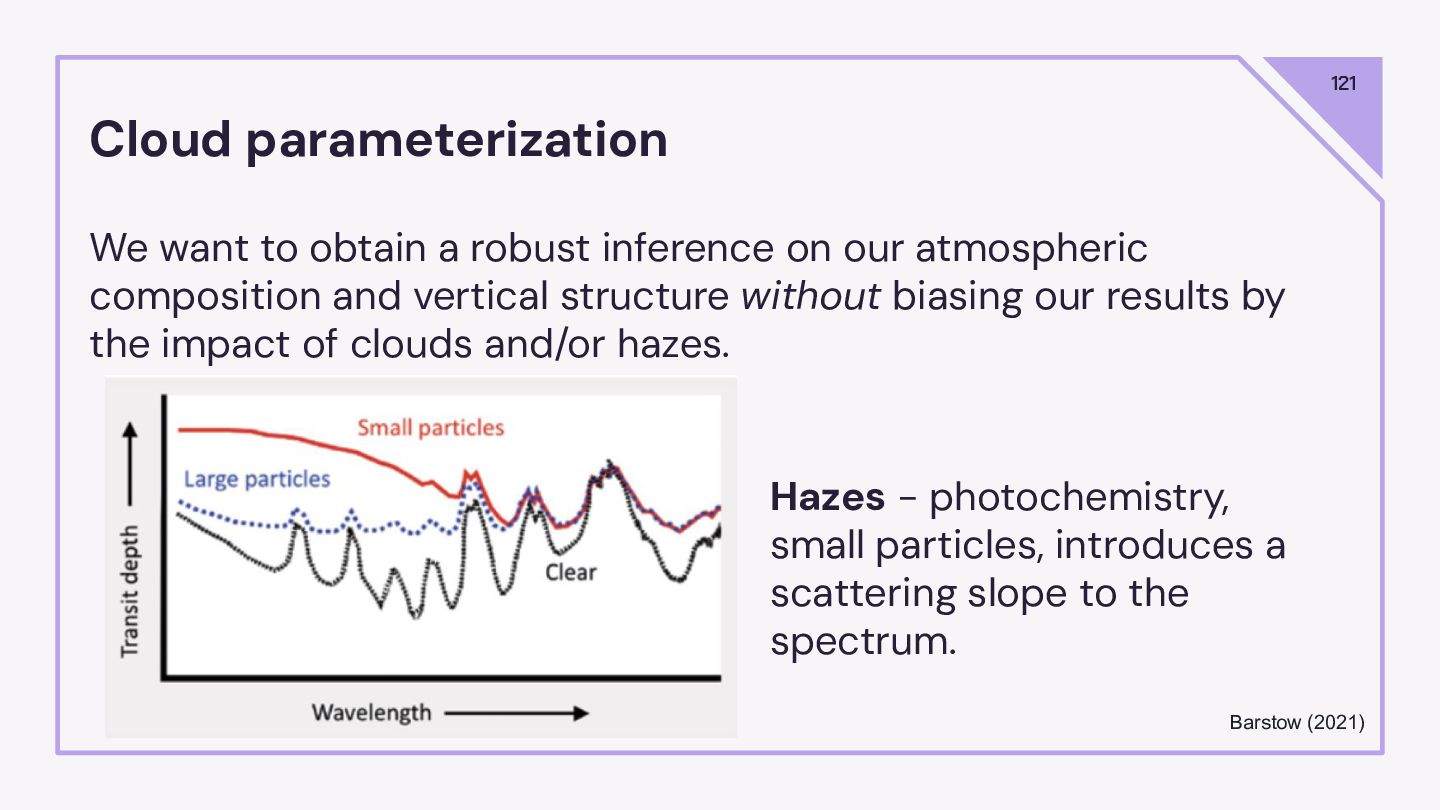
  79. Cloud parameterization 121 We want to obtain a robust inference

    on our atmospheric composition and vertical structure without biasing our results by the impact of clouds and/or hazes. Hazes - photochemistry, small particles, introduces a scattering slope to the spectrum. Barstow (2021)
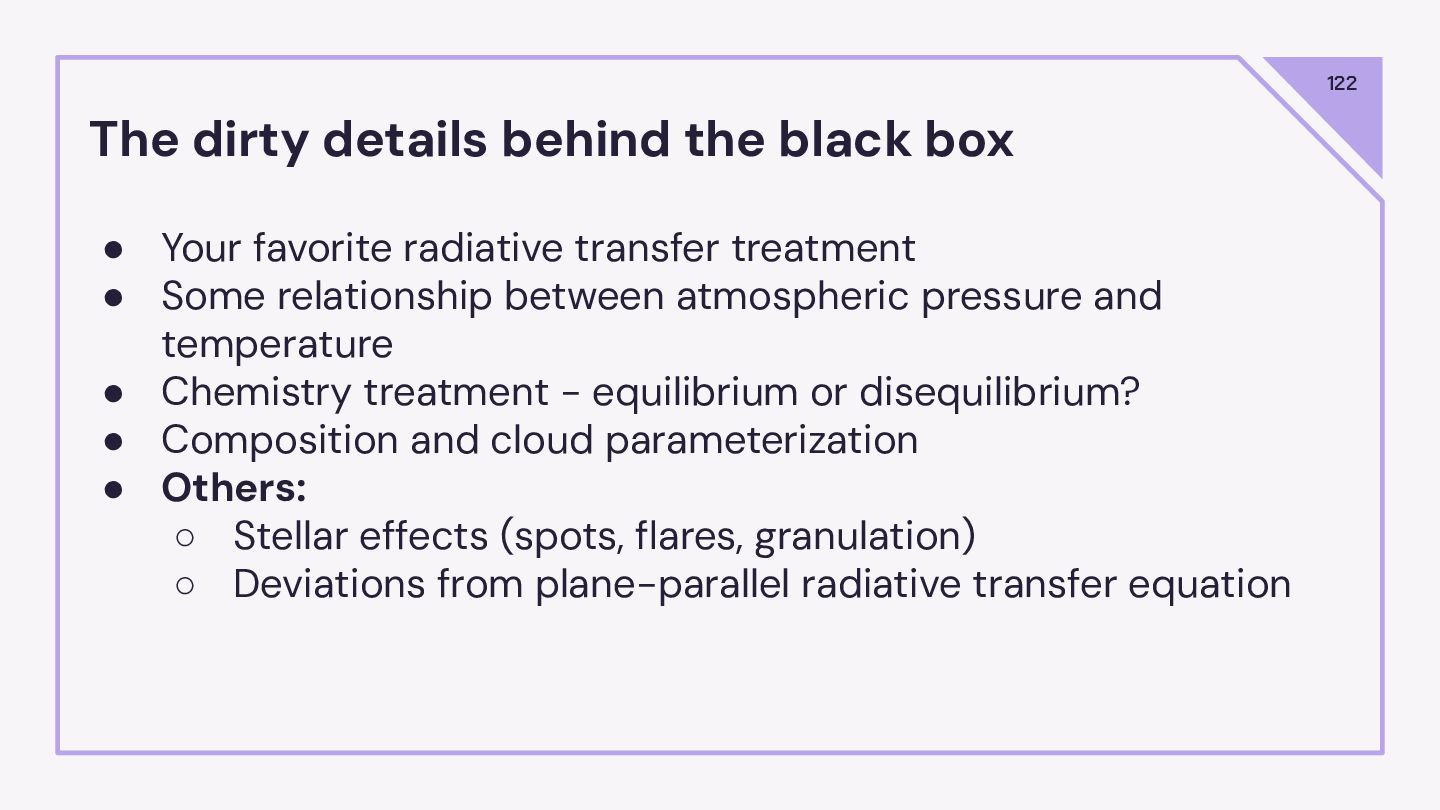
  80. The dirty details behind the black box 122 • Your

    favorite radiative transfer treatment • Some relationship between atmospheric pressure and temperature • Chemistry treatment - equilibrium or disequilibrium? • Composition and cloud parameterization • Others: ◦ Stellar effects (spots, flares, granulation) ◦ Deviations from plane-parallel radiative transfer equation
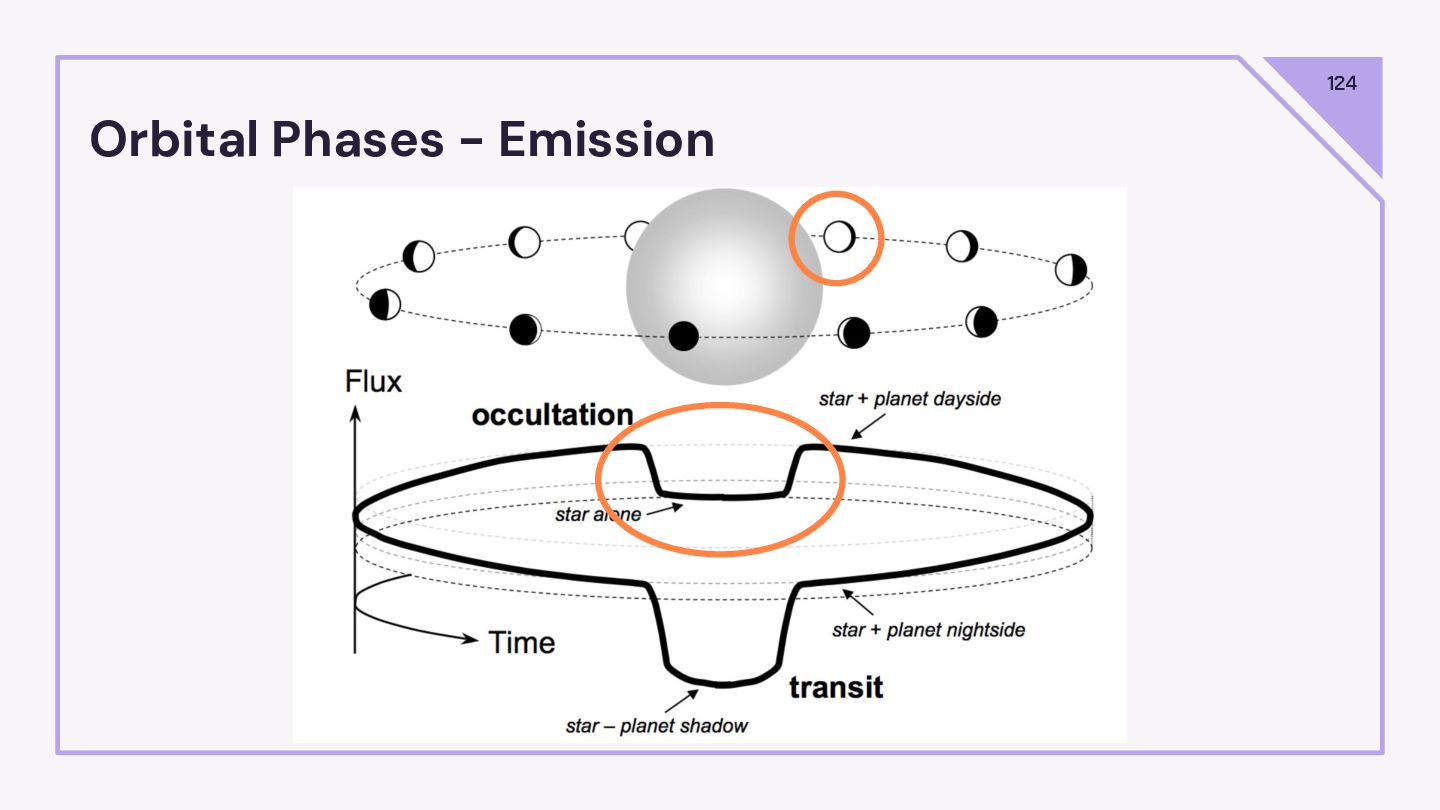
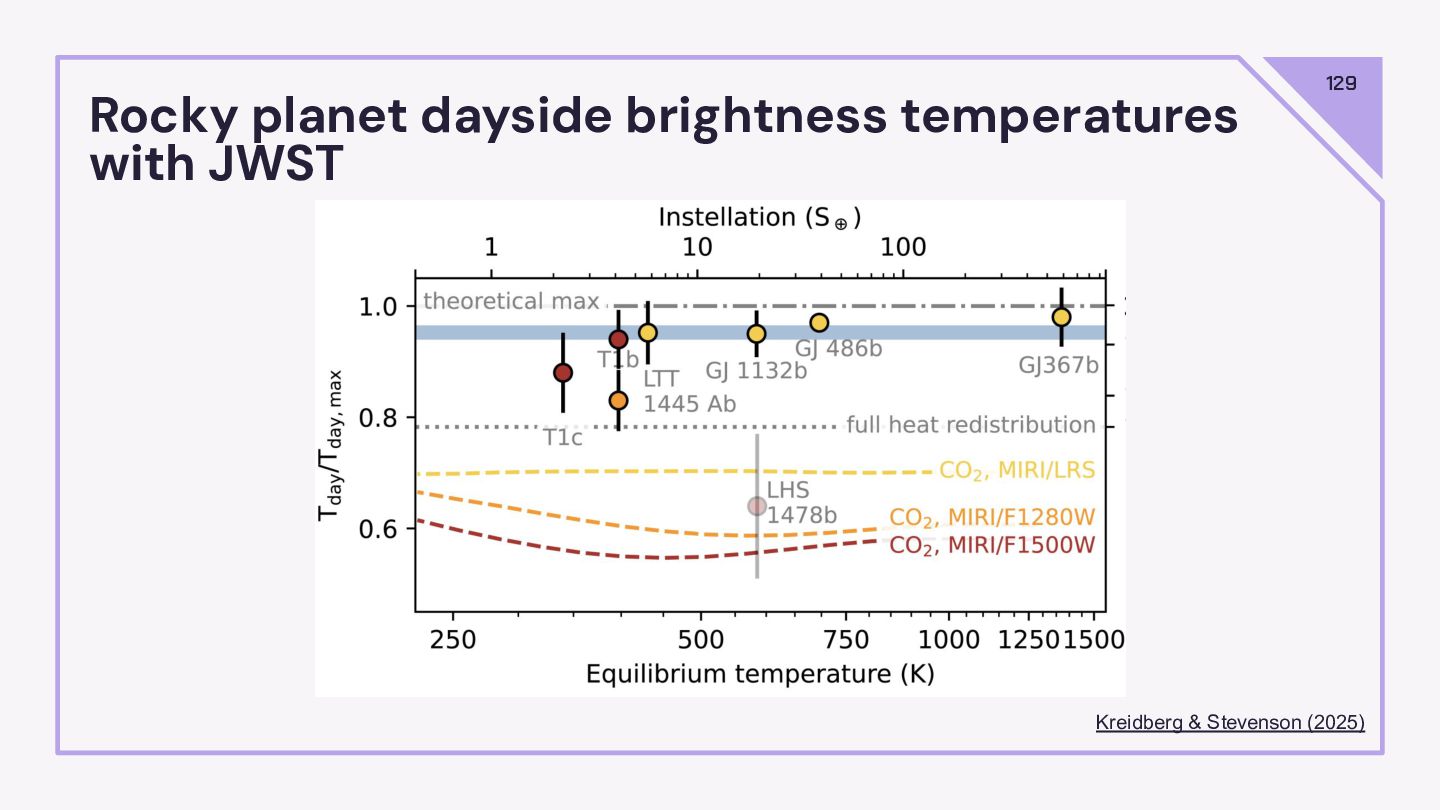
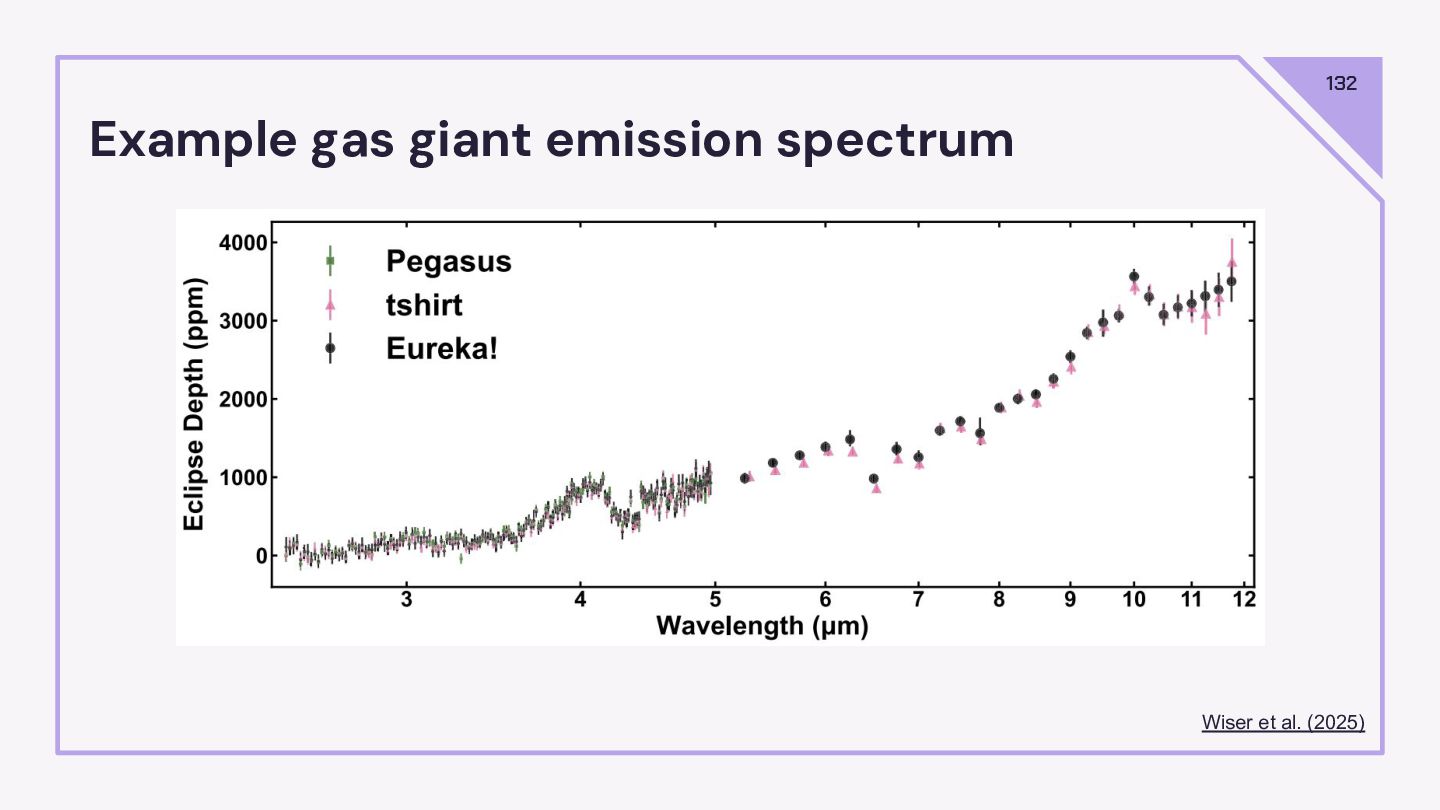
  81. Emission Spectroscopy 125 An emission spectrum probes the brightness temperature

    in the atmosphere as a function of wavelength. Emission spectra provide key constraints on temperature profiles of giant exoplanets or albedo properties for small exoplanets.
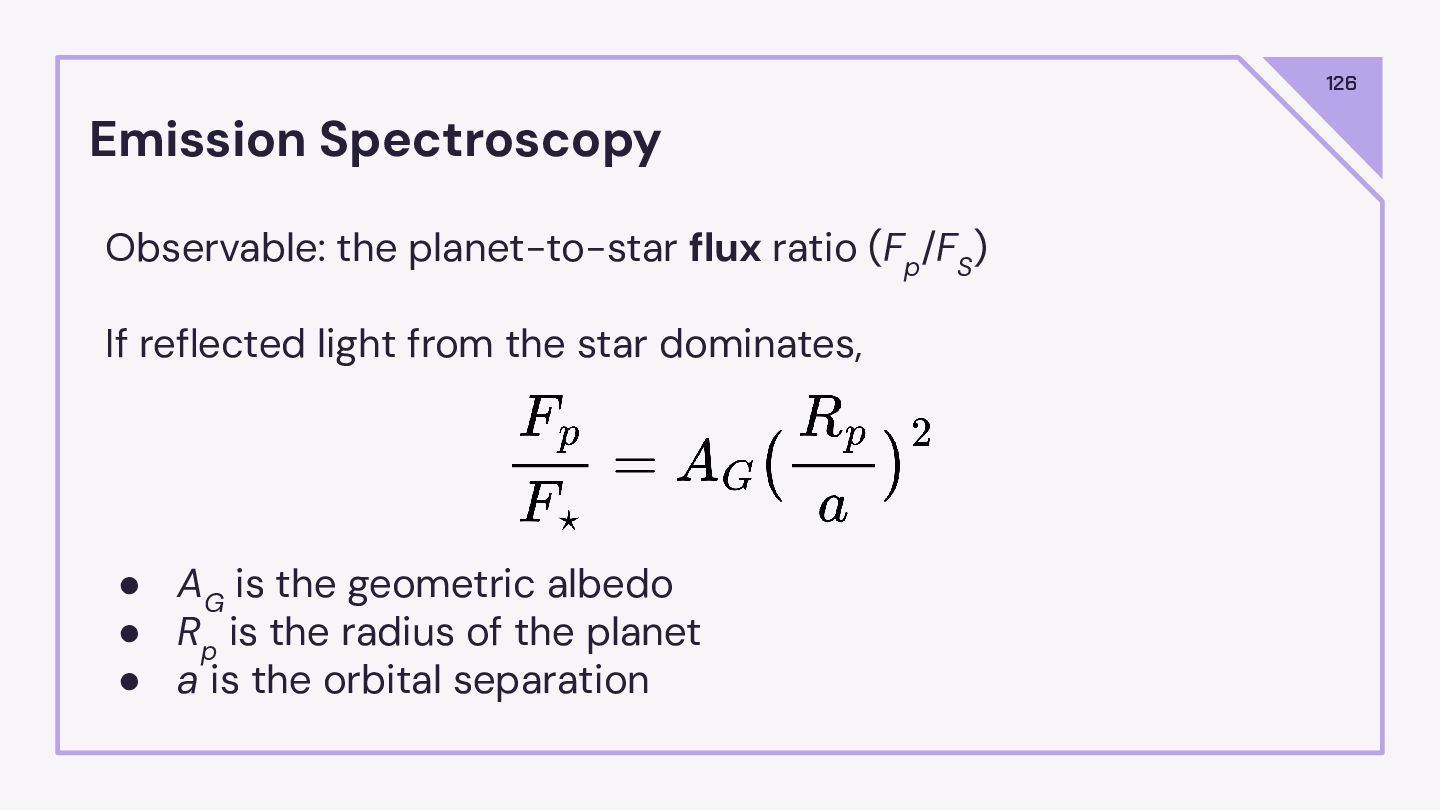
  82. Emission Spectroscopy 126 Observable: the planet-to-star flux ratio (F p

    /F S ) If reflected light from the star dominates, • A G is the geometric albedo • R p is the radius of the planet • a is the orbital separation
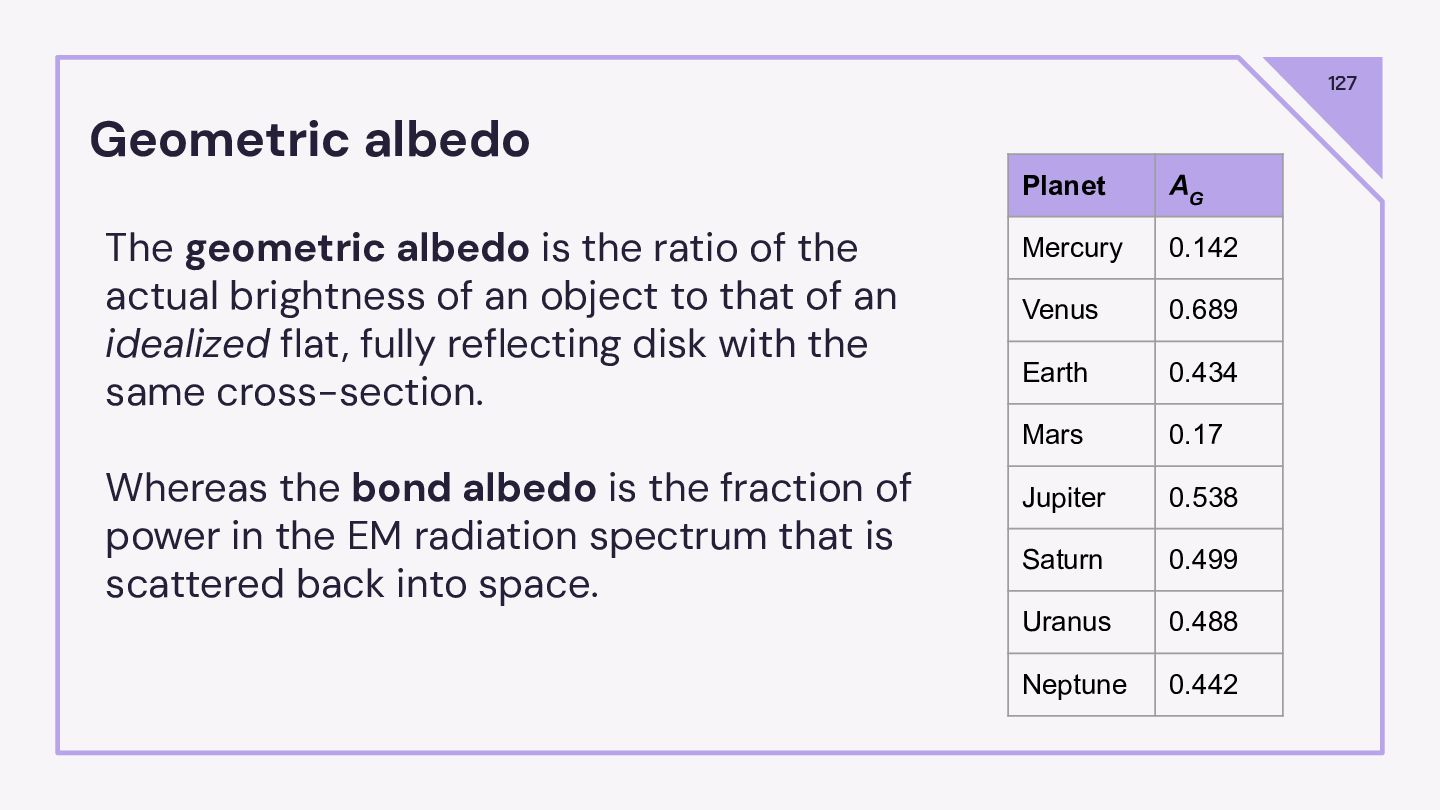
  83. Geometric albedo 127 The geometric albedo is the ratio of

    the actual brightness of an object to that of an idealized flat, fully reflecting disk with the same cross-section. Whereas the bond albedo is the fraction of power in the EM radiation spectrum that is scattered back into space. Planet A G Mercury 0.142 Venus 0.689 Earth 0.434 Mars 0.17 Jupiter 0.538 Saturn 0.499 Uranus 0.488 Neptune 0.442
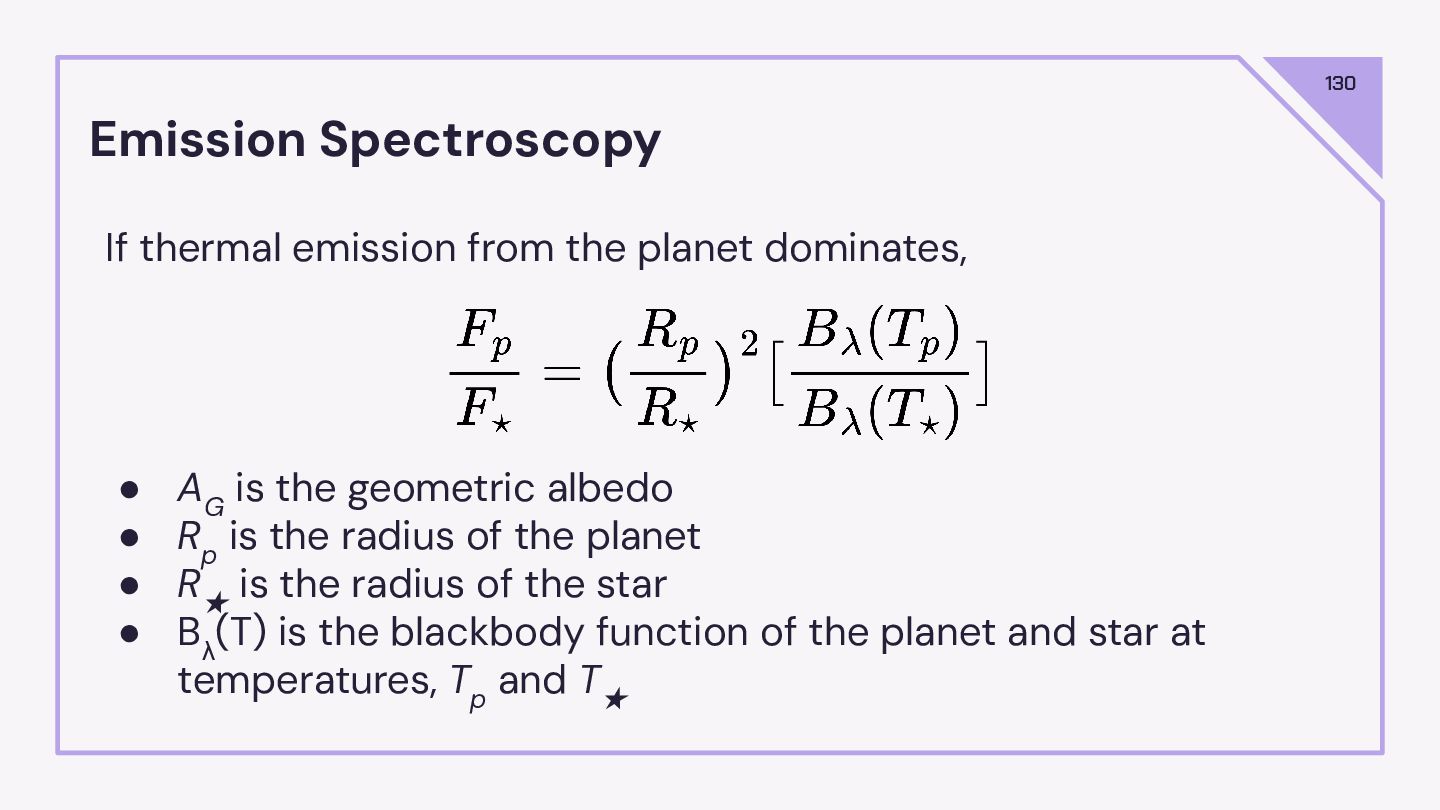
  84. Emission Spectroscopy 130 If thermal emission from the planet dominates,

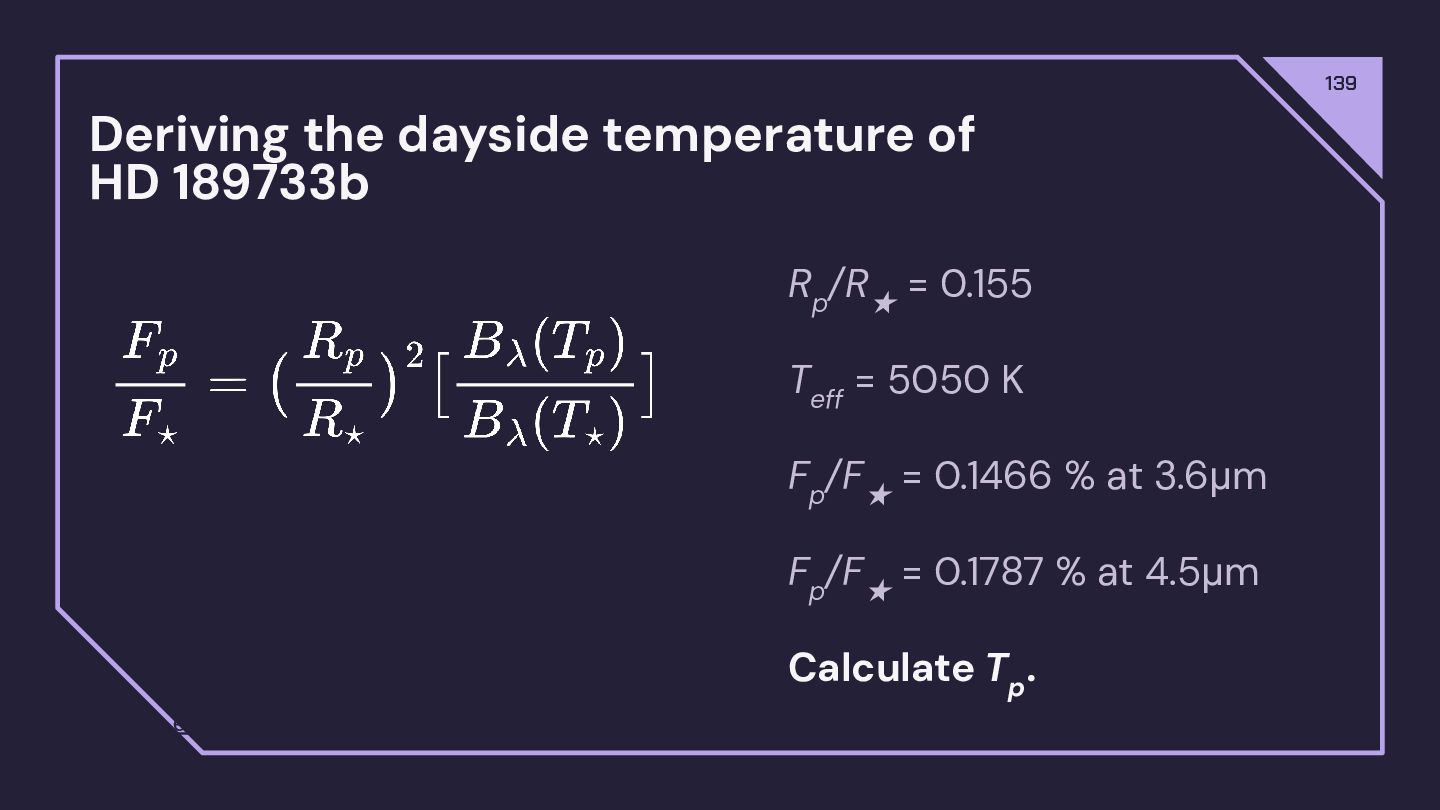
    • A G is the geometric albedo • R p is the radius of the planet • R ★ is the radius of the star • B λ (T) is the blackbody function of the planet and star at temperatures, T p and T ★
  85. Advantages 131 The advantage of emission spectroscopy is that you

    are probing the full dayside of the planet, rather than just the limbs from transmission.
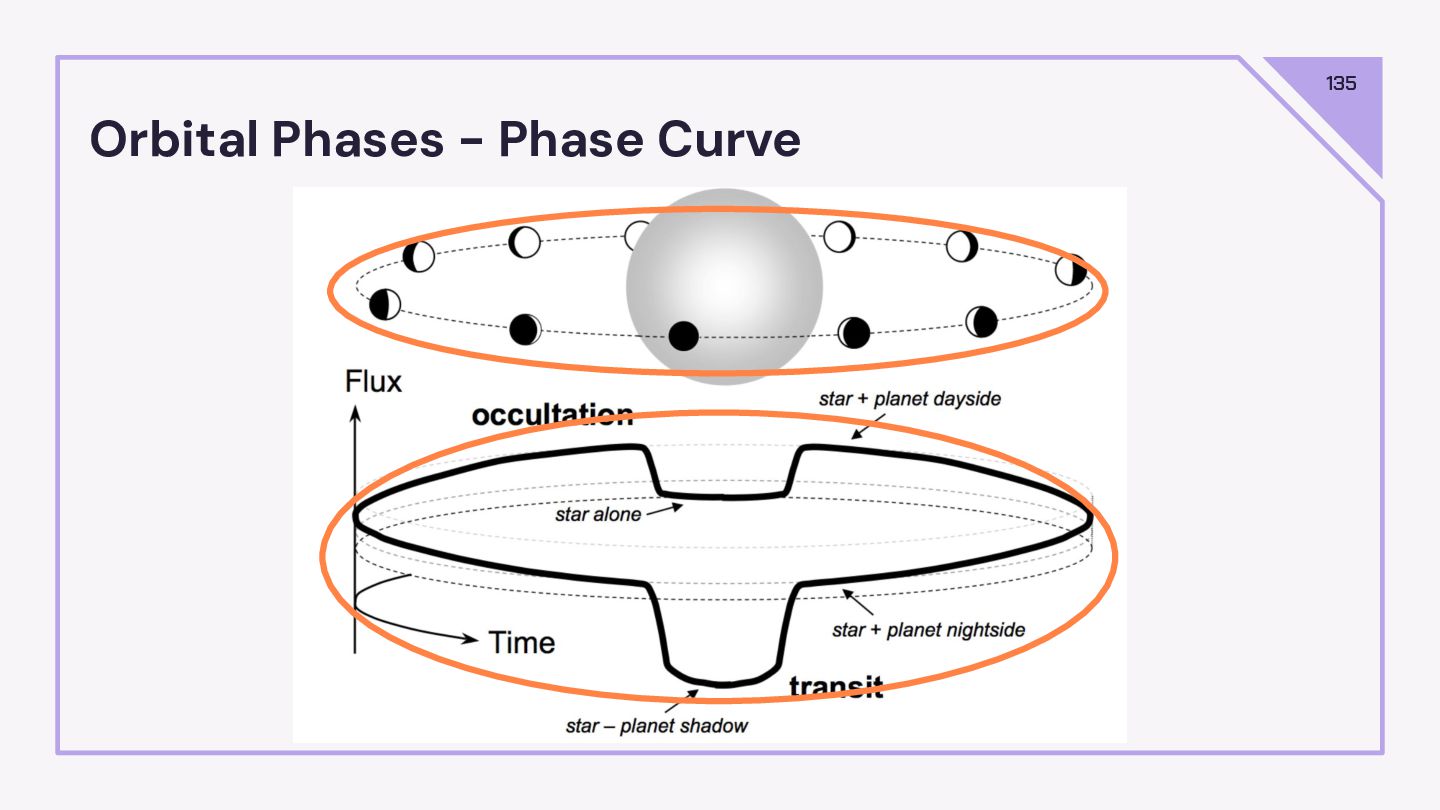
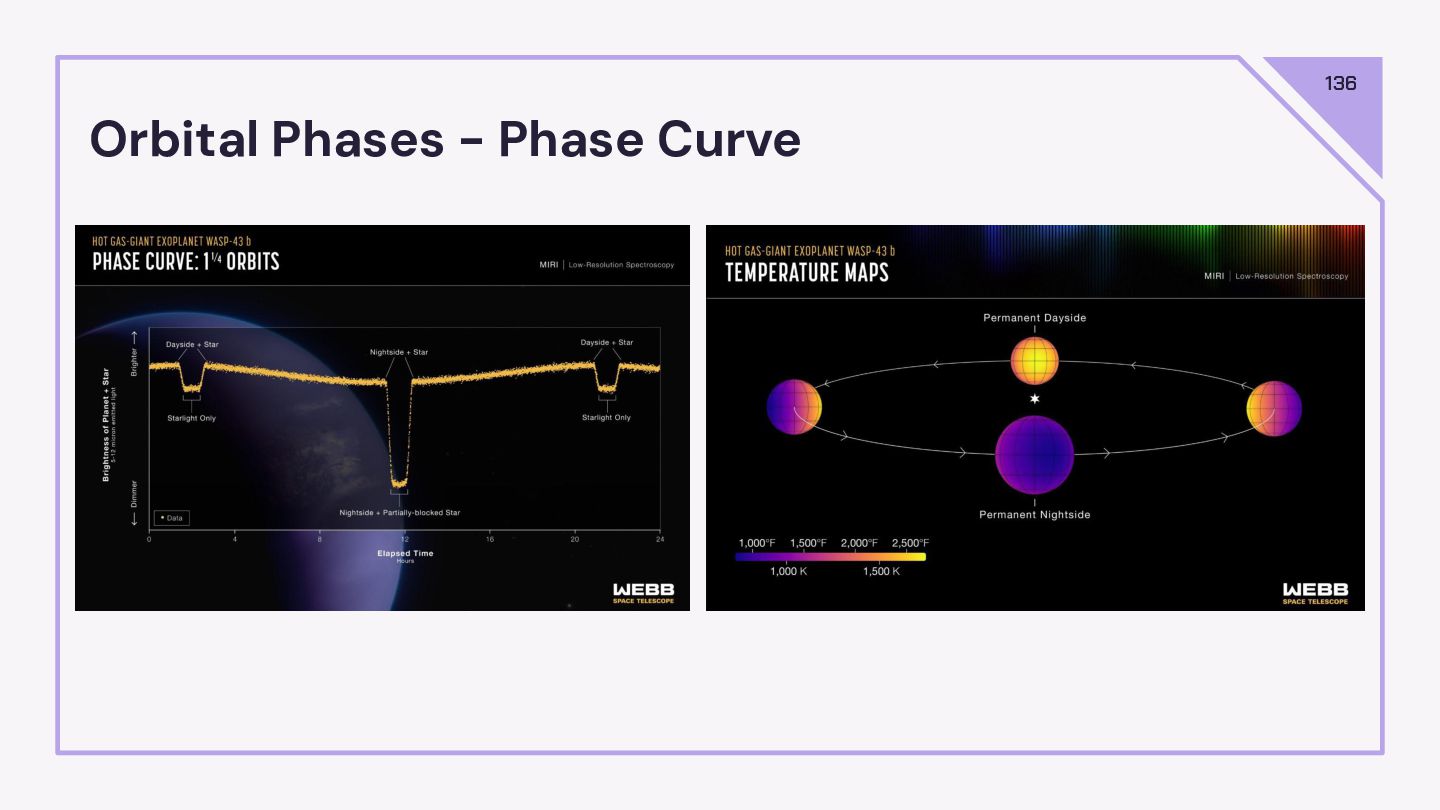
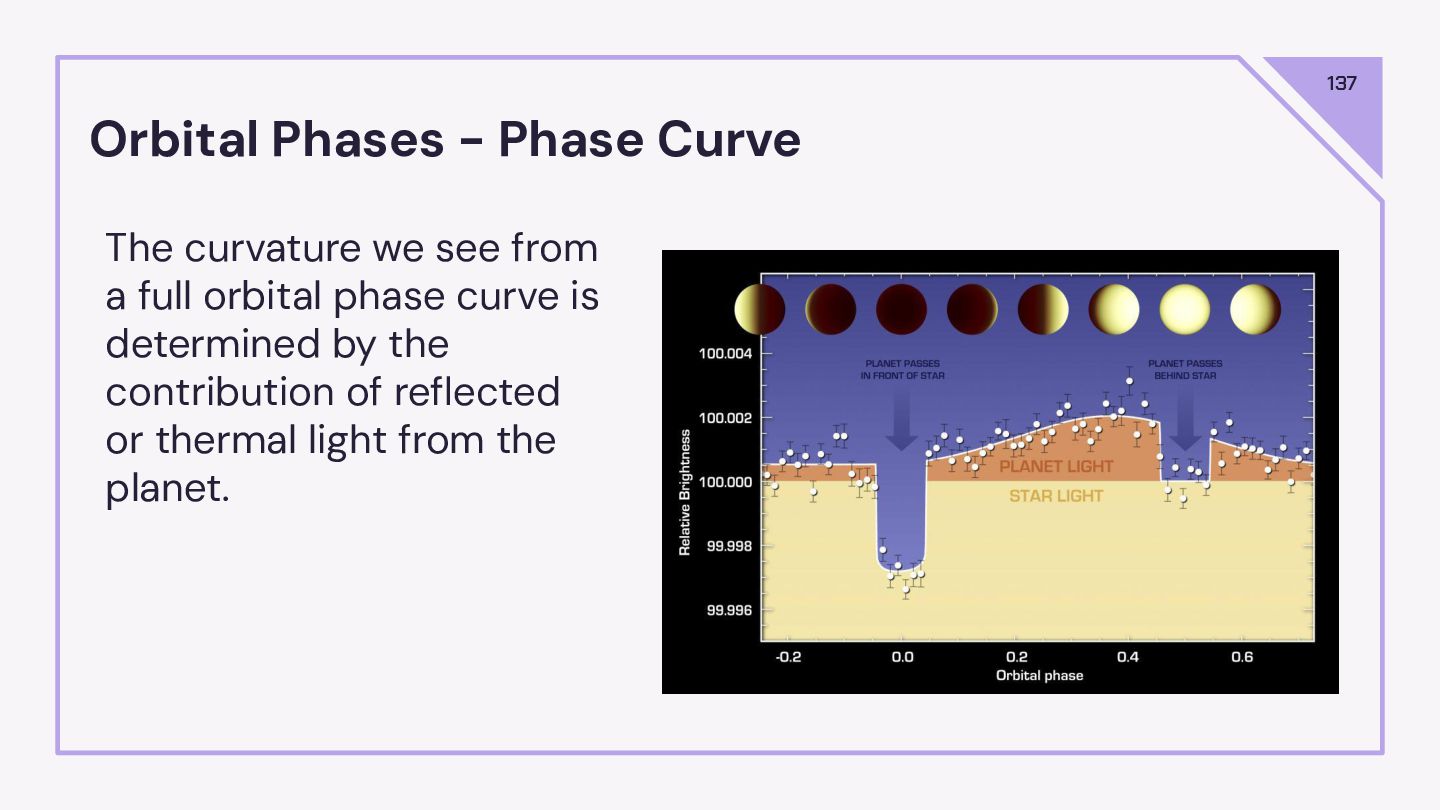
  86. 137 Orbital Phases - Phase Curve The curvature we see

    from a full orbital phase curve is determined by the contribution of reflected or thermal light from the planet.
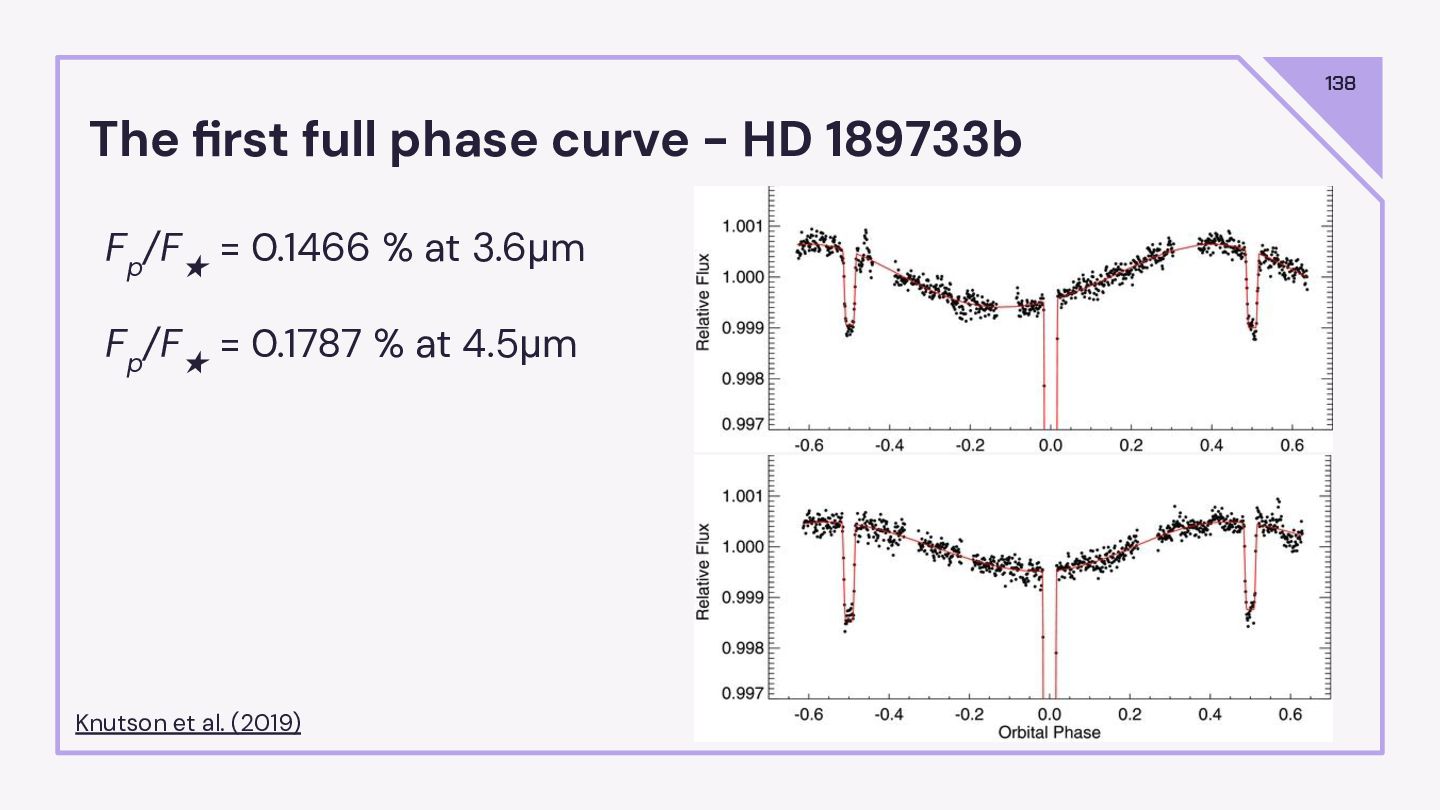
  87. 138 The first full phase curve - HD 189733b F

    p /F ★ = 0.1466 % at 3.6μm F p /F ★ = 0.1787 % at 4.5μm Knutson et al. (2019)
  88. 139 Deriving the dayside temperature of HD 189733b Knutson et

    al. (2019) R p /R ★ = 0.155 T eff = 5050 K F p /F ★ = 0.1466 % at 3.6μm F p /F ★ = 0.1787 % at 4.5μm Calculate T p .
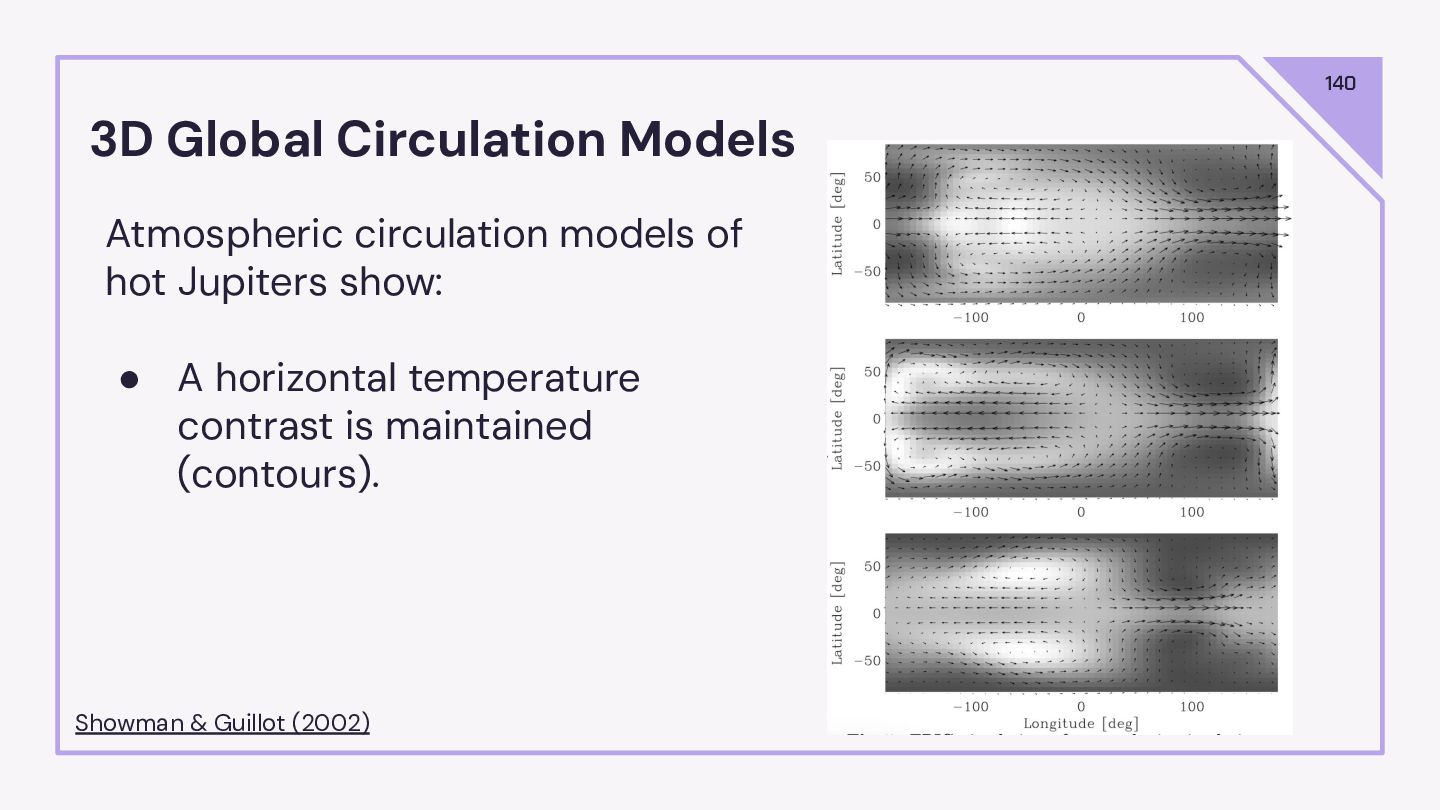
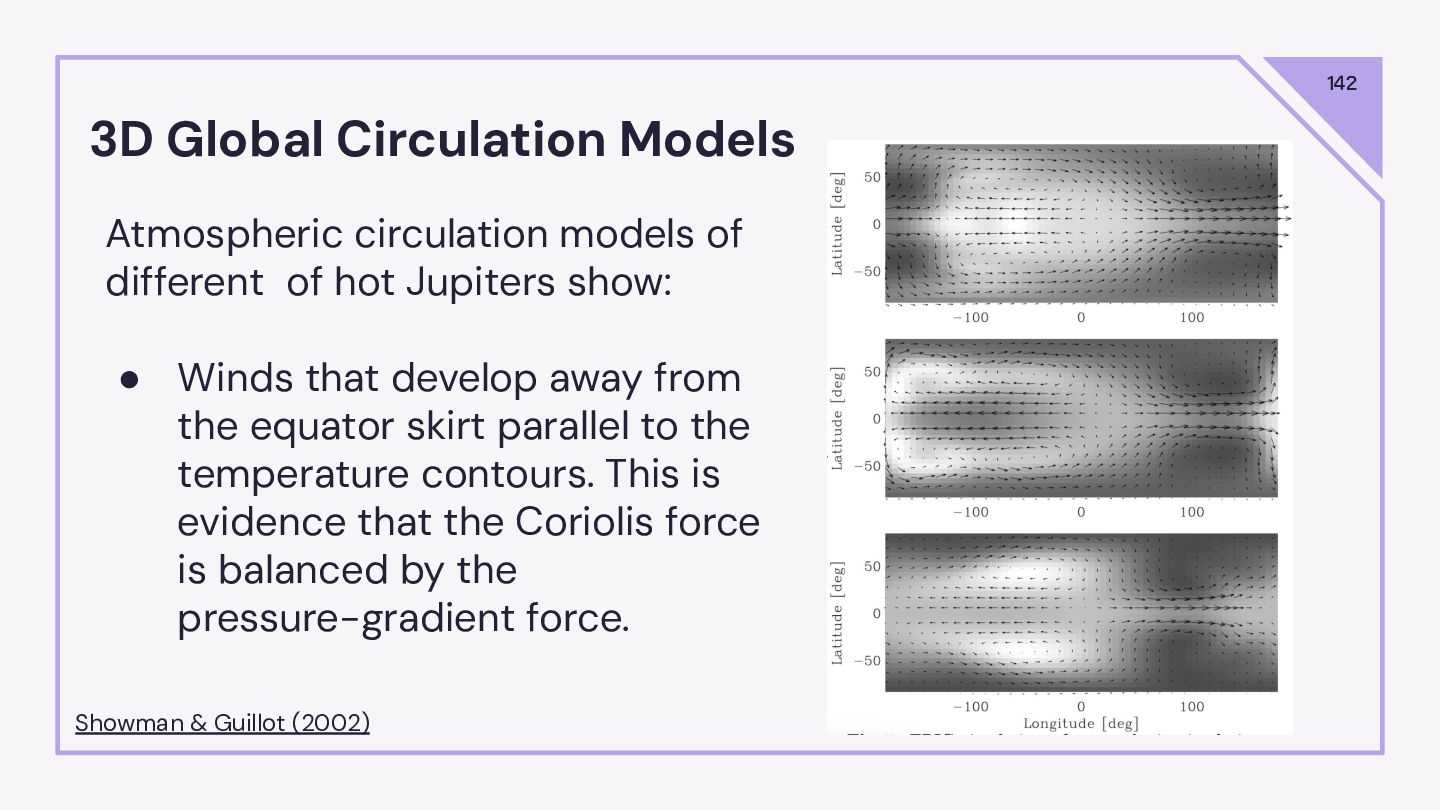
  89. 140 3D Global Circulation Models Atmospheric circulation models of hot

    Jupiters show: • A horizontal temperature contrast is maintained (contours). Showman & Guillot (2002)
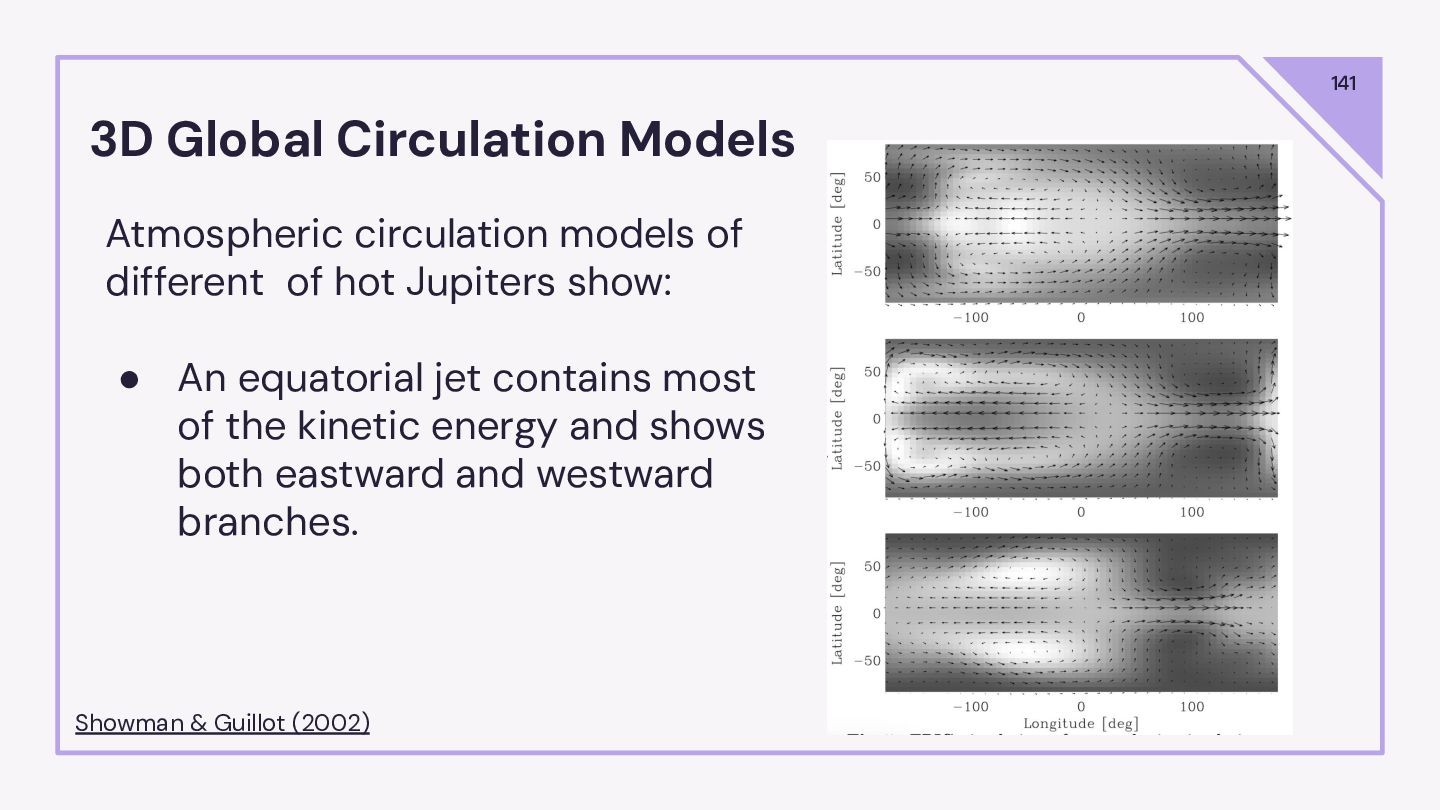
  90. 141 3D Global Circulation Models Atmospheric circulation models of different

    of hot Jupiters show: • An equatorial jet contains most of the kinetic energy and shows both eastward and westward branches. Showman & Guillot (2002)
  91. 142 3D Global Circulation Models Atmospheric circulation models of different

    of hot Jupiters show: • Winds that develop away from the equator skirt parallel to the temperature contours. This is evidence that the Coriolis force is balanced by the pressure-gradient force. Showman & Guillot (2002)
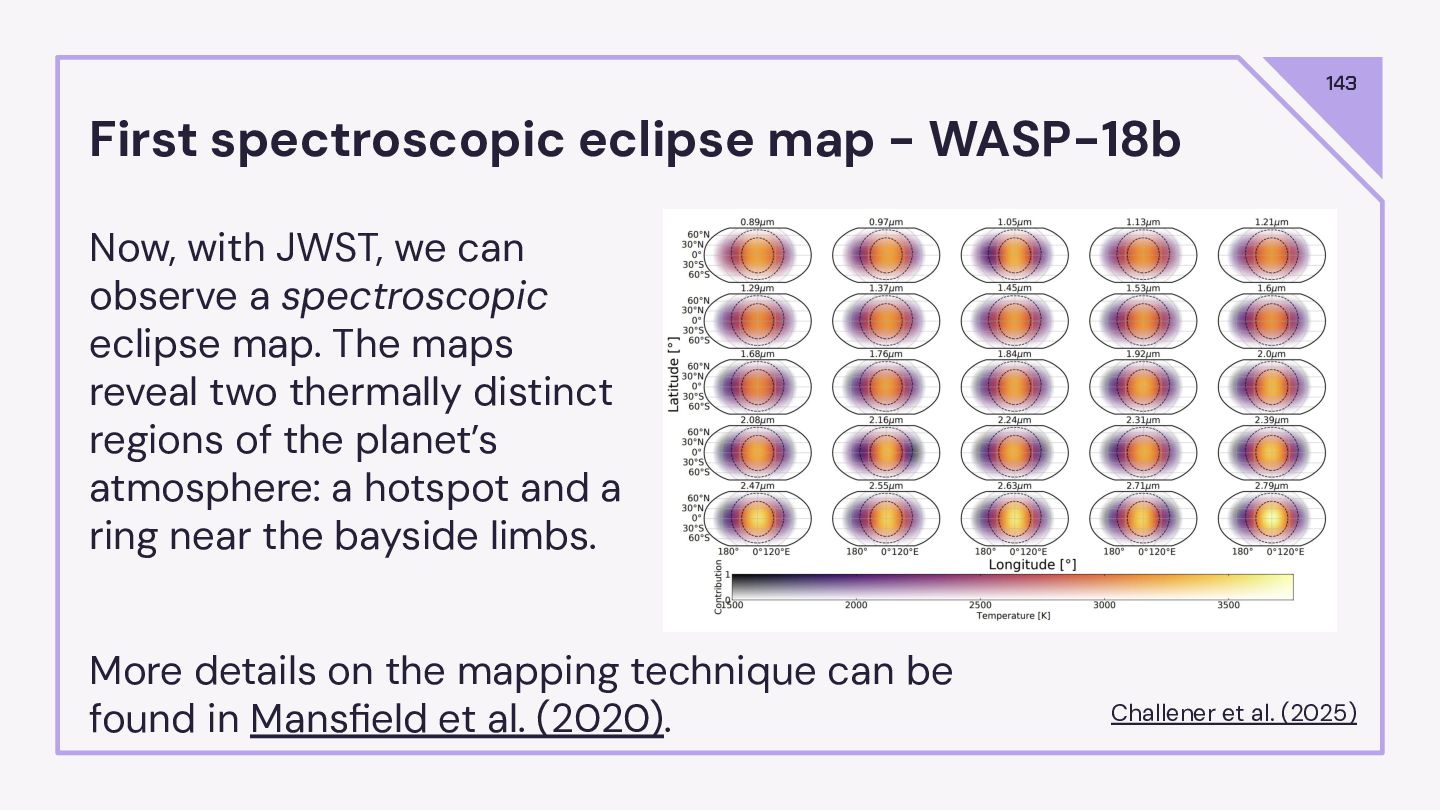
  92. First spectroscopic eclipse map - WASP-18b 143 Challener et al.

    (2025) Now, with JWST, we can observe a spectroscopic eclipse map. The maps reveal two thermally distinct regions of the planet’s atmosphere: a hotspot and a ring near the bayside limbs. More details on the mapping technique can be found in Mansfield et al. (2020).
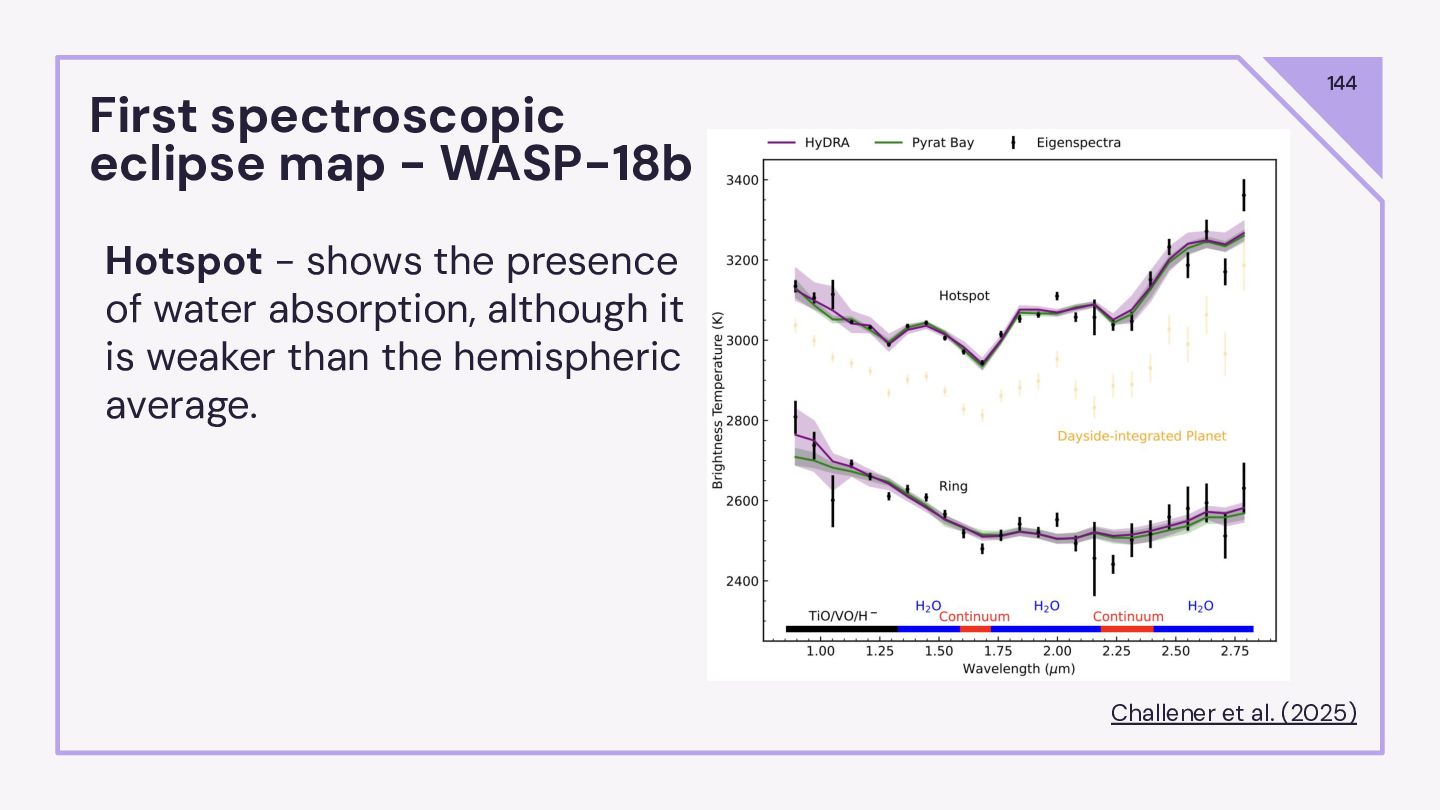
  93. First spectroscopic eclipse map - WASP-18b 144 Challener et al.

    (2025) Hotspot - shows the presence of water absorption, although it is weaker than the hemispheric average.
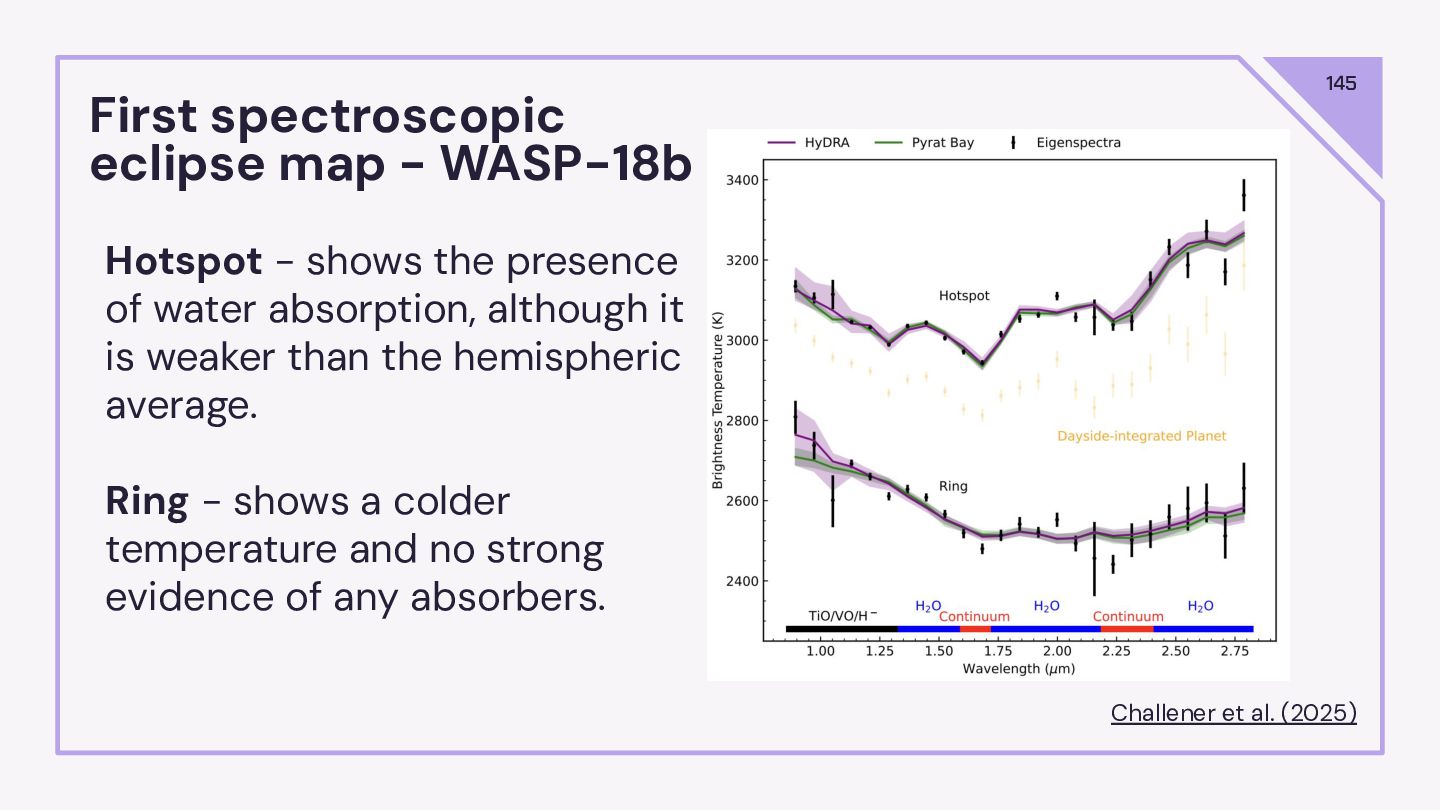
  94. First spectroscopic eclipse map - WASP-18b 145 Challener et al.

    (2025) Hotspot - shows the presence of water absorption, although it is weaker than the hemispheric average. Ring - shows a colder temperature and no strong evidence of any absorbers.
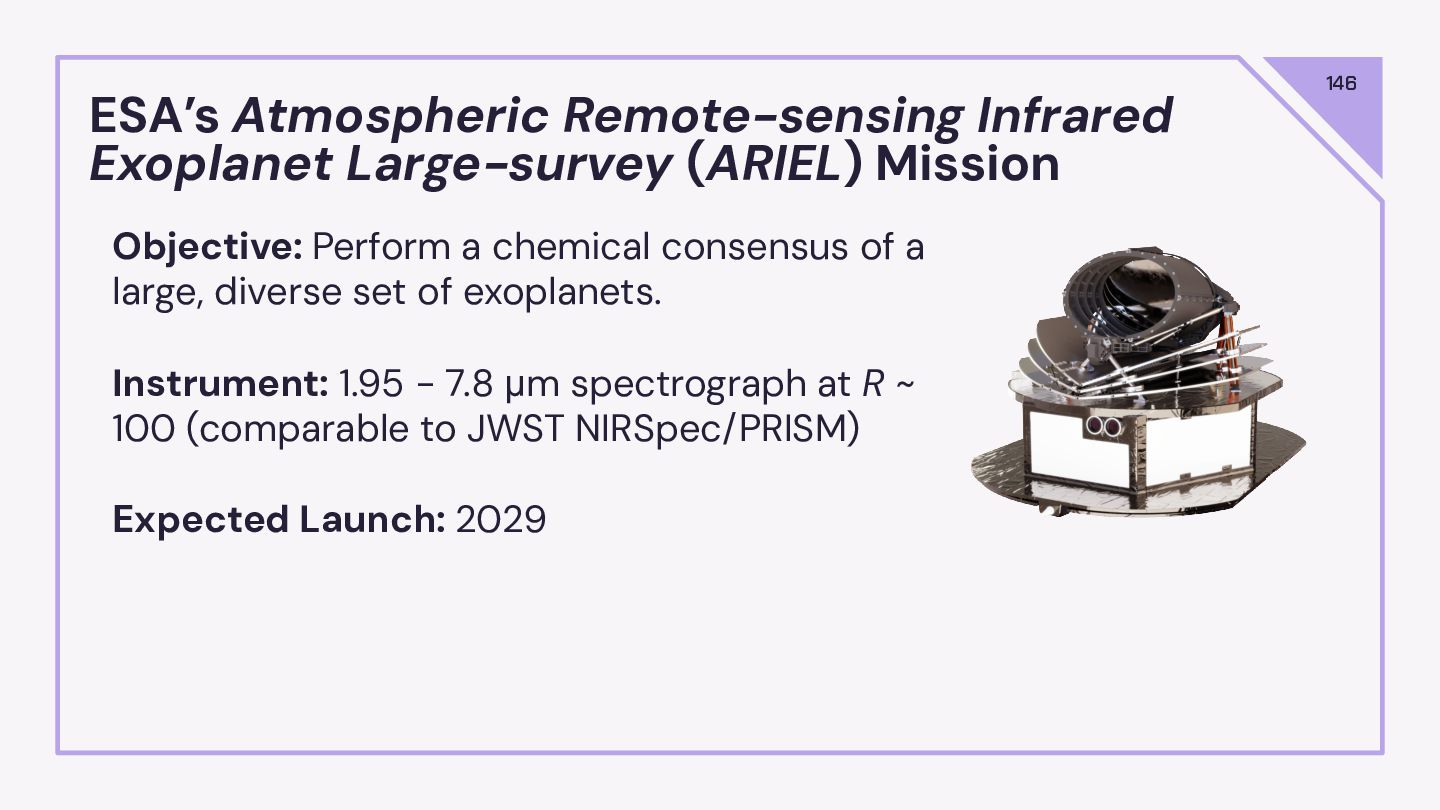
  95. ESA’s Atmospheric Remote-sensing Infrared Exoplanet Large-survey (ARIEL) Mission 146 Objective:

    Perform a chemical consensus of a large, diverse set of exoplanets. Instrument: 1.95 - 7.8 μm spectrograph at R ~ 100 (comparable to JWST NIRSpec/PRISM) Expected Launch: 2029
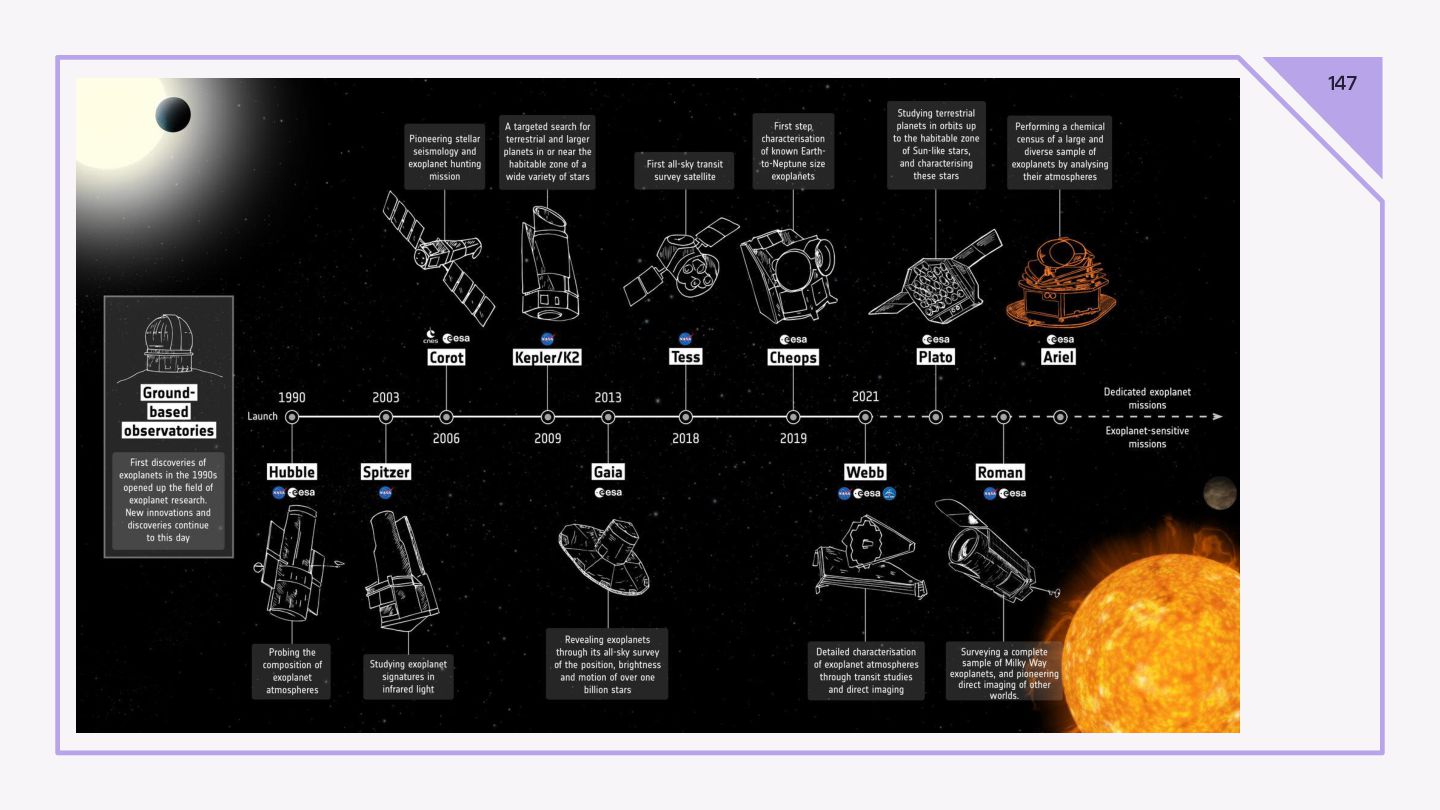
  96. 147

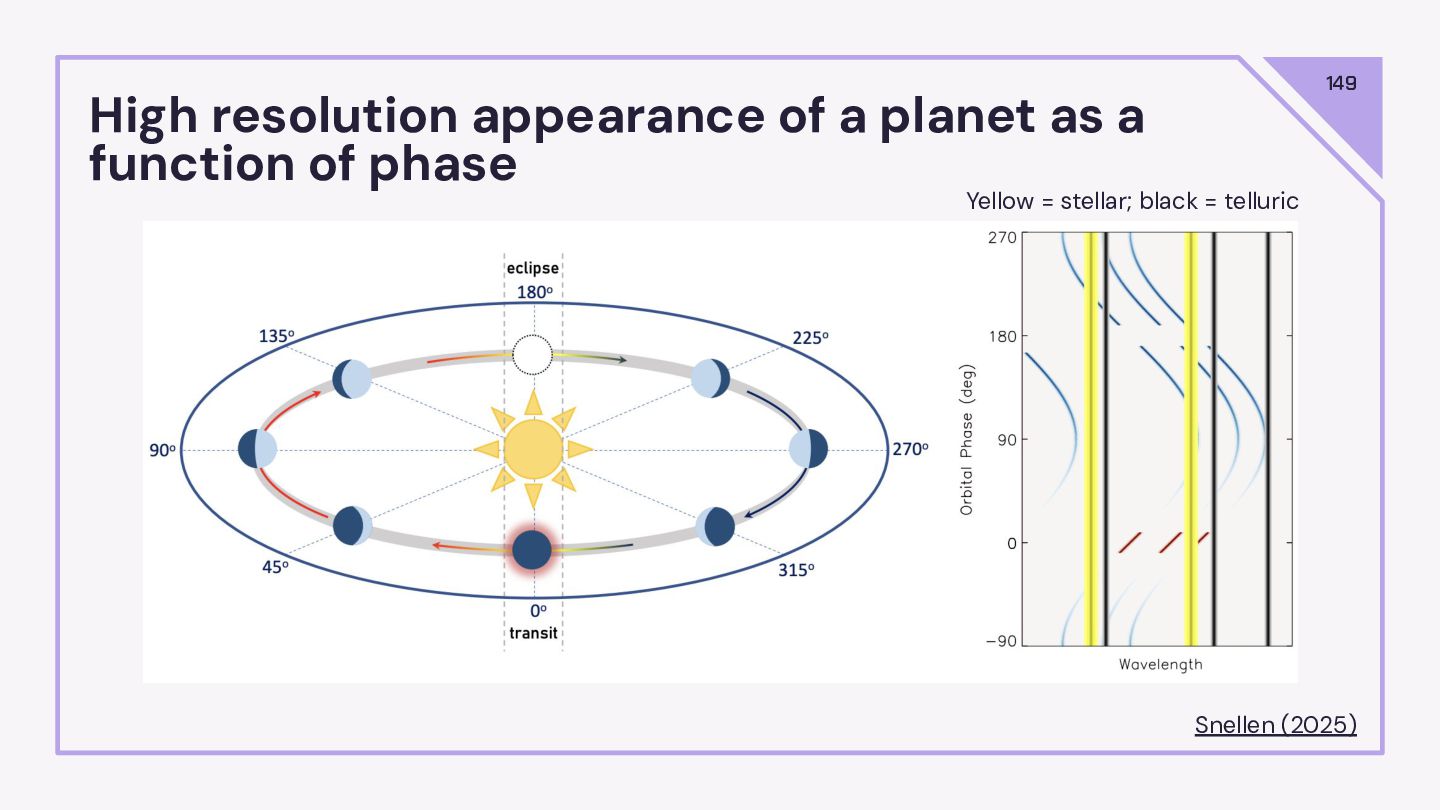
  97. High resolution appearance of a planet as a function of

    phase 149 Snellen (2025) Yellow = stellar; black = telluric
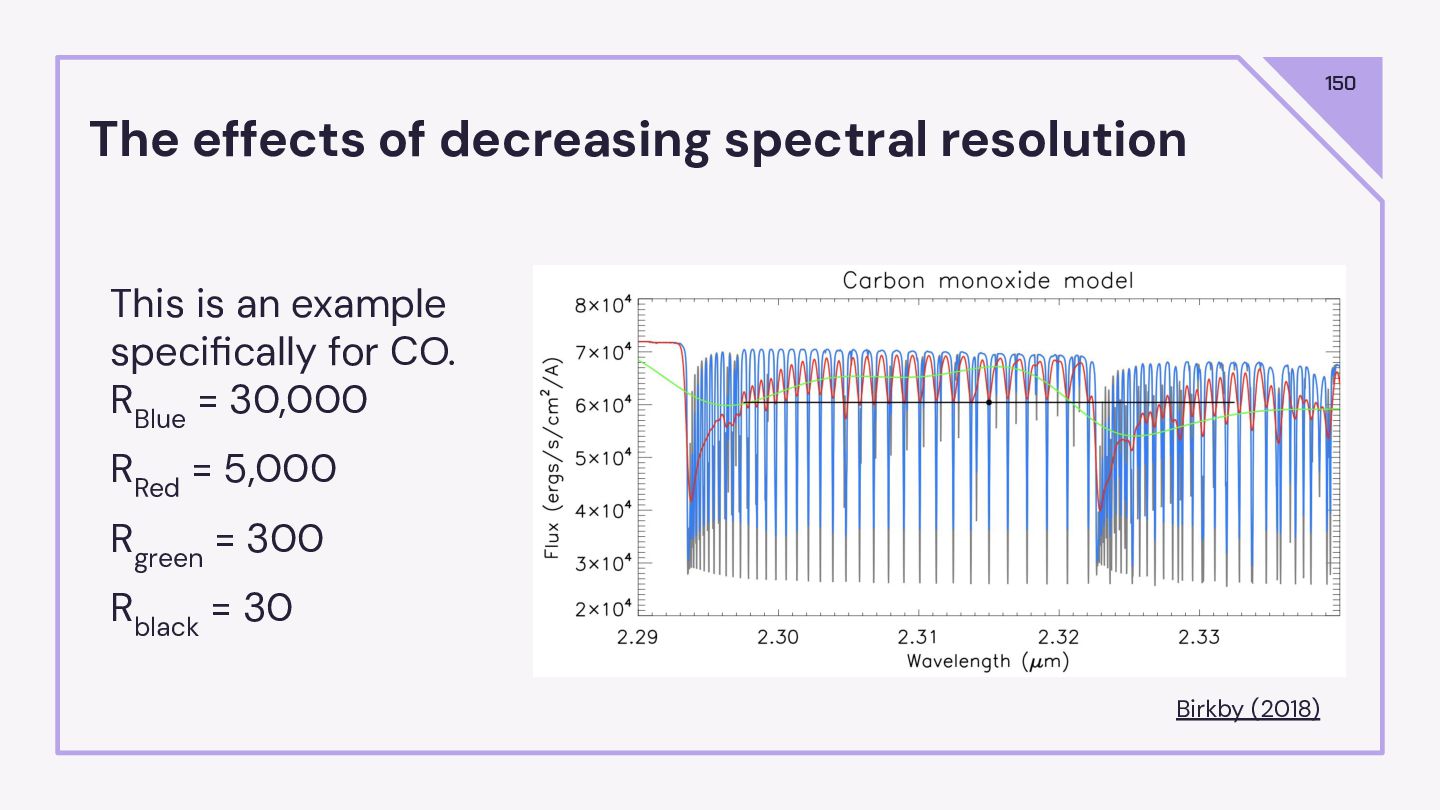
  98. The effects of decreasing spectral resolution 150 This is an

    example specifically for CO. R Blue = 30,000 R Red = 5,000 R green = 300 R black = 30 Birkby (2018)
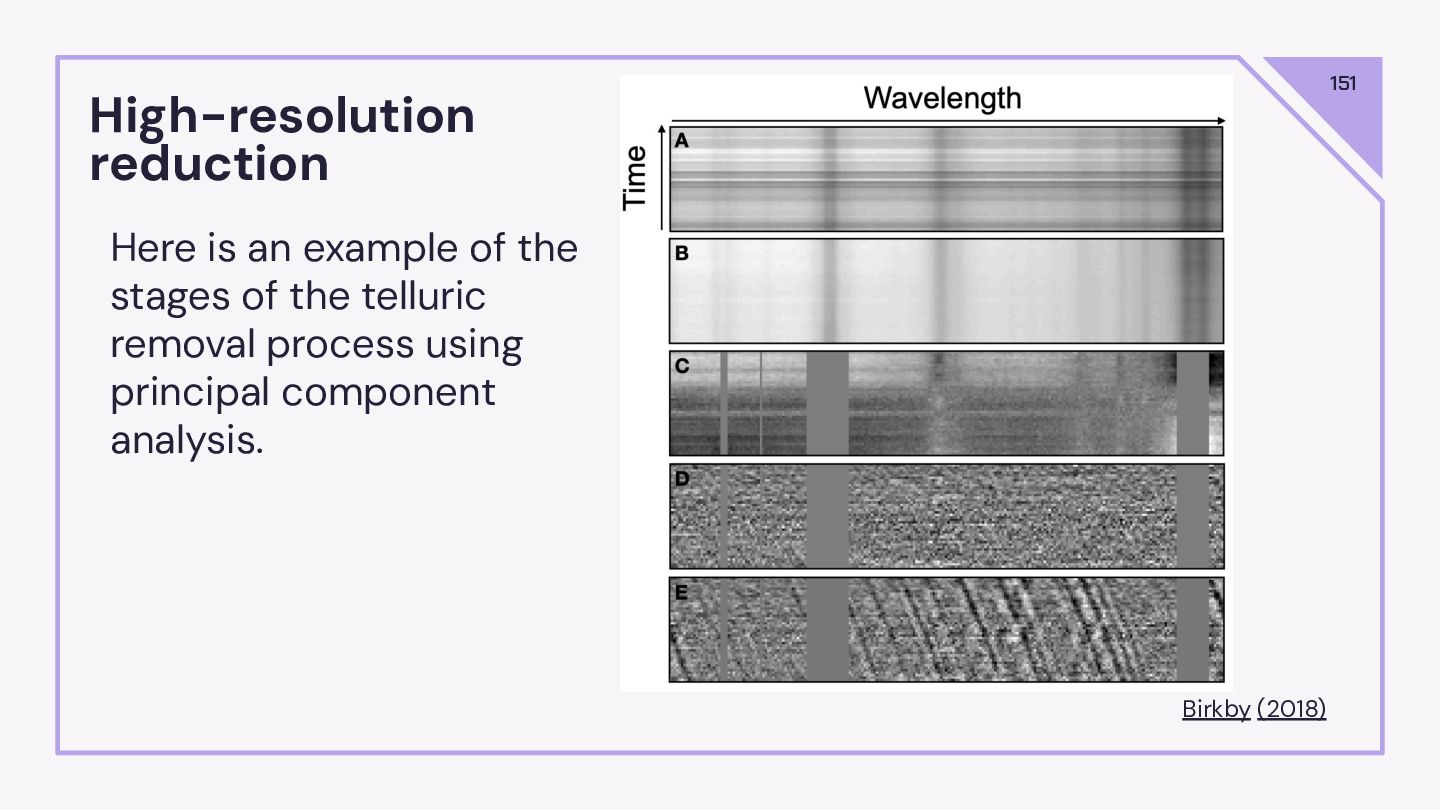
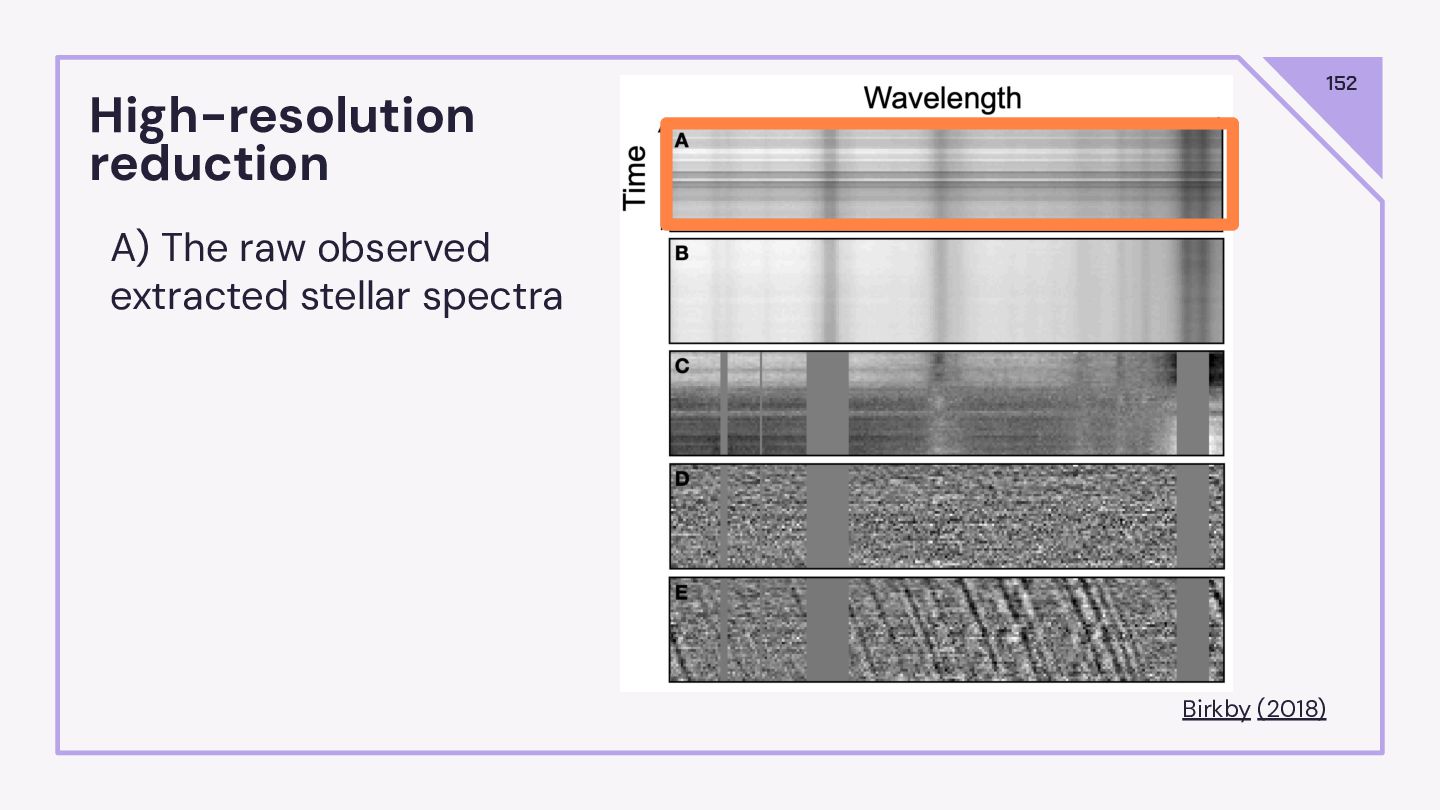
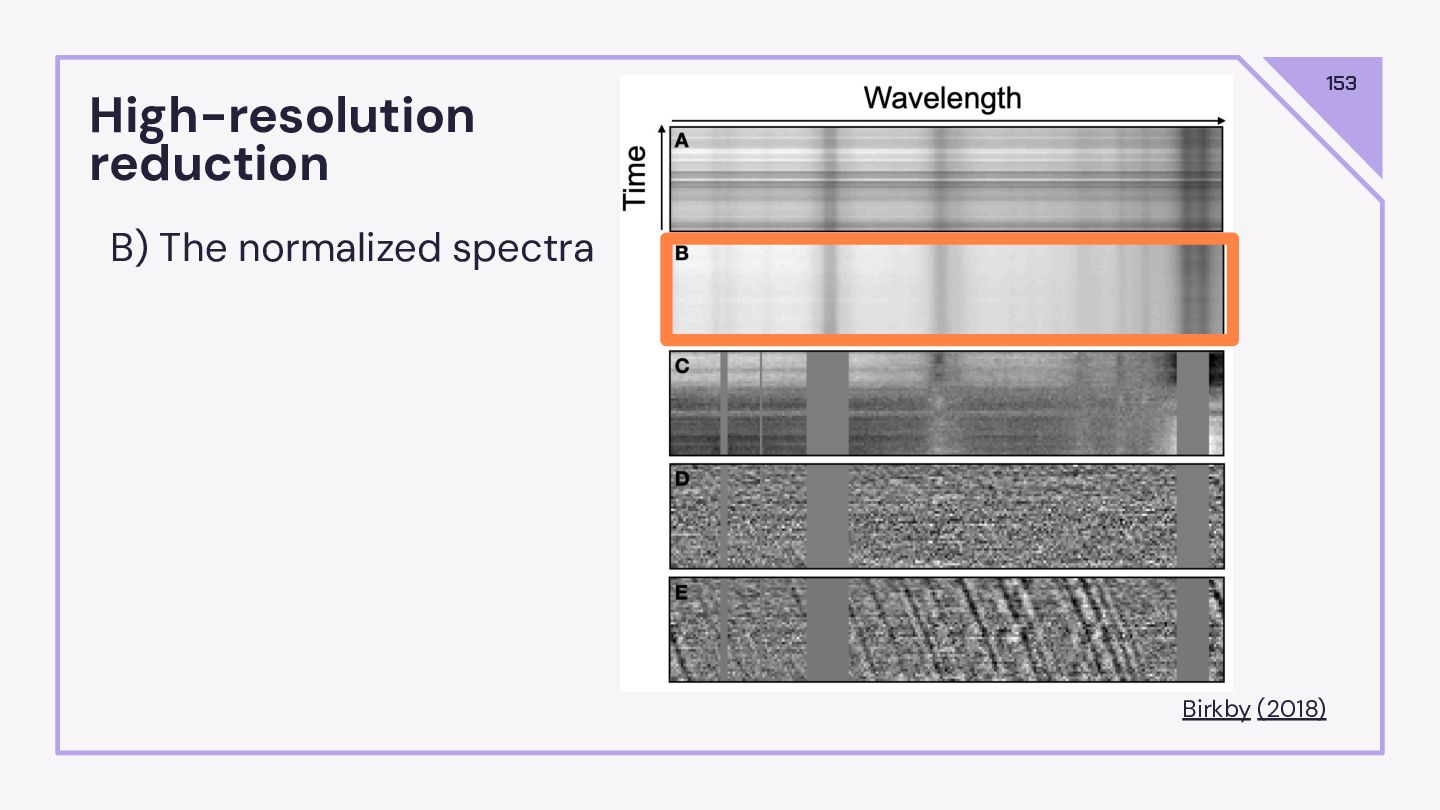
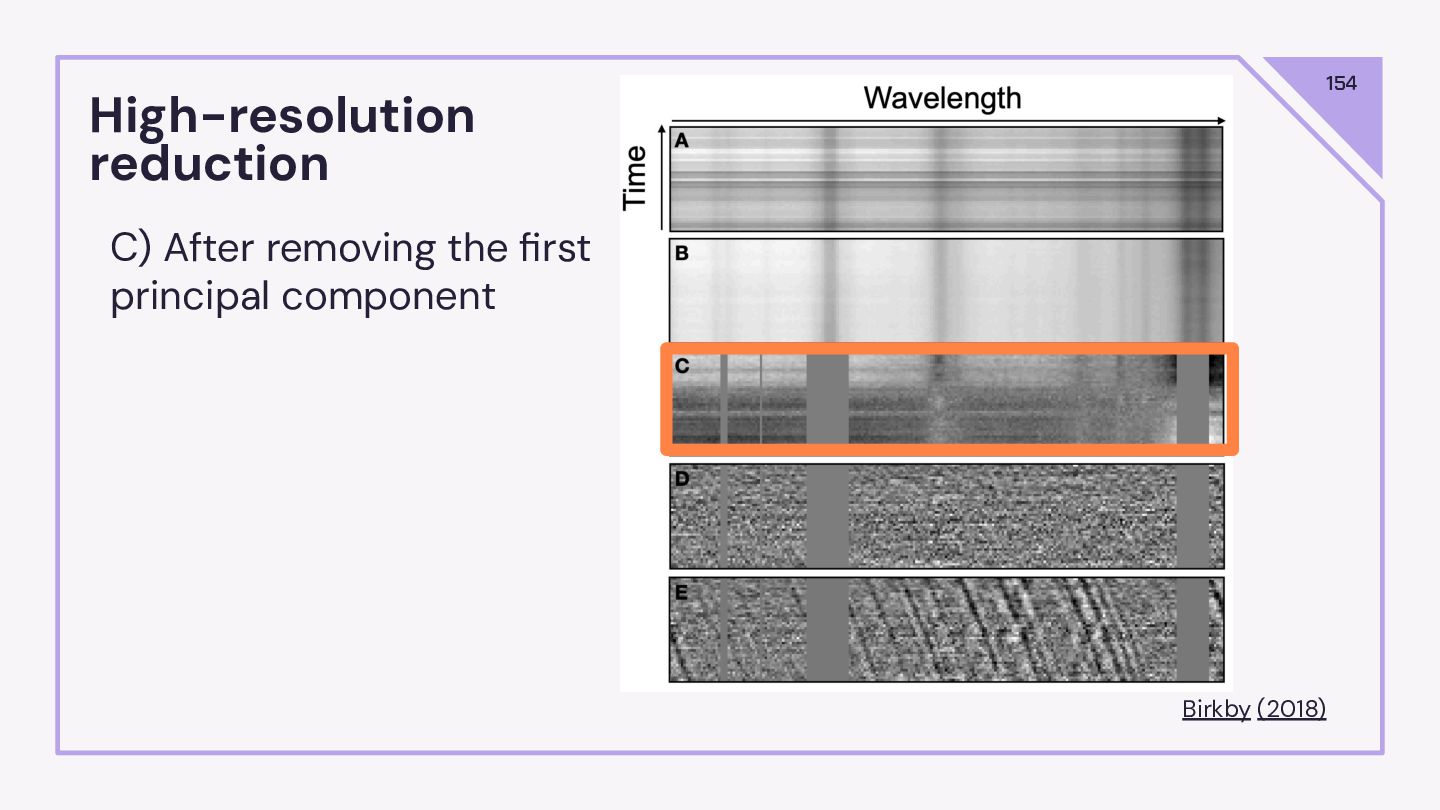
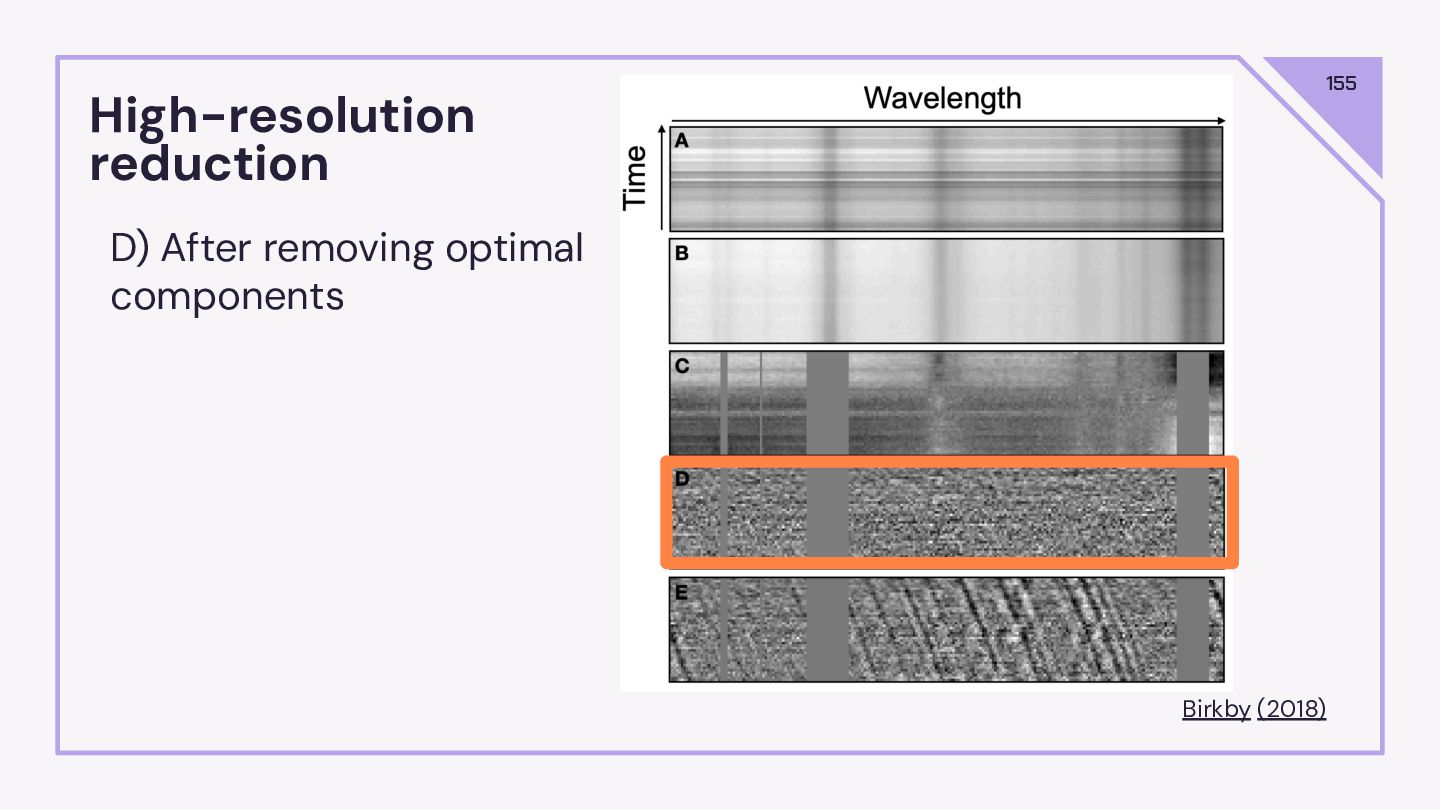
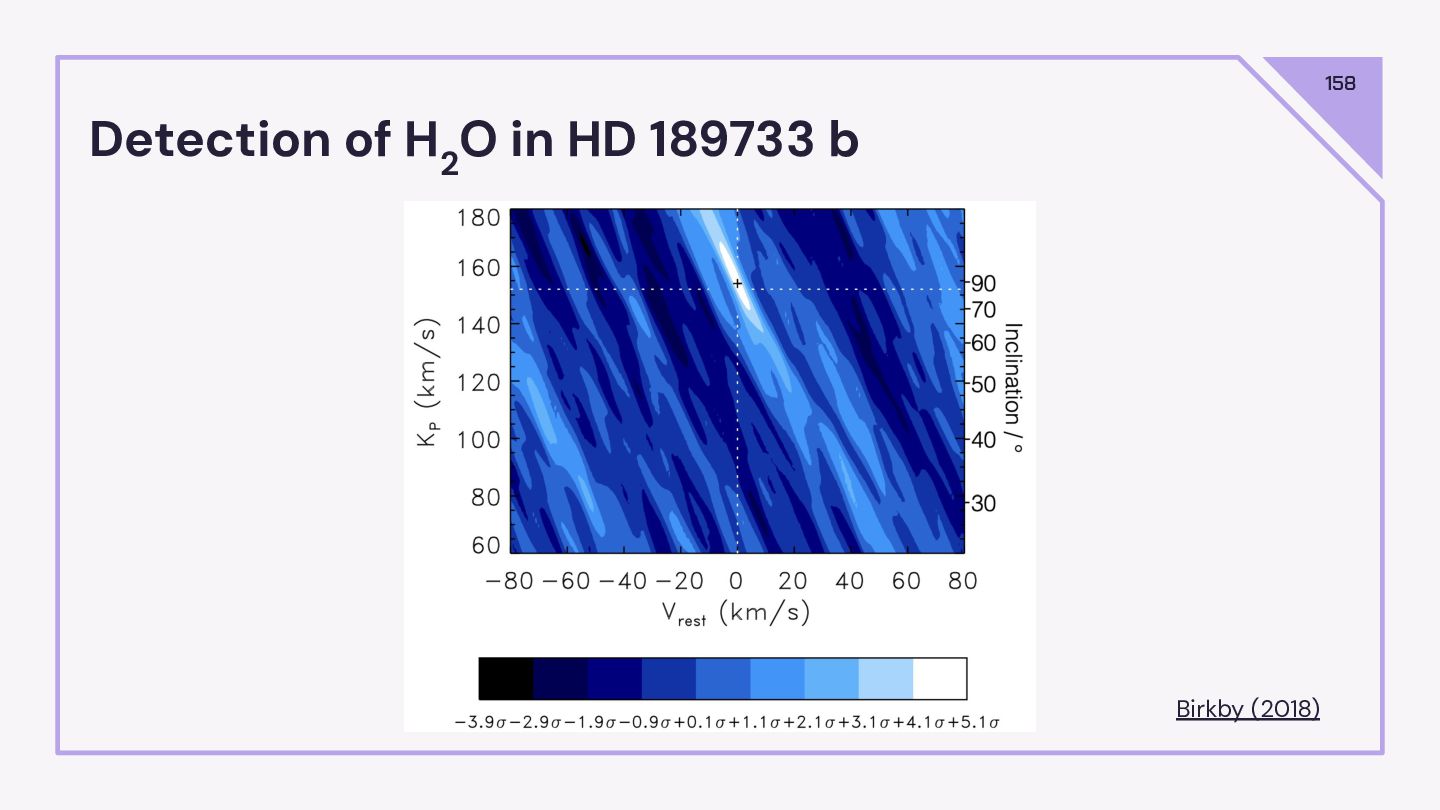
  99. High-resolution reduction 151 Here is an example of the stages

    of the telluric removal process using principal component analysis. Birkby (2018)
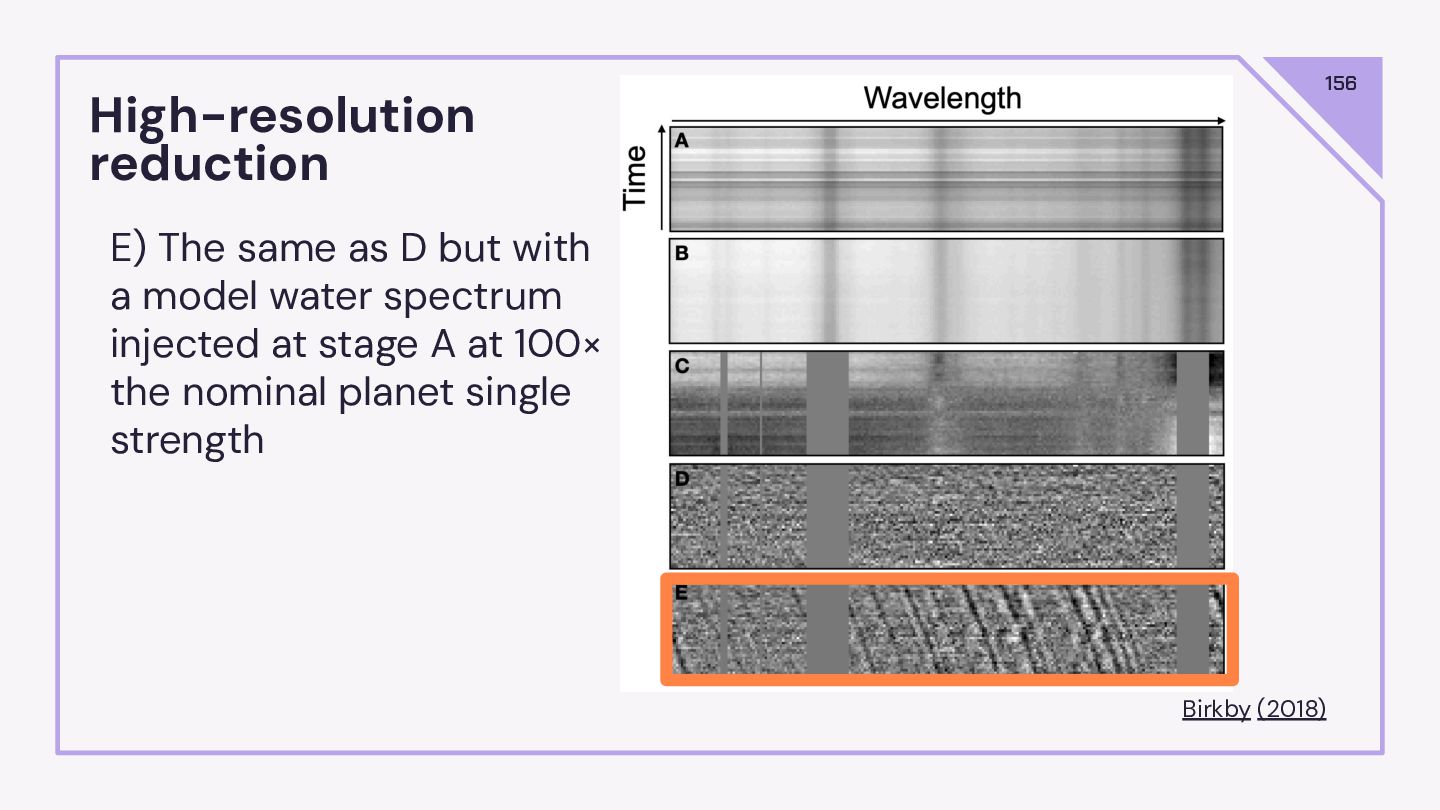
  100. High-resolution reduction 156 E) The same as D but with

    a model water spectrum injected at stage A at 100× the nominal planet single strength Birkby (2018)
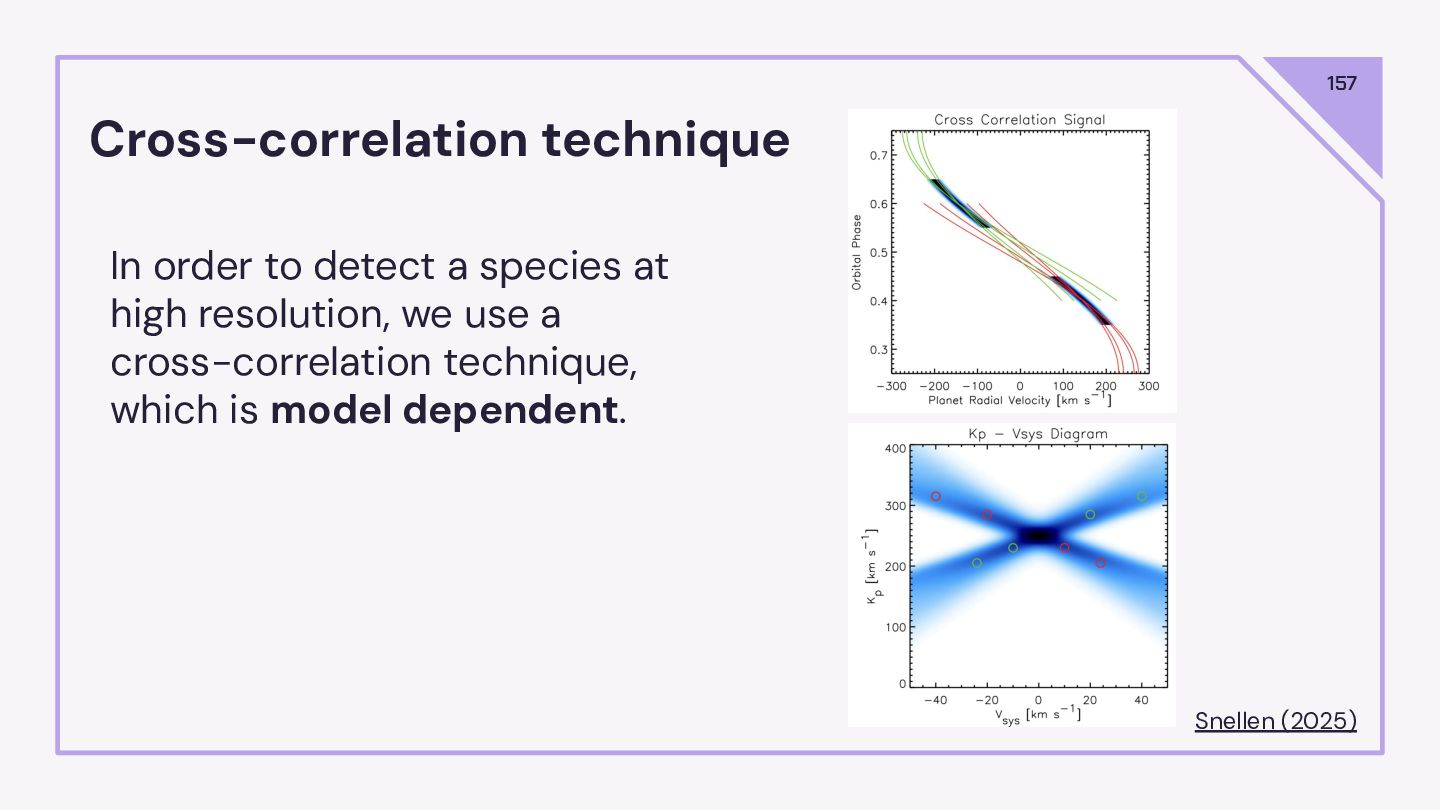
  101. Cross-correlation technique 157 Snellen (2025) In order to detect a

    species at high resolution, we use a cross-correlation technique, which is model dependent.
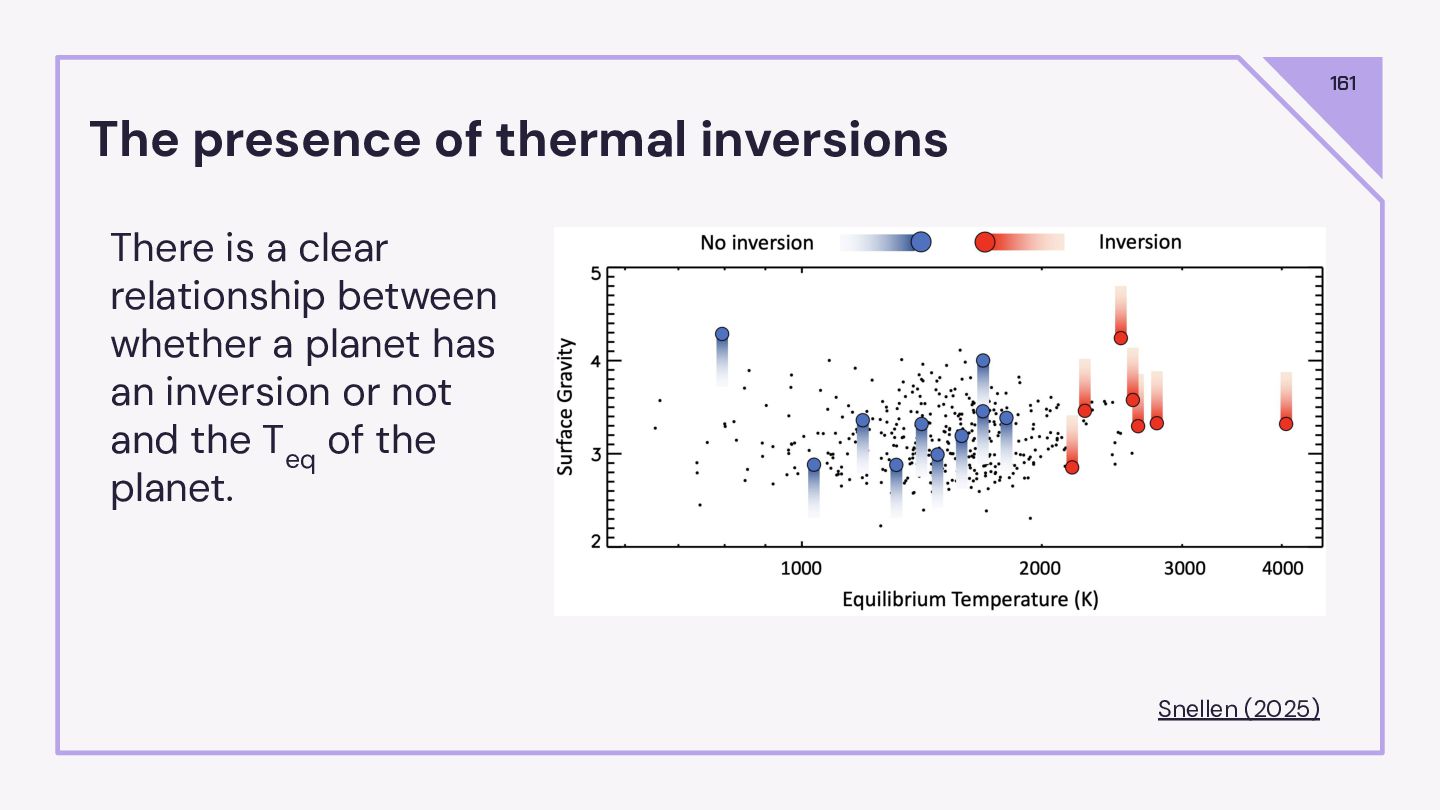
  102. The presence of thermal inversions 161 There is a clear

    relationship between whether a planet has an inversion or not and the T eq of the planet. Snellen (2025)