Upgrade to Pro
— share decks privately, control downloads, hide ads and more …
Speaker Deck
Sign up for free
Menu
Search
Features
All features
Private URLs
Password Protection
Custom URLS
Scheduled publishing
Remove Branding
Restrict embedding
Deck Collections
Notes
Features
All features
Private URLs
Password Protection
Custom URLS
Scheduled publishing
Remove Branding
Restrict embedding
Deck Collections
Notes
Explore
Featured decks
Featured speakers
Programming
Technology
Storyboards
Explore
Featured decks
Featured speakers
Programming
Technology
Storyboards
Pricing
Search
Sign in
Sign up for free
SOC 4650/5650 - Definition Query Example
Search
Christopher Prener
February 17, 2019
Education
410
1
Share
Embed
Copy iframe code
Copy JS code
Copy link
Start on current slide
SOC 4650/5650 - Definition Query Example
Workflow for executing definition queries in ArcGIS Pro. Created by Branson Fox.
Christopher Prener
February 17, 2019
More Decks by Christopher Prener
See All by Christopher Prener
washu-lec
chrisprener
0
210
slu_ahead.pdf
chrisprener
0
270
fundamental-causes-psych
chrisprener
0
160
fundamental-causes- slu-geriatric
chrisprener
0
250
fundamental-causes-ances
chrisprener
0
510
stitching-across-data-seams-stlc
chrisprener
0
130
fundamental-causes-slu-med
chrisprener
0
180
data-seams-paa
chrisprener
0
210
ami_hospitalizations
chrisprener
0
110
Other Decks in Education
See All in Education
未踏峰連山 Frontiers: Creating and Conquering Untrodden Peaks
ishii_mit
1
170
吉岡研究室紹介(2026年度)
kentaroy47
0
350
【ainiチャット操作ガイド】
ainischool
0
120
Invest Early, Build Together
rashwhitman
0
750
人間関係に取り組む、その時に / step away to make space
spring_aki
0
140
Sekolah Sabat - Triwulan 4 2026 - Pelajaran 3
hiola
0
6.7k
Fundamentos, Caracteristicas y Aplicaciones de los Modulos NumPy , Matplotlib y Pandas
robintux
0
300
1人 × AI、1か月でここまで作れる ー 数年前の外注換算3.8〜7.4億円・241〜379人月分の作業を、AI費用 約10万円・31日で
frievea
0
580
Web Architectures - Lecture 2 - Web Technologies (1019888BNR)
signer
PRO
0
3.7k
Introduction to M&A
bvr7352
0
240
Dronegeografía innovación didáctica y fotogrametría 3D para la enseñanza de la geografía local y la ciudadaniía activa
juanmartin2026
0
40k
INTRODUCTION TO THE CELL
pawan_pharm
0
330
Featured
See All Featured
Efficient Content Optimization with Google Search Console & Apps Script
katarinadahlin
PRO
1
930
Designing Experiences People Love
moore
143
24k
Learning to Love Humans: Emotional Interface Design
aarron
275
41k
Build your cross-platform service in a week with App Engine
jlugia
234
19k
ReactJS: Keep Simple. Everything can be a component!
pedronauck
666
130k
Optimizing for Happiness
mojombo
378
71k
Practical Orchestrator
shlominoach
192
12k
JavaScript: Past, Present, and Future - NDC Porto 2020
reverentgeek
52
6.1k
sira's awesome portfolio website redesign presentation
elsirapls
0
460
実際に使うSQLの書き方 徹底解説 / pgcon21j-tutorial
soudai
PRO
203
77k
How To Speak Unicorn (iThemes Webinar)
marktimemedia
1
600
Optimising Largest Contentful Paint
csswizardry
37
4k
Transcript
Definition Queries in ArcGIS Pro
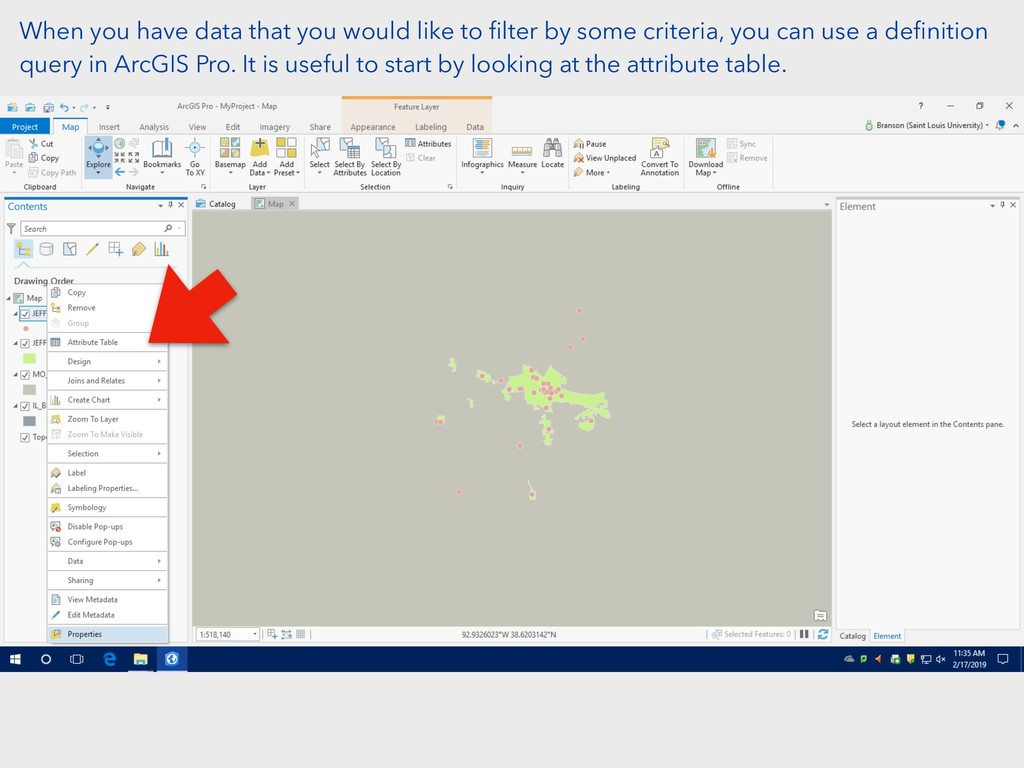
When you have data that you would like to filter
by some criteria, you can use a definition query in ArcGIS Pro. It is useful to start by looking at the attribute table.
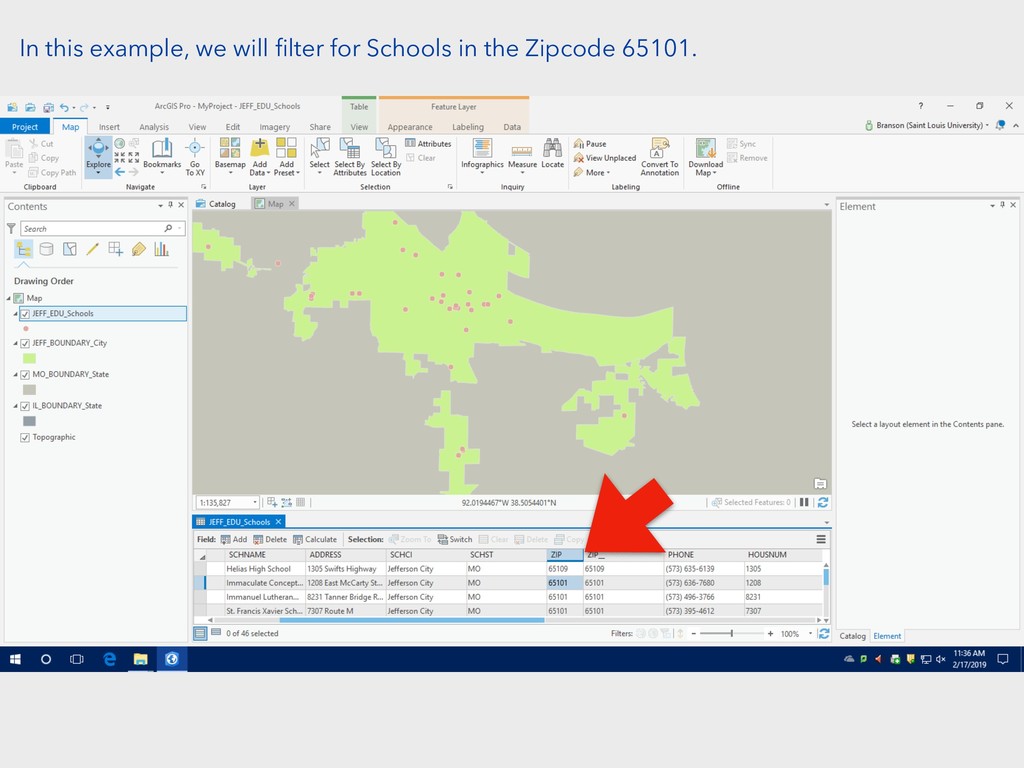
In this example, we will filter for Schools in the
Zipcode 65101.
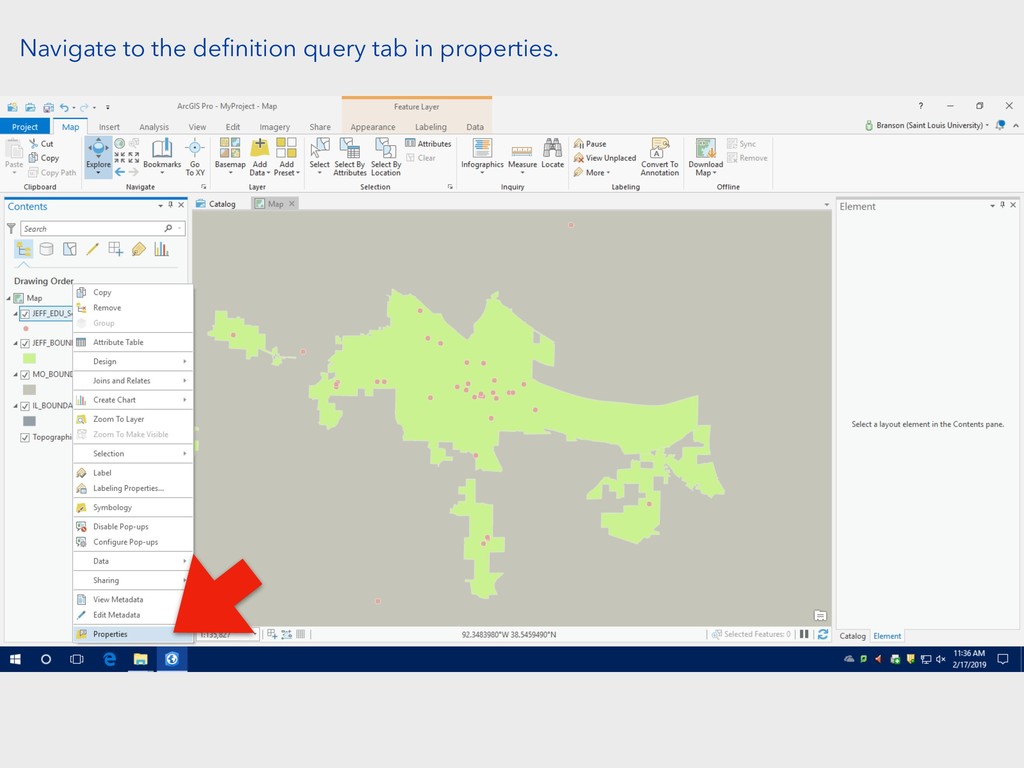
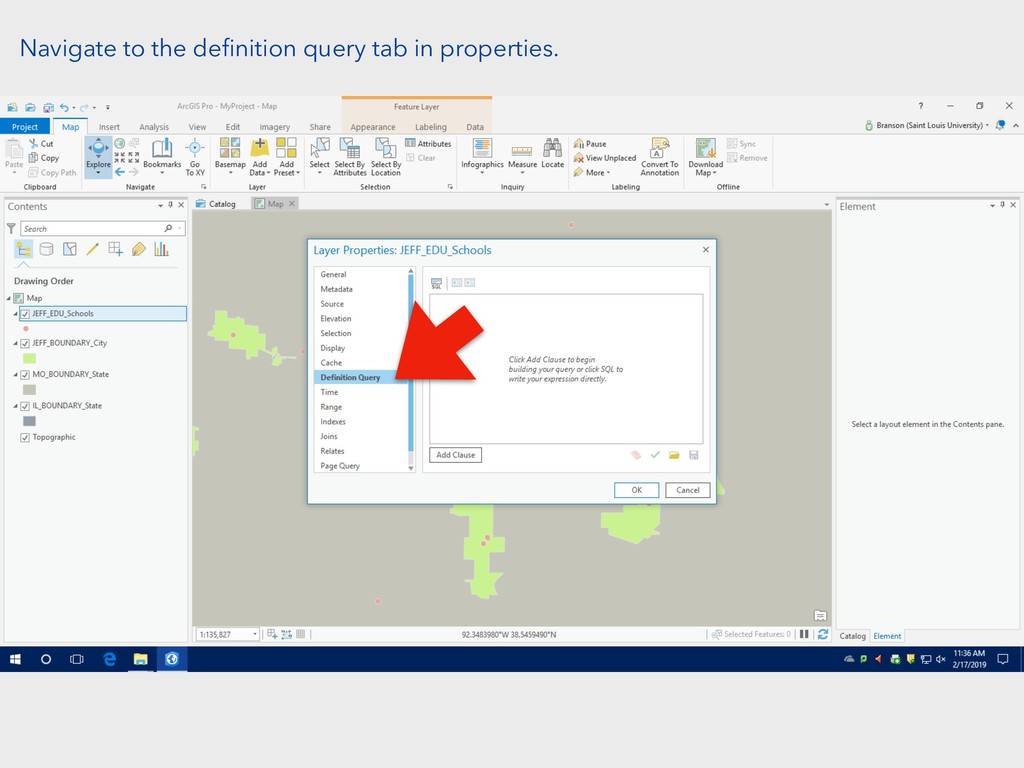
Navigate to the definition query tab in properties.
Navigate to the definition query tab in properties.
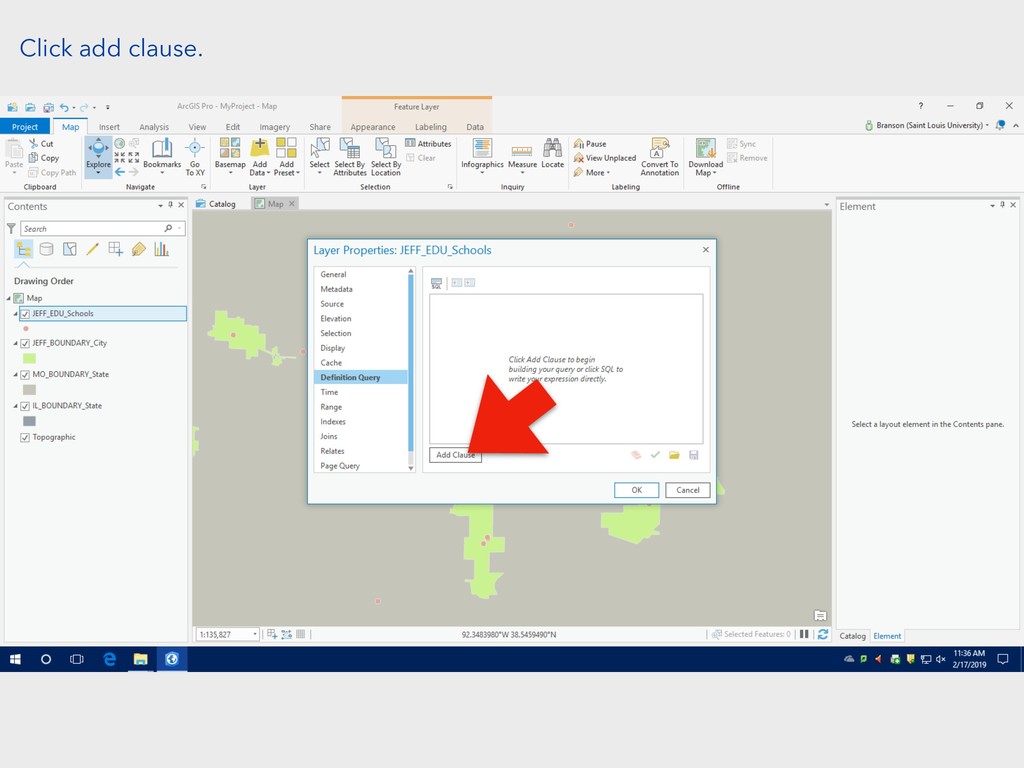
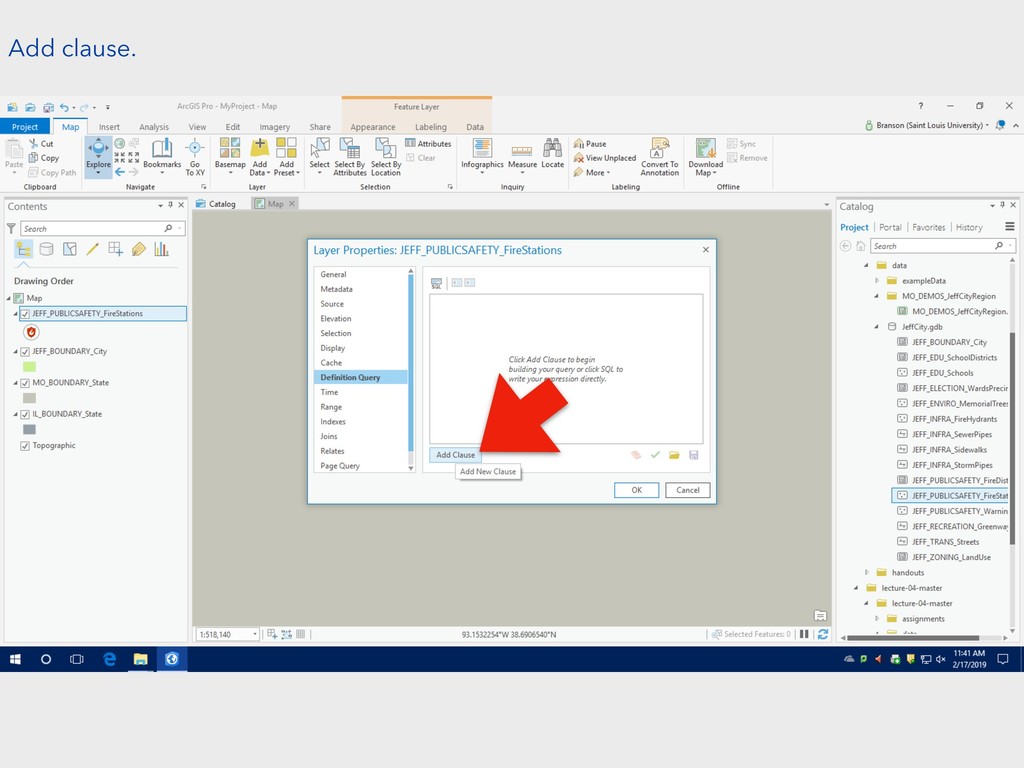
Click add clause.
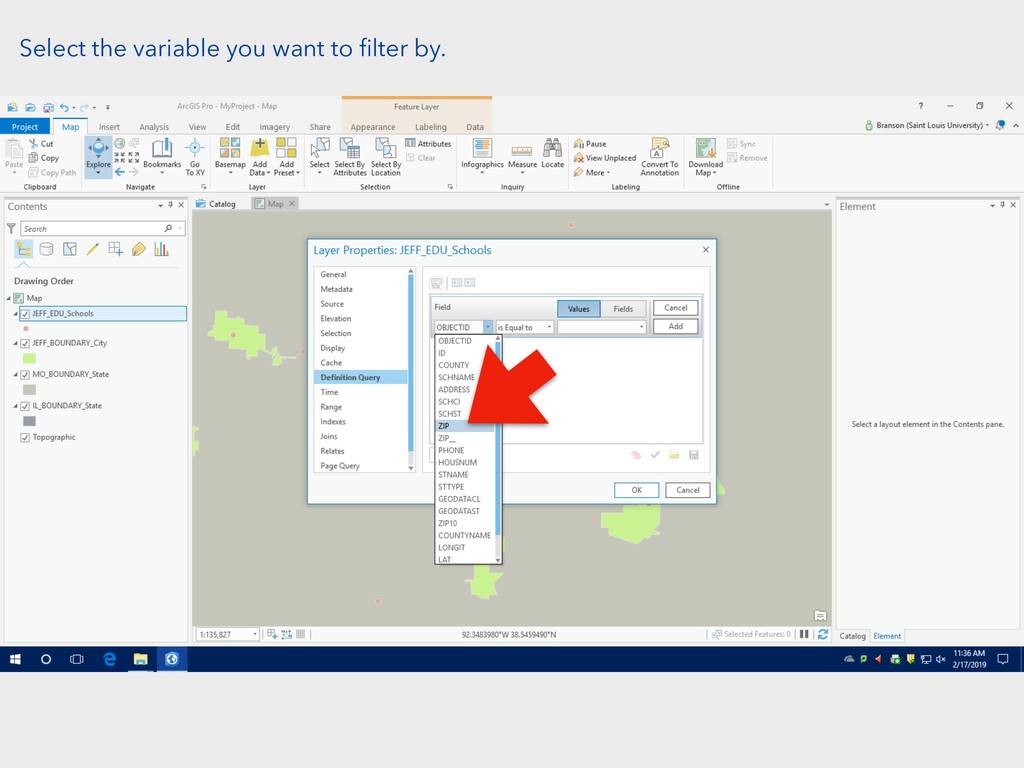
Select the variable you want to filter by.
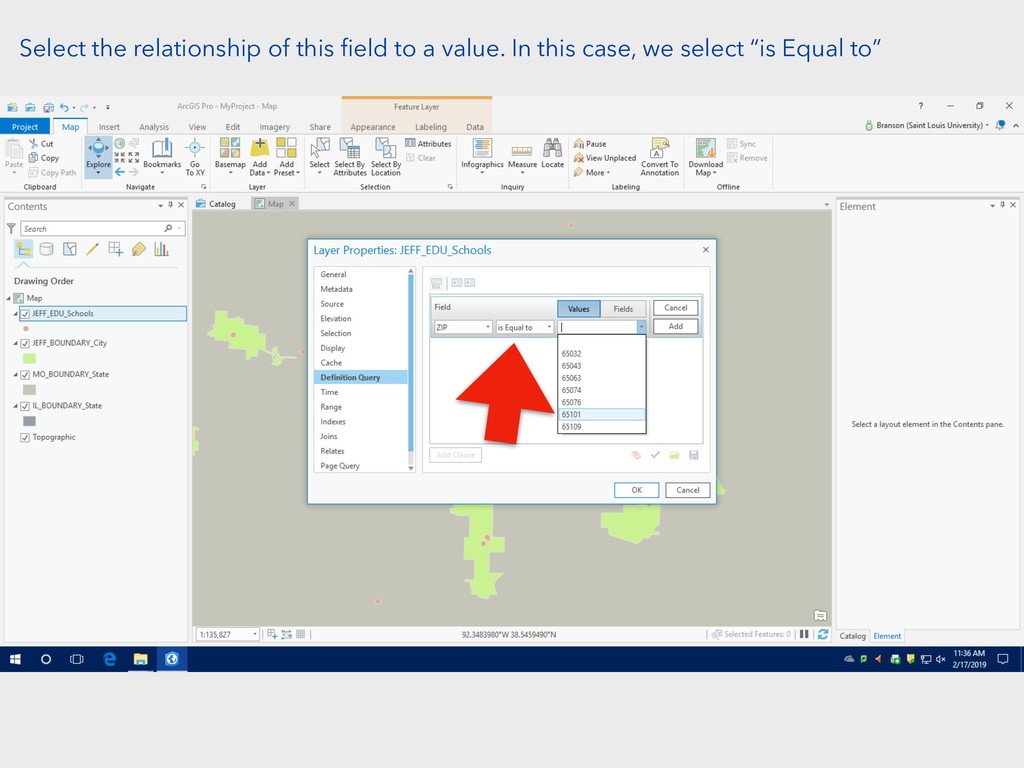
Select the relationship of this field to a value. In
this case, we select “is Equal to”
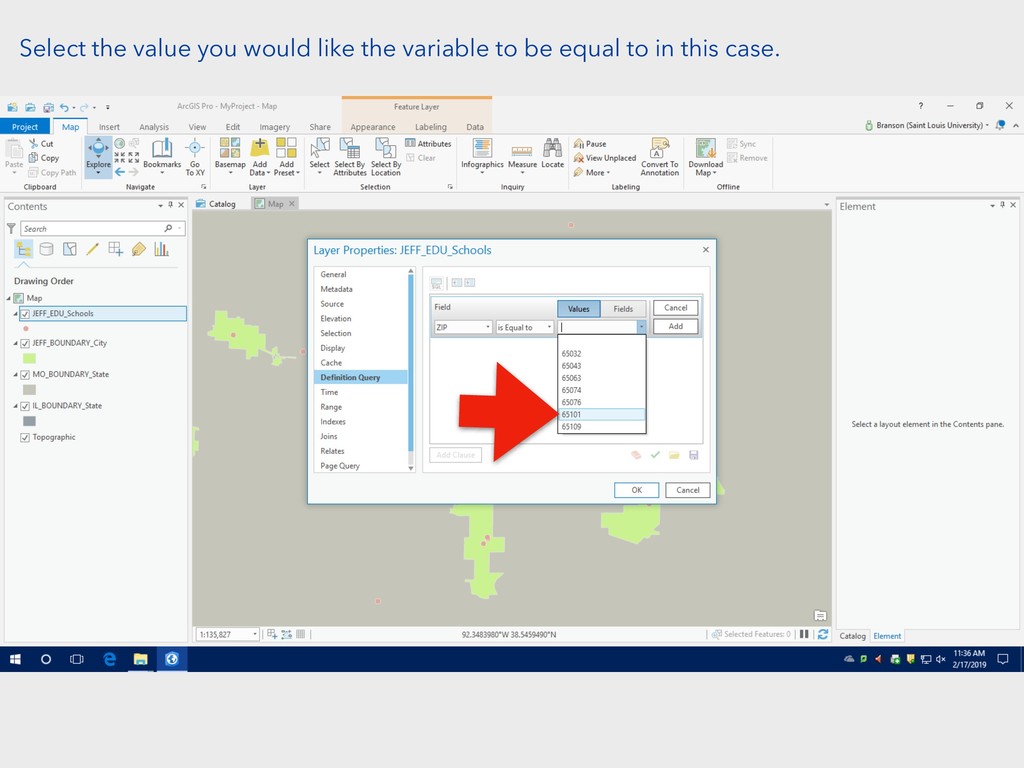
Select the value you would like the variable to be
equal to in this case.
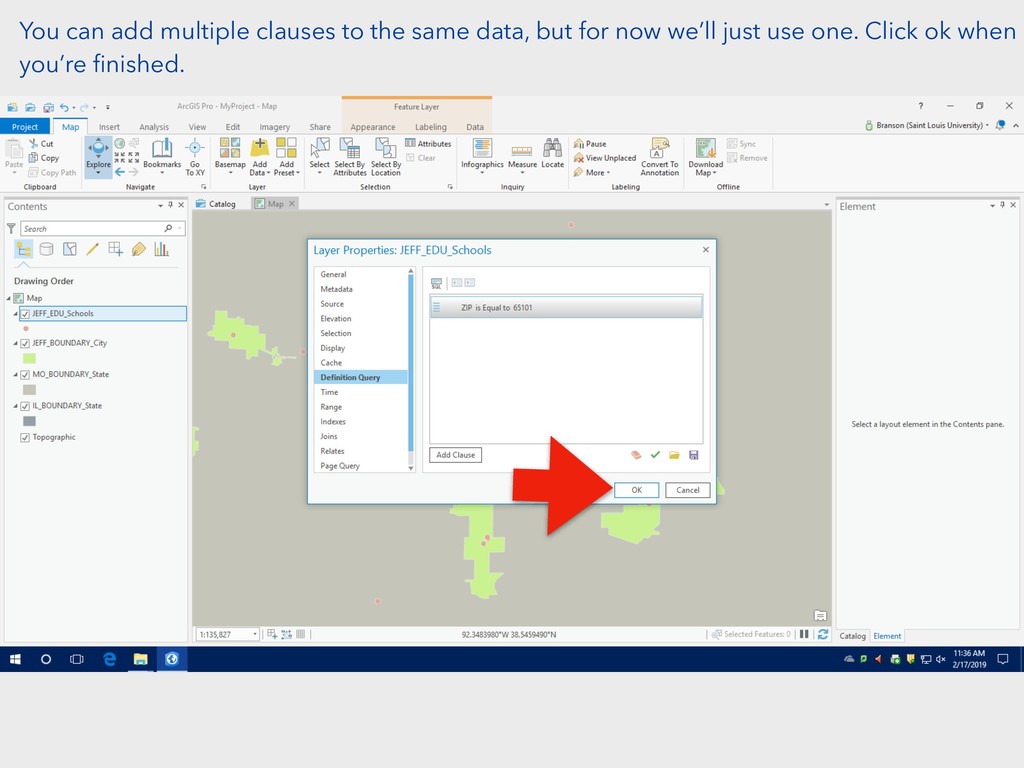
You can add multiple clauses to the same data, but
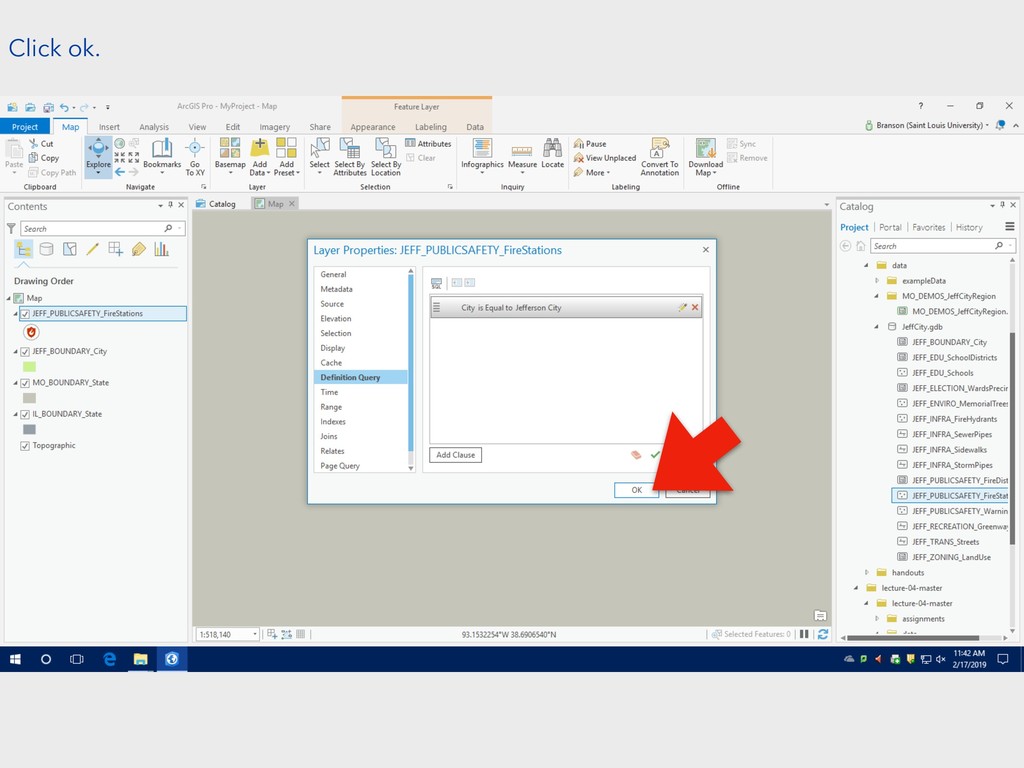
for now we’ll just use one. Click ok when you’re finished.
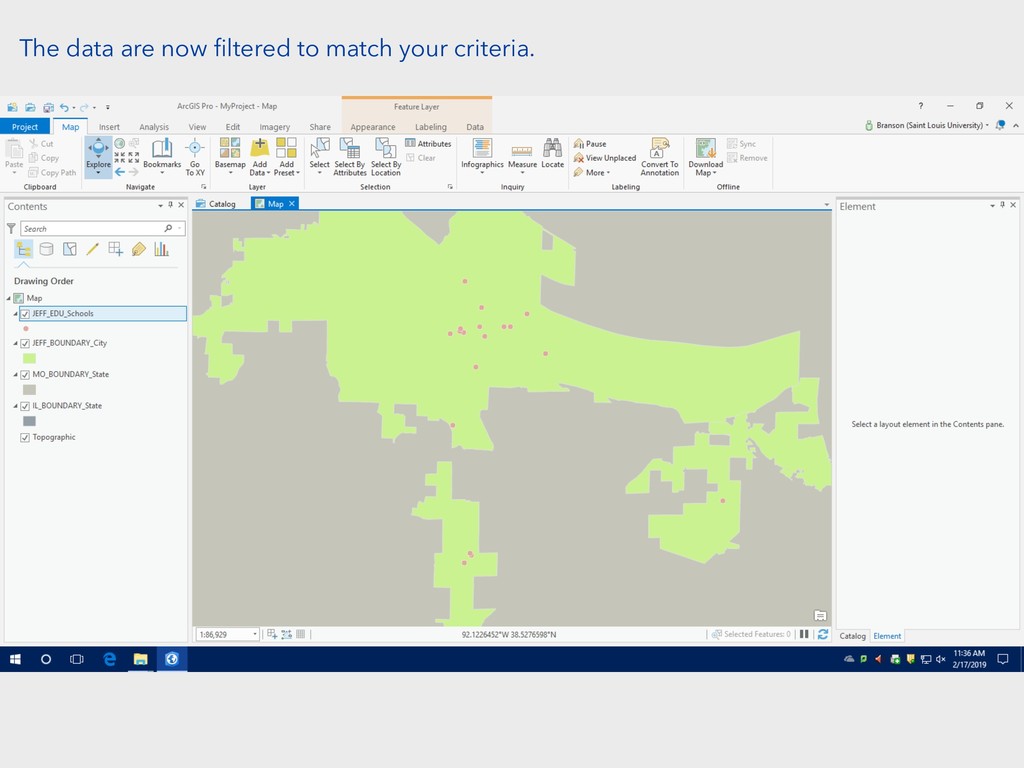
The data are now filtered to match your criteria.
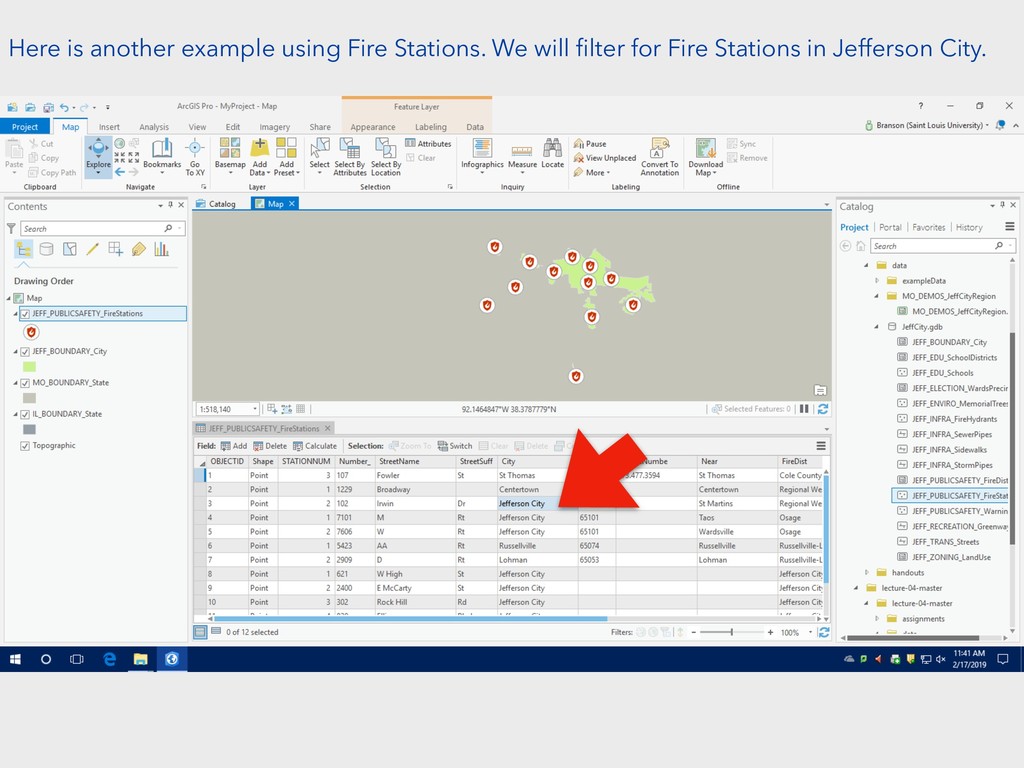
Here is another example using Fire Stations. We will filter
for Fire Stations in Jefferson City.
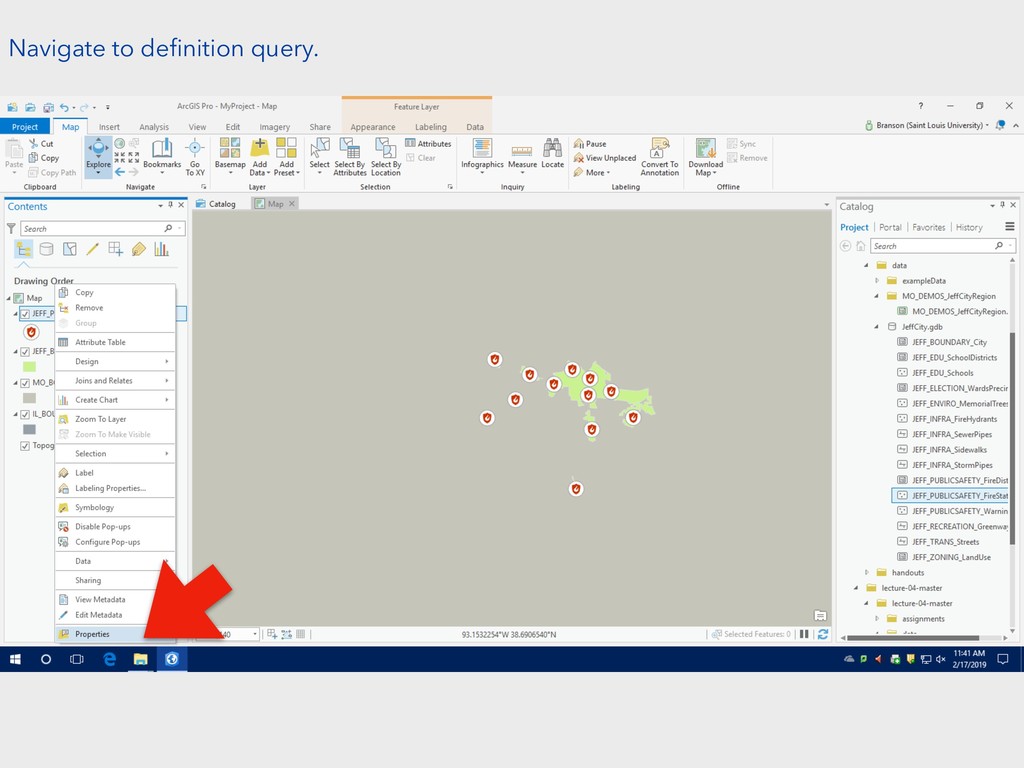
Navigate to definition query.
Add clause.
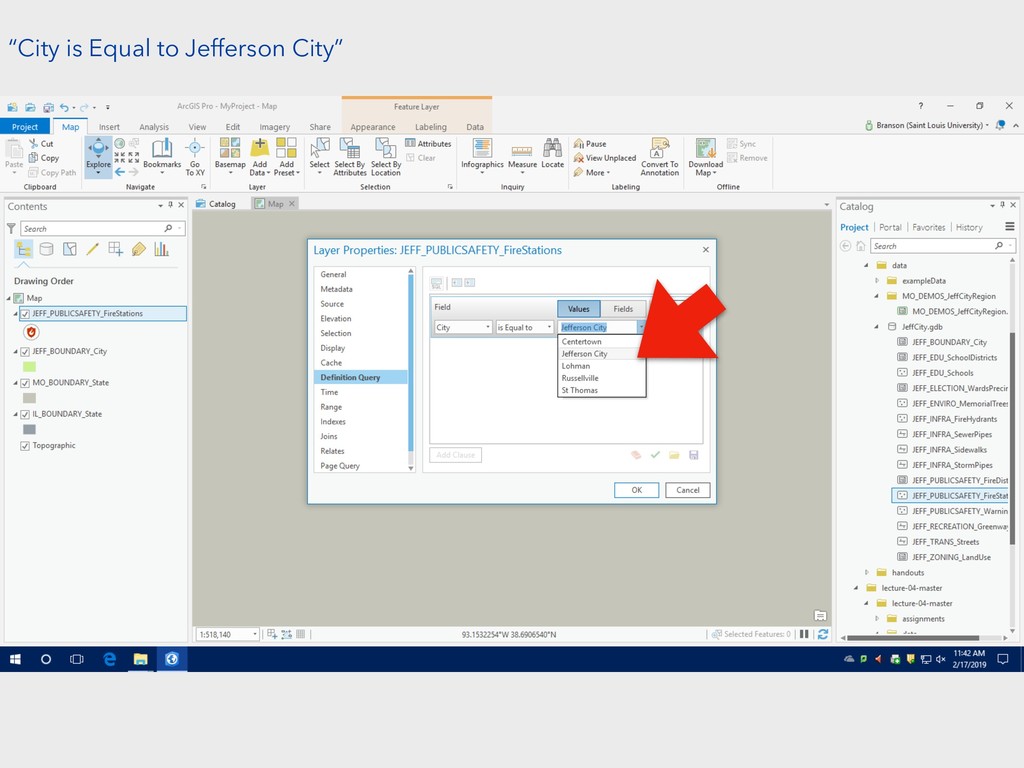
“City is Equal to Jefferson City”
Click ok.
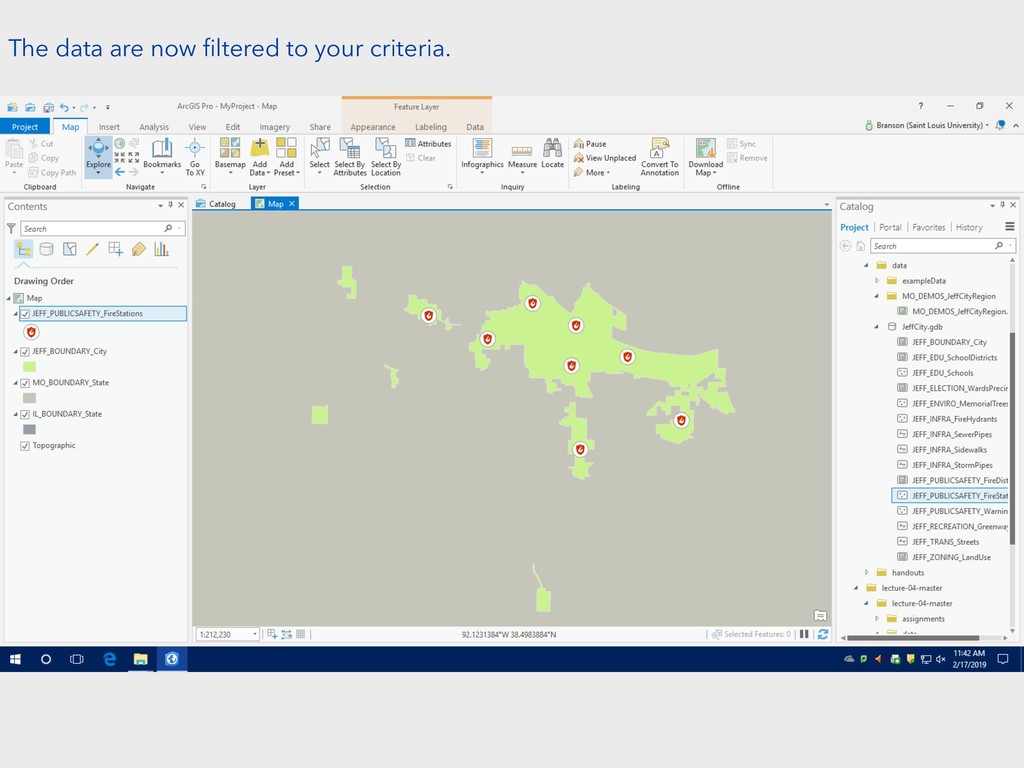
The data are now filtered to your criteria.
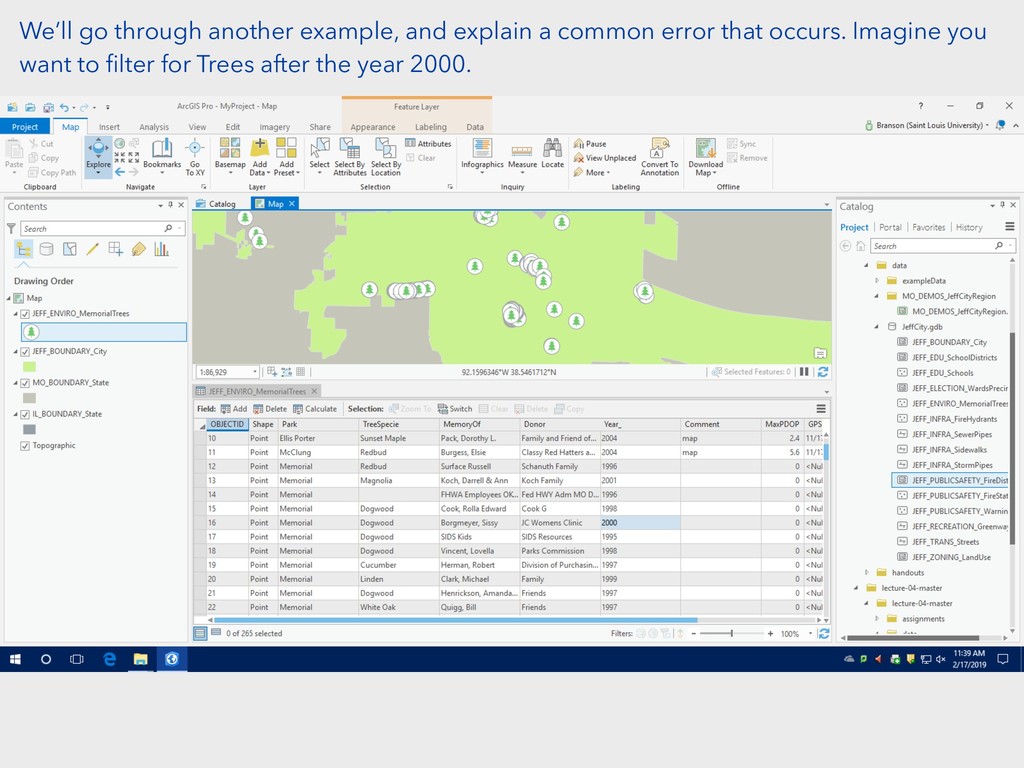
We’ll go through another example, and explain a common error
that occurs. Imagine you want to filter for Trees after the year 2000.
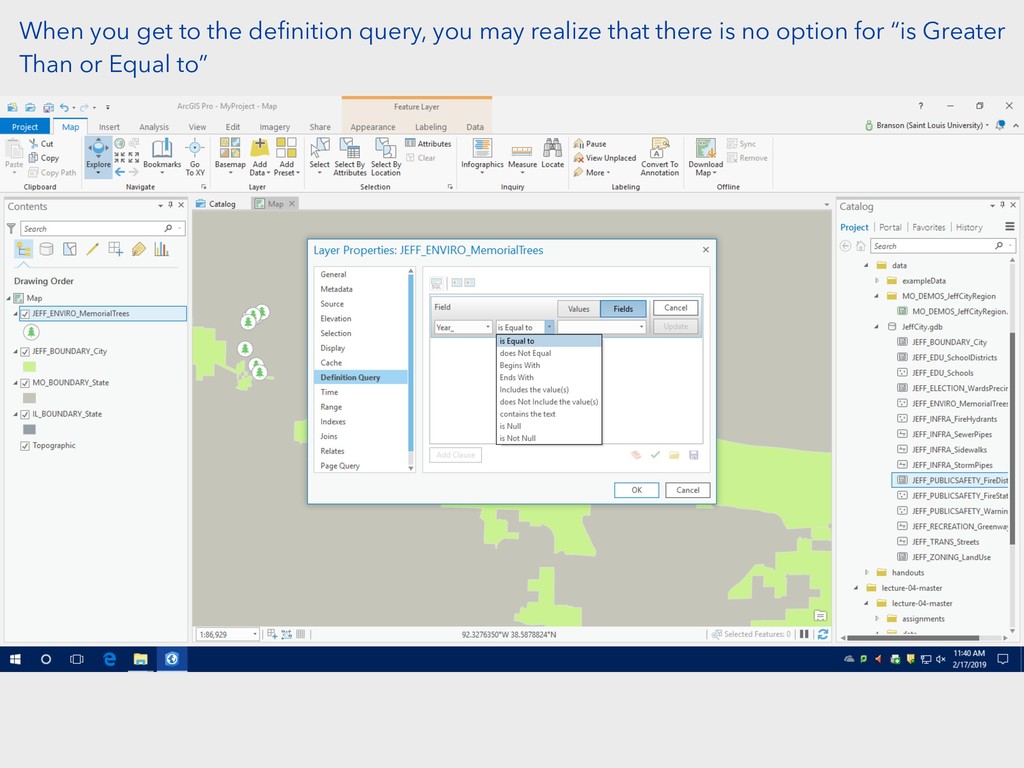
When you get to the definition query, you may realize
that there is no option for “is Greater Than or Equal to”
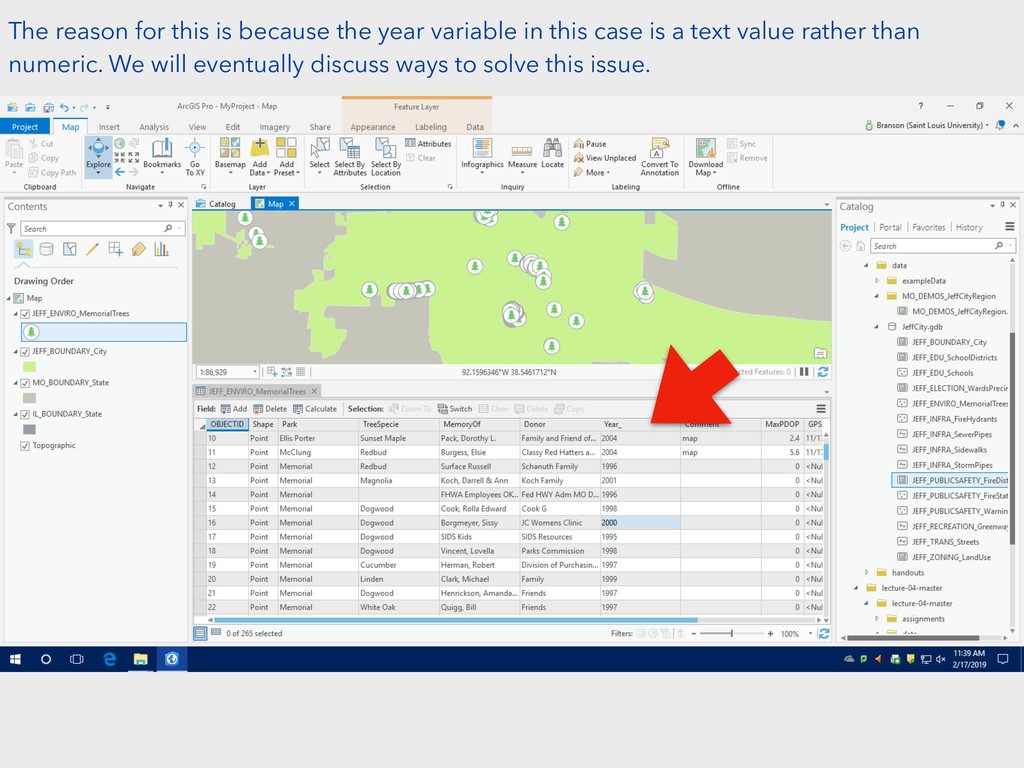
The reason for this is because the year variable in
this case is a text value rather than numeric. We will eventually discuss ways to solve this issue.
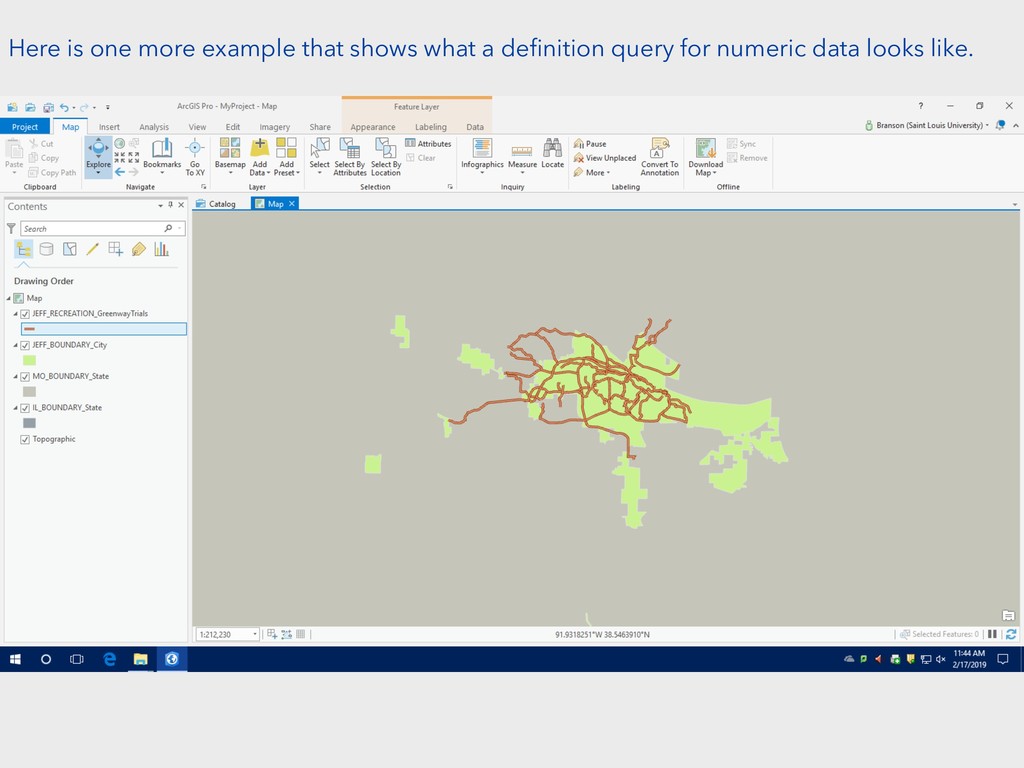
Here is one more example that shows what a definition
query for numeric data looks like.
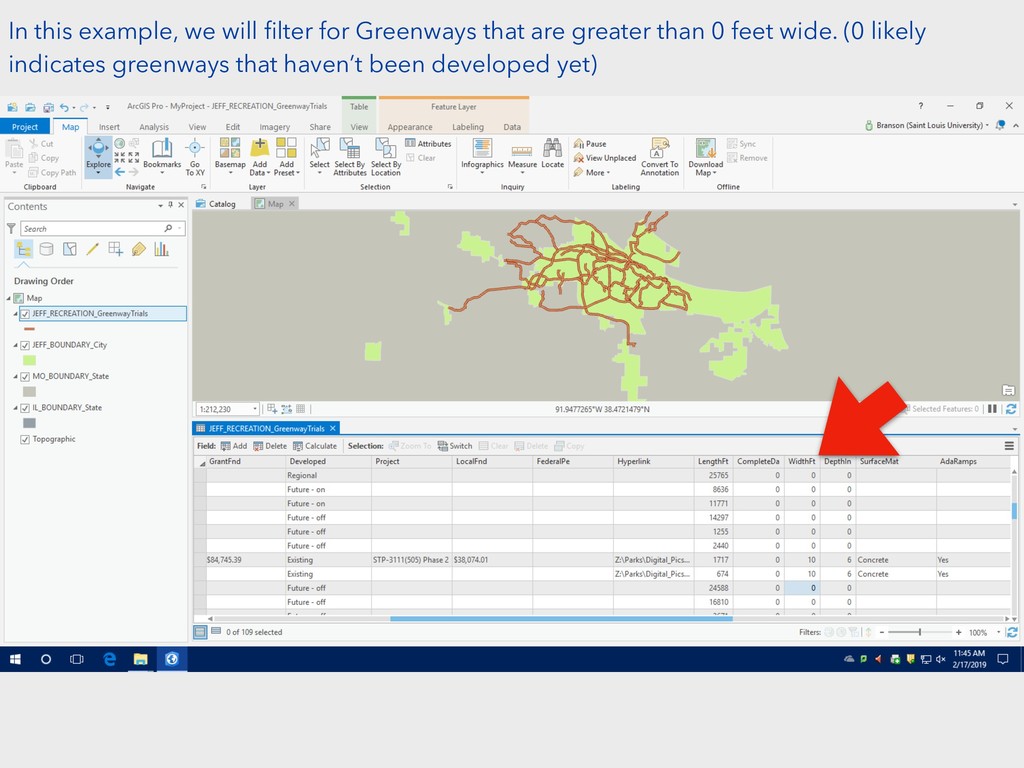
In this example, we will filter for Greenways that are
greater than 0 feet wide. (0 likely indicates greenways that haven’t been developed yet)
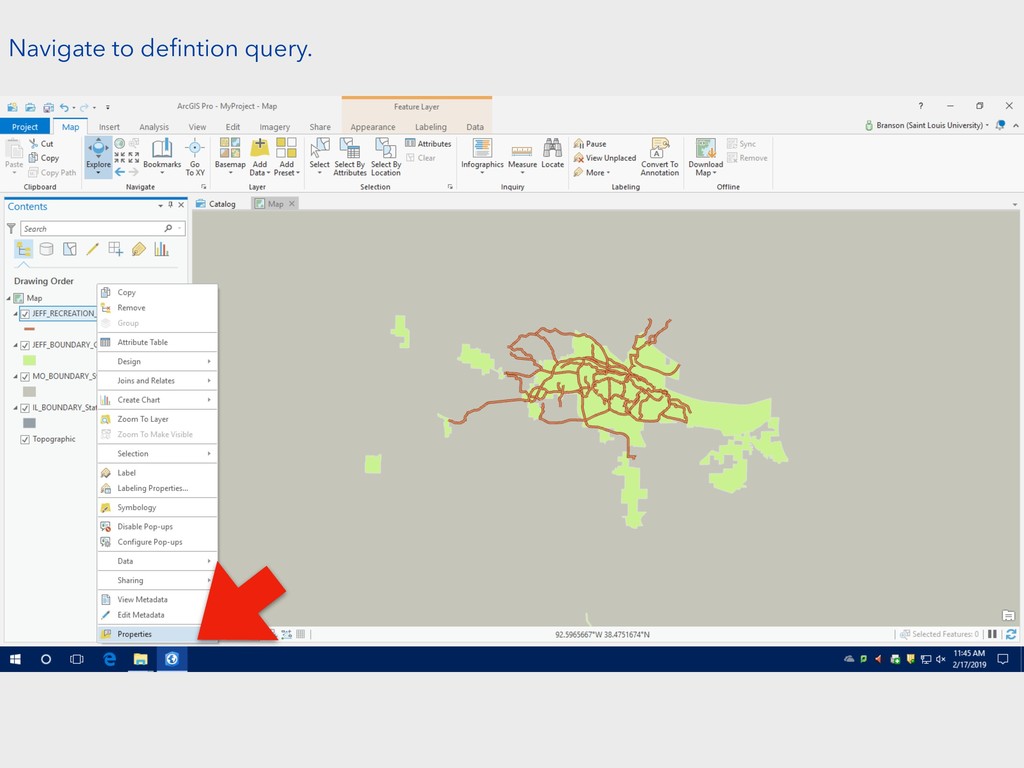
Navigate to defintion query.
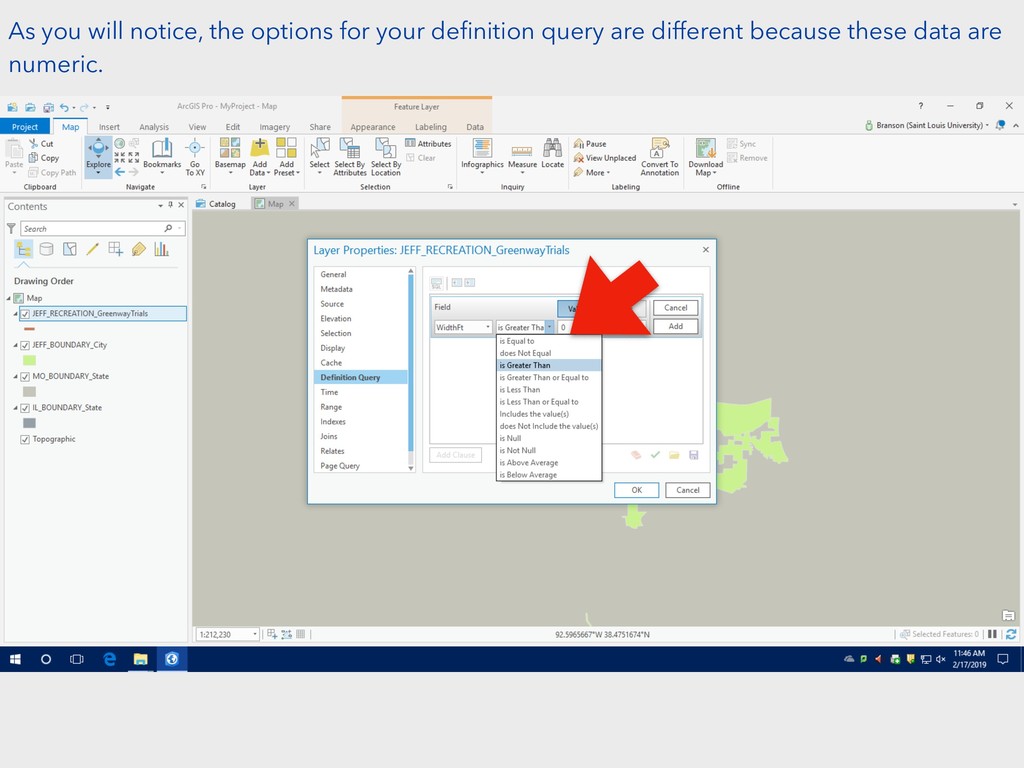
As you will notice, the options for your definition query
are different because these data are numeric.
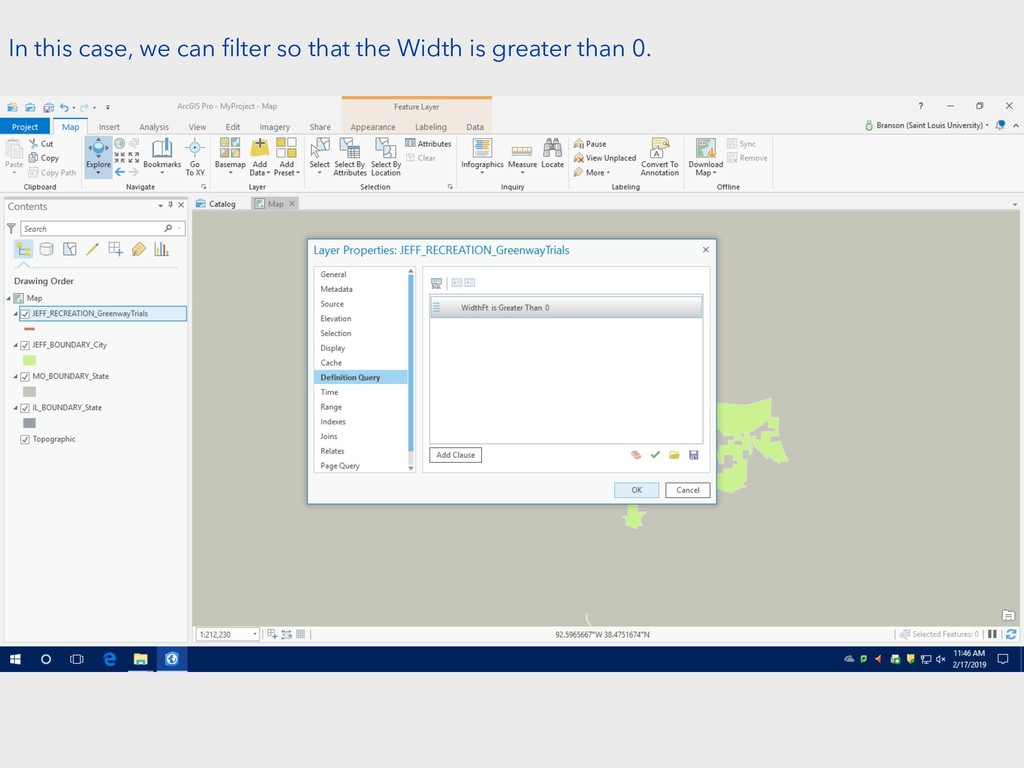
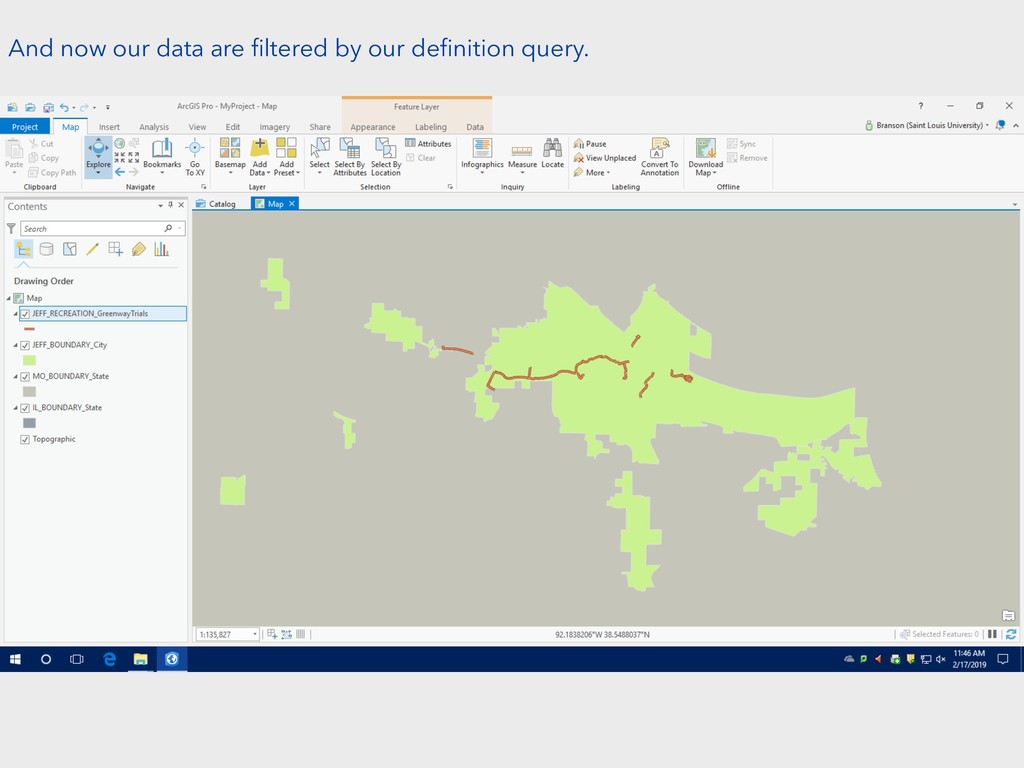
In this case, we can filter so that the Width
is greater than 0.
And now our data are filtered by our definition query.


 chrisprener
 ishii_mit
 kentaroy47
 ainischool
 rashwhitman
 spring_aki
 hiola
hiola
 robintux
 frievea
 signer
 bvr7352
 juanmartin2026
 pawan_pharm
 katarinadahlin
 moore
moore
 aarron
 jlugia
 pedronauck
 mojombo
 shlominoach
 reverentgeek
 elsirapls
 soudai
 marktimemedia
 csswizardry