Upgrade to Pro — share decks privately, control downloads, hide ads and more …

Keeping It Professional: Relevance, Recommendat...

Sponsored · SiteGround - Reliable hosting with speed, security, and support you can count on.

Keeping It Professional: Relevance, Recommendations, and Reputation at LinkedIn

The CMU Artificial Intelligence Seminar Series presentation discusses three key areas - relevance, recommendations, and reputation - that LinkedIn is focusing on to improve the user experience. Relevance refers to improving search and discovery of profiles by combining different types of signals. Recommendations match members to jobs, groups, and other connections. Reputation involves identifying member expertise in skills and who the experts are in particular skills. Open problems remain around exploratory search, balancing exploration and exploitation of the data, and incentivizing the development of online reputation.

Avatar for Daniel Tunkelang

Daniel Tunkelang

May 24, 2026

More Decks by Daniel Tunkelang

Other Decks in Technology

Transcript

  1. 1 Recruiting Solutions Recruiting Solutions Recruiting Solutions Keeping It Professional:

    Relevance, Recommendations, and Reputation. Daniel Tunkelang Principal Data Scientist at LinkedIn Daniel
  2. 2 Overview  What is LinkedIn?  Hard problems we’re

    tackling in:  Relevance  Recommendations  Reputation  Open problems
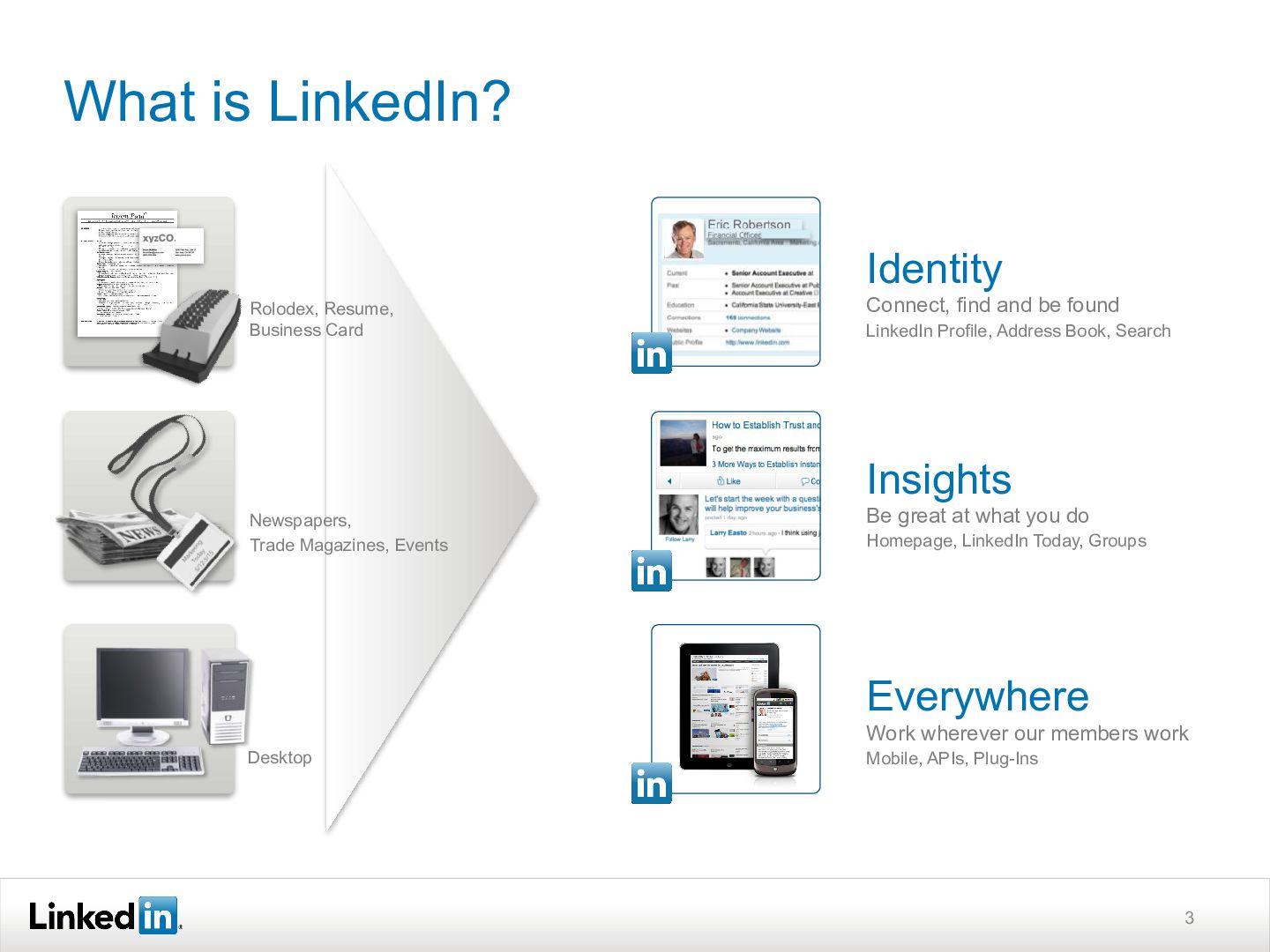
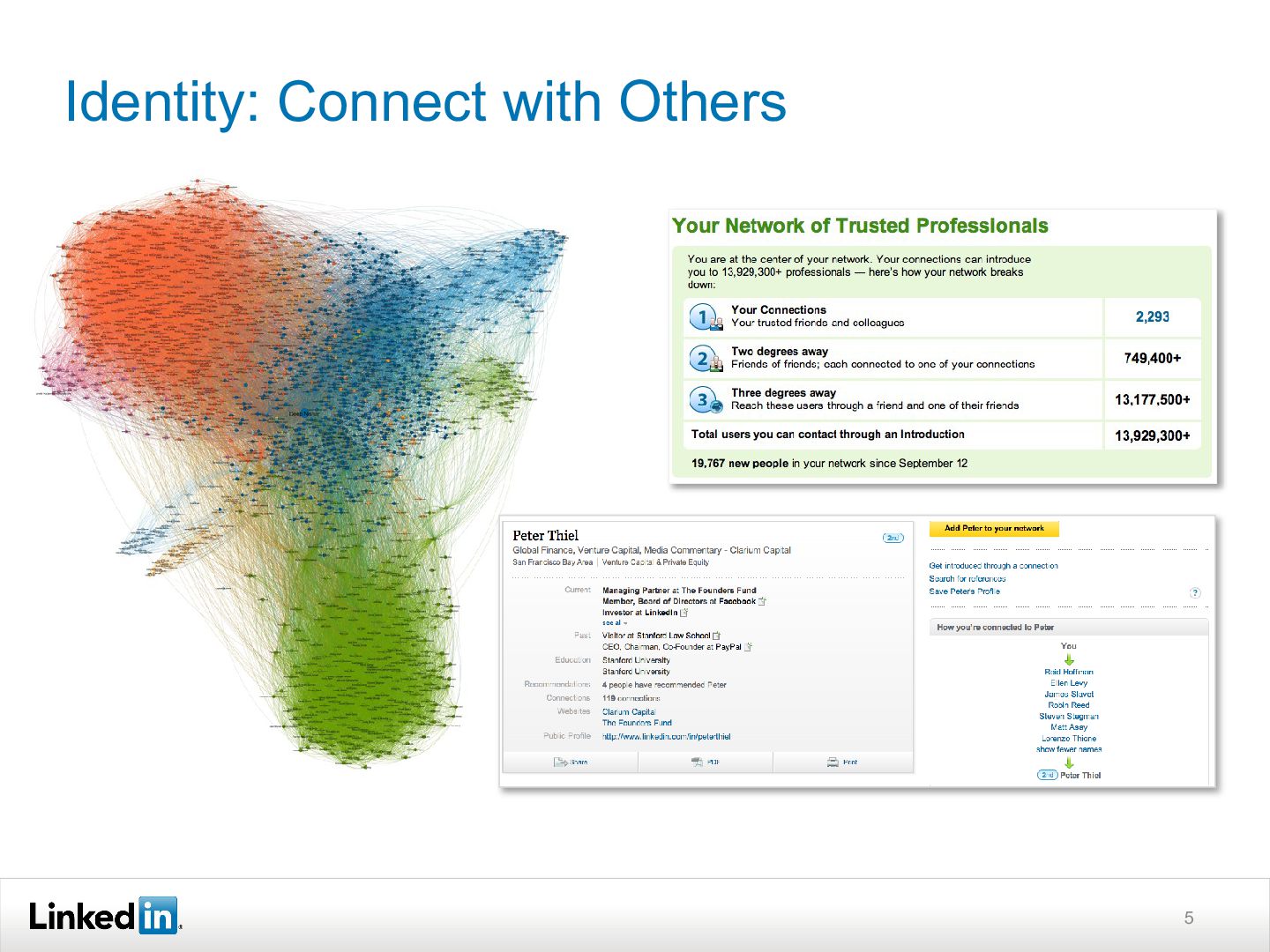
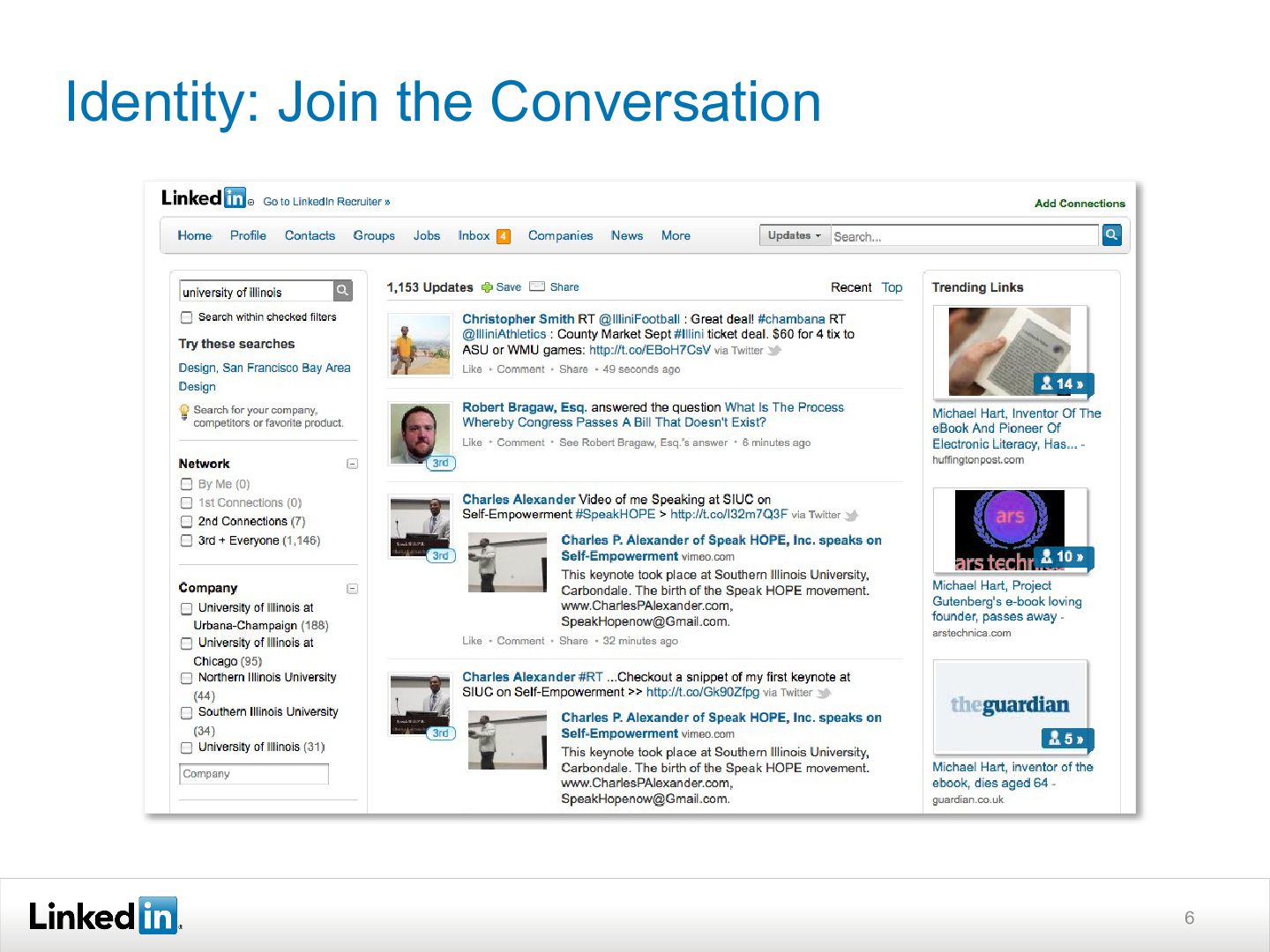
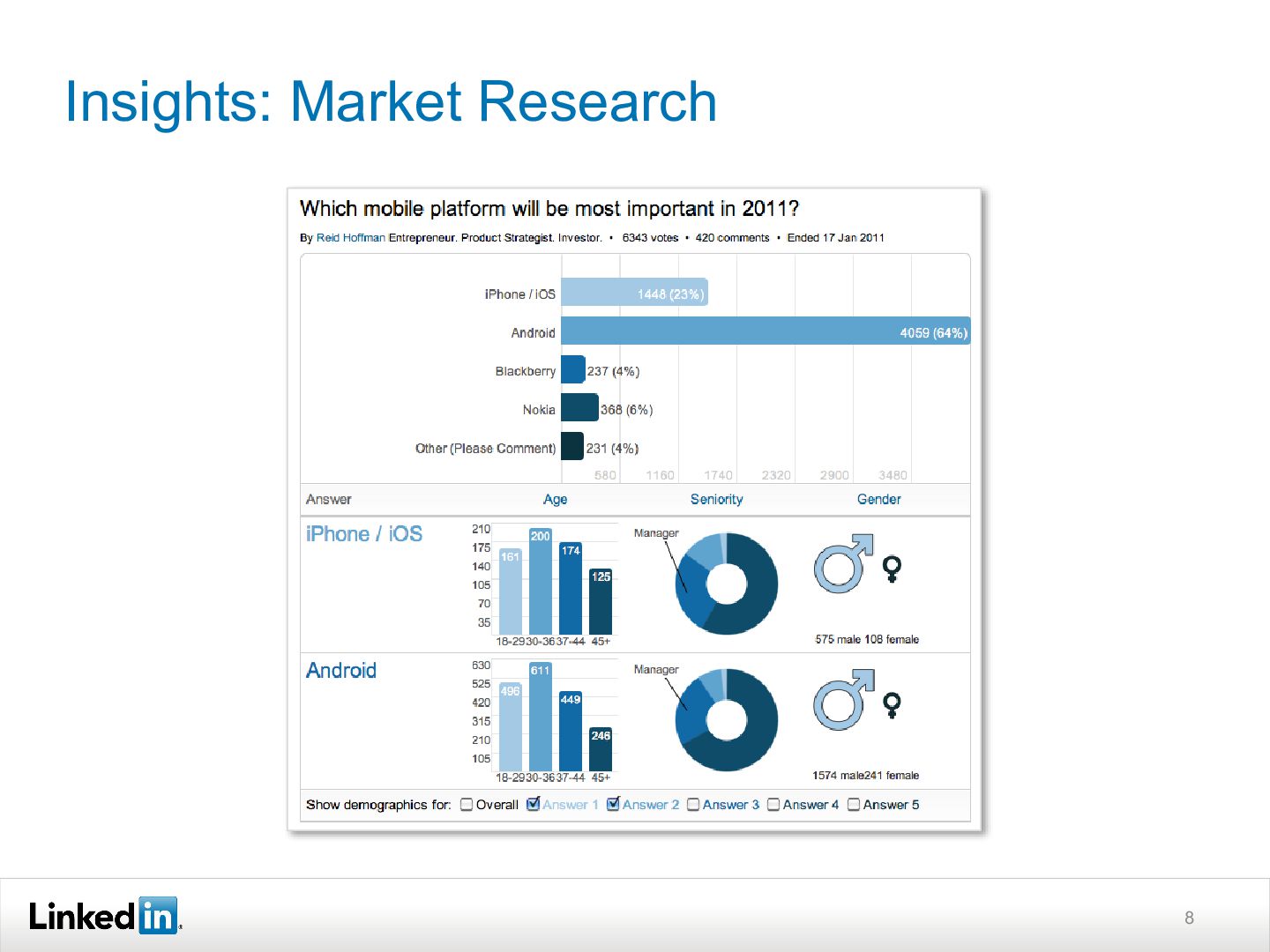
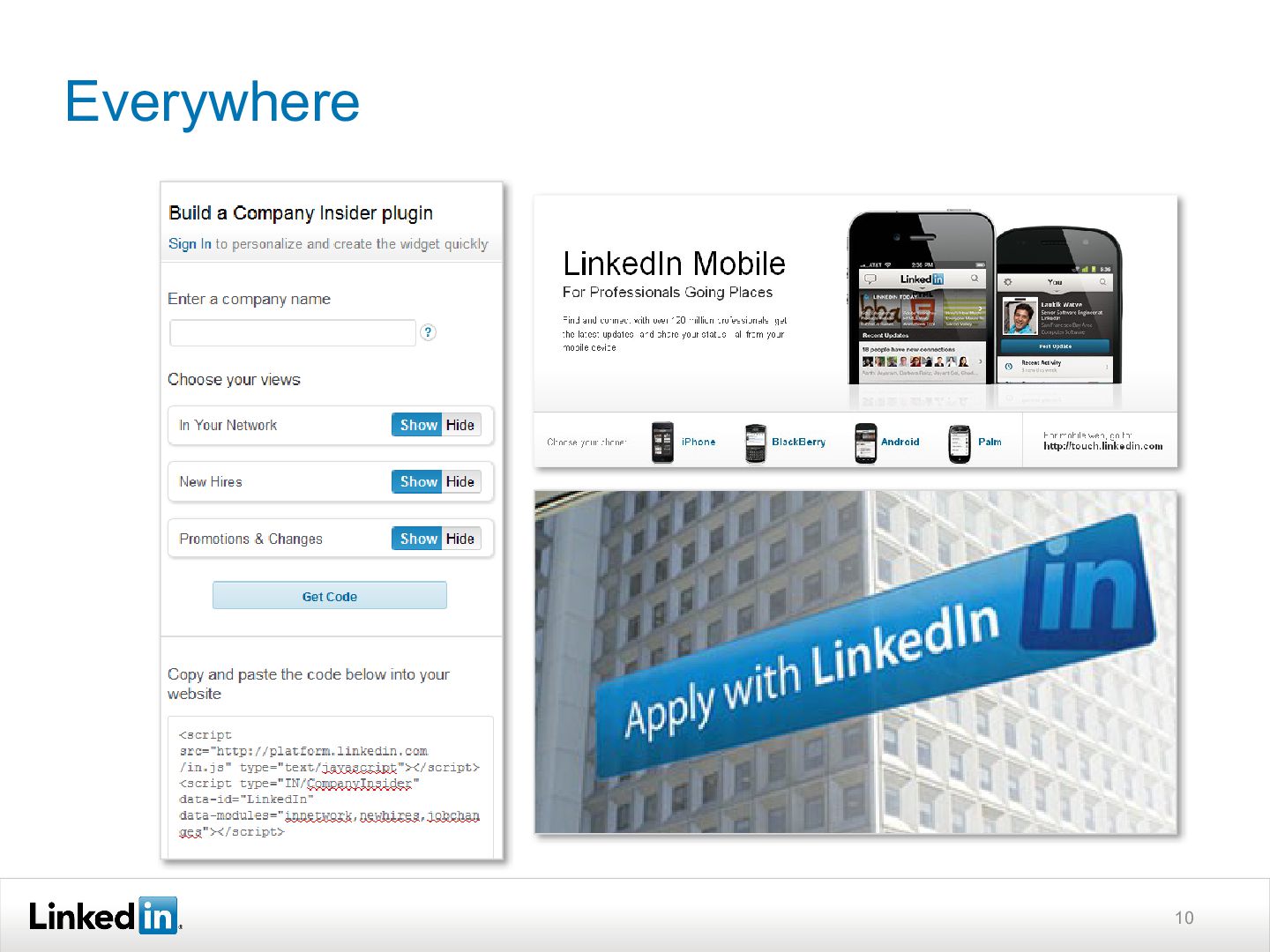
  3. 3 Identity Connect, find and be found LinkedIn Profile, Address

    Book, Search Insights Be great at what you do Homepage, LinkedIn Today, Groups Work wherever our members work Everywhere Mobile, APIs, Plug-Ins Desktop Rolodex, Resume, Business Card Newspapers, Trade Magazines, Events What is LinkedIn?
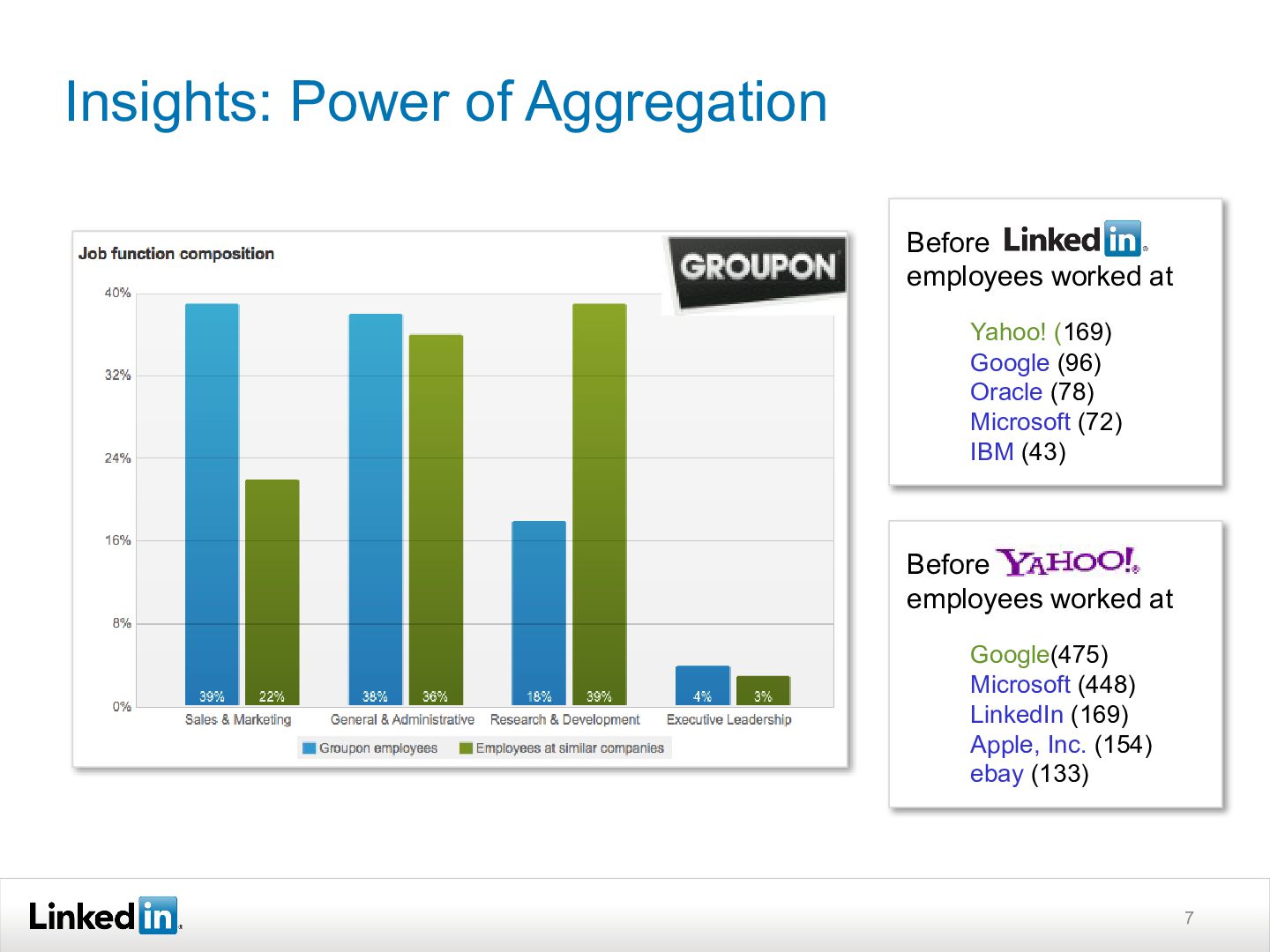
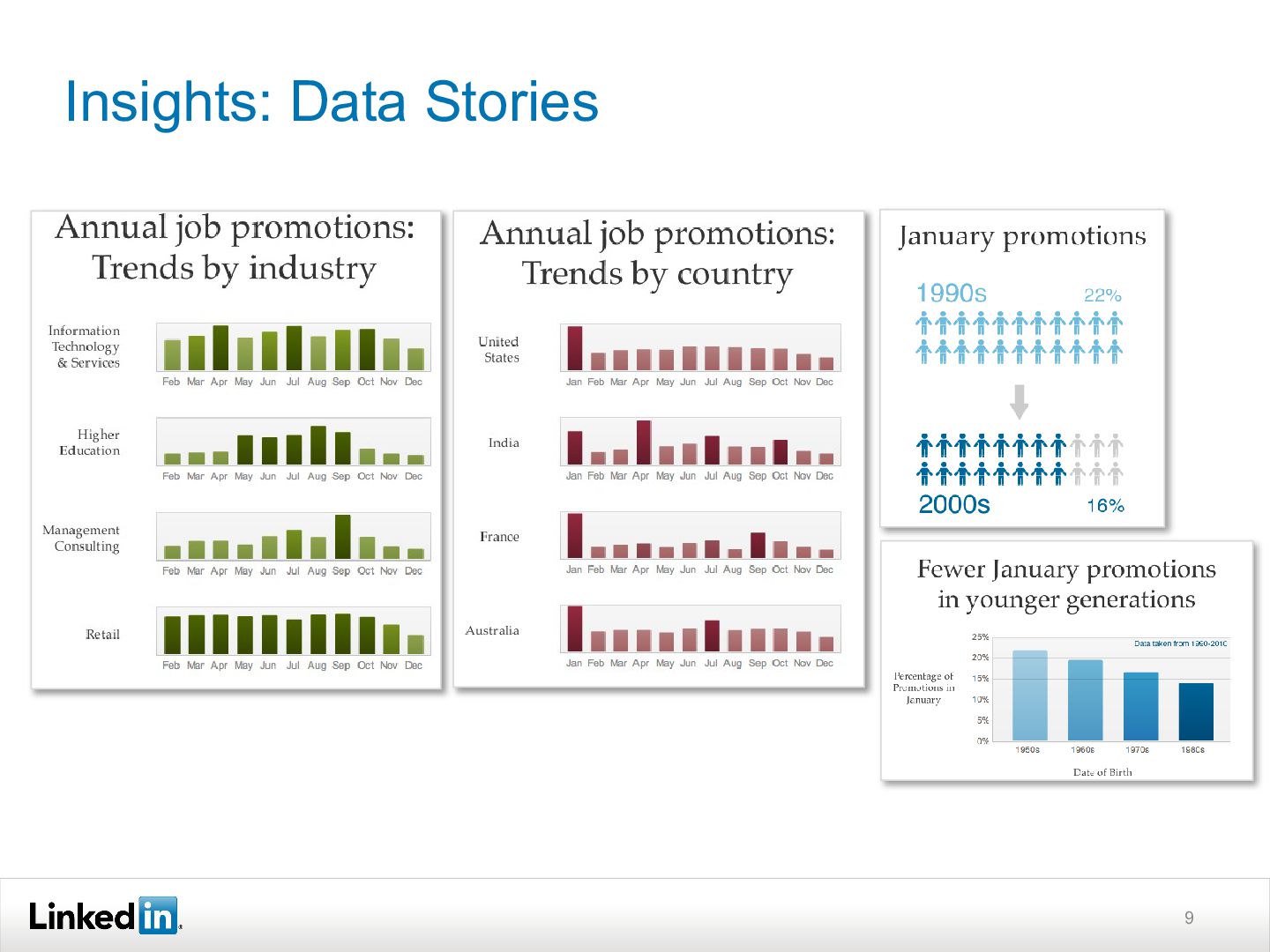
  4. 7 Insights: Power of Aggregation Before employees worked at Yahoo!

    (169) Google (96) Oracle (78) Microsoft (72) IBM (43) Before employees worked at Google(475) Microsoft (448) LinkedIn (169) Apple, Inc. (154) ebay (133)
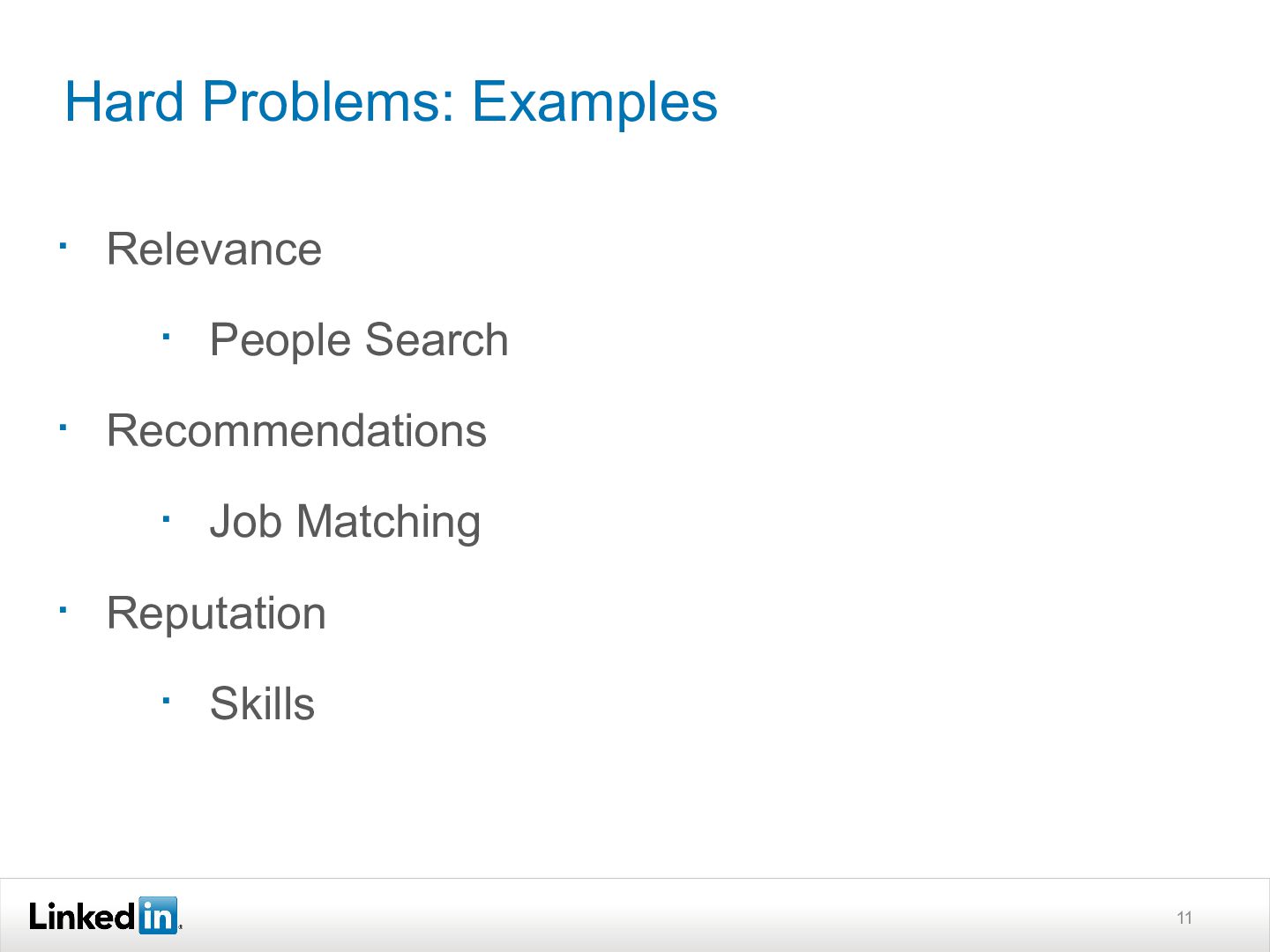
  5. 11 Hard Problems: Examples  Relevance  People Search 

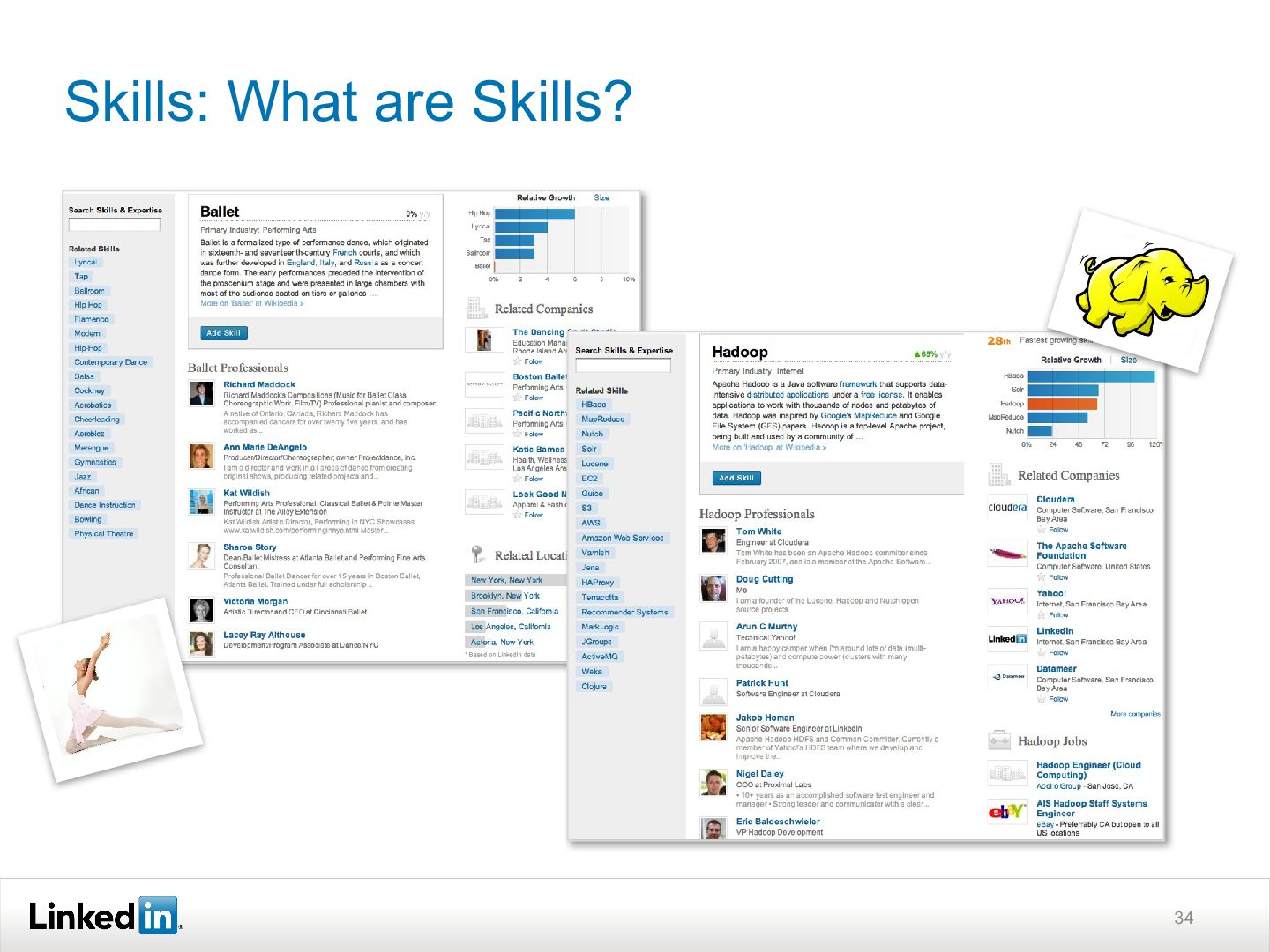
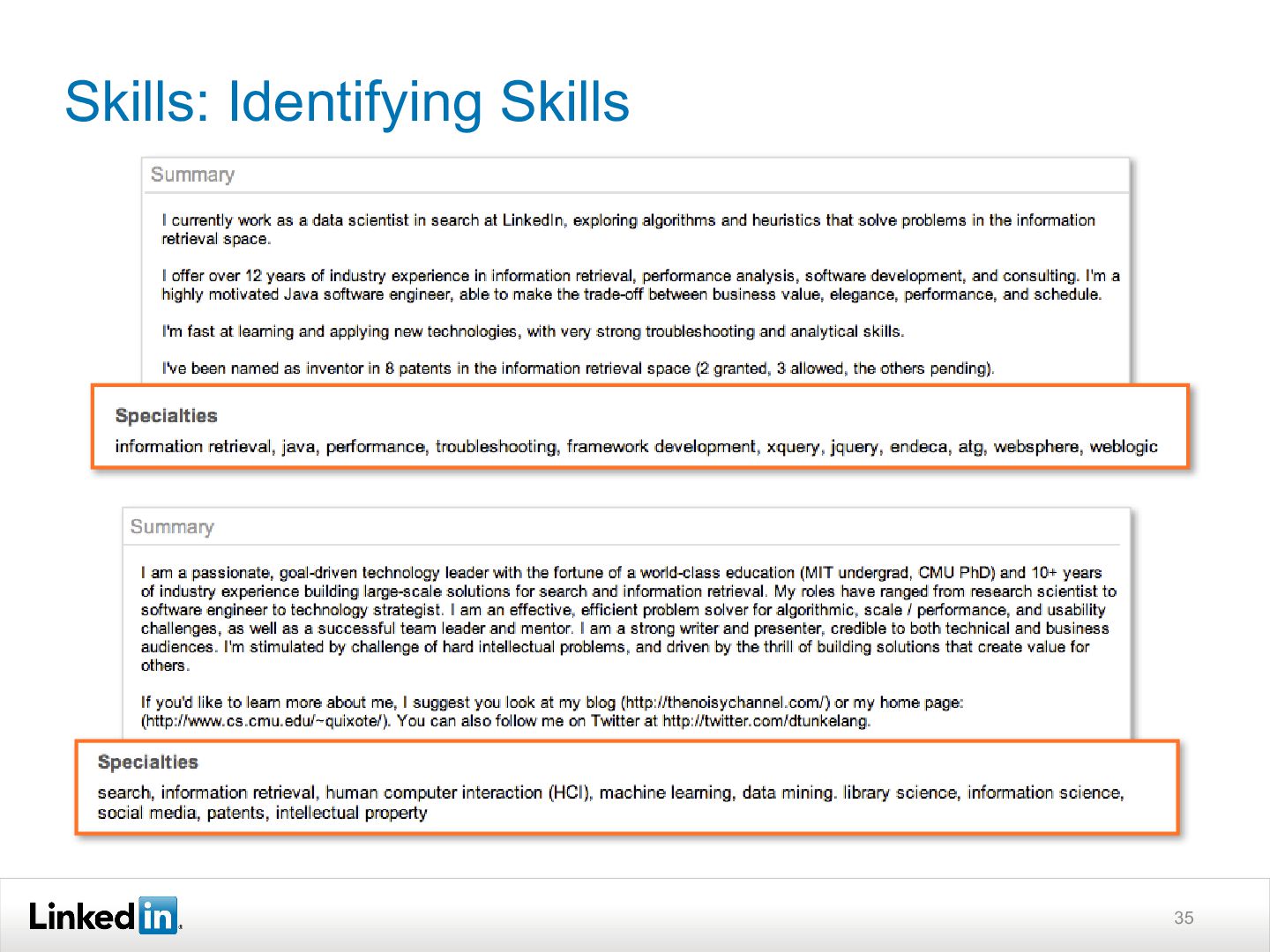
    Recommendations  Job Matching  Reputation  Skills
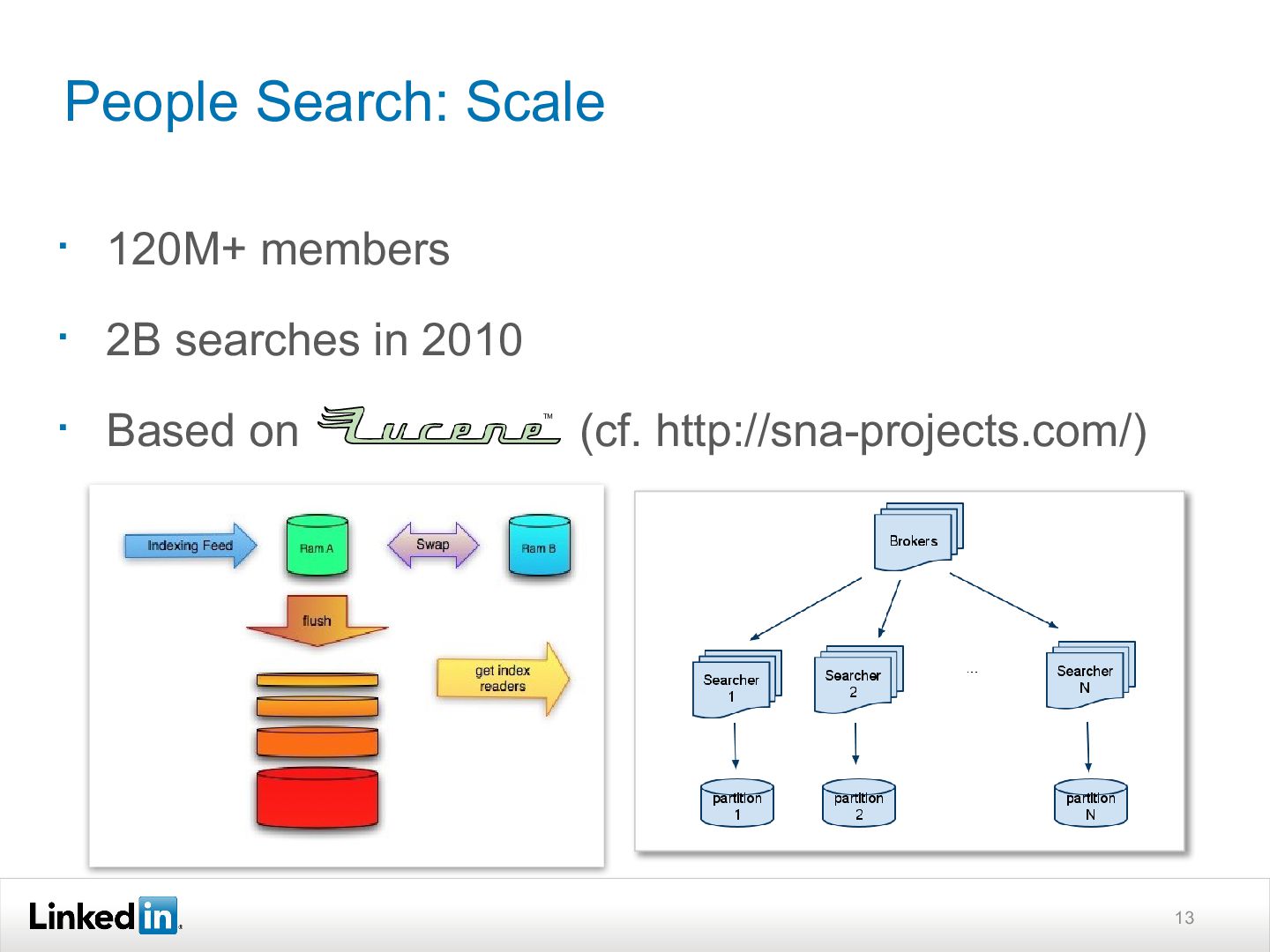
  6. 13  120M+ members  2B searches in 2010 

    Based on (cf. http://sna-projects.com/) People Search: Scale
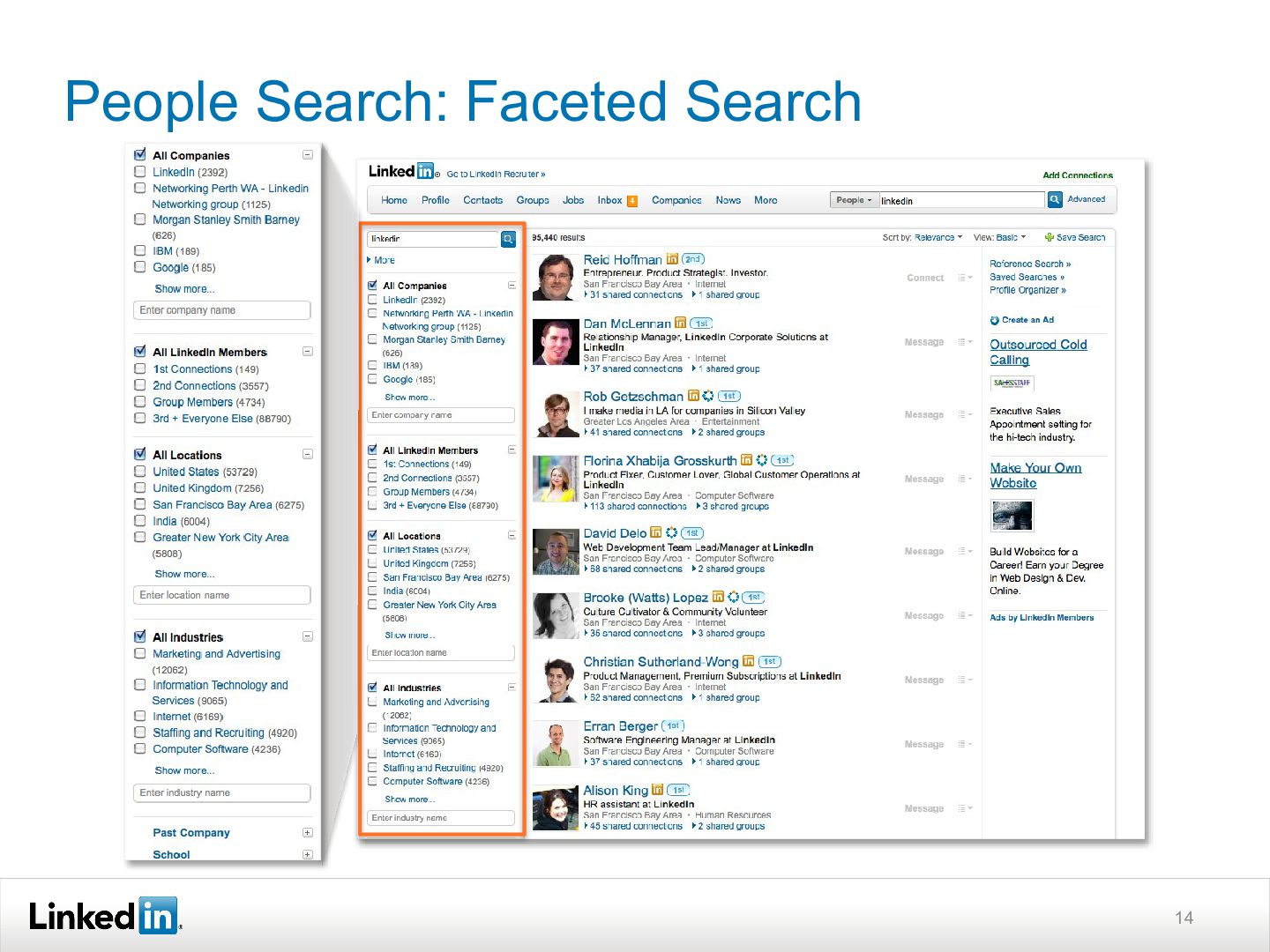
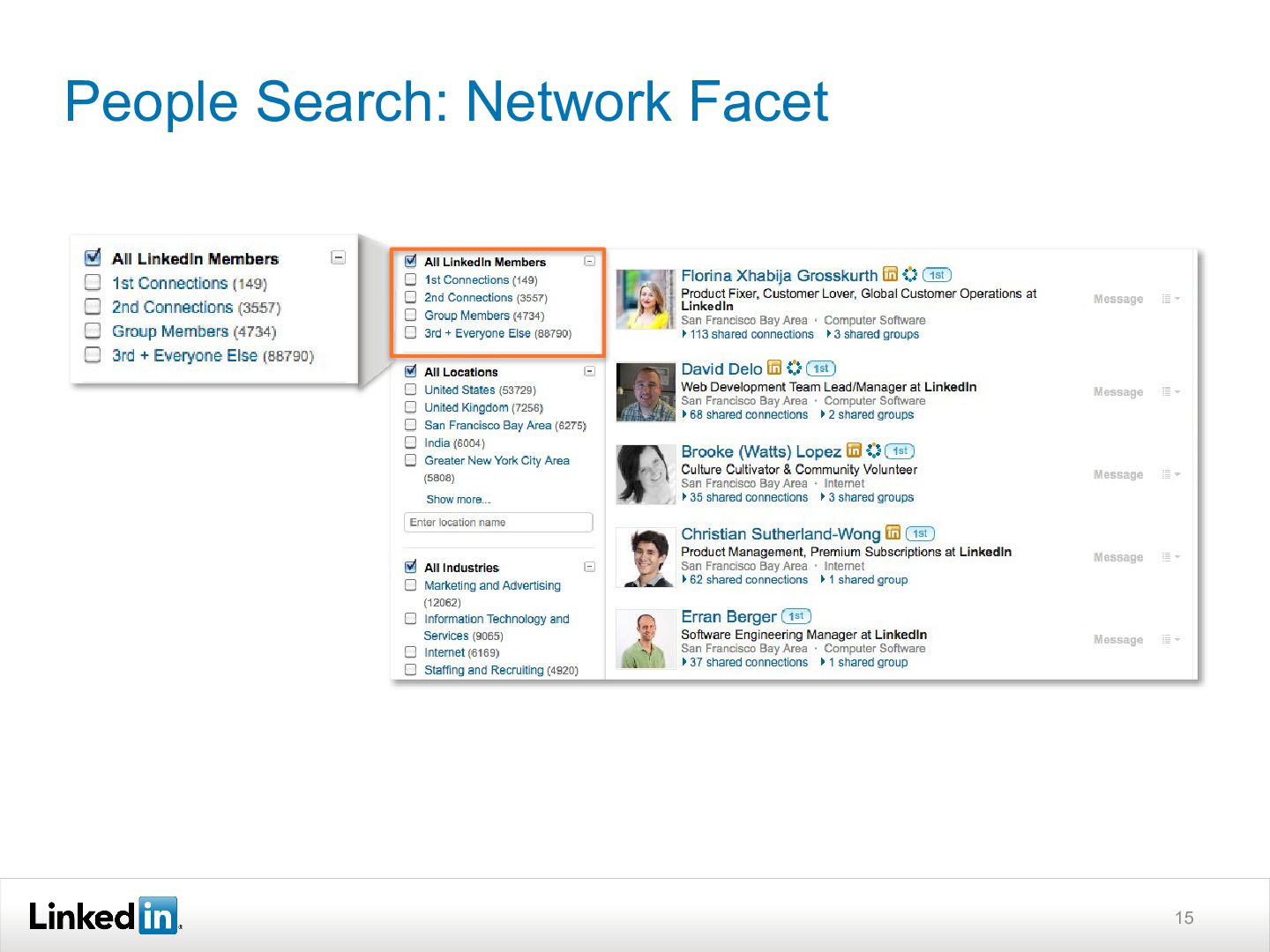
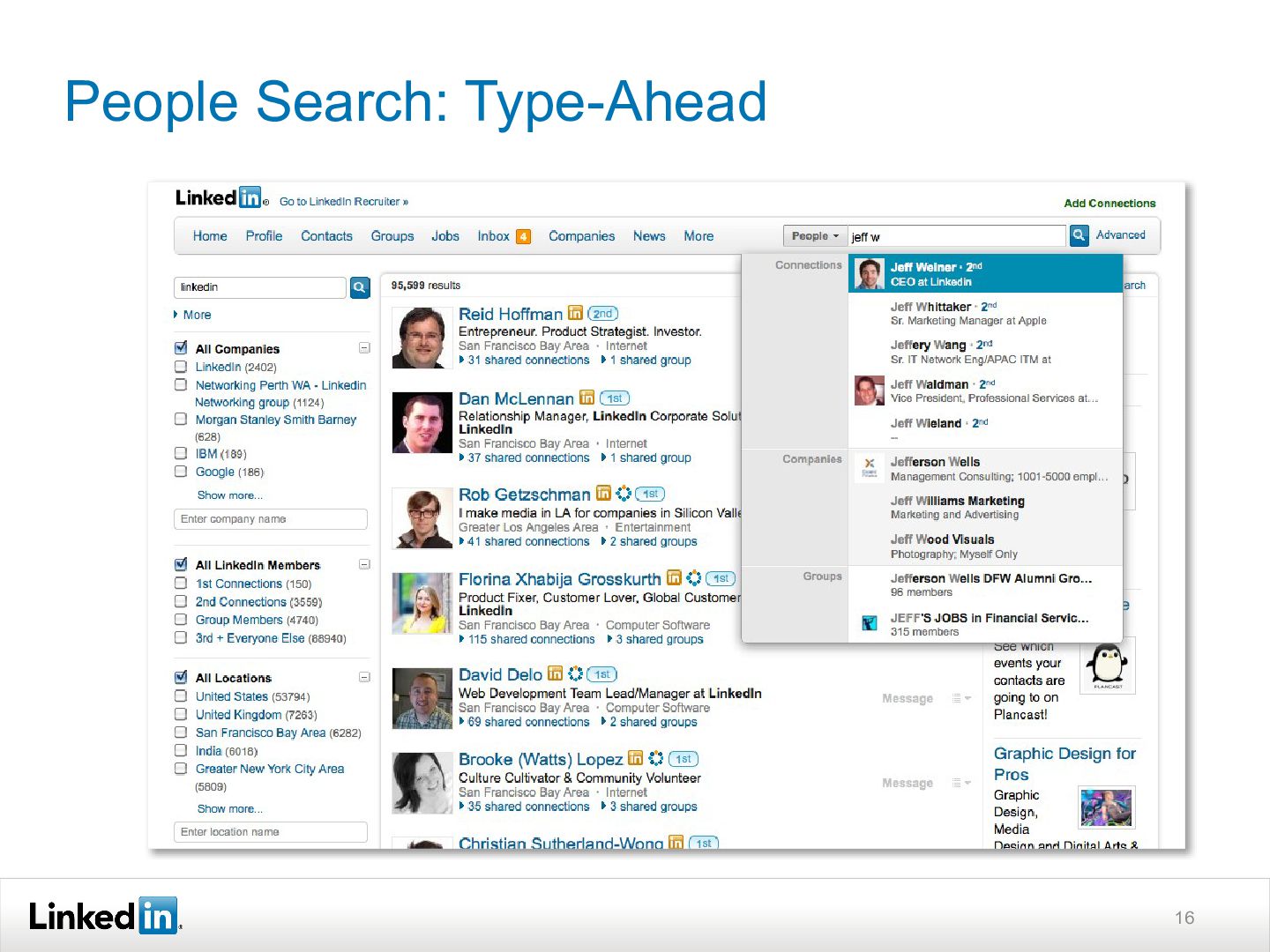
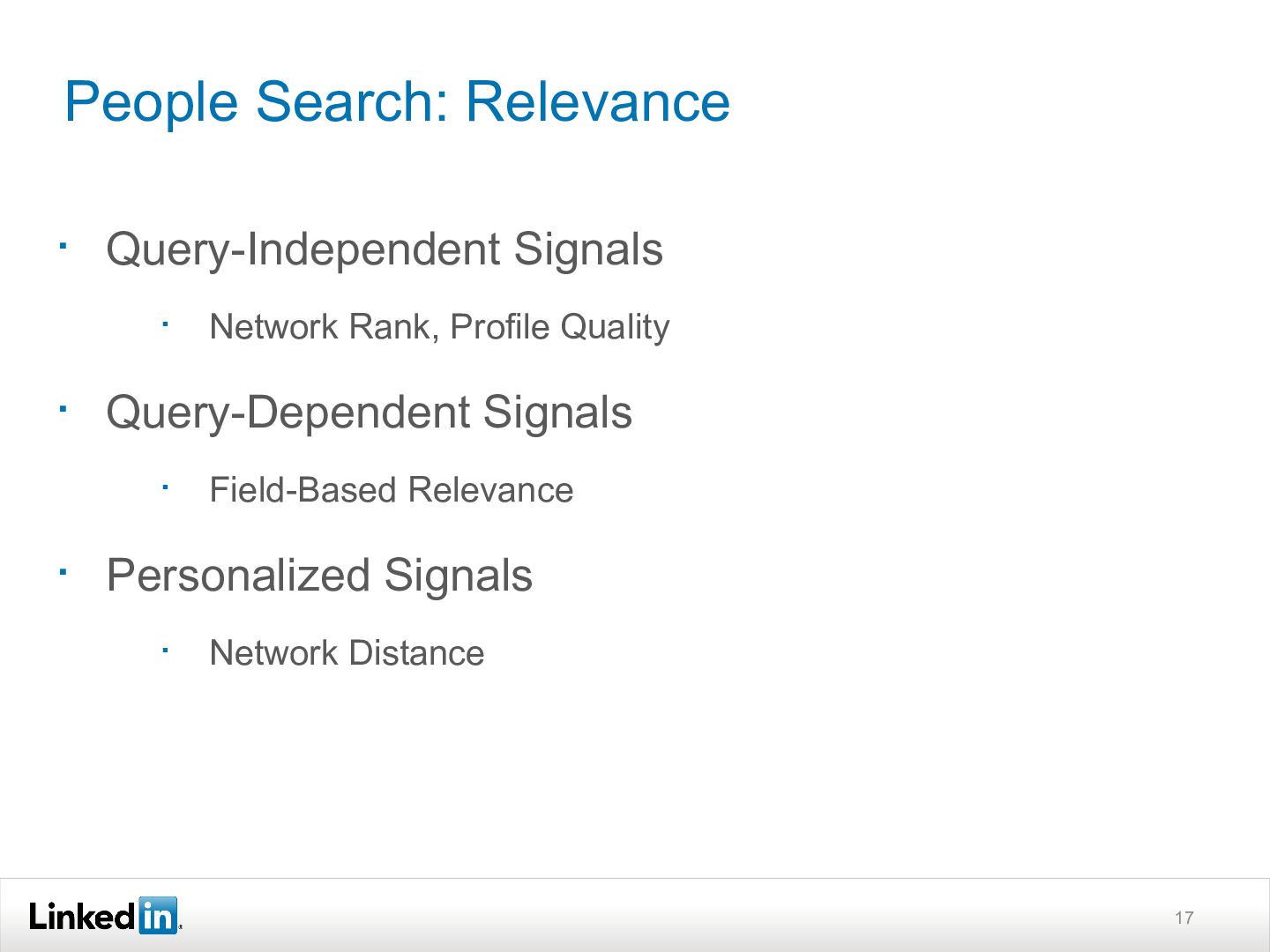
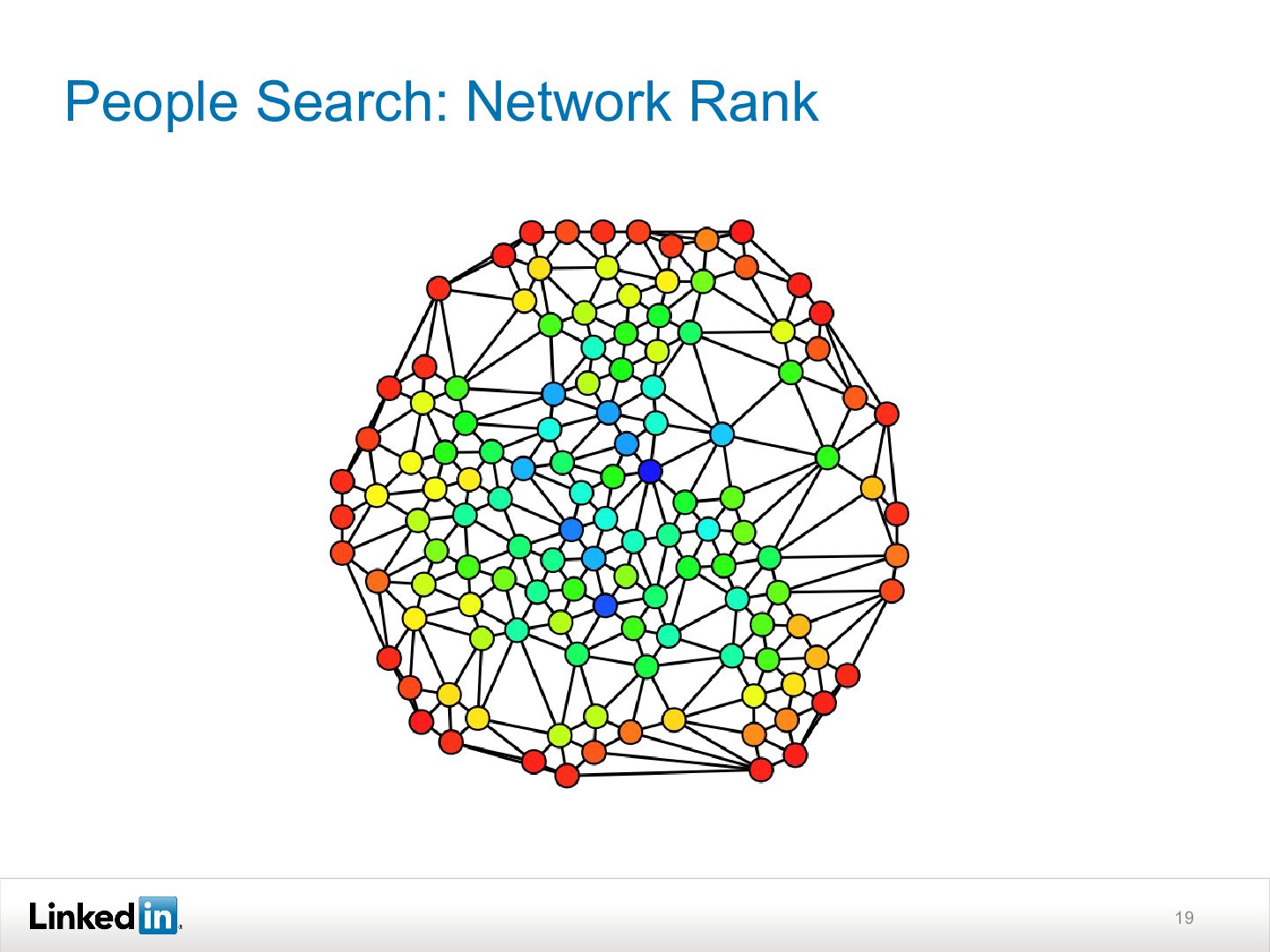
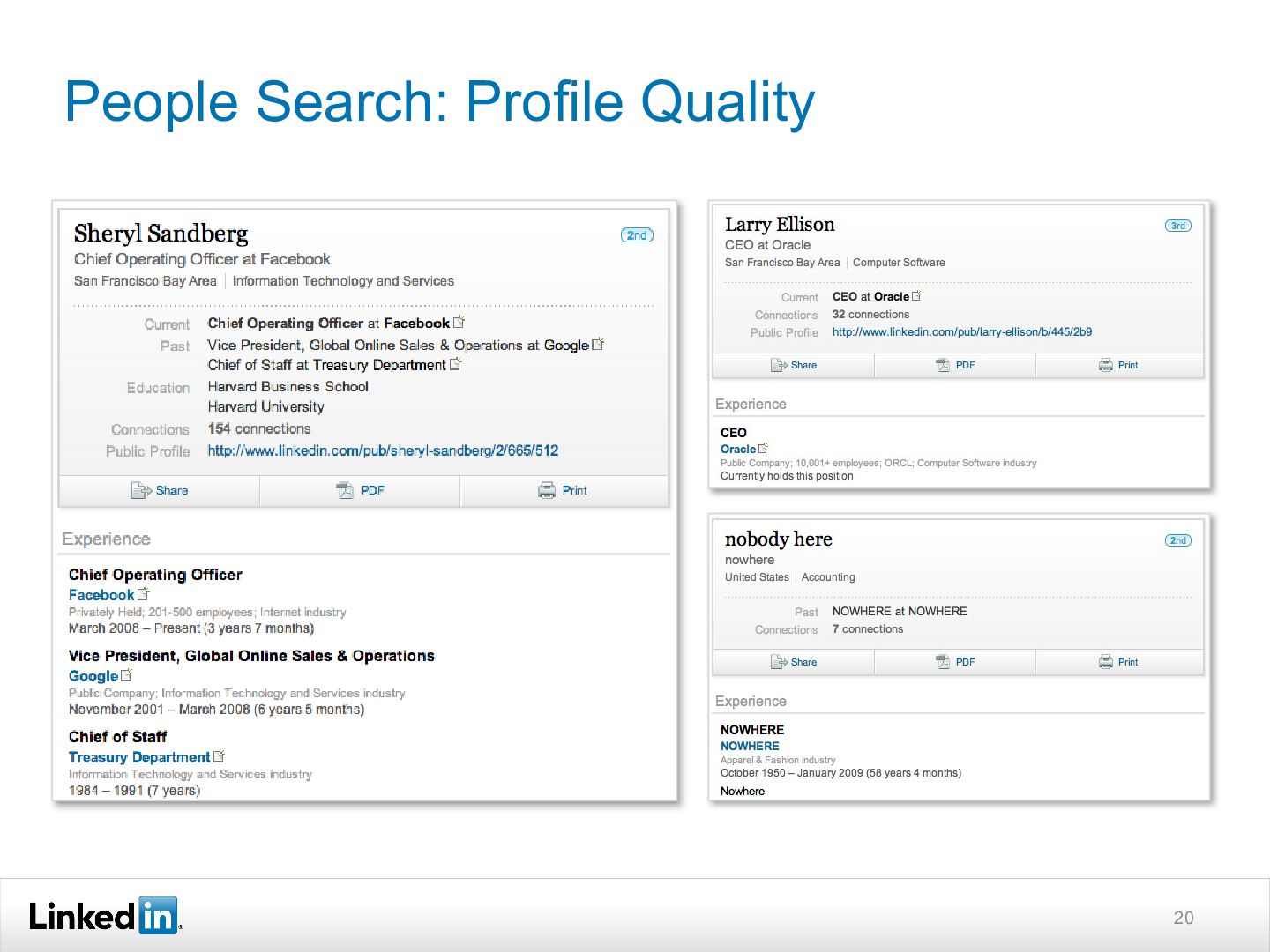
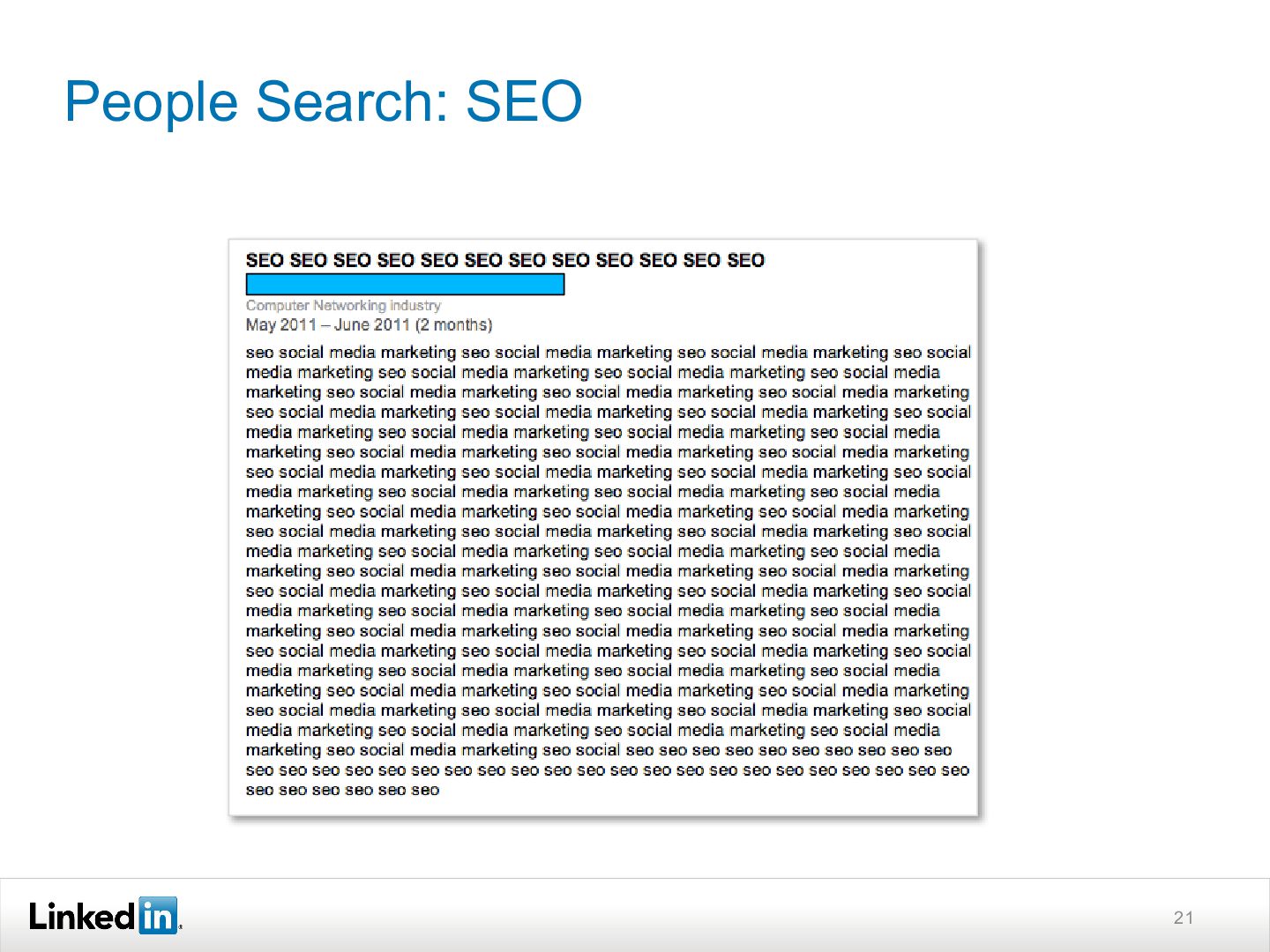
  7. 17  Query-Independent Signals  Network Rank, Profile Quality 

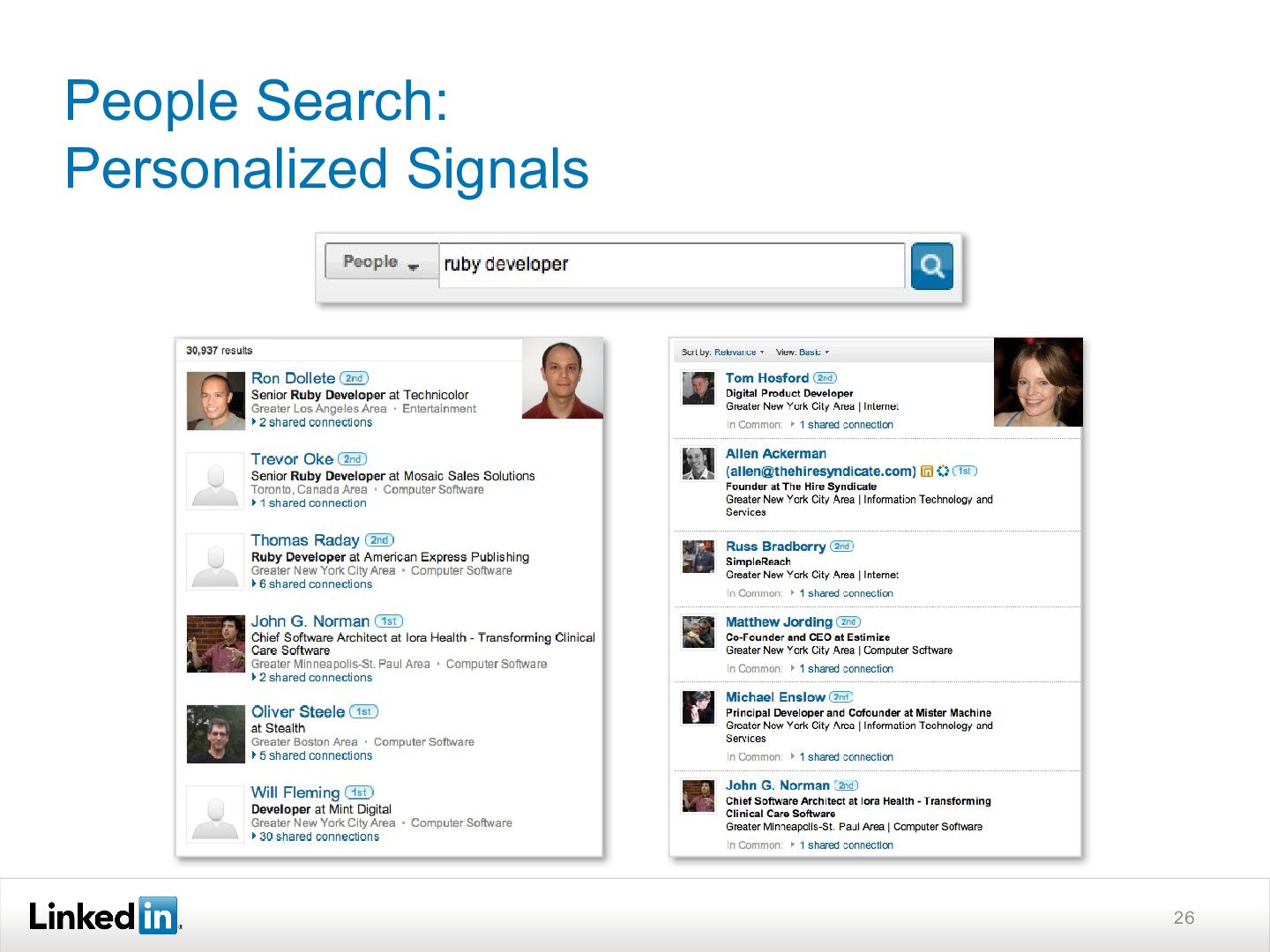
    Query-Dependent Signals  Field-Based Relevance  Personalized Signals  Network Distance People Search: Relevance
  8. 25 for i in [1..n] s  w 1 w

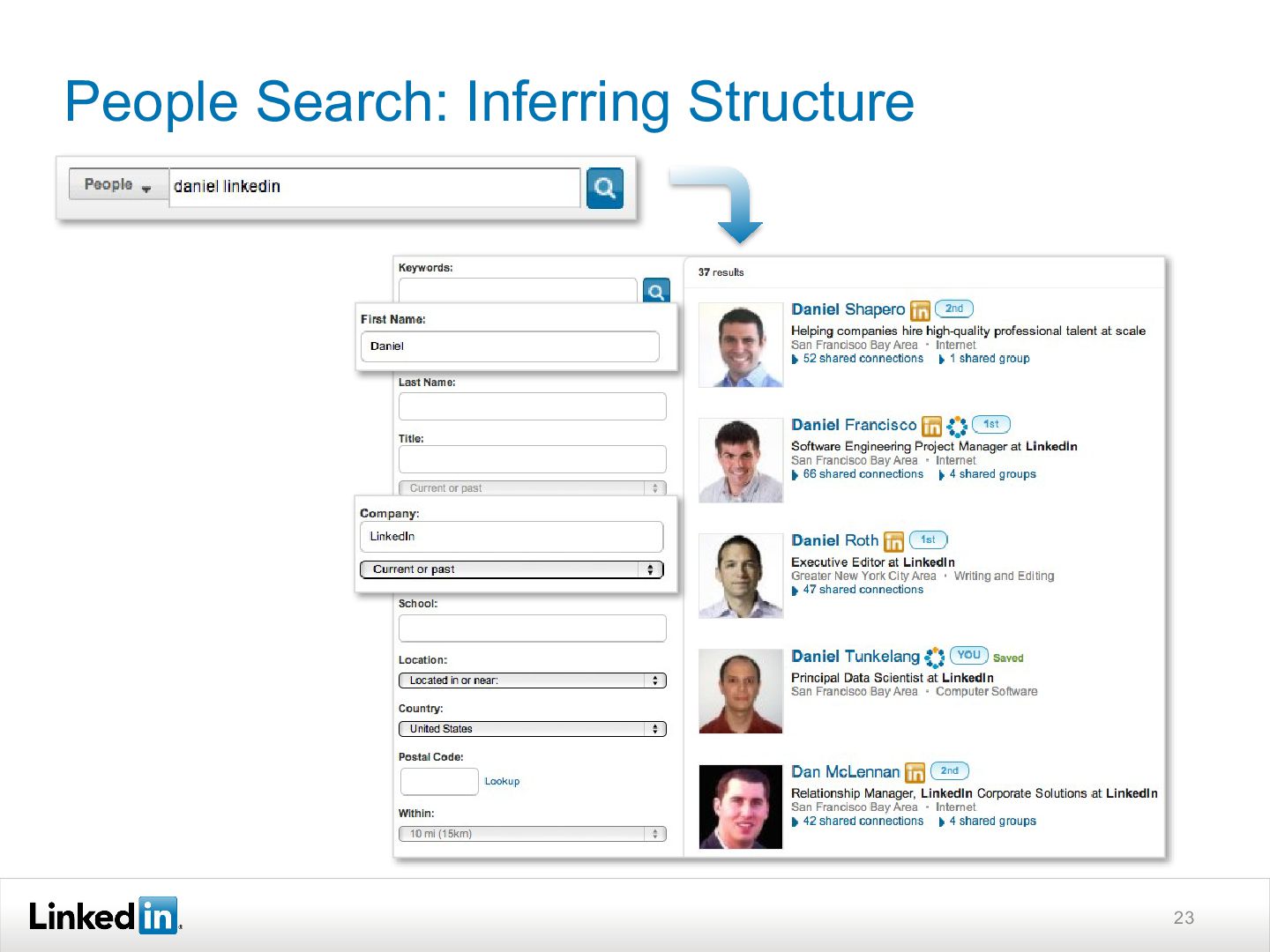
    2 … w i if P c (s) > 0 a  new Segment() a.segs  {s} a.prob  P c (s) B[i]  {a} for j in [1..i-1] for b in B[j] s  w j w j+1 … w i if P c (s) > 0 a  new Segment() a.segs  b.segs U {s} a.prob  b.prob * P c (s) B[i]  B[i] U {a} sort B[i] by prob truncate B[i] to size k People Search: HMM + Segmentation
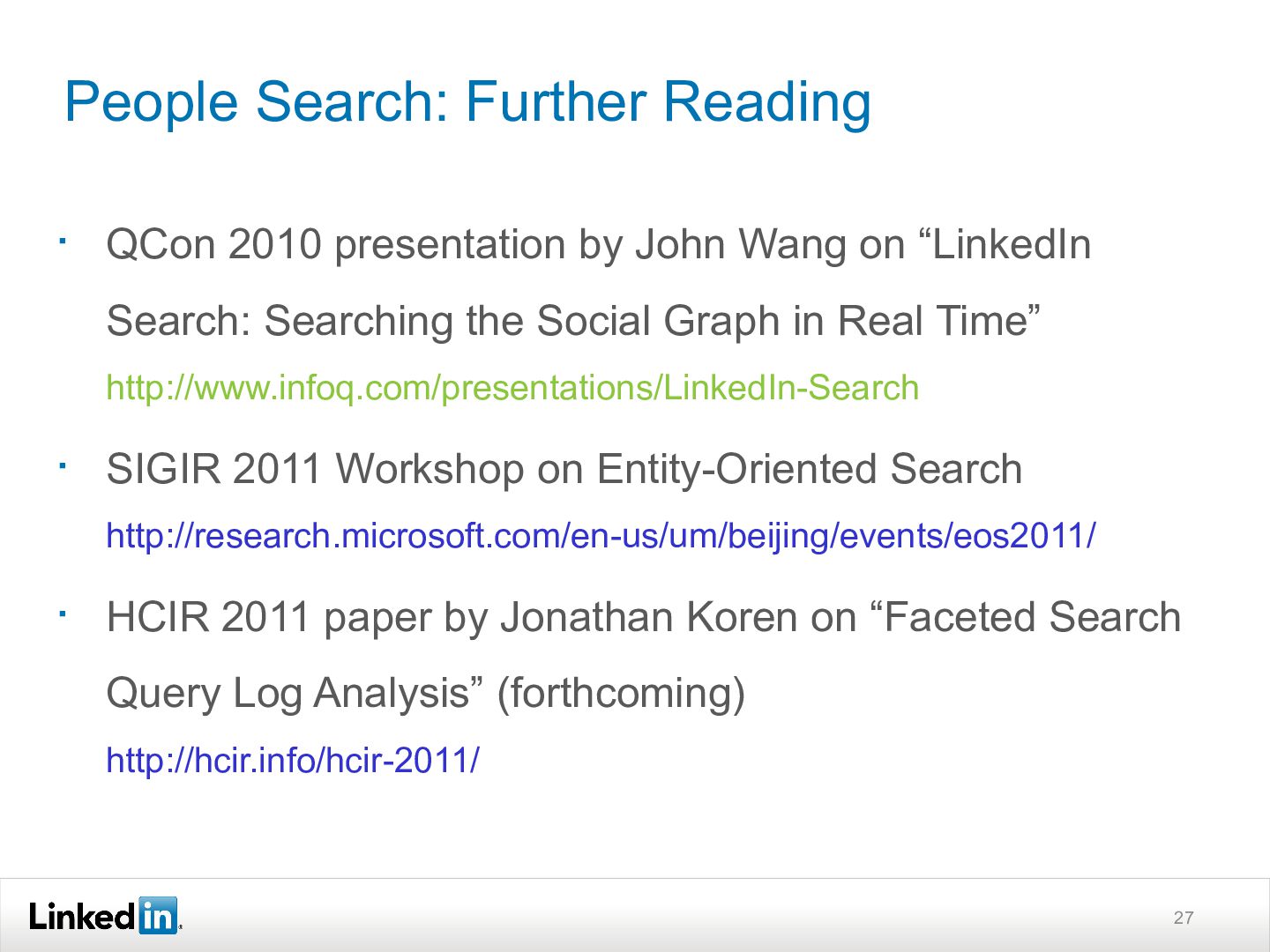
  9. 27  QCon 2010 presentation by John Wang on “LinkedIn

    Search: Searching the Social Graph in Real Time” http://www.infoq.com/presentations/LinkedIn-Search  SIGIR 2011 Workshop on Entity-Oriented Search http://research.microsoft.com/en-us/um/beijing/events/eos2011/  HCIR 2011 paper by Jonathan Koren on “Faceted Search Query Log Analysis” (forthcoming) http://hcir.info/hcir-2011/ People Search: Further Reading
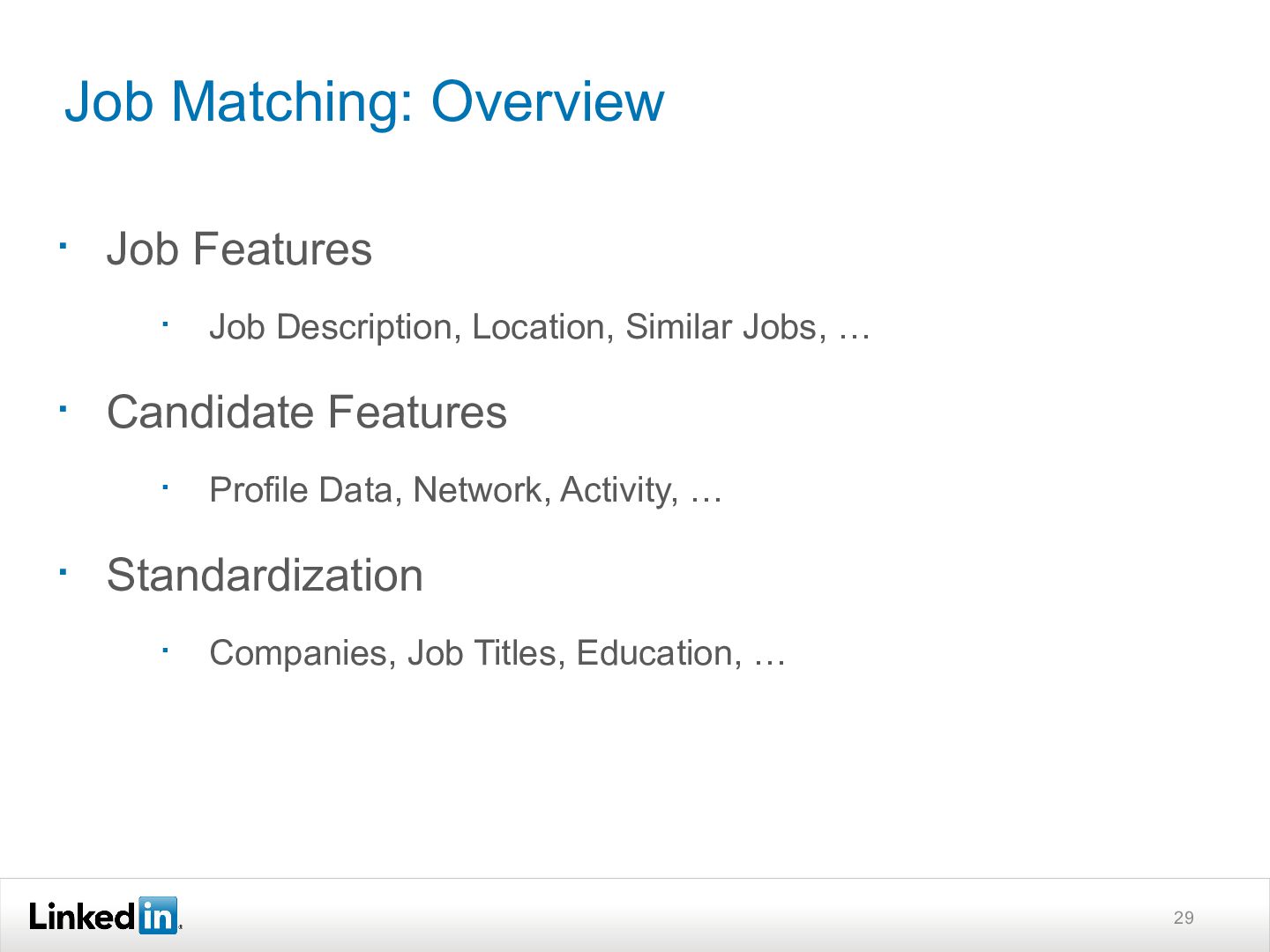
  10. 29  Job Features  Job Description, Location, Similar Jobs,

    …  Candidate Features  Profile Data, Network, Activity, …  Standardization  Companies, Job Titles, Education, … Job Matching: Overview
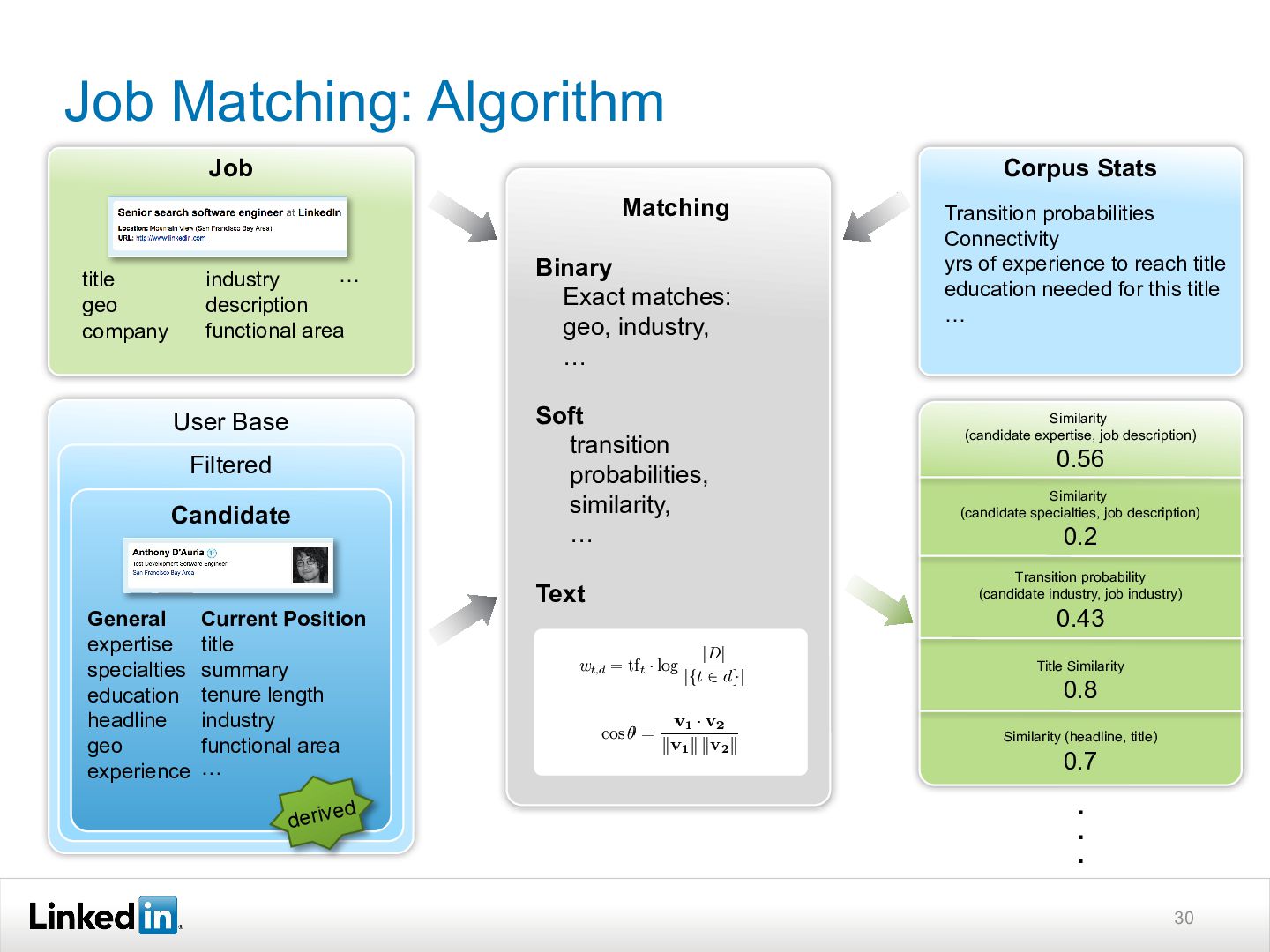
  11. 30 Corpus Stats Job User Base Filtered title geo company

    industry description functional area … Candidate General expertise specialties education headline geo experience Current Position title summary tenure length industry functional area … Similarity (candidate expertise, job description) 0.56 Similarity (candidate specialties, job description) 0.2 Transition probability (candidate industry, job industry) 0.43 Title Similarity 0.8 Similarity (headline, title) 0.7 . . . derived Matching Binary Exact matches: geo, industry, … Soft transition probabilities, similarity, … Text Job Matching: Algorithm Transition probabilities Connectivity yrs of experience to reach title education needed for this title …
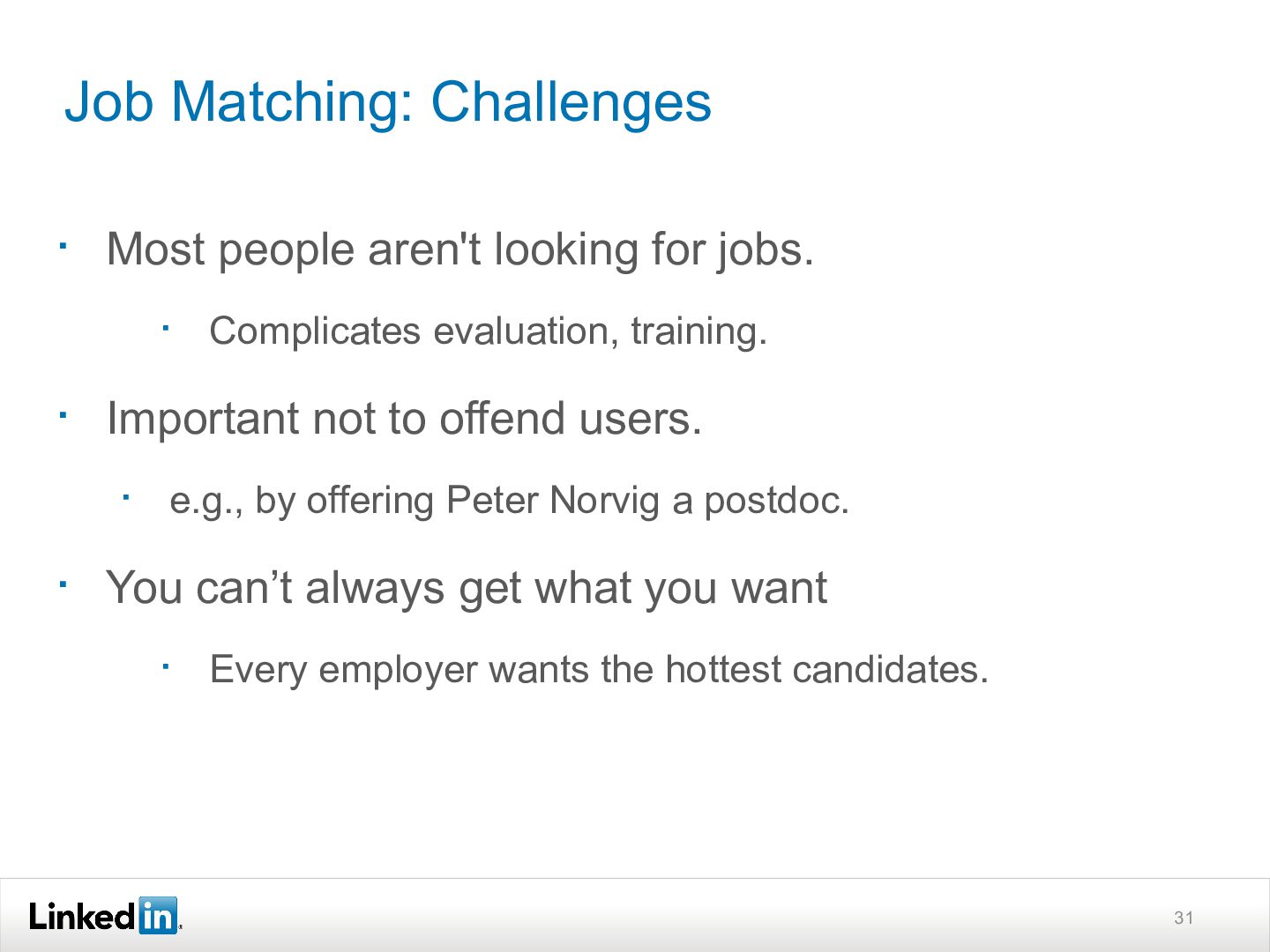
  12. 31  Most people aren't looking for jobs.  Complicates

    evaluation, training.  Important not to offend users.  e.g., by offering Peter Norvig a postdoc.  You can’t always get what you want  Every employer wants the hottest candidates. Job Matching: Challenges
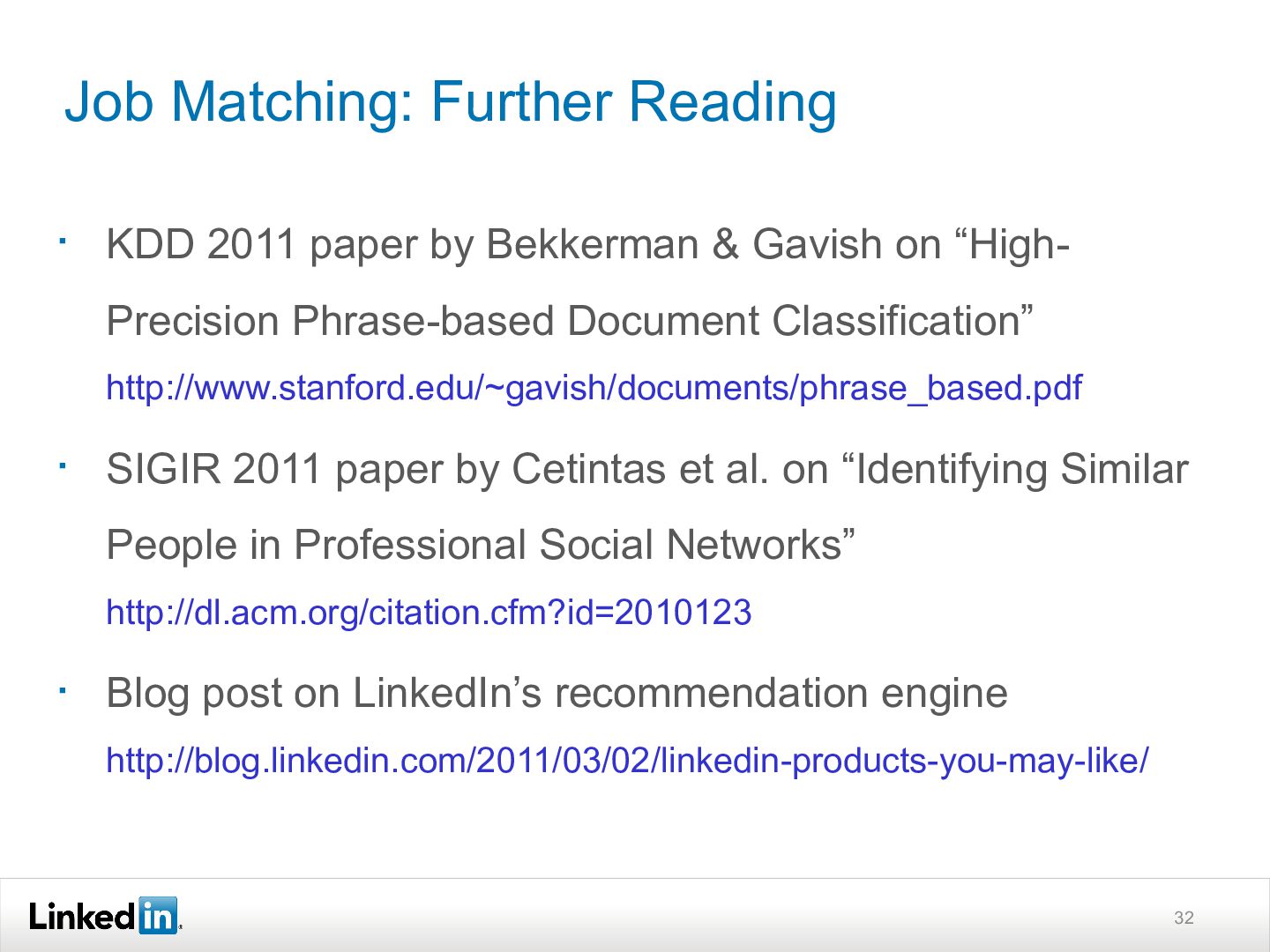
  13. 32  KDD 2011 paper by Bekkerman & Gavish on

    “High- Precision Phrase-based Document Classification” http://www.stanford.edu/~gavish/documents/phrase_based.pdf  SIGIR 2011 paper by Cetintas et al. on “Identifying Similar People in Professional Social Networks” http://dl.acm.org/citation.cfm?id=2010123  Blog post on LinkedIn’s recommendation engine http://blog.linkedin.com/2011/03/02/linkedin-products-you-may-like/ Job Matching: Further Reading
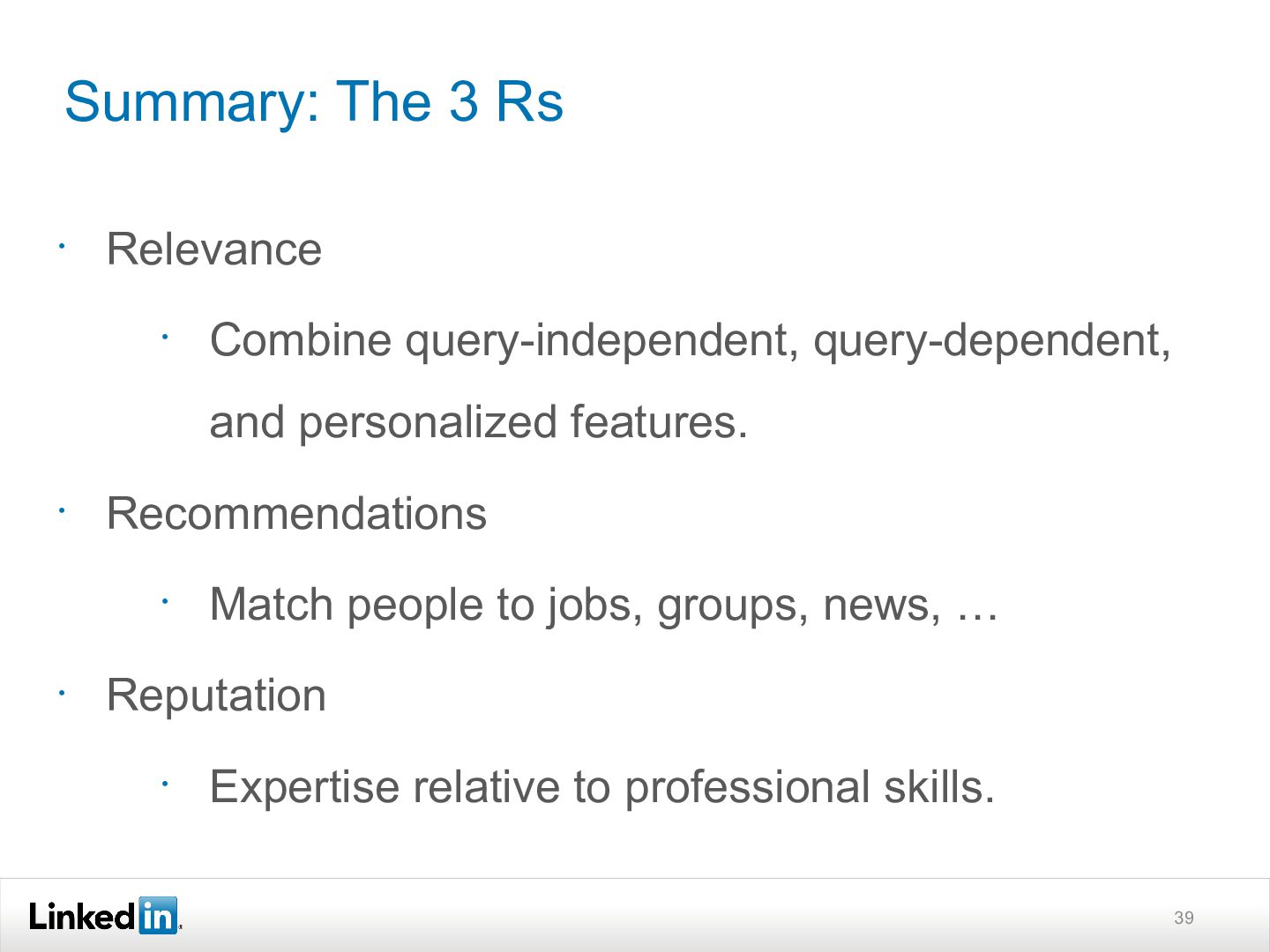
  14. 39 • Relevance • Combine query-independent, query-dependent, and personalized features.

    • Recommendations • Match people to jobs, groups, news, … • Reputation • Expertise relative to professional skills. Summary: The 3 Rs
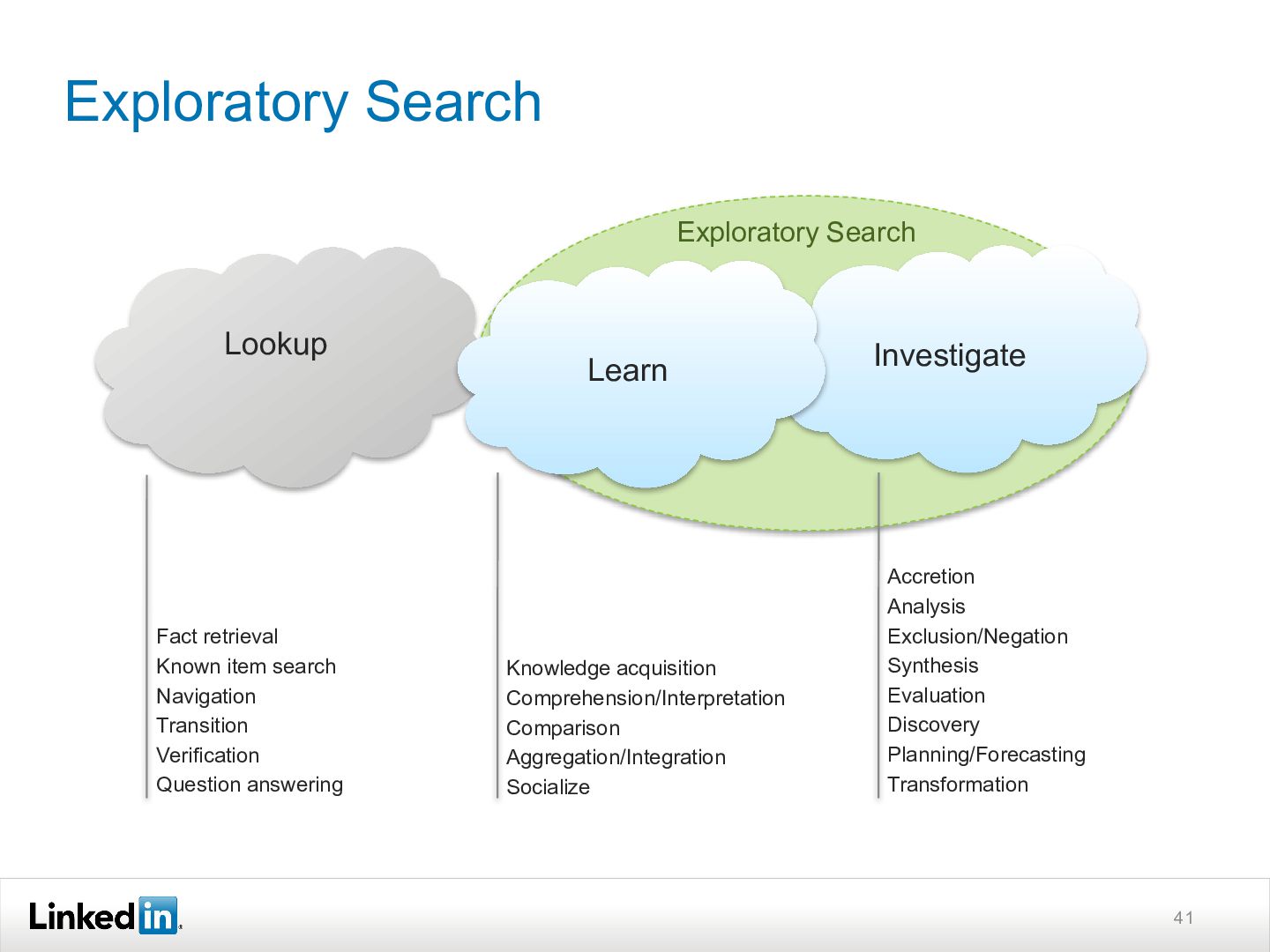
  15. 41 Exploratory Search Fact retrieval Known item search Navigation Transition

    Verification Question answering Knowledge acquisition Comprehension/Interpretation Comparison Aggregation/Integration Socialize Accretion Analysis Exclusion/Negation Synthesis Evaluation Discovery Planning/Forecasting Transformation Lookup Investigate Learn Exploratory Search