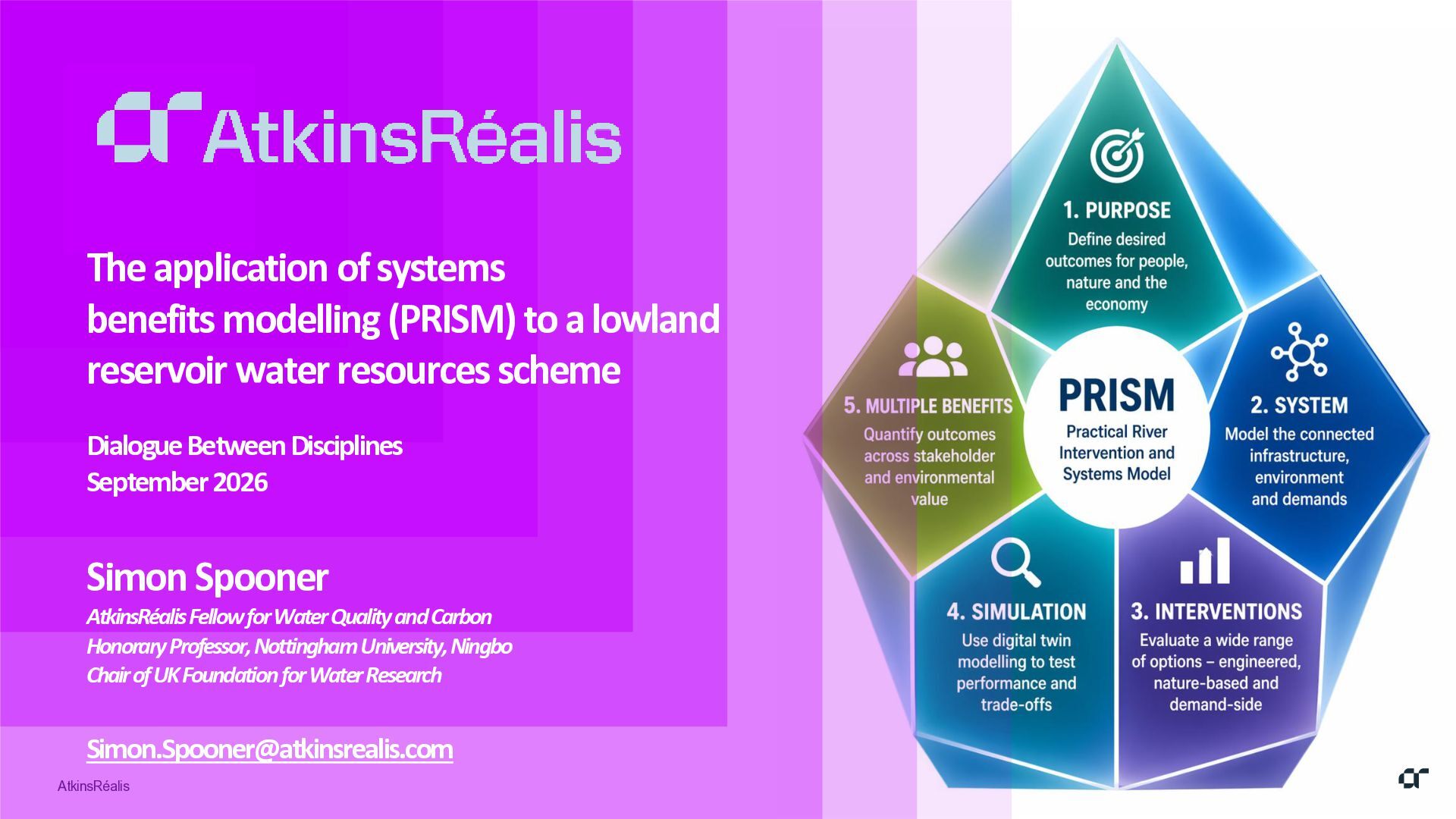
reservoir water resources scheme Dialogue Between Disciplines September 2026 Simon Spooner AtkinsRéalis Fellow for Water Quality and Carbon Honorary Professor, Nottingham University, Ningbo Chair of UK Foundation for Water Research [email protected] AtkinsRéalis
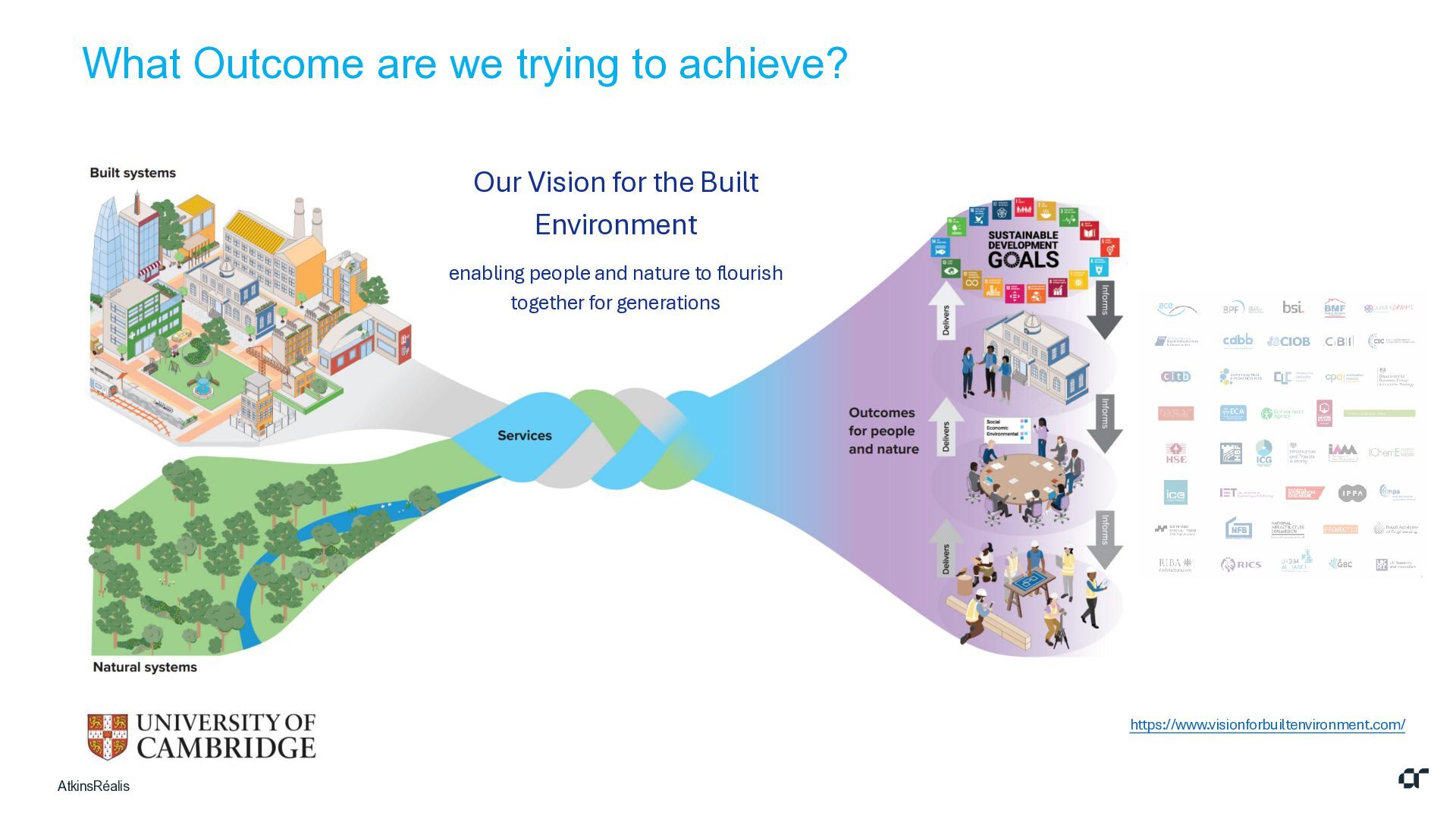
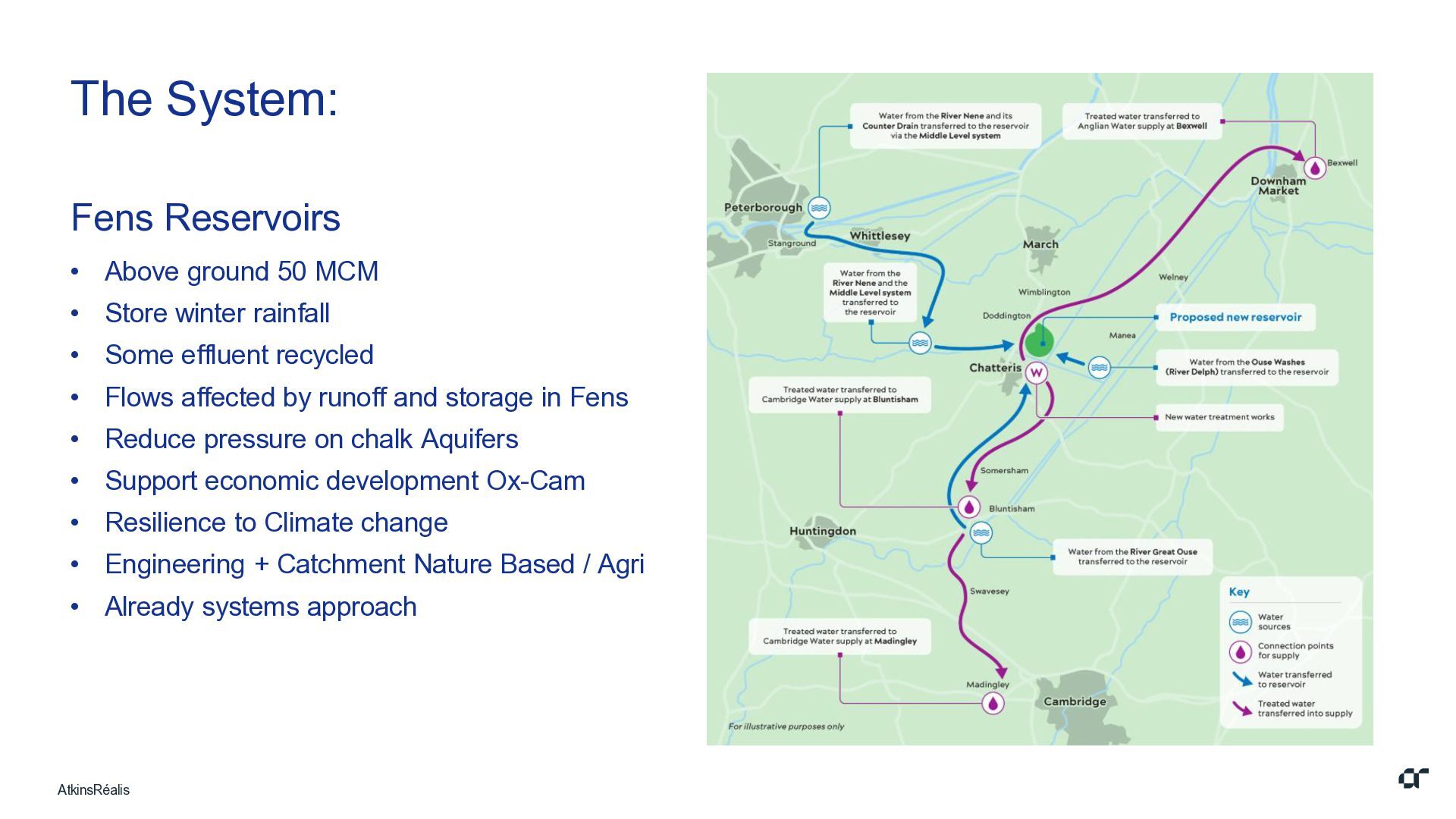
Store winter rainfall • Some effluent recycled • Flows affected by runoff and storage in Fens • Reduce pressure on chalk Aquifers • Support economic development Ox-Cam • Resilience to Climate change • Engineering + Catchment Nature Based / Agri • Already systems approach AtkinsRéalis
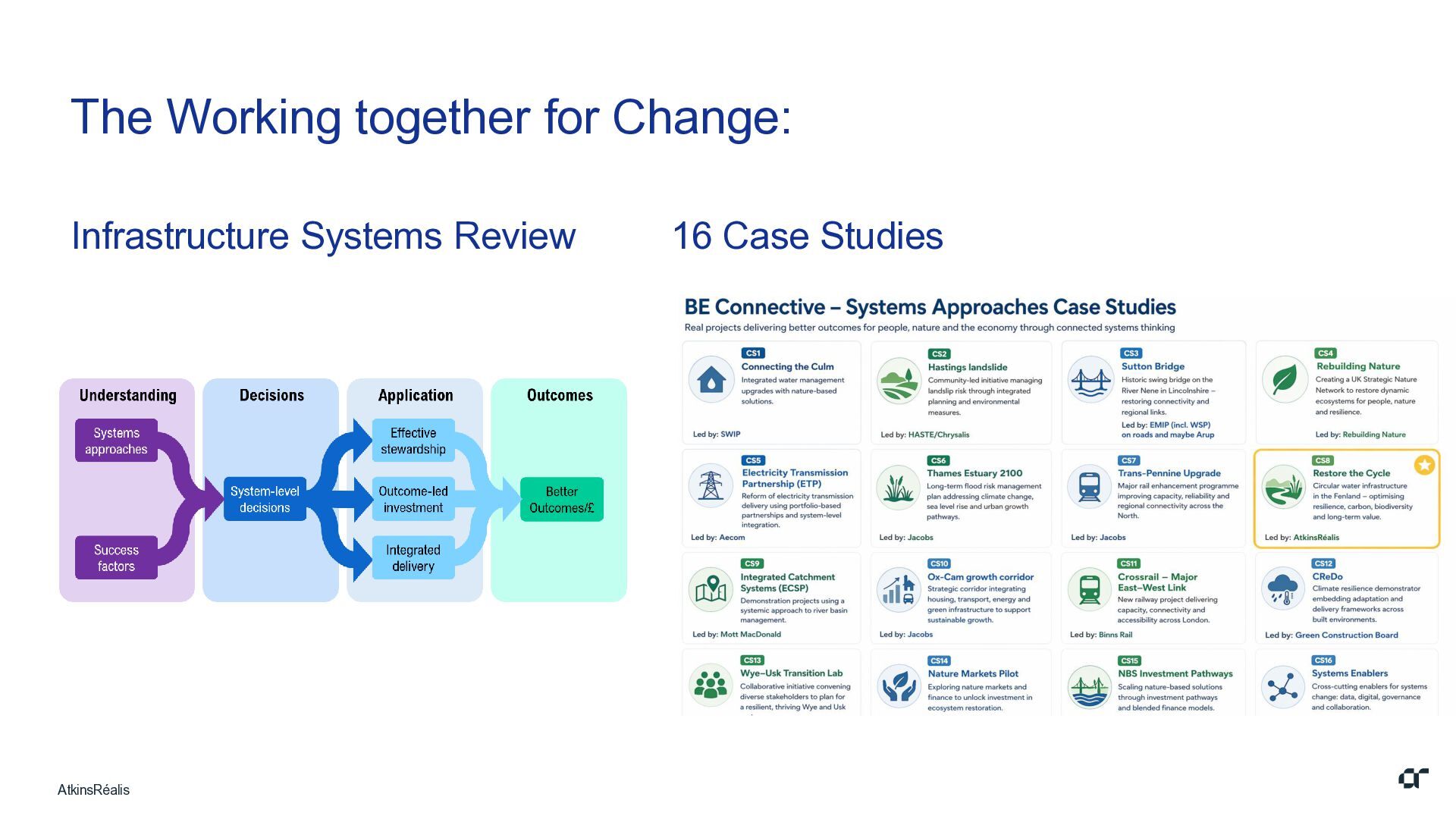
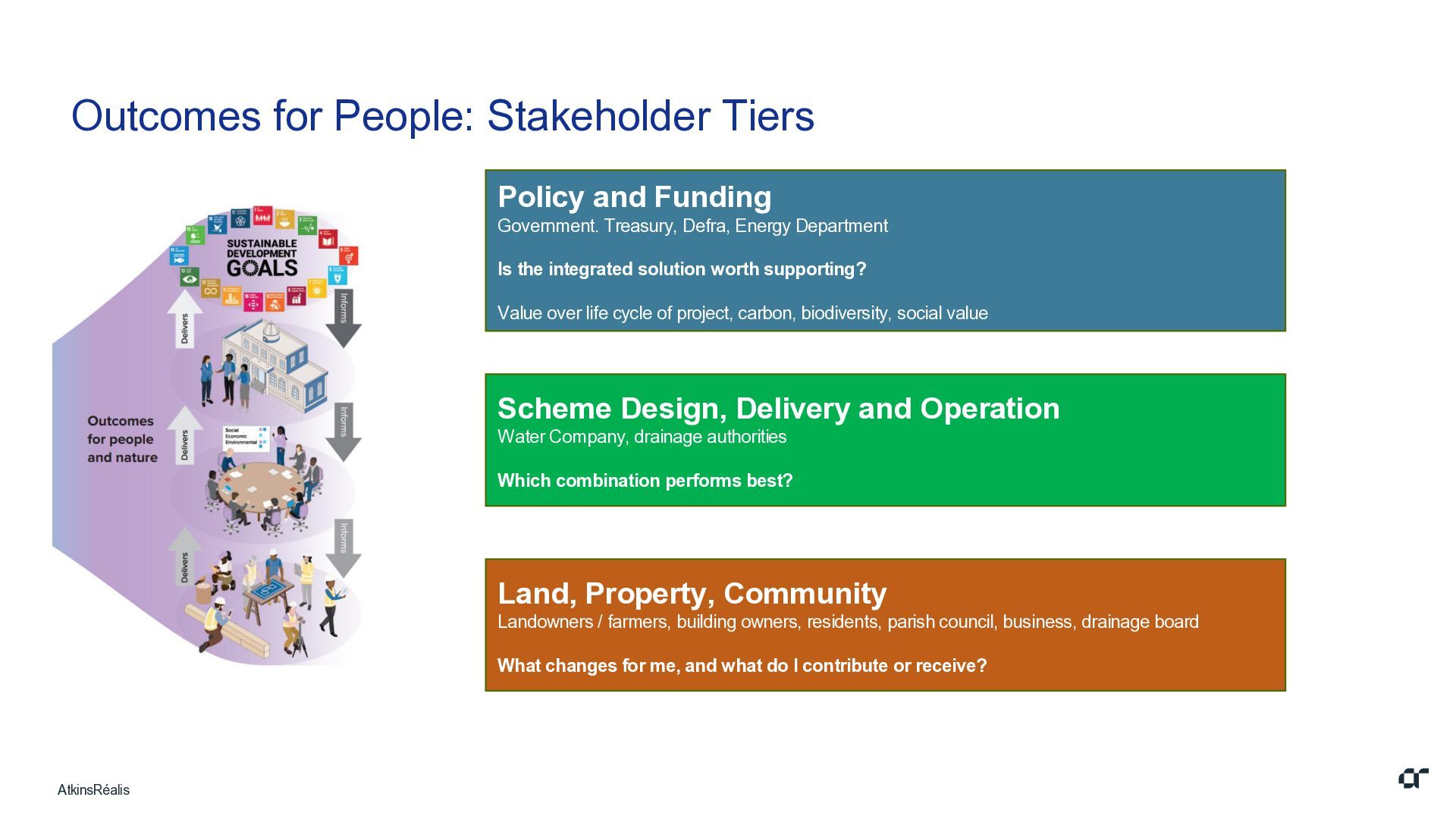
Defra, Energy Department Is the integrated solution worth supporting? Value over life cycle of project, carbon, biodiversity, social value Scheme Design, Delivery and Operation Water Company, drainage authorities Which combination performs best? Land, Property, Community Landowners / farmers, building owners, residents, parish council, business, drainage board What changes for me, and what do I contribute or receive? AtkinsRéalis
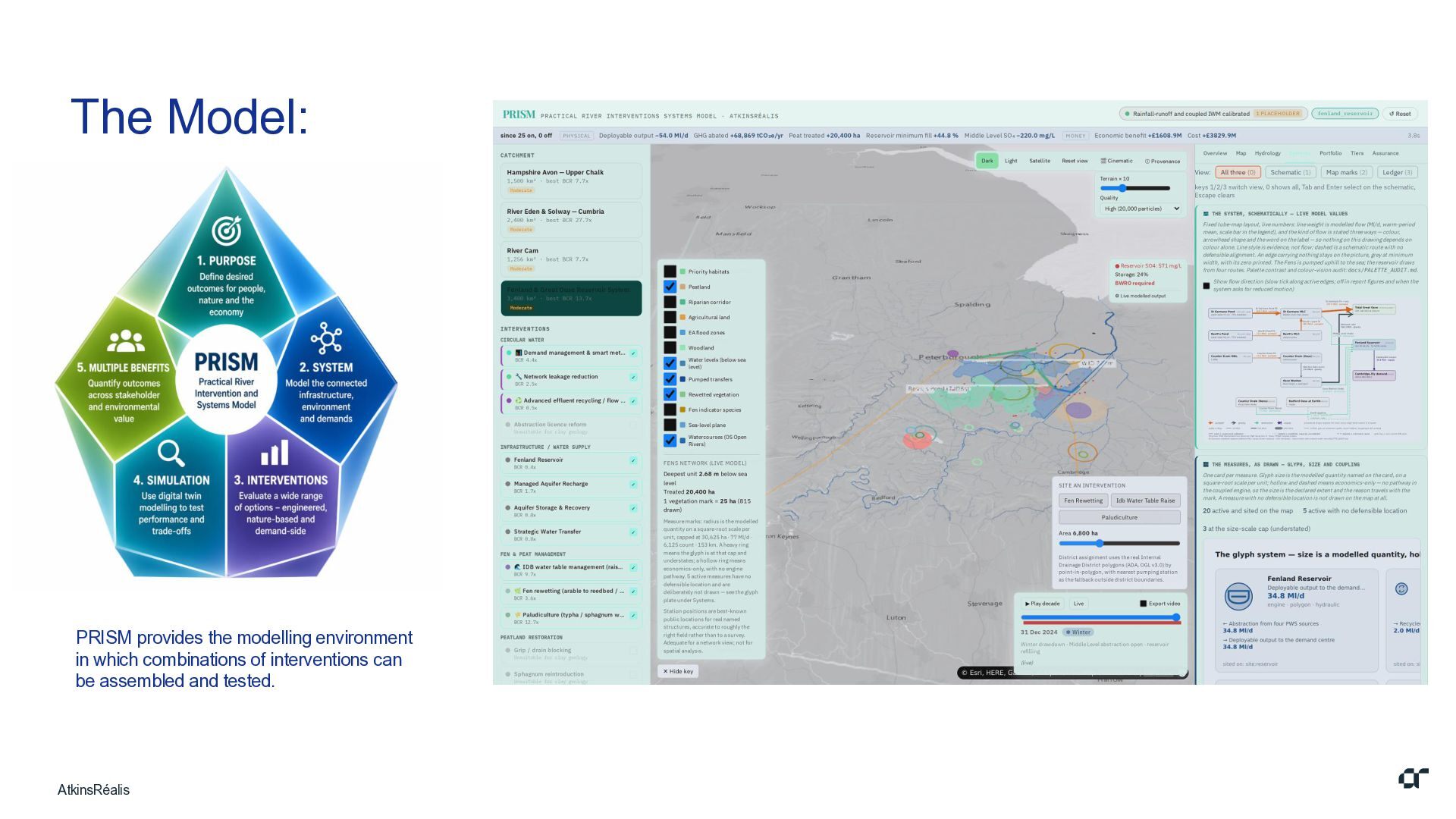
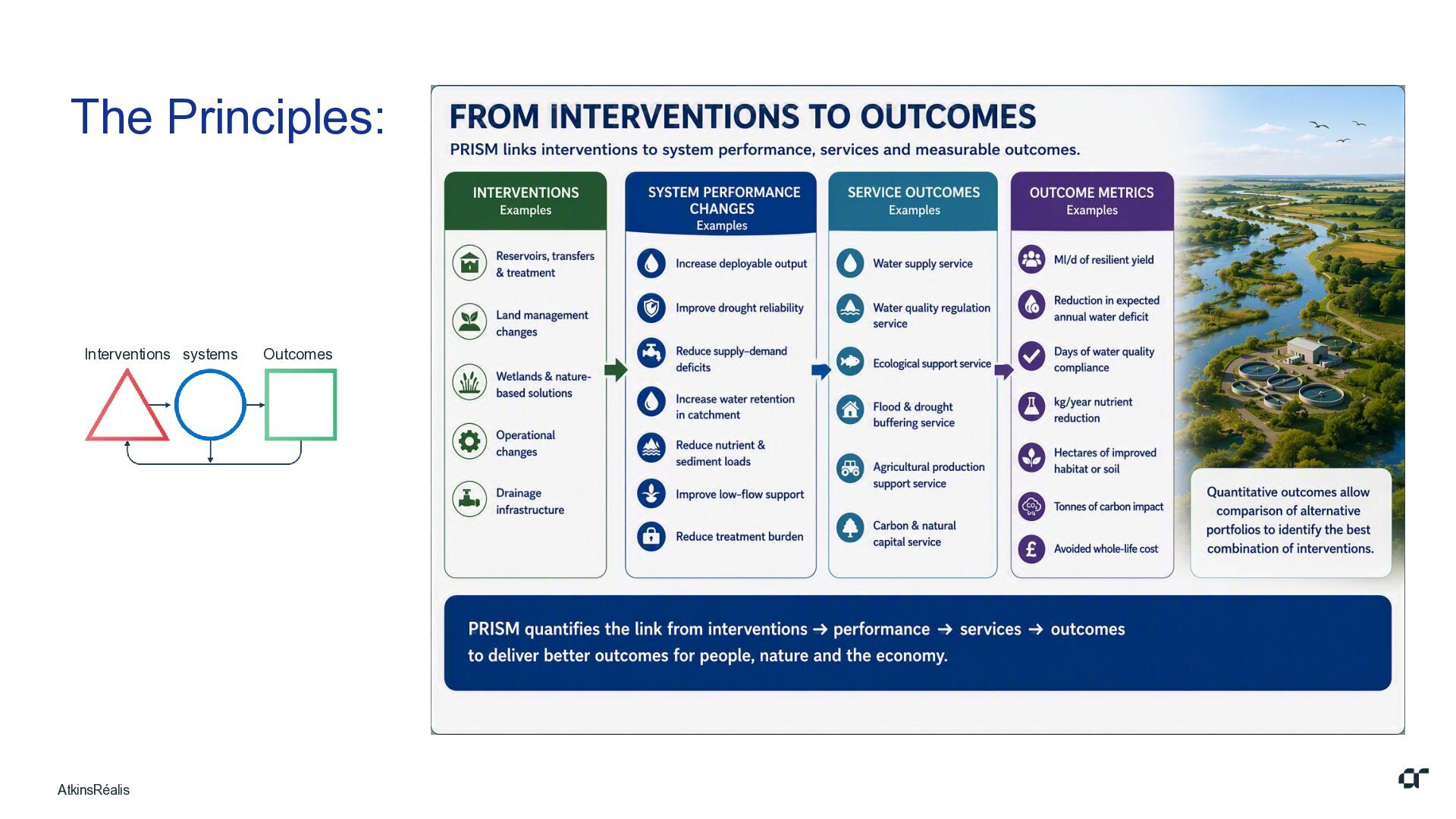
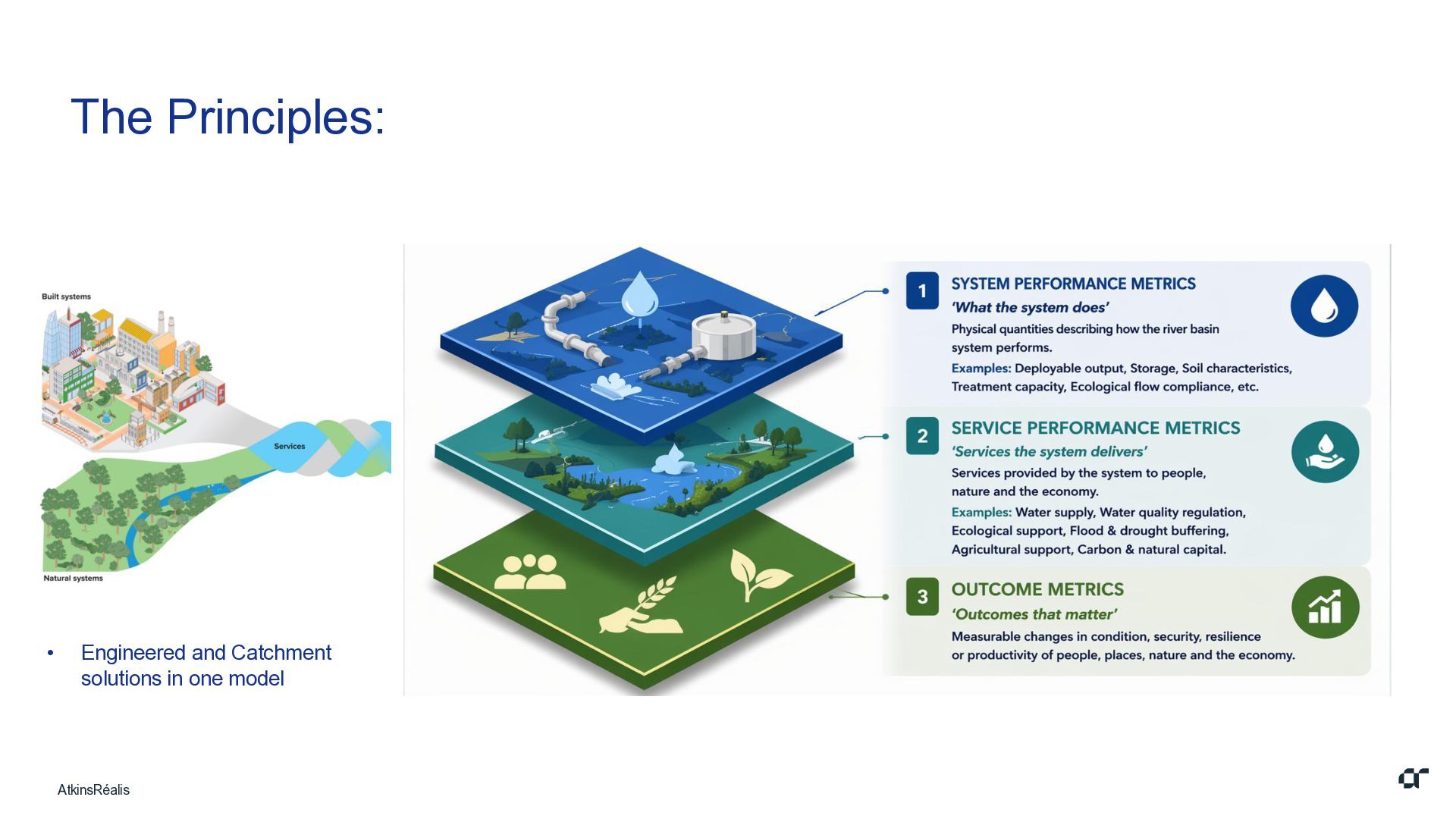
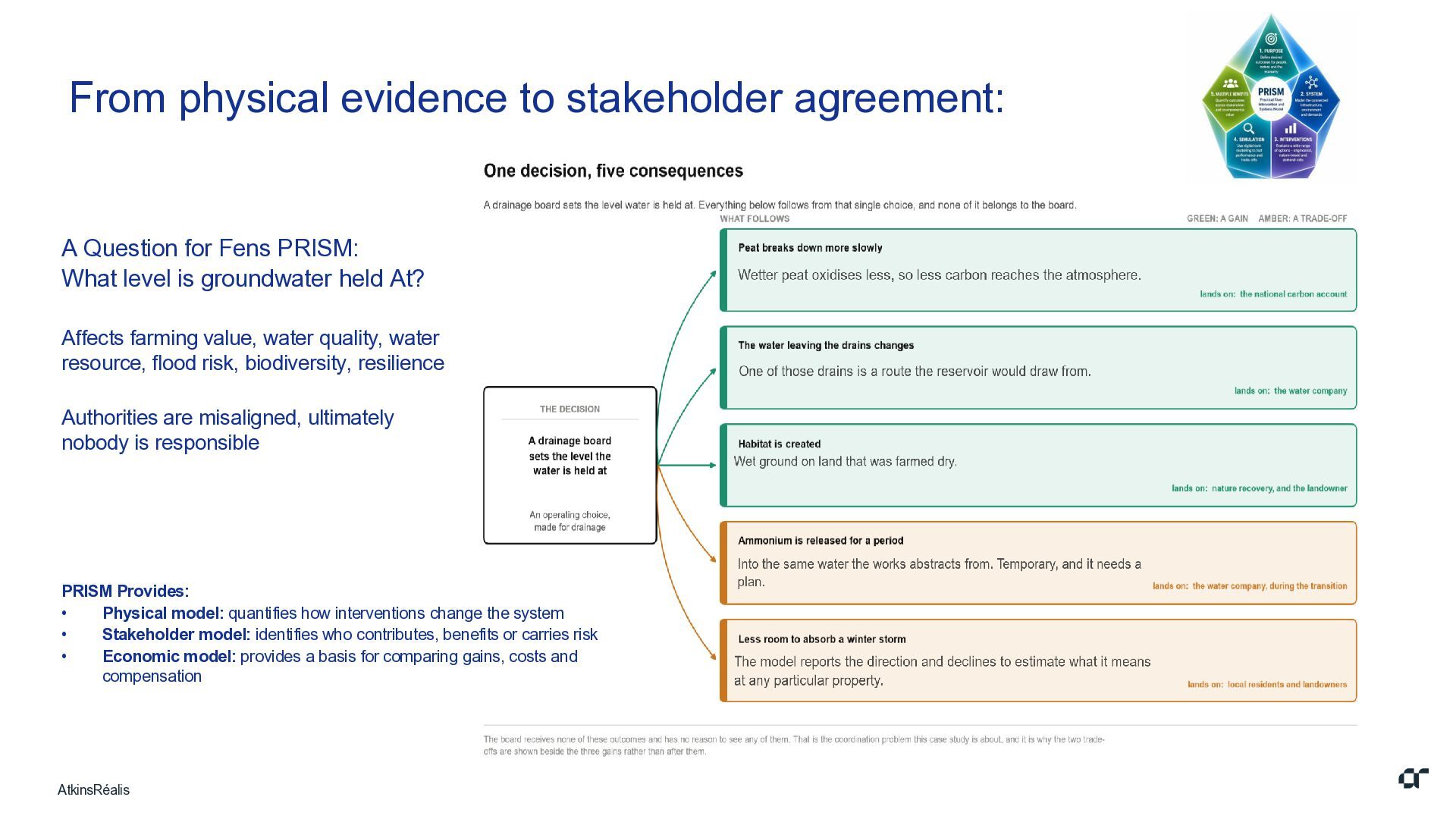
PRISM: What level is groundwater held At? Affects farming value, water quality, water resource, flood risk, biodiversity, resilience Authorities are misaligned, ultimately nobody is responsible PRISM Provides: • Physical model: quantifies how interventions change the system • Stakeholder model: identifies who contributes, benefits or carries risk • Economic model: provides a basis for comparing gains, costs and compensation AtkinsRéalis
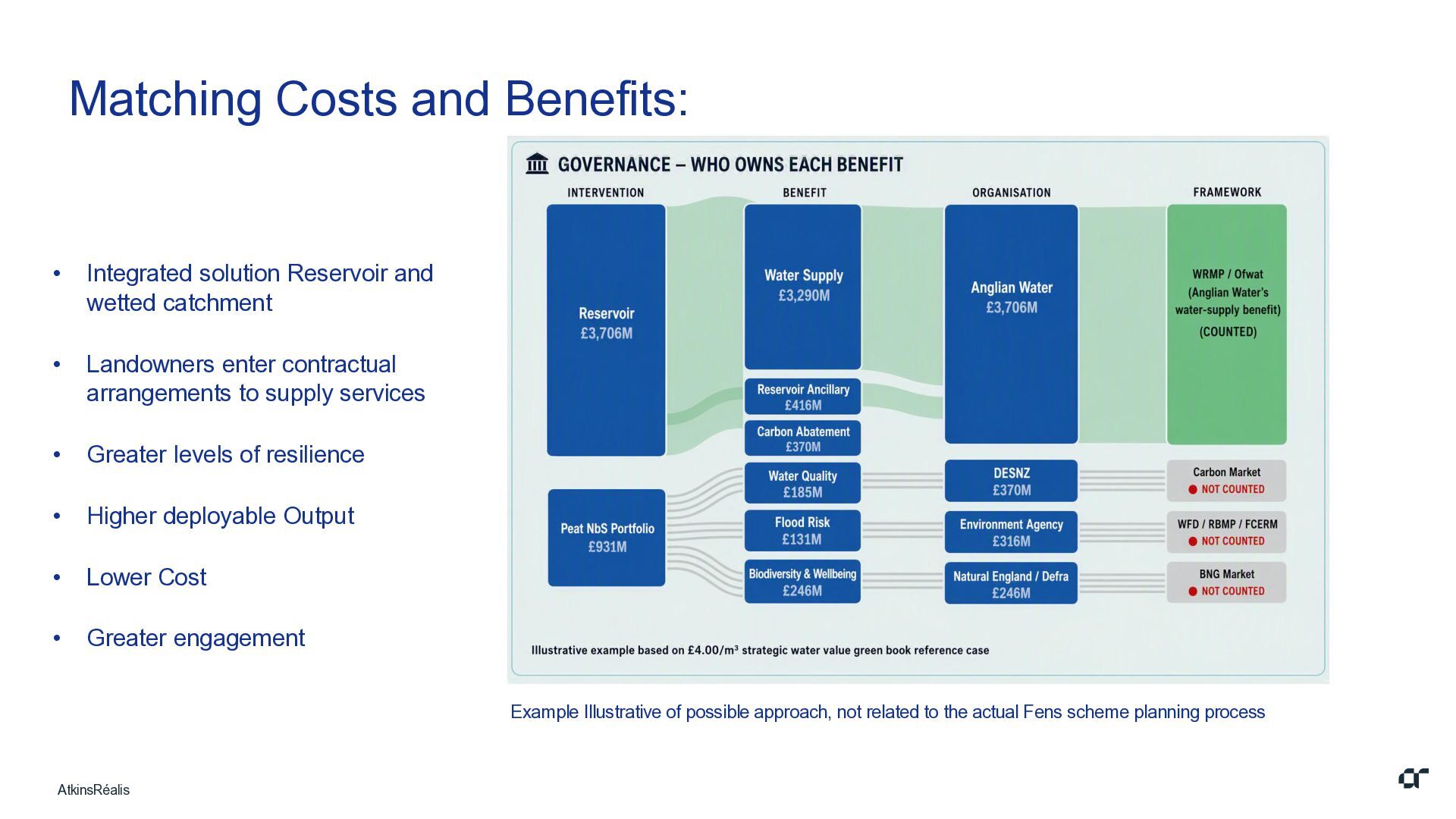
catchment • Landowners enter contractual arrangements to supply services • Greater levels of resilience • Higher deployable Output • Lower Cost • Greater engagement Example Illustrative of possible approach, not related to the actual Fens scheme planning process AtkinsRéalis
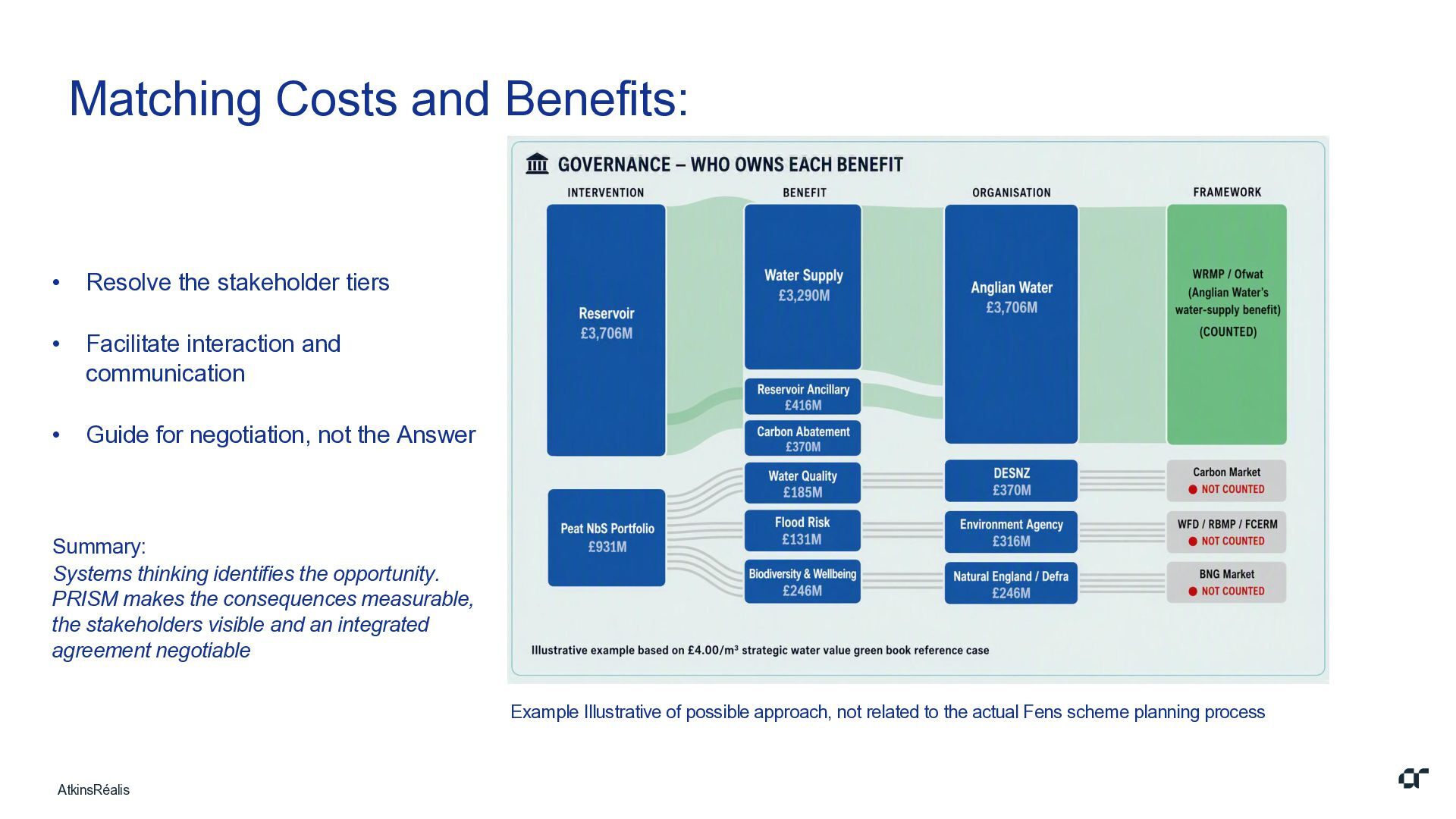
Facilitate interaction and communication • Guide for negotiation, not the Answer Summary: Systems thinking identifies the opportunity. PRISM makes the consequences measurable, the stakeholders visible and an integrated agreement negotiable Example Illustrative of possible approach, not related to the actual Fens scheme planning process AtkinsRéalis


 iesevents
 kanaya
 tagtag
.jpg) lychee1223
lychee1223
 trycycle
 xleitix
 institutdelelevage
 analokmaus
 jagupath
 signer
 nozakijcom
 voginip
 codingconduct
 mraible
 irinanazarova
 danielanewman
 jonoalderson
 katiecoart
 aki_iinuma
 tamaranovitovic
 mkilby
 cassininazir
 rasmusluckow