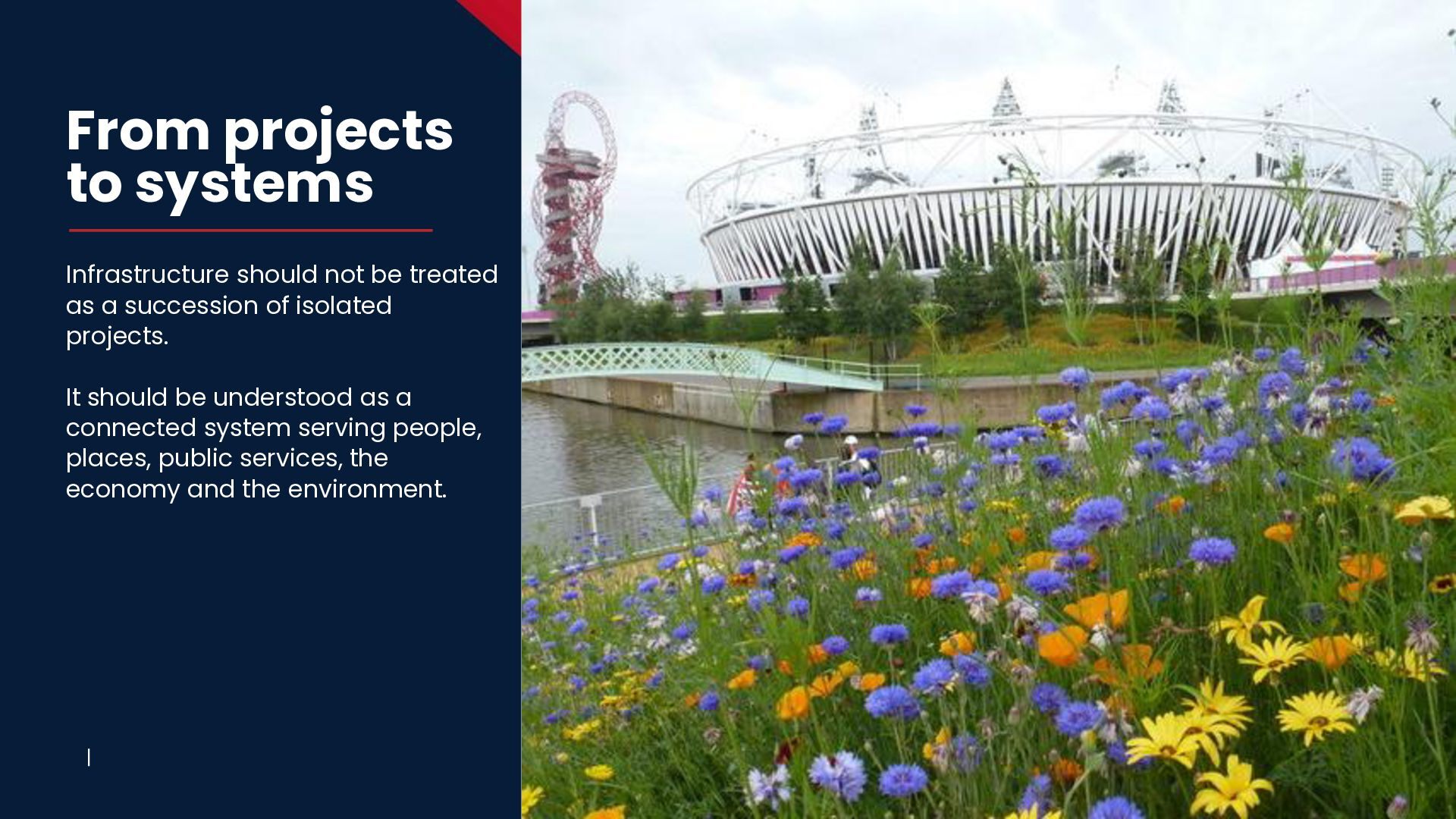
a succession of isolated projects. It should be understood as a connected system serving people, places, public services, the economy and the environment.
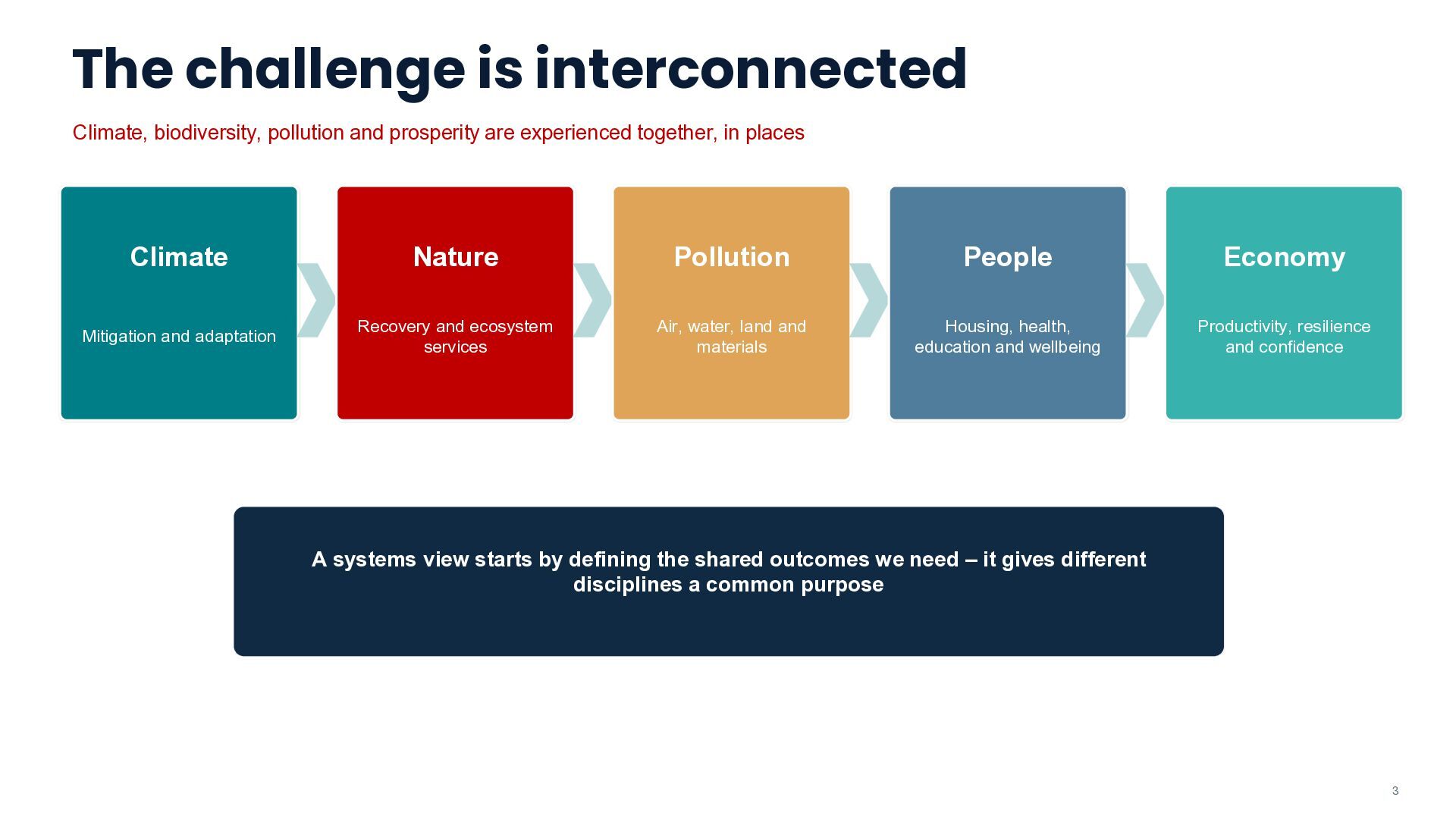
experienced together, in places Climate Nature Pollution People Economy Mitigation and adaptation Recovery and ecosystem services Air, water, land and materials Housing, health, education and wellbeing Productivity, resilience and confidence A systems view starts by defining the shared outcomes we need – it gives different disciplines a common purpose 3
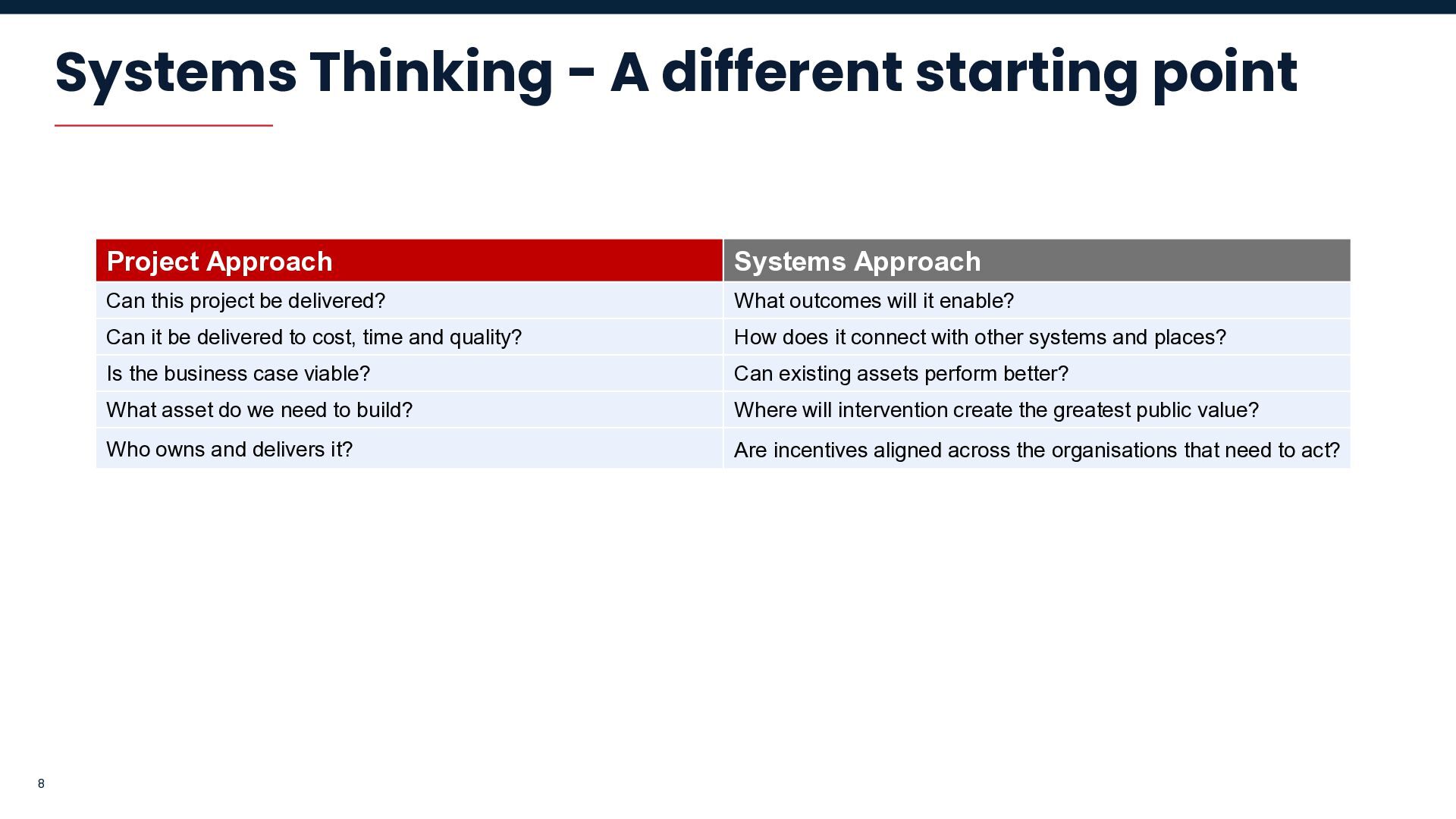
Systems Approach Project Approach Systems Approach Can this project be delivered? What outcomes will it enable? Can it be delivered to cost, time and quality? How does it connect with other systems and places? Is the business case viable? Can existing assets perform better? What asset do we need to build? Where will intervention create the greatest public value? Who owns and delivers it? Are incentives aligned across the organisations that need to act?
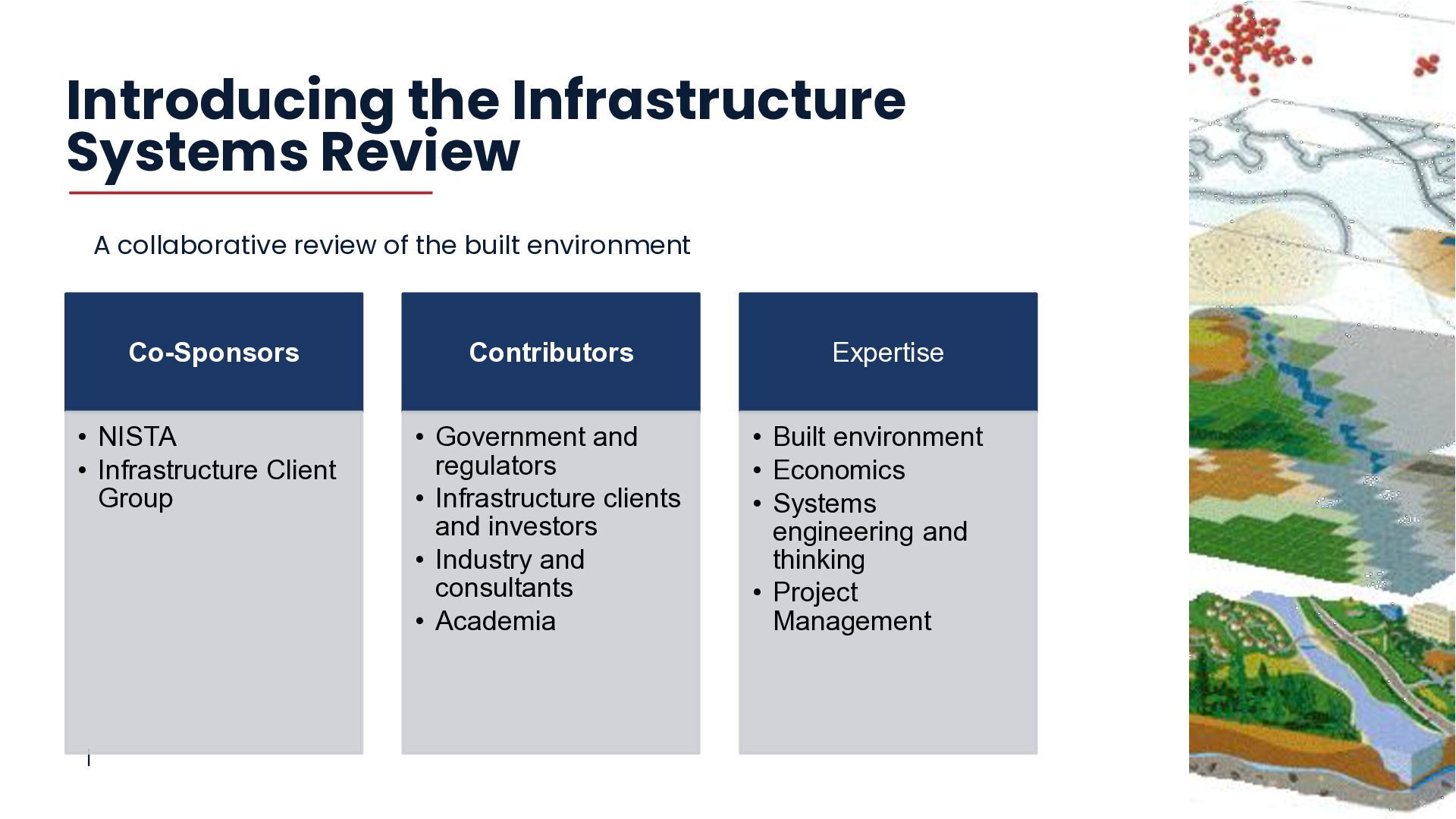
built environment Co-Sponsors Contributors • NISTA • Infrastructure Client Group • Government and regulators • Infrastructure clients and investors • Industry and consultants • Academia Expertise • Built environment • Economics • Systems engineering and thinking • Project Management
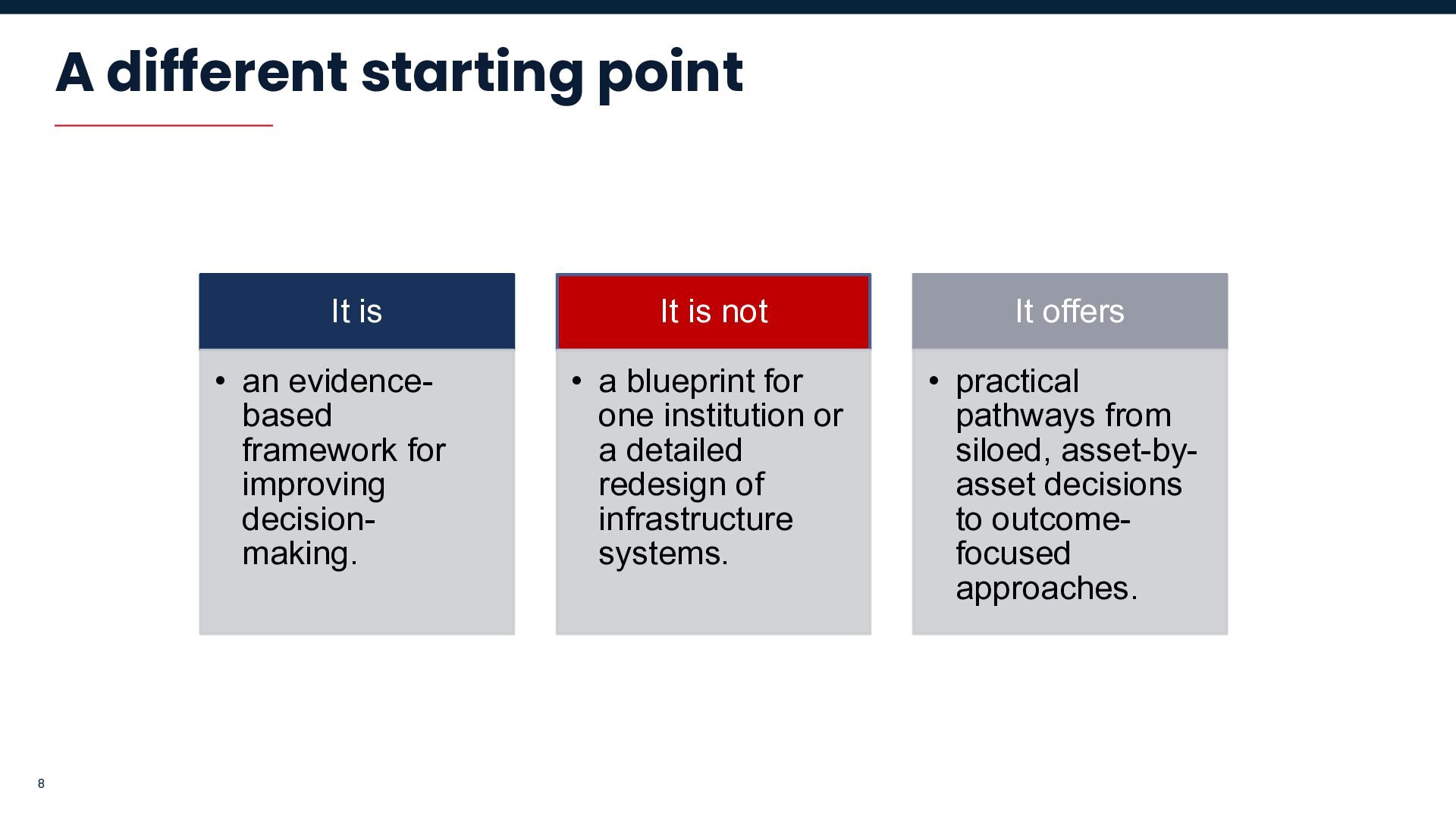
• an evidencebased framework for improving decisionmaking. 8 It is not It offers • a blueprint for one institution or a detailed redesign of infrastructure systems. • practical pathways from siloed, asset-byasset decisions to outcomefocused approaches.
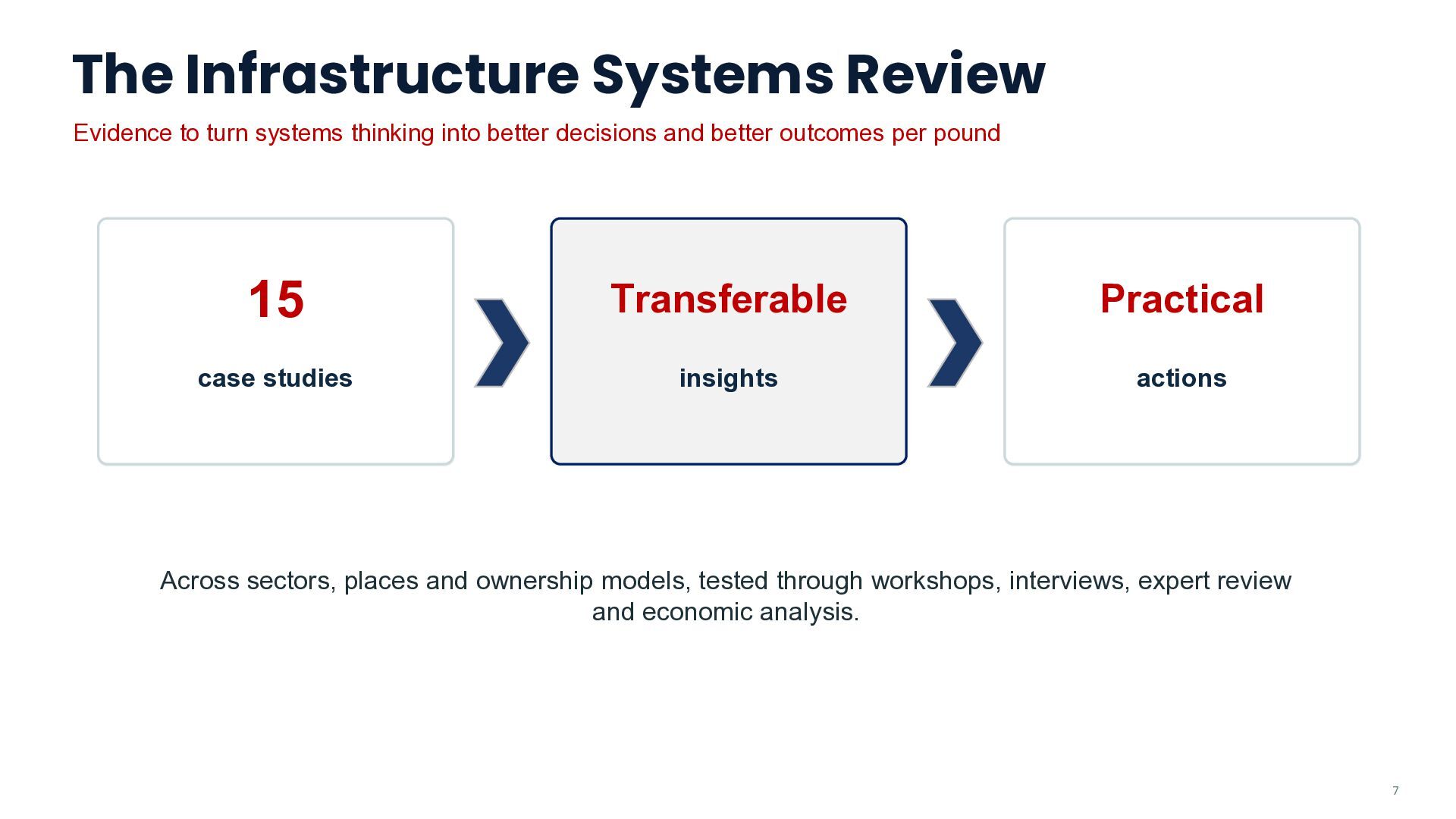
better decisions and better outcomes per pound 15 Transferable Practical case studies insights actions Across sectors, places and ownership models, tested through workshops, interviews, expert review and economic analysis. 7
base has been • • developed, with conclusions and recommendations still to be finalised. Why this matters for national strategy: it is hoped it will strengthen the case for systems thinking as a way to connect long-term national direction with practical decisions in places. A possible contribution to the 2027 refresh: The Review’s completed evidence may inform relevant content, without prejudging either the Review or the Strategy refresh. • What this means for an interdisciplinary audience: It recognises the distinct contribution of environmental science, engineering, planning, policy, economics, clients and delivery bodies.
disciplines together earlier materially improve a decision? 2. Evidence What evidence would help us compare built, natural, operational and behavioural interventions? 3. Action What prevents organisations from acting in the wider interests of the system and the place?
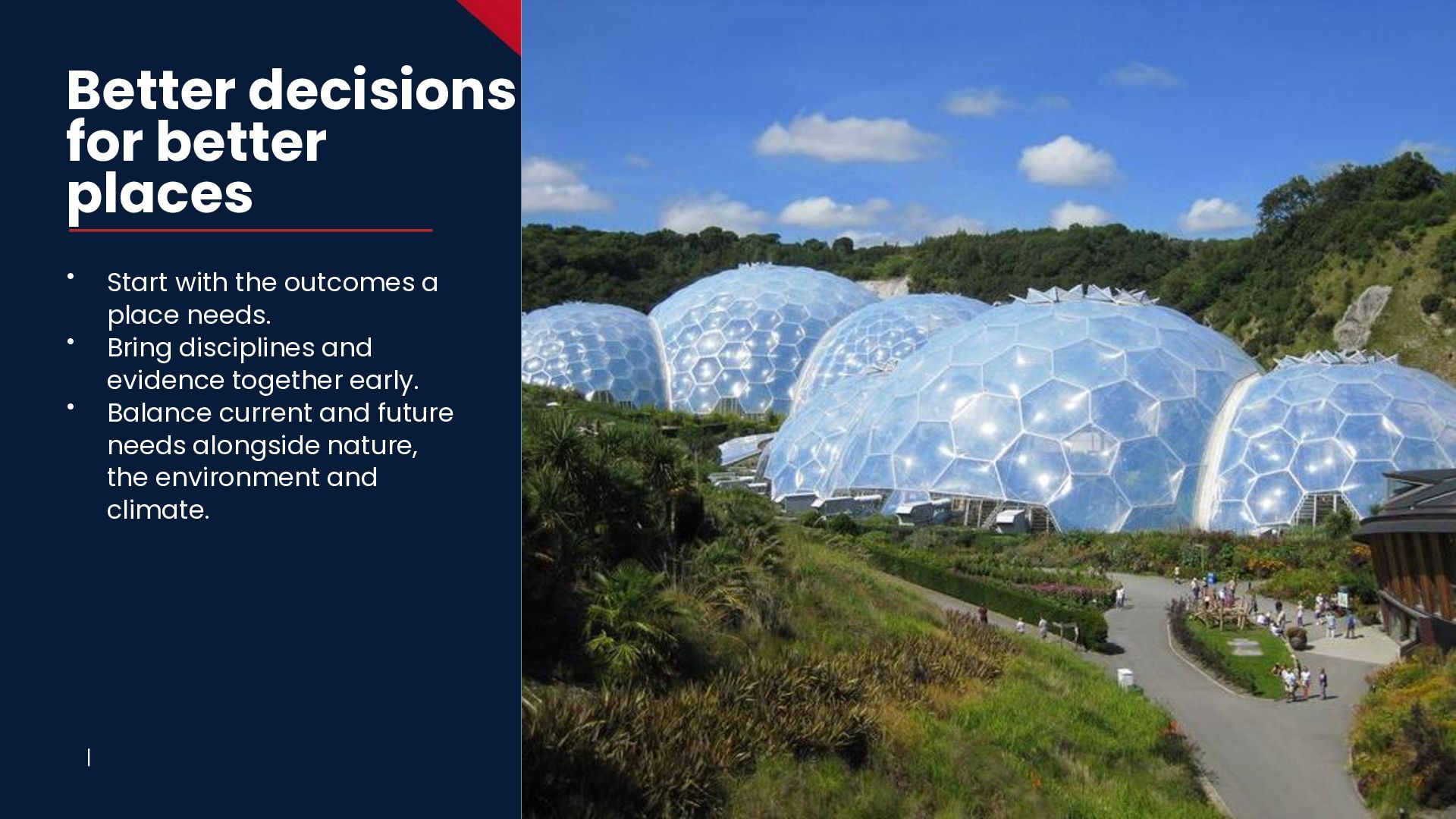
the outcomes a place needs. Bring disciplines and evidence together early. Balance current and future needs alongside nature, the environment and climate.


 iesevents
 trycycle
 naospon
 nagano
 nozakijcom
 hf149
hf149
 x_ttyszk
 jagupath
 estie
estie
.jpg) ktatsuya
ktatsuya
.jpg) cargoodrich
cargoodrich
 eileencodes
 nonsquared
 katarinadahlin
 marketingsoph
 andyhume
 tammyeverts
 inesmontani
 bkeepers
 jonoalderson
 smashingmag
 lauravandoore