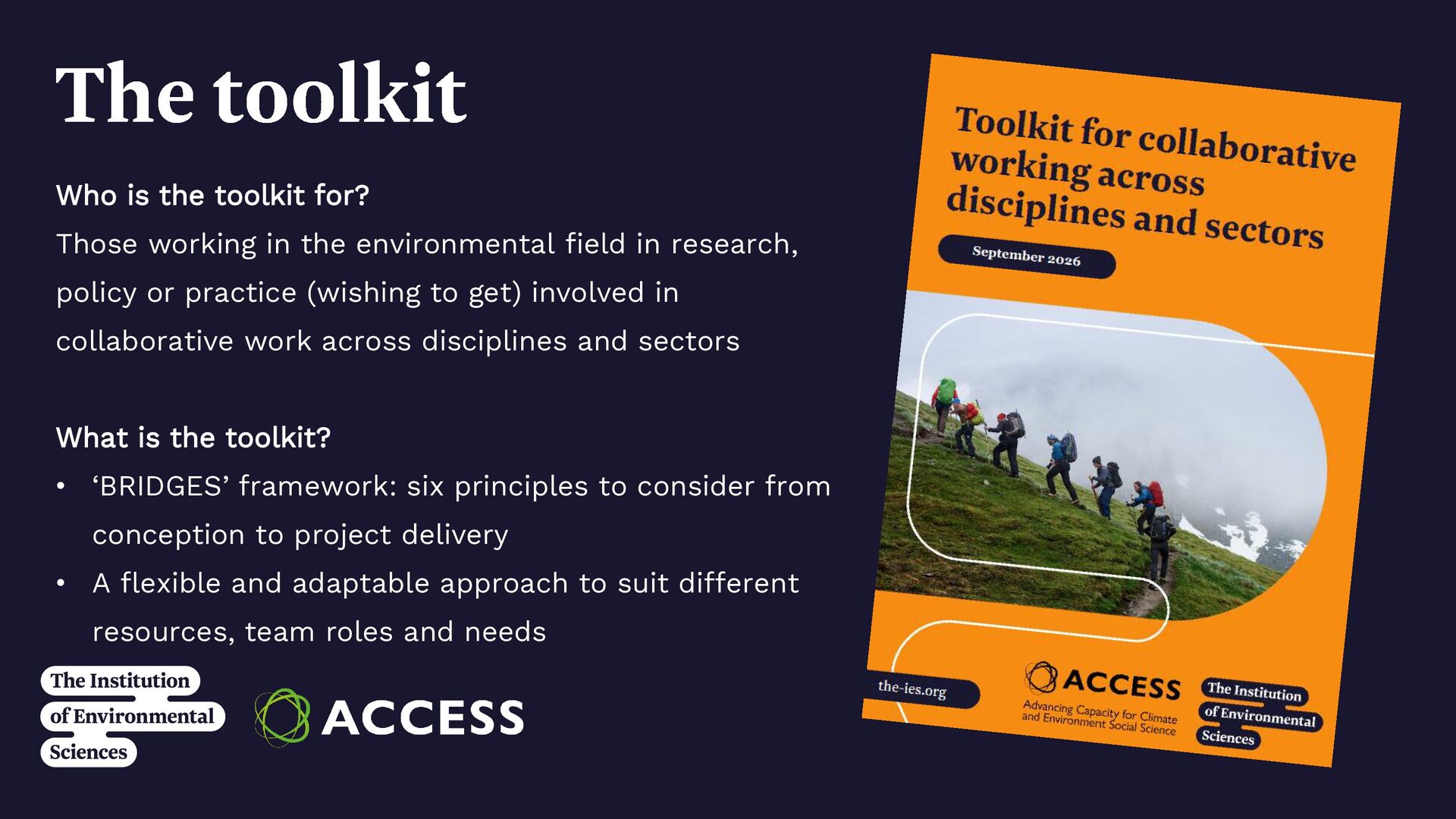
the environmental field in research, policy or practice (wishing to get) involved in collaborative work across disciplines and sectors What is the toolkit? • ‘BRIDGES’ framework: six principles to consider from conception to project delivery • A flexible and adaptable approach to suit different resources, team roles and needs
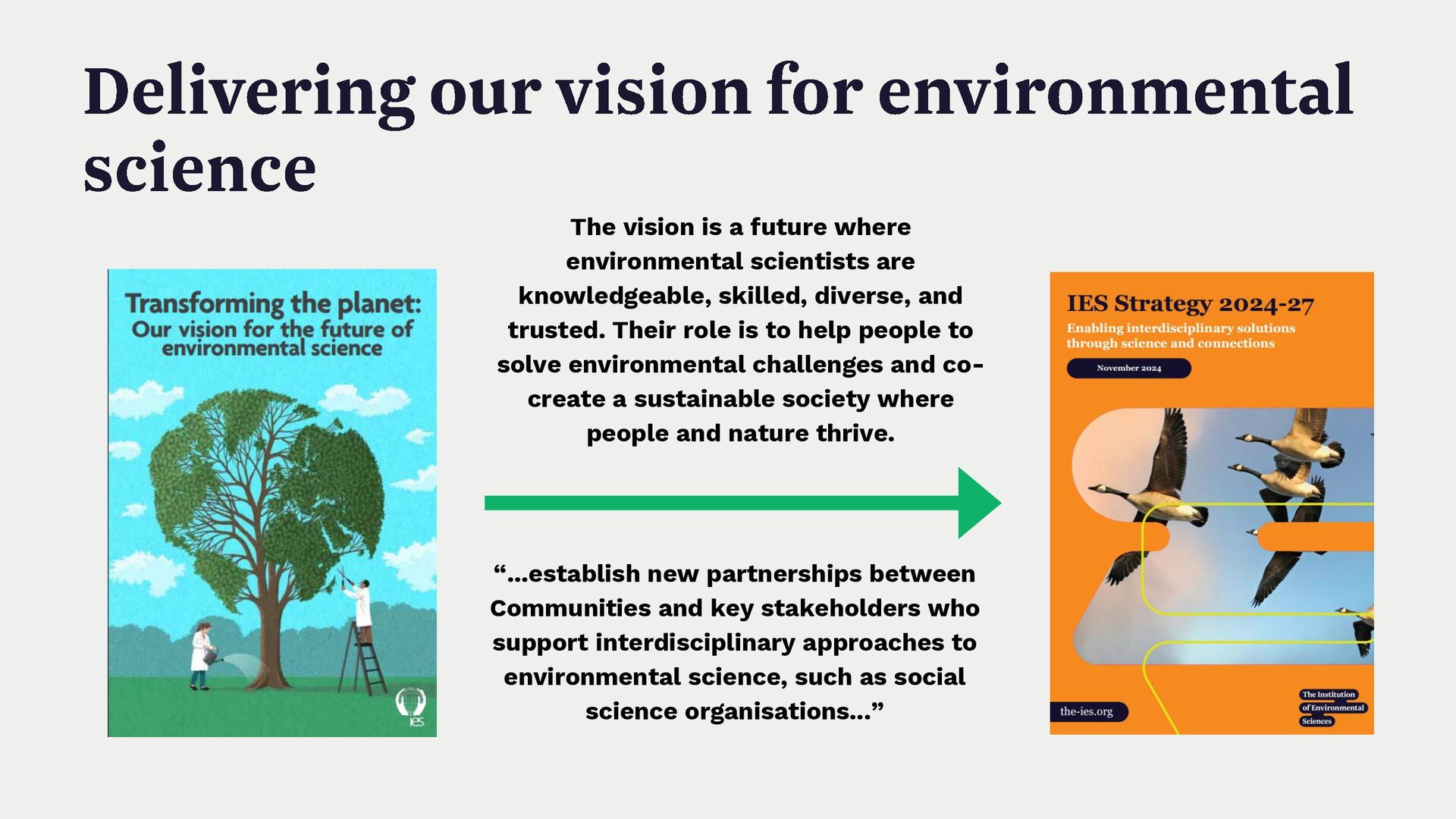
future where environmental scientists are knowledgeable, skilled, diverse, and trusted. Their role is to help people to solve environmental challenges and cocreate a sustainable society where people and nature thrive. “...establish new partnerships between Communities and key stakeholders who support interdisciplinary approaches to environmental science, such as social science organisations...”
action • Mutual attendance at ACCESS summer assembly and DBD 2025 • Strategy alignment and shared values led to the development of joint funding bid to codevelop a practical resource to support interdisciplinary working
to champion the role of social science in solving environmental problems • Large network of environmental social scientists, from across research, policy and practice (academia, government, NGOs) • Aim to build interdisciplinary and cross-sectoral networks https://accessnetwork.uk/
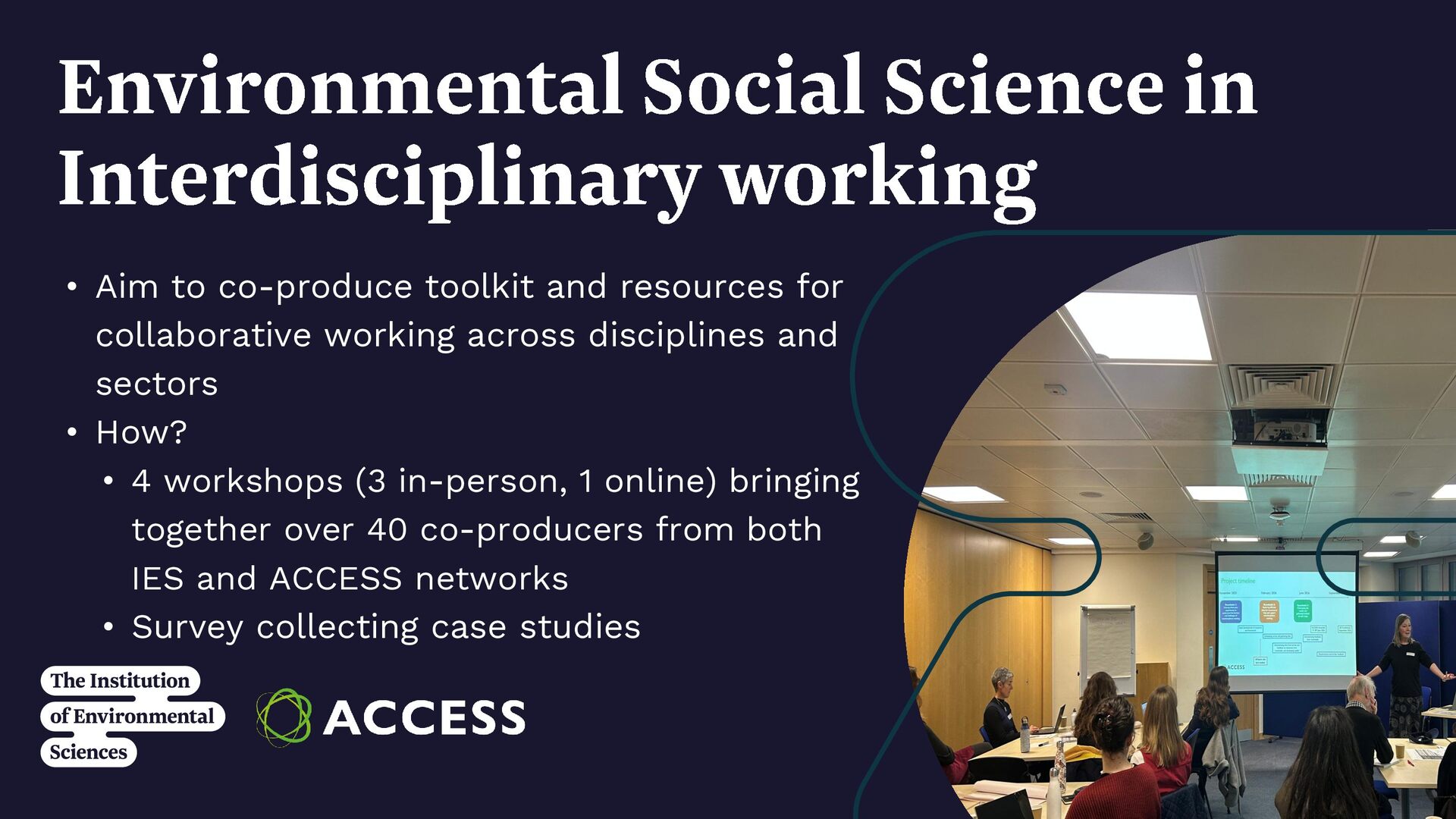
toolkit and resources for collaborative working across disciplines and sectors • How? • 4 workshops (3 in-person, 1 online) bringing together over 40 co-producers from both IES and ACCESS networks • Survey collecting case studies
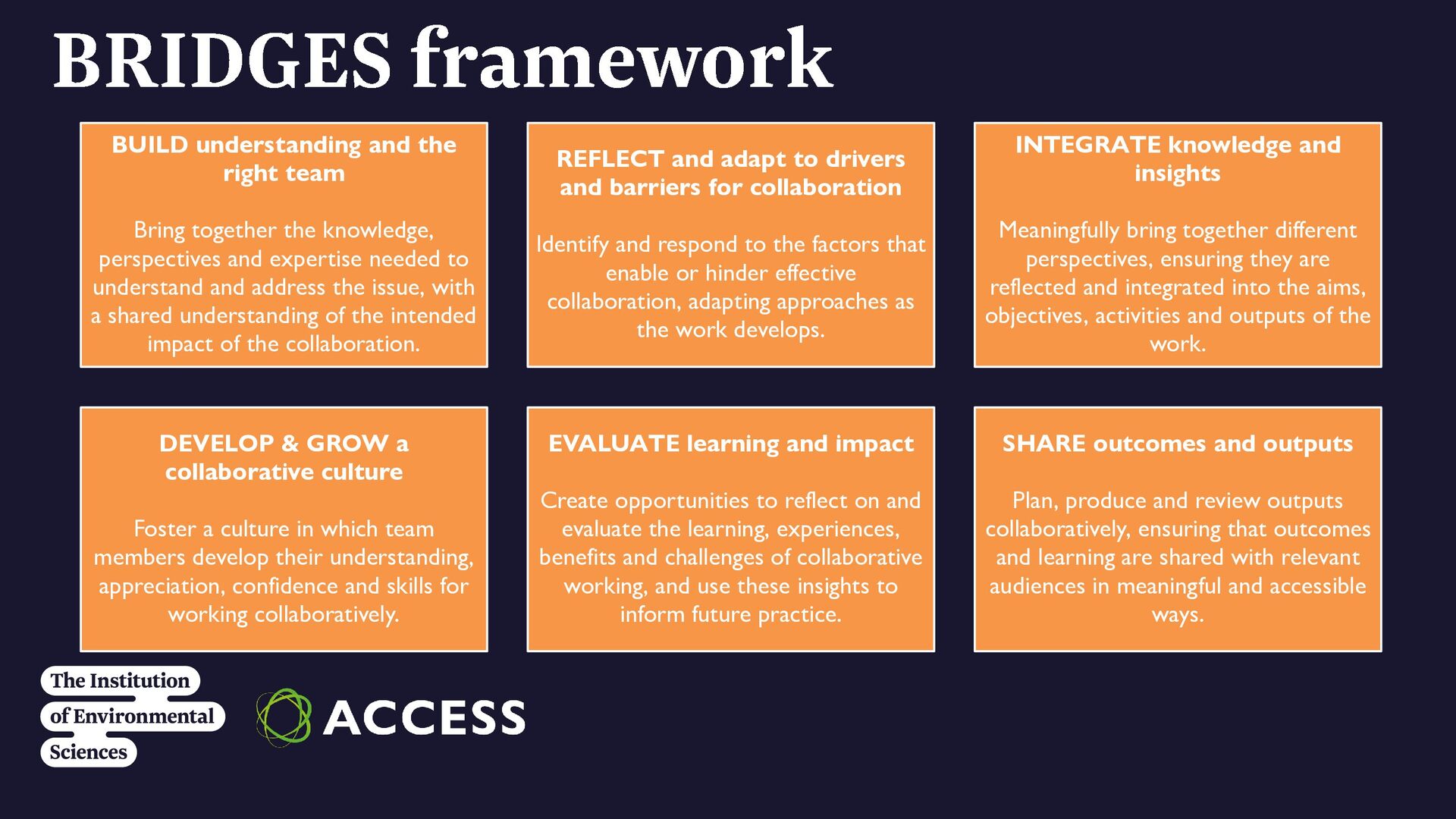
‘BRDIGES’ framework • Practical worksheets • Case study report with collaborative working examples from the environmental sciences • Tailored further reading recommendations
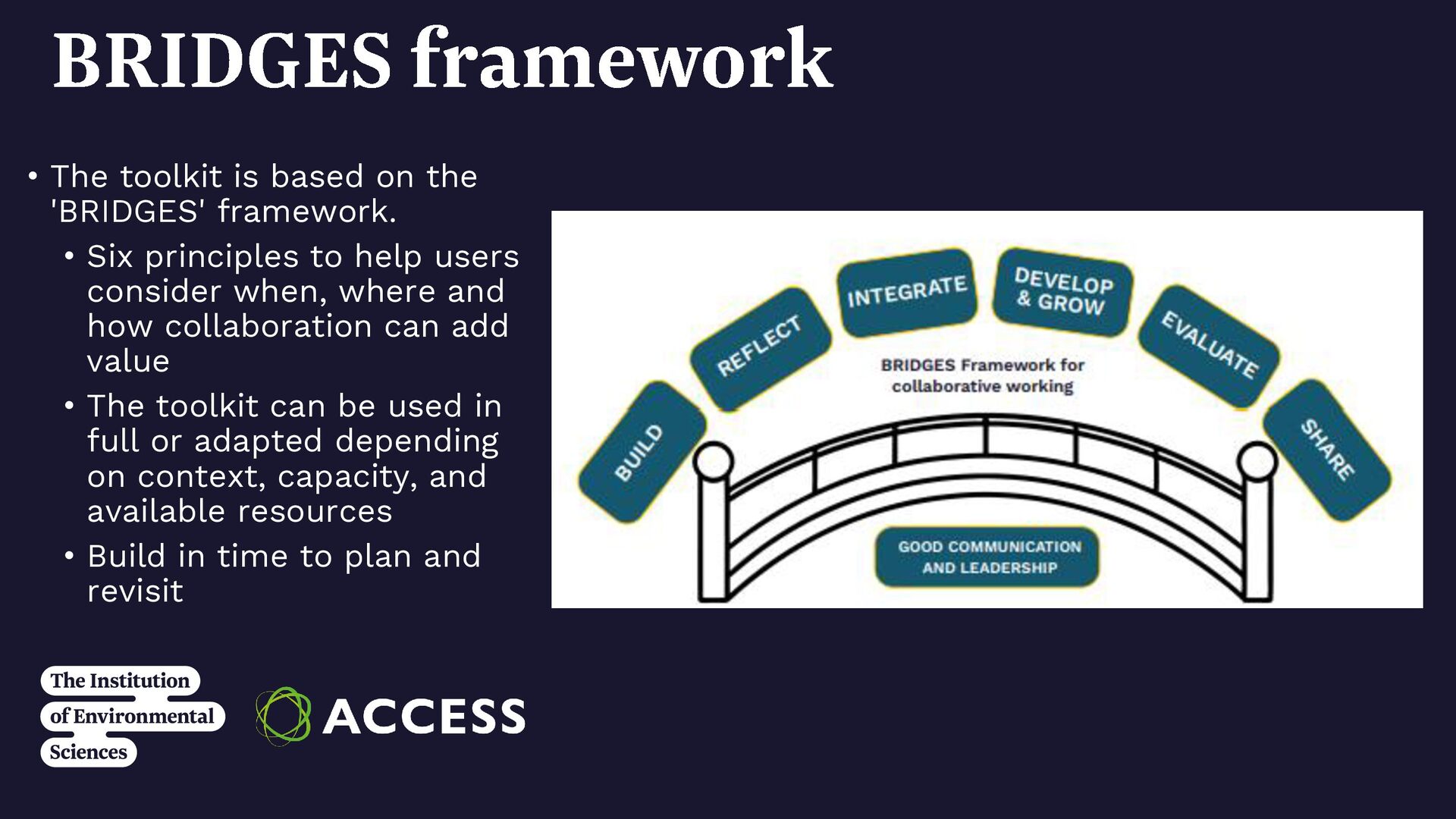
framework. • Six principles to help users consider when, where and how collaboration can add value • The toolkit can be used in full or adapted depending on context, capacity, and available resources • Build in time to plan and revisit
the knowledge, perspectives and expertise needed to understand and address the issue, with a shared understanding of the intended impact of the collaboration. DEVELOP & GROW a collaborative culture Foster a culture in which team members develop their understanding, appreciation, confidence and skills for working collaboratively. REFLECT and adapt to drivers and barriers for collaboration INTEGRATE knowledge and insights Identify and respond to the factors that enable or hinder effective collaboration, adapting approaches as the work develops. Meaningfully bring together different perspectives, ensuring they are reflected and integrated into the aims, objectives, activities and outputs of the work. EVALUATE learning and impact SHARE outcomes and outputs Create opportunities to reflect on and evaluate the learning, experiences, benefits and challenges of collaborative working, and use these insights to inform future practice. Plan, produce and review outputs collaboratively, ensuring that outcomes and learning are shared with relevant audiences in meaningful and accessible ways.
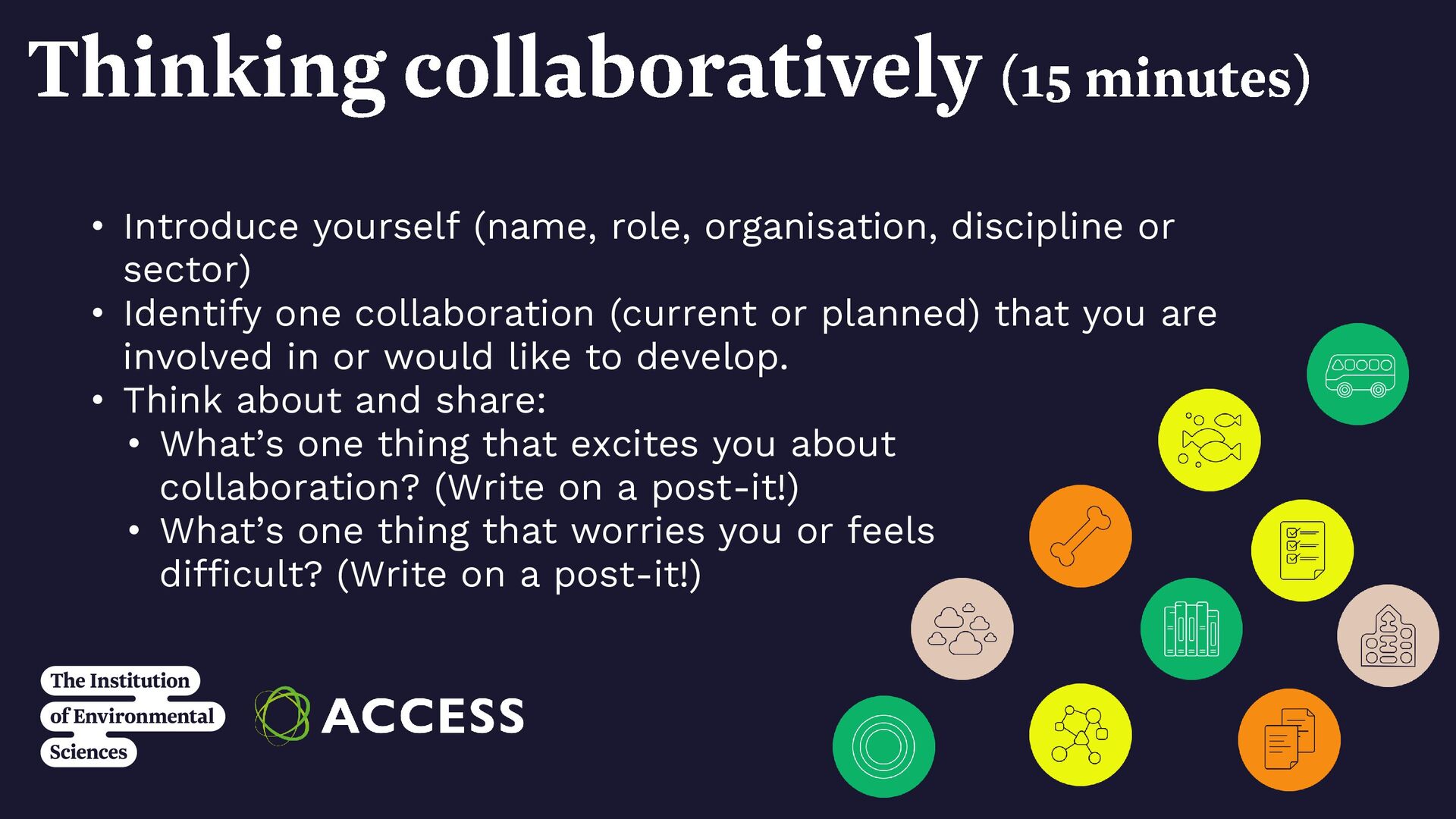
discipline or sector) • Identify one collaboration (current or planned) that you are involved in or would like to develop. • Think about and share: • What’s one thing that excites you about collaboration? (Write on a post-it!) • What’s one thing that worries you or feels difficult? (Write on a post-it!)
at what you wrote: ▪ Where is collaboration working well? Where can you identify the barriers and enablers to good collaboration? ▪ Which BRIDGES principles can help strengthen and support collaboration?
networks! • Provide feedback on the toolkit • Upcoming case study report, to launch autumn 2026 • Be part of the social science specialism at IES Contact: [email protected], [email protected][email protected] Website:www.accessnetwork.uk and www.the ies.org


 iesevents
 institutdelelevage
 sshimizu2006
 hiroakihamada
 mickey_kubo
 trycycle
 brainpadpr
 miyayou
 konakalab
 shumpei777
 hanbao
.jpg) lychee1223
lychee1223
 coloredviolet
.png) helenjbeal
helenjbeal
 smashingmag
 greggifford
 holman
 kneath
 ivargrimstad
 addyosmani
 chriscoyier
 ryanjones
 ks91
ks91
 livdayseo