management may combine personalized dietary guidance, physical activity, sleep routines, stress management, and selected traditional therapies. A qualified practitioner should tailor the approach to each person's health needs.
support with weight management may explore a personalized program after reviewing their medical history and goals with a qualified healthcare professional. Suitability varies by individual.
a practitioner may discuss traditional therapies such as Udwarthanam. These treatments are not suitable for everyone, and evidence for direct weight-loss effects is limited.
protein-rich foods, whole grains, and appropriate portions can support a sustainable weight-management plan. Dietary recommendations should reflect a person's health needs and preferences.
walking, and suitable yoga practices can support fitness, mobility, and overall well-being. The activity plan should match the person's ability and health condition.
habits and stress-management practices may help support appetite regulation and healthier routines. Relaxation, breathing exercises, and regular schedules can complement other lifestyle changes.
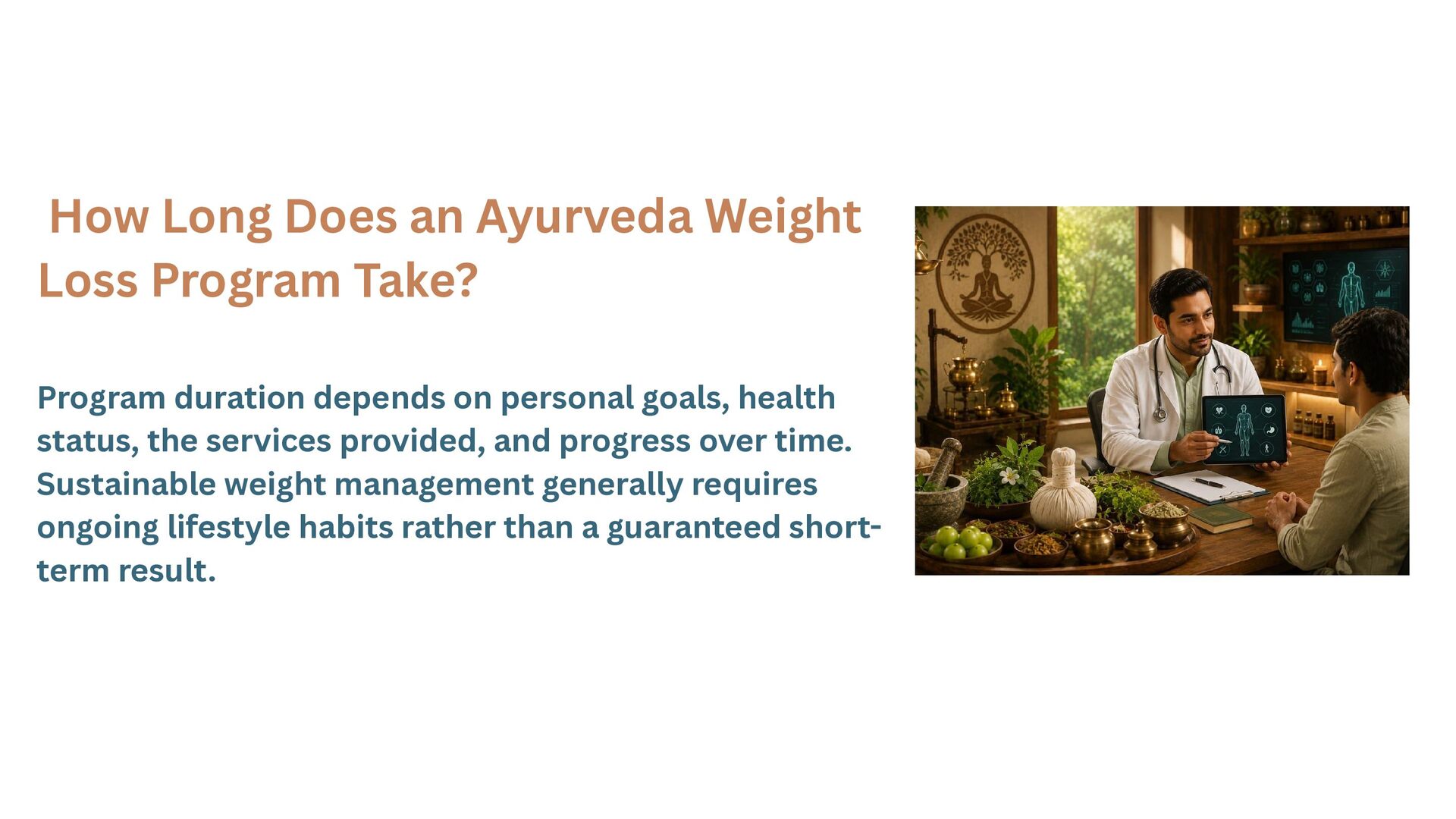
duration depends on personal goals, health status, the services provided, and progress over time. Sustainable weight management generally requires ongoing lifestyle habits rather than a guaranteed shortterm result.
India? Costs may vary with the centre, location, consultation fees, accommodation, therapies, tests, and program length. Ask for a detailed quotation that clearly lists inclusions and additional charges.
Check practitioner qualifications, hygiene standards, transparent pricing, treatment details, and medical supervision. Choose a centre that considers existing health conditions and coordinates with other healthcare providers when needed.
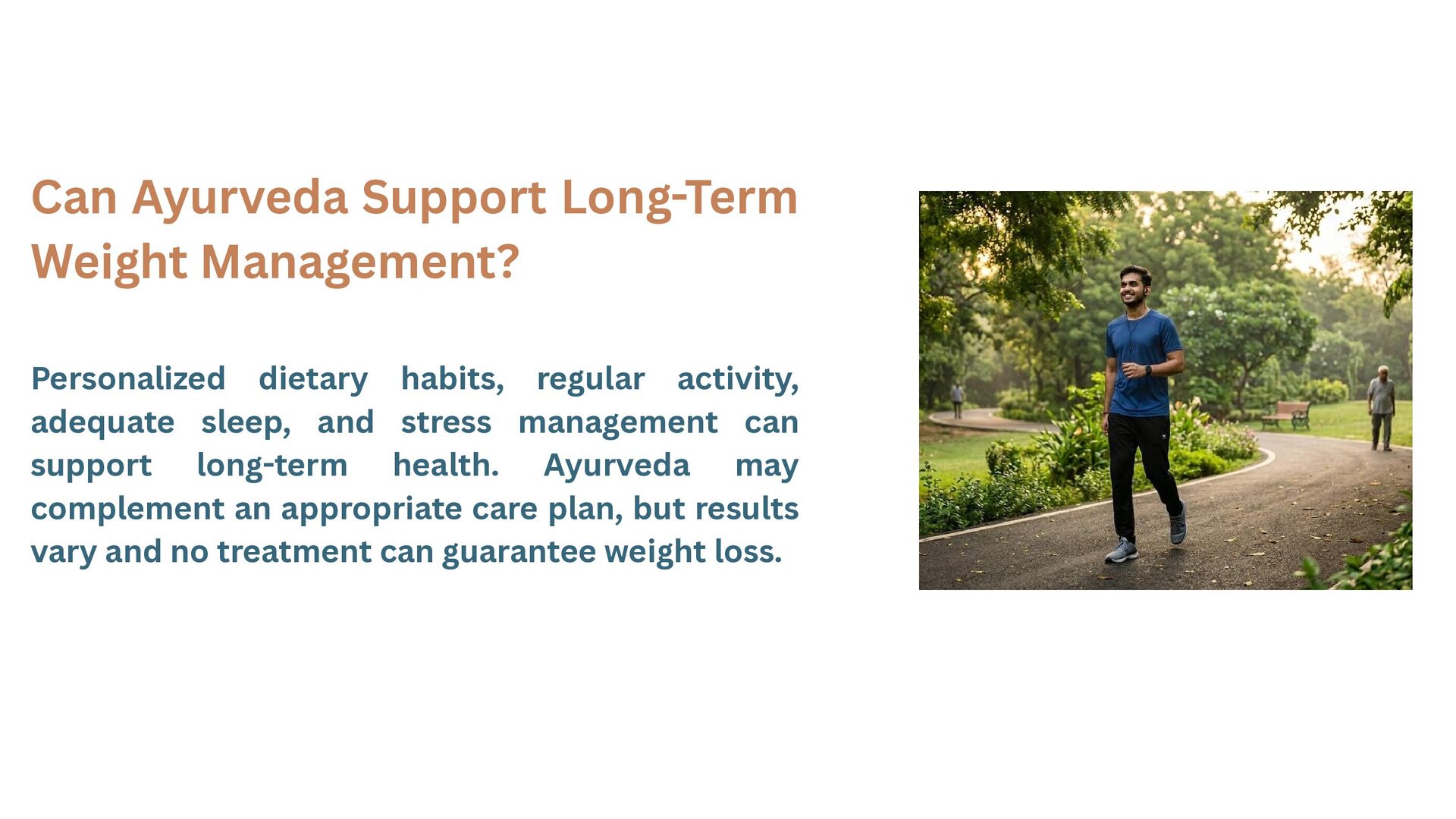
activity, adequate sleep, and stress management can support long-term health. Ayurveda may complement an appropriate care plan, but results vary and no treatment can guarantee weight loss.


 matthewskelton
 canvasedge
 loglass2019
 kitchhike
 synergymarketing
 arnekittler
 kgnkhkr
 chirimoya
 recruitengineers
 ikmwatanabe
 todatomohiro
 malna
 morganepeng
 marcduiker
 khoart
 reverentgeek
 greggifford
 coloredviolet
 paigeccino
 tammyeverts
 427marketing
 lara
 sstephenson
 cargoodrich