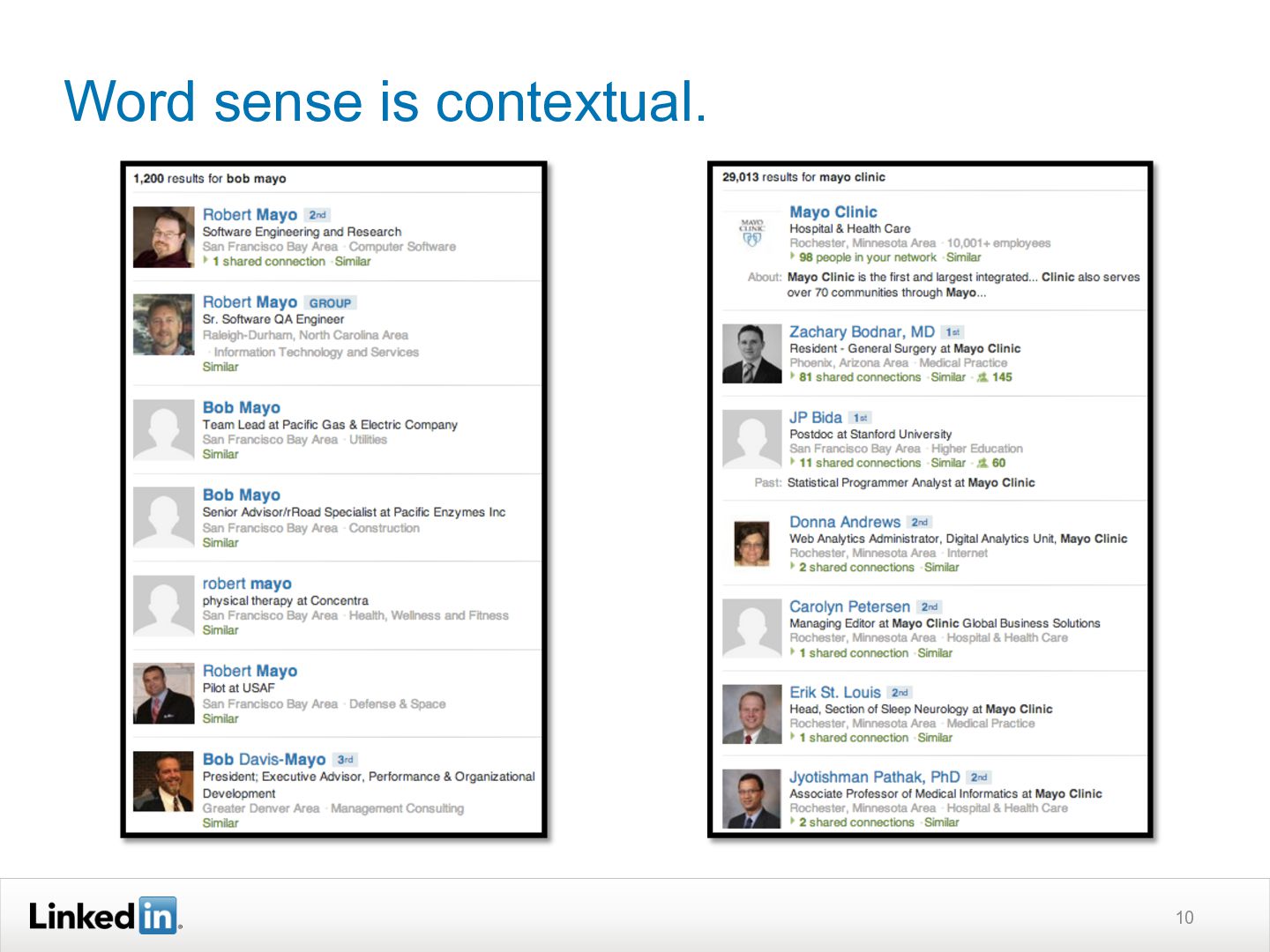
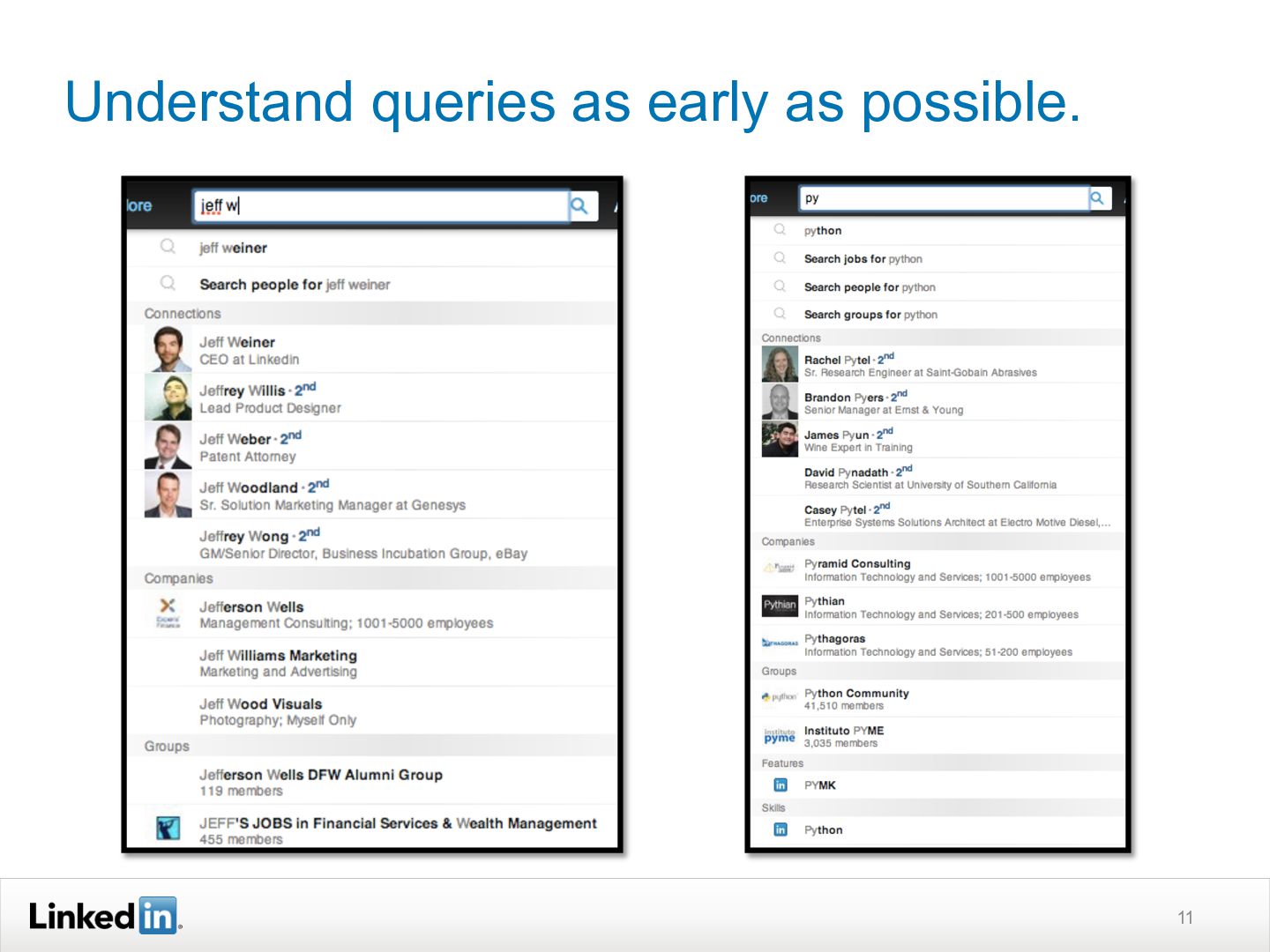
s ← w1 w2 … wi ! if Pc (s) > 0! a ← new Segment()! a.segs ← {s}! a.prob ← Pc (s)! B[i] ← {a}! for j in [1..i-1]! for b in B[j]! s ← wj wj+1 … wi ! if Pc (s) > 0! a ← new Segment()! a.segs ← b.segs U {s}! a.prob ← b.prob * Pc (s)! B[i] ← B[i] U {a}! sort B[i] by prob! truncate B[i] to size k!
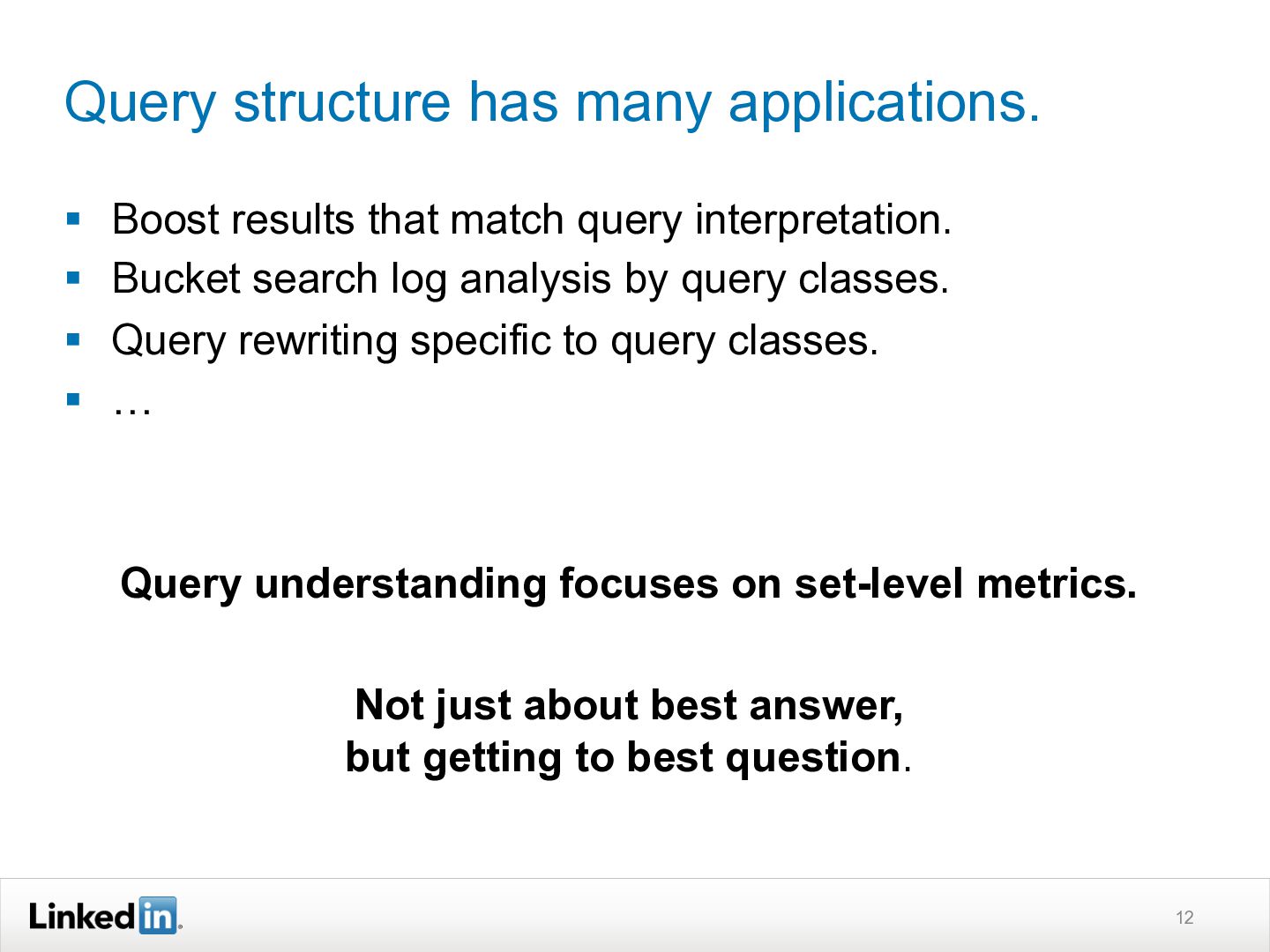
query interpretation. § Bucket search log analysis by query classes. § Query rewriting specific to query classes. § … Query understanding focuses on set-level metrics. Not just about best answer, but getting to best question. 12
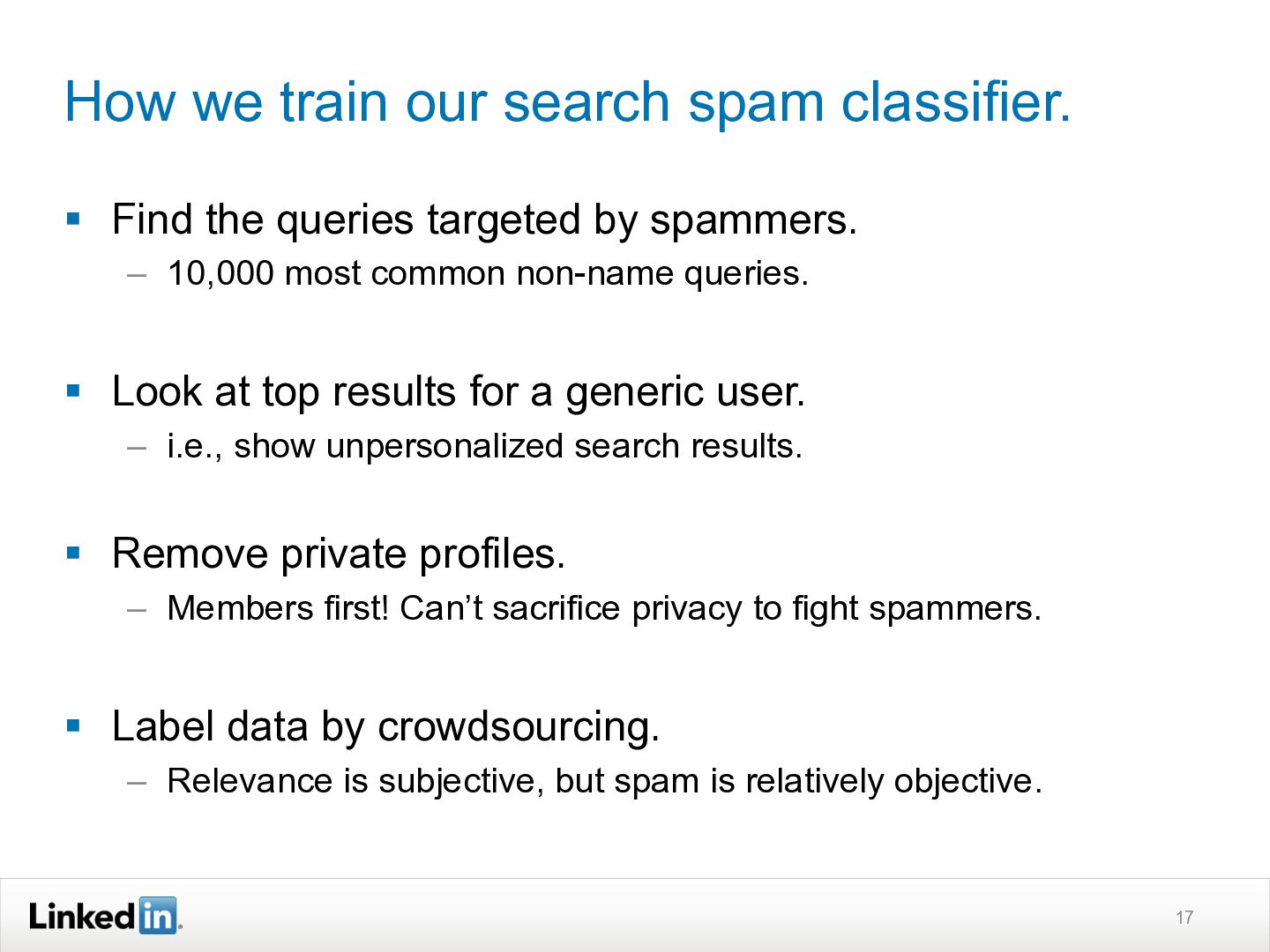
queries targeted by spammers. – 10,000 most common non-name queries. § Look at top results for a generic user. – i.e., show unpersonalized search results. § Remove private profiles. – Members first! Can’t sacrifice privacy to fight spammers. § Label data by crowdsourcing. – Relevance is subjective, but spam is relatively objective. 17
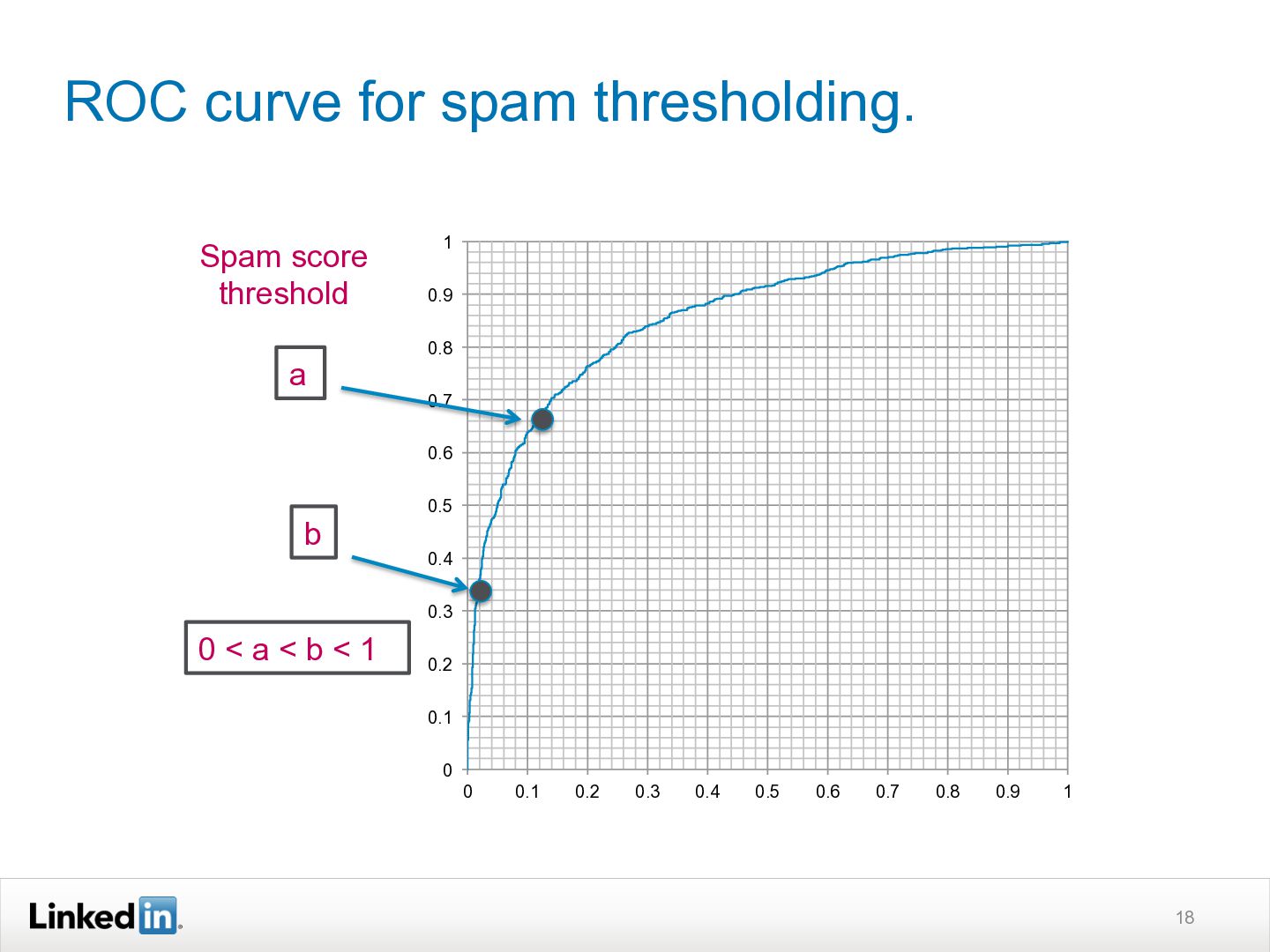
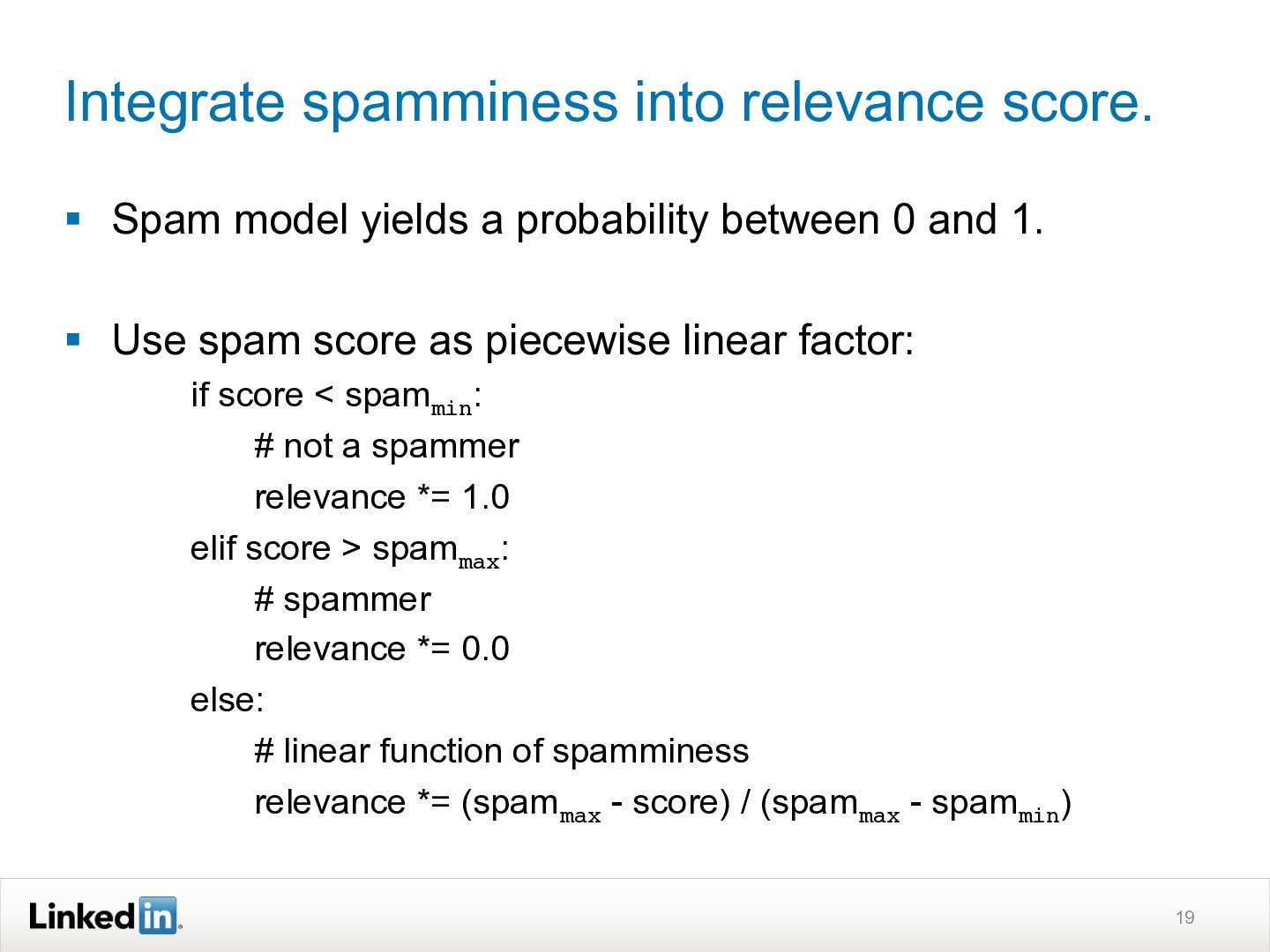
probability between 0 and 1. § Use spam score as piecewise linear factor: if score < spam min : # not a spammer relevance *= 1.0 elif score > spam max : # spammer relevance *= 0.0 else: # linear function of spamminess relevance *= (spam max - score) / (spam max - spam min ) 19
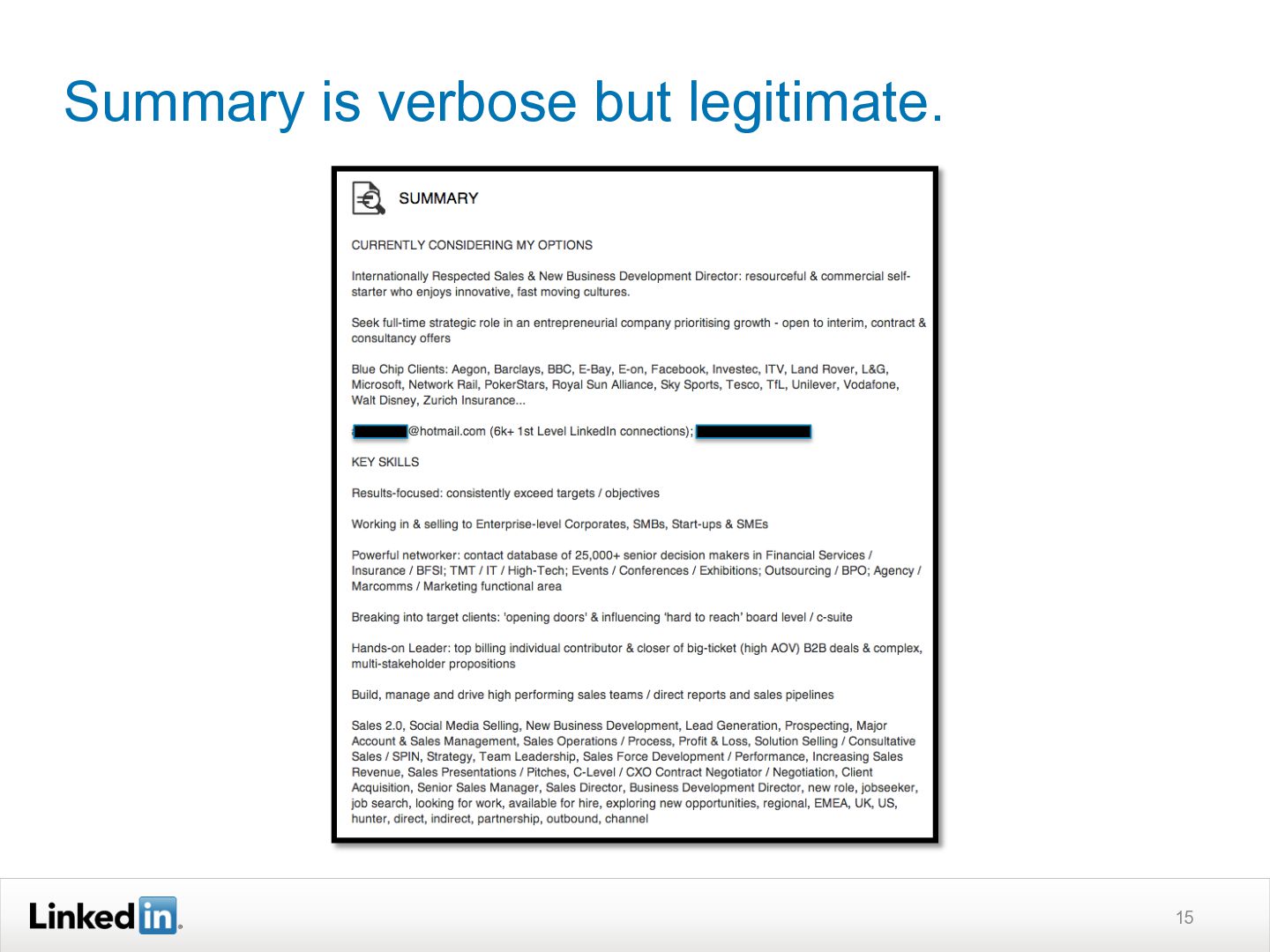
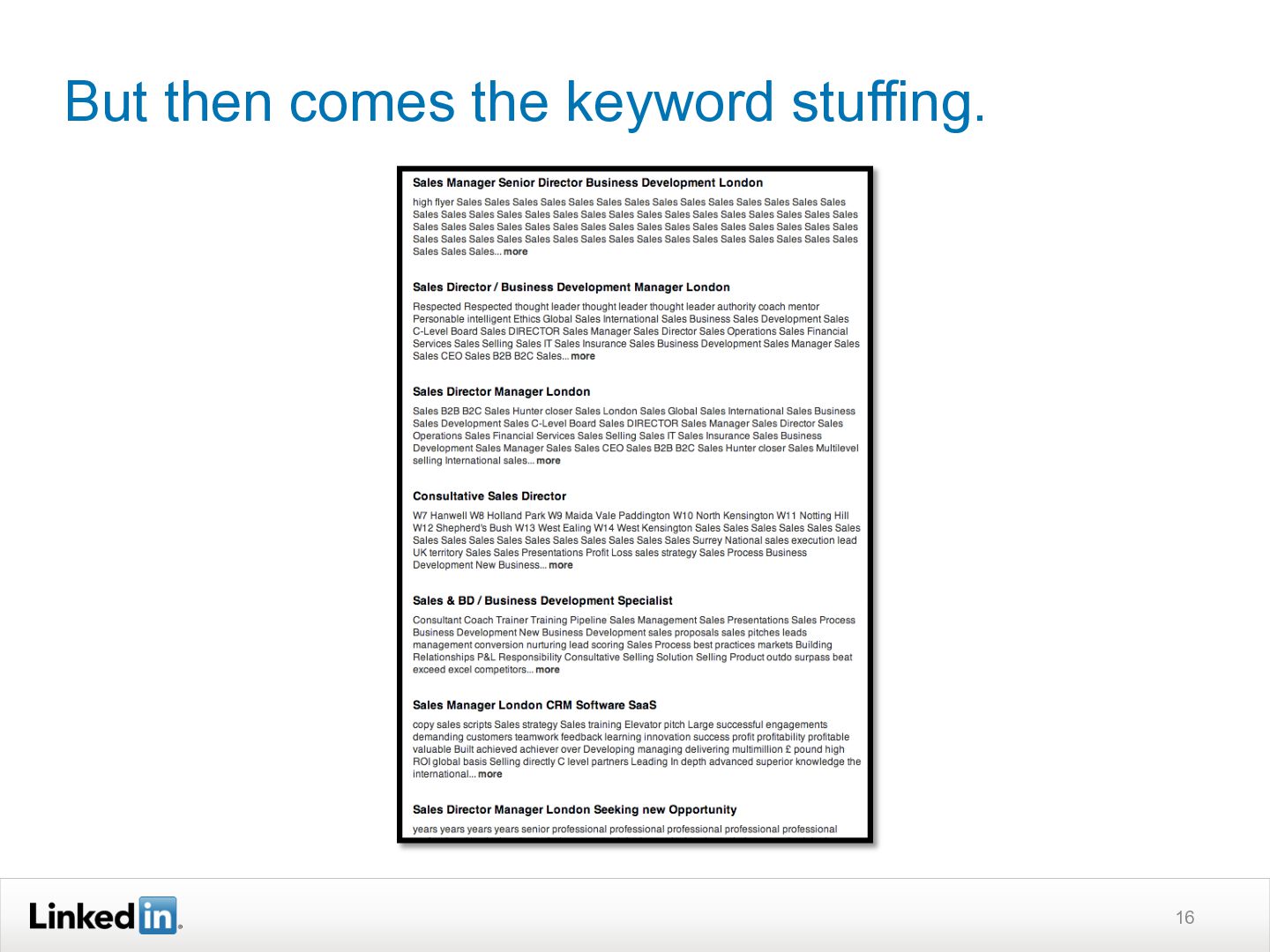
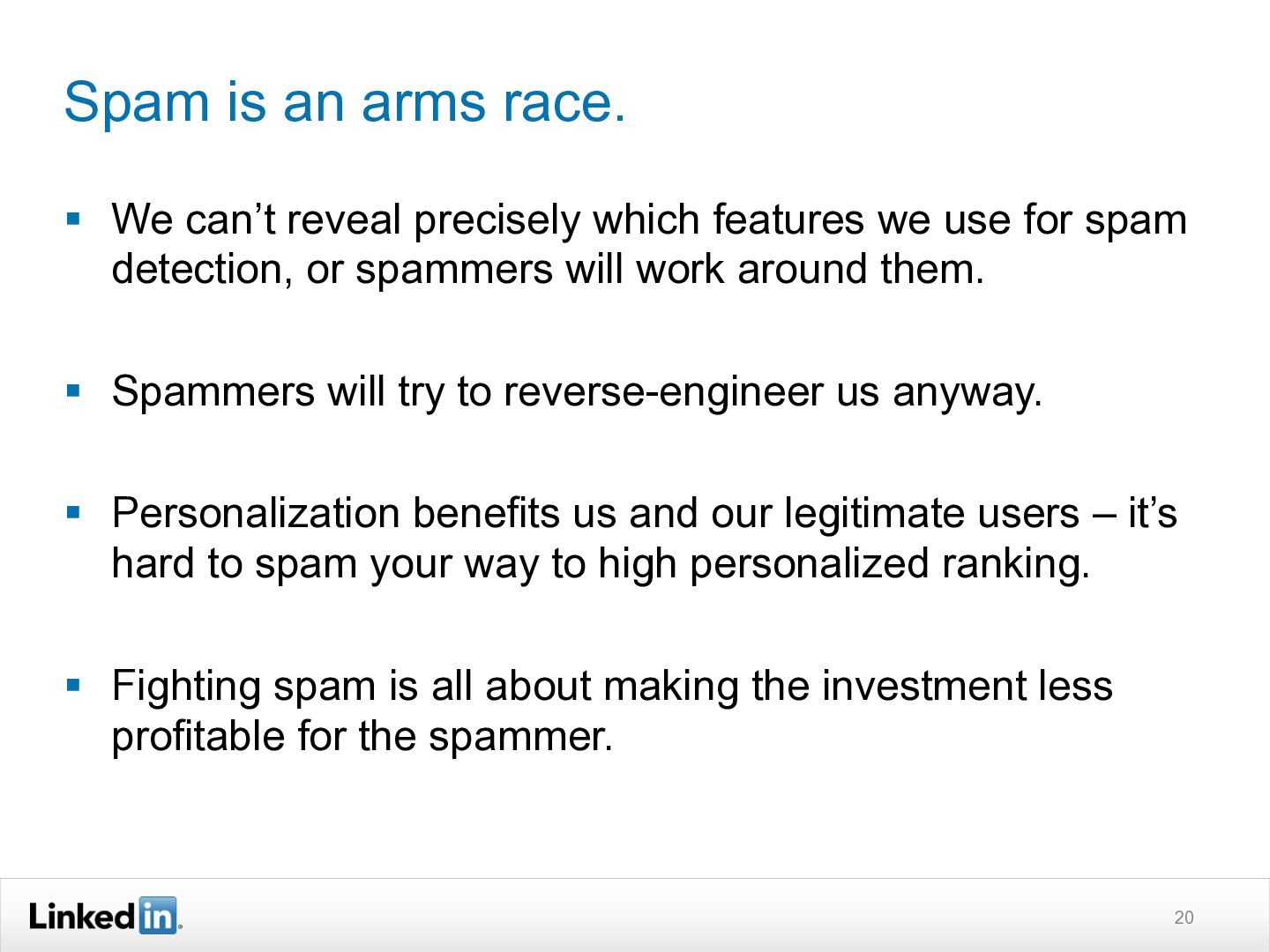
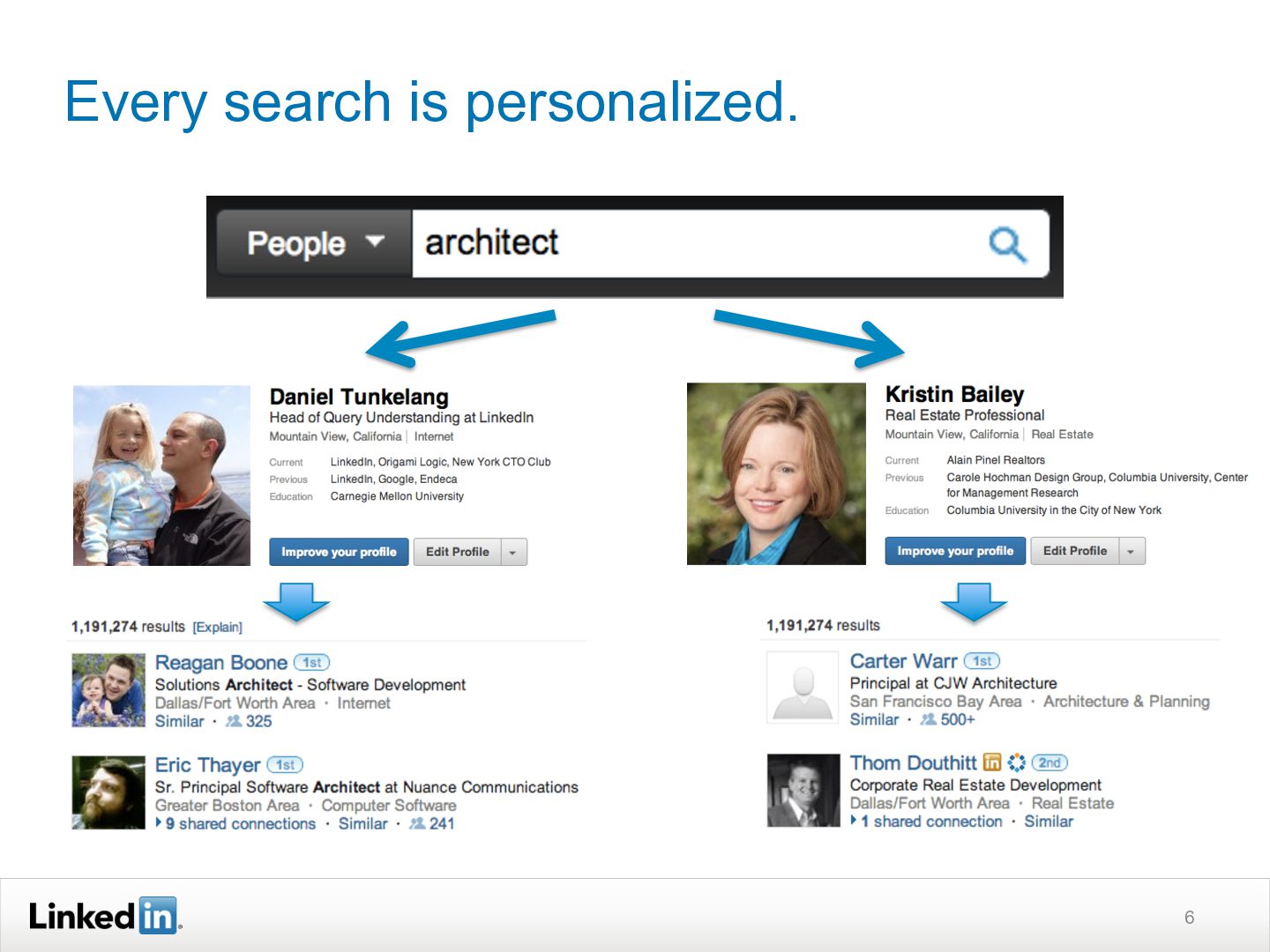
which features we use for spam detection, or spammers will work around them. § Spammers will try to reverse-engineer us anyway. § Personalization benefits us and our legitimate users – it’s hard to spam your way to high personalized ranking. § Fighting spam is all about making the investment less profitable for the spammer. 20
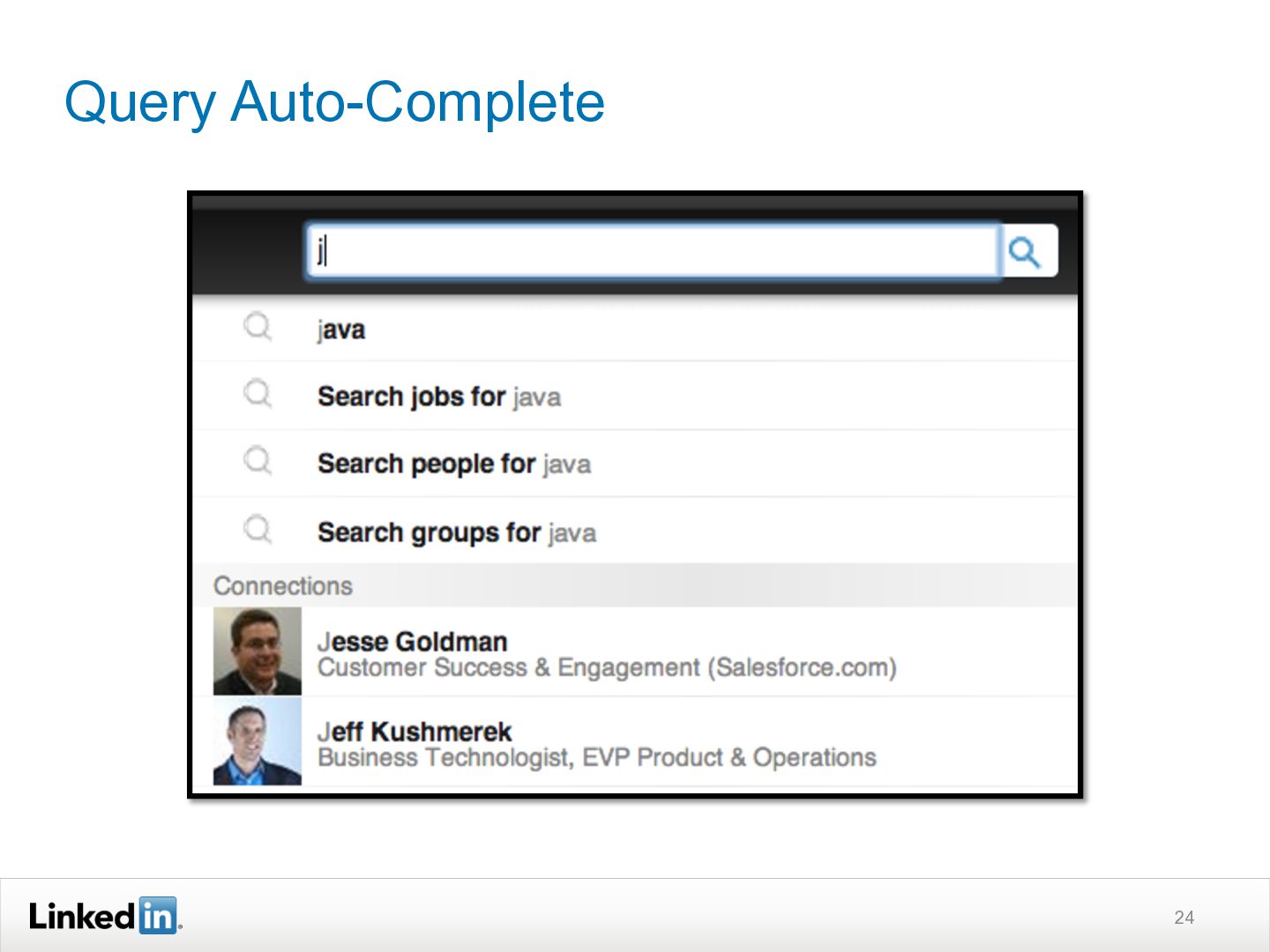
heavy-tailed distribution, even the most popular queries account for a small fraction of distribution. § We don’t want to suggest generic queries that would produce useless results. – e.g., c -> company, j -> jobs § Goal is to not only to infer user’s intent but also suggest a search that yields relevant results across content types. 25
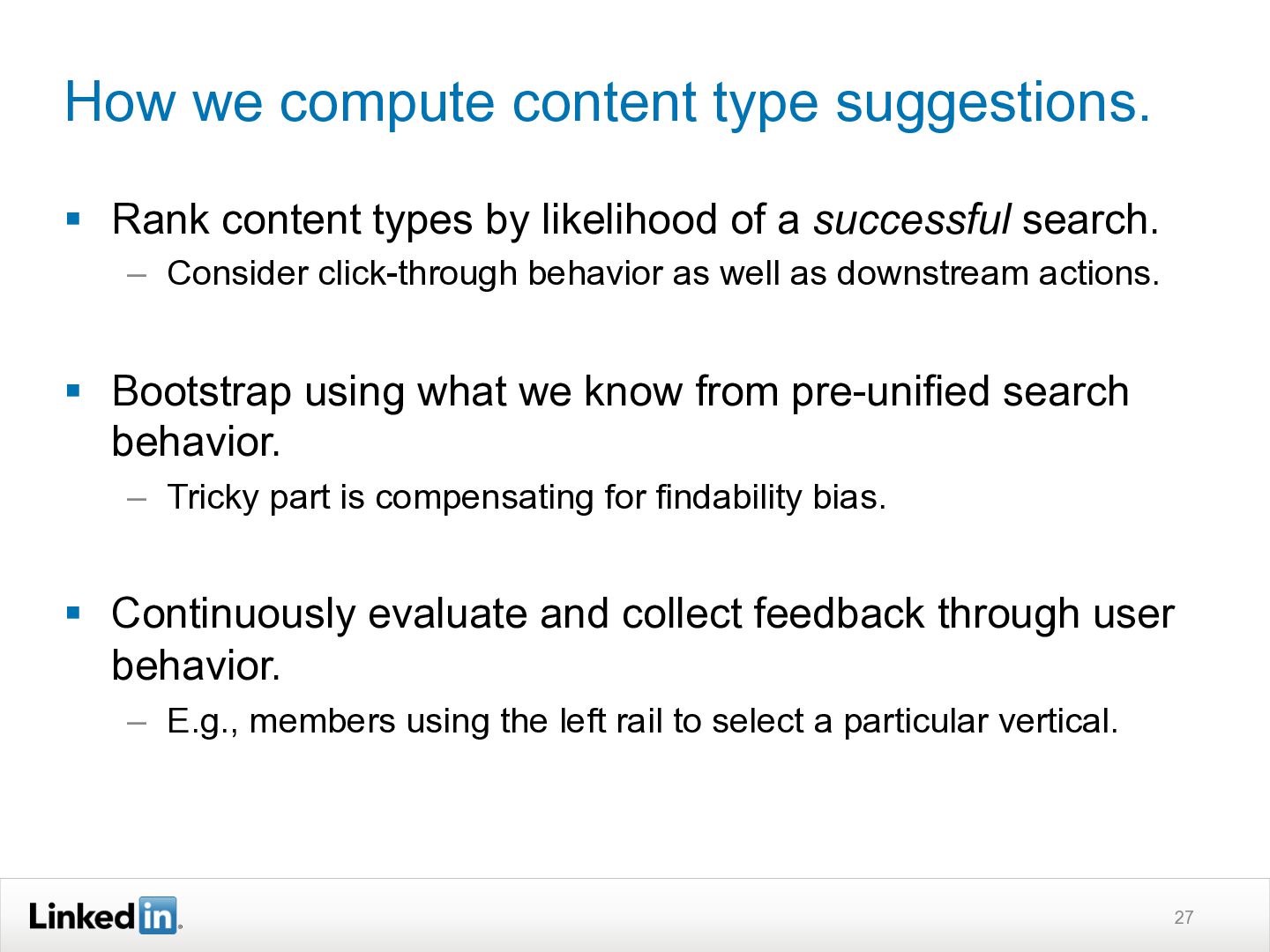
by likelihood of a successful search. – Consider click-through behavior as well as downstream actions. § Bootstrap using what we know from pre-unified search behavior. – Tricky part is compensating for findability bias. § Continuously evaluate and collect feedback through user behavior. – E.g., members using the left rail to select a particular vertical. 27
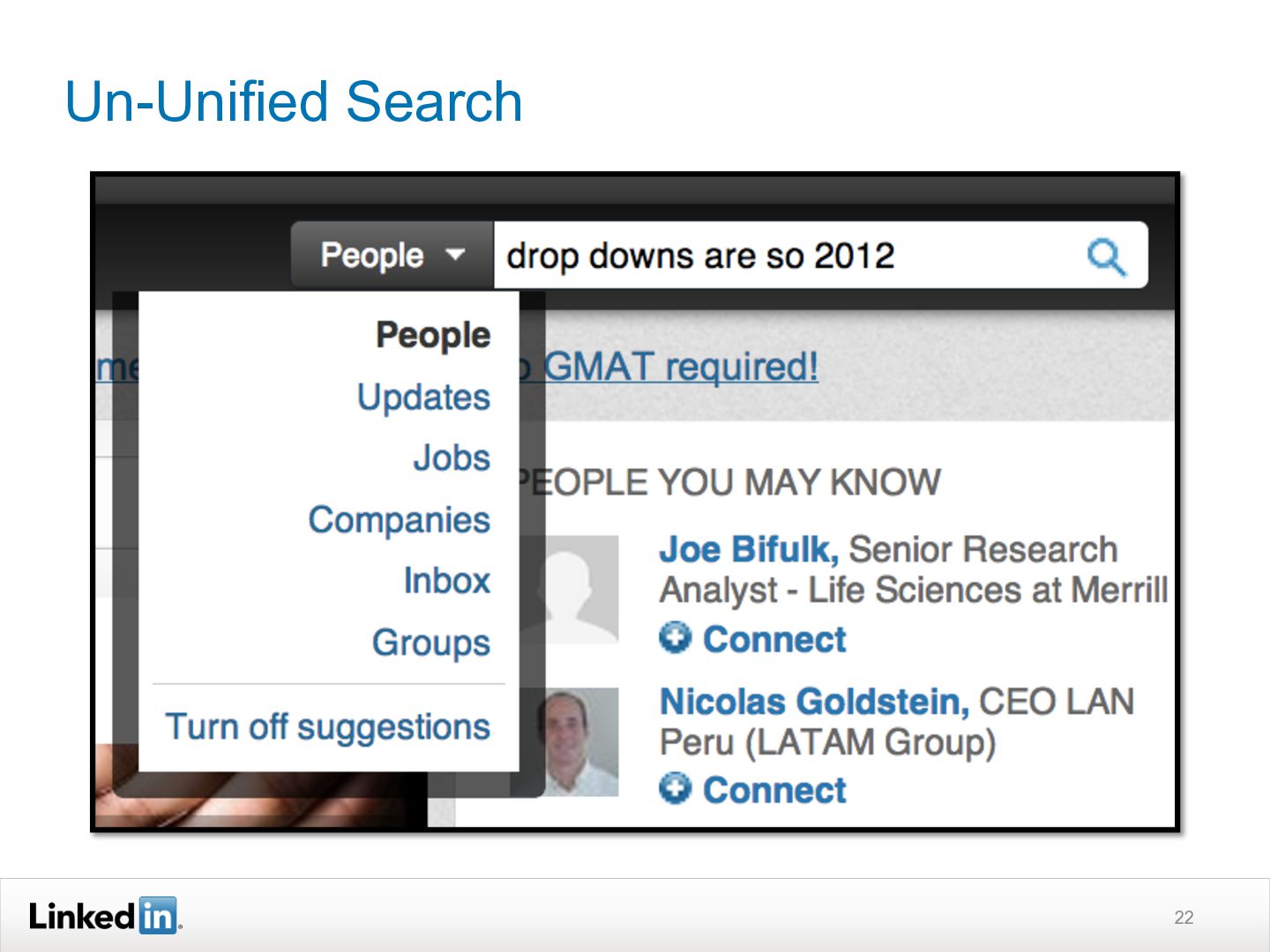
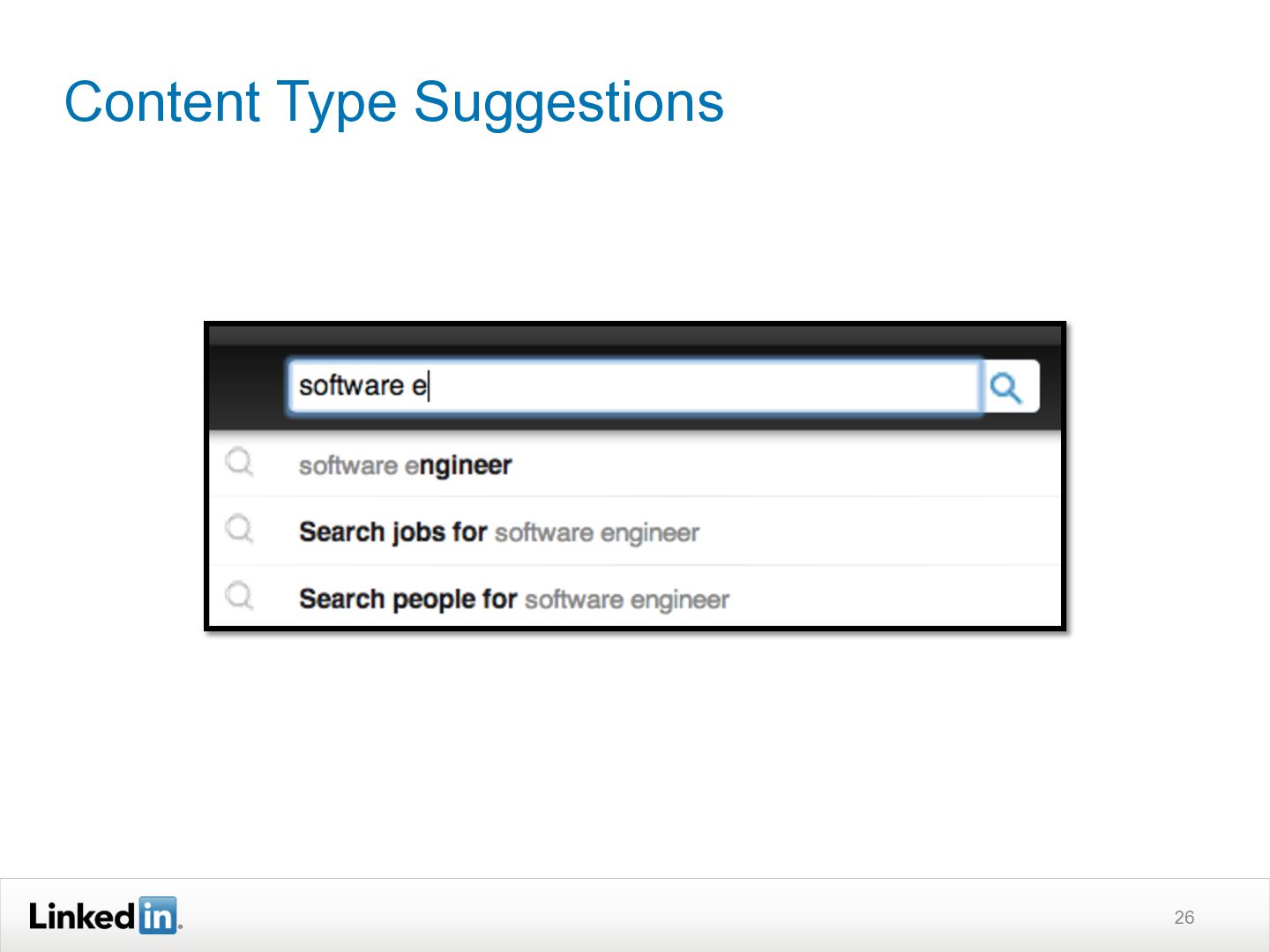
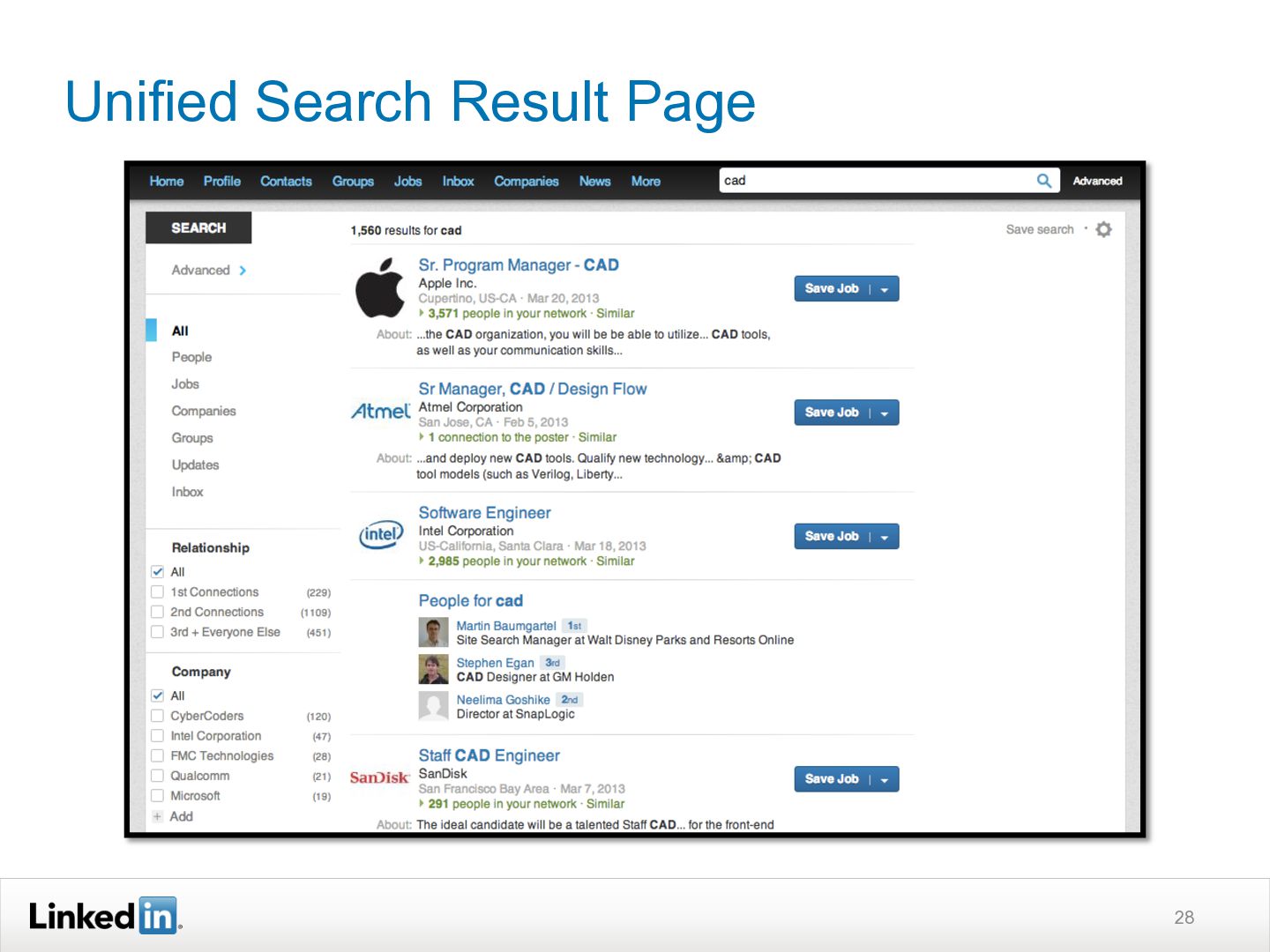
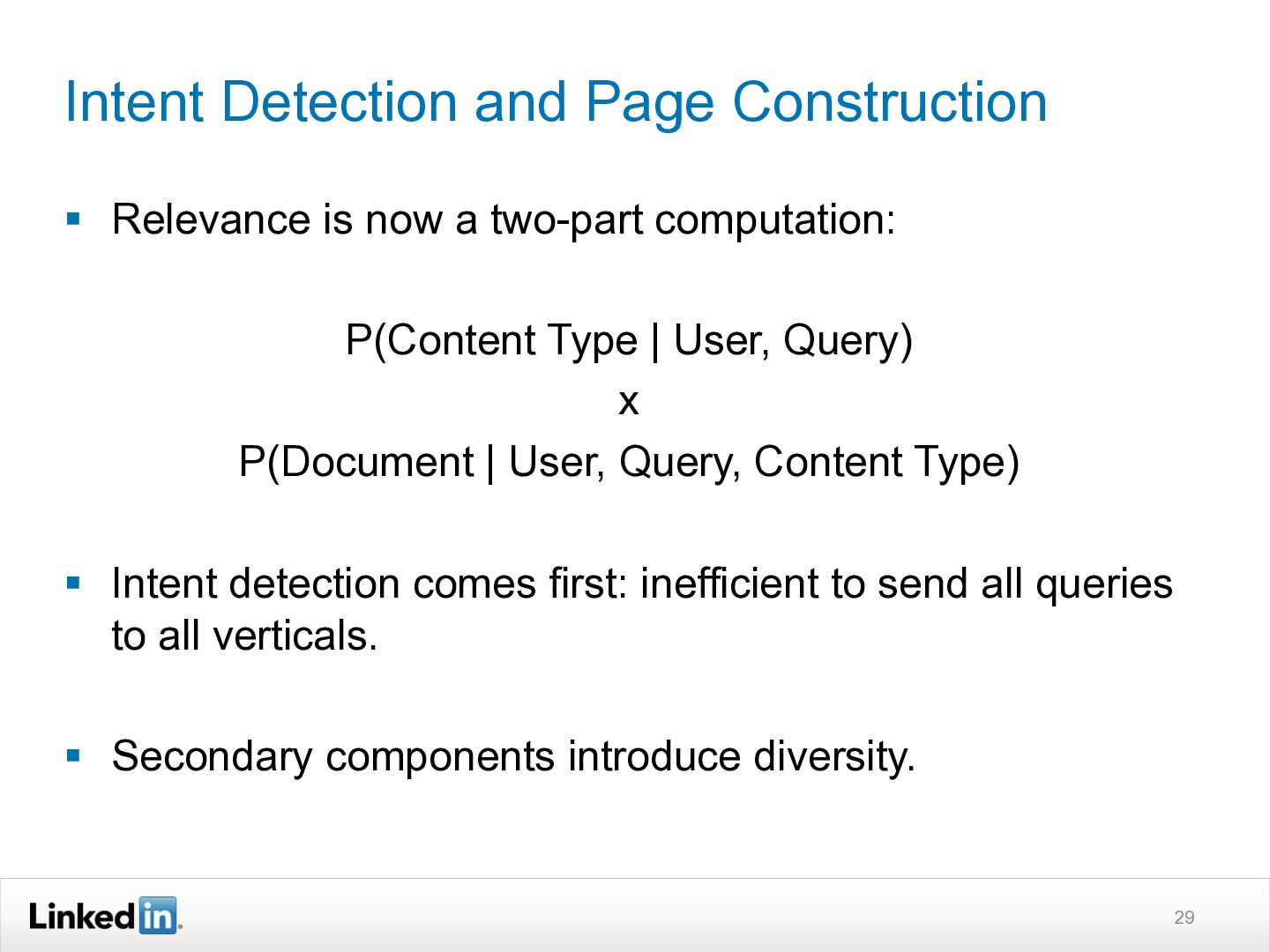
two-part computation: P(Content Type | User, Query) x P(Document | User, Query, Content Type) § Intent detection comes first: inefficient to send all queries to all verticals. § Secondary components introduce diversity. 29
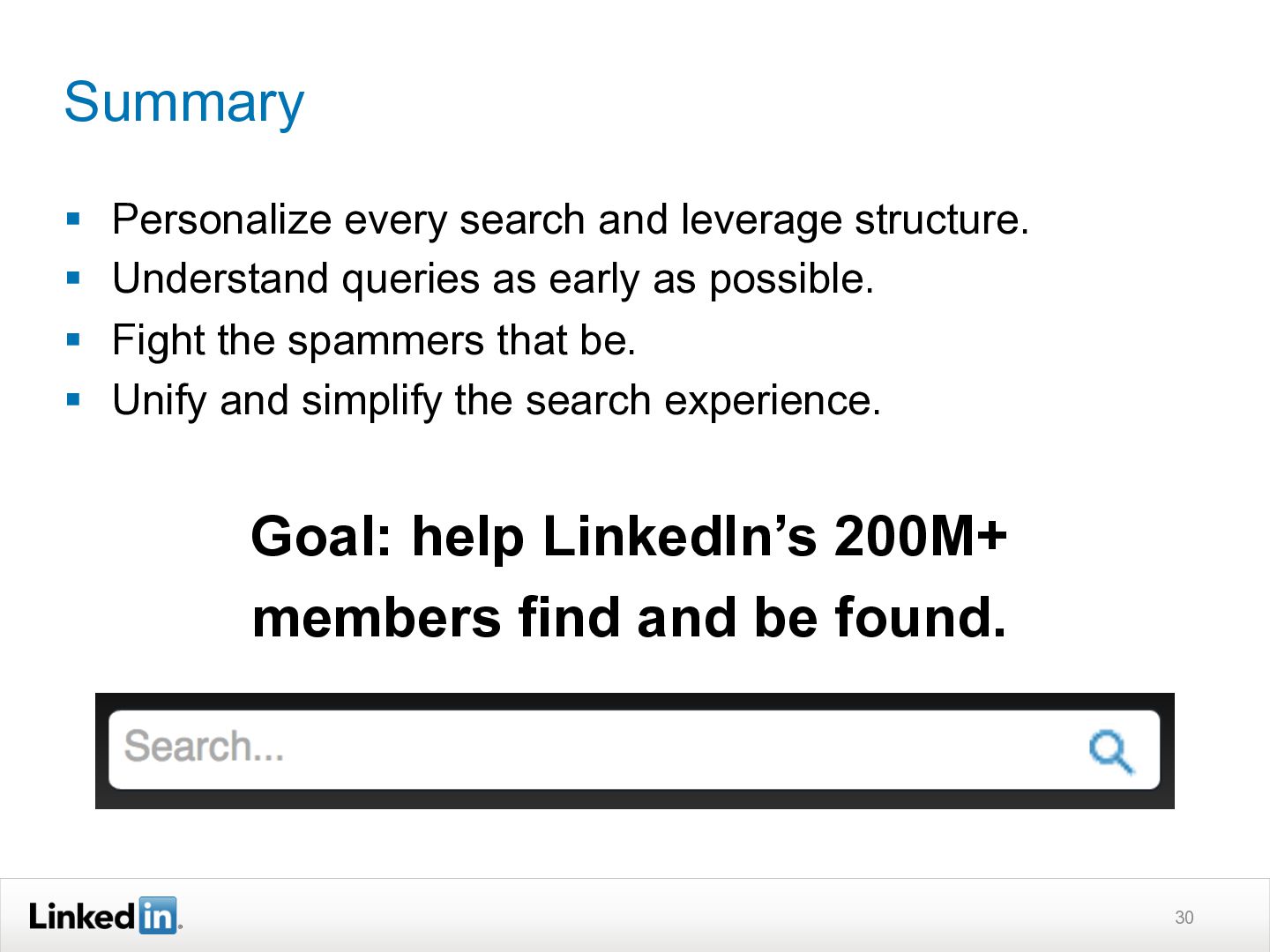
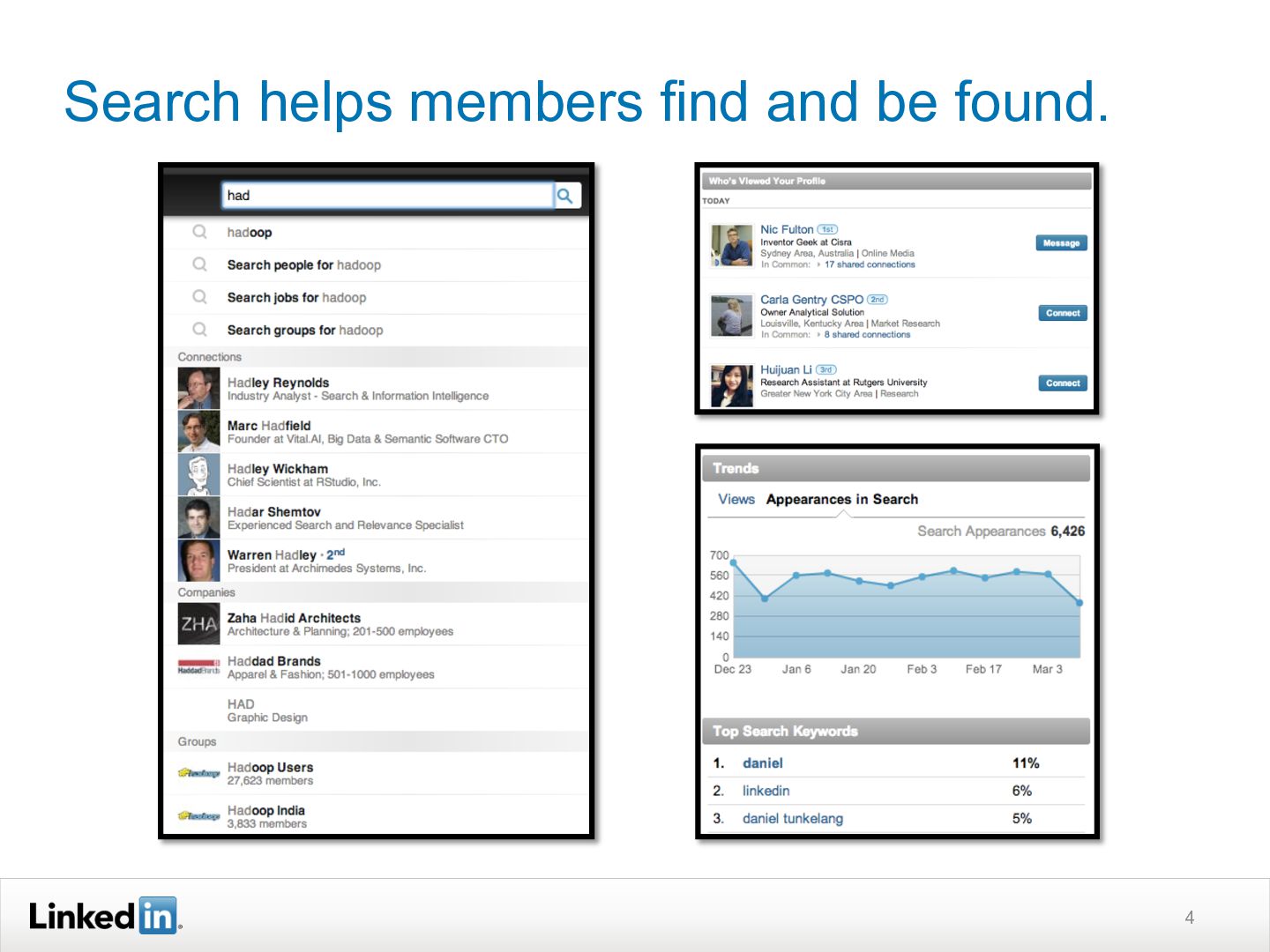
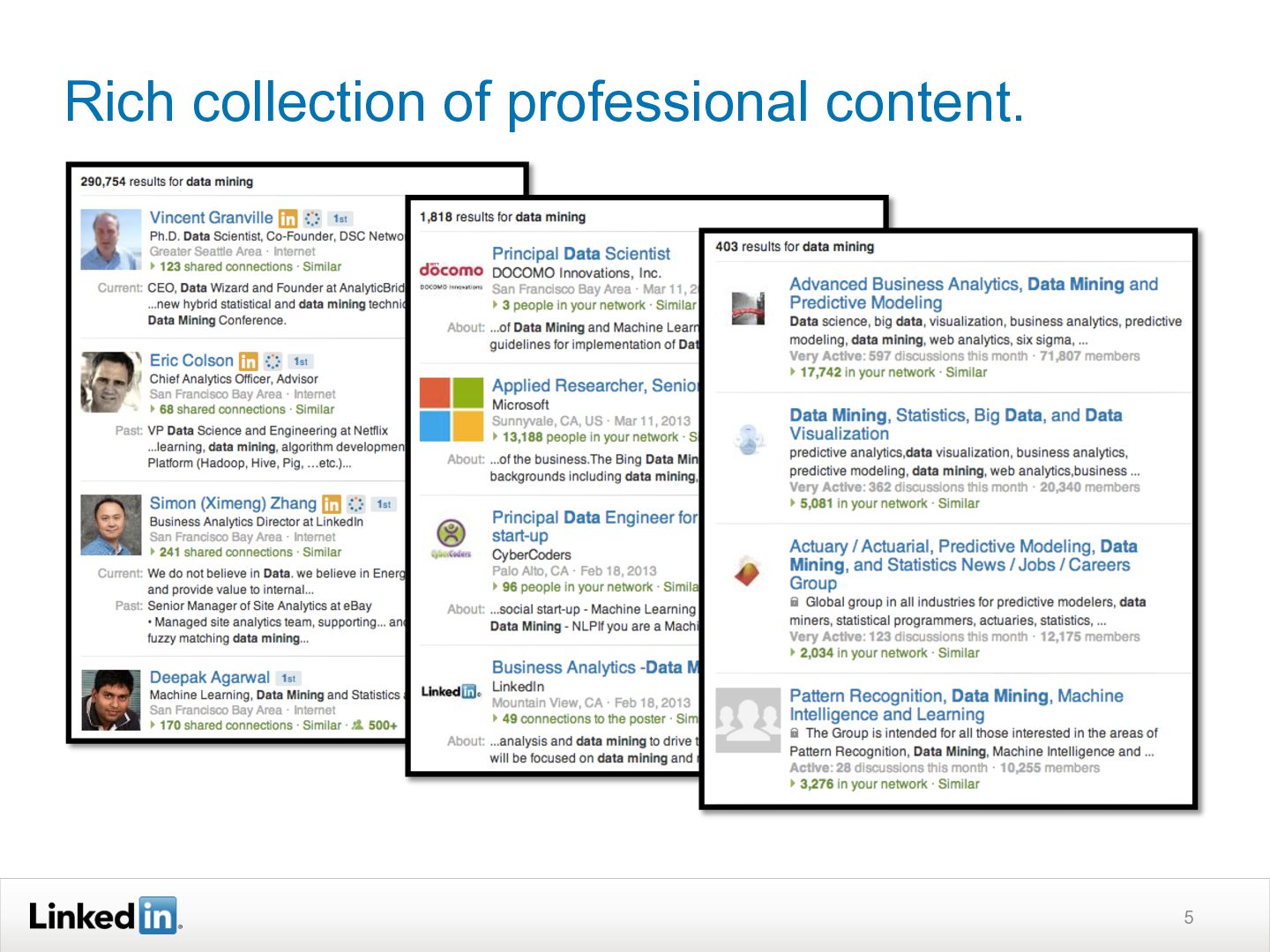
queries as early as possible. § Fight the spammers that be. § Unify and simplify the search experience. Goal: help LinkedIn’s 200M+ members find and be found. 30


 dtunkelang
 ezaki
ezaki
 takonda
 shogo4131
 codmoninc
 keeg
keeg
 tomokusaba
 yu23ki14
 teamlab
 kairim0
 jozono
 takanorip
 recruitengineers
 baasie
 wjessup
 lynnandtonic
 ivargrimstad
 wayneb77
 inesmontani
 smashingmag
 schroneko
 bkeepers
 philnash
 retrage
 leimatthew05
![People are semi-structured objects. 9 9 for i in [1..n]!](https://files.speakerdeck.com/presentations/bd51e2a9b4f644c4886f82f3aa785231/slide_8.jpg)