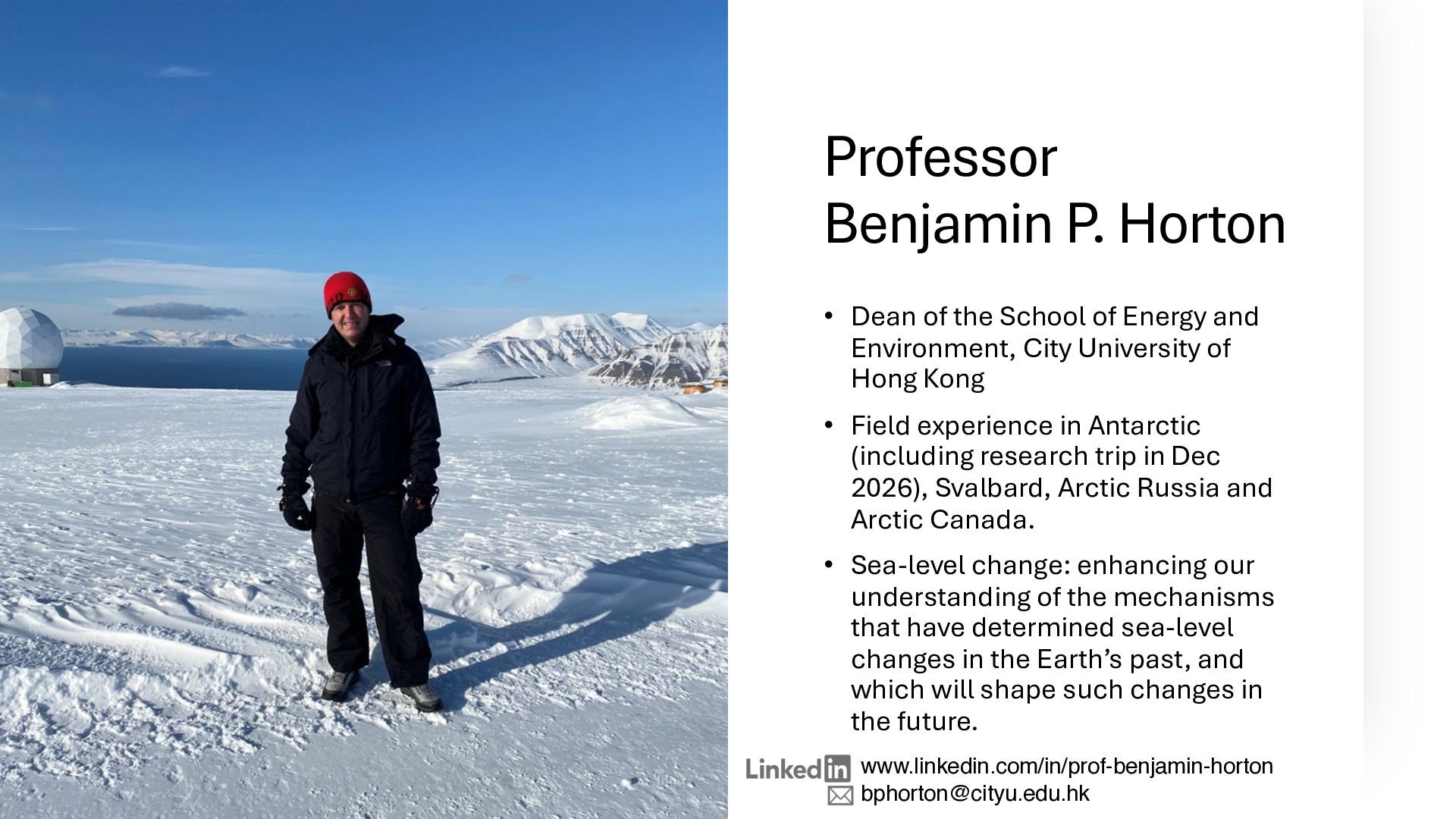
Energy and Environment, City University of Hong Kong • Field experience in Antarctic (including research trip in Dec 2026), Svalbard, Arctic Russia and Arctic Canada. • Sea-level change: enhancing our understanding of the mechanisms that have determined sea-level changes in the Earth’s past, and which will shape such changes in the future. www.linkedin.com/in/prof-benjamin-horton [email protected]
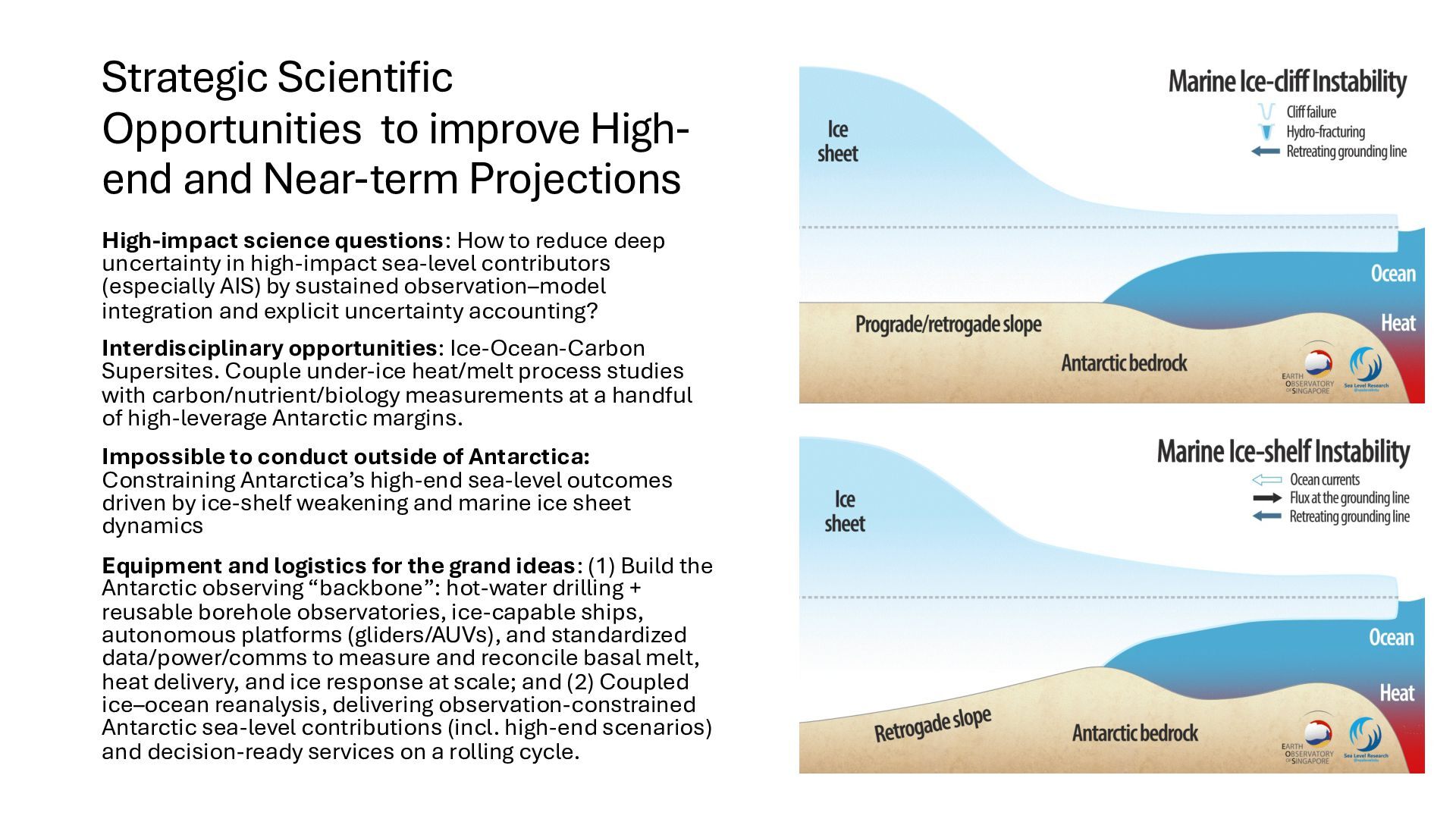
High-impact science questions: How to reduce deep uncertainty in high-impact sea-level contributors (especially AIS) by sustained observation–model integration and explicit uncertainty accounting? Interdisciplinary opportunities: Ice-Ocean-Carbon Supersites. Couple under-ice heat/melt process studies with carbon/nutrient/biology measurements at a handful of high-leverage Antarctic margins. Impossible to conduct outside of Antarctica: Constraining Antarctica’s high-end sea-level outcomes driven by ice-shelf weakening and marine ice sheet dynamics Equipment and logistics for the grand ideas: (1) Build the Antarctic observing “backbone”: hot-water drilling + reusable borehole observatories, ice-capable ships, autonomous platforms (gliders/AUVs), and standardized data/power/comms to measure and reconcile basal melt, heat delivery, and ice response at scale; and (2) Coupled ice–ocean reanalysis, delivering observation-constrained Antarctic sea-level contributions (incl. high-end scenarios) and decision-ready services on a rolling cycle.


 ipfevents
 tomoaki0705
 syuchimu
 akasan
 trycycle
 bonotake
 institutdelelevage
 jagupath
 hiranabe
 tagtag
 hiroakihamada
 analokmaus
 xleitix
 techseoconnect
 inesmontani
 codingconduct
 jonoalderson
 reverentgeek
 dougneiner
 stuffmc
 afnizarnur
 nikkihalliwell
 rasagy