Share
The CHRO as a Growth Executive
🚀 The CHRO as a Growth Executive: Unlocking Enterprise ReinventionDisruption has surged by 200%, and organizations are looking for new paths to growth. According to Accenture’s latest report, the key lies in an unexpected powerhouse: the Chief Human Resources Officer (CHRO). Here is a comprehensive breakdown of how "High-Res" CHROs are redefining the C-suite and driving extraordinary business value:🔹 The Growth Equation (Data + Tech + People)
Research shows companies activating the combination of data, technology, and people gain up to an 11% top-line productivity premium. However, only 5% of large global organizations successfully execute this by placing parallel emphasis on a strong digital core and talent creation. 🔹 Spotting a "High-Res" CHRO
While 89% of CEOs agree CHROs should play a central role in long-term profitable growth, only 29% of CHROs currently operate with the right profile and conditions. High-Res CHROs stand apart through: Advanced Skillsets: Scoring significantly higher in systems thinking (+52%), financial acumen (+44%), leadership (+44%), and technology/data skills (+39%). C-Suite Connectivity: They are 4x more likely to have strong relationships of mutual influence across the entire C-suite (especially with the CEO, CFO, COO, and CTO). 🔹 Three Ways High-Res CHROs Drive ChangeAccess & Create Talent: Utilizing AI and data-driven insights to build next-generation skills, remove hiring biases, and leverage strategic managed services at scale. Connect Data, Tech & People: Maximizing workforce data, utilizing emerging ecosystems, and applying automation strategically to fuel smart workforce planning. Lead Beyond HR: Catalyzing people-led enterprise transformation, influencing capital allocation and M&A, and solving systemic challenges like ESG and community impact. 💡 The Bottom Line: Unlocking value requires CEOs to create the right conditions—moving HR out of silos and embedding talent strategy directly into the core business agenda.Are your leaders empowered to think beyond their titles and drive growth? Let’s discuss in the comments! 👇#FutureOfWork #HRLeadership #BusinessGrowth #DigitalTransformation #CSuite #EnterpriseReinvention

Tanuj P
Transcript
37 slides
-
The CHRO as a growth executive Focusing the power of
data, tech and people to accelerate reinvention— and a new vision for growth From insights to action, the path to extraordinary value starts here. -
Contents 03 Setting sights on new growth 10 How to
spot a High-Res CHRO 15 How to support a High-Res CHRO 19 Putting the forces of change to work 29 Are you ready to join the 5%? The way forward 2 -
Setting sights on new growth From 2017 to 2022 the
level of macroeconomic, social, geopolitical, climate, consumer and technological disruption increased by 200%.1 And today, tight labor markets and talent shortages continue beyond the pandemic as skill gaps remain at high levels.2 The CHRO as a growth executive In this environment it is abundantly clear that organizations need to accelerate change—not only to compete but also find new paths to growth. Accenture has identified five key forces of change that are essential to success in the next decade: total enterprise reinvention, talent, sustainability, the metaverse continuum and the ongoing technology revolution. For C-suites looking to forge ahead, these forces are showing the way. 3 -
Of these, two are especially essential given today’s challenges: 1.
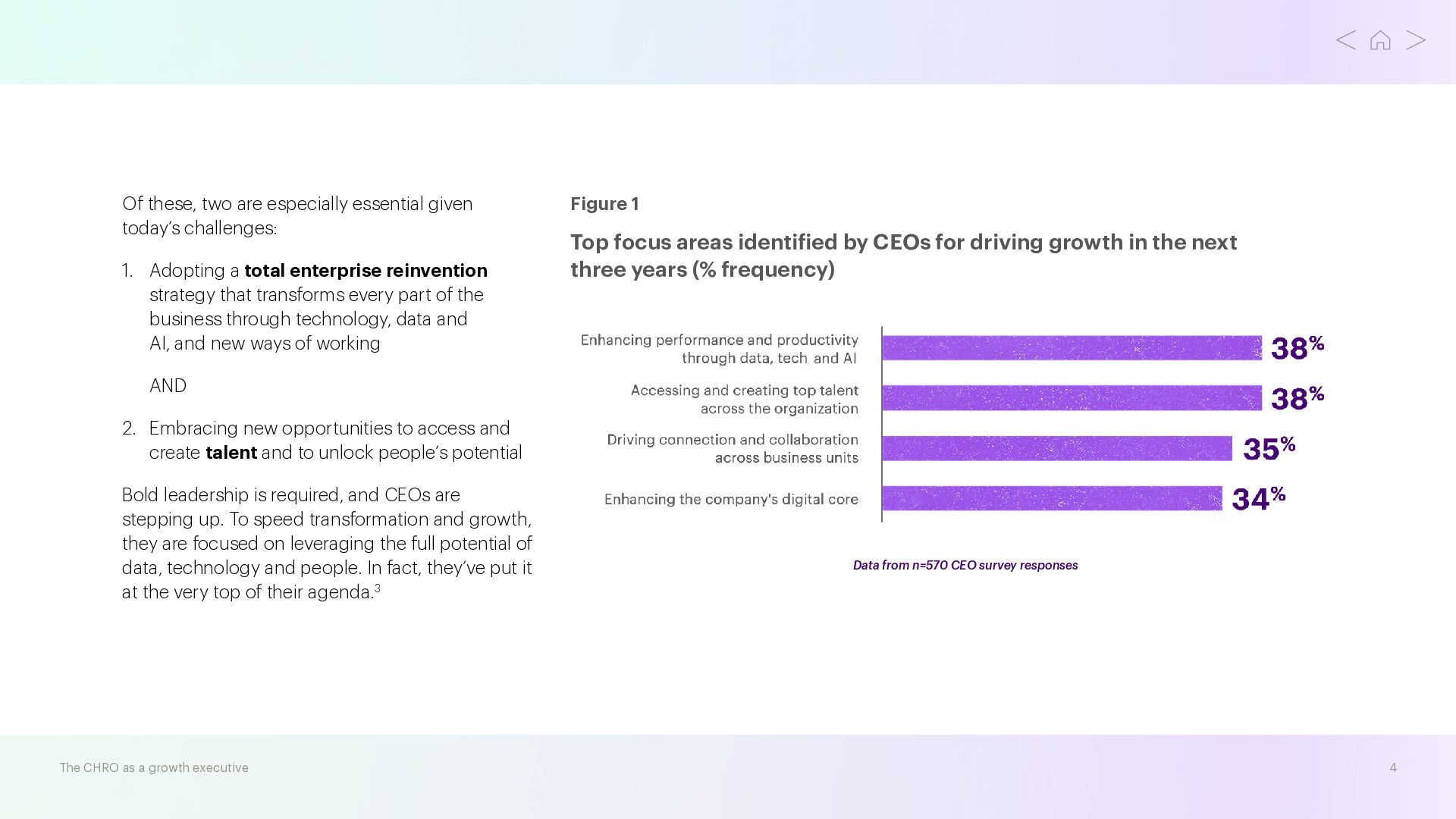
Adopting a total enterprise reinvention strategy that transforms every part of the business through technology, data and AI, and new ways of working Figure 1 Top focus areas identified by CEOs for driving growth in the next three years (% frequency) AND 2. Embracing new opportunities to access and create talent and to unlock people’s potential Bold leadership is required, and CEOs are stepping up. To speed transformation and growth, they are focused on leveraging the full potential of data, technology and people. In fact, they’ve put it at the very top of their agenda.3 The CHRO as a growth executive Data from n=570 CEO survey responses 4 -
It’s the right priority. Accenture research has found that by
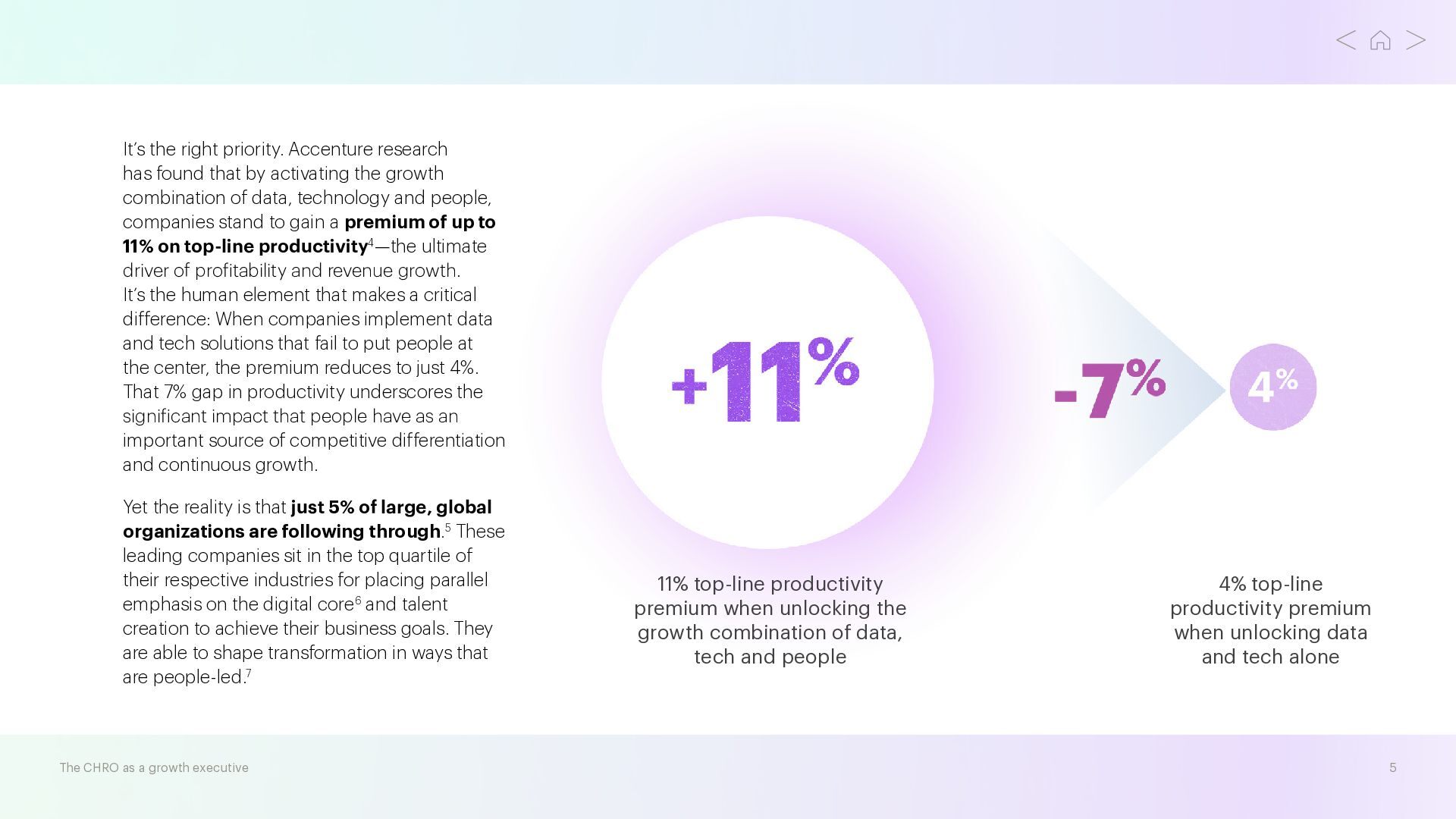
activating the growth combination of data, technology and people, companies stand to gain a premium of up to 11% on top-line productivity4—the ultimate driver of profitability and revenue growth. It’s the human element that makes a critical difference: When companies implement data and tech solutions that fail to put people at the center, the premium reduces to just 4%. That 7% gap in productivity underscores the significant impact that people have as an important source of competitive differentiation and continuous growth. Yet the reality is that just 5% of large, global organizations are following through.5 These leading companies sit in the top quartile of their respective industries for placing parallel emphasis on the digital core6 and talent creation to achieve their business goals. They are able to shape transformation in ways that are people-led.7 The CHRO as a growth executive 11% top-line productivity premium when unlocking the growth combination of data, tech and people 4% top-line productivity premium when unlocking data and tech alone 5 -
What else makes this 5% so effective? The answer lies
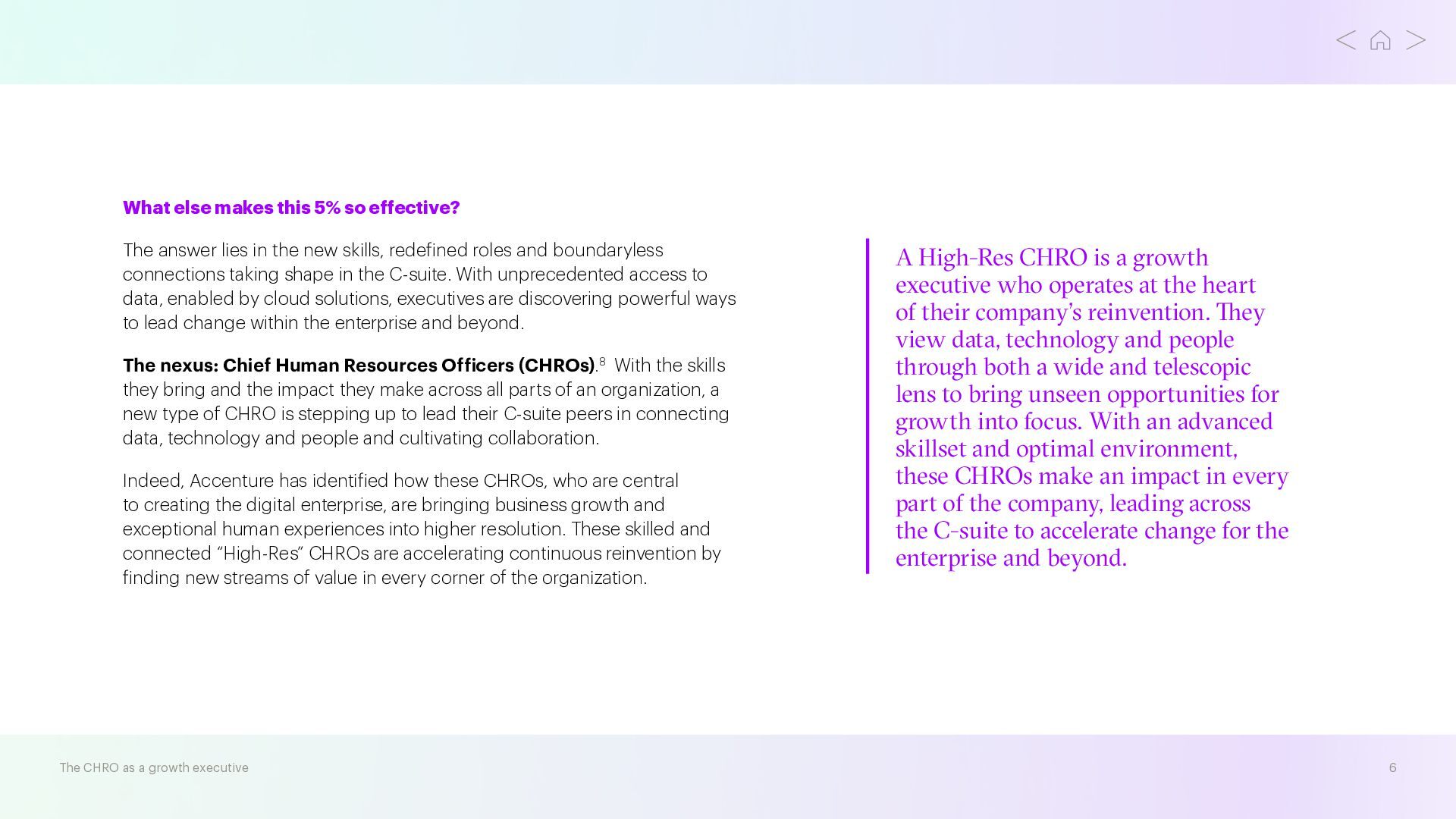
in the new skills, redefined roles and boundaryless connections taking shape in the C-suite. With unprecedented access to data, enabled by cloud solutions, executives are discovering powerful ways to lead change within the enterprise and beyond. The nexus: Chief Human Resources Officers (CHROs).8 With the skills they bring and the impact they make across all parts of an organization, a new type of CHRO is stepping up to lead their C-suite peers in connecting data, technology and people and cultivating collaboration. Indeed, Accenture has identified how these CHROs, who are central to creating the digital enterprise, are bringing business growth and exceptional human experiences into higher resolution. These skilled and connected “High-Res” CHROs are accelerating continuous reinvention by finding new streams of value in every corner of the organization. The CHRO as a growth executive A High-Res CHRO is a growth executive who operates at the heart of their company’s reinvention. They view data, technology and people through both a wide and telescopic lens to bring unseen opportunities for growth into focus. With an advanced skillset and optimal environment, these CHROs make an impact in every part of the company, leading across the C-suite to accelerate change for the enterprise and beyond. 6 -
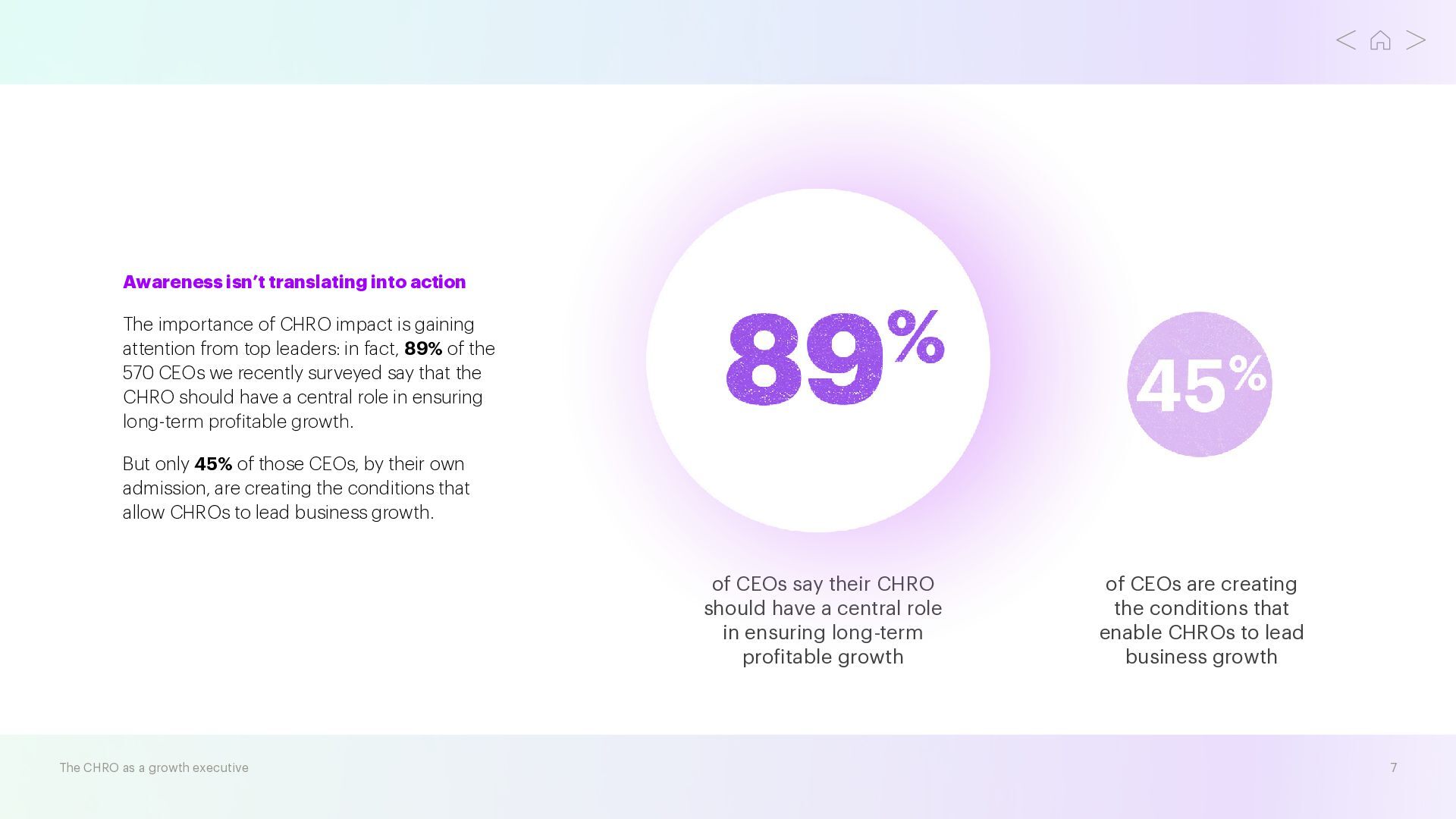
Awareness isn’t translating into action The importance of CHRO impact
is gaining attention from top leaders: in fact, 89% of the 570 CEOs we recently surveyed say that the CHRO should have a central role in ensuring long-term profitable growth. But only 45% of those CEOs, by their own admission, are creating the conditions that allow CHROs to lead business growth. of CEOs say their CHRO should have a central role in ensuring long-term profitable growth The CHRO as a growth executive of CEOs are creating the conditions that enable CHROs to lead business growth 7 -
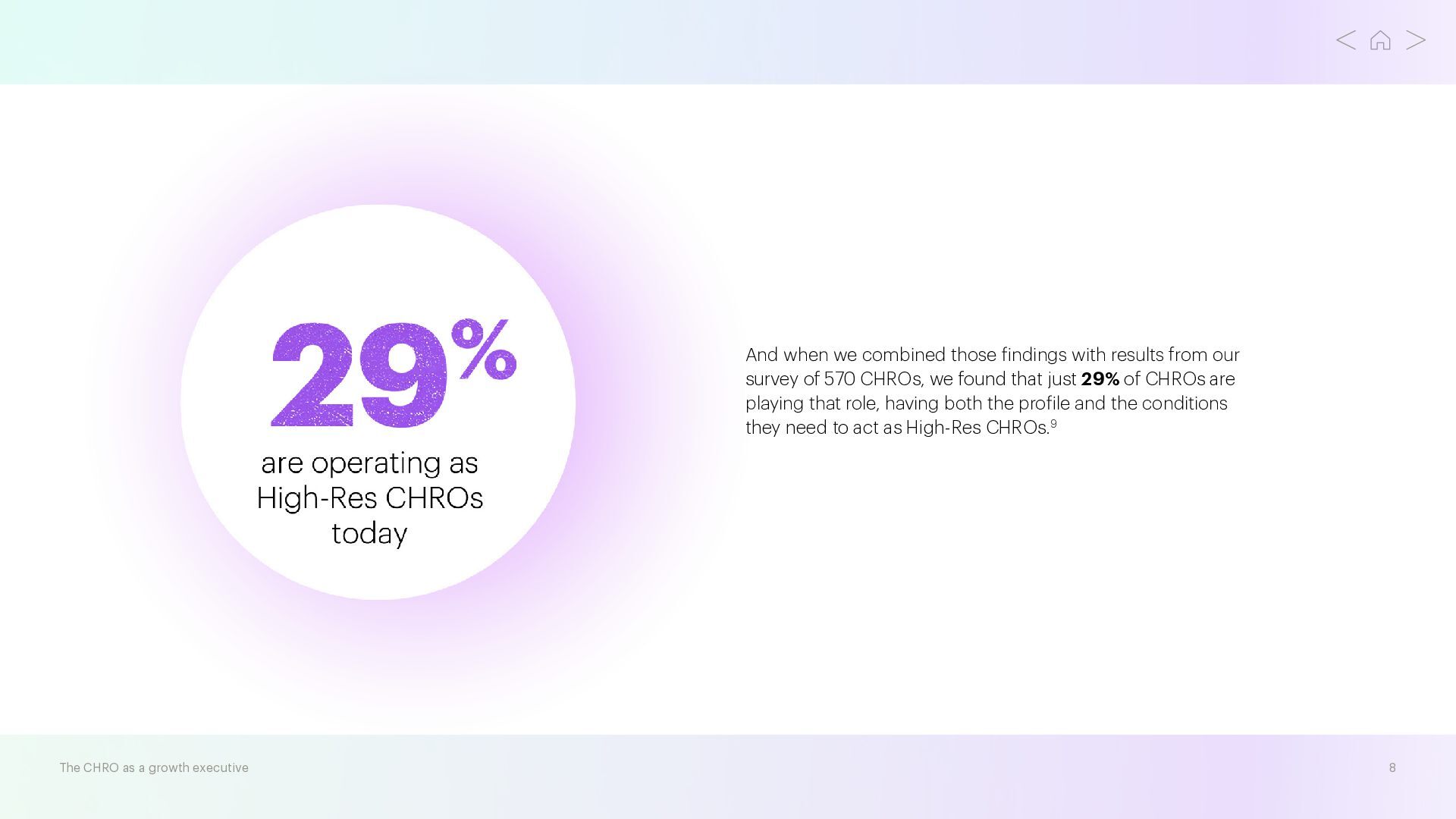
And when we combined those findings with results from our
survey of 570 CHROs, we found that just 29% of CHROs are playing that role, having both the profile and the conditions they need to act as High-Res CHROs.9 The CHRO as a growth executive 8 -
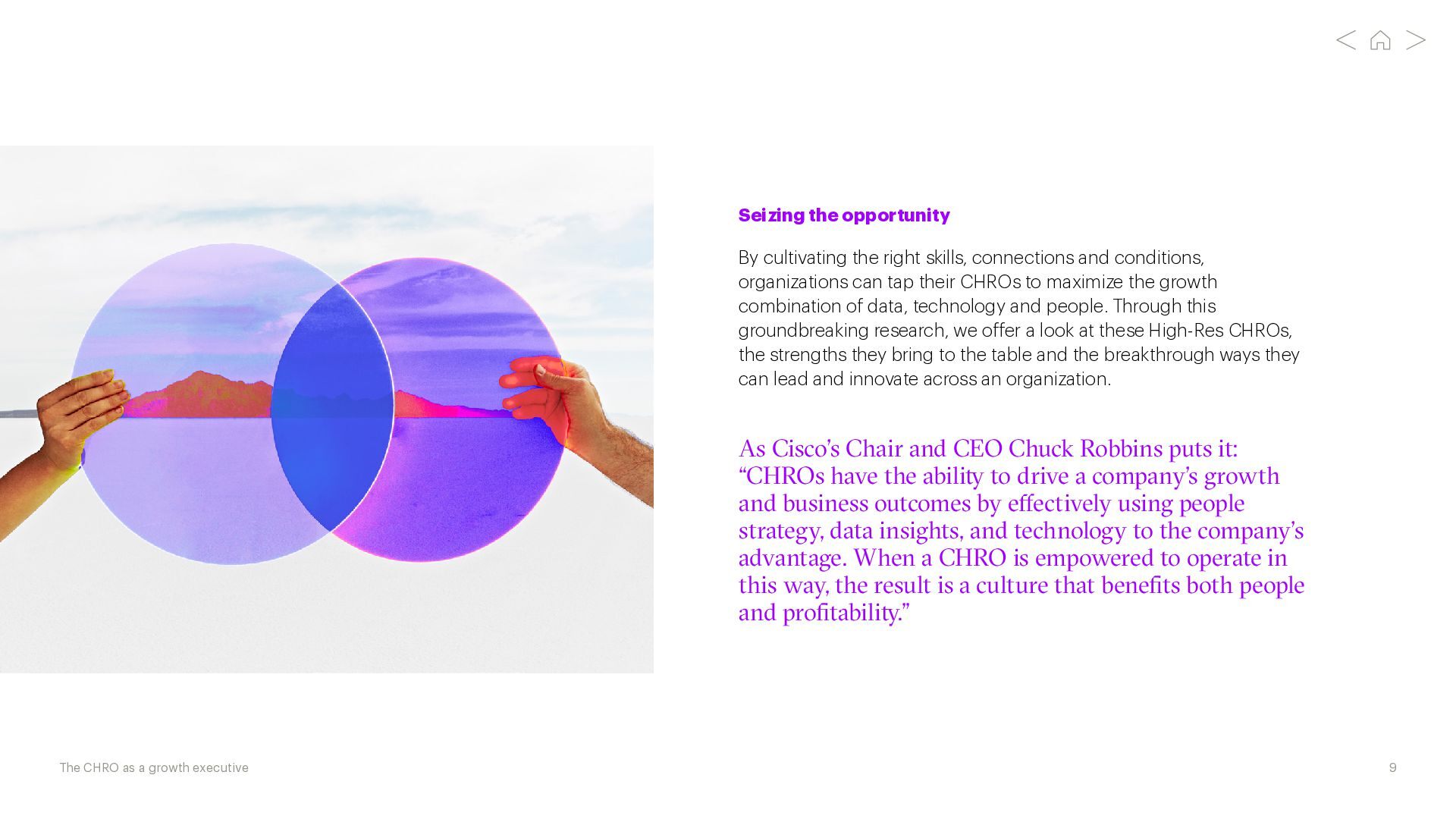
Seizing the opportunity By cultivating the right skills, connections and
conditions, organizations can tap their CHROs to maximize the growth combination of data, technology and people. Through this groundbreaking research, we offer a look at these High-Res CHROs, the strengths they bring to the table and the breakthrough ways they can lead and innovate across an organization. As Cisco’s Chair and CEO Chuck Robbins puts it: “CHROs have the ability to drive a company’s growth and business outcomes by effectively using people strategy, data insights, and technology to the company’s advantage. When a CHRO is empowered to operate in this way, the result is a culture that benefits both people and profitability.” The CHRO as a growth executive 9 -
Two primary characteristics set these high achievers apart: their skillset
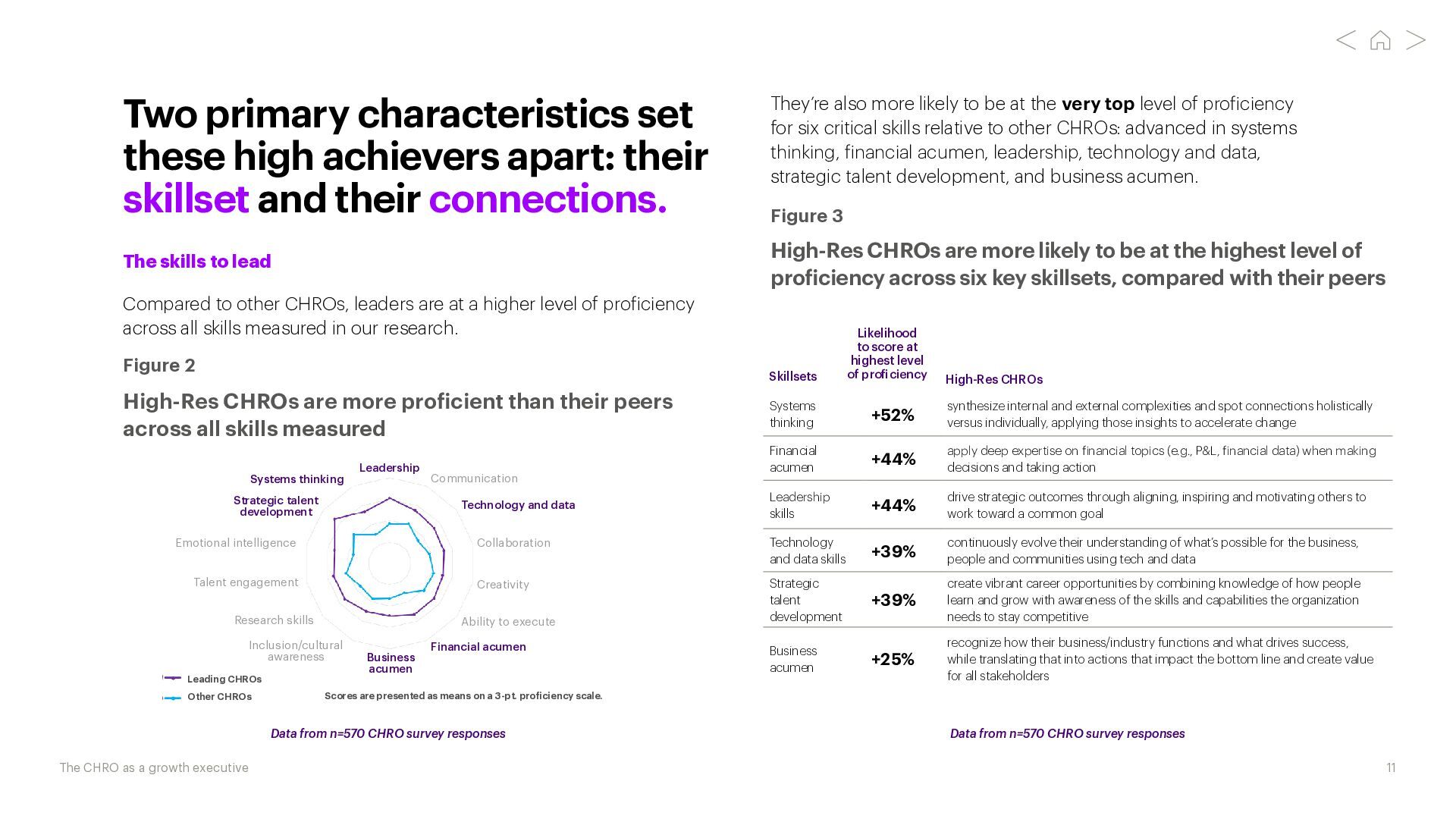
and their connections. They’re also more likely to be at the very top level of proficiency for six critical skills relative to other CHROs: advanced in systems thinking, financial acumen, leadership, technology and data, strategic talent development, and business acumen. Figure 3 High-Res CHROs are more likely to be at the highest level of proficiency across six key skillsets, compared with their peers The skills to lead Compared to other CHROs, leaders are at a higher level of proficiency across all skills measured in our research. Skillsets Likelihood to score at highest level of proficiency Systems thinking +52% synthesize internal and external complexities and spot connections holistically versus individually, applying those insights to accelerate change Financial acumen +44% apply deep expertise on financial topics (e.g., P&L, financial data) when making decisions and taking action Leadership skills +44% drive strategic outcomes through aligning, inspiring and motivating others to work toward a common goal Collaboration Technology and data skills +39% continuously evolve their understanding of what’s possible for the business, people and communities using tech and data Creativity Strategic talent development +39% create vibrant career opportunities by combining knowledge of how people learn and grow with awareness of the skills and capabilities the organization needs to stay competitive Business acumen +25% recognize how their business/industry functions and what drives success, while translating that into actions that impact the bottom line and create value for all stakeholders Figure 2 High-Res CHROs are more proficient than their peers across all skills measured Systems thinking Leadership Strategic talent development Technology and data Emotional intelligence Talent engagement Research skills Ability to execute Inclusion/cultural awareness Leading CHROs Other CHROs Communication Business acumen Financial acumen Scores are presented as means on a 3-pt. proficiency scale. Data from n=570 CHRO survey responses The CHRO as a growth executive High-Res CHROs Data from n=570 CHRO survey responses 11 -
The combination of financial acumen, business acumen and systems thinking
will be particularly important in the future. It positions CHROs to operate as anticipators, driven by data and insights, instead of as reactors. Today’s HighRes CHROs are already 2.3x more likely to be at the top level of proficiency in this combination. As such, this blurs the lines between front and back office, enabling them to seize opportunities even beyond their function. Our research indicates that more CHROs will be on the path to developing this enviable skillset, as they are continuously learning, unlearning and reinventing themselves. Through our interviews10 we found that CHROs globally are already deepening their expertise (honing critical skills like data science and analytics on the job) to meet future business needs. 12 -
The connections that put those skills to work Our High-Res
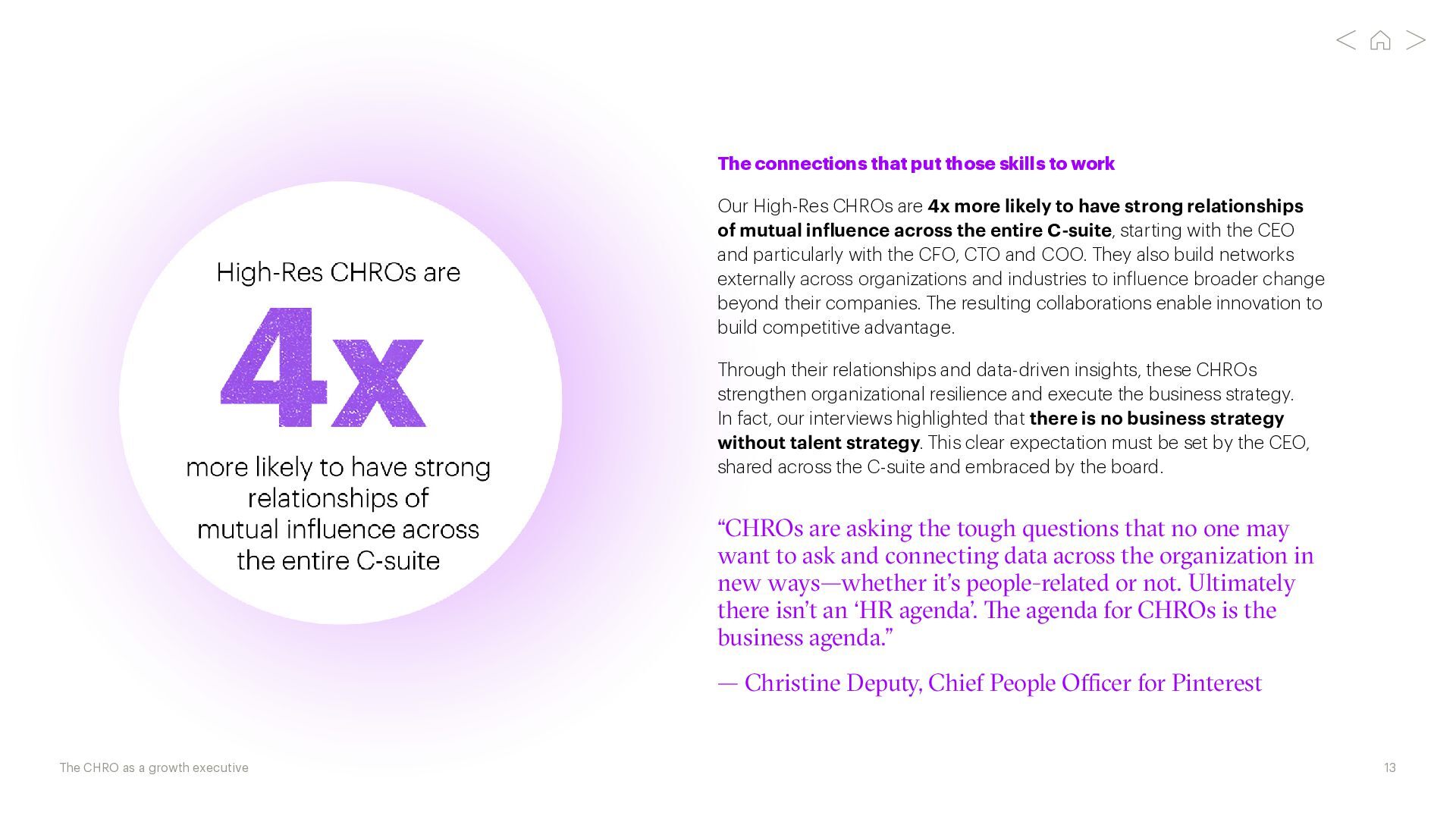
CHROs are 4x more likely to have strong relationships of mutual influence across the entire C-suite, starting with the CEO and particularly with the CFO, CTO and COO. They also build networks externally across organizations and industries to influence broader change beyond their companies. The resulting collaborations enable innovation to build competitive advantage. Through their relationships and data-driven insights, these CHROs strengthen organizational resilience and execute the business strategy. In fact, our interviews highlighted that there is no business strategy without talent strategy. This clear expectation must be set by the CEO, shared across the C-suite and embraced by the board. “CHROs are asking the tough questions that no one may want to ask and connecting data across the organization in new ways—whether it’s people-related or not. Ultimately there isn’t an ‘HR agenda’. The agenda for CHROs is the business agenda.” — Christine Deputy, Chief People Officer for Pinterest The CHRO as a growth executive 13 -
CASE IN POINT: FERRERO The choco-confectionary company Ferrero has an
enviable growth story. From successfully expanding into new product categories to rapidly widening its geographic footprint around the world (organically and through acquisitions), the company’s strategic decisions have propelled it to reach in 2020/21 a consolidated turnover of 12.7 billion Euro, with an increase of 3.4% compared to the previous year’s turnover of 12.3 billion Euro. The Ferrero Group also completed key initiatives such as: increasing investment in its iconic brands, strengthening internal R&D activities and, for another consecutive year, investing in improving and expanding its factories, plants and equipment. As part of the Group’s continued technological development strategy, it expanded its production capacity. Fueled by digital transformation, prioritizing their people and preserving a strong culture, HR has been essential to Ferrero’s innovation and growth. Chief Human Resources and Organization Officer Giuseppe Addezio says that “HR has entered a new age because of digital transformation, which is changing the agenda of companies. It requires reskilling, redesigning processes, changing the organizational model and always taking care of your people throughout.” Ferrero’s integrated cloudbased HR system sits at the heart of change, enhancing the employee experience, streamlining processes and equipping leaders and workers alike with important data to work smarter.11 Read more about their journey to unlock the talents of their people and remain agile to meet changing business needs and drive growth. Ferrero’s Recipe for Employee Engagement | Accenture 14 -
Profile alone is not enough. Our research shows that even
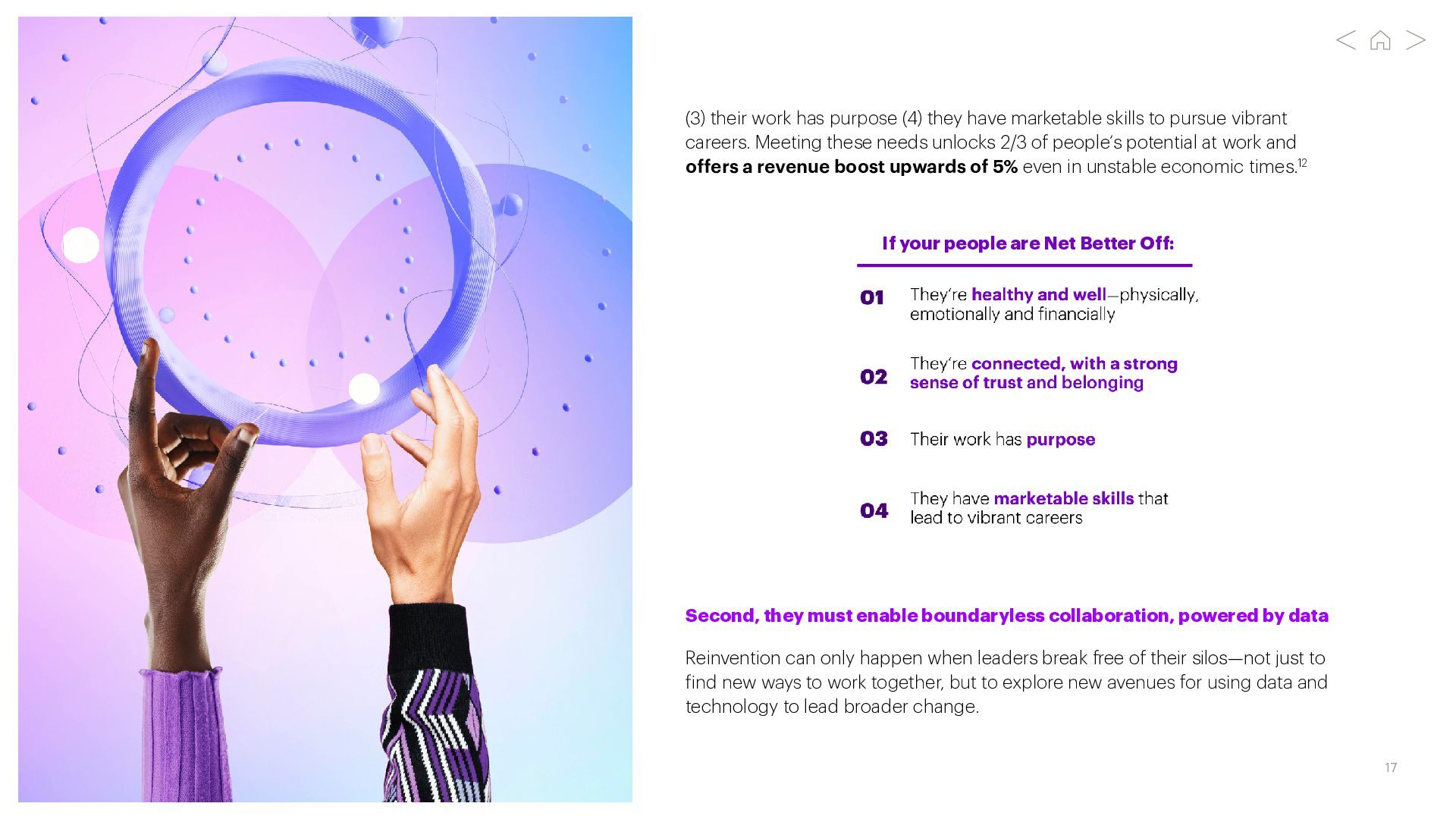
when CHROs have the right skills and connections, 55% lack the conditions to impact business growth. But when they do have an optimal environment, their CEOs are more than twice as likely to say the HR function is exceeding their expectations in terms of discovering business value through the company’s people. What are the keys to creating these conditions? First, C-suite leaders must prioritize their people They recognize talent as key force to drive change and competitive differentiation. This commitment starts with all leaders (not just the CHRO) asking a simple question—Are people Net Better Off working here?—and taking personal accountability for the answer. Becoming Net Better Off means employees’ fundamental needs are met and they feel: (1) healthy and well (physically, emotionally and financially) (2) connected, with a sense of trust and belonging The CHRO as a growth executive 16 -
(3) their work has purpose (4) they have marketable skills
to pursue vibrant careers. Meeting these needs unlocks 2/3 of people’s potential at work and offers a revenue boost upwards of 5% even in unstable economic times.12 If your people are Net Better Off: Second, they must enable boundaryless collaboration, powered by data Reinvention can only happen when leaders break free of their silos—not just to find new ways to work together, but to explore new avenues for using data and technology to lead broader change. 17 -
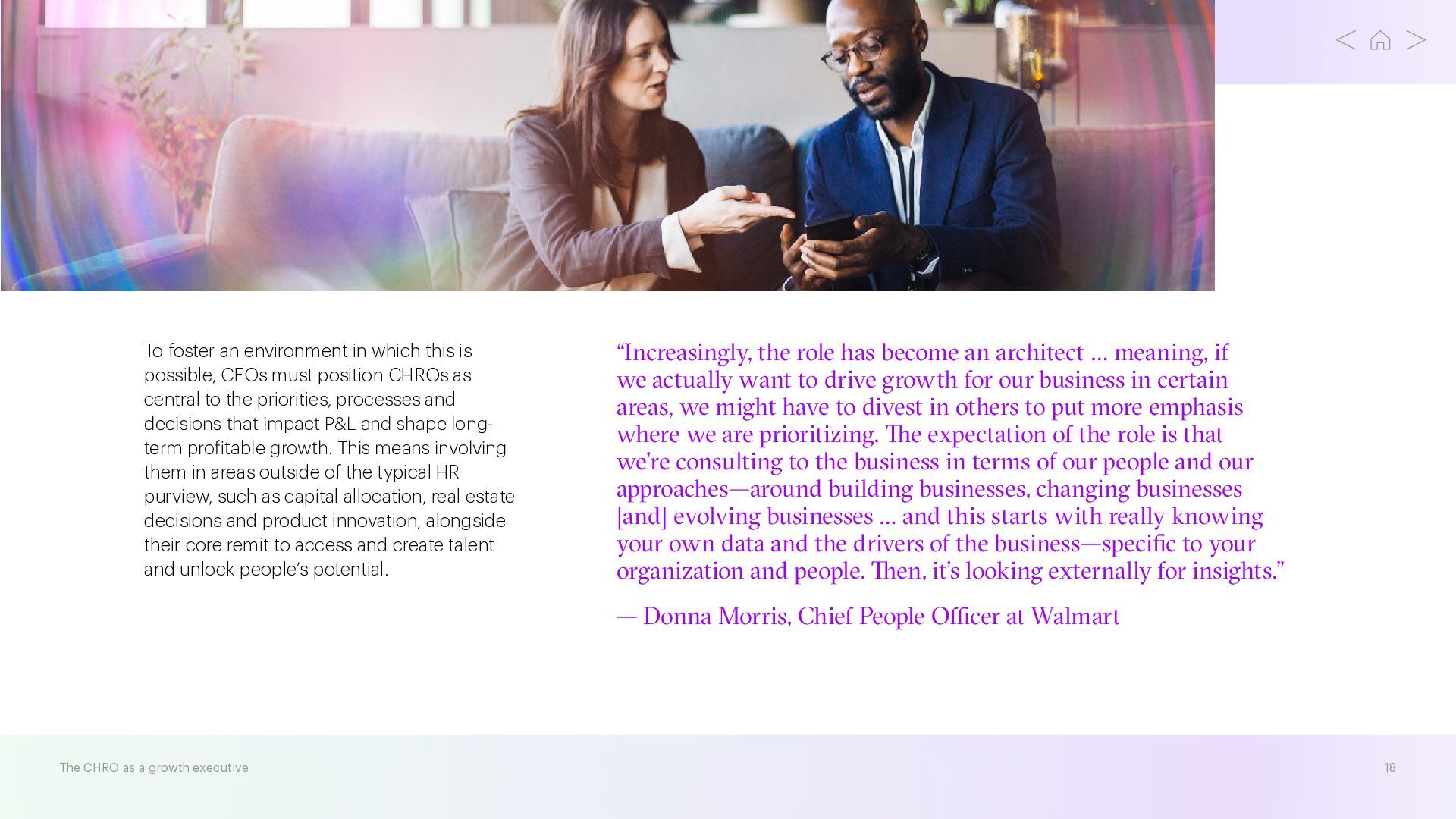
To foster an environment in which this is possible, CEOs
must position CHROs as central to the priorities, processes and decisions that impact P&L and shape longterm profitable growth. This means involving them in areas outside of the typical HR purview, such as capital allocation, real estate decisions and product innovation, alongside their core remit to access and create talent and unlock people’s potential. “Increasingly, the role has become an architect … meaning, if we actually want to drive growth for our business in certain areas, we might have to divest in others to put more emphasis where we are prioritizing. The expectation of the role is that we’re consulting to the business in terms of our people and our approaches—around building businesses, changing businesses [and] evolving businesses … and this starts with really knowing your own data and the drivers of the business—specific to your organization and people. Then, it’s looking externally for insights.” — Donna Morris, Chief People Officer at Walmart The CHRO as a growth executive 18 -
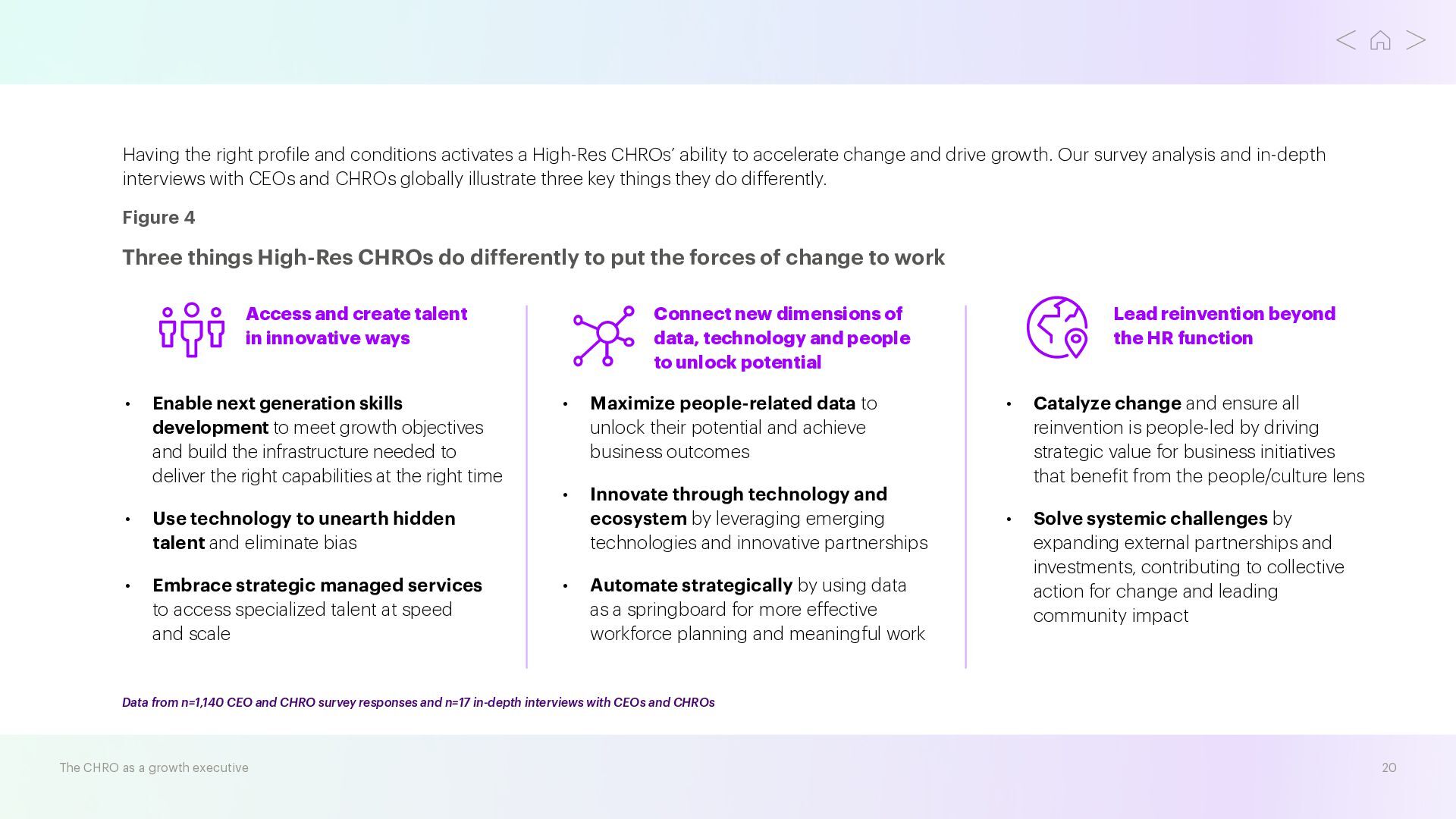
Having the right profile and conditions activates a High-Res CHROs’
ability to accelerate change and drive growth. Our survey analysis and in-depth interviews with CEOs and CHROs globally illustrate three key things they do differently. Figure 4 Three things High-Res CHROs do differently to put the forces of change to work Access and create talent in innovative ways • Enable next generation skills development to meet growth objectives and build the infrastructure needed to deliver the right capabilities at the right time • Use technology to unearth hidden talent and eliminate bias • Embrace strategic managed services to access specialized talent at speed and scale Lead reinvention beyond the HR function Connect new dimensions of data, technology and people to unlock potential • Maximize people-related data to unlock their potential and achieve business outcomes • Innovate through technology and ecosystem by leveraging emerging technologies and innovative partnerships • Automate strategically by using data as a springboard for more effective workforce planning and meaningful work • Catalyze change and ensure all reinvention is people-led by driving strategic value for business initiatives that benefit from the people/culture lens • Solve systemic challenges by expanding external partnerships and investments, contributing to collective action for change and leading community impact Data from n=1,140 CEO and CHRO survey responses and n=17 in-depth interviews with CEOs and CHROs The CHRO as a growth executive 20 -
1. Access and create talent in innovative ways High-Res CHROs
use data-led, AI-powered insights to understand which capabilities their organizations need most—and where to find and attract the people that have them. To achieve this, they: • Enable next-generation skills development: In a continuously disrupted market, the expertise companies need to stay competitive is shifting. Top CHROs prioritize skilling the organization’s people to meet growth objectives, as well as building the infrastructure to deliver the right capabilities at the right time across the business. Our High-Res CHROs are over 2x as likely to invest significantly in skills development—and they recognize that technology is an integral part of that process. With this approach, they expand access to new and more diverse sources of talent and create pathways for people, such as hiring for skills instead of degrees and offering apprenticeship programs. The CHRO as a growth executive • Use technology to unearth hidden talent: Leading CHROs are putting new tools to work as they revamp hiring and recruitment practices for a new era. They are utilizing AI to better understand how bias enters the screening process and looking to data to transform candidate experiences. They are also discovering talent within their own organizations and using technology to support creative and flexible work models. “Through different experiences each of us have in our career, we build up tools and tactics, and develop pattern recognition—you’re not limited by it, though, and you stay open to new patterns that come through.” — Christine Deputy, Chief People Officer for Pinterest 21 -
• Embrace strategic managed services13: Using strategic managed services partners
for HR delivery provides access to talent at speed and scale and the ability to harness intelligent, cloud-based platforms that enable data-driven decisionmaking. Our research shows that leading organizations (the top 5% who best tap the power of data, technology and people) are utilizing managed services at higher rates than their peers. Notably, they have a 46% greater focus on embedding managed services into their strategy, compared with companies that focus on talent alone. The pandemic highlighted how some organizations used this solution to shift large-scale operations to fully remote settings quickly and efficiently. Introducing managed services allowed them to focus on their core business and their people, while taking advantage of the scale and industrialized platforms such services offer. The CHRO as a growth executive “By using the right technology, leveraging data across the organization and reimagining a new intelligent global HR service delivery model, companies can see HR’s value fully realized— freeing up the team to focus on building the talent agenda and driving business results.” — Darrell Ford, EVP, Chief Human Resources Officer and Chief Diversity, Equity and Inclusion Officer at UPS 22 -
CHRO IN ACTION The “gray areas” where functions intersect and
value hides Francine Katsoudas, Chief People, Policy and Purpose Officer at Cisco, thinks of her role as “being focused on anticipating market transitions and understanding the business strategy and how it links with our people strategy to accelerate growth for the company.” It’s a relatively new approach, but it reflects the Cisco C-suite’s evolving understanding of how people, technology and data must combine to drive productivity. As Katsoudas explains: “Historically, you would have business discussions and talk tech and data—and then you would talk separately about people. Now we’re understanding that success means braiding these discussions together.” This “braiding” manifests itself in relationships and new ways of working within the executive team. To illustrate, Katsoudas points to her increasingly collaborative partnership with Chief Information Officer Fletcher Previn, which shines a new light for both on how technology can elevate people to The CHRO as a growth executive drive greater productivity in their company. Given Cisco’s business, and the networked solutions the company develops, their learnings can also inform the company’s client offerings. Katsoudas notes that Cisco’s work to unlock employee potential and create better experiences— from recruiting to workforce planning, to skill development and ways of engaging—is dependent on leaders. “Elevating leadership expectations and focusing on longer term outcomes is critical,” she says. “Data and insights from our HCM crossenterprise platform reinforce the efficacy of this approach and can help create efficiencies that can be reinvested to further improve people’s ability to collaborate and deliver value.” “Today, all of us across the C-suite are trying to bust siloes and spot the ‘gray spaces’ where opportunities or challenges lie. Bringing our unique perspectives on the data enables us to solve issues or seize opportunities more rapidly.” — Francine Katsoudas, Chief People, Policy and Purpose Officer at Cisco As a result, Cisco is fast-tracking change for its people, its business and its communities. 23 -
2. Connect new dimensions of data, technology and people to
unlock potential High-Res CHROs are nearly 2x more likely to effectively connect data, technology and people than their peers. Leveraging this growth combination is the primary accelerator for improved financial and non-financial outcomes.14 To achieve this, these CHROs: • Maximize people-related data: High-Res CHROs bring insights that connect talent more directly to business outcomes and ultimately unlock people’s potential. They do this by spotting productivity trends, uncovering engagement drivers and applying predictive insights from skills data to proactively meet demand and help their people grow. At the same time, these CHROs connect external signals with enterprise data that allows faster decisionmaking, influences long-term strategy and informs actions on broader social issues. The CHRO as a growth executive • Innovate through technology and ecosystem: High-Res CHROs know every business is a digital business. In addition to continuously reinventing their HCM/HR digital core to optimize processes and increase personalization, they use innovative technology, such as the metaverse to enhance people’s experiences at work. And they don’t do it alone: the efficiencies gained through an ecosystem of partnerships, platforms and scalable solutions can free up capital and fuel new investments – making them a foundation for growth. Our research shows that companies adopting next-generation AI and digital tools, in combination with enabling partnerships and ecosystems, are 2.6x more likely to increase revenue by 10% or more than peers who are not.15 24 -
• Automate strategically: High-Res CHROs don’t just see automation as
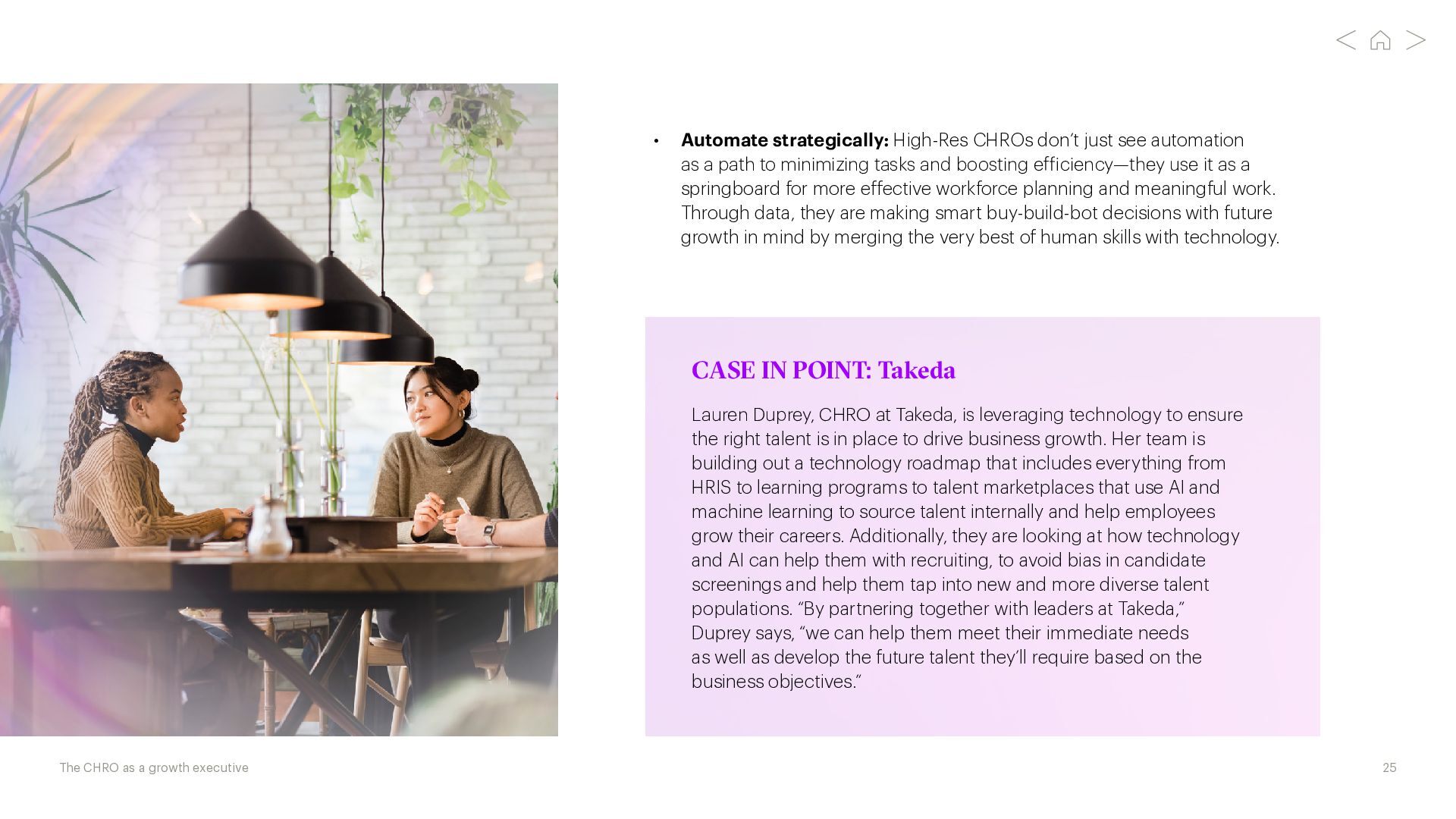
a path to minimizing tasks and boosting efficiency—they use it as a springboard for more effective workforce planning and meaningful work. Through data, they are making smart buy-build-bot decisions with future growth in mind by merging the very best of human skills with technology. CASE IN POINT: Takeda Lauren Duprey, CHRO at Takeda, is leveraging technology to ensure the right talent is in place to drive business growth. Her team is building out a technology roadmap that includes everything from HRIS to learning programs to talent marketplaces that use AI and machine learning to source talent internally and help employees grow their careers. Additionally, they are looking at how technology and AI can help them with recruiting, to avoid bias in candidate screenings and help them tap into new and more diverse talent populations. “By partnering together with leaders at Takeda,” Duprey says, “we can help them meet their immediate needs as well as develop the future talent they’ll require based on the business objectives.” The CHRO as a growth executive 25 -
CHRO IN ACTION Putting data to work Numbers have always
been a factor in human resources, but today’s CHROs have access to more, better and deeper data than ever before. And as access to it has changed, so has its impact. “Data and insights are paramount for our jobs,” says Donna Morris, Chief People Officer at Walmart. “Years ago, we didn’t have it as real-time, or as accessible as it is today … If I had to go back 15 years, I’d say it took a lot longer to get predictive insights. And often it was predictive in outcomes, not actually insight. So, if an outcome happened, we assumed it would happen again. It wasn’t as if we could apply logic to data to give us different formulated outcomes and insight.” Now, CHROs are experimenting with artificial intelligence, machine learning and other technological tools that can uncover hidden truths in the numbers—and all faster than ever. The CHRO as a growth executive Morris’ team put this into play with its 2022 Associate Engagement Survey. By using internal technology to drive the survey in real-time, they were able to draw responses from nearly a million employees in just five days. They then used AI and machine learning capabilities to segment the data and distill qualitative comments into actionable categories and insights. As a result, they could act on the survey results right away, instead of the typical three to five weeks it would normally take to do so. “And, when it comes to DEI and representation,” Morris says, “we are now able to report every six months—armed with realtime data that enables us to be transparent about where we’re at and to be even more accountable to drive progress and change.” “A strategy is only unlocked by the systems and the people and the processes and the technology that you apply to them,” says Morris. “[In this role], increasingly you’re very active in all those dimensions of driving it.” Over the years, Morris says the CHRO role has pivoted from a focus on talent and retention to a role focused on furthering the business through organizational growth and people. 26 -
3. Lead reinvention beyond the HR function While credibility starts
with functional excellence, High-Res CHROs’ impact and influence extends across the entire enterprise and beyond the organization to truly drive transformation. That means they: • Catalyze change: All reinvention must be people-led; as a result, leading CHROs adapt talent strategy at speed and scale to align with business needs and strengthen resilience. Our interviews with CEOs and CHROs show the CHRO’s opportunity to impact many areas that benefit from the people/culture lens, including acquisitions, investments, new products and services, branding and social activism. Additionally, we found that 88% of CEOs say their CHRO should be responsible for infusing a culture of innovation across the enterprise. • Solve systemic challenges: Top CHROs recognize that their organizations are deeply intertwined with the communities in which they function. As a result, they work beyond the boundaries of the company—across organizations, industries, and geographies—jointly contributing to actions for change. They leverage best practices (such as the use of PPE during the height of the pandemic) to help with broader social goals while expanding external partnerships and investments that make an impact in the world. Another way High-Res CHROs add value: improving sustainability, one of the forces that drive change. CEOs with a High-Res CHRO are 1.5x as likely to say their CHRO is directly improving the company’s environmental, social and governance (ESG) performance. The CHRO as a growth executive “[You have to] strike the right balance between, one, running your function well and being an expert in your craft, and two, operating without boundaries. The balance between those two is what sets you up to drive growth in the future. That also means understanding the industry, the business and the macro business environment the company is facing—and how people can help address what lies ahead.” — Lauren Duprey, CHRO at Takeda 27 -
CHRO IN ACTION Resilience is everything If there’s one word
to describe the past few years, it’s uncertainty. Whether it’s the pandemic, Russia’s invasion of Ukraine, rising inflation, the energy crisis or the cryptocurrency crash, businesses have had to adapt quickly to change. Some organizations have even thrived since they have the right mix of people and technology to adapt to changing conditions. Kerry Dryburgh, Chief People Officer at bp calls this the platform of opportunity. “It’s about leading transformation internally and then looking beyond, considering the challenges externally, to make a difference in the world” she says. “It’s about purpose and how we respond to societal expectations. And then it’s about engagement and the commerciality.” There are examples of this everywhere in the organization. On a high level, all of bp’s HR tools and data are in the cloud, all to ensure that employees have the best possible experience. The CHRO as a growth executive Moving forward, Dryburgh expects to be able to use analytics and insights for a real-time look at employee sentiment—and react quickly, if necessary. For instance, Dryburgh’s team found that bp employees who work for great team leaders are 15 points more engaged than those who see their team leader less often and receive less feedback. Moving forward, bp is creating an agenda focused on driving engagement and performance. “So, it’s having that discussion as opposed to it being about what we intuitively think we need to do…[and] underpinning the ‘why’ in a much more robust way.” Dryburgh has also found bp is well positioned to support the greater good, beyond what’s traditionally expected of a CHRO or HR in general. She worked with external partners, including NGOs, to create a system of support for refugees—not just connecting them with jobs, but linking all the other aspects as well, such as determining if someone needs language training or financial support to cover the costs of requalification. It’s a complete rethinking of the talent strategy in a time of upheaval that not only helps the business in a time of crisis, but also the people most affected by that crisis. Ultimately, Dryburgh sees resilience—and leveraging that platform of opportunity—in three facets. The first is transformation and using HR tech and talent to help the company evolve and grow to meet its goals in a constantly changing world. (To this end, bp is aided by Accenture’s transformation GPS tool to help them understand their progress on the journey.) The second is embedding the importance of transformation and talent throughout the C-suite and with the board and opening the door to collaboration. And the third is leaving a legacy, so that the company and the communities it serves are all better off than when she arrived at bp. Her advice? “Think bigger than the seat that you sit in.” 28 -
04 Are you ready to join the 5%? The way
forward 29 -
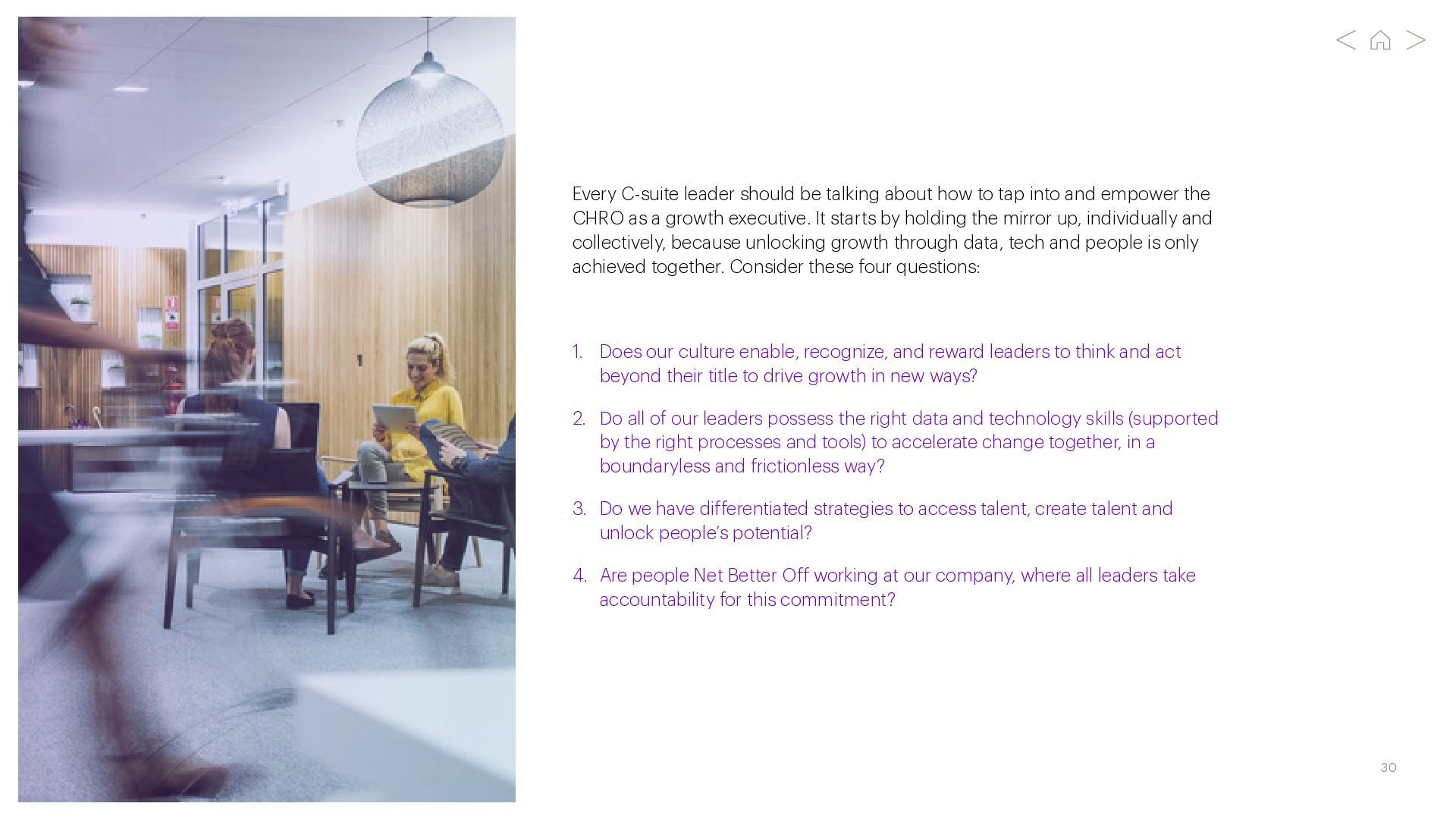
Every C-suite leader should be talking about how to tap
into and empower the CHRO as a growth executive. It starts by holding the mirror up, individually and collectively, because unlocking growth through data, tech and people is only achieved together. Consider these four questions: 1. Does our culture enable, recognize, and reward leaders to think and act beyond their title to drive growth in new ways? 2. Do all of our leaders possess the right data and technology skills (supported by the right processes and tools) to accelerate change together, in a boundaryless and frictionless way? 3. Do we have differentiated strategies to access talent, create talent and unlock people’s potential? 4. Are people Net Better Off working at our company, where all leaders take accountability for this commitment? 30 -
“I talk to other CEOs about the CHRO being a
business leader and it resonates. There’s a shift from focusing on the concept of corporate function or enabling function to the CHRO as the center of the business. You need to look at your CHRO as being a business leader who’s driving your growth and reinvention. And you need to empower them to follow through on that mandate.” — Julie Sweet, Chair and CEO, Accenture Future success requires reinvention today. It all starts with connecting data, technology and people; but it takes the right skills and environment for those connections to truly matter, both within the company and beyond. Reaching the top 5% requires bold leadership—not only from a High-Res CHRO, but from each member of the C-suite. Every executive must be a growth executive. The CHRO as a growth executive 31 -
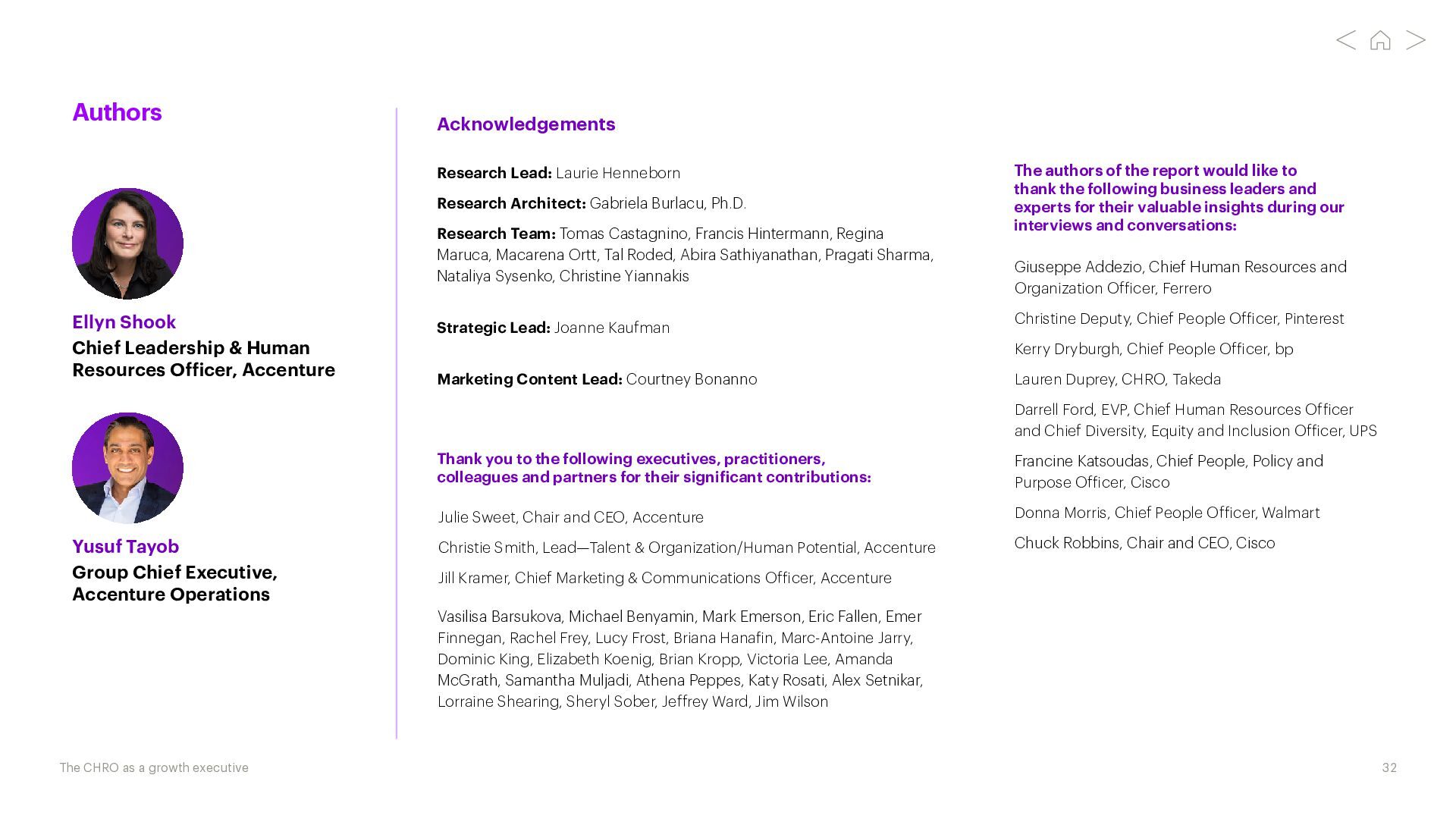
Authors Acknowledgements Research Lead: Laurie Henneborn Research Architect: Gabriela Burlacu,
Ph.D. Research Team: Tomas Castagnino, Francis Hintermann, Regina Maruca, Macarena Ortt, Tal Roded, Abira Sathiyanathan, Pragati Sharma, Nataliya Sysenko, Christine Yiannakis Ellyn Shook Chief Leadership & Human Resources Officer, Accenture Strategic Lead: Joanne Kaufman The authors of the report would like to thank the following business leaders and experts for their valuable insights during our interviews and conversations: Giuseppe Addezio, Chief Human Resources and Organization Officer, Ferrero Christine Deputy, Chief People Officer, Pinterest Kerry Dryburgh, Chief People Officer, bp Marketing Content Lead: Courtney Bonanno Lauren Duprey, CHRO, Takeda Darrell Ford, EVP, Chief Human Resources Officer and Chief Diversity, Equity and Inclusion Officer, UPS Yusuf Tayob Group Chief Executive, Accenture Operations Thank you to the following executives, practitioners, colleagues and partners for their significant contributions: Francine Katsoudas, Chief People, Policy and Purpose Officer, Cisco Julie Sweet, Chair and CEO, Accenture Donna Morris, Chief People Officer, Walmart Christie Smith, Lead—Talent & Organization/Human Potential, Accenture Chuck Robbins, Chair and CEO, Cisco Jill Kramer, Chief Marketing & Communications Officer, Accenture Vasilisa Barsukova, Michael Benyamin, Mark Emerson, Eric Fallen, Emer Finnegan, Rachel Frey, Lucy Frost, Briana Hanafin, Marc-Antoine Jarry, Dominic King, Elizabeth Koenig, Brian Kropp, Victoria Lee, Amanda McGrath, Samantha Muljadi, Athena Peppes, Katy Rosati, Alex Setnikar, Lorraine Shearing, Sheryl Sober, Jeffrey Ward, Jim Wilson The CHRO as a growth executive 32 -
About the research We identified leading companies who are unlocking
the “growth combination” of data, technology, and people) through data science, text analytics and econometric modeling Leading companies were identified by applying text analytics to earnings call transcripts from S&P Capital IQ, captured in the 2020-2022 timeframe across 3,800 large, global organizations (with annual revenues higher than $500M USD and headcount of more than 1,000 employees.) Strategic focus on talent creation and digital core topics was determined through a set of key words and phrases. Companies were considered “leading” when they were found to be in the top quartile in focus across both categories of topics, relative to their industry groups. While 18% of organizations were found to be in the top quartile for just talent creation and 20% for just digital core, 5% of organizations were found to be in the top quartile for both. (We found 56% of organizations were not strongly focused on either.) We identified High-Res CHROs through global CEO and CHRO surveys Surveys were conducted between October and November 2022 with 570 CEOs and 570 CHROs across 12 industries (Banking, Insurance, High Tech, Retail, Consumer Goods & Services, Public Sector, Healthcare, Communications and Media, Utilities, Energy, Life Science, Software & Platforms) in 12 countries (Australia, Brazil, Canada, China, Germany, France, United Kingdom, India, Japan, Singapore, Switzerland and the United States.) High-Res CHROs were determined by identifying CHROs in the top quartile of scores on a composite variable made up of “perception” (extent to which CEOs and CHROs perceive the CHRO as a High-Res CHRO) and “reality” (growth initiatives driven by the CHRO) items within the survey. The High-Res CHRO variable was recoded as dichotomous (0=not HighRes CHRO; 1=High-Res CHRO) and utilized to determine frequency of High-Res CHROs, as well as enabling environment, profile and pathways to growth specific to this group. We then applied econometric modeling using these organizations’ financial data, captured through S&P Capital IQ. Top-line productivity levels (measured as revenue per employee, in USD) and yearly revenue growth going back 10 years (2012-2022) were used to develop a panel regression equation to simulate the impact on revenue growth and productivity of (a) becoming a leading company with regard to digital core and talent creation, and (b) increasing focus on digital core and talent creation topics. The CHRO as a growth executive 33 -
About the research We assessed the profile, environment and relationships
of High-Res CHROs through data analysis and modeling from survey responses and through in-depth interviews We identified how High-Res CHROs are putting change to work through financial analysis, machine learning and survey data High-Res CHRO profile aspects were determined from CHRO self-evaluative survey responses, using logistical regression modeling to identify significant drivers of being a High-Res CHRO from a set of hypothesized variables and controlling for demographics and company characteristics. CHROs at and above the mean on all significant drivers were considered to “carry the profile.” Additional insights were gathered through in-depth interviews with 17 CEOs and CHROs of large, global organizations across North America, Europe, Latin America and APAC and spanning multiple industries, including: Travel, Life Sciences, Consumer Goods & Services, Retail, Utilities, Banking, Energy, High Tech, Software & Platforms, Oil & Gas. Financial and non-financial data for the companies that participated in the survey were obtained from S&P Capital IQ. Machine learning algorithms were applied to survey data to surface optimal pathways to accelerating growth and 360 value, from the actions, initiatives, and approaches the CHRO had taken in the preceding year. These pathways were then grouped together according to key themes identified through in-depth interviews with 17 CEOs and CHROs, that were then confirmed to be three distinct factors using Confirmatory Factor Analysis. These three factors were also evaluated for their strength in driving financial and non-financial impact, determining the primary accelerator of impact among the three. Enabling environmental aspects were determined from CEO survey responses, using logistical regression modeling to identify significant drivers of having a High-Res CHRO from a set of hypothesized variables and controlling for demographics and company characteristics. CEOs at and above the mean on all significant drivers were considered to be “creating the environment.” Additional insights were gathered through in-depth interviews with 17 CEOs and CHROs of large, global organizations. Strength of relationships between the CHRO and different C-level roles were computed from CHRO survey responses, measured on a scale of 1 (limited) to 4 (very strong). The number of relationships labeled as “very strong” were added together, with sum totals compared across High-Res and non-High-Res CHRO groups. Average relationship strength across the roles was also compared. Most critical C-level relationship roles were then determined from the largest mean differences in relationship strength across the two groups. A regression equation using average relationship strength as the dependent variable was used to determine accelerators of CHRO relationship strength across the C-suite. The CHRO as a growth executive 34 -
References 1. 2. 3. 4. 5. Accenture, Total Enterprise Reinvention:
Reaching a new performance frontier, 2023. Based on Accenture’s proprietary Global Disruption Index, a composite measure that covers economic, social, geopolitical, climate, consumer and technology disruption. We created an overall measure of disruption to assess the level of volatility and change in the external business environment. The index is based on the average of six sub-components, that cover the economic, social, geopolitical, environmental, consumer and technological spheres. Each of the sub-components is based on a set of indexed scores for a range of indicators. Accenture Research analysis based on OECD Economic Outlook and Oxford Economics 6. 7. 8. Data drawn from survey of 570 CEOs conducted between October and November, 2022. See About the Research for more detail. Top-line productivity growth based on a predictive model using revenue-peremployee for the past 10 years (2012-2022). See About the Research section for more information. See About the Research section for methodology The CHRO as a growth executive 9. Accenture defines the “digital core” as a technology architecture that consists of three integrated layers: 1) cloud-based infrastructure and security layer, 2) modernized and cloud-native applications layer, and 3) data and AI layer Text analytics revealed a unique focus on the following topics and phrases for the 5% of organizations leading in parallel emphasis on digital core and talent creation: Emerging technology, Employee experience, Hybrid and remote work models, Inclusion and diversity, Metaverse, Mobile and web platforms, Security solutions, and Workforce upskilling. CHRO is the C-level position with responsibility for the acquisition, retention and engagement of the company’s people. This role sometimes goes by other titles, such as Chief People Officer or a Chief People & Culture Officer, to reflect a widening scope. We have used CHRO throughout this report for consistency and clarity. Surveys were conducted between October and November 2022 with 570 CEOs and 570 CHROs across 12 industries (Banking, Insurance, High Tech, Retail, Consumer Goods & Services, Public Sector, Healthcare, Communications and Media, Utilities, Energy, Life Science, Software & Platforms) in 12 countries (Australia, Brazil, Canada, China, Germany, France, United Kingdom, India, Japan, Singapore, Switzerland and the United States.) See About the Research section for more information. 35 -
References 10. 11. 12. 13. Insights were gathered through in-depth
interviews with 17 CEOs and CHROs of large, global organizations across North America, Europe, Latin America and APAC and spanning multiple industries, including: Travel, Life Sciences, Consumer Goods & Services, Retail, Utilities, Banking, Energy, High Tech, Software & Platforms, Oil & Gas. Read more about Ferrero’s journey to drive growth here: https://www.accenture.com/us-en/case-studies/consumer-goods-services/ ferrero-employee-engagement 14. 15. See About the Research section for methodology Accenture, Breaking Through to Innovation at Scale, 2023. Based on data from Accenture’s Art of AI Maturity survey of over 1,600 C-suite executives and datascience leaders from the world’s largest organizations. https://www.accenture.com/us-en/insights/artificial-intelligence/ai-maturityand-transformation Accenture. Care to Do Better, 2020. https://www.accenture.com/us-en/insights/future-workforce/employee-potentialtalent-management-strategy Strategic managed services are much more than traditional outsourcing. Instead, they are a next-level solution incorporating specialized skills and outcome-based results, delivering reinvention through gain-sharing agreements. Managed services are transformative, reduce risk and costs, and see suppliers become true partners in innovation. The CHRO as a growth executive 36 -
About Accenture About Accenture Research Accenture is a leading global
professional services company that helps the world’s leading businesses, governments and other organizations build their digital core, optimize their operations, accelerate revenue growth and enhance citizen services — creating tangible value at speed and scale. We are a talent and innovation led company with 738,000 people serving clients in more than 120 countries. Technology is at the core of change today, and we are one of the world’s leaders in helping drive that change, with strong ecosystem relationships. We combine our strength in technology with unmatched industry experience, functional expertise and global delivery capability. We are uniquely able to deliver tangible outcomes because of our broad range of services, solutions and assets across Strategy & Consulting, Technology, Operations, Industry X and Accenture Song. These capabilities, together with our culture of shared success and commitment to creating 360° value, enable us to help our clients succeed and build trusted, lasting relationships. We measure our success by the 360° value we create for our clients, each other, our shareholders, partners and communities. Accenture Research creates thought leadership about the most pressing business issues organizations face. Combining innovative research techniques, such as data science-led analysis, with a deep understanding of industry and technology, our team of 300 researchers in 20 countries publishes hundreds of reports, articles and points of view every year. Our thought-provoking research developed with world leading organizations helps our clients embrace change, create value and deliver on the power of technology and human ingenuity. Visit us at www.accenture.com/research Visit us at www.accenture.com This content is provided for general information purposes and is not intended to be used in place of consultation with our professional advisors. Copyright © 2023 Accenture. All rights reserved. Accenture and its logo are registered trademarks of Accenture.
 tanujp
 bft_recruit
 tsogo817421
 arnekittler
 akippa
 kuranuki
 enechain
 aokiplayer
 shunsuke_takeuchi
 e5ua
 tmiket
 kgnkhkr
 shunkisugaya
 inesmontani
 reverentgeek
 gurzu
 rakko
 aleyda
 marketingsoph
 palkan
 keathley
 eileencodes
 ks91