Upgrade to Pro — share decks privately, control downloads, hide ads and more …

Remote First: Building Distributed Teams that Win

Sponsored · Your Podcast. Everywhere. Effortlessly. Share. Educate. Inspire. Entertain. You do you. We'll handle the rest.

Remote First: Building Distributed Teams that Win

A practical workshop on building remote-first teams, delivered at IDEA Week 2026 in South Bend, Indiana.

Paul Anthony (OpStart) and I walked the employee lifecycle from hire to day-to-day operation: how to proxy trust when you can't meet someone in person, how to run a 1:1 that surfaces real information, how to build culture without a shared office, how to tell if work is actually getting done, and which tools matter (and which ones don't).

I run Flipper Cloud, Fireside, and Box Out Sports, and was one of the early remote employees at GitHub back when remote was still weird. Built for operators and founders. If you're running a distributed team or thinking about becoming one, this is the conversation I wish someone had handed me ten years ago.

Not recorded and the slides don't show much, sorry!

Avatar for John Nunemaker

John Nunemaker PRO

April 23, 2026

More Decks by John Nunemaker

Other Decks in Business

Transcript

  1. R E M O T E - F I R

    S T Building Distributed Teams That Win Paul Anthony · John Nunemaker
    Intro: John (Flipper Cloud, Fireside, Box Out, early GitHub, remote since before remote was cool), Paul (OpStart, remote-first accounting firm). Frame: we're going to walk the employee lifecycle. Hire, manage, build culture, hold accountable, equip. We'll share what works and what doesn't. Stop us with questions.
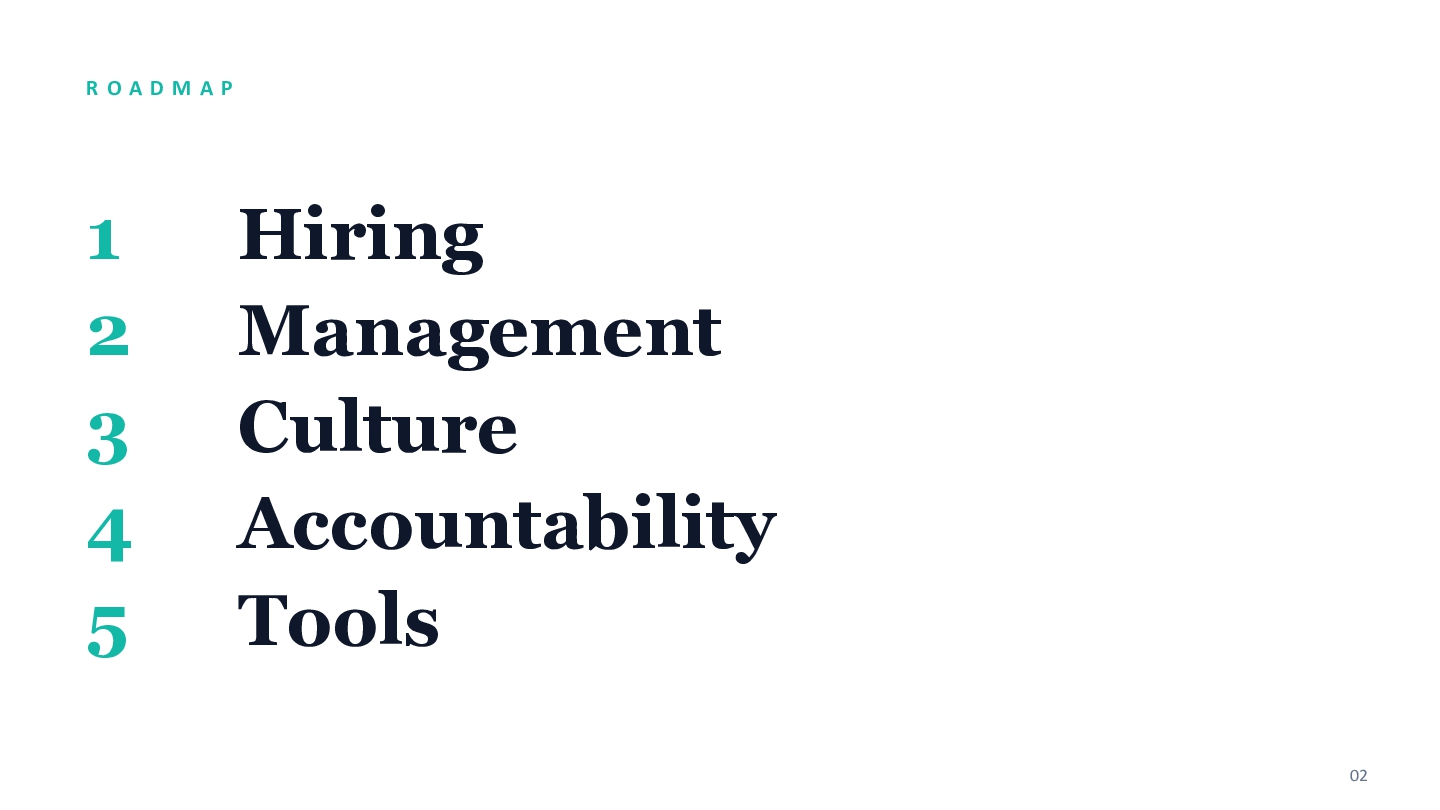
  2. R O A D M A P 1 Hiring 2

    Management 3 Culture 4 Accountability 5 Tools
    Five stops. They're in this order because that's the order you actually encounter them. You hire someone, then you manage them, culture shows up in how you do that, accountability tells you it's working, and tools are what it all runs on. Mostly operator lens. If you're an employee, flip it: the traits we hire for are the traits you want to build. Pros and cons at the end. Questions anytime.
  3. 0 1 · H I R I N G Hire

    people you've already worked with. If you can't, figure out how to proxy trust.
    TAKE: Best remote hiring heuristic, full stop. Worked with them before = huge signal. If not, the whole job is proxying that trust another way. EXAMPLES: Garrett on Flipper. Tony and Willian on Box Out. PROXY OPTIONS when there's no history: - Trusted referral from someone you already trust - Paid trial project (2 weeks, real work, real money) before a full offer - Public track record: OSS, writing, portfolio - Reference calls that go past the three names they gave you - Start part-time, graduate to full-time WHAT WE SCREEN FOR: self-direction, strong written communication, comfort with ambiguity, how they unblock themselves, what their home setup looks like. GITHUB ANGLE: Early GitHub, everyone came through network or visible work. Open source was the resume. EMPLOYEE LENS: Build public surface area. The hiring manager is trying to answer 'can I trust this person'. Make that easy.
  4. 0 2 · M A N A G E M

    E N T Manage the outcome, not the hour. Ask about wind in the sails, not status updates.
    TAKE: Office = manage by walking around. Remote, you can't. So you manage outcomes on a cadence. Weekly 1:1, clear deliverables, clear deadlines. If the work ships, the work ships. THE SAILBOAT 1:1 (credit Paul): Skip 'give me a status update' — you can read that from Linear or GitHub. Ask instead: - Wind in your sails: what's energizing you? - Anchors: what's holding you back? - Rocks ahead: what are you worried about? Paul's other version: camper van. What's moving, what's broken, what's the view out the window. FRACTIONAL: Biggest remote unlock. Designer 10 hours a week. Fractional CFO. You're not stuck with 40-hour humans in your zip code anymore. STRUCTURE: 4-6 people runs on vibes. 8-10, something cracks. Explicit ownership, documented processes, real management layer. Pick the moment, don't let it pick you. EMPLOYEE LENS: Your manager is flying partially blind. Help them. Weekly written update. Flag blockers early. Don't save surprises.
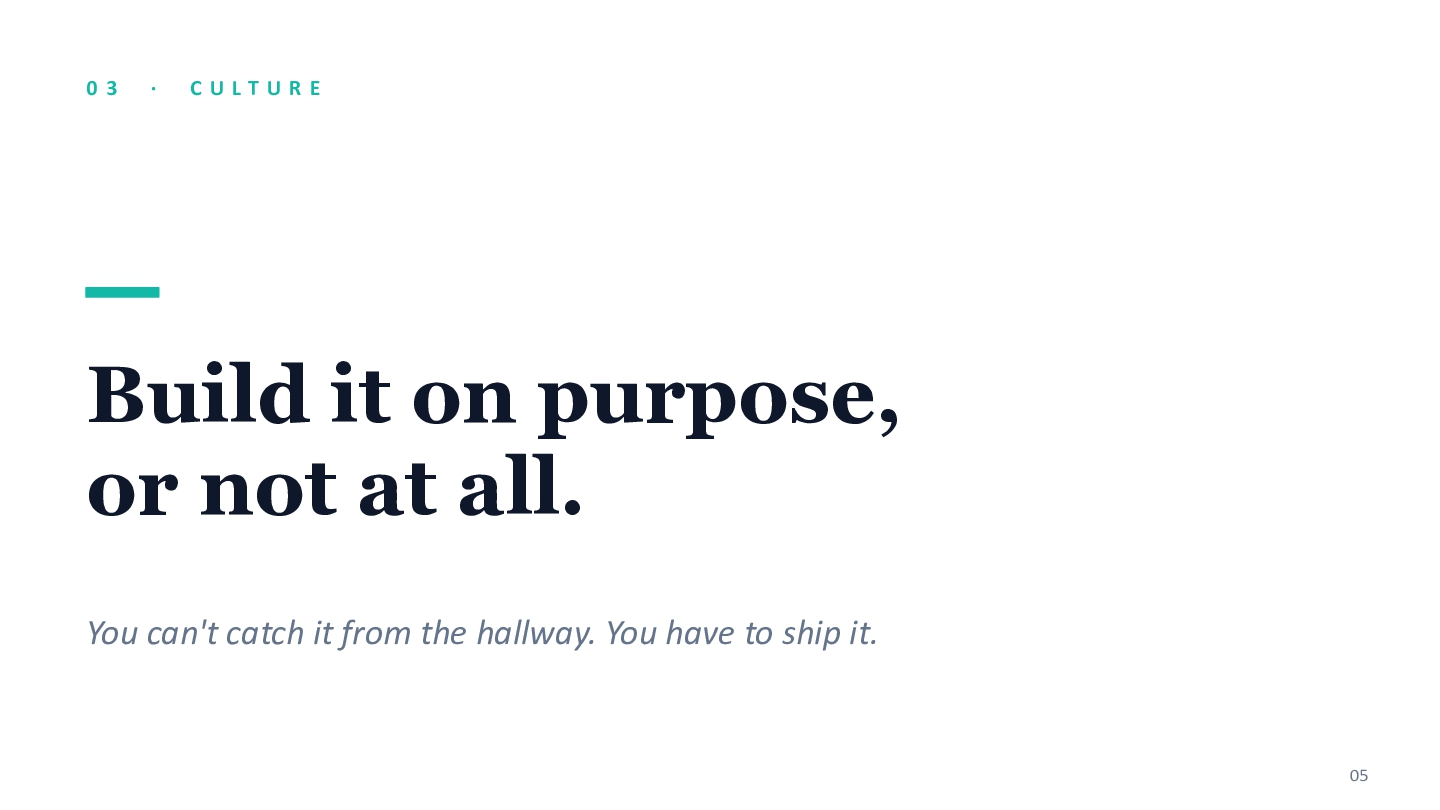
  5. 0 3 · C U L T U R E

    Build it on purpose, or not at all. You can't catch it from the hallway. You have to ship it.
    TAKE: In an office, culture happens by accident because you breathe the same air. Remote, accidents don't happen. You build it on purpose or you end up with freelancers who share a Slack. FLY EVERYONE OUT: Biggest ROI spend. Annual offsite with the whole team in one room. Mini-summits for single teams when a project needs it. And the anti-offsite: no agenda, just hanging out. Christmas party, camping trip. The rent you saved on office goes here. SLACK DISCIPLINE: - Everything has a URL. If it's not findable later, it didn't happen. - Assume no malice. 'ok' doesn't mean they're mad. - Decisions in DMs are cultural poison. Move them to channels. CONNECTION GRAPH: Office = everyone knows everyone somewhat. Remote defaults to 'I only know the 3 people I work with directly'. Rituals, kudos, #random channels, games. Manufacture the non-work chatter or the graph stays sparse. STORY TO TELL: Use a specific offsite or Christmas party moment. What it unlocked.
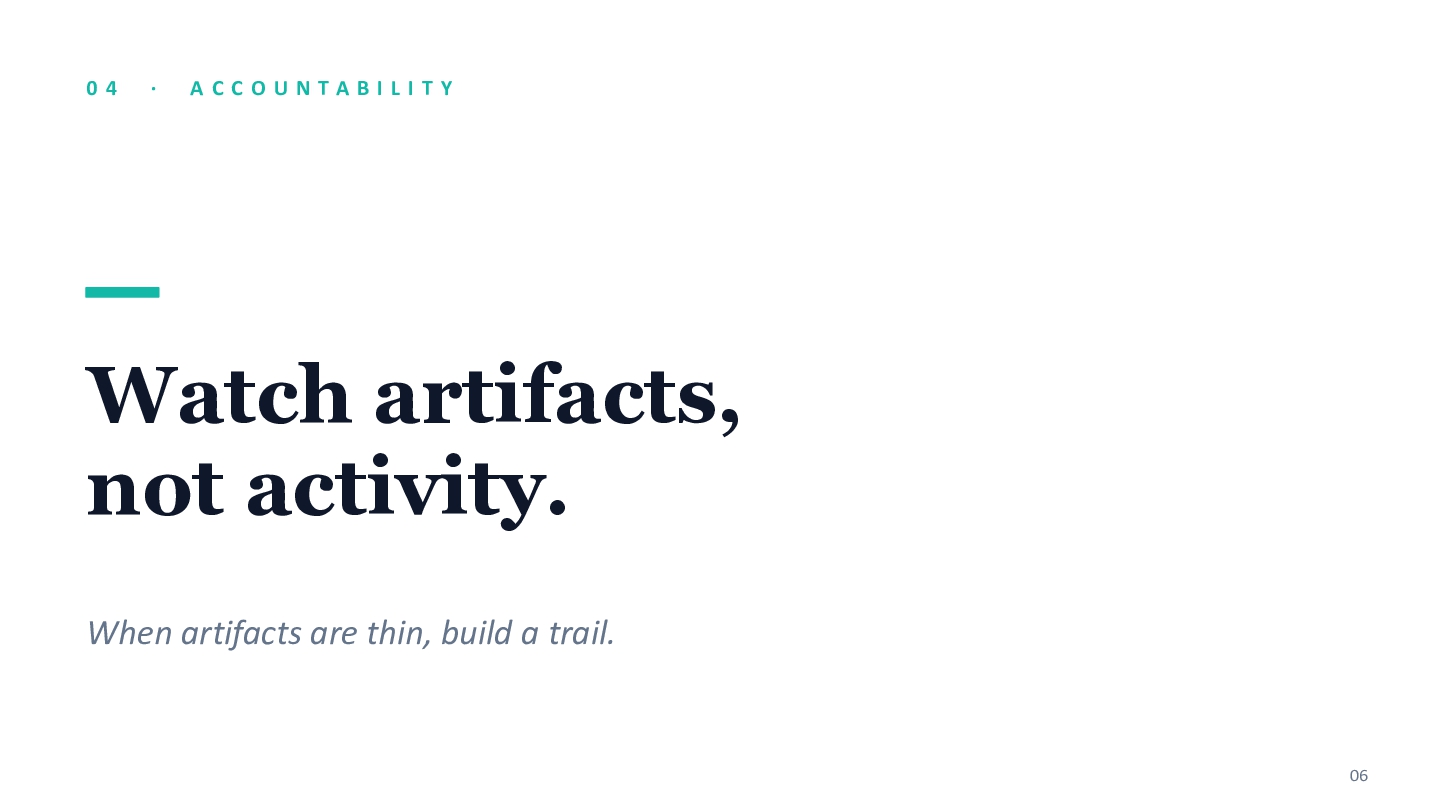
  6. 0 4 · A C C O U N T

    A B I L I T Y Watch artifacts, not activity. When artifacts are thin, build a trail.
    TAKE: New remote managers panic: 'how do I know they're working?' Wrong question. Right question: 'is the work shipping?' If yes, leave them alone. If no, dig in. CODE IS EASY: PRs, commits, closed tickets. The work is the evidence. I'm in the code too, so it's not abstract. BOOKS ARE HARD (Paul's story): Paul had to put a reviewer in place to make sure books were actually getting done. Not a trust problem. The work didn't generate its own checkpoints, so he had to build them. LESSON: When the artifact trail is thin, you have to build the trail yourself. Weekly written update. Defined 'done' before the work starts. Leading indicators, not just lagging. TIME ZONES: Pick core overlap hours. Rotate the pain of off-hours calls. Document so nobody blocks on a sunrise. ADDRESS EARLY: Remote hides slippage longer than in-office. Someone's checked out for a month before you notice. Weekly 1:1 is your tripwire.
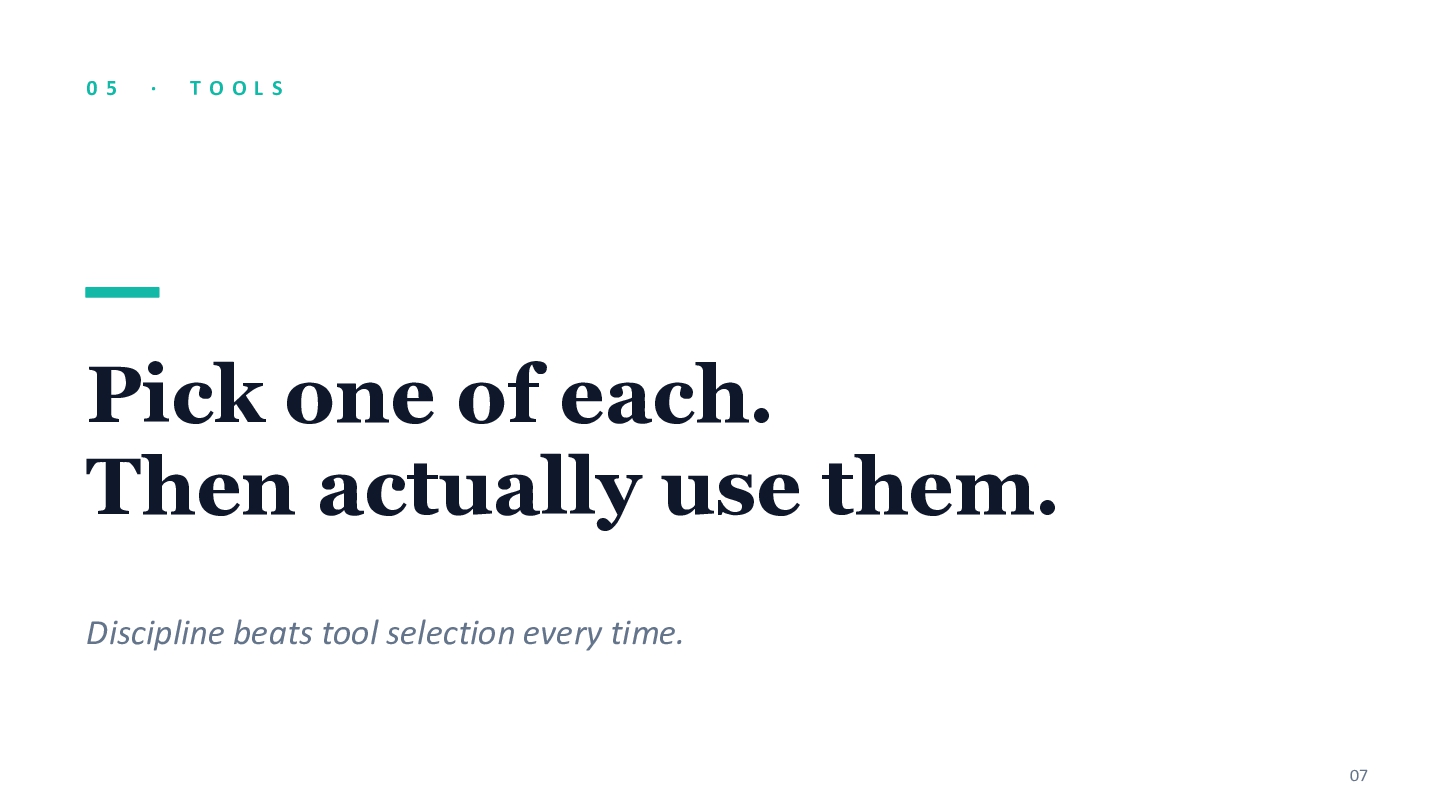
  7. 0 5 · T O O L S Pick one

    of each. Then actually use them. Discipline beats tool selection every time.
    TAKE: People spend too much time picking tools and not enough using them well. Pick one of each, draw a line under it, enforce it. THE STACK: - Chat: Slack or Teams. Pick one. Information asymmetry kills teams. - Video: Zoom, Meet. For what text can't do: conflict, brainstorm, relationship. - Pairing: Tuple for devs. Live Share in-editor. - Source + review: GitHub or GitLab. - Docs + wiki: Notion, Confluence, or internal tool. This is where teams die or thrive. - Recognition: Matter, Bonusly, or a kudos channel. Public praise. Feedback Friday. MY EXPERIENCE: I built Box Out Brain because off-the-shelf wasn't working. Find what sticks for your team, then religiously put decisions in it. RECOGNITION IS THE MOST SKIPPED: costs almost nothing, lands immediately.
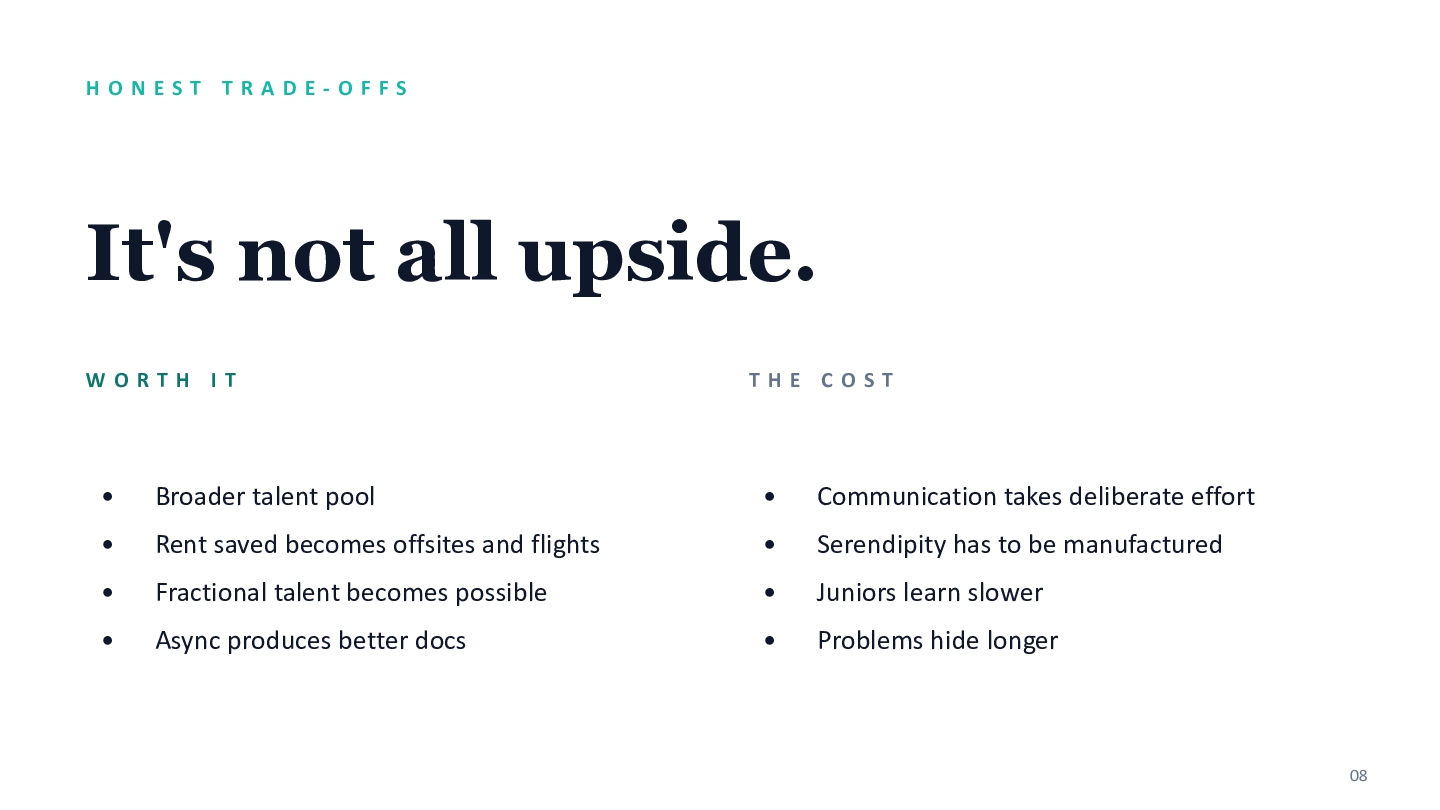
  8. H O N E S T T R A D

    E - O F F S It's not all upside. W O R T H I T • Broader talent pool • Rent saved becomes offsites and flights • Fractional talent becomes possible • Async produces better docs T H E C O S T • Communication takes deliberate effort • Serendipity has to be manufactured • Juniors learn slower • Problems hide longer
    Both of us do remote by choice. But we'd be lying if we said it's all upside. PROS that hit for me personally: - Talent: I'm in South Bend. I couldn't hire the people I hire if they had to be here. - Reinvestment: Rent becomes flights, swag, offsites. - Fractional: Some of my best collaborators are 5-20 hours a week. Office doesn't allow that. CONS that hit for me: - Communication tax: every interaction costs effort. 'Walk to the desk' becomes 'compose a message'. - Serendipity: hallway conversations are gone. I miss it. Fake it with rituals and in-person bursts. - Juniors: honest one. Early-career people learn faster in a room with mentors. Be deliberate if you hire them. - Hidden problems: remote hides slippage. BEAT: 'If you're not willing to pay the communication tax, remote isn't for you. Don't force it.'
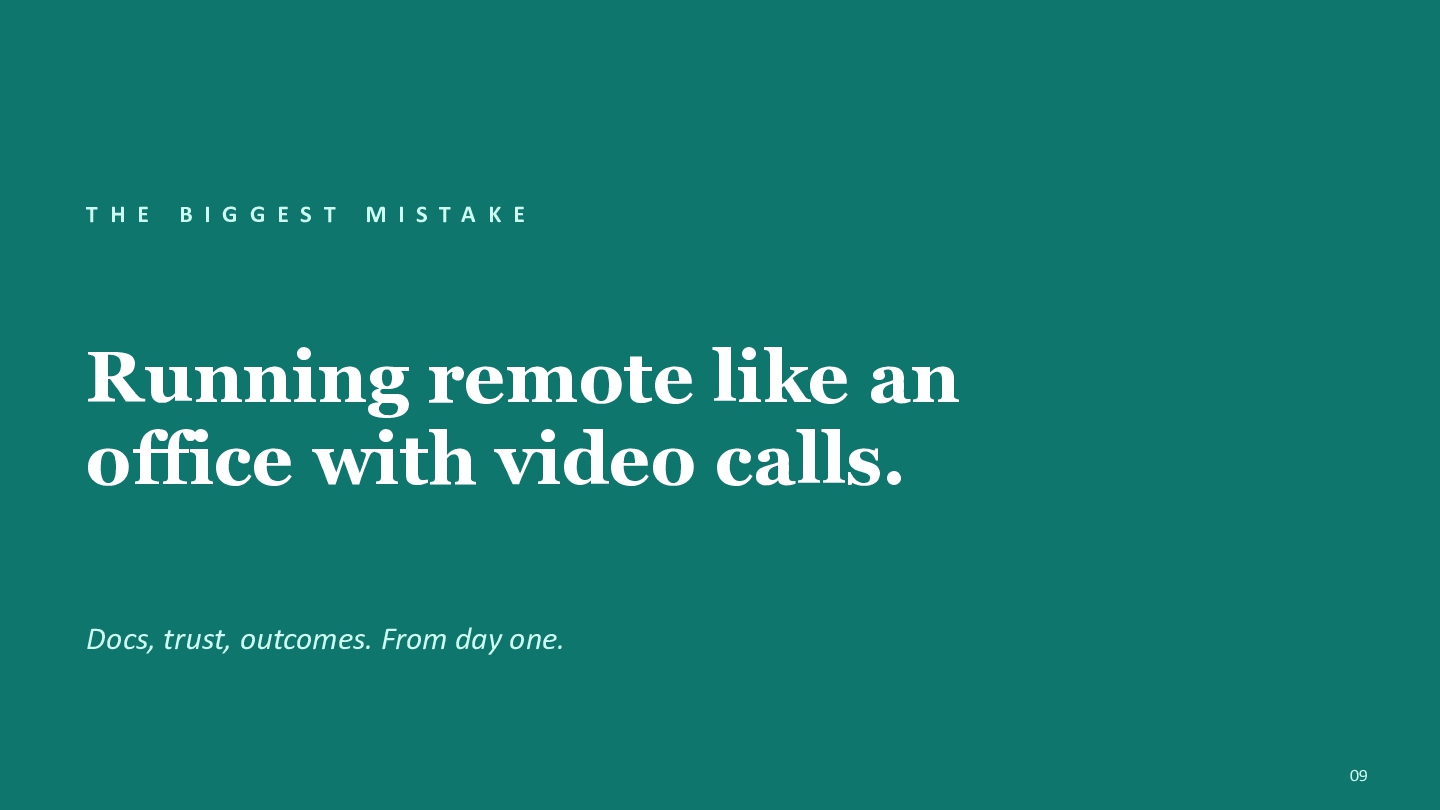
  9. T H E B I G G E S T

    M I S T A K E Running remote like an office with video calls. Docs, trust, outcomes. From day one.
    CLOSE: Take one thing home. Remote-first isn't 'office, but on Zoom'. Different operating model. Documentation, trust, outcomes. Rewire the whole thing. Try to run it like a regular company with video swapped in? You'll be frustrated and your team will be miserable. Q&A. Backup questions if the room is quiet: - Has anyone tried remote-first and pulled back? - What's the hardest part for the operators in the room? - Employees: what's making remote work or not work for you?