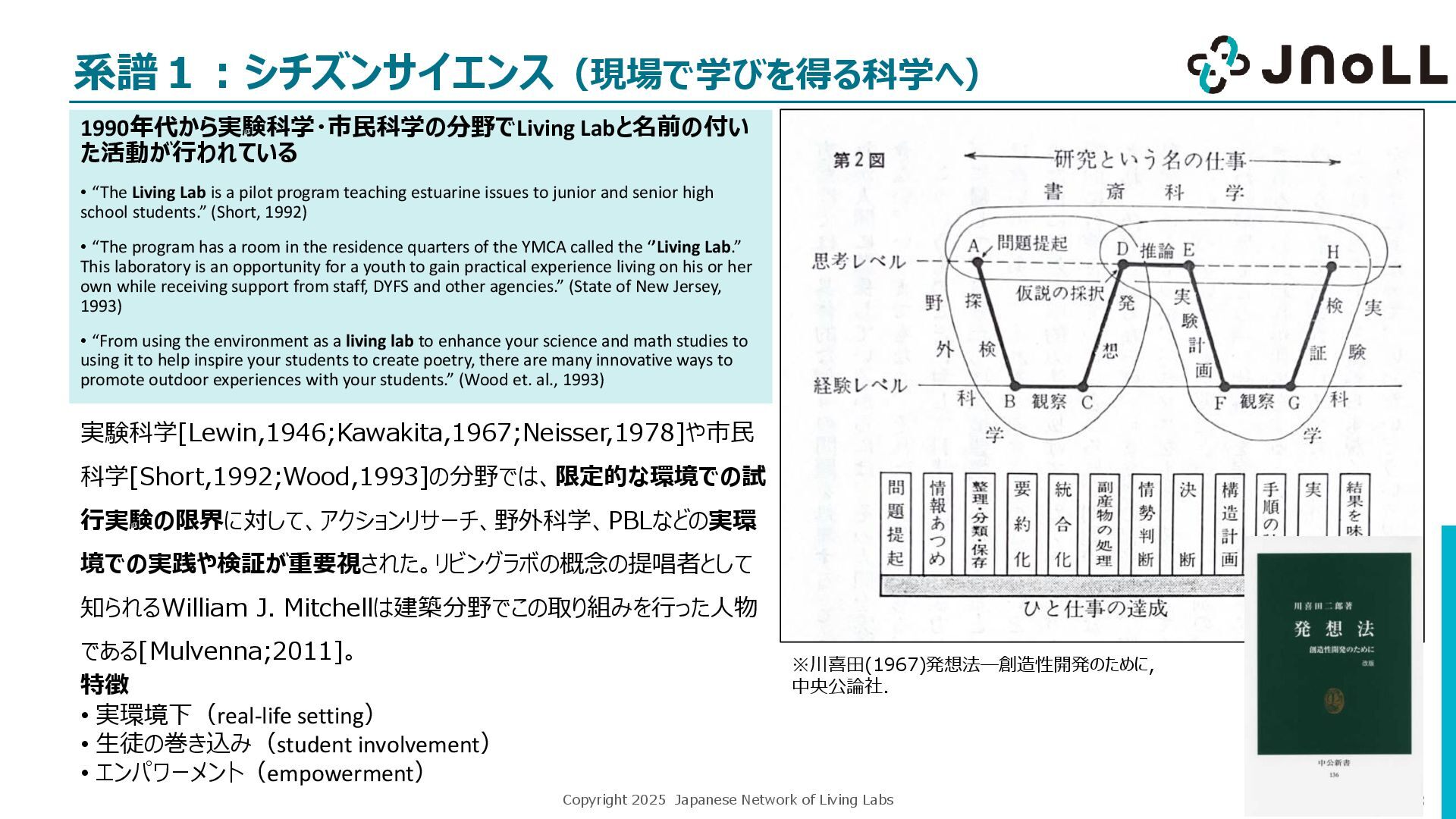
中央公論社. 1990年代から実験科学・市民科学の分野でLiving Labと名前の付い た活動が行われている • “The Living Lab is a pilot program teaching estuarine issues to junior and senior high school students.” (Short, 1992) • “The program has a room in the residence quarters of the YMCA called the ‘’Living Lab.” This laboratory is an opportunity for a youth to gain practical experience living on his or her own while receiving support from staff, DYFS and other agencies.” (State of New Jersey, 1993) • “From using the environment as a living lab to enhance your science and math studies to using it to help inspire your students to create poetry, there are many innovative ways to promote outdoor experiences with your students.” (Wood et. al., 1993) 実験科学[Lewin,1946;Kawakita,1967;Neisser,1978]や市民 科学[Short,1992;Wood,1993]の分野では、限定的な環境での試 行実験の限界に対して、アクションリサーチ、野外科学、PBLなどの実環 境での実践や検証が重要視された。リビングラボの概念の提唱者として 知られるWilliam J. Mitchellは建築分野でこの取り組みを行った人物 である[Mulvenna;2011]。 特徴 • 実環境下(real-life setting) • 生徒の巻き込み(student involvement) • エンパワーメント(empowerment)
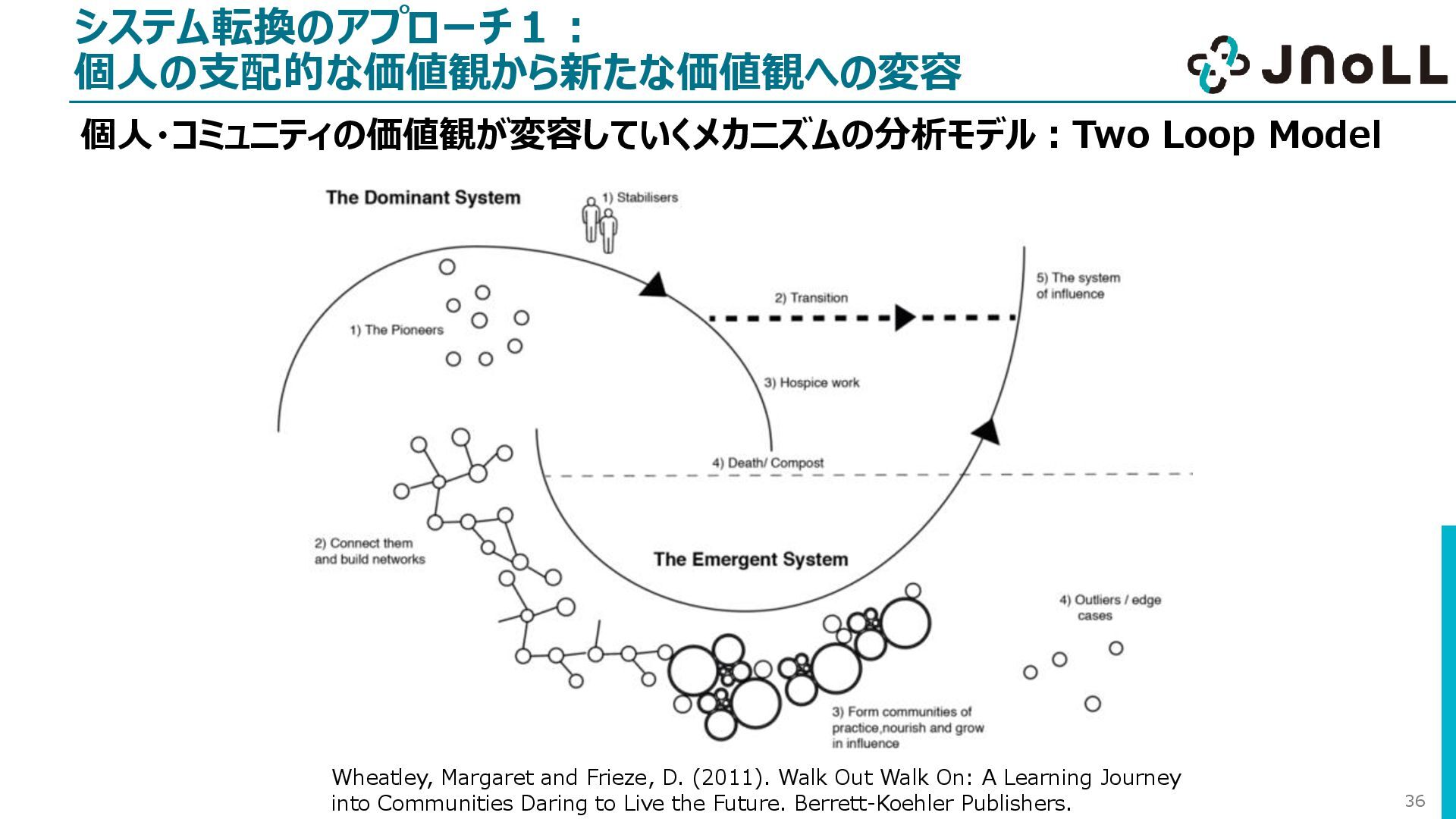
個人・コミュニティの価値観が変容していくメカニズムの分析モデル:Two Loop Model Wheatley, Margaret and Frieze, D. (2011). Walk Out Walk On: A Learning Journey into Communities Daring to Live the Future. Berrett-Koehler Publishers.
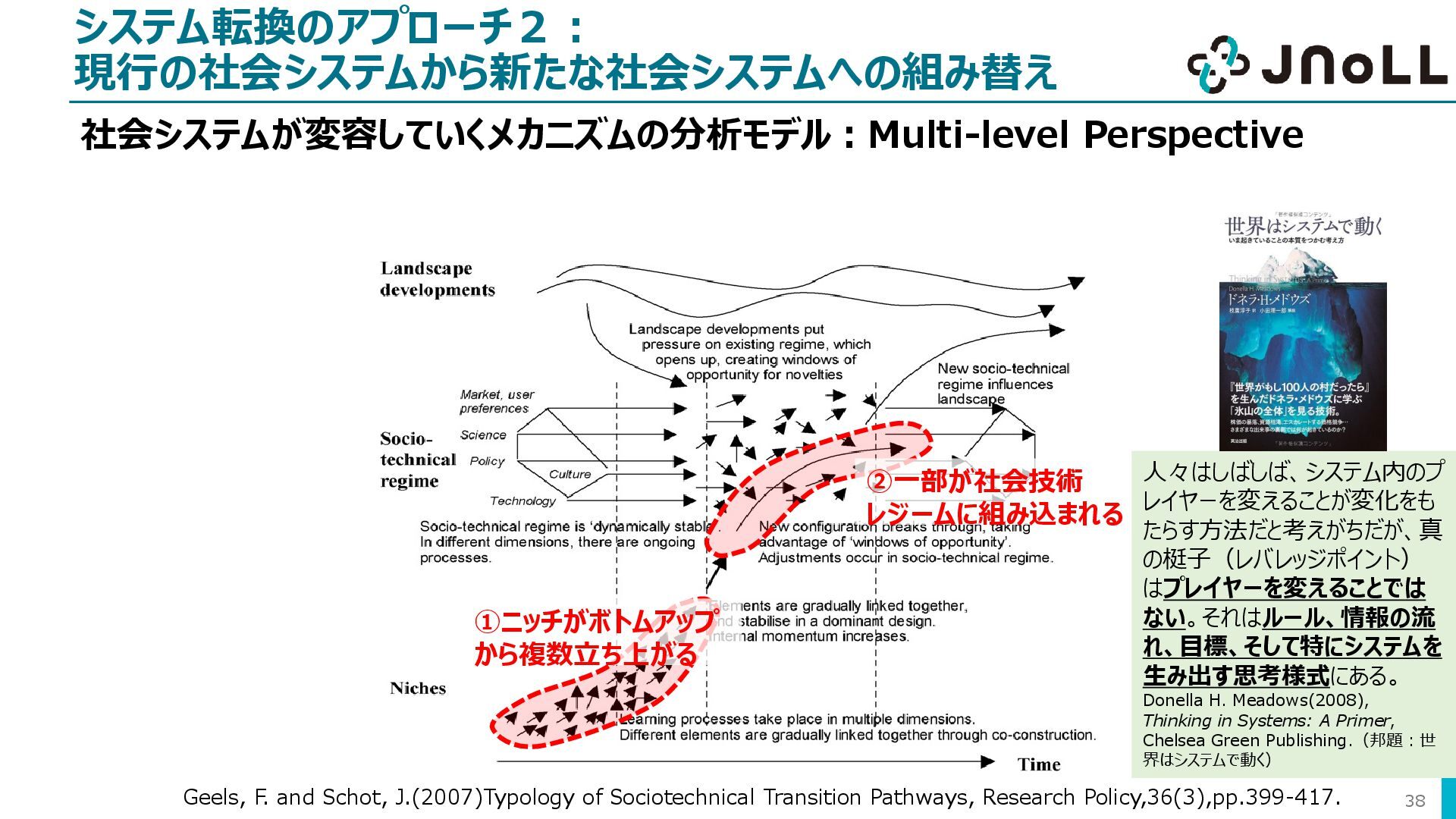
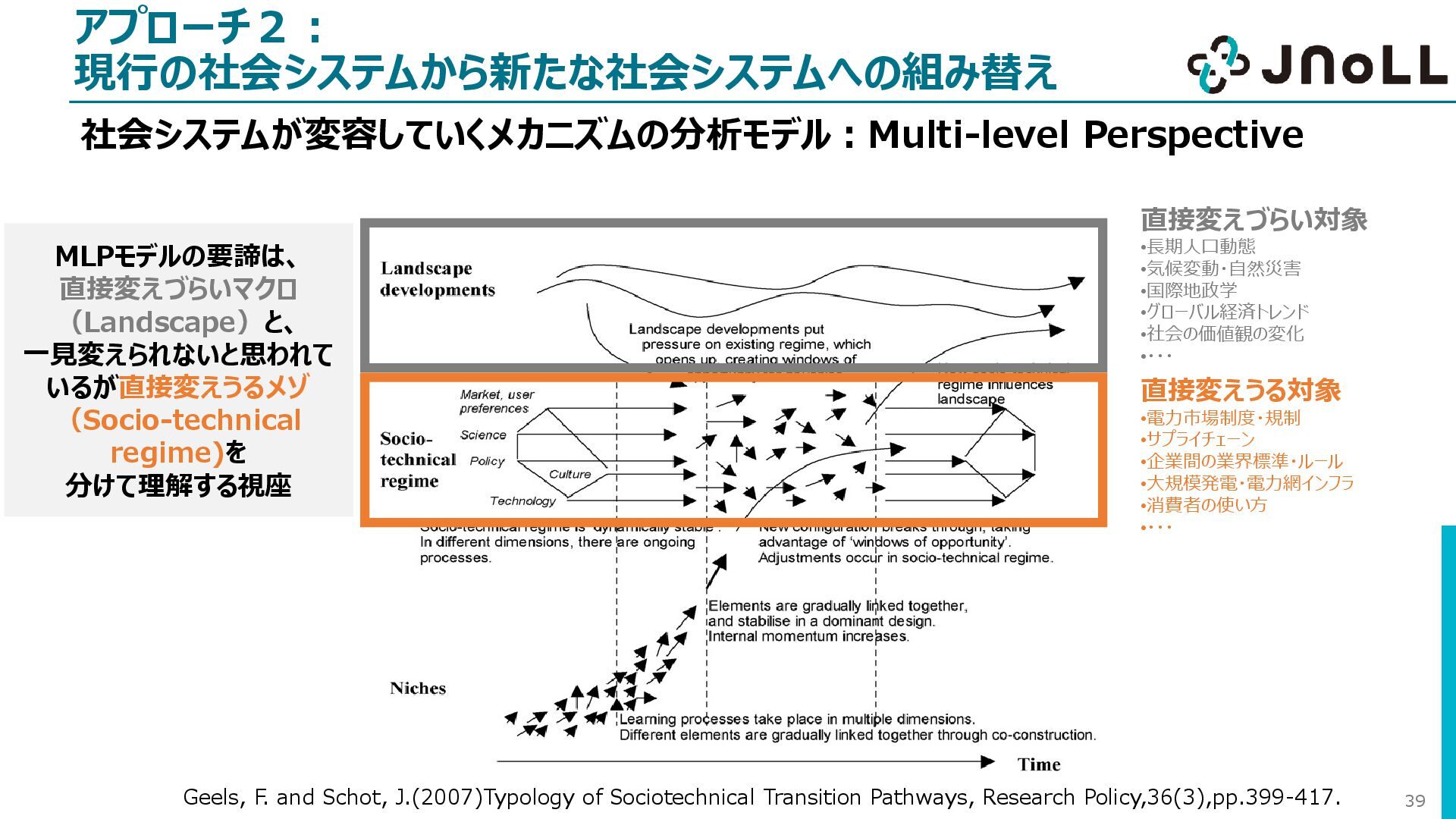
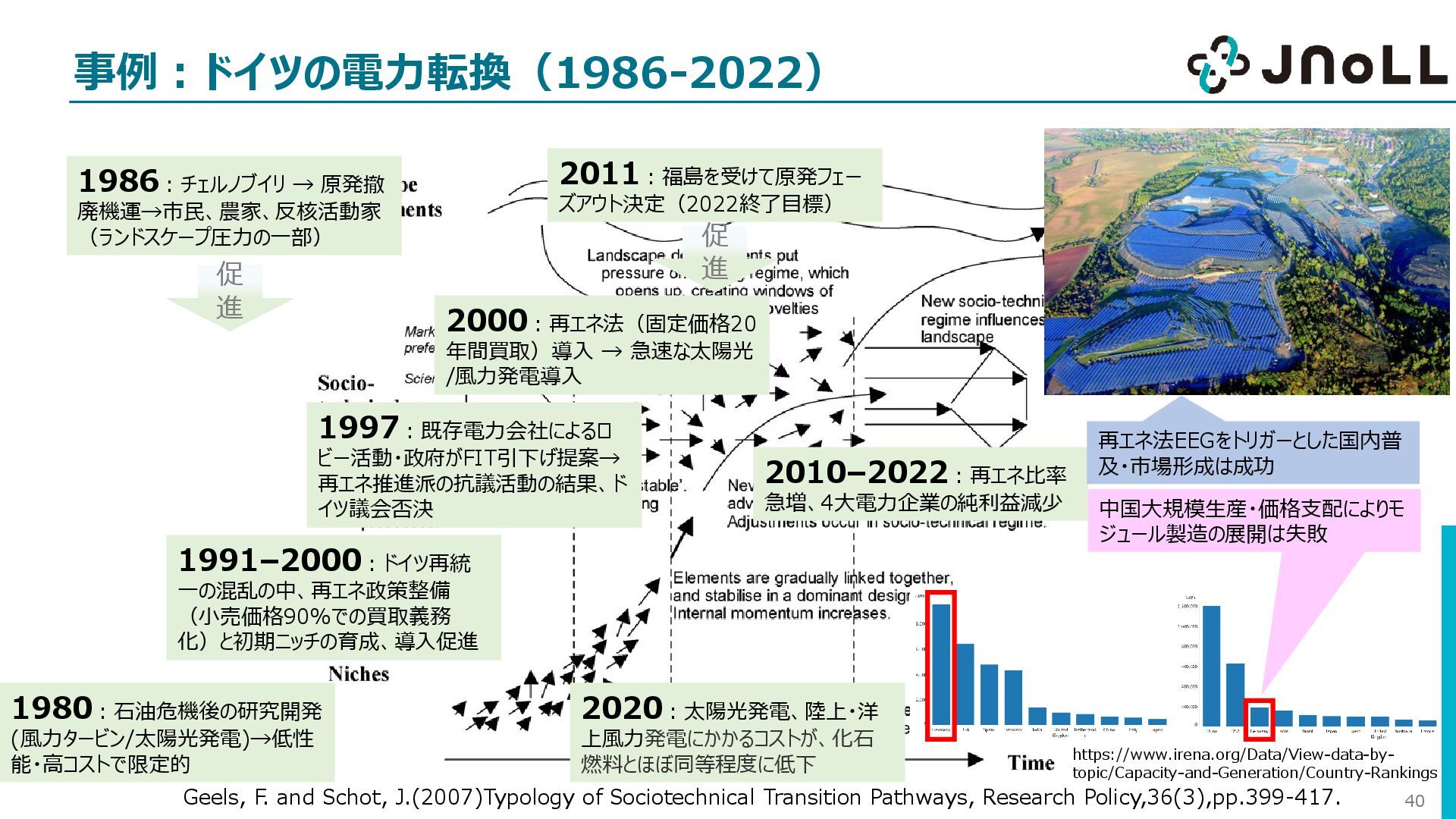
社会システムが変容していくメカニズムの分析モデル:Multi-level Perspective ①ニッチがボトムアップ から複数立ち上がる ②一部が社会技術 レジームに組み込まれる Geels, F. and Schot, J.(2007)Typology of Sociotechnical Transition Pathways, Research Policy,36(3),pp.399-417. 人々はしばしば、システム内のプ レイヤーを変えることが変化をも たらす方法だと考えがちだが、真 の梃子(レバレッジポイント) はプレイヤーを変えることでは ない。それはルール、情報の流 れ、目標、そして特にシステムを 生み出す思考様式にある。 Donella H. Meadows(2008), Thinking in Systems: A Primer, Chelsea Green Publishing.(邦題:世 界はシステムで動く)


 a2k
a2k
 apolaine
 ishii_mit
 toy1618
 kgsi
kgsi
 findyinc
 uto
uto
 miyayou
 yusukeiyoda
 harakeishi
 wjw100788
 katakai
 shemeetscity
 quramy
 garrettdimon
 chikuwait
 tmiket
 samanthasiow
 joshbly
 inesmontani
 matthewcrist
 productmarketing
 marcoroth
 bluesmoon
 rkaga
rkaga