the recording and slide deck with all registrants • Please leave your questions in the Q&A box, we’ll answer them after the presentation • To get in touch, write to us at [email protected] before we begin...
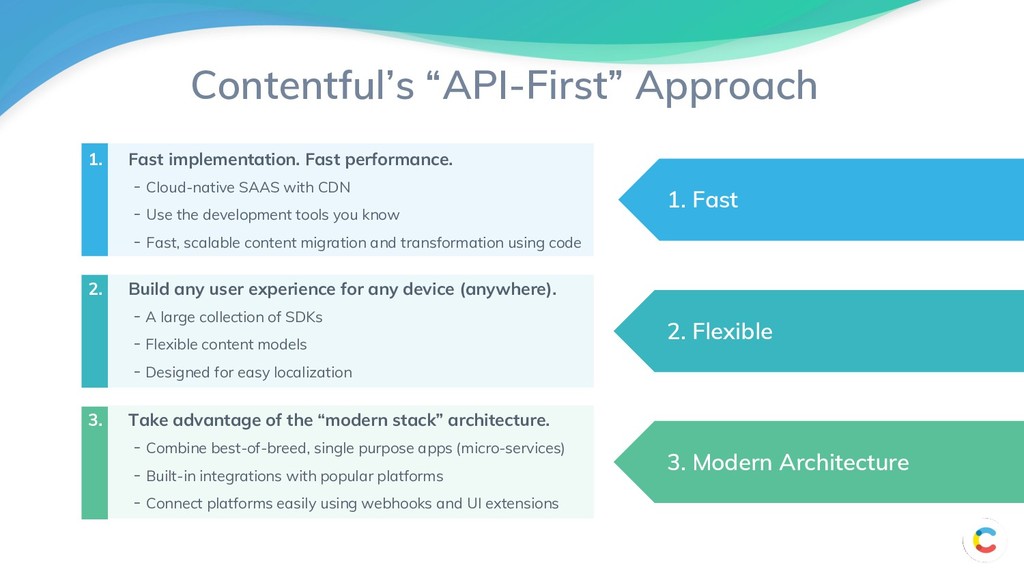
1. Fast implementation. Fast performance. - Cloud-native SAAS with CDN - Use the development tools you know - Fast, scalable content migration and transformation using code 2. Build any user experience for any device (anywhere). ‐ A large collection of SDKs ‐ Flexible content models ‐ Designed for easy localization 3. Take advantage of the “modern stack” architecture. - Combine best-of-breed, single purpose apps (micro-services) - Built-in integrations with popular platforms - Connect platforms easily using webhooks and UI extensions
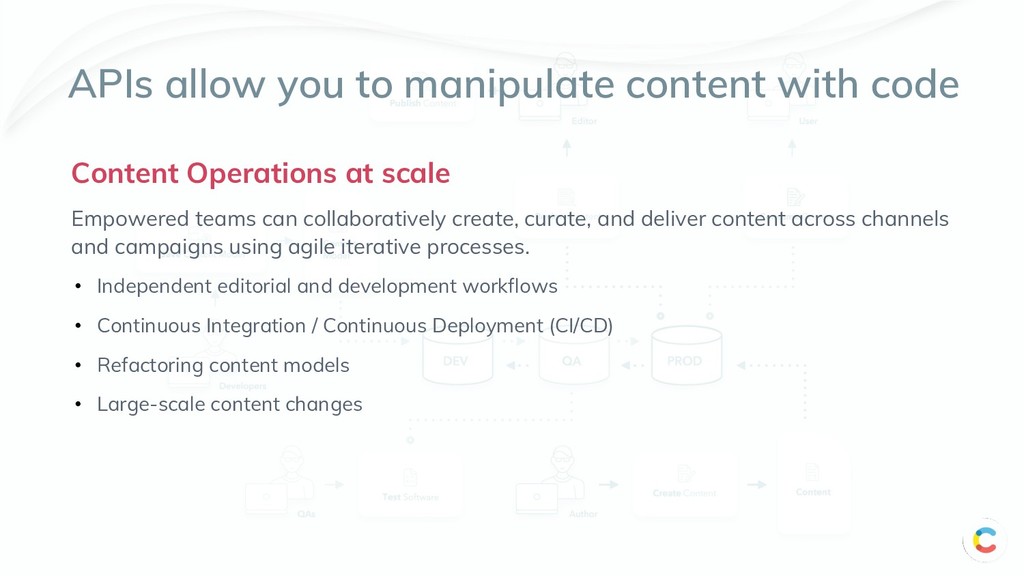
at scale Empowered teams can collaboratively create, curate, and deliver content across channels and campaigns using agile iterative processes. • Independent editorial and development workflows • Continuous Integration / Continuous Deployment (CI/CD) • Refactoring content models • Large-scale content changes
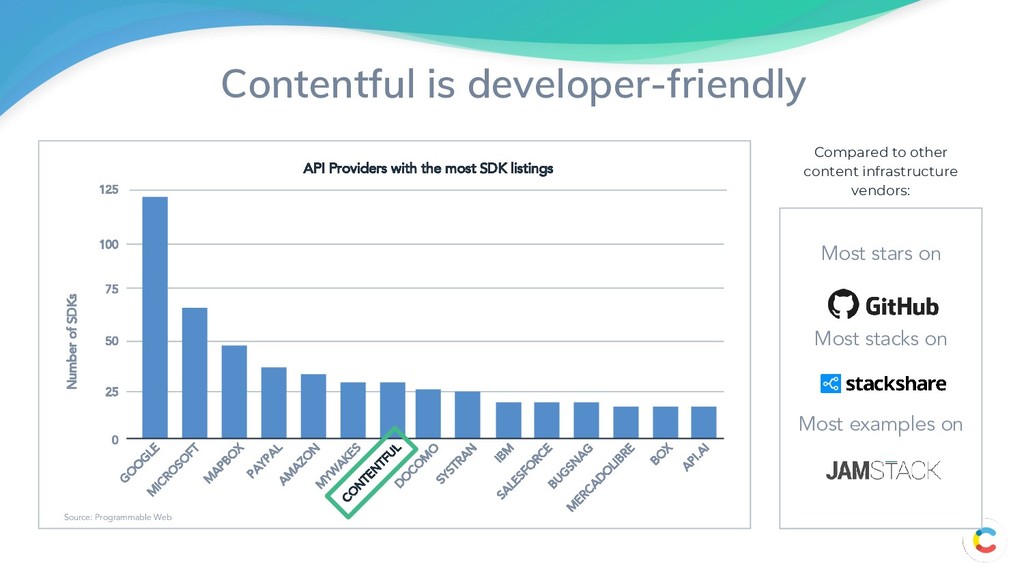
Most stacks on Most examples on Compared to other content infrastructure vendors: API Providers with the most SDK listings 125 100 75 50 25 0 Number of SDKs G O O G LE M ICRO SO FT M APBO X PAYPAL AM AZO N M YW AKES D O CO M O SYSTRAN IBM SALESFO RCE BUG SN AG M ERCAD O LIBRE BO X API.AI Source: Programmable Web
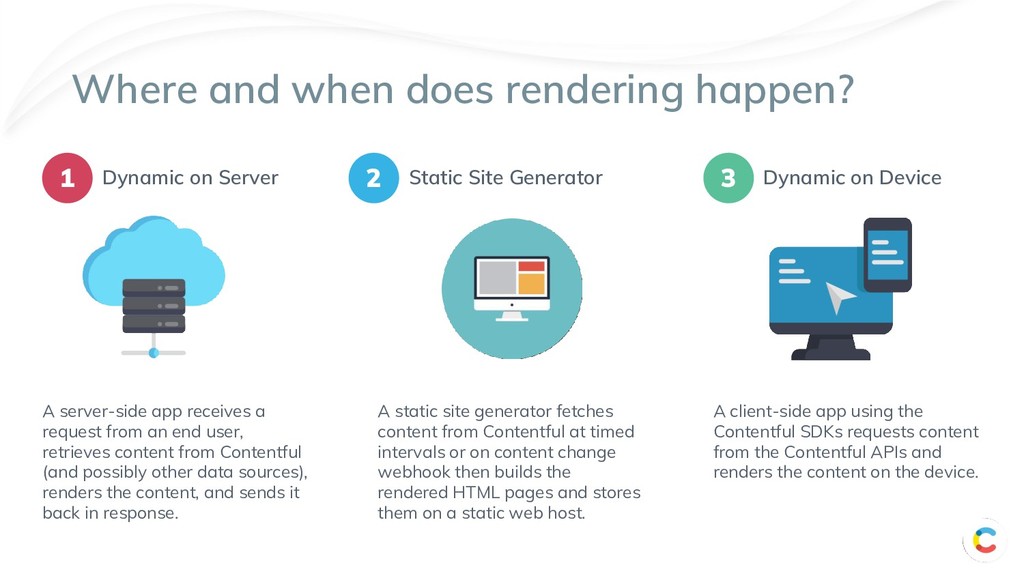
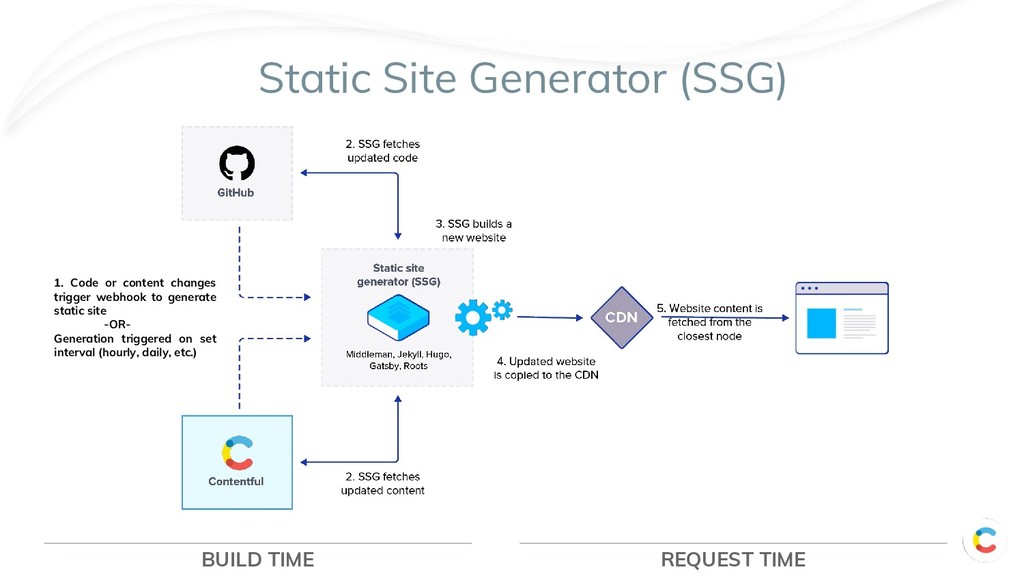
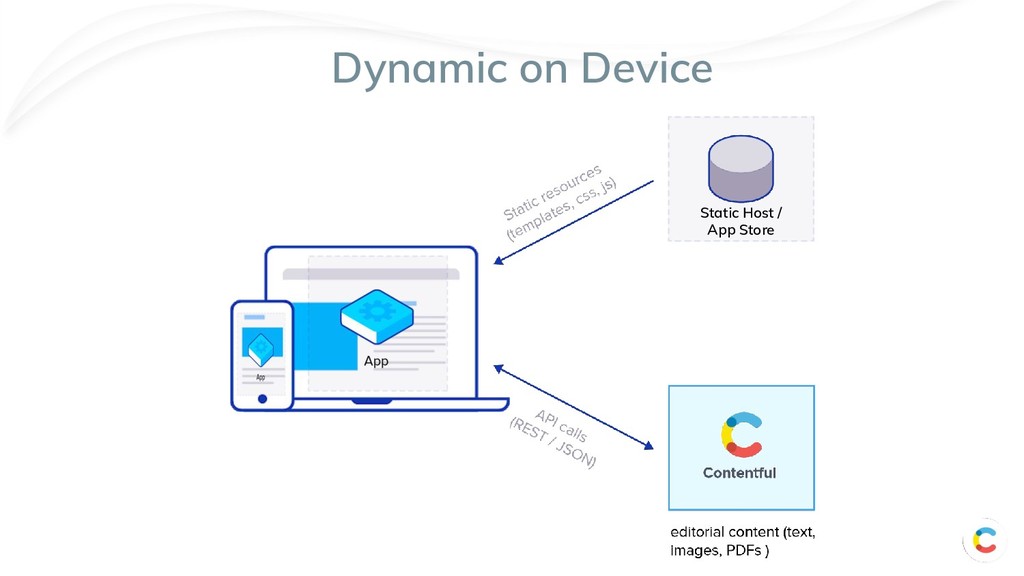
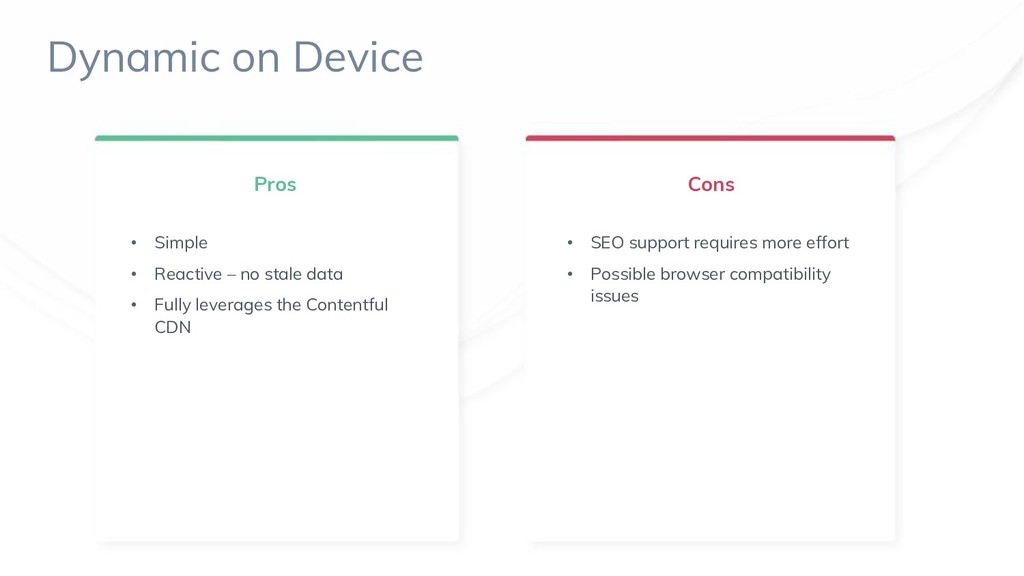
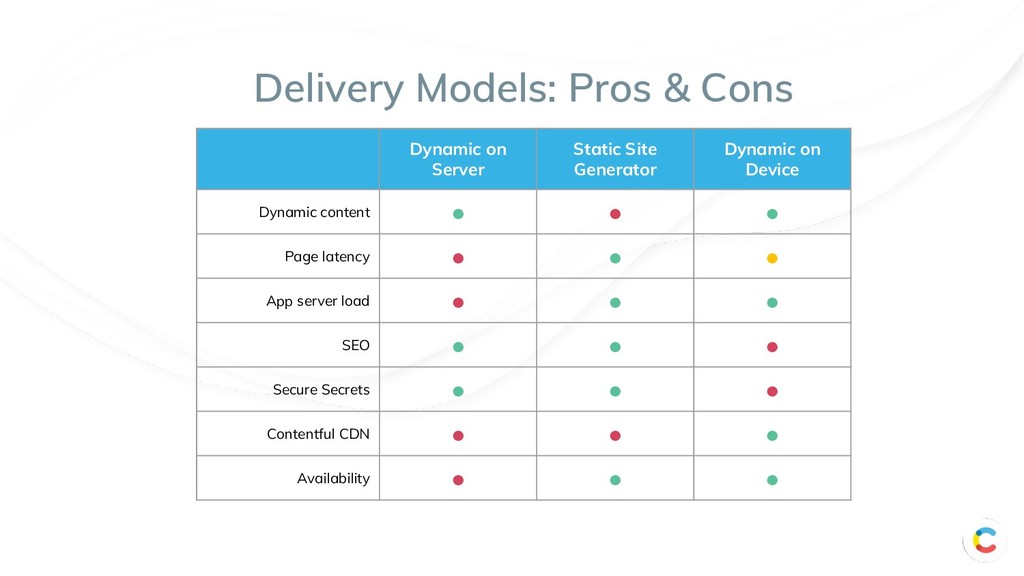
on Server Static Site Generator Dynamic on Device A client-side app using the Contentful SDKs requests content from the Contentful APIs and renders the content on the device. A server-side app receives a request from an end user, retrieves content from Contentful (and possibly other data sources), renders the content, and sends it back in response. A static site generator fetches content from Contentful at timed intervals or on content change webhook then builds the rendered HTML pages and stores them on a static web host.
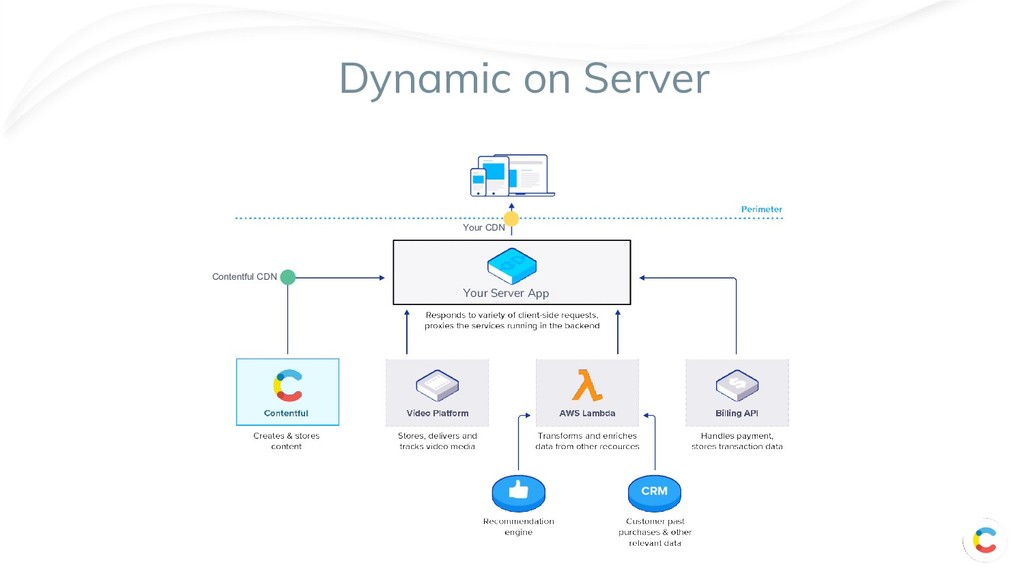
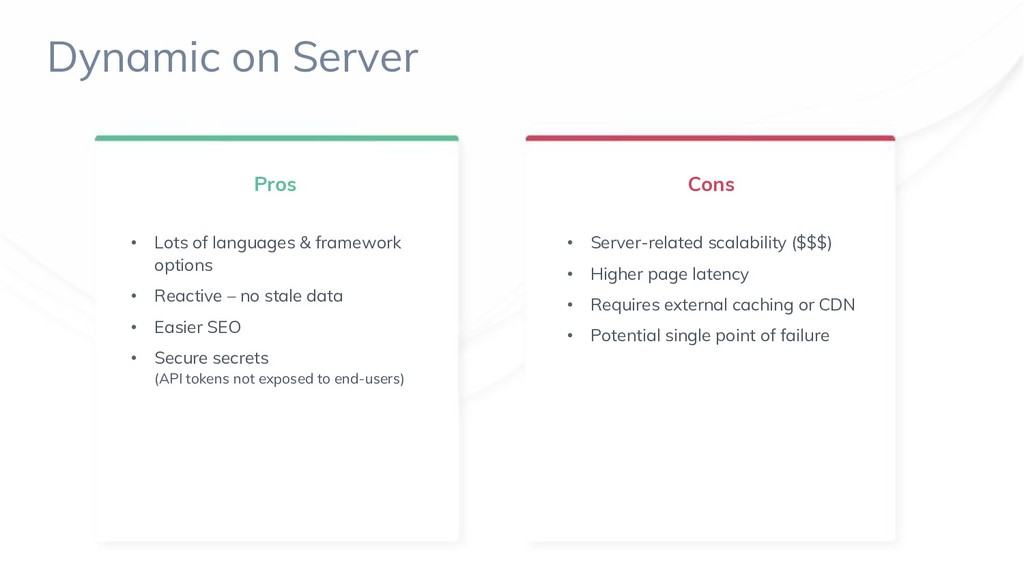
– no stale data • Easier SEO • Secure secrets (API tokens not exposed to end-users) Cons • Server-related scalability ($$$) • Higher page latency • Requires external caching or CDN • Potential single point of failure Dynamic on Server
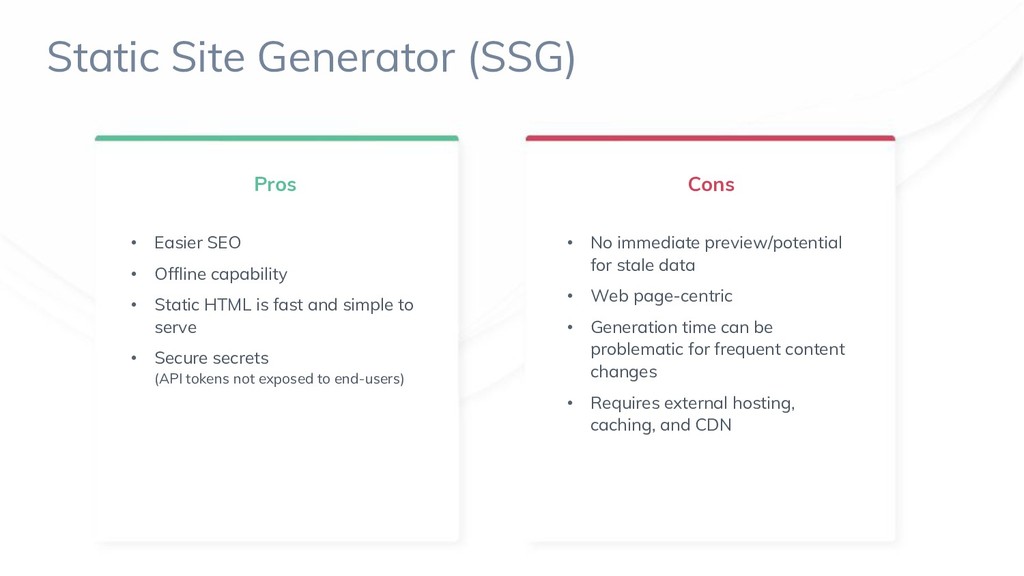
is fast and simple to serve • Secure secrets (API tokens not exposed to end-users) Cons • No immediate preview/potential for stale data • Web page-centric • Generation time can be problematic for frequent content changes • Requires external hosting, caching, and CDN Static Site Generator (SSG)
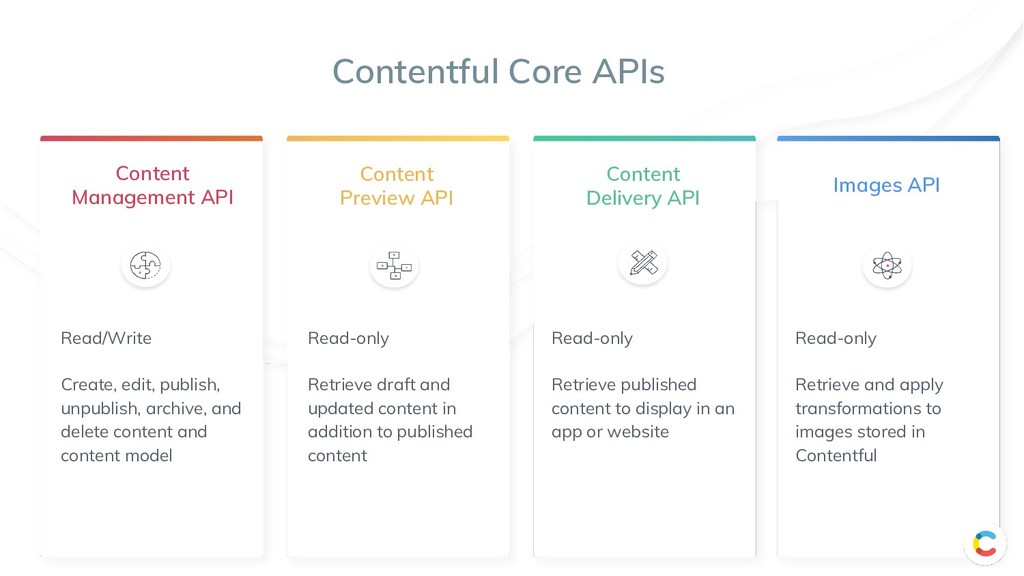
delete content and content model Content Preview API Read-only Retrieve draft and updated content in addition to published content Content Delivery API Read-only Retrieve published content to display in an app or website Images API Read-only Retrieve and apply transformations to images stored in Contentful Contentful Core APIs
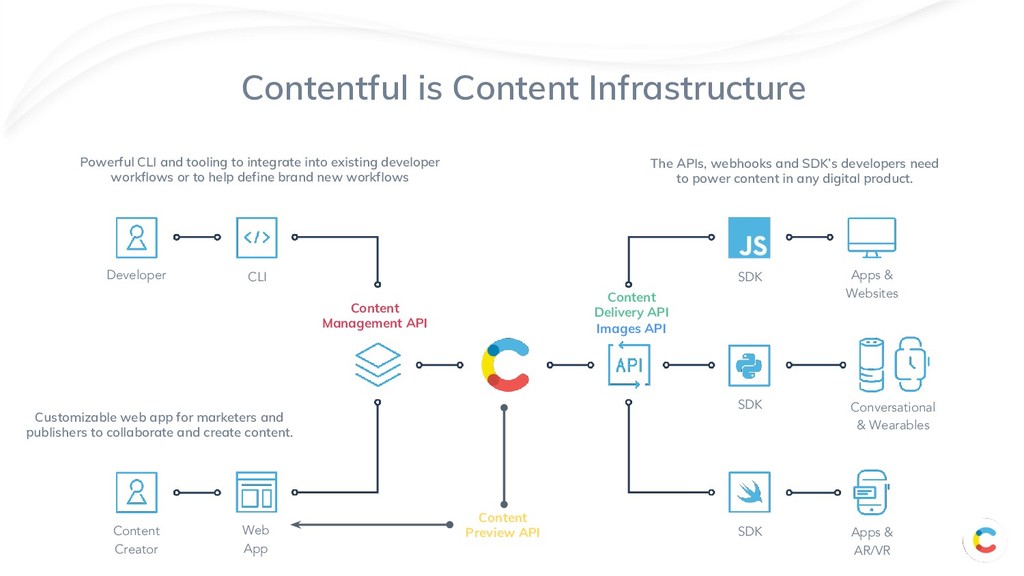
Web App Content Management API SDK SDK SDK Apps & Websites Conversational & Wearables Apps & AR/VR Powerful CLI and tooling to integrate into existing developer workflows or to help define brand new workflows The APIs, webhooks and SDK’s developers need to power content in any digital product. Content Preview API Customizable web app for marketers and publishers to collaborate and create content. Developer Images API
You can modify content programmatically and refactor the content model • Enables CI/CD – Allows you to easily move content between spaces using scripts • No CDN – Calls to this API are not cached, so you get and edit the most up-to-date content Content Management API
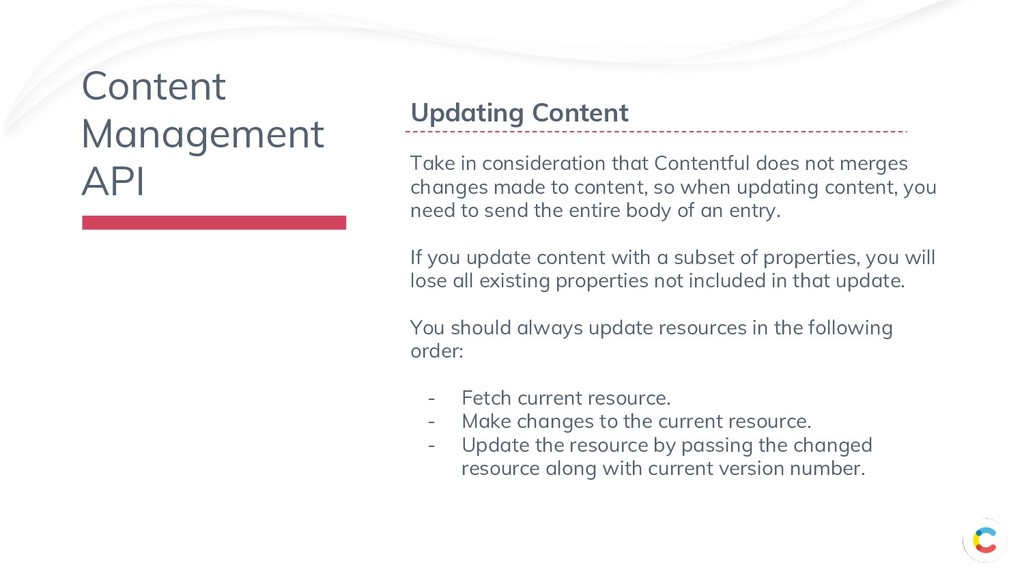
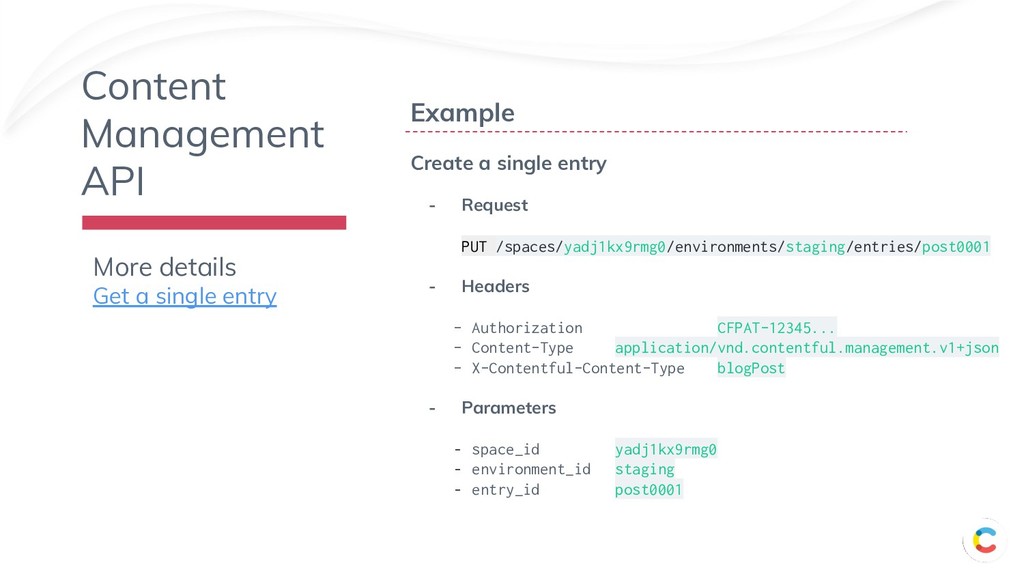
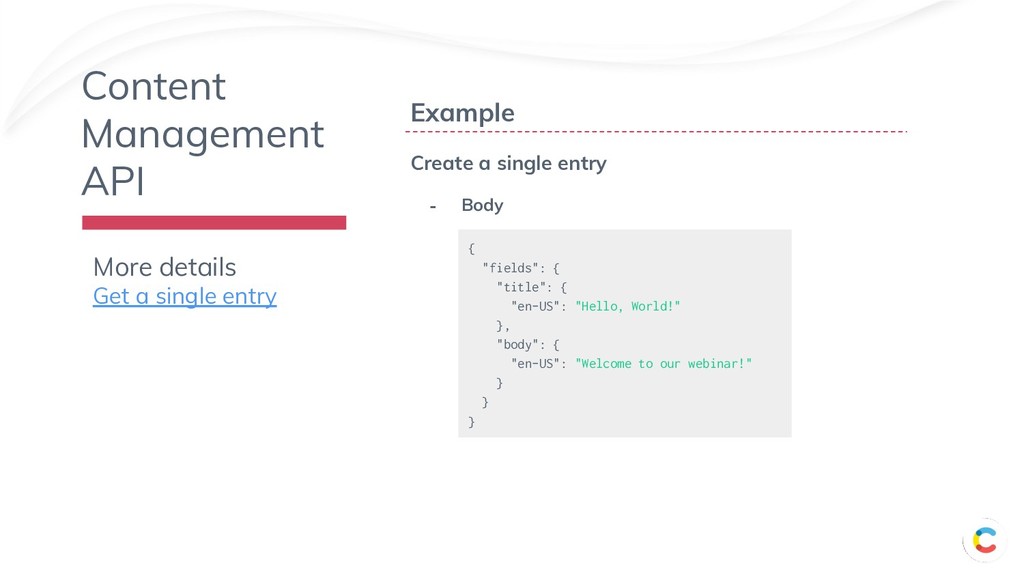
changes made to content, so when updating content, you need to send the entire body of an entry. If you update content with a subset of properties, you will lose all existing properties not included in that update. You should always update resources in the following order: - Fetch current resource. - Make changes to the current resource. - Update the resource by passing the changed resource along with current version number. Content Management API
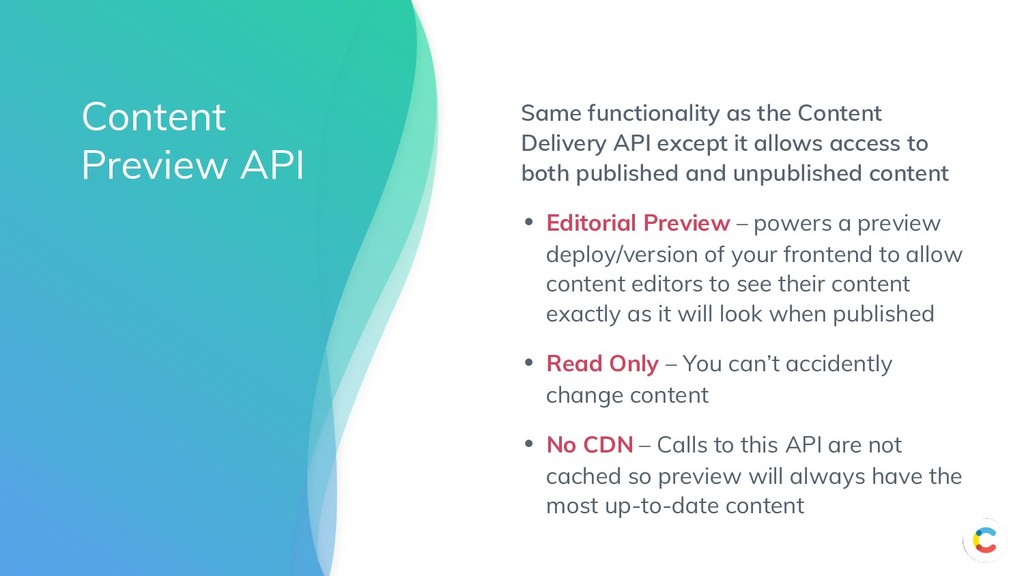
access to both published and unpublished content • Editorial Preview – powers a preview deploy/version of your frontend to allow content editors to see their content exactly as it will look when published • Read Only – You can’t accidently change content • No CDN – Calls to this API are not cached so preview will always have the most up-to-date content Content Preview API
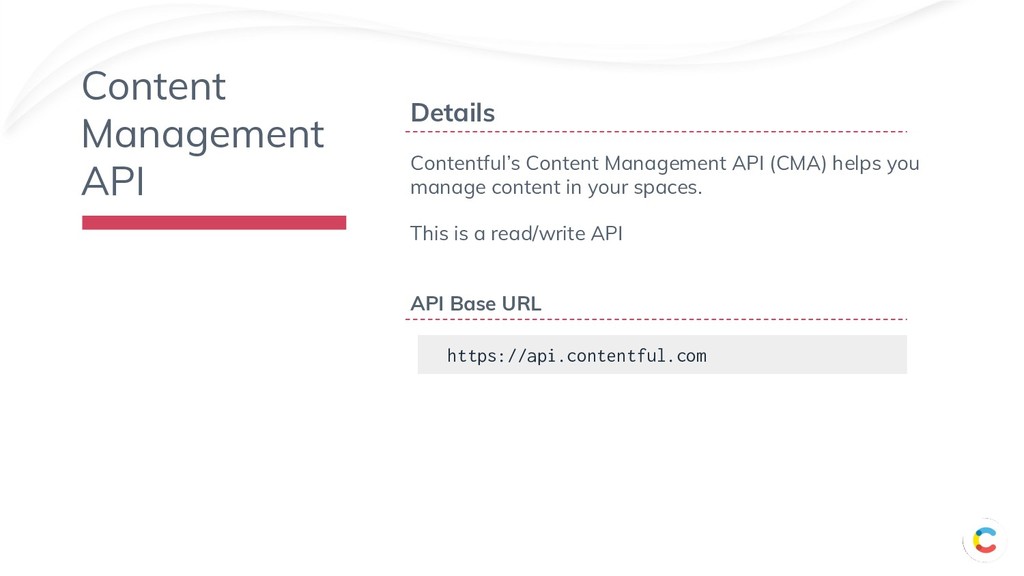
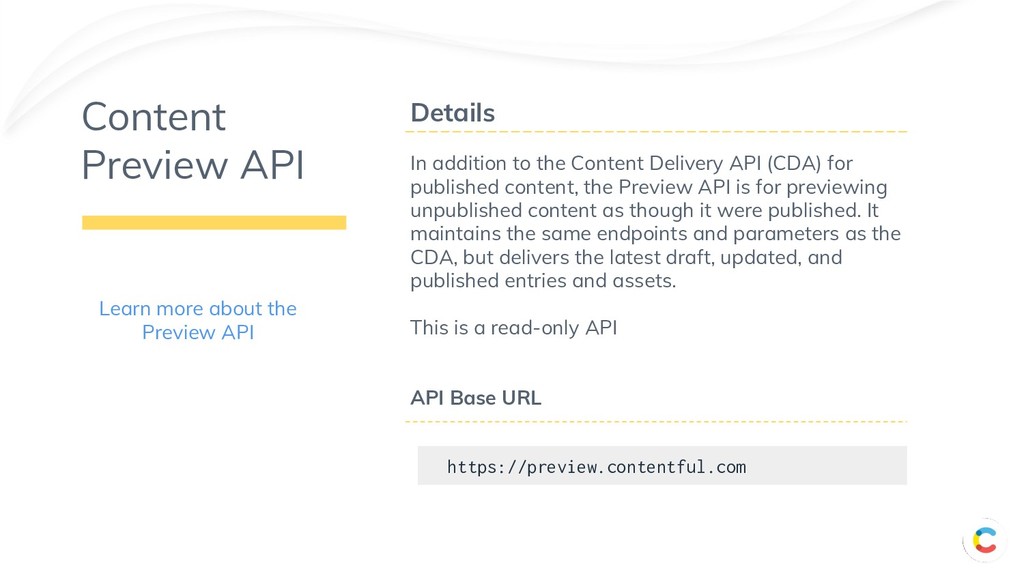
API (CDA) for published content, the Preview API is for previewing unpublished content as though it were published. It maintains the same endpoints and parameters as the CDA, but delivers the latest draft, updated, and published entries and assets. This is a read-only API API Base URL https://preview.contentful.com Learn more about the Preview API
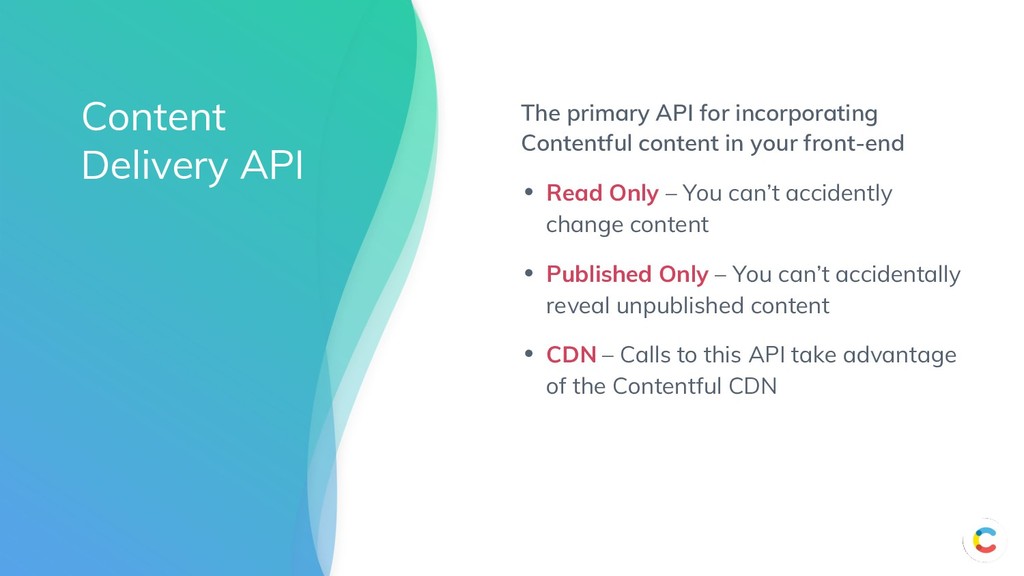
• Read Only – You can’t accidently change content • Published Only – You can’t accidentally reveal unpublished content • CDN – Calls to this API take advantage of the Contentful CDN Content Delivery API
highly scalable, read-only API for delivering content to apps, websites, and other channels. This API is available via a globally distributed content delivery network (CDN) API Base URL https://cdn.contentful.com Content Delivery API
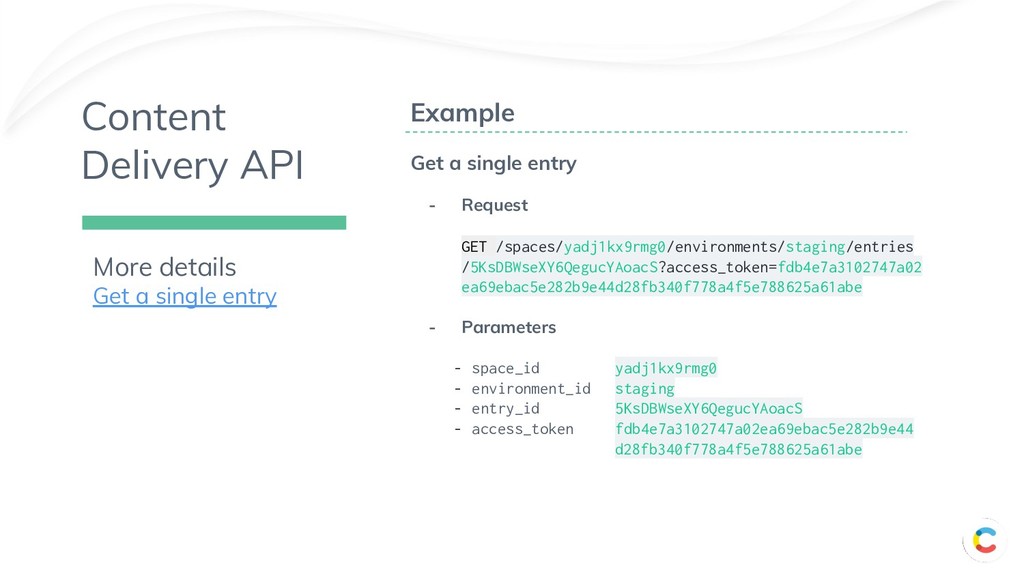
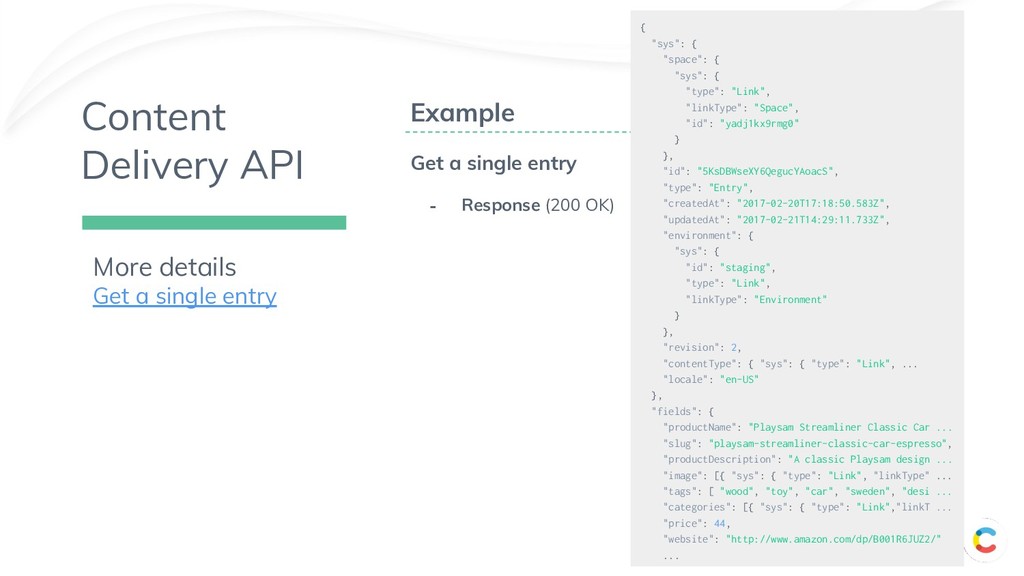
ea69ebac5e282b9e44d28fb340f778a4f5e788625a61abe - Parameters - space_id yadj1kx9rmg0 - environment_id staging - entry_id 5KsDBWseXY6QegucYAoacS - access_token fdb4e7a3102747a02ea69ebac5e282b9e44 d28fb340f778a4f5e788625a61abe Content Delivery API More details Get a single entry
Contentful and resize or transform it at delivery time to match the size & quality needed for the requesting device • Read Only – You can’t accidently change content • CDN – Calls to this API take advantage of the Contentful CDN Images API
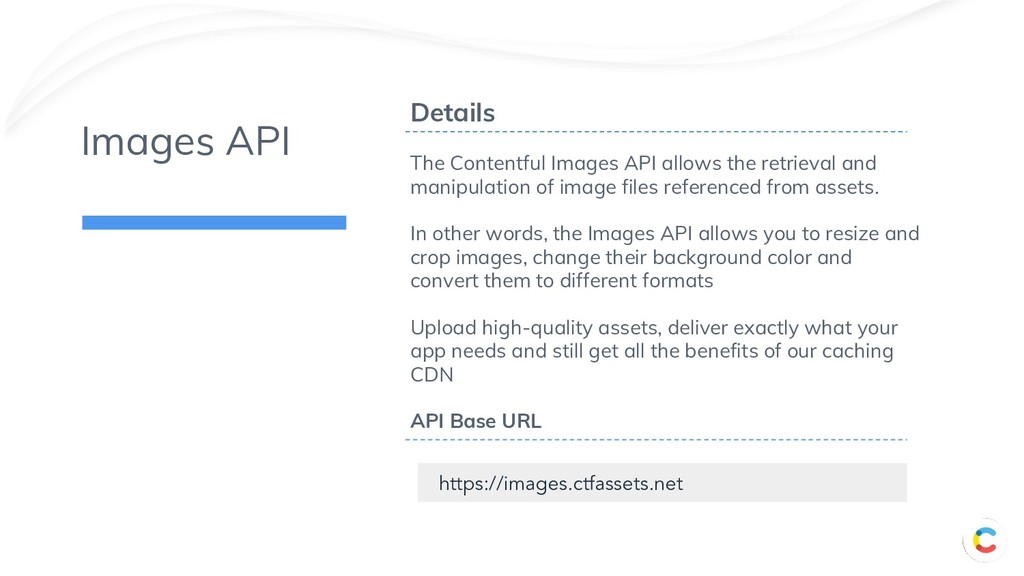
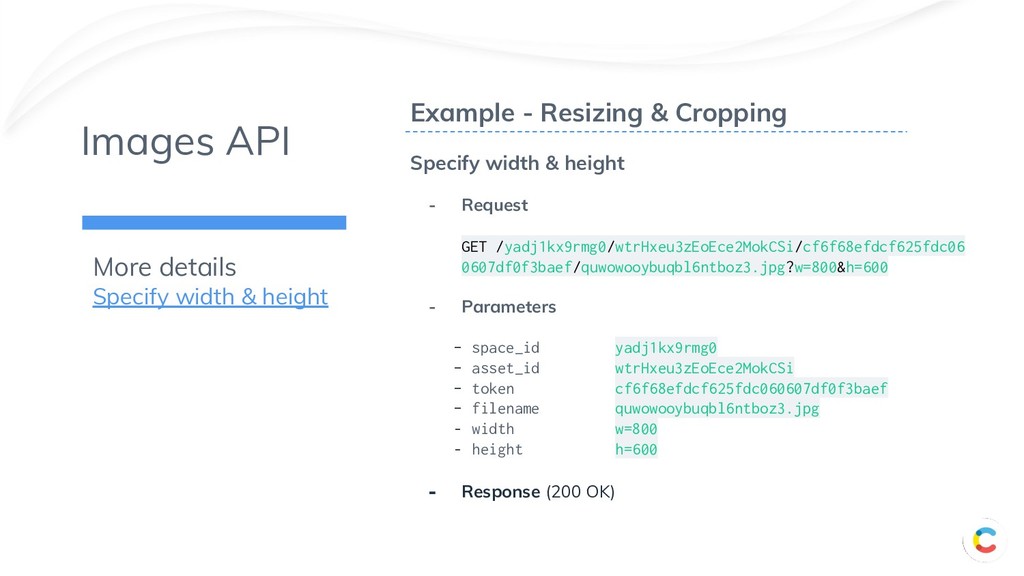
and manipulation of image files referenced from assets. In other words, the Images API allows you to resize and crop images, change their background color and convert them to different formats Upload high-quality assets, deliver exactly what your app needs and still get all the benefits of our caching CDN API Base URL https://images.ctfassets.net
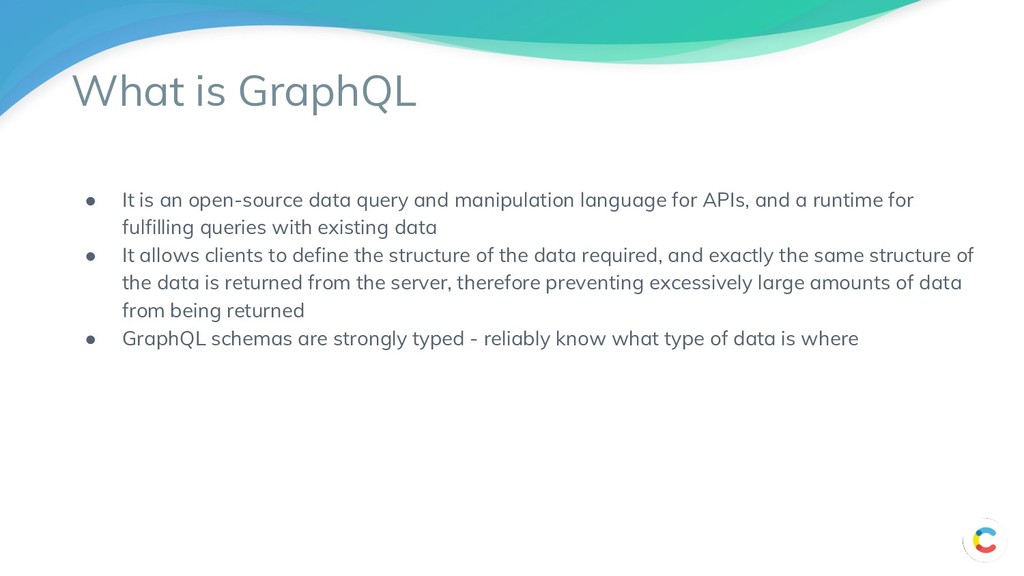
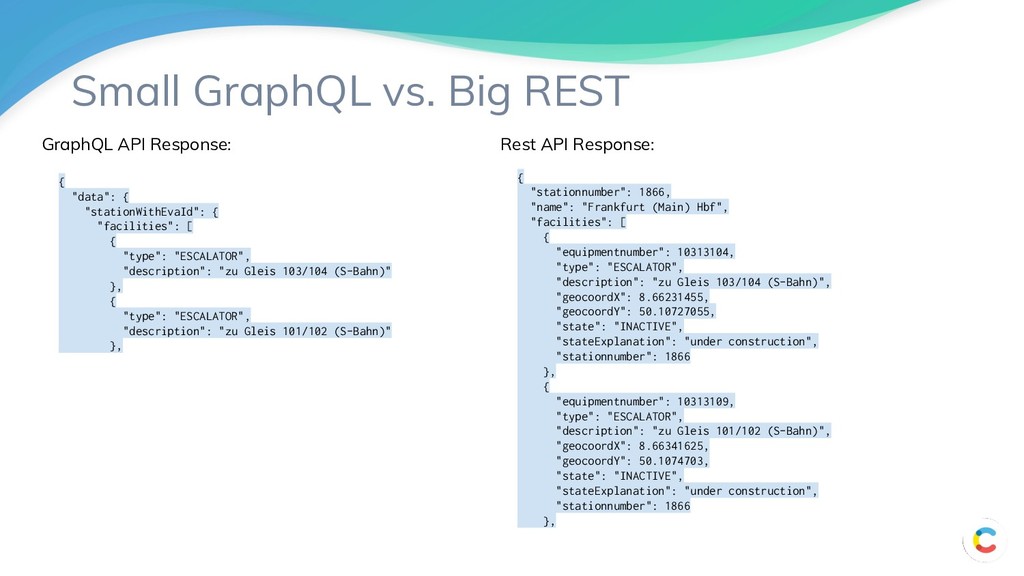
and manipulation language for APIs, and a runtime for fulfilling queries with existing data • It allows clients to define the structure of the data required, and exactly the same structure of the data is returned from the server, therefore preventing excessively large amounts of data from being returned • GraphQL schemas are strongly typed - reliably know what type of data is where
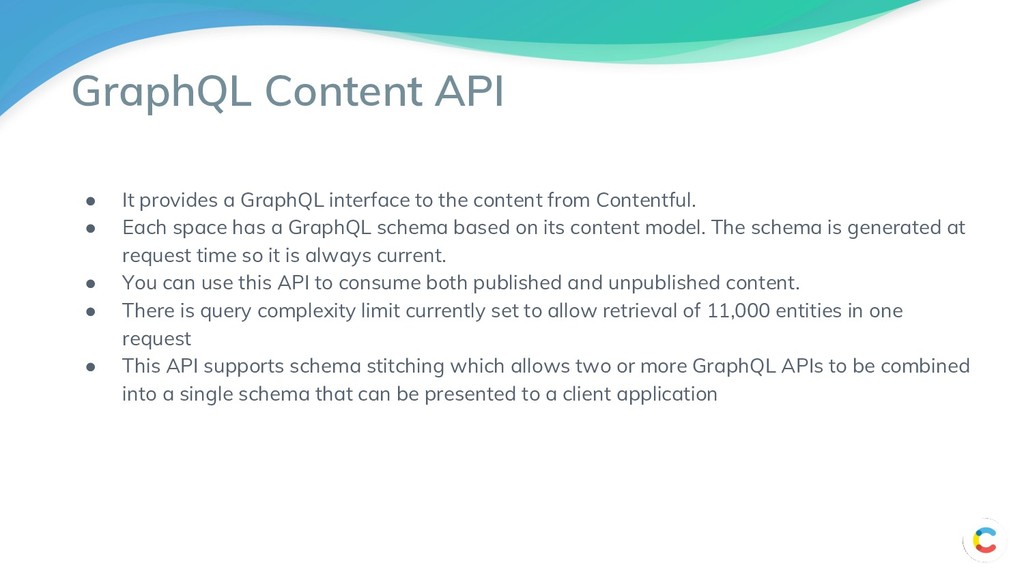
Contentful. • Each space has a GraphQL schema based on its content model. The schema is generated at request time so it is always current. • You can use this API to consume both published and unpublished content. • There is query complexity limit currently set to allow retrieval of 11,000 entities in one request • This API supports schema stitching which allows two or more GraphQL APIs to be combined into a single schema that can be presented to a client application GraphQL Content API
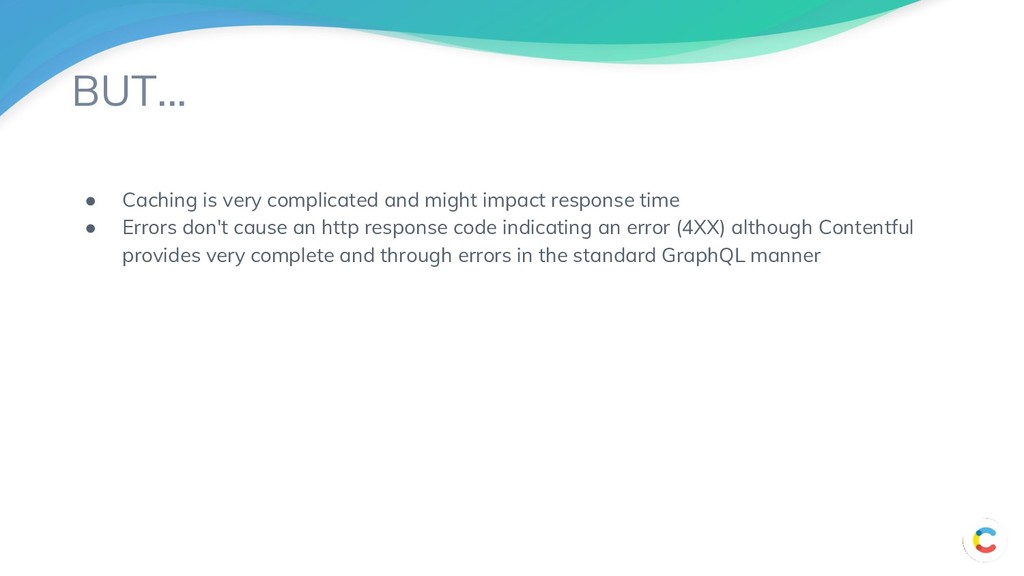
time • Errors don't cause an http response code indicating an error (4XX) although Contentful provides very complete and through errors in the standard GraphQL manner


 contentful
 sagochiko
 yakumo
 toru_kubota
 htkym
htkym
 masasuzu
 diggymo
 masahirokawahara
 kairim0
 uya116
 mtpooh
 shisyu_gaku
 yhana
yhana
 cassininazir
 portentint
 khoart
 mkilby
 akashhashmi
 mongodb
 jct
jct
 davidcarrasco
 jacobian
 afnizarnur
 zakiyama
 davetheseo