Upgrade to Pro — share decks privately, control downloads, hide ads and more …

Mental Models and Heuristics

Avatar for Marc Aubé Marc Aubé
February 28, 2026

Mental Models and Heuristics

Thinking tools to solve thorny problems. Software engineering isn’t just about production, it’s about learning in complex, uncertain situations. This talk explores how useful (if imperfect) models and practical heuristics can help you reframe problems, cut through complexity, and make better technical decisions.

Avatar for Marc Aubé

Marc Aubé

February 28, 2026
Tweet

More Decks by Marc Aubé

Other Decks in Technology

Transcript

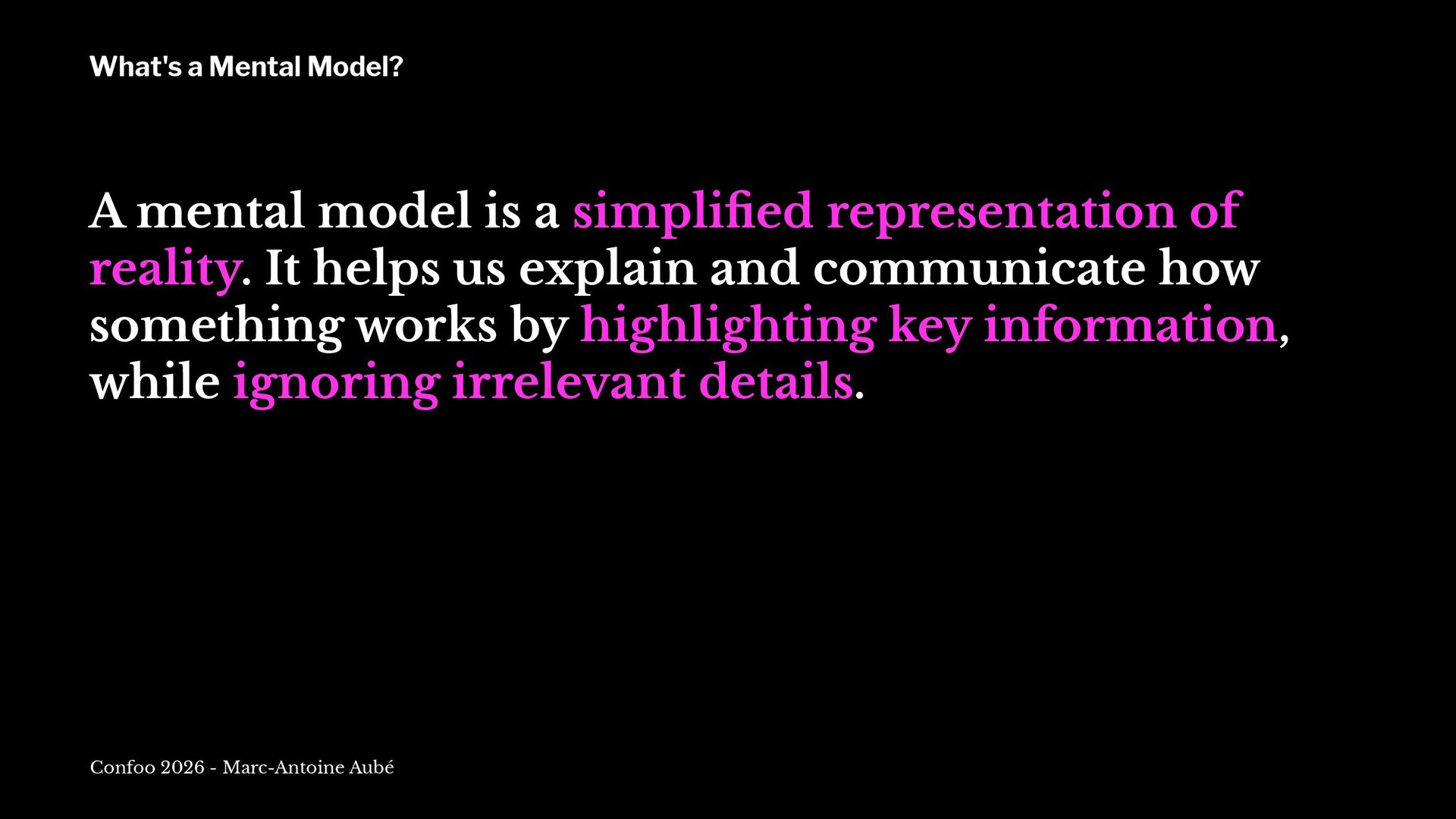
  1. What's a Mental Model? A mental model is a simplified

    representation of reality. It helps us explain and communicate how something works by highlighting key information, while ignoring irrelevant details. Confoo 2026 - Marc-Antoine Aubé
  2. "All models are wrong, but some are useful". — George

    Box Confoo 2026 - Marc-Antoine Aubé
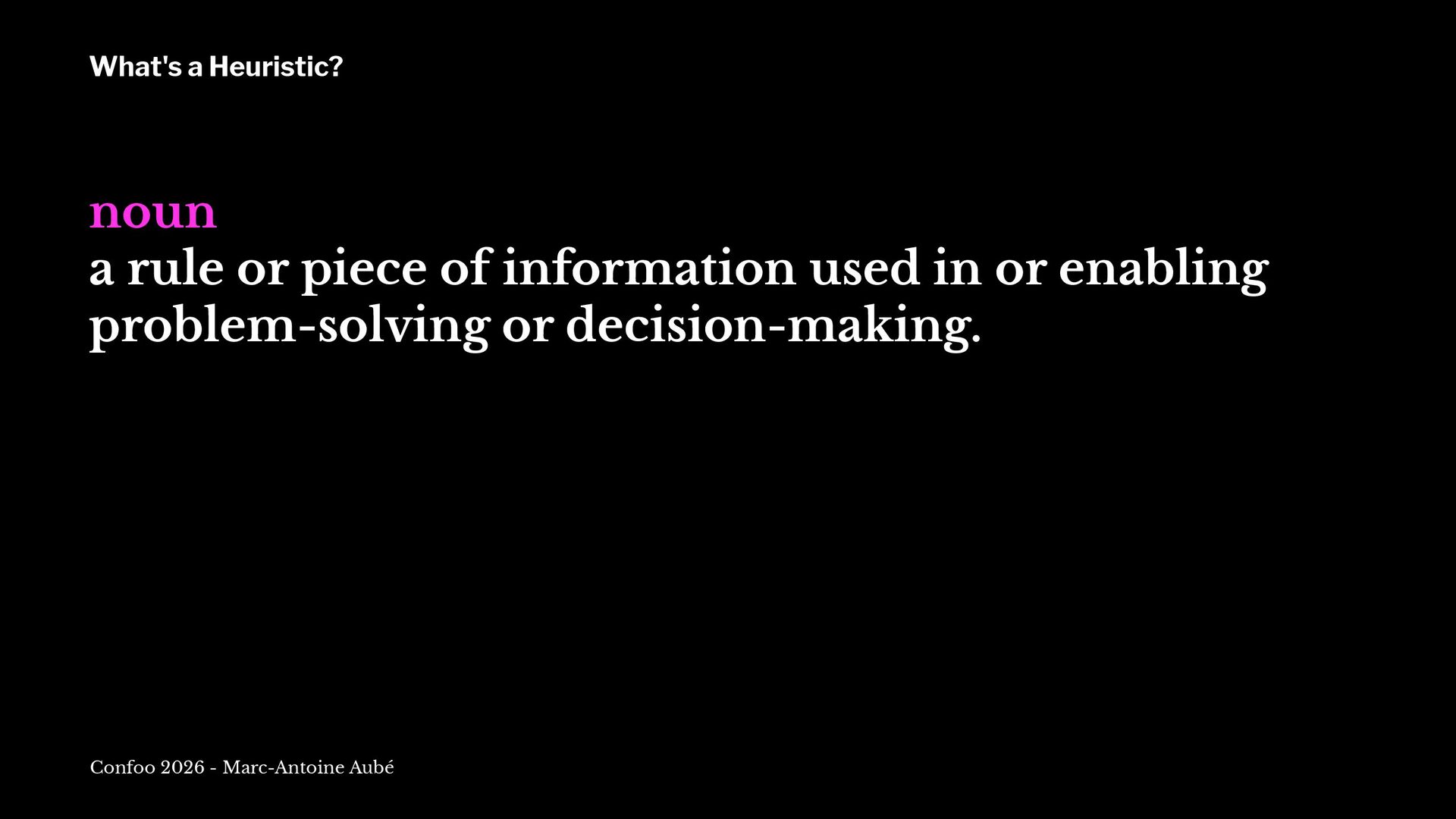
  3. What's a Heuristic? noun a rule or piece of information

    used in or enabling problem-solving or decision-making. Confoo 2026 - Marc-Antoine Aubé
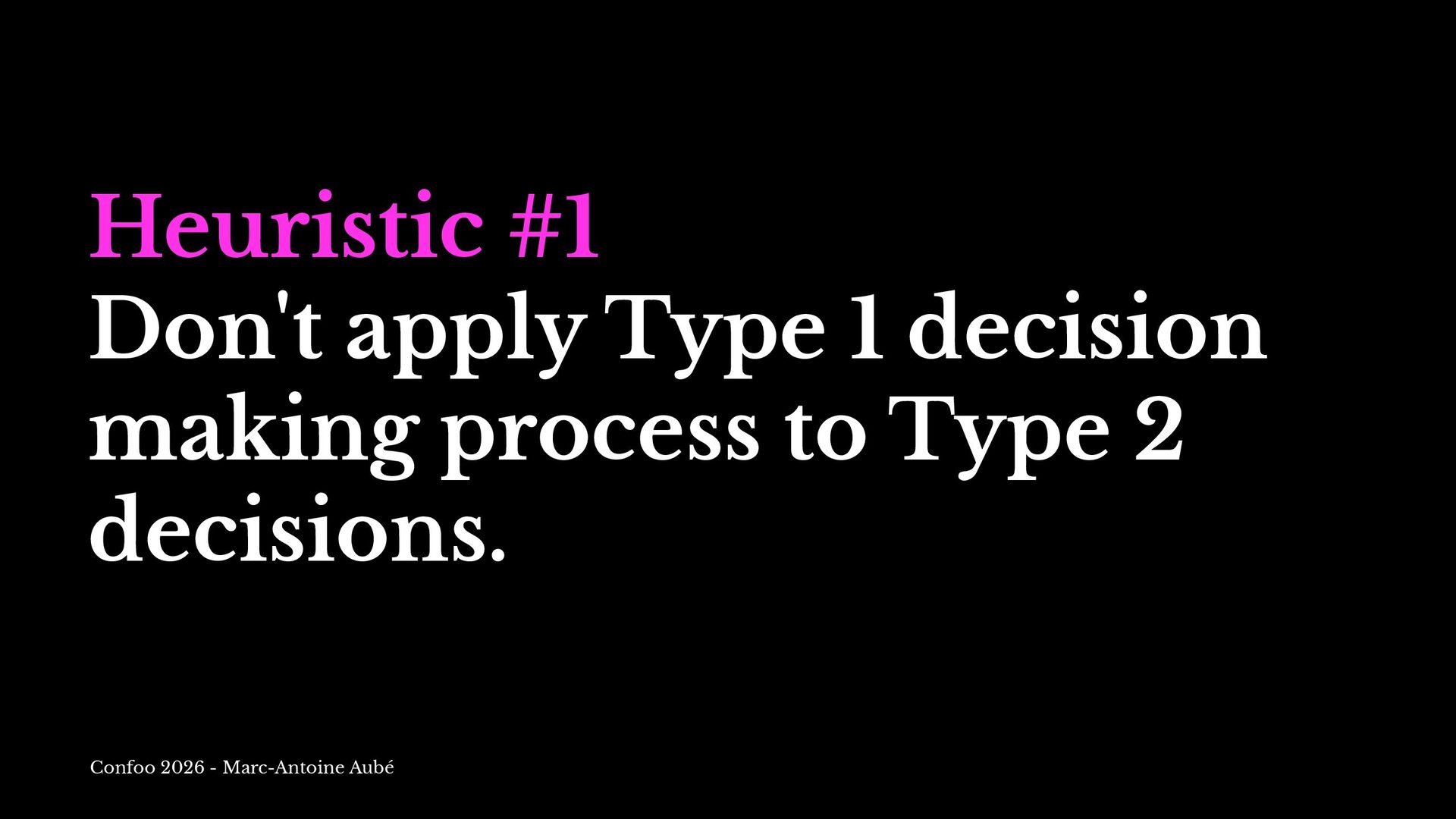
  4. Heuristic #1 Don't apply Type 1 decision making process to

    Type 2 decisions. Confoo 2026 - Marc-Antoine Aubé
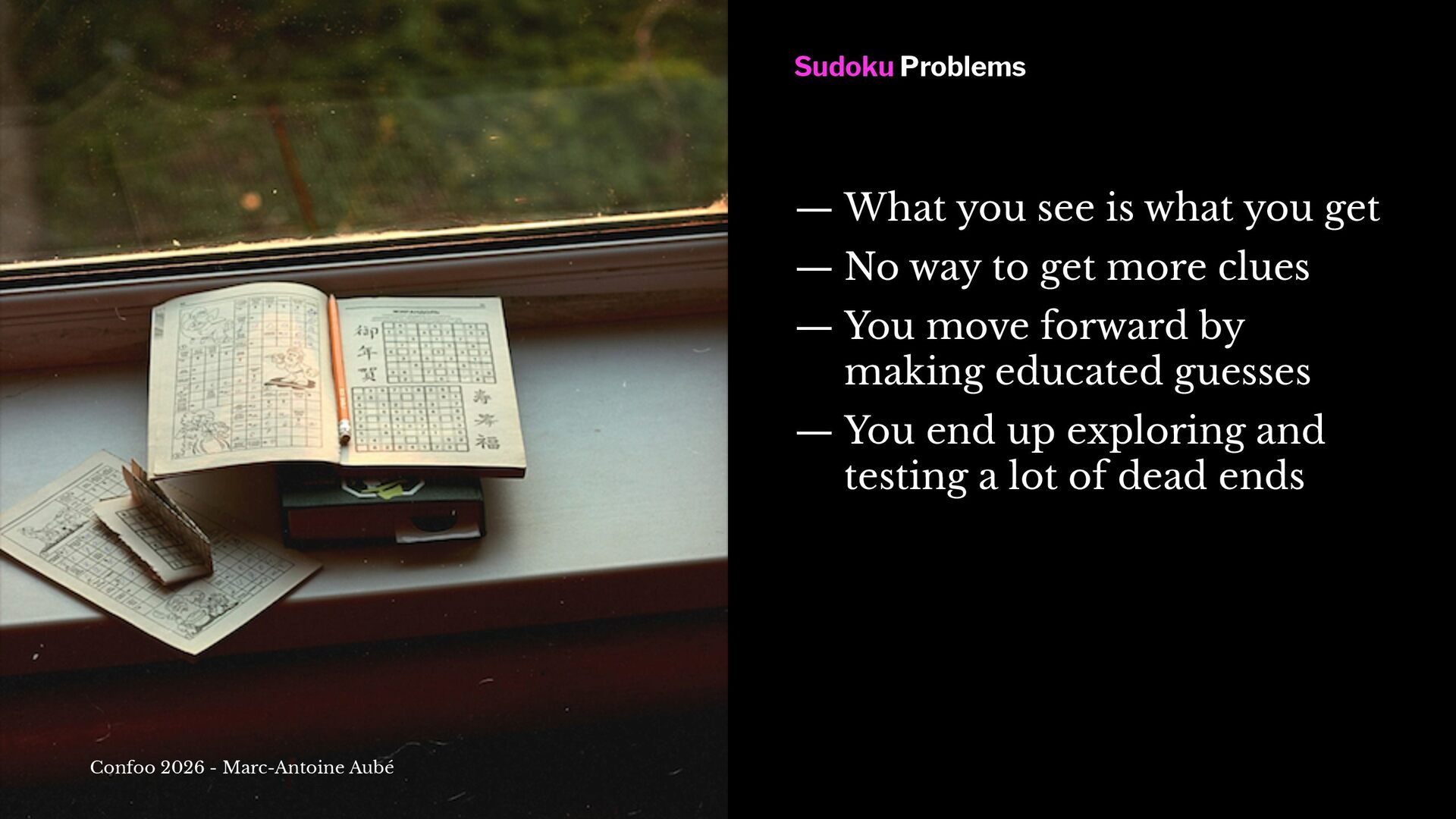
  5. Sudoku Problems — What you see is what you get

    — No way to get more clues — You move forward by making educated guesses — You end up exploring and testing a lot of dead ends Confoo 2026 - Marc-Antoine Aubé
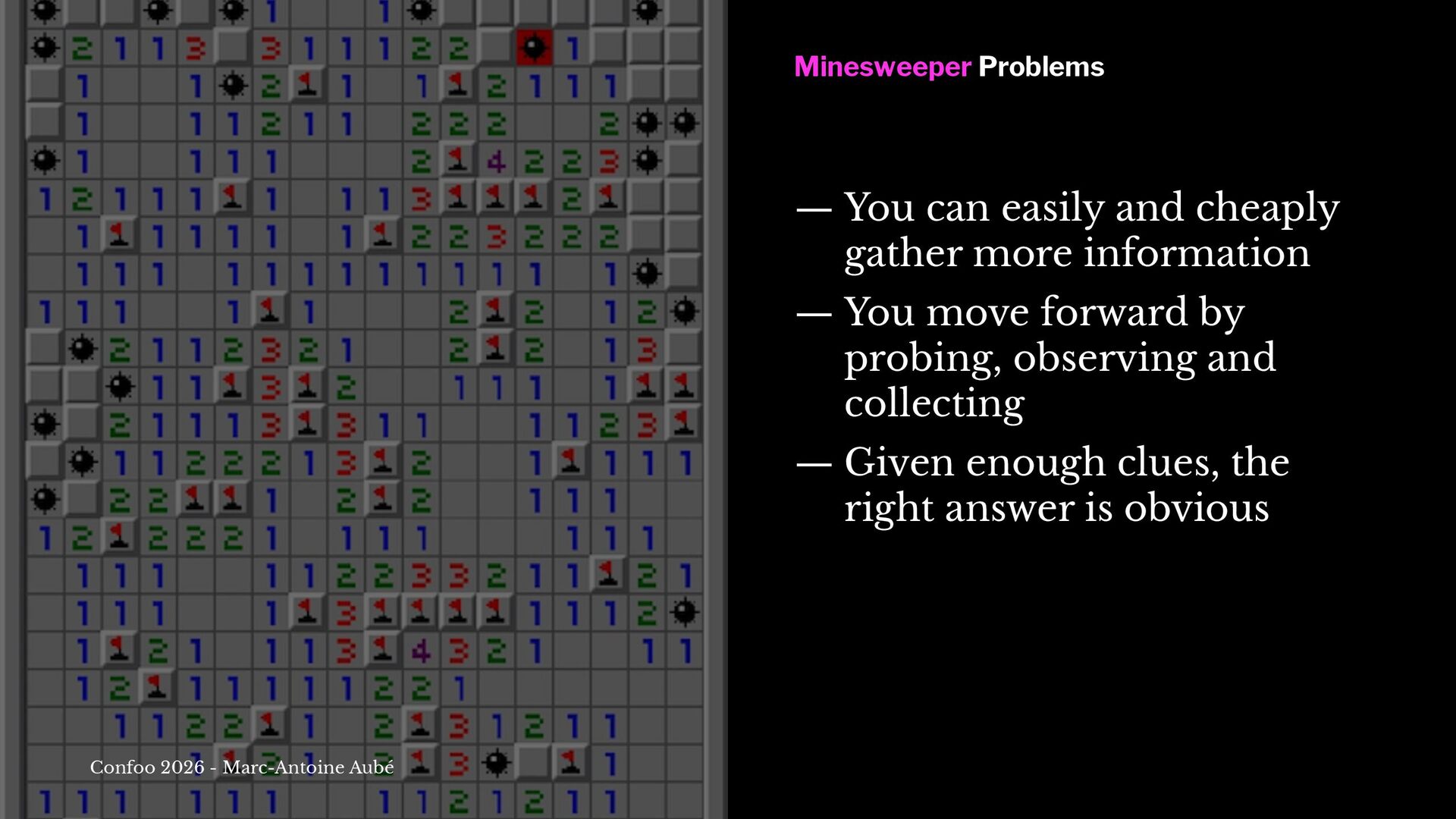
  6. Minesweeper Problems — You can easily and cheaply gather more

    information — You move forward by probing, observing and collecting — Given enough clues, the right answer is obvious Confoo 2026 - Marc-Antoine Aubé
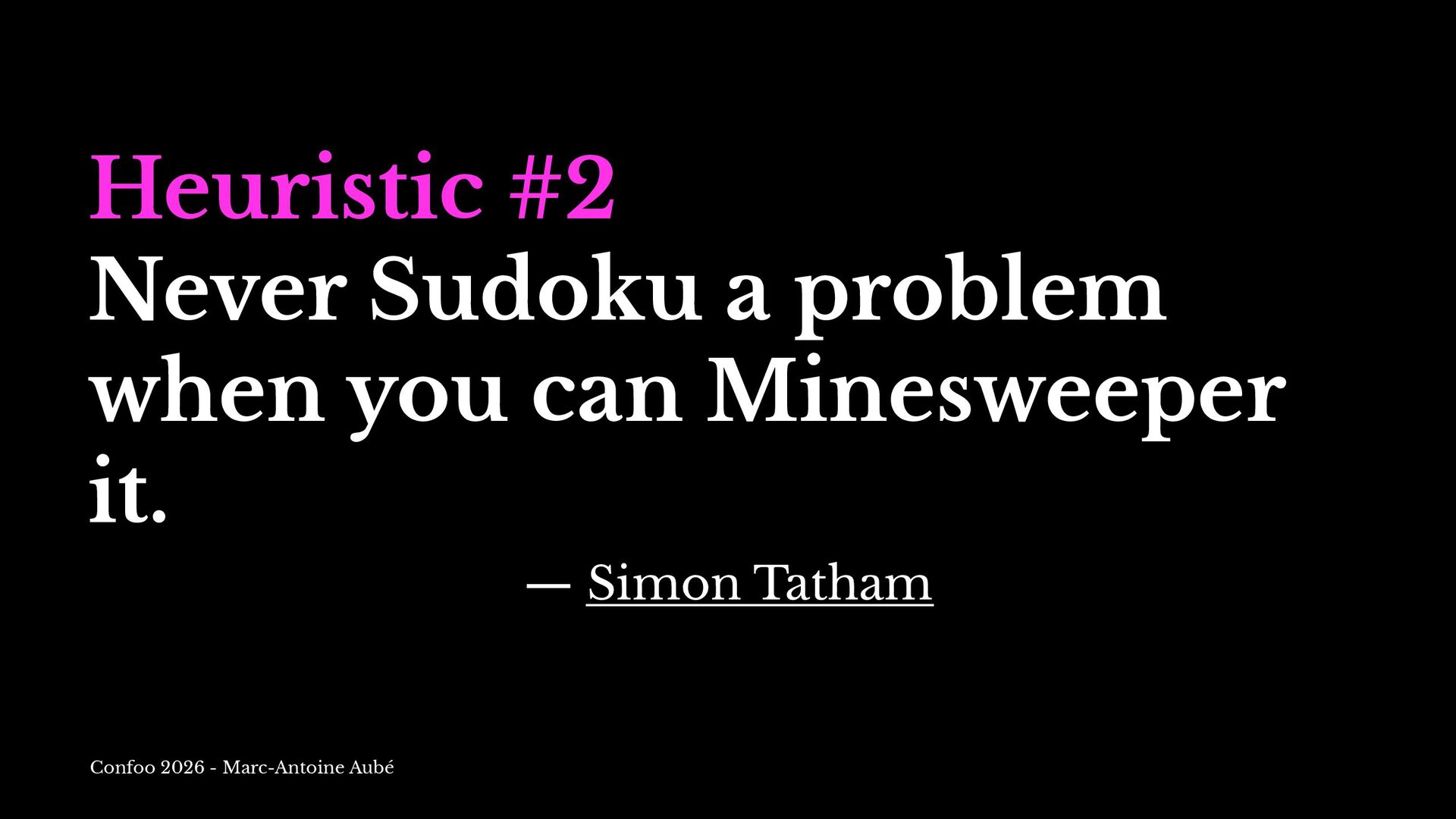
  7. Heuristic #2 Never Sudoku a problem when you can Minesweeper

    it. — Simon Tatham Confoo 2026 - Marc-Antoine Aubé
  8. Open-loop System — Simple but "dumb" — Operates without feedback

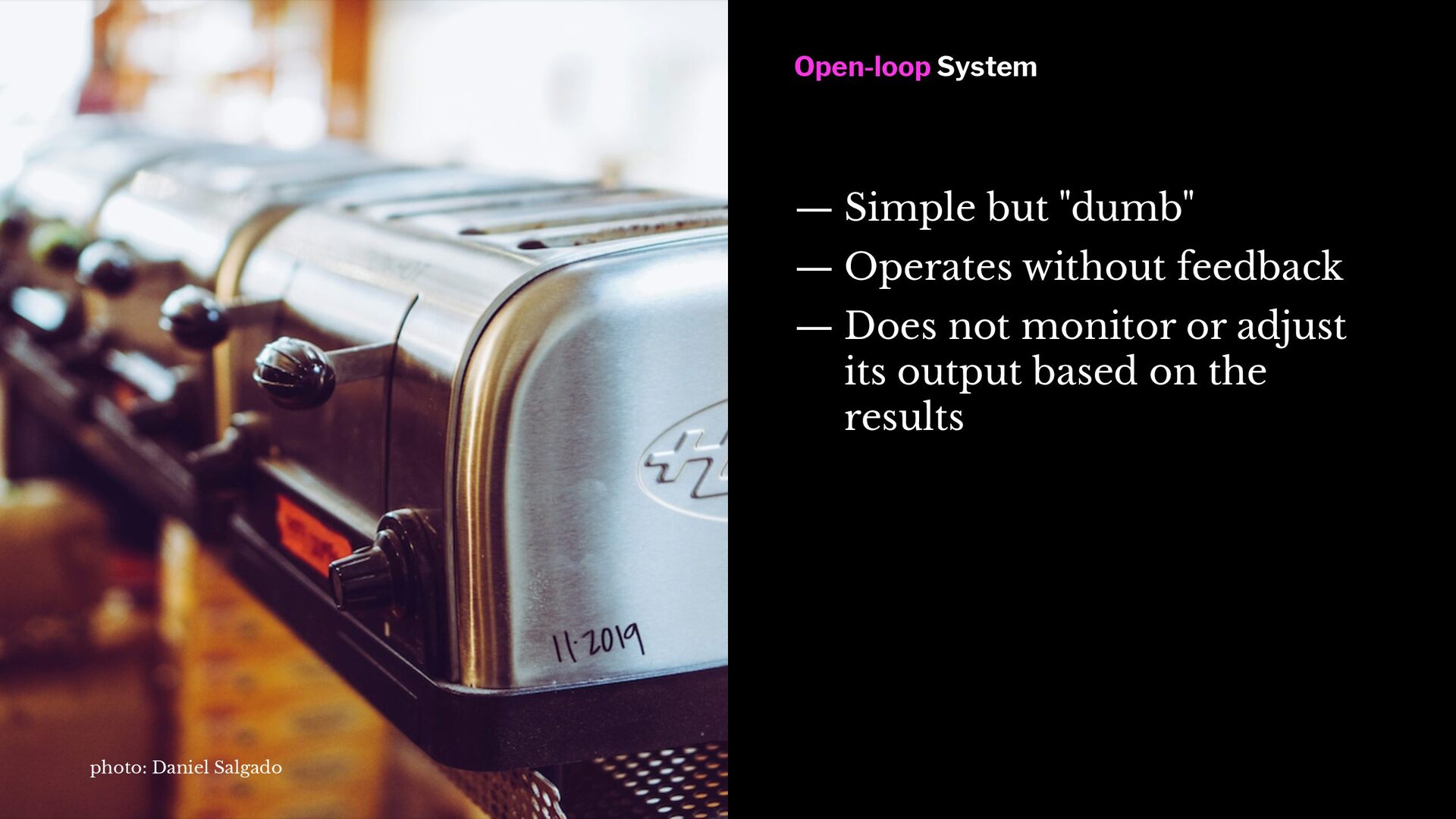
    — Does not monitor or adjust its output based on the results photo: Daniel Salgado
  9. Closed-loop System — Complex but "smart" — Goal seeking —

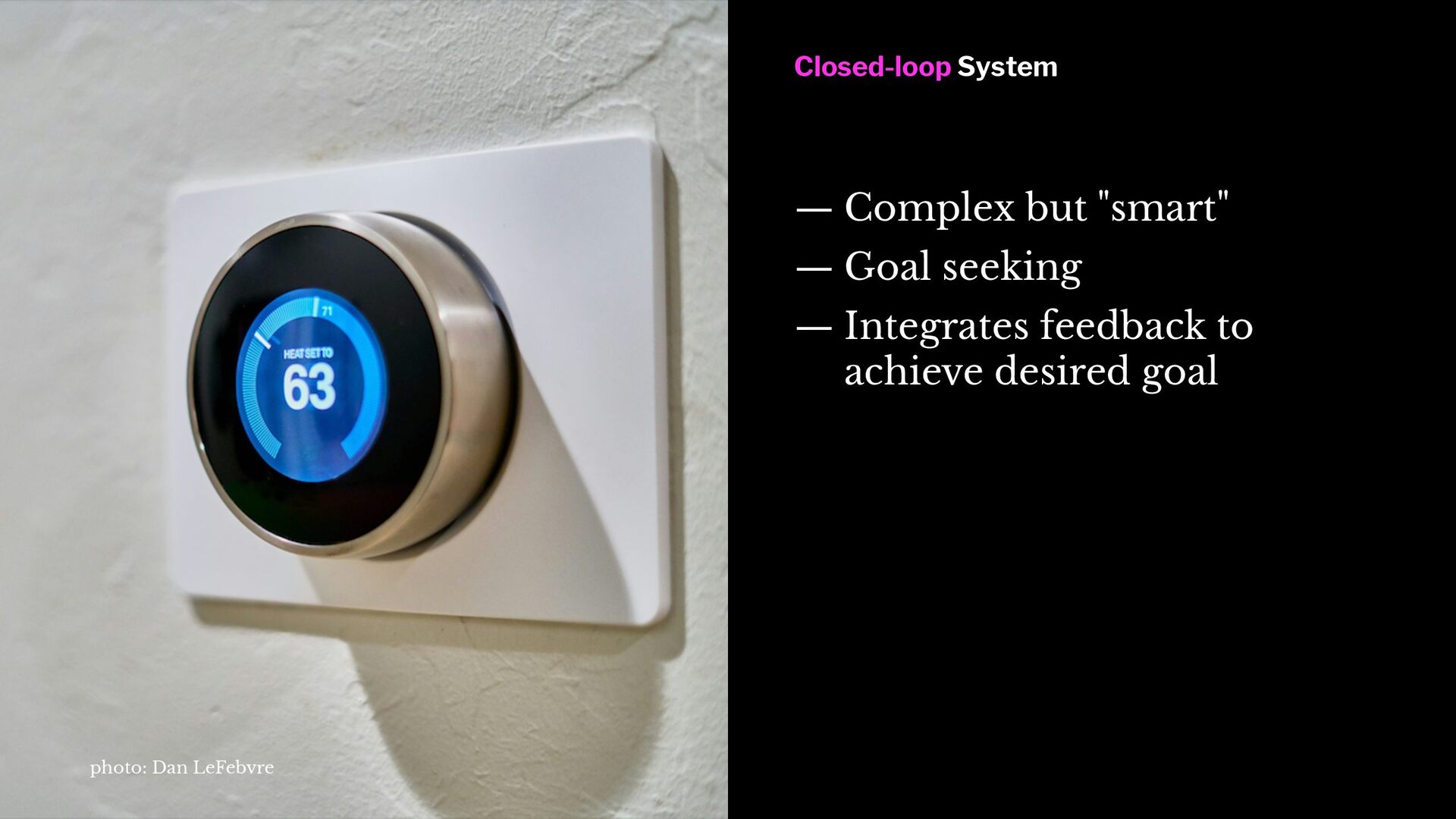
    Integrates feedback to achieve desired goal photo: Dan LeFebvre
  10. When Open-Loop Goes Wrong — No monitoring — No early

    warning alerts — No automatic cleanup — The only "feedback loop" was us getting paged at 2am Confoo 2026 - Marc-Antoine Aubé
  11. Heuristic #3 Ask: What would break if I went on

    vacation for a while? Confoo 2026 - Marc-Antoine Aubé
  12. Mechanical Sympathy "You don't have to be an engineer to

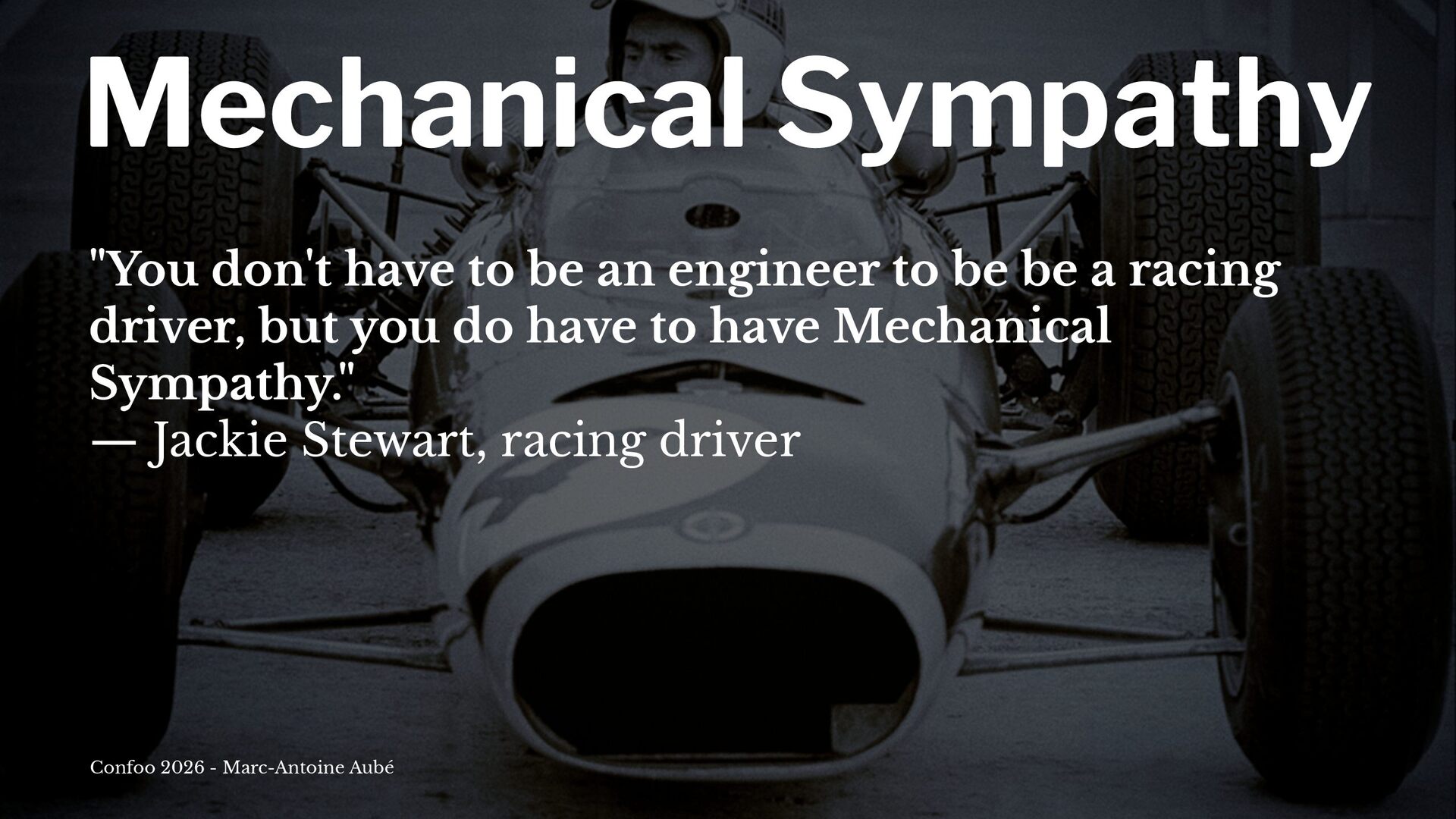
    be be a racing driver, but you do have to have Mechanical Sympathy." — Jackie Stewart, racing driver Confoo 2026 - Marc-Antoine Aubé
  13. Theory of Constraints There is always one constraint in the

    system that limits flow. Call that constraint a bottleneck. The only way to improve flow is to identify and manage the constraint. Improvements made elsewhere are meaningless. All that matters is managing the constraint. — Dr Eliyahu Goldratt Confoo 2026 - Marc-Antoine Aubé
  14. Heuristic #6 Explore: reduce the cost of experiment and invest

    in many unrelated experiments. Expand: ease the limitations of the next rate-limiting resource. Extract: find economies of scale, standardize, increase revenue and decrease costs. Confoo 2026 - Marc-Antoine Aubé
  15. If you don't know what problem it was solving, you

    can't know if that problem still exists. Confoo 2026 - Marc-Antoine Aubé
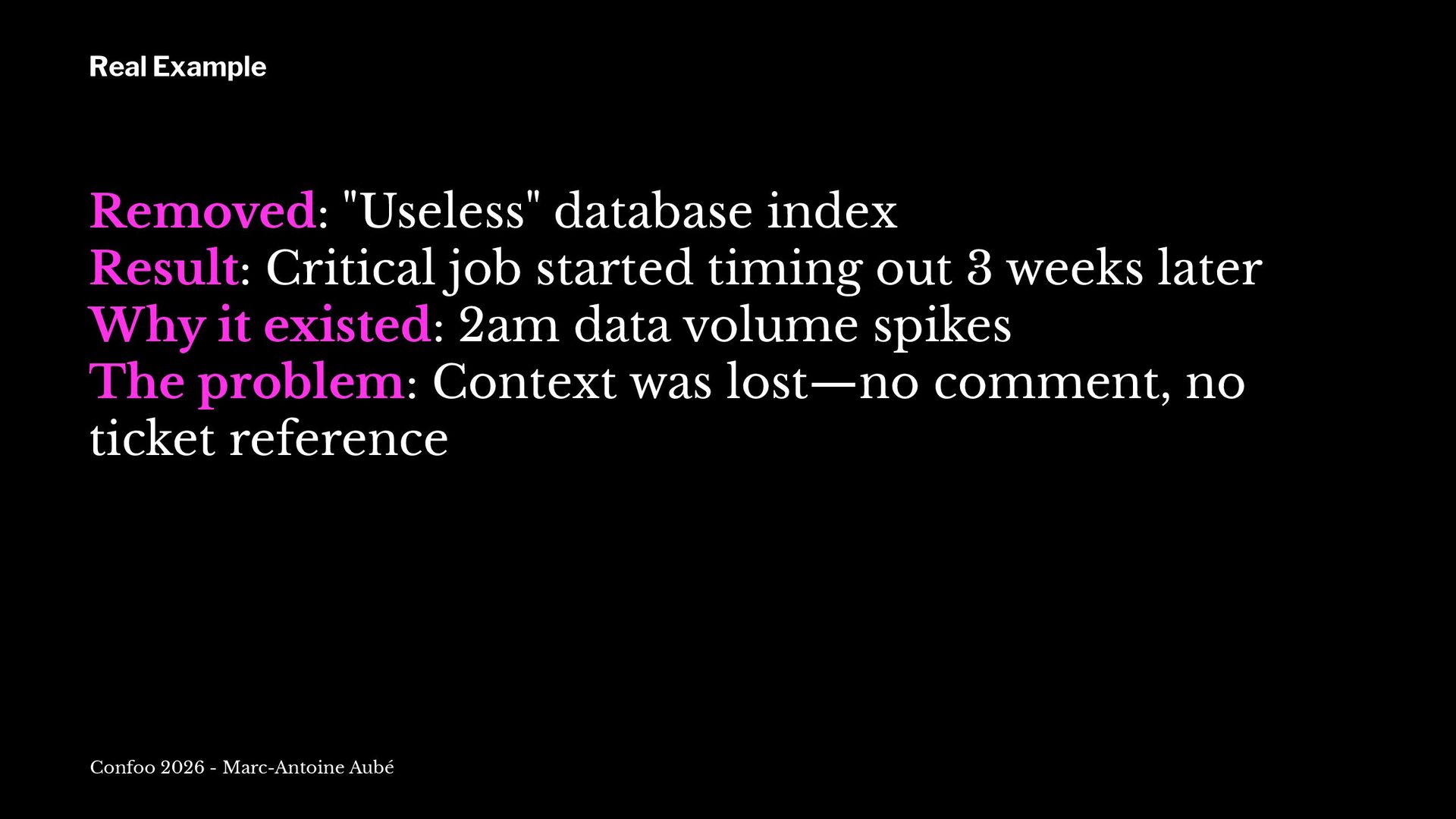
  16. Real Example Removed: "Useless" database index Result: Critical job started

    timing out 3 weeks later Why it existed: 2am data volume spikes The problem: Context was lost—no comment, no ticket reference Confoo 2026 - Marc-Antoine Aubé
  17. Heuristic #7 Before removing or "fixing" something that seems pointless,

    ask: What problem was this solving? Confoo 2026 - Marc-Antoine Aubé
  18. The Sociotechnical System Programming properly should be regarded as an

    activity by which the programmers form or achieve a certain kind of insight, a theory, of the matters at hand. — Peter Naur, Programming as Theory Building, 1985 Confoo 2026 - Marc-Antoine Aubé
  19. Symmathesy noun A symmathesy (sim-MATH-uh-see) is a learning system made

    of learning parts. So!ware teams are each a symmathesy, composed of the people on the team, the running so!ware, and all their tools. Coined by Nora Bateson in 2015
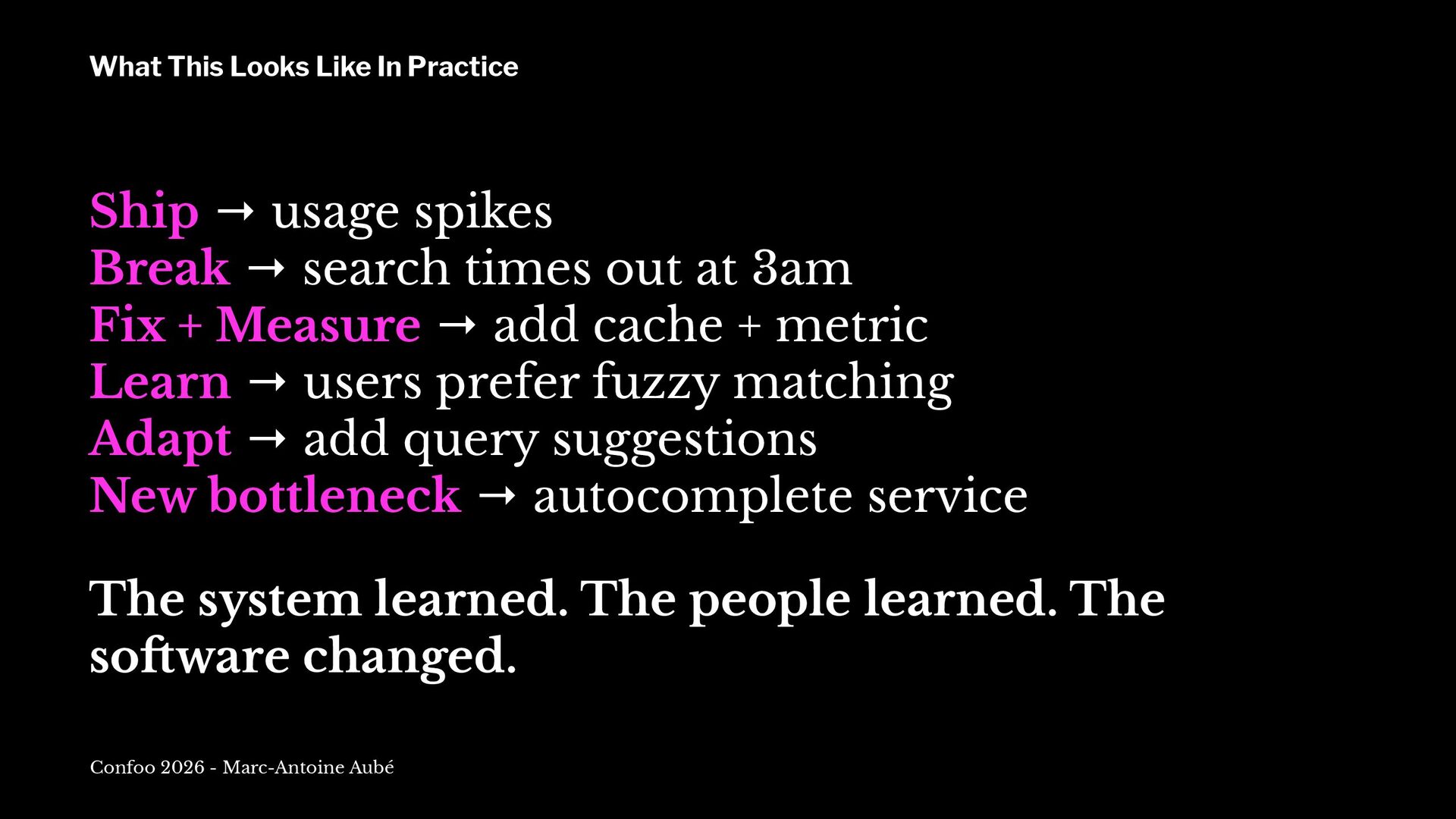
  20. What This Looks Like In Practice Ship → usage spikes

    Break → search times out at 3am Fix + Measure → add cache + metric Learn → users prefer fuzzy matching Adapt → add query suggestions New bottleneck → autocomplete service The system learned. The people learned. The so!ware changed. Confoo 2026 - Marc-Antoine Aubé
  21. Heuristic #8 A!er solving a problem: What did we just

    learn, and how do we keep it? Confoo 2026 - Marc-Antoine Aubé
  22. Eight Different Lenses About making decisions About understanding systems About

    knowing when to change your approach Heuristics need to be challenged. What works at 10 engineers might not work at 100. What works in a startup might not work in a regulated industry. Confoo 2026 - Marc-Antoine Aubé
  23. Build Your Own Toolbox Pick one or two that resonated.

    But more importantly: start capturing your own. Confoo 2026 - Marc-Antoine Aubé
  24. How to Start — Notice questions you already ask —

    Distill what you hear at conferences — Index cards, running docs, Slack channels The format doesn't matter. Capturing it does. Confoo 2026 - Marc-Antoine Aubé
  25. Share What You Learn Code reviews: Share the model you're

    using Design docs: Make assumptions explicit Retrospectives: Capture the lesson, not just the action The value isn't having the right answer. It's building a shared vocabulary for thinking about problems. Confoo 2026 - Marc-Antoine Aubé